
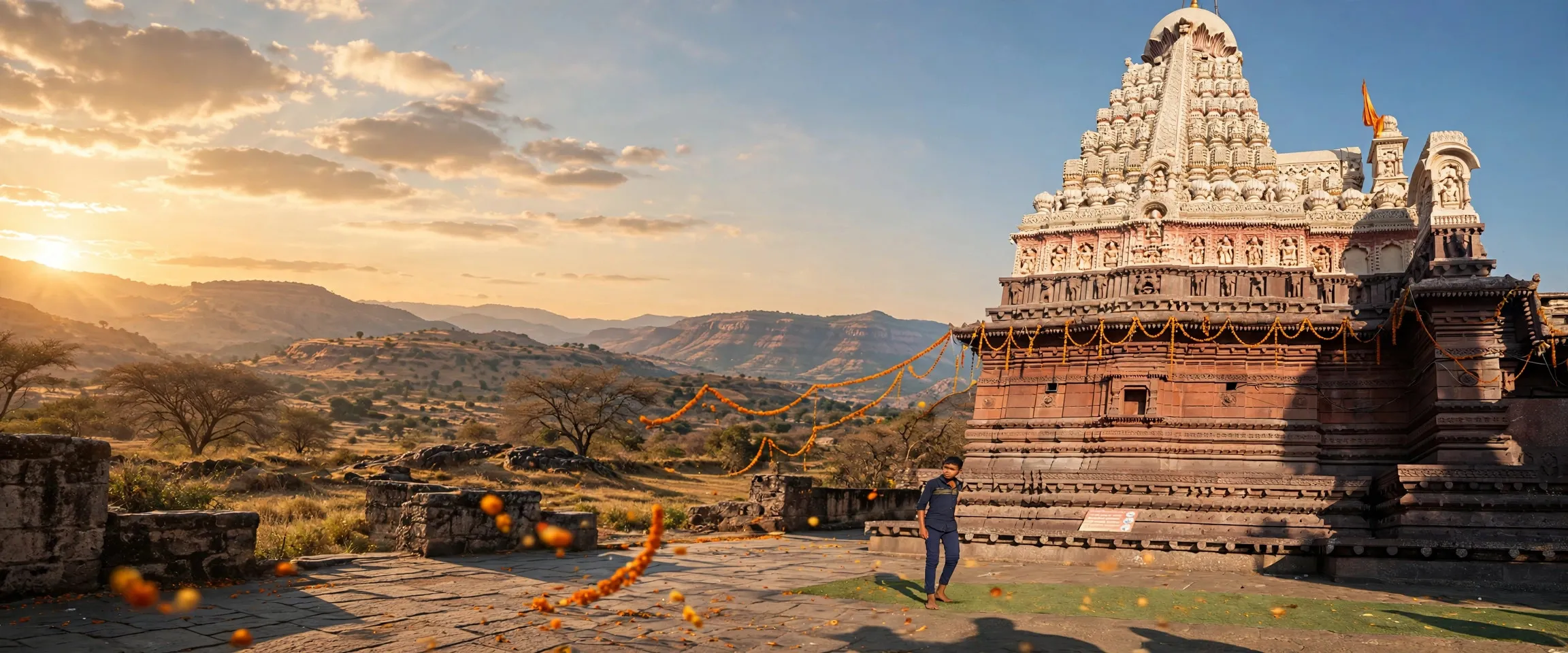
Grishneshwar Temple at Verul, beside the Ellora Caves in Maharashtra, is the twelfth and final Jyotirlinga, one of the twelve shrines where Shiva is worshipped as a pillar of light. Its present red-stone Hemadpanthi structure dates to an 18th-century Maratha-era reconstruction, and it is one of the rare Jyotirlingas where devotees may touch the lingam through Sparsh Darshan.
- Punjabi name
- ਗ੍ਰਿਸ਼ਨੇਸ਼ਵਰ ਮੰਦਰ
- Country
- India
- State
- Maharashtra
- District
- Chhatrapati Sambhajinagar (Aurangabad)
- Village
- Verul (Ellora)
- Deity
- Shiva (Grishneshwar, 'Lord of Ghushma')
All 15 facts
- Tradition
- Jyotirlinga, twelfth and final on the traditional circuit
- Architecture
- Hemadpanthi; red volcanic stone; five-tiered shikhara
- Sanctum
- East-facing Jyotirlinga
- Distance
- ~1.5 km from Ellora Caves; ~30 km NW of Chhatrapati Sambhajinagar
- Present structure
- 18th-century Maratha-era reconstruction (attributions differ: Maharashtra Tourism credits Ahilyabai Holkar; Wikipedia attributes the 1729 rebuild to Gautama Bai Holkar)
- Earlier restoration
- 16th century by Maloji Bhosale; earlier shrine destroyed under the Delhi Sultanate (13th-14th c.)
- Special ritual
- Sparsh Darshan: devotees may touch the lingam (men must enter the sanctum bare-chested)
- Timings
- ~5:30 AM to 9:30 PM daily, year round (extended in Shravan)
- Major festival
- Mahashivratri
What is Grishneshwar Temple?
Grishneshwar Temple at Verul, beside the Ellora Caves in Maharashtra, is the twelfth and final Jyotirlinga, one of the twelve shrines where Shiva is worshipped as a self-manifested pillar of light. Built of red volcanic stone in the Hemadpanthi style, it is also among the very few Jyotirlingas where devotees may still touch the lingam itself, through a privilege called Sparsh Darshan.
The name is usually read as ‘Lord of Ghushma’, after the devotee in the temple’s founding legend; variant spellings abound, including Ghrishneshwar and Ghushmeshwar. The Jyotirlinga faces east in the sanctum. The temple stands about 1.5 kilometres from the Ellora Caves and roughly 30 kilometres northwest of Chhatrapati Sambhajinagar (Aurangabad) city, making it an easy pairing with a visit to the caves.
The legend of Ghushma
Puranic tradition, recorded in the Shiva Purana and Skanda Purana, tells how the shrine came to be. A Brahmin named Sudharma lived near the Devgiri mountain with his wives Sudeha and Ghushma. Ghushma was a devoted worshipper of Shiva and, each day, shaped and worshipped 101 earthen lingams before immersing them in a nearby pond.
In time Ghushma bore a son, and Sudeha, childless and jealous, killed the boy and threw his body into the pond. Ghushma did not waver in her devotion. The tradition holds that the boy emerged alive from the water, Shiva appeared before Ghushma, and at her plea forgave Sudeha, remaining on the spot as a Jyotirlinga. The story is presented here as sacred tradition, not as history.
Destroyed and rebuilt across seven centuries
What is verifiable is a long cycle of destruction and renewal. Both Wikipedia and Maharashtra Tourism record that an earlier temple on this site was destroyed under the Delhi Sultanate in the 13th to 14th centuries. Wikipedia adds that several rounds of rebuilding were followed by re-destruction during the Mughal-Maratha conflicts.
A restoration in the 16th century by Maloji Bhosale, the grandfather of Chhatrapati Shivaji, is agreed on by all three sources opened for this entry. The present structure belongs to the 18th-century Maratha-era reconstruction. On who commissioned it, the sources differ: Maharashtra Tourism credits Queen Ahilyabai Holkar of Indore, while Wikipedia attributes the 1729 rebuild to Gautama Bai Holkar. Both attributions are given here as reported.
The temple is listed by Wikipedia as a nationally protected site.
Hemadpanthi architecture in red volcanic stone
Grishneshwar is built in the Hemadpanthi style, the Deccan’s own medieval school of temple building, in red volcanic stone. It is not a south Indian or Dravidian design, despite what some travel writing suggests; both Wikipedia and Maharashtra Tourism place it firmly in the Hemadpanthi tradition.
The shikhara rises in five tiers over the sanctum, carved with rows of deities. A court hall on 24 carved pillars fronts the shrine, with a statue of Nandi, Shiva’s bull, in the hall. The complex covers about 44,000 square feet, and its deep red stone sets it apart from the grey rock of the neighbouring Ellora hills.
What is Sparsh Darshan?
Sparsh Darshan, literally ‘touch darshan’, is the privilege of touching the lingam and performing abhishek, the ritual bathing of the deity, oneself, under a priest’s guidance inside the garbhagriha. At Grishneshwar this rare right is still open to devotees, which is one reason the shrine draws pilgrims from across the country.
The shrine keeps a strict dress rule for the sanctum: men must enter bare-chested. All three sources opened for this entry state this rule. Devotees also take a holy dip in the sacred pond and offer bilva leaves, milk and flowers.
Visiting Grishneshwar
The temple stands in Verul village, Chhatrapati Sambhajinagar (Aurangabad) district, Maharashtra: about 1.5 kilometres from the Ellora Caves, about 11 kilometres from Daulatabad, and roughly 30 kilometres northwest of Chhatrapati Sambhajinagar city. Most pilgrims pair it with the caves and with the two other Maharashtra Jyotirlingas, Trimbakeshwar near Nashik and Bhimashankar in the Sahyadris.
The temple is open daily, roughly 5:30 AM to 9:30 PM, year round, with extended hours in the holy month of Shravan. Mahashivratri is the great festival here. For the full set of twelve, see the guide to Hindu mandirs in India.
ਗ੍ਰਿਸ਼ਨੇਸ਼ਵਰ ਮੰਦਰ ਕੀ ਹੈ?
ਮਹਾਰਾਸ਼ਟਰ ਵਿੱਚ ਏਲੋਰਾ ਦੀਆਂ ਗੁਫ਼ਾਵਾਂ ਨੇੜੇ ਵੇਰੂਲ ਵਿਖੇ ਗ੍ਰਿਸ਼ਨੇਸ਼ਵਰ ਮੰਦਰ ਬਾਰਾਂ ਜੋਤਿਰਲਿੰਗਾਂ ਵਿੱਚੋਂ ਬਾਰਵਾਂ ਅਤੇ ਆਖ਼ਰੀ ਹੈ ਇਹ ਉਹ ਬਾਰਾਂ ਅਸਥਾਨ ਹਨ ਜਿੱਥੇ ਸ਼ਿਵ ਦੀ ਪੂਜਾ ਸਵੈ-ਪ੍ਰਗਟ ਜੋਤਿ-ਥੰਮ੍ਹ ਦੇ ਰੂਪ ਵਿੱਚ ਹੁੰਦੀ ਹੈ ਲਾਲ ਜਵਾਲਾਮੁਖੀ ਪੱਥਰ ਦਾ ਇਹ ਮੰਦਰ ਹੇਮਾਦਪੰਥੀ ਸ਼ੈਲੀ ਵਿੱਚ ਬਣਿਆ ਹੈ, ਅਤੇ ਇਹ ਉਨ੍ਹਾਂ ਗਿਣੇ-ਚੁਣੇ ਜੋਤਿਰਲਿੰਗਾਂ ਵਿੱਚੋਂ ਇੱਕ ਹੈ ਜਿੱਥੇ ਸ਼ਰਧਾਲੂ ਅੱਜ ਵੀ ਸਪਰਸ਼ ਦਰਸ਼ਨ ਰਾਹੀਂ ਲਿੰਗ ਨੂੰ ਛੂਹ ਸਕਦੇ ਹਨ
ਨਾਮ ਦਾ ਅਰਥ ਆਮ ਤੌਰ 'ਤੇ 'ਘੁਸ਼ਮਾ ਦਾ ਸੁਆਮੀ' ਸਮਝਿਆ ਜਾਂਦਾ ਹੈ, ਜੋ ਮੰਦਰ ਦੀ ਸਥਾਪਨਾ-ਕਥਾ ਦੀ ਭਗਤਣੀ ਦੇ ਨਾਂ 'ਤੇ ਹੈ ਘ੍ਰਿਸ਼ਨੇਸ਼ਵਰ ਅਤੇ ਘੁਸ਼ਮੇਸ਼ਵਰ ਵਰਗੇ ਹੋਰ ਰੂਪ ਵੀ ਮਿਲਦੇ ਹਨ ਜੋਤਿਰਲਿੰਗ ਗਰਭਗ੍ਰਿਹ ਵਿੱਚ ਪੂਰਬ ਵੱਲ ਮੂੰਹ ਕਰਕੇ ਸਥਾਪਤ ਹੈ ਮੰਦਰ ਏਲੋਰਾ ਦੀਆਂ ਗੁਫ਼ਾਵਾਂ ਤੋਂ ਲਗਭਗ ਡੇਢ ਕਿਲੋਮੀਟਰ ਅਤੇ ਛਤਰਪਤੀ ਸੰਭਾਜੀਨਗਰ (ਔਰੰਗਾਬਾਦ) ਸ਼ਹਿਰ ਤੋਂ ਤਕਰੀਬਨ ਤੀਹ ਕਿਲੋਮੀਟਰ ਉੱਤਰ-ਪੱਛਮ ਵਿੱਚ ਹੈ, ਇਸ ਲਈ ਗੁਫ਼ਾਵਾਂ ਦੀ ਯਾਤਰਾ ਨਾਲ ਇਸਨੂੰ ਜੋੜਨਾ ਆਸਾਨ ਹੈ
ਘੁਸ਼ਮਾ ਦੀ ਕਥਾ
ਸ਼ਿਵ ਪੁਰਾਣ ਅਤੇ ਸਕੰਦ ਪੁਰਾਣ ਵਿੱਚ ਦਰਜ ਪੌਰਾਣਿਕ ਪਰੰਪਰਾ ਅਨੁਸਾਰ, ਦੇਵਗਿਰੀ ਪਹਾੜ ਨੇੜੇ ਸੁਧਰਮਾ ਨਾਂ ਦਾ ਇੱਕ ਬ੍ਰਾਹਮਣ ਆਪਣੀਆਂ ਪਤਨੀਆਂ ਸੁਦੇਹਾ ਅਤੇ ਘੁਸ਼ਮਾ ਨਾਲ ਰਹਿੰਦਾ ਸੀ ਘੁਸ਼ਮਾ ਸ਼ਿਵ ਦੀ ਅਨਨ੍ਯ ਭਗਤਣੀ ਸੀ ਅਤੇ ਰੋਜ਼ 101 ਮਿੱਟੀ ਦੇ ਲਿੰਗ ਬਣਾ ਕੇ ਉਨ੍ਹਾਂ ਦੀ ਪੂਜਾ ਕਰਦੀ ਸੀ, ਫਿਰ ਨੇੜਲੇ ਤਲਾਅ ਵਿੱਚ ਵਿਸਰਜਨ ਕਰਦੀ ਸੀ
ਸਮੇਂ ਨਾਲ ਘੁਸ਼ਮਾ ਨੂੰ ਪੁੱਤਰ ਹੋਇਆ ਨਿਸੰਤਾਨ ਸੁਦੇਹਾ ਈਰਖਾ ਵਿੱਚ ਉਸ ਬੱਚੇ ਨੂੰ ਮਾਰ ਕੇ ਤਲਾਅ ਵਿੱਚ ਸੁੱਟ ਆਈ ਘੁਸ਼ਮਾ ਦੀ ਭਗਤੀ ਡੋਲੀ ਨਹੀਂ ਪਰੰਪਰਾ ਕਹਿੰਦੀ ਹੈ ਕਿ ਬੱਚਾ ਤਲਾਅ ਵਿੱਚੋਂ ਜੀਵਤ ਨਿਕਲਿਆ, ਸ਼ਿਵ ਘੁਸ਼ਮਾ ਅੱਗੇ ਪ੍ਰਗਟ ਹੋਏ ਅਤੇ ਉਸਦੀ ਬੇਨਤੀ 'ਤੇ ਸੁਦੇਹਾ ਨੂੰ ਮਾਫ਼ ਕਰਕੇ ਉੱਥੇ ਜੋਤਿਰਲਿੰਗ ਦੇ ਰੂਪ ਵਿੱਚ ਟਿਕ ਗਏ ਇਹ ਕਥਾ ਪਵਿੱਤਰ ਪਰੰਪਰਾ ਵਜੋਂ ਪੇਸ਼ ਕੀਤੀ ਗਈ ਹੈ, ਇਤਿਹਾਸ ਵਜੋਂ ਨਹੀਂ
ਤਬਾਹੀ ਅਤੇ ਮੁੜ-ਉਸਾਰੀ: ਸੱਤ ਸਦੀਆਂ ਦਾ ਇਤਿਹਾਸ
ਜੋ ਤਸਦੀਕਯੋਗ ਹੈ, ਉਹ ਤਬਾਹੀ ਅਤੇ ਨਵੀਨੀਕਰਨ ਦਾ ਲੰਬਾ ਚੱਕਰ ਹੈ ਵਿਕੀਪੀਡੀਆ ਅਤੇ ਮਹਾਰਾਸ਼ਟਰ ਟੂਰਿਜ਼ਮ ਦੋਵੇਂ ਦਰਜ ਕਰਦੇ ਹਨ ਕਿ ਇਸ ਥਾਂ 'ਤੇ ਪਹਿਲਾ ਮੰਦਰ 13ਵੀਂ-14ਵੀਂ ਸਦੀ ਵਿੱਚ ਦਿੱਲੀ ਸਲਤਨਤ ਦੇ ਦੌਰ ਵਿੱਚ ਤਬਾਹ ਕੀਤਾ ਗਿਆ ਸੀ ਵਿਕੀਪੀਡੀਆ ਅੱਗੇ ਦੱਸਦਾ ਹੈ ਕਿ ਮੁਗ਼ਲ-ਮਰਾਠਾ ਟਕਰਾਅ ਦੌਰਾਨ ਮੁੜ-ਉਸਾਰੀ ਦੇ ਕਈ ਦੌਰ ਤਬਾਹੀ ਨਾਲ ਖ਼ਤਮ ਹੋਏ
ਛਤਰਪਤੀ ਸ਼ਿਵਾਜੀ ਦੇ ਦਾਦਾ ਮਾਲੋਜੀ ਭੋਸਲੇ ਵੱਲੋਂ 16ਵੀਂ ਸਦੀ ਵਿੱਚ ਕਰਵਾਈ ਗਈ ਮੁਰੰਮਤ 'ਤੇ ਤਿੰਨੋਂ ਸਰੋਤ ਸਹਿਮਤ ਹਨ ਮੌਜੂਦਾ ਢਾਂਚਾ 18ਵੀਂ ਸਦੀ ਦੀ ਮਰਾਠਾ-ਕਾਲੀਨ ਮੁੜ-ਉਸਾਰੀ ਦਾ ਹੈ ਇਸਨੂੰ ਕਿਸਨੇ ਕਰਵਾਇਆ, ਇਸ 'ਤੇ ਸਰੋਤ ਵੱਖਰੇ ਹਨ: ਮਹਾਰਾਸ਼ਟਰ ਟੂਰਿਜ਼ਮ ਇੰਦੌਰ ਦੀ ਰਾਣੀ ਅਹਿਲਿਆਬਾਈ ਹੋਲਕਰ ਨੂੰ ਸਿਹਰਾ ਦਿੰਦਾ ਹੈ, ਜਦੋਂ ਕਿ ਵਿਕੀਪੀਡੀਆ 1729 ਦੀ ਮੁੜ-ਉਸਾਰੀ ਦਾ ਸਿਹਰਾ ਗੌਤਮਾਬਾਈ ਹੋਲਕਰ ਨੂੰ ਦਿੰਦਾ ਹੈ ਦੋਵੇਂ ਦਾਅਵੇ ਇੱਥੇ ਜਿਵੇਂ ਦਰਜ ਹਨ, ਉਵੇਂ ਪੇਸ਼ ਕੀਤੇ ਗਏ ਹਨ
ਵਿਕੀਪੀਡੀਆ ਇਸ ਮੰਦਰ ਨੂੰ ਰਾਸ਼ਟਰੀ ਸੁਰੱਖਿਅਤ ਸਮਾਰਕ ਵਜੋਂ ਸੂਚੀਬੱਧ ਕਰਦਾ ਹੈ
ਲਾਲ ਜਵਾਲਾਮੁਖੀ ਪੱਥਰ ਦੀ ਹੇਮਾਦਪੰਥੀ ਸ਼ੈਲੀ
ਗ੍ਰਿਸ਼ਨੇਸ਼ਵਰ ਹੇਮਾਦਪੰਥੀ ਸ਼ੈਲੀ ਵਿੱਚ ਬਣਿਆ ਹੈ, ਜੋ ਦੱਖਣ ਦਾ ਆਪਣਾ ਮੱਧਕਾਲੀ ਮੰਦਰ-ਨਿਰਮਾਣ ਸਕੂਲ ਹੈ, ਅਤੇ ਇਸ ਵਿੱਚ ਲਾਲ ਜਵਾਲਾਮੁਖੀ ਪੱਥਰ ਵਰਤਿਆ ਗਿਆ ਹੈ ਕੁਝ ਯਾਤਰਾ-ਲੇਖਾਂ ਦੇ ਉਲਟ ਇਹ ਦੱਖਣ ਭਾਰਤੀ ਜਾਂ ਦ੍ਰਾਵਿੜ ਡਿਜ਼ਾਈਨ ਨਹੀਂ ਹੈ ਵਿਕੀਪੀਡੀਆ ਅਤੇ ਮਹਾਰਾਸ਼ਟਰ ਟੂਰਿਜ਼ਮ ਦੋਵੇਂ ਇਸਨੂੰ ਪੱਕੇ ਤੌਰ 'ਤੇ ਹੇਮਾਦਪੰਥੀ ਪਰੰਪਰਾ ਵਿੱਚ ਰੱਖਦੇ ਹਨ
ਗਰਭਗ੍ਰਿਹ ਉੱਪਰ ਪੰਜ ਮੰਜ਼ਿਲਾ ਸ਼ਿਖਰ ਉੱਠਦਾ ਹੈ, ਜਿਸ 'ਤੇ ਦੇਵੀ-ਦੇਵਤਿਆਂ ਦੀਆਂ ਕਤਾਰਾਂ ਉੱਕਰੀਆਂ ਹਨ ਮੰਦਰ ਅੱਗੇ 24 ਉੱਕਰੇ ਥੰਮ੍ਹਾਂ ਵਾਲਾ ਸਭਾ-ਮੰਡਪ ਹੈ, ਜਿਸ ਵਿੱਚ ਸ਼ਿਵ ਦੇ ਬਲਦ ਨੰਦੀ ਦੀ ਮੂਰਤੀ ਹੈ ਪਰਿਸਰ ਲਗਭਗ 44,000 ਵਰਗ ਫੁੱਟ ਵਿੱਚ ਫੈਲਿਆ ਹੈ, ਅਤੇ ਇਸਦਾ ਗੂੜ੍ਹਾ ਲਾਲ ਪੱਥਰ ਇਸਨੂੰ ਏਲੋਰਾ ਦੀਆਂ ਪਹਾੜੀਆਂ ਦੇ ਸਲੇਟੀ ਪੱਥਰ ਤੋਂ ਵੱਖਰਾ ਕਰਦਾ ਹੈ
ਸਪਰਸ਼ ਦਰਸ਼ਨ ਕੀ ਹੈ?
ਸਪਰਸ਼ ਦਰਸ਼ਨ, ਸ਼ਾਬਦਿਕ ਅਰਥ 'ਛੂਹਣ ਵਾਲਾ ਦਰਸ਼ਨ', ਉਹ ਸੁਵਿਧਾ ਹੈ ਜਿਸ ਵਿੱਚ ਸ਼ਰਧਾਲੂ ਪੁਜਾਰੀ ਦੀ ਅਗਵਾਈ ਵਿੱਚ ਗਰਭਗ੍ਰਿਹ ਦੇ ਅੰਦਰ ਖ਼ੁਦ ਲਿੰਗ ਨੂੰ ਛੂਹ ਸਕਦੇ ਹਨ ਅਤੇ ਅਭਿਸ਼ੇਕ ਕਰ ਸਕਦੇ ਹਨ ਗ੍ਰਿਸ਼ਨੇਸ਼ਵਰ ਵਿੱਚ ਇਹ ਦੁਰਲੱਭ ਅਧਿਕਾਰ ਅੱਜ ਵੀ ਸ਼ਰਧਾਲੂਆਂ ਲਈ ਖੁੱਲ੍ਹਾ ਹੈ, ਇਸੇ ਕਰਕੇ ਇਹ ਅਸਥਾਨ ਦੇਸ਼ ਭਰ ਤੋਂ ਯਾਤਰੀਆਂ ਨੂੰ ਖਿੱਚਦਾ ਹੈ
ਗਰਭਗ੍ਰਿਹ ਲਈ ਮੰਦਰ ਦਾ ਪਹਿਰਾਵਾ-ਨਿਯਮ ਸਖ਼ਤ ਹੈ: ਮਰਦਾਂ ਨੂੰ ਨੰਗੇ ਸੀਨੇ ਅੰਦਰ ਜਾਣਾ ਪੈਂਦਾ ਹੈ ਇਸ ਲੇਖ ਲਈ ਖੋਲ੍ਹੇ ਤਿੰਨੋਂ ਸਰੋਤ ਇਹ ਨਿਯਮ ਦਰਜ ਕਰਦੇ ਹਨ ਸ਼ਰਧਾਲੂ ਪਵਿੱਤਰ ਤਲਾਅ ਵਿੱਚ ਇਸ਼ਨਾਨ ਵੀ ਕਰਦੇ ਹਨ ਅਤੇ ਬਿਲਵ-ਪੱਤਰ, ਦੁੱਧ ਅਤੇ ਫੁੱਲ ਚੜ੍ਹਾਉਂਦੇ ਹਨ
ਗ੍ਰਿਸ਼ਨੇਸ਼ਵਰ ਦੀ ਯਾਤਰਾ
ਮੰਦਰ ਮਹਾਰਾਸ਼ਟਰ ਦੇ ਛਤਰਪਤੀ ਸੰਭਾਜੀਨਗਰ (ਔਰੰਗਾਬਾਦ) ਜ਼ਿਲ੍ਹੇ ਦੇ ਵੇਰੂਲ ਪਿੰਡ ਵਿੱਚ ਹੈ: ਏਲੋਰਾ ਦੀਆਂ ਗੁਫ਼ਾਵਾਂ ਤੋਂ ਲਗਭਗ ਡੇਢ ਕਿਲੋਮੀਟਰ, ਦੌਲਤਾਬਾਦ ਤੋਂ ਤਕਰੀਬਨ 11 ਕਿਲੋਮੀਟਰ ਅਤੇ ਛਤਰਪਤੀ ਸੰਭਾਜੀਨਗਰ ਸ਼ਹਿਰ ਤੋਂ ਤਕਰੀਬਨ ਤੀਹ ਕਿਲੋਮੀਟਰ ਉੱਤਰ-ਪੱਛਮ ਵਿੱਚ ਜ਼ਿਆਦਾਤਰ ਯਾਤਰੀ ਇਸਨੂੰ ਗੁਫ਼ਾਵਾਂ ਨਾਲ ਅਤੇ ਮਹਾਰਾਸ਼ਟਰ ਦੇ ਦੂਜੇ ਦੋ ਜੋਤਿਰਲਿੰਗਾਂ, ਨਾਸ਼ਿਕ ਨੇੜੇ ਤ੍ਰਿਅੰਬਕੇਸ਼ਵਰ ਅਤੇ ਸਹਿਆਦ੍ਰੀ ਵਿੱਚ ਭੀਮਾਸ਼ੰਕਰ, ਨਾਲ ਜੋੜਦੇ ਹਨ
ਮੰਦਰ ਰੋਜ਼ ਖੁੱਲ੍ਹਦਾ ਹੈ, ਲਗਭਗ ਸਵੇਰੇ ਸਾਢੇ ਪੰਜ ਤੋਂ ਰਾਤ ਸਾਢੇ ਨੌਂ ਵਜੇ ਤੱਕ, ਸਾਲ ਭਰ ਸਾਉਣ ਦੇ ਪਵਿੱਤਰ ਮਹੀਨੇ ਵਿੱਚ ਸਮਾਂ ਵਧਾ ਦਿੱਤਾ ਜਾਂਦਾ ਹੈ ਮਹਾਸ਼ਿਵਰਾਤਰੀ ਇੱਥੋਂ ਦਾ ਸਭ ਤੋਂ ਵੱਡਾ ਤਿਉਹਾਰ ਹੈ