
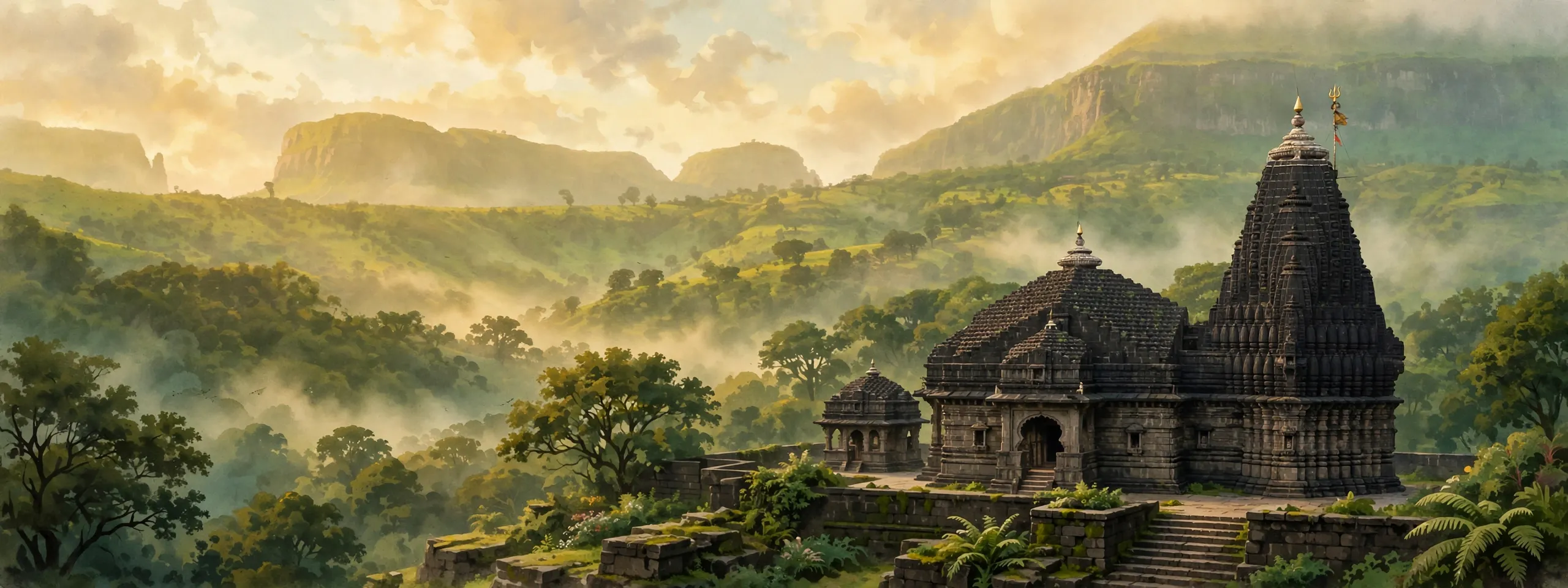
Trimbakeshwar Temple in Trimbak, about 28 km from Nashik in Maharashtra, is one of the twelve Jyotirlingas, the shrines where Hindus worship Shiva as a self-manifested pillar of light. Its sanctum holds a rare lingam with three faces, honouring Brahma, Vishnu and Shiva together, a form found at no other Jyotirlinga. The temple stands at the foot of Brahmagiri hill beside Kushavarta Kund, the pond regarded as the source of the Godavari river.
- Punjabi name
- ਤ੍ਰਿੰਬਕੇਸ਼ਵਰ ਮੰਦਰ
- Country
- India
- State
- Maharashtra
- District
- Nashik
- Town
- Trimbak
- Deity
- Shiva (as the Trimbakeshwar Jyotirlinga)
All 12 facts
- Jyotirlinga
- One of the twelve
- Architectural style
- Hemadpanthi, in black basalt
- Rebuilt by
- Peshwa Balaji Baji Rao, 1755
- Distance from Nashik
- About 28 km
- Sacred pond
- Kushavarta Kund, regarded as the Godavari's source
- Major festival
- Maha Shivaratri
Trimbakeshwar Temple, in Trimbak about 28 km from Nashik in Maharashtra, is one of the twelve Jyotirlingas, where Shiva is worshipped as a self-manifested pillar of light. Its sanctum holds a lingam with three faces honouring Brahma, Vishnu and Shiva together, a form found at no other Jyotirlinga, beside Kushavarta Kund, the pond regarded as the source of the Godavari.
What is Trimbakeshwar Temple?
Trimbakeshwar is a Hindu temple to Shiva in Trimbak, a town in Maharashtra's Nashik district, and one of the twelve Jyotirlingas. The Jyotirlingas are the twelve shrines across India where Shiva is worshipped not as an installed image but as a jyoti, a self-manifested pillar of light, and Trimbakeshwar's distinction among them is immediate: its sanctum holds three small lingas side by side, carved with the faces of Brahma, Vishnu and Shiva. Tradition reads the three together as the Trimurti, the creator, preserver and destroyer, in a single shrine. Every other Jyotirlinga is dedicated to Shiva alone, which makes Trimbakeshwar's triple form unique in the whole circuit. The temple stands at the foot of Brahmagiri hill, ringed by the Nilagiri and Kalagiri hills, and the town around it has grown up entirely around the pilgrimage.
The three-faced Jyotirlinga
The heart of the temple is the garbhagriha, the dark inner sanctum, where the three-faced lingam sits at floor level in a hollowed pit rather than raised on a pedestal. Devotees approach close enough to see the three faces, one each for Brahma, Vishnu and Shiva, worn smooth by centuries of ritual bathing. Maharashtra's tourism board describes it plainly as a three-faced Jyotirlinga symbolising Brahma, Vishnu and Mahesh. Pilgrims speak of the slow wearing of the stone as a reminder of impermanence: devotees say the erosion of the lingam under constant offerings symbolises the eroding nature of human society itself. Photography is not the point here; darshan is.
History: the Peshwa rebuilding
Like many of India's great shrines, the Trimbakeshwar seen today is an 18th-century rebuilding on a far older sacred site. The temple trust's own history says an earlier shrine here was destroyed under the Mughal ruler Aurangzeb. The present temple was commissioned by the Peshwa Balaji Baji Rao, better known as Nana Saheb, and rebuilt in 1755. The Archaeological Survey of India dates the work to his reign of 1740 to 1761 and notes that Ahilyabai Holkar of Indore, the era's great restorer of temples, renovated it in 1779. Built entirely of black basalt in the Hemadpanthi manner of the Deccan, it is, in the ASI's phrase, an example of the class and elegance of the Maratha architecture patronised under the Peshwas. Its curving shikhara still speaks the North Indian idiom explored in Jugti's guide to Nagara temple architecture. Until 1789, the great Simhastha fair of the region was held only at Trimbak; it has since been shared with Nashik.
The Godavari's source at Kushavarta
Trimbakeshwar's second claim to fame is water. The Godavari, the great river of the Deccan, is held by tradition to rise at Brahmagiri: the legend tells that the sage Gautama Rishi's penance persuaded Shiva to release the Ganga, which flowed down here as the Godavari. Kushavarta Kund, the sacred pond within the temple precinct, is regarded as the river's origin, and pilgrims bathe in its waters before entering the sanctum. The temple also keeps its own great tank, Amritavarshini, about 28 by 30 metres, along with smaller tirthas named Bilvatirtha, Viswanantirtha and Mukundatirtha. The shrine complex holds images of Ganga, Jaleswara, Rameswara, Gautameswara, Kedarnatha, Rama, Krishna, Parashurama and Lakshmi Narayana, so a single visit moves a pilgrim through a whole pantheon.
Rituals performed only here
Trimbakeshwar is one of Hinduism's great centres for ancestral rites, and families travel here from across Maharashtra and beyond for pujas meant to bring peace to departed ancestors. The best known is Narayan Nagbali, a three-day puja that tradition says is performed only at Trimbakeshwar. Alongside it, the temple is famous for Kalsarpa Shanti and Tripindi Vidhi, rites sought by devotees troubled by ancestral or planetary afflictions. The temple's pandits also maintain Hindu genealogy registers, the bahi-khatas in which priests record the visits of pilgrim families across generations, so a family's history at the shrine can be traced back through the books.
Visiting Trimbakeshwar
Trimbak lies about 28 km by road from the city of Nashik, an easy day trip, and the temple sits between its three guardian hills. Maha Shivaratri is the main festival, when the town fills with pilgrims. Every twelve years the Nashik-Trimbakeshwar Simhastha, one of the four fairs traditionally recognised as Kumbh Melas, brings millions to bathe at Trimbakeshwar and at Ram Kund in Nashik. Like its fellow Maharashtra Jyotirlinga at Bhimashankar, Trimbakeshwar rewards an unhurried visit: the black-stone carving, the bathing ghats and the hill paths of Brahmagiri all belong to the same sacred geography.
When is the next Nashik-Trimbakeshwar Simhastha?
The next Simhastha is scheduled from 31 October 2026 to 24 July 2028. The principal Amrit Snan bathing days fall on 2 August, 31 August and 11 September 2027 at Nashik, and on 12 September 2027 at Trimbakeshwar. Until 1789 the fair was held only at Trimbak; today the ritual bathing is shared between Trimbakeshwar in Trimbak and Ram Kund in Nashik, and the fair remains one of the four gatherings traditionally counted among the Kumbh Melas.
ਤ੍ਰਿੰਬਕੇਸ਼ਵਰ ਮੰਦਰ ਮਹਾਰਾਸ਼ਟਰ ਦੇ ਨਾਸ਼ਿਕ ਸ਼ਹਿਰ ਤੋਂ ਲਗਭਗ 28 ਕਿਲੋਮੀਟਰ ਦੂਰ ਤ੍ਰਿੰਬਕ ਕਸਬੇ ਵਿੱਚ ਹੈ ਅਤੇ ਬਾਰਾਂ ਜੋਤਿਰਲਿੰਗਾਂ ਵਿੱਚੋਂ ਇੱਕ ਹੈ, ਜਿੱਥੇ ਸ਼ਿਵ ਦੀ ਪੂਜਾ ਸਵੈ-ਪ੍ਰਗਟ ਜੋਤਿ ਦੇ ਰੂਪ ਵਿੱਚ ਹੁੰਦੀ ਹੈ ਇਸ ਦੇ ਗਰਭਗ੍ਰਹਿ ਵਿੱਚ ਤਿੰਨ ਮੁਖ ਵਾਲਾ ਲਿੰਗਮ ਹੈ ਜਿਸ ਵਿੱਚ ਬ੍ਰਹਮਾ, ਵਿਸ਼ਨੂੰ ਅਤੇ ਸ਼ਿਵ ਤਿੰਨੋਂ ਇਕੱਠੇ ਵਿਰਾਜਮਾਨ ਹਨ, ਅਜਿਹਾ ਰੂਪ ਕਿਸੇ ਹੋਰ ਜੋਤਿਰਲਿੰਗ ਵਿੱਚ ਨਹੀਂ ਮਿਲਦਾ, ਅਤੇ ਨਾਲ ਹੀ ਕੁਸ਼ਾਵਰਤ ਕੁੰਡ ਹੈ, ਉਹ ਤਲਾਅ ਜਿਸਨੂੰ ਗੋਦਾਵਰੀ ਨਦੀ ਦਾ ਉਦਗਮ ਮੰਨਿਆ ਜਾਂਦਾ ਹੈ
ਤ੍ਰਿੰਬਕੇਸ਼ਵਰ ਮੰਦਰ ਕੀ ਹੈ?
ਤ੍ਰਿੰਬਕੇਸ਼ਵਰ ਮਹਾਰਾਸ਼ਟਰ ਦੇ ਨਾਸ਼ਿਕ ਜ਼ਿਲ੍ਹੇ ਦੇ ਤ੍ਰਿੰਬਕ ਕਸਬੇ ਵਿੱਚ ਸ਼ਿਵ ਦਾ ਇੱਕ ਹਿੰਦੂ ਮੰਦਰ ਹੈ ਅਤੇ ਬਾਰਾਂ ਜੋਤਿਰਲਿੰਗਾਂ ਵਿੱਚੋਂ ਇੱਕ ਹੈ ਜੋਤਿਰਲਿੰਗ ਭਾਰਤ ਦੇ ਉਹ ਬਾਰਾਂ ਧਾਰਮਿਕ ਸਥਾਨ ਹਨ ਜਿੱਥੇ ਸ਼ਿਵ ਦੀ ਪੂਜਾ ਕਿਸੇ ਸਥਾਪਿਤ ਮੂਰਤੀ ਵਜੋਂ ਨਹੀਂ, ਸਗੋਂ ਜੋਤਿ, ਸਵੈ-ਪ੍ਰਗਟ ਰੋਸ਼ਨੀ ਦੇ ਥੰਮ੍ਹ ਵਜੋਂ ਹੁੰਦੀ ਹੈ, ਅਤੇ ਇਹਨਾਂ ਵਿੱਚ ਤ੍ਰਿੰਬਕੇਸ਼ਵਰ ਦੀ ਵੱਖਰੀ ਪਛਾਣ ਤੁਰੰਤ ਦਿਸਦੀ ਹੈ: ਇਸ ਦੇ ਗਰਭਗ੍ਰਹਿ ਵਿੱਚ ਇੱਕ ਨਹੀਂ, ਸਗੋਂ ਤਿੰਨ ਛੋਟੇ ਲਿੰਗ ਨਾਲ-ਨਾਲ ਹਨ, ਜਿਨ੍ਹਾਂ ਉੱਤੇ ਬ੍ਰਹਮਾ, ਵਿਸ਼ਨੂੰ ਅਤੇ ਸ਼ਿਵ ਦੇ ਮੁਖ ਬਣੇ ਹੋਏ ਹਨ ਪਰੰਪਰਾ ਇਨ੍ਹਾਂ ਤਿੰਨਾਂ ਨੂੰ ਇਕੱਠੇ ਤ੍ਰਿਮੂਰਤਿ ਮੰਨਦੀ ਹੈ, ਸਿਰਜਣਹਾਰ, ਪਾਲਣਹਾਰ ਅਤੇ ਸੰਘਾਰਕ, ਇੱਕੋ ਧਾਮ ਵਿੱਚ ਹਰ ਦੂਜਾ ਜੋਤਿਰਲਿੰਗ ਸਿਰਫ਼ ਸ਼ਿਵ ਨੂੰ ਸਮਰਪਿਤ ਹੈ, ਇਸ ਲਈ ਤ੍ਰਿੰਬਕੇਸ਼ਵਰ ਦਾ ਇਹ ਤਿਹਰਾ ਰੂਪ ਪੂਰੇ ਜੋਤਿਰਲਿੰਗ ਪਰਿਕਰਮਾ ਵਿੱਚ ਅਨੋਖਾ ਹੈ ਮੰਦਰ ਬ੍ਰਹਮਗਿਰੀ ਪਹਾੜੀ ਦੀ ਤਲਹਟੀ ਵਿੱਚ ਹੈ, ਜਿਸਦੇ ਆਲੇ-ਦੁਆਲੇ ਨੀਲਗਿਰੀ ਅਤੇ ਕਾਲਾਗਿਰੀ ਪਹਾੜੀਆਂ ਹਨ, ਅਤੇ ਆਲੇ-ਦੁਆਲੇ ਦਾ ਕਸਬਾ ਪੂਰੀ ਤਰ੍ਹਾਂ ਇਸ ਯਾਤਰਾ ਦੇ ਦੁਆਲੇ ਹੀ ਵਸਿਆ ਹੈ
ਤਿੰਨ ਮੁਖ ਵਾਲਾ ਜੋਤਿਰਲਿੰਗ
ਮੰਦਰ ਦਾ ਹਿਰਦਾ ਗਰਭਗ੍ਰਹਿ ਹੈ, ਉਹ ਹਨੇਰਾ ਅੰਦਰੂਨੀ ਕੋਠਾ, ਜਿੱਥੇ ਤਿੰਨ ਮੁਖ ਵਾਲਾ ਲਿੰਗਮ ਚਬੂਤਰੇ ਉੱਤੇ ਨਹੀਂ, ਸਗੋਂ ਫ਼ਰਸ਼ ਦੇ ਪੱਧਰ ਉੱਤੇ ਇੱਕ ਖੋਖਲੇ ਟੋਏ ਵਿੱਚ ਸਥਿਤ ਹੈ ਸ਼ਰਧਾਲੂ ਇੰਨੇ ਨੇੜੇ ਜਾਂਦੇ ਹਨ ਕਿ ਤਿੰਨੋਂ ਮੁਖ ਦਿਸਦੇ ਹਨ, ਬ੍ਰਹਮਾ, ਵਿਸ਼ਨੂੰ ਅਤੇ ਸ਼ਿਵ ਦੇ, ਜੋ ਸਦੀਆਂ ਦੀ ਰੀਤੀਗਤ ਇਸ਼ਨਾਨ ਨਾਲ ਘਿਸ ਕੇ ਨਿਰਵਿਘਨ ਹੋ ਗਏ ਹਨ ਮਹਾਰਾਸ਼ਟਰ ਦੇ ਸੈਰ-ਸਪਾਟਾ ਵਿਭਾਗ ਨੇ ਇਸਨੂੰ ਸਾਫ਼ ਸ਼ਬਦਾਂ ਵਿੱਚ ਬ੍ਰਹਮਾ, ਵਿਸ਼ਨੂੰ ਅਤੇ ਮਹੇਸ਼ ਦਾ ਪ੍ਰਤੀਕ ਤਿੰਨ ਮੁਖ ਵਾਲਾ ਜੋਤਿਰਲਿੰਗ ਦੱਸਿਆ ਹੈ ਸ਼ਰਧਾਲੂ ਪੱਥਰ ਦੇ ਇਸ ਹੌਲੀ ਘਿਸਾਅ ਨੂੰ ਅਨਿੱਤਤਾ ਦੀ ਯਾਦ ਦੱਸਦੇ ਹਨ: ਮੰਨਿਆ ਜਾਂਦਾ ਹੈ ਕਿ ਨਿਰੰਤਰ ਚੜ੍ਹਾਵੇ ਨਾਲ ਲਿੰਗਮ ਦਾ ਘਿਸਣਾ ਮਨੁੱਖੀ ਸਮਾਜ ਦੇ ਖੁਰਦੇ ਸੁਭਾਅ ਦਾ ਪ੍ਰਤੀਕ ਹੈ
ਇਤਿਹਾਸ: ਪੇਸ਼ਵਾ ਵੱਲੋਂ ਮੁੜ ਉਸਾਰੀ
ਭਾਰਤ ਦੇ ਬਹੁਤ ਸਾਰੇ ਮਹਾਨ ਧਾਮਾਂ ਵਾਂਗ, ਅੱਜ ਦਿਸਦਾ ਤ੍ਰਿੰਬਕੇਸ਼ਵਰ ਇੱਕ ਬਹੁਤ ਪੁਰਾਣੇ ਪਵਿੱਤਰ ਸਥਾਨ ਉੱਤੇ 18ਵੀਂ ਸਦੀ ਦੀ ਮੁੜ ਉਸਾਰੀ ਹੈ ਮੰਦਰ ਟਰੱਸਟ ਦੇ ਆਪਣੇ ਇਤਿਹਾਸ ਅਨੁਸਾਰ ਇੱਥੋਂ ਦਾ ਪੁਰਾਣਾ ਮੰਦਰ ਮੁਗ਼ਲ ਬਾਦਸ਼ਾਹ ਔਰੰਗਜ਼ੇਬ ਦੇ ਸਮੇਂ ਵਿੱਚ ਤਬਾਹ ਕਰ ਦਿੱਤਾ ਗਿਆ ਸੀ ਮੌਜੂਦਾ ਮੰਦਰ ਪੇਸ਼ਵਾ ਬਾਲਾਜੀ ਬਾਜੀ ਰਾਓ, ਜੋ ਨਾਨਾ ਸਾਹਿਬ ਦੇ ਨਾਂ ਨਾਲ ਜਾਣੇ ਜਾਂਦੇ ਹਨ, ਵੱਲੋਂ ਬਣਵਾਇਆ ਗਿਆ ਅਤੇ 1755 ਵਿੱਚ ਮੁੜ ਉਸਾਰਿਆ ਗਿਆ ਭਾਰਤੀ ਪੁਰਾਤੱਤਵ ਸਰਵੇਖਣ ਇਸ ਉਸਾਰੀ ਨੂੰ ਉਨ੍ਹਾਂ ਦੇ 1740 ਤੋਂ 1761 ਦੇ ਰਾਜਕਾਲ ਨਾਲ ਜੋੜਦਾ ਹੈ ਅਤੇ ਦੱਸਦਾ ਹੈ ਕਿ ਉਸ ਯੁੱਗ ਦੀ ਮਹਾਨ ਮੰਦਰ-ਸੁਧਾਰਕ ਇੰਦੌਰ ਦੀ ਅਹਿਲਿਆਬਾਈ ਹੋਲਕਰ ਨੇ 1779 ਵਿੱਚ ਇਸ ਦੀ ਮੁਰੰਮਤ ਕਰਵਾਈ ਸੀ ਪੂਰਾ ਮੰਦਰ ਕਾਲੇ ਬਾਸਾਲਟ ਪੱਥਰ ਦਾ ਹੈ ਅਤੇ ਦੱਖਣ ਦੇ ਹੇਮਾਡਪੰਥੀ ਢੰਗ ਵਿੱਚ ਬਣਿਆ ਹੈ, ਜਿਸਨੂੰ ਪੁਰਾਤੱਤਵ ਸਰਵੇਖਣ ਨੇ ਪੇਸ਼ਵਾ ਕਾਲ ਦੀ ਮਰਾਠਾ ਵਾਸਤੂਕਲਾ ਦੀ ਸ਼ਾਨਦਾਰ ਮਿਸਾਲ ਦੱਸਿਆ ਹੈ ਇਸ ਦਾ ਘੁਮਾਅਦਾਰ ਸ਼ਿਖਰ ਅਜੇ ਵੀ ਉੱਤਰ ਭਾਰਤੀ ਢੰਗ ਦੀ ਯਾਦ ਦਿਵਾਉਂਦਾ ਹੈ 1789 ਤੱਕ ਇਸ ਇਲਾਕੇ ਦਾ ਮਹਾਨ ਸਿਮਹਸਥ ਮੇਲਾ ਸਿਰਫ਼ ਤ੍ਰਿੰਬਕ ਵਿੱਚ ਹੀ ਲੱਗਦਾ ਸੀ, ਉਸ ਤੋਂ ਬਾਅਦ ਇਹ ਨਾਸ਼ਿਕ ਨਾਲ ਸਾਂਝਾ ਹੋ ਗਿਆ
ਕੁਸ਼ਾਵਰਤ ਵਿਖੇ ਗੋਦਾਵਰੀ ਦਾ ਉਦਗਮ
ਤ੍ਰਿੰਬਕੇਸ਼ਵਰ ਦੀ ਦੂਜੀ ਵੱਡੀ ਪਛਾਣ ਪਾਣੀ ਹੈ ਦੱਖਣ ਦੀ ਮਹਾਨ ਨਦੀ ਗੋਦਾਵਰੀ ਪਰੰਪਰਾ ਅਨੁਸਾਰ ਬ੍ਰਹਮਗਿਰੀ ਤੋਂ ਨਿਕਲਦੀ ਹੈ: ਕਥਾ ਹੈ ਕਿ ਰਿਸ਼ੀ ਗੌਤਮ ਦੀ ਤਪੱਸਿਆ ਨਾਲ ਪ੍ਰਸੰਨ ਹੋ ਕੇ ਸ਼ਿਵ ਨੇ ਗੰਗਾ ਨੂੰ ਛੱਡਿਆ, ਜੋ ਇੱਥੇ ਗੋਦਾਵਰੀ ਬਣ ਕੇ ਵਗੀ ਮੰਦਰ ਪਰਿਸਰ ਦੇ ਅੰਦਰ ਕੁਸ਼ਾਵਰਤ ਕੁੰਡ, ਉਹ ਪਵਿੱਤਰ ਤਲਾਅ, ਨਦੀ ਦਾ ਉਦਗਮ ਮੰਨਿਆ ਜਾਂਦਾ ਹੈ, ਅਤੇ ਸ਼ਰਧਾਲੂ ਗਰਭਗ੍ਰਹਿ ਵਿੱਚ ਜਾਣ ਤੋਂ ਪਹਿਲਾਂ ਇਸ ਵਿੱਚ ਇਸ਼ਨਾਨ ਕਰਦੇ ਹਨ ਮੰਦਰ ਦਾ ਆਪਣਾ ਵੱਡਾ ਤਲਾਅ ਅੰਮ੍ਰਿਤਵਰਸ਼ਿਨੀ ਵੀ ਹੈ, ਲਗਭਗ 28 ਗੁਣਾ 30 ਮੀਟਰ, ਅਤੇ ਨਾਲ ਹੀ ਬਿਲਵਤੀਰਥ, ਵਿਸ਼ਵਨਾਥਤੀਰਥ ਅਤੇ ਮੁਕੁੰਦਤੀਰਥ ਨਾਂ ਦੇ ਛੋਟੇ ਤੀਰਥ ਹਨ ਮੰਦਰ ਪਰਿਸਰ ਵਿੱਚ ਗੰਗਾ, ਜਲੇਸ਼ਵਰ, ਰਮੇਸ਼ਵਰ, ਗੌਤਮੇਸ਼ਵਰ, ਕੇਦਾਰਨਾਥ, ਰਾਮ, ਕ੍ਰਿਸ਼ਨ, ਪਰਸ਼ੂਰਾਮ ਅਤੇ ਲਕਸ਼ਮੀ-ਨਾਰਾਇਣ ਦੀਆਂ ਮੂਰਤੀਆਂ ਹਨ, ਇਸ ਲਈ ਇੱਕੋ ਦਰਸ਼ਨ ਵਿੱਚ ਸ਼ਰਧਾਲੂ ਪੂਰੇ ਦੇਵ-ਪਰਿਵਾਰ ਦੇ ਦਰਸ਼ਨ ਕਰ ਲੈਂਦਾ ਹੈ
ਸਿਰਫ਼ ਇੱਥੇ ਹੋਣ ਵਾਲੀਆਂ ਪੂਜਾਵਾਂ
ਤ੍ਰਿੰਬਕੇਸ਼ਵਰ ਹਿੰਦੂ ਧਰਮ ਵਿੱਚ ਪਿਤਰਾਂ ਦੀ ਸ਼ਾਂਤੀ ਲਈ ਕੀਤੀਆਂ ਜਾਂਦੀਆਂ ਪੂਜਾਵਾਂ ਦੇ ਮਹਾਨ ਕੇਂਦਰਾਂ ਵਿੱਚੋਂ ਇੱਕ ਹੈ, ਅਤੇ ਪਰਿਵਾਰ ਮਹਾਰਾਸ਼ਟਰ ਭਰ ਤੋਂ ਅਤੇ ਦੂਰ-ਦੂਰ ਤੋਂ ਵਿਛੜੀਆਂ ਆਤਮਾਵਾਂ ਦੀ ਸ਼ਾਂਤੀ ਲਈ ਇੱਥੇ ਆਉਂਦੇ ਹਨ ਸਭ ਤੋਂ ਜਾਣੀ ਜਾਂਦੀ ਪੂਜਾ ਨਾਰਾਇਣ ਨਾਗਬਲੀ ਹੈ, ਤਿੰਨ ਦਿਨਾਂ ਦੀ ਪੂਜਾ ਜਿਸ ਬਾਰੇ ਪਰੰਪਰਾ ਹੈ ਕਿ ਇਹ ਸਿਰਫ਼ ਤ੍ਰਿੰਬਕੇਸ਼ਵਰ ਵਿੱਚ ਹੀ ਹੁੰਦੀ ਹੈ ਇਸ ਦੇ ਨਾਲ ਹੀ ਮੰਦਰ ਕਾਲਸਰਪ ਸ਼ਾਂਤੀ ਅਤੇ ਤ੍ਰਿਪਿੰਡੀ ਵਿਧੀ ਲਈ ਮਸ਼ਹੂਰ ਹੈ, ਉਹ ਪੂਜਾਵਾਂ ਜਿਨ੍ਹਾਂ ਦੀ ਭਾਲ ਉਹ ਸ਼ਰਧਾਲੂ ਕਰਦੇ ਹਨ ਜੋ ਪਿਤਰੀ ਜਾਂ ਗ੍ਰਹਿ ਦੋਸ਼ਾਂ ਤੋਂ ਪੀੜਤ ਹਨ ਮੰਦਰ ਦੇ ਪੰਡੇ ਹਿੰਦੂ ਵੰਸ਼ਾਵਲੀ ਰਜਿਸਟਰ ਵੀ ਸੰਭਾਲਦੇ ਹਨ, ਉਹ ਬਹੀ-ਖਾਤੇ ਜਿਨ੍ਹਾਂ ਵਿੱਚ ਪੁਜਾਰੀ ਪੀੜ੍ਹੀ ਦਰ ਪੀੜ੍ਹੀ ਯਾਤਰੀ ਪਰਿਵਾਰਾਂ ਦੀਆਂ ਫੇਰੀਆਂ ਦਰਜ ਕਰਦੇ ਹਨ, ਇਸ ਲਈ ਕਿਸੇ ਪਰਿਵਾਰ ਦਾ ਮੰਦਰ ਨਾਲ ਇਤਿਹਾਸ ਇਨ੍ਹਾਂ ਕਿਤਾਬਾਂ ਰਾਹੀਂ ਪਿੱਛੇ ਤੱਕ ਖੋਜਿਆ ਜਾ ਸਕਦਾ ਹੈ
ਤ੍ਰਿੰਬਕੇਸ਼ਵਰ ਦੀ ਯਾਤਰਾ
ਤ੍ਰਿੰਬਕ ਨਾਸ਼ਿਕ ਸ਼ਹਿਰ ਤੋਂ ਸੜਕ ਰਾਹੀਂ ਲਗਭਗ 28 ਕਿਲੋਮੀਟਰ ਦੂਰ ਹੈ, ਇੱਕ ਸੌਖੀ ਦਿਨ ਭਰ ਦੀ ਯਾਤਰਾ, ਅਤੇ ਮੰਦਰ ਆਪਣੀਆਂ ਤਿੰਨ ਰਾਖੀ ਪਹਾੜੀਆਂ ਵਿਚਕਾਰ ਸਥਿਤ ਹੈ ਮਹਾ ਸ਼ਿਵਰਾਤ੍ਰੀ ਮੁੱਖ ਤਿਉਹਾਰ ਹੈ, ਜਦੋਂ ਕਸਬਾ ਸ਼ਰਧਾਲੂਆਂ ਨਾਲ ਭਰ ਜਾਂਦਾ ਹੈ ਹਰ ਬਾਰਾਂ ਸਾਲਾਂ ਬਾਅਦ ਨਾਸ਼ਿਕ-ਤ੍ਰਿੰਬਕੇਸ਼ਵਰ ਸਿਮਹਸਥ, ਉਨ੍ਹਾਂ ਚਾਰ ਮੇਲਿਆਂ ਵਿੱਚੋਂ ਇੱਕ ਜਿਨ੍ਹਾਂ ਨੂੰ ਪਰੰਪਰਾਗਤ ਤੌਰ ਉੱਤੇ ਕੁੰਭ ਮੇਲਿਆਂ ਵਿੱਚ ਗਿਣਿਆ ਜਾਂਦਾ ਹੈ, ਤ੍ਰਿੰਬਕੇਸ਼ਵਰ ਅਤੇ ਨਾਸ਼ਿਕ ਦੇ ਰਾਮ ਕੁੰਡ ਵਿਖੇ ਇਸ਼ਨਾਨ ਲਈ ਲੱਖਾਂ ਲੋਕਾਂ ਨੂੰ ਲਿਆਉਂਦਾ ਹੈ ਮਹਾਰਾਸ਼ਟਰ ਦੇ ਆਪਣੇ ਹੀ ਦੂਜੇ ਜੋਤਿਰਲਿੰਗ ਭੀਮਾਸ਼ੰਕਰ ਵਾਂਗ, ਤ੍ਰਿੰਬਕੇਸ਼ਵਰ ਬਿਨਾਂ ਜਲਦਬਾਜ਼ੀ ਦੇ ਦਰਸ਼ਨ ਮੰਗਦਾ ਹੈ: ਕਾਲੇ ਪੱਥਰ ਦੀ ਨੱਕਾਸ਼ੀ, ਇਸ਼ਨਾਨ ਘਾਟ ਅਤੇ ਬ੍ਰਹਮਗਿਰੀ ਦੇ ਪਹਾੜੀ ਰਸਤੇ ਸਾਰੇ ਇੱਕੋ ਪਵਿੱਤਰ ਭੂਗੋਲ ਦੇ ਹਿੱਸੇ ਹਨ
ਅਗਲਾ ਨਾਸ਼ਿਕ-ਤ੍ਰਿੰਬਕੇਸ਼ਵਰ ਸਿਮਹਸਥ ਕਦੋਂ ਹੈ?
ਅਗਲਾ ਸਿਮਹਸਥ 31 ਅਕਤੂਬਰ 2026 ਤੋਂ 24 ਜੁਲਾਈ 2028 ਤੱਕ ਲੱਗਣਾ ਤੈਅ ਹੈ ਮੁੱਖ ਅੰਮ੍ਰਿਤ ਇਸ਼ਨਾਨ ਦੀਆਂ ਤਾਰੀਖਾਂ ਨਾਸ਼ਿਕ ਵਿਖੇ 2 ਅਗਸਤ, 31 ਅਗਸਤ ਅਤੇ 11 ਸਤੰਬਰ 2027 ਅਤੇ ਤ੍ਰਿੰਬਕੇਸ਼ਵਰ ਵਿਖੇ 12 ਸਤੰਬਰ 2027 ਹਨ 1789 ਤੱਕ ਇਹ ਮੇਲਾ ਸਿਰਫ਼ ਤ੍ਰਿੰਬਕ ਵਿੱਚ ਹੀ ਲੱਗਦਾ ਸੀ, ਅੱਜ ਰੀਤੀਗਤ ਇਸ਼ਨਾਨ ਤ੍ਰਿੰਬਕ ਦੇ ਤ੍ਰਿੰਬਕੇਸ਼ਵਰ ਅਤੇ ਨਾਸ਼ਿਕ ਦੇ ਰਾਮ ਕੁੰਡ ਵਿਚਕਾਰ ਸਾਂਝਾ ਹੈ, ਅਤੇ ਇਹ ਮੇਲਾ ਅਜੇ ਵੀ ਉਨ੍ਹਾਂ ਚਾਰ ਸਮਾਗਮਾਂ ਵਿੱਚ ਗਿਣਿਆ ਜਾਂਦਾ ਹੈ ਜਿਨ੍ਹਾਂ ਨੂੰ ਪਰੰਪਰਾਗਤ ਤੌਰ ਉੱਤੇ ਕੁੰਭ ਮੇਲਿਆਂ ਵਿੱਚ ਮੰਨਿਆ ਜਾਂਦਾ ਹੈ