
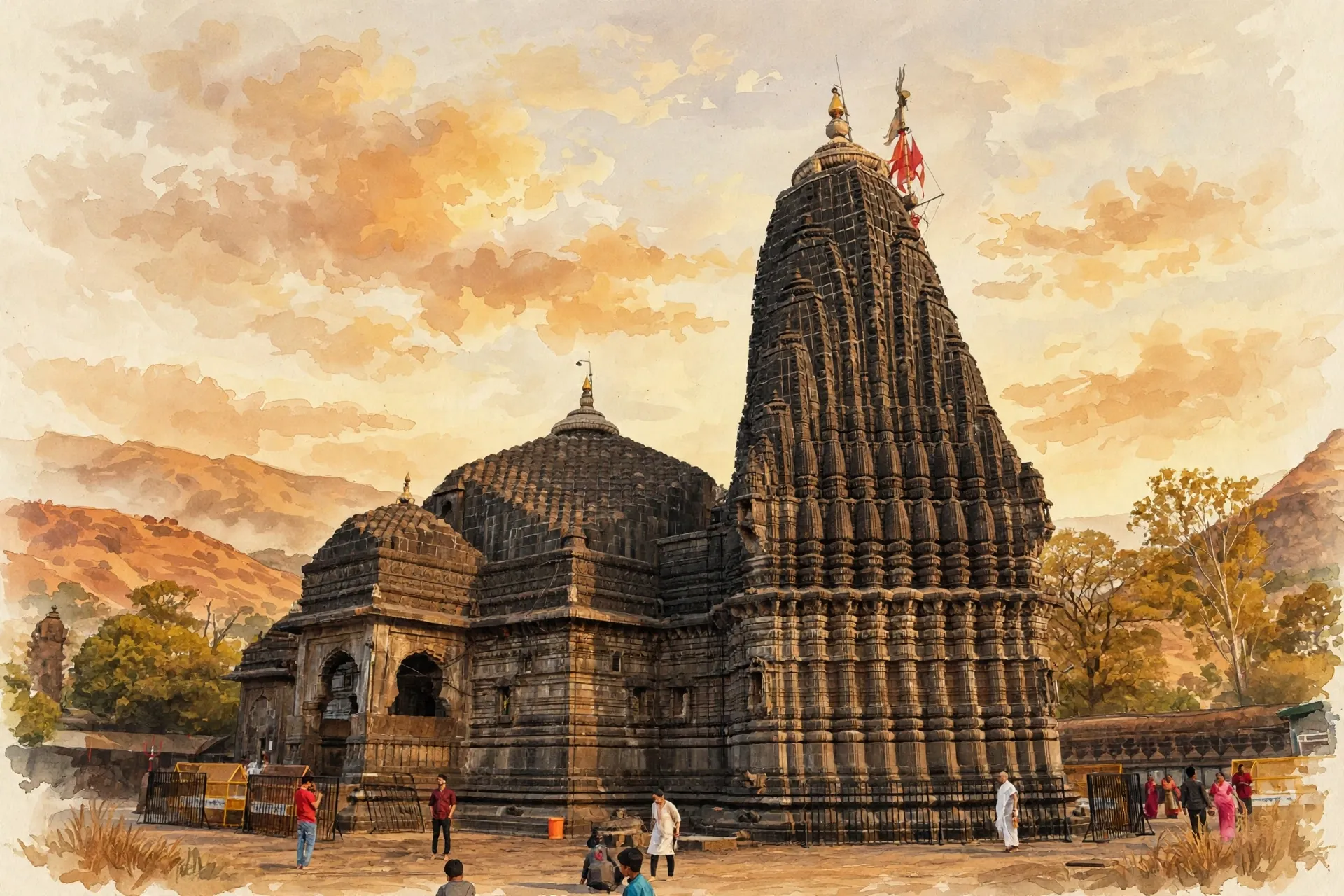
The mandirs of Nashik centre on three shrines. At Trimbak, 28 kilometres from the city, Trimbakeshwar is a Jyotirlinga whose linga carries three faces, at the Kusavarta source of the Godavari. In Panchavati, the Kalaram Temple honours a black stone Rama and was the site of Ambedkar's 1930 satyagraha. At Nashik Road, Muktidham, founded in 1971, gathers replicas of all twelve Jyotirlingas in white marble.
- Punjabi name
- ਨਾਸਿਕ ਦੇ ਮੰਦਰ
- Country
- India
- State
- Maharashtra
- City
- Nashik
- Guide covers
- Trimbakeshwar Temple, Kalaram Temple, Muktidham
- Main shrine
- Trimbakeshwar, one of the 12 Jyotirlingas
- River
- Godavari
Nashik, on the Godavari in Maharashtra, is a Ramayana city and a Kumbh city at once, and its mandirs spread across three different settings. West of the city, at Trimbak, stands Trimbakeshwar, one of the twelve Jyotirlingas, at the source of the Godavari. In the old Panchavati quarter stands the Kalaram Temple, Nashik's most important Rama shrine. At Nashik Road stands Muktidham, a modern white marble complex that gathers replicas of all twelve Jyotirlingas under one roof. This guide covers the three together. Jugti's full entry for Trimbakeshwar is linked below; the other two are introduced here and will receive their own full entries in time.
Trimbakeshwar: the three-faced Jyotirlinga at the river's source
The Trimbakeshwar Temple stands in the town of Trimbak, 28 kilometres from Nashik city, between the Brahmagiri, Nilagiri and Kalagiri hills. It is one of the twelve Jyotirlingas, and it is unlike any other: its linga carries three faces, for Brahma, Vishnu and Shiva together. The Kusavarta kunda, the sacred pond in the temple grounds, is honoured as the source of the Godavari, the second longest river in India, and tradition tells how the sage Gautama's penance brought the river down here. The present black stone temple, in the Hemadpanthi manner, was built by Peshwa Balaji Baji Rao, also called Nanasaheb, in the mid 18th century, after the earlier temple was destroyed under Aurangzeb. Hindu genealogy registers of pilgrim families are kept here, and rites such as Narayan Nagbali and Kalsarpa Shanti draw pilgrims from across India.
Kalaram Temple: the black Rama of Panchavati
In Panchavati, the quarter where tradition says Rama, Sita and Lakshmana lived for two and a half years of their exile on the northern bank of the Godavari, stands the Kalaram Temple. Its name means Black Rama, for the black stone image of Rama in the sanctum, with Sita and Lakshmana beside him. An older temple stood on the site, estimated to the Rashtrakuta period of the 7th to 11th centuries. The present temple was funded by Sardar Rangarao Odhekar and built in the late 18th century: tradition in Nashik tells that Odhekar dreamed the black image lay in the Godavari, recovered it from the river, and built the temple for it, and his statue stands in the temple today. The main temple climbs 14 steps, for the 14 years of Rama's exile, and the complex holds 84 pillars. A black image of Hanuman guards the main entrance, placed so that Rama is visible from Hanuman's shrine.
Kalaram also carries a modern history that every visitor should know. On 2 March 1930, B. R. Ambedkar led a large satyagraha outside this temple, demanding that Dalits be allowed to enter, with protesters singing, raising slogans and surrounding the temple. The Kalaram Mandir Satyagraha ran until 1935 and became a landmark of the Dalit movement in India. The temple's great festivals are Ram Navami, Navratri and Diwali.
Muktidham: twelve Jyotirlingas in white marble
At Nashik Road, a suburb of the city, stands Muktidham, a marble temple complex founded in 1971 through the donation of the local industrialist J. D. Chauhan-Bytco, Jairambhai Chauhan, and run by a private trust. It is built of Makrana marble from Rajasthan, worked by Rajasthani sculptors. Its signature idea is completeness: replicas of all twelve Jyotirlingas stand here, built to the dimensions of the originals and sanctified by being sent to their home pilgrimage centres, alongside images of Vishnu, Lakshmi, Rama, Lakshmana, Sita, Hanuman, Durga and Ganesha. A temple to Krishna carries paintings of Krishna's life and the Mahabharata by the painter Raghubir Mulgaonkar, and the eighteen chapters of the Gita are written on its walls. A dharamshala in the complex can house at least 200 pilgrims, and the complex draws thousands of devotees during the Kumbh Mela.
How do the three temples fit together on a visit?
Most pilgrims give Trimbakeshwar its own half day or full day: the Jyotirlinga, the Kusavarta kunda and the Brahmagiri hills. Kalaram belongs with a walk through Panchavati and the Godavari ghats, and Muktidham pairs easily with arrival or departure, close to Nashik Road station. Read together, the three show Nashik whole: an ancient Jyotirlinga at a river's source, a Rama temple layered with Ramayana memory and modern social history, and a modern complex built so that a pilgrim short on time can honour all twelve Jyotirlingas in one place. All three stand on the Godavari's story, the river the Nashik Kumbh, the Simhastha, celebrates every twelve years. This guide is part of Jugti's mandirs in India collection.
All Mandirs in Nashik
- Trimbakeshwar Temple : the three-faced Jyotirlinga at Trimbak, 28 km from Nashik, at the Kusavarta source of the Godavari
- Kalaram Temple: Nashik's black Rama temple in Panchavati, funded by Sardar Rangarao Odhekar in the late 18th century, site of Ambedkar's 1930 satyagraha (full entry coming)
- Muktidham: the white marble complex at Nashik Road, founded in 1971, with replicas of all twelve Jyotirlingas and the Gita on its walls (full entry coming)
ਨਾਸਿਕ, ਮਹਾਰਾਸ਼ਟਰ ਵਿੱਚ ਗੋਦਾਵਰੀ ਉੱਤੇ, ਇੱਕੋ ਵਾਰ ਰਾਮਾਇਣ ਦਾ ਸ਼ਹਿਰ ਅਤੇ ਕੁੰਭ ਦਾ ਸ਼ਹਿਰ ਹੈ, ਅਤੇ ਇਸਦੇ ਮੰਦਰ ਤਿੰਨ ਵੱਖ ਵੱਖ ਮਾਹੌਲਾਂ ਵਿੱਚ ਫੈਲੇ ਹਨ ਸ਼ਹਿਰ ਦੇ ਪੱਛਮ ਵਿੱਚ, ਤ੍ਰਿਅੰਬਕ ਵਿਖੇ, ਤ੍ਰਿਅੰਬਕੇਸ਼ਵਰ ਖੜ੍ਹਾ ਹੈ, ਬਾਰ੍ਹਾਂ ਜੋਤਿਰਲਿੰਗਾਂ ਵਿੱਚੋਂ ਇੱਕ, ਗੋਦਾਵਰੀ ਦੇ ਸਰੋਤ ਉੱਤੇ ਪੁਰਾਣੇ ਪੰਚਵਟੀ ਇਲਾਕੇ ਵਿੱਚ ਕਾਲਾਰਾਮ ਮੰਦਰ ਖੜ੍ਹਾ ਹੈ, ਨਾਸਿਕ ਦਾ ਸਭ ਤੋਂ ਮਹੱਤਵਪੂਰਨ ਰਾਮ ਧਾਮ ਨਾਸਿਕ ਰੋਡ ਉੱਤੇ ਮੁਕਤੀਧਾਮ ਹੈ, ਇੱਕ ਆਧੁਨਿਕ ਚਿੱਟੇ ਸੰਗਮਰਮਰ ਦਾ ਪਰਿਸਰ ਜੋ ਸਾਰੇ ਬਾਰ੍ਹਾਂ ਜੋਤਿਰਲਿੰਗਾਂ ਦੀਆਂ ਨਕਲਾਂ ਨੂੰ ਇੱਕੋ ਛੱਤ ਹੇਠ ਇਕੱਠਾ ਕਰਦਾ ਹੈ ਇਹ ਗਾਈਡ ਤਿੰਨਾਂ ਨੂੰ ਇਕੱਠੇ ਕਵਰ ਕਰਦੀ ਹੈ ਜੁਗਤੀ ਦੀ ਤ੍ਰਿਅੰਬਕੇਸ਼ਵਰ ਬਾਰੇ ਪੂਰੀ ਐਂਟਰੀ ਹੇਠਾਂ ਲਿੰਕ ਹੈ; ਬਾਕੀ ਦੋ ਇੱਥੇ ਪੇਸ਼ ਕੀਤੇ ਗਏ ਹਨ ਅਤੇ ਸਮੇਂ ਨਾਲ ਆਪਣੀਆਂ ਪੂਰੀਆਂ ਐਂਟਰੀਆਂ ਪ੍ਰਾਪਤ ਕਰਨਗੇ
ਤ੍ਰਿਅੰਬਕੇਸ਼ਵਰ: ਨਦੀ ਦੇ ਸਰੋਤ ਉੱਤੇ ਤਿੰਨ ਮੂੰਹਾਂ ਵਾਲਾ ਜੋਤਿਰਲਿੰਗ
ਤ੍ਰਿਅੰਬਕੇਸ਼ਵਰ ਮੰਦਰ ਤ੍ਰਿਅੰਬਕ ਕਸਬੇ ਵਿੱਚ ਖੜ੍ਹਾ ਹੈ, ਨਾਸਿਕ ਸ਼ਹਿਰ ਤੋਂ 28 ਕਿਲੋਮੀਟਰ, ਬ੍ਰਹਮਗਿਰੀ, ਨੀਲਗਿਰੀ ਅਤੇ ਕਾਲਾਗਿਰੀ ਪਹਾੜੀਆਂ ਦੇ ਵਿਚਕਾਰ ਇਹ ਬਾਰ੍ਹਾਂ ਜੋਤਿਰਲਿੰਗਾਂ ਵਿੱਚੋਂ ਇੱਕ ਹੈ, ਅਤੇ ਇਹ ਕਿਸੇ ਹੋਰ ਵਰਗਾ ਨਹੀਂ: ਇਸਦੇ ਲਿੰਗ ਉੱਤੇ ਤਿੰਨ ਮੂੰਹ ਹਨ, ਬ੍ਰਹਮਾ, ਵਿਸ਼ਨੂੰ ਅਤੇ ਸ਼ਿਵ ਇਕੱਠੇ ਕੁਸਾਵਰਤਾ ਕੁੰਡ, ਮੰਦਰ ਮੈਦਾਨ ਵਿੱਚ ਪਵਿੱਤਰ ਤਾਲਾਬ, ਨੂੰ ਗੋਦਾਵਰੀ ਦਾ ਸਰੋਤ ਮੰਨਿਆ ਜਾਂਦਾ ਹੈ, ਜੋ ਭਾਰਤ ਦੀ ਦੂਜੀ ਸਭ ਤੋਂ ਲੰਬੀ ਨਦੀ ਹੈ, ਅਤੇ ਪਰੰਪਰਾ ਦੱਸਦੀ ਹੈ ਕਿ ਰਿਸ਼ੀ ਗੌਤਮ ਦੀ ਤਪੱਸਿਆ ਨਦੀ ਨੂੰ ਇੱਥੇ ਲਿਆਈ ਮੌਜੂਦਾ ਕਾਲੇ ਪੱਥਰ ਦਾ ਮੰਦਰ, ਹੇਮਾਦਪੰਥੀ ਢੰਗ ਵਿੱਚ, ਪੇਸ਼ਵਾ ਬਾਲਾਜੀ ਬਾਜੀ ਰਾਓ, ਜਿਨ੍ਹਾਂ ਨੂੰ ਨਾਨਾਸਾਹਿਬ ਵੀ ਕਿਹਾ ਜਾਂਦਾ ਹੈ, ਨੇ ਅਠਾਰ੍ਹਵੀਂ ਸਦੀ ਦੇ ਵਿਚਕਾਰ ਬਣਾਇਆ, ਪਹਿਲੇ ਮੰਦਰ ਦੇ ਔਰੰਗਜ਼ੇਬ ਹੇਠ ਢਾਹੇ ਜਾਣ ਤੋਂ ਬਾਅਦ ਇੱਥੇ ਸ਼ਰਧਾਲੂ ਪਰਿਵਾਰਾਂ ਦੇ ਵੰਸ਼ਾਵਲੀ ਰਜਿਸਟਰ ਰੱਖੇ ਜਾਂਦੇ ਹਨ, ਅਤੇ ਨਾਰਾਇਣ ਨਾਗਬਲੀ ਅਤੇ ਕਾਲਸਰਪ ਸ਼ਾਂਤੀ ਵਰਗੀਆਂ ਰਸਮਾਂ ਸਾਰੇ ਭਾਰਤ ਤੋਂ ਸ਼ਰਧਾਲੂ ਖਿੱਚਦੀਆਂ ਹਨ
ਕਾਲਾਰਾਮ ਮੰਦਰ: ਪੰਚਵਟੀ ਦਾ ਕਾਲਾ ਰਾਮ
ਪੰਚਵਟੀ ਵਿੱਚ, ਉਹ ਇਲਾਕਾ ਜਿੱਥੇ ਪਰੰਪਰਾ ਕਹਿੰਦੀ ਹੈ ਕਿ ਰਾਮ, ਸੀਤਾ ਅਤੇ ਲਕਸ਼ਮਣ ਆਪਣੇ ਬਨਵਾਸ ਦੇ ਢਾਈ ਸਾਲ ਗੋਦਾਵਰੀ ਦੇ ਉੱਤਰੀ ਕੰਢੇ ਉੱਤੇ ਰਹੇ, ਕਾਲਾਰਾਮ ਮੰਦਰ ਖੜ੍ਹਾ ਹੈ ਇਸਦੇ ਨਾਂ ਦਾ ਅਰਥ ਹੈ ਕਾਲਾ ਰਾਮ, ਗਰਭਗ੍ਰਹਿ ਵਿੱਚ ਰਾਮ ਦੀ ਕਾਲੇ ਪੱਥਰ ਦੀ ਮੂਰਤੀ ਕਰਕੇ, ਜਿਸਦੇ ਨਾਲ ਸੀਤਾ ਅਤੇ ਲਕਸ਼ਮਣ ਹਨ ਇਸ ਥਾਂ ਉੱਤੇ ਇੱਕ ਪੁਰਾਣਾ ਮੰਦਰ ਖੜ੍ਹਾ ਸੀ, ਜੋ ਸੱਤਵੀਂ ਤੋਂ ਗਿਆਰ੍ਹਵੀਂ ਸਦੀ ਦੇ ਰਾਸ਼ਟਰਕੂਟ ਕਾਲ ਦਾ ਅੰਦਾਜ਼ਾ ਲਾਇਆ ਜਾਂਦਾ ਹੈ ਮੌਜੂਦਾ ਮੰਦਰ ਸਰਦਾਰ ਰੰਗਾਰਾਓ ਓਢੇਕਰ ਦੇ ਧਨ ਨਾਲ ਅਠਾਰ੍ਹਵੀਂ ਸਦੀ ਦੇ ਅਖੀਰ ਵਿੱਚ ਬਣਿਆ: ਨਾਸਿਕ ਦੀ ਪਰੰਪਰਾ ਦੱਸਦੀ ਹੈ ਕਿ ਓਢੇਕਰ ਨੇ ਸੁਪਨਾ ਦੇਖਿਆ ਕਿ ਕਾਲੀ ਮੂਰਤੀ ਗੋਦਾਵਰੀ ਵਿੱਚ ਹੈ, ਉਸਨੂੰ ਨਦੀ ਵਿੱਚੋਂ ਕੱਢਿਆ, ਅਤੇ ਉਸ ਲਈ ਮੰਦਰ ਬਣਾਇਆ, ਅਤੇ ਉਹਨਾਂ ਦੀ ਮੂਰਤੀ ਅੱਜ ਮੰਦਰ ਵਿੱਚ ਖੜ੍ਹੀ ਹੈ ਮੁੱਖ ਮੰਦਰ 14 ਪੌੜੀਆਂ ਚੜ੍ਹਦਾ ਹੈ, ਰਾਮ ਦੇ ਬਨਵਾਸ ਦੇ 14 ਸਾਲਾਂ ਲਈ, ਅਤੇ ਪਰਿਸਰ ਵਿੱਚ 84 ਥੰਮ੍ਹ ਹਨ ਮੁੱਖ ਦਰਵਾਜ਼ੇ ਉੱਤੇ ਹਨੂੰਮਾਨ ਦੀ ਕਾਲੀ ਮੂਰਤੀ ਰਾਖੀ ਕਰਦੀ ਹੈ, ਇਸ ਤਰ੍ਹਾਂ ਰੱਖੀ ਕਿ ਹਨੂੰਮਾਨ ਦੇ ਧਾਮ ਤੋਂ ਰਾਮ ਦਿਖਾਈ ਦੇਵੇ
ਕਾਲਾਰਾਮ ਇੱਕ ਆਧੁਨਿਕ ਇਤਿਹਾਸ ਵੀ ਸਾਂਭਦਾ ਹੈ ਜੋ ਹਰ ਸੈਲਾਨੀ ਨੂੰ ਜਾਣਨਾ ਚਾਹੀਦਾ ਹੈ 2 ਮਾਰਚ 1930 ਨੂੰ, ਬੀ ਆਰ ਅੰਬੇਡਕਰ ਨੇ ਇਸ ਮੰਦਰ ਦੇ ਬਾਹਰ ਇੱਕ ਵੱਡਾ ਸੱਤਿਆਗ੍ਰਹਿ ਕੀਤਾ, ਇਹ ਮੰਗ ਕਰਦੇ ਹੋਏ ਕਿ ਦਲਿਤਾਂ ਨੂੰ ਅੰਦਰ ਜਾਣ ਦਿੱਤਾ ਜਾਵੇ, ਪ੍ਰਦਰਸ਼ਨਕਾਰੀਆਂ ਨੇ ਗੀਤ ਗਾਏ, ਨਾਅਰੇ ਲਾਏ ਅਤੇ ਮੰਦਰ ਨੂੰ ਘੇਰਿਆ ਕਾਲਾਰਾਮ ਮੰਦਰ ਸੱਤਿਆਗ੍ਰਹਿ 1935 ਤੱਕ ਚੱਲਿਆ ਅਤੇ ਭਾਰਤ ਵਿੱਚ ਦਲਿਤ ਅੰਦੋਲਨ ਦਾ ਮੀਲ ਪੱਥਰ ਬਣਿਆ ਮੰਦਰ ਦੇ ਮਹਾਨ ਤਿਉਹਾਰ ਰਾਮ ਨਵਮੀ, ਨਵਰਾਤਰੀ ਅਤੇ ਦੀਵਾਲੀ ਹਨ
ਮੁਕਤੀਧਾਮ: ਚਿੱਟੇ ਸੰਗਮਰਮਰ ਵਿੱਚ ਬਾਰ੍ਹਾਂ ਜੋਤਿਰਲਿੰਗ
ਨਾਸਿਕ ਰੋਡ ਉੱਤੇ, ਸ਼ਹਿਰ ਦੇ ਇੱਕ ਉਪਨਗਰ ਵਿੱਚ, ਮੁਕਤੀਧਾਮ ਖੜ੍ਹਾ ਹੈ, ਇੱਕ ਸੰਗਮਰਮਰ ਮੰਦਰ ਪਰਿਸਰ ਜੋ 1971 ਵਿੱਚ ਸਥਾਨਕ ਉਦਯੋਗਪਤੀ ਜੇ ਡੀ ਚੌਹਾਨ ਬਾਈਟਕੋ, ਜੈਰਾਮਭਾਈ ਚੌਹਾਨ, ਦੇ ਦਾਨ ਨਾਲ ਸਥਾਪਿਤ ਹੋਇਆ ਅਤੇ ਇੱਕ ਨਿੱਜੀ ਟਰੱਸਟ ਚਲਾਉਂਦਾ ਹੈ ਇਹ ਰਾਜਸਥਾਨ ਦੇ ਮਕਰਾਨਾ ਸੰਗਮਰਮਰ ਨਾਲ ਬਣਿਆ ਹੈ, ਜਿਸਨੂੰ ਰਾਜਸਥਾਨੀ ਮੂਰਤੀਕਾਰਾਂ ਨੇ ਘੜਿਆ ਇਸਦਾ ਖਾਸ ਵਿਚਾਰ ਸੰਪੂਰਨਤਾ ਹੈ: ਸਾਰੇ ਬਾਰ੍ਹਾਂ ਜੋਤਿਰਲਿੰਗਾਂ ਦੀਆਂ ਨਕਲਾਂ ਇੱਥੇ ਖੜ੍ਹੀਆਂ ਹਨ, ਮੂਲਾਂ ਦੇ ਮਾਪਾਂ ਅਨੁਸਾਰ ਬਣੀਆਂ ਅਤੇ ਆਪਣੇ ਘਰੇਲੂ ਤੀਰਥ ਕੇਂਦਰਾਂ ਨੂੰ ਭੇਜ ਕੇ ਪਵਿੱਤਰ ਕੀਤੀਆਂ, ਵਿਸ਼ਨੂੰ, ਲਕਸ਼ਮੀ, ਰਾਮ, ਲਕਸ਼ਮਣ, ਸੀਤਾ, ਹਨੂੰਮਾਨ, ਦੁਰਗਾ ਅਤੇ ਗਣੇਸ਼ ਦੀਆਂ ਮੂਰਤੀਆਂ ਦੇ ਨਾਲ ਕ੍ਰਿਸ਼ਨ ਦੇ ਇੱਕ ਮੰਦਰ ਵਿੱਚ ਚਿੱਤਰਕਾਰ ਰਘੁਬੀਰ ਮੁਲਗਾਓਂਕਰ ਦੀਆਂ ਕ੍ਰਿਸ਼ਨ ਦੇ ਜੀਵਨ ਅਤੇ ਮਹਾਭਾਰਤ ਦੀਆਂ ਤਸਵੀਰਾਂ ਹਨ, ਅਤੇ ਗੀਤਾ ਦੇ ਅਠਾਰਾਂ ਅਧਿਆਇ ਇਸਦੀਆਂ ਕੰਧਾਂ ਉੱਤੇ ਲਿਖੇ ਹਨ ਪਰਿਸਰ ਵਿੱਚ ਇੱਕ ਧਰਮਸ਼ਾਲਾ ਘੱਟੋ ਘੱਟ 200 ਸ਼ਰਧਾਲੂਆਂ ਨੂੰ ਰੱਖ ਸਕਦੀ ਹੈ, ਅਤੇ ਕੁੰਭ ਮੇਲੇ ਦੌਰਾਨ ਪਰਿਸਰ ਹਜ਼ਾਰਾਂ ਸ਼ਰਧਾਲੂ ਖਿੱਚਦਾ ਹੈ
ਇੱਕ ਯਾਤਰਾ ਵਿੱਚ ਇਹ ਤਿੰਨ ਮੰਦਰ ਕਿਵੇਂ ਜੁੜਦੇ ਹਨ?
ਜ਼ਿਆਦਾਤਰ ਸ਼ਰਧਾਲੂ ਤ੍ਰਿਅੰਬਕੇਸ਼ਵਰ ਨੂੰ ਆਪਣਾ ਅੱਧਾ ਦਿਨ ਜਾਂ ਪੂਰਾ ਦਿਨ ਦਿੰਦੇ ਹਨ: ਜੋਤਿਰਲਿੰਗ, ਕੁਸਾਵਰਤਾ ਕੁੰਡ ਅਤੇ ਬ੍ਰਹਮਗਿਰੀ ਪਹਾੜੀਆਂ ਕਾਲਾਰਾਮ ਪੰਚਵਟੀ ਅਤੇ ਗੋਦਾਵਰੀ ਘਾਟਾਂ ਦੀ ਸੈਰ ਨਾਲ ਜੁੜਦਾ ਹੈ, ਅਤੇ ਮੁਕਤੀਧਾਮ ਆਉਣ ਜਾਂ ਜਾਣ ਨਾਲ ਆਸਾਨੀ ਨਾਲ ਜੁੜਦਾ ਹੈ, ਨਾਸਿਕ ਰੋਡ ਸਟੇਸ਼ਨ ਦੇ ਨੇੜੇ ਇਕੱਠੇ ਪੜ੍ਹਿਆਂ, ਇਹ ਤਿੰਨੇ ਨਾਸਿਕ ਨੂੰ ਪੂਰਾ ਦਿਖਾਉਂਦੇ ਹਨ: ਨਦੀ ਦੇ ਸਰੋਤ ਉੱਤੇ ਇੱਕ ਪ੍ਰਾਚੀਨ ਜੋਤਿਰਲਿੰਗ, ਰਾਮਾਇਣ ਦੀ ਯਾਦ ਅਤੇ ਆਧੁਨਿਕ ਸਮਾਜਿਕ ਇਤਿਹਾਸ ਨਾਲ ਪਰਤਾਂ ਵਾਲਾ ਇੱਕ ਰਾਮ ਮੰਦਰ, ਅਤੇ ਇੱਕ ਆਧੁਨਿਕ ਪਰਿਸਰ ਜੋ ਇਸ ਲਈ ਬਣਿਆ ਕਿ ਸਮੇਂ ਦੀ ਘਾਟ ਵਾਲਾ ਸ਼ਰਧਾਲੂ ਇੱਕੋ ਥਾਂ ਸਾਰੇ ਬਾਰ੍ਹਾਂ ਜੋਤਿਰਲਿੰਗਾਂ ਦਾ ਸਨਮਾਨ ਕਰ ਸਕੇ ਤਿੰਨੇ ਗੋਦਾਵਰੀ ਦੀ ਕਹਾਣੀ ਉੱਤੇ ਖੜ੍ਹੇ ਹਨ, ਉਹ ਨਦੀ ਜਿਸਨੂੰ ਨਾਸਿਕ ਕੁੰਭ, ਸਿੰਹਸਥ, ਹਰ ਬਾਰ੍ਹਾਂ ਸਾਲਾਂ ਬਾਅਦ ਮਨਾਉਂਦਾ ਹੈ ਇਹ ਗਾਈਡ ਜੁਗਤੀ ਦੇ ਭਾਰਤ ਦੇ ਮੰਦਰਾਂ ਸੰਗ੍ਰਹਿ ਦਾ ਹਿੱਸਾ ਹੈ
ਨਾਸਿਕ ਦੇ ਸਾਰੇ ਮੰਦਰ
- ਤ੍ਰਿਅੰਬਕੇਸ਼ਵਰ ਮੰਦਰ : ਤ੍ਰਿਅੰਬਕ ਵਿਖੇ ਤਿੰਨ ਮੂੰਹਾਂ ਵਾਲਾ ਜੋਤਿਰਲਿੰਗ, ਨਾਸਿਕ ਤੋਂ 28 ਕਿਲੋਮੀਟਰ, ਗੋਦਾਵਰੀ ਦੇ ਕੁਸਾਵਰਤਾ ਸਰੋਤ ਉੱਤੇ
- ਕਾਲਾਰਾਮ ਮੰਦਰ: ਪੰਚਵਟੀ ਵਿੱਚ ਨਾਸਿਕ ਦਾ ਕਾਲਾ ਰਾਮ ਮੰਦਰ, ਅਠਾਰ੍ਹਵੀਂ ਸਦੀ ਦੇ ਅਖੀਰ ਵਿੱਚ ਸਰਦਾਰ ਰੰਗਾਰਾਓ ਓਢੇਕਰ ਦੇ ਧਨ ਨਾਲ ਬਣਿਆ, ਅੰਬੇਡਕਰ ਦੇ 1930 ਦੇ ਸੱਤਿਆਗ੍ਰਹਿ ਦਾ ਸਥਾਨ (ਪੂਰੀ ਐਂਟਰੀ ਜਲਦੀ)
- ਮੁਕਤੀਧਾਮ: ਨਾਸਿਕ ਰੋਡ ਉੱਤੇ ਚਿੱਟਾ ਸੰਗਮਰਮਰ ਪਰਿਸਰ, 1971 ਵਿੱਚ ਸਥਾਪਿਤ, ਸਾਰੇ ਬਾਰ੍ਹਾਂ ਜੋਤਿਰਲਿੰਗਾਂ ਦੀਆਂ ਨਕਲਾਂ ਅਤੇ ਕੰਧਾਂ ਉੱਤੇ ਗੀਤਾ ਵਾਲਾ (ਪੂਰੀ ਐਂਟਰੀ ਜਲਦੀ)