
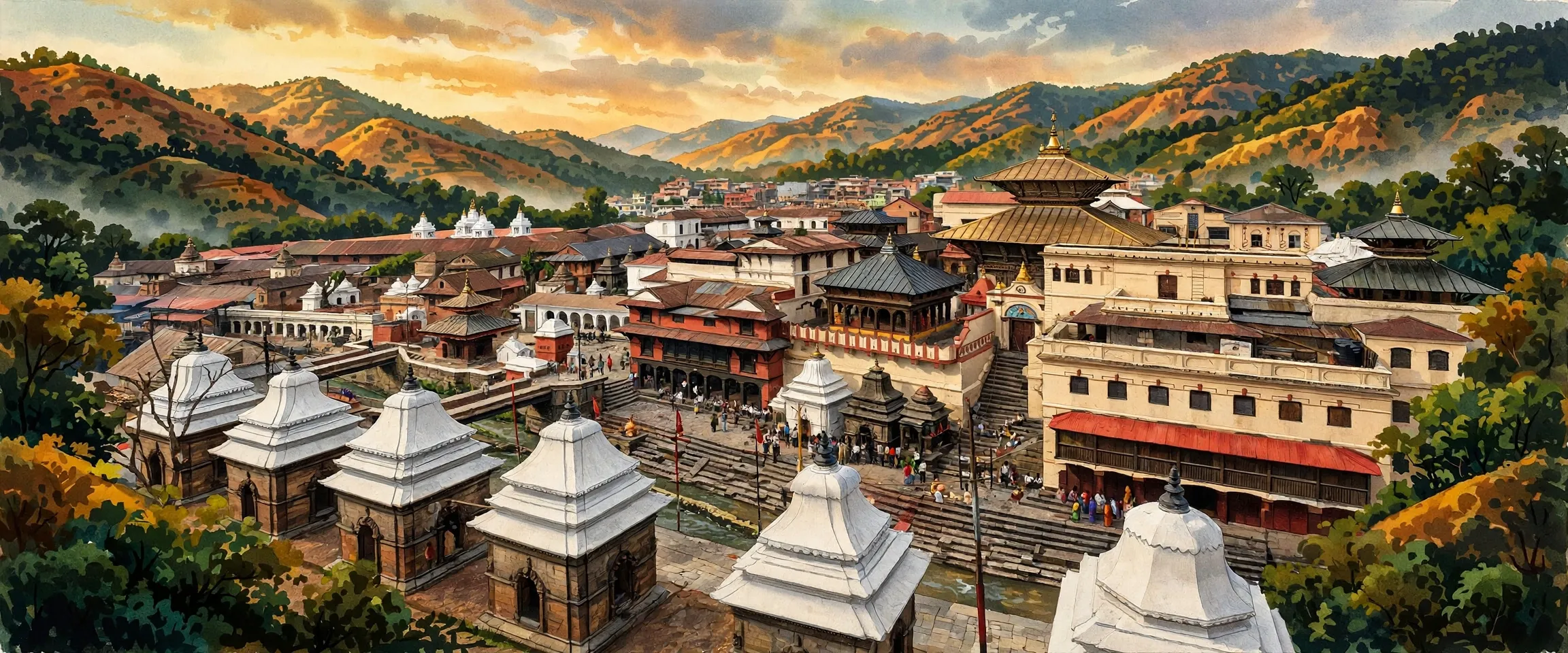
Mandirs in Nepal include some of the most revered Hindu shrines in the world, from Pashupatinath, the UNESCO listed Shiva precinct in Kathmandu, to Muktinath at 3,762 metres in Mustang, the goddess shrine of Dakshinkali near Pharping and the sleeping Vishnu of Budhanilkantha. This hub lists Jugti's Nepal mandir entries, each with verified history, worship and visiting guidance.
- Punjabi name
- ਨੇਪਾਲ ਵਿੱਚ ਮੰਦਰ
- Country
- Nepal
- Mandirs listed
- 4
- Shrines
- Pashupatinath Kathmandu, Muktinath Mustang, Dakshinkali Pharping, Budhanilkantha Kathmandu
- Traditions
- Shaiva, Vaishnava and Shakta
Nepal is a land of living temples: a Himalayan kingdom turned republic where Hindu worship shapes daily life from the cremation ghats of the capital to a shrine at the foot of an 8,000 metre world. Mandirs in Nepal range from the UNESCO listed Shiva precinct of Pashupatinath in Kathmandu, among the holiest Shiva temples in the world, to Muktinath at 3,762 metres in Mustang, a Vishnu temple shared with Tibetan Buddhism, and the fierce goddess shrine of Dakshinkali in its gorge south of the capital. This hub gathers Jugti's Nepal mandir entries in one place, each written from verified sources with its history, worship and visiting guide.
All Mandirs in Nepal
Pashupatinath Temple, Kathmandu - the great Shiva precinct on the Bagmati River, a UNESCO World Heritage Site honoured as the head of Shiva, famed for Maha Shivaratri and Teej
Muktinath Temple, Mustang - the high temple of liberation at 3,762 m, one of the 108 Divya Desams, sacred to Hindus and Tibetan Buddhists alike for its 108 waters
Dakshinkali Temple, Pharping - the powerful Kali shrine in a forested gorge south of Kathmandu, centre of Tuesday and Saturday offerings and the Dashain pilgrimage
Budhanilkantha Temple, Kathmandu - the sleeping Vishnu in his pond below Shivapuri Hill, a 5 m black basalt statue believed to be over 1,400 years old, woken each year at Haribodhini Ekadashi
Which is the most famous temple in Nepal?
Pashupatinath Temple in Kathmandu is the most famous temple in Nepal: a UNESCO World Heritage precinct of 518 shrines on the Bagmati River, recorded as early as 400 CE, and honoured by devotees across Nepal and India as one of the holiest abodes of Shiva in the world. Muktinath follows it in fame among pilgrims who cross between the two countries, and Dakshinkali is the Kathmandu Valley's own great goddess pilgrimage, drawing the valley south to Pharping every week.
Shaiva, Vaishnava and Shakta: Nepal's three streams
The four entries on this hub show the three great streams of Nepali Hindu worship side by side. Pashupatinath is Shaiva, centred on Shiva as Pashupati, lord of all beings. Muktinath is Vaishnava, a Divya Desam of Vishnu, though its sharing with Buddhism makes it unlike any temple of the plains. Dakshinkali is Shakta and tantric, a shrine of the goddess as mother and power, where worship takes the form of offerings at the meeting of two streams. Together they explain why Nepal, small on the map, carries a weight in Hindu sacred geography far beyond its size: its temples are not museum pieces but the working heart of the country's religious life.
Planning a Nepal temple journey
Most visitors begin in the Kathmandu Valley, where Pashupatinath stands in the capital itself and Dakshinkali is a half day trip south to Pharping, best timed away from the Tuesday and Saturday crowds unless the sacrifice days are the reason for going. Muktinath is the journey of the set: up the Kali Gandaki valley through Pokhara and Jomsom into Mustang, at an altitude that demands slow travel. Each entry on this hub carries its own visiting section with the practical facts that matter for that shrine.
ਨੇਪਾਲ ਜੀਵਿਤ ਮੰਦਰਾਂ ਦੀ ਧਰਤੀ ਹੈ: ਇੱਕ ਹਿਮਾਲਿਆ ਰਾਜ ਜੋ ਗਣਤੰਤਰ ਬਣਿਆ, ਜਿੱਥੇ ਹਿੰਦੂ ਪੂਜਾ ਰਾਜਧਾਨੀ ਦੇ ਸਸਕਾਰ ਘਾਟਾਂ ਤੋਂ ਲੈ ਕੇ 8,000 ਮੀਟਰ ਦੀ ਦੁਨੀਆ ਦੇ ਪੈਰਾਂ ਵਿੱਚ ਇੱਕ ਧਾਮ ਤੱਕ ਰੋਜ਼ਾਨਾ ਜੀਵਨ ਨੂੰ ਆਕਾਰ ਦਿੰਦੀ ਹੈ ਨੇਪਾਲ ਵਿੱਚ ਮੰਦਰ ਕਾਠਮੰਡੂ ਵਿੱਚ ਪਸ਼ੂਪਤੀਨਾਥ ਦੇ ਯੂਨੈਸਕੋ ਸੂਚੀਬੱਧ ਸ਼ਿਵ ਪਰਿਸਰ, ਦੁਨੀਆ ਦੇ ਸਭ ਤੋਂ ਪਵਿੱਤਰ ਸ਼ਿਵ ਮੰਦਰਾਂ ਵਿੱਚੋਂ ਇੱਕ, ਤੋਂ ਲੈ ਕੇ 3,762 ਮੀਟਰ ਉੱਤੇ ਮੁਸਤਾਂਗ ਵਿੱਚ ਮੁਕਤੀਨਾਥ, ਇੱਕ ਵਿਸ਼ਨੂੰ ਮੰਦਰ ਜੋ ਤਿੱਬਤੀ ਬੋਧ ਧਰਮ ਨਾਲ ਸਾਂਝਾ ਹੈ, ਅਤੇ ਰਾਜਧਾਨੀ ਦੇ ਦੱਖਣ ਵਿੱਚ ਆਪਣੀ ਖੱਡ ਵਿੱਚ ਦਕਸ਼ਿਣਕਾਲੀ ਦੇ ਉਗਰ ਦੇਵੀ ਧਾਮ ਤੱਕ ਹਨ ਇਹ ਹੱਬ ਜਗਤੀ ਦੀਆਂ ਨੇਪਾਲ ਮੰਦਰ ਐਂਟਰੀਆਂ ਨੂੰ ਇੱਕ ਥਾਂ ਇਕੱਠਾ ਕਰਦਾ ਹੈ, ਹਰ ਇੱਕ ਤਸਦੀਕ ਸਰੋਤਾਂ ਤੋਂ ਇਸਦੇ ਇਤਿਹਾਸ, ਪੂਜਾ ਅਤੇ ਯਾਤਰਾ ਗਾਈਡ ਨਾਲ ਲਿਖੀ ਗਈ
ਨੇਪਾਲ ਦੇ ਸਾਰੇ ਮੰਦਰ
ਪਸ਼ੂਪਤੀਨਾਥ ਮੰਦਰ, ਕਾਠਮੰਡੂ - ਬਾਗਮਤੀ ਦਰਿਆ ਉੱਤੇ ਮਹਾਨ ਸ਼ਿਵ ਪਰਿਸਰ, ਇੱਕ ਯੂਨੈਸਕੋ ਵਿਸ਼ਵ ਵਿਰਾਸਤ ਸਥਾਨ ਜੋ ਸ਼ਿਵ ਦੇ ਸਿਰ ਵਜੋਂ ਸਤਕਾਰਿਆ ਜਾਂਦਾ ਹੈ, ਮਹਾਂ ਸ਼ਿਵਰਾਤਰੀ ਅਤੇ ਤੀਜ ਲਈ ਮਸ਼ਹੂਰ
ਮੁਕਤੀਨਾਥ ਮੰਦਰ, ਮੁਸਤਾਂਗ - 3,762 ਮੀਟਰ ਉੱਤੇ ਮੁਕਤੀ ਦਾ ਉੱਚਾ ਮੰਦਰ, 108 ਦਿਵਯ ਦੇਸਮਾਂ ਵਿੱਚੋਂ ਇੱਕ, ਆਪਣੇ 108 ਪਾਣੀਆਂ ਲਈ ਹਿੰਦੂਆਂ ਅਤੇ ਤਿੱਬਤੀ ਬੋਧੀਆਂ ਦੋਵਾਂ ਲਈ ਪਵਿੱਤਰ
ਦਕਸ਼ਿਣਕਾਲੀ ਮੰਦਰ, ਫਰਪਿੰਗ - ਕਾਠਮੰਡੂ ਦੇ ਦੱਖਣ ਵਿੱਚ ਇੱਕ ਜੰਗਲੀ ਖੱਡ ਵਿੱਚ ਸ਼ਕਤੀਸ਼ਾਲੀ ਕਾਲੀ ਧਾਮ, ਮੰਗਲਵਾਰ ਅਤੇ ਸ਼ਨਿੱਚਰਵਾਰ ਭੇਟਾਂ ਅਤੇ ਦਸ਼ਹਿਰਾ ਤੀਰਥ ਦਾ ਕੇਂਦਰ
ਬੁੱਢਾਨੀਲਕੰਠ ਮੰਦਰ, ਕਾਠਮੰਡੂ - ਸ਼ਿਵਪੁਰੀ ਪਹਾੜੀ ਹੇਠਾਂ ਆਪਣੇ ਤਲਾਅ ਵਿੱਚ ਸੁੱਤਾ ਵਿਸ਼ਨੂੰ, ਇੱਕ 5 ਮੀਟਰ ਕਾਲੀ ਬੇਸਾਲਟ ਮੂਰਤੀ ਜੋ 1,400 ਸਾਲ ਤੋਂ ਵੱਧ ਪੁਰਾਣੀ ਮੰਨੀ ਜਾਂਦੀ ਹੈ, ਹਰ ਸਾਲ ਹਰੀਬੋਧਿਨੀ ਇਕਾਦਸ਼ੀ ਉੱਤੇ ਜਗਾਈ ਜਾਂਦੀ
ਨੇਪਾਲ ਦਾ ਸਭ ਤੋਂ ਮਸ਼ਹੂਰ ਮੰਦਰ ਕਿਹੜਾ ਹੈ?
ਕਾਠਮੰਡੂ ਵਿੱਚ ਪਸ਼ੂਪਤੀਨਾਥ ਮੰਦਰ ਨੇਪਾਲ ਦਾ ਸਭ ਤੋਂ ਮਸ਼ਹੂਰ ਮੰਦਰ ਹੈ: ਬਾਗਮਤੀ ਦਰਿਆ ਉੱਤੇ 518 ਧਾਮਾਂ ਦਾ ਇੱਕ ਯੂਨੈਸਕੋ ਵਿਸ਼ਵ ਵਿਰਾਸਤ ਪਰਿਸਰ, 400 ਈਸਵੀ ਜਿੰਨਾ ਪਹਿਲਾਂ ਦਰਜ, ਅਤੇ ਨੇਪਾਲ ਅਤੇ ਭਾਰਤ ਭਰ ਦੇ ਸ਼ਰਧਾਲੂਆਂ ਵੱਲੋਂ ਦੁਨੀਆ ਵਿੱਚ ਸ਼ਿਵ ਦੇ ਸਭ ਤੋਂ ਪਵਿੱਤਰ ਧਾਮਾਂ ਵਿੱਚੋਂ ਇੱਕ ਵਜੋਂ ਸਤਕਾਰਿਆ ਜਾਂਦਾ ਮੁਕਤੀਨਾਥ ਦੋਵਾਂ ਦੇਸ਼ਾਂ ਵਿੱਚ ਘੁੰਮਦੇ ਸ਼ਰਧਾਲੂਆਂ ਵਿੱਚ ਪ੍ਰਸਿੱਧੀ ਵਿੱਚ ਇਸਦੇ ਮਗਰ ਹੈ, ਅਤੇ ਦਕਸ਼ਿਣਕਾਲੀ ਕਾਠਮੰਡੂ ਵਾਦੀ ਦੀ ਆਪਣੀ ਮਹਾਨ ਦੇਵੀ ਤੀਰਥ ਯਾਤਰਾ ਹੈ, ਜੋ ਹਰ ਹਫ਼ਤੇ ਵਾਦੀ ਨੂੰ ਦੱਖਣ ਵੱਲ ਫਰਪਿੰਗ ਖਿੱਚਦੀ ਹੈ
ਸ਼ੈਵ, ਵੈਸ਼ਨਵ ਅਤੇ ਸ਼ਕਤੀ: ਨੇਪਾਲ ਦੀਆਂ ਤਿੰਨ ਧਾਰਾਵਾਂ
ਇਸ ਹੱਬ ਉੱਤੇ ਚਾਰ ਐਂਟਰੀਆਂ ਨੇਪਾਲੀ ਹਿੰਦੂ ਪੂਜਾ ਦੀਆਂ ਤਿੰਨ ਮਹਾਨ ਧਾਰਾਵਾਂ ਨੂੰ ਨਾਲ ਨਾਲ ਦਿਖਾਉਂਦੀਆਂ ਹਨ ਪਸ਼ੂਪਤੀਨਾਥ ਸ਼ੈਵ ਹੈ, ਸ਼ਿਵ ਨੂੰ ਪਸ਼ੂਪਤੀ, ਸਾਰੇ ਜੀਵਾਂ ਦੇ ਸੁਆਮੀ, ਵਜੋਂ ਕੇਂਦਰਿਤ ਮੁਕਤੀਨਾਥ ਵੈਸ਼ਨਵ ਹੈ, ਵਿਸ਼ਨੂੰ ਦਾ ਇੱਕ ਦਿਵਯ ਦੇਸਮ, ਹਾਲਾਂਕਿ ਬੋਧ ਧਰਮ ਨਾਲ ਇਸਦੀ ਸਾਂਝ ਇਸਨੂੰ ਮੈਦਾਨਾਂ ਦੇ ਕਿਸੇ ਵੀ ਮੰਦਰ ਤੋਂ ਵੱਖਰਾ ਬਣਾਉਂਦੀ ਹੈ ਦਕਸ਼ਿਣਕਾਲੀ ਸ਼ਕਤੀ ਅਤੇ ਤਾਂਤਰਿਕ ਹੈ, ਦੇਵੀ ਦਾ ਮਾਂ ਅਤੇ ਸ਼ਕਤੀ ਵਜੋਂ ਧਾਮ, ਜਿੱਥੇ ਪੂਜਾ ਦੋ ਨਾਲਿਆਂ ਦੇ ਮੇਲ ਉੱਤੇ ਭੇਟਾਂ ਦਾ ਰੂਪ ਲੈਂਦੀ ਹੈ ਇਕੱਠੇ ਉਹ ਸਮਝਾਉਂਦੇ ਹਨ ਕਿ ਨੇਪਾਲ, ਨਕਸ਼ੇ ਉੱਤੇ ਛੋਟਾ, ਹਿੰਦੂ ਪਵਿੱਤਰ ਭੂਗੋਲ ਵਿੱਚ ਆਪਣੇ ਆਕਾਰ ਤੋਂ ਕਿਤੇ ਵੱਧ ਭਾਰ ਕਿਉਂ ਰੱਖਦਾ ਹੈ: ਇਸਦੇ ਮੰਦਰ ਅਜਾਇਬ ਘਰ ਦੀਆਂ ਚੀਜ਼ਾਂ ਨਹੀਂ, ਸਗੋਂ ਦੇਸ਼ ਦੇ ਧਾਰਮਿਕ ਜੀਵਨ ਦਾ ਕਾਰਜਸ਼ੀਲ ਹਿਰਦਾ ਹਨ
ਨੇਪਾਲ ਮੰਦਰ ਯਾਤਰਾ ਦੀ ਯੋਜਨਾ
ਜ਼ਿਆਦਾਤਰ ਸੈਲਾਨੀ ਕਾਠਮੰਡੂ ਵਾਦੀ ਵਿੱਚ ਸ਼ੁਰੂ ਕਰਦੇ ਹਨ, ਜਿੱਥੇ ਪਸ਼ੂਪਤੀਨਾਥ ਰਾਜਧਾਨੀ ਵਿੱਚ ਹੀ ਖੜ੍ਹਾ ਹੈ ਅਤੇ ਦਕਸ਼ਿਣਕਾਲੀ ਦੱਖਣ ਵੱਲ ਫਰਪਿੰਗ ਤੱਕ ਅੱਧੇ ਦਿਨ ਦੀ ਯਾਤਰਾ ਹੈ, ਮੰਗਲਵਾਰ ਅਤੇ ਸ਼ਨਿੱਚਰਵਾਰ ਦੀ ਭੀੜ ਤੋਂ ਦੂਰ ਸਮਾਂ ਰੱਖਣਾ ਸਭ ਤੋਂ ਵਧੀਆ ਹੈ ਜਦੋਂ ਤੱਕ ਬਲੀ ਦੇ ਦਿਨ ਜਾਣ ਦਾ ਕਾਰਨ ਨਾ ਹੋਣ ਮੁਕਤੀਨਾਥ ਸੈੱਟ ਦੀ ਯਾਤਰਾ ਹੈ: ਕਾਲੀ ਗੰਡਕੀ ਵਾਦੀ ਉੱਤੇ ਪੋਖਰਾ ਅਤੇ ਜੋਮਸੋਮ ਵਿੱਚੋਂ ਮੁਸਤਾਂਗ ਵਿੱਚ, ਇੱਕ ਉਚਾਈ ਉੱਤੇ ਜੋ ਹੌਲੀ ਯਾਤਰਾ ਮੰਗਦੀ ਹੈ ਇਸ ਹੱਬ ਉੱਤੇ ਹਰ ਐਂਟਰੀ ਆਪਣਾ ਯਾਤਰਾ ਭਾਗ ਰੱਖਦੀ ਹੈ, ਉਸ ਧਾਮ ਲਈ ਮਹੱਤਵਪੂਰਨ ਵਿਹਾਰਕ ਤੱਥਾਂ ਨਾਲ