
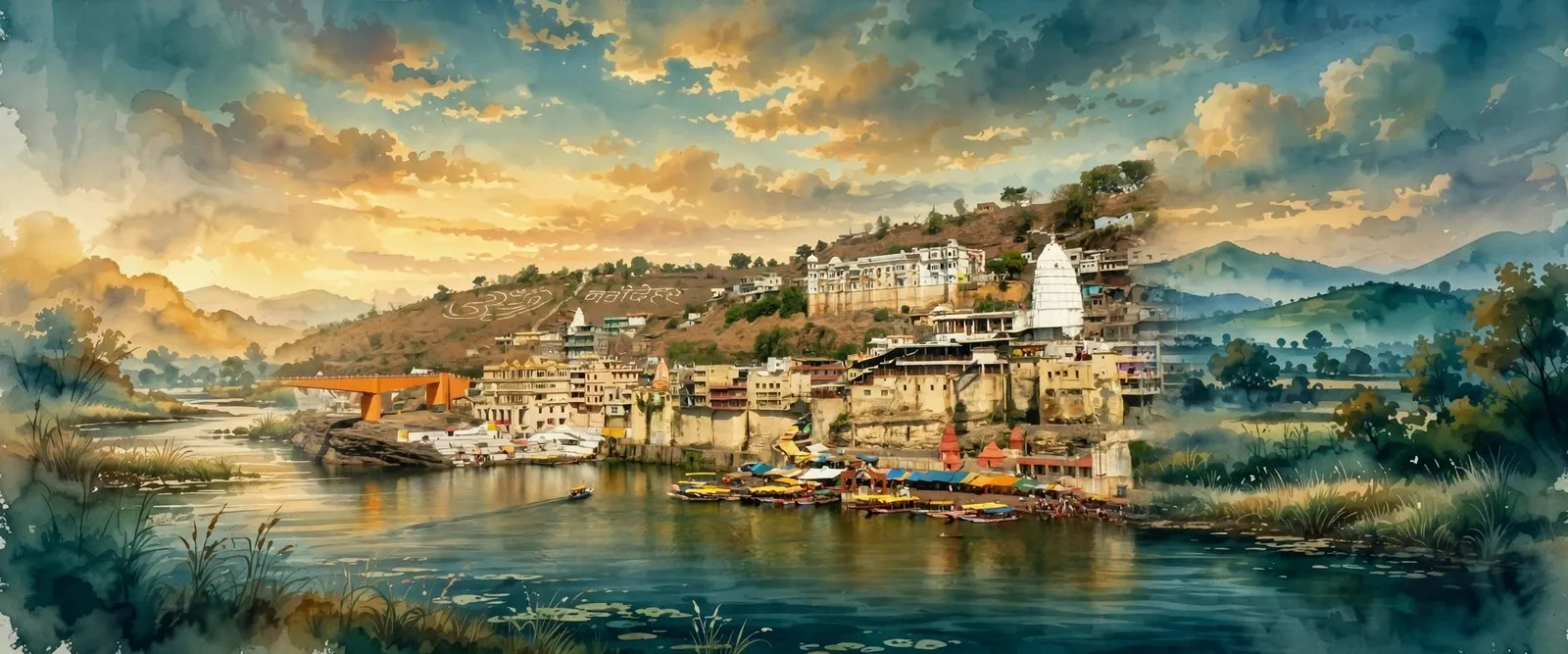
The Omkareshwar Temple in Khandwa district, Madhya Pradesh, is one of the twelve Jyotirlinga shrines of Shiva. It stands on Mandhata, an island in the Narmada river traditionally described as shaped like the sacred syllable Om, which gives the temple its name, 'Lord of the Om sound'. A second temple at Mamleshwar on the river's south bank is counted by many traditions as part of the same Jyotirlinga.
- Punjabi name
- ਓਮਕਾਰੇਸ਼ਵਰ ਮੰਦਰ
- Country
- India
- State
- Madhya Pradesh
- District
- Khandwa
- Location
- Mandhata (Omkareshwar) island, Narmada river
- Deity
- Shiva as the Omkareshwar Jyotirlinga
All 14 facts
- Jyotirlinga
- One of the twelve Jyotirlingas
- Twin shrine
- Mamleshwar (Amaleshwar) temple, south bank of the Narmada
- Built
- Attributed to the Paramara kings of Malwa, 11th century CE
- Rebuilt
- 18th century by Holkar queens Gautama Bai and Ahilyabai Holkar
- Adi Shankara cave
- Below the temple; tradition holds Shankara met his guru Govinda Bhagavatpada here
- Nearest airport
- Indore (approx. 77 km)
- Nearest railheads
- Khandwa Junction; Omkareshwar Road (Mortakka), approx. 12 km
- Official site
- shriomkareshwar.org
The Omkareshwar Temple, on Mandhata island in Madhya Pradesh's Narmada river, is one of the twelve Jyotirlinga shrines of Shiva. The island itself is traditionally described as shaped like the sacred syllable Om — the sound the temple's name honours, since Omkareshwar means "Lord of the Om sound".
One of the twelve Jyotirlingas
The twelve Jyotirlingas are the holiest Shiva shrines in India, believed to be the places where Shiva appeared as a fiery column of light — a story told in the Shiva Purana, in which Brahma and Vishnu once argued over supremacy of creation. Omkareshwar counts among these twelve, and it is one of two Jyotirlingas in Madhya Pradesh, the other being Mahakaleshwar at Ujjain, about 140 km to the north.
Within the sanctum, the jyotirlinga is described as a roundish black stone representing Shiva, with a white stone beside it representing his consort Parvati. The temple also houses shrines for Parvati and Ganapati. For more on India's great temples, see our guide to the famous mandirs of India.
Why is the island described as Om-shaped?
The temple stands on Mandhata — also called Shivapuri — an island in the Narmada near Khandwa city. The island is about 4 km long and covers roughly 2.6 square kilometres, and it is reached today by bridge and boat. It sits where the Narmada meets its tributary, the Kaveri.
The island's shape is traditionally said to resemble the Devanagari ॐ symbol, and this belief is woven into the place's identity: the very name Omkareshwar means "Lord of Omkara" or "Lord of the Om sound". The island, like the lingam it carries, is venerated almost as much as the deity himself.
Is the Jyotirlinga at Omkareshwar or Mamleshwar?
There are two main Shiva temples here, and their relationship is part of what makes the shrine distinctive. The Omkareshwar temple stands on the island; across the river, on the southern bank of the Narmada on the mainland, stands the Mamleshwar temple (also called Amaleshwar or Amareshwar, meaning "Immortal Lord").
According to one legend, Shiva appeared here in two forms — Omkareshwar and Amaleswara — and many traditions hold that a darshan of the Jyotirlinga is complete only when devotees visit both temples. Most accounts treat the island temple as the Jyotirlinga, but other traditions disagree: one holds that the lingam split into two and seated itself on the other bank as well, while some hold that the older-looking Mamleshwar temple is the true Jyotirlinga. Both are treated as equally sacred, and pilgrims visit both.
Legends of the temple
Three legends, told in the Shiva Purana and local tradition, explain the shrine's origin.
The first belongs to King Mandhata of the Ikshvaku clan, an ancestor of Rama. He worshipped Shiva here with severe penance until the Lord manifested as a Jyotirlinga to bless him. The island and its mountain take their name from him, and his sons Ambarish and Muchukunda are said to have practised austerities here as well.
The second tells of Vindhya, the deity of the Vindhya mountain range, who worshipped Shiva to be absolved of his sins. He fashioned a sacred diagram and a lingam of sand and clay; pleased, Shiva is believed to have appeared in two forms, Omkareshwar and Amaleswara. Because the mud mound appeared in the form of Om, the island came to be known as Omkareshwar.
The third speaks of a great war between the Devas and the Danavas, in which the demons prevailed. The gods prayed to Shiva, and he emerged in the form of the Omkareshwar Jyotirlinga and defeated the Danavas.
A thousand years of history
The temple's recorded history reaches back a millennium. It is said to have been built by the Paramara kings of Malwa in the 11th century CE; the earliest Paramara record at Mandhata dates to 1055–1070 CE, in the reign of King Jayasimha I. After the Paramaras, the temple came under the administration of the Chauhan rulers.
In the 13th century, the temple suffered destruction and loot by invading armies, though it was never completely destroyed. It remained with the Chauhan kings through the Mughal period without much renovation. In the 18th century, the temple was rebuilt by the Holkar rulers of Indore: the work was begun by the first Holkar queen, Gautama Bai Holkar, and completed by her daughter-in-law, Devi Ahilyabai Holkar. After the colonial era, the Archaeological Survey of India took over the temple's care following Independence in 1947, together with the Khandwa administration.
Adi Shankara's cave below the temple
Just below the main Shiva temple lies a small cave that tradition holds as the place where the young Adi Shankara met his guru, Govinda Bhagavatpada. An image of Adi Shankara is installed at the cave, which contains a main hall and a small sanctum with a Shivalingam.
One legend says that when the Narmada flooded, Shankara poured the rising river water into his kamandalu (water pot) placed at the cave's mouth, saving his guru, who was deep in samadhi. The cave is open to visitors daily, generally from 9 AM to 6 PM, with no entry fee.
Planning a visit
Omkareshwar lies about 16 km from Barwaha in Khandwa district. The nearest airport is Indore, roughly 77 km away; the nearest major railway stations are Khandwa Junction and Mhow, while Omkareshwar Road station at Mortakka (a narrow-gauge line) is about 12 km from the temple. The island is connected to the mainland by bridge, and boats remain part of the pilgrim experience. The temple's official website, shriomkareshwar.org, carries current darshan and event information.
How many Jyotirlingas are there in Madhya Pradesh?
Two of the twelve Jyotirlingas are in Madhya Pradesh: Omkareshwar in Khandwa district and Mahakaleshwar at Ujjain, about 140 km north.
Which river flows around Omkareshwar?
The Narmada river flows around Mandhata island, joined at the site by its tributary the Kaveri. The Narmada is one of India's seven sacred rivers.
Should I visit Mamleshwar too?
Most traditions hold that the pilgrimage is complete only after visiting both the Omkareshwar temple on the island and the Mamleshwar temple on the mainland's south bank. Both are treated as equally sacred.
ਮੱਧ ਪ੍ਰਦੇਸ਼ ਵਿੱਚ ਨਰਮਦਾ ਨਦੀ ਦੇ ਮੰਧਾਤਾ ਟਾਪੂ ਉੱਤੇ ਸਥਿਤ ਓਮਕਾਰੇਸ਼ਵਰ ਮੰਦਰ ਸ਼ਿਵ ਦੇ ਬਾਰਾਂ ਜੋਤਿਰਲਿੰਗਾਂ ਵਿੱਚੋਂ ਇੱਕ ਹੈ ਇਹ ਟਾਪੂ ਪਰੰਪਰਾ ਅਨੁਸਾਰ ਪਵਿੱਤਰ ਅੱਖਰ 'ਓਮ' ਦੇ ਆਕਾਰ ਦਾ ਕਿਹਾ ਜਾਂਦਾ ਹੈ — ਅਤੇ ਇਸੇ ਤੋਂ ਮੰਦਰ ਦਾ ਨਾਮ ਪਿਆ ਹੈ, ਓਮਕਾਰੇਸ਼ਵਰ ਭਾਵ 'ਓਮ ਧੁਨੀ ਦੇ ਸਵਾਮੀ'
ਬਾਰਾਂ ਜੋਤਿਰਲਿੰਗਾਂ ਵਿੱਚੋਂ ਇੱਕ
ਬਾਰਾਂ ਜੋਤਿਰਲਿੰਗ ਭਾਰਤ ਦੇ ਸਭ ਤੋਂ ਪਵਿੱਤਰ ਸ਼ਿਵ ਅਸਥਾਨ ਹਨ ਸ਼ਿਵ ਪੁਰਾਣ ਅਨੁਸਾਰ ਜਦੋਂ ਬ੍ਰਹਮਾ ਅਤੇ ਵਿਸ਼ਨੂੰ ਸ੍ਰਿਸ਼ਟੀ ਦੀ ਸਰਵੋੱਚਤਾ ਲਈ ਵਿਵਾਦ ਕਰਦੇ ਸਨ, ਤਾਂ ਸ਼ਿਵ ਪ੍ਰਕਾਸ਼ ਦੇ ਇੱਕ ਅਨੰਤ ਥੰਮ੍ਹ ਦੇ ਰੂਪ ਵਿੱਚ ਪ੍ਰਗਟ ਹੋਏ — ਅਤੇ ਜਿਨ੍ਹਾਂ ਅਸਥਾਨਾਂ ਉੱਤੇ ਇਹ ਪ੍ਰਕਾਸ਼ ਦਿਸਿਆ, ਉਹੀ ਜੋਤਿਰਲਿੰਗ ਹਨ ਓਮਕਾਰੇਸ਼ਵਰ ਇਨ੍ਹਾਂ ਬਾਰਾਂ ਵਿੱਚੋਂ ਇੱਕ ਹੈ, ਅਤੇ ਮੱਧ ਪ੍ਰਦੇਸ਼ ਦੇ ਦੋ ਜੋਤਿਰਲਿੰਗਾਂ ਵਿੱਚੋਂ ਇੱਕ ਹੈ; ਦੂਜਾ ਮਹਾਕਾਲੇਸ਼ਵਰ ਉਜੈਨ ਵਿੱਚ ਹੈ, ਜੋ ਲਗਭਗ 140 ਕਿਲੋਮੀਟਰ ਉੱਤਰ ਵੱਲ ਸਥਿਤ ਹੈ
ਗਰਭਗ੍ਰਹਿ ਵਿੱਚ ਜੋਤਿਰਲਿੰਗ ਨੂੰ ਸ਼ਿਵ ਦੇ ਰੂਪ ਵਿੱਚ ਇੱਕ ਗੋਲ-ਮਟੋਲ ਕਾਲੇ ਪੱਥਰ ਦੇ ਰੂਪ ਵਿੱਚ ਵਰਣਿਆ ਗਿਆ ਹੈ, ਅਤੇ ਇਸ ਦੇ ਕੋਲ ਇੱਕ ਸਫੈਦ ਪੱਥਰ ਪਾਰਵਤੀ ਦਾ ਰੂਪ ਮੰਨਿਆ ਜਾਂਦਾ ਹੈ ਮੰਦਰ ਵਿੱਚ ਪਾਰਵਤੀ ਅਤੇ ਗਣਪਤੀ ਦੇ ਵੀ ਅਸਥਾਨ ਹਨ ਭਾਰਤ ਦੇ ਪ੍ਰਸਿੱਧ ਮੰਦਰਾਂ ਬਾਰੇ ਸਾਡੀ ਸੰਗ੍ਰਹਿ-ਸੂਚੀ ਭਾਰਤ ਦੇ ਪ੍ਰਸਿੱਧ ਮੰਦਰ ਵਿੱਚ ਦੇਖੋ
ਇਹ ਟਾਪੂ 'ਓਮ' ਦੇ ਆਕਾਰ ਦਾ ਕਿਉਂ ਕਿਹਾ ਜਾਂਦਾ ਹੈ?
ਮੰਦਰ ਮੰਧਾਤਾ — ਜਿਸਨੂੰ ਸ਼ਿਵਪੁਰੀ ਵੀ ਕਿਹਾ ਜਾਂਦਾ ਹੈ — ਨਾਮਕ ਟਾਪੂ ਉੱਤੇ ਹੈ, ਜੋ ਖੰਡਵਾ ਸ਼ਹਿਰ ਦੇ ਨੇੜੇ ਨਰਮਦਾ ਨਦੀ ਵਿੱਚ ਹੈ ਇਹ ਟਾਪੂ ਲਗਭਗ 4 ਕਿਲੋਮੀਟਰ ਲੰਬਾ ਹੈ ਅਤੇ ਇਸਦਾ ਖੇਤਰਫਲ ਲਗਭਗ 2.6 ਵਰਗ ਕਿਲੋਮੀਟਰ ਹੈ ਅੱਜ ਇਸ ਤੱਕ ਪੁਲ ਅਤੇ ਕਿਸ਼ਤੀਆਂ ਰਾਹੀਂ ਪਹੁੰਚਿਆ ਜਾਂਦਾ ਹੈ ਇਹ ਉੱਥੇ ਹੈ ਜਿੱਥੇ ਨਰਮਦਾ ਅਤੇ ਇਸਦੀ ਸਹਾਇਕ ਨਦੀ ਕਾਵੇਰੀ ਮਿਲਦੀਆਂ ਹਨ
ਟਾਪੂ ਦਾ ਆਕਾਰ ਪਰੰਪਰਾ ਅਨੁਸਾਰ ਦੇਵਨਾਗਰੀ ਦੇ 'ਓਮ' ਅੱਖਰ ਵਰਗਾ ਕਿਹਾ ਜਾਂਦਾ ਹੈ, ਅਤੇ ਇਹ ਵਿਸ਼ਵਾਸ ਇਸ ਅਸਥਾਨ ਦੀ ਪਛਾਣ ਵਿੱਚ ਰਚਿਆ ਹੋਇਆ ਹੈ: ਓਮਕਾਰੇਸ਼ਵਰ ਦਾ ਅਰਥ ਹੀ ਹੈ 'ਓਮਕਾਰ ਦੇ ਸਵਾਮੀ' ਜਾਂ 'ਓਮ ਧੁਨੀ ਦੇ ਸਵਾਮੀ' ਜਿਸ ਤਰ੍ਹਾਂ ਲਿੰਗਮ ਦੀ ਪੂਜਾ ਹੁੰਦੀ ਹੈ, ਉਸੇ ਤਰ੍ਹਾਂ ਟਾਪੂ ਨੂੰ ਵੀ ਲਗਭਗ ਉਨਾ ਹੀ ਪਵਿੱਤਰ ਮੰਨਿਆ ਜਾਂਦਾ ਹੈ
ਜੋਤਿਰਲਿੰਗ ਓਮਕਾਰੇਸ਼ਵਰ ਵਿੱਚ ਹੈ ਜਾਂ ਮਮਲੇਸ਼ਵਰ ਵਿੱਚ?
ਇੱਥੇ ਸ਼ਿਵ ਦੇ ਦੋ ਮੁੱਖ ਮੰਦਰ ਹਨ, ਅਤੇ ਇਨ੍ਹਾਂ ਦਾ ਆਪਸੀ ਸੰਬੰਧ ਇਸ ਅਸਥਾਨ ਦੀ ਖਾਸੀਅਤ ਹੈ ਓਮਕਾਰੇਸ਼ਵਰ ਮੰਦਰ ਟਾਪੂ ਉੱਤੇ ਹੈ; ਨਦੀ ਦੇ ਪਾਰ, ਨਰਮਦਾ ਦੇ ਦੱਖਣੀ ਕਿਨਾਰੇ ਮੁੱਖ ਭੂਮੀ ਉੱਤੇ ਮਮਲੇਸ਼ਵਰ ਮੰਦਰ ਹੈ (ਜਿਸਨੂੰ ਅਮਲੇਸ਼ਵਰ ਜਾਂ ਅਮਰੇਸ਼ਵਰ ਵੀ ਕਿਹਾ ਜਾਂਦਾ ਹੈ, ਜਿਸਦਾ ਅਰਥ ਹੈ 'ਅਮਰ ਸਵਾਮੀ')
ਇੱਕ ਪੌਰਾਣਿਕ ਕਥਾ ਅਨੁਸਾਰ ਸ਼ਿਵ ਇੱਥੇ ਦੋ ਰੂਪਾਂ ਵਿੱਚ ਪ੍ਰਗਟ ਹੋਏ — ਓਮਕਾਰੇਸ਼ਵਰ ਅਤੇ ਅਮਲੇਸ਼ਵਰ — ਅਤੇ ਬਹੁਤੀਆਂ ਪਰੰਪਰਾਵਾਂ ਮੰਨਦੀਆਂ ਹਨ ਕਿ ਜੋਤਿਰਲਿੰਗ ਦੇ ਦਰਸ਼ਨ ਤਾਂ ਹੀ ਪੂਰੇ ਹੁੰਦੇ ਹਨ ਜਦੋਂ ਸ਼ਰਧਾਲੂ ਦੋਵੇਂ ਮੰਦਰਾਂ ਦੇ ਦਰਸ਼ਨ ਕਰਨ ਜ਼ਿਆਦਾਤਰ ਕਥਾਵਾਂ ਟਾਪੂ ਦੇ ਮੰਦਰ ਨੂੰ ਜੋਤਿਰਲਿੰਗ ਮੰਨਦੀਆਂ ਹਨ, ਪਰ ਕੁਝ ਪਰੰਪਰਾਵਾਂ ਦਾ ਮਤ ਭਿੰਨ ਹੈ: ਇੱਕ ਮੰਨਦਾ ਹੈ ਕਿ ਲਿੰਗਮ ਦੋ ਹਿੱਸਿਆਂ ਵਿੱਚ ਵੰਡਿਆ ਅਤੇ ਦੂਜੇ ਕਿਨਾਰੇ ਵੀ ਸਥਾਪਤ ਹੋਇਆ, ਜਦੋਂ ਕਿ ਕੁਝ ਮਮਲੇਸ਼ਵਰ ਮੰਦਰ ਨੂੰ — ਜੋ ਦੇਖਣ ਵਿੱਚ ਪੁਰਾਣਾ ਲਗਦਾ ਹੈ — ਅਸਲੀ ਜੋਤਿਰਲਿੰਗ ਮੰਨਦੇ ਹਨ ਦੋਵਾਂ ਨੂੰ ਬਰਾਬਰ ਪਵਿੱਤਰ ਮੰਨਿਆ ਜਾਂਦਾ ਹੈ ਅਤੇ ਸ਼ਰਧਾਲੂ ਦੋਵਾਂ ਦੇ ਦਰਸ਼ਨ ਕਰਦੇ ਹਨ
ਮੰਦਰ ਦੀਆਂ ਪੌਰਾਣਿਕ ਕਥਾਵਾਂ
ਸ਼ਿਵ ਪੁਰਾਣ ਅਤੇ ਸਥਾਨਕ ਪਰੰਪਰਾ ਇਸ ਅਸਥਾਨ ਦੀ ਉਤਪਤੀ ਬਾਰੇ ਤਿੰਨ ਕਥਾਵਾਂ ਸੁਣਾਉਂਦੀਆਂ ਹਨ
ਪਹਿਲੀ ਕਥਾ ਇਕਸ਼ਵਾਕੂ ਵੰਸ਼ ਦੇ ਰਾਜਾ ਮੰਧਾਤਾ ਦੀ ਹੈ, ਜੋ ਸ਼੍ਰੀ ਰਾਮ ਦੇ ਪੂਰਵਜ ਮੰਨੇ ਜਾਂਦੇ ਹਨ ਉਨ੍ਹਾਂ ਨੇ ਇੱਥੇ ਘੋਰ ਤਪੱਸਿਆ ਕੀਤੀ ਜਦੋਂ ਤੱਕ ਸ਼ਿਵ ਉਨ੍ਹਾਂ ਨੂੰ ਵਰਦਾਨ ਦੇਣ ਲਈ ਜੋਤਿਰਲਿੰਗ ਦੇ ਰੂਪ ਵਿੱਚ ਪ੍ਰਗਟ ਨਹੀਂ ਹੋਏ ਟਾਪੂ ਅਤੇ ਇਸਦੀ ਪਹਾੜੀ ਦਾ ਨਾਮ ਉਨ੍ਹਾਂ ਦੇ ਨਾਮ ਉੱਤੇ ਪਿਆ, ਅਤੇ ਕਿਹਾ ਜਾਂਦਾ ਹੈ ਕਿ ਉਨ੍ਹਾਂ ਦੇ ਪੁੱਤਰਾਂ ਅੰਬਰੀਸ਼ ਅਤੇ ਮੁਚੁਕੁੰਦ ਨੇ ਵੀ ਇੱਥੇ ਤਪ ਕੀਤਾ ਸੀ
ਦੂਜੀ ਕਥਾ ਵਿੰਧਿਆ ਪਹਾੜੀ ਸ਼੍ਰੇਣੀ ਦੇ ਦੇਵਤੇ ਵਿੰਧਿਆ ਦੀ ਹੈ, ਜਿਸਨੇ ਆਪਣੇ ਪਾਪਾਂ ਤੋਂ ਮੁਕਤੀ ਲਈ ਸ਼ਿਵ ਦੀ ਆਰਾਧਨਾ ਕੀਤੀ ਉਸਨੇ ਇੱਕ ਪਵਿੱਤਰ ਚਿੱਤਰ ਅਤੇ ਰੇਤ-ਮਿੱਟੀ ਦਾ ਇੱਕ ਲਿੰਗਮ ਬਣਾਇਆ; ਪ੍ਰਸੰਨ ਹੋ ਕੇ ਸ਼ਿਵ ਦੋ ਰੂਪਾਂ ਵਿੱਚ ਪ੍ਰਗਟ ਹੋਏ — ਓਮਕਾਰੇਸ਼ਵਰ ਅਤੇ ਅਮਲੇਸ਼ਵਰ ਕਿਉਂਕਿ ਮਿੱਟੀ ਦਾ ਟਿੱਬਾ ਓਮ ਦੇ ਆਕਾਰ ਵਿੱਚ ਦਿਸਿਆ, ਇਸ ਲਈ ਟਾਪੂ ਦਾ ਨਾਮ ਓਮਕਾਰੇਸ਼ਵਰ ਪਿਆ
ਤੀਜੀ ਕਥਾ ਦੇਵਤਿਆਂ ਅਤੇ ਦਾਨਵਾਂ ਵਿਚਕਾਰ ਹੋਏ ਇੱਕ ਭਿਆਨਕ ਯੁੱਧ ਦੀ ਹੈ, ਜਿਸ ਵਿੱਚ ਦਾਨਵ ਜਿੱਤ ਗਏ ਦੇਵਤਿਆਂ ਨੇ ਸ਼ਿਵ ਤੋਂ ਪ੍ਰਾਰਥਨਾ ਕੀਤੀ, ਅਤੇ ਸ਼ਿਵ ਓਮਕਾਰੇਸ਼ਵਰ ਜੋਤਿਰਲਿੰਗ ਦੇ ਰੂਪ ਵਿੱਚ ਪ੍ਰਗਟ ਹੋ ਕੇ ਦਾਨਵਾਂ ਨੂੰ ਹਰਾਇਆ
ਹਜ਼ਾਰ ਸਾਲ ਦਾ ਇਤਿਹਾਸ
ਮੰਦਰ ਦਾ ਦਰਜ ਇਤਿਹਾਸ ਇੱਕ ਹਜ਼ਾਰ ਸਾਲ ਪੁਰਾਣਾ ਹੈ ਕਿਹਾ ਜਾਂਦਾ ਹੈ ਕਿ ਇਸਨੂੰ 11ਵੀਂ ਸਦੀ ਈਸਵੀ ਵਿੱਚ ਮਾਲਵਾ ਦੇ ਪਰਮਾਰ ਰਾਜਿਆਂ ਨੇ ਬਣਵਾਇਆ ਸੀ; ਮੰਧਾਤਾ ਵਿਖੇ ਪਰਮਾਰਾਂ ਦਾ ਸਭ ਤੋਂ ਪੁਰਾਣਾ ਦਰਜ ਰਿਕਾਰਡ 1055–1070 ਈਸਵੀ ਦਾ ਹੈ, ਜੋ ਰਾਜਾ ਜੈਸਿੰਘ ਪਹਿਲੇ ਦੇ ਸਮੇਂ ਦਾ ਹੈ ਪਰਮਾਰਾਂ ਤੋਂ ਬਾਅਦ ਮੰਦਰ ਦਾ ਪ੍ਰਬੰਧ ਚੌਹਾਨ ਰਾਜਿਆਂ ਦੇ ਹੱਥ ਆਇਆ
13ਵੀਂ ਸਦੀ ਵਿੱਚ ਮੰਦਰ ਉੱਤੇ ਹਮਲਾਵਰ ਸੈਨਾਵਾਂ ਨੇ ਹਮਲਾ ਕਰਕੇ ਲੁੱਟਮਾਰ ਕੀਤੀ, ਪਰ ਮੰਦਰ ਪੂਰੀ ਤਰ੍ਹਾਂ ਤਬਾਹ ਨਹੀਂ ਹੋਇਆ ਮੁਗਲ ਕਾਲ ਦੌਰਾਨ ਵੀ ਇਹ ਚੌਹਾਨ ਰਾਜਿਆਂ ਦੇ ਅਧੀਨ ਰਿਹਾ ਅਤੇ ਇਸਦੀ ਬਹੁਤੀ ਮੁਰੰਮਤ ਨਹੀਂ ਹੋਈ 18ਵੀਂ ਸਦੀ ਵਿੱਚ ਇੰਦੌਰ ਦੇ ਹੋਲਕਰ ਰਾਜਿਆਂ ਨੇ ਮੰਦਰ ਦਾ ਪੁਨਰਨਿਰਮਾਣ ਕਰਵਾਇਆ: ਕੰਮ ਪਹਿਲੀ ਹੋਲਕਰ ਰਾਣੀ ਗੌਤਮਾ ਬਾਈ ਹੋਲਕਰ ਨੇ ਸ਼ੁਰੂ ਕਰਵਾਇਆ ਅਤੇ ਉਨ੍ਹਾਂ ਦੀ ਨੂੰਹ ਦੇਵੀ ਅਹਿਲਿਆਬਾਈ ਹੋਲਕਰ ਨੇ ਇਸਨੂੰ ਪੂਰਾ ਕਰਵਾਇਆ ਬਸਤੀਵਾਦੀ ਯੁੱਗ ਤੋਂ ਬਾਅਦ, 1947 ਵਿੱਚ ਆਜ਼ਾਦੀ ਮਿਲਣ ਉੱਤੇ ਭਾਰਤੀ ਪੁਰਾਤੱਤਵ ਸਰਵੇਖਣ ਨੇ ਖੰਡਵਾ ਪ੍ਰਸ਼ਾਸਨ ਦੇ ਨਾਲ ਮਿਲ ਕੇ ਮੰਦਰ ਦੀ ਸੰਭਾਲ ਸੰਭਾਲੀ
ਆਦਿ ਸ਼ੰਕਰਾਚਾਰਿਆ ਦੀ ਗੁਫ਼ਾ
ਮੁੱਖ ਸ਼ਿਵ ਮੰਦਰ ਦੇ ਠੀਕ ਹੇਠਾਂ ਇੱਕ ਛੋਟੀ ਗੁਫ਼ਾ ਹੈ, ਜਿਸਨੂੰ ਪਰੰਪਰਾ ਉਹ ਅਸਥਾਨ ਮੰਨਦੀ ਹੈ ਜਿੱਥੇ ਨੌਜਵਾਨ ਆਦਿ ਸ਼ੰਕਰ ਨੇ ਆਪਣੇ ਗੁਰੂ ਗੋਵਿੰਦ ਭਗਵਤਪਾਦ ਨਾਲ ਮੁਲਾਕਾਤ ਕੀਤੀ ਸੀ ਗੁਫ਼ਾ ਵਿੱਚ ਆਦਿ ਸ਼ੰਕਰ ਦੀ ਇੱਕ ਮੂਰਤੀ ਸਥਾਪਤ ਹੈ, ਅਤੇ ਇਸ ਵਿੱਚ ਇੱਕ ਮੁੱਖ ਹਾਲ ਅਤੇ ਸ਼ਿਵਲਿੰਗ ਵਾਲਾ ਇੱਕ ਛੋਟਾ ਗਰਭਗ੍ਰਹਿ ਹੈ
ਇੱਕ ਕਥਾ ਅਨੁਸਾਰ ਜਦੋਂ ਨਰਮਦਾ ਵਿੱਚ ਹੜ੍ਹ ਆਇਆ, ਤਾਂ ਸ਼ੰਕਰ ਨੇ ਗੁਫ਼ਾ ਦੇ ਮੂੰਹ ਕੋਲ ਰੱਖੇ ਆਪਣੇ ਕਮੰਡਲੂ ਵਿੱਚ ਚੜ੍ਹਦੇ ਪਾਣੀ ਨੂੰ ਸਮਾ ਲਿਆ, ਜਿਸ ਨਾਲ ਸਮਾਧੀ ਵਿੱਚ ਲੀਨ ਆਪਣੇ ਗੁਰੂ ਨੂੰ ਬਚਾਇਆ ਗੁਫ਼ਾ ਸ਼ਰਧਾਲੂਆਂ ਲਈ ਰੋਜ਼ ਖੁੱਲ੍ਹੀ ਰਹਿੰਦੀ ਹੈ — ਆਮ ਤੌਰ ਉੱਤੇ ਸਵੇਰੇ 9 ਵਜੇ ਤੋਂ ਸ਼ਾਮ 6 ਵਜੇ ਤੱਕ — ਅਤੇ ਇਸਦਾ ਕੋਈ ਦਾਖਲਾ ਸ਼ੁਲਕ ਨਹੀਂ ਹੈ
ਦਰਸ਼ਨ ਦੀ ਯੋਜਨਾ
ਓਮਕਾਰੇਸ਼ਵਰ ਖੰਡਵਾ ਜ਼ਿਲ੍ਹੇ ਵਿੱਚ ਬਰਵਾਹਾ ਤੋਂ ਲਗਭਗ 16 ਕਿਲੋਮੀਟਰ ਦੂਰ ਹੈ ਨਜ਼ਦੀਕੀ ਹਵਾਈ ਅੱਡਾ ਇੰਦੌਰ ਹੈ, ਜੋ ਲਗਭਗ 77 ਕਿਲੋਮੀਟਰ ਦੂਰ ਹੈ; ਨਜ਼ਦੀਕੀ ਮੁੱਖ ਰੇਲਵੇ ਸਟੇਸ਼ਨ ਖੰਡਵਾ ਜੰਕਸ਼ਨ ਅਤੇ ਮਹੂ ਹਨ, ਜਦੋਂ ਕਿ ਮੋਰਟੱਕਾ ਵਿਖੇ ਓਮਕਾਰੇਸ਼ਵਰ ਰੋਡ ਸਟੇਸ਼ਨ (ਇੱਕ ਛੋਟੀ ਲਾਈਨ) ਮੰਦਰ ਤੋਂ ਲਗਭਗ 12 ਕਿਲੋਮੀਟਰ ਦੂਰ ਹੈ ਟਾਪੂ ਮੁੱਖ ਭੂਮੀ ਨਾਲ ਪੁਲ ਰਾਹੀਂ ਜੁੜਿਆ ਹੈ, ਅਤੇ ਕਿਸ਼ਤੀਆਂ ਵੀ ਯਾਤਰਾ ਦਾ ਹਿੱਸਾ ਹਨ ਮੰਦਰ ਦੀ ਅਧਿਕਾਰਤ ਵੈੱਬਸਾਈਟ shriomkareshwar.org ਉੱਤੇ ਦਰਸ਼ਨ ਅਤੇ ਸਮਾਗਮਾਂ ਦੀ ਤਾਜ਼ਾ ਜਾਣਕਾਰੀ ਮਿਲਦੀ ਹੈ
ਮੱਧ ਪ੍ਰਦੇਸ਼ ਵਿੱਚ ਕਿੰਨੇ ਜੋਤਿਰਲਿੰਗ ਹਨ?
ਬਾਰਾਂ ਜੋਤਿਰਲਿੰਗਾਂ ਵਿੱਚੋਂ ਦੋ ਮੱਧ ਪ੍ਰਦੇਸ਼ ਵਿੱਚ ਹਨ: ਖੰਡਵਾ ਜ਼ਿਲ੍ਹੇ ਵਿੱਚ ਓਮਕਾਰੇਸ਼ਵਰ ਅਤੇ ਉਜੈਨ ਵਿੱਚ ਮਹਾਕਾਲੇਸ਼ਵਰ, ਜੋ ਲਗਭਗ 140 ਕਿਲੋਮੀਟਰ ਉੱਤਰ ਵੱਲ ਹੈ
ਓਮਕਾਰੇਸ਼ਵਰ ਦੇ ਆਲੇ-ਦੁਆਲੇ ਕਿਹੜੀ ਨਦੀ ਵਗਦੀ ਹੈ?
ਮੰਧਾਤਾ ਟਾਪੂ ਦੇ ਆਲੇ-ਦੁਆਲੇ ਨਰਮਦਾ ਨਦੀ ਵਗਦੀ ਹੈ, ਜਿਸ ਵਿੱਚ ਇਸ ਅਸਥਾਨ ਉੱਤੇ ਇਸਦੀ ਸਹਾਇਕ ਨਦੀ ਕਾਵੇਰੀ ਆ ਮਿਲਦੀ ਹੈ ਨਰਮਦਾ ਭਾਰਤ ਦੀਆਂ ਸੱਤ ਪਵਿੱਤਰ ਨਦੀਆਂ ਵਿੱਚੋਂ ਇੱਕ ਹੈ
ਕੀ ਮਮਲੇਸ਼ਵਰ ਦੇ ਦਰਸ਼ਨ ਵੀ ਕਰਨੇ ਚਾਹੀਦੇ ਹਨ?
ਜ਼ਿਆਦਾਤਰ ਪਰੰਪਰਾਵਾਂ ਮੰਨਦੀਆਂ ਹਨ ਕਿ ਯਾਤਰਾ ਤਾਂ ਹੀ ਪੂਰੀ ਹੁੰਦੀ ਹੈ ਜਦੋਂ ਟਾਪੂ ਉੱਤੇ ਓਮਕਾਰੇਸ਼ਵਰ ਮੰਦਰ ਅਤੇ ਮੁੱਖ ਭੂਮੀ ਦੇ ਦੱਖਣੀ ਕਿਨਾਰੇ ਉੱਤੇ ਮਮਲੇਸ਼ਵਰ ਮੰਦਰ — ਦੋਵਾਂ ਦੇ ਦਰਸ਼ਨ ਕੀਤੇ ਜਾਣ ਦੋਵਾਂ ਨੂੰ ਬਰਾਬਰ ਪਵਿੱਤਰ ਮੰਨਿਆ ਜਾਂਦਾ ਹੈ