
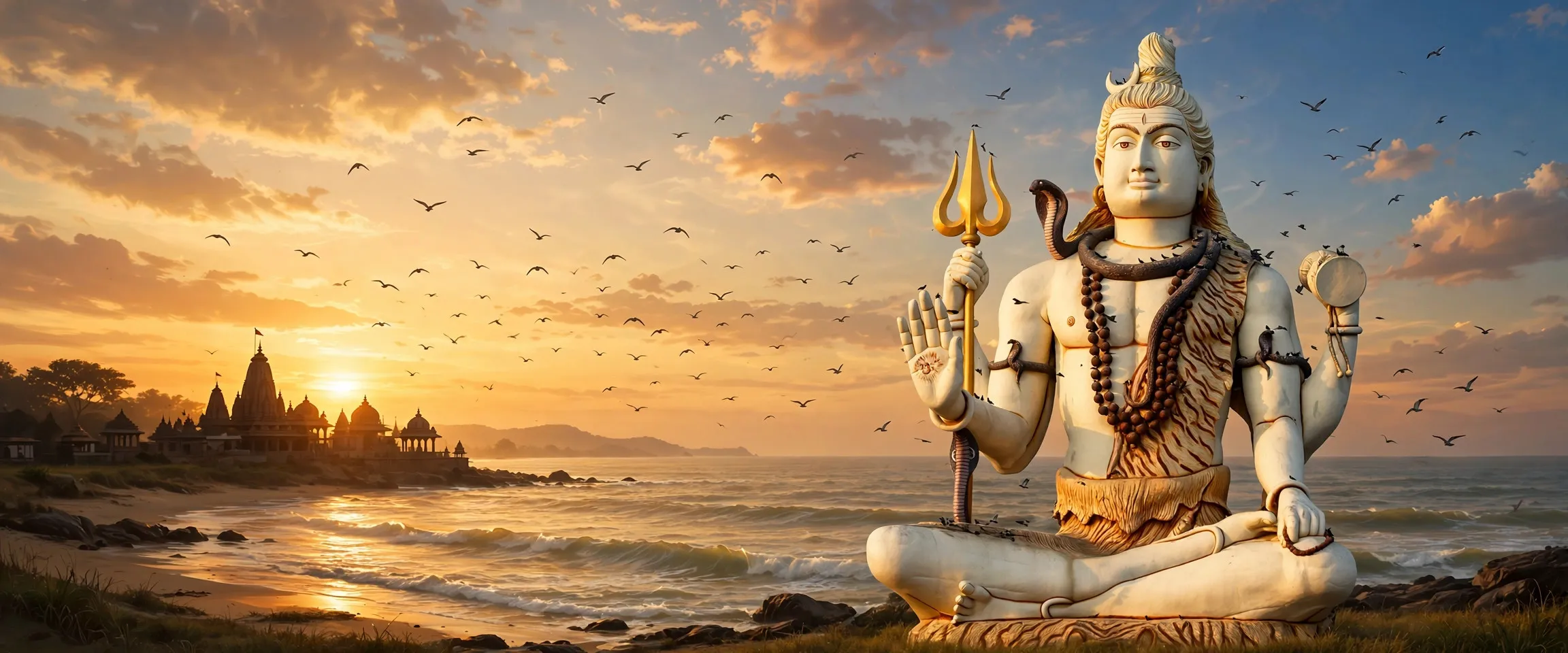
Nageshwar Temple on the road between Dwarka and Bet Dwarka in Gujarat is one of the shrines claimed as the Nageshwar Jyotirlinga, the 'Nagesha in Darukavana' of the ancient twelve-Jyotirlinga hymn. Its lingam sits in a below-ground sanctum and faces south, a rare orientation, while a 25-metre seated Shiva outside is visible for miles. The claim is contested: Jageshwar in Uttarakhand and Aundha Naganath in Maharashtra stake it too, and this entry says so plainly.
- Punjabi name
- ਨਾਗੇਸ਼ਵਰ ਮੰਦਰ
- Country
- India
- State
- Gujarat
- District
- Devbhumi Dwarka
- Location
- On the Dwarka–Bet Dwarka road, about 17 km from Dwarka
- Deity
- Shiva (Nageshwar, 'Lord of Serpents')
All 11 facts
- Jyotirlinga
- Claimed (one of three claimant shrines)
- Sanctum
- Below ground level; faces south
- Giant statue
- Seated Shiva, about 25 m
- Rebuilt
- 1990s (funded by Gulshan Kumar)
- Major festival
- Maha Shivaratri
Nageshwar Temple stands on the road between Dwarka and Bet Dwarka island in Gujarat, at a spot tradition calls Daarukavanam, the Darukavana forest. It is one of the shrines claimed as the Nageshwar Jyotirlinga, the 'Nagesha in Darukavana' of the ancient hymn to the twelve Jyotirlingas. Its lingam sits in a below-ground sanctum and faces south, a rare orientation, while a 25-metre seated Shiva outside is visible for miles around.
What is Nageshwar Temple?
Nageshwar Temple is a Shiva temple in Devbhumi Dwarka district, Gujarat, about 17 kilometres from Dwarka on the road to Bet Dwarka island, on the Saurashtra coast. Nageshwar means 'Lord of Serpents', and Shiva is worshipped here in that form. The temple claims a place among the twelve Jyotirlingas, but it is not the undisputed holder: two other shrines, Jageshwar in Uttarakhand and Aundha Naganath in Maharashtra, stake the same claim, and any honest account has to say so.
The Darukavana debate: which shrine is the true Jyotirlinga?
The textual basis of the dispute is a verse of the Dvadasha Jyotirlinga Stotram: 'Setubandhe tu Ramesham Nagesham Darukavane', 'Nagesha in Darukavana'. Where exactly the legendary Darukavana forest was is genuinely debated.
The Dwarka shrine's case rests on reading 'Darukavana' as 'Dwarakavana', and the Shiva Mahapurana places Nageshwar by the western, Arabian, sea, which suits Gujarat's coast. Jageshwar's case is botanical: darukavana likely comes from daru, the deodar, which grows abundantly only in the western Himalayas, and the treatise Prasadmandanam describes a sacred deodar forest north of the Himalayas. Aundha Naganath's case is textual: another verse of the stotra praises Naganath in the south, 'yamye', at Sadanga, the ancient name of Aundh.
There is no settled verdict, and pilgrims visit all three. The Dwarka temple is the Gujarat claimant of the Nageshwar Jyotirlinga, and this entry presents it as exactly that.
The legend of Supriya and the demon Daruka
The Shiva Purana tells how the shrine came to be. The demon Daruka and his wife Daruka, a devotee of Parvati, imprisoned the Shiva devotee Supriya in their underwater city, and the Darukavana forest was renamed for them. At Supriya's urging, the prisoners chanted Om Namah Shivaya; Shiva appeared, destroyed the demon and stayed on as the Nageshwar Jyotirlinga. Worship at Nageshwar is traditionally linked to protection from poisons and snake bites, fitting for the Lord of Serpents.
What is inside the temple?
The Jyotirlinga sits in a below-ground garbhagriha, the original sanctum, which was left in place when the temple was rebuilt above it. The lingam is described as shaped like a three-faced Rudraksha bead, its shalunka silver-plated with a silver Naga and a figure of Parvati behind it. It faces south, an unusual orientation for a Shiva shrine.
The present red-painted building dates to the 1990s. Gulshan Kumar, the founder of T-Series, funded the rebuilding after finding the original shrine dilapidated during his own twelve-Jyotirlinga pilgrimage; a devotee hall and towers were raised over the old structure. Near the entrance stands the temple's most photographed feature: a seated Shiva about 25 metres tall, a modern landmark visible from the Dwarka to Bet Dwarka road, though it is not the object of worship.
Planning a visit
The temple sits about 17 kilometres from Dwarka and is usually visited on the same trip as the Dwarkadhish temple and Bet Dwarka. Common timings are 6:00 AM to 12:30 PM and 5:00 to 9:30 PM, and Maha Shivaratri is the main festival of the year. There is no entry fee.
ਨਾਗੇਸ਼ਵਰ ਮੰਦਰ ਗੁਜਰਾਤ ਵਿੱਚ ਦ੍ਵਾਰਕਾ ਅਤੇ ਬੇਟ ਦ੍ਵਾਰਕਾ ਟਾਪੂ ਵਿਚਕਾਰ ਸੜਕ ਉੱਤੇ ਸਥਿਤ ਹੈ, ਉਸ ਥਾਂ ਉੱਤੇ ਜਿਸਨੂੰ ਪਰੰਪਰਾ ਦਾਰੁਕਾਵਣਮ, ਭਾਵ ਦਾਰੁਕਾਵਣ ਜੰਗਲ ਕਹਿੰਦੀ ਹੈ ਇਹ ਉਨ੍ਹਾਂ ਮੰਦਰਾਂ ਵਿੱਚੋਂ ਇੱਕ ਹੈ ਜੋ ਨਾਗੇਸ਼ਵਰ ਜੋਤਿਰਲਿੰਗ ਹੋਣ ਦਾ ਦਾਅਵਾ ਕਰਦੇ ਹਨ, ਬਾਰਾਂ ਜੋਤਿਰਲਿੰਗਾਂ ਦੇ ਪ੍ਰਾਚੀਨ ਭਜਨ ਦਾ 'ਦਾਰੁਕਾਵਣ ਵਿੱਚ ਨਾਗੇਸ਼' ਇਸਦਾ ਲਿੰਗ ਜ਼ਮੀਨ ਤੋਂ ਹੇਠਾਂ ਗਰਭਗ੍ਰਹਿ ਵਿੱਚ ਸਥਿਤ ਹੈ ਅਤੇ ਦੱਖਣ ਵੱਲ ਮੂੰਹ ਕਰਦਾ ਹੈ, ਜੋ ਦੁਰਲੱਭ ਦਿਸ਼ਾ ਹੈ, ਜਦੋਂ ਕਿ ਬਾਹਰ 25 ਮੀਟਰ ਉੱਚਾ ਬੈਠਾ ਸ਼ਿਵ ਮੀਲਾਂ ਦੂਰੋਂ ਦਿਖਾਈ ਦਿੰਦਾ ਹੈ
ਨਾਗੇਸ਼ਵਰ ਮੰਦਰ ਕੀ ਹੈ?
ਨਾਗੇਸ਼ਵਰ ਮੰਦਰ ਗੁਜਰਾਤ ਦੇ ਦੇਵਭੂਮੀ ਦ੍ਵਾਰਕਾ ਜ਼ਿਲ੍ਹੇ ਵਿੱਚ ਇੱਕ ਸ਼ਿਵ ਮੰਦਰ ਹੈ, ਦ੍ਵਾਰਕਾ ਤੋਂ ਲਗਭਗ 17 ਕਿਲੋਮੀਟਰ ਦੂਰ ਬੇਟ ਦ੍ਵਾਰਕਾ ਟਾਪੂ ਵੱਲ ਜਾਂਦੀ ਸੜਕ ਉੱਤੇ, ਸੌਰਾਸ਼ਟਰ ਦੇ ਤੱਟ ਉੱਤੇ ਨਾਗੇਸ਼ਵਰ ਦਾ ਅਰਥ ਹੈ 'ਨਾਗਾਂ ਦਾ ਸੁਆਮੀ', ਅਤੇ ਸ਼ਿਵ ਦੀ ਪੂਜਾ ਇੱਥੇ ਇਸੇ ਰੂਪ ਵਿੱਚ ਹੁੰਦੀ ਹੈ ਇਹ ਮੰਦਰ ਨਾਗੇਸ਼ਵਰ ਜੋਤਿਰਲਿੰਗ ਦੇ ਦਾਅਵੇਦਾਰਾਂ ਵਿੱਚੋਂ ਇੱਕ ਹੈ, ਨਿਰਵਿਵਾਦ ਧਾਰਕ ਨਹੀਂ: ਦੋ ਹੋਰ ਮੰਦਰ, ਉੱਤਰਾਖੰਡ ਦਾ ਜਾਗੇਸ਼ਵਰ ਅਤੇ ਮਹਾਰਾਸ਼ਟਰ ਦਾ ਔਂਢਾ ਨਾਗਨਾਥ, ਇਹੀ ਦਾਅਵਾ ਕਰਦੇ ਹਨ, ਅਤੇ ਕਿਸੇ ਵੀ ਇਮਾਨਦਾਰ ਵਰਣਨ ਵਿੱਚ ਇਹ ਦੱਸਣਾ ਜ਼ਰੂਰੀ ਹੈ
ਦਾਰੁਕਾਵਣ ਦਾ ਵਿਵਾਦ: ਅਸਲ ਜੋਤਿਰਲਿੰਗ ਕਿਹੜਾ ਹੈ?
ਇਸ ਵਿਵਾਦ ਦਾ ਪਾਠ-ਅਧਾਰ ਦ੍ਵਾਦਸ਼ ਜੋਤਿਰਲਿੰਗ ਸਤੋਤਰ ਦਾ ਇੱਕ ਸ਼ਲੋਕ ਹੈ: 'ਸੇਤੁਬੰਧੇ ਤੁ ਰਾਮੇਸ਼ਮ ਨਾਗੇਸ਼ਮ ਦਾਰੁਕਾਵਣੇ', ਭਾਵ 'ਦਾਰੁਕਾਵਣ ਵਿੱਚ ਨਾਗੇਸ਼' ਮਹਾਨ ਦਾਰੁਕਾਵਣ ਜੰਗਲ ਅਸਲ ਵਿੱਚ ਕਿੱਥੇ ਸੀ, ਇਸ ਉੱਤੇ ਸੱਚਮੁੱਚ ਮਤਭੇਦ ਹੈ
ਦ੍ਵਾਰਕਾ ਮੰਦਰ ਦਾ ਤਰਕ 'ਦਾਰੁਕਾਵਣ' ਨੂੰ 'ਦ੍ਵਾਰਕਾਵਣ' ਪੜ੍ਹਨ ਉੱਤੇ ਅਧਾਰਤ ਹੈ, ਅਤੇ ਸ਼ਿਵ ਮਹਾਪੁਰਾਣ ਨਾਗੇਸ਼ਵਰ ਨੂੰ ਪੱਛਮੀ, ਅਰਬ, ਸਾਗਰ ਕੋਲ ਦੱਸਦਾ ਹੈ, ਜੋ ਗੁਜਰਾਤ ਦੇ ਤੱਟ ਨਾਲ ਮੇਲ ਖਾਂਦਾ ਹੈ ਜਾਗੇਸ਼ਵਰ ਦਾ ਤਰਕ ਵਨਸਪਤੀ-ਵਿਗਿਆਨਕ ਹੈ: ਦਾਰੁਕਾਵਣ ਸ਼ਾਇਦ ਦਾਰੁ, ਭਾਵ ਦੇਵਦਾਰ ਤੋਂ ਬਣਿਆ ਹੈ, ਜੋ ਸਿਰਫ਼ ਪੱਛਮੀ ਹਿਮਾਲਿਆ ਵਿੱਚ ਭਰਪੂਰ ਉੱਗਦਾ ਹੈ, ਅਤੇ ਪ੍ਰਾਸਾਦਮੰਡਨਮ ਗ੍ਰੰਥ ਹਿਮਾਲਿਆ ਦੇ ਉੱਤਰ ਵਿੱਚ ਇੱਕ ਪਵਿੱਤਰ ਦੇਵਦਾਰ ਜੰਗਲ ਦਾ ਵਰਣਨ ਕਰਦਾ ਹੈ ਔਂਢਾ ਨਾਗਨਾਥ ਦਾ ਤਰਕ ਪਾਠ-ਅਧਾਰਤ ਹੈ: ਸਤੋਤਰ ਦਾ ਇੱਕ ਹੋਰ ਸ਼ਲੋਕ ਦੱਖਣ ਵਿੱਚ, 'ਯਮਯੇ', ਸਾਦੰਗ ਵਿੱਚ ਨਾਗਨਾਥ ਦੀ ਉਸਤਤਿ ਕਰਦਾ ਹੈ, ਅਤੇ ਸਾਦੰਗ ਔਂਢ ਦਾ ਪ੍ਰਾਚੀਨ ਨਾਂ ਹੈ
ਇਸਦਾ ਕੋਈ ਪੱਕਾ ਫ਼ੈਸਲਾ ਨਹੀਂ ਹੋਇਆ, ਅਤੇ ਯਾਤਰੀ ਤਿੰਨਾਂ ਥਾਵਾਂ ਉੱਤੇ ਜਾਂਦੇ ਹਨ ਦ੍ਵਾਰਕਾ ਦਾ ਮੰਦਰ ਨਾਗੇਸ਼ਵਰ ਜੋਤਿਰਲਿੰਗ ਦਾ ਗੁਜਰਾਤੀ ਦਾਅਵੇਦਾਰ ਹੈ, ਅਤੇ ਇਹ ਲੇਖ ਇਸਨੂੰ ਬਿਲਕੁਲ ਇਸੇ ਰੂਪ ਵਿੱਚ ਪੇਸ਼ ਕਰਦਾ ਹੈ
ਸੁਪ੍ਰਿਯ ਅਤੇ ਦੈਂਤ ਦਾਰੁਕ ਦੀ ਕਥਾ
ਸ਼ਿਵ ਪੁਰਾਣ ਦੱਸਦਾ ਹੈ ਕਿ ਇਹ ਮੰਦਰ ਕਿਵੇਂ ਬਣਿਆ ਦੈਂਤ ਦਾਰੁਕ ਅਤੇ ਉਸਦੀ ਪਤਨੀ ਦਾਰੁਕਾ, ਜੋ ਪਾਰਵਤੀ ਦੀ ਭਗਤ ਸੀ, ਨੇ ਸ਼ਿਵ ਭਗਤ ਸੁਪ੍ਰਿਯ ਨੂੰ ਆਪਣੇ ਪਾਣੀ ਹੇਠਲੇ ਸ਼ਹਿਰ ਵਿੱਚ ਕੈਦ ਕਰ ਲਿਆ, ਅਤੇ ਦਾਰੁਕਾਵਣ ਜੰਗਲ ਦਾ ਨਾਂ ਉਨ੍ਹਾਂ ਦੇ ਨਾਂ ਉੱਤੇ ਪੈ ਗਿਆ ਸੁਪ੍ਰਿਯ ਦੇ ਕਹਿਣ ਉੱਤੇ ਕੈਦੀਆਂ ਨੇ ਓਮ ਨਮਃ ਸ਼ਿਵਾਯ ਦਾ ਜਾਪ ਕੀਤਾ; ਸ਼ਿਵ ਪ੍ਰਗਟ ਹੋਏ, ਦੈਂਤ ਦਾ ਨਾਸ਼ ਕੀਤਾ ਅਤੇ ਨਾਗੇਸ਼ਵਰ ਜੋਤਿਰਲਿੰਗ ਦੇ ਰੂਪ ਵਿੱਚ ਉੱਥੇ ਹੀ ਰਹਿ ਗਏ ਨਾਗੇਸ਼ਵਰ ਵਿੱਚ ਪੂਜਾ ਪਰੰਪਰਾਗਤ ਤੌਰ ਉੱਤੇ ਜ਼ਹਿਰਾਂ ਅਤੇ ਸੱਪ ਦੇ ਡੰਗ ਤੋਂ ਰੱਖਿਆ ਨਾਲ ਜੁੜੀ ਹੋਈ ਹੈ, ਜੋ ਨਾਗਾਂ ਦੇ ਸੁਆਮੀ ਲਈ ਢੁਕਵਾਂ ਹੈ
ਮੰਦਰ ਦੇ ਅੰਦਰ ਕੀ ਹੈ?
ਜੋਤਿਰਲਿੰਗ ਜ਼ਮੀਨ ਤੋਂ ਹੇਠਾਂ ਗਰਭਗ੍ਰਹਿ ਵਿੱਚ ਸਥਿਤ ਹੈ, ਜੋ ਮੂਲ ਗਰਭਗ੍ਰਹਿ ਹੈ ਅਤੇ ਜਦੋਂ ਮੰਦਰ ਉੱਪਰੋਂ ਦੁਬਾਰਾ ਬਣਾਇਆ ਗਿਆ ਤਾਂ ਇਸਨੂੰ ਉਵੇਂ ਹੀ ਰੱਖਿਆ ਗਿਆ ਲਿੰਗ ਨੂੰ ਤਿੰਨ ਮੁਖ ਵਾਲੇ ਰੁਦਰਾਕਸ਼ ਦੇ ਆਕਾਰ ਦਾ ਦੱਸਿਆ ਜਾਂਦਾ ਹੈ, ਇਸਦਾ ਸ਼ਾਲੁੰਕਾ ਚਾਂਦੀ ਨਾਲ ਮੜ੍ਹਿਆ ਹੋਇਆ ਹੈ ਅਤੇ ਪਿੱਛੇ ਚਾਂਦੀ ਦਾ ਨਾਗ ਅਤੇ ਪਾਰਵਤੀ ਦੀ ਮੂਰਤਿ ਹੈ ਇਹ ਦੱਖਣ ਵੱਲ ਮੂੰਹ ਕਰਦਾ ਹੈ, ਜੋ ਸ਼ਿਵ ਮੰਦਰ ਲਈ ਅਸਾਧਾਰਨ ਦਿਸ਼ਾ ਹੈ
ਮੌਜੂਦਾ ਲਾਲ ਰੰਗ ਦੀ ਇਮਾਰਤ 1990 ਦੇ ਦਹਾਕੇ ਦੀ ਹੈ ਟੀ-ਸੀਰੀਜ਼ ਦੇ ਸੰਸਥਾਪਕ ਗੁਲਸ਼ਨ ਕੁਮਾਰ ਨੇ ਇਸਦੇ ਪੁਨਰਨਿਰਮਾਣ ਲਈ ਧਨ ਦਿੱਤਾ, ਜਦੋਂ ਉਨ੍ਹਾਂ ਨੇ ਆਪਣੀ ਬਾਰਾਂ ਜੋਤਿਰਲਿੰਗਾਂ ਦੀ ਯਾਤਰਾ ਦੌਰਾਨ ਮੂਲ ਮੰਦਰ ਨੂੰ ਖਸਤਾ ਹਾਲਤ ਵਿੱਚ ਦੇਖਿਆ ਸੀ; ਪੁਰਾਣੀ ਇਮਾਰਤ ਉੱਤੇ ਭਗਤਾਂ ਲਈ ਹਾਲ ਅਤੇ ਮੀਨਾਰ ਬਣਾਏ ਗਏ ਪ੍ਰਵੇਸ਼ ਦ੍ਵਾਰ ਨੇੜੇ ਮੰਦਰ ਦੀ ਸਭ ਤੋਂ ਵੱਧ ਫੋਟੋ ਖਿੱਚੀ ਜਾਣ ਵਾਲੀ ਵਿਸ਼ੇਸ਼ਤਾ ਖੜ੍ਹੀ ਹੈ: ਲਗਭਗ 25 ਮੀਟਰ ਉੱਚਾ ਬੈਠਾ ਸ਼ਿਵ, ਜੋ ਦ੍ਵਾਰਕਾ ਤੋਂ ਬੇਟ ਦ੍ਵਾਰਕਾ ਸੜਕ ਤੋਂ ਦਿਖਾਈ ਦੇਣ ਵਾਲਾ ਆਧੁਨਿਕ ਨਿਸ਼ਾਨ ਹੈ, ਹਾਲਾਂਕਿ ਇਹ ਪੂਜਾ ਦਾ ਵਿਸ਼ਾ ਨਹੀਂ ਹੈ
ਯਾਤਰਾ ਦੀ ਯੋਜਨਾ
ਇਹ ਮੰਦਰ ਦ੍ਵਾਰਕਾ ਤੋਂ ਲਗਭਗ 17 ਕਿਲੋਮੀਟਰ ਦੂਰ ਹੈ ਅਤੇ ਆਮ ਤੌਰ ਉੱਤੇ ਦ੍ਵਾਰਕਾਧੀਸ਼ ਮੰਦਰ ਅਤੇ ਬੇਟ ਦ੍ਵਾਰਕਾ ਦੇ ਨਾਲ ਹੀ ਦੇਖਿਆ ਜਾਂਦਾ ਹੈ ਆਮ ਸਮਾਂ ਸਵੇਰੇ 6:00 ਤੋਂ ਦੁਪਹਿਰ 12:30 ਅਤੇ ਸ਼ਾਮ 5:00 ਤੋਂ 9:30 ਤੱਕ ਹੈ, ਅਤੇ ਮਹਾ ਸ਼ਿਵਰਾਤ੍ਰਿ ਸਾਲ ਦਾ ਮੁੱਖ ਤਿਉਹਾਰ ਹੈ ਪ੍ਰਵੇਸ਼ ਲਈ ਕੋਈ ਫ਼ੀਸ ਨਹੀਂ ਹੈ