
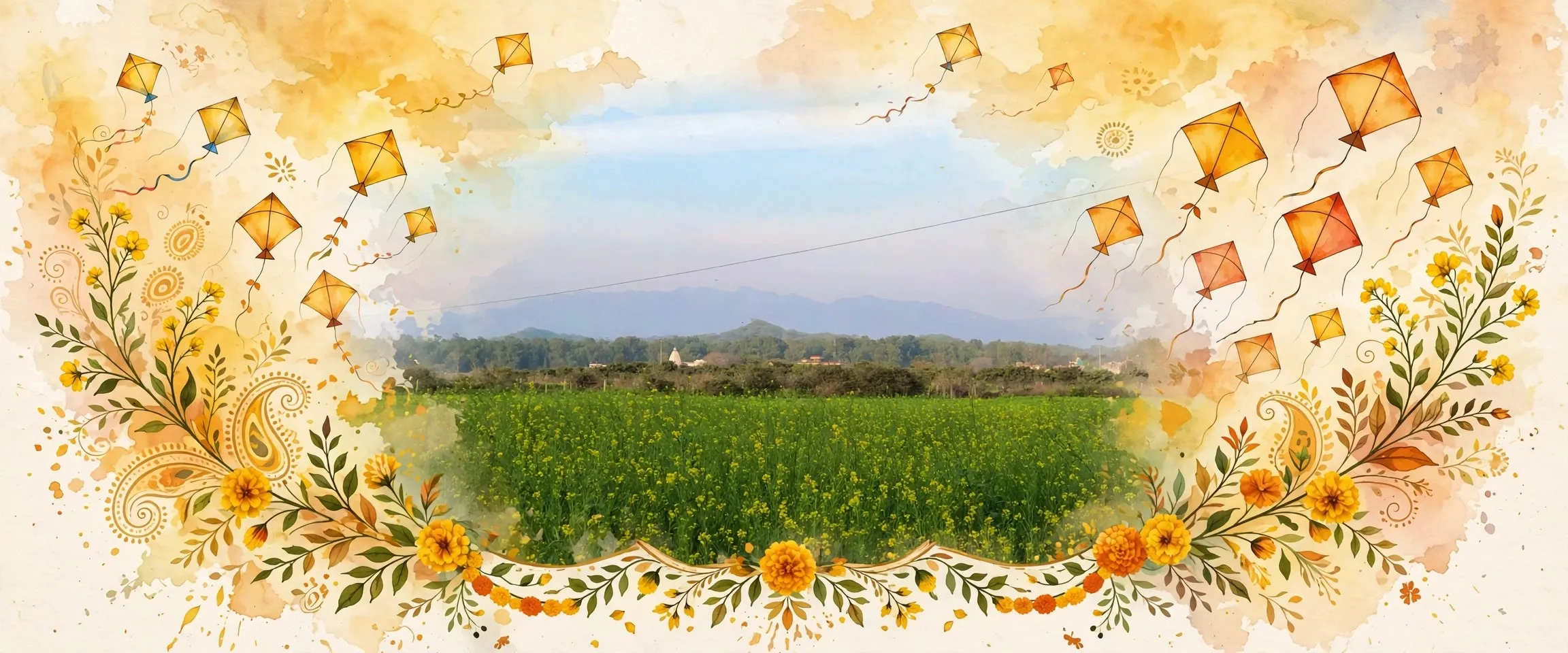
Basant Panchami, the fifth day of the bright fortnight of Magha, welcomes spring across Punjab and northern India. People wear yellow, fly kites, and worship Saraswati, the goddess of knowledge, music and the arts, while mustard fields bloom gold across the plains. In Punjab it is a shared festival: Hindus pray to Saraswati, Sikhs sing Raag Basant at the Golden Temple, and Sufis have kept it at Nizamuddin Dargah for centuries.
- Punjabi name
- ਬਸੰਤ ਪੰਚਮੀ
- When
- The fifth day of the bright fortnight of Magha, in late January or early February
- Next date
- Thursday, 11 February 2027 (last kept Friday, 23 January 2026)
- Honours
- Goddess Saraswati, and the arrival of spring
- Colour
- Yellow, the colour of mustard in bloom
- In Punjab
- Kite flying, yellow clothes, sarson da saag; Holi follows 40 days later
All 9 facts
- At the Golden Temple
- Raag Basant is sung in kirtan during the season
- In Lahore
- Once the city's great kite festival; public celebrations stopped in 2007 after deaths from glass-coated kite string
- At Nizamuddin Dargah
- Kept for some 700 years, since Amir Khusrau sang Basant to his master
Basant Panchami is the festival that turns Punjab yellow. On the fifth day of the bright half of Magha, mustard fields bloom gold, kites fill the sky, and families dress in yellow to welcome spring and honour Saraswati, the goddess of knowledge, music and the arts.
What is Basant Panchami?
The name says what it is. Basant means spring, and Panchami means the fifth day. The festival falls on the fifth day of the bright fortnight of the Hindu month of Magha, which lands in late January or early February. It marks the turn of the season, the moment winter loosens its hold and the fields begin to wake.
Its roots are older than any single religion's claim on it. The festival follows the farming year: the rabi crops sown in winter, wheat, barley and above all mustard, ripen as the days lengthen, and the mustard flower dyes whole districts yellow. That is why the colour yellow runs through everything about the day, and why the festival belongs as much to the field as to the temple.
Why yellow?
Yellow is the colour of the mustard in bloom, of the spring sun after months of grey cold, and of the harvest that keeps a family fed. It stands for prosperity and fertility, for warmth and for hope, and it is also the colour of Saraswati's grace. People wear yellow clothes, cook yellow food, offer yellow marigolds, and even dust the powder of worship yellow. To dress in yellow on Basant Panchami is to join the season rather than merely watch it.
Who is Saraswati?
Saraswati is the goddess of knowledge, learning, music, the arts and eloquence. She is shown in white, the colour of purity, seated on a white lotus, holding a veena in two hands, a book in a third and a rosary in the fourth, with a white swan beside her. The swan is said to separate milk from water, as the wise separate truth from mere information.
The Puranas tell how Brahma made the world and found it silent and colourless, until he sprinkled water from his vessel and Saraswati appeared, veena in hand. She spoke, and the world gained sound. She played, and the world gained melody. That is why she is called upon at every beginning of learning, and why students, musicians, writers and artists count her as their patron.
Her birthday is the heart of the festival. Devotees set up a small altar with her image, lay yellow flowers before it, and place their books, instruments and tools at her feet for the day, asking her blessing on the work of the year. In Bengal, Odisha and Bihar the day is kept as Saraswati Puja, with great decorated pandals in schools and colleges, music and recitation, and the idols carried to the river the next morning.
How is Basant Panchami celebrated?
The day begins with the puja and with new beginnings. Parents sit with a small child and guide the child's hand to write the first letters, often the sacred syllable Om, in a tray of rice grains or on sand. The ceremony is called Vidya-Arambha or Aksharabhyasam, the first step into learning, and it is said to be the most auspicious day of the year for it. Schools and music academies hold their own pujas, and on this day children do not study: their books rest at the goddess's feet.
Food follows the colour. Families cook kesari, sweet semolina coloured with saffron, besan ke laddu, sweet yellow rice and saffron kheer. In Punjab the table adds sarson da saag, mustard greens, with makki di roti, the food of the season itself.
Then comes the sky. Kite flying is the great outdoor joy of the day, above all in Punjab and Rajasthan, where the clear spring air and open rooftops make for perfect flying. The kites are read as a symbol too: freedom, joy, and the spirit rising towards knowledge. Fairs and melas gather the rest, folk music, dance, swings and sweet stalls, and the day runs into the evening.
Basant in Punjab
No region has made Basant more its own than Punjab. The festival found a great patron in Maharaja Ranjit Singh, who ruled from Lahore from 1801 to 1839. He held a ten-day darbar at his court during Basant, his soldiers in yellow turbans and dress, and flew kites from the palace roof with his queen Moran. In 1825 he gave 2,000 rupees to the Harmandir Sahib in Amritsar to feed people during the festival, and sponsored fairs where kite flying was the centre of the day.
The music of the season still sounds at the Golden Temple, where Raag Basant, one of the thirty-one raags of Guru Granth Sahib Ji, is sung in kirtan during these weeks. One of its shabads calls spring the colour of the Divine. The Namdhari Sikhs have long kept Basant as the opening of spring, and Sikh families across Punjab wear yellow and fly kites as a seasonal joy rather than a sectarian rite.
Across the border, Lahore was once the kite capital of the festival, its rooftops crowded for days of friendly kite cutting, music and food. The celebrations grew so large that they became Pakistan's biggest cultural festival. But the glass-coated and metal string used in kite fighting killed and injured people, cutting bystanders and tangling power lines, and public celebrations were banned in 2007. The ban left a gap in Lahore's calendar that people still feel, and efforts to bring the festival back with safe string continue. In Amritsar and across Indian Punjab the kites still fly.
Basant beyond one faith
What sets Basant Panchami apart is how far it travels beyond its Hindu home. For some seven hundred years it has been kept at the Hazrat Nizamuddin Dargah in Delhi, the shrine of the Sufi saint Nizamuddin Auliya. The story says that when the saint grieved for his dead nephew, his disciple, the poet and musician Amir Khusrau, saw Hindu women in yellow singing in the mustard fields, dressed himself in yellow, gathered mustard flowers, and sang to his master until he smiled. His song, Sakal Ban Phool Rahi Sarson, the mustard blooms in every field, is still sung at the dargah on Basant.
On the day the dargah turns yellow: yellow sheets cover the tombs of the saint and his disciple, qawwals sing Khusrau's Basant songs, and Hindus, Muslims and Sikhs arrive together. The keepers of the shrine call it a lesson in peace. Other Sufi shrines have taken up the custom, and the festival is held up as a living example of the shared culture of the subcontinent, the Ganga-Jamuni tehzeeb, in which a season's joy belongs to everyone.
When is Basant Panchami?
The date follows the moon, so it moves from year to year. In 2026 it fell on Friday, 23 January. The next observance falls on Thursday, 11 February 2027. It is also called Vasant Panchami, and in Bengal, Shri Panchami. In Punjab it opens a forty-day run-up to Holi, the next great spring festival, so the yellow of Basant is the first colour of a season that ends in every colour at once.
ਬਸੰਤ ਪੰਚਮੀ ਉਹ ਤਿਉਹਾਰ ਹੈ ਜੋ ਪੰਜਾਬ ਨੂੰ ਪੀਲਾ ਕਰ ਦਿੰਦਾ ਹੈ। ਮਾਘ ਮਹੀਨੇ ਦੇ ਚਾਨਣੇ ਪੱਖ ਦੀ ਪੰਜਵੀਂ ਤਰੀਕ ਨੂੰ ਸਰ੍ਹੋਂ ਦੇ ਖੇਤ ਸੋਨੇ ਵਾਂਗ ਖਿੜਦੇ ਹਨ, ਪਤੰਗ ਅਸਮਾਨ ਭਰ ਦਿੰਦੇ ਹਨ, ਅਤੇ ਪਰਿਵਾਰ ਬਸੰਤ ਦਾ ਸਵਾਗਤ ਕਰਨ ਅਤੇ ਗਿਆਨ, ਸੰਗੀਤ ਅਤੇ ਕਲਾਵਾਂ ਦੀ ਦੇਵੀ ਸਰਸਵਤੀ ਦਾ ਸਨਮਾਨ ਕਰਨ ਲਈ ਪੀਲੇ ਕੱਪੜੇ ਪਾਉਂਦੇ ਹਨ।
ਬਸੰਤ ਪੰਚਮੀ ਕੀ ਹੈ?
ਨਾਂ ਹੀ ਦੱਸਦਾ ਹੈ ਕਿ ਇਹ ਕੀ ਹੈ। ਬਸੰਤ ਦਾ ਅਰਥ ਹੈ ਬਸੰਤ ਰੁੱਤ, ਅਤੇ ਪੰਚਮੀ ਦਾ ਅਰਥ ਹੈ ਪੰਜਵੀਂ ਤਰੀਕ। ਇਹ ਤਿਉਹਾਰ ਹਿੰਦੂ ਮਹੀਨੇ ਮਾਘ ਦੇ ਚਾਨਣੇ ਪੱਖ ਦੀ ਪੰਜਵੀਂ ਤਰੀਕ ਨੂੰ ਆਉਂਦਾ ਹੈ, ਜੋ ਜਨਵਰੀ ਦੇ ਅੰਤ ਜਾਂ ਫਰਵਰੀ ਦੇ ਸ਼ੁਰੂ ਵਿੱਚ ਪੈਂਦੀ ਹੈ। ਇਹ ਰੁੱਤ ਦੇ ਮੋੜ ਨੂੰ ਦਰਸਾਉਂਦਾ ਹੈ, ਉਹ ਪਲ ਜਦੋਂ ਸਰਦੀ ਦੀ ਪਕੜ ਢਿੱਲੀ ਪੈਂਦੀ ਹੈ ਅਤੇ ਖੇਤ ਜਾਗਣ ਲੱਗਦੇ ਹਨ।
ਇਸ ਦੀਆਂ ਜੜ੍ਹਾਂ ਕਿਸੇ ਇੱਕ ਧਰਮ ਦੇ ਦਾਅਵੇ ਤੋਂ ਪੁਰਾਣੀਆਂ ਹਨ। ਇਹ ਤਿਉਹਾਰ ਖੇਤੀ ਸਾਲ ਅਨੁਸਾਰ ਚੱਲਦਾ ਹੈ: ਸਰਦੀ ਵਿੱਚ ਬੀਜੀਆਂ ਰਬੀ ਫ਼ਸਲਾਂ, ਕਣਕ, ਜੌਂ ਅਤੇ ਸਭ ਤੋਂ ਵੱਧ ਸਰ੍ਹੋਂ, ਦਿਨ ਲੰਬੇ ਹੋਣ ਨਾਲ ਪੱਕਦੀਆਂ ਹਨ, ਅਤੇ ਸਰ੍ਹੋਂ ਦਾ ਫੁੱਲ ਪੂਰੇ ਜ਼ਿਲ੍ਹਿਆਂ ਨੂੰ ਪੀਲਾ ਕਰ ਦਿੰਦਾ ਹੈ। ਇਸੇ ਲਈ ਪੀਲਾ ਰੰਗ ਇਸ ਦਿਨ ਦੀ ਹਰ ਚੀਜ਼ ਵਿੱਚ ਹੈ, ਅਤੇ ਇਸੇ ਲਈ ਇਹ ਤਿਉਹਾਰ ਮੰਦਰ ਜਿੰਨਾ ਖੇਤ ਦਾ ਵੀ ਹੈ।
ਪੀਲਾ ਰੰਗ ਕਿਉਂ?
ਪੀਲਾ ਰੰਗ ਖਿੜੀ ਹੋਈ ਸਰ੍ਹੋਂ ਦਾ ਰੰਗ ਹੈ, ਮਹੀਨਿਆਂ ਦੀ ਸਲੇਟੀ ਠੰਢ ਤੋਂ ਬਾਅਦ ਬਸੰਤ ਦੇ ਸੂਰਜ ਦਾ ਰੰਗ ਹੈ, ਅਤੇ ਉਸ ਫ਼ਸਲ ਦਾ ਰੰਗ ਹੈ ਜੋ ਪਰਿਵਾਰ ਨੂੰ ਖੁਆਉਂਦੀ ਹੈ। ਇਹ ਖੁਸ਼ਹਾਲੀ ਅਤੇ ਉਪਜਾਊਪਣ, ਗਰਮੀ ਅਤੇ ਆਸ ਲਈ ਖੜ੍ਹਾ ਹੈ, ਅਤੇ ਇਹ ਸਰਸਵਤੀ ਦੀ ਕਿਰਪਾ ਦਾ ਰੰਗ ਵੀ ਹੈ। ਲੋਕ ਪੀਲੇ ਕੱਪੜੇ ਪਾਉਂਦੇ ਹਨ, ਪੀਲਾ ਖਾਣਾ ਬਣਾਉਂਦੇ ਹਨ, ਪੀਲੇ ਗੇਂਦੇ ਦੇ ਫੁੱਲ ਚੜ੍ਹਾਉਂਦੇ ਹਨ, ਅਤੇ ਪੂਜਾ ਦਾ ਪਾਊਡਰ ਵੀ ਪੀਲਾ ਕਰਦੇ ਹਨ। ਬਸੰਤ ਪੰਚਮੀ ਨੂੰ ਪੀਲਾ ਪਾਉਣਾ ਰੁੱਤ ਨੂੰ ਸਿਰਫ਼ ਦੇਖਣਾ ਨਹੀਂ, ਉਸ ਵਿੱਚ ਸ਼ਾਮਲ ਹੋਣਾ ਹੈ।
ਸਰਸਵਤੀ ਕੌਣ ਹੈ?
ਸਰਸਵਤੀ ਗਿਆਨ, ਵਿਦਿਆ, ਸੰਗੀਤ, ਕਲਾਵਾਂ ਅਤੇ ਬੋਲਣ ਦੀ ਕਲਾ ਦੀ ਦੇਵੀ ਹੈ। ਉਸ ਨੂੰ ਚਿੱਟੇ ਰੰਗ ਵਿੱਚ ਦਿਖਾਇਆ ਜਾਂਦਾ ਹੈ, ਜੋ ਸ਼ੁੱਧਤਾ ਦਾ ਰੰਗ ਹੈ, ਚਿੱਟੇ ਕਮਲ ਉੱਤੇ ਬੈਠੀ ਹੋਈ, ਦੋ ਹੱਥਾਂ ਵਿੱਚ ਵੀਣਾ, ਤੀਜੇ ਵਿੱਚ ਕਿਤਾਬ ਅਤੇ ਚੌਥੇ ਵਿੱਚ ਮਾਲਾ ਫੜੀ ਹੋਈ, ਅਤੇ ਉਸ ਦੇ ਨਾਲ ਇੱਕ ਚਿੱਟਾ ਹੰਸ। ਕਿਹਾ ਜਾਂਦਾ ਹੈ ਕਿ ਹੰਸ ਦੁੱਧ ਨੂੰ ਪਾਣੀ ਤੋਂ ਵੱਖ ਕਰ ਦਿੰਦਾ ਹੈ, ਜਿਵੇਂ ਸਿਆਣਾ ਵਿਅਕਤੀ ਸੱਚ ਨੂੰ ਸਿਰਫ਼ ਜਾਣਕਾਰੀ ਤੋਂ ਵੱਖ ਕਰਦਾ ਹੈ।
ਪੁਰਾਣ ਕਹਿੰਦੇ ਹਨ ਕਿ ਬ੍ਰਹਮਾ ਨੇ ਸੰਸਾਰ ਬਣਾਇਆ ਅਤੇ ਉਸ ਨੂੰ ਚੁੱਪ ਅਤੇ ਰੰਗਹੀਣ ਪਾਇਆ, ਜਦੋਂ ਤੱਕ ਉਸ ਨੇ ਆਪਣੇ ਕਮੰਡਲ ਵਿੱਚੋਂ ਪਾਣੀ ਨਾ ਛਿੜਕਿਆ ਅਤੇ ਸਰਸਵਤੀ ਪ੍ਰਗਟ ਨਾ ਹੋਈ, ਹੱਥ ਵਿੱਚ ਵੀਣਾ ਲਈ ਹੋਈ। ਉਸ ਨੇ ਬੋਲਿਆ, ਅਤੇ ਸੰਸਾਰ ਨੂੰ ਆਵਾਜ਼ ਮਿਲੀ। ਉਸ ਨੇ ਵਜਾਇਆ, ਅਤੇ ਸੰਸਾਰ ਨੂੰ ਸੁਰ ਮਿਲਿਆ। ਇਸੇ ਲਈ ਉਸ ਨੂੰ ਵਿਦਿਆ ਦੀ ਹਰ ਸ਼ੁਰੂਆਤ ਉੱਤੇ ਯਾਦ ਕੀਤਾ ਜਾਂਦਾ ਹੈ, ਅਤੇ ਵਿਦਿਆਰਥੀ, ਸੰਗੀਤਕਾਰ, ਲੇਖਕ ਅਤੇ ਕਲਾਕਾਰ ਉਸ ਨੂੰ ਆਪਣੀ ਸਰਪ੍ਰਸਤ ਮੰਨਦੇ ਹਨ।
ਉਸ ਦਾ ਜਨਮ ਦਿਨ ਇਸ ਤਿਉਹਾਰ ਦਾ ਕੇਂਦਰ ਹੈ। ਸ਼ਰਧਾਲੂ ਉਸ ਦੀ ਮੂਰਤੀ ਨਾਲ ਇੱਕ ਛੋਟੀ ਜਿਹੀ ਵੇਦੀ ਸਜਾਉਂਦੇ ਹਨ, ਉਸ ਅੱਗੇ ਪੀਲੇ ਫੁੱਲ ਰੱਖਦੇ ਹਨ, ਅਤੇ ਆਪਣੀਆਂ ਕਿਤਾਬਾਂ, ਸਾਜ਼ ਅਤੇ ਔਜ਼ਾਰ ਸਾਲ ਦੇ ਕੰਮ ਲਈ ਉਸ ਦੀ ਕਿਰਪਾ ਮੰਗਣ ਲਈ ਉਸ ਦੇ ਚਰਨਾਂ ਵਿੱਚ ਰੱਖ ਦਿੰਦੇ ਹਨ। ਬੰਗਾਲ, ਉੜੀਸਾ ਅਤੇ ਬਿਹਾਰ ਵਿੱਚ ਇਹ ਦਿਨ ਸਰਸਵਤੀ ਪੂਜਾ ਵਜੋਂ ਮਨਾਇਆ ਜਾਂਦਾ ਹੈ, ਸਕੂਲਾਂ ਅਤੇ ਕਾਲਜਾਂ ਵਿੱਚ ਵੱਡੇ ਸਜੇ ਹੋਏ ਪੰਡਾਲ, ਸੰਗੀਤ ਅਤੇ ਕਵਿਤਾ, ਅਤੇ ਅਗਲੀ ਸਵੇਰ ਮੂਰਤੀਆਂ ਨੂੰ ਨਦੀ ਵਿੱਚ ਲਿਜਾਇਆ ਜਾਂਦਾ ਹੈ।
ਬਸੰਤ ਪੰਚਮੀ ਕਿਵੇਂ ਮਨਾਈ ਜਾਂਦੀ ਹੈ?
ਦਿਨ ਪੂਜਾ ਅਤੇ ਨਵੀਆਂ ਸ਼ੁਰੂਆਤਾਂ ਨਾਲ ਸ਼ੁਰੂ ਹੁੰਦਾ ਹੈ। ਮਾਪੇ ਇੱਕ ਛੋਟੇ ਬੱਚੇ ਨਾਲ ਬੈਠਦੇ ਹਨ ਅਤੇ ਬੱਚੇ ਦਾ ਹੱਥ ਫੜ ਕੇ ਚੌਲਾਂ ਦੀ ਥਾਲੀ ਜਾਂ ਰੇਤ ਉੱਤੇ ਪਹਿਲੇ ਅੱਖਰ ਲਿਖਵਾਉਂਦੇ ਹਨ, ਅਕਸਰ ਪਵਿੱਤਰ ਅੱਖਰ ਓਮ। ਇਸ ਰਸਮ ਨੂੰ ਵਿਦਿਆ-ਆਰੰਭ ਜਾਂ ਅੱਖਰਾਭਿਆਸ ਕਿਹਾ ਜਾਂਦਾ ਹੈ, ਵਿਦਿਆ ਵਿੱਚ ਪਹਿਲਾ ਕਦਮ, ਅਤੇ ਕਿਹਾ ਜਾਂਦਾ ਹੈ ਕਿ ਇਹ ਸਾਲ ਦਾ ਇਸ ਲਈ ਸਭ ਤੋਂ ਸ਼ੁਭ ਦਿਨ ਹੈ। ਸਕੂਲ ਅਤੇ ਸੰਗੀਤ ਅਕਾਦਮੀਆਂ ਆਪਣੀਆਂ ਪੂਜਾਵਾਂ ਕਰਦੀਆਂ ਹਨ, ਅਤੇ ਇਸ ਦਿਨ ਬੱਚੇ ਪੜ੍ਹਦੇ ਨਹੀਂ: ਉਨ੍ਹਾਂ ਦੀਆਂ ਕਿਤਾਬਾਂ ਦੇਵੀ ਦੇ ਚਰਨਾਂ ਵਿੱਚ ਰਹਿੰਦੀਆਂ ਹਨ।
ਖਾਣਾ ਰੰਗ ਅਨੁਸਾਰ ਹੁੰਦਾ ਹੈ। ਪਰਿਵਾਰ ਕੇਸਰੀ ਬਣਾਉਂਦੇ ਹਨ, ਕੇਸਰ ਨਾਲ ਰੰਗਿਆ ਮਿੱਠਾ ਸੂਜੀ ਦਾ ਹਲਵਾ, ਬੇਸਣ ਦੇ ਲੱਡੂ, ਮਿੱਠੇ ਪੀਲੇ ਚੌਲ ਅਤੇ ਕੇਸਰ ਵਾਲੀ ਖੀਰ। ਪੰਜਾਬ ਵਿੱਚ ਮੇਜ਼ ਉੱਤੇ ਸਰ੍ਹੋਂ ਦਾ ਸਾਗ ਅਤੇ ਮੱਕੀ ਦੀ ਰੋਟੀ ਵੀ ਹੁੰਦੀ ਹੈ, ਜੋ ਖੁਦ ਇਸ ਮੌਸਮ ਦਾ ਖਾਣਾ ਹੈ।
ਫਿਰ ਅਸਮਾਨ ਦੀ ਵਾਰੀ ਆਉਂਦੀ ਹੈ। ਪਤੰਗ ਉਡਾਉਣਾ ਇਸ ਦਿਨ ਦੀ ਸਭ ਤੋਂ ਵੱਡੀ ਬਾਹਰੀ ਖੁਸ਼ੀ ਹੈ, ਸਭ ਤੋਂ ਵੱਧ ਪੰਜਾਬ ਅਤੇ ਰਾਜਸਥਾਨ ਵਿੱਚ, ਜਿੱਥੇ ਸਾਫ਼ ਬਸੰਤ ਦੀ ਹਵਾ ਅਤੇ ਖੁੱਲ੍ਹੀਆਂ ਛੱਤਾਂ ਉਡਾਣ ਲਈ ਸੰਪੂਰਨ ਹਨ। ਪਤੰਗਾਂ ਨੂੰ ਇੱਕ ਪ੍ਰਤੀਕ ਵਜੋਂ ਵੀ ਪੜ੍ਹਿਆ ਜਾਂਦਾ ਹੈ: ਆਜ਼ਾਦੀ, ਖੁਸ਼ੀ, ਅਤੇ ਗਿਆਨ ਵੱਲ ਉੱਠਦੀ ਆਤਮਾ। ਮੇਲੇ ਬਾਕੀ ਸਭ ਇਕੱਠਾ ਕਰਦੇ ਹਨ, ਲੋਕ ਸੰਗੀਤ, ਨਾਚ, ਝੂਟੇ ਅਤੇ ਮਿਠਾਈਆਂ ਦੀਆਂ ਦੁਕਾਨਾਂ, ਅਤੇ ਦਿਨ ਸ਼ਾਮ ਤੱਕ ਚੱਲਦਾ ਹੈ।
ਪੰਜਾਬ ਵਿੱਚ ਬਸੰਤ
ਕਿਸੇ ਵੀ ਖੇਤਰ ਨੇ ਬਸੰਤ ਨੂੰ ਪੰਜਾਬ ਜਿੰਨਾ ਆਪਣਾ ਨਹੀਂ ਬਣਾਇਆ। ਇਸ ਤਿਉਹਾਰ ਨੂੰ ਮਹਾਰਾਜਾ ਰਣਜੀਤ ਸਿੰਘ ਨੇ ਵੱਡਾ ਸਰਪ੍ਰਸਤ ਦਿੱਤਾ, ਜਿਸ ਨੇ 1801 ਤੋਂ 1839 ਤੱਕ ਲਾਹੌਰ ਤੋਂ ਰਾਜ ਕੀਤਾ। ਉਹ ਬਸੰਤ ਦੌਰਾਨ ਆਪਣੇ ਦਰਬਾਰ ਵਿੱਚ ਦਸ ਦਿਨਾਂ ਦਾ ਦਰਬਾਰ ਲਾਉਂਦਾ ਸੀ, ਉਸ ਦੇ ਸਿਪਾਹੀ ਪੀਲੀਆਂ ਪੱਗਾਂ ਅਤੇ ਪੁਸ਼ਾਕਾਂ ਵਿੱਚ ਹੁੰਦੇ ਸਨ, ਅਤੇ ਉਹ ਆਪਣੀ ਮਹਾਰਾਣੀ ਮੋਰਾਂ ਨਾਲ ਮਹਿਲ ਦੀ ਛੱਤ ਤੋਂ ਪਤੰਗ ਉਡਾਉਂਦਾ ਸੀ। 1825 ਵਿੱਚ ਉਸ ਨੇ ਅੰਮ੍ਰਿਤਸਰ ਦੇ ਹਰਿਮੰਦਰ ਸਾਹਿਬ ਨੂੰ ਤਿਉਹਾਰ ਦੌਰਾਨ ਲੋਕਾਂ ਨੂੰ ਖਾਣਾ ਖੁਆਉਣ ਲਈ 2,000 ਰੁਪਏ ਦਿੱਤੇ, ਅਤੇ ਮੇਲਿਆਂ ਦੀ ਸਰਪ੍ਰਸਤੀ ਕੀਤੀ ਜਿਨ੍ਹਾਂ ਵਿੱਚ ਪਤੰਗ ਉਡਾਉਣਾ ਕੇਂਦਰ ਵਿੱਚ ਸੀ।
ਇਸ ਮੌਸਮ ਦਾ ਸੰਗੀਤ ਹਰਿਮੰਦਰ ਸਾਹਿਬ ਵਿੱਚ ਅੱਜ ਵੀ ਗੂੰਜਦਾ ਹੈ, ਜਿੱਥੇ ਗੁਰੂ ਗ੍ਰੰਥ ਸਾਹਿਬ ਜੀ ਦੇ ਇਕੱਤੀ ਰਾਗਾਂ ਵਿੱਚੋਂ ਇੱਕ, ਰਾਗ ਬਸੰਤ, ਇਨ੍ਹਾਂ ਹਫ਼ਤਿਆਂ ਵਿੱਚ ਕੀਰਤਨ ਵਿੱਚ ਗਾਇਆ ਜਾਂਦਾ ਹੈ। ਇਸ ਦਾ ਇੱਕ ਸ਼ਬਦ ਕਹਿੰਦਾ ਹੈ ਕਿ ਬਸੰਤ ਰੱਬ ਦਾ ਰੰਗ ਹੈ। ਨਾਮਧਾਰੀ ਸਿੱਖਾਂ ਨੇ ਬਸੰਤ ਨੂੰ ਬਸੰਤ ਦੀ ਸ਼ੁਰੂਆਤ ਵਜੋਂ ਲੰਬੇ ਸਮੇਂ ਤੋਂ ਮਨਾਇਆ ਹੈ, ਅਤੇ ਪੰਜਾਬ ਭਰ ਵਿੱਚ ਸਿੱਖ ਪਰਿਵਾਰ ਪੀਲੇ ਕੱਪੜੇ ਪਾਉਂਦੇ ਹਨ ਅਤੇ ਪਤੰਗ ਉਡਾਉਂਦੇ ਹਨ, ਇੱਕ ਮੌਸਮੀ ਖੁਸ਼ੀ ਵਜੋਂ, ਨਾ ਕਿ ਕਿਸੇ ਫਿਰਕੂ ਰਸਮ ਵਜੋਂ।
ਸਰਹੱਦ ਦੇ ਪਾਰ, ਲਾਹੌਰ ਕਦੇ ਇਸ ਤਿਉਹਾਰ ਦੀ ਪਤੰਗ ਰਾਜਧਾਨੀ ਸੀ, ਉਸ ਦੀਆਂ ਛੱਤਾਂ ਦਿਨਾਂ ਤੱਕ ਦੋਸਤਾਨਾ ਪਤੰਗ ਕੱਟਣ, ਸੰਗੀਤ ਅਤੇ ਖਾਣੇ ਨਾਲ ਭਰੀਆਂ ਰਹਿੰਦੀਆਂ ਸਨ। ਜਸ਼ਨ ਇੰਨੇ ਵੱਡੇ ਹੋ ਗਏ ਕਿ ਉਹ ਪਾਕਿਸਤਾਨ ਦਾ ਸਭ ਤੋਂ ਵੱਡਾ ਸੱਭਿਆਚਾਰਕ ਤਿਉਹਾਰ ਬਣ ਗਏ। ਪਰ ਪਤੰਗ ਲੜਾਈ ਵਿੱਚ ਵਰਤੀ ਜਾਂਦੀ ਸ਼ੀਸ਼ੇ ਅਤੇ ਧਾਤ ਦੀ ਡੋਰ ਨੇ ਲੋਕਾਂ ਨੂੰ ਮਾਰਿਆ ਅਤੇ ਜ਼ਖ਼ਮੀ ਕੀਤਾ, ਰਾਹਗੀਰਾਂ ਨੂੰ ਕੱਟਿਆ ਅਤੇ ਬਿਜਲੀ ਦੀਆਂ ਤਾਰਾਂ ਵਿੱਚ ਉਲਝ ਗਈ, ਅਤੇ 2007 ਵਿੱਚ ਜਨਤਕ ਜਸ਼ਨਾਂ ਉੱਤੇ ਪਾਬੰਦੀ ਲਗਾ ਦਿੱਤੀ ਗਈ। ਇਸ ਪਾਬੰਦੀ ਨੇ ਲਾਹੌਰ ਦੇ ਕੈਲੰਡਰ ਵਿੱਚ ਇੱਕ ਖਾਲੀ ਥਾਂ ਛੱਡ ਦਿੱਤੀ ਜੋ ਲੋਕ ਅੱਜ ਵੀ ਮਹਿਸੂਸ ਕਰਦੇ ਹਨ, ਅਤੇ ਸੁਰੱਖਿਅਤ ਡੋਰ ਨਾਲ ਤਿਉਹਾਰ ਨੂੰ ਵਾਪਸ ਲਿਆਉਣ ਦੀਆਂ ਕੋਸ਼ਿਸ਼ਾਂ ਜਾਰੀ ਹਨ। ਅੰਮ੍ਰਿਤਸਰ ਅਤੇ ਭਾਰਤੀ ਪੰਜਾਬ ਭਰ ਵਿੱਚ ਪਤੰਗ ਅੱਜ ਵੀ ਉੱਡਦੇ ਹਨ।
ਇੱਕ ਧਰਮ ਤੋਂ ਪਰੇ ਬਸੰਤ
ਜੋ ਚੀਜ਼ ਬਸੰਤ ਪੰਚਮੀ ਨੂੰ ਵੱਖਰਾ ਕਰਦੀ ਹੈ, ਉਹ ਹੈ ਕਿ ਇਹ ਆਪਣੇ ਹਿੰਦੂ ਘਰ ਤੋਂ ਕਿੰਨੀ ਦੂਰ ਤੱਕ ਜਾਂਦੀ ਹੈ। ਲਗਭਗ ਸੱਤ ਸੌ ਸਾਲਾਂ ਤੋਂ ਇਹ ਦਿੱਲੀ ਦੀ ਹਜ਼ਰਤ ਨਿਜ਼ਾਮੁੱਦੀਨ ਦਰਗਾਹ ਵਿੱਚ ਮਨਾਈ ਜਾਂਦੀ ਹੈ, ਜੋ ਸੂਫ਼ੀ ਸੰਤ ਨਿਜ਼ਾਮੁੱਦੀਨ ਔਲੀਆ ਦੀ ਦਰਗਾਹ ਹੈ। ਕਥਾ ਕਹਿੰਦੀ ਹੈ ਕਿ ਜਦੋਂ ਸੰਤ ਆਪਣੇ ਮਰੇ ਹੋਏ ਭਤੀਜੇ ਲਈ ਸੋਗ ਕਰ ਰਿਹਾ ਸੀ, ਉਸ ਦੇ ਚੇਲੇ, ਕਵੀ ਅਤੇ ਸੰਗੀਤਕਾਰ ਅਮੀਰ ਖੁਸਰੋ ਨੇ ਪੀਲੇ ਕੱਪੜਿਆਂ ਵਿੱਚ ਹਿੰਦੂ ਔਰਤਾਂ ਨੂੰ ਸਰ੍ਹੋਂ ਦੇ ਖੇਤਾਂ ਵਿੱਚ ਗਾਉਂਦਿਆਂ ਦੇਖਿਆ, ਖੁਦ ਪੀਲਾ ਪਾ ਲਿਆ, ਸਰ੍ਹੋਂ ਦੇ ਫੁੱਲ ਇਕੱਠੇ ਕੀਤੇ, ਅਤੇ ਆਪਣੇ ਉਸਤਾਦ ਨੂੰ ਗਾ ਕੇ ਸੁਣਾਇਆ ਜਦੋਂ ਤੱਕ ਉਹ ਮੁਸਕਰਾ ਨਾ ਪਿਆ। ਉਸ ਦਾ ਗੀਤ, ਸਕਲ ਬਨ ਫੂਲ ਰਹੀ ਸਰਸੋਂ, ਹਰ ਖੇਤ ਵਿੱਚ ਸਰ੍ਹੋਂ ਖਿੜ ਰਹੀ ਹੈ, ਅੱਜ ਵੀ ਦਰਗਾਹ ਵਿੱਚ ਬਸੰਤ ਨੂੰ ਗਾਇਆ ਜਾਂਦਾ ਹੈ।
ਉਸ ਦਿਨ ਦਰਗਾਹ ਪੀਲੀ ਹੋ ਜਾਂਦੀ ਹੈ: ਸੰਤ ਅਤੇ ਉਸ ਦੇ ਚੇਲੇ ਦੀਆਂ ਕਬਰਾਂ ਉੱਤੇ ਪੀਲੀਆਂ ਚਾਦਰਾਂ ਪਾਈਆਂ ਜਾਂਦੀਆਂ ਹਨ, ਕੱਵਾਲ ਖੁਸਰੋ ਦੇ ਬਸੰਤ ਗੀਤ ਗਾਉਂਦੇ ਹਨ, ਅਤੇ ਹਿੰਦੂ, ਮੁਸਲਮਾਨ ਅਤੇ ਸਿੱਖ ਇਕੱਠੇ ਆਉਂਦੇ ਹਨ। ਦਰਗਾਹ ਦੇ ਰਖਵਾਲੇ ਇਸ ਨੂੰ ਸ਼ਾਂਤੀ ਦਾ ਸਬਕ ਕਹਿੰਦੇ ਹਨ। ਹੋਰ ਸੂਫ਼ੀ ਦਰਗਾਹਾਂ ਨੇ ਵੀ ਇਹ ਰਿਵਾਜ ਅਪਣਾ ਲਿਆ ਹੈ, ਅਤੇ ਇਹ ਤਿਉਹਾਰ ਉਪ-ਮਹਾਂਦੀਪ ਦੀ ਸਾਂਝੀ ਸੰਸਕ੍ਰਿਤੀ, ਗੰਗਾ-ਜਮੁਨੀ ਤਹਿਜ਼ੀਬ ਦੀ ਜੀਵੰਤ ਮਿਸਾਲ ਵਜੋਂ ਪੇਸ਼ ਕੀਤਾ ਜਾਂਦਾ ਹੈ, ਜਿਸ ਵਿੱਚ ਇੱਕ ਰੁੱਤ ਦੀ ਖੁਸ਼ੀ ਸਭ ਦੀ ਹੁੰਦੀ ਹੈ।
ਬਸੰਤ ਪੰਚਮੀ ਕਦੋਂ ਹੈ?
ਤਰੀਕ ਚੰਦ ਅਨੁਸਾਰ ਚੱਲਦੀ ਹੈ, ਇਸ ਲਈ ਹਰ ਸਾਲ ਬਦਲਦੀ ਹੈ। 2026 ਵਿੱਚ ਇਹ ਸ਼ੁੱਕਰਵਾਰ, 23 ਜਨਵਰੀ ਨੂੰ ਪਈ ਸੀ। ਅਗਲੀ ਵਾਰ ਇਹ ਵੀਰਵਾਰ, 11 ਫਰਵਰੀ 2027 ਨੂੰ ਆਵੇਗੀ। ਇਸ ਨੂੰ ਵਸੰਤ ਪੰਚਮੀ ਵੀ ਕਿਹਾ ਜਾਂਦਾ ਹੈ, ਅਤੇ ਬੰਗਾਲ ਵਿੱਚ ਸ਼੍ਰੀ ਪੰਚਮੀ। ਪੰਜਾਬ ਵਿੱਚ ਇਹ ਹੋਲੀ ਤੱਕ ਚਾਲੀ ਦਿਨਾਂ ਦੀ ਤਿਆਰੀ ਖੋਲ੍ਹਦੀ ਹੈ, ਜੋ ਅਗਲਾ ਮਹਾਨ ਬਸੰਤ ਤਿਉਹਾਰ ਹੈ, ਇਸ ਲਈ ਬਸੰਤ ਦਾ ਪੀਲਾ ਰੰਗ ਇੱਕ ਅਜਿਹੀ ਰੁੱਤ ਦਾ ਪਹਿਲਾ ਰੰਗ ਹੈ ਜੋ ਅੰਤ ਵਿੱਚ ਇੱਕੋ ਵਾਰ ਸਾਰੇ ਰੰਗਾਂ ਵਿੱਚ ਖਤਮ ਹੁੰਦੀ ਹੈ।
More religion entries to explore
Sources (3)
Jugti is free and independent. Reader support keeps the Kosh growing.
Support