
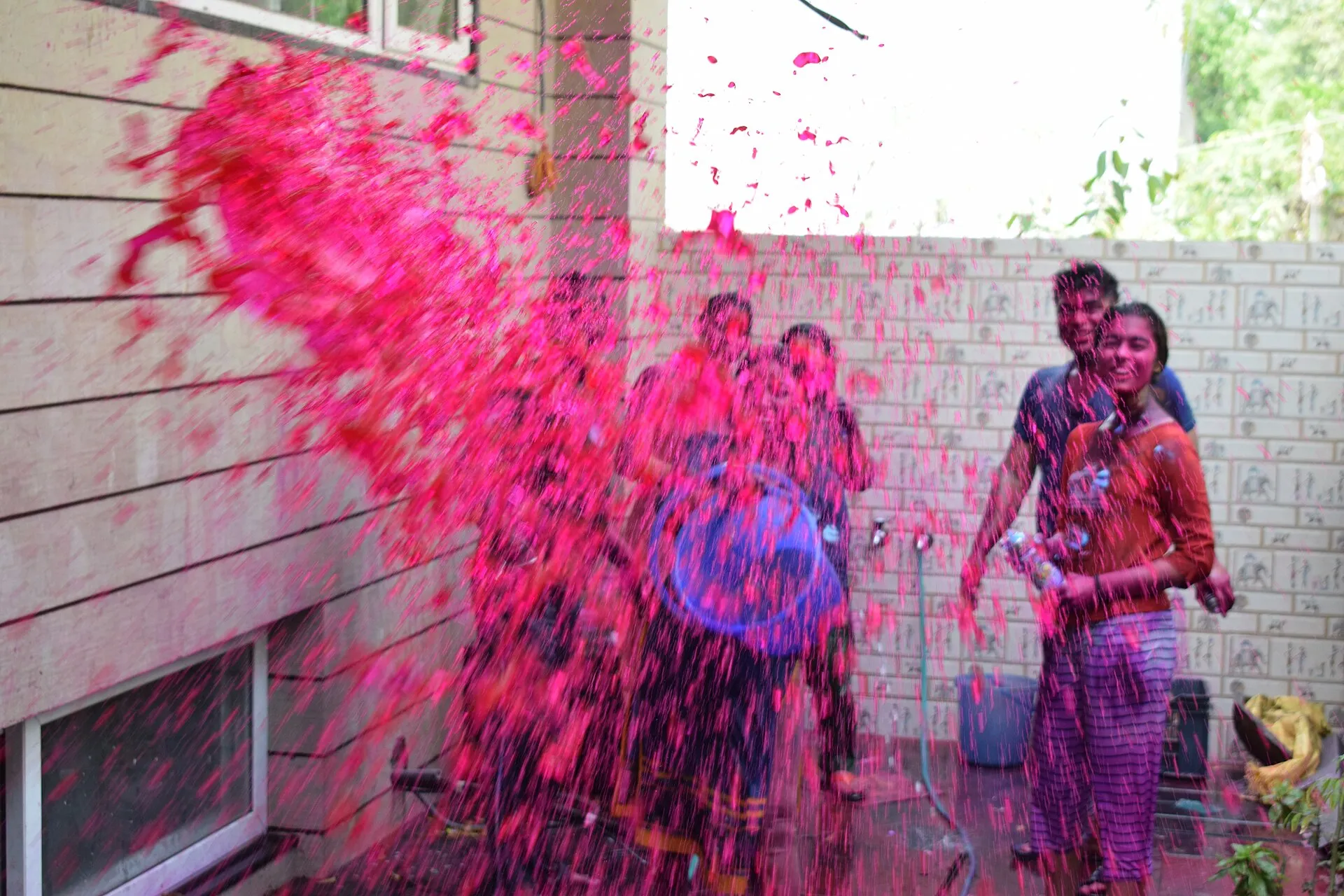
Holi is the Hindu spring festival of colours, love and renewal, played on the full moon of the month of Phalguna, usually in March. It celebrates the rescue of the young devotee Prahlad and the burning of the demoness Holika, and the playful love of Radha and Krishna. A bonfire is lit on the eve, and on the day itself streets and courtyards fill with coloured powder and water. In Punjab, Holi is followed the next day by the Sikh festival of Hola Mohalla at Anandpur Sahib.
- Punjabi name
- ਹੋਲੀ
- When
- The full moon of Phalguna, usually in March
- Eve
- Holika Dahan, the bonfire that remembers Holika's burning
- Main day names
- Rangwali Holi, Dhuleti, Phagwah in the Caribbean
- Celebrates
- Prahlad's rescue and Holika's defeat; the love of Radha and Krishna; the coming of spring
- In Braj
- Celebrations run for days around Mathura and Vrindavan, including Lathmar Holi at Barsana and Nandgaon
All 8 facts
- Early record
- Mentioned in the seventh-century Sanskrit drama Ratnavali
- In Punjab
- Followed the next day by Hola Mohalla at Anandpur Sahib
Holi is the festival that turns the end of winter into an explosion of colour. For one morning each spring, the normal rules of distance and dignity are suspended: friends, neighbours and strangers cover one another with coloured powder and water, and whole towns come out into the street. Behind the play stand two much-loved stories, one of a boy saved by his faith, and one of a god in love.
What is Holi?
Holi is a major Hindu festival of spring, colour and love. It begins on the evening of the full moon of the month of Phalguna, which falls around the middle of March, and its main day of colour follows the next morning. The festival marks the end of winter, invokes a good spring harvest, and celebrates the victory of good over evil. Holi began in the Indian subcontinent and is now played by Hindu communities and their neighbours across the world, as far as the Caribbean, where it is called Phagwah.
The story of Prahlad and Holika
The festival takes its name from Holika, sister of the demon king Hiranyakashipu. The king had won a boon that made him almost impossible to kill and demanded to be worshipped as a god, but his own son Prahlad stayed devoted to Vishnu. Enraged, the king had Holika, who was believed immune to fire, sit in a pyre with the boy on her lap. The fire reversed the boon: Holika burned, and Prahlad walked out unharmed, protected by his devotion. Vishnu then came as Narasimha, the man-lion, and killed the king at dusk, on a threshold, on his lap, with his claws, slipping past every condition of the boon. The bonfire lit on Holi's eve, Holika Dahan, remembers the burning, and people circle it asking that evil, in the world and in themselves, be destroyed like Holika.
Radha, Krishna and the colours of Braj
The colour play belongs to Krishna and Radha. Krishna, dark-skinned, is said to have worried that fair Radha would not love him; his mother told him to colour Radha's face any shade he liked, and the gesture became the festival's gift of love. In Braj, the land of Krishna's childhood around Mathura and Vrindavan, Holi is kept for days: at Barsana and Nandgaon, Lathmar Holi replays Krishna's teasing visits, with women playfully beating the men of the neighbouring village with sticks while the men defend themselves with shields. Widows of Vrindavan, once expected to live in white and apart, now famously play Holi there too.
How is Holi celebrated?
On the eve, neighbourhoods stack wood and straw into a pyre, and after sunset the Holika bonfire is lit with prayers and singing. The next morning the colour begins: dry gulal powder is smeared on faces and thrown in clouds, water is coloured and sprayed from pichkaris and buckets, and no one who steps outside stays clean. Sweets such as gujiya are shared, and in parts of the north a traditional drink of thandai is served. The colours were once made from flowers, turmeric, kumkum and other plants, and many families still prefer natural powders.
The festival is old. Among its earliest surviving textual mentions is the Ratnavali, a Sanskrit drama of the seventh century CE, which already describes Holi's colour play, and regional courts across medieval India kept it as a major spring rite. Its colours were traditionally plant-based: indigo, marigold and sunflower gave blues and yellows, turmeric and kumkum gave gold and red, and many families still grind their own powders on that older pattern rather than buy synthetic ones.
Holi in Punjab
Holi is played with enthusiasm across Punjab's towns and villages, in temple courtyards, mohallas and college grounds, and Punjabi families in the diaspora have carried it to Canada, Britain and beyond. Punjab also gives the day after Holi a meaning found nowhere else: at Anandpur Sahib, the Sikh festival of Hola Mohalla, begun by Guru Gobind Singh Ji in 1701, follows Holi by a day. Where Holi plays with colour, Hola fills the same ground with processions in army order, mock battles, gatka martial arts, horsemanship and poetry, turning the spring gathering toward discipline and courage.
When is Holi?
Holi falls on the full moon of Phalguna, the last month of the Hindu year, so its Gregorian date moves within March. The bonfire is lit on the full moon night and the colour is played the following day, which is the first day of the month of Chaitra in the purnimanta calendar used in Punjab and the north.
ਹੋਲੀ ਉਹ ਤਿਉਹਾਰ ਹੈ ਜੋ ਸਰਦੀਆਂ ਦੇ ਅੰਤ ਨੂੰ ਰੰਗਾਂ ਦੇ ਧਮਾਕੇ ਵਿੱਚ ਬਦਲ ਦਿੰਦਾ ਹੈ ਹਰ ਬਸੰਤ ਇੱਕ ਸਵੇਰ ਲਈ ਦੂਰੀ ਅਤੇ ਸੰਜੀਦਗੀ ਦੇ ਆਮ ਨਿਯਮ ਮੁਲਤਵੀ ਹੋ ਜਾਂਦੇ ਹਨ: ਦੋਸਤ, ਗੁਆਂਢੀ ਅਤੇ ਅਜਨਬੀ ਇੱਕ ਦੂਜੇ ਉੱਤੇ ਰੰਗਦਾਰ ਗੁਲਾਲ ਅਤੇ ਪਾਣੀ ਪਾਉਂਦੇ ਹਨ, ਅਤੇ ਸਾਰੇ ਸ਼ਹਿਰ ਗਲੀਆਂ ਵਿੱਚ ਨਿਕਲ ਆਉਂਦੇ ਹਨ ਇਸ ਖੇਡ ਪਿੱਛੇ ਦੋ ਪਿਆਰੀਆਂ ਕਥਾਵਾਂ ਹਨ, ਇੱਕ ਆਪਣੇ ਵਿਸ਼ਵਾਸ ਨਾਲ ਬਚੇ ਇੱਕ ਮੁੰਡੇ ਦੀ, ਅਤੇ ਇੱਕ ਪਿਆਰ ਵਿੱਚ ਪਏ ਦੇਵਤੇ ਦੀ
ਹੋਲੀ ਕੀ ਹੈ?
ਹੋਲੀ ਬਸੰਤ, ਰੰਗ ਅਤੇ ਪਿਆਰ ਦਾ ਇੱਕ ਵੱਡਾ ਹਿੰਦੂ ਤਿਉਹਾਰ ਹੈ ਇਹ ਫੱਗਣ ਮਹੀਨੇ ਦੀ ਪੂਰਨਮਾਸ਼ੀ ਵਾਲੀ ਸ਼ਾਮ ਨੂੰ ਸ਼ੁਰੂ ਹੁੰਦਾ ਹੈ, ਜੋ ਮਾਰਚ ਦੇ ਮੱਧ ਦੇ ਆਸ ਪਾਸ ਆਉਂਦੀ ਹੈ, ਅਤੇ ਇਸ ਦਾ ਰੰਗ ਵਾਲਾ ਮੁੱਖ ਦਿਨ ਅਗਲੀ ਸਵੇਰ ਹੁੰਦਾ ਹੈ ਇਹ ਤਿਉਹਾਰ ਸਰਦੀਆਂ ਦੇ ਅੰਤ ਨੂੰ ਦਰਸਾਉਂਦਾ ਹੈ, ਚੰਗੀ ਬਸੰਤ ਫਸਲ ਲਈ ਅਰਦਾਸ ਕਰਦਾ ਹੈ, ਅਤੇ ਨੇਕੀ ਦੀ ਬਦੀ ਉੱਤੇ ਜਿੱਤ ਮਨਾਉਂਦਾ ਹੈ ਹੋਲੀ ਭਾਰਤੀ ਉਪ ਮਹਾਦੀਪ ਵਿੱਚ ਸ਼ੁਰੂ ਹੋਈ ਅਤੇ ਹੁਣ ਸੰਸਾਰ ਭਰ ਦੇ ਹਿੰਦੂ ਭਾਈਚਾਰਿਆਂ ਅਤੇ ਉਨ੍ਹਾਂ ਦੇ ਗੁਆਂਢੀਆਂ ਵੱਲੋਂ ਖੇਡੀ ਜਾਂਦੀ ਹੈ, ਕੈਰੇਬੀਆਈ ਤੱਕ, ਜਿੱਥੇ ਇਸ ਨੂੰ ਫਗਵਾ ਕਿਹਾ ਜਾਂਦਾ ਹੈ
ਪ੍ਰਹਲਾਦ ਅਤੇ ਹੋਲਿਕਾ ਦੀ ਕਥਾ
ਇਸ ਤਿਉਹਾਰ ਦਾ ਨਾਮ ਹੋਲਿਕਾ ਤੋਂ ਪਿਆ ਹੈ, ਜੋ ਦੈਂਤ ਰਾਜੇ ਹਿਰਣਯਕਸ਼ਿਪੂ ਦੀ ਭੈਣ ਸੀ ਰਾਜੇ ਨੇ ਇੱਕ ਵਰਦਾਨ ਜਿੱਤਿਆ ਸੀ ਜਿਸ ਨੇ ਉਸ ਨੂੰ ਮਾਰਨਾ ਲਗਭਗ ਅਸੰਭਵ ਬਣਾ ਦਿੱਤਾ ਸੀ ਅਤੇ ਉਹ ਮੰਗ ਕਰਦਾ ਸੀ ਕਿ ਉਸ ਨੂੰ ਦੇਵਤਾ ਵਜੋਂ ਪੂਜਿਆ ਜਾਵੇ, ਪਰ ਉਸ ਦਾ ਆਪਣਾ ਪੁੱਤਰ ਪ੍ਰਹਲਾਦ ਵਿਸ਼ਨੂੰ ਦਾ ਭਗਤ ਬਣਿਆ ਰਿਹਾ ਗੁੱਸੇ ਵਿੱਚ ਰਾਜੇ ਨੇ ਹੋਲਿਕਾ ਨੂੰ, ਜਿਸ ਬਾਰੇ ਮੰਨਿਆ ਜਾਂਦਾ ਸੀ ਕਿ ਅੱਗ ਉਸ ਨੂੰ ਨਹੀਂ ਸਾੜ ਸਕਦੀ, ਮੁੰਡੇ ਨੂੰ ਗੋਦੀ ਵਿੱਚ ਲੈ ਕੇ ਚਿਖਾ ਵਿੱਚ ਬੈਠਣ ਲਈ ਕਿਹਾ ਅੱਗ ਨੇ ਵਰਦਾਨ ਉਲਟਾ ਦਿੱਤਾ: ਹੋਲਿਕਾ ਸੜ ਗਈ, ਅਤੇ ਪ੍ਰਹਲਾਦ ਆਪਣੀ ਭਗਤੀ ਦੀ ਰਾਖੀ ਨਾਲ ਬਿਨਾਂ ਨੁਕਸਾਨ ਬਾਹਰ ਆ ਗਿਆ ਫਿਰ ਵਿਸ਼ਨੂੰ ਨਰਸਿੰਹ, ਮਨੁੱਖ ਸ਼ੇਰ, ਦੇ ਰੂਪ ਵਿੱਚ ਆਏ ਅਤੇ ਰਾਜੇ ਨੂੰ ਸ਼ਾਮ ਵੇਲੇ, ਦਰਵਾਜ਼ੇ ਦੀ ਚੌਖਟ ਉੱਤੇ, ਆਪਣੀ ਗੋਦੀ ਵਿੱਚ, ਆਪਣੇ ਨਹੁੰਆਂ ਨਾਲ ਮਾਰਿਆ, ਵਰਦਾਨ ਦੀ ਹਰ ਸ਼ਰਤ ਨੂੰ ਪਾਰ ਕਰਕੇ ਹੋਲੀ ਦੀ ਪਹਿਲੀ ਰਾਤ ਜਗਾਈ ਜਾਣ ਵਾਲੀ ਅੱਗ, ਹੋਲਿਕਾ ਦਹਨ, ਉਸ ਸੜਨ ਦੀ ਯਾਦ ਹੈ, ਅਤੇ ਲੋਕ ਇਸ ਦੇ ਆਲੇ ਦੁਆਲੇ ਘੁੰਮ ਕੇ ਮੰਗਦੇ ਹਨ ਕਿ ਬਦੀ, ਸੰਸਾਰ ਵਿੱਚ ਅਤੇ ਆਪਣੇ ਅੰਦਰ, ਹੋਲਿਕਾ ਵਾਂਗ ਨਸ਼ਟ ਹੋ ਜਾਵੇ
ਰਾਧਾ, ਕ੍ਰਿਸ਼ਨ ਅਤੇ ਬ੍ਰਜ ਦੇ ਰੰਗ
ਰੰਗਾਂ ਦੀ ਖੇਡ ਕ੍ਰਿਸ਼ਨ ਅਤੇ ਰਾਧਾ ਦੀ ਹੈ ਕਿਹਾ ਜਾਂਦਾ ਹੈ ਕਿ ਸਾਂਵਲੇ ਕ੍ਰਿਸ਼ਨ ਨੂੰ ਚਿੰਤਾ ਸੀ ਕਿ ਗੋਰੀ ਰਾਧਾ ਉਸ ਨੂੰ ਪਿਆਰ ਨਹੀਂ ਕਰੇਗੀ; ਉਸ ਦੀ ਮਾਂ ਨੇ ਉਸ ਨੂੰ ਕਿਹਾ ਕਿ ਰਾਧਾ ਦੇ ਮੂੰਹ ਉੱਤੇ ਜੋ ਰੰਗ ਚਾਹੇ ਲਾ ਦੇਵੇ, ਅਤੇ ਇਹ ਇਸ਼ਾਰਾ ਤਿਉਹਾਰ ਦਾ ਪਿਆਰ ਦਾ ਤੋਹਫਾ ਬਣ ਗਿਆ ਬ੍ਰਜ ਵਿੱਚ, ਮਥੁਰਾ ਅਤੇ ਵ੍ਰਿੰਦਾਵਨ ਦੇ ਆਲੇ ਦੁਆਲੇ ਕ੍ਰਿਸ਼ਨ ਦੇ ਬਚਪਨ ਦੀ ਧਰਤੀ ਉੱਤੇ, ਹੋਲੀ ਕਈ ਦਿਨ ਮਨਾਈ ਜਾਂਦੀ ਹੈ: ਬਰਸਾਨਾ ਅਤੇ ਨੰਦਗਾਓਂ ਵਿੱਚ ਲਠਮਾਰ ਹੋਲੀ ਕ੍ਰਿਸ਼ਨ ਦੀਆਂ ਸ਼ਰਾਰਤੀ ਫੇਰੀਆਂ ਨੂੰ ਦੁਹਰਾਉਂਦੀ ਹੈ, ਜਿੱਥੇ ਔਰਤਾਂ ਗੁਆਂਢੀ ਪਿੰਡ ਦੇ ਮਰਦਾਂ ਨੂੰ ਖੇਡ ਵਿੱਚ ਡਾਂਗਾਂ ਨਾਲ ਮਾਰਦੀਆਂ ਹਨ ਅਤੇ ਮਰਦ ਢਾਲਾਂ ਨਾਲ ਆਪਣਾ ਬਚਾਅ ਕਰਦੇ ਹਨ ਵ੍ਰਿੰਦਾਵਨ ਦੀਆਂ ਵਿਧਵਾਵਾਂ, ਜਿਨ੍ਹਾਂ ਤੋਂ ਕਦੇ ਚਿੱਟੇ ਕੱਪੜਿਆਂ ਵਿੱਚ ਵੱਖ ਰਹਿਣ ਦੀ ਉਮੀਦ ਕੀਤੀ ਜਾਂਦੀ ਸੀ, ਹੁਣ ਉੱਥੇ ਮਸ਼ਹੂਰ ਤੌਰ ਉੱਤੇ ਹੋਲੀ ਖੇਡਦੀਆਂ ਹਨ
ਹੋਲੀ ਕਿਵੇਂ ਮਨਾਈ ਜਾਂਦੀ ਹੈ?
ਪਹਿਲੀ ਸ਼ਾਮ ਨੂੰ ਮੁਹੱਲੇ ਲੱਕੜ ਅਤੇ ਤੂੜੀ ਇਕੱਠੀ ਕਰਕੇ ਢੇਰ ਲਾਉਂਦੇ ਹਨ, ਅਤੇ ਸੂਰਜ ਡੁੱਬਣ ਤੋਂ ਬਾਅਦ ਅਰਦਾਸਾਂ ਅਤੇ ਗਾਇਨ ਨਾਲ ਹੋਲਿਕਾ ਦੀ ਅੱਗ ਜਗਾਈ ਜਾਂਦੀ ਹੈ ਅਗਲੀ ਸਵੇਰ ਰੰਗ ਸ਼ੁਰੂ ਹੁੰਦਾ ਹੈ: ਸੁੱਕਾ ਗੁਲਾਲ ਮੂੰਹਾਂ ਉੱਤੇ ਮਲਿਆ ਜਾਂਦਾ ਹੈ ਅਤੇ ਬੱਦਲਾਂ ਵਿੱਚ ਉਡਾਇਆ ਜਾਂਦਾ ਹੈ, ਪਾਣੀ ਵਿੱਚ ਰੰਗ ਘੋਲ ਕੇ ਪਿਚਕਾਰੀਆਂ ਅਤੇ ਬਾਲਟੀਆਂ ਤੋਂ ਛਿੜਕਿਆ ਜਾਂਦਾ ਹੈ, ਅਤੇ ਜੋ ਬਾਹਰ ਨਿਕਲੇ ਉਹ ਸਾਫ ਨਹੀਂ ਰਹਿੰਦਾ ਗੁਝੀਆਂ ਵਰਗੀਆਂ ਮਠਿਆਈਆਂ ਵੰਡੀਆਂ ਜਾਂਦੀਆਂ ਹਨ, ਅਤੇ ਉੱਤਰ ਦੇ ਕੁਝ ਹਿੱਸਿਆਂ ਵਿੱਚ ਠੰਡਾਈ ਦਾ ਰਵਾਇਤੀ ਪੇਯ ਪਰੋਸਿਆ ਜਾਂਦਾ ਹੈ ਰੰਗ ਕਦੇ ਫੁੱਲਾਂ, ਹਲਦੀ, ਕੁਮਕੁਮ ਅਤੇ ਹੋਰ ਪੌਦਿਆਂ ਤੋਂ ਬਣਾਏ ਜਾਂਦੇ ਸਨ, ਅਤੇ ਕਈ ਪਰਿਵਾਰ ਅੱਜ ਵੀ ਕੁਦਰਤੀ ਰੰਗਾਂ ਨੂੰ ਤਰਜੀਹ ਦਿੰਦੇ ਹਨ
ਇਹ ਤਿਉਹਾਰ ਪੁਰਾਣਾ ਹੈ ਇਸ ਦੇ ਸਭ ਤੋਂ ਪੁਰਾਣੇ ਬਚੇ ਸਾਹਿਤਕ ਜ਼ਿਕਰਾਂ ਵਿੱਚੋਂ ਇੱਕ ਰਤਨਾਵਲੀ ਹੈ, ਸੱਤਵੀਂ ਸਦੀ ਈਸਵੀ ਦਾ ਇੱਕ ਸੰਸਕ੍ਰਿਤ ਨਾਟਕ, ਜੋ ਪਹਿਲਾਂ ਹੀ ਹੋਲੀ ਦੀ ਰੰਗ ਖੇਡ ਦਾ ਵਰਣਨ ਕਰਦਾ ਹੈ, ਅਤੇ ਮੱਧਕਾਲੀ ਭਾਰਤ ਦੇ ਖੇਤਰੀ ਦਰਬਾਰਾਂ ਨੇ ਇਸ ਨੂੰ ਬਸੰਤ ਦੀ ਇੱਕ ਵੱਡੀ ਰੀਤ ਵਜੋਂ ਰੱਖਿਆ ਇਸ ਦੇ ਰੰਗ ਰਵਾਇਤੀ ਤੌਰ ਉੱਤੇ ਪੌਦਿਆਂ ਤੋਂ ਬਣਦੇ ਸਨ: ਨੀਲ, ਗੇਂਦਾ ਅਤੇ ਸੂਰਜਮੁਖੀ ਨੀਲੇ ਅਤੇ ਪੀਲੇ ਦਿੰਦੇ ਸਨ, ਹਲਦੀ ਅਤੇ ਕੁਮਕੁਮ ਸੁਨਹਿਰੀ ਅਤੇ ਲਾਲ ਦਿੰਦੇ ਸਨ, ਅਤੇ ਕਈ ਪਰਿਵਾਰ ਅੱਜ ਵੀ ਨਕਲੀ ਰੰਗ ਖਰੀਦਣ ਦੀ ਥਾਂ ਉਸੇ ਪੁਰਾਣੇ ਤਰੀਕੇ ਨਾਲ ਆਪਣੇ ਰੰਗ ਪੀਸਦੇ ਹਨ
ਪੰਜਾਬ ਵਿੱਚ ਹੋਲੀ
ਹੋਲੀ ਪੰਜਾਬ ਦੇ ਕਸਬਿਆਂ ਅਤੇ ਪਿੰਡਾਂ ਵਿੱਚ, ਮੰਦਰਾਂ ਦੇ ਵਿਹੜਿਆਂ, ਮੁਹੱਲਿਆਂ ਅਤੇ ਕਾਲਜ ਮੈਦਾਨਾਂ ਵਿੱਚ ਉਤਸ਼ਾਹ ਨਾਲ ਖੇਡੀ ਜਾਂਦੀ ਹੈ, ਅਤੇ ਪ੍ਰਵਾਸੀ ਪੰਜਾਬੀ ਪਰਿਵਾਰ ਇਸ ਨੂੰ ਕੈਨੇਡਾ, ਬਰਤਾਨੀਆ ਅਤੇ ਹੋਰ ਥਾਵਾਂ ਤੱਕ ਲੈ ਗਏ ਹਨ ਪੰਜਾਬ ਹੋਲੀ ਦੇ ਅਗਲੇ ਦਿਨ ਨੂੰ ਇੱਕ ਅਰਥ ਵੀ ਦਿੰਦਾ ਹੈ ਜੋ ਹੋਰ ਕਿਤੇ ਨਹੀਂ ਮਿਲਦਾ: ਅਨੰਦਪੁਰ ਸਾਹਿਬ ਵਿਖੇ ਸਿੱਖਾਂ ਦਾ ਤਿਉਹਾਰ ਹੋਲਾ ਮਹੱਲਾ, ਜੋ ਗੁਰੂ ਗੋਬਿੰਦ ਸਿੰਘ ਜੀ ਨੇ 1701 ਵਿੱਚ ਸ਼ੁਰੂ ਕੀਤਾ, ਹੋਲੀ ਤੋਂ ਇੱਕ ਦਿਨ ਬਾਅਦ ਆਉਂਦਾ ਹੈ ਜਿੱਥੇ ਹੋਲੀ ਰੰਗਾਂ ਨਾਲ ਖੇਡਦੀ ਹੈ, ਹੋਲਾ ਉਸੇ ਮੈਦਾਨ ਨੂੰ ਫੌਜੀ ਕ੍ਰਮ ਵਿੱਚ ਜਲੂਸਾਂ, ਨਕਲੀ ਲੜਾਈਆਂ, ਗੱਤਕੇ, ਘੋੜ ਸਵਾਰੀ ਅਤੇ ਕਵਿਤਾ ਨਾਲ ਭਰ ਦਿੰਦਾ ਹੈ, ਬਸੰਤ ਦੇ ਇਕੱਠ ਨੂੰ ਅਨੁਸ਼ਾਸਨ ਅਤੇ ਹੌਸਲੇ ਵੱਲ ਮੋੜਦਾ ਹੈ
ਹੋਲੀ ਕਦੋਂ ਹੁੰਦੀ ਹੈ?
ਹੋਲੀ ਫੱਗਣ ਦੀ ਪੂਰਨਮਾਸ਼ੀ ਨੂੰ ਆਉਂਦੀ ਹੈ, ਜੋ ਹਿੰਦੂ ਸਾਲ ਦਾ ਆਖਰੀ ਮਹੀਨਾ ਹੈ, ਇਸ ਲਈ ਇਸ ਦੀ ਅੰਗਰੇਜ਼ੀ ਤਰੀਕ ਮਾਰਚ ਵਿੱਚ ਬਦਲਦੀ ਰਹਿੰਦੀ ਹੈ ਅੱਗ ਪੂਰਨਮਾਸ਼ੀ ਵਾਲੀ ਰਾਤ ਜਗਾਈ ਜਾਂਦੀ ਹੈ ਅਤੇ ਰੰਗ ਅਗਲੇ ਦਿਨ ਖੇਡਿਆ ਜਾਂਦਾ ਹੈ, ਜੋ ਪੰਜਾਬ ਅਤੇ ਉੱਤਰ ਵਿੱਚ ਵਰਤੇ ਜਾਣ ਵਾਲੇ ਪੂਰਨਿਮਾਂਤ ਕੈਲੰਡਰ ਵਿੱਚ ਚੇਤ ਮਹੀਨੇ ਦਾ ਪਹਿਲਾ ਦਿਨ ਹੁੰਦਾ ਹੈ