
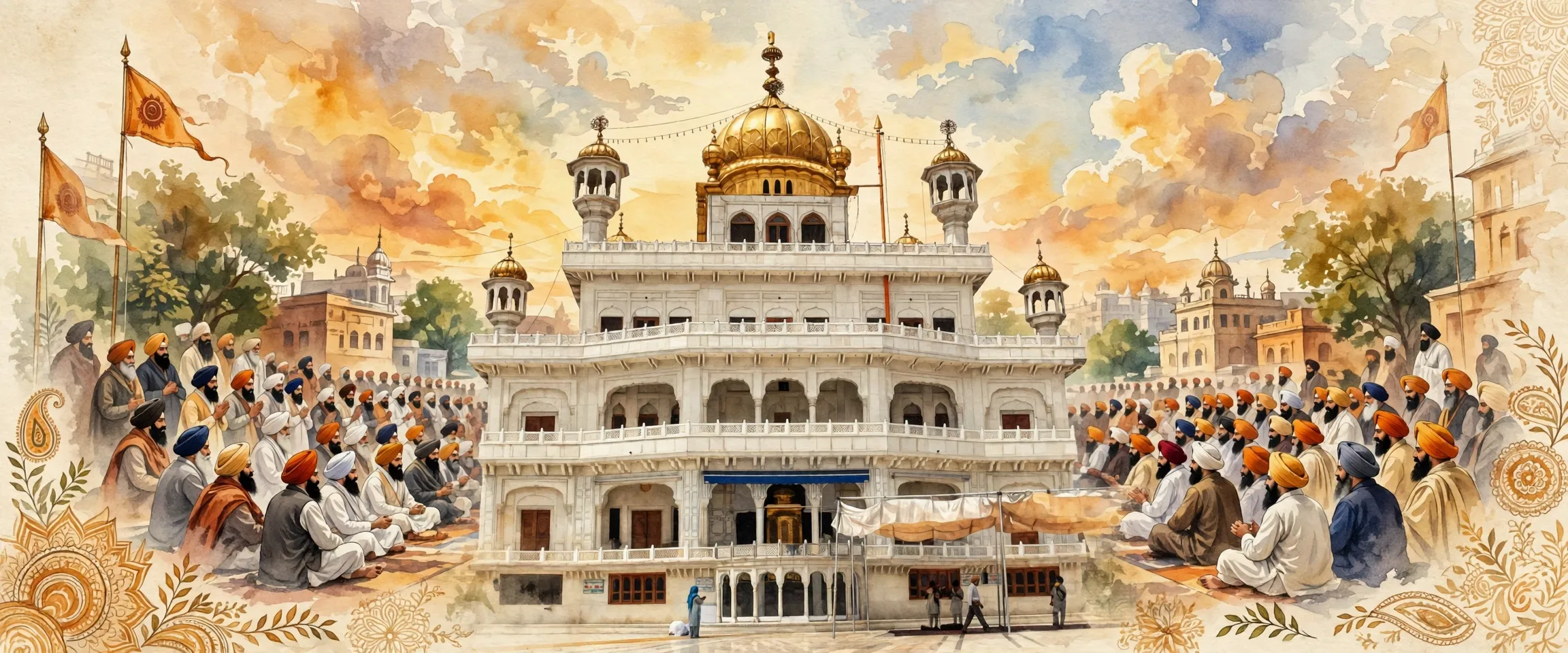
A gurmata (ਗੁਰਮਤਾ), literally the Guru's intention, is a resolution adopted in the Guru's name by Sikhs assembled in the presence of Guru Granth Sahib Ji, above all by the Sarbat Khalsa at the Akal Takht in Amritsar. Reached by consensus rather than majority vote, it was held binding on all Sikhs, and in the eighteenth century gurmatas organised armies, accepted or refused offers from governments, and set the course of the Panth.
- Punjabi name
- ਗੁਰਮਤਾ
- Faith
- Sikhism
- Gurmukhi
- ਗੁਰਮਤਾ
- Type
- Sacred resolution of the assembled Panth
- Name means
- The Guru's intention: counsel or a resolution in the Guru's name
- Adopted by
- Sarbat Khalsa, the whole Khalsa assembled in the presence of Guru Granth Sahib Ji
All 13 facts
- Usual place
- Akal Takht, Amritsar
- Usual times
- Baisakhi and Diwali gatherings in the 18th century
- Decision rule
- Consensus or unanimity, not a simple majority vote
- Binding on
- All Sikhs, as the decision of the whole Panth
- Key dates
- 14 October 1745 (25 jathas), 29 March 1748 (Dal Khalsa, 11 misls), 1753 (Rakhi), 1765 (supremacy of Sarbat Khalsa)
- Last old form
- 1805, advisory assembly under Maharaja Ranjit Singh on Jaswant Rao Holkar
- Eyewitness accounts
- George Forster (visited 1783) and John Malcolm (visited 1805)
Gurmata (ਗੁਰਮਤਾ) is a resolution in the Guru's name: a decision adopted by Sikhs assembled in the presence of Guru Granth Sahib Ji, above all by the Sarbat Khalsa at the Akal Takht in Amritsar in the eighteenth century, and held binding on the whole Panth, as the Guru was understood present in the gathering.
What is a gurmata?
The word joins gur, the Guru, with mata, counsel or a considered resolution. Wikipedia gives its literal sense as the Guru's intention or the advice of the Guru. SikhiWiki, in the Encyclopaedia of Sikhism article it carries, defines it as a resolution in the name of the Guru: a counsel or resolution adopted by Sikhs at an assembly held in the Guru's name, concerning a religious, social or political issue. It represented the general will of the Khalsa, and it carried the sanction of the Guru, because the assembly had acted by the authority of Guru Granth Sahib Ji. Wikipedia, drawing on standard dictionaries, states its force directly: an order on a subject affecting the fundamental principles of Sikhism, binding on all Sikhs.
Two conditions gave it that force. The subject had to concern the whole Sikh community, not one group or party, and the decision had to be unanimous: the Gateway to Sikhism summary states that a gurmata has to be unanimous, with no question of a majority view, and binds all Sikhs, even those who opposed it. Accounts differ slightly on scope. The definition Wikipedia quotes from the Sikh Rehat Maryada tradition reserves the full weight of a gurmata for subjects that clarify and support the fundamental principles of Sikhism, while political and social matters take ordinary resolutions, called mattas, which are not held as sacred. SikhiWiki uses the word more widely, for the great political decisions of the eighteenth century as well.
Where does the gurmata come from?
SikhiWiki traces the genesis of the gurmata to the teaching of Guru Gobind Singh Ji, and its earliest instances to his own lifetime. When he inaugurated the Khalsa in 1699, the Guru declared that all members of the Panth were equal, and that all previous divisions of caste and status had been set aside. Before he passed away in 1708, he declared that wherever Sikhs were gathered in the presence of Guru Granth Sahib Ji, the Guru himself was present, and counsel taken there represented the combined will of the Khalsa. The gurmata is that teaching turned into an institution: a decision the Panth reaches together, in the Guru's presence and name, is the Guru's decision.
How was a gurmata passed at the Akal Takht?
By the middle of the eighteenth century the gurmata was a well established institution, and its home was the Akal Takht at Amritsar, facing Harmandir Sahib. Sikhs assembled there twice a year, at Baisakhi and at Diwali, in the presence of Guru Granth Sahib Ji, to take stock of the political situation, meet the common danger, and choose their battle leaders. Two European visitors left vivid accounts of how it worked: George Forster, who visited Punjab in 1783 and wrote A Journey from Bengal to England, and John Malcolm, who came in 1805 and wrote Sketch of the Sikhs.
The procedure was built to produce one mind out of many. An inaugural Ardas, the prayer for guidance, was offered, Karah Prasad was shared, and proposals were put forward. Ardas was recited again, and all present vowed, with Guru Granth Sahib Ji between them, to lay aside internal disputes. Malcolm, quoted in both SikhiWiki articles, wrote that when the chiefs met on this solemn occasion all private animosities ceased, and every man sacrificed his personal feeling at the shrine of the general good. The Gateway to Sikhism summary adds that the Panj Pyare, including the Jathedar, were chosen for merit and piety, and those present were to declare their impartiality. Debate continued until an agreed gurmata emerged, the assembly raising shouts of Sat Sri Akal in acceptance, and after it passed, everyone treated obedience as a religious duty.
What were the most important gurmatas?
The dated decisions show the institution at work. Soon after the martyrdom of Bhai Tara Singh Wan in 1726, a general assembly at Amritsar resolved on a threefold plan against the government of the day: to seize government treasure in transit, to raid government armouries and stables, and to act against government informers. In 1733 the assembly accepted the Lahore government's offer of a jagir and a Nawabship for the Panth, the honour settling on Kapur Singh Ji. SikhiWiki notes that no formal gurmata was adopted that day: the consensus was reached in a divan in the same spirit. At Diwali on 14 October 1745, after the death of Zakariya Khan, the governor of Lahore who had led the persecution, a gurmata gave sanction to the 25 Sikh groups, or jathas, that had emerged.
The most consequential gurmata came at Baisakhi on 29 March 1748, at the gathering of the Sarbat Khalsa. The number of jathas had grown to 65, and the assembly merged them into 11 misls, forming the Dal Khalsa. Jassa Singh Ahluwalia was chosen as leader, and a record of each group's possessions was ordered to be kept at the Akal Takht, each in its own file. A gurmata in 1753 formally endorsed the Rakhi system, the protection arrangement of the Sikh clans. In 1765 a gurmata proclaimed the supremacy of the Sarbat Khalsa over individual leaders, and another that year ordered a coin struck in the name of Guru Nanak and Guru Gobind Singh Ji after the taking of Lahore. In 1765 the Sikhs also resolved by gurmata to confront Ahmad Shah Durrani on his seventh invasion.
How is a gurmata different from a hukamnama?
The two words are close, and they overlap, but they are not the same thing. A hukamnama is literally a royal order: historically the letters and orders of the Sikh Gurus were called hukamnamas, and so are orders issued from the Akal Takht, as well as the order taken from Guru Granth Sahib Ji. A gurmata is not an order handed down by one authority. It is the decision itself, reached by the assembled Panth deliberating together in the Guru's presence: a hukamnama comes down from authority, while a gurmata rises from the gathered Panth.
The two meet at the point of publication. Dr Harjinder Singh Dilgeer's article on the Hukamnama of Akal Takht Sahib, carried on SikhiWiki, puts it in one sentence: all gurmatas are not hukamnamas. A resolve is a gurmata, applying to those who took part in it. But if that gurmata is of national importance, it is released to the whole Sikh nation, and then it becomes a hukamnama. On that account, the great eighteenth century gurmatas were issued from the Akal Takht as the hukamnama of the Sarbat Khalsa, and a hukamnama could not properly be issued by the caretaker of the Takht on personal whim, because its authority was the consensus behind it. In short: the gurmata is the Panth deciding, the hukamnama is that decision, or a Guru's order, going out with binding force.
What happened to the gurmata after 1805, and how is the word used today?
The institution depended on there being no single Sikh ruler, and it faded as that changed. Conquests up to 1767 were made by the misls in the name of the Khalsa, but as personal ambition gained the upper hand, the sense of a corporate commonwealth wore away, and in the days of Sikh rule the institution fell into disuse. Its last semblance in that era was an assembly of sardars called by Maharaja Ranjit Singh Ji in 1805, on the entry into his dominions of the Maratha chief Jaswant Rao Holkar, pursued by British troops under Lord Lake. Only chosen chiefs were invited, and the assembly's role was advisory: a body whose decisions had once bound kings could advise a king, but no longer bind him.
The word outlived the institution. After Sikh sovereignty lapsed, SikhiWiki records, the word gurmata was resurrected, especially with the Singh Sabha movement in the closing decades of the nineteenth century: it now referred to any decision arrived at by common consent at a Sikh assembly in the presence of Guru Granth Sahib Ji, and the Akali movement brought political issues within its scope as well. In December 1920 a gurmata was passed for freeing the gurdwaras from proprietary control. Today the word is in everyday use for a resolution adopted at a Sikh religious gathering or conference. The same principle works at local scale: a sangat decides a local question together through its Panj Pyare in the Guru's presence, a role the Encyclopaedia of Sikhism also records for the Panj Pyare. What survives is the test the old word still sets: a matter concerning the whole community, decided by consensus, in the Guru's presence, and accepted by all.
ਗੁਰਮਤਾ ਗੁਰੂ ਦੇ ਨਾਂ ਵਿੱਚ ਕੀਤਾ ਫੈਸਲਾ ਹੈ। ਇਹ ਉਹ ਮਤਾ ਹੈ, ਜੋ ਸਿੱਖਾਂ ਨੇ ਗੁਰੂ ਗ੍ਰੰਥ ਸਾਹਿਬ ਜੀ ਦੀ ਹਜ਼ੂਰੀ ਵਿੱਚ ਇਕੱਠੇ ਹੋ ਕੇ ਅਪਣਾਇਆ, ਸਭ ਤੋਂ ਵੱਧ ਅਠਾਰਵੀਂ ਸਦੀ ਵਿੱਚ ਅੰਮ੍ਰਿਤਸਰ ਦੇ ਅਕਾਲ ਤਖ਼ਤ ਉੱਤੇ ਸਰਬੱਤ ਖਾਲਸੇ ਨੇ, ਅਤੇ ਇਹ ਸਾਰੇ ਪੰਥ ਲਈ ਬੰਧਨਕਾਰੀ ਮੰਨਿਆ ਜਾਂਦਾ ਸੀ, ਕਿਉਂਕਿ ਸਮਝਿਆ ਜਾਂਦਾ ਸੀ ਕਿ ਇਕੱਠ ਵਿੱਚ ਗੁਰੂ ਖ਼ੁਦ ਹਾਜ਼ਰ ਹੈ।
ਗੁਰਮਤਾ ਕੀ ਹੈ?
ਇਹ ਸ਼ਬਦ ਦੋ ਹਿੱਸਿਆਂ ਦਾ ਜੋੜ ਹੈ: ਗੁਰ, ਗੁਰੂ, ਅਤੇ ਮਤਾ, ਸਲਾਹ ਜਾਂ ਵਿਚਾਰਿਆ ਹੋਇਆ ਫੈਸਲਾ, ਅਤੇ ਵਿਕੀਪੀਡੀਆ ਇਸ ਦਾ ਸ਼ਾਬਦਿਕ ਅਰਥ ਗੁਰੂ ਦੀ ਮਰਜ਼ੀ ਜਾਂ ਗੁਰੂ ਦੀ ਸਲਾਹ ਦਿੰਦੀ ਹੈ। ਸਿੱਖੀਵਿਕੀ, ਸਿੱਖ ਧਰਮ ਦੀ ਐਨਸਾਈਕਲੋਪੀਡੀਆ ਦੇ ਲੇਖ ਦੇ ਹਵਾਲੇ ਨਾਲ, ਇਸ ਨੂੰ ਸਾਦੇ ਸ਼ਬਦਾਂ ਵਿੱਚ ਗੁਰੂ ਦੇ ਨਾਂ ਵਿੱਚ ਕੀਤਾ ਫੈਸਲਾ ਕਹਿੰਦੀ ਹੈ: ਉਹ ਸਲਾਹ ਜਾਂ ਮਤਾ, ਜੋ ਸਿੱਖਾਂ ਨੇ ਗੁਰੂ ਦੇ ਨਾਂ ਵਿੱਚ ਹੋਈ ਸਭਾ ਵਿੱਚ ਕਿਸੇ ਧਾਰਮਿਕ, ਸਮਾਜਿਕ ਜਾਂ ਸਿਆਸੀ ਮੁੱਦੇ ਉੱਤੇ ਅਪਣਾਇਆ। ਵਿਚਾਰਾਂ ਵਿੱਚੋਂ ਨਿਕਲਿਆ ਅੰਤਿਮ ਫੈਸਲਾ ਗੁਰਮਤਾ ਸੀ। ਇਹ ਖਾਲਸੇ ਦੀ ਸਾਂਝੀ ਮਰਜ਼ੀ ਨੂੰ ਦਰਸਾਉਂਦਾ ਸੀ, ਅਤੇ ਇਸ ਨੂੰ ਗੁਰੂ ਦੀ ਮਨਜ਼ੂਰੀ ਪ੍ਰਾਪਤ ਸੀ, ਕਿਉਂਕਿ ਸਭਾ ਨੇ ਗੁਰੂ ਗ੍ਰੰਥ ਸਾਹਿਬ ਜੀ ਦੇ ਅਧਿਕਾਰ ਨਾਲ ਕੰਮ ਕੀਤਾ ਸੀ। ਵਿਕੀਪੀਡੀਆ, ਸਿੱਖ ਧਰਮ ਦੇ ਮਿਆਰੀ ਸ਼ਬਦਕੋਸ਼ਾਂ ਦੇ ਹਵਾਲੇ ਨਾਲ, ਇਸ ਦੀ ਤਾਕਤ ਸਿੱਧੇ ਸ਼ਬਦਾਂ ਵਿੱਚ ਦੱਸਦੀ ਹੈ: ਗੁਰਮਤਾ ਸਿੱਖ ਧਰਮ ਦੇ ਮੂਲ ਸਿਧਾਂਤਾਂ ਨੂੰ ਪ੍ਰਭਾਵਿਤ ਕਰਨ ਵਾਲੇ ਵਿਸ਼ੇ ਉੱਤੇ ਹੁਕਮ ਹੈ, ਅਤੇ ਇਹ ਸਾਰੇ ਸਿੱਖਾਂ ਲਈ ਬੰਧਨਕਾਰੀ ਹੈ।
ਉਸ ਫੈਸਲੇ ਨੂੰ ਇਹ ਤਾਕਤ ਦੋ ਸ਼ਰਤਾਂ ਦਿੰਦੀਆਂ ਸਨ। ਵਿਸ਼ਾ ਸਾਰੇ ਸਿੱਖ ਭਾਈਚਾਰੇ ਨਾਲ ਸੰਬੰਧਤ ਹੋਣਾ ਚਾਹੀਦਾ ਸੀ, ਕਿਸੇ ਇੱਕ ਧੜੇ ਜਾਂ ਪਾਰਟੀ ਦੇ ਹਿੱਤ ਨਾਲ ਨਹੀਂ, ਅਤੇ ਫੈਸਲਾ ਸਰਬਸੰਮਤ ਹੋਣਾ ਚਾਹੀਦਾ ਸੀ: ਗੇਟਵੇ ਟੂ ਸਿੱਖਿਜ਼ਮ ਉੱਤੇ ਦਿੱਤਾ ਵਿਧੀ ਦਾ ਸਾਰ ਕਹਿੰਦਾ ਹੈ ਕਿ ਗੁਰਮਤਾ ਸਰਬਸੰਮਤ ਹੋਣਾ ਚਾਹੀਦਾ ਹੈ, ਬਹੁਮਤ ਦੀ ਰਾਏ ਦਾ ਕੋਈ ਸਵਾਲ ਹੀ ਨਹੀਂ, ਅਤੇ ਇਹ ਸਾਰੇ ਸਿੱਖਾਂ ਲਈ ਬੰਧਨਕਾਰੀ ਹੈ, ਜਿਨ੍ਹਾਂ ਨੂੰ ਇਸ ਦਾ ਸਤਕਾਰ ਕਰਨਾ ਅਤੇ ਇਸ ਨੂੰ ਲਾਗੂ ਕਰਨਾ ਚਾਹੀਦਾ ਹੈ, ਭਾਵੇਂ ਉਹ ਨਿੱਜੀ ਤੌਰ ਉੱਤੇ ਇਸ ਦੇ ਹੱਕ ਵਿੱਚ ਨਾ ਹੋਣ। ਵਿਸ਼ੇ ਦੇ ਘੇਰੇ ਬਾਰੇ ਬਿਰਤਾਂਤ ਥੋੜ੍ਹੇ ਵੱਖਰੇ ਹਨ। ਜਿਸ ਪਰਿਭਾਸ਼ਾ ਦਾ ਹਵਾਲਾ ਵਿਕੀਪੀਡੀਆ ਸਿੱਖ ਰਹਿਤ ਮਰਯਾਦਾ ਦੀ ਪਰੰਪਰਾ ਵਿੱਚੋਂ ਦਿੰਦੀ ਹੈ, ਉਹ ਗੁਰਮਤੇ ਦਾ ਪੂਰਾ ਭਾਰ ਉਨ੍ਹਾਂ ਵਿਸ਼ਿਆਂ ਲਈ ਰਾਖਵਾਂ ਰੱਖਦੀ ਹੈ, ਜੋ ਸਿੱਖ ਧਰਮ ਦੇ ਮੂਲ ਸਿਧਾਂਤਾਂ ਨੂੰ ਸਪਸ਼ਟ ਕਰਦੇ ਅਤੇ ਮਜ਼ਬੂਤ ਕਰਦੇ ਹਨ, ਜਿਵੇਂ ਗੁਰੂਆਂ ਅਤੇ ਗੁਰੂ ਗ੍ਰੰਥ ਸਾਹਿਬ ਜੀ ਦੀ ਸਥਿਤੀ ਦੀ ਰਾਖੀ, ਰਸਮਾਂ ਦੀ ਸ਼ੁੱਧਤਾ ਅਤੇ ਪੰਥਕ ਪ੍ਰਬੰਧ, ਜਦ ਕਿ ਪੰਥਕ ਸਭਾਵਾਂ ਵਿੱਚ ਸਿਆਸੀ, ਵਿਦਿਅਕ ਅਤੇ ਸਮਾਜਿਕ ਮਾਮਲੇ ਆਮ ਮਤੇ ਲੈਂਦੇ ਹਨ, ਜਿਨ੍ਹਾਂ ਨੂੰ ਪਵਿੱਤਰ ਜਾਂ ਅਟੱਲ ਨਹੀਂ ਮੰਨਿਆ ਜਾਂਦਾ। ਸਿੱਖੀਵਿਕੀ ਇਸ ਸ਼ਬਦ ਨੂੰ ਵਧੇਰੇ ਵਿਸ਼ਾਲ ਅਰਥਾਂ ਵਿੱਚ ਵਰਤਦੀ ਹੈ, ਅਠਾਰਵੀਂ ਸਦੀ ਦੇ ਮਹਾਨ ਸਿਆਸੀ ਅਤੇ ਫੌਜੀ ਫੈਸਲਿਆਂ ਲਈ ਵੀ। ਇਹ ਪੰਨਾ ਸਰੋਤਾਂ ਦੀ ਪਾਲਣਾ ਕਰਦਾ ਹੈ: ਗੁਰਮਤਾ ਇਕੱਠੇ ਹੋਏ ਪੰਥ ਦੇ ਗੰਭੀਰ, ਸਰਬਸੰਮਤ ਫੈਸਲਿਆਂ ਲਈ ਵਰਤਿਆ ਗਿਆ ਹੈ, ਅਤੇ ਜਿੱਥੇ ਸੰਕੁਚਿਤ ਪਰਿਭਾਸ਼ਾ ਮਹੱਤਵ ਰੱਖਦੀ ਹੈ, ਉੱਥੇ ਇਸ ਦਾ ਜ਼ਿਕਰ ਕੀਤਾ ਗਿਆ ਹੈ।
ਗੁਰਮਤਾ ਕਿੱਥੋਂ ਆਇਆ?
ਸਿੱਖੀਵਿਕੀ ਗੁਰਮਤੇ ਦੀ ਜੜ੍ਹ ਗੁਰੂ ਗੋਬਿੰਦ ਸਿੰਘ ਜੀ ਦੀ ਸਿੱਖਿਆ ਵਿੱਚ ਲੱਭਦੀ ਹੈ, ਅਤੇ ਇਸ ਦੀਆਂ ਸਭ ਤੋਂ ਪੁਰਾਣੀਆਂ ਮਿਸਾਲਾਂ ਉਨ੍ਹਾਂ ਦੇ ਆਪਣੇ ਜੀਵਨ ਕਾਲ ਵਿੱਚ ਮਿਲਦੀਆਂ ਹਨ। ਜਦ ਉਨ੍ਹਾਂ ਨੇ ਸੋਲਾਂ ਸੋ ਨਿਨਾਨਵੇਂ ਵਿੱਚ ਖਾਲਸੇ ਦੀ ਸਾਜਨਾ ਕੀਤੀ, ਤਾਂ ਗੁਰੂ ਜੀ ਨੇ ਐਲਾਨ ਕੀਤਾ ਕਿ ਪੰਥ ਦੇ ਸਾਰੇ ਮੈਂਬਰ ਬਰਾਬਰ ਹਨ, ਉਹ ਖ਼ੁਦ ਵੀ ਉਨ੍ਹਾਂ ਵਿੱਚੋਂ ਇੱਕ ਹਨ, ਅਤੇ ਜਾਤ ਅਤੇ ਦਰਜੇ ਦੀਆਂ ਸਾਰੀਆਂ ਪੁਰਾਣੀਆਂ ਵੰਡਾਂ ਸਮਾਪਤ ਹੋ ਗਈਆਂ ਹਨ। ਸਤਾਰਾਂ ਸੋ ਅੱਠ ਵਿੱਚ ਜੋਤੀ ਜੋਤ ਸਮਾਉਣ ਤੋਂ ਪਹਿਲਾਂ ਉਨ੍ਹਾਂ ਨੇ ਐਲਾਨ ਕੀਤਾ ਕਿ ਜਿੱਥੇ ਵੀ ਸਿੱਖ ਗੁਰੂ ਗ੍ਰੰਥ ਸਾਹਿਬ ਜੀ ਦੀ ਹਜ਼ੂਰੀ ਵਿੱਚ ਇਕੱਠੇ ਹੋਣ, ਉੱਥੇ ਗੁਰੂ ਖ਼ੁਦ ਹਾਜ਼ਰ ਹੈ, ਅਤੇ ਉਸ ਹਜ਼ੂਰੀ ਵਿੱਚ ਲਈ ਸਲਾਹ ਖਾਲਸੇ ਦੀ ਸਾਂਝੀ ਮਰਜ਼ੀ ਨੂੰ ਦਰਸਾਉਂਦੀ ਹੈ। ਗੁਰਮਤਾ ਉਸੇ ਸਿੱਖਿਆ ਦਾ ਸੰਸਥਾ ਬਣਿਆ ਰੂਪ ਹੈ: ਜੇ ਗੁਰੂ ਇਕੱਠੇ ਹੋਏ ਪੰਥ ਵਿੱਚ ਹਾਜ਼ਰ ਹੈ, ਤਾਂ ਜੋ ਫੈਸਲਾ ਪੰਥ ਮਿਲ ਕੇ, ਗੁਰੂ ਦੀ ਹਜ਼ੂਰੀ ਅਤੇ ਗੁਰੂ ਦੇ ਨਾਂ ਵਿੱਚ ਕਰਦਾ ਹੈ, ਉਹ ਗੁਰੂ ਦਾ ਫੈਸਲਾ ਹੈ।
ਅਕਾਲ ਤਖ਼ਤ ਉੱਤੇ ਗੁਰਮਤਾ ਕਿਵੇਂ ਪਾਸ ਹੁੰਦਾ ਸੀ?
ਅਠਾਰਵੀਂ ਸਦੀ ਦੇ ਮੱਧ ਤੱਕ ਗੁਰਮਤਾ ਇੱਕ ਸਥਾਪਤ ਸੰਸਥਾ ਬਣ ਚੁੱਕਾ ਸੀ, ਅਤੇ ਇਸ ਦਾ ਘਰ ਅੰਮ੍ਰਿਤਸਰ ਵਿੱਚ ਅਕਾਲ ਤਖ਼ਤ ਸੀ, ਹਰਿਮੰਦਰ ਸਾਹਿਬ ਦੇ ਸਾਹਮਣੇ। ਸਿੱਖ ਉੱਥੇ ਸਾਲ ਵਿੱਚ ਦੋ ਵਾਰ, ਵਿਸਾਖੀ ਅਤੇ ਦੀਵਾਲੀ ਉੱਤੇ, ਗੁਰੂ ਗ੍ਰੰਥ ਸਾਹਿਬ ਜੀ ਦੀ ਹਜ਼ੂਰੀ ਵਿੱਚ ਇਕੱਠੇ ਹੁੰਦੇ, ਸਿਆਸੀ ਹਾਲਤ ਦਾ ਜਾਇਜ਼ਾ ਲੈਣ ਲਈ, ਸਾਂਝੇ ਖ਼ਤਰੇ ਦਾ ਸਾਹਮਣਾ ਕਰਨ ਦੇ ਤਰੀਕੇ ਸੋਚਣ ਲਈ, ਅਤੇ ਉਨ੍ਹਾਂ ਮਨੁੱਖਾਂ ਨੂੰ ਚੁਣਨ ਲਈ, ਜੋ ਲੜਾਈ ਵਿੱਚ ਉਨ੍ਹਾਂ ਦੀ ਅਗਵਾਈ ਕਰਨਗੇ। ਦੋ ਯੂਰਪੀ ਯਾਤਰੀਆਂ ਨੇ ਇਸ ਦੇ ਕੰਮ ਕਰਨ ਦੇ ਜੀਵੰਤ ਬਿਰਤਾਂਤ ਛੱਡੇ: ਜਾਰਜ ਫੋਰਸਟਰ, ਜੋ ਸਤਾਰਾਂ ਸੋ ਤਿਰਾਸੀ ਵਿੱਚ ਪੰਜਾਬ ਆਇਆ ਅਤੇ ਜਿਸ ਨੇ ਬੰਗਾਲ ਤੋਂ ਇੰਗਲੈਂਡ ਤੱਕ ਦਾ ਸਫਰ ਲਿਖਿਆ, ਅਤੇ ਜੌਨ ਮੈਲਕਮ, ਜੋ ਅਠਾਰਾਂ ਸੋ ਪੰਜ ਵਿੱਚ ਆਇਆ ਅਤੇ ਜਿਸ ਨੇ ਸਿੱਖਾਂ ਦਾ ਸਕੈਚ ਲਿਖਿਆ। ਉਨ੍ਹਾਂ ਦੀ ਗਵਾਹੀ ਇਸ ਲਈ ਮਹੱਤਵ ਰੱਖਦੀ ਹੈ, ਕਿਉਂਕਿ ਇਹ ਬਾਹਰਲੇ ਵੇਖਣ ਵਾਲਿਆਂ ਵੱਲੋਂ ਹੈ, ਜੋ ਸੰਸਥਾ ਨੂੰ ਉਸ ਵੇਲੇ ਵੇਖ ਰਹੇ ਸਨ, ਜਦ ਇਹ ਅਜੇ ਚੱਲ ਰਹੀ ਸੀ।
ਜਿਸ ਵਿਧੀ ਦਾ ਵਰਣਨ ਉਹ ਬਿਰਤਾਂਤ ਕਰਦੇ ਹਨ, ਉਹ ਕਈ ਮਨਾਂ ਵਿੱਚੋਂ ਇੱਕ ਮਨ ਬਣਾਉਣ ਲਈ ਬਣੀ ਸੀ। ਸਭਾ ਗੁਰੂ ਗ੍ਰੰਥ ਸਾਹਿਬ ਜੀ ਦੀ ਹਜ਼ੂਰੀ ਵਿੱਚ ਮਿਲਦੀ। ਸ਼ੁਰੂਆਤੀ ਅਰਦਾਸ, ਅਗਵਾਈ ਲਈ ਕੀਤੀ ਅਰਦਾਸ, ਕੀਤੀ ਜਾਂਦੀ, ਕੜਾਹ ਪ੍ਰਸਾਦ ਵੰਡਿਆ ਜਾਂਦਾ, ਅਤੇ ਪ੍ਰਸਤਾਵ ਪੇਸ਼ ਕੀਤੇ ਜਾਂਦੇ। ਫਿਰ ਅਰਦਾਸ ਦੁਬਾਰਾ ਕੀਤੀ ਜਾਂਦੀ, ਅਤੇ ਹਾਜ਼ਰ ਸਾਰੇ, ਗੁਰੂ ਗ੍ਰੰਥ ਸਾਹਿਬ ਜੀ ਨੂੰ ਵਿਚਕਾਰ ਰੱਖ ਕੇ, ਅੰਦਰੂਨੀ ਝਗੜੇ ਇੱਕ ਪਾਸੇ ਰੱਖਣ ਦੀ ਸਹੁੰ ਖਾਂਦੇ। ਮੈਲਕਮ ਨੇ, ਜਿਸ ਦਾ ਹਵਾਲਾ ਸਿੱਖੀਵਿਕੀ ਦੇ ਦੋਵੇਂ ਲੇਖ ਦਿੰਦੇ ਹਨ, ਲਿਖਿਆ ਕਿ ਜਦ ਸਰਦਾਰ ਇਸ ਗੰਭੀਰ ਮੌਕੇ ਉੱਤੇ ਮਿਲਦੇ, ਤਾਂ ਸਾਰੀਆਂ ਨਿੱਜੀ ਦੁਸ਼ਮਣੀਆਂ ਸਮਾਪਤ ਹੋ ਜਾਂਦੀਆਂ, ਅਤੇ ਹਰ ਮਨੁੱਖ ਆਪਣੀ ਨਿੱਜੀ ਭਾਵਨਾ ਨੂੰ ਸਾਂਝੀ ਭਲਾਈ ਦੀ ਵੇਦੀ ਉੱਤੇ ਕੁਰਬਾਨ ਕਰ ਦਿੰਦਾ। ਗੇਟਵੇ ਟੂ ਸਿੱਖਿਜ਼ਮ ਦਾ ਸਾਰ ਚੋਣ ਦਾ ਅਨੁਸ਼ਾਸਨ ਵੀ ਜੋੜਦਾ ਹੈ: ਪੰਜ ਪਿਆਰੇ, ਜਥੇਦਾਰ ਸਮੇਤ ਪੰਜ ਪਿਆਰੇ, ਸ਼ਾਮਲ ਹੋਣ ਵਾਲਿਆਂ ਵੱਲੋਂ ਯੋਗਤਾ, ਧਾਰਮਿਕਤਾ ਅਤੇ ਧਾਰਮਿਕ ਜੀਵਨ ਦੇ ਆਧਾਰ ਉੱਤੇ ਚੁਣੇ ਜਾਂਦੇ, ਅਤੇ ਹਾਜ਼ਰ ਲੋਕਾਂ ਵਿੱਚ ਆਪਸੀ ਦੁਸ਼ਮਣੀ ਨਹੀਂ ਹੋਣੀ ਚਾਹੀਦੀ ਸੀ ਅਤੇ ਉਨ੍ਹਾਂ ਨੂੰ ਆਪਣੀ ਨਿਰਪੱਖਤਾ ਦਾ ਐਲਾਨ ਕਰਨਾ ਪੈਂਦਾ ਸੀ। ਫਿਰ ਪ੍ਰਸਤਾਵਾਂ ਉੱਤੇ ਬਹਿਸ ਹੁੰਦੀ, ਜਦ ਤੱਕ ਸਹਿਮਤ ਗੁਰਮਤਾ ਨਾ ਨਿਕਲ ਆਵੇ, ਅਤੇ ਸਾਰੀ ਸਭਾ ਸਵੀਕਾਰ ਦੇ ਚਿੰਨ੍ਹ ਵਜੋਂ ਇਕੱਠੇ ਸਤਿ ਸ੍ਰੀ ਅਕਾਲ ਦੇ ਜੈਕਾਰੇ ਛੱਡਦੀ। ਗੁਰਮਤਾ ਪਾਸ ਹੋਣ ਤੋਂ ਬਾਅਦ ਹਰ ਕੋਈ, ਭਾਵੇਂ ਉਸ ਨੇ ਬਹਿਸ ਵਿੱਚ ਇਸ ਦੇ ਹੱਕ ਵਿੱਚ ਬੋਲਿਆ ਹੋਵੇ ਜਾਂ ਵਿਰੋਧ ਵਿੱਚ, ਇਸ ਦੀ ਪਾਲਣਾ ਨੂੰ ਆਪਣਾ ਧਾਰਮਿਕ ਫਰਜ਼ ਸਮਝਦਾ।
ਸਭ ਤੋਂ ਮਹੱਤਵਪੂਰਨ ਗੁਰਮਤੇ ਕਿਹੜੇ ਸਨ?
ਤਾਰੀਖ ਵਾਲੇ ਫੈਸਲੇ ਇਸ ਸੰਸਥਾ ਨੂੰ ਚਾਲੀ ਸਾਲਾਂ ਵਿੱਚ ਕੰਮ ਕਰਦੇ ਦਿਖਾਉਂਦੇ ਹਨ। ਸਤਾਰਾਂ ਸੋ ਛੱਬੀ ਵਿੱਚ ਭਾਈ ਤਾਰਾ ਸਿੰਘ ਵਾਂ ਦੀ ਸ਼ਹੀਦੀ ਤੋਂ ਥੋੜ੍ਹੀ ਦੇਰ ਬਾਅਦ ਅੰਮ੍ਰਿਤਸਰ ਵਿੱਚ ਹੋਈ ਆਮ ਸਭਾ ਨੇ ਸਾਂਝੀ ਸਲਾਹ ਨਾਲ ਉਸ ਸਮੇਂ ਦੀ ਸਰਕਾਰ ਵਿਰੁੱਧ ਤਿੰਨ ਹਿੱਸਿਆਂ ਵਾਲੀ ਯੋਜਨਾ ਤੈਅ ਕੀਤੀ: ਆਵਾਜਾਈ ਵਿੱਚ ਸਰਕਾਰੀ ਖ਼ਜ਼ਾਨਾ ਖੋਹਣਾ, ਸਰਕਾਰੀ ਹਥਿਆਰਖਾਨਿਆਂ ਅਤੇ ਅਸਤਬਲਾਂ ਉੱਤੇ ਛਾਪੇ ਮਾਰਨੇ, ਅਤੇ ਸਰਕਾਰੀ ਮੁਖਬਰਾਂ ਵਿਰੁੱਧ ਕਾਰਵਾਈ ਕਰਨੀ। ਸਤਾਰਾਂ ਸੋ ਤੇਤੀ ਵਿੱਚ ਸਭਾ ਨੇ ਇਸ ਦੇ ਉਲਟ ਕਿਸਮ ਦਾ ਫੈਸਲਾ ਲਿਆ, ਲਾਹੌਰ ਸਰਕਾਰ ਵੱਲੋਂ ਪੰਥ ਲਈ ਜਾਗੀਰ ਅਤੇ ਨਵਾਬੀ ਦੀ ਪੇਸ਼ਕਸ਼ ਨੂੰ ਸਵੀਕਾਰ ਕਰ ਕੇ, ਉਹ ਸਨਮਾਨ ਜੋ ਕਪੂਰ ਸਿੰਘ ਜੀ ਨੂੰ ਮਿਲਿਆ: ਸਿੱਖੀਵਿਕੀ ਸਾਵਧਾਨੀ ਨਾਲ ਦੱਸਦੀ ਹੈ ਕਿ ਉਸ ਦਿਨ ਕੋਈ ਰਸਮੀ ਗੁਰਮਤਾ ਨਹੀਂ ਅਪਣਾਇਆ ਗਿਆ ਸੀ, ਸਹਿਮਤੀ ਉਸੇ ਭਾਵਨਾ ਅਤੇ ਉਸੇ ਵਿਧੀ ਨਾਲ ਇੱਕ ਦੀਵਾਨ ਵਿੱਚ ਬਣੀ ਸੀ। ਚੌਦਾਂ ਅਕਤੂਬਰ ਸਤਾਰਾਂ ਸੋ ਪੰਤਾਲੀ ਨੂੰ ਦੀਵਾਲੀ ਉੱਤੇ, ਲਾਹੌਰ ਦੇ ਹਾਕਮ ਜ਼ਕਰੀਆ ਖਾਨ, ਜਿਸ ਨੇ ਸਤਾਏ ਜਾਣ ਦੀ ਅਗਵਾਈ ਕੀਤੀ ਸੀ, ਦੀ ਮੌਤ ਤੋਂ ਬਾਅਦ, ਸਭਾ ਨੇ ਗੁਰਮਤਾ ਅਪਣਾਇਆ, ਜਿਸ ਵਿੱਚ ਉੱਭਰੇ ਹੋਏ ਪੱਚੀ ਸਿੱਖ ਜੱਥਿਆਂ ਨੂੰ ਮਾਨਤਾ ਦਿੱਤੀ ਗਈ ।
ਸਭ ਤੋਂ ਵੱਧ ਅਸਰ ਵਾਲਾ ਗੁਰਮਤਾ ਵਿਸਾਖੀ, ਉਨਤੀ ਮਾਰਚ ਸਤਾਰਾਂ ਸੋ ਅਠਤਾਲੀ ਨੂੰ ਆਇਆ, ਸਰਬੱਤ ਖਾਲਸੇ ਦੇ ਇਕੱਠ ਵਿੱਚ। ਜੱਥਿਆਂ ਦੀ ਗਿਣਤੀ ਪੈਂਹਠ ਤੱਕ ਵਧ ਚੁੱਕੀ ਸੀ, ਅਤੇ ਸਭਾ ਨੇ ਸਾਰੀ ਲੜਾਕੂ ਫੌਜ ਨੂੰ ਮੁੜ ਸੰਗਠਿਤ ਕੀਤਾ: ਪੈਂਹਠ ਜੱਥੇ ਗਿਆਰਾਂ ਮਿਸਲਾਂ ਵਿੱਚ ਮਿਲਾ ਦਿੱਤੇ ਗਏ, ਜਿਨ੍ਹਾਂ ਨੇ ਦਲ ਖਾਲਸਾ ਬਣਾਇਆ, ਜੱਸਾ ਸਿੰਘ ਆਹਲੂਵਾਲੀਆ ਨੂੰ ਆਗੂ ਚੁਣਿਆ ਗਿਆ, ਅਤੇ ਹਰ ਜੱਥੇ ਦੀਆਂ ਜਾਇਦਾਦਾਂ ਦਾ ਰਿਕਾਰਡ ਅਕਾਲ ਤਖ਼ਤ ਉੱਤੇ ਰੱਖਣ ਦਾ ਹੁਕਮ ਹੋਇਆ, ਹਰ ਇੱਕ ਦੀ ਆਪਣੀ ਫਾਈਲ ਵਿੱਚ, ਉਹੋ ਮਿਸਲ ਜਿਸ ਤੋਂ ਵੰਡਾਂ ਨੂੰ ਆਪਣਾ ਨਾਂ ਮਿਲਿਆ। ਬਾਅਦ ਵਾਲੇ ਗੁਰਮਤਿਆਂ ਨੇ ਉਸ ਰਾਸ਼ਟਰਮੰਡਲ ਨੂੰ ਆਕਾਰ ਦਿੰਦੇ ਰਹੇ, ਜੋ ਸਤਾਰਾਂ ਸੋ ਅਠਤਾਲੀ ਦੇ ਫੈਸਲੇ ਨੇ ਬਣਾਇਆ ਸੀ। ਸਤਾਰਾਂ ਸੋ ਤਰਵੰਜਾ ਵਿੱਚ ਇੱਕ ਗੁਰਮਤੇ ਨੇ ਰਾਖੀ ਪ੍ਰਣਾਲੀ ਨੂੰ ਰਸਮੀ ਮਨਜ਼ੂਰੀ ਦਿੱਤੀ, ਸਿੱਖ ਜੱਥਿਆਂ ਦਾ ਸੁਰੱਖਿਆ ਪ੍ਰਬੰਧ। ਸਤਾਰਾਂ ਸੋ ਪੈਂਹਠ ਵਿੱਚ ਇੱਕ ਗੁਰਮਤੇ ਨੇ ਵਿਅਕਤੀਗਤ ਆਗੂਆਂ ਉੱਤੇ ਸਰਬੱਤ ਖਾਲਸੇ ਦੀ ਸਰਵਉੱਚਤਾ ਦਾ ਐਲਾਨ ਕੀਤਾ, ਅਤੇ ਉਸੇ ਸਾਲ ਇੱਕ ਹੋਰ ਗੁਰਮਤੇ ਨੇ ਲਾਹੌਰ ਲੈਣ ਤੋਂ ਬਾਅਦ ਗੁਰੂ ਨਾਨਕ ਅਤੇ ਗੁਰੂ ਗੋਬਿੰਦ ਸਿੰਘ ਜੀ ਦੇ ਨਾਂ ਉੱਤੇ ਸਿੱਕਾ ਚਲਾਉਣ ਦਾ ਹੁਕਮ ਦਿੱਤਾ। ਸਤਾਰਾਂ ਸੋ ਪੈਂਹਠ ਵਿੱਚ ਸਿੱਖਾਂ ਨੇ ਗੁਰਮਤੇ ਨਾਲ ਅਹਿਮਦ ਸ਼ਾਹ ਦੁਰਾਨੀ ਦਾ ਉਸ ਦੇ ਸੱਤਵੇਂ ਹਮਲੇ ਉੱਤੇ ਸਾਹਮਣਾ ਕਰਨ ਦਾ ਫੈਸਲਾ ਵੀ ਕੀਤਾ।
ਗੁਰਮਤੇ ਅਤੇ ਹੁਕਮਨਾਮੇ ਵਿੱਚ ਕੀ ਫਰਕ ਹੈ?
ਇਹ ਦੋਵੇਂ ਸ਼ਬਦ ਨੇੜੇ ਹਨ, ਅਤੇ ਇੱਕ ਦੂਜੇ ਨਾਲ ਮਿਲਦੇ ਵੀ ਹਨ, ਪਰ ਇਹ ਇੱਕੋ ਚੀਜ਼ ਨਹੀਂ ਹਨ। ਹੁਕਮਨਾਮਾ ਸ਼ਾਬਦਿਕ ਤੌਰ ਉੱਤੇ ਸ਼ਾਹੀ ਹੁਕਮ ਹੈ: ਇਤਿਹਾਸ ਵਿੱਚ ਸਿੱਖ ਗੁਰੂਆਂ ਦੇ ਪੱਤਰਾਂ ਅਤੇ ਹੁਕਮਾਂ ਨੂੰ ਹੁਕਮਨਾਮੇ ਕਿਹਾ ਜਾਂਦਾ ਸੀ, ਅਤੇ ਅਕਾਲ ਤਖ਼ਤ ਤੋਂ ਜਾਰੀ ਹੁਕਮਾਂ ਨੂੰ ਵੀ, ਅਤੇ ਗੁਰੂ ਗ੍ਰੰਥ ਸਾਹਿਬ ਜੀ ਵਿੱਚੋਂ ਲਏ ਹੁਕਮ ਨੂੰ ਵੀ। ਗੁਰਮਤਾ ਕਿਸੇ ਇੱਕ ਅਧਿਕਾਰੀ ਵੱਲੋਂ ਹੇਠਾਂ ਦਿੱਤਾ ਹੁਕਮ ਨਹੀਂ ਹੈ। ਇਹ ਖ਼ੁਦ ਫੈਸਲਾ ਹੈ, ਜੋ ਇਕੱਠੇ ਹੋਏ ਪੰਥ ਨੇ ਗੁਰੂ ਦੀ ਹਜ਼ੂਰੀ ਵਿੱਚ ਮਿਲ ਕੇ ਵਿਚਾਰ ਕਰ ਕੇ ਕੀਤਾ। ਚੱਲਣ ਦੀ ਦਿਸ਼ਾ ਉਲਟ ਹੈ: ਹੁਕਮਨਾਮਾ ਅਧਿਕਾਰ ਦੀ ਥਾਂ ਤੋਂ ਭਾਈਚਾਰੇ ਵੱਲ ਆਉਂਦਾ ਹੈ, ਜਦ ਕਿ ਗੁਰਮਤਾ ਗੁਰੂ ਪੰਥ ਵਜੋਂ ਇਕੱਠੇ ਹੋਏ ਭਾਈਚਾਰੇ ਵਿੱਚੋਂ ਉੱਠਦਾ ਹੈ।
ਦੋਵੇਂ ਪ੍ਰਕਾਸ਼ਨ ਦੇ ਬਿੰਦੂ ਉੱਤੇ ਮਿਲਦੇ ਹਨ। ਅਕਾਲ ਤਖ਼ਤ ਸਾਹਿਬ ਦੇ ਹੁਕਮਨਾਮੇ ਉੱਤੇ ਡਾਕਟਰ ਹਰਜਿੰਦਰ ਸਿੰਘ ਦਿਲਗੀਰ ਦਾ ਲੇਖ, ਜੋ ਸਿੱਖੀਵਿਕੀ ਉੱਤੇ ਦਿੱਤਾ ਹੈ, ਇਸ ਨੂੰ ਇੱਕ ਵਾਕ ਵਿੱਚ ਰੱਖਦਾ ਹੈ: ਸਾਰੇ ਗੁਰਮਤੇ ਹੁਕਮਨਾਮੇ ਨਹੀਂ ਹੁੰਦੇ। ਜਦ ਕੋਈ ਯੋਜਨਾ ਲਾਗੂ ਕਰਨ ਦਾ ਸੰਕਲਪ ਕੀਤਾ ਜਾਂਦਾ ਹੈ, ਤਾਂ ਇਹ ਗੁਰਮਤਾ ਹੁੰਦਾ ਹੈ, ਅਤੇ ਇਹ ਉਨ੍ਹਾਂ ਉੱਤੇ ਲਾਗੂ ਹੁੰਦਾ ਹੈ, ਜਿਨ੍ਹਾਂ ਨੇ ਇਸ ਵਿੱਚ ਹਿੱਸਾ ਲਿਆ। ਪਰ ਜੇ ਉਹ ਗੁਰਮਤਾ ਕੌਮੀ ਮਹੱਤਤਾ ਵਾਲਾ ਹੋਵੇ, ਤਾਂ ਇਹ ਸਾਰੀ ਸਿੱਖ ਕੌਮ ਲਈ ਜਾਰੀ ਕੀਤਾ ਜਾਂਦਾ ਹੈ, ਅਤੇ ਉਸ ਹਾਲਤ ਵਿੱਚ ਇਹ ਹੁਕਮਨਾਮਾ ਬਣ ਜਾਂਦਾ ਹੈ। ਉਸ ਬਿਰਤਾਂਤ ਅਨੁਸਾਰ ਅਠਾਰਵੀਂ ਸਦੀ ਦੇ ਮਹਾਨ ਗੁਰਮਤੇ ਸਿੱਖਾਂ ਲਈ ਅਕਾਲ ਤਖ਼ਤ ਤੋਂ ਸਰਬੱਤ ਖਾਲਸੇ ਦੇ ਹੁਕਮਨਾਮੇ ਵਜੋਂ ਜਾਰੀ ਕੀਤੇ ਗਏ, ਜੋ ਸਿੱਖ ਕੌਮ ਦੀ ਮਰਜ਼ੀ ਨੂੰ ਦਰਸਾਉਂਦੇ ਸਨ, ਅਤੇ ਹੁਕਮਨਾਮਾ ਤਖ਼ਤ ਦੇ ਸੇਵਾਦਾਰ ਵੱਲੋਂ ਨਿੱਜੀ ਮਨਮਰਜ਼ੀ ਨਾਲ ਠੀਕ ਤਰ੍ਹਾਂ ਜਾਰੀ ਨਹੀਂ ਕੀਤਾ ਜਾ ਸਕਦਾ ਸੀ, ਕਿਉਂਕਿ ਇਸ ਦਾ ਅਧਿਕਾਰ ਇਸ ਦੇ ਪਿੱਛੇ ਖੜ੍ਹੀ ਸਹਿਮਤੀ ਸੀ। ਸੰਖੇਪ ਵਿੱਚ: ਗੁਰਮਤਾ ਪੰਥ ਦਾ ਫੈਸਲਾ ਕਰਨਾ ਹੈ, ਹੁਕਮਨਾਮਾ ਉਸ ਫੈਸਲੇ ਦਾ, ਜਾਂ ਗੁਰੂ ਦੇ ਹੁਕਮ ਦਾ, ਬੰਧਨਕਾਰੀ ਤਾਕਤ ਨਾਲ ਬਾਹਰ ਜਾਣਾ ਹੈ।
1805 ਤੋਂ ਬਾਅਦ ਗੁਰਮਤੇ ਦਾ ਕੀ ਬਣਿਆ, ਅਤੇ ਅੱਜ ਇਹ ਸ਼ਬਦ ਕਿਵੇਂ ਵਰਤਿਆ ਜਾਂਦਾ ਹੈ?
ਇਹ ਸੰਸਥਾ ਇਸ ਗੱਲ ਉੱਤੇ ਨਿਰਭਰ ਸੀ ਕਿ ਕੋਈ ਇੱਕ ਸਿੱਖ ਹਾਕਮ ਨਾ ਹੋਵੇ, ਅਤੇ ਜਿਵੇਂ ਜਿਵੇਂ ਇਹ ਬਦਲਿਆ, ਇਹ ਕਮਜ਼ੋਰ ਪੈਂਦੀ ਗਈ। ਸਿੱਖੀਵਿਕੀ ਦੱਸਦੀ ਹੈ ਕਿ ਸਤਾਰਾਂ ਸੋ ਸਤਾਹਠ ਤੱਕ ਜਿੱਤਾਂ ਮਿਸਲਾਂ ਵੱਲੋਂ ਖਾਲਸੇ ਦੇ ਨਾਂ ਵਿੱਚ ਕੀਤੀਆਂ ਗਈਆਂ, ਪਰ ਜਿਵੇਂ ਨਿੱਜੀ ਲਾਲਸਾ ਪ੍ਰਬਲ ਹੁੰਦੀ ਗਈ, ਸਾਂਝੇ ਸਿੱਖ ਰਾਸ਼ਟਰਮੰਡਲ ਦੀ ਭਾਵਨਾ ਹੌਲੀ ਹੌਲੀ ਖ਼ਤਮ ਹੁੰਦੀ ਗਈ, ਅਤੇ ਸਿੱਖ ਰਾਜ ਦੇ ਦਿਨਾਂ ਵਿੱਚ ਗੁਰਮਤੇ ਦੀ ਸੰਸਥਾ ਵਰਤੋਂ ਵਿੱਚੋਂ ਨਿਕਲ ਗਈ। ਉਸ ਦੌਰ ਵਿੱਚ ਇਸ ਦੀ ਆਖਰੀ ਝਲਕ ਅਠਾਰਾਂ ਸੋ ਪੰਜ ਵਿੱਚ ਮਹਾਰਾਜਾ ਰਣਜੀਤ ਸਿੰਘ ਜੀ ਵੱਲੋਂ ਸੱਦੀ ਸਿੱਖ ਸਰਦਾਰਾਂ ਦੀ ਸਭਾ ਸੀ, ਜੋ ਮਰਾਠਾ ਸਰਦਾਰ ਜਸਵੰਤ ਰਾਓ ਹੋਲਕਰ, ਜਿਸ ਦਾ ਪਿੱਛਾ ਲਾਰਡ ਲੇਕ ਦੀ ਅਗਵਾਈ ਹੇਠ ਅੰਗਰੇਜ਼ ਫੌਜਾਂ ਕਰ ਰਹੀਆਂ ਸਨ, ਦੇ ਉਨ੍ਹਾਂ ਦੇ ਰਾਜ ਵਿੱਚ ਦਾਖਲ ਹੋਣ ਨਾਲ ਪੈਦਾ ਹੋਈ ਹਾਲਤ ਉੱਤੇ ਵਿਚਾਰ ਕਰਨ ਲਈ ਸੱਦੀ ਗਈ ਸੀ। ਸਿਰਫ ਚੁਣੇ ਹੋਏ ਸਰਦਾਰਾਂ ਨੂੰ ਸੱਦਿਆ ਗਿਆ, ਅਤੇ ਸਭਾ ਦੀ ਭੂਮਿਕਾ ਸਲਾਹਕਾਰ ਵਾਲੀ ਸੀ: ਇੱਕ ਸੰਸਥਾ, ਜਿਸ ਦੇ ਫੈਸਲੇ ਕਦੇ ਰਾਜਿਆਂ ਨੂੰ ਬੰਨ੍ਹਦੇ ਸਨ, ਇੱਕ ਰਾਜੇ ਨੂੰ ਸਲਾਹ ਦੇ ਸਕਦੀ ਸੀ, ਪਰ ਹੁਣ ਉਸ ਨੂੰ ਬੰਨ੍ਹ ਨਹੀਂ ਸਕਦੀ ਸੀ।
ਇਹ ਸ਼ਬਦ ਸੰਸਥਾ ਤੋਂ ਲੰਬਾ ਜਿਉਂਦਾ ਰਿਹਾ। ਸਿੱਖੀਵਿਕੀ ਦੱਸਦੀ ਹੈ ਕਿ ਸਿੱਖ ਖੁਦਮੁਖਤਿਆਰੀ ਸਮਾਪਤ ਹੋਣ ਤੋਂ ਬਾਅਦ ਗੁਰਮਤਾ ਸ਼ਬਦ ਮੁੜ ਵਰਤਿਆ ਜਾਣ ਲੱਗਾ, ਖ਼ਾਸ ਕਰ ਕੇ ਉਨੀਵੀਂ ਸਦੀ ਦੇ ਆਖਰੀ ਦਹਾਕਿਆਂ ਵਿੱਚ ਸਿੰਘ ਸਭਾ ਲਹਿਰ ਦੇ ਉਭਾਰ ਨਾਲ: ਹੁਣ ਇਸ ਦਾ ਅਰਥ ਸੀ ਗੁਰੂ ਗ੍ਰੰਥ ਸਾਹਿਬ ਜੀ ਦੀ ਹਜ਼ੂਰੀ ਵਿੱਚ ਸਿੱਖ ਸਭਾ ਵੱਲੋਂ ਸਾਂਝੀ ਸਹਿਮਤੀ ਨਾਲ ਕੀਤਾ ਕਿਸੇ ਧਾਰਮਿਕ ਜਾਂ ਸਮਾਜਿਕ ਮਹੱਤਤਾ ਵਾਲੇ ਮਾਮਲੇ ਉੱਤੇ ਫੈਸਲਾ, ਅਤੇ ਅਕਾਲੀ ਲਹਿਰ ਨੇ ਸਿਆਸੀ ਮੁੱਦਿਆਂ ਨੂੰ ਵੀ ਇਸ ਦੇ ਘੇਰੇ ਵਿੱਚ ਲਿਆਂਦਾ। ਦਸੰਬਰ ਉਨੀ ਸੋ ਵੀਹ ਵਿੱਚ ਗੁਰਦੁਆਰਿਆਂ ਨੂੰ ਮਾਲਕੀ ਕਬਜ਼ੇ ਤੋਂ ਮੁਕਤ ਕਰਾਉਣ ਅਤੇ ਲੋਕ ਪ੍ਰਬੰਧ ਹੇਠ ਲਿਆਉਣ ਲਈ ਗੁਰਮਤਾ ਪਾਸ ਹੋਇਆ,। ਅੱਜ ਇਹ ਸ਼ਬਦ ਸਿੱਖ ਧਾਰਮਿਕ ਇਕੱਠ ਜਾਂ ਕਾਨਫਰੰਸ ਵਿੱਚ ਅਪਣਾਏ ਮਤੇ ਲਈ ਰੋਜ਼ਾਨਾ ਵਰਤੋਂ ਵਿੱਚ ਹੈ। ਇਹੋ ਸਿਧਾਂਤ ਸਥਾਨਕ ਪੱਧਰ ਉੱਤੇ ਵੀ ਕੰਮ ਕਰਦਾ ਹੈ: ਸਥਾਨਕ ਸਵਾਲ ਦਾ ਸਾਹਮਣਾ ਕਰ ਰਹੀ ਸੰਗਤ ਗੁਰੂ ਦੀ ਹਜ਼ੂਰੀ ਵਿੱਚ ਆਪਣੇ ਪੰਜ ਪਿਆਰਿਆਂ ਰਾਹੀਂ ਮਿਲ ਕੇ ਇਸ ਦਾ ਫੈਸਲਾ ਕਰਦੀ ਹੈ, ਅਤੇ ਸਿੱਖ ਧਰਮ ਦੀ ਐਨਸਾਈਕਲੋਪੀਡੀਆ ਦੱਸਦੀ ਹੈ ਕਿ ਗੁਰਮਤ ਹੇਠ ਅਗਵਾਈ ਅਤੇ ਦਿਸ਼ਾ ਵਿਅਕਤੀਆਂ ਅਤੇ ਭਾਈਚਾਰਿਆਂ ਨੂੰ ਪੰਜ ਪਿਆਰਿਆਂ ਵੱਲੋਂ ਦਿੱਤੀ ਜਾ ਸਕਦੀ ਹੈ। ਅਕਾਲ ਤਖ਼ਤ ਦੀਆਂ ਸਭਾਵਾਂ ਵਿੱਚੋਂ ਜੋ ਬਚਿਆ ਹੈ, ਉਹ ਉਹ ਪਰਖ ਹੈ, ਜੋ ਇਹ ਪੁਰਾਣਾ ਸ਼ਬਦ ਅਜੇ ਵੀ ਰੱਖਦਾ ਹੈ: ਸਾਰੇ ਭਾਈਚਾਰੇ ਨਾਲ ਸੰਬੰਧਤ ਮਾਮਲਾ, ਸਰਬਸੰਮਤੀ ਨਾਲ ਕੀਤਾ ਫੈਸਲਾ, ਗੁਰੂ ਦੀ ਹਜ਼ੂਰੀ ਵਿੱਚ, ਅਤੇ ਸਾਰਿਆਂ ਵੱਲੋਂ ਸਵੀਕਾਰਿਆ ਹੋਇਆ, ਉਨ੍ਹਾਂ ਵੱਲੋਂ ਵੀ, ਜਿਨ੍ਹਾਂ ਨੇ ਇਸ ਦੇ ਵਿਰੁੱਧ ਦਲੀਲ ਦਿੱਤੀ ਸੀ।
More religion entries to explore
Sources (7)
- Gurmata, Wikipedia
- Gurmata, SikhiWiki (Encyclopaedia of Sikhism article)
- GURMAT, Encyclopaedia of Sikhism, The Sikh Encyclopedia
- Sarbat Khalsa, Wikipedia
- Sarbat Khalsa, SikhiWiki
- Hukamnama of Akal Takht Sahib, SikhiWiki (Dr Harjinder Singh Dilgeer)
- Procedure and Significance of Gurmatta, Gateway to Sikhism (AllAboutSikhs)
Jugti is free and independent. Reader support keeps the Kosh growing.
Support