
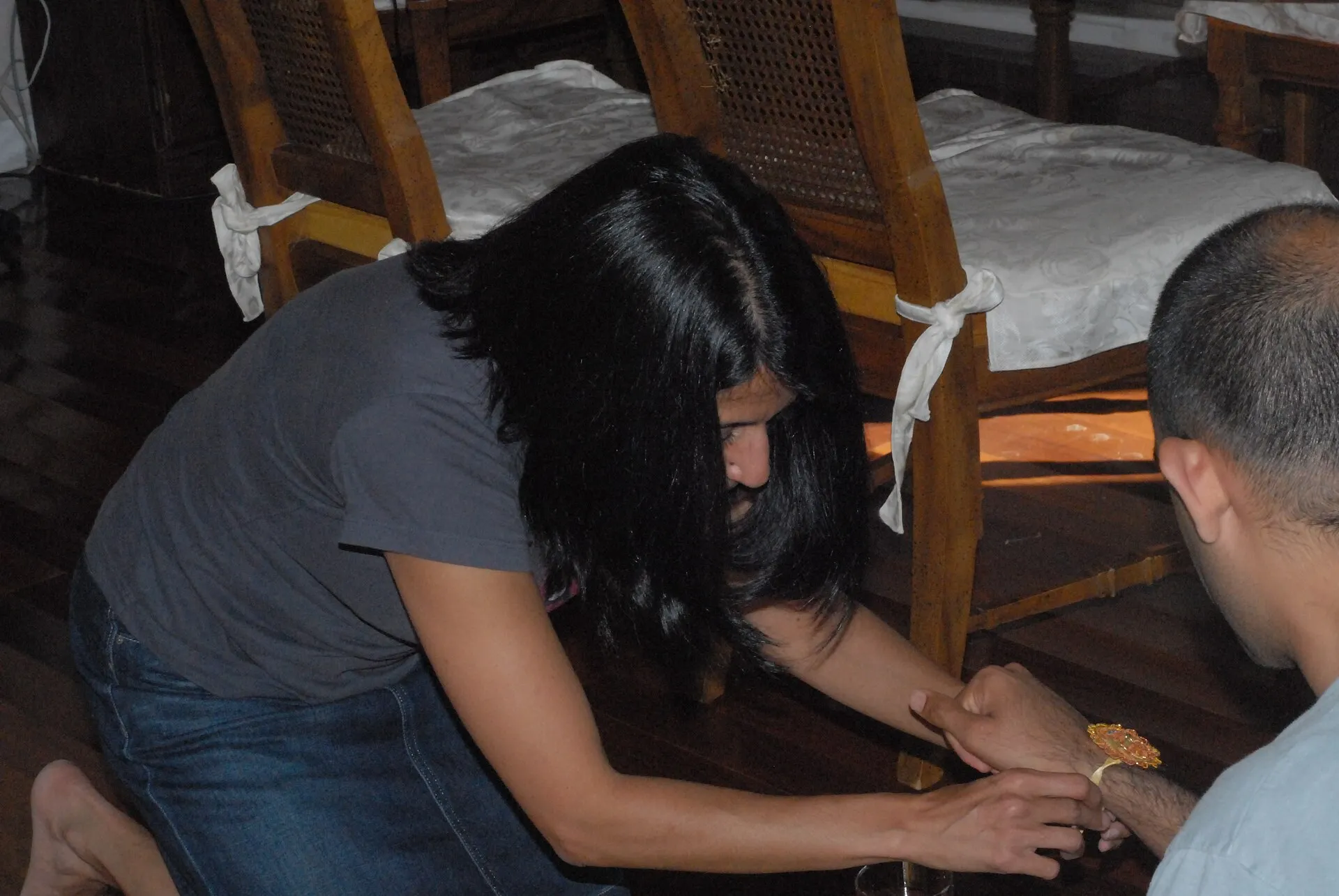
Raksha Bandhan is the Hindu festival of the protective thread, kept on the full moon day of the month of Shravana, usually in August. A sister performs a small ceremony before her brother, applies a tilak to his forehead and ties a decorative thread, the rakhi, on his right wrist; he gives her a gift and pledges to protect her. The bond is also honoured between cousins and close family friends, and in Punjab the day is widely called Rakhi.
- Punjabi name
- ਰਕਸ਼ਾ ਬੰਧਨ
- When
- The full moon day of Shravana, usually in August
- The thread
- Rakhi, from raksha, protection, and bandhan, a bond or tie
- Ritual items
- A thali with a lit diya, kumkum, rice grains (akshat) and sweets
- The exchange
- The sister ties the rakhi and does aarti; the brother gives gifts and pledges protection
- Tales told
- Draupadi and Krishna; Lakshmi and King Bali; Kunti and Abhimanyu
All 8 facts
- Oldest layer
- Priests tying protective threads on patrons at the Shravana full moon
- In Punjab
- Widely kept as Rakhi; echoed by Bhai Dooj at Diwali
Raksha Bandhan is the festival of a thread. On one morning in the monsoon month of Shravana, a sister sits her brother down, waves a lamp before him, marks his forehead and ties a bright thread around his wrist; in return he gives her a gift and a promise. The gesture is small, but the festival built on it is one of the most loved in the Hindu calendar, and its meaning is in its name: raksha, protection, and bandhan, a binding.
What is Raksha Bandhan?
Raksha Bandhan falls on the full moon day of Shravana, the fifth month of the Hindu year, which places it usually in August. It is celebrated across northern and central India, in Nepal, and by Hindu families worldwide, including a large Punjabi diaspora. The tie is not limited to blood brothers: cousins, and men a woman regards as brothers, receive rakhis too, and the thread has also been tied across community lines as a sign of trust.
How the rakhi is tied
The sister prepares a thali holding a lit earthen lamp, kumkum powder, uncooked rice grains called akshat, and sweets. She performs aarti, circling the lamp before her brother, applies the tilak to his forehead, ties the rakhi on his right wrist and feeds him a sweet. The brother then gives her a gift, often money or clothes, and accepts the duty the thread stands for: to stand by her and protect her. In many homes the ceremony is repeated for several brothers, and young children receive rakhis from their sisters with great ceremony.
The rakhi itself ranges from a simple red and gold silk thread to pieces of silver, beads and stones, and shops fill whole stalls with them in the weeks before the festival: sober threads for elders, gold-plated pieces for gifts, bright cartoon rakhis for children. A brother traditionally keeps the thread on his wrist until it wears away of itself, so that the promise made on the day stays visible long after the festival has passed.
The tales behind the thread
Tradition reaches deep for stories of the thread. In one, Draupadi tore a strip from her own sari to bind a cut on Krishna's finger; Krishna, bound by her care, later protected her honour when she was humiliated in the Kaurava court, a scene from the Mahabharata. In another, the goddess Lakshmi, wanting Vishnu back from his service as gatekeeper to the generous demon king Bali, tied a rakhi on Bali and asked for her husband as her gift. Kunti is said to have tied a protective bracelet on her grandson Abhimanyu before he rode into battle. The oldest layer of the festival is older than any of these: on the Shravana full moon, priests once tied protective threads on the wrists of kings and patrons of all four varnas, and the family festival grew out of that rite of protection.
Tales told with a warning
Storytellers also attach the thread to history, and scholarship treats these tales with care. One says that Roxana, wife of Alexander, sent a rakhi to King Porus before his battle with her husband, and that Porus honoured the bond; another tells how Rani Karnavati of Mewar sent a rakhi to the Mughal emperor Humayun when her kingdom was besieged, asking his protection as a brother. Reference works note plainly that such stories cannot be corroborated and appear to be later inventions, but their long life in popular telling shows what the festival itself means to people: a thread that can be sent across enmity and empire, obliging even a stranger or an enemy to protect.
Raksha Bandhan in Punjab
In Punjab the day is simply Rakhi, and it is kept by Hindu and many Sikh families alike: bazaars fill with rakhi stalls weeks ahead, sweet shops do their busiest trade of the season, and sisters travel to their brothers' homes or post rakhis to brothers in the diaspora. The same brother and sister bond returns in the autumn on Bhai Dooj, the last day of Diwali, when sisters again mark their brothers' foreheads and pray for their long lives.
When is Raksha Bandhan?
Raksha Bandhan is fixed to Shravana Purnima, the full moon of Shravana. In the Gregorian calendar it falls in July or, most often, August, and it is a restricted or public holiday in much of northern India, with sisters traditionally given time to visit their brothers.
ਰਕਸ਼ਾ ਬੰਧਨ ਇੱਕ ਧਾਗੇ ਦਾ ਤਿਉਹਾਰ ਹੈ ਸਾਵਣ ਦੇ ਮਹੀਨੇ ਇੱਕ ਸਵੇਰ ਭੈਣ ਆਪਣੇ ਭਰਾ ਨੂੰ ਬਿਠਾਉਂਦੀ ਹੈ, ਉਸ ਅੱਗੇ ਦੀਵਾ ਘੁਮਾਉਂਦੀ ਹੈ, ਉਸ ਦੇ ਮੱਥੇ ਉੱਤੇ ਟਿੱਕਾ ਲਾਉਂਦੀ ਹੈ ਅਤੇ ਉਸ ਦੀ ਗੁੱਟ ਦੁਆਲੇ ਇੱਕ ਰੰਗਦਾਰ ਧਾਗਾ ਬੰਨ੍ਹਦੀ ਹੈ; ਬਦਲੇ ਵਿੱਚ ਉਹ ਉਸ ਨੂੰ ਤੋਹਫਾ ਅਤੇ ਵਾਅਦਾ ਦਿੰਦਾ ਹੈ ਇਹ ਇਸ਼ਾਰਾ ਛੋਟਾ ਹੈ, ਪਰ ਇਸ ਉੱਤੇ ਬਣਿਆ ਤਿਉਹਾਰ ਹਿੰਦੂ ਕੈਲੰਡਰ ਦੇ ਸਭ ਤੋਂ ਪਿਆਰੇ ਤਿਉਹਾਰਾਂ ਵਿੱਚੋਂ ਇੱਕ ਹੈ, ਅਤੇ ਇਸ ਦਾ ਅਰਥ ਇਸ ਦੇ ਨਾਮ ਵਿੱਚ ਹੈ: ਰਕਸ਼ਾ, ਸੁਰੱਖਿਆ, ਅਤੇ ਬੰਧਨ, ਬੰਨ੍ਹਣਾ
ਰਕਸ਼ਾ ਬੰਧਨ ਕੀ ਹੈ?
ਰਕਸ਼ਾ ਬੰਧਨ ਸਾਵਣ ਦੀ ਪੂਰਨਮਾਸ਼ੀ ਨੂੰ ਆਉਂਦਾ ਹੈ, ਜੋ ਹਿੰਦੂ ਸਾਲ ਦਾ ਪੰਜਵਾਂ ਮਹੀਨਾ ਹੈ, ਜਿਸ ਕਰਕੇ ਇਹ ਆਮ ਤੌਰ ਉੱਤੇ ਅਗਸਤ ਵਿੱਚ ਪੈਂਦਾ ਹੈ ਇਹ ਉੱਤਰੀ ਅਤੇ ਮੱਧ ਭਾਰਤ, ਨੇਪਾਲ ਅਤੇ ਸੰਸਾਰ ਭਰ ਦੇ ਹਿੰਦੂ ਪਰਿਵਾਰਾਂ ਵਿੱਚ ਮਨਾਇਆ ਜਾਂਦਾ ਹੈ, ਜਿਨ੍ਹਾਂ ਵਿੱਚ ਵੱਡਾ ਪੰਜਾਬੀ ਪ੍ਰਵਾਸੀ ਭਾਈਚਾਰਾ ਵੀ ਸ਼ਾਮਲ ਹੈ ਇਹ ਰਿਸ਼ਤਾ ਸਿਰਫ ਸਕੇ ਭਰਾਵਾਂ ਤੱਕ ਸੀਮਤ ਨਹੀਂ: ਚਚੇਰੇ ਭਰਾ, ਅਤੇ ਉਹ ਮਰਦ ਜਿਨ੍ਹਾਂ ਨੂੰ ਔਰਤ ਭਰਾ ਮੰਨਦੀ ਹੈ, ਵੀ ਰਾਖੀ ਬੰਨ੍ਹਵਾਉਂਦੇ ਹਨ, ਅਤੇ ਇਹ ਧਾਗਾ ਭਰੋਸੇ ਦੀ ਨਿਸ਼ਾਨੀ ਵਜੋਂ ਭਾਈਚਾਰਿਆਂ ਦੀਆਂ ਹੱਦਾਂ ਤੋਂ ਪਾਰ ਵੀ ਬੰਨ੍ਹਿਆ ਗਿਆ ਹੈ
ਰਾਖੀ ਕਿਵੇਂ ਬੰਨ੍ਹੀ ਜਾਂਦੀ ਹੈ
ਭੈਣ ਇੱਕ ਥਾਲੀ ਤਿਆਰ ਕਰਦੀ ਹੈ ਜਿਸ ਵਿੱਚ ਜਗਦਾ ਮਿੱਟੀ ਦਾ ਦੀਵਾ, ਕੁਮਕੁਮ, ਅਖਤ ਕਹੇ ਜਾਣ ਵਾਲੇ ਕੱਚੇ ਚੌਲਾਂ ਦੇ ਦਾਣੇ ਅਤੇ ਮਠਿਆਈ ਹੁੰਦੀ ਹੈ ਉਹ ਆਰਤੀ ਕਰਦੀ ਹੈ, ਆਪਣੇ ਭਰਾ ਅੱਗੇ ਦੀਵਾ ਘੁਮਾਉਂਦੀ ਹੈ, ਉਸ ਦੇ ਮੱਥੇ ਉੱਤੇ ਟਿੱਕਾ ਲਾਉਂਦੀ ਹੈ, ਉਸ ਦੀ ਸੱਜੀ ਗੁੱਟ ਉੱਤੇ ਰਾਖੀ ਬੰਨ੍ਹਦੀ ਹੈ ਅਤੇ ਉਸ ਨੂੰ ਮਠਿਆਈ ਖਵਾਉਂਦੀ ਹੈ ਫਿਰ ਭਰਾ ਉਸ ਨੂੰ ਤੋਹਫਾ ਦਿੰਦਾ ਹੈ, ਅਕਸਰ ਪੈਸੇ ਜਾਂ ਕੱਪੜੇ, ਅਤੇ ਉਹ ਫਰਜ਼ ਕਬੂਲ ਕਰਦਾ ਹੈ ਜਿਸ ਦੀ ਨਿਸ਼ਾਨੀ ਧਾਗਾ ਹੈ: ਉਸ ਦੇ ਨਾਲ ਖੜ੍ਹਨਾ ਅਤੇ ਉਸ ਦੀ ਰਾਖੀ ਕਰਨਾ ਕਈ ਘਰਾਂ ਵਿੱਚ ਇਹ ਰਸਮ ਕਈ ਭਰਾਵਾਂ ਲਈ ਦੁਹਰਾਈ ਜਾਂਦੀ ਹੈ, ਅਤੇ ਛੋਟੇ ਬੱਚੇ ਆਪਣੀਆਂ ਭੈਣਾਂ ਤੋਂ ਵੱਡੀ ਧੂਮ ਨਾਲ ਰਾਖੀਆਂ ਬੰਨ੍ਹਵਾਉਂਦੇ ਹਨ
ਰਾਖੀ ਆਪਣੇ ਆਪ ਵਿੱਚ ਇੱਕ ਸਾਦੇ ਲਾਲ ਅਤੇ ਸੁਨਹਿਰੇ ਰੇਸ਼ਮੀ ਧਾਗੇ ਤੋਂ ਲੈ ਕੇ ਚਾਂਦੀ, ਮੋਤੀਆਂ ਅਤੇ ਨਗਾਂ ਦੇ ਟੁਕੜਿਆਂ ਤੱਕ ਹੁੰਦੀ ਹੈ, ਅਤੇ ਤਿਉਹਾਰ ਤੋਂ ਪਹਿਲਾਂ ਵਾਲੇ ਹਫਤਿਆਂ ਵਿੱਚ ਦੁਕਾਨਾਂ ਇਨ੍ਹਾਂ ਨਾਲ ਪੂਰੇ ਥੱਡੇ ਭਰ ਲੈਂਦੀਆਂ ਹਨ: ਵੱਡਿਆਂ ਲਈ ਸਾਦੇ ਧਾਗੇ, ਤੋਹਫਿਆਂ ਲਈ ਸੋਨੇ ਦੇ ਪਾਣੀ ਵਾਲੇ ਟੁਕੜੇ, ਬੱਚਿਆਂ ਲਈ ਚਮਕਦਾਰ ਕਾਰਟੂਨ ਵਾਲੀਆਂ ਰਾਖੀਆਂ ਇੱਕ ਭਰਾ ਰਵਾਇਤੀ ਤੌਰ ਉੱਤੇ ਧਾਗੇ ਨੂੰ ਆਪਣੀ ਗੁੱਟ ਉੱਤੇ ਉਦੋਂ ਤੱਕ ਰੱਖਦਾ ਹੈ ਜਦੋਂ ਤੱਕ ਇਹ ਆਪਣੇ ਆਪ ਘਸ ਨਹੀਂ ਜਾਂਦਾ, ਤਾਂ ਜੋ ਉਸ ਦਿਨ ਕੀਤਾ ਵਾਅਦਾ ਤਿਉਹਾਰ ਲੰਘਣ ਤੋਂ ਲੰਮਾ ਸਮਾਂ ਬਾਅਦ ਵੀ ਦਿਖਦਾ ਰਹੇ
ਧਾਗੇ ਪਿੱਛੇ ਦੀਆਂ ਕਥਾਵਾਂ
ਪਰੰਪਰਾ ਧਾਗੇ ਦੀਆਂ ਕਥਾਵਾਂ ਲਈ ਬਹੁਤ ਪਿੱਛੇ ਜਾਂਦੀ ਹੈ ਇੱਕ ਕਥਾ ਵਿੱਚ ਦ੍ਰੋਪਦੀ ਨੇ ਕ੍ਰਿਸ਼ਨ ਦੀ ਉਂਗਲੀ ਦੇ ਕੱਟ ਉੱਤੇ ਬੰਨ੍ਹਣ ਲਈ ਆਪਣੀ ਸਾੜ੍ਹੀ ਵਿੱਚੋਂ ਪੱਟੀ ਪਾੜੀ; ਉਸ ਦੀ ਦੇਖਭਾਲ ਨਾਲ ਬੱਝੇ ਕ੍ਰਿਸ਼ਨ ਨੇ ਬਾਅਦ ਵਿੱਚ ਉਸ ਦੀ ਇੱਜ਼ਤ ਦੀ ਰਾਖੀ ਕੀਤੀ ਜਦੋਂ ਉਸ ਨੂੰ ਕੌਰਵ ਦਰਬਾਰ ਵਿੱਚ ਬੇਇੱਜ਼ਤ ਕੀਤਾ ਗਿਆ, ਮਹਾਭਾਰਤ ਦਾ ਇੱਕ ਦ੍ਰਿਸ਼ ਇੱਕ ਹੋਰ ਕਥਾ ਵਿੱਚ ਦੇਵੀ ਲਕਸ਼ਮੀ ਨੇ, ਵਿਸ਼ਨੂੰ ਨੂੰ ਉਦਾਰ ਦੈਂਤ ਰਾਜੇ ਬਲੀ ਦੇ ਦਰਬਾਨ ਵਜੋਂ ਸੇਵਾ ਤੋਂ ਵਾਪਸ ਚਾਹੁੰਦਿਆਂ, ਬਲੀ ਨੂੰ ਰਾਖੀ ਬੰਨ੍ਹੀ ਅਤੇ ਆਪਣੇ ਪਤੀ ਨੂੰ ਆਪਣਾ ਤੋਹਫਾ ਮੰਗਿਆ ਕਿਹਾ ਜਾਂਦਾ ਹੈ ਕਿ ਕੁੰਤੀ ਨੇ ਆਪਣੇ ਪੋਤਰੇ ਅਭਿਮਨਿਊ ਨੂੰ ਜੰਗ ਵਿੱਚ ਜਾਣ ਤੋਂ ਪਹਿਲਾਂ ਸੁਰੱਖਿਆ ਵਾਲਾ ਕੜਾ ਬੰਨ੍ਹਿਆ ਸੀ ਤਿਉਹਾਰ ਦੀ ਸਭ ਤੋਂ ਪੁਰਾਣੀ ਪਰਤ ਇਨ੍ਹਾਂ ਸਭ ਤੋਂ ਪੁਰਾਣੀ ਹੈ: ਸਾਵਣ ਦੀ ਪੂਰਨਮਾਸ਼ੀ ਨੂੰ ਪੁਜਾਰੀ ਕਦੇ ਰਾਜਿਆਂ ਅਤੇ ਚਾਰਾਂ ਵਰਨਾਂ ਦੇ ਸਰਪ੍ਰਸਤਾਂ ਦੀਆਂ ਗੁੱਟਾਂ ਉੱਤੇ ਸੁਰੱਖਿਆ ਵਾਲੇ ਧਾਗੇ ਬੰਨ੍ਹਦੇ ਸਨ, ਅਤੇ ਪਰਿਵਾਰਕ ਤਿਉਹਾਰ ਸੁਰੱਖਿਆ ਦੀ ਉਸੇ ਰਸਮ ਵਿੱਚੋਂ ਵਧਿਆ
ਚਿਤਾਵਨੀ ਨਾਲ ਦੱਸੀਆਂ ਗਈਆਂ ਕਥਾਵਾਂ
ਕਥਾਕਾਰ ਧਾਗੇ ਨੂੰ ਇਤਿਹਾਸ ਨਾਲ ਵੀ ਜੋੜਦੇ ਹਨ, ਅਤੇ ਵਿਦਵਾਨ ਇਨ੍ਹਾਂ ਕਥਾਵਾਂ ਨੂੰ ਸਾਵਧਾਨੀ ਨਾਲ ਲੈਂਦੇ ਹਨ ਇੱਕ ਕਥਾ ਕਹਿੰਦੀ ਹੈ ਕਿ ਸਿਕੰਦਰ ਦੀ ਪਤਨੀ ਰੋਕਸਾਨਾ ਨੇ ਆਪਣੇ ਪਤੀ ਨਾਲ ਉਸ ਦੀ ਲੜਾਈ ਤੋਂ ਪਹਿਲਾਂ ਰਾਜਾ ਪੋਰਸ ਨੂੰ ਰਾਖੀ ਭੇਜੀ, ਅਤੇ ਪੋਰਸ ਨੇ ਉਸ ਬੰਧਨ ਦਾ ਸਨਮਾਨ ਕੀਤਾ; ਇੱਕ ਹੋਰ ਕਥਾ ਦੱਸਦੀ ਹੈ ਕਿ ਮੇਵਾੜ ਦੀ ਰਾਣੀ ਕਰਨਾਵਤੀ ਨੇ ਮੁਗਲ ਬਾਦਸ਼ਾਹ ਹੁਮਾਯੂੰ ਨੂੰ ਰਾਖੀ ਭੇਜੀ ਜਦੋਂ ਉਸ ਦਾ ਰਾਜ ਘੇਰਿਆ ਗਿਆ ਸੀ, ਭਰਾ ਵਜੋਂ ਉਸ ਦੀ ਰਾਖੀ ਮੰਗੀ ਹਵਾਲਾ ਗ੍ਰੰਥ ਸਾਫ ਲਿਖਦੇ ਹਨ ਕਿ ਅਜਿਹੀਆਂ ਕਥਾਵਾਂ ਦੀ ਪੁਸ਼ਟੀ ਨਹੀਂ ਹੋ ਸਕਦੀ ਅਤੇ ਉਹ ਬਾਅਦ ਦੀਆਂ ਘੜਤਾਂ ਜਾਪਦੀਆਂ ਹਨ, ਪਰ ਲੋਕ ਕਥਾਵਾਂ ਵਿੱਚ ਉਨ੍ਹਾਂ ਦਾ ਲੰਮਾ ਜੀਵਨ ਵਿਖਾਉਂਦਾ ਹੈ ਕਿ ਇਹ ਤਿਉਹਾਰ ਖੁਦ ਲੋਕਾਂ ਲਈ ਕੀ ਅਰਥ ਰੱਖਦਾ ਹੈ: ਇੱਕ ਧਾਗਾ ਜੋ ਦੁਸ਼ਮਣੀ ਅਤੇ ਸਾਮਰਾਜ ਪਾਰ ਭੇਜਿਆ ਜਾ ਸਕਦਾ ਹੈ, ਇੱਕ ਅਜਨਬੀ ਜਾਂ ਦੁਸ਼ਮਣ ਨੂੰ ਵੀ ਰਾਖੀ ਕਰਨ ਲਈ ਪਾਬੰਦ ਕਰਦਾ ਹੈ
ਪੰਜਾਬ ਵਿੱਚ ਰਕਸ਼ਾ ਬੰਧਨ
ਪੰਜਾਬ ਵਿੱਚ ਇਸ ਦਿਨ ਨੂੰ ਸਿਰਫ ਰਾਖੀ ਕਿਹਾ ਜਾਂਦਾ ਹੈ, ਅਤੇ ਇਹ ਹਿੰਦੂ ਅਤੇ ਕਈ ਸਿੱਖ ਪਰਿਵਾਰਾਂ ਵੱਲੋਂ ਵੀ ਮਨਾਇਆ ਜਾਂਦਾ ਹੈ: ਬਾਜ਼ਾਰ ਹਫਤਿਆਂ ਪਹਿਲਾਂ ਰਾਖੀ ਦੀਆਂ ਦੁਕਾਨਾਂ ਨਾਲ ਭਰ ਜਾਂਦੇ ਹਨ, ਮਠਿਆਈ ਦੀਆਂ ਦੁਕਾਨਾਂ ਮੌਸਮ ਦਾ ਸਭ ਤੋਂ ਵਿਅਸਤ ਕਾਰੋਬਾਰ ਕਰਦੀਆਂ ਹਨ, ਅਤੇ ਭੈਣਾਂ ਆਪਣੇ ਭਰਾਵਾਂ ਦੇ ਘਰ ਜਾਂਦੀਆਂ ਹਨ ਜਾਂ ਪ੍ਰਵਾਸ ਵਿੱਚ ਭਰਾਵਾਂ ਨੂੰ ਡਾਕ ਰਾਹੀਂ ਰਾਖੀਆਂ ਭੇਜਦੀਆਂ ਹਨ ਇਹੀ ਭਰਾ ਭੈਣ ਵਾਲਾ ਬੰਧਨ ਪਤਝੜ ਵਿੱਚ ਭਾਈ ਦੂਜ ਉੱਤੇ ਵਾਪਸ ਆਉਂਦਾ ਹੈ, ਦੀਵਾਲੀ ਦੇ ਆਖਰੀ ਦਿਨ, ਜਦੋਂ ਭੈਣਾਂ ਫਿਰ ਆਪਣੇ ਭਰਾਵਾਂ ਦੇ ਮੱਥਿਆਂ ਉੱਤੇ ਟਿੱਕਾ ਲਾਉਂਦੀਆਂ ਹਨ ਅਤੇ ਉਨ੍ਹਾਂ ਦੀ ਲੰਮੀ ਉਮਰ ਲਈ ਅਰਦਾਸ ਕਰਦੀਆਂ ਹਨ
ਰਕਸ਼ਾ ਬੰਧਨ ਕਦੋਂ ਹੁੰਦਾ ਹੈ?
ਰਕਸ਼ਾ ਬੰਧਨ ਸਾਵਣ ਪੂਰਨਮਾਸ਼ੀ, ਸਾਵਣ ਦੀ ਪੂਰਨ ਚੰਦ ਵਾਲੇ ਦਿਨ, ਨਾਲ ਜੁੜਿਆ ਹੋਇਆ ਹੈ ਅੰਗਰੇਜ਼ੀ ਕੈਲੰਡਰ ਵਿੱਚ ਇਹ ਜੁਲਾਈ ਵਿੱਚ ਜਾਂ, ਅਕਸਰ, ਅਗਸਤ ਵਿੱਚ ਆਉਂਦਾ ਹੈ, ਅਤੇ ਇਹ ਉੱਤਰੀ ਭਾਰਤ ਦੇ ਬਹੁਤੇ ਹਿੱਸੇ ਵਿੱਚ ਸੀਮਤ ਜਾਂ ਸਰਕਾਰੀ ਛੁੱਟੀ ਹੈ, ਜਿੱਥੇ ਭੈਣਾਂ ਨੂੰ ਰਵਾਇਤੀ ਤੌਰ ਉੱਤੇ ਆਪਣੇ ਭਰਾਵਾਂ ਨੂੰ ਮਿਲਣ ਦਾ ਸਮਾਂ ਦਿੱਤਾ ਜਾਂਦਾ ਹੈ