
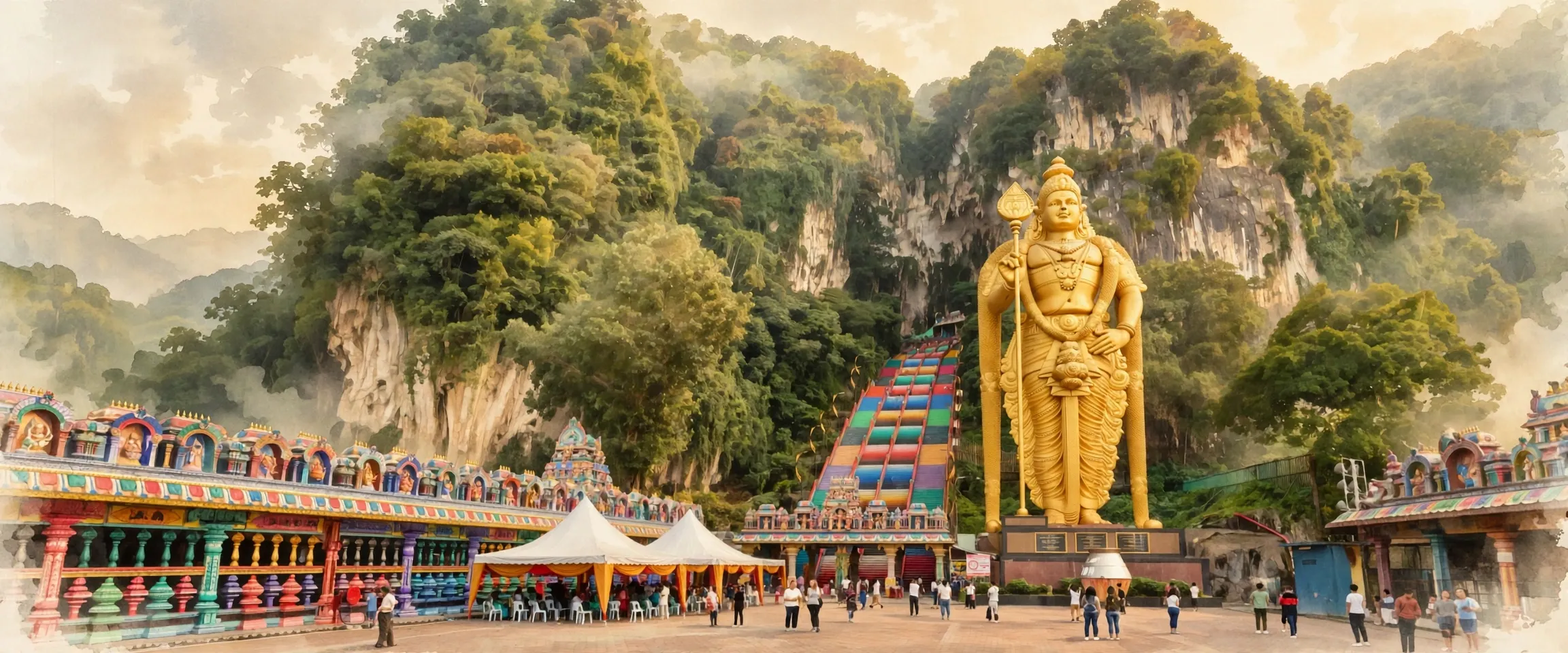
Mandirs in Malaysia are led by two shrines tied together by one founder and one festival: Batu Caves, the Murugan cave temple at Gombak with its 42.7 metre golden statue and 272 steps, and Sri Maha Mariamman Temple in Kuala Lumpur, founded in 1873 and the oldest functioning Hindu temple in Malaysia. This hub lists Jugti's Malaysia mandir entries, each with verified history, worship and visiting guidance.
- Punjabi name
- ਮਲੇਸ਼ੀਆ ਵਿੱਚ ਮੰਦਰ
- Country
- Malaysia
- Mandirs listed
- 2
- Shrines
- Batu Caves Gombak, Sri Maha Mariamman Temple Kuala Lumpur
- Shared festival
- Thaipusam: procession starts at Sri Maha Mariamman Temple and ends at Batu Caves
- Shared founder figure
- K. Thamboosamy Pillai (Mariamman 1873; promoted Batu Caves worship, temple 1891)
Malaysia's Hindu temples were built by a diaspora that crossed the sea and refused to leave its gods behind. Mandirs in Malaysia range from a city temple raised in 1873 by Tamil immigrants in the young town of Kuala Lumpur, the Sri Maha Mariamman Temple, to a temple inside a limestone cave hill north of the capital, Batu Caves, where a golden Murugan watches over 272 rainbow steps. Together the two shrines anchor Thaipusam, the festival that each year turns the road between them into a river of devotees. This hub gathers Jugti's Malaysia mandir entries in one place, each written from verified sources with its history, worship and visiting guide.
All Mandirs in Malaysia
Batu Caves Sri Subramaniar Temple, Gombak - the Murugan cave temple in a 325 m limestone hill: the 42.7 m golden statue, the 272 steps repainted in rainbow colours in 2018, and the focal point of Thaipusam in Malaysia
Sri Maha Mariamman Temple, Kuala Lumpur - Malaysia's oldest functioning Hindu temple, founded 1873 at the edge of Chinatown; its 22.9 m Raja Gopuram carries 228 idols, and its silver chariot opens the Thaipusam procession to Batu Caves
Which is the most famous Hindu temple in Malaysia?
Batu Caves is the most famous Hindu temple in Malaysia and one of the most visited Hindu shrines outside India: a cave temple complex in a limestone hill at Gombak, Selangor, about 13 kilometres north of Kuala Lumpur, where pilgrims climb 272 steps past a 42.7 metre golden Murugan statue to the Temple Cave. Sri Maha Mariamman Temple in the capital is the country's senior shrine, the oldest functioning Hindu temple in Malaysia, and the starting point of the Thaipusam procession that ends at the caves.
One founder, two temples
The two entries on this hub are bound by one man. K. Thamboosamy Pillai, a Tamil trader and community leader in early Kuala Lumpur, founded Sri Maha Mariamman Temple in 1873 as his family's shrine, and he is also the man who promoted the Batu Caves complex as a place of Hindu worship, where a Murugan temple was completed in 1891 and Thaipusam celebrations began in 1892. The pairing still works as he left it: the goddess's city temple keeps the community's daily worship and its silver chariot, while the caves hold the festival's climax. Few diaspora temple pairs anywhere are tied this tightly, by founder, by festival and by a single procession route.
Planning a Malaysia temple journey
The two shrines make one easy circuit. Sri Maha Mariamman Temple stands in central Kuala Lumpur at the edge of Chinatown, walkable from the Pasar Seni station area, and Batu Caves is served directly by the commuter train from KL Sentral to Batu Caves station. Outside Thaipusam, a morning at the caves followed by the city temple fills a day comfortably; at Thaipusam itself, join the crowds at the city temple in the early hours and follow the chariot's road north. Each entry on this hub carries its own visiting section with the practical facts for that shrine.
ਮਲੇਸ਼ੀਆ ਦੇ ਹਿੰਦੂ ਮੰਦਰ ਇੱਕ ਪ੍ਰਵਾਸੀ ਭਾਈਚਾਰੇ ਵੱਲੋਂ ਬਣਾਏ ਗਏ ਸਨ ਜੋ ਸਮੁੰਦਰ ਪਾਰ ਕਰਕੇ ਆਇਆ ਅਤੇ ਆਪਣੇ ਦੇਵਤਿਆਂ ਨੂੰ ਪਿੱਛੇ ਛੱਡਣ ਤੋਂ ਇਨਕਾਰ ਕਰ ਦਿੱਤਾ ਮਲੇਸ਼ੀਆ ਵਿੱਚ ਮੰਦਰ ਨੌਜਵਾਨ ਕਸਬੇ ਕੁਆਲਾ ਲੁੰਪੁਰ ਵਿੱਚ ਤਾਮਿਲ ਪ੍ਰਵਾਸੀਆਂ ਵੱਲੋਂ 1873 ਵਿੱਚ ਉਭਾਰੇ ਇੱਕ ਸ਼ਹਿਰੀ ਮੰਦਰ, ਸ੍ਰੀ ਮਹਾਮਾਰੀਅਮਨ ਮੰਦਰ, ਤੋਂ ਲੈ ਕੇ ਰਾਜਧਾਨੀ ਦੇ ਉੱਤਰ ਵਿੱਚ ਚੂਨਾ ਪੱਥਰ ਗੁਫ਼ਾ ਪਹਾੜੀ ਦੇ ਅੰਦਰ ਇੱਕ ਮੰਦਰ, ਬਾਤੂ ਗੁਫ਼ਾਵਾਂ, ਤੱਕ ਹਨ, ਜਿੱਥੇ ਇੱਕ ਸੁਨਹਿਰੀ ਮੁਰੁਗਨ 272 ਸਤਰੰਗੀ ਪੌੜੀਆਂ ਦੀ ਰਾਖੀ ਕਰਦਾ ਹੈ ਇਕੱਠੇ ਦੋਵੇਂ ਧਾਮ ਥਾਈਪੂਸਮ ਨੂੰ ਸੰਭਾਲਦੇ ਹਨ, ਉਹ ਤਿਉਹਾਰ ਜੋ ਹਰ ਸਾਲ ਉਨ੍ਹਾਂ ਵਿਚਕਾਰ ਦੀ ਸੜਕ ਨੂੰ ਸ਼ਰਧਾਲੂਆਂ ਦੇ ਦਰਿਆ ਵਿੱਚ ਬਦਲ ਦਿੰਦਾ ਹੈ ਇਹ ਹੱਬ ਜਗਤੀ ਦੀਆਂ ਮਲੇਸ਼ੀਆ ਮੰਦਰ ਐਂਟਰੀਆਂ ਨੂੰ ਇੱਕ ਥਾਂ ਇਕੱਠਾ ਕਰਦਾ ਹੈ, ਹਰ ਇੱਕ ਤਸਦੀਕ ਸਰੋਤਾਂ ਤੋਂ ਇਸਦੇ ਇਤਿਹਾਸ, ਪੂਜਾ ਅਤੇ ਯਾਤਰਾ ਗਾਈਡ ਨਾਲ ਲਿਖੀ ਗਈ
ਮਲੇਸ਼ੀਆ ਦੇ ਸਾਰੇ ਮੰਦਰ
ਬਾਤੂ ਗੁਫ਼ਾਵਾਂ ਸ੍ਰੀ ਸੁਬਰਾਮਣੀਅਰ ਮੰਦਰ, ਗੋਮਬਾਕ - 325 ਮੀਟਰ ਚੂਨਾ ਪੱਥਰ ਪਹਾੜੀ ਵਿੱਚ ਮੁਰੁਗਨ ਗੁਫ਼ਾ ਮੰਦਰ: 42.7 ਮੀਟਰ ਸੁਨਹਿਰੀ ਮੂਰਤੀ, 2018 ਵਿੱਚ ਸਤਰੰਗੀ ਰੰਗਾਂ ਵਿੱਚ ਮੁੜ ਰੰਗੀਆਂ 272 ਪੌੜੀਆਂ, ਅਤੇ ਮਲੇਸ਼ੀਆ ਵਿੱਚ ਥਾਈਪੂਸਮ ਦਾ ਕੇਂਦਰ
ਸ੍ਰੀ ਮਹਾਮਾਰੀਅਮਨ ਮੰਦਰ, ਕੁਆਲਾ ਲੁੰਪੁਰ - ਮਲੇਸ਼ੀਆ ਦਾ ਸਭ ਤੋਂ ਪੁਰਾਣਾ ਕਾਰਜਸ਼ੀਲ ਹਿੰਦੂ ਮੰਦਰ, ਚਾਈਨਾਟਾਊਨ ਦੇ ਕਿਨਾਰੇ 1873 ਵਿੱਚ ਸਥਾਪਿਤ; ਇਸਦਾ 22.9 ਮੀਟਰ ਰਾਜਾ ਗੋਪੁਰਮ 228 ਮੂਰਤੀਆਂ ਰੱਖਦਾ ਹੈ, ਅਤੇ ਇਸਦਾ ਚਾਂਦੀ ਦਾ ਰੱਥ ਬਾਤੂ ਗੁਫ਼ਾਵਾਂ ਤੱਕ ਥਾਈਪੂਸਮ ਜਲੂਸ ਖੋਲ੍ਹਦਾ ਹੈ
ਮਲੇਸ਼ੀਆ ਦਾ ਸਭ ਤੋਂ ਮਸ਼ਹੂਰ ਹਿੰਦੂ ਮੰਦਰ ਕਿਹੜਾ ਹੈ?
ਬਾਤੂ ਗੁਫ਼ਾਵਾਂ ਮਲੇਸ਼ੀਆ ਦਾ ਸਭ ਤੋਂ ਮਸ਼ਹੂਰ ਹਿੰਦੂ ਮੰਦਰ ਹੈ ਅਤੇ ਭਾਰਤ ਤੋਂ ਬਾਹਰ ਸਭ ਤੋਂ ਵੱਧ ਵੇਖੇ ਜਾਂਦੇ ਹਿੰਦੂ ਧਾਮਾਂ ਵਿੱਚੋਂ ਇੱਕ: ਕੁਆਲਾ ਲੁੰਪੁਰ ਤੋਂ ਲਗਭਗ 13 ਕਿਲੋਮੀਟਰ ਉੱਤਰ ਵਿੱਚ ਸੇਲਾਂਗੋਰ, ਗੋਮਬਾਕ ਵਿੱਚ ਚੂਨਾ ਪੱਥਰ ਪਹਾੜੀ ਵਿੱਚ ਇੱਕ ਗੁਫ਼ਾ ਮੰਦਰ ਪਰਿਸਰ, ਜਿੱਥੇ ਸ਼ਰਧਾਲੂ 42.7 ਮੀਟਰ ਸੁਨਹਿਰੀ ਮੁਰੁਗਨ ਮੂਰਤੀ ਕੋਲੋਂ ਲੰਘ ਕੇ 272 ਪੌੜੀਆਂ ਚੜ੍ਹ ਕੇ ਮੰਦਰ ਗੁਫ਼ਾ ਤੱਕ ਜਾਂਦੇ ਹਨ ਰਾਜਧਾਨੀ ਵਿੱਚ ਸ੍ਰੀ ਮਹਾਮਾਰੀਅਮਨ ਮੰਦਰ ਦੇਸ਼ ਦਾ ਸਭ ਤੋਂ ਸੀਨੀਅਰ ਧਾਮ ਹੈ, ਮਲੇਸ਼ੀਆ ਦਾ ਸਭ ਤੋਂ ਪੁਰਾਣਾ ਕਾਰਜਸ਼ੀਲ ਹਿੰਦੂ ਮੰਦਰ, ਅਤੇ ਥਾਈਪੂਸਮ ਜਲੂਸ ਦਾ ਸ਼ੁਰੂਆਤੀ ਬਿੰਦੂ ਜੋ ਗੁਫ਼ਾਵਾਂ ਉੱਤੇ ਖਤਮ ਹੁੰਦਾ ਹੈ
ਇੱਕ ਸੰਸਥਾਪਕ, ਦੋ ਮੰਦਰ
ਇਸ ਹੱਬ ਉੱਤੇ ਦੋਵੇਂ ਐਂਟਰੀਆਂ ਇੱਕ ਮਨੁੱਖ ਨਾਲ ਬੱਝੀਆਂ ਹਨ ਕੇ. ਥੰਬੂਸਾਮੀ ਪਿੱਲਈ, ਮੁੱਢਲੇ ਕੁਆਲਾ ਲੁੰਪੁਰ ਵਿੱਚ ਇੱਕ ਤਾਮਿਲ ਵਪਾਰੀ ਅਤੇ ਭਾਈਚਾਰਾ ਆਗੂ, ਨੇ 1873 ਵਿੱਚ ਸ੍ਰੀ ਮਹਾਮਾਰੀਅਮਨ ਮੰਦਰ ਆਪਣੇ ਪਰਿਵਾਰ ਦੇ ਧਾਮ ਵਜੋਂ ਸਥਾਪਿਤ ਕੀਤਾ, ਅਤੇ ਉਹੀ ਮਨੁੱਖ ਹੈ ਜਿਸਨੇ ਬਾਤੂ ਗੁਫ਼ਾਵਾਂ ਪਰਿਸਰ ਨੂੰ ਹਿੰਦੂ ਪੂਜਾ ਦੀ ਥਾਂ ਵਜੋਂ ਅੱਗੇ ਵਧਾਇਆ, ਜਿੱਥੇ 1891 ਵਿੱਚ ਇੱਕ ਮੁਰੁਗਨ ਮੰਦਰ ਪੂਰਾ ਹੋਇਆ ਅਤੇ 1892 ਵਿੱਚ ਥਾਈਪੂਸਮ ਜਸ਼ਨ ਸ਼ੁਰੂ ਹੋਏ ਜੋੜੀ ਅੱਜ ਵੀ ਉਵੇਂ ਕੰਮ ਕਰਦੀ ਹੈ ਜਿਵੇਂ ਉਸਨੇ ਛੱਡੀ ਸੀ: ਦੇਵੀ ਦਾ ਸ਼ਹਿਰੀ ਮੰਦਰ ਭਾਈਚਾਰੇ ਦੀ ਰੋਜ਼ਾਨਾ ਪੂਜਾ ਅਤੇ ਇਸਦਾ ਚਾਂਦੀ ਦਾ ਰੱਥ ਰੱਖਦਾ ਹੈ, ਜਦੋਂ ਕਿ ਗੁਫ਼ਾਵਾਂ ਤਿਉਹਾਰ ਦੀ ਸਿਖਰ ਰੱਖਦੀਆਂ ਹਨ ਕਿਤੇ ਵੀ ਕੁਝ ਹੀ ਪ੍ਰਵਾਸੀ ਮੰਦਰ ਜੋੜੀਆਂ ਇੰਨੀ ਪੱਕੀ ਤਰ੍ਹਾਂ ਬੱਝੀਆਂ ਹਨ, ਸੰਸਥਾਪਕ, ਤਿਉਹਾਰ ਅਤੇ ਇੱਕੋ ਜਲੂਸ ਰਸਤੇ ਨਾਲ
ਮਲੇਸ਼ੀਆ ਮੰਦਰ ਯਾਤਰਾ ਦੀ ਯੋਜਨਾ
ਦੋਵੇਂ ਧਾਮ ਇੱਕ ਸੌਖਾ ਚੱਕਰ ਬਣਾਉਂਦੇ ਹਨ ਸ੍ਰੀ ਮਹਾਮਾਰੀਅਮਨ ਮੰਦਰ ਕੇਂਦਰੀ ਕੁਆਲਾ ਲੁੰਪੁਰ ਵਿੱਚ ਚਾਈਨਾਟਾਊਨ ਦੇ ਕਿਨਾਰੇ ਉੱਤੇ ਹੈ, ਪਾਸਾਰ ਸੇਨੀ ਸਟੇਸ਼ਨ ਇਲਾਕੇ ਤੋਂ ਪੈਦਲ ਜਾਇਆ ਜਾ ਸਕਦਾ ਹੈ, ਅਤੇ ਬਾਤੂ ਗੁਫ਼ਾਵਾਂ ਕੇਐਲ ਸੈਂਟਰਲ ਤੋਂ ਬਾਤੂ ਗੁਫ਼ਾਵਾਂ ਸਟੇਸ਼ਨ ਤੱਕ ਕਮਿਊਟਰ ਰੇਲ ਨਾਲ ਸਿੱਧੀਆਂ ਜੁੜੀਆਂ ਹਨ ਥਾਈਪੂਸਮ ਤੋਂ ਬਾਹਰ, ਗੁਫ਼ਾਵਾਂ ਵਿੱਚ ਇੱਕ ਸਵੇਰ ਅਤੇ ਫਿਰ ਸ਼ਹਿਰੀ ਮੰਦਰ ਇੱਕ ਦਿਨ ਆਰਾਮ ਨਾਲ ਭਰ ਦਿੰਦਾ ਹੈ; ਥਾਈਪੂਸਮ ਉੱਤੇ ਖੁਦ, ਸਵੇਰੇ ਤੜਕੇ ਸ਼ਹਿਰੀ ਮੰਦਰ ਵਿੱਚ ਭੀੜ ਵਿੱਚ ਸ਼ਾਮਲ ਹੋਵੋ ਅਤੇ ਰੱਥ ਦੀ ਸੜਕ ਦੇ ਮਗਰ ਉੱਤਰ ਵੱਲ ਜਾਓ ਇਸ ਹੱਬ ਉੱਤੇ ਹਰ ਐਂਟਰੀ ਉਸ ਧਾਮ ਲਈ ਵਿਹਾਰਕ ਤੱਥਾਂ ਨਾਲ ਆਪਣਾ ਯਾਤਰਾ ਭਾਗ ਰੱਖਦੀ ਹੈ