
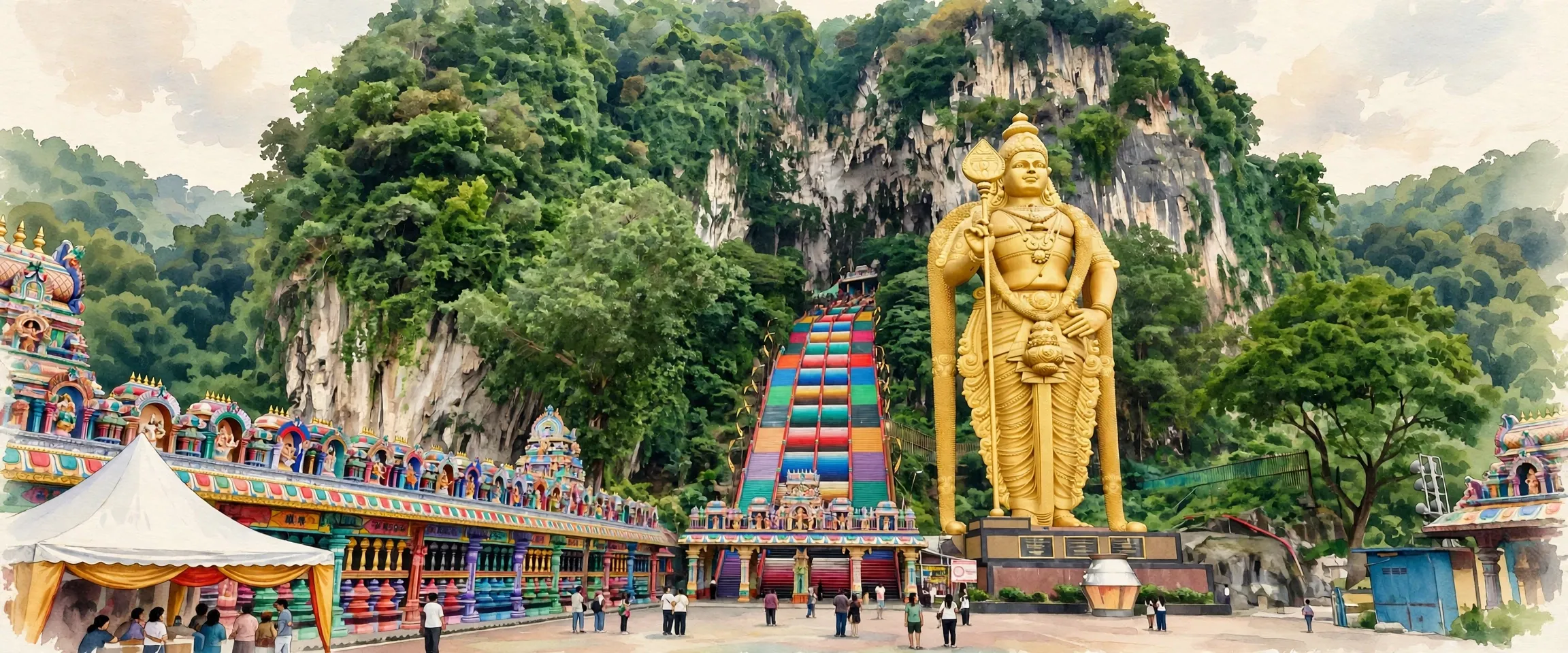
Batu Caves Sri Subramaniar Temple is a Hindu cave temple dedicated to Murugan inside the limestone Batu Caves at Gombak, Selangor, about 13 km north of Kuala Lumpur, Malaysia. Pilgrims climb 272 steps, repainted in rainbow colours in 2018, past a 42.7 metre golden Murugan statue to the Temple Cave, and the complex is the focal point of Malaysia's Thaipusam festival.
- Punjabi name
- ਬਾਤੂ ਗੁਫ਼ਾਵਾਂ ਸ੍ਰੀ ਸੁਬਰਾਮਣੀਅਰ ਮੰਦਰ
- Country
- Malaysia
- State
- Selangor
- District
- Gombak, about 13 km north of Kuala Lumpur
- Deity
- Murugan (Subramaniar)
- Setting
- Temple Cave in a 325 m limestone hill; limestone formed over 400 million years ago
All 11 facts
- Statue
- Murugan, 42.7 m (140 ft), gold painted, unveiled January 2006
- Steps
- 272 concrete steps, built 1940; repainted in colours August 2018
- Temple founded
- Murugan temple completed 1891; Thaipusam from 1892
- Festival
- Thaipusam
- Architectural style
- Dravidian
North of Kuala Lumpur, a limestone hill rises straight out of the plain, its cliff face pierced by a vast cave mouth, and in front of it stands a golden giant. Batu Caves is a series of limestone caves in Gombak, Selangor, Malaysia, holding a complex of Hindu cave temples whose main shrine, the Sri Subramaniar Swamy Temple, is dedicated to Murugan. A 42.7 metre statue of the god, among the tallest Murugan statues in the world, guards the foot of the 272 steps that climb to the Temple Cave, and every year the caves become the focal point of Thaipusam, the great Tamil Hindu festival in Malaysia. Few Hindu shrines outside India are as visited, or as instantly recognisable, as this one.
What are the Batu Caves?
The Batu Caves are a complex of around 20 recognised caves in a 325 metre limestone hill, a mogote, about 13 kilometres north of Kuala Lumpur. The name comes from batu, the Malay word for rock; in Tamil the complex is called Pathu Malai. The limestone itself was formed more than 400 million years ago. Of the cave temples in the complex, the largest and best known is the Temple Cave, a huge chamber with a very high vaulted ceiling housing several Hindu shrines, reached by the famous stairway. The temple within it is built in the Dravidian tradition of South India, the style explored in Jugti's guide to Dravida temple architecture. The caves are also a protected natural site, home to bats, cave insects and an endemic trapdoor spider, Liphistius batuensis, found nowhere else.
How did a limestone cave become a Murugan temple?
The caves were used as shelters by the Temuan people, an Orang Asli tribe, long before they held temples. In the 1860s Chinese settlers began excavating guano from the caves for fertiliser, and in 1878 the American naturalist William Hornaday visited and described them. The temple story begins with K. Thamboosamy, an Indian Tamil trader, who promoted the cave complex as a place of Hindu worship: the cave entrance is said to have reminded him of a vel, the divine spear Murugan carries. A Hindu temple dedicated to Murugan was completed in the caves in 1891, and the annual Thaipusam celebrations commenced in 1892. Development of the religious sites has continued ever since, turning a guano cave into the spiritual centre of Malaysian Tamil Hindu life.
The 272 steps and the golden Murugan
To reach the Temple Cave, pilgrims climb. Wooden steps were first installed in 1920 so devotees could reach the shrine, and in 1940 the present 272 concrete steps were built on the southern side of the complex, replacing stairs that had begun to deteriorate. In August 2018 the steps were repainted, each flight in a different bright colour, and the rainbow stairway has since become part of the site's image around the world. To the right of the steps stands the statue: 42.7 metres, 140 feet, tall, painted gold, unveiled in January 2006 after three years of construction. It is among the tallest Murugan statues in the world and the tallest statue in Malaysia. At the base of the hill sit two more cave shrines, the Art Gallery Cave and Museum Cave, together called Cave Villa, filled with statues and paintings from Hindu mythology, and to the left the Ramayana Cave, its entrance marked by a 15 metre statue of Hanuman, whose temple there opened in November 2001.
What happens at Thaipusam in Batu Caves?
Thaipusam, in the Tamil month of Thai, is the day Batu Caves belongs to the whole country. The festival honours Murugan, and its centrepiece is devotion carried on the body: kavadi, literally a burden, in which devotees carry ornate structures of wood or steel on their shoulders, pots of milk called paal kudam, and, in the most striking form, the vel kavadi, a portable altar hung from skewers and hooks pierced through the skin. Devotees prepare for up to 48 days beforehand, keeping clean, praying regularly, eating a vegetarian diet, fasting and remaining celibate. The procession begins in the morning from the Sri Mahamariamman Temple in Kuala Lumpur, when a silver chariot of 350 kilograms carrying Murugan with his consorts Valli and Deivanai is drawn through the streets; after ritual bathing in the Sungai Batu river, devotees climb the 272 steps to place their burdens before the god. It is the same pairing of shrine and procession that drives great temple festivals in India itself, such as the chariot world of Meenakshi in Madurai.
Visiting Batu Caves
Batu Caves is one of the easiest major shrines in Asia to reach: a commuter train runs from KL Sentral in Kuala Lumpur directly to Batu Caves Komuter station at the site, and bus 11 and the road serve it as well. Entry to the Temple Cave is by the stairway, so bring water, expect the long tailed macaques that live around the steps, and dress as a guest at a working temple, with shoulders and knees covered. The main cave is a place of daily worship, busiest at Thaipusam and quietest early on ordinary mornings. Devotees who know Murugan from his great temples in Tamil Nadu will find the same god here in a wholly different setting: not a stone gopuram town but a cathedral of living rock, raised by a diaspora community that made a Malaysian limestone hill into one of the sacred addresses of the Tamil world, in the line of the diaspora shrines gathered on Jugti's mandir hubs.
ਕੁਆਲਾ ਲੁੰਪੁਰ ਦੇ ਉੱਤਰ ਵਿੱਚ, ਇੱਕ ਚੂਨਾ ਪੱਥਰ ਪਹਾੜੀ ਮੈਦਾਨ ਵਿੱਚੋਂ ਸਿੱਧੀ ਉੱਠਦੀ ਹੈ, ਇਸਦੀ ਚਟਾਨੀ ਕੰਧ ਇੱਕ ਵਿਸ਼ਾਲ ਗੁਫ਼ਾ ਮੂੰਹ ਨਾਲ ਵਿੰਨ੍ਹੀ, ਅਤੇ ਇਸਦੇ ਸਾਹਮਣੇ ਇੱਕ ਸੁਨਹਿਰੀ ਵਿਸ਼ਾਲ ਮੂਰਤੀ ਖੜ੍ਹੀ ਹੈ ਬਾਤੂ ਗੁਫ਼ਾਵਾਂ ਮਲੇਸ਼ੀਆ ਦੇ ਸੇਲਾਂਗੋਰ, ਗੋਮਬਾਕ ਵਿੱਚ ਚੂਨਾ ਪੱਥਰ ਗੁਫ਼ਾਵਾਂ ਦੀ ਇੱਕ ਲੜੀ ਹੈ, ਹਿੰਦੂ ਗੁਫ਼ਾ ਮੰਦਰਾਂ ਦਾ ਇੱਕ ਪਰਿਸਰ ਰੱਖਦੀ ਹੈ ਜਿਸਦਾ ਮੁੱਖ ਧਾਮ, ਸ੍ਰੀ ਸੁਬਰਾਮਣੀਅਰ ਸੁਆਮੀ ਮੰਦਰ, ਮੁਰੁਗਨ ਨੂੰ ਸਮਰਪਿਤ ਹੈ ਦੇਵਤੇ ਦੀ 42.7 ਮੀਟਰ ਮੂਰਤੀ, ਦੁਨੀਆ ਦੀਆਂ ਸਭ ਤੋਂ ਉੱਚੀਆਂ ਮੁਰੁਗਨ ਮੂਰਤੀਆਂ ਵਿੱਚੋਂ ਇੱਕ, 272 ਪੌੜੀਆਂ ਦੇ ਪੈਰਾਂ ਦੀ ਰਾਖੀ ਕਰਦੀ ਹੈ ਜੋ ਮੰਦਰ ਗੁਫ਼ਾ ਤੱਕ ਚੜ੍ਹਦੀਆਂ ਹਨ, ਅਤੇ ਹਰ ਸਾਲ ਗੁਫ਼ਾਵਾਂ ਥਾਈਪੂਸਮ ਦਾ ਕੇਂਦਰ ਬਣਦੀਆਂ ਹਨ, ਮਲੇਸ਼ੀਆ ਵਿੱਚ ਮਹਾਨ ਤਾਮਿਲ ਹਿੰਦੂ ਤਿਉਹਾਰ ਭਾਰਤ ਤੋਂ ਬਾਹਰ ਕੁਝ ਹੀ ਹਿੰਦੂ ਧਾਮ ਇੰਨੇ ਵੱਧ ਵੇਖੇ ਜਾਂਦੇ ਹਨ, ਜਾਂ ਇੰਨੇ ਤੁਰੰਤ ਪਛਾਣੇ ਜਾਂਦੇ ਹਨ, ਜਿੰਨਾ ਇਹ
ਬਾਤੂ ਗੁਫ਼ਾਵਾਂ ਕੀ ਹਨ?
ਬਾਤੂ ਗੁਫ਼ਾਵਾਂ ਕੁਆਲਾ ਲੁੰਪੁਰ ਤੋਂ ਲਗਭਗ 13 ਕਿਲੋਮੀਟਰ ਉੱਤਰ ਵਿੱਚ ਇੱਕ 325 ਮੀਟਰ ਚੂਨਾ ਪੱਥਰ ਪਹਾੜੀ, ਇੱਕ ਮੋਗੋਟ, ਵਿੱਚ ਲਗਭਗ 20 ਮਾਨਤਾ ਪ੍ਰਾਪਤ ਗੁਫ਼ਾਵਾਂ ਦਾ ਪਰਿਸਰ ਹਨ ਨਾਂ ਬਾਤੂ ਤੋਂ ਆਉਂਦਾ ਹੈ, ਚੱਟਾਨ ਲਈ ਮਲਏ ਸ਼ਬਦ; ਤਾਮਿਲ ਵਿੱਚ ਪਰਿਸਰ ਨੂੰ ਪਥੂ ਮਲਾਈ ਕਿਹਾ ਜਾਂਦਾ ਹੈ ਚੂਨਾ ਪੱਥਰ ਖੁਦ 400 ਮਿਲੀਅਨ ਸਾਲ ਤੋਂ ਵੱਧ ਪਹਿਲਾਂ ਬਣਿਆ ਸੀ ਪਰਿਸਰ ਦੇ ਗੁਫ਼ਾ ਮੰਦਰਾਂ ਵਿੱਚੋਂ, ਸਭ ਤੋਂ ਵੱਡੀ ਅਤੇ ਸਭ ਤੋਂ ਮਸ਼ਹੂਰ ਮੰਦਰ ਗੁਫ਼ਾ ਹੈ, ਇੱਕ ਵਿਸ਼ਾਲ ਕਮਰਾ ਜਿਸਦੀ ਛੱਤ ਬਹੁਤ ਉੱਚੀ ਮਹਿਰਾਬਦਾਰ ਹੈ ਅਤੇ ਜਿਸ ਵਿੱਚ ਕਈ ਹਿੰਦੂ ਧਾਮ ਹਨ, ਮਸ਼ਹੂਰ ਪੌੜੀ ਰਾਹੀਂ ਪਹੁੰਚਿਆ ਜਾਂਦਾ ਹੈ ਇਸਦੇ ਅੰਦਰ ਮੰਦਰ ਦੱਖਣੀ ਭਾਰਤ ਦੀ ਦ੍ਰਾਵਿੜ ਪਰੰਪਰਾ ਵਿੱਚ ਬਣਿਆ ਹੈ, ਉਹ ਸ਼ੈਲੀ ਜੋ ਜਗਤੀ ਦੀ ਦ੍ਰਾਵਿੜ ਮੰਦਰ ਆਰਕੀਟੈਕਚਰ ਗਾਈਡ ਵਿੱਚ ਸਮਝਾਈ ਗਈ ਹੈ ਗੁਫ਼ਾਵਾਂ ਇੱਕ ਸੁਰੱਖਿਅਤ ਕੁਦਰਤੀ ਸਥਾਨ ਵੀ ਹਨ, ਚਮਗਿੱਦੜਾਂ, ਗੁਫ਼ਾ ਕੀੜਿਆਂ ਅਤੇ ਇੱਕ ਸਥਾਨਕ ਟ੍ਰੈਪਡੋਰ ਮੱਕੜੀ, ਲਿਫ਼ਿਸਟੀਅਸ ਬਾਤੂਏਨਸਿਸ, ਦਾ ਘਰ, ਜੋ ਹੋਰ ਕਿਤੇ ਨਹੀਂ ਮਿਲਦੀ
ਚੂਨਾ ਪੱਥਰ ਗੁਫ਼ਾ ਮੁਰੁਗਨ ਮੰਦਰ ਕਿਵੇਂ ਬਣੀ?
ਗੁਫ਼ਾਵਾਂ ਮੰਦਰ ਰੱਖਣ ਤੋਂ ਬਹੁਤ ਪਹਿਲਾਂ ਤੇਮੁਆਨ ਲੋਕਾਂ, ਇੱਕ ਓਰਾਂਗ ਅਸਲੀ ਕਬੀਲੇ, ਵੱਲੋਂ ਆਸਰੇ ਵਜੋਂ ਵਰਤੀਆਂ ਜਾਂਦੀਆਂ ਸਨ 1860ਵਿਆਂ ਵਿੱਚ ਚੀਨੀ ਵਸਨੀਕਾਂ ਨੇ ਖਾਦ ਲਈ ਗੁਫ਼ਾਵਾਂ ਵਿੱਚੋਂ ਗੁਆਨੋ ਕੱਢਣਾ ਸ਼ੁਰੂ ਕੀਤਾ, ਅਤੇ 1878 ਵਿੱਚ ਅਮਰੀਕੀ ਕੁਦਰਤ ਵਿਗਿਆਨੀ ਵਿਲੀਅਮ ਹੋਰਨਾਡੇ ਨੇ ਯਾਤਰਾ ਕੀਤੀ ਅਤੇ ਉਨ੍ਹਾਂ ਦਾ ਵਰਣਨ ਕੀਤਾ ਮੰਦਰ ਕਥਾ ਕੇ. ਥੰਬੂਸਾਮੀ ਨਾਲ ਸ਼ੁਰੂ ਹੁੰਦੀ ਹੈ, ਇੱਕ ਭਾਰਤੀ ਤਾਮਿਲ ਵਪਾਰੀ, ਜਿਸਨੇ ਗੁਫ਼ਾ ਪਰਿਸਰ ਨੂੰ ਹਿੰਦੂ ਪੂਜਾ ਦੀ ਥਾਂ ਵਜੋਂ ਅੱਗੇ ਵਧਾਇਆ: ਗੁਫ਼ਾ ਦਾ ਪ੍ਰਵੇਸ਼ ਉਸਨੂੰ ਵੇਲ ਦੀ ਯਾਦ ਦਿਵਾਉਂਦਾ ਕਿਹਾ ਜਾਂਦਾ ਹੈ, ਉਹ ਬ੍ਰਹਮ ਬਰਛਾ ਜੋ ਮੁਰੁਗਨ ਰੱਖਦਾ ਹੈ ਮੁਰੁਗਨ ਨੂੰ ਸਮਰਪਿਤ ਇੱਕ ਹਿੰਦੂ ਮੰਦਰ 1891 ਵਿੱਚ ਗੁਫ਼ਾਵਾਂ ਵਿੱਚ ਪੂਰਾ ਹੋਇਆ, ਅਤੇ ਸਾਲਾਨਾ ਥਾਈਪੂਸਮ ਜਸ਼ਨ 1892 ਵਿੱਚ ਸ਼ੁਰੂ ਹੋਏ ਧਾਰਮਿਕ ਸਥਾਨਾਂ ਦਾ ਵਿਕਾਸ ਉਦੋਂ ਤੋਂ ਜਾਰੀ ਹੈ, ਇੱਕ ਗੁਆਨੋ ਗੁਫ਼ਾ ਨੂੰ ਮਲੇਸ਼ੀਆਈ ਤਾਮਿਲ ਹਿੰਦੂ ਜੀਵਨ ਦੇ ਅਧਿਆਤਮਿਕ ਕੇਂਦਰ ਵਿੱਚ ਬਦਲਦਿਆਂ
272 ਪੌੜੀਆਂ ਅਤੇ ਸੁਨਹਿਰੀ ਮੁਰੁਗਨ
ਮੰਦਰ ਗੁਫ਼ਾ ਤੱਕ ਪਹੁੰਚਣ ਲਈ, ਸ਼ਰਧਾਲੂ ਚੜ੍ਹਦੇ ਹਨ ਲੱਕੜ ਦੀਆਂ ਪੌੜੀਆਂ ਪਹਿਲਾਂ 1920 ਵਿੱਚ ਲਾਈਆਂ ਗਈਆਂ ਤਾਂ ਜੋ ਸ਼ਰਧਾਲੂ ਧਾਮ ਤੱਕ ਪਹੁੰਚ ਸਕਣ, ਅਤੇ 1940 ਵਿੱਚ ਮੌਜੂਦਾ 272 ਕੰਕਰੀਟ ਪੌੜੀਆਂ ਪਰਿਸਰ ਦੇ ਦੱਖਣੀ ਪਾਸੇ ਬਣਾਈਆਂ ਗਈਆਂ, ਉਨ੍ਹਾਂ ਪੌੜੀਆਂ ਦੀ ਥਾਂ ਜੋ ਖਰਾਬ ਹੋਣ ਲੱਗੀਆਂ ਸਨ ਅਗਸਤ 2018 ਵਿੱਚ ਪੌੜੀਆਂ ਮੁੜ ਰੰਗੀਆਂ ਗਈਆਂ, ਹਰ ਉਡਾਣ ਇੱਕ ਵੱਖਰੇ ਚਮਕਦਾਰ ਰੰਗ ਵਿੱਚ, ਅਤੇ ਸਤਰੰਗੀ ਪੌੜੀ ਉਦੋਂ ਤੋਂ ਦੁਨੀਆ ਭਰ ਵਿੱਚ ਸਥਾਨ ਦੀ ਤਸਵੀਰ ਦਾ ਹਿੱਸਾ ਬਣ ਗਈ ਹੈ ਪੌੜੀਆਂ ਦੇ ਸੱਜੇ ਪਾਸੇ ਮੂਰਤੀ ਖੜ੍ਹੀ ਹੈ: 42.7 ਮੀਟਰ, 140 ਫੁੱਟ, ਉੱਚੀ, ਸੋਨੇ ਰੰਗੀ, ਜਨਵਰੀ 2006 ਵਿੱਚ ਤਿੰਨ ਸਾਲ ਦੀ ਉਸਾਰੀ ਤੋਂ ਬਾਅਦ ਪ੍ਰਗਟ ਕੀਤੀ ਗਈ ਇਹ ਦੁਨੀਆ ਦੀਆਂ ਸਭ ਤੋਂ ਉੱਚੀਆਂ ਮੁਰੁਗਨ ਮੂਰਤੀਆਂ ਵਿੱਚੋਂ ਇੱਕ ਹੈ ਅਤੇ ਮਲੇਸ਼ੀਆ ਦੀ ਸਭ ਤੋਂ ਉੱਚੀ ਮੂਰਤੀ ਹੈ ਪਹਾੜੀ ਦੇ ਪੈਰਾਂ ਵਿੱਚ ਦੋ ਹੋਰ ਗੁਫ਼ਾ ਧਾਮ ਹਨ, ਆਰਟ ਗੈਲਰੀ ਗੁਫ਼ਾ ਅਤੇ ਅਜਾਇਬ ਘਰ ਗੁਫ਼ਾ, ਇਕੱਠੀਆਂ ਕੇਵ ਵਿਲਾ ਕਹੀਆਂ ਜਾਂਦੀਆਂ, ਹਿੰਦੂ ਮਿਥਿਹਾਸ ਦੀਆਂ ਮੂਰਤੀਆਂ ਅਤੇ ਚਿੱਤਰਾਂ ਨਾਲ ਭਰੀਆਂ, ਅਤੇ ਖੱਬੇ ਪਾਸੇ ਰਾਮਾਇਣ ਗੁਫ਼ਾ, ਜਿਸਦਾ ਪ੍ਰਵੇਸ਼ ਹਨੂਮਾਨ ਦੀ 15 ਮੀਟਰ ਮੂਰਤੀ ਨਾਲ ਦਰਸਾਇਆ ਗਿਆ ਹੈ, ਜਿਸਦਾ ਉੱਥੇ ਮੰਦਰ ਨਵੰਬਰ 2001 ਵਿੱਚ ਖੁੱਲ੍ਹਿਆ
ਬਾਤੂ ਗੁਫ਼ਾਵਾਂ ਵਿੱਚ ਥਾਈਪੂਸਮ ਉੱਤੇ ਕੀ ਹੁੰਦਾ ਹੈ?
ਥਾਈਪੂਸਮ, ਤਾਮਿਲ ਮਹੀਨੇ ਥਾਈ ਵਿੱਚ, ਉਹ ਦਿਨ ਹੈ ਜਦੋਂ ਬਾਤੂ ਗੁਫ਼ਾਵਾਂ ਸਾਰੇ ਦੇਸ਼ ਦੀਆਂ ਹੁੰਦੀਆਂ ਹਨ ਤਿਉਹਾਰ ਮੁਰੁਗਨ ਦਾ ਸਤਕਾਰ ਕਰਦਾ ਹੈ, ਅਤੇ ਇਸਦਾ ਕੇਂਦਰ ਸਰੀਰ ਉੱਤੇ ਚੁੱਕੀ ਸ਼ਰਧਾ ਹੈ: ਕਾਵਡੀ, ਸ਼ਾਬਦਿਕ ਤੌਰ ਉੱਤੇ ਇੱਕ ਬੋਝ, ਜਿਸ ਵਿੱਚ ਸ਼ਰਧਾਲੂ ਆਪਣੇ ਮੋਢਿਆਂ ਉੱਤੇ ਲੱਕੜ ਜਾਂ ਸਟੀਲ ਦੇ ਸਜਾਵਟੀ ਢਾਂਚੇ ਚੁੱਕਦੇ ਹਨ, ਪਾਲ ਕੁਡਮ ਕਹੇ ਜਾਂਦੇ ਦੁੱਧ ਦੇ ਘੜੇ, ਅਤੇ, ਸਭ ਤੋਂ ਪ੍ਰਭਾਵਸ਼ਾਲੀ ਰੂਪ ਵਿੱਚ, ਵੇਲ ਕਾਵਡੀ, ਚਮੜੀ ਵਿੱਚੋਂ ਵਿੰਨ੍ਹੇ ਤੀਰਾਂ ਅਤੇ ਕੁੰਡਿਆਂ ਤੋਂ ਲਟਕਦਾ ਇੱਕ ਚੱਲ ਮੰਡਪ ਸ਼ਰਧਾਲੂ ਪਹਿਲਾਂ 48 ਦਿਨਾਂ ਤੱਕ ਤਿਆਰੀ ਕਰਦੇ ਹਨ, ਸਾਫ਼ ਰਹਿੰਦੇ, ਨਿਯਮਤ ਪ੍ਰਾਰਥਨਾ ਕਰਦੇ, ਸ਼ਾਕਾਹਾਰੀ ਖੁਰਾਕ ਖਾਂਦੇ, ਵਰਤ ਰੱਖਦੇ ਅਤੇ ਬ੍ਰਹਮਚਾਰੀ ਰਹਿੰਦੇ ਹਨ ਜਲੂਸ ਸਵੇਰੇ ਕੁਆਲਾ ਲੁੰਪੁਰ ਵਿੱਚ ਸ੍ਰੀ ਮਹਾਮਾਰੀਅਮਨ ਮੰਦਰ ਤੋਂ ਸ਼ੁਰੂ ਹੁੰਦਾ ਹੈ, ਜਦੋਂ 350 ਕਿਲੋਗ੍ਰਾਮ ਦਾ ਚਾਂਦੀ ਦਾ ਰੱਥ ਮੁਰੁਗਨ ਨੂੰ ਉਸਦੀਆਂ ਪਤਨੀਆਂ ਵੱਲੀ ਅਤੇ ਦੇਵਾਨਾਈ ਨਾਲ ਗਲੀਆਂ ਵਿੱਚੋਂ ਖਿੱਚਿਆ ਜਾਂਦਾ ਹੈ; ਸੁੰਗਾਈ ਬਾਤੂ ਦਰਿਆ ਵਿੱਚ ਰਸਮੀ ਇਸ਼ਨਾਨ ਤੋਂ ਬਾਅਦ, ਸ਼ਰਧਾਲੂ ਆਪਣੇ ਬੋਝ ਦੇਵਤੇ ਅੱਗੇ ਰੱਖਣ ਲਈ 272 ਪੌੜੀਆਂ ਚੜ੍ਹਦੇ ਹਨ ਇਹ ਧਾਮ ਅਤੇ ਜਲੂਸ ਦੀ ਉਹੀ ਜੋੜੀ ਹੈ ਜੋ ਭਾਰਤ ਵਿੱਚ ਹੀ ਮਹਾਨ ਮੰਦਰ ਤਿਉਹਾਰਾਂ ਨੂੰ ਚਲਾਉਂਦੀ ਹੈ, ਜਿਵੇਂ ਮਦੁਰਾਈ ਵਿੱਚ ਮੀਨਾਕਸ਼ੀ ਦੀ ਰੱਥ ਦੁਨੀਆ
ਬਾਤੂ ਗੁਫ਼ਾਵਾਂ ਦੀ ਯਾਤਰਾ
ਬਾਤੂ ਗੁਫ਼ਾਵਾਂ ਏਸ਼ੀਆ ਦੇ ਸਭ ਤੋਂ ਸੌਖੇ ਪਹੁੰਚ ਵਾਲੇ ਵੱਡੇ ਧਾਮਾਂ ਵਿੱਚੋਂ ਇੱਕ ਹਨ: ਇੱਕ ਕਮਿਊਟਰ ਰੇਲ ਕੁਆਲਾ ਲੁੰਪੁਰ ਵਿੱਚ ਕੇਐਲ ਸੈਂਟਰਲ ਤੋਂ ਸਿੱਧੀ ਸਥਾਨ ਉੱਤੇ ਬਾਤੂ ਗੁਫ਼ਾਵਾਂ ਕੋਮੁਟਰ ਸਟੇਸ਼ਨ ਤੱਕ ਚੱਲਦੀ ਹੈ, ਅਤੇ ਬੱਸ 11 ਅਤੇ ਸੜਕ ਵੀ ਇਸਦੀ ਸੇਵਾ ਕਰਦੀਆਂ ਹਨ ਮੰਦਰ ਗੁਫ਼ਾ ਦਾ ਪ੍ਰਵੇਸ਼ ਪੌੜੀ ਰਾਹੀਂ ਹੈ, ਸੋ ਪਾਣੀ ਲਿਆਓ, ਪੌੜੀਆਂ ਦੇ ਆਲੇ ਦੁਆਲੇ ਰਹਿੰਦੀਆਂ ਲੰਬੀ ਪੂਛ ਵਾਲੀਆਂ ਬਾਂਦਰਾਂ ਤੋਂ ਉਮੀਦ ਰੱਖੋ, ਅਤੇ ਇੱਕ ਕਾਰਜਸ਼ੀਲ ਮੰਦਰ ਦੇ ਮਹਿਮਾਨ ਵਜੋਂ ਪਹਿਰਾਵਾ ਪਾਓ, ਮੋਢੇ ਅਤੇ ਗੋਡੇ ਢੱਕੇ ਹੋਣ ਮੁੱਖ ਗੁਫ਼ਾ ਰੋਜ਼ਾਨਾ ਪੂਜਾ ਦੀ ਥਾਂ ਹੈ, ਥਾਈਪੂਸਮ ਉੱਤੇ ਸਭ ਤੋਂ ਰੁੱਝੀ ਅਤੇ ਆਮ ਸਵੇਰਾਂ ਵਿੱਚ ਜਲਦੀ ਸਭ ਤੋਂ ਸ਼ਾਂਤ ਜਿਹੜੇ ਸ਼ਰਧਾਲੂ ਮੁਰੁਗਨ ਨੂੰ ਤਾਮਿਲ ਨਾਡੂ ਦੇ ਉਸਦੇ ਮਹਾਨ ਮੰਦਰਾਂ ਤੋਂ ਜਾਣਦੇ ਹਨ, ਉਹ ਉਹੀ ਦੇਵਤਾ ਇੱਥੇ ਬਿਲਕੁਲ ਵੱਖਰੀ ਸੈਟਿੰਗ ਵਿੱਚ ਪਾਉਣਗੇ: ਪੱਥਰ ਗੋਪੁਰਮ ਕਸਬਾ ਨਹੀਂ, ਸਗੋਂ ਜੀਵਿਤ ਚੱਟਾਨ ਦਾ ਇੱਕ ਗਿਰਜਾ, ਇੱਕ ਪ੍ਰਵਾਸੀ ਭਾਈਚਾਰੇ ਵੱਲੋਂ ਉਭਾਰਿਆ ਜਿਸਨੇ ਇੱਕ ਮਲੇਸ਼ੀਆਈ ਚੂਨਾ ਪੱਥਰ ਪਹਾੜੀ ਨੂੰ ਤਾਮਿਲ ਦੁਨੀਆ ਦੇ ਪਵਿੱਤਰ ਪਤਿਆਂ ਵਿੱਚੋਂ ਇੱਕ ਬਣਾ ਦਿੱਤਾ, ਜਗਤੀ ਦੇ ਮੰਦਰ ਹੱਬਾਂ ਉੱਤੇ ਇਕੱਠੇ ਪ੍ਰਵਾਸੀ ਧਾਮਾਂ ਦੀ ਕਤਾਰ ਵਿੱਚ