
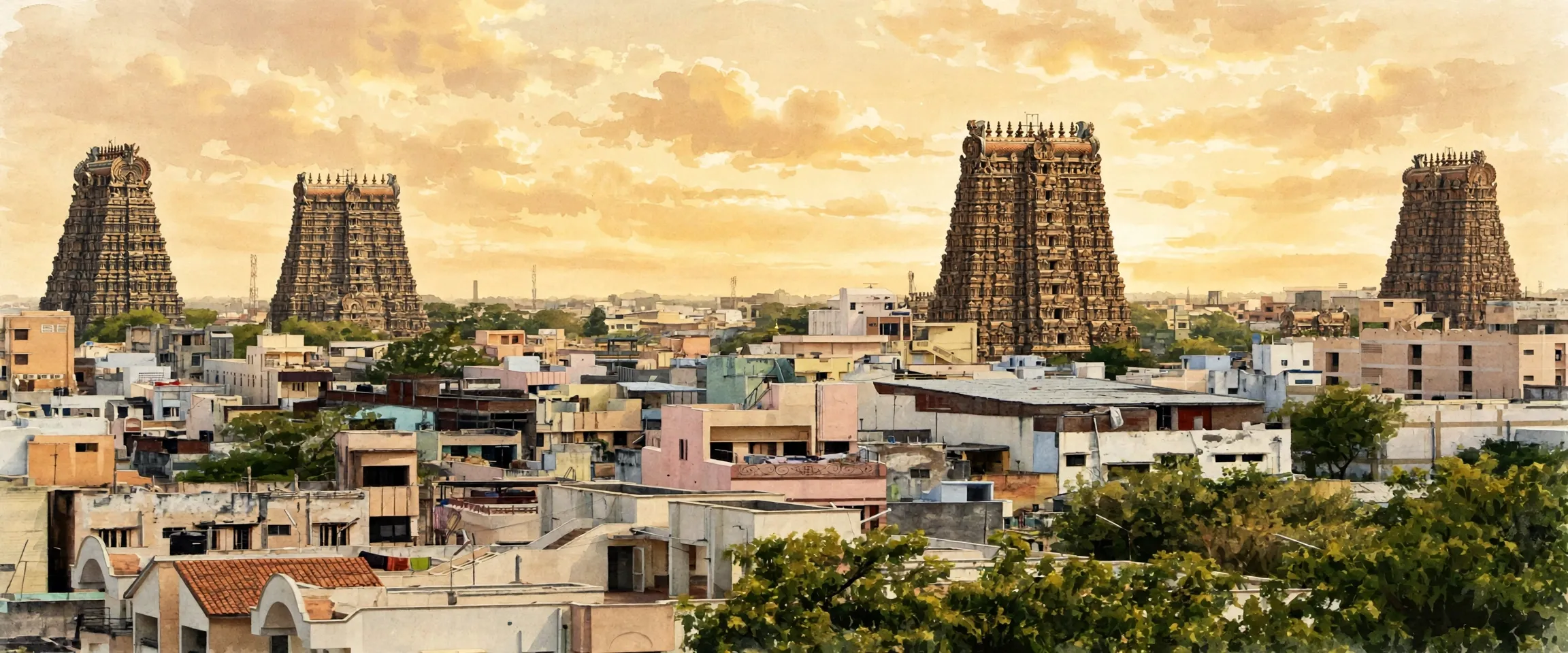
The mandirs of Madurai centre on three shrines. The Meenakshi Temple, about 14 acres of gopurams on the Vaigai, honours the goddess who rules the city with her consort Sundareswarar. Nearby, Koodal Azhagar Temple is a Divya Desam where Vishnu appears seated, reclining and standing. Eight kilometres away, Thiruparankundram is the rock-cut first abode of Murugan.
- Punjabi name
- ਮਦੁਰੈ ਦੇ ਮੰਦਰ
- Country
- India
- State
- Tamil Nadu
- City
- Madurai
- Guide covers
- Meenakshi Temple, Koodal Azhagar Temple, Thiruparankundram Subramaniya Swamy Temple
- Main shrine
- Meenakshi Temple, the goddess temple of Madurai
- River
- Vaigai
Madurai, on the Vaigai river in Tamil Nadu, is one of India's great temple cities, and its mandirs show three different faces of Tamil devotion: a goddess who rules the city, a Vishnu temple where the god appears in three postures at once, and a rock-cut hill temple where Murugan was married. This guide covers the three shrines at the heart of a pilgrim's Madurai: the Meenakshi Temple, Koodal Azhagar Temple and Thiruparankundram. Jugti's full entry for the first is linked below; the other two are introduced here and will receive their own full entries in time.
Meenakshi Temple: the goddess who rules Madurai
On the southern bank of the Vaigai stands the Meenakshi Temple, dedicated to Meenakshi, a form of Parvati, and her consort Sundareswarar, Shiva. Unusually, the goddess leads here: devotees visit her shrine first, and tradition in Madurai treats her as the city's ruler, born in Madurai itself, while Shiva came as a bridegroom from elsewhere. The complex covers about 14 acres inside concentric walled enclosures, with four great gopurams on the outer walls and ten smaller ones; the tallest, the southern tower, rises to about 170 feet. Inside are the twin shrines, the golden lotus pond, and the thousand-pillared hall. The temple's present form grew in layers: early Pandya building in the 12th and 13th centuries, destruction in the 14th century, Vijayanagara rebuilding, and extensive expansion under the Madurai Nayaks in the 16th and 17th centuries. Its greatest festival is Meenakshi Tirukalyanam, the divine wedding, and the west gopuram of this temple is the model for the state emblem of Tamil Nadu.
Koodal Azhagar: Vishnu in three postures
A short walk from the Meenakshi Temple stands Koodal Azhagar Temple, Madurai's great Vishnu shrine and one of the 108 Divya Desams, where Vishnu is worshipped as Viyooga Sundarrajan with Lakshmi as Mathuravalli. Koodal is an old name for Madurai itself. The temple is sung in Sangam literature and in the Alvar hymns of the 6th to 9th centuries; it was built first by the Pandyas and enlarged by Vijayanagara and the Madurai Nayaks in the 16th century. Its rarity is the sanctum: over about 2 acres enclosed by granite walls, beneath an eight-part Ashtanga Vimana whose shadow, devotees say, never falls on the ground, Vishnu appears in three forms on three levels: seated as Koodal Azhagar, reclining, and standing. The gateway tower is a five-tiered rajagopuram about 125 feet high. Vaishnava tradition ties the temple to Periyalvar, whose Tirupallandu, the opening hymn of Vishnu worship to this day, is linked by Ramanuja's tradition to Madurai. The temple's great festival is the fourteen-day Brahmotsavam in Vaikasi, May to June, and, unusually for a Vishnu temple, it has a Navagraha shrine.
Thiruparankundram: the first abode of Murugan
Eight kilometres south-west of the city, a granite hill rises about 1,050 feet, and cut into its base is the Subramaniya Swamy Temple of Thiruparankundram, counted the first of the six abodes of Murugan, the Arupadai Veedu. Tamil tradition tells that Murugan, after defeating the asura Surapadman at Tiruchendur, married Deivanai, daughter of Indra, here, and worshipped his father Shiva on this hill as Parangirinathar. The rock-cut temple is credited to the Pandyas of the 6th century, with life-sized sculpture added under the Nayaks in the 16th century; a seven-tiered rajagopuram about 150 feet high stands at the entrance. Inside the rock-cut sanctum, Murugan is carved from a single stone, and Shiva and Vishnu face each other, a rare arrangement. The hill itself is layered history: Tamil-Brahmi inscribed Jain cave beds of around the 1st century BCE near the top, and the Kasi Viswanathar shrine at the summit. Kanda Sashti, in the Tamil month of Aipasi, when Murugan's victory is enacted, is the temple's most prominent festival.
How do the three temples fit together on a visit?
The Meenakshi Temple and Koodal Azhagar stand minutes apart in the old city, goddess and Vishnu side by side, and most pilgrims do both in one morning; Thiruparankundram makes the half-day trip out to the hill. Together the three show Madurai whole: Shakta, Vaishnava and Murugan devotion in one city, all of it classic Dravida temple architecture. This guide is part of Jugti's mandirs in India collection.
All Mandirs in Madurai
- Meenakshi Temple : the great goddess temple on the Vaigai, 14 acres of gopurams, the golden lotus pond and the thousand-pillared hall
- Koodal Azhagar Temple: Madurai's Divya Desam of Vishnu, where the god appears seated, reclining and standing under one Ashtanga Vimana (full entry coming)
- Thiruparankundram Subramaniya Swamy Temple: the rock-cut first abode of Murugan, 8 km from the city, where tradition places his marriage to Deivanai (full entry coming)
ਮਦੁਰੈ, ਤਾਮਿਲਨਾਡੂ ਵਿੱਚ ਵੈਗਈ ਨਦੀ ਉੱਤੇ, ਭਾਰਤ ਦੇ ਮਹਾਨ ਮੰਦਰ ਸ਼ਹਿਰਾਂ ਵਿੱਚੋਂ ਇੱਕ ਹੈ, ਅਤੇ ਇਸਦੇ ਮੰਦਰ ਤਾਮਿਲ ਭਗਤੀ ਦੇ ਤਿੰਨ ਵੱਖ ਰੂਪ ਦਿਖਾਉਂਦੇ ਹਨ: ਇੱਕ ਦੇਵੀ ਜੋ ਸ਼ਹਿਰ ਉੱਤੇ ਰਾਜ ਕਰਦੀ ਹੈ, ਇੱਕ ਵਿਸ਼ਨੂੰ ਮੰਦਰ ਜਿੱਥੇ ਪਰਮਾਤਮਾ ਇੱਕੋ ਵਾਰ ਤਿੰਨ ਮੁਦਰਾਵਾਂ ਵਿੱਚ ਪ੍ਰਗਟ ਹੁੰਦਾ ਹੈ, ਅਤੇ ਚੱਟਾਨ ਵਿੱਚ ਕੱਟਿਆ ਪਹਾੜੀ ਮੰਦਰ ਜਿੱਥੇ ਮੁਰੁਗਨ ਦਾ ਵਿਆਹ ਹੋਇਆ ਇਹ ਗਾਈਡ ਸ਼ਰਧਾਲੂ ਦੇ ਮਦੁਰੈ ਦੇ ਹਿਰਦੇ ਵਿੱਚ ਵਸਦੇ ਤਿੰਨ ਧਾਮਾਂ ਨੂੰ ਕਵਰ ਕਰਦੀ ਹੈ: ਮੀਨਾਕਸ਼ੀ ਮੰਦਰ, ਕੂਡਲ ਅਜ਼ਾਗਰ ਮੰਦਰ ਅਤੇ ਥਿਰੂਪਰਨਕੁੰਡਰਮ ਜੁਗਤੀ ਦੀ ਪਹਿਲੇ ਬਾਰੇ ਪੂਰੀ ਐਂਟਰੀ ਹੇਠਾਂ ਲਿੰਕ ਹੈ; ਬਾਕੀ ਦੋ ਇੱਥੇ ਪੇਸ਼ ਕੀਤੇ ਗਏ ਹਨ ਅਤੇ ਸਮੇਂ ਨਾਲ ਆਪਣੀਆਂ ਪੂਰੀਆਂ ਐਂਟਰੀਆਂ ਪ੍ਰਾਪਤ ਕਰਨਗੇ
ਮੀਨਾਕਸ਼ੀ ਮੰਦਰ: ਦੇਵੀ ਜੋ ਮਦੁਰੈ ਉੱਤੇ ਰਾਜ ਕਰਦੀ ਹੈ
ਵੈਗਈ ਦੇ ਦੱਖਣੀ ਕੰਢੇ ਉੱਤੇ ਮੀਨਾਕਸ਼ੀ ਮੰਦਰ ਖੜ੍ਹਾ ਹੈ, ਜੋ ਮੀਨਾਕਸ਼ੀ, ਪਾਰਵਤੀ ਦੇ ਇੱਕ ਰੂਪ, ਅਤੇ ਉਹਨਾਂ ਦੇ ਪਤੀ ਸੁੰਦਰੇਸ਼ਵਰ, ਸ਼ਿਵ, ਨੂੰ ਸਮਰਪਿਤ ਹੈ ਅਸਾਧਾਰਨ ਗੱਲ ਇਹ ਕਿ ਇੱਥੇ ਦੇਵੀ ਅੱਗੇ ਹੈ: ਸ਼ਰਧਾਲੂ ਪਹਿਲਾਂ ਉਹਨਾਂ ਦੇ ਧਾਮ ਜਾਂਦੇ ਹਨ, ਅਤੇ ਮਦੁਰੈ ਦੀ ਪਰੰਪਰਾ ਉਹਨਾਂ ਨੂੰ ਸ਼ਹਿਰ ਦੀ ਸ਼ਾਸਕ ਮੰਨਦੀ ਹੈ, ਜੋ ਖ਼ੁਦ ਮਦੁਰੈ ਵਿੱਚ ਜੰਮੀ, ਜਦਕਿ ਸ਼ਿਵ ਕਿਤੇ ਹੋਰੋਂ ਲਾੜਾ ਬਣ ਕੇ ਆਏ ਪਰਿਸਰ ਲਗਭਗ 14 ਏਕੜ ਵਿੱਚ ਕੰਧਾਂ ਵਾਲੇ ਘੇਰਿਆਂ ਅੰਦਰ ਫੈਲਿਆ ਹੈ, ਬਾਹਰੀ ਕੰਧਾਂ ਉੱਤੇ ਚਾਰ ਵੱਡੇ ਗੋਪੁਰਮ ਅਤੇ ਦਸ ਛੋਟੇ; ਸਭ ਤੋਂ ਉੱਚਾ, ਦੱਖਣੀ ਬੁਰਜ, ਲਗਭਗ 170 ਫੁੱਟ ਉੱਚਾ ਹੈ ਅੰਦਰ ਜੋੜੇ ਧਾਮ, ਸੁਨਹਿਰੀ ਕਮਲ ਤਾਲਾਬ ਅਤੇ ਹਜ਼ਾਰ ਥੰਮ੍ਹਾਂ ਵਾਲਾ ਹਾਲ ਹਨ ਮੰਦਰ ਦਾ ਮੌਜੂਦਾ ਰੂਪ ਪਰਤਾਂ ਵਿੱਚ ਵਧਿਆ: ਬਾਰ੍ਹਵੀਂ ਅਤੇ ਤੇਰ੍ਹਵੀਂ ਸਦੀ ਵਿੱਚ ਸ਼ੁਰੂਆਤੀ ਪਾਂਡਿਆ ਨਿਰਮਾਣ, ਚੌਦ੍ਹਵੀਂ ਸਦੀ ਵਿੱਚ ਤਬਾਹੀ, ਵਿਜਯਨਗਰ ਪੁਨਰ ਨਿਰਮਾਣ, ਅਤੇ ਸੋਲ੍ਹਵੀਂ ਅਤੇ ਸਤਾਰ੍ਹਵੀਂ ਸਦੀ ਵਿੱਚ ਮਦੁਰੈ ਨਾਇਕਾਂ ਹੇਠ ਵੱਡਾ ਵਿਸਤਾਰ ਇਸਦਾ ਸਭ ਤੋਂ ਵੱਡਾ ਤਿਉਹਾਰ ਮੀਨਾਕਸ਼ੀ ਤਿਰੂਕਲਿਆਣਮ, ਬ੍ਰਹਮ ਵਿਆਹ, ਹੈ, ਅਤੇ ਇਸ ਮੰਦਰ ਦਾ ਪੱਛਮੀ ਗੋਪੁਰਮ ਤਾਮਿਲਨਾਡੂ ਦੇ ਰਾਜ ਚਿੰਨ੍ਹ ਦਾ ਆਧਾਰ ਹੈ
ਕੂਡਲ ਅਜ਼ਾਗਰ: ਤਿੰਨ ਮੁਦਰਾਵਾਂ ਵਿੱਚ ਵਿਸ਼ਨੂੰ
ਮੀਨਾਕਸ਼ੀ ਮੰਦਰ ਤੋਂ ਥੋੜ੍ਹੀ ਪੈਦਲ ਦੂਰੀ ਉੱਤੇ ਕੂਡਲ ਅਜ਼ਾਗਰ ਮੰਦਰ ਖੜ੍ਹਾ ਹੈ, ਮਦੁਰੈ ਦਾ ਮਹਾਨ ਵਿਸ਼ਨੂੰ ਧਾਮ ਅਤੇ 108 ਦਿਵਿਆ ਦੇਸਮਾਂ ਵਿੱਚੋਂ ਇੱਕ, ਜਿੱਥੇ ਵਿਸ਼ਨੂੰ ਨੂੰ ਵਿਯੂਗ ਸੁੰਦਰਰਾਜਨ ਵਜੋਂ ਅਤੇ ਲਕਸ਼ਮੀ ਨੂੰ ਮਥੁਰਾਵਲੀ ਵਜੋਂ ਪੂਜਿਆ ਜਾਂਦਾ ਹੈ ਕੂਡਲ ਖ਼ੁਦ ਮਦੁਰੈ ਦਾ ਪੁਰਾਣਾ ਨਾਂ ਹੈ ਮੰਦਰ ਦਾ ਜ਼ਿਕਰ ਸੰਗਮ ਸਾਹਿਤ ਵਿੱਚ ਅਤੇ ਛੇਵੀਂ ਤੋਂ ਨੌਵੀਂ ਸਦੀ ਦੇ ਅਲਵਾਰ ਭਜਨਾਂ ਵਿੱਚ ਹੈ; ਇਹ ਪਹਿਲਾਂ ਪਾਂਡਿਆਂ ਨੇ ਬਣਾਇਆ ਅਤੇ ਸੋਲ੍ਹਵੀਂ ਸਦੀ ਵਿੱਚ ਵਿਜਯਨਗਰ ਅਤੇ ਮਦੁਰੈ ਨਾਇਕਾਂ ਨੇ ਵਧਾਇਆ ਇਸਦੀ ਵਿਰਲਤਾ ਗਰਭਗ੍ਰਹਿ ਹੈ: ਗ੍ਰੇਨਾਈਟ ਕੰਧਾਂ ਨਾਲ ਘਿਰੇ ਲਗਭਗ 2 ਏਕੜ ਵਿੱਚ, ਅੱਠ ਭਾਗਾਂ ਵਾਲੇ ਅਸ਼ਟਾਂਗ ਵਿਮਾਨਮ ਹੇਠ, ਜਿਸ ਬਾਰੇ ਸ਼ਰਧਾਲੂ ਕਹਿੰਦੇ ਹਨ ਕਿ ਇਸਦਾ ਪਰਛਾਵਾਂ ਜ਼ਮੀਨ ਉੱਤੇ ਨਹੀਂ ਪੈਂਦਾ, ਵਿਸ਼ਨੂੰ ਤਿੰਨ ਪੱਧਰਾਂ ਉੱਤੇ ਤਿੰਨ ਰੂਪਾਂ ਵਿੱਚ ਹੈ: ਬੈਠਾ ਕੂਡਲ ਅਜ਼ਾਗਰ ਵਜੋਂ, ਲੇਟਿਆ, ਅਤੇ ਖੜ੍ਹਾ ਦਰਵਾਜ਼ਾ ਬੁਰਜ ਪੰਜ ਮੰਜ਼ਲਾ ਰਾਜਗੋਪੁਰਮ ਹੈ, ਲਗਭਗ 125 ਫੁੱਟ ਉੱਚਾ ਵੈਸ਼ਨਵ ਪਰੰਪਰਾ ਮੰਦਰ ਨੂੰ ਪੇਰੀਆਲਵਾਰ ਨਾਲ ਜੋੜਦੀ ਹੈ, ਜਿਨ੍ਹਾਂ ਦਾ ਤਿਰੂਪੱਲਾਂਡੂ, ਅੱਜ ਤੱਕ ਵਿਸ਼ਨੂੰ ਪੂਜਾ ਦਾ ਮੁੱਢਲਾ ਭਜਨ, ਰਾਮਾਨੁਜ ਦੀ ਪਰੰਪਰਾ ਅਨੁਸਾਰ ਮਦੁਰੈ ਨਾਲ ਜੁੜਿਆ ਹੈ ਮੰਦਰ ਦਾ ਮਹਾਨ ਤਿਉਹਾਰ ਵੈਗਾਸੀ, ਮਈ ਤੋਂ ਜੂਨ, ਵਿੱਚ ਚੌਦਾਂ ਦਿਨਾਂ ਦਾ ਬ੍ਰਹਮੋਤਸਵ ਹੈ, ਅਤੇ, ਵਿਸ਼ਨੂੰ ਮੰਦਰ ਲਈ ਅਸਾਧਾਰਨ ਤੌਰ ਉੱਤੇ, ਇਸ ਵਿੱਚ ਨਵਗ੍ਰਹਿ ਧਾਮ ਵੀ ਹੈ
ਥਿਰੂਪਰਨਕੁੰਡਰਮ: ਮੁਰੁਗਨ ਦਾ ਪਹਿਲਾ ਧਾਮ
ਸ਼ਹਿਰ ਤੋਂ ਅੱਠ ਕਿਲੋਮੀਟਰ ਦੱਖਣ ਪੱਛਮ ਵਿੱਚ, ਇੱਕ ਗ੍ਰੇਨਾਈਟ ਪਹਾੜੀ ਲਗਭਗ 1,050 ਫੁੱਟ ਉੱਠਦੀ ਹੈ, ਅਤੇ ਇਸਦੇ ਥੱਲੇ ਵਿੱਚ ਕੱਟਿਆ ਹੈ ਥਿਰੂਪਰਨਕੁੰਡਰਮ ਦਾ ਸੁਬਰਾਮਣੀਆ ਸੁਆਮੀ ਮੰਦਰ, ਜਿਸਨੂੰ ਮੁਰੁਗਨ ਦੇ ਛੇ ਧਾਮਾਂ, ਅਰੂਪਦੈ ਵੀਡੂ, ਵਿੱਚੋਂ ਪਹਿਲਾ ਗਿਣਿਆ ਜਾਂਦਾ ਹੈ ਤਾਮਿਲ ਪਰੰਪਰਾ ਦੱਸਦੀ ਹੈ ਕਿ ਮੁਰੁਗਨ ਨੇ, ਤਿਰੂਚੇਂਦੂਰ ਵਿੱਚ ਅਸੁਰ ਸੂਰਪਦਮਨ ਨੂੰ ਹਰਾਉਣ ਤੋਂ ਬਾਅਦ, ਇੱਥੇ ਇੰਦਰ ਦੀ ਧੀ ਦੇਵਯਾਨੈ ਨਾਲ ਵਿਆਹ ਕੀਤਾ, ਅਤੇ ਇਸ ਪਹਾੜੀ ਉੱਤੇ ਆਪਣੇ ਪਿਤਾ ਸ਼ਿਵ ਨੂੰ ਪਰੰਗਿਰਿਨਾਥਰ ਵਜੋਂ ਪੂਜਿਆ ਚੱਟਾਨ ਵਿੱਚ ਕੱਟਿਆ ਮੰਦਰ ਛੇਵੀਂ ਸਦੀ ਦੇ ਪਾਂਡਿਆਂ ਨਾਲ ਜੋੜਿਆ ਜਾਂਦਾ ਹੈ, ਸੋਲ੍ਹਵੀਂ ਸਦੀ ਵਿੱਚ ਨਾਇਕਾਂ ਹੇਠ ਜੀਵਨ ਆਕਾਰ ਦੀ ਮੂਰਤੀ ਕਲਾ ਜੁੜੀ; ਦਰਵਾਜ਼ੇ ਉੱਤੇ ਸੱਤ ਮੰਜ਼ਲਾ ਰਾਜਗੋਪੁਰਮ, ਲਗਭਗ 150 ਫੁੱਟ ਉੱਚਾ, ਖੜ੍ਹਾ ਹੈ ਚੱਟਾਨ ਵਿੱਚ ਕੱਟੇ ਗਰਭਗ੍ਰਹਿ ਅੰਦਰ ਮੁਰੁਗਨ ਇੱਕੋ ਪੱਥਰ ਵਿੱਚੋਂ ਘੜਿਆ ਹੈ, ਅਤੇ ਸ਼ਿਵ ਤੇ ਵਿਸ਼ਨੂੰ ਇੱਕ ਦੂਜੇ ਦੇ ਸਾਹਮਣੇ ਹਨ, ਇੱਕ ਵਿਰਲਾ ਪ੍ਰਬੰਧ ਪਹਾੜੀ ਖ਼ੁਦ ਪਰਤਾਂ ਵਾਲਾ ਇਤਿਹਾਸ ਹੈ: ਸਿਖਰ ਦੇ ਨੇੜੇ ਲਗਭਗ ਪਹਿਲੀ ਸਦੀ ਈਸਾ ਪੂਰਵ ਦੇ ਤਾਮਿਲ ਬ੍ਰਾਹਮੀ ਸ਼ਿਲਾਲੇਖਾਂ ਵਾਲੇ ਜੈਨ ਗੁਫਾ ਬਿਸਤਰੇ, ਅਤੇ ਚੋਟੀ ਉੱਤੇ ਕਾਸੀ ਵਿਸ਼ਵਨਾਥਰ ਧਾਮ ਕੰਡਾ ਸ਼ਸ਼ਟੀ, ਤਾਮਿਲ ਮਹੀਨੇ ਐਪਸੀ ਵਿੱਚ, ਜਦੋਂ ਮੁਰੁਗਨ ਦੀ ਜਿੱਤ ਦਾ ਅਭਿਨਯ ਹੁੰਦਾ ਹੈ, ਮੰਦਰ ਦਾ ਸਭ ਤੋਂ ਪ੍ਰਮੁੱਖ ਤਿਉਹਾਰ ਹੈ
ਇੱਕ ਯਾਤਰਾ ਵਿੱਚ ਇਹ ਤਿੰਨ ਮੰਦਰ ਕਿਵੇਂ ਜੁੜਦੇ ਹਨ?
ਮੀਨਾਕਸ਼ੀ ਮੰਦਰ ਅਤੇ ਕੂਡਲ ਅਜ਼ਾਗਰ ਪੁਰਾਣੇ ਸ਼ਹਿਰ ਵਿੱਚ ਮਿੰਟਾਂ ਦੀ ਦੂਰੀ ਉੱਤੇ ਹਨ, ਦੇਵੀ ਅਤੇ ਵਿਸ਼ਨੂੰ ਨਾਲ ਨਾਲ, ਅਤੇ ਜ਼ਿਆਦਾਤਰ ਸ਼ਰਧਾਲੂ ਦੋਵੇਂ ਇੱਕੋ ਸਵੇਰੇ ਕਰਦੇ ਹਨ; ਥਿਰੂਪਰਨਕੁੰਡਰਮ ਪਹਾੜੀ ਵੱਲ ਅੱਧੇ ਦਿਨ ਦੀ ਯਾਤਰਾ ਬਣਾਉਂਦਾ ਹੈ ਇਹ ਤਿੰਨੇ ਮਿਲ ਕੇ ਮਦੁਰੈ ਨੂੰ ਪੂਰਾ ਦਿਖਾਉਂਦੇ ਹਨ: ਇੱਕੋ ਸ਼ਹਿਰ ਵਿੱਚ ਸ਼ਾਕਤ, ਵੈਸ਼ਨਵ ਅਤੇ ਮੁਰੁਗਨ ਭਗਤੀ, ਸਾਰੀ ਕਲਾਸਿਕ ਦ੍ਰਵਿੜ ਮੰਦਰ ਭਵਨ ਨਿਰਮਾਣ ਕਲਾ ਵਿੱਚ ਇਹ ਗਾਈਡ ਜੁਗਤੀ ਦੇ ਭਾਰਤ ਦੇ ਮੰਦਰਾਂ ਸੰਗ੍ਰਹਿ ਦਾ ਹਿੱਸਾ ਹੈ
ਮਦੁਰੈ ਦੇ ਸਾਰੇ ਮੰਦਰ
- ਮੀਨਾਕਸ਼ੀ ਮੰਦਰ : ਵੈਗਈ ਉੱਤੇ ਦੇਵੀ ਦਾ ਮਹਾਨ ਮੰਦਰ, ਗੋਪੁਰਮਾਂ ਦੇ 14 ਏਕੜ, ਸੁਨਹਿਰੀ ਕਮਲ ਤਾਲਾਬ ਅਤੇ ਹਜ਼ਾਰ ਥੰਮ੍ਹਾਂ ਵਾਲਾ ਹਾਲ
- ਕੂਡਲ ਅਜ਼ਾਗਰ ਮੰਦਰ: ਮਦੁਰੈ ਦਾ ਵਿਸ਼ਨੂੰ ਦਾ ਦਿਵਿਆ ਦੇਸਮ, ਜਿੱਥੇ ਪਰਮਾਤਮਾ ਇੱਕੋ ਅਸ਼ਟਾਂਗ ਵਿਮਾਨਮ ਹੇਠ ਬੈਠਾ, ਲੇਟਿਆ ਅਤੇ ਖੜ੍ਹਾ ਪ੍ਰਗਟ ਹੁੰਦਾ ਹੈ (ਪੂਰੀ ਐਂਟਰੀ ਜਲਦੀ)
- ਥਿਰੂਪਰਨਕੁੰਡਰਮ ਸੁਬਰਾਮਣੀਆ ਸੁਆਮੀ ਮੰਦਰ: ਚੱਟਾਨ ਵਿੱਚ ਕੱਟਿਆ ਮੁਰੁਗਨ ਦਾ ਪਹਿਲਾ ਧਾਮ, ਸ਼ਹਿਰ ਤੋਂ 8 ਕਿਲੋਮੀਟਰ, ਜਿੱਥੇ ਪਰੰਪਰਾ ਉਸਦਾ ਦੇਵਯਾਨੈ ਨਾਲ ਵਿਆਹ ਰੱਖਦੀ ਹੈ (ਪੂਰੀ ਐਂਟਰੀ ਜਲਦੀ)