
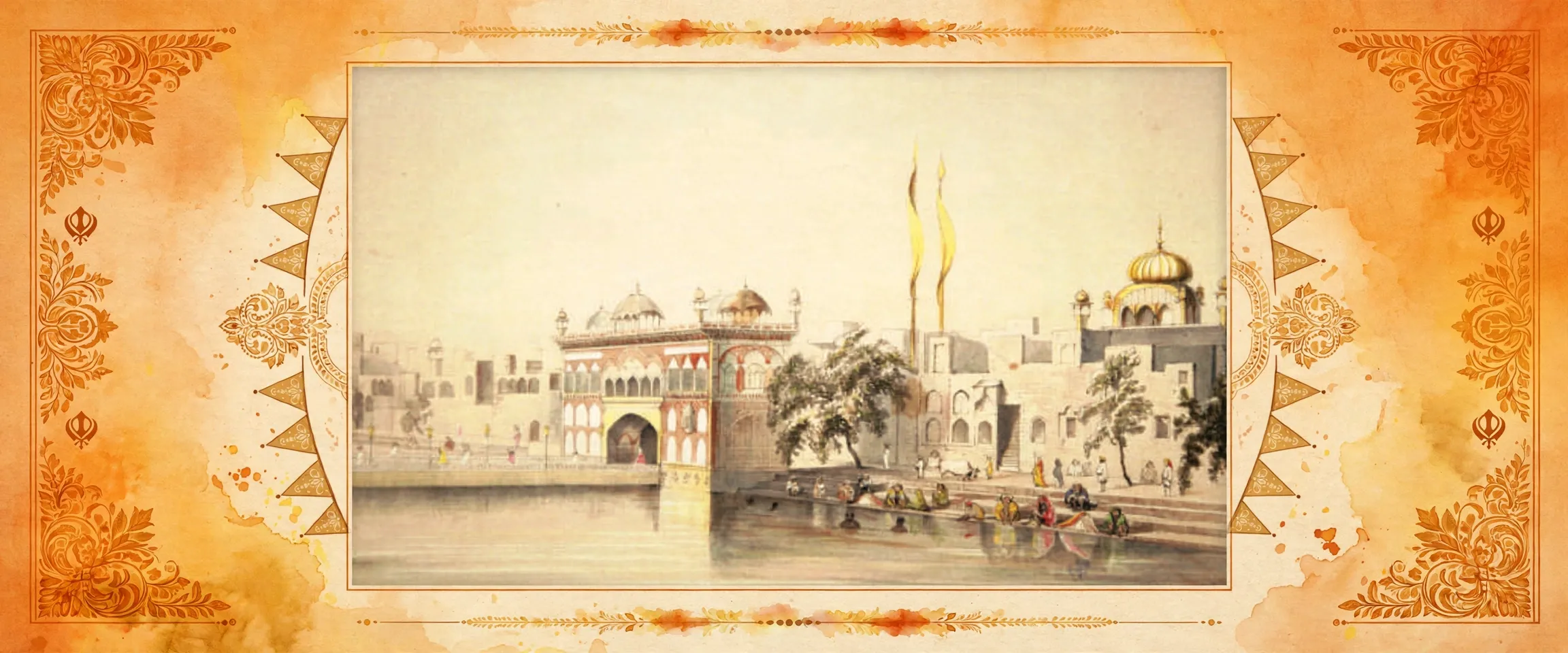
The Nishan Sahib is the Sikh flag, a triangular pennant bearing the Khanda emblem flown on a tall pole outside gurdwaras worldwide, marking a place of worship open to everyone. Traced to Guru Hargobind Ji's flag over the Akal Takht in 1606, it stands for Miri Piri, the balance of worldly duty and spiritual devotion, and its Rehat Maryada colours are basanti yellow or surmai blue.
- Punjabi name
- ਨਿਸ਼ਾਨ ਸਾਹਿਬ
- Meaning
- Respected or exalted ensign, the holy flag
- Also called
- Jhanda Sahib
- Shape
- Triangular pennant, cotton or silk, with a tassel
- Emblem
- The Khanda: a double-edged sword, a chakkar circle and two kirpans for Miri and Piri
- Pole
- Tall flagpole wrapped in a chola of the flag's colour, topped with a steel Khanda
All 10 facts
- Traced to
- Guru Hargobind Ji's flag over the Akal Takht, Amritsar, 1606; an earlier white banner is linked to Guru Amar Das Ji at Goindwal Sahib
- Colours in the Rehat Maryada
- Basanti (xanthic yellow) or surmai (greyish navy blue), reaffirmed by the Akal Takht on 15 July 2024
- Care
- Washed with milk and water and renewed at Vaisakhi
- Bearer
- Nishanchi, the flag bearer at the head of processions and, historically, of Sikh armies
The Nishan Sahib is the Sikh flag: a triangular pennant bearing the Khanda emblem, flown on a tall flagpole outside gurdwaras all over the world. Its name means the respected or exalted ensign, and for Sikhs it is far more than a marker. It announces that this is a place of worship open to everyone, where a traveller can find shelter, food and help, and it carries the values of the faith: one God, equality, service and readiness to stand for truth.
What is the Nishan Sahib?
Nishan comes from a Persian word meaning a flag or standard, and Sahib is an Arabic honorific meaning lord or master, used here as a mark of respect, so Nishan Sahib is the exalted ensign or holy flag. A synonymous name is Jhanda Sahib, from jhanda, a banner. The flag itself is triangular, its two equal sides about double the length of the short side, made of cotton or silk cloth with a tassel at its end, and no size is laid down for it. It flies from a tall pole set in the gurdwara compound or on the building itself, and the pole is wrapped in a cloth sheath, called a chola, of the same colour as the flag. At the very top of the pole sits a steel Khanda. Because the flag stands so high, a Sikh place of worship can be recognised from far away, which was its first practical purpose: to guide pilgrims and travellers to the Guru's door. Sikhs hold that a building without a Nishan Sahib outside it is not fully a gurdwara, and the daily Ardas itself remembers the Sikh standards, praying that the jhande, the flags, flourish forever.
What does the Khanda on the flag mean?
The emblem printed or embroidered on the flag, and repeated in steel at the top of the pole, is the Khanda, the central symbol of the Sikh faith. At its centre stands a double-edged sword, also called a khanda, which SikhiWiki explains as the creative power of God and sovereign power over life and death: one edge stands for divine justice, the other for freedom and authority governed by moral and spiritual values. Around the sword is a circle, the chakkar, with no beginning and no end, standing for the oneness and eternity of God and the unity of justice and humanity. Flanking the circle are two curved swords, the kirpans of Miri Piri: the left sword for Piri, spiritual sovereignty, and the right sword for Miri, temporal sovereignty and worldly responsibility, held in balance around the centre. Some flags carry the Ik Onkar symbol instead of, or alongside, the Khanda. Read as a whole, the flag states the same teaching as the two swords of Guru Hargobind Ji: spiritual life and worldly duty, balanced in one emblem, flying over every gurdwara.
Where did the Nishan Sahib come from?
The earliest Sikh flag in the sources is a white one. A verse by Bhatt Kalshar in Guru Granth Sahib Ji, at page 1393, speaks of a white banner, and accounts of the time of Guru Amar Das Ji describe a white triangular flag, the dhaval dhuja, raised at the new Baoli Sahib at Goindwal Sahib on the Beas. In that telling the white stood for Piri, saintliness, goodwill and peace, and the flag served as a landmark for visitors seeking a Sikh place. The Nishan Sahib in its lasting form is traced to Guru Hargobind Ji, who hoisted a flag over the Akal Takht, then called the Akal Bunga, at Amritsar when it was raised in 1606. That flag was called Akal Dhuja, the immortal flag, or Satguru ka Nishan, the standard of the True Guru, and with the sixth Guru the colour changed from white toward the yellow and saffron family, linked in one account with sacrifice after the martyrdom of Guru Arjan Dev Ji. Guru Gobind Singh Ji later added the symbols of deg and tegh, the cauldron and the sword, food for all and justice for all. In the eighteenth century Sikh armies carried the standard at their head in the care of a nishanchi, a flag bearer, and one misl, the Nishanwalia, took its very name from providing flag bearers to the others.
Why are there two Nishan Sahibs at Amritsar?
Between the Harmandir Sahib and the Akal Takht at Amritsar stand two Nishan Sahibs side by side, on poles about 40 metres high, the tallest structures of the complex. They are read as the pair of Guru Hargobind Ji's two swords made visible: one flag for Miri and one for Piri, worldly duty and spiritual authority flying together over the seat where the two meet. Their history is recorded in detail. A flag was first raised on top of the Harmandir Sahib in 1771 by Sardar Jhanda Singh of the Bhangi misl. In 1783 two Udasi mahants brought a tall sal tree in one piece from Dehra Dun to serve as a flagpost beside the Akal Takht, and the hospice next to it took the name Jhanda Bunga, the flag tower. In 1820 Sardar Desa Singh Majithia, who managed Darbar Sahib for Maharaja Ranjit Singh, replaced the wooden post with a steel one covered in gilded copper sheets, and the two posts have flown together ever since, renewed by the SGPC in steel pipe in 1962.
What colour should a Nishan Sahib be?
This is a question Sikhs have actively settled in recent years, and the honest answer has two parts. The Sikh Rehat Maryada, ratified in 1936, states that the Nishan Sahib should be basanti, a xanthic yellow, or surmai, a greyish navy blue. In practice, through the twentieth century, most gurdwaras came to fly a saffron or kesri orange flag, while Nihang gurdwaras kept the dark blue. On 15 July 2024 the Akal Takht decided, in accordance with the Rehat Maryada, that only basanti or surmai are acceptable colours for the Nishan Sahib, and an SGPC circular of 26 July 2024 carried the same instruction to gurdwaras, so many congregations have since changed their flags from saffron to basanti yellow. The Khanda emblem on the cloth is usually in the contrasting colour, blue on a yellow flag or yellow on a blue one.
How is the Nishan Sahib cared for?
Great respect is shown to the flag, and caring for it is a recognised form of seva. The flag is washed with milk and water every year in April at Vaisakhi, when the old cloth is taken down and a fresh flag and chola are hoisted, often in a ceremony led by the Panj Pyare, and the same renewal happens whenever a devotee offers new cloth. Devotees also walk around the base of the pole in reverence. Outside the gurdwara, the Nishan Sahib still travels: at the head of a Nagar Kirtan procession the flag bearers walk in front, traditionally five Nishan Sahibs carried ahead of the palanquin of Guru Granth Sahib Ji, just as the nishanchi once marched at the front of a Sikh army. Wherever it flies, over a great takht or a small diaspora gurdwara, it makes the same promise the first white banner made at Goindwal: the Guru's door is here, and it is open to all.
ਨਿਸ਼ਾਨ ਸਾਹਿਬ ਸਿੱਖ ਝੰਡਾ ਹੈ। ਇਹ ਖੰਡੇ ਦੇ ਨਿਸ਼ਾਨ ਵਾਲਾ ਤਿਕੋਣਾ ਝੰਡਾ ਹੈ, ਜੋ ਸੰਸਾਰ ਭਰ ਦੇ ਗੁਰਦੁਆਰਿਆਂ ਦੇ ਬਾਹਰ ਇੱਕ ਉੱਚੇ ਥੰਮ੍ਹ ਤੇ ਝੂਲਦਾ ਹੈ। ਇਸ ਦੇ ਨਾਂ ਦਾ ਅਰਥ ਹੈ ਸਤਕਾਰਯੋਗ ਜਾਂ ਉੱਚਾ ਨਿਸ਼ਾਨ, ਅਤੇ ਸਿੱਖਾਂ ਲਈ ਇਹ ਇੱਕ ਨਿਸ਼ਾਨੀ ਤੋਂ ਕਿਤੇ ਵੱਧ ਹੈ। ਇਹ ਐਲਾਨ ਕਰਦਾ ਹੈ ਕਿ ਇਹ ਪੂਜਾ ਦੀ ਉਹ ਥਾਂ ਹੈ ਜੋ ਹਰੇਕ ਲਈ ਖੁੱਲ੍ਹੀ ਹੈ, ਜਿੱਥੇ ਮੁਸਾਫ਼ਰ ਨੂੰ ਆਸਰਾ, ਲੰਗਰ ਅਤੇ ਮਦਦ ਮਿਲ ਸਕਦੀ ਹੈ, ਅਤੇ ਇਹ ਧਰਮ ਦੀਆਂ ਕਦਰਾਂ ਨੂੰ ਦਰਸਾਉਂਦਾ ਹੈ। ਇੱਕ ਅਕਾਲ ਪੁਰਖ, ਬਰਾਬਰੀ, ਸੇਵਾ ਅਤੇ ਸੱਚ ਲਈ ਖੜ੍ਹਨ ਦੀ ਤਿਆਰੀ।
ਨਿਸ਼ਾਨ ਸਾਹਿਬ ਕੀ ਹੈ?
ਨਿਸ਼ਾਨ ਇੱਕ ਫ਼ਾਰਸੀ ਸ਼ਬਦ ਹੈ ਜਿਸ ਦਾ ਅਰਥ ਹੈ ਝੰਡਾ ਜਾਂ ਧ੍ਵਜ। ਸਾਹਿਬ ਇੱਕ ਅਰਬੀ ਸਤਕਾਰ ਸੂਚਕ ਸ਼ਬਦ ਹੈ ਜਿਸ ਦਾ ਅਰਥ ਹੈ ਸੁਆਮੀ ਜਾਂ ਮਾਲਕ, ਅਤੇ ਇੱਥੇ ਇਹ ਸਤਕਾਰ ਵਜੋਂ ਵਰਤਿਆ ਗਿਆ ਹੈ। ਇਸ ਲਈ ਨਿਸ਼ਾਨ ਸਾਹਿਬ ਦਾ ਅਰਥ ਹੈ ਉੱਚਾ ਨਿਸ਼ਾਨ ਜਾਂ ਪਵਿੱਤਰ ਝੰਡਾ। ਇਸ ਦਾ ਇੱਕ ਹੋਰ ਨਾਂ ਝੰਡਾ ਸਾਹਿਬ ਵੀ ਹੈ। ਝੰਡਾ ਖੁਦ ਤਿਕੋਣਾ ਹੁੰਦਾ ਹੈ, ਇਸ ਦੀਆਂ ਦੋ ਬਰਾਬਰ ਭੁਜਾਵਾਂ ਛੋਟੀ ਭੁਜਾ ਨਾਲੋਂ ਲਗਭਗ ਦੁੱਗਣੀਆਂ ਹੁੰਦੀਆਂ ਹਨ, ਇਹ ਸੂਤੀ ਜਾਂ ਰੇਸ਼ਮੀ ਕੱਪੜੇ ਦਾ ਬਣਿਆ ਹੁੰਦਾ ਹੈ ਅਤੇ ਇਸ ਦੇ ਸਿਰੇ ਤੇ ਇੱਕ ਫੁੰਦਣਾ ਹੁੰਦਾ ਹੈ। ਇਸ ਦਾ ਕੋਈ ਤੈਅ ਆਕਾਰ ਨਹੀਂ ਹੈ। ਇਹ ਗੁਰਦੁਆਰੇ ਦੇ ਵਿਹੜੇ ਵਿੱਚ ਜਾਂ ਇਮਾਰਤ ਦੇ ਉੱਪਰ ਲੱਗੇ ਇੱਕ ਉੱਚੇ ਥੰਮ੍ਹ ਤੇ ਝੂਲਦਾ ਹੈ, ਅਤੇ ਥੰਮ੍ਹ ਝੰਡੇ ਦੇ ਰੰਗ ਦੇ ਹੀ ਕੱਪੜੇ ਦੇ ਖੋਲ, ਜਿਸ ਨੂੰ ਚੋਲਾ ਕਹਿੰਦੇ ਹਨ, ਵਿੱਚ ਲਪੇਟਿਆ ਹੁੰਦਾ ਹੈ। ਥੰਮ੍ਹ ਦੇ ਸਭ ਤੋਂ ਉੱਪਰ ਸਟੀਲ ਦਾ ਖੰਡਾ ਲੱਗਾ ਹੁੰਦਾ ਹੈ। ਕਿਉਂਕਿ ਝੰਡਾ ਇੰਨਾ ਉੱਚਾ ਖੜ੍ਹਾ ਹੁੰਦਾ ਹੈ, ਇਸ ਲਈ ਸਿੱਖ ਪੂਜਾ ਦੀ ਥਾਂ ਦੂਰੋਂ ਪਛਾਣੀ ਜਾ ਸਕਦੀ ਹੈ, ਅਤੇ ਇਹੀ ਇਸ ਦਾ ਪਹਿਲਾ ਅਮਲੀ ਮਕਸਦ ਸੀ। ਸ਼ਰਧਾਲੂਆਂ ਅਤੇ ਮੁਸਾਫ਼ਰਾਂ ਨੂੰ ਗੁਰੂ ਦੇ ਦਰ ਦਾ ਰਾਹ ਦਿਖਾਉਣਾ। ਸਿੱਖ ਮੰਨਦੇ ਹਨ ਕਿ ਜਿਸ ਇਮਾਰਤ ਦੇ ਬਾਹਰ ਨਿਸ਼ਾਨ ਸਾਹਿਬ ਨਾ ਹੋਵੇ, ਉਹ ਪੂਰੀ ਤਰ੍ਹਾਂ ਗੁਰਦੁਆਰਾ ਨਹੀਂ ਹੈ, ਅਤੇ ਰੋਜ਼ਾਨਾ ਅਰਦਾਸ ਖੁਦ ਸਿੱਖ ਨਿਸ਼ਾਨਾਂ ਨੂੰ ਯਾਦ ਕਰਦੀ ਹੈ ਅਤੇ ਅਰਦਾਸ ਕਰਦੀ ਹੈ ਕਿ ਝੰਡੇ ਸਦਾ ਝੂਲਦੇ ਰਹਿਣ।
ਝੰਡੇ ਤੇ ਬਣੇ ਖੰਡੇ ਦਾ ਕੀ ਅਰਥ ਹੈ?
ਝੰਡੇ ਤੇ ਛਪਿਆ ਜਾਂ ਕਢਿਆ ਨਿਸ਼ਾਨ, ਅਤੇ ਥੰਮ੍ਹ ਦੇ ਉੱਪਰ ਸਟੀਲ ਵਿੱਚ ਦੁਹਰਾਇਆ ਨਿਸ਼ਾਨ, ਖੰਡਾ ਹੈ, ਜੋ ਸਿੱਖ ਧਰਮ ਦਾ ਕੇਂਦਰੀ ਚਿੰਨ੍ਹ ਹੈ। ਇਸ ਦੇ ਵਿਚਕਾਰ ਇੱਕ ਦੋਧਾਰੀ ਤਲਵਾਰ ਖੜ੍ਹੀ ਹੈ, ਜਿਸ ਨੂੰ ਖੰਡਾ ਵੀ ਕਹਿੰਦੇ ਹਨ। ਸਿੱਖੀਵਿਕੀ ਦੱਸਦਾ ਹੈ ਕਿ ਇਹ ਪਰਮਾਤਮਾ ਦੀ ਸਿਰਜਣ ਸ਼ਕਤੀ ਅਤੇ ਜੀਵਨ ਮੌਤ ਤੇ ਪ੍ਰਭੂਤਾ ਨੂੰ ਦਰਸਾਉਂਦੀ ਹੈ। ਇਸ ਦੀ ਇੱਕ ਧਾਰ ਬ੍ਰਹਮ ਇਨਸਾਫ਼ ਲਈ ਹੈ ਅਤੇ ਦੂਜੀ ਆਜ਼ਾਦੀ ਅਤੇ ਨੈਤਿਕ ਅਤੇ ਰੂਹਾਨੀ ਕਦਰਾਂ ਨਾਲ ਚੱਲਣ ਵਾਲੇ ਅਧਿਕਾਰ ਲਈ। ਤਲਵਾਰ ਦੇ ਦੁਆਲੇ ਇੱਕ ਚੱਕਰ, ਚਕਰ ਹੈ, ਜਿਸ ਦਾ ਨਾ ਕੋਈ ਆਦਿ ਹੈ ਅਤੇ ਨਾ ਅੰਤ, ਜੋ ਪਰਮਾਤਮਾ ਦੀ ਏਕਤਾ ਅਤੇ ਸਦੀਵਤਾ ਅਤੇ ਇਨਸਾਫ਼ ਅਤੇ ਮਨੁੱਖਤਾ ਦੀ ਏਕਤਾ ਨੂੰ ਦਰਸਾਉਂਦਾ ਹੈ। ਚੱਕਰ ਦੇ ਦੋਵੇਂ ਪਾਸੇ ਦੋ ਵਕਰ ਤਲਵਾਰਾਂ ਹਨ, ਮੀਰੀ ਪੀਰੀ ਦੀਆਂ ਕਿਰਪਾਨਾਂ। ਖੱਬੀ ਤਲਵਾਰ ਪੀਰੀ, ਰੂਹਾਨੀ ਪ੍ਰਭੂਤਾ, ਲਈ ਹੈ ਅਤੇ ਸੱਜੀ ਤਲਵਾਰ ਮੀਰੀ, ਸੰਸਾਰਕ ਪ੍ਰਭੂਤਾ ਅਤੇ ਸੰਸਾਰਕ ਜ਼ਿੰਮੇਵਾਰੀ, ਲਈ ਹੈ, ਅਤੇ ਦੋਵੇਂ ਕੇਂਦਰ ਦੇ ਦੁਆਲੇ ਸੰਤੁਲਨ ਵਿੱਚ ਹਨ। ਕੁਝ ਝੰਡਿਆਂ ਤੇ ਖੰਡੇ ਦੀ ਥਾਂ ਜਾਂ ਇਸ ਦੇ ਨਾਲ ਇਕ ਓਅੰਕਾਰ ਦਾ ਨਿਸ਼ਾਨ ਵੀ ਹੁੰਦਾ ਹੈ। ਪੂਰੇ ਰੂਪ ਵਿੱਚ, ਇਹ ਝੰਡਾ ਉਹੀ ਸਿੱਖਿਆ ਦਿੰਦਾ ਹੈ ਜੋ ਗੁਰੂ ਹਰਿਗੋਬਿੰਦ ਜੀ ਦੀਆਂ ਦੋ ਤਲਵਾਰਾਂ ਦਿੰਦੀਆਂ ਹਨ। ਰੂਹਾਨੀ ਜੀਵਨ ਅਤੇ ਸੰਸਾਰਕ ਫ਼ਰਜ਼, ਹਰ ਗੁਰਦੁਆਰੇ ਦੇ ਉੱਪਰ ਝੂਲਦੇ ਇੱਕੋ ਨਿਸ਼ਾਨ ਵਿੱਚ ਸੰਤੁਲਿਤ।
ਨਿਸ਼ਾਨ ਸਾਹਿਬ ਕਿੱਥੋਂ ਆਇਆ?
ਸਰੋਤਾਂ ਵਿੱਚ ਸਭ ਤੋਂ ਪੁਰਾਣਾ ਸਿੱਖ ਝੰਡਾ ਚਿੱਟਾ ਹੈ। ਸ੍ਰੀ ਗੁਰੂ ਗ੍ਰੰਥ ਸਾਹਿਬ ਜੀ ਵਿੱਚ ਪੰਨਾ 1393 ਤੇ ਭੱਟ ਕਲਸਾਰ ਦੀ ਇੱਕ ਪਉੜੀ ਇੱਕ ਚਿੱਟੇ ਝੰਡੇ ਦੀ ਗੱਲ ਕਰਦੀ ਹੈ, ਅਤੇ ਗੁਰੂ ਅਮਰ ਦਾਸ ਜੀ ਦੇ ਸਮੇਂ ਦੇ ਵੇਰਵੇ ਇੱਕ ਚਿੱਟੇ ਤਿਕੋਣੇ ਝੰਡੇ, ਧਵਲ ਧੁਜਾ, ਦੀ ਗੱਲ ਕਰਦੇ ਹਨ, ਜੋ ਬਿਆਸ ਕੰਢੇ ਗੋਇੰਦਵਾਲ ਸਾਹਿਬ ਵਿਖੇ ਨਵੀਂ ਬਣੀ ਬਾਉਲੀ ਸਾਹਿਬ ਤੇ ਲਾਇਆ ਗਿਆ ਸੀ। ਉਸ ਕਥਾ ਵਿੱਚ ਚਿੱਟਾ ਰੰਗ ਪੀਰੀ, ਸੰਤ ਸੁਭਾਅ, ਸਦਭਾਵਨਾ ਅਤੇ ਸ਼ਾਂਤੀ, ਲਈ ਸੀ, ਅਤੇ ਝੰਡਾ ਸਿੱਖ ਥਾਂ ਲੱਭਣ ਵਾਲੇ ਆਉਣ ਵਾਲਿਆਂ ਲਈ ਇੱਕ ਨਿਸ਼ਾਨੀ ਦਾ ਕੰਮ ਕਰਦਾ ਸੀ। ਨਿਸ਼ਾਨ ਸਾਹਿਬ ਦਾ ਸਥਾਈ ਰੂਪ ਗੁਰੂ ਹਰਿਗੋਬਿੰਦ ਜੀ ਨਾਲ ਜੋੜਿਆ ਜਾਂਦਾ ਹੈ, ਜਿਨ੍ਹਾਂ ਨੇ 1606 ਵਿੱਚ ਅੰਮ੍ਰਿਤਸਰ ਵਿਖੇ ਅਕਾਲ ਤਖ਼ਤ, ਜਿਸ ਨੂੰ ਉਸ ਵੇਲੇ ਅਕਾਲ ਬੁੰਗਾ ਕਿਹਾ ਜਾਂਦਾ ਸੀ, ਉਸਾਰੇ ਜਾਣ ਵੇਲੇ ਇਸ ਦੇ ਉੱਪਰ ਝੰਡਾ ਝੁਲਾਇਆ। ਉਸ ਝੰਡੇ ਨੂੰ ਅਕਾਲ ਧੁਜਾ, ਅਮਰ ਝੰਡਾ, ਜਾਂ ਸਤਿਗੁਰੂ ਕਾ ਨਿਸ਼ਾਨ ਕਿਹਾ ਗਿਆ, ਅਤੇ ਛੇਵੇਂ ਗੁਰੂ ਜੀ ਨਾਲ ਇਸ ਦਾ ਰੰਗ ਚਿੱਟੇ ਤੋਂ ਪੀਲੇ ਅਤੇ ਭਗਵੇਂ ਪਰਿਵਾਰ ਵੱਲ ਬਦਲਿਆ, ਜਿਸ ਨੂੰ ਇੱਕ ਕਥਾ ਵਿੱਚ ਗੁਰੂ ਅਰਜਨ ਦੇਵ ਜੀ ਦੀ ਸ਼ਹੀਦੀ ਤੋਂ ਬਾਅਦ ਕੁਰਬਾਨੀ ਨਾਲ ਜੋੜਿਆ ਗਿਆ ਹੈ। ਗੁਰੂ ਗੋਬਿੰਦ ਸਿੰਘ ਜੀ ਨੇ ਬਾਅਦ ਵਿੱਚ ਡੇਗ ਅਤੇ ਤੇਗ ਦੇ ਨਿਸ਼ਾਨ ਜੋੜੇ, ਕੜਾਹਾ ਅਤੇ ਤਲਵਾਰ, ਸਭ ਲਈ ਲੰਗਰ ਅਤੇ ਸਭ ਲਈ ਇਨਸਾਫ਼। ਅਠਾਰਵੀਂ ਸਦੀ ਵਿੱਚ ਸਿੱਖ ਫ਼ੌਜਾਂ ਆਪਣੇ ਮੋਹਰੇ ਨਿਸ਼ਾਨਚੀ ਦੀ ਸੰਭਾਲ ਵਿੱਚ ਇਹ ਨਿਸ਼ਾਨ ਲੈ ਕੇ ਚੱਲਦੀਆਂ ਸਨ, ਅਤੇ ਇੱਕ ਮਿਸਲ, ਨਿਸ਼ਾਨਵਾਲੀਆ, ਦਾ ਨਾਂ ਹੀ ਦੂਜੀਆਂ ਮਿਸਲਾਂ ਨੂੰ ਨਿਸ਼ਾਨਚੀ ਦੇਣ ਦੇ ਕੰਮ ਤੋਂ ਪਿਆ।
ਅੰਮ੍ਰਿਤਸਰ ਵਿੱਚ ਦੋ ਨਿਸ਼ਾਨ ਸਾਹਿਬ ਕਿਉਂ ਹਨ?
ਅੰਮ੍ਰਿਤਸਰ ਵਿੱਚ ਸ੍ਰੀ ਹਰਿਮੰਦਰ ਸਾਹਿਬ ਅਤੇ ਅਕਾਲ ਤਖ਼ਤ ਸਾਹਿਬ ਦੇ ਵਿਚਕਾਰ ਦੋ ਨਿਸ਼ਾਨ ਸਾਹਿਬ ਨਾਲ ਨਾਲ ਖੜ੍ਹੇ ਹਨ, ਲਗਭਗ 40 ਮੀਟਰ ਉੱਚੇ ਥੰਮ੍ਹਾਂ ਤੇ, ਜੋ ਇਸ ਕੰਪਲੈਕਸ ਦੀਆਂ ਸਭ ਤੋਂ ਉੱਚੀਆਂ ਬਣਤਰਾਂ ਹਨ। ਇਨ੍ਹਾਂ ਨੂੰ ਗੁਰੂ ਹਰਿਗੋਬਿੰਦ ਜੀ ਦੀਆਂ ਦੋ ਤਲਵਾਰਾਂ ਦੀ ਜੋੜੀ ਦਾ ਦਿਖਦਾ ਰੂਪ ਕਿਹਾ ਜਾਂਦਾ ਹੈ। ਇੱਕ ਝੰਡਾ ਮੀਰੀ ਲਈ ਅਤੇ ਇੱਕ ਪੀਰੀ ਲਈ, ਸੰਸਾਰਕ ਫ਼ਰਜ਼ ਅਤੇ ਰੂਹਾਨੀ ਅਧਿਕਾਰ, ਉਸ ਥਾਂ ਦੇ ਉੱਪਰ ਇਕੱਠੇ ਝੂਲਦੇ ਜਿੱਥੇ ਦੋਵੇਂ ਮਿਲਦੇ ਹਨ। ਇਨ੍ਹਾਂ ਦਾ ਇਤਿਹਾਸ ਵੇਰਵੇ ਨਾਲ ਦਰਜ ਹੈ। ਸ੍ਰੀ ਹਰਿਮੰਦਰ ਸਾਹਿਬ ਦੇ ਉੱਪਰ ਝੰਡਾ ਪਹਿਲੀ ਵਾਰ 1771 ਵਿੱਚ ਭੰਗੀ ਮਿਸਲ ਦੇ ਸਰਦਾਰ ਝੰਡਾ ਸਿੰਘ ਨੇ ਲਾਇਆ। 1783 ਵਿੱਚ ਦੋ ਉਦਾਸੀ ਮਹੰਤ ਦੇਹਰਾਦੂਨ ਤੋਂ ਇੱਕ ਲੰਮਾ ਸਾਲ ਦਾ ਰੁੱਖ ਇੱਕੋ ਟੁਕੜੇ ਵਿੱਚ ਲਿਆਏ, ਜੋ ਅਕਾਲ ਤਖ਼ਤ ਦੇ ਕੋਲ ਝੰਡੇ ਦੇ ਥੰਮ੍ਹ ਵਜੋਂ ਲੱਗਾ, ਅਤੇ ਇਸ ਦੇ ਨਾਲ ਵਾਲੇ ਬੁੰਗੇ ਦਾ ਨਾਂ ਝੰਡਾ ਬੁੰਗਾ ਪੈ ਗਿਆ। 1820 ਵਿੱਚ ਸਰਦਾਰ ਦੇਸਾ ਸਿੰਘ ਮਜੀਠੀਆ ਨੇ, ਜੋ ਮਹਾਰਾਜਾ ਰਣਜੀਤ ਸਿੰਘ ਲਈ ਦਰਬਾਰ ਸਾਹਿਬ ਦਾ ਪ੍ਰਬੰਧ ਕਰਦੇ ਸਨ, ਲੱਕੜ ਦੇ ਥੰਮ੍ਹ ਦੀ ਥਾਂ ਸੁਨਹਿਰੀ ਤਾਂਬੇ ਦੀਆਂ ਚਾਦਰਾਂ ਨਾਲ ਢਕਿਆ ਸਟੀਲ ਦਾ ਥੰਮ੍ਹ ਲਾਇਆ, ਅਤੇ ਉਦੋਂ ਤੋਂ ਦੋਵੇਂ ਥੰਮ੍ਹ ਇਕੱਠੇ ਝੂਲਦੇ ਆ ਰਹੇ ਹਨ, ਜਿਨ੍ਹਾਂ ਨੂੰ 1962 ਵਿੱਚ ਐਸਜੀਪੀਸੀ ਨੇ ਸਟੀਲ ਪਾਈਪਾਂ ਨਾਲ ਨਵਿਆਇਆ।
ਨਿਸ਼ਾਨ ਸਾਹਿਬ ਦਾ ਰੰਗ ਕੀ ਹੋਣਾ ਚਾਹੀਦਾ ਹੈ?
ਇਹ ਇੱਕ ਸਵਾਲ ਹੈ ਜਿਸ ਨੂੰ ਸਿੱਖਾਂ ਨੇ ਹਾਲ ਹੀ ਦੇ ਸਾਲਾਂ ਵਿੱਚ ਸਰਗਰਮੀ ਨਾਲ ਤੈਅ ਕੀਤਾ ਹੈ, ਅਤੇ ਇਸ ਦੇ ਸੱਚੇ ਜਵਾਬ ਦੇ ਦੋ ਹਿੱਸੇ ਹਨ। ਸਿੱਖ ਰਹਿਤ ਮਰਯਾਦਾ, ਜਿਸ ਨੂੰ 1936 ਵਿੱਚ ਪ੍ਰਵਾਨਗੀ ਮਿਲੀ, ਕਹਿੰਦੀ ਹੈ ਕਿ ਨਿਸ਼ਾਨ ਸਾਹਿਬ ਬਸੰਤੀ, ਇੱਕ ਪੀਲਾ ਰੰਗ, ਜਾਂ ਸੁਰਮਈ, ਇੱਕ ਸਲੇਟੀ ਗੂੜ੍ਹਾ ਨੀਲਾ ਰੰਗ, ਹੋਣਾ ਚਾਹੀਦਾ ਹੈ। ਅਮਲ ਵਿੱਚ, ਵੀਹਵੀਂ ਸਦੀ ਵਿੱਚ, ਬਹੁਤੇ ਗੁਰਦੁਆਰੇ ਭਗਵਾ ਜਾਂ ਕੇਸਰੀ ਨਾਰੰਗੀ ਝੰਡਾ ਝੁਲਾਉਣ ਲੱਗ ਪਏ, ਜਦਕਿ ਨਿਹੰਗ ਗੁਰਦੁਆਰਿਆਂ ਨੇ ਗੂੜ੍ਹਾ ਨੀਲਾ ਰੰਗ ਰੱਖਿਆ। 15 ਜੁਲਾਈ 2024 ਨੂੰ ਅਕਾਲ ਤਖ਼ਤ ਸਾਹਿਬ ਨੇ, ਰਹਿਤ ਮਰਯਾਦਾ ਦੇ ਅਨੁਸਾਰ, ਫ਼ੈਸਲਾ ਕੀਤਾ ਕਿ ਨਿਸ਼ਾਨ ਸਾਹਿਬ ਲਈ ਸਿਰਫ਼ ਬਸੰਤੀ ਜਾਂ ਸੁਰਮਈ ਰੰਗ ਹੀ ਪ੍ਰਵਾਨ ਹਨ, ਅਤੇ 26 ਜੁਲਾਈ 2024 ਦੇ ਇੱਕ ਐਸਜੀਪੀਸੀ ਪੱਤਰ ਨੇ ਇਹੀ ਹਦਾਇਤ ਗੁਰਦੁਆਰਿਆਂ ਤੱਕ ਪਹੁੰਚਾਈ, ਜਿਸ ਤੋਂ ਬਾਅਦ ਬਹੁਤ ਸਾਰੀਆਂ ਸੰਗਤਾਂ ਨੇ ਆਪਣੇ ਝੰਡੇ ਕੇਸਰੀ ਤੋਂ ਬਦਲ ਕੇ ਬਸੰਤੀ ਪੀਲੇ ਕਰ ਲਏ ਹਨ। ਕੱਪੜੇ ਤੇ ਖੰਡੇ ਦਾ ਨਿਸ਼ਾਨ ਆਮ ਤੌਰ ਤੇ ਉਲਟੇ ਰੰਗ ਵਿੱਚ ਹੁੰਦਾ ਹੈ, ਪੀਲੇ ਝੰਡੇ ਤੇ ਨੀਲਾ ਜਾਂ ਨੀਲੇ ਝੰਡੇ ਤੇ ਪੀਲਾ।
ਨਿਸ਼ਾਨ ਸਾਹਿਬ ਦੀ ਸੰਭਾਲ ਕਿਵੇਂ ਕੀਤੀ ਜਾਂਦੀ ਹੈ?
ਝੰਡੇ ਦਾ ਬਹੁਤ ਸਤਕਾਰ ਕੀਤਾ ਜਾਂਦਾ ਹੈ, ਅਤੇ ਇਸ ਦੀ ਸੰਭਾਲ ਨੂੰ ਸੇਵਾ ਦਾ ਇੱਕ ਪ੍ਰਵਾਨਿਤ ਰੂਪ ਮੰਨਿਆ ਜਾਂਦਾ ਹੈ। ਹਰ ਸਾਲ ਅਪ੍ਰੈਲ ਵਿੱਚ ਵਿਸਾਖੀ ਵੇਲੇ ਝੰਡੇ ਨੂੰ ਦੁੱਧ ਅਤੇ ਪਾਣੀ ਨਾਲ ਧੋਤਾ ਜਾਂਦਾ ਹੈ, ਜਦੋਂ ਪੁਰਾਣਾ ਕੱਪੜਾ ਉਤਾਰ ਕੇ ਨਵਾਂ ਝੰਡਾ ਅਤੇ ਚੋਲਾ ਚੜ੍ਹਾਇਆ ਜਾਂਦਾ ਹੈ, ਅਕਸਰ ਪੰਜ ਪਿਆਰਿਆਂ ਦੀ ਅਗਵਾਈ ਵਿੱਚ ਇੱਕ ਸਮਾਗਮ ਵਿੱਚ, ਅਤੇ ਇਹੀ ਨਵਿਆਉਣਾ ਉਦੋਂ ਵੀ ਹੁੰਦਾ ਹੈ ਜਦੋਂ ਕੋਈ ਸ਼ਰਧਾਲੂ ਨਵਾਂ ਕੱਪੜਾ ਭੇਟ ਕਰਦਾ ਹੈ। ਸ਼ਰਧਾਲੂ ਥੰਮ੍ਹ ਦੇ ਚੁਫੇਰੇ ਸਤਕਾਰ ਨਾਲ ਪਰਕਰਮਾ ਵੀ ਕਰਦੇ ਹਨ। ਗੁਰਦੁਆਰੇ ਤੋਂ ਬਾਹਰ, ਨਿਸ਼ਾਨ ਸਾਹਿਬ ਅੱਜ ਵੀ ਯਾਤਰਾ ਕਰਦਾ ਹੈ। ਨਗਰ ਕੀਰਤਨ ਜਲੂਸ ਦੇ ਮੋਹਰੇ ਝੰਡਾ ਚੁੱਕਣ ਵਾਲੇ ਚੱਲਦੇ ਹਨ, ਪਰੰਪਰਾ ਅਨੁਸਾਰ ਸ੍ਰੀ ਗੁਰੂ ਗ੍ਰੰਥ ਸਾਹਿਬ ਜੀ ਦੀ ਪਾਲਕੀ ਤੋਂ ਅੱਗੇ ਪੰਜ ਨਿਸ਼ਾਨ ਸਾਹਿਬ ਲੈ ਕੇ ਚੱਲਿਆ ਜਾਂਦਾ ਹੈ, ਬਿਲਕੁਲ ਉਸੇ ਤਰ੍ਹਾਂ ਜਿਵੇਂ ਕਦੇ ਨਿਸ਼ਾਨਚੀ ਸਿੱਖ ਫ਼ੌਜ ਦੇ ਮੋਹਰੇ ਚੱਲਦਾ ਸੀ। ਇਹ ਜਿੱਥੇ ਵੀ ਝੂਲਦਾ ਹੈ, ਕਿਸੇ ਵੱਡੇ ਤਖ਼ਤ ਦੇ ਉੱਪਰ ਜਾਂ ਕਿਸੇ ਛੋਟੇ ਪਰਦੇਸੀ ਗੁਰਦੁਆਰੇ ਦੇ ਉੱਪਰ, ਇਹ ਉਹੀ ਵਾਅਦਾ ਕਰਦਾ ਹੈ ਜੋ ਗੋਇੰਦਵਾਲ ਦੇ ਪਹਿਲੇ ਚਿੱਟੇ ਝੰਡੇ ਨੇ ਕੀਤਾ ਸੀ। ਗੁਰੂ ਦਾ ਦਰ ਇੱਥੇ ਹੈ, ਅਤੇ ਇਹ ਹਰੇਕ ਲਈ ਖੁੱਲ੍ਹਾ ਹੈ।
More religion entries to explore
Jugti is free and independent. Reader support keeps the Kosh growing.
Support