
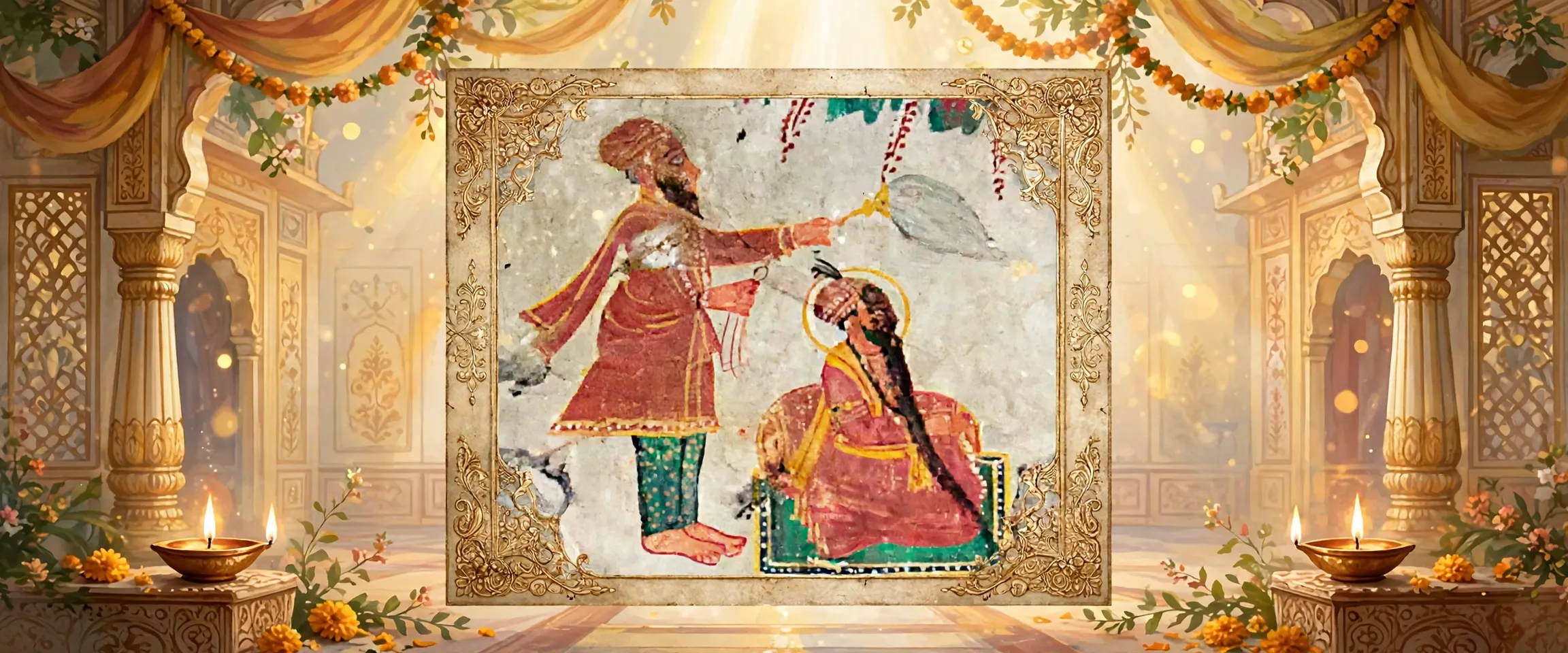
Chaur Sahib is the ceremonial whisk waved gently over Guru Granth Sahib Ji in gurdwaras, a sign of reverence for the scripture Sikhs honour as their living Guru. Made of yak hair, or today often nylon, on a wooden or metal handle, it is kept beside the scripture wherever Guru Granth Sahib Ji is placed. The practice comes from the honours once given to kings, and Sikhs give that same royal honour to the Shabad, the Word.
- Punjabi name
- ਚੌਰ ਸਾਹਿਬ
- Also called
- Chauri Sahib
- Made of
- Yak hair, today often nylon, on a wooden or metal handle
- Colour
- Usually white, for purity and truthfulness
- Kept
- Beside the Manji Sahib in the Darbar Sahib
- Waved
- Over Guru Granth Sahib Ji during reading, kirtan and Ardas
All 11 facts
- Honour
- Royal tradition, from the courts of kings
- Seva
- Open to any Sikh, of any age or gender
- Recited while waving
- Waheguru, the Gurmantar
- With the living Gurus
- Waved over the ten Gurus; a mural shows Bhai Bhana waving one over Guru Angad Dev Ji
- Also used
- Nagar Kirtan processions and home worship
Chaur Sahib is the ceremonial whisk waved gently over Guru Granth Sahib Ji in the gurdwara, a sign of reverence for the scripture Sikhs honour as their living Guru. It is kept beside the scripture wherever Guru Granth Sahib Ji is placed, and a volunteer waves it above the Granth while the scripture is read aloud or kirtan is sung. The practice comes from the honours once given to kings, and Sikhs give that same royal honour to the Shabad, the Word.
What is Chaur Sahib?
The chaur is a whisk, a fan of fine hair or feathers set in a handle, and it is one of the objects that belong to the Guru's throne. In the Darbar Sahib, the main hall of the gurdwara, Guru Granth Sahib Ji rests on the Manji Sahib, a small bed draped in rich cloth, under a canopy called the chanani. The chaur stands beside it, ready in the hand of a sevadar, a volunteer. It is an obligatory item wherever Guru Granth Sahib Ji is placed: in the gurdwara, in a procession, or in a Sikh home where the scripture is kept.
The sevadar waves the chaur above the scripture in slow, gentle movements, never letting it pass directly over the text itself. The motion is unhurried and quiet, part of the stillness of the darbar. It is done while the Granthi reads from the scripture or while the sangat sings kirtan, and it continues through the Ardas, the standing prayer, and through the Prakash, the ceremonial opening of the scripture each morning.
What is a chaur made of?
A chaur is traditionally made of yak hair, sometimes of horse hair, set in a wooden or metal handle. In earlier times it was also made of peacock feathers, or of wood and canvas, which gave a stronger breeze when waved. Today most chaurs are made with fine nylon hair, and they come in many sizes, from small ones for home use to large ceremonial ones with ornate handles carved or set with metalwork.
The hair is usually white, and the colour carries meaning: white stands for purity and truthfulness, the qualities the Guru's teaching asks of a Sikh. A typical modern chaur has about 30 centimetres of hair on a handle of about 20 centimetres, and weighs little, so it can be waved for a long time without tiring the arm. Whatever its material, every chaur serves the same purpose, and the material matters less than the spirit in which it is waved.
Why is the chaur waved over Guru Granth Sahib Ji?
The answer lies in the courts of kings. In the royal courts of India, attendants stood beside the ruler and waved a chaur over his head, a mark of honour given to no one else in the court. Only the ruler was fanned, only his throne stood higher than the rest, and only his head was shaded by a canopy. Sikhs took those same honours and gave them to the scripture, because they honour Guru Granth Sahib Ji as a sovereign Guru and not only as a holy book.
Guru Gobind Singh Ji, the tenth Guru, invested the scripture with that royal authority when he ended the line of human Gurus and declared the Shabad itself the Guru. So the scripture is enthroned as a king would be: on the Manji Sahib, under the chanani, with the chaur waved above it. Guru Nanak Dev Ji taught that the true kings are those who love God and help others to do the same, and who rule over the hearts of people, while political kings are temporary and their authority ends with death. The chaur is the visible sign of that kingship.
The honour is kept with care in the gurdwara. No one in the congregation is seated above Guru Granth Sahib Ji, and at Harmandir Sahib in Amritsar there is an opening on the second floor in the Shish Mahal area, so that no one may stand or walk above the scripture. The same care is shown in the story of the living Gurus: a historic mural in a samadh near Gurdwara Bhai Than Singh at Kot Fateh Khan in Attock, in present-day Pakistan, shows Bhai Bhana, the youngest son of Baba Budha Ji, waving a chaur over Guru Angad Dev Ji. The practice with the scripture today continues a service once done for the Gurus themselves.
Who can perform chaur seva?
Any Sikh may do it, of any age or gender, whenever the scripture is open for Prakash. There is no rank or office attached to it, and no permission needed beyond knowing how it is done with respect. The sevadar stands or sits beside the Manji Sahib, holds the chaur with both hands, and waves it with a gentle, rhythmic motion.
Sikhs regard chaur seva as service of a very high order. While waving the chaur, the sevadar silently recites Waheguru, the Gurmantar, so the one act holds two foundations of Sikh life at once: seva, selfless service, and simran, remembrance of the Divine. In the time of the first ten Gurus, members of the sangat who had travelled far to see the Guru would take turns at this seva, so that they could sit close to the Guru and listen to the Shabad. The same turn-taking continues today, and many Sikhs make a point of doing this seva at their local gurdwara at some time in their lives.
When is the chaur used?
The chaur is used through the whole day of the gurdwara. It is waved at Prakash, when the scripture is opened in the morning, and at Sukhasan, when it is carried to its resting place at night. It is waved during the reading of the scripture, during kirtan, and during Ardas, and it is a familiar sight at every diwan.
It is also carried out of the gurdwara. In a Nagar Kirtan, the procession through the streets in which hymns are sung, Guru Granth Sahib Ji is carried on a decorated float, and the chaur is waved over it without pause through the whole route. In Sikh homes where the scripture is kept, a smaller chaur is part of daily worship. Wherever the Guru is, the chaur goes with it.
Is the chaur only a practical fan?
The practice began, in part, with practical needs. In Punjab it was customary for younger members of a family to fan their elders in hot weather, to cool them and keep flies away, and the same care was given to the Gurus. But the practical need has faded: gurdwaras now have electric fans and air conditioning, and the air moves without any hand waving a whisk.
What remains is the meaning. The chaur is not about moving air. It is a ritual of humility, service and respect, a way of saying with the hands what the heart believes about the Guru. Sikhs are clear that they do not worship the Guru Granth Sahib Ji as an idol: worship belongs only to the One Almighty God, the Creator. And nothing happens if the chaur is not waved; the Guru does not need fanning, and the scripture does not command it. It is a voluntary act of devotion, done because the sangat wishes to honour the Word, and that is why it has lasted.
ਚੌਰ ਸਾਹਿਬ ਉਹ ਪਵਿੱਤਰ ਚੌਰ ਹੈ, ਜੋ ਗੁਰਦੁਆਰੇ ਵਿੱਚ ਸ੍ਰੀ ਗੁਰੂ ਗ੍ਰੰਥ ਸਾਹਿਬ ਜੀ ਉੱਤੇ ਹੌਲੀ ਹੌਲੀ ਝੁਲਾਇਆ ਜਾਂਦਾ ਹੈ। ਇਹ ਗੁਰਬਾਣੀ ਦੇ ਸਤਿਕਾਰ ਦੀ ਨਿਸ਼ਾਨੀ ਹੈ, ਕਿਉਂਕਿ ਸਿੱਖ ਗੁਰੂ ਗ੍ਰੰਥ ਸਾਹਿਬ ਜੀ ਨੂੰ ਆਪਣਾ ਜਿਉਂਦਾ ਗੁਰੂ ਮੰਨਦੇ ਹਨ। ਇਹ ਚੌਰ ਜਿੱਥੇ ਵੀ ਗੁਰੂ ਗ੍ਰੰਥ ਸਾਹਿਬ ਜੀ ਵਿਰਾਜਮਾਨ ਹੁੰਦੇ ਹਨ, ਉਨ੍ਹਾਂ ਦੇ ਨਾਲ ਰੱਖਿਆ ਜਾਂਦਾ ਹੈ, ਅਤੇ ਸੇਵਾਦਾਰ ਇਸ ਨੂੰ ਗੁਰਬਾਣੀ ਦੇ ਪਾਠ ਜਾਂ ਕੀਰਤਨ ਵੇਲੇ ਉਨ੍ਹਾਂ ਉੱਤੇ ਝੁਲਾਉਂਦਾ ਹੈ। ਇਹ ਪਰੰਪਰਾ ਰਾਜਿਆਂ ਦੇ ਸਨਮਾਨ ਤੋਂ ਆਈ ਹੈ, ਅਤੇ ਸਿੱਖ ਉਹੀ ਸ਼ਾਹੀ ਸਨਮਾਨ ਸ਼ਬਦ ਨੂੰ ਦਿੰਦੇ ਹਨ।
ਚੌਰ ਸਾਹਿਬ ਕੀ ਹੈ?
ਚੌਰ ਇੱਕ ਪੱਖਾ ਹੈ, ਜੋ ਬਰੀਕ ਵਾਲਾਂ ਜਾਂ ਖੰਭਾਂ ਦਾ ਬਣਿਆ ਹੁੰਦਾ ਹੈ ਅਤੇ ਇੱਕ ਡੰਡੇ ਵਿੱਚ ਲੱਗਾ ਹੁੰਦਾ ਹੈ। ਇਹ ਉਨ੍ਹਾਂ ਵਸਤਾਂ ਵਿੱਚੋਂ ਇੱਕ ਹੈ, ਜੋ ਗੁਰੂ ਦੇ ਤਖ਼ਤ ਨਾਲ ਸੰਬੰਧਿਤ ਹਨ। ਗੁਰਦੁਆਰੇ ਦੇ ਦਰਬਾਰ ਸਾਹਿਬ, ਅਰਥਾਤ ਮੁੱਖ ਹਾਲ, ਵਿੱਚ ਗੁਰੂ ਗ੍ਰੰਥ ਸਾਹਿਬ ਜੀ ਮੰਜੀ ਸਾਹਿਬ ਉੱਤੇ ਵਿਰਾਜਮਾਨ ਹੁੰਦੇ ਹਨ, ਜੋ ਇੱਕ ਛੋਟਾ ਪਲੰਘ ਹੈ ਅਤੇ ਸੋਹਣੇ ਕੱਪੜੇ ਨਾਲ ਢਕਿਆ ਹੁੰਦਾ ਹੈ, ਅਤੇ ਉਨ੍ਹਾਂ ਉੱਤੇ ਚੰਨਣੀ, ਅਰਥਾਤ ਛਤਰੀ, ਹੁੰਦੀ ਹੈ। ਚੌਰ ਉਸ ਦੇ ਨਾਲ ਖੜ੍ਹਾ ਹੁੰਦਾ ਹੈ, ਸੇਵਾਦਾਰ ਦੇ ਹੱਥ ਵਿੱਚ ਤਿਆਰ। ਇਹ ਉਸ ਹਰ ਥਾਂ ਲਾਜ਼ਮੀ ਹੈ, ਜਿੱਥੇ ਗੁਰੂ ਗ੍ਰੰਥ ਸਾਹਿਬ ਜੀ ਵਿਰਾਜਮਾਨ ਹੁੰਦੇ ਹਨ: ਗੁਰਦੁਆਰੇ ਵਿੱਚ, ਨਗਰ ਕੀਰਤਨ ਵਿੱਚ, ਜਾਂ ਕਿਸੇ ਸਿੱਖ ਦੇ ਘਰ ਵਿੱਚ, ਜਿੱਥੇ ਗ੍ਰੰਥ ਸਾਹਿਬ ਰੱਖੇ ਹੋਣ।
ਸੇਵਾਦਾਰ ਚੌਰ ਨੂੰ ਗ੍ਰੰਥ ਸਾਹਿਬ ਉੱਤੇ ਹੌਲੀ ਅਤੇ ਨਰਮ ਗਤੀ ਨਾਲ ਝੁਲਾਉਂਦਾ ਹੈ, ਅਤੇ ਇਸ ਨੂੰ ਕਦੇ ਵੀ ਸਿੱਧਾ ਪਾਠ ਉੱਤੇ ਨਹੀਂ ਲੰਘਣ ਦਿੰਦਾ। ਇਹ ਗਤੀ ਹੌਲੀ ਅਤੇ ਸ਼ਾਂਤ ਹੁੰਦੀ ਹੈ, ਦਰਬਾਰ ਦੀ ਸ਼ਾਂਤੀ ਦਾ ਹਿੱਸਾ। ਇਹ ਉਦੋਂ ਕੀਤਾ ਜਾਂਦਾ ਹੈ, ਜਦੋਂ ਗ੍ਰੰਥੀ ਗੁਰਬਾਣੀ ਦਾ ਪਾਠ ਕਰਦਾ ਹੈ ਜਾਂ ਜਦੋਂ ਸੰਗਤ ਕੀਰਤਨ ਕਰਦੀ ਹੈ, ਅਤੇ ਇਹ ਅਰਦਾਸ ਵੇਲੇ ਅਤੇ ਪ੍ਰਕਾਸ਼, ਅਰਥਾਤ ਹਰ ਸਵੇਰ ਗ੍ਰੰਥ ਸਾਹਿਬ ਦੇ ਖੋਲ੍ਹਣ ਦੀ ਰਸਮ, ਵੇਲੇ ਵੀ ਜਾਰੀ ਰਹਿੰਦਾ ਹੈ।
ਚੌਰ ਕਿਸ ਚੀਜ਼ ਦਾ ਬਣਿਆ ਹੁੰਦਾ ਹੈ?
ਚੌਰ ਪਰੰਪਰਾ ਅਨੁਸਾਰ ਯਾਕ ਦੇ ਵਾਲਾਂ ਦਾ ਬਣਿਆ ਹੁੰਦਾ ਹੈ, ਕਈ ਵਾਰ ਘੋੜੇ ਦੇ ਵਾਲਾਂ ਦਾ, ਅਤੇ ਇਹ ਲੱਕੜ ਜਾਂ ਧਾਤ ਦੇ ਡੰਡੇ ਵਿੱਚ ਲੱਗਾ ਹੁੰਦਾ ਹੈ। ਪੁਰਾਣੇ ਸਮੇਂ ਵਿੱਚ ਇਹ ਮੋਰ ਦੇ ਖੰਭਾਂ ਦਾ, ਜਾਂ ਲੱਕੜ ਅਤੇ ਕੱਪੜੇ ਦਾ ਵੀ ਬਣਾਇਆ ਜਾਂਦਾ ਸੀ, ਜਿਸ ਨਾਲ ਝੁਲਾਉਣ ਉੱਤੇ ਚੰਗੀ ਹਵਾ ਮਿਲਦੀ ਸੀ। ਅੱਜ ਕੱਲ੍ਹ ਜ਼ਿਆਦਾਤਰ ਚੌਰ ਬਰੀਕ ਨਾਇਲੋਨ ਦੇ ਵਾਲਾਂ ਦੇ ਬਣੇ ਹੁੰਦੇ ਹਨ, ਅਤੇ ਇਹ ਕਈ ਅਕਾਰਾਂ ਵਿੱਚ ਮਿਲਦੇ ਹਨ, ਘਰ ਵਿੱਚ ਵਰਤਣ ਲਈ ਛੋਟੇ ਅਤੇ ਵੱਡੀਆਂ ਰਸਮਾਂ ਲਈ ਵੱਡੇ, ਜਿਨ੍ਹਾਂ ਦੇ ਡੰਡੇ ਉੱਕਰੇ ਹੋਏ ਜਾਂ ਧਾਤ ਨਾਲ ਜੜੇ ਹੁੰਦੇ ਹਨ।
ਇਸ ਦੇ ਵਾਲ ਆਮ ਤੌਰ ਉੱਤੇ ਚਿੱਟੇ ਹੁੰਦੇ ਹਨ, ਅਤੇ ਇਸ ਰੰਗ ਦਾ ਅਰਥ ਹੈ: ਚਿੱਟਾ ਰੰਗ ਪਵਿੱਤਰਤਾ ਅਤੇ ਸੱਚਾਈ ਦਾ ਪ੍ਰਤੀਕ ਹੈ, ਉਹ ਗੁਣ ਜੋ ਗੁਰੂ ਦੀ ਸਿੱਖਿਆ ਇੱਕ ਸਿੱਖ ਤੋਂ ਮੰਗਦੀ ਹੈ। ਇੱਕ ਆਮ ਆਧੁਨਿਕ ਚੌਰ ਵਿੱਚ ਲਗਭਗ 30 ਸੈਂਟੀਮੀਟਰ ਵਾਲ ਅਤੇ ਲਗਭਗ 20 ਸੈਂਟੀਮੀਟਰ ਦਾ ਡੰਡਾ ਹੁੰਦਾ ਹੈ, ਅਤੇ ਇਹ ਹਲਕਾ ਹੁੰਦਾ ਹੈ, ਇਸ ਲਈ ਇਸ ਨੂੰ ਬਾਂਹ ਥੱਕੇ ਬਿਨਾਂ ਲੰਮਾ ਸਮਾਂ ਝੁਲਾਇਆ ਜਾ ਸਕਦਾ ਹੈ। ਇਹ ਕਿਸੇ ਵੀ ਚੀਜ਼ ਦਾ ਬਣਿਆ ਹੋਵੇ, ਹਰ ਚੌਰ ਦਾ ਮਕਸਦ ਇੱਕੋ ਹੀ ਹੈ, ਅਤੇ ਚੀਜ਼ ਨਾਲੋਂ ਉਹ ਭਾਵਨਾ ਵੱਧ ਮਹੱਤਵ ਰੱਖਦੀ ਹੈ, ਜਿਸ ਨਾਲ ਇਹ ਝੁਲਾਇਆ ਜਾਂਦਾ ਹੈ।
ਗੁਰੂ ਗ੍ਰੰਥ ਸਾਹਿਬ ਜੀ ਉੱਤੇ ਚੌਰ ਕਿਉਂ ਝੁਲਾਇਆ ਜਾਂਦਾ ਹੈ?
ਇਸ ਦਾ ਜਵਾਬ ਰਾਜਿਆਂ ਦੇ ਦਰਬਾਰਾਂ ਵਿੱਚ ਹੈ। ਭਾਰਤ ਦੇ ਸ਼ਾਹੀ ਦਰਬਾਰਾਂ ਵਿੱਚ ਸੇਵਕ ਰਾਜੇ ਦੇ ਨਾਲ ਖੜ੍ਹੇ ਹੋ ਕੇ ਉਸ ਦੇ ਸਿਰ ਉੱਤੇ ਚੌਰ ਝੁਲਾਉਂਦੇ ਸਨ, ਜੋ ਸਨਮਾਨ ਦੀ ਨਿਸ਼ਾਨੀ ਸੀ ਅਤੇ ਦਰਬਾਰ ਵਿੱਚ ਕਿਸੇ ਹੋਰ ਨੂੰ ਨਹੀਂ ਮਿਲਦੀ ਸੀ। ਸਿਰਫ਼ ਰਾਜੇ ਨੂੰ ਹਵਾ ਦਿੱਤੀ ਜਾਂਦੀ ਸੀ, ਸਿਰਫ਼ ਉਸ ਦਾ ਤਖ਼ਤ ਸਭ ਤੋਂ ਉੱਚਾ ਹੁੰਦਾ ਸੀ, ਅਤੇ ਸਿਰਫ਼ ਉਸ ਦੇ ਸਿਰ ਉੱਤੇ ਛਤਰੀ ਹੁੰਦੀ ਸੀ। ਸਿੱਖਾਂ ਨੇ ਉਹੀ ਸਨਮਾਨ ਗ੍ਰੰਥ ਸਾਹਿਬ ਨੂੰ ਦਿੱਤਾ, ਕਿਉਂਕਿ ਉਹ ਗੁਰੂ ਗ੍ਰੰਥ ਸਾਹਿਬ ਜੀ ਨੂੰ ਸਿਰਫ਼ ਇੱਕ ਪਵਿੱਤਰ ਪੁਸਤਕ ਨਹੀਂ, ਸਗੋਂ ਇੱਕ ਸਰਬਉੱਚ ਗੁਰੂ ਮੰਨਦੇ ਹਨ।
ਗੁਰੂ ਗੋਬਿੰਦ ਸਿੰਘ ਜੀ, ਦਸਵੇਂ ਗੁਰੂ, ਨੇ ਗ੍ਰੰਥ ਸਾਹਿਬ ਨੂੰ ਇਹ ਸ਼ਾਹੀ ਅਧਿਕਾਰ ਦਿੱਤਾ, ਜਦੋਂ ਉਨ੍ਹਾਂ ਨੇ ਮਨੁੱਖੀ ਗੁਰੂਆਂ ਦੀ ਲੜੀ ਖ਼ਤਮ ਕਰ ਕੇ ਸ਼ਬਦ ਨੂੰ ਹੀ ਗੁਰੂ ਐਲਾਨਿਆ। ਇਸ ਲਈ ਗ੍ਰੰਥ ਸਾਹਿਬ ਨੂੰ ਰਾਜੇ ਵਾਂਗ ਤਖ਼ਤ ਉੱਤੇ ਬਿਠਾਇਆ ਜਾਂਦਾ ਹੈ: ਮੰਜੀ ਸਾਹਿਬ ਉੱਤੇ, ਚੰਨਣੀ ਹੇਠਾਂ, ਅਤੇ ਚੌਰ ਉਨ੍ਹਾਂ ਉੱਤੇ ਝੁਲਾਇਆ ਜਾਂਦਾ ਹੈ। ਗੁਰੂ ਨਾਨਕ ਦੇਵ ਜੀ ਨੇ ਸਿਖਾਇਆ ਕਿ ਸੱਚੇ ਰਾਜੇ ਉਹ ਹਨ, ਜੋ ਰੱਬ ਨੂੰ ਪਿਆਰ ਕਰਦੇ ਹਨ ਅਤੇ ਹੋਰਾਂ ਨੂੰ ਵੀ ਅਜਿਹਾ ਕਰਨ ਵਿੱਚ ਮਦਦ ਕਰਦੇ ਹਨ, ਅਤੇ ਜੋ ਲੋਕਾਂ ਦੇ ਦਿਲਾਂ ਉੱਤੇ ਰਾਜ ਕਰਦੇ ਹਨ, ਜਦੋਂ ਕਿ ਸਿਆਸੀ ਰਾਜੇ ਅਸਥਾਈ ਹੁੰਦੇ ਹਨ ਅਤੇ ਉਨ੍ਹਾਂ ਦਾ ਅਧਿਕਾਰ ਉਨ੍ਹਾਂ ਦੀ ਮੌਤ ਨਾਲ ਖ਼ਤਮ ਹੋ ਜਾਂਦਾ ਹੈ। ਚੌਰ ਉਸ ਬਾਦਸ਼ਾਹਤ ਦੀ ਦਿੱਖ ਵਾਲੀ ਨਿਸ਼ਾਨੀ ਹੈ।
ਇਸ ਸਨਮਾਨ ਨੂੰ ਗੁਰਦੁਆਰੇ ਵਿੱਚ ਬੜੇ ਧਿਆਨ ਨਾਲ ਨਿਭਾਇਆ ਜਾਂਦਾ ਹੈ। ਸੰਗਤ ਵਿੱਚੋਂ ਕੋਈ ਵੀ ਗੁਰੂ ਗ੍ਰੰਥ ਸਾਹਿਬ ਜੀ ਤੋਂ ਉੱਚਾ ਨਹੀਂ ਬੈਠਦਾ, ਅਤੇ ਅੰਮ੍ਰਿਤਸਰ ਦੇ ਹਰਿਮੰਦਰ ਸਾਹਿਬ ਵਿੱਚ ਦੂਜੀ ਮੰਜ਼ਿਲ ਉੱਤੇ ਸ਼ੀਸ਼ ਮਹਿਲ ਵਾਲੇ ਹਿੱਸੇ ਵਿੱਚ ਇੱਕ ਖੁੱਲ੍ਹਾ ਹਿੱਸਾ ਹੈ, ਤਾਂ ਜੋ ਕੋਈ ਵੀ ਗ੍ਰੰਥ ਸਾਹਿਬ ਉੱਤੇ ਖੜ੍ਹਾ ਨਾ ਹੋ ਸਕੇ ਜਾਂ ਉੱਤੋਂ ਨਾ ਲੰਘ ਸਕੇ। ਇਹੀ ਧਿਆਨ ਜਿਉਂਦੇ ਗੁਰੂਆਂ ਦੀ ਕਹਾਣੀ ਵਿੱਚ ਵੀ ਦਿੱਸਦਾ ਹੈ: ਅਟਕ ਦੇ ਕੋਟ ਫਤਿਹ ਖ਼ਾਨ ਨੇੜੇ ਗੁਰਦੁਆਰਾ ਭਾਈ ਥਾਨ ਸਿੰਘ ਕੋਲ ਇੱਕ ਸਮਾਧ ਵਿੱਚ ਬਣੀ ਇੱਕ ਪੁਰਾਣੀ ਚਿੱਤਰਕਾਰੀ ਵਿੱਚ ਭਾਈ ਭਾਨਾ, ਜੋ ਬਾਬਾ ਬੁੱਢਾ ਜੀ ਦੇ ਸਭ ਤੋਂ ਛੋਟੇ ਪੁੱਤਰ ਸਨ, ਗੁਰੂ ਅੰਗਦ ਦੇਵ ਜੀ ਉੱਤੇ ਚੌਰ ਝੁਲਾਉਂਦੇ ਦਿੱਸਦੇ ਹਨ। ਗ੍ਰੰਥ ਸਾਹਿਬ ਨਾਲ ਅੱਜ ਕੀਤੀ ਜਾਣ ਵਾਲੀ ਸੇਵਾ ਉਸੇ ਸੇਵਾ ਨੂੰ ਜਾਰੀ ਰੱਖਦੀ ਹੈ, ਜੋ ਇੱਕ ਵਾਰ ਗੁਰੂਆਂ ਲਈ ਕੀਤੀ ਜਾਂਦੀ ਸੀ।
ਚੌਰ ਦੀ ਸੇਵਾ ਕੌਣ ਕਰ ਸਕਦਾ ਹੈ?
ਕੋਈ ਵੀ ਸਿੱਖ ਇਹ ਸੇਵਾ ਕਰ ਸਕਦਾ ਹੈ, ਕਿਸੇ ਵੀ ਉਮਰ ਜਾਂ ਲਿੰਗ ਦਾ, ਜਦੋਂ ਵੀ ਗ੍ਰੰਥ ਸਾਹਿਬ ਪ੍ਰਕਾਸ਼ ਲਈ ਖੁੱਲ੍ਹੇ ਹੋਣ। ਇਸ ਨਾਲ ਕੋਈ ਅਹੁਦਾ ਜਾਂ ਰੁਤਬਾ ਨਹੀਂ ਜੁੜਿਆ, ਅਤੇ ਸਤਿਕਾਰ ਨਾਲ ਕਰਨ ਦੀ ਸਮਝ ਤੋਂ ਵੱਧ ਕਿਸੇ ਇਜਾਜ਼ਤ ਦੀ ਲੋੜ ਨਹੀਂ। ਸੇਵਾਦਾਰ ਮੰਜੀ ਸਾਹਿਬ ਦੇ ਨਾਲ ਖੜ੍ਹਾ ਜਾਂ ਬੈਠਾ ਹੁੰਦਾ ਹੈ, ਚੌਰ ਨੂੰ ਦੋਵਾਂ ਹੱਥਾਂ ਨਾਲ ਫੜਦਾ ਹੈ, ਅਤੇ ਇਸ ਨੂੰ ਹੌਲੀ ਅਤੇ ਲੈਅ ਨਾਲ ਝੁਲਾਉਂਦਾ ਹੈ।
ਸਿੱਖ ਚੌਰ ਦੀ ਸੇਵਾ ਨੂੰ ਬਹੁਤ ਉੱਚੀ ਸੇਵਾ ਮੰਨਦੇ ਹਨ। ਚੌਰ ਝੁਲਾਉਂਦੇ ਸਮੇਂ ਸੇਵਾਦਾਰ ਮਨ ਵਿੱਚ ਵਾਹਿਗੁਰੂ, ਅਰਥਾਤ ਗੁਰਮੰਤਰ, ਦਾ ਜਾਪ ਕਰਦਾ ਹੈ, ਇਸ ਲਈ ਇੱਕੋ ਕੰਮ ਵਿੱਚ ਸਿੱਖ ਜੀਵਨ ਦੀਆਂ ਦੋ ਨੀਂਹਾਂ ਇਕੱਠੀਆਂ ਹੋ ਜਾਂਦੀਆਂ ਹਨ: ਸੇਵਾ, ਨਿਰਸਵਾਰਥ ਸੇਵਾ, ਅਤੇ ਸਿਮਰਨ, ਰੱਬ ਦੀ ਯਾਦ। ਪਹਿਲੇ ਦਸ ਗੁਰੂਆਂ ਦੇ ਸਮੇਂ ਵਿੱਚ ਸੰਗਤ ਦੇ ਉਹ ਮੈਂਬਰ, ਜੋ ਦੂਰੋਂ ਗੁਰੂ ਜੀ ਦੇ ਦਰਸ਼ਨਾਂ ਲਈ ਆਉਂਦੇ ਸਨ, ਵਾਰੀ ਵਾਰੀ ਇਹ ਸੇਵਾ ਕਰਦੇ ਸਨ, ਤਾਂ ਜੋ ਉਹ ਗੁਰੂ ਜੀ ਦੇ ਨੇੜੇ ਬੈਠ ਕੇ ਸ਼ਬਦ ਸੁਣ ਸਕਣ। ਉਹੀ ਵਾਰੀ ਅੱਜ ਵੀ ਚੱਲਦੀ ਹੈ, ਅਤੇ ਬਹੁਤ ਸਾਰੇ ਸਿੱਖ ਆਪਣੀ ਜ਼ਿੰਦਗੀ ਵਿੱਚ ਕਿਸੇ ਸਮੇਂ ਆਪਣੇ ਸਥਾਨਕ ਗੁਰਦੁਆਰੇ ਵਿੱਚ ਇਹ ਸੇਵਾ ਕਰਨ ਦਾ ਯਤਨ ਕਰਦੇ ਹਨ।
ਚੌਰ ਕਦੋਂ ਵਰਤਿਆ ਜਾਂਦਾ ਹੈ?
ਚੌਰ ਗੁਰਦੁਆਰੇ ਦੇ ਪੂਰੇ ਦਿਨ ਵਰਤਿਆ ਜਾਂਦਾ ਹੈ। ਇਹ ਪ੍ਰਕਾਸ਼ ਵੇਲੇ ਝੁਲਾਇਆ ਜਾਂਦਾ ਹੈ, ਜਦੋਂ ਸਵੇਰੇ ਗ੍ਰੰਥ ਸਾਹਿਬ ਖੋਲ੍ਹੇ ਜਾਂਦੇ ਹਨ, ਅਤੇ ਸੁਖਾਸਨ ਵੇਲੇ, ਜਦੋਂ ਉਨ੍ਹਾਂ ਨੂੰ ਰਾਤ ਨੂੰ ਆਰਾਮ ਵਾਲੀ ਥਾਂ ਉੱਤੇ ਲਿਜਾਇਆ ਜਾਂਦਾ ਹੈ। ਇਹ ਗੁਰਬਾਣੀ ਦੇ ਪਾਠ, ਕੀਰਤਨ ਅਤੇ ਅਰਦਾਸ ਵੇਲੇ ਝੁਲਾਇਆ ਜਾਂਦਾ ਹੈ, ਅਤੇ ਇਹ ਹਰ ਦੀਵਾਨ ਵਿੱਚ ਵੇਖਿਆ ਜਾਣ ਵਾਲਾ ਦ੍ਰਿਸ਼ ਹੈ।
ਇਹ ਗੁਰਦੁਆਰੇ ਤੋਂ ਬਾਹਰ ਵੀ ਲਿਜਾਇਆ ਜਾਂਦਾ ਹੈ। ਨਗਰ ਕੀਰਤਨ ਵਿੱਚ, ਜੋ ਸੜਕਾਂ ਵਿੱਚੋਂ ਲੰਘਣ ਵਾਲਾ ਜਲੂਸ ਹੈ ਅਤੇ ਜਿਸ ਵਿੱਚ ਭਜਨ ਗਾਏ ਜਾਂਦੇ ਹਨ, ਗੁਰੂ ਗ੍ਰੰਥ ਸਾਹਿਬ ਜੀ ਸਜਾਈ ਹੋਈ ਝਾਂਕੀ ਉੱਤੇ ਵਿਰਾਜਮਾਨ ਹੁੰਦੇ ਹਨ, ਅਤੇ ਚੌਰ ਪੂਰੇ ਰਸਤੇ ਵਿੱਚ ਬਿਨਾਂ ਰੁਕੇ ਉਨ੍ਹਾਂ ਉੱਤੇ ਝੁਲਾਇਆ ਜਾਂਦਾ ਹੈ। ਸਿੱਖਾਂ ਦੇ ਘਰਾਂ ਵਿੱਚ, ਜਿੱਥੇ ਗ੍ਰੰਥ ਸਾਹਿਬ ਰੱਖੇ ਹੁੰਦੇ ਹਨ, ਇੱਕ ਛੋਟਾ ਚੌਰ ਰੋਜ਼ਾਨਾ ਪੂਜਾ ਦਾ ਹਿੱਸਾ ਹੁੰਦਾ ਹੈ। ਗੁਰੂ ਜਿੱਥੇ ਵੀ ਹਨ, ਚੌਰ ਉਨ੍ਹਾਂ ਨਾਲ ਜਾਂਦਾ ਹੈ।
ਕੀ ਚੌਰ ਸਿਰਫ਼ ਇੱਕ ਪੱਖਾ ਹੈ?
ਇਹ ਪਰੰਪਰਾ ਕੁਝ ਹੱਦ ਤੱਕ ਅਮਲੀ ਲੋੜਾਂ ਤੋਂ ਸ਼ੁਰੂ ਹੋਈ ਸੀ। ਪੰਜਾਬ ਵਿੱਚ ਇਹ ਰਿਵਾਜ ਸੀ ਕਿ ਪਰਿਵਾਰ ਦੇ ਛੋਟੇ ਮੈਂਬਰ ਗਰਮੀ ਵਿੱਚ ਆਪਣੇ ਵੱਡਿਆਂ ਨੂੰ ਪੱਖਾ ਝੁਲਾਉਂਦੇ ਸਨ, ਤਾਂ ਜੋ ਉਨ੍ਹਾਂ ਨੂੰ ਠੰਢਕ ਮਿਲੇ ਅਤੇ ਮੱਖੀਆਂ ਦੂਰ ਰਹਿਣ, ਅਤੇ ਇਹੀ ਧਿਆਨ ਗੁਰੂਆਂ ਨੂੰ ਵੀ ਦਿੱਤਾ ਜਾਂਦਾ ਸੀ। ਪਰ ਅਮਲੀ ਲੋੜ ਹੁਣ ਖ਼ਤਮ ਹੋ ਗਈ ਹੈ: ਗੁਰਦੁਆਰਿਆਂ ਵਿੱਚ ਹੁਣ ਬਿਜਲੀ ਦੇ ਪੱਖੇ ਅਤੇ ਏਅਰ ਕੰਡੀਸ਼ਨਰ ਹਨ, ਅਤੇ ਹਵਾ ਬਿਨਾਂ ਕਿਸੇ ਹੱਥ ਦੇ ਹਿੱਲਦੀ ਹੈ।
ਜੋ ਬਾਕੀ ਰਹਿੰਦਾ ਹੈ, ਉਹ ਇਸ ਦਾ ਅਰਥ ਹੈ। ਚੌਰ ਹਵਾ ਚਲਾਉਣ ਬਾਰੇ ਨਹੀਂ ਹੈ। ਇਹ ਨਿਮਰਤਾ, ਸੇਵਾ ਅਤੇ ਸਤਿਕਾਰ ਦੀ ਰਸਮ ਹੈ, ਹੱਥਾਂ ਨਾਲ ਉਹ ਕਹਿਣ ਦਾ ਤਰੀਕਾ, ਜੋ ਦਿਲ ਗੁਰੂ ਬਾਰੇ ਮੰਨਦਾ ਹੈ। ਸਿੱਖ ਸਪੱਸ਼ਟ ਕਰਦੇ ਹਨ ਕਿ ਉਹ ਗੁਰੂ ਗ੍ਰੰਥ ਸਾਹਿਬ ਜੀ ਦੀ ਮੂਰਤੀ ਵਾਂਗ ਪੂਜਾ ਨਹੀਂ ਕਰਦੇ: ਪੂਜਾ ਸਿਰਫ਼ ਇੱਕ ਅਕਾਲ ਪੁਰਖ, ਸਿਰਜਣਹਾਰ, ਦੀ ਹੁੰਦੀ ਹੈ। ਅਤੇ ਜੇ ਚੌਰ ਨਾ ਝੁਲਾਇਆ ਜਾਵੇ, ਤਾਂ ਕੁਝ ਨਹੀਂ ਹੁੰਦਾ; ਗੁਰੂ ਨੂੰ ਹਵਾ ਦੀ ਲੋੜ ਨਹੀਂ, ਅਤੇ ਗ੍ਰੰਥ ਸਾਹਿਬ ਇਸ ਦਾ ਹੁਕਮ ਨਹੀਂ ਦਿੰਦੇ। ਇਹ ਸ਼ਰਧਾ ਦਾ ਸਵੈ-ਇੱਛਤ ਕੰਮ ਹੈ, ਜੋ ਇਸ ਲਈ ਕੀਤਾ ਜਾਂਦਾ ਹੈ ਕਿਉਂਕਿ ਸੰਗਤ ਸ਼ਬਦ ਦਾ ਸਨਮਾਨ ਕਰਨਾ ਚਾਹੁੰਦੀ ਹੈ, ਅਤੇ ਇਸੇ ਲਈ ਇਹ ਅੱਜ ਤੱਕ ਚੱਲਿਆ ਆ ਰਿਹਾ ਹੈ।
More religion entries to explore
Sources (4)
Jugti is free and independent. Reader support keeps the Kosh growing.
Support