
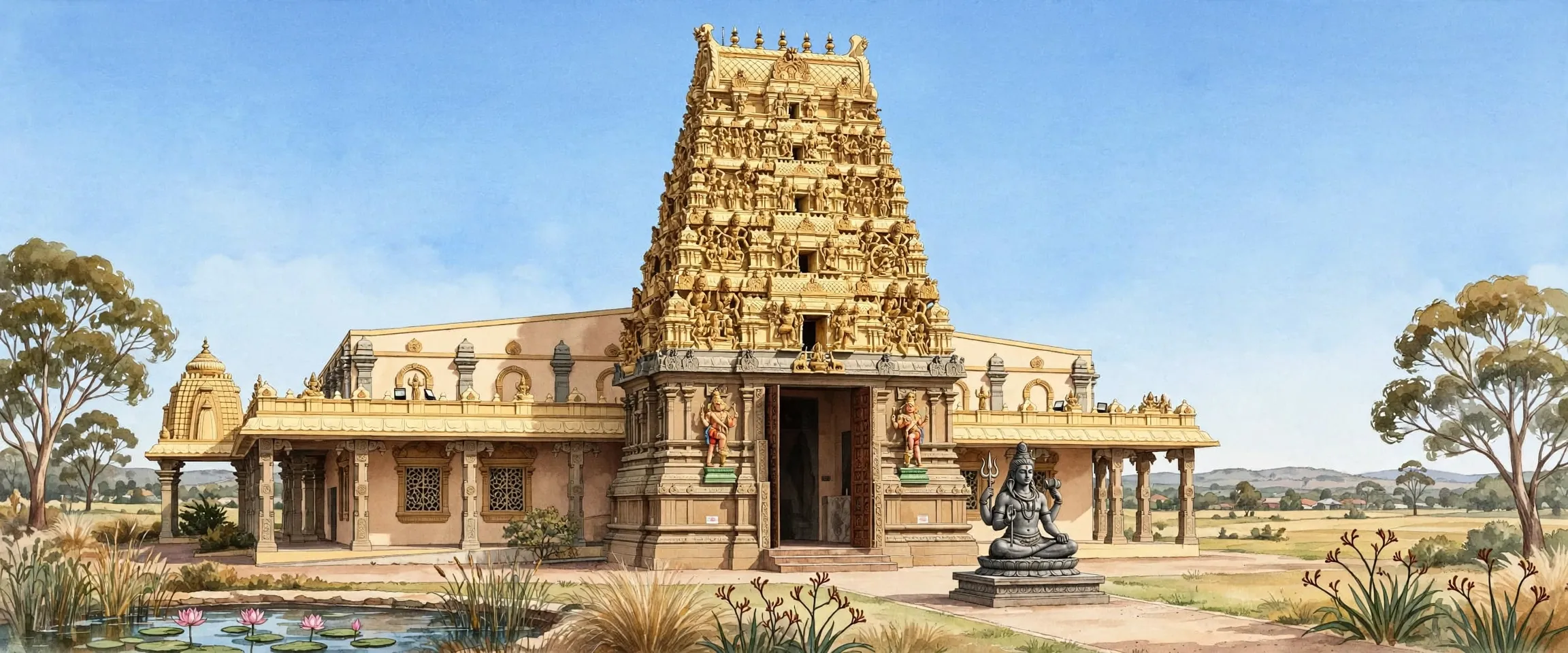
The Perth Shiva Temple, officially the Perth Hindu Temple, at 271 Warton Road, Canning Vale, is Western Australia's oldest Hindu temple, dedicated to Shiva and Meenakshi. Planned from 1985, it installed its deities in February 1990, consecrated a grand new temple on 8 September 2005, and completed its rajagopuram in June 2008.
- Punjabi name
- ਪਰਥ ਸ਼ਿਵ ਮੰਦਰ (ਪਰਥ ਹਿੰਦੂ ਮੰਦਰ), ਕੈਨਿੰਗ ਵੇਲ
- Country
- Australia
- City
- Canning Vale, Perth, Western Australia, 271 Warton Road, WA 6155
- Deity
- Shiva and Meenakshi (Devi); also Ganesha, Murugan, Durga, Vishnu, Lakshmi, Hanuman, Bhairava and Navagraha
- Architectural style
- Dravidian base with North Indian, Gujarati and Sri Lankan elements; rajagopuram (royal tower)
- Tradition
- Hindu; official site through the Hindu Association of Western Australia
All 8 facts
- Key dates
- Plans began 1985; land consecrated 1987; murtis installed February 1990; new temple consecrated 8 September 2005; rajagopuram completed June 2008
- Festivals
- Maha Shivaratri, Pradosham, Purattasi, Navaratri
Perth's oldest Hindu temple does not look like it belongs to one region of India. Its towers and shrines deliberately mix North Indian, Gujarati, South Indian and Sri Lankan patterns, a choice its builders made for a congregation drawn from many countries. The Perth Shiva Temple, officially the Perth Hindu Temple, stands at 271 Warton Road, Canning Vale, and is dedicated to Shiva and to Meenakshi, who is referred to in the temple as Devi. Its long building story runs from plans in 1985 and land consecrated in 1987, through deities installed in February 1990 and a grand new temple consecrated in 2005, to a royal tower completed in June 2008.
What is the Perth Shiva Temple?
The Perth Shiva Temple is a Hindu temple in Canning Vale, a southern suburb of Perth, Western Australia, and it is the oldest Hindu temple in the state. Shiva and Meenakshi are its main deities. The shrines around them, listed on the temple's reference pages, include Ganesha, Murugan, Durga, Vishnu, Lakshmi, Hanuman, Bhairava, the Navagraha and an Athma Lingam. The temple's official site, maintained through the Hindu Association of Western Australia, presents its mission in community terms: to be a focal point for Hindu worship, prayer, education, community and family life in Perth. The temple opens every day, in the morning and again in the evening.
How was the temple built, in stages?
Plans for a Hindu temple in Perth began in 1985. The land was consecrated in 1987 by Swami Shantanand Saraswati, and construction of the multipurpose hall began in March 1989. By February 1990 the work had reached the point where the murtis, the sacred images, were installed. That early temple served the community while the larger ambition took shape beside it. The foundation ceremony for the new temple was held on 10 April 1998, and from August 2002 artisans from India, led by a master builder, or stapathi, named in reports as Devakottai S. Nagarajan, produced the detailed sculptural work on the shrine domes, pillars and walls.
The grand consecration of the new temple, its Maha Kumbhabishekam, was held on 8 September 2005. Reports of the day say about 2,000 people attended, the ceremonies ran under senior priests from Malaysia with assistance from priests from Sri Lanka, India, Malaysia and other Australian temples, and a sequence that began with a Ganesha Hawan on 13 July 2005 continued with 48 days of Yantra Pooja. One element still remained: the rajagopuram, the royal tower. The wider building project, including that tower, took over 20 years in total and was completed in June 2008, with the city council contributing to the tower's cost. A report carried by the Pluralism Project describes the tower's consecration as a moment of pride for a state Hindu community then put at about 8,000 people.
Why does the temple mix so many regional styles?
Temple officials explained the design at the 2005 consecration as a response to who Perth's Hindus actually are: migrants from different regions of India and from countries including Sri Lanka, Singapore, Malaysia, Fiji and South Africa. So the architecture draws on North India, on Gujarat in the west, on Tamil Nadu, Andhra Pradesh and Kerala in the south, and on Sri Lanka. In the detail reported at the time, one entrance tower and the icons on one side, including Vishnu, Lakshmi and Hanuman, follow the North Indian pattern, while the other entrance tower follows a Gujarati pattern and its icons, including Kartikeya (Murugan), follow South Indian and Sri Lankan patterns. Officials called the result a structure with no exact parallel, and whatever a visitor makes of that claim, the intent is easy to read: no one regional community was asked to leave its own temple forms at the door.
What happens at the temple today?
Daily worship frames the temple's week, and its priests perform poojas for particular deities. Three observances give its calendar its shape in the reference accounts. At Maha Shivaratri the temple stays open through a full day and night of fasting and meditation for Shiva. Pradosham brings prayers to Shiva twice a month, in the hours around sunset on the thirteenth day of each fortnight, with an hour of mantra singing. During Purattasi, prayers honour Perumal, a form of Vishnu, with a vegetarian feast each Saturday. The official site's calendar adds the wider festival round familiar across Hindu traditions, including Navaratri, and regular bhajan sessions, among them youth bhajans and North Indian bhajans on set Fridays each month.
Visiting the Perth Shiva Temple
The temple is at 271 Warton Road, Canning Vale WA 6155, south of central Perth, and its official site lists opening hours of 6 am to 12 noon and 6 pm to 9 pm, with a slightly longer morning session on Saturdays and Sundays. There is no charge described for entering, and the temple welcomes visitors as well as worshippers, but it remains a working place of worship first: modest dress, removing shoes before the shrine areas, and keeping photography to the outside are the courtesies regular visitors recommend. Anyone travelling across Perth for a festival such as Maha Shivaratri should check the temple's calendar or phone ahead, because festival days extend well beyond the normal hours.
ਪਰਥ ਦਾ ਸਭ ਤੋਂ ਪੁਰਾਣਾ ਹਿੰਦੂ ਮੰਦਰ ਭਾਰਤ ਦੇ ਕਿਸੇ ਇੱਕ ਖੇਤਰ ਵਰਗਾ ਨਹੀਂ ਲੱਗਦਾ ਇਸਦੇ ਬੁਰਜ ਅਤੇ ਮੰਦਰ ਜਾਣ ਬੁੱਝ ਕੇ ਉੱਤਰੀ ਭਾਰਤੀ, ਗੁਜਰਾਤੀ, ਦੱਖਣੀ ਭਾਰਤੀ ਅਤੇ ਸ੍ਰੀ ਲੰਕਾਈ ਢੰਗਾਂ ਨੂੰ ਮਿਲਾਉਂਦੇ ਹਨ, ਜੋ ਇਸਦੇ ਬਣਾਉਣ ਵਾਲਿਆਂ ਨੇ ਕਈ ਦੇਸ਼ਾਂ ਤੋਂ ਆਈ ਸੰਗਤ ਲਈ ਚੁਣਿਆ ਪਰਥ ਸ਼ਿਵ ਮੰਦਰ, ਜਿਸਦਾ ਅਧਿਕਾਰਤ ਨਾਮ ਪਰਥ ਹਿੰਦੂ ਮੰਦਰ ਹੈ, 271 ਵਾਰਟਨ ਰੋਡ, ਕੈਨਿੰਗ ਵੇਲ ਵਿਖੇ ਖੜ੍ਹਾ ਹੈ, ਅਤੇ ਸ਼ਿਵ ਅਤੇ ਮੀਨਾਕਸ਼ੀ ਨੂੰ ਸਮਰਪਿਤ ਹੈ, ਜਿਨ੍ਹਾਂ ਨੂੰ ਮੰਦਰ ਵਿੱਚ ਦੇਵੀ ਕਿਹਾ ਜਾਂਦਾ ਹੈ ਇਸਦੀ ਲੰਬੀ ਉਸਾਰੀ ਕਹਾਣੀ 1985 ਦੀਆਂ ਯੋਜਨਾਵਾਂ ਅਤੇ 1987 ਵਿੱਚ ਪਵਿੱਤਰ ਕੀਤੀ ਜ਼ਮੀਨ ਤੋਂ, ਫਰਵਰੀ 1990 ਵਿੱਚ ਸਥਾਪਿਤ ਮੂਰਤੀਆਂ ਅਤੇ 2005 ਵਿੱਚ ਪ੍ਰਤਿਸ਼ਠਿਤ ਵੱਡੇ ਨਵੇਂ ਮੰਦਰ ਹੁੰਦੀ ਹੋਈ, ਜੂਨ 2008 ਵਿੱਚ ਪੂਰੇ ਹੋਏ ਸ਼ਾਹੀ ਬੁਰਜ ਤੱਕ ਜਾਂਦੀ ਹੈ
ਪਰਥ ਸ਼ਿਵ ਮੰਦਰ ਕੀ ਹੈ?
ਪਰਥ ਸ਼ਿਵ ਮੰਦਰ ਪੱਛਮੀ ਆਸਟ੍ਰੇਲੀਆ ਦੇ ਪਰਥ ਦੇ ਦੱਖਣੀ ਉਪਨਗਰ ਕੈਨਿੰਗ ਵੇਲ ਵਿੱਚ ਇੱਕ ਹਿੰਦੂ ਮੰਦਰ ਹੈ, ਅਤੇ ਇਹ ਰਾਜ ਦਾ ਸਭ ਤੋਂ ਪੁਰਾਣਾ ਹਿੰਦੂ ਮੰਦਰ ਹੈ ਸ਼ਿਵ ਅਤੇ ਮੀਨਾਕਸ਼ੀ ਇਸਦੇ ਮੁੱਖ ਦੇਵਤੇ ਹਨ ਮੰਦਰ ਦੇ ਹਵਾਲਾ ਪੰਨਿਆਂ ਵਿੱਚ ਦਰਜ ਆਲੇ ਦੁਆਲੇ ਦੇ ਮੰਦਰਾਂ ਵਿੱਚ ਗਣੇਸ਼, ਮੁਰੂਗਨ, ਦੁਰਗਾ, ਵਿਸ਼ਨੂੰ, ਲਕਸ਼ਮੀ, ਹਨੂੰਮਾਨ, ਭੈਰਵ, ਨਵਗ੍ਰਹਿ ਅਤੇ ਇੱਕ ਆਤਮ ਲਿੰਗਮ ਸ਼ਾਮਲ ਹਨ ਮੰਦਰ ਦੀ ਅਧਿਕਾਰਤ ਸਾਈਟ, ਜੋ ਹਿੰਦੂ ਐਸੋਸੀਏਸ਼ਨ ਔਫ ਵੈਸਟਰਨ ਆਸਟ੍ਰੇਲੀਆ ਰਾਹੀਂ ਚਲਦੀ ਹੈ, ਇਸਦਾ ਮਕਸਦ ਸੰਗਤ ਦੇ ਸ਼ਬਦਾਂ ਵਿੱਚ ਦੱਸਦੀ ਹੈ: ਪਰਥ ਵਿੱਚ ਹਿੰਦੂ ਪੂਜਾ, ਪ੍ਰਾਰਥਨਾ, ਸਿੱਖਿਆ, ਸੰਗਤ ਅਤੇ ਪਰਿਵਾਰਕ ਜੀਵਨ ਦਾ ਕੇਂਦਰ ਬਣਨਾ ਮੰਦਰ ਹਰ ਰੋਜ਼ ਸਵੇਰੇ ਅਤੇ ਫਿਰ ਸ਼ਾਮ ਨੂੰ ਖੁੱਲ੍ਹਦਾ ਹੈ
ਮੰਦਰ ਪੜਾਵਾਂ ਵਿੱਚ ਕਿਵੇਂ ਬਣਿਆ?
ਪਰਥ ਵਿੱਚ ਹਿੰਦੂ ਮੰਦਰ ਦੀਆਂ ਯੋਜਨਾਵਾਂ 1985 ਵਿੱਚ ਸ਼ੁਰੂ ਹੋਈਆਂ ਜ਼ਮੀਨ 1987 ਵਿੱਚ ਸਵਾਮੀ ਸ਼ਾਂਤਾਨੰਦ ਸਰਸਵਤੀ ਨੇ ਪਵਿੱਤਰ ਕੀਤੀ, ਅਤੇ ਬਹੁ ਮਕਸਦੀ ਹਾਲ ਦੀ ਉਸਾਰੀ ਮਾਰਚ 1989 ਵਿੱਚ ਸ਼ੁਰੂ ਹੋਈ ਫਰਵਰੀ 1990 ਤੱਕ ਕੰਮ ਉਸ ਪੜਾਅ ਉੱਤੇ ਪਹੁੰਚ ਗਿਆ ਜਿੱਥੇ ਮੂਰਤੀਆਂ ਸਥਾਪਿਤ ਕੀਤੀਆਂ ਗਈਆਂ ਉਹ ਸ਼ੁਰੂਆਤੀ ਮੰਦਰ ਸੰਗਤ ਦੀ ਸੇਵਾ ਕਰਦਾ ਰਿਹਾ, ਜਦਕਿ ਵੱਡੀ ਯੋਜਨਾ ਉਸਦੇ ਨਾਲ ਨਾਲ ਆਕਾਰ ਲੈਂਦੀ ਰਹੀ ਨਵੇਂ ਮੰਦਰ ਦੀ ਨੀਂਹ ਰਸਮ 10 ਅਪ੍ਰੈਲ 1998 ਨੂੰ ਹੋਈ, ਅਤੇ ਅਗਸਤ 2002 ਤੋਂ ਭਾਰਤ ਤੋਂ ਆਏ ਕਾਰੀਗਰਾਂ ਨੇ, ਇੱਕ ਸਥਪਤੀ ਦੀ ਅਗਵਾਈ ਵਿੱਚ ਜਿਨ੍ਹਾਂ ਦਾ ਨਾਮ ਰਿਪੋਰਟਾਂ ਵਿੱਚ ਦੇਵਕੋੱਟਈ ਐਸ. ਨਾਗਰਾਜਨ ਦਰਜ ਹੈ, ਮੰਦਰ ਦੇ ਗੁੰਬਦਾਂ, ਥੰਮ੍ਹਾਂ ਅਤੇ ਕੰਧਾਂ ਉੱਤੇ ਬਰੀਕ ਮੂਰਤੀ ਕੰਮ ਕੀਤਾ
ਨਵੇਂ ਮੰਦਰ ਦੀ ਵੱਡੀ ਪ੍ਰਾਣ ਪ੍ਰਤਿਸ਼ਠਾ, ਇਸਦਾ ਮਹਾ ਕੁੰਭਾਭਿਸ਼ੇਕਮ, 8 ਸਤੰਬਰ 2005 ਨੂੰ ਹੋਈ ਉਸ ਦਿਨ ਦੀਆਂ ਰਿਪੋਰਟਾਂ ਕਹਿੰਦੀਆਂ ਹਨ ਕਿ ਲਗਭਗ 2,000 ਲੋਕ ਸ਼ਾਮਲ ਹੋਏ, ਰਸਮਾਂ ਮਲੇਸ਼ੀਆ ਤੋਂ ਆਏ ਸੀਨੀਅਰ ਪੁਜਾਰੀਆਂ ਦੀ ਅਗਵਾਈ ਵਿੱਚ ਸ੍ਰੀ ਲੰਕਾ, ਭਾਰਤ, ਮਲੇਸ਼ੀਆ ਅਤੇ ਦੂਜੇ ਆਸਟ੍ਰੇਲੀਆਈ ਮੰਦਰਾਂ ਦੇ ਪੁਜਾਰੀਆਂ ਦੀ ਮਦਦ ਨਾਲ ਹੋਈਆਂ, ਅਤੇ 13 ਜੁਲਾਈ 2005 ਨੂੰ ਗਣੇਸ਼ ਹਵਨ ਤੋਂ ਸ਼ੁਰੂ ਹੋਇਆ ਕ੍ਰਮ 48 ਦਿਨਾਂ ਦੀ ਯੰਤਰ ਪੂਜਾ ਨਾਲ ਜਾਰੀ ਰਿਹਾ ਇੱਕ ਹਿੱਸਾ ਅਜੇ ਬਾਕੀ ਸੀ: ਰਾਜਗੋਪੁਰਮ, ਸ਼ਾਹੀ ਬੁਰਜ ਉਹ ਬੁਰਜ ਸਮੇਤ ਸਾਰਾ ਉਸਾਰੀ ਕੰਮ ਕੁੱਲ ਮਿਲਾ ਕੇ 20 ਸਾਲਾਂ ਤੋਂ ਵੱਧ ਚੱਲਿਆ ਅਤੇ ਜੂਨ 2008 ਵਿੱਚ ਪੂਰਾ ਹੋਇਆ, ਅਤੇ ਸਿਟੀ ਕੌਂਸਲ ਨੇ ਬੁਰਜ ਦੀ ਲਾਗਤ ਵਿੱਚ ਯੋਗਦਾਨ ਪਾਇਆ ਪਲੂਰਲਿਜ਼ਮ ਪ੍ਰੋਜੈਕਟ ਵੱਲੋਂ ਛਾਪੀ ਇੱਕ ਰਿਪੋਰਟ ਬੁਰਜ ਦੀ ਪ੍ਰਤਿਸ਼ਠਾ ਨੂੰ ਉਸ ਸਮੇਂ ਲਗਭਗ 8,000 ਦੱਸੀ ਜਾਂਦੀ ਰਾਜ ਦੀ ਹਿੰਦੂ ਸੰਗਤ ਲਈ ਮਾਣ ਦਾ ਪਲ ਕਹਿੰਦੀ ਹੈ
ਮੰਦਰ ਇੰਨੇ ਖੇਤਰੀ ਢੰਗ ਕਿਉਂ ਮਿਲਾਉਂਦਾ ਹੈ?
ਮੰਦਰ ਅਧਿਕਾਰੀਆਂ ਨੇ 2005 ਦੀ ਪ੍ਰਤਿਸ਼ਠਾ ਸਮੇਂ ਇਸ ਰੂਪ ਦੀ ਵਿਆਖਿਆ ਇਸ ਤੱਥ ਨਾਲ ਕੀਤੀ ਕਿ ਪਰਥ ਦੇ ਹਿੰਦੂ ਅਸਲ ਵਿੱਚ ਕੌਣ ਹਨ: ਭਾਰਤ ਦੇ ਵੱਖ ਵੱਖ ਖੇਤਰਾਂ ਅਤੇ ਸ੍ਰੀ ਲੰਕਾ, ਸਿੰਗਾਪੁਰ, ਮਲੇਸ਼ੀਆ, ਫਿਜੀ ਅਤੇ ਦੱਖਣੀ ਅਫਰੀਕਾ ਸਮੇਤ ਦੇਸ਼ਾਂ ਤੋਂ ਆਏ ਪ੍ਰਵਾਸੀ ਇਸ ਲਈ ਇਸਦੀ ਕਲਾ ਉੱਤਰੀ ਭਾਰਤ, ਪੱਛਮ ਵਿੱਚ ਗੁਜਰਾਤ, ਦੱਖਣ ਵਿੱਚ ਤਮਿਲ ਨਾਡੂ, ਆਂਧਰਾ ਪ੍ਰਦੇਸ਼ ਅਤੇ ਕੇਰਲ, ਅਤੇ ਸ੍ਰੀ ਲੰਕਾ ਤੋਂ ਲਈ ਗਈ ਹੈ ਉਸ ਸਮੇਂ ਦਰਜ ਵੇਰਵੇ ਅਨੁਸਾਰ ਇੱਕ ਪ੍ਰਵੇਸ਼ ਬੁਰਜ ਅਤੇ ਇੱਕ ਪਾਸੇ ਦੀਆਂ ਮੂਰਤੀਆਂ, ਜਿਨ੍ਹਾਂ ਵਿੱਚ ਵਿਸ਼ਨੂੰ, ਲਕਸ਼ਮੀ ਅਤੇ ਹਨੂੰਮਾਨ ਸ਼ਾਮਲ ਹਨ, ਉੱਤਰੀ ਭਾਰਤੀ ਢੰਗ ਦੀਆਂ ਹਨ, ਜਦਕਿ ਦੂਜਾ ਪ੍ਰਵੇਸ਼ ਬੁਰਜ ਗੁਜਰਾਤੀ ਢੰਗ ਦਾ ਹੈ ਅਤੇ ਉਸਦੀਆਂ ਮੂਰਤੀਆਂ, ਜਿਨ੍ਹਾਂ ਵਿੱਚ ਕਾਰਤਿਕੇਯ (ਮੁਰੂਗਨ) ਸ਼ਾਮਲ ਹਨ, ਦੱਖਣੀ ਭਾਰਤੀ ਅਤੇ ਸ੍ਰੀ ਲੰਕਾਈ ਢੰਗ ਦੀਆਂ ਹਨ ਅਧਿਕਾਰੀਆਂ ਨੇ ਨਤੀਜੇ ਨੂੰ ਬਿਨਾ ਕਿਸੇ ਹੂ ਬਹੂ ਸਮਾਨਾਂਤਰ ਵਾਲੀ ਬਣਤਰ ਕਿਹਾ, ਅਤੇ ਆਉਣ ਵਾਲਾ ਇਸ ਦਾਅਵੇ ਬਾਰੇ ਜੋ ਵੀ ਸਮਝੇ, ਮਕਸਦ ਪੜ੍ਹਨਾ ਸੌਖਾ ਹੈ: ਕਿਸੇ ਇੱਕ ਖੇਤਰੀ ਸੰਗਤ ਨੂੰ ਆਪਣੇ ਮੰਦਰ ਢੰਗ ਦਰਵਾਜ਼ੇ ਉੱਤੇ ਛੱਡਣ ਲਈ ਨਹੀਂ ਕਿਹਾ ਗਿਆ
ਅੱਜ ਮੰਦਰ ਵਿੱਚ ਕੀ ਹੁੰਦਾ ਹੈ?
ਰੋਜ਼ਾਨਾ ਪੂਜਾ ਮੰਦਰ ਦੇ ਹਫਤੇ ਨੂੰ ਆਕਾਰ ਦਿੰਦੀ ਹੈ, ਅਤੇ ਇਸਦੇ ਪੁਜਾਰੀ ਖਾਸ ਦੇਵਤਿਆਂ ਲਈ ਪੂਜਾਵਾਂ ਕਰਦੇ ਹਨ ਹਵਾਲਾ ਬਿਆਨਾਂ ਵਿੱਚ ਤਿੰਨ ਰੀਤਾਂ ਇਸਦੇ ਕੈਲੰਡਰ ਨੂੰ ਰੂਪ ਦਿੰਦੀਆਂ ਹਨ ਮਹਾ ਸ਼ਿਵਰਾਤਰੀ ਸਮੇਂ ਮੰਦਰ ਸ਼ਿਵ ਲਈ ਵਰਤ ਅਤੇ ਧਿਆਨ ਦੇ ਪੂਰੇ ਦਿਨ ਅਤੇ ਰਾਤ ਖੁੱਲ੍ਹਾ ਰਹਿੰਦਾ ਹੈ ਪ੍ਰਦੋਸ਼ਮ ਮਹੀਨੇ ਵਿੱਚ ਦੋ ਵਾਰ ਸ਼ਿਵ ਲਈ ਪ੍ਰਾਰਥਨਾਵਾਂ ਲਿਆਉਂਦਾ ਹੈ, ਹਰ ਪੰਦਰਵਾੜੇ ਦੇ ਤੇਰ੍ਹਵੇਂ ਦਿਨ ਸੂਰਜ ਛਿਪਣ ਦੇ ਆਲੇ ਦੁਆਲੇ ਦੇ ਘੰਟਿਆਂ ਵਿੱਚ, ਇੱਕ ਘੰਟੇ ਦੇ ਮੰਤਰ ਗਾਇਨ ਨਾਲ ਪੁਰੱਟਾਸੀ ਦੌਰਾਨ ਪੇਰੂਮਲ, ਵਿਸ਼ਨੂੰ ਦੇ ਇੱਕ ਰੂਪ, ਦਾ ਸਨਮਾਨ ਹਰ ਸ਼ਨੀਵਾਰ ਸ਼ਾਕਾਹਾਰੀ ਦਾਵਤ ਨਾਲ ਕੀਤਾ ਜਾਂਦਾ ਹੈ ਅਧਿਕਾਰਤ ਸਾਈਟ ਦਾ ਕੈਲੰਡਰ ਨਵਰਾਤਰੀ ਸਮੇਤ ਹਿੰਦੂ ਪਰੰਪਰਾਵਾਂ ਵਿੱਚ ਜਾਣਿਆ ਜਾਂਦਾ ਵਿਆਪਕ ਤਿਉਹਾਰ ਚੱਕਰ ਅਤੇ ਨਿਯਮਿਤ ਭਜਨ ਸਭਾਵਾਂ ਜੋੜਦਾ ਹੈ, ਜਿਨ੍ਹਾਂ ਵਿੱਚ ਹਰ ਮਹੀਨੇ ਤੈਅ ਸ਼ੁੱਕਰਵਾਰਾਂ ਨੂੰ ਨੌਜਵਾਨ ਭਜਨ ਅਤੇ ਉੱਤਰੀ ਭਾਰਤੀ ਭਜਨ ਸ਼ਾਮਲ ਹਨ
ਪਰਥ ਸ਼ਿਵ ਮੰਦਰ ਦੇ ਦਰਸ਼ਨ
ਮੰਦਰ 271 ਵਾਰਟਨ ਰੋਡ, ਕੈਨਿੰਗ ਵੇਲ WA 6155 ਵਿਖੇ ਹੈ, ਜੋ ਕੇਂਦਰੀ ਪਰਥ ਦੇ ਦੱਖਣ ਵਿੱਚ ਹੈ, ਅਤੇ ਇਸਦੀ ਅਧਿਕਾਰਤ ਸਾਈਟ ਖੁੱਲ੍ਹਣ ਦਾ ਸਮਾਂ ਸਵੇਰੇ 6 ਤੋਂ ਦੁਪਹਿਰ 12 ਅਤੇ ਸ਼ਾਮ 6 ਤੋਂ 9 ਦੱਸਦੀ ਹੈ, ਸ਼ਨੀਵਾਰ ਅਤੇ ਐਤਵਾਰ ਸਵੇਰ ਦਾ ਸਮਾਂ ਕੁਝ ਲੰਬਾ ਹੁੰਦਾ ਹੈ ਅੰਦਰ ਜਾਣ ਲਈ ਕੋਈ ਫੀਸ ਦਰਜ ਨਹੀਂ ਹੈ, ਅਤੇ ਮੰਦਰ ਆਉਣ ਵਾਲਿਆਂ ਅਤੇ ਸ਼ਰਧਾਲੂਆਂ ਦੋਹਾਂ ਦਾ ਸਵਾਗਤ ਕਰਦਾ ਹੈ, ਪਰ ਇਹ ਪਹਿਲਾਂ ਪੂਜਾ ਦੀ ਥਾਂ ਹੈ: ਸਾਦੇ ਕੱਪੜੇ, ਮੰਦਰ ਖੇਤਰਾਂ ਤੋਂ ਪਹਿਲਾਂ ਜੁੱਤੇ ਉਤਾਰਨਾ, ਅਤੇ ਤਸਵੀਰਾਂ ਬਾਹਰ ਤੱਕ ਰੱਖਣਾ ਉਹ ਸਲੀਕੇ ਹਨ ਜੋ ਨਿਯਮਿਤ ਆਉਣ ਵਾਲੇ ਸੁਝਾਉਂਦੇ ਹਨ ਮਹਾ ਸ਼ਿਵਰਾਤਰੀ ਵਰਗੇ ਤਿਉਹਾਰ ਲਈ ਪਰਥ ਭਰ ਤੋਂ ਆਉਣ ਵਾਲੇ ਪਹਿਲਾਂ ਮੰਦਰ ਦਾ ਕੈਲੰਡਰ ਵੇਖ ਲੈਣ ਜਾਂ ਫੋਨ ਕਰ ਲੈਣ, ਕਿਉਂਕਿ ਤਿਉਹਾਰਾਂ ਵਾਲੇ ਦਿਨ ਆਮ ਸਮੇਂ ਤੋਂ ਬਹੁਤ ਅੱਗੇ ਤੱਕ ਚੱਲਦੇ ਹਨ
More religion entries to explore
Sources
- Wikipedia: Perth Shiva Temple (oldest in WA, deities, 1985 to 2008 history, festivals)
- Perth Hindu Temple, Hindu Association of Western Australia, official site (mission, hours, calendar)
- Tamil Guardian: Perth Hindu Temple opens (8 September 2005 consecration, regional styles, artisans, 1998 foundation)
- Harvard Pluralism Project: Perth's Hindu Temple Consecrates a Rajagopuram (2008 tower consecration)