
Dasvandh is the Sikh practice of giving one tenth of one's income, in money or in seva, in the name of the Guru towards the common resources of the community. Rooted in Guru Nanak Dev Ji's teaching of earning honestly and sharing, it was organised through the manji and masand systems and the Guru ki Golak, and it has funded Harmandir Sahib, langars, gurdwaras and welfare work for five centuries.
- Punjabi name
- ਦਸਵੰਧ
- Gurmukhi
- ਦਸਵੰਧ
- Meaning
- The tenth part
- Share given
- One tenth (10 percent) of one's income
- Given as
- Money, or time and labour as seva
- Root teaching
- Guru Nanak Dev Ji: kirat karo and vand chhako; Guru Granth Sahib Ji, page 1245
All 9 facts
- Organised through
- The manji districts of Guru Amar Das Ji and the masand collectors
- Common fund
- Guru ki Golak, the Guru's treasury
- Codified in
- The rahitnamas, including Bhai Nand Lal's Tankhahnama
One tenth. Of everything earned honestly, one tenth is set apart before it is spent, and given where the community needs it: to the langar that feeds strangers, the gurdwara being built, the family in trouble. That tenth has a name, Dasvandh, and for five centuries it has quietly paid for Sikh common life.
What is Dasvandh?
Dasvandh, also spelt daswandh, literally means the tenth part. It is the practice among Sikhs of contributing one tenth, ten per cent, of one's income in the name of the Guru towards the common resources of the community. The giving can be financial, and it can also be made directly as seva, selfless service, of time and labour. Dasvandh is counted a religious duty in the Sikh system, a form of seva that is highly valued, and it is not the same as casual charity: it attends first to the needs of the community and its institutions, the gurdwaras, the Guru ka Langar, and projects of social welfare and uplift.
Dasvandh belongs with two of Guru Nanak Dev Ji's founding teachings. Kirat karo is the command to earn honestly, by one's own labour. Vand chhako, sharing what one has, is its twin. The idea is already present in Guru Nanak Dev Ji's own verse, preserved on page 1245 of the Guru Granth Sahib Ji: one who works for what he eats, and gives some of what he has, he alone, says Nanak, knows the Path. The institutions the Guru founded, the sangat, the holy congregation, and the langar, the community kitchen, were the first channels of that sharing.
How did Dasvandh become an institution?
Under Guru Amar Das Ji, Sikh giving gained a structure. He set up 22 manjis, districts, across the country, each under a devout Sikh, of either gender, who preached the Guru's word, looked after the local sangats, and transmitted the disciples' offerings to the Guru. Under Guru Ram Das Ji the common pool acquired a name and a purpose: the digging of the sacred pool at Amritsar and the building of Sri Harmandir Sahib in its midst were expensive undertakings, and Sikhs were enjoined to set apart a minimum of ten per cent of their income for the common fund, the Guru ki Golak, the Guru's treasury.
Under Guru Arjan Dev Ji the system was reorganised and insisted upon. Masands, ministers and tithe collectors, gathered the kar bhet offerings and the dasvandh of the Sikhs in their regions and passed them to the Guru, and it was this common giving that helped build Harmandir Sahib and keep its langar running. Scholars differ on emphasis, some tracing the formal dasvandh institution to Guru Arjan Dev Ji's financial reforms and others to the building appeal under his father, but the line of development is the same: preaching by Guru Amar Das Ji, the ten per cent appeal for the Amritsar works, and a settled system by Guru Arjan Dev Ji's time. The practice was then codified in the rahitnamas, the manuals of Sikh conduct written in Guru Gobind Singh Ji's lifetime or soon after. Bhai Nand Lal's Tankhahnama records the Guru's words on it in the strongest terms: one who does not give dasvandh, and telling lies misappropriates it, is not at all to be trusted.
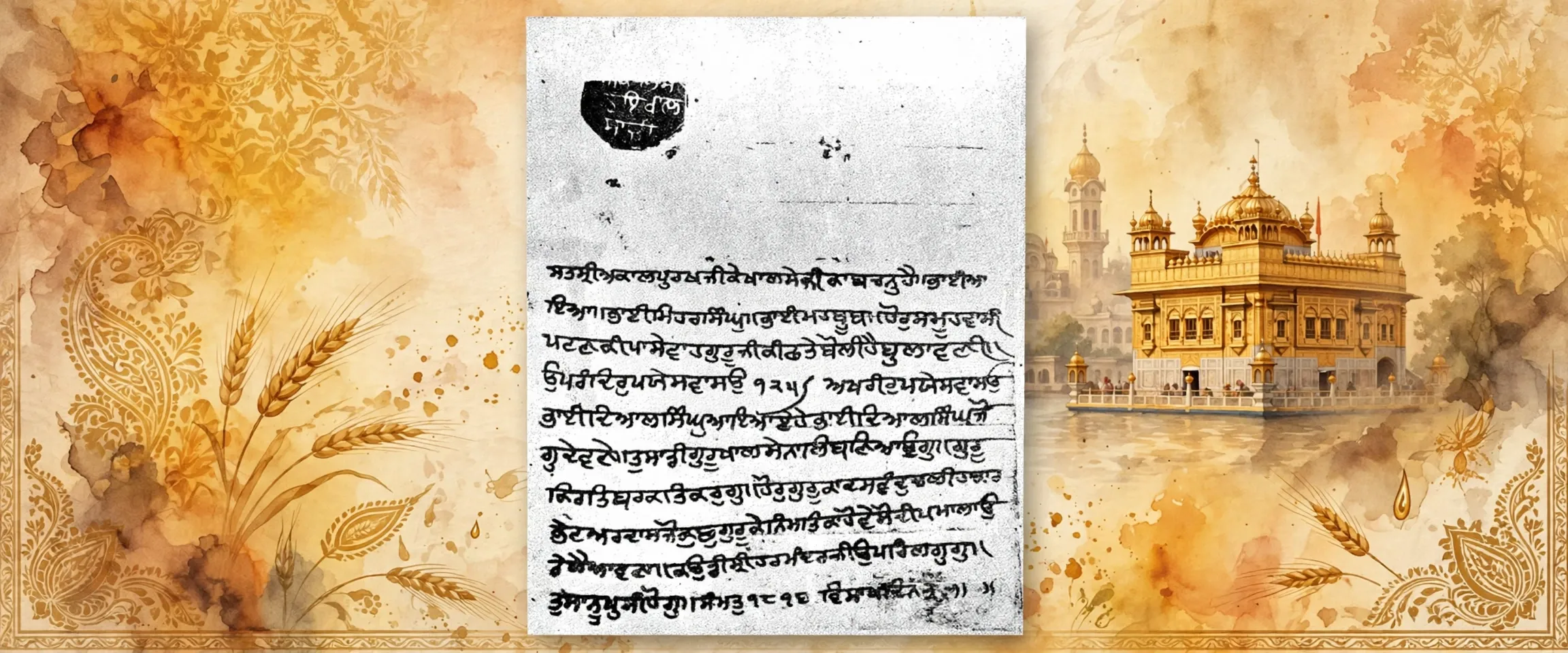
A dasvandh hukamnama: 12 April 1759
The hero image of this entry is itself a dasvandh document. It is a hukamnama, an edict, of the Khalsa addressed to Bhai Mehar Singh and Bhai Mahboob of Patna, dated 12 April 1759, requesting dasvandh donations towards rebuilding the Golden Temple, Sri Harmandir Sahib, which had been desecrated and destroyed. Two centuries after the manjis, the same mechanism was at work in the Panth's darkest decades: the centre asked, the distant sangats gave their tenth, and the shrine rose again. That is dasvandh as the community's memory and insurance, not only as an individual's devotion.
How is Dasvandh given today?
Most Sikhs who practise dasvandh simply build it into their income: a tenth is separated and given to the gurdwara's golak, to the langar, to a Sikh charity, or directly to people in need. The tenth does not have to be given to a gurdwara: it can be put aside for any charitable work, including organisations that help the poor and needy. Time counts as well as money: one tenth of the day is about two and a half hours, and the early morning hours given to prayer and meditation are spoken of in the same language of the tenth. Historians note that dasvandh was by no means compulsory in the sense of a tax, even when Guru Arjan Dev Ji insisted on it strongly: it works by conviction, not collection, and its survival across five centuries rests on Sikhs who fulfil it scrupulously because they believe it.
What the tenth builds is visible everywhere Sikhs live together. It funds the langar halls that feed anyone who comes, the gurdwaras of the diaspora from Stockton to Southall, schools, hospitals, disaster relief and the quiet welfare work of congregations. The same gift serves two aims at once, which is why the tradition describes dasvandh as both individual and communal: an outlet for one person's devotion, and a united effort that embodies the Guru Panth, the community walking the Guru's path.
Is Dasvandh the same as a tithe or zakat?
It has close cousins. The Christian tithe likewise asks a tenth part of produce or income for the support of the church. Muslim zakat assigns 2.5 per cent of one's annual wealth for the welfare of the destitute and the needy. Dasvandh differs from dan, almsgiving, in its direction: dan is given away to a recipient, while dasvandh is contributed to a common pool that the giver also belongs to, for institutions and welfare the whole community shares. The proportions differ, the reasoning differs, but the family resemblance is real, and Sikhs have generally been content to let dasvandh stand in that company while keeping its own name and its own tenth.
ਦਸਵਾਂ ਹਿੱਸਾ। ਇਮਾਨਦਾਰੀ ਨਾਲ ਕਮਾਏ ਹਰ ਚੀਜ਼ ਵਿੱਚੋਂ, ਦਸਵਾਂ ਹਿੱਸਾ ਖਰਚਣ ਤੋਂ ਪਹਿਲਾਂ ਵੱਖ ਰੱਖਿਆ ਜਾਂਦਾ ਹੈ, ਅਤੇ ਉੱਥੇ ਦਿੱਤਾ ਜਾਂਦਾ ਹੈ ਜਿੱਥੇ ਭਾਈਚਾਰੇ ਨੂੰ ਇਸ ਦੀ ਲੋੜ ਹੈ: ਅਜਨਬੀਆਂ ਨੂੰ ਖੁਆਉਣ ਵਾਲੇ ਲੰਗਰ ਨੂੰ, ਬਣ ਰਹੇ ਗੁਰਦੁਆਰੇ ਨੂੰ, ਮੁਸੀਬਤ ਵਿੱਚ ਪਏ ਪਰਿਵਾਰ ਨੂੰ। ਉਸ ਦਸਵੇਂ ਹਿੱਸੇ ਦਾ ਇੱਕ ਨਾਂ ਹੈ, ਦਸਵੰਧ, ਅਤੇ ਪੰਜ ਸਦੀਆਂ ਤੋਂ ਇਹ ਚੁੱਪ ਚਾਪ ਸਿੱਖ ਸਾਂਝੇ ਜੀਵਨ ਦਾ ਖਰਚ ਚੁੱਕਦਾ ਆਇਆ ਹੈ।
ਦਸਵੰਧ ਕੀ ਹੈ?
ਦਸਵੰਧ ਦਾ ਸ਼ਾਬਦਿਕ ਅਰਥ ਹੈ ਦਸਵਾਂ ਹਿੱਸਾ। ਇਹ ਸਿੱਖਾਂ ਵਿੱਚ ਗੁਰੂ ਦੇ ਨਾਂ ਤੇ ਆਪਣੀ ਕਮਾਈ ਦਾ ਦਸਵਾਂ ਹਿੱਸਾ, ਦਸ ਫ਼ੀਸਦੀ, ਭਾਈਚਾਰੇ ਦੇ ਸਾਂਝੇ ਸਾਧਨਾਂ ਲਈ ਦੇਣ ਦਾ ਅਭਿਆਸ ਹੈ। ਇਹ ਦੇਣ ਵਿੱਤੀ ਹੋ ਸਕਦੀ ਹੈ, ਅਤੇ ਇਹ ਸਿੱਧੀ ਸੇਵਾ, ਸਮੇਂ ਅਤੇ ਮਿਹਨਤ ਦੀ ਨਿਰਸਵਾਰਥ ਸੇਵਾ, ਵਜੋਂ ਵੀ ਕੀਤੀ ਜਾ ਸਕਦੀ ਹੈ। ਦਸਵੰਧ ਨੂੰ ਸਿੱਖ ਪ੍ਰਣਾਲੀ ਵਿੱਚ ਧਾਰਮਿਕ ਫ਼ਰਜ਼ ਗਿਣਿਆ ਜਾਂਦਾ ਹੈ, ਸੇਵਾ ਦਾ ਇੱਕ ਰੂਪ ਜਿਸ ਦੀ ਬਹੁਤ ਕਦਰ ਹੈ, ਅਤੇ ਇਹ ਆਮ ਖੈਰਾਤ ਵਰਗਾ ਨਹੀਂ: ਇਹ ਪਹਿਲਾਂ ਭਾਈਚਾਰੇ ਅਤੇ ਇਸ ਦੀਆਂ ਸੰਸਥਾਵਾਂ, ਗੁਰਦੁਆਰਿਆਂ, ਗੁਰੂ ਕੇ ਲੰਗਰ, ਅਤੇ ਸਮਾਜ ਭਲਾਈ ਅਤੇ ਉੱਨਤੀ ਦੇ ਪ੍ਰੋਜੈਕਟਾਂ ਦੀਆਂ ਲੋੜਾਂ ਵੱਲ ਧਿਆਨ ਦਿੰਦਾ ਹੈ।
ਦਸਵੰਧ ਗੁਰੂ ਨਾਨਕ ਦੇਵ ਜੀ ਦੀਆਂ ਦੋ ਬੁਨਿਆਦੀ ਸਿੱਖਿਆਵਾਂ ਨਾਲ ਜੁੜਿਆ ਹੈ। ਕਿਰਤ ਕਰੋ ਆਪਣੀ ਮਿਹਨਤ ਨਾਲ ਇਮਾਨਦਾਰੀ ਨਾਲ ਕਮਾਉਣ ਦਾ ਹੁਕਮ ਹੈ। ਵੰਡ ਛਕੋ, ਆਪਣੇ ਕੋਲ ਜੋ ਹੈ ਉਹ ਸਾਂਝਾ ਕਰਨਾ, ਇਸ ਦਾ ਜੁੜਵਾਂ ਹੈ। ਇਹ ਵਿਚਾਰ ਗੁਰੂ ਨਾਨਕ ਦੇਵ ਜੀ ਦੀ ਆਪਣੀ ਬਾਣੀ ਵਿੱਚ ਪਹਿਲਾਂ ਤੋਂ ਹੈ, ਜੋ ਗੁਰੂ ਗ੍ਰੰਥ ਸਾਹਿਬ ਜੀ ਦੇ ਪੰਨਾ 1245 ਤੇ ਦਰਜ ਹੈ: ਜੋ ਮਿਹਨਤ ਕਰਕੇ ਖਾਂਦਾ ਹੈ, ਅਤੇ ਆਪਣੇ ਕੋਲੋਂ ਕੁਝ ਦਿੰਦਾ ਹੈ, ਨਾਨਕ ਕਹਿੰਦਾ ਹੈ, ਉਹੀ ਰਾਹ ਨੂੰ ਜਾਣਦਾ ਹੈ। ਗੁਰੂ ਸਾਹਿਬ ਵੱਲੋਂ ਸਥਾਪਿਤ ਸੰਸਥਾਵਾਂ, ਸੰਗਤ, ਪਵਿੱਤਰ ਇਕੱਠ, ਅਤੇ ਲੰਗਰ, ਭਾਈਚਾਰਕ ਰਸੋਈ, ਉਸ ਸਾਂਝੇਪਣ ਦੇ ਪਹਿਲੇ ਰਸਤੇ ਸਨ।
ਦਸਵੰਧ ਸੰਸਥਾ ਕਿਵੇਂ ਬਣਿਆ?
ਗੁਰੂ ਅਮਰ ਦਾਸ ਜੀ ਹੇਠ, ਸਿੱਖ ਦੇਣ ਨੂੰ ਇੱਕ ਢਾਂਚਾ ਮਿਲਿਆ। ਉਨ੍ਹਾਂ ਨੇ ਦੇਸ਼ ਭਰ ਵਿੱਚ 22 ਮੰਜੀਆਂ, ਜ਼ਿਲ੍ਹੇ, ਸਥਾਪਿਤ ਕੀਤੀਆਂ, ਹਰ ਇੱਕ ਇੱਕ ਸ਼ਰਧਾਲੂ ਸਿੱਖ, ਮਰਦ ਜਾਂ ਔਰਤ, ਦੇ ਅਧੀਨ, ਜੋ ਗੁਰੂ ਦਾ ਬਚਨ ਸੁਣਾਉਂਦਾ ਸੀ, ਸਥਾਨਕ ਸੰਗਤਾਂ ਦੀ ਦੇਖਭਾਲ ਕਰਦਾ ਸੀ, ਅਤੇ ਸ਼ਰਧਾਲੂਆਂ ਦੀਆਂ ਭੇਟਾਵਾਂ ਗੁਰੂ ਤੱਕ ਪਹੁੰਚਾਉਂਦਾ ਸੀ। ਗੁਰੂ ਰਾਮ ਦਾਸ ਜੀ ਹੇਠ ਸਾਂਝੇ ਫੰਡ ਨੂੰ ਇੱਕ ਨਾਂ ਅਤੇ ਮਕਸਦ ਮਿਲਿਆ: ਅੰਮ੍ਰਿਤਸਰ ਵਿਖੇ ਪਵਿੱਤਰ ਸਰੋਵਰ ਦੀ ਖੁਦਾਈ ਅਤੇ ਇਸ ਦੇ ਵਿਚਕਾਰ ਸ੍ਰੀ ਹਰਿਮੰਦਰ ਸਾਹਿਬ ਦੀ ਉਸਾਰੀ ਮਹਿੰਗੇ ਕੰਮ ਸਨ, ਅਤੇ ਸਿੱਖਾਂ ਨੂੰ ਸਾਂਝੇ ਫੰਡ, ਗੁਰੂ ਕੀ ਗੋਲਕ, ਗੁਰੂ ਦੇ ਖਜ਼ਾਨੇ, ਲਈ ਆਪਣੀ ਕਮਾਈ ਦਾ ਘੱਟੋ ਘੱਟ ਦਸ ਫ਼ੀਸਦੀ ਵੱਖ ਰੱਖਣ ਲਈ ਕਿਹਾ ਗਿਆ।
ਗੁਰੂ ਅਰਜਨ ਦੇਵ ਜੀ ਹੇਠ ਇਹ ਪ੍ਰਣਾਲੀ ਮੁੜ ਸੰਗਠਿਤ ਕੀਤੀ ਗਈ ਅਤੇ ਇਸ ਤੇ ਜ਼ੋਰ ਦਿੱਤਾ ਗਿਆ। ਮਸੰਦ, ਮੰਤਰੀ ਅਤੇ ਦਸਵੰਧ ਇਕੱਠਾ ਕਰਨ ਵਾਲੇ, ਆਪਣੇ ਇਲਾਕਿਆਂ ਦੇ ਸਿੱਖਾਂ ਦੀਆਂ ਕਾਰ ਭੇਟਾਵਾਂ ਅਤੇ ਦਸਵੰਧ ਇਕੱਠਾ ਕਰਕੇ ਗੁਰੂ ਨੂੰ ਦਿੰਦੇ ਸਨ, ਅਤੇ ਇਹੀ ਸਾਂਝੀ ਦੇਣ ਸੀ ਜਿਸ ਨੇ ਹਰਿਮੰਦਰ ਸਾਹਿਬ ਬਣਾਉਣ ਅਤੇ ਇਸ ਦਾ ਲੰਗਰ ਚਲਾਉਣ ਵਿੱਚ ਮਦਦ ਕੀਤੀ। ਵਿਦਵਾਨ ਜ਼ੋਰ ਵਿੱਚ ਵੱਖਰੇ ਹਨ, ਕੁਝ ਰਸਮੀ ਦਸਵੰਧ ਸੰਸਥਾ ਨੂੰ ਗੁਰੂ ਅਰਜਨ ਦੇਵ ਜੀ ਦੇ ਵਿੱਤੀ ਸੁਧਾਰਾਂ ਨਾਲ ਅਤੇ ਕੁਝ ਉਨ੍ਹਾਂ ਦੇ ਪਿਤਾ ਹੇਠ ਅੰਮ੍ਰਿਤਸਰ ਦੇ ਕੰਮਾਂ ਦੀ ਅਪੀਲ ਨਾਲ ਜੋੜਦੇ ਹਨ, ਪਰ ਵਿਕਾਸ ਦੀ ਲਕੀਰ ਇੱਕੋ ਹੈ: ਗੁਰੂ ਅਮਰ ਦਾਸ ਜੀ ਵੱਲੋਂ ਪ੍ਰਚਾਰ, ਅੰਮ੍ਰਿਤਸਰ ਦੇ ਕੰਮਾਂ ਲਈ ਦਸ ਫ਼ੀਸਦੀ ਦੀ ਅਪੀਲ, ਅਤੇ ਗੁਰੂ ਅਰਜਨ ਦੇਵ ਜੀ ਦੇ ਸਮੇਂ ਤੱਕ ਇੱਕ ਸਥਿਰ ਪ੍ਰਣਾਲੀ। ਇਸ ਅਭਿਆਸ ਨੂੰ ਫਿਰ ਰਹਿਤਨਾਮਿਆਂ ਵਿੱਚ ਦਰਜ ਕੀਤਾ ਗਿਆ, ਗੁਰੂ ਗੋਬਿੰਦ ਸਿੰਘ ਜੀ ਦੇ ਜੀਵਨ ਵਿੱਚ ਜਾਂ ਇਸ ਤੋਂ ਥੋੜ੍ਹੀ ਦੇਰ ਬਾਅਦ ਲਿਖੇ ਸਿੱਖ ਆਚਰਨ ਦੇ ਮੈਨੂਅਲ। ਭਾਈ ਨੰਦ ਲਾਲ ਦਾ ਟੰਕਾਹਨਾਮਾ ਇਸ ਤੇ ਗੁਰੂ ਦੇ ਬਚਨ ਸਭ ਤੋਂ ਸਖ਼ਤ ਸ਼ਬਦਾਂ ਵਿੱਚ ਦਰਜ ਕਰਦਾ ਹੈ: ਜੋ ਦਸਵੰਧ ਨਹੀਂ ਦਿੰਦਾ, ਅਤੇ ਝੂਠ ਬੋਲ ਕੇ ਇਸ ਨੂੰ ਹੜੱਪ ਕਰਦਾ ਹੈ, ਉਸ ਤੇ ਬਿਲਕੁਲ ਭਰੋਸਾ ਨਹੀਂ ਕੀਤਾ ਜਾ ਸਕਦਾ।
ਇੱਕ ਦਸਵੰਧ ਹੁਕਮਨਾਮਾ: 12 ਅਪ੍ਰੈਲ 1759
ਇਸ ਲੇਖ ਦੀ ਮੁੱਖ ਤਸਵੀਰ ਆਪ ਇੱਕ ਦਸਵੰਧ ਦਸਤਾਵੇਜ਼ ਹੈ। ਇਹ ਖਾਲਸੇ ਦਾ ਇੱਕ ਹੁਕਮਨਾਮਾ, ਇੱਕ ਆਦੇਸ਼, ਹੈ, ਜੋ ਪਟਨਾ ਦੇ ਭਾਈ ਮਿਹਰ ਸਿੰਘ ਅਤੇ ਭਾਈ ਮਹਿਬੂਬ ਨੂੰ ਸੰਬੋਧਨ ਹੈ, 12 ਅਪ੍ਰੈਲ 1759 ਨੂੰ ਲਿਖਿਆ, ਜਿਸ ਵਿੱਚ ਸ੍ਰੀ ਹਰਿਮੰਦਰ ਸਾਹਿਬ, ਜੋ ਬੇਅਦਬੀ ਨਾਲ ਤਬਾਹ ਕੀਤਾ ਗਿਆ ਸੀ, ਨੂੰ ਮੁੜ ਬਣਾਉਣ ਲਈ ਦਸਵੰਧ ਦਾਨ ਦੀ ਮੰਗ ਕੀਤੀ ਗਈ ਹੈ। ਮੰਜੀਆਂ ਤੋਂ ਦੋ ਸਦੀਆਂ ਬਾਅਦ, ਪੰਥ ਦੇ ਸਭ ਤੋਂ ਹਨੇਰੇ ਦਹਾਕਿਆਂ ਵਿੱਚ ਉਹੀ ਤਰੀਕਾ ਕੰਮ ਕਰ ਰਿਹਾ ਸੀ: ਕੇਂਦਰ ਨੇ ਮੰਗਿਆ, ਦੂਰ ਦੀਆਂ ਸੰਗਤਾਂ ਨੇ ਆਪਣਾ ਦਸਵਾਂ ਹਿੱਸਾ ਦਿੱਤਾ, ਅਤੇ ਧਾਮ ਮੁੜ ਉੱਠਿਆ। ਇਹ ਦਸਵੰਧ ਭਾਈਚਾਰੇ ਦੀ ਯਾਦ ਅਤੇ ਬੀਮੇ ਵਜੋਂ ਹੈ, ਸਿਰਫ਼ ਇੱਕ ਮਨੁੱਖ ਦੀ ਸ਼ਰਧਾ ਵਜੋਂ ਨਹੀਂ।
ਦਸਵੰਧ ਅੱਜ ਕਿਵੇਂ ਦਿੱਤਾ ਜਾਂਦਾ ਹੈ?
ਦਸਵੰਧ ਦਾ ਅਭਿਆਸ ਕਰਨ ਵਾਲੇ ਜ਼ਿਆਦਾਤਰ ਸਿੱਖ ਇਸ ਨੂੰ ਆਪਣੀ ਕਮਾਈ ਵਿੱਚ ਸ਼ਾਮਲ ਕਰ ਲੈਂਦੇ ਹਨ: ਦਸਵਾਂ ਹਿੱਸਾ ਵੱਖ ਕੀਤਾ ਜਾਂਦਾ ਹੈ ਅਤੇ ਗੁਰਦੁਆਰੇ ਦੀ ਗੋਲਕ ਨੂੰ, ਲੰਗਰ ਨੂੰ, ਕਿਸੇ ਸਿੱਖ ਦਾਨ ਸੰਸਥਾ ਨੂੰ, ਜਾਂ ਸਿੱਧਾ ਲੋੜਵੰਦ ਲੋਕਾਂ ਨੂੰ ਦਿੱਤਾ ਜਾਂਦਾ ਹੈ। ਦਸਵਾਂ ਹਿੱਸਾ ਗੁਰਦੁਆਰੇ ਨੂੰ ਦੇਣਾ ਜ਼ਰੂਰੀ ਨਹੀਂ: ਇਹ ਕਿਸੇ ਵੀ ਦਾਨ ਦੇ ਕੰਮ ਲਈ ਵੱਖ ਰੱਖਿਆ ਜਾ ਸਕਦਾ ਹੈ, ਜਿਨ੍ਹਾਂ ਸੰਸਥਾਵਾਂ ਸਮੇਤ ਜੋ ਗਰੀਬਾਂ ਅਤੇ ਲੋੜਵੰਦਾਂ ਦੀ ਮਦਦ ਕਰਦੀਆਂ ਹਨ। ਸਮਾਂ ਵੀ ਪੈਸੇ ਜਿੰਨਾ ਹੀ ਗਿਣਦਾ ਹੈ: ਦਿਨ ਦਾ ਦਸਵਾਂ ਹਿੱਸਾ ਲਗਭਗ ਢਾਈ ਘੰਟੇ ਹੈ, ਅਤੇ ਪ੍ਰਾਰਥਨਾ ਅਤੇ ਸਿਮਰਨ ਨੂੰ ਦਿੱਤੇ ਸਵੇਰ ਦੇ ਘੰਟਿਆਂ ਨੂੰ ਦਸਵੇਂ ਹਿੱਸੇ ਦੀ ਉਸੇ ਭਾਸ਼ਾ ਵਿੱਚ ਬੋਲਿਆ ਜਾਂਦਾ ਹੈ। ਇਤਿਹਾਸਕਾਰ ਨੋਟ ਕਰਦੇ ਹਨ ਕਿ ਦਸਵੰਧ ਟੈਕਸ ਦੇ ਅਰਥ ਵਿੱਚ ਬਿਲਕੁਲ ਲਾਜ਼ਮੀ ਨਹੀਂ ਸੀ, ਭਾਵੇਂ ਗੁਰੂ ਅਰਜਨ ਦੇਵ ਜੀ ਨੇ ਇਸ ਤੇ ਜ਼ੋਰ ਦਿੱਤਾ ਸੀ: ਇਹ ਯਕੀਨ ਨਾਲ ਕੰਮ ਕਰਦਾ ਹੈ, ਵਸੂਲੀ ਨਾਲ ਨਹੀਂ, ਅਤੇ ਪੰਜ ਸਦੀਆਂ ਵਿੱਚ ਇਸ ਦਾ ਬਚਾਅ ਉਨ੍ਹਾਂ ਸਿੱਖਾਂ ਤੇ ਟਿਕਿਆ ਹੈ ਜੋ ਇਸ ਨੂੰ ਇਸ ਲਈ ਪੂਰਾ ਕਰਦੇ ਹਨ ਕਿਉਂਕਿ ਉਹ ਇਸ ਤੇ ਵਿਸ਼ਵਾਸ ਕਰਦੇ ਹਨ।
ਦਸਵਾਂ ਹਿੱਸਾ ਕੀ ਬਣਾਉਂਦਾ ਹੈ ਉਹ ਹਰ ਥਾਂ ਦਿਖਦਾ ਹੈ ਜਿੱਥੇ ਸਿੱਖ ਇਕੱਠੇ ਰਹਿੰਦੇ ਹਨ। ਇਹ ਉਨ੍ਹਾਂ ਲੰਗਰ ਹਾਲਾਂ ਨੂੰ ਚਲਾਉਂਦਾ ਹੈ ਜੋ ਆਉਣ ਵਾਲੇ ਹਰ ਕਿਸੇ ਨੂੰ ਖੁਆਉਂਦੇ ਹਨ, ਸਟਾਕਟਨ ਤੋਂ ਸਾਊਥਾਲ ਤੱਕ ਪਰਦੇਸ ਦੇ ਗੁਰਦੁਆਰਿਆਂ ਨੂੰ, ਸਕੂਲਾਂ, ਹਸਪਤਾਲਾਂ, ਆਫ਼ਤ ਰਾਹਤ ਅਤੇ ਸੰਗਤਾਂ ਦੇ ਸ਼ਾਂਤ ਭਲਾਈ ਕੰਮ ਨੂੰ। ਉਹੀ ਦੇਣ ਇੱਕੋ ਸਮੇਂ ਦੋ ਮਕਸਦ ਪੂਰੇ ਕਰਦੀ ਹੈ, ਇਸੇ ਲਈ ਪਰੰਪਰਾ ਦਸਵੰਧ ਨੂੰ ਵਿਅਕਤੀਗਤ ਅਤੇ ਭਾਈਚਾਰਕ ਦੋਵੇਂ ਦੱਸਦੀ ਹੈ: ਇੱਕ ਮਨੁੱਖ ਦੀ ਸ਼ਰਧਾ ਦਾ ਰਸਤਾ, ਅਤੇ ਇੱਕ ਸਾਂਝੀ ਕੋਸ਼ਿਸ਼ ਜੋ ਗੁਰੂ ਪੰਥ, ਗੁਰੂ ਦੇ ਰਾਹ ਤੇ ਤੁਰਦੇ ਭਾਈਚਾਰੇ, ਨੂੰ ਸਾਕਾਰ ਕਰਦੀ ਹੈ।
ਕੀ ਦਸਵੰਧ ਟਾਈਥ ਜਾਂ ਜ਼ਕਾਤ ਵਰਗਾ ਹੈ?
ਇਸ ਦੇ ਨੇੜਲੇ ਰਿਸ਼ਤੇਦਾਰ ਹਨ। ਈਸਾਈ ਟਾਈਥ ਵੀ ਚਰਚ ਦੇ ਸਹਾਰੇ ਲਈ ਉਪਜ ਜਾਂ ਕਮਾਈ ਦਾ ਦਸਵਾਂ ਹਿੱਸਾ ਮੰਗਦਾ ਹੈ। ਮੁਸਲਿਮ ਜ਼ਕਾਤ ਸਾਲਾਨਾ ਦੌਲਤ ਦਾ 2.5 ਫ਼ੀਸਦੀ ਬੇਸਹਾਰਾ ਅਤੇ ਲੋੜਵੰਦਾਂ ਦੀ ਭਲਾਈ ਲਈ ਤੈਅ ਕਰਦੀ ਹੈ। ਦਸਵੰਧ ਦਾਨ, ਖੈਰਾਤ, ਤੋਂ ਆਪਣੀ ਦਿਸ਼ਾ ਵਿੱਚ ਵੱਖਰਾ ਹੈ: ਦਾਨ ਕਿਸੇ ਲੈਣ ਵਾਲੇ ਨੂੰ ਦਿੱਤਾ ਜਾਂਦਾ ਹੈ, ਜਦਕਿ ਦਸਵੰਧ ਇੱਕ ਸਾਂਝੇ ਫੰਡ ਵਿੱਚ ਦਿੱਤਾ ਜਾਂਦਾ ਹੈ ਜਿਸ ਦਾ ਦੇਣ ਵਾਲਾ ਆਪ ਵੀ ਹਿੱਸਾ ਹੈ, ਉਨ੍ਹਾਂ ਸੰਸਥਾਵਾਂ ਅਤੇ ਭਲਾਈ ਲਈ ਜੋ ਸਾਰਾ ਭਾਈਚਾਰਾ ਸਾਂਝਾ ਕਰਦਾ ਹੈ। ਅਨੁਪਾਤ ਵੱਖਰੇ ਹਨ, ਤਰਕ ਵੱਖਰਾ ਹੈ, ਪਰ ਪਰਿਵਾਰਕ ਸਾਂਝ ਅਸਲੀ ਹੈ, ਅਤੇ ਸਿੱਖ ਆਮ ਤੌਰ ਤੇ ਦਸਵੰਧ ਨੂੰ ਆਪਣਾ ਨਾਂ ਅਤੇ ਆਪਣਾ ਦਸਵਾਂ ਹਿੱਸਾ ਰੱਖਦਿਆਂ ਉਸ ਸੰਗਤ ਵਿੱਚ ਖੜ੍ਹਾ ਰਹਿਣ ਦੇ ਕੇ ਸੰਤੁਸ਼ਟ ਰਹੇ ਹਨ।
More religion entries to explore
Jugti is free and independent. Reader support keeps the Kosh growing.
Support