
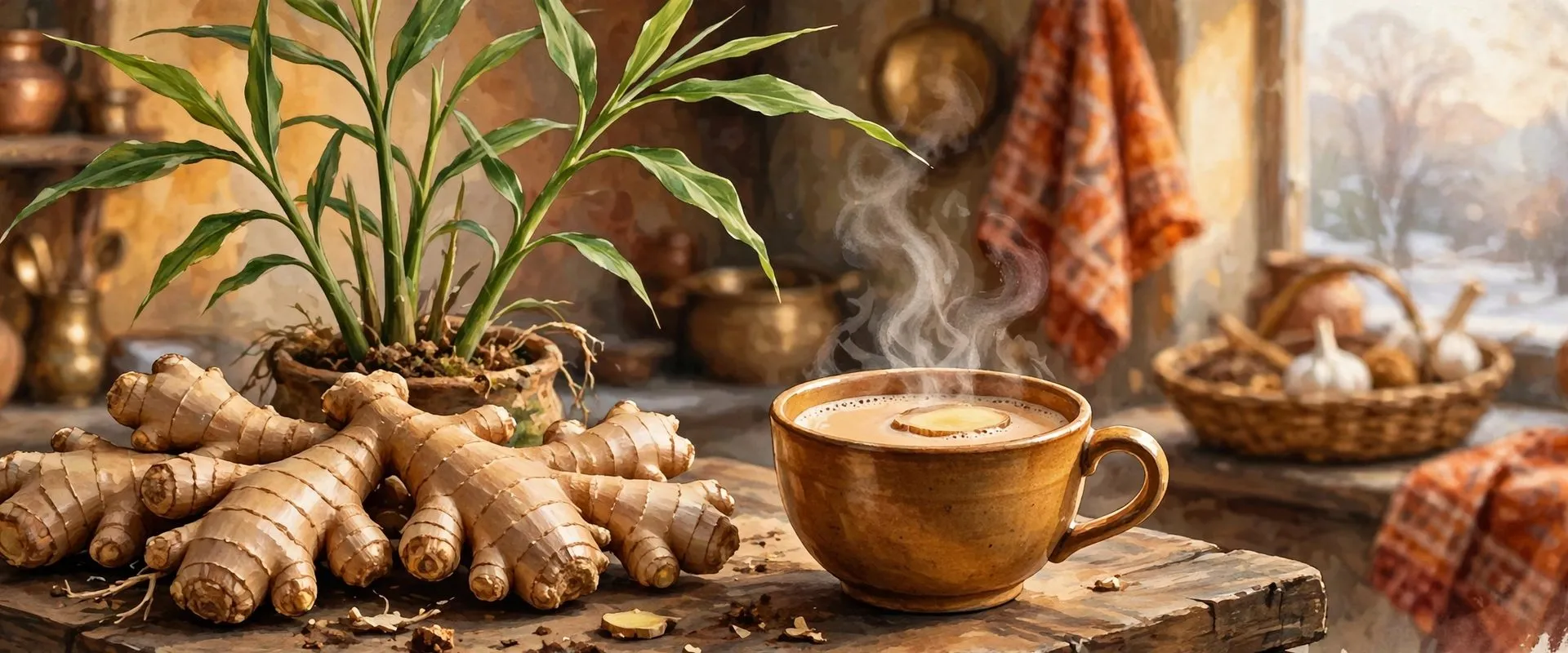
Adrak (ਅਦਰਕ) is the Punjabi word for ginger, the pungent, knotted rhizome of Zingiber officinale. Fresh adrak is grated into curries and simmered into winter chai across Punjab, while the dried form is called sund (ਸੂੰਡ).
How it's used
- 1ਸਰਦੀ ਵਿੱਚ ਮਾਂ ਅਦਰਕ ਵਾਲੀ ਚਾਹ ਬਣਾਉਂਦੀ ਹੈ।In winter, mother makes ginger chai. adrak wali chai
- 2ਕਰੀ ਵਿੱਚ ਕੱਦੂਕਸ ਕੀਤਾ ਅਦਰਕ ਪਾਇਆ ਗਿਆ।Grated adrak was added to the curry. grated in a curry
- 3ਤਾਜ਼ਾ ਅਦਰਕ ਸਵਾਦ ਵਿੱਚ ਤਿੱਖਾ ਹੁੰਦਾ ਹੈ।Fresh adrak is pungent in taste. its taste
Show 1 more example
- 4ਸੁੱਕੇ ਅਦਰਕ ਨੂੰ ਸੂੰਡ ਕਿਹਾ ਜਾਂਦਾ ਹੈ।Dried ginger is called sund. the dried form
ਅਦਰਕ ਜਿੰਜਰ ਦਾ ਪੰਜਾਬੀ ਨਾਂ ਹੈ। ਇਹ ਪੌਦੇ ਦੀ ਮਿੱਟੀ ਹੇਠਾਂ ਵਧਣ ਵਾਲੀ ਗੰਢਾਂ ਵਾਲੀ ਜੜ ਵਰਗੀ ਡੰਡੀ, ਰਾਈਜ਼ੋਮ, ਹੁੰਦੀ ਹੈ ਜੋ ਸਵਾਦ ਵਿੱਚ ਤਿੱਖੀ ਹੁੰਦੀ ਹੈ। ਤਾਜ਼ਾ ਅਦਰਕ ਕੱਦੂਕਸ ਕਰ ਕੇ ਕਰੀਆਂ ਵਿੱਚ ਪਾਇਆ ਜਾਂਦਾ ਹੈ ਅਤੇ ਕੁੱਟ ਕੇ ਸਰਦੀਆਂ ਦੀ ਚਾਹ ਵਿੱਚ ਵੀ ਪਾਇਆ ਜਾਂਦਾ ਹੈ। ਸੁੱਕੇ ਅਦਰਕ ਨੂੰ ਪੰਜਾਬੀ ਵਿੱਚ ਸੂੰਡ ਕਿਹਾ ਜਾਂਦਾ ਹੈ।
What does adrak mean in Punjabi? Adrak (ਅਦਰਕ) means ginger: the knotted, pungent rhizome, or underground stem, of the ginger plant, dug up and used as a spice and flavouring. In Punjabi homes fresh adrak is grated into curries and crushed into winter chai, while dried ginger is known by a different name, sund.
What part of the plant is adrak?
Adrak is not a true root, even though it is often called ginger root. It is the rhizome of Zingiber officinale, a herbaceous perennial plant of the ginger family, Zingiberaceae, probably native to southeastern Asia. The rhizome grows sideways underground, thick, branched and knotted, pale yellow inside, and it is lifted from the soil, cleaned and sold fresh, or dried in the sun and ground as a spice. Above ground the plant sends up leafy stems about a metre high, with long leaves arranged in two rows. The branched, horn-like shape of the rhizome is part of the plant's old story: its Sanskrit name, singabera, is linked with the word for a horn.
Where does the word adrak come from?
The spice has been used in India and China since ancient times, and traders had carried ginger into the Mediterranean region by the 1st century CE. Its scientific genus name, Zingiber, comes through Greek zingiberis from that Sanskrit name singabera. In the old Indian naming, aardrakam meant the fresh ginger, and that is the line the Punjabi word adrak (ਅਦਰਕ) comes down. Punjabi keeps the fresh and dried forms apart in speech: fresh ginger is adrak, and the dried form is sund (ਸੂੰਡ), a distinction cooks still use when a recipe wants one and not the other.
How is adrak used in Punjabi cooking?
Fresh adrak does the daily work. It is fried as ginger paste with garlic at the base of a curry, grated in while the dish simmers, and cut into thin strips and scattered on top at the end, the layering that gives a Punjabi chicken adrak its bright, warming bite. Dried and ground, ginger flavours curry dishes, sauces and pickles. The other everyday home of adrak is the teapot: for adrak wali chai, grated or crushed fresh ginger is simmered in water before the tea leaves and milk go in, making the sweet, milky, spicy cup that Punjabi homes reach for on cold monsoon and winter days.
Related words
Sources (4)
- Indian Scriptures: adrak (ginger), Punjabi fresh adrak (ਅਦਰਕ) and dried sund, rhizomes are the branched underground stems
- Britannica: ginger, Zingiber officinale, probably native to southeastern Asia, its pungent rhizome used as spice and flavouring, name from Sanskrit singabera
- Great Curry Recipes: Punjabi chicken adrak, ginger layered as paste in the base, grated while simmering and julienned as a garnish
- Whisk Affair: adrak wali chai, fresh ginger grated or crushed and simmered in water before tea and milk, a winter drink
Jugti is free and independent. Reader support keeps the Kosh growing.
Support