
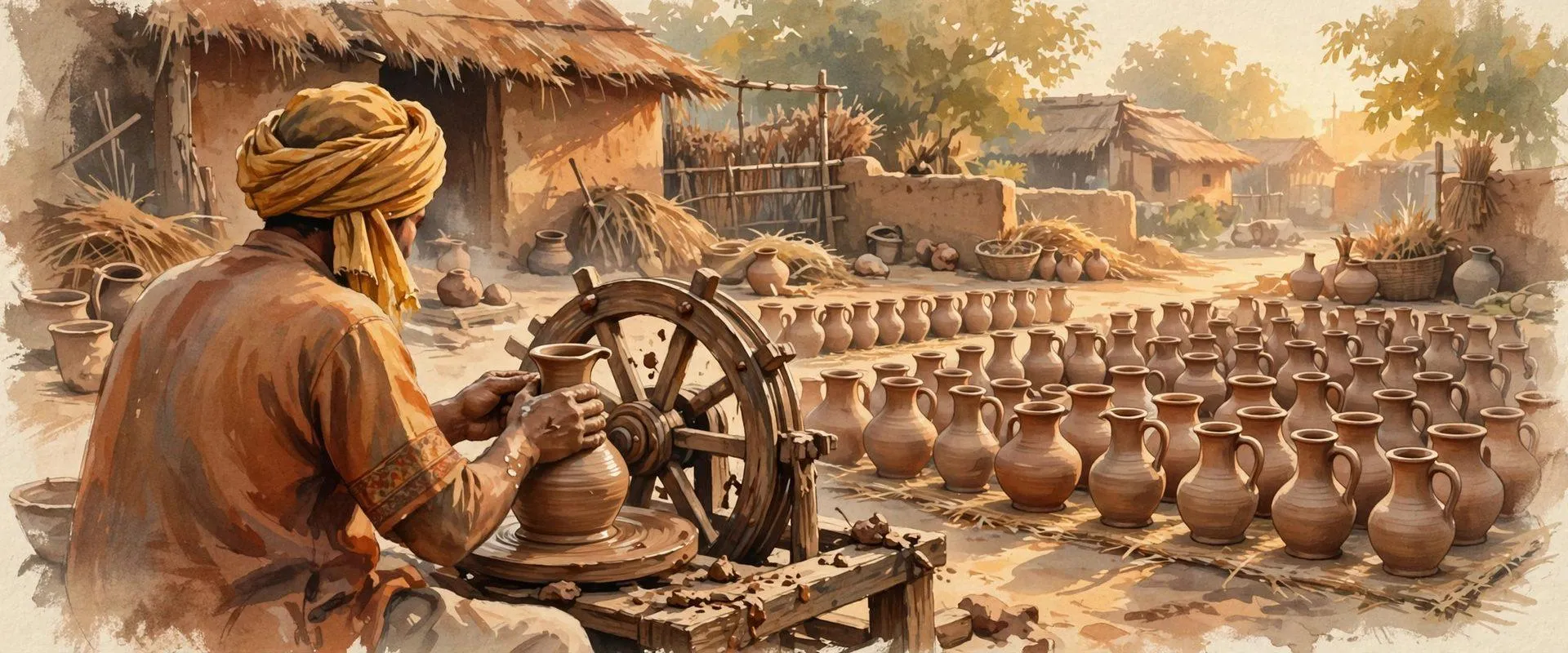
ਕੁਮ੍ਹਾਰ (kumhar) means "potter" in Punjabi — the artisan who shapes wet clay (mitti) into pots, pitchers and dishes on the potter’s wheel and fires them hard in the kiln. The word names one of Punjab’s oldest village crafts, passed down through potter families for generations, and it is also the name of the artisan community itself.
Meaning
ਕੁਮ੍ਹਾਰ (kumhar) means "potter" in Punjabi — the artisan who shapes wet clay (mitti) into pots, pitchers and dishes on the potter’s wheel and fires them hard in the kiln. The word names one of Punjab’s oldest village crafts, passed down through potter families for generations, and it is also the name of the artisan community itself.
The potter’s craft
The kumhar begins with mitti — ordinary clay, kneaded with water until it is soft and free of stones. He sits at the chak, the wooden potter’s wheel, and with wet hands draws the spinning lump upward into shape: the round-bellied ghara (water pitcher), the matka, shallow dishes and, in season, hundreds of diyas for Diwali.
Shaped pots are set out to dry in the sun and then fired in the kiln, which hardens the clay and gives it the familiar terracotta colour. The firing is the riskiest part of the craft — a pot that dries unevenly can crack in the heat, and a whole kiln-load can be lost.
In the old village, almost every household needed the kumhar’s work: pitchers to cool drinking water, pots for storing grain and ghee, diyas for the festival of lights. The potter’s cart, stacked with new vessels, was a familiar sight on village lanes.
Origin and etymology
The word comes from Sanskrit kumbhakāra, “maker of earthen pots” — the same word that names the Kumhar artisan community across South Asia. In Punjabi the word has kept its old shape and its old meaning: a kumhar is, first and last, the person who makes pots.
The potter in verse
The potter’s wheel gave Punjabi one of its best-loved images of humility. Bhagat Kabir’s famous doha has the clay speak to the potter: “Why do you knead me so? A day will come when I will knead you” — a reminder that the body itself is clay, and that everyone returns to dust. The kumhar at his wheel became a figure for the Creator shaping human lives out of earth.
ਪੰਜਾਬੀ ਵਿੱਚ ਅਰਥ
ਕੁਮ੍ਹਾਰ ਮਿੱਟੀ ਦੇ ਭਾਂਡੇ ਬਣਾਉਣ ਵਾਲਾ ਕਾਰੀਗਰ ਹੈ ਉਹ ਮਿੱਟੀ ਨੂੰ ਪਾਣੀ ਨਾਲ ਗੁੰਨ੍ਹਦਾ ਹੈ, ਚਾਕ ਉੱਤੇ ਘੜੇ, ਮਟਕੇ ਅਤੇ ਦੀਏ ਬਣਾਉਂਦਾ ਹੈ, ਅਤੇ ਫਿਰ ਉਨ੍ਹਾਂ ਨੂੰ ਭੱਠੀ ਵਿੱਚ ਪਕਾਉਂਦਾ ਹੈ ਪੁਰਾਣੇ ਪਿੰਡਾਂ ਵਿੱਚ ਹਰ ਘਰ ਨੂੰ ਕੁਮ੍ਹਾਰ ਦੇ ਭਾਂਡਿਆਂ ਦੀ ਲੋੜ ਹੁੰਦੀ ਸੀ — ਪਾਣੀ ਠੰਢਾ ਰੱਖਣ ਲਈ ਘੜੇ, ਅਨਾਜ ਰੱਖਣ ਲਈ ਬਰਤਨ ਅਤੇ ਦੀਵਾਲੀ ਲਈ ਦੀਏ
ਕੁਮ੍ਹਾਰ ਸ਼ਬਦ ਸੰਸਕ੍ਰਿਤ ਦੇ ਕੁੰਭਕਾਰ ਤੋਂ ਆਇਆ ਹੈ, ਜਿਸ ਦਾ ਅਰਥ ਹੈ ਮਿੱਟੀ ਦੇ ਭਾਂਡੇ ਬਣਾਉਣ ਵਾਲਾ ਕਬੀਰ ਜੀ ਦੇ ਦੋਹੇ ਵਿੱਚ ਮਿੱਟੀ ਕੁਮ੍ਹਾਰ ਨੂੰ ਕਹਿੰਦੀ ਹੈ ਕਿ ਅੱਜ ਤੂੰ ਮੈਨੂੰ ਗੁੰਨ੍ਹਦਾ ਹੈਂ, ਇੱਕ ਦਿਨ ਮੈਂ ਤੈਨੂੰ ਗੁੰਨ੍ਹਾਂਗੀ — ਇਹ ਮਨੁੱਖ ਨੂੰ ਨਿਮਰਤਾ ਦਾ ਪਾਠ ਪੜ੍ਹਾਉਂਦਾ ਹੈ
What does kumhar mean in Punjabi?
ਕੁਮ੍ਹਾਰ (kumhar) means “potter” in Punjabi — the artisan who shapes clay into pots and vessels on the potter’s wheel. The word also names the traditional artisan community of potters across Punjab and South Asia.
What does a kumhar make?
Water pitchers (ghare), cooking pots, storage vessels and diyas (clay lamps). In the old village the kumhar supplied nearly every household’s earthenware — pitchers to cool drinking water, pots to store grain and ghee, and lamps for Diwali.
Where does the word kumhar come from?
It comes from Sanskrit kumbhakāra, “maker of earthen pots” — the same word that names the Kumhar artisan community across South Asia.
Who is the potter in Kabir’s famous doha?
Bhagat Kabir’s doha has the clay speak to the potter at his wheel: “Why do you knead me so? A day will come when I will knead you.” The potter becomes a figure for the Creator, and the clay a reminder that every body returns to dust.
ਕੁਮ੍ਹਾਰ ਦਾ ਪੰਜਾਬੀ ਵਿੱਚ ਕੀ ਅਰਥ ਹੈ?
ਕੁਮ੍ਹਾਰ ਉਹ ਕਾਰੀਗਰ ਹੈ ਜੋ ਮਿੱਟੀ ਦੇ ਭਾਂਡੇ ਬਣਾਉਂਦਾ ਹੈ ਇਹ ਸ਼ਬਦ ਪੰਜਾਬ ਅਤੇ ਦੱਖਣੀ ਏਸ਼ੀਆ ਦੇ ਕੁਮ੍ਹਾਰ ਕਾਰੀਗਰ ਭਾਈਚਾਰੇ ਦਾ ਨਾਂ ਵੀ ਹੈ
ਕੁਮ੍ਹਾਰ ਕਿਹੜੇ ਭਾਂਡੇ ਬਣਾਉਂਦਾ ਹੈ?
ਕੁਮ੍ਹਾਰ ਘੜੇ, ਮਟਕੇ, ਰਸੋਈ ਦੇ ਬਰਤਨ ਅਤੇ ਦੀਵਾਲੀ ਲਈ ਦੀਏ ਬਣਾਉਂਦਾ ਹੈ ਪੁਰਾਣੇ ਪਿੰਡ ਵਿੱਚ ਹਰ ਘਰ ਨੂੰ ਕੁਮ੍ਹਾਰ ਦੇ ਭਾਂਡਿਆਂ ਦੀ ਲੋੜ ਹੁੰਦੀ ਸੀ
ਕੁਮ੍ਹਾਰ ਸ਼ਬਦ ਕਿੱਥੋਂ ਆਇਆ ਹੈ?
ਇਹ ਸ਼ਬਦ ਸੰਸਕ੍ਰਿਤ ਦੇ ਕੁੰਭਕਾਰ ਤੋਂ ਆਇਆ ਹੈ, ਜਿਸ ਦਾ ਅਰਥ ਹੈ ਮਿੱਟੀ ਦੇ ਭਾਂਡੇ ਬਣਾਉਣ ਵਾਲਾ
How it's used
- 1ਕੁਮ੍ਹਾਰ ਚਾਕ ਉੱਤੇ ਘੜਾ ਬਣਾ ਰਿਹਾ ਹੈThe potter is shaping a pitcher on the wheel.
- 2ਅਸੀਂ ਪਿੰਡ ਦੇ ਕੁਮ੍ਹਾਰ ਕੋਲੋਂ ਮਿੱਟੀ ਦੇ ਭਾਂਡੇ ਲਿਆਂਦੇWe brought clay vessels from the village potter.
- 3ਭਾਂਡੇ ਧੁੱਪ ਵਿੱਚ ਸੁੱਕ ਰਹੇ ਹਨThe pots are drying in the sun.
- 4ਦੀਵਾਲੀ ਲਈ ਕੁਮ੍ਹਾਰ ਨੇ ਸੈਂਕੜੇ ਦੀਏ ਬਣਾਏThe potter made hundreds of lamps for Diwali.
- 5ਉਸ ਦੇ ਹੱਥ ਕੁਮ੍ਹਾਰ ਵਾਂਗ ਮਿੱਟੀ ਨਾਲ ਸਣੇ ਹੋਏ ਸਨHis hands were caked with clay like a potter’s.