
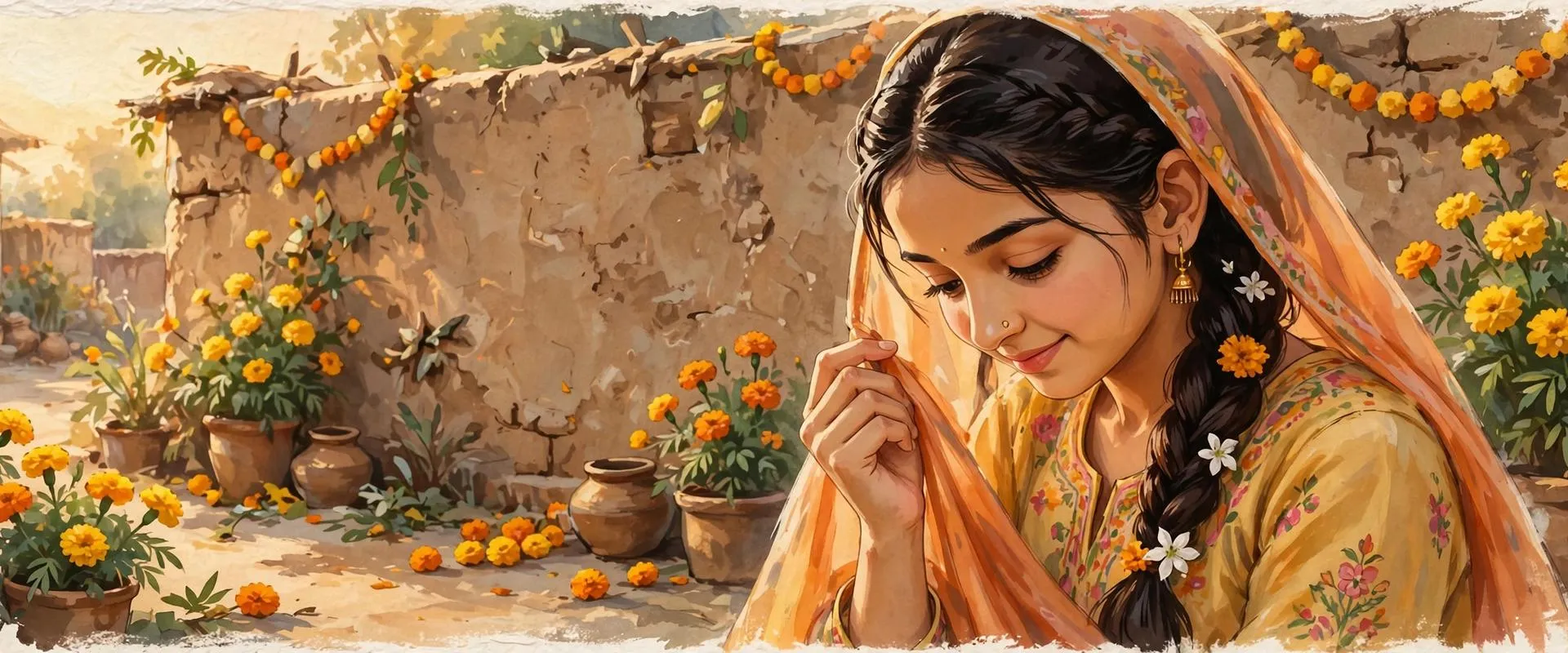
Sharam (ਸ਼ਰਮ) is the Punjabi word for shame, shyness and modesty: the feeling that lowers your eyes after a mistake or in front of elders. It also carries a sense of honour, the regard that keeps a person from doing wrong.
How it's used
- 1ਉਸ ਨੂੰ ਸਭ ਦੇ ਸਾਹਮਣੇ ਬੋਲਣ ਵਿੱਚ ਸ਼ਰਮ ਆਉਂਦੀ ਹੈ।She feels shy about speaking in front of everyone. sharam auna, shame or shyness comes
- 2ਗਲਤੀ ਮੰਨ ਲੈਣ ਵਿੱਚ ਕੋਈ ਸ਼ਰਮ ਨਹੀਂ ਹੈ।There is no shame in admitting a mistake.
- 3ਉਹ ਬਿਲਕੁਲ ਬੇਸ਼ਰਮ ਹੈ, ਕਿਸੇ ਦੀ ਪਰਵਾਹ ਨਹੀਂ ਕਰਦਾ।He is completely shameless; he does not care about anyone. besharam, without shame
Show 1 more example
- 4ਨਵੀਂ ਵਹੁਟੀ ਪਹਿਲੇ ਦਿਨ ਸਭ ਤੋਂ ਸ਼ਰਮਾਉਂਦੀ ਸੀ।The new bride felt shy in front of everyone on the first day. sharmauna, to feel shy
ਸ਼ਰਮ ਇੱਕ ਅਜਿਹੀ ਭਾਵਨਾ ਹੈ ਜੋ ਹਰ ਮਨੁੱਖ ਕਦੇ ਨਾ ਕਦੇ ਮਹਿਸੂਸ ਕਰਦਾ ਹੈ। ਗਲਤੀ ਹੋ ਜਾਵੇ ਤਾਂ ਸ਼ਰਮ ਆਉਂਦੀ ਹੈ, ਕਿਸੇ ਵੱਡੇ ਦੇ ਸਾਹਮਣੇ ਬੋਲਣ ਲੱਗਿਆਂ ਸੰਗ ਆਉਂਦੀ ਹੈ, ਅਤੇ ਇਹੀ ਸ਼ਰਮ ਮਨੁੱਖ ਨੂੰ ਗਲਤ ਕੰਮ ਤੋਂ ਰੋਕਦੀ ਵੀ ਹੈ। ਪੰਜਾਬੀ ਸੱਭਿਆਚਾਰ ਵਿੱਚ ਸ਼ਰਮ ਦਾ ਇੱਕ ਹੋਰ ਰੰਗ ਵੀ ਹੈ, ਆਪਣੀ ਅਤੇ ਪਰਿਵਾਰ ਦੀ ਇੱਜ਼ਤ ਦਾ ਖਿਆਲ। ਇਸ ਲਈ ਸ਼ਰਮ ਰੱਖਣ ਵਾਲੇ ਮਨੁੱਖ ਦੀ ਤਾਰੀਫ਼ ਹੁੰਦੀ ਹੈ।
Sharam (ਸ਼ਰਮ) is the Punjabi word for the feeling that makes you lower your eyes: shame when you have done wrong, shyness in front of others, and the modesty that holds you back. It also carries a warmer sense: regard for your own and your family's honour. One small word covers embarrassment, bashfulness and self respect at once.
What does sharam mean in Punjabi?
Sharam means shame, shyness and modesty, and which one it is depends on the moment. After a mistake, sharam is the hot, uncomfortable feeling that you have let yourself or others down. Before strangers or elders, the same word is simple shyness: you speak less, look down and hold yourself back. The Rekhta dictionary lists exactly this range for sharm: shame, bashfulness, modesty, shyness and hesitation, alongside honour and esteem.
Punjabi uses the word in set phrases. Sharam auna, ਸ਼ਰਮ ਆਉਣਾ, says the feeling comes to you: mainu sharam aundi hai, I feel ashamed or shy. Its opposite is besharam, ਬੇਸ਼ਰਮ, a person with no shame at all, and calling someone besharam is a real insult. The verb sharmauna means to feel shy or to blush and hang back.
Where does sharam come from?
Sharam comes from Persian: Rekhta gives sharm a Persian origin, and the word travelled across the region's languages in that form. In Gurbani it appears written ਸਰਮ, saram, without the dot, and there it often leans toward honour: to keep someone's saram is to protect their honour, while the loss of saram is the loss of shame and self respect together. The everyday modern word keeps both ends of that old range, the blush and the honour it protects.
Is sharam a good feeling or a bad one?
It is both, and Punjabi treats it that way. A healthy sharam is a guard: it stops a person from lying, cheating or behaving badly in front of others, and it shows regard for the people around them. Too much of it turns painful, when shyness stops someone from speaking, asking for help or taking a fair chance. That is why elders praise sharam in the young but also tease a child who hides behind it all the time.
How do you say you feel ashamed in Punjabi?
Say mainu sharam aundi hai, ਮੈਨੂੰ ਸ਼ਰਮ ਆਉਂਦੀ ਹੈ: literally, shame comes to me. For a stronger, more formal embarrassment, people use sharminda: main bahut sharminda haan, I am very embarrassed. In light moments the same phrase is teasing, said with a smile when someone is caught blushing, and the person answers by hiding their face or laughing it off.
Related words
Sources (2)
Jugti is free and independent. Reader support keeps the Kosh growing.
Support