
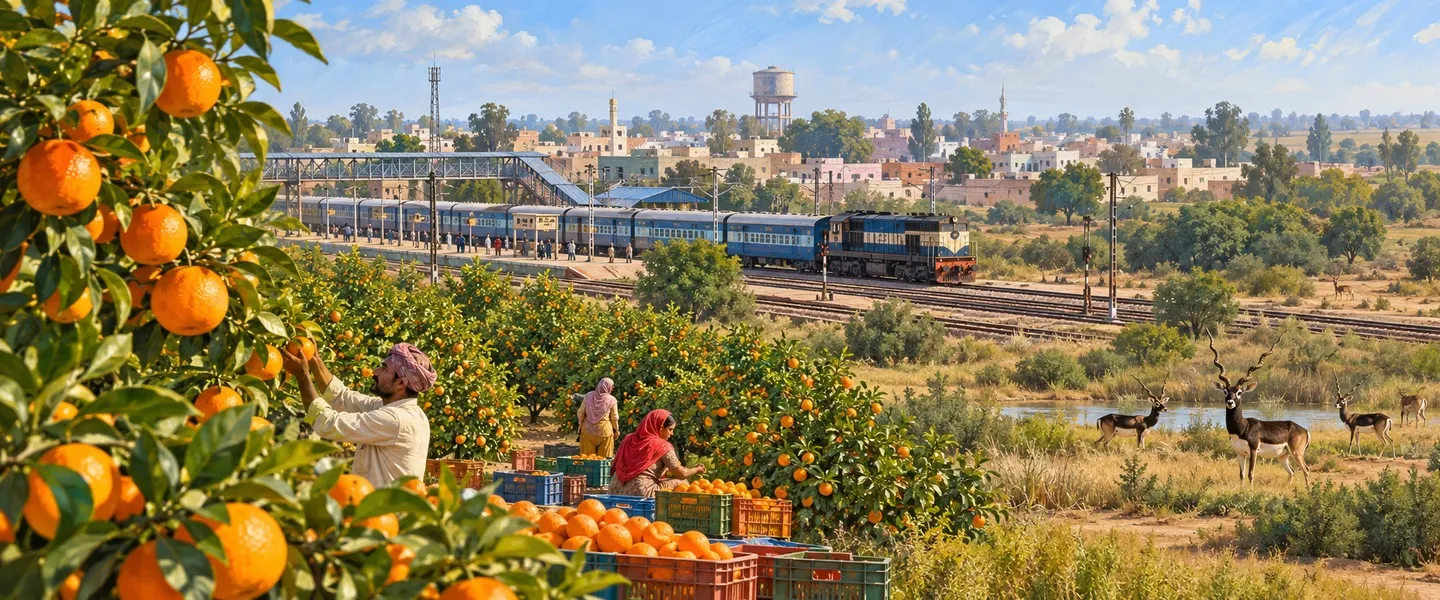
Abohar is the largest city of Fazilka district in south-western Punjab, near the Pakistan border and the Rajasthan line, with about 145,302 people counted in 2011. It is Punjab's kinnow capital, the Abohar belt growing up to 60 percent of the state's kinnow crop, and it hosts the Abohar Wildlife Sanctuary, where the Bishnoi community protects blackbucks on its own farmland. A railway junction and market town, it was recorded in Akbar's Ain-i-Akbari as a pargana of the Sarkar of Sirhind.
- ਪੰਜਾਬੀ ਨਾਂ
- ਅਬੋਹਰ
- ਕਿਸਮ
- ਸ਼ਹਿਰ
- ਜ਼ਿਲ੍ਹਾ
- ਫ਼ਾਜ਼ਿਲਕਾ
- ਇਲਾਕਾ
- Malwa, Punjab (India)
- ਆਬਾਦੀ
- 145,302 (2011 census)
- Coordinates
- 30.1334 N, 74.2001 E
All 10 facts
- Elevation
- 180 m
- PIN
- 152116
- Languages
- Punjabi, Hindi, Bagri
- ਪ੍ਰਸਿੱਧੀ
- Kinnow orchards (up to 60% of Punjab's output); Abohar Wildlife Sanctuary (blackbuck)
ਇਤਿਹਾਸ ਇੱਕ ਨਜ਼ਰ ਵਿੱਚ
Abohar is the largest city of Punjab's Fazilka district, a municipal corporation of about 145,000 people near the India-Pakistan border and the Rajasthan line. It is Punjab's kinnow capital, with the Abohar belt growing up to 60 percent of the state's kinnow crop, and it hosts the unusual Abohar Wildlife Sanctuary, where the Bishnoi community protects blackbucks on its own farmland.
Where is Abohar?
Abohar stands in the south-western corner of Punjab, about 32 kilometres south of Fazilka town, close to the India-Pakistan border and the Rajasthan boundary. It is the nearest border town to Fazilka and a meeting point between Punjab and Rajasthan, within reach of Haryana as well. The city lies at 30.1334 degrees north and 74.2001 degrees east, at an elevation of 180 metres. The 2011 census counted 145,302 people here, 76,984 men and 68,318 women. Punjabi is the official language, spoken alongside Hindi and Bagri; about 83 percent of residents are Hindu and about 16 percent Sikh. From Abohar it is roughly 76 kilometres west to Bathinda, 217 kilometres south-west to Ludhiana, and 300 kilometres to Chandigarh, while Lahore in Pakistan lies about 156 kilometres to the west-north-west as the crow flies.
Why is Abohar called the kinnow capital?
Because the orchards around it grow an outsized share of the region's favourite winter citrus. The Abohar belt alone contributes up to 60 percent of Punjab's total kinnow output. The sandy soil and canal water of the region suit citrus, and the harvest travels from Abohar's mandis across northern India every winter. The city is sometimes called the 'California of Punjab' for its rich soil, irrigation and fruit. Cotton, mustard and wheat grow here too, and the old mandis still trade in the region's farm produce.
History: from Akbar's records to a cotton town
Abohar is older than its orchards. In Book II of the Ain-i-Akbari, the Mughal revenue record, it appears as Abuhar, a pargana under the Sarkar of ਸਰਹਿੰਦ in the Subah of Delhi, a fiscal district with defined boundaries and assessed land revenue. The city also has a Tughluq connection: Firoz Shah Tughluq's mother, Bibi Naila, came from Abohar, and his court historian Shams-i Siraj Afif lived here. A mud fort once defined the old town.
Under the British, Abohar became a hub of horse breeding and a major cotton trading centre, doing business with Karachi and other mandis. Partition in 1947 left it in Ferozepur district, just short of the Radcliffe Line; in 2011 it became part of the new Fazilka district. A city museum project is working to gather this heritage in one place.
The blackbuck sanctuary
Abohar's most unusual distinction is not a building but an animal. The Abohar Wildlife Sanctuary is an open sanctuary spread over 18,650 hectares of farmland across 13 villages, and the forest department owns none of the land: the Bishnoi community protects the blackbuck on its own fields.
The Bishnois are a Hindu sect founded in Rajasthan in the late fifteenth century, known for treating the blackbuck as sacred. In Abohar, Chaudhary Sant Kumar Bishnoi of Dotaranwali village, born in 1915, turned his family's patrolling against poachers into an organised movement and formed the All India Wildlife Defense Bishnoi Committee. At the community's request, the Punjab government notified 13 villages, from Raipura to Bazidpur Bhoma, as the Abohar Wildlife Sanctuary in 1975; in 2000 the villages were legally declared a sanctuary under the Wildlife Protection Act of 1972. Sant Kumar received the Indira Gandhi Environment Award in 1992.
The blackbuck is Punjab's state animal, and this is the only area in the state where it is still found in the wild, alongside nilgai, chinkara, wild boar, porcupine, hare and jackal. A 2011 wildlife census counted about four thousand deer here, though recent numbers are disputed and stray dogs have become a serious threat. At Maharana village, the Shaheed Mata Amrita Devi Bishnoi Park honours 363 Bishnois who gave their lives in Jodhpur three centuries ago protesting the felling of trees.
What to see in Abohar
The Ghanta Ghar clock tower in Bazaar No. 9 and Bhagat Singh Chowk are the old city's landmarks. Gurdwara Nanaksar on the Fazilka Road and the historic Gurdwara Badtirath at Haripura draw devotees from the surrounding villages, and the Panjpir shrine holds a fair every Thursday. DAV College is the city's best-known educational institution, and the Central Institute of Postharvest Engineering and Technology runs a campus here for research on fruits and vegetables. In the kinnow season, the orchards and the fruit mandis are the real sights.
Getting there and the town today
Abohar is a railway junction, connected by rail towards Delhi via Bathinda and towards Sri Ganganagar in Rajasthan, and by road to Fazilka, Malout and the Rajasthan towns across the border. It is a working market town rather than a tourist stop, but between the kinnow orchards, the blackbuck villages and the old bazaars, it gives a visitor a clear picture of south-western Punjab.
ਅਬੋਹਰ ਪੰਜਾਬ ਦੇ ਫ਼ਾਜ਼ਿਲਕਾ ਜ਼ਿਲ੍ਹੇ ਦਾ ਸਭ ਤੋਂ ਵੱਡਾ ਸ਼ਹਿਰ ਹੈ, ਜੋ ਭਾਰਤ-ਪਾਕਿਸਤਾਨ ਸਰਹੱਦ ਅਤੇ ਰਾਜਸਥਾਨ ਦੀ ਹੱਦ ਨੇੜੇ ਵਸਿਆ ਲਗਭਗ ਇੱਕ ਲੱਖ 45 ਹਜ਼ਾਰ ਲੋਕਾਂ ਦਾ ਨਗਰ ਨਿਗਮ ਵਾਲਾ ਸ਼ਹਿਰ ਹੈ। ਇਹ ਪੰਜਾਬ ਦੀ ਕਿਨੂੰਆਂ ਦੀ ਰਾਜਧਾਨੀ ਹੈ, ਜਿੱਥੋਂ ਦੇ ਬਾਗ਼ ਸੂਬੇ ਦੇ ਕਿਨੂੰਆਂ ਦਾ 60 ਫ਼ੀਸਦੀ ਤੱਕ ਹਿੱਸਾ ਪੈਦਾ ਕਰਦੇ ਹਨ, ਅਤੇ ਇੱਥੇ ਅਬੋਹਰ ਵਾਈਲਡਲਾਈਫ ਸੈਂਚੁਅਰੀ ਹੈ, ਜਿੱਥੇ ਬਿਸ਼ਨੋਈ ਭਾਈਚਾਰਾ ਆਪਣੇ ਖੇਤਾਂ ਵਿੱਚ ਕਾਲੇ ਹਿਰਨਾਂ ਦੀ ਰਾਖੀ ਕਰਦਾ ਹੈ।
ਅਬੋਹਰ ਕਿੱਥੇ ਹੈ?
ਅਬੋਹਰ ਪੰਜਾਬ ਦੇ ਦੱਖਣ-ਪੱਛਮੀ ਕੋਨੇ ਵਿੱਚ, ਫ਼ਾਜ਼ਿਲਕਾ ਸ਼ਹਿਰ ਤੋਂ ਲਗਭਗ 32 ਕਿਲੋਮੀਟਰ ਦੱਖਣ ਵੱਲ, ਭਾਰਤ-ਪਾਕਿਸਤਾਨ ਸਰਹੱਦ ਅਤੇ ਰਾਜਸਥਾਨ ਦੀ ਹੱਦ ਨੇੜੇ ਸਥਿਤ ਹੈ। ਇਹ ਫ਼ਾਜ਼ਿਲਕਾ ਦਾ ਸਭ ਤੋਂ ਨੇੜਲਾ ਸਰਹੱਦੀ ਸ਼ਹਿਰ ਹੈ ਅਤੇ ਪੰਜਾਬ ਤੇ ਰਾਜਸਥਾਨ ਦਾ ਮਿਲਾਪ-ਸਥਾਨ ਹੈ, ਜਿੱਥੋਂ ਹਰਿਆਣਾ ਵੀ ਦੂਰ ਨਹੀਂ। ਸ਼ਹਿਰ 30.1334 ਡਿਗਰੀ ਉੱਤਰ ਅਤੇ 74.2001 ਡਿਗਰੀ ਪੂਰਬ 'ਤੇ, ਸਮੁੰਦਰ ਤਲ ਤੋਂ 180 ਮੀਟਰ ਦੀ ਉਚਾਈ 'ਤੇ ਹੈ। 2011 ਦੀ ਮਰਦਮਸ਼ੁਮਾਰੀ ਵਿੱਚ ਇੱਥੇ 145,302 ਲੋਕ ਗਿਣੇ ਗਏ ਸਨ, ਜਿਨ੍ਹਾਂ ਵਿੱਚ 76,984 ਮਰਦ ਅਤੇ 68,318 ਔਰਤਾਂ ਸਨ। ਪੰਜਾਬੀ ਸਰਕਾਰੀ ਭਾਸ਼ਾ ਹੈ, ਜਿਸ ਦੇ ਨਾਲ ਹਿੰਦੀ ਅਤੇ ਬਾਗੜੀ ਬੋਲੀ ਜਾਂਦੀ ਹੈ; ਲਗਭਗ 83 ਫ਼ੀਸਦੀ ਵਸਨੀਕ ਹਿੰਦੂ ਅਤੇ ਲਗਭਗ 16 ਫ਼ੀਸਦੀ ਸਿੱਖ ਹਨ। ਅਬੋਹਰ ਤੋਂ ਬਠਿੰਡਾ ਲਗਭਗ 76 ਕਿਲੋਮੀਟਰ ਪੱਛਮ ਵੱਲ, ਲੁਧਿਆਣਾ 217 ਕਿਲੋਮੀਟਰ ਦੱਖਣ-ਪੱਛਮ ਵੱਲ ਅਤੇ ਚੰਡੀਗੜ੍ਹ 300 ਕਿਲੋਮੀਟਰ ਦੂਰ ਹੈ, ਜਦੋਂ ਕਿ ਪਾਕਿਸਤਾਨ ਦਾ ਲਾਹੌਰ ਸਿੱਧੀ ਦੂਰੀ 'ਤੇ ਲਗਭਗ 156 ਕਿਲੋਮੀਟਰ ਪੱਛਮ-ਉੱਤਰ-ਪੱਛਮ ਵੱਲ ਹੈ।
ਅਬੋਹਰ ਨੂੰ ਕਿਨੂੰਆਂ ਦੀ ਰਾਜਧਾਨੀ ਕਿਉਂ ਕਿਹਾ ਜਾਂਦਾ ਹੈ?
ਕਿਉਂਕਿ ਇਸ ਦੇ ਆਲੇ-ਦੁਆਲੇ ਦੇ ਬਾਗ਼ ਸਰਦੀਆਂ ਦੇ ਸਭ ਤੋਂ ਪਿਆਰੇ ਖੱਟੇ ਫ਼ਲ ਦਾ ਬੇਮਿਸਾਲ ਹਿੱਸਾ ਪੈਦਾ ਕਰਦੇ ਹਨ। ਹਿੰਦੁਸਤਾਨ ਟਾਈਮਜ਼ ਅਨੁਸਾਰ ਅਬੋਹਰ ਪੱਟੀ ਇਕੱਲੀ ਪੰਜਾਬ ਦੇ ਕੁੱਲ ਕਿਨੂੰਆਂ ਦੇ ਉਤਪਾਦਨ ਦਾ 60 ਫ਼ੀਸਦੀ ਤੱਕ ਹਿੱਸਾ ਦਿੰਦੀ ਹੈ। ਇਲਾਕੇ ਦੀ ਰੇਤਲੀ ਮਿੱਟੀ ਅਤੇ ਨਹਿਰੀ ਪਾਣੀ ਨਿੰਬੂ-ਜਾਤੀ ਦੇ ਫ਼ਲਾਂ ਲਈ ਢੁਕਵਾਂ ਹੈ, ਅਤੇ ਹਰ ਸਰਦੀ ਵਿੱਚ ਫ਼ਸਲ ਅਬੋਹਰ ਦੀਆਂ ਮੰਡੀਆਂ ਤੋਂ ਉੱਤਰੀ ਭਾਰਤ ਭਰ ਵਿੱਚ ਜਾਂਦੀ ਹੈ। ਅਮੀਰ ਮਿੱਟੀ, ਸਿੰਚਾਈ ਅਤੇ ਫ਼ਲਾਂ ਕਰਕੇ ਸ਼ਹਿਰ ਨੂੰ ਕਈ ਵਾਰ 'ਪੰਜਾਬ ਦਾ ਕੈਲੀਫ਼ੋਰਨੀਆ' ਵੀ ਕਿਹਾ ਜਾਂਦਾ ਹੈ। ਇੱਥੇ ਨਰਮਾ, ਸਰ੍ਹੋਂ ਅਤੇ ਕਣਕ ਵੀ ਹੁੰਦੀ ਹੈ, ਅਤੇ ਪੁਰਾਣੀਆਂ ਮੰਡੀਆਂ ਵਿੱਚ ਅੱਜ ਵੀ ਇਲਾਕੇ ਦੀ ਖੇਤੀ-ਉਪਜ ਦਾ ਵਪਾਰ ਹੁੰਦਾ ਹੈ।
ਇਤਿਹਾਸ: ਅਕਬਰ ਦੇ ਰਿਕਾਰਡਾਂ ਤੋਂ ਕਪਾਹ ਦਾ ਸ਼ਹਿਰ
ਅਬੋਹਰ ਆਪਣੇ ਬਾਗ਼ਾਂ ਤੋਂ ਪੁਰਾਣਾ ਹੈ। ਮੁਗ਼ਲ ਮਾਲ ਰਿਕਾਰਡ ਆਈਨ-ਏ-ਅਕਬਰੀ ਦੀ ਦੂਜੀ ਕਿਤਾਬ ਵਿੱਚ ਇਹ ਅਬੂਹਰ ਨਾਂ ਨਾਲ ਸਰਹਿੰਦ ਦੀ ਸਰਕਾਰ ਦੇ ਇੱਕ ਪਰਗਣੇ ਵਜੋਂ ਦਰਜ ਹੈ, ਜੋ ਦਿੱਲੀ ਸੂਬੇ ਦਾ ਇੱਕ ਮਾਲ ਇਲਾਕਾ ਸੀ। ਸ਼ਹਿਰ ਦਾ ਤੁਗ਼ਲਕਾਂ ਨਾਲ ਵੀ ਨਾਤਾ ਹੈ: ਫ਼ਿਰੋਜ਼ ਸ਼ਾਹ ਤੁਗ਼ਲਕ ਦੀ ਮਾਤਾ ਬੀਬੀ ਨਾਇਲਾ ਅਬੋਹਰ ਦੀ ਸੀ, ਅਤੇ ਉਸ ਦਾ ਦਰਬਾਰੀ ਇਤਿਹਾਸਕਾਰ ਸ਼ਮਸ-ਏ-ਸਿਰਾਜ ਅਫ਼ੀਫ਼ ਇੱਥੇ ਰਹਿੰਦਾ ਸੀ। ਪੁਰਾਣੇ ਸ਼ਹਿਰ ਦੀ ਪਛਾਣ ਕਦੇ ਇੱਕ ਕੱਚਾ ਕਿਲ੍ਹਾ ਸੀ।
ਅੰਗਰੇਜ਼ਾਂ ਦੇ ਸਮੇਂ ਅਬੋਹਰ ਘੋੜਿਆਂ ਦੀ ਨਸਲ-ਸੁਧਾਰ ਦਾ ਕੇਂਦਰ ਅਤੇ ਕਪਾਹ ਦਾ ਵੱਡਾ ਵਪਾਰੀ ਸ਼ਹਿਰ ਬਣਿਆ, ਜਿਸ ਦਾ ਕਰਾਚੀ ਅਤੇ ਹੋਰ ਮੰਡੀਆਂ ਨਾਲ ਵਪਾਰ ਸੀ। 1947 ਦੀ ਵੰਡ ਵੇਲੇ ਇਹ ਫ਼ਿਰੋਜ਼ਪੁਰ ਜ਼ਿਲ੍ਹੇ ਵਿੱਚ ਰਹਿ ਗਿਆ, ਰੈਡਕਲਿਫ਼ ਲਾਈਨ ਤੋਂ ਥੋੜ੍ਹੀ ਦੂਰੀ 'ਤੇ; 2011 ਵਿੱਚ ਇਹ ਨਵੇਂ ਫ਼ਾਜ਼ਿਲਕਾ ਜ਼ਿਲ੍ਹੇ ਦਾ ਹਿੱਸਾ ਬਣਿਆ। ਇਸ ਵਿਰਸੇ ਨੂੰ ਇੱਕ ਥਾਂ ਇਕੱਠਾ ਕਰਨ ਲਈ ਸ਼ਹਿਰੀ ਅਜਾਇਬ-ਘਰ ਦਾ ਕੰਮ ਚੱਲ ਰਿਹਾ ਹੈ।
ਕਾਲੇ ਹਿਰਨਾਂ ਦਾ ਅਭਿਆਰਣ
ਅਬੋਹਰ ਦੀ ਸਭ ਤੋਂ ਅਨੋਖੀ ਪਛਾਣ ਕੋਈ ਇਮਾਰਤ ਨਹੀਂ, ਸਗੋਂ ਇੱਕ ਜਾਨਵਰ ਹੈ। ਅਬੋਹਰ ਵਾਈਲਡਲਾਈਫ ਸੈਂਚੁਅਰੀ 13 ਪਿੰਡਾਂ ਦੇ ਖੇਤਾਂ ਵਿੱਚ ਫੈਲਿਆ 18,650 ਹੈਕਟੇਅਰ ਦਾ ਖੁੱਲ੍ਹਾ ਅਭਿਆਰਣ ਹੈ, ਅਤੇ ਜੰਗਲਾਤ ਵਿਭਾਗ ਕੋਲ ਇਸ ਦੀ ਇੱਕ ਇੰਚ ਜ਼ਮੀਨ ਵੀ ਨਹੀਂ: ਬਿਸ਼ਨੋਈ ਭਾਈਚਾਰਾ ਆਪਣੇ ਖੇਤਾਂ ਵਿੱਚ ਕਾਲੇ ਹਿਰਨਾਂ ਦੀ ਰਾਖੀ ਕਰਦਾ ਹੈ।
ਬਿਸ਼ਨੋਈ ਪੰਦਰਵੀਂ ਸਦੀ ਦੇ ਅਖ਼ੀਰ ਵਿੱਚ ਰਾਜਸਥਾਨ ਵਿੱਚ ਉੱਠਿਆ ਇੱਕ ਹਿੰਦੂ ਸੰਪਰਦਾਇ ਹੈ, ਜੋ ਕਾਲੇ ਹਿਰਨ ਨੂੰ ਪਵਿੱਤਰ ਮੰਨਦਾ ਹੈ। ਅਬੋਹਰ ਵਿੱਚ ਦੋਤੜਾਂਵਾਲੀ ਪਿੰਡ ਦੇ ਚੌਧਰੀ ਸੰਤ ਕੁਮਾਰ ਬਿਸ਼ਨੋਈ, ਜਿਨ੍ਹਾਂ ਦਾ ਜਨਮ 1915 ਵਿੱਚ ਹੋਇਆ ਸੀ, ਨੇ ਆਪਣੇ ਪਰਿਵਾਰ ਦੀ ਸ਼ਿਕਾਰੀਆਂ ਖ਼ਿਲਾਫ਼ ਗਸ਼ਤ ਨੂੰ ਇੱਕ ਸੰਗਠਿਤ ਲਹਿਰ ਬਣਾਇਆ ਅਤੇ ਆਲ ਇੰਡੀਆ ਵਾਈਲਡਲਾਈਫ਼ ਡਿਫ਼ੈਂਸ ਬਿਸ਼ਨੋਈ ਕਮੇਟੀ ਕਾਇਮ ਕੀਤੀ। ਭਾਈਚਾਰੇ ਦੀ ਮੰਗ 'ਤੇ ਪੰਜਾਬ ਸਰਕਾਰ ਨੇ 1975 ਵਿੱਚ ਰਾਏਪੁਰਾ ਤੋਂ ਬਾਜ਼ੀਦਪੁਰ ਭੋਮਾ ਤੱਕ 13 ਪਿੰਡਾਂ ਨੂੰ ਅਬੋਹਰ ਵਾਈਲਡਲਾਈਫ ਸੈਂਚੁਅਰੀ ਐਲਾਨਿਆ; 2000 ਵਿੱਚ ਇਹ ਪਿੰਡ ਵਾਈਲਡਲਾਈਫ਼ (ਪ੍ਰੋਟੈਕਸ਼ਨ) ਐਕਟ, 1972 ਤਹਿਤ ਕਾਨੂੰਨੀ ਤੌਰ 'ਤੇ ਅਭਿਆਰਣ ਬਣੇ। ਸੰਤ ਕੁਮਾਰ ਨੂੰ 1992 ਵਿੱਚ ਇੰਦਰਾ ਗਾਂਧੀ ਵਾਤਾਵਰਣ ਪੁਰਸਕਾਰ ਮਿਲਿਆ।
ਕਾਲਾ ਹਿਰਨ ਪੰਜਾਬ ਦਾ ਰਾਜ ਪਸ਼ੂ ਹੈ, ਅਤੇ ਇਹ ਸੂਬੇ ਦਾ ਇਕਲੌਤਾ ਇਲਾਕਾ ਹੈ ਜਿੱਥੇ ਇਹ ਅੱਜ ਵੀ ਜੰਗਲੀ ਹਾਲਤ ਵਿੱਚ ਮਿਲਦਾ ਹੈ; ਨਾਲ ਹੀ ਨੀਲ ਗਾਂ, ਚਿੰਕਾਰਾ, ਜੰਗਲੀ ਸੂਰ, ਸੇਹ, ਖ਼ਰਗੋਸ਼ ਅਤੇ ਗਿੱਦੜ ਵੀ ਹਨ। 2011 ਦੀ ਜੰਗਲੀ ਜੀਵ ਗਣਨਾ ਵਿੱਚ ਇੱਥੇ ਲਗਭਗ ਚਾਰ ਹਜ਼ਾਰ ਹਿਰਨ ਗਿਣੇ ਗਏ ਸਨ, ਹਾਲਾਂਕਿ ਤਾਜ਼ਾ ਅੰਕੜਿਆਂ 'ਤੇ ਮਤਭੇਦ ਹੈ ਅਤੇ ਆਵਾਰਾ ਕੁੱਤੇ ਗੰਭੀਰ ਖ਼ਤਰਾ ਬਣ ਗਏ ਹਨ। ਮਹਾਰਾਣਾ ਪਿੰਡ ਵਿੱਚ ਸ਼ਹੀਦ ਮਾਤਾ ਅੰਮ੍ਰਿਤਾ ਦੇਵੀ ਬਿਸ਼ਨੋਈ ਪਾਰਕ ਉਨ੍ਹਾਂ 363 ਬਿਸ਼ਨੋਈਆਂ ਦੀ ਯਾਦ ਵਿੱਚ ਹੈ, ਜਿਨ੍ਹਾਂ ਨੇ ਤਿੰਨ ਸਦੀਆਂ ਪਹਿਲਾਂ ਜੋਧਪੁਰ ਵਿੱਚ ਦਰੱਖ਼ਤਾਂ ਦੀ ਕਟਾਈ ਖ਼ਿਲਾਫ਼ ਜਾਨਾਂ ਦਿੱਤੀਆਂ ਸਨ।
ਅਬੋਹਰ ਵਿੱਚ ਕੀ ਦੇਖਣਾ ਹੈ
ਬਾਜ਼ਾਰ ਨੰਬਰ 9 ਵਿੱਚ ਘੰਟਾ ਘਰ ਅਤੇ ਭਗਤ ਸਿੰਘ ਚੌਕ ਪੁਰਾਣੇ ਸ਼ਹਿਰ ਦੀਆਂ ਨਿਸ਼ਾਨੀਆਂ ਹਨ। ਫ਼ਾਜ਼ਿਲਕਾ ਰੋਡ 'ਤੇ ਗੁਰਦੁਆਰਾ ਨਾਨਕਸਰ ਅਤੇ ਹਰੀਪੁਰਾ ਵਿਖੇ ਇਤਿਹਾਸਕ ਗੁਰਦੁਆਰਾ ਬਡਤੀਰਥ ਆਲੇ-ਦੁਆਲੇ ਦੇ ਪਿੰਡਾਂ ਦੇ ਸ਼ਰਧਾਲੂਆਂ ਨੂੰ ਖਿੱਚਦੇ ਹਨ, ਅਤੇ ਪੰਜਪੀਰ 'ਤੇ ਹਰ ਵੀਰਵਾਰ ਮੇਲਾ ਲੱਗਦਾ ਹੈ। ਡੀ.ਏ.ਵੀ. ਕਾਲਜ ਸ਼ਹਿਰ ਦੀ ਸਭ ਤੋਂ ਜਾਣੀ-ਪਛਾਣੀ ਵਿੱਦਿਅਕ ਸੰਸਥਾ ਹੈ, ਅਤੇ ਫ਼ਲਾਂ-ਸਬਜ਼ੀਆਂ ਦੀ ਖੋਜ ਲਈ ਸੈਂਟਰਲ ਇੰਸਟੀਚਿਊਟ ਆਫ਼ ਪੋਸਟਹਾਰਵੈਸਟ ਇੰਜੀਨੀਅਰਿੰਗ ਐਂਡ ਟੈਕਨਾਲੋਜੀ ਦਾ ਕੈਂਪਸ ਇੱਥੇ ਹੈ। ਕਿਨੂੰਆਂ ਦੇ ਮੌਸਮ ਵਿੱਚ ਬਾਗ਼ ਅਤੇ ਫ਼ਲ ਮੰਡੀਆਂ ਹੀ ਅਸਲ ਨਜ਼ਾਰਾ ਹਨ।
ਇੱਥੇ ਕਿਵੇਂ ਪਹੁੰਚਣਾ ਹੈ ਅਤੇ ਅੱਜ ਦਾ ਸ਼ਹਿਰ
ਅਬੋਹਰ ਇੱਕ ਰੇਲਵੇ ਜੰਕਸ਼ਨ ਹੈ, ਜੋ ਬਠਿੰਡਾ ਰਾਹੀਂ ਦਿੱਲੀ ਵੱਲ ਅਤੇ ਰਾਜਸਥਾਨ ਵਿੱਚ ਸ੍ਰੀ ਗੰਗਾਨਗਰ ਵੱਲ ਰੇਲ ਨਾਲ ਜੁੜਿਆ ਹੈ, ਅਤੇ ਸੜਕ ਰਾਹੀਂ ਫ਼ਾਜ਼ਿਲਕਾ, ਮਲੋਟ ਅਤੇ ਸਰਹੱਦ ਪਾਰ ਰਾਜਸਥਾਨ ਦੇ ਸ਼ਹਿਰਾਂ ਨਾਲ ਜੁੜਿਆ ਹੈ। ਇਹ ਸੈਰ-ਸਪਾਟੇ ਦੀ ਥਾਂ ਨਾਲੋਂ ਇੱਕ ਕੰਮਕਾਜੀ ਮੰਡੀ-ਸ਼ਹਿਰ ਹੈ, ਪਰ ਕਿਨੂੰਆਂ ਦੇ ਬਾਗ਼ਾਂ, ਕਾਲੇ ਹਿਰਨਾਂ ਵਾਲੇ ਪਿੰਡਾਂ ਅਤੇ ਪੁਰਾਣੇ ਬਾਜ਼ਾਰਾਂ ਦੇ ਵਿਚਕਾਰ ਇਹ ਦੱਖਣ-ਪੱਛਮੀ ਪੰਜਾਬ ਦੀ ਸਾਫ਼ ਤਸਵੀਰ ਦਿੰਦਾ ਹੈ।
Abohar ਖ਼ਬਰਾਂ ਵਿੱਚ
ਸਾਰੀਆਂ ਖ਼ਬਰਾਂ ਅਬੋਹਰ ਅਨਾਜ ਮੰਡੀ ਵਿੱਚ ਗੋਲੀਬਾਰੀ: ਦੋ ਧੜਿਆਂ ਵਿੱਚ ਟਕਰਾਅ, ਹਵਾਈ ਫਾਇਰਅਬੋਹਰ ਅਨਾਜ ਮੰਡੀ ਵਿੱਚ ਗੋਲੀਬਾਰੀ: ਦੋ ਧੜਿਆਂ ਵਿੱਚ ਟਕਰਾਅ, ਹਵਾਈ ਫਾਇਰ
ਸਰੋਤ (3)
ਜੁਗਤੀ ਮੁਫ਼ਤ ਅਤੇ ਸੁਤੰਤਰ ਹੈ। ਪਾਠਕਾਂ ਦਾ ਸਹਿਯੋਗ ਕੋਸ਼ ਨੂੰ ਵਧਾਉਂਦਾ ਹੈ।
ਸਹਿਯੋਗ