
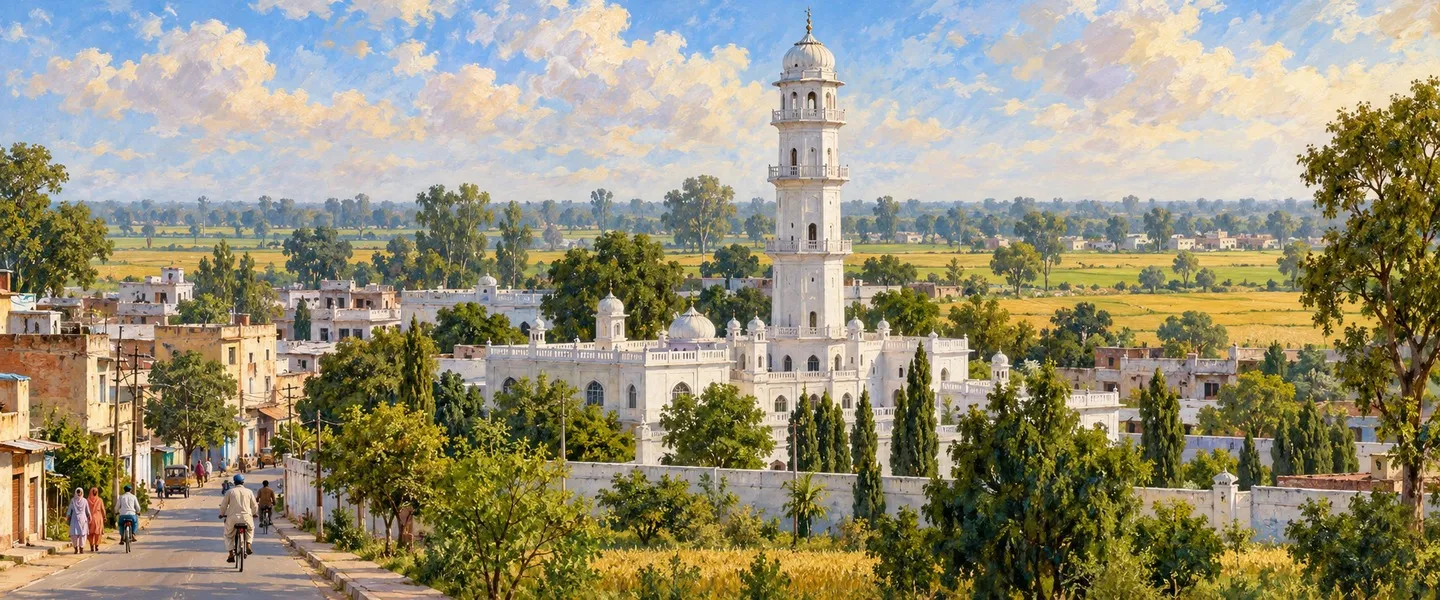
Qadian is a historic town in Gurdaspur district, Punjab, founded in 1530 and the birthplace of Mirza Ghulam Ahmad, who founded the Ahmadiyya movement there in 1889. With a 2011 population of 23,632, it is best known for the white Minarat-ul-Masih minaret, Masjid Aqsa and the annual Jalsa Salana gathering, and it still draws Ahmadi visitors from around the world.
ਇਤਿਹਾਸ ਇੱਕ ਨਜ਼ਰ ਵਿੱਚ
- 1530Mirza Hadi Beg founds the town.
- 1889Mirza Ghulam Ahmad founds the Ahmadiyya movement.
- 1947Partition; the Ahmadiyya headquarters moves to Pakistan.
- 2011Census records a population of 23,632.
- ਪੰਜਾਬੀ ਨਾਂ
- ਕਾਦੀਆਂ
- ਕਿਸਮ
- ਕਸਬਾ
- ਜ਼ਿਲ੍ਹਾ
- ਗੁਰਦਾਸਪੁਰ
- ਇਲਾਕਾ
- Majha, Punjab (India)
- ਆਬਾਦੀ
- 23,632 (2011 census)
- ਸਥਾਪਨਾ
- 1530, by Mirza Hadi Beg
All 10 facts
- ਪ੍ਰਸਿੱਧੀ
- Birthplace of the Ahmadiyya movement (1889); Minarat-ul-Masih
- PIN
- 143516
- ਭਾਸ਼ਾ
- Batala (18 km); Amritsar (62 km by road)
- ਭਾਸ਼ਾ
- Punjabi (86%), Urdu (9%), Hindi (4%)
Qadian is a historic town in Gurdaspur district of Punjab, India, and the birthplace of the Ahmadiyya movement, founded there by Mirza Ghulam Ahmad in 1889. Founded in 1530 by a Mughal qazi, this town of about 23,600 people is best known for the white Minarat-ul-Masih minaret and its annual Jalsa Salana gathering.
Where is Qadian?
Qadian stands about 18 kilometres north-east of Batala, in the Majha region of Punjab, India, and roughly 62 kilometres by road from Amritsar. It is a municipal council town of Gurdaspur district, set in flat wheat and paddy country in the heart of the Majha belt. The 2011 census counted 23,632 residents. Punjabi is the main language, spoken by about 86 percent of people, with Urdu (9 percent) and Hindi (4 percent) also spoken. The town is religiously mixed: Hindus form just over half the population, followed by Sikhs at about 31 percent and Muslims at about 13 percent, with a smaller Christian community. The postal code is 143516.
ਇਤਿਹਾਸ
Qadian was founded in 1530 by Mirza Hadi Beg, a Mughal of Samarkand who had come to India during the reign of Emperor Babur and was appointed qazi (judge) over the surrounding villages. He called the new settlement Islampur Qazi; over the centuries the name passed through Qazi Maji and Qadi before settling into Qadian. His descendants served as local chiefs under the Mughals, lost their lands to the Ramgarhia Sikhs, and regained Qadian in 1834, when Maharaja Ranjit Singh granted the town and five nearby villages to Mirza Ghulam Murtaza, the father of the future Mirza Ghulam Ahmad, in return for military service. Mirza Ghulam Ahmad was born in Qadian on 13 February 1835, worked for a few years as a clerk in Sialkot, and then returned to his home town, where he began the writing and preaching that made him famous.
Why is Qadian famous?
Qadian is famous as the birthplace and first headquarters of the Ahmadiyya movement. On 23 March 1889 Mirza Ghulam Ahmad took a pledge of allegiance from forty followers and founded the community, but it was Qadian that became its home: he lived there, wrote most of his books there, and built its first mosques and schools there. Ahmadi Muslims revere him as the promised Messiah and Mahdi; most mainstream Muslim scholars reject his claims, a controversy that has followed the community ever since, and the word derived from the town's name is sometimes used as a slur against Ahmadi Muslims. In 1891 Ahmad started the Jalsa Salana, an annual three-day gathering that first drew 75 people and had grown to nearly 40,000 by the last pre-Partition Jalsa of 1946. Qadian remained the movement's headquarters until 1947, when Partition placed the town in India. Much of the community migrated to the newly founded town of Rabwah in Pakistan, settled on 20 September 1948 and renamed Chenab Nagar in 1998, where the headquarters stayed until 1984. In Qadian itself, the second Ahmadi caliph left 313 men to guard the town's holy sites, and the movement's institutions there continue to this day.
What is Minarat-ul-Masih?
Minarat-ul-Masih, or the White Minaret, is the most recognisable building in Qadian. It stands beside the Masjid Aqsa, founded in 1876. Mirza Ghulam Ahmad laid its foundation stone on 13 March 1903, linking it to the Islamic tradition that the promised Messiah would appear by a white minaret east of Damascus. Work stopped for lack of money, and the minaret was finished in 1916 under his successor Mirza Basheer-ud-Din Mahmood Ahmad. It has three stages, 92 steps and a height of about 105 feet; a clock was added in 1933 and the tower was veneered with white marble in 1980. It remains the most widely recognised symbol of the Ahmadiyya community, appearing on its flag and publications.
Other places of interest
Masjid Aqsa, the town's oldest Ahmadi mosque, dates to 1876, and the Mubarak Mosque followed in 1883. In all, Qadian has eleven Ahmadiyya mosques, most of them built before 1947. Bahishti Maqbara, the Heavenly Graveyard, was set aside in 1905 under Mirza Ghulam Ahmad's will for members of the community; he died in Lahore on 26 May 1908 and was brought by train to Batala and carried to Qadian, where he was buried the next day. A second Bahishti Maqbara later opened at Rabwah. Jamia Ahmadiyya Qadian, the community's missionary training seminary, and Noor Hospital are among the town's other institutions. Beyond the Ahmadi sites, the town has Hindu temples, Sikh gurdwaras and churches, and its market streets serve the surrounding villages.
Getting there
Qadian railway station (code QDN) sits at the end of the Batala-Qadian branch line. Trains first reached the town on 14 November 1928, and the line was electrified in 2021. Passenger trains link Qadian with Amritsar via Batala, a rail journey of about 55 kilometres. By road, the town connects through Batala to the Amritsar-Pathankot corridor. A much older plan is moving again: in June 2026 the central government revived the Qadian-Beas broad-gauge line, a 39.68 kilometre corridor expected to cost around Rs 1,400 crore, which would connect Qadian directly to Beas in Amritsar district.
Qadian today
Qadian is still a quiet, mixed town where the Ahmadiyya presence shapes daily life but Hindus, Sikhs and Christians live alongside in the same bazaars. The community's Talim-ul-Islam High School (founded 1889) and College (1898) began here; the college was later re-established at Rabwah. The Jalsa Salana continues to be held in Qadian every December: the 2023 gathering drew about 14,930 people from more than 40 countries, with the community's London-based head addressing the town by video and its motto, Love for all, hatred for none, displayed across the town. The town is also the seat of the Qadian Assembly constituency. Known to its people as Qadian Darul Aman, the abode of peace, it remains a place of pilgrimage for Ahmadis across the world.
ਕਾਦੀਆਂ ਗੁਰਦਾਸਪੁਰ ਜ਼ਿਲ੍ਹੇ ਦਾ ਇੱਕ ਇਤਿਹਾਸਕ ਕਸਬਾ ਹੈ। ਇਹ ਮਿਰਜ਼ਾ ਗ਼ੁਲਾਮ ਅਹਿਮਦ ਦਾ ਜਨਮ-ਸਥਾਨ ਹੈ, ਜਿਨ੍ਹਾਂ ਨੇ 1889 ਵਿੱਚ ਇੱਥੇ ਅਹਿਮਦੀਆ ਤਹਿਰੀਕ ਦੀ ਨੀਂਹ ਰੱਖੀ। ਕਸਬੇ ਦੀ ਨੀਂਹ 1530 ਵਿੱਚ ਮਿਰਜ਼ਾ ਹਾਦੀ ਬੇਗ ਨੇ ਰੱਖੀ ਸੀ। 2011 ਦੀ ਮਰਦਮਸ਼ੁਮਾਰੀ ਅਨੁਸਾਰ ਇੱਥੋਂ ਦੀ ਆਬਾਦੀ 23,632 ਸੀ। ਕਸਬੇ ਦੀ ਸਭ ਤੋਂ ਮਸ਼ਹੂਰ ਇਮਾਰਤ ਚਿੱਟੀ ਮਿਨਾਰ ਮਿਨਾਰਤ-ਉਲ-ਮਸੀਹ ਹੈ। ਹਰ ਸਾਲ ਦਸੰਬਰ ਵਿੱਚ ਇੱਥੇ ਜਲਸਾ ਸਾਲਾਨਾ ਹੁੰਦਾ ਹੈ, ਜਿਸ ਵਿੱਚ ਦੁਨੀਆ ਭਰ ਤੋਂ ਹਜ਼ਾਰਾਂ ਅਹਿਮਦੀ ਆਉਂਦੇ ਹਨ।
ਕਾਦੀਆਂ ਕਿੱਥੇ ਹੈ?
ਕਾਦੀਆਂ ਪੰਜਾਬ ਦੇ ਮਾਝਾ ਖੇਤਰ ਵਿੱਚ ਬਟਾਲਾ ਤੋਂ ਕਰੀਬ 18 ਕਿਲੋਮੀਟਰ ਉੱਤਰ-ਪੂਰਬ ਵਿੱਚ ਸਥਿਤ ਹੈ। ਅੰਮ੍ਰਿਤਸਰ ਤੋਂ ਸੜਕ ਰਾਹੀਂ ਇਹ ਕਰੀਬ 62 ਕਿਲੋਮੀਟਰ ਦੂਰ ਹੈ। ਇਹ ਗੁਰਦਾਸਪੁਰ ਜ਼ਿਲ੍ਹੇ ਦਾ ਨਗਰ ਕੌਂਸਲ ਕਸਬਾ ਹੈ। 2011 ਦੀ ਮਰਦਮਸ਼ੁਮਾਰੀ ਵਿੱਚ ਆਬਾਦੀ 23,632 ਗਿਣੀ ਗਈ ਸੀ। ਇੱਥੇ ਪੰਜਾਬੀ ਮੁੱਖ ਭਾਸ਼ਾ ਹੈ, ਜੋ ਕਰੀਬ 86 ਫ਼ੀਸਦੀ ਲੋਕ ਬੋਲਦੇ ਹਨ; ਉਰਦੂ ਅਤੇ ਹਿੰਦੀ ਵੀ ਬੋਲੀ ਜਾਂਦੀ ਹੈ। ਆਬਾਦੀ ਵਿੱਚ ਹਿੰਦੂ ਅੱਧੇ ਤੋਂ ਵੱਧ ਹਨ, ਫਿਰ ਸਿੱਖ ਕਰੀਬ 31 ਫ਼ੀਸਦੀ ਅਤੇ ਮੁਸਲਮਾਨ ਕਰੀਬ 13 ਫ਼ੀਸਦੀ ਹਨ; ਈਸਾਈਆਂ ਦਾ ਇੱਕ ਛੋਟਾ ਭਾਈਚਾਰਾ ਵੀ ਇੱਥੇ ਰਹਿੰਦਾ ਹੈ। ਡਾਕ ਕੋਡ 143516 ਹੈ।
ਇਤਿਹਾਸ
ਕਾਦੀਆਂ ਦੀ ਨੀਂਹ 1530 ਵਿੱਚ ਮਿਰਜ਼ਾ ਹਾਦੀ ਬੇਗ ਨੇ ਰੱਖੀ ਸੀ। ਉਹ ਸਮਰਕੰਦ ਦਾ ਮੁਗ਼ਲ ਸੀ ਜੋ ਬਾਬਰ ਦੇ ਜ਼ਮਾਨੇ ਵਿੱਚ ਹਿੰਦੁਸਤਾਨ ਆਇਆ ਸੀ ਅਤੇ ਆਸ-ਪਾਸ ਦੇ ਪਿੰਡਾਂ ਦਾ ਕਾਜ਼ੀ ਨਿਯੁਕਤ ਹੋਇਆ ਸੀ। ਉਸ ਨੇ ਇਸ ਬਸਤੀ ਦਾ ਨਾਂ ਇਸਲਾਮਪੁਰ ਕਾਜ਼ੀ ਰੱਖਿਆ; ਸਮੇਂ ਨਾਲ ਇਹ ਨਾਂ ਕਾਜ਼ੀ ਮਾਝੀ ਅਤੇ ਕਾਦੀ ਹੁੰਦਾ ਹੋਇਆ ਕਾਦੀਆਂ ਬਣ ਗਿਆ। ਮੁਗ਼ਲਾਂ ਦੇ ਜ਼ਮਾਨੇ ਵਿੱਚ ਉਸ ਦੀ ਔਲਾਦ ਇਲਾਕੇ ਦੀ ਸਰਦਾਰ ਰਹੀ, ਫਿਰ ਰਾਮਗੜ੍ਹੀਆ ਸਿੱਖਾਂ ਕੋਲੋਂ ਇਹਨਾਂ ਨੇ ਆਪਣੀ ਜ਼ਮੀਨ ਗੁਆ ਦਿੱਤੀ। 1834 ਵਿੱਚ ਮਹਾਰਾਜਾ ਰਣਜੀਤ ਸਿੰਘ ਨੇ ਕਾਦੀਆਂ ਅਤੇ ਪੰਜ ਆਸ-ਪਾਸ ਦੇ ਪਿੰਡ ਮਿਰਜ਼ਾ ਗ਼ੁਲਾਮ ਮੁਰਤਜ਼ਾ ਨੂੰ ਫ਼ੌਜੀ ਸੇਵਾ ਦੇ ਬਦਲੇ ਦਿੱਤੇ; ਉਹ ਮਿਰਜ਼ਾ ਗ਼ੁਲਾਮ ਅਹਿਮਦ ਦੇ ਪਿਤਾ ਸਨ। ਮਿਰਜ਼ਾ ਗ਼ੁਲਾਮ ਅਹਿਮਦ ਦਾ ਜਨਮ 13 ਫ਼ਰਵਰੀ 1835 ਨੂੰ ਕਾਦੀਆਂ ਵਿੱਚ ਹੋਇਆ। ਉਹ ਕੁਝ ਸਾਲ ਸਿਆਲਕੋਟ ਵਿੱਚ ਕਲਰਕ ਰਹੇ, ਫਿਰ ਆਪਣੇ ਸ਼ਹਿਰ ਵਾਪਸ ਆ ਗਏ, ਜਿੱਥੇ ਉਹਨਾਂ ਨੇ ਉਹ ਲਿਖਤਾਂ ਅਤੇ ਤਕਰੀਰਾਂ ਸ਼ੁਰੂ ਕੀਤੀਆਂ ਜਿਨ੍ਹਾਂ ਨੇ ਉਹਨਾਂ ਨੂੰ ਮਸ਼ਹੂਰ ਕੀਤਾ।
ਕਾਦੀਆਂ ਕਿਉਂ ਮਸ਼ਹੂਰ ਹੈ?
ਕਾਦੀਆਂ ਅਹਿਮਦੀਆ ਤਹਿਰੀਕ ਦੇ ਜਨਮ-ਸਥਾਨ ਅਤੇ ਪਹਿਲੇ ਕੇਂਦਰ ਵਜੋਂ ਮਸ਼ਹੂਰ ਹੈ। 23 ਮਾਰਚ 1889 ਨੂੰ ਮਿਰਜ਼ਾ ਗ਼ੁਲਾਮ ਅਹਿਮਦ ਨੇ ਚਾਲੀ ਸਾਥੀਆਂ ਤੋਂ ਬੈਅਤ ਲਈ ਅਤੇ ਜਮਾਤ ਦੀ ਨੀਂਹ ਰੱਖੀ, ਪਰ ਕਾਦੀਆਂ ਹੀ ਇਸ ਦਾ ਘਰ ਬਣਿਆ: ਉਹ ਇੱਥੇ ਰਹੇ, ਆਪਣੀਆਂ ਬਹੁਤੀਆਂ ਕਿਤਾਬਾਂ ਇੱਥੇ ਲਿਖੀਆਂ ਅਤੇ ਇੱਥੋਂ ਦੀਆਂ ਪਹਿਲੀਆਂ ਮਸਜਿਦਾਂ ਤੇ ਸਕੂਲ ਬਣਾਏ। ਅਹਿਮਦੀ ਮੁਸਲਮਾਨ ਉਹਨਾਂ ਨੂੰ ਵਾਅਦਾ ਕੀਤਾ ਮਸੀਹ ਅਤੇ ਮਹਿਦੀ ਮੰਨਦੇ ਹਨ; ਜ਼ਿਆਦਾਤਰ ਮੁਸਲਮਾਨ ਵਿਦਵਾਨ ਉਹਨਾਂ ਦੇ ਦਾਅਵਿਆਂ ਨੂੰ ਨਹੀਂ ਮੰਨਦੇ, ਅਤੇ ਇਹ ਮਤਭੇਦ ਉਸ ਦਿਨ ਤੋਂ ਤਹਿਰੀਕ ਦੇ ਨਾਲ ਚੱਲਿਆ ਆ ਰਿਹਾ ਹੈ। 1891 ਵਿੱਚ ਅਹਿਮਦ ਨੇ ਜਲਸਾ ਸਾਲਾਨਾ ਸ਼ੁਰੂ ਕੀਤਾ, ਤਿੰਨ ਦਿਨਾਂ ਦਾ ਸਾਲਾਨਾ ਇਜਲਾਸ ਜਿਸ ਵਿੱਚ ਪਹਿਲੀ ਵਾਰ 75 ਲੋਕ ਆਏ ਸਨ ਅਤੇ 1946 ਦੇ ਆਖ਼ਰੀ ਵੰਡ-ਪੂਰਵ ਜਲਸੇ ਤੱਕ ਹਾਜ਼ਰੀ ਕਰੀਬ 40,000 ਤੱਕ ਪਹੁੰਚ ਗਈ। 1947 ਦੀ ਵੰਡ ਨੇ ਕਾਦੀਆਂ ਨੂੰ ਭਾਰਤ ਵਿੱਚ ਰੱਖਿਆ ਅਤੇ ਤਹਿਰੀਕ ਦਾ ਬਹੁਤਾ ਹਿੱਸਾ ਪਾਕਿਸਤਾਨ ਦੇ ਨਵੇਂ ਸ਼ਹਿਰ ਰਬਵਾਹ ਚਲਾ ਗਿਆ (20 ਸਤੰਬਰ 1948 ਨੂੰ ਵਸਾਇਆ ਗਿਆ; 1998 ਵਿੱਚ ਨਾਂ ਬਦਲ ਕੇ ਚਨਾਬ ਨਗਰ ਰੱਖਿਆ ਗਿਆ), ਜਿੱਥੇ 1984 ਤੱਕ ਕੇਂਦਰ ਰਿਹਾ। ਕਾਦੀਆਂ ਵਿੱਚ ਦੂਜੇ ਖ਼ਲੀਫ਼ਾ ਨੇ ਪਵਿੱਤਰ ਥਾਵਾਂ ਦੀ ਰਾਖੀ ਲਈ 313 ਆਦਮੀ ਛੱਡੇ, ਅਤੇ ਇੱਥੋਂ ਦੀਆਂ ਤਹਿਰੀਕੀ ਸੰਸਥਾਵਾਂ ਅੱਜ ਵੀ ਚੱਲਦੀਆਂ ਹਨ।
ਮਿਨਾਰਤ-ਉਲ-ਮਸੀਹ ਕੀ ਹੈ?
ਮਿਨਾਰਤ-ਉਲ-ਮਸੀਹ, ਜਾਂ ਚਿੱਟੀ ਮਿਨਾਰ, ਕਾਦੀਆਂ ਦੀ ਸਭ ਤੋਂ ਪਛਾਣੀ ਜਾਂਦੀ ਇਮਾਰਤ ਹੈ। ਇਹ 1876 ਵਿੱਚ ਬਣੀ ਮਸਜਿਦ ਅਕਸਾ ਦੇ ਨਾਲ ਖੜ੍ਹੀ ਹੈ। ਮਿਰਜ਼ਾ ਗ਼ੁਲਾਮ ਅਹਿਮਦ ਨੇ 13 ਮਾਰਚ 1903 ਨੂੰ ਇਸ ਦੀ ਨੀਂਹ ਰੱਖੀ ਸੀ; ਇਹ ਉਸ ਇਸਲਾਮੀ ਰਵਾਇਤ ਨਾਲ ਜੁੜੀ ਹੈ ਕਿ ਵਾਅਦਾ ਕੀਤਾ ਮਸੀਹ ਦਮਿਸ਼ਕ ਦੇ ਪੂਰਬ ਵਿੱਚ ਚਿੱਟੀ ਮਿਨਾਰ ਕੋਲ ਪ੍ਰਗਟ ਹੋਵੇਗਾ। ਪੈਸੇ ਦੀ ਕਮੀ ਕਾਰਨ ਕੰਮ ਰੁਕ ਗਿਆ, ਅਤੇ ਮਿਨਾਰ 1916 ਵਿੱਚ ਉਹਨਾਂ ਦੇ ਉੱਤਰਾਧਿਕਾਰੀ ਮਿਰਜ਼ਾ ਬਸ਼ੀਰ-ਉਦ-ਦੀਨ ਮਹਿਮੂਦ ਅਹਿਮਦ ਦੇ ਜ਼ਮਾਨੇ ਵਿੱਚ ਪੂਰੀ ਹੋਈ। ਇਸ ਦੇ ਤਿੰਨ ਮੰਜ਼ਲ, 92 ਪੌੜੀਆਂ ਅਤੇ ਕਰੀਬ 105 ਫੁੱਟ ਉਚਾਈ ਹੈ; 1933 ਵਿੱਚ ਇਸ ਵਿੱਚ ਘੜੀ ਲੱਗੀ ਅਤੇ 1980 ਵਿੱਚ ਇਸ ਉੱਤੇ ਚਿੱਟਾ ਸੰਗਮਰਮਰ ਚੜ੍ਹਾਇਆ ਗਿਆ। ਇਹ ਅੱਜ ਅਹਿਮਦੀਆ ਜਮਾਤ ਦਾ ਸਭ ਤੋਂ ਮਸ਼ਹੂਰ ਨਿਸ਼ਾਨ ਹੈ, ਜੋ ਇਸ ਦੇ ਝੰਡੇ ਅਤੇ ਪੁਸਤਕਾਂ ਉੱਤੇ ਵੀ ਦਿਸਦਾ ਹੈ।
ਦੇਖਣਯੋਗ ਹੋਰ ਥਾਵਾਂ
ਮਸਜਿਦ ਅਕਸਾ (1876) ਸ਼ਹਿਰ ਦੀ ਸਭ ਤੋਂ ਪੁਰਾਣੀ ਅਹਿਮਦੀ ਮਸਜਿਦ ਹੈ ਅਤੇ ਮੁਬਾਰਕ ਮਸਜਿਦ 1883 ਵਿੱਚ ਬਣੀ। ਕੁੱਲ ਮਿਲਾ ਕੇ ਕਾਦੀਆਂ ਵਿੱਚ ਗਿਆਰਾਂ ਅਹਿਮਦੀਆ ਮਸਜਿਦਾਂ ਹਨ, ਜਿਨ੍ਹਾਂ ਵਿੱਚੋਂ ਬਹੁਤੀਆਂ 1947 ਤੋਂ ਪਹਿਲਾਂ ਦੀਆਂ ਹਨ। ਬਹਿਸ਼ਤੀ ਮਕਬਰਾ (ਸਵਰਗੀ ਕਬਰਿਸਤਾਨ) 1905 ਵਿੱਚ ਮਿਰਜ਼ਾ ਗ਼ੁਲਾਮ ਅਹਿਮਦ ਦੀ ਵਸੀਅਤ ਰਾਹੀਂ ਜਮਾਤ ਦੇ ਮੈਂਬਰਾਂ ਲਈ ਰੱਖਿਆ ਗਿਆ ਸੀ; 26 ਮਈ 1908 ਨੂੰ ਉਹਨਾਂ ਦਾ ਇੰਤਕਾਲ ਲਾਹੌਰ ਵਿੱਚ ਹੋਇਆ, ਮ੍ਰਿਤਕ ਸਰੀਰ ਰੇਲ ਰਾਹੀਂ ਬਟਾਲਾ ਲਿਆਂਦਾ ਗਿਆ ਅਤੇ ਉੱਥੋਂ ਉਠਾ ਕੇ ਕਾਦੀਆਂ ਲਿਆਂਦਾ ਗਿਆ, ਜਿੱਥੇ ਅਗਲੇ ਦਿਨ ਉਹਨਾਂ ਨੂੰ ਦਫ਼ਨਾਇਆ ਗਿਆ। ਬਾਅਦ ਵਿੱਚ ਰਬਵਾਹ ਵਿੱਚ ਵੀ ਬਹਿਸ਼ਤੀ ਮਕਬਰਾ ਬਣਿਆ। ਜਾਮੀਆ ਅਹਿਮਦੀਆ ਕਾਦੀਆਂ (ਜਮਾਤ ਦਾ ਮਿਸ਼ਨਰੀ ਸਿਖਲਾਈ ਸਕੂਲ) ਅਤੇ ਨੂਰ ਹਸਪਤਾਲ ਸ਼ਹਿਰ ਦੀਆਂ ਹੋਰ ਸੰਸਥਾਵਾਂ ਹਨ। ਅਹਿਮਦੀ ਥਾਵਾਂ ਤੋਂ ਇਲਾਵਾ ਸ਼ਹਿਰ ਵਿੱਚ ਹਿੰਦੂ ਮੰਦਰ, ਸਿੱਖ ਗੁਰਦੁਆਰੇ ਅਤੇ ਗਿਰਜਾਘਰ ਹਨ, ਅਤੇ ਇਸ ਦੇ ਬਾਜ਼ਾਰ ਆਸ-ਪਾਸ ਦੇ ਪਿੰਡਾਂ ਦੀ ਸੇਵਾ ਕਰਦੇ ਹਨ।
ਕਾਦੀਆਂ ਕਿਵੇਂ ਪਹੁੰਚੋ?
ਕਾਦੀਆਂ ਰੇਲਵੇ ਸਟੇਸ਼ਨ (ਕੋਡ QDN) ਬਟਾਲਾ-ਕਾਦੀਆਂ ਸ਼ਾਖਾ ਲਾਈਨ ਦੇ ਸਿਰੇ ਉੱਤੇ ਹੈ। ਰੇਲ ਪਹਿਲੀ ਵਾਰ 14 ਨਵੰਬਰ 1928 ਨੂੰ ਸ਼ਹਿਰ ਪਹੁੰਚੀ ਸੀ, ਅਤੇ 2021 ਵਿੱਚ ਲਾਈਨ ਦਾ ਬਿਜਲੀਕਰਨ ਹੋਇਆ। ਯਾਤਰੀ ਰੇਲਾਂ ਕਾਦੀਆਂ ਨੂੰ ਬਟਾਲਾ ਰਾਹੀਂ ਅੰਮ੍ਰਿਤਸਰ ਨਾਲ ਜੋੜਦੀਆਂ ਹਨ; ਇਹ ਰੇਲ ਸਫ਼ਰ ਕਰੀਬ 55 ਕਿਲੋਮੀਟਰ ਦਾ ਹੈ। ਸੜਕ ਰਾਹੀਂ ਸ਼ਹਿਰ ਬਟਾਲਾ ਰਾਹੀਂ ਅੰਮ੍ਰਿਤਸਰ-ਪਠਾਨਕੋਟ ਗਲਿਆਰੇ ਨਾਲ ਜੁੜਿਆ ਹੈ। ਇੱਕ ਪੁਰਾਣੀ ਯੋਜਨਾ ਵੀ ਅੱਗੇ ਵਧ ਰਹੀ ਹੈ: ਜੂਨ 2026 ਵਿੱਚ ਕੇਂਦਰ ਸਰਕਾਰ ਨੇ ਕਾਦੀਆਂ-ਬਿਆਸ ਬ੍ਰਾਡ ਗੇਜ ਲਾਈਨ ਨੂੰ ਮੁੜ ਜੀਵਤ ਕੀਤਾ, ਜੋ 39.68 ਕਿਲੋਮੀਟਰ ਲੰਮੀ ਹੋਵੇਗੀ ਅਤੇ ਕਰੀਬ 1,400 ਕਰੋੜ ਰੁਪਏ ਦੀ ਲਾਗਤ ਨਾਲ ਕਾਦੀਆਂ ਨੂੰ ਅੰਮ੍ਰਿਤਸਰ ਜ਼ਿਲ੍ਹੇ ਦੇ ਬਿਆਸ ਨਾਲ ਜੋੜੇਗੀ।
ਅੱਜ ਦਾ ਕਾਦੀਆਂ
ਕਾਦੀਆਂ ਅੱਜ ਵੀ ਇੱਕ ਸ਼ਾਂਤ, ਮਿਲਿਆ-ਜੁਲਿਆ ਕਸਬਾ ਹੈ ਜਿੱਥੇ ਅਹਿਮਦੀਆ ਮੌਜੂਦਗੀ ਰੋਜ਼ਾਨਾ ਜੀਵਨ ਨੂੰ ਢਾਲਦੀ ਹੈ, ਪਰ ਹਿੰਦੂ, ਸਿੱਖ ਅਤੇ ਈਸਾਈ ਵੀ ਉਹੀ ਬਾਜ਼ਾਰਾਂ ਵਿੱਚ ਇਕੱਠੇ ਰਹਿੰਦੇ ਹਨ। ਜਮਾਤ ਦਾ ਤਾਲੀਮ-ਉਲ-ਇਸਲਾਮ ਹਾਈ ਸਕੂਲ (1889) ਅਤੇ ਕਾਲਜ (1898) ਇੱਥੋਂ ਸ਼ੁਰੂ ਹੋਏ ਸਨ; ਕਾਲਜ ਬਾਅਦ ਵਿੱਚ ਰਬਵਾਹ ਵਿੱਚ ਮੁੜ ਸਥਾਪਤ ਕੀਤਾ ਗਿਆ। ਜਲਸਾ ਸਾਲਾਨਾ ਹਰ ਦਸੰਬਰ ਵਿੱਚ ਕਾਦੀਆਂ ਵਿੱਚ ਹੁੰਦਾ ਹੈ: 2023 ਦੇ ਇਜਲਾਸ ਵਿੱਚ 40 ਤੋਂ ਵੱਧ ਮੁਲਕਾਂ ਦੇ ਕਰੀਬ 14,930 ਲੋਕ ਆਏ, ਅਤੇ ਲੰਡਨ ਵਿੱਚ ਰਹਿੰਦੇ ਜਮਾਤ ਦੇ ਮੁਖੀ ਨੇ ਵੀਡੀਓ ਰਾਹੀਂ ਸੰਬੋਧਨ ਕੀਤਾ। ਇਹ ਸ਼ਹਿਰ ਕਾਦੀਆਂ ਵਿਧਾਨ ਸਭਾ ਹਲਕੇ ਦਾ ਕੇਂਦਰ ਵੀ ਹੈ। ਆਪਣੇ ਲੋਕਾਂ ਲਈ ਇਹ "ਕਾਦੀਆਂ ਦਾਰੁਲ ਅਮਨ" ਹੈ, ਅਮਨ ਦਾ ਘਰ, ਅਤੇ ਦੁਨੀਆ ਭਰ ਦੇ ਅਹਿਮਦੀਆਂ ਲਈ ਇਹ ਤੀਰਥ-ਸਥਾਨ ਵਰਗਾ ਹੈ।
Nearby



ਸਰੋਤ (10)
- ਕਾਦੀਆਂWikipedia
- White MinaretWikipedia
- Bahishti MaqbaraWikipedia
- Mirza Ghulam AhmadWikipedia
- RabwahWikipedia
- Jalsa SalanaWikipedia
- Qadian railway stationWikipedia
- Jalsa Salana: A congregation to remember in quaint QadianThe Muslim Times (Indian Express)
- Centre Revives ₹1,400 Crore Qadian-Beas Railway ProjectDevdiscourse
- Distance from Mansa to Qadiandistancecalculator.net
ਜੁਗਤੀ ਮੁਫ਼ਤ ਅਤੇ ਸੁਤੰਤਰ ਹੈ। ਪਾਠਕਾਂ ਦਾ ਸਹਿਯੋਗ ਕੋਸ਼ ਨੂੰ ਵਧਾਉਂਦਾ ਹੈ।
ਸਹਿਯੋਗ