
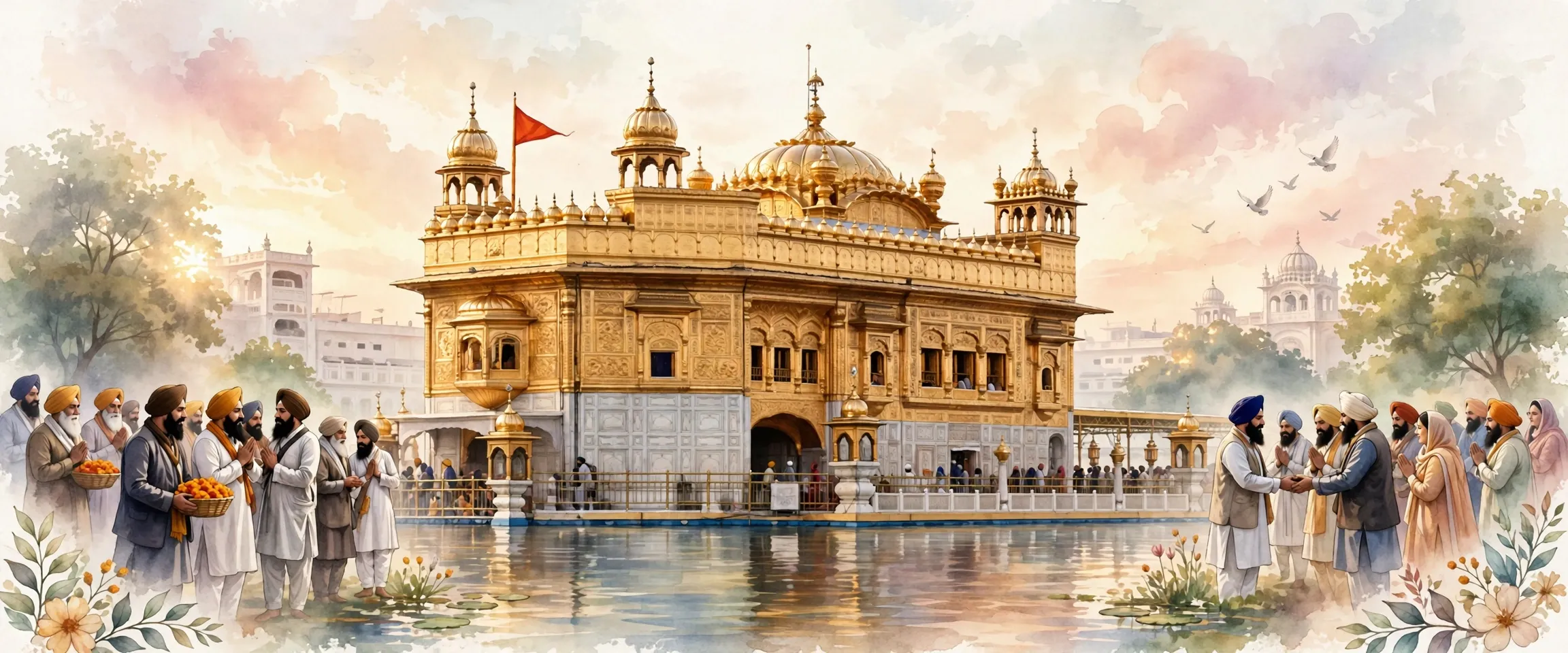
ਸਤਿ ਸ੍ਰੀ ਅਕਾਲ ਸਿੱਖਾਂ ਅਤੇ ਪੰਜਾਬੀਆਂ ਦੀ ਰੋਜ਼ਾਨਾ ਸਲਾਮ ਹੈ, ਜਿਸ ਦਾ ਅਰਥ ਹੈ ਸੱਚ ਹੀ ਅਕਾਲ ਹੈ: ਸਤਿ ਸੱਚ ਹੈ, ਸ੍ਰੀ ਸਤਕਾਰ ਦਾ ਸ਼ਬਦ ਹੈ, ਅਤੇ ਅਕਾਲ ਸਮੇਂ, ਜਨਮ ਅਤੇ ਮੌਤ ਤੋਂ ਪਰੇ ਪਰਮਾਤਮਾ ਹੈ। ਇਹ ਸਿੱਖ ਜੈਕਾਰੇ ਬੋਲੇ ਸੋ ਨਿਹਾਲ, ਸਤਿ ਸ੍ਰੀ ਅਕਾਲ ਦੇ ਦੂਜੇ ਅੱਧ ਵਜੋਂ ਸ਼ੁਰੂ ਹੋਇਆ, ਜੋ ਅਰਦਾਸ ਦੇ ਅੰਤ ਵਿੱਚ ਬੁਲਾਇਆ ਜਾਂਦਾ ਹੈ, ਅਤੇ ਇਸ ਦਾ ਜਵਾਬ ਹੱਥ ਜੋੜ ਕੇ ਇਹੋ ਸ਼ਬਦ ਵਾਪਸ ਕਹਿ ਕੇ ਦਿੱਤਾ ਜਾਂਦਾ ਹੈ।
- ਪੰਜਾਬੀ ਨਾਂ
- ਸਤਿ ਸ੍ਰੀ ਅਕਾਲ।
- ਗੁਰਮੁਖੀ
- ਸਤਿ ਸ੍ਰੀ ਅਕਾਲ।
- ਸ਼ਾਬਦਿਕ ਅਰਥ
- ਸੱਚ ਹੀ ਅਕਾਲ ਹੈ।
- ਸ਼ਨੀਵਾਰ
- ਸੱਚ, ਸੰਸਕ੍ਰਿਤ ਸਤਿਆ ਤੋਂ।
- ਸ੍ਰੀ
- ਸਤਕਾਰ ਅਤੇ ਵਡਿਆਈ ਦਾ ਸ਼ਬਦ।
- ਅਕਾਲ
- ਬਿਨਾਂ ਸਮੇਂ ਵਾਲਾ: ਅ ਅਤੇ ਕਾਲ, ਜਨਮ ਅਤੇ ਮੌਤ ਤੋਂ ਪਰੇ ਪਰਮਾਤਮਾ।
All 9 facts
- ਪੂਰਾ ਜੈਕਾਰਾ
- ਬੋਲੇ ਸੋ ਨਿਹਾਲ, ਸਤਿ ਸ੍ਰੀ ਅਕਾਲ।
- ਰਸਮੀ ਖਾਲਸਾ ਸਲਾਮ
- ਵਾਹਿਗੁਰੂ ਜੀ ਕਾ ਖਾਲਸਾ, ਵਾਹਿਗੁਰੂ ਜੀ ਕੀ ਫਤਹਿ।
- ਜਵਾਬ ਕਿਵੇਂ ਦਈਏ
- ਹੱਥ ਜੋੜ ਕੇ ਸਤਿ ਸ੍ਰੀ ਅਕਾਲ ਵਾਪਸ ਕਹੋ।
Sat Sri Akal (ਸਤਿ ਸ੍ਰੀ ਅਕਾਲ) means Truth is the Timeless One: Sat is truth, Sri is an honorific of respect, and Akal is God, the One beyond time, birth and death. Sikhs and Punjabis worldwide say it as their everyday greeting, and shout it as the second half of the jaikara Bole So Nihal, Sat Sri Akal.
What does Sat Sri Akal mean, word by word?
Sat means truth. It comes from the Sanskrit satya, and in Sikh teaching it is not truth in the small sense of a correct fact: as the Sikh Missionary Society UK explains, Sat in the Mool Mantra points to the one God, the Creator, who is beyond birth and death and self existent. Sri is an honorific used across the languages of the subcontinent, a word of respect and glory placed before a revered name. Put Sri before Akal and the two together become a proper name: Sri Akal, the honoured Timeless One, God himself.
Akal is built from kal, time, with the prefix a, which turns the word into its opposite: timeless, not bound by past, present or future. The word sits at the heart of the ਮੂਲ ਮੰਤਰ, Guru Nanak Dev Ji's opening statement of belief, in the phrase Akal Murat, the Timeless Form. The Encyclopaedia of the Sikhs notes that for Guru Gobind Singh Ji this timelessness was the core attribute of God, because time is what brings birth, decay and death, and a faith centred on the Timeless One leaves no room for the fear of death. The whole greeting can therefore be carried into English several honest ways: Truth is the Timeless One, God is Truth, or Eternal is the great Timeless Lord.
How do you say Sat Sri Akal, and how should you reply?
You say it exactly as it is written, in three calm beats: Sat, Sri, Akal, with the weight falling gently on the last word. Sikhs exchange it with folded hands, palms pressed together at the chest, and a slight bow of the head. The Encyclopaedia of the Sikhs describes that shared gesture, offered on both sides in mutual courtesy and respect, as part of what makes this greeting distinctive: it praises the Timeless One rather than bowing to the person in front of you, and so it also affirms the equality and dignity of the two people meeting.
The reply is simple: you say Sat Sri Akal back. The same words serve at meeting and at parting, in the morning and at night, to an elder, a friend or a stranger, and no different form is needed for any of them. Said quietly between two people, the Sikh Missionary Society UK calls it a namaskar, a polite and heartfelt greeting that reminds both sides to remember God and truth in the act of meeting. If someone greets you this way, returning the words with folded hands and a smile is always the right answer.
What is the difference between Sat Sri Akal and Waheguru Ji Ka Khalsa, Waheguru Ji Ki Fateh?
The longer greeting, ਵਾਹਿਗੁਰੂ Ji Ka Khalsa, Waheguru Ji Ki Fateh, means the Khalsa belongs to Waheguru, and victory belongs to Waheguru. The Encyclopaedia of the Sikhs records that Guru Gobind Singh Ji gave this salutation to the Khalsa at its creation in 1699, replacing the older custom of pairi pauna, greeting by bowing at the feet. It remains the formal greeting of the Khalsa: the Sikh Rehat Maryada, the code of conduct, directs Amritdhari Sikhs to greet one another with it, and a speaker opening an address to a Sikh congregation uses it as a rule.
Sat Sri Akal grew along a different path. It is the second half of a jaikara, a shout of victory, and over three centuries it settled into everyday use as the established greeting of Sikhs generally, the words most Punjabis actually say when they meet. The Encyclopaedia is candid that, as a salutation, it does not carry the same formal sanction as the Fateh greeting, which is reserved and proper. In practice the two live side by side without quarrel: Fateh for the formal and congregational moment, Sat Sri Akal for the doorstep, the street, the phone call and the family gathering.
Why is Sat Sri Akal shouted at the end of Ardas?
Because in that setting it is not a greeting at all: it is a jaikara, a call of victory. At the close of ਅਰਦਾਸ, the congregational prayer, the Sikh leading the prayer calls out Jo Bole So Nihal, whoever speaks shall be fulfilled and blessed, and the whole sangat answers in one long, full throated shout: Sat Sri Akal. Wikipedia and the Encyclopaedia of the Sikhs both describe this call and response as an integral part of Sikh liturgy, heard wherever a congregation finishes Ardas. Readers can follow the full call on Jugti's page for ਬੋਲੇ ਸੋ ਨਿਹਾਲ.
The shout carries a teaching inside it. The Encyclopaedia explains that the jaikara gives all victory to God: in their hour of triumph, Sikhs proclaim the Timeless One instead of praising their own strength. That is also why the words were heard historically on the battlefield, and why three regiments of the Indian Army, the Punjab Regiment, the Sikh Regiment and the Sikh Light Infantry, still use Sat Sri Akal as their battle cry. The Sikh Missionary Society UK adds a caution worth keeping: calling the jaikara merely a war cry shrinks it, since its courage comes from service and sacrifice, and its first home is prayer, not war.
Is Sat Sri Akal only for Sikhs?
No. The phrase was born in the Sikh tradition, and Sikhs remain its main speakers, but it has become the everyday greeting of Punjabis far beyond one faith or one country, heard across Punjab and throughout the Punjabi diaspora in Canada, Britain, the United States and beyond. The Sikh Missionary Society UK makes the point from inside the tradition: it is entirely appropriate to greet a non Sikh with Sat Sri Akal, because the thought it shares, that God is truth and truth alone is to be remembered in all our actions, is a universal one. A visitor to a gurdwara who offers the greeting respectfully will always be received warmly.
Where else do you hear Sat Sri Akal?
You hear it wherever Sikhs gather in joy. In a ਨਗਰ ਕੀਰਤਨ, the street procession that carries Guru Granth Sahib Ji through a town at Vaisakhi and on gurpurabs, the jaikara rises from the crowd again and again as the procession passes. You hear it at weddings and celebrations, at the opening of gatherings, and in the thunderous speech of the Nihang Singhs explored on Jugti's ਖਾਲਸਾ ਬੋਲੇ page. The Encyclopaedia of the Sikhs recalls that when the Khalsa was created at Anandpur Sahib in 1699, the air around the town rang for days with cries of Akal, Akal, raised by the new initiates: the same shout, in its first fervour, that a Punjabi child now learns as the simple way to say hello.
ਸਤਿ ਸ੍ਰੀ ਅਕਾਲ ਦਾ ਅਰਥ ਹੈ ਸੱਚ ਹੀ ਅਕਾਲ ਹੈ: ਸਤਿ ਦਾ ਅਰਥ ਹੈ ਸੱਚ, ਸ੍ਰੀ ਸਤਕਾਰ ਦਾ ਸ਼ਬਦ ਹੈ, ਅਤੇ ਅਕਾਲ ਪਰਮਾਤਮਾ ਹੈ, ਜੋ ਸਮੇਂ, ਜਨਮ ਅਤੇ ਮੌਤ ਤੋਂ ਪਰੇ ਹੈ। ਸਿੱਖ ਅਤੇ ਪੰਜਾਬੀ ਸੰਸਾਰ ਭਰ ਵਿੱਚ ਇਸ ਨੂੰ ਆਪਣੀ ਰੋਜ਼ਾਨਾ ਸਲਾਮ ਵਜੋਂ ਕਹਿੰਦੇ ਹਨ, ਅਤੇ ਜੈਕਾਰੇ ਬੋਲੇ ਸੋ ਨਿਹਾਲ, ਸਤਿ ਸ੍ਰੀ ਅਕਾਲ ਦੇ ਦੂਜੇ ਅੱਧ ਵਜੋਂ ਇਸ ਨੂੰ ਉੱਚੀ ਆਵਾਜ਼ ਵਿੱਚ ਬੁਲਾਉਂਦੇ ਹਨ।
ਸਤਿ ਸ੍ਰੀ ਅਕਾਲ ਦਾ ਸ਼ਬਦ ਦਰ ਸ਼ਬਦ ਅਰਥ ਕੀ ਹੈ?
ਸਤਿ ਦਾ ਅਰਥ ਹੈ ਸੱਚ। ਇਹ ਸੰਸਕ੍ਰਿਤ ਦੇ ਸ਼ਬਦ ਸਤਿਆ ਤੋਂ ਆਇਆ ਹੈ, ਅਤੇ ਸਿੱਖ ਸਿੱਖਿਆ ਵਿੱਚ ਇਸ ਦਾ ਅਰਥ ਕਿਸੇ ਛੋਟੀ ਸੱਚੀ ਗੱਲ ਤੱਕ ਸੀਮਤ ਨਹੀਂ ਹੈ: ਸਿੱਖ ਮਿਸ਼ਨਰੀ ਸੋਸਾਇਟੀ ਯੂ ਕੇ ਦੱਸਦੀ ਹੈ ਕਿ ਮੂਲ ਮੰਤਰ ਵਿੱਚ ਸਤਿ ਉਸ ਇੱਕ ਪਰਮਾਤਮਾ ਵੱਲ ਇਸ਼ਾਰਾ ਕਰਦਾ ਹੈ, ਜੋ ਕਰਤਾ ਹੈ, ਜਨਮ ਅਤੇ ਮੌਤ ਤੋਂ ਪਰੇ ਹੈ ਅਤੇ ਆਪਣੇ ਆਪ ਤੋਂ ਹੈ। ਸ੍ਰੀ ਉਪਮਹਾਂਦੀਪ ਦੀਆਂ ਭਾਸ਼ਾਵਾਂ ਵਿੱਚ ਵਰਤਿਆ ਜਾਣ ਵਾਲਾ ਸਤਕਾਰ ਦਾ ਸ਼ਬਦ ਹੈ, ਜੋ ਕਿਸੇ ਸਤਕਾਰਯੋਗ ਨਾਂ ਤੋਂ ਪਹਿਲਾਂ ਲਗਾਇਆ ਜਾਂਦਾ ਹੈ। ਸ੍ਰੀ ਨੂੰ ਅਕਾਲ ਤੋਂ ਪਹਿਲਾਂ ਲਗਾਉਣ ਨਾਲ ਦੋਵੇਂ ਮਿਲ ਕੇ ਇੱਕ ਨਾਂ ਬਣ ਜਾਂਦੇ ਹਨ: ਸ੍ਰੀ ਅਕਾਲ, ਸਤਕਾਰਯੋਗ ਅਕਾਲ ਪੁਰਖ, ਪਰਮਾਤਮਾ ਆਪ।
ਅਕਾਲ ਸ਼ਬਦ ਕਾਲ, ਯਾਨੀ ਸਮੇਂ, ਨਾਲ ਅ ਉਪਸਰਗ ਲੱਗਣ ਤੋਂ ਬਣਿਆ ਹੈ, ਜੋ ਸ਼ਬਦ ਨੂੰ ਉਸ ਦੇ ਉਲਟ ਵਿੱਚ ਬਦਲ ਦਿੰਦਾ ਹੈ: ਬਿਨਾਂ ਸਮੇਂ ਵਾਲਾ, ਅਤੀਤ, ਵਰਤਮਾਨ ਅਤੇ ਭਵਿੱਖ ਤੋਂ ਪਰੇ। ਇਹ ਸ਼ਬਦ ਮੂਲ ਮੰਤਰ ਦੇ ਕੇਂਦਰ ਵਿੱਚ ਹੈ, ਗੁਰੂ ਨਾਨਕ ਦੇਵ ਜੀ ਦੇ ਮੂਲ ਸਿਧਾਂਤ ਵਿੱਚ, ਅਕਾਲ ਮੂਰਤਿ ਸ਼ਬਦਾਂ ਵਿੱਚ, ਜਿਸ ਦਾ ਅਰਥ ਹੈ ਅਕਾਲ ਦਾ ਸਰੂਪ। ਸਿੱਖਾਂ ਦਾ ਵਿਸ਼ਵਕੋਸ਼ ਦੱਸਦਾ ਹੈ ਕਿ ਗੁਰੂ ਗੋਬਿੰਦ ਸਿੰਘ ਜੀ ਲਈ ਇਹ ਅਕਾਲਤਾ ਪਰਮਾਤਮਾ ਦਾ ਕੇਂਦਰੀ ਗੁਣ ਸੀ, ਕਿਉਂਕਿ ਸਮਾਂ ਹੀ ਜਨਮ, ਢਹਿਣ ਅਤੇ ਮੌਤ ਲਿਆਉਂਦਾ ਹੈ, ਅਤੇ ਅਕਾਲ ਉੱਤੇ ਕੇਂਦਰਿਤ ਸ਼ਰਧਾ ਮੌਤ ਦੇ ਡਰ ਲਈ ਕੋਈ ਥਾਂ ਨਹੀਂ ਛੱਡਦੀ। ਇਸ ਲਈ ਪੂਰੀ ਸਲਾਮ ਦਾ ਅੰਗਰੇਜ਼ੀ ਅਰਥ ਕਈ ਸੱਚੇ ਤਰੀਕਿਆਂ ਨਾਲ ਕੀਤਾ ਜਾ ਸਕਦਾ ਹੈ: ਸੱਚ ਹੀ ਅਕਾਲ ਹੈ, ਪਰਮਾਤਮਾ ਹੀ ਸੱਚ ਹੈ, ਜਾਂ ਸਦੀਵੀ ਹੈ ਮਹਾਨ ਅਕਾਲ।
ਸਤਿ ਸ੍ਰੀ ਅਕਾਲ ਕਿਵੇਂ ਕਿਹਾ ਜਾਂਦਾ ਹੈ, ਅਤੇ ਜਵਾਬ ਕਿਵੇਂ ਦੇਣਾ ਚਾਹੀਦਾ ਹੈ?
ਇਸ ਨੂੰ ਠੀਕ ਉਸੇ ਤਰ੍ਹਾਂ ਕਿਹਾ ਜਾਂਦਾ ਹੈ, ਜਿਵੇਂ ਇਹ ਲਿਖਿਆ ਹੈ, ਤਿੰਨ ਸ਼ਾਂਤ ਹਿੱਸਿਆਂ ਵਿੱਚ: ਸਤਿ, ਸ੍ਰੀ, ਅਕਾਲ, ਅਤੇ ਨਰਮ ਜ਼ੋਰ ਆਖਰੀ ਸ਼ਬਦ ਉੱਤੇ ਪੈਂਦਾ ਹੈ। ਸਿੱਖ ਇਸ ਨੂੰ ਦੋਵੇਂ ਹੱਥ ਜੋੜ ਕੇ, ਹਥੇਲੀਆਂ ਛਾਤੀ ਸਾਹਮਣੇ ਮਿਲਾ ਕੇ, ਅਤੇ ਸਿਰ ਥੋੜ੍ਹਾ ਝੁਕਾ ਕੇ ਬਦਲਦੇ ਹਨ। ਸਿੱਖਾਂ ਦਾ ਵਿਸ਼ਵਕੋਸ਼ ਇਸ ਸਾਂਝੇ ਇਸ਼ਾਰੇ ਨੂੰ, ਜੋ ਦੋਵੇਂ ਪਾਸਿਆਂ ਤੋਂ ਆਪਸੀ ਸਤਕਾਰ ਨਾਲ ਕੀਤਾ ਜਾਂਦਾ ਹੈ, ਇਸ ਸਲਾਮ ਦੀ ਖਾਸੀਅਤ ਦਾ ਹਿੱਸਾ ਦੱਸਦਾ ਹੈ: ਇਹ ਸਾਹਮਣੇ ਖੜ੍ਹੇ ਮਨੁੱਖ ਦੀ ਬਜਾਏ ਅਕਾਲ ਪੁਰਖ ਦੀ ਵਡਿਆਈ ਕਰਦੀ ਹੈ, ਅਤੇ ਇਸ ਤਰ੍ਹਾਂ ਮਿਲਣ ਵਾਲੇ ਦੋ ਮਨੁੱਖਾਂ ਦੀ ਬਰਾਬਰੀ ਅਤੇ ਇੱਜ਼ਤ ਨੂੰ ਵੀ ਦਰਸਾਉਂਦੀ ਹੈ।
ਜਵਾਬ ਸੌਖਾ ਹੈ: ਤੁਸੀਂ ਵੀ ਸਤਿ ਸ੍ਰੀ ਅਕਾਲ ਕਹਿ ਦਿੰਦੇ ਹੋ। ਇਹੋ ਸ਼ਬਦ ਮਿਲਣ ਵੇਲੇ ਅਤੇ ਵਿਦਾ ਹੋਣ ਵੇਲੇ, ਸਵੇਰੇ ਅਤੇ ਰਾਤ ਨੂੰ, ਕਿਸੇ ਬਜ਼ੁਰਗ, ਦੋਸਤ ਜਾਂ ਅਜਨਬੀ ਲਈ ਕੰਮ ਕਰਦੇ ਹਨ, ਅਤੇ ਕਿਸੇ ਲਈ ਵੀ ਵੱਖਰਾ ਰੂਪ ਨਹੀਂ ਚਾਹੀਦਾ। ਦੋ ਮਨੁੱਖਾਂ ਵਿਚਕਾਰ ਸ਼ਾਂਤੀ ਨਾਲ ਕਹੀ ਗਈ ਇਸ ਸਲਾਮ ਨੂੰ ਸਿੱਖ ਮਿਸ਼ਨਰੀ ਸੋਸਾਇਟੀ ਯੂ ਕੇ ਨਮਸਕਾਰ ਕਹਿੰਦੀ ਹੈ, ਇੱਕ ਨਿਮਰ ਅਤੇ ਦਿਲੋਂ ਕੀਤੀ ਸਲਾਮ, ਜੋ ਦੋਵਾਂ ਪਾਸਿਆਂ ਨੂੰ ਮਿਲਣ ਦੇ ਕਾਰਜ ਵਿੱਚ ਪਰਮਾਤਮਾ ਅਤੇ ਸੱਚ ਨੂੰ ਯਾਦ ਕਰਨ ਦੀ ਯਾਦ ਦਿਵਾਉਂਦੀ ਹੈ। ਜੇ ਕੋਈ ਤੁਹਾਨੂੰ ਇਸ ਤਰ੍ਹਾਂ ਸਲਾਮ ਕਰੇ, ਤਾਂ ਹੱਥ ਜੋੜ ਕੇ ਅਤੇ ਮੁਸਕਰਾਹਟ ਨਾਲ ਇਹੋ ਸ਼ਬਦ ਵਾਪਸ ਕਹਿਣੇ ਹਮੇਸ਼ਾ ਸਹੀ ਜਵਾਬ ਹਨ।
ਸਤਿ ਸ੍ਰੀ ਅਕਾਲ ਅਤੇ ਵਾਹਿਗੁਰੂ ਜੀ ਕਾ ਖਾਲਸਾ, ਵਾਹਿਗੁਰੂ ਜੀ ਕੀ ਫਤਹਿ ਵਿੱਚ ਕੀ ਫਰਕ ਹੈ?
ਲੰਮੀ ਸਲਾਮ, ਵਾਹਿਗੁਰੂ ਜੀ ਕਾ ਖਾਲਸਾ, ਵਾਹਿਗੁਰੂ ਜੀ ਕੀ ਫਤਹਿ, ਦਾ ਅਰਥ ਹੈ ਖਾਲਸਾ ਵਾਹਿਗੁਰੂ ਦਾ ਹੈ, ਅਤੇ ਜਿੱਤ ਵਾਹਿਗੁਰੂ ਦੀ ਹੈ। ਸਿੱਖਾਂ ਦਾ ਵਿਸ਼ਵਕੋਸ਼ ਦੱਸਦਾ ਹੈ ਕਿ ਗੁਰੂ ਗੋਬਿੰਦ ਸਿੰਘ ਜੀ ਨੇ ਇਹ ਸਲਾਮ 1699 ਵਿੱਚ ਖਾਲਸੇ ਦੀ ਸਾਜਣਾ ਵੇਲੇ ਦਿੱਤੀ, ਪੈਰੀਂ ਪਉਣਾ, ਪੈਰਾਂ ਉੱਤੇ ਝੁਕ ਕੇ ਸਲਾਮ ਕਰਨ, ਦੀ ਪੁਰਾਣੀ ਰੀਤ ਦੀ ਥਾਂ ਲੈ ਕੇ। ਇਹ ਖਾਲਸੇ ਦੀ ਰਸਮੀ ਸਲਾਮ ਬਣੀ ਰਹੀ ਹੈ: ਸਿੱਖ ਰਹਿਤ ਮਰਯਾਦਾ, ਆਚਾਰ ਸੰਹਿਤਾ, ਅੰਮ੍ਰਿਤਧਾਰੀ ਸਿੱਖਾਂ ਨੂੰ ਇੱਕ ਦੂਜੇ ਨੂੰ ਇਸੇ ਨਾਲ ਸਲਾਮ ਕਰਨ ਦਾ ਨਿਰਦੇਸ਼ ਦਿੰਦੀ ਹੈ, ਅਤੇ ਸਿੱਖ ਸੰਗਤ ਨੂੰ ਸੰਬੋਧਨ ਕਰਨ ਵਾਲਾ ਬੁਲਾਰਾ ਨਿਯਮ ਵਜੋਂ ਇਸੇ ਨਾਲ ਸ਼ੁਰੂਆਤ ਕਰਦਾ ਹੈ।
ਸਤਿ ਸ੍ਰੀ ਅਕਾਲ ਇੱਕ ਵੱਖਰੇ ਰਾਹ ਤੋਂ ਵਧੀ। ਇਹ ਇੱਕ ਜੈਕਾਰੇ, ਜਿੱਤ ਦੀ ਆਵਾਜ਼, ਦਾ ਦੂਜਾ ਅੱਧ ਹੈ, ਅਤੇ ਤਿੰਨ ਸਦੀਆਂ ਵਿੱਚ ਇਹ ਆਮ ਤੌਰ ਉੱਤੇ ਸਿੱਖਾਂ ਦੀ ਸਥਾਪਿਤ ਸਲਾਮ ਵਜੋਂ ਰੋਜ਼ਾਨਾ ਵਰਤੋਂ ਵਿੱਚ ਠਹਿਰ ਗਈ, ਉਹ ਸ਼ਬਦ ਜੋ ਜ਼ਿਆਦਾਤਰ ਪੰਜਾਬੀ ਮਿਲਣ ਵੇਲੇ ਅਸਲ ਵਿੱਚ ਕਹਿੰਦੇ ਹਨ। ਵਿਸ਼ਵਕੋਸ਼ ਸਪੱਸ਼ਟ ਕਹਿੰਦਾ ਹੈ ਕਿ ਸਲਾਮ ਵਜੋਂ ਇਸ ਨੂੰ ਫਤਹਿ ਵਾਲੀ ਸਲਾਮ ਵਰਗੀ ਰਸਮੀ ਮਾਨਤਾ ਨਹੀਂ ਹੈ, ਜੋ ਰਾਖਵੀਂ ਅਤੇ ਸਹੀ ਮੰਨੀ ਜਾਂਦੀ ਹੈ। ਅਸਲ ਜੀਵਨ ਵਿੱਚ ਦੋਵੇਂ ਬਿਨਾਂ ਕਿਸੇ ਝਗੜੇ ਨਾਲ ਨਾਲ ਰਹਿੰਦੀਆਂ ਹਨ: ਫਤਹਿ ਰਸਮੀ ਅਤੇ ਸੰਗਤੀ ਪਲ ਲਈ, ਸਤਿ ਸ੍ਰੀ ਅਕਾਲ ਦਰਵਾਜ਼ੇ, ਗਲੀ, ਫੋਨ ਗੱਲਬਾਤ ਅਤੇ ਪਰਿਵਾਰਕ ਮੇਲ ਲਈ।
ਅਰਦਾਸ ਦੇ ਅੰਤ ਵਿੱਚ ਸਤਿ ਸ੍ਰੀ ਅਕਾਲ ਕਿਉਂ ਬੁਲਾਇਆ ਜਾਂਦਾ ਹੈ?
ਕਿਉਂਕਿ ਉਸ ਥਾਂ ਇਹ ਸਲਾਮ ਨਹੀਂ ਹੈ: ਇਹ ਜੈਕਾਰਾ ਹੈ, ਜਿੱਤ ਦੀ ਆਵਾਜ਼। ਅਰਦਾਸ, ਸੰਗਤੀ ਅਰਦਾਸ, ਦੇ ਅੰਤ ਵਿੱਚ ਅਰਦਾਸ ਕਰਨ ਵਾਲਾ ਸਿੱਖ ਉੱਚੀ ਆਵਾਜ਼ ਵਿੱਚ ਕਹਿੰਦਾ ਹੈ ਜੋ ਬੋਲੇ ਸੋ ਨਿਹਾਲ, ਜੋ ਬੋਲੇਗਾ ਉਹ ਨਿਹਾਲ ਹੋਵੇਗਾ, ਅਤੇ ਸਾਰੀ ਸੰਗਤ ਇੱਕ ਲੰਮੀ, ਭਰਵੀਂ ਆਵਾਜ਼ ਵਿੱਚ ਜਵਾਬ ਦਿੰਦੀ ਹੈ: ਸਤਿ ਸ੍ਰੀ ਅਕਾਲ। ਵਿਕੀਪੀਡੀਆ ਅਤੇ ਸਿੱਖਾਂ ਦਾ ਵਿਸ਼ਵਕੋਸ਼ ਦੋਵੇਂ ਇਸ ਬੁਲਾਉਣ ਅਤੇ ਜਵਾਬ ਨੂੰ ਸਿੱਖ ਪੂਜਾ ਵਿਧੀ ਦਾ ਅਟੁੱਟ ਹਿੱਸਾ ਦੱਸਦੇ ਹਨ, ਜੋ ਹਰ ਥਾਂ ਸੁਣਿਆ ਜਾਂਦਾ ਹੈ, ਜਿੱਥੇ ਸੰਗਤ ਅਰਦਾਸ ਸਮਾਪਤ ਕਰਦੀ ਹੈ। ਪਾਠਕ ਪੂਰੀ ਆਵਾਜ਼ ਨੂੰ ਜੁਗਤੀ ਦੇ ਬੋਲੇ ਸੋ ਨਿਹਾਲ ਵਾਲੇ ਪੰਨੇ ਉੱਤੇ ਦੇਖ ਸਕਦੇ ਹਨ।
ਇਸ ਆਵਾਜ਼ ਵਿੱਚ ਇੱਕ ਸਿੱਖਿਆ ਸਮਾਈ ਹੈ। ਵਿਸ਼ਵਕੋਸ਼ ਸਮਝਾਉਂਦਾ ਹੈ ਕਿ ਜੈਕਾਰਾ ਸਾਰੀ ਜਿੱਤ ਪਰਮਾਤਮਾ ਨੂੰ ਦਿੰਦਾ ਹੈ: ਆਪਣੀ ਜਿੱਤ ਦੇ ਪਲ ਵਿੱਚ ਸਿੱਖ ਆਪਣੀ ਤਾਕਤ ਦੀ ਵਡਿਆਈ ਦੀ ਬਜਾਏ ਅਕਾਲ ਪੁਰਖ ਦਾ ਨਾਂ ਲੈਂਦੇ ਹਨ। ਇਸੇ ਲਈ ਇਹ ਸ਼ਬਦ ਇਤਿਹਾਸਕ ਤੌਰ ਉੱਤੇ ਜੰਗ ਦੇ ਮੈਦਾਨ ਵਿੱਚ ਵੀ ਸੁਣੇ ਗਏ, ਅਤੇ ਇਸੇ ਲਈ ਭਾਰਤੀ ਫੌਜ ਦੀਆਂ ਤਿੰਨ ਰੈਜੀਮੈਂਟਾਂ, ਪੰਜਾਬ ਰੈਜੀਮੈਂਟ, ਸਿੱਖ ਰੈਜੀਮੈਂਟ ਅਤੇ ਸਿੱਖ ਲਾਈਟ ਇਨਫੈਂਟਰੀ, ਅੱਜ ਵੀ ਸਤਿ ਸ੍ਰੀ ਅਕਾਲ ਨੂੰ ਆਪਣਾ ਜੰਗੀ ਨਾਅਰਾ ਵਰਤਦੀਆਂ ਹਨ। ਸਿੱਖ ਮਿਸ਼ਨਰੀ ਸੋਸਾਇਟੀ ਯੂ ਕੇ ਇੱਕ ਚੇਤਾਵਨੀ ਵੀ ਦਿੰਦੀ ਹੈ, ਜੋ ਰੱਖਣ ਯੋਗ ਹੈ: ਜੈਕਾਰੇ ਨੂੰ ਸਿਰਫ ਜੰਗੀ ਨਾਅਰਾ ਕਹਿਣਾ ਇਸ ਨੂੰ ਛੋਟਾ ਕਰਦਾ ਹੈ, ਕਿਉਂਕਿ ਇਸ ਦਾ ਹੌਂਸਲਾ ਸੇਵਾ ਅਤੇ ਕੁਰਬਾਨੀ ਤੋਂ ਆਉਂਦਾ ਹੈ, ਅਤੇ ਇਸ ਦਾ ਪਹਿਲਾ ਘਰ ਅਰਦਾਸ ਹੈ, ਜੰਗ ਨਹੀਂ।
ਕੀ ਸਤਿ ਸ੍ਰੀ ਅਕਾਲ ਸਿਰਫ ਸਿੱਖਾਂ ਲਈ ਹੈ?
ਨਹੀਂ। ਇਹ ਸ਼ਬਦ ਸਿੱਖ ਪਰੰਪਰਾ ਵਿੱਚ ਜਨਮਿਆ, ਅਤੇ ਸਿੱਖ ਇਸ ਦੇ ਮੁੱਖ ਬੁਲਾਰੇ ਬਣੇ ਰਹਿੰਦੇ ਹਨ, ਪਰ ਇਹ ਇੱਕ ਧਰਮ ਜਾਂ ਇੱਕ ਦੇਸ਼ ਤੋਂ ਪਰੇ ਪੰਜਾਬੀਆਂ ਦੀ ਰੋਜ਼ਾਨਾ ਸਲਾਮ ਬਣ ਗਿਆ ਹੈ, ਜੋ ਪੰਜਾਬ ਭਰ ਵਿੱਚ ਅਤੇ ਕੈਨੇਡਾ, ਬ੍ਰਿਟੇਨ, ਅਮਰੀਕਾ ਅਤੇ ਇਸ ਤੋਂ ਪਰੇ ਪੰਜਾਬੀ ਪਰਵਾਸ ਵਿੱਚ ਸੁਣਿਆ ਜਾਂਦਾ ਹੈ। ਸਿੱਖ ਮਿਸ਼ਨਰੀ ਸੋਸਾਇਟੀ ਯੂ ਕੇ ਇਹ ਗੱਲ ਪਰੰਪਰਾ ਦੇ ਅੰਦਰੋਂ ਕਰਦੀ ਹੈ: ਕਿਸੇ ਗੈਰ ਸਿੱਖ ਨੂੰ ਸਤਿ ਸ੍ਰੀ ਅਕਾਲ ਕਹਿਣਾ ਬਿਲਕੁਲ ਠੀਕ ਹੈ, ਕਿਉਂਕਿ ਇਹ ਜੋ ਵਿਚਾਰ ਸਾਂਝਾ ਕਰਦਾ ਹੈ, ਕਿ ਪਰਮਾਤਮਾ ਸੱਚ ਹੈ ਅਤੇ ਸੱਚ ਨੂੰ ਹੀ ਸਾਡੇ ਸਾਰੇ ਕੰਮਾਂ ਵਿੱਚ ਯਾਦ ਰੱਖਣਾ ਹੈ, ਉਹ ਸਭ ਲਈ ਹੈ। ਗੁਰਦੁਆਰੇ ਆਇਆ ਕੋਈ ਮਹਿਮਾਨ ਜੇ ਸਤਕਾਰ ਨਾਲ ਇਹ ਸਲਾਮ ਕਰੇ, ਤਾਂ ਉਸ ਦਾ ਹਮੇਸ਼ਾ ਨਿੱਘਾ ਸਵਾਗਤ ਹੋਵੇਗਾ।
ਸਤਿ ਸ੍ਰੀ ਅਕਾਲ ਹੋਰ ਕਿੱਥੇ ਸੁਣਿਆ ਜਾਂਦਾ ਹੈ?
ਤੁਸੀਂ ਇਸ ਨੂੰ ਉੱਥੇ ਸੁਣਦੇ ਹੋ, ਜਿੱਥੇ ਸਿੱਖ ਖੁਸ਼ੀ ਵਿੱਚ ਇਕੱਠੇ ਹੁੰਦੇ ਹਨ। ਨਗਰ ਕੀਰਤਨ ਵਿੱਚ, ਉਹ ਗਲੀ ਜਲੂਸ ਜੋ ਵਿਸਾਖੀ ਅਤੇ ਗੁਰਪੁਰਬਾਂ ਉੱਤੇ ਗੁਰੂ ਗ੍ਰੰਥ ਸਾਹਿਬ ਜੀ ਨੂੰ ਕਸਬੇ ਵਿੱਚ ਲੈ ਕੇ ਜਾਂਦਾ ਹੈ, ਜੈਕਾਰਾ ਭੀੜ ਵਿੱਚੋਂ ਵਾਰ ਵਾਰ ਉੱਠਦਾ ਹੈ, ਜਿਵੇਂ ਜਲੂਸ ਲੰਘਦਾ ਹੈ। ਤੁਸੀਂ ਇਸ ਨੂੰ ਵਿਆਹਾਂ ਅਤੇ ਜਸ਼ਨਾਂ ਵਿੱਚ, ਇਕੱਠਾਂ ਦੀ ਸ਼ੁਰੂਆਤ ਵਿੱਚ, ਅਤੇ ਨਿਹੰਗ ਸਿੰਘਾਂ ਦੀ ਗਰਜਵੀਂ ਬੋਲੀ ਵਿੱਚ ਸੁਣਦੇ ਹੋ, ਜੋ ਜੁਗਤੀ ਦੇ ਖਾਲਸਾ ਬੋਲਿਆਂ ਵਾਲੇ ਪੰਨੇ ਉੱਤੇ ਦਿੱਤੀ ਗਈ ਹੈ। ਸਿੱਖਾਂ ਦਾ ਵਿਸ਼ਵਕੋਸ਼ ਯਾਦ ਕਰਦਾ ਹੈ ਕਿ ਜਦ 1699 ਵਿੱਚ ਅਨੰਦਪੁਰ ਸਾਹਿਬ ਵਿਖੇ ਖਾਲਸਾ ਸਾਜਿਆ ਗਿਆ, ਤਾਂ ਕਸਬੇ ਦੇ ਆਲੇ ਦੁਆਲੇ ਦੀ ਹਵਾ ਕਈ ਦਿਨ ਅਕਾਲ, ਅਕਾਲ ਦੀਆਂ ਆਵਾਜ਼ਾਂ ਨਾਲ ਗੂੰਜਦੀ ਰਹੀ, ਜੋ ਨਵੇਂ ਅੰਮ੍ਰਿਤਧਾਰੀਆਂ ਨੇ ਬੁਲਾਈਆਂ: ਉਹੀ ਆਵਾਜ਼, ਆਪਣੇ ਪਹਿਲੇ ਜੋਸ਼ ਵਿੱਚ, ਜੋ ਇੱਕ ਪੰਜਾਬੀ ਬੱਚਾ ਅੱਜ ਸਲਾਮ ਕਹਿਣ ਦੇ ਸੌਖੇ ਤਰੀਕੇ ਵਜੋਂ ਸਿੱਖਦਾ ਹੈ।
More religion entries to explore
ਸਰੋਤ (4)
ਜੁਗਤੀ ਮੁਫ਼ਤ ਅਤੇ ਸੁਤੰਤਰ ਹੈ। ਪਾਠਕਾਂ ਦਾ ਸਹਿਯੋਗ ਕੋਸ਼ ਨੂੰ ਵਧਾਉਂਦਾ ਹੈ।
ਸਹਿਯੋਗ