
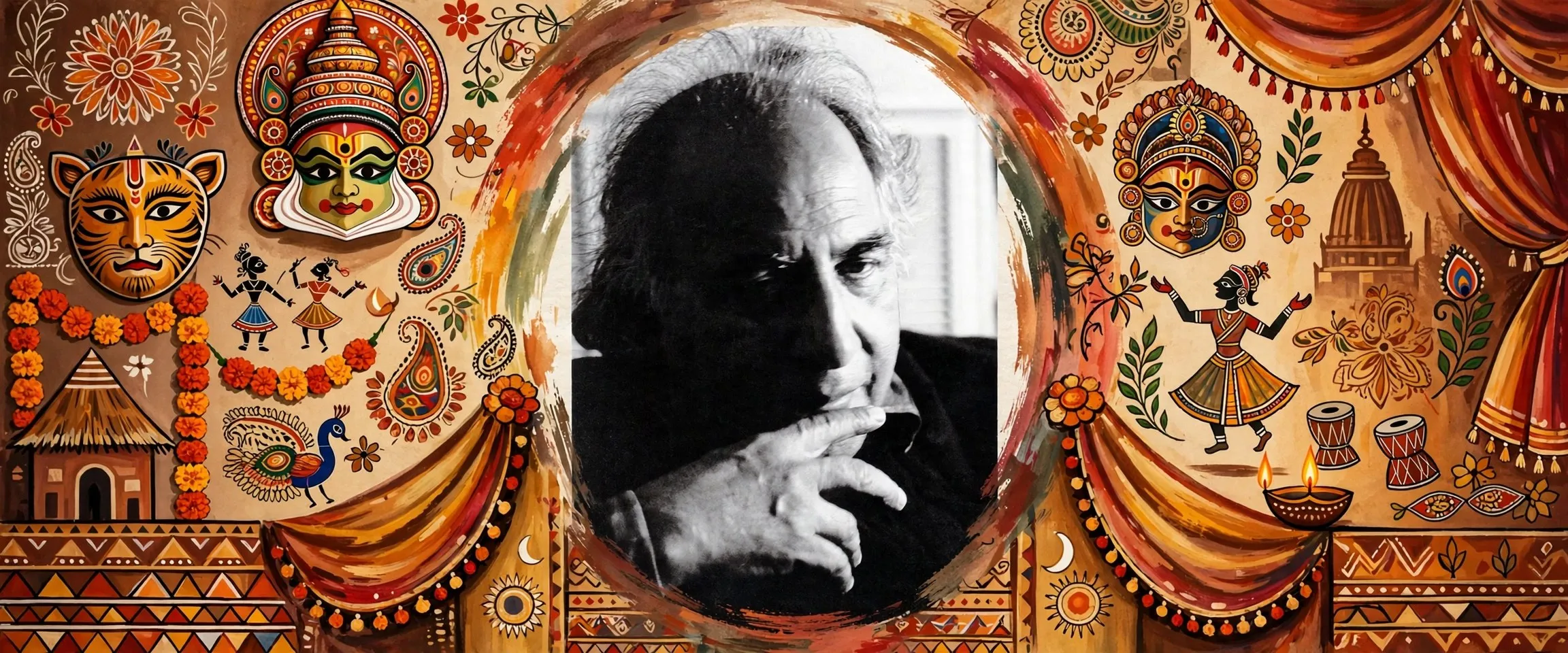
Folk Theater of India is a 1966 book on Indian folk theatre by the Punjabi playwright Balwant Gargi, published by the University of Washington Press in Seattle. It analyses nine folk forms in depth, Jatra, Nautanki, Bhavai, Tamasha, Ramlila, Raslila, Theerukoothu, Yakshagana and Chhau, and argues that India's folk stage is the living root of its theatre. The book, 217 pages with illustrations, a glossary and an index, is also cited as Folk Theatre of India, and it is the English companion to Gargi's Punjabi classic Rangmanch (1962).
English- Punjabi name
- ਫੋਕ ਥੀਏਟਰ ਆਫ਼ ਇੰਡੀਆ
- Author
- Balwant Gargi (1916 to 2003)
- Published
- 1966, University of Washington Press, Seattle
- Language
- English
- Form
- Essays
- Pages
- 217 (x + 217)
All 9 facts
- Also cited as
- Folk Theatre of India
- Companion books
- Theatre in India (1962); Rangmanch (1962)
- Features
- Illustrations, glossary and index
Folk Theater of India is a book on Indian folk theatre by Balwant Gargi (1916 to 2003), published in 1966 by the University of Washington Press in Seattle. It is the English companion to the argument Gargi had already made in Punjabi in Rangmanch (1962), the book that won him the Sahitya Akademi Award: that Indian theatre had a long, serious history of its own, and that its folk stage was not a rough cousin of the classical stage but its living root. The book runs to 217 pages, with illustrations, a glossary and an index, and it is still cited as the first English study to take India's folk theatre forms seriously, one by one, on their own terms. It is also cited under the British spelling, Folk Theatre of India.
About the book
The book appeared in 1966, at the end of Gargi's stay in the United States, where he had taught acting and production in 1964 to 1966. It was published by the University of Washington Press in Seattle, in a volume of x plus 217 pages, priced at 8.95 dollars, with illustrations, a glossary and an index. The Journal of Asian Studies carried a review of it in 1967. Gargi wrote it in English, for readers outside India as much as for readers at home, and it sits beside his other English volume of the same period, Theatre in India (1962), and his Punjabi classic Rangmanch (1962). Together the three books carry one argument in two languages: Indian theatre deserved serious study, and its folk forms deserved to be studied first, not last.
What folk forms does the book cover?
The book analyses nine folk forms in depth: Jatra, Nautanki, Bhavai, Tamasha, Ramlila, Raslila, Theerukoothu, Yakshagana and Chhau. Together they cover the whole map of India, from Bengal to Gujarat, from Maharashtra to Tamil Nadu and Karnataka. Jatra is the musical theatre of Bengal, performed in the open air before large village crowds. Nautanki is the folk opera of north India, sung and danced through stories of love, heroism and devotion. Bhavai is the folk theatre of Gujarat, and Tamasha the musical folk theatre of Maharashtra, both built on song, dance and comic dialogue. Ramlila and Raslila are enactments of the lives of Rama and Krishna, performed at festivals and in village squares across the north. Theerukoothu is the Tamil street theatre of the villages, and Yakshagana the dance drama of Karnataka, with its painted faces, huge headgear and stories from the epics. Chhau is the masked dance of Bengal, Odisha and Jharkhand, where the story is told through movement and masks rather than words. Gargi's point, in taking all nine together, is that these are not nine curiosities. They are nine working theatres, each with its own music, its own actors and its own audience.
Why Gargi wrote it
Gargi was the first Punjabi playwright to open Punjabi theatre to varied influences, and the folk stage was where he began. His first play, Loha Kutt (1944), drew its stark picture of the Punjab countryside from the life he knew, and his later plays moved freely between village life, mythology, history and folklore. He also made documentaries on Jatra and Ramlila, so the book grew out of watching these forms at work, not only out of reading about them. For Gargi, the folk forms were not decoration on theatre but its living root, and a modern Indian theatre should grow out of its own folk and classical ground rather than copy the West. He drew on the Sanskrit classics as much as on Lorca, Brecht and Artaud, and the book is that position worked out in detail: the stage India already had, described carefully, form by form, so that the stage India might build would have something solid to stand on.
The author
Balwant Gargi was born on 4 December 1916 in Sehna, Barnala, in Punjab. He studied at Government College, Lahore, taking master's degrees in English and in political science from FC College, Lahore, and he learned theatre with Norah Richards at her school in the Kangra Valley, the training ground of modern Punjabi drama. His first play, Loha Kutt, appeared in 1944, and he went on to write a dozen full length plays and five collections of one act plays, among them Kanak Di Balli, Mirza Sahiban (1976) and Dhooni Di Agg (1977). His plays were translated into 12 languages and performed in Moscow, London, New Delhi and across the United States. In 1968 he became the first director of the Department of Indian Theatre at Panjab University, Chandigarh, and he remained there till 1976. He received the Padma Shri in 1972 and the Sangeet Natak Akademi Award for Punjabi playwriting in 1998, and he died in Mumbai in April 2003. His plays and books in this Kosh include Loha Kutt, Rangmanch and Nangi Dhup.
Reception and legacy
Folk Theater of India was reviewed in the Journal of Asian Studies in 1967, and it has stayed in use ever since as a reference for students of Indian theatre. Later writing on the subject still cites Gargi's analysis of the nine forms, and the book is named in university theses and surveys as the study that first treated them together, in English, as a serious subject. Its legacy is practical as much as literary. The department Gargi founded at Chandigarh still trains actors and directors, and the folk forms he described are now studied, filmed and performed far beyond the villages where he first watched them. For readers coming to Indian theatre for the first time, the book remains a useful starting point: a playwright's map of a stage that is older, larger and livelier than the proscenium theatre most English readers knew in 1966.
ਫੋਕ ਥੀਏਟਰ ਆਫ਼ ਇੰਡੀਆ ਬਲਵੰਤ ਗਾਰਗੀ (1916 ਤੋਂ 2003) ਦੀ ਭਾਰਤੀ ਲੋਕ ਰੰਗਮੰਚ ਬਾਰੇ ਕਿਤਾਬ ਹੈ, ਜੋ 1966 ਵਿੱਚ ਸੀਐਟਲ ਦੀ ਯੂਨੀਵਰਸਿਟੀ ਆਫ਼ ਵਾਸ਼ਿੰਗਟਨ ਪ੍ਰੈੱਸ ਤੋਂ ਛਪੀ ਸੀ। ਇਹ ਉਸ ਦਲੀਲ ਦੀ ਅੰਗਰੇਜ਼ੀ ਸਾਥੀ ਕਿਤਾਬ ਹੈ ਜੋ ਗਾਰਗੀ ਨੇ ਪਹਿਲਾਂ ਪੰਜਾਬੀ ਵਿੱਚ ਰੰਗਮੰਚ (1962) ਵਿੱਚ ਦਿੱਤੀ ਸੀ, ਜਿਸ ਕਿਤਾਬ ਨੇ ਉਸ ਨੂੰ ਸਾਹਿਤ ਅਕਾਦਮੀ ਇਨਾਮ ਦਿਵਾਇਆ ਸੀ: ਭਾਰਤੀ ਰੰਗਮੰਚ ਦਾ ਆਪਣਾ ਇੱਕ ਲੰਮਾ, ਗੰਭੀਰ ਇਤਿਹਾਸ ਸੀ, ਅਤੇ ਇਸ ਦਾ ਲੋਕ ਮੰਚ ਸ਼ਾਸਤਰੀ ਮੰਚ ਦਾ ਕੋਈ ਮੋਟਾ ਰਿਸ਼ਤੇਦਾਰ ਨਹੀਂ, ਇਸ ਦੀ ਜੀਵੰਤ ਜੜ੍ਹ ਸੀ। ਕਿਤਾਬ 217 ਸਫ਼ਿਆਂ ਦੀ ਹੈ, ਜਿਸ ਵਿੱਚ ਤਸਵੀਰਾਂ, ਸ਼ਬਦਾਵਲੀ ਅਤੇ ਸੂਚੀ ਹੈ, ਅਤੇ ਅੱਜ ਵੀ ਇਸ ਨੂੰ ਪਹਿਲਾ ਅੰਗਰੇਜ਼ੀ ਅਧਿਐਨ ਮੰਨਿਆ ਜਾਂਦਾ ਹੈ ਜਿਸ ਨੇ ਭਾਰਤ ਦੇ ਲੋਕ ਰੰਗਮੰਚ ਰੂਪਾਂ ਨੂੰ ਇੱਕ ਇੱਕ ਕਰ ਕੇ ਗੰਭੀਰਤਾ ਨਾਲ ਲਿਆ। ਇਸ ਦਾ ਹਵਾਲਾ ਬਰਤਾਨਵੀ ਸਪੈਲਿੰਗ, ਫੋਕ ਥੀਏਟਰ ਆਫ਼ ਇੰਡੀਆ, ਨਾਲ ਵੀ ਦਿੱਤਾ ਜਾਂਦਾ ਹੈ।
ਕਿਤਾਬ ਬਾਰੇ
ਇਹ ਕਿਤਾਬ 1966 ਵਿੱਚ ਛਪੀ, ਗਾਰਗੀ ਦੇ ਅਮਰੀਕਾ ਵਿੱਚ ਰਹਿਣ ਦੇ ਅੰਤ ਵਿੱਚ, ਜਿੱਥੇ ਉਸ ਨੇ 1964 ਤੋਂ 1966 ਤੱਕ ਅਦਾਕਾਰੀ ਤੇ ਨਿਰਮਾਣ ਪੜ੍ਹਾਇਆ ਸੀ। ਇਹ ਸੀਐਟਲ ਦੀ ਯੂਨੀਵਰਸਿਟੀ ਆਫ਼ ਵਾਸ਼ਿੰਗਟਨ ਪ੍ਰੈੱਸ ਤੋਂ ਛਪੀ, x ਜੋੜ 217 ਸਫ਼ਿਆਂ ਦੀ ਜਿਲਦ ਵਿੱਚ, ਜਿਸ ਦੀ ਕੀਮਤ 8.95 ਡਾਲਰ ਸੀ, ਅਤੇ ਜਿਸ ਵਿੱਚ ਤਸਵੀਰਾਂ, ਸ਼ਬਦਾਵਲੀ ਤੇ ਸੂਚੀ ਸੀ। ਜਰਨਲ ਆਫ਼ ਏਸ਼ੀਅਨ ਸਟੱਡੀਜ਼ ਨੇ 1967 ਵਿੱਚ ਇਸ ਦੀ ਸਮੀਖਿਆ ਛਾਪੀ। ਗਾਰਗੀ ਨੇ ਇਹ ਅੰਗਰੇਜ਼ੀ ਵਿੱਚ ਲਿਖੀ, ਭਾਰਤ ਤੋਂ ਬਾਹਰ ਦੇ ਪਾਠਕਾਂ ਲਈ ਓਨੀ ਹੀ ਜਿੰਨੀ ਘਰ ਦੇ ਪਾਠਕਾਂ ਲਈ, ਅਤੇ ਇਹ ਉਸ ਦੀ ਉਸੇ ਸਮੇਂ ਦੀ ਦੂਜੀ ਅੰਗਰੇਜ਼ੀ ਕਿਤਾਬ, ਥੀਏਟਰ ਇਨ ਇੰਡੀਆ (1962), ਅਤੇ ਉਸ ਦੀ ਪੰਜਾਬੀ ਕਲਾਸਿਕ ਰੰਗਮੰਚ (1962) ਦੇ ਨਾਲ ਖੜ੍ਹੀ ਹੈ। ਤਿੰਨੇ ਕਿਤਾਬਾਂ ਮਿਲ ਕੇ ਦੋ ਭਾਸ਼ਾਵਾਂ ਵਿੱਚ ਇੱਕੋ ਦਲੀਲ ਦਿੰਦੀਆਂ ਹਨ: ਭਾਰਤੀ ਰੰਗਮੰਚ ਗੰਭੀਰ ਅਧਿਐਨ ਦਾ ਹੱਕਦਾਰ ਸੀ, ਅਤੇ ਇਸ ਦੇ ਲੋਕ ਰੂਪਾਂ ਦਾ ਅਧਿਐਨ ਸਭ ਤੋਂ ਪਹਿਲਾਂ ਹੋਣਾ ਚਾਹੀਦਾ ਸੀ, ਸਭ ਤੋਂ ਅੰਤ ਵਿੱਚ ਨਹੀਂ।
ਕਿਤਾਬ ਵਿੱਚ ਕਿਹੜੇ ਲੋਕ ਰੂਪ ਹਨ?
ਇਹ ਕਿਤਾਬ ਨੌਂ ਲੋਕ ਰੂਪਾਂ ਦਾ ਡੂੰਘਾ ਵਿਸ਼ਲੇਸ਼ਣ ਕਰਦੀ ਹੈ: ਜਾਤਰਾ, ਨੌਟੰਕੀ, ਭਵਾਈ, ਤਮਾਸ਼ਾ, ਰਾਮਲੀਲਾ, ਰਾਸਲੀਲਾ, ਥੇਰੂਕੂਥੁ, ਯਕਸ਼ਗਾਨਾ ਅਤੇ ਛਾਉ। ਇਹ ਮਿਲ ਕੇ ਭਾਰਤ ਦਾ ਸਾਰਾ ਨਕਸ਼ਾ ਢੱਕਦੇ ਹਨ, ਬੰਗਾਲ ਤੋਂ ਗੁਜਰਾਤ ਤੱਕ, ਮਹਾਰਾਸ਼ਟਰ ਤੋਂ ਤਮਿਲ ਨਾਡੂ ਅਤੇ ਕਰਨਾਟਕ ਤੱਕ। ਜਾਤਰਾ ਬੰਗਾਲ ਦਾ ਸੰਗੀਤਕ ਰੰਗਮੰਚ ਹੈ, ਜੋ ਖੁੱਲ੍ਹੇ ਮੈਦਾਨ ਵਿੱਚ ਵੱਡੀ ਪਿੰਡ ਭੀੜ ਸਾਹਮਣੇ ਖੇਡਿਆ ਜਾਂਦਾ ਹੈ। ਨੌਟੰਕੀ ਉੱਤਰੀ ਭਾਰਤ ਦਾ ਲੋਕ ਓਪੇਰਾ ਹੈ, ਜੋ ਪ੍ਰੇਮ, ਬਹਾਦਰੀ ਅਤੇ ਭਗਤੀ ਦੀਆਂ ਕਹਾਣੀਆਂ ਨੂੰ ਗਾ ਕੇ ਤੇ ਨੱਚ ਕੇ ਸੁਣਾਉਂਦਾ ਹੈ। ਭਵਾਈ ਗੁਜਰਾਤ ਦਾ ਲੋਕ ਰੰਗਮੰਚ ਹੈ, ਅਤੇ ਤਮਾਸ਼ਾ ਮਹਾਰਾਸ਼ਟਰ ਦਾ ਸੰਗੀਤਕ ਲੋਕ ਰੰਗਮੰਚ, ਦੋਵੇਂ ਗੀਤ, ਨਾਚ ਤੇ ਹਾਸਰਸ ਸੰਵਾਦ ਉੱਤੇ ਬਣੇ ਹੋਏ ਹਨ। ਰਾਮਲੀਲਾ ਤੇ ਰਾਸਲੀਲਾ ਰਾਮ ਅਤੇ ਕ੍ਰਿਸ਼ਨ ਦੇ ਜੀਵਨ ਦੀਆਂ ਪੇਸ਼ਕਾਰੀਆਂ ਹਨ, ਜੋ ਤਿਉਹਾਰਾਂ ਉੱਤੇ ਅਤੇ ਉੱਤਰ ਦੇ ਪਿੰਡ ਚੌਕਾਂ ਵਿੱਚ ਖੇਡੀਆਂ ਜਾਂਦੀਆਂ ਹਨ। ਥੇਰੂਕੂਥੁ ਪਿੰਡਾਂ ਦਾ ਤਮਿਲ ਗਲੀ ਰੰਗਮੰਚ ਹੈ, ਅਤੇ ਯਕਸ਼ਗਾਨਾ ਕਰਨਾਟਕ ਦਾ ਨਾਚ ਨਾਟਕ, ਜਿਸ ਵਿੱਚ ਰੰਗੇ ਚਿਹਰੇ, ਵੱਡੇ ਸਿਰ ਦੇ ਸਜਾਵਟੀ ਟੋਪ ਅਤੇ ਮਹਾਂਕਾਵਾਂ ਦੀਆਂ ਕਹਾਣੀਆਂ ਹੁੰਦੀਆਂ ਹਨ। ਛਾਉ ਬੰਗਾਲ, ਓਡੀਸ਼ਾ ਅਤੇ ਝਾਰਖੰਡ ਦਾ ਮੁਖੌਟਾ ਨਾਚ ਹੈ, ਜਿੱਥੇ ਕਹਾਣੀ ਸ਼ਬਦਾਂ ਦੀ ਥਾਂ ਹਰਕਤ ਅਤੇ ਮੁਖੌਟਿਆਂ ਰਾਹੀਂ ਸੁਣਾਈ ਜਾਂਦੀ ਹੈ। ਗਾਰਗੀ ਦੀ ਗੱਲ, ਇਹਨਾਂ ਨੌਂ ਨੂੰ ਇਕੱਠਾ ਲੈ ਕੇ, ਇਹ ਹੈ ਕਿ ਇਹ ਨੌਂ ਅਜੂਬੇ ਨਹੀਂ ਹਨ। ਇਹ ਨੌਂ ਕੰਮ ਕਰਦੇ ਰੰਗਮੰਚ ਹਨ, ਹਰ ਇੱਕ ਦਾ ਆਪਣਾ ਸੰਗੀਤ, ਆਪਣੇ ਅਦਾਕਾਰ ਅਤੇ ਆਪਣੇ ਦਰਸ਼ਕ ਹਨ।
ਗਾਰਗੀ ਨੇ ਇਹ ਕਿਉਂ ਲਿਖੀ
ਗਾਰਗੀ ਪਹਿਲਾ ਪੰਜਾਬੀ ਨਾਟਕਕਾਰ ਸੀ ਜਿਸ ਨੇ ਪੰਜਾਬੀ ਰੰਗਮੰਚ ਨੂੰ ਕਈ ਪ੍ਰਭਾਵਾਂ ਲਈ ਖੋਲ੍ਹਿਆ, ਅਤੇ ਲੋਕ ਮੰਚ ਹੀ ਉਹ ਥਾਂ ਸੀ ਜਿੱਥੋਂ ਉਸ ਨੇ ਸ਼ੁਰੂਆਤ ਕੀਤੀ। ਉਸ ਦਾ ਪਹਿਲਾ ਨਾਟਕ, ਲੋਹਾ ਕੁੱਟ (1944), ਪੰਜਾਬ ਦੇ ਪੇਂਡੂ ਜੀਵਨ ਦੀ ਕਠੋਰ ਤਸਵੀਰ ਉਸ ਜ਼ਿੰਦਗੀ ਵਿੱਚੋਂ ਲੈਂਦਾ ਸੀ ਜਿਸ ਨੂੰ ਉਹ ਜਾਣਦਾ ਸੀ, ਅਤੇ ਉਸ ਦੇ ਬਾਅਦ ਦੇ ਨਾਟਕ ਪਿੰਡ ਜੀਵਨ, ਮਿਥਿਹਾਸ, ਇਤਿਹਾਸ ਤੇ ਲੋਕ ਕਥਾਵਾਂ ਵਿਚਕਾਰ ਆਜ਼ਾਦੀ ਨਾਲ ਚੱਲਦੇ ਸਨ। ਉਸ ਨੇ ਜਾਤਰਾ ਤੇ ਰਾਮਲੀਲਾ ਉੱਤੇ ਦਸਤਾਵੇਜ਼ੀ ਫ਼ਿਲਮਾਂ ਵੀ ਬਣਾਈਆਂ, ਇਸ ਲਈ ਇਹ ਕਿਤਾਬ ਇਹਨਾਂ ਰੂਪਾਂ ਬਾਰੇ ਸਿਰਫ਼ ਪੜ੍ਹ ਕੇ ਨਹੀਂ, ਇਹਨਾਂ ਨੂੰ ਕੰਮ ਕਰਦੇ ਦੇਖ ਕੇ ਲਿਖੀ ਗਈ। ਗਾਰਗੀ ਲਈ ਲੋਕ ਰੂਪ ਰੰਗਮੰਚ ਉੱਤੇ ਸਜਾਵਟ ਨਹੀਂ, ਇਸ ਦੀ ਜੀਵੰਤ ਜੜ੍ਹ ਸਨ, ਅਤੇ ਆਧੁਨਿਕ ਭਾਰਤੀ ਰੰਗਮੰਚ ਨੂੰ ਪੱਛਮ ਦੀ ਨਕਲ ਦੀ ਥਾਂ ਆਪਣੀ ਲੋਕ ਤੇ ਸ਼ਾਸਤਰੀ ਧਰਤੀ ਵਿੱਚੋਂ ਉੱਗਣਾ ਚਾਹੀਦਾ ਸੀ। ਉਹ ਸੰਸਕ੍ਰਿਤ ਸ਼ਾਸਤਰੀ ਰਚਨਾਵਾਂ ਜਿੰਨਾ ਹੀ ਲੋਰਕਾ, ਬ੍ਰੈਖ਼ਤ ਤੇ ਆਰਤੋ ਉੱਤੇ ਟਿਕਿਆ ਸੀ, ਅਤੇ ਇਹ ਕਿਤਾਬ ਉਸੇ ਸਥਿਤੀ ਦਾ ਵਿਸਥਾਰ ਹੈ: ਉਹ ਮੰਚ ਜੋ ਭਾਰਤ ਕੋਲ ਪਹਿਲਾਂ ਹੀ ਸੀ, ਧਿਆਨ ਨਾਲ ਵਰਣਨ ਕੀਤਾ ਗਿਆ, ਰੂਪ ਦਰ ਰੂਪ, ਤਾਂ ਕਿ ਉਹ ਮੰਚ ਜੋ ਭਾਰਤ ਬਣਾ ਸਕਦਾ ਸੀ, ਉਸ ਕੋਲ ਖੜ੍ਹਨ ਲਈ ਕੋਈ ਮਜ਼ਬੂਤ ਨੀਂਹ ਹੋਵੇ।
ਲੇਖਕ ਬਾਰੇ
ਬਲਵੰਤ ਗਾਰਗੀ ਦਾ ਜਨਮ 4 ਦਸੰਬਰ 1916 ਨੂੰ ਪੰਜਾਬ ਦੇ ਸਹਿਣਾ, ਬਰਨਾਲਾ ਵਿੱਚ ਹੋਇਆ ਸੀ। ਉਸ ਨੇ ਗਵਰਨਮੈਂਟ ਕਾਲਜ, ਲਾਹੌਰ ਵਿੱਚ ਪੜ੍ਹਾਈ ਕੀਤੀ, ਐਫ. ਸੀ. ਕਾਲਜ, ਲਾਹੌਰ ਤੋਂ ਅੰਗਰੇਜ਼ੀ ਅਤੇ ਰਾਜਨੀਤੀ ਵਿਗਿਆਨ ਵਿੱਚ ਮਾਸਟਰ ਦੀਆਂ ਡਿਗਰੀਆਂ ਲਈਆਂ, ਅਤੇ ਕਾਂਗੜਾ ਵਾਦੀ ਵਿੱਚ ਨੋਰਾ ਰਿਚਰਡਜ਼ ਦੇ ਸਕੂਲ ਵਿੱਚ ਰੰਗਮੰਚ ਸਿੱਖਿਆ, ਜੋ ਆਧੁਨਿਕ ਪੰਜਾਬੀ ਨਾਟਕ ਦਾ ਸਿਖਲਾਈ ਮੈਦਾਨ ਸੀ। ਉਸ ਦਾ ਪਹਿਲਾ ਨਾਟਕ, ਲੋਹਾ ਕੁੱਟ, 1944 ਵਿੱਚ ਆਇਆ, ਅਤੇ ਉਸ ਨੇ ਅੱਗੇ ਬਾਰਾਂ ਪੂਰੇ ਨਾਟਕ ਅਤੇ ਇੱਕਾਂਗੀ ਨਾਟਕਾਂ ਦੇ ਪੰਜ ਸੰਗ੍ਰਹਿ ਲਿਖੇ, ਜਿਨ੍ਹਾਂ ਵਿੱਚ ਕਣਕ ਦੀ ਬਾਲੀ, ਮਿਰਜ਼ਾ ਸਾਹਿਬਾਂ (1976) ਅਤੇ ਧੂਣੀ ਦੀ ਅੱਗ (1977) ਸ਼ਾਮਲ ਹਨ। ਉਸ ਦੇ ਨਾਟਕ 12 ਭਾਸ਼ਾਵਾਂ ਵਿੱਚ ਅਨੁਵਾਦ ਹੋਏ ਅਤੇ ਮਾਸਕੋ, ਲੰਡਨ, ਨਵੀਂ ਦਿੱਲੀ ਅਤੇ ਸਾਰੇ ਅਮਰੀਕਾ ਵਿੱਚ ਖੇਡੇ ਗਏ। 1968 ਵਿੱਚ ਉਹ ਪੰਜਾਬ ਯੂਨੀਵਰਸਿਟੀ, ਚੰਡੀਗੜ੍ਹ ਦੇ ਭਾਰਤੀ ਰੰਗਮੰਚ ਵਿਭਾਗ ਦਾ ਪਹਿਲਾ ਨਿਰਦੇਸ਼ਕ ਬਣਿਆ, ਅਤੇ 1976 ਤੱਕ ਉੱਥੇ ਰਿਹਾ। ਉਸ ਨੂੰ 1972 ਵਿੱਚ ਪਦਮ ਸ਼੍ਰੀ ਅਤੇ 1998 ਵਿੱਚ ਪੰਜਾਬੀ ਨਾਟਕ ਲੇਖਣੀ ਲਈ ਸੰਗੀਤ ਨਾਟਕ ਅਕਾਦਮੀ ਇਨਾਮ ਮਿਲਿਆ, ਅਤੇ ਅਪ੍ਰੈਲ 2003 ਵਿੱਚ ਮੁੰਬਈ ਵਿੱਚ ਉਸ ਦੀ ਮੌਤ ਹੋਈ। ਇਸ ਕੋਸ਼ ਵਿੱਚ ਉਸ ਦੇ ਨਾਟਕਾਂ ਤੇ ਕਿਤਾਬਾਂ ਵਿੱਚ ਲੋਹਾ ਕੁੱਟ, ਰੰਗਮੰਚ ਅਤੇ ਨੰਗੀ ਧੁੱਪ ਸ਼ਾਮਲ ਹਨ।
ਸਵਾਗਤ ਅਤੇ ਵਿਰਾਸਤ
ਫੋਕ ਥੀਏਟਰ ਆਫ਼ ਇੰਡੀਆ ਦੀ ਸਮੀਖਿਆ 1967 ਵਿੱਚ ਜਰਨਲ ਆਫ਼ ਏਸ਼ੀਅਨ ਸਟੱਡੀਜ਼ ਵਿੱਚ ਛਪੀ, ਅਤੇ ਉਦੋਂ ਤੋਂ ਇਹ ਭਾਰਤੀ ਰੰਗਮੰਚ ਦੇ ਵਿਦਿਆਰਥੀਆਂ ਲਈ ਇੱਕ ਹਵਾਲਾ ਪੁਸਤਕ ਬਣੀ ਹੋਈ ਹੈ। ਇਸ ਵਿਸ਼ੇ ਉੱਤੇ ਬਾਅਦ ਦੀ ਲਿਖਤ ਅੱਜ ਵੀ ਨੌਂ ਰੂਪਾਂ ਬਾਰੇ ਗਾਰਗੀ ਦੇ ਵਿਸ਼ਲੇਸ਼ਣ ਦਾ ਹਵਾਲਾ ਦਿੰਦੀ ਹੈ, ਅਤੇ ਯੂਨੀਵਰਸਿਟੀ ਦੇ ਖੋਜ ਪੱਤਰਾਂ ਤੇ ਸਰਵੇਖਣਾਂ ਵਿੱਚ ਇਸ ਕਿਤਾਬ ਦਾ ਨਾਂ ਉਸ ਅਧਿਐਨ ਵਜੋਂ ਆਉਂਦਾ ਹੈ ਜਿਸ ਨੇ ਇਹਨਾਂ ਨੂੰ ਪਹਿਲੀ ਵਾਰ ਇਕੱਠੇ, ਅੰਗਰੇਜ਼ੀ ਵਿੱਚ, ਇੱਕ ਗੰਭੀਰ ਵਿਸ਼ੇ ਵਜੋਂ ਲਿਆ। ਇਸ ਦੀ ਵਿਰਾਸਤ ਸਾਹਿਤਕ ਜਿੰਨੀ ਹੀ ਵਿਹਾਰਕ ਹੈ। ਚੰਡੀਗੜ੍ਹ ਵਿੱਚ ਗਾਰਗੀ ਦਾ ਸਥਾਪਿਆ ਵਿਭਾਗ ਅੱਜ ਵੀ ਅਦਾਕਾਰਾਂ ਅਤੇ ਨਿਰਦੇਸ਼ਕਾਂ ਨੂੰ ਸਿਖਲਾਈ ਦਿੰਦਾ ਹੈ, ਅਤੇ ਜਿਨ੍ਹਾਂ ਲੋਕ ਰੂਪਾਂ ਦਾ ਉਸ ਨੇ ਵਰਣਨ ਕੀਤਾ, ਉਹ ਅੱਜ ਉਨ੍ਹਾਂ ਪਿੰਡਾਂ ਤੋਂ ਕਿਤੇ ਦੂਰ ਅਧਿਐਨ ਕੀਤੇ ਜਾਂਦੇ ਹਨ, ਫ਼ਿਲਮਾਏ ਜਾਂਦੇ ਹਨ ਅਤੇ ਖੇਡੇ ਜਾਂਦੇ ਹਨ ਜਿੱਥੇ ਉਸ ਨੇ ਪਹਿਲੀ ਵਾਰ ਇਹਨਾਂ ਨੂੰ ਦੇਖਿਆ ਸੀ। ਭਾਰਤੀ ਰੰਗਮੰਚ ਵੱਲ ਪਹਿਲੀ ਵਾਰ ਆਉਣ ਵਾਲੇ ਪਾਠਕਾਂ ਲਈ ਇਹ ਕਿਤਾਬ ਅੱਜ ਵੀ ਇੱਕ ਚੰਗਾ ਸ਼ੁਰੂਆਤੀ ਬਿੰਦੂ ਹੈ: ਇੱਕ ਨਾਟਕਕਾਰ ਦਾ ਨਕਸ਼ਾ, ਉਸ ਮੰਚ ਦਾ ਜੋ 1966 ਵਿੱਚ ਬਹੁਤੇ ਅੰਗਰੇਜ਼ੀ ਪਾਠਕਾਂ ਦੇ ਜਾਣੇ ਪਛਾਣੇ ਪ੍ਰੋਸੀਨੀਅਮ ਰੰਗਮੰਚ ਨਾਲੋਂ ਪੁਰਾਣਾ, ਵੱਡਾ ਅਤੇ ਵਧੇਰੇ ਜੀਵੰਤ ਹੈ।
Editions and translations
- Folk Theater of IndiaEnglish · original, 1966 · University of Washington Press, Seattle · x + 217 pages · illustrations, glossary, indexOriginal
- Folk Theatre of IndiaEnglish · the same book cited with the British spelling of Theatre in later writingEdition
The author
Connected
More to read
Sources (5)
Jugti is free and independent. Reader support keeps the Kosh growing.
Support