
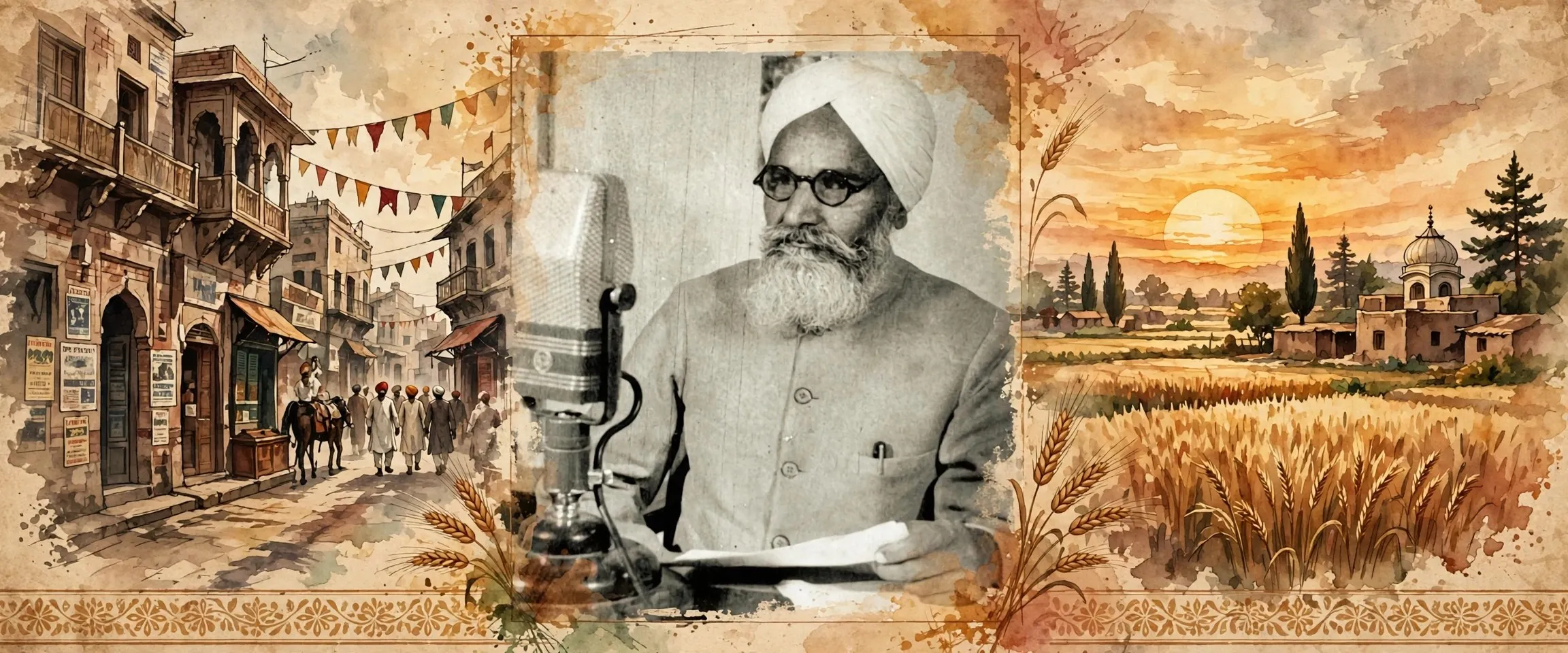
Ikk Mian Do Talwaran (One Sheath, Two Swords) is a 1959 Punjabi novel by Nanak Singh about the Ghadar Movement of 1914-15. It follows a brother and sister from a Punjab village who are drawn into the struggle against British rule, and it won the Sahitya Akademi Award in 1962.
Punjabi, Gurmukhi- Punjabi name
- ਇੱਕ ਮਿਆਨ ਦੋ ਤਲਵਾਰਾਂ
- Author
- Nanak Singh
- Published
- 1959
- Language
- Punjabi (Gurmukhi)
- Form
- Novel, historical fiction
- Title means
- One Sheath, Two Swords
All 9 facts
- Setting
- Haranpur village, Punjab; the Ghadar Movement, 1914-1915
- Award
- Sahitya Akademi Award, 1962
- Publisher
- Nanak Singh Pustak Mala, Amritsar
Characters
About the book
Ikk Mian Do Talwaran (One Sheath, Two Swords), published in 1959, is Nanak Singh's historical novel of the Ghadar Movement, the attempt by Punjabi revolutionaries abroad to overthrow British rule during the First World War. It won the Sahitya Akademi Award in 1962, the highest literary honour of its day, and it remains the Punjabi novel most readers are pointed to when they ask what fiction made of the Ghadar generation. The title is an old saying about two swords that cannot share one sheath. In the novel it describes a household, a village and a young life pulled between love and duty, patience and revolt.
The book is set in Haranpur, a fictional village in the Punjab of undivided India, in what is today Pakistan. The Ghadar Movement itself was real: founded in 1913 by Punjabi immigrants in North America, it called on Indians abroad to return home and rise against British rule, and its rising of 1914-15 ended in arrests, trials and executions. Nanak Singh builds his story inside that history, mixing real figures with invented ones, and letting a family carry the weight of a movement.
The story
The novel follows Sudarshan and his sister Raghbir, known as Biri, the children of Baba Sukhdev Singh Sodhi of Haranpur. Revolutionary pamphlets and returning Ghadarites draw them into the movement, and through it they meet Kartar Singh Sarabha, the young revolutionary who had become the movement's most famous face. Biri's admiration for Sarabha grows into a bond built on shared political passion, and her love for him becomes part of her commitment to the cause. The narrative follows the movement's rise, the betrayal that undid it, Sarabha's execution, and Biri's determination to answer it. The plot moves between the village and the wider conspiracy, and between the family's private life and the public cause that consumes it.
Who are Sudarshan and Biri?
Sudarshan is the steady centre of the family, the son who takes up the cause as a duty. Biri is the novel's emotional centre, and its most discussed character. In a story of men, meetings and secret plans, she claims a place of her own, not as a bystander to the revolution but as one of its believers. Her feelings for Sarabha are never separated from her politics: she loves the man because she loves what he stands for. Readers and critics have long noted how unusual this was in a Punjabi novel of the 1950s, a young woman given a political mind and a will of her own. Kartar Singh Sarabha, by contrast, is a real historical figure. He was nineteen when he was hanged in Lahore in 1915, and Nanak Singh presents him not as a distant martyr but as a young man among young people, which is what makes his death land so hard in the novel.
Themes: sacrifice, loyalty and the cost of rebellion
The novel's first theme is the price of idealism. The Ghadarites believed a rising would free India, and the book honours that belief while showing what it cost: families broken, villages watched, young lives cut short. Its second theme is loyalty, and how it is tested: loyalty to family against loyalty to country, loyalty to a leader against loyalty to a friend, and the betrayals that turned a rising into a roundup. A third thread is the place of women in a revolution made by men. Biri's story asks whether a woman's sacrifice counts the same as a man's, and answers it by giving her the novel's hardest choices. Running through it all is the village itself: Haranpur's communal life, its idioms and its rhythms, rendered in the Punjabi Nanak Singh knew from his own childhood in the Jhelum district.
The author
Nanak Singh (1897-1971) is honoured as the father of the Punjabi novel. Born Hans Raj in Chak Hamid, in the Jhelum district of undivided Punjab, he had almost no formal schooling and taught himself to write. He was present at Jallianwala Bagh on 13 April 1919, and the long poem he wrote about it, Khooni Vaisakhi, was banned soon after it appeared. He went on to write fifty-nine books, including thirty-eight novels. Chitta Lahu (1932) made him the founder of modern Punjabi fiction, and Pavitra Paapi, filmed in 1968, made him famous across India. Ikk Mian Do Talwaran came late in that long career, when he was in his sixties, and it drew on a lifetime of thinking about what the freedom struggle had asked of ordinary Punjabis.
Reception and legacy
The Sahitya Akademi Award in 1962 put the novel among the most honoured Punjabi books of its generation. It also fixed Nanak Singh's second reputation: not only the novelist of village society, but the novelist of the freedom struggle. The book is still read as the fullest Punjabi fictional account of the Ghadar Movement, and it is the title readers reach for when they want the story of Kartar Singh Sarabha and his generation told as a novel rather than a history. For readers new to Nanak Singh, it is a good second book after Chitta Lahu: the same warm village world, now carrying the weight of a revolution.
ਕਿਤਾਬ ਬਾਰੇ
ਇੱਕ ਮਿਆਨ ਦੋ ਤਲਵਾਰਾਂ, 1959 ਵਿੱਚ ਛਪਿਆ, ਨਾਨਕ ਸਿੰਘ ਦਾ ਗ਼ਦਰ ਲਹਿਰ ਬਾਰੇ ਇਤਿਹਾਸਕ ਨਾਵਲ ਹੈ। ਗ਼ਦਰ ਲਹਿਰ ਉਹ ਯਤਨ ਸੀ ਜਿਸ ਰਾਹੀਂ ਵਿਦੇਸ਼ਾਂ ਵਿੱਚ ਵਸਦੇ ਪੰਜਾਬੀ ਇਨਕਲਾਬੀਆਂ ਨੇ ਪਹਿਲੇ ਵਿਸ਼ਵ ਯੁੱਧ ਦੌਰਾਨ ਅੰਗਰੇਜ਼ੀ ਰਾਜ ਨੂੰ ਉਖਾੜਨ ਦੀ ਕੋਸ਼ਿਸ਼ ਕੀਤੀ ਸੀ। ਇਸ ਨਾਵਲ ਨੂੰ 1962 ਵਿੱਚ ਸਾਹਿਤ ਅਕਾਦਮੀ ਪੁਰਸਕਾਰ ਮਿਲਿਆ, ਅਤੇ ਅੱਜ ਵੀ ਇਹ ਉਹ ਪੰਜਾਬੀ ਨਾਵਲ ਹੈ ਜਿਸ ਵੱਲ ਪਾਠਕਾਂ ਨੂੰ ਭੇਜਿਆ ਜਾਂਦਾ ਹੈ ਜਦੋਂ ਉਹ ਗ਼ਦਰ ਪੀੜ੍ਹੀ ਬਾਰੇ ਗਲਪ ਪੜ੍ਹਨਾ ਚਾਹੁੰਦੇ ਹਨ। ਸਿਰਲੇਖ ਇੱਕ ਪੁਰਾਣੀ ਕਹਾਵਤ ਹੈ: ਇੱਕ ਮਿਆਨ ਵਿੱਚ ਦੋ ਤਲਵਾਰਾਂ ਨਹੀਂ ਸਮਾ ਸਕਦੀਆਂ। ਨਾਵਲ ਵਿੱਚ ਇਹ ਇੱਕ ਘਰ, ਇੱਕ ਪਿੰਡ ਅਤੇ ਇੱਕ ਜਵਾਨ ਜ਼ਿੰਦਗੀ ਦੀ ਕਹਾਣੀ ਹੈ, ਜੋ ਪਿਆਰ ਅਤੇ ਫ਼ਰਜ਼, ਸਬਰ ਅਤੇ ਬਗ਼ਾਵਤ ਵਿਚਕਾਰ ਖਿੱਚੀ ਜਾਂਦੀ ਹੈ।
ਕਹਾਣੀ ਹਰਨਪੁਰ ਵਿੱਚ ਵਾਪਰਦੀ ਹੈ, ਅਣਵੰਡੇ ਪੰਜਾਬ ਦਾ ਇੱਕ ਕਾਲਪਨਿਕ ਪਿੰਡ, ਜੋ ਅੱਜ ਪਾਕਿਸਤਾਨ ਵਿੱਚ ਹੈ। ਗ਼ਦਰ ਲਹਿਰ ਖ਼ੁਦ ਅਸਲੀ ਸੀ: 1913 ਵਿੱਚ ਉੱਤਰੀ ਅਮਰੀਕਾ ਵਿੱਚ ਵਸਦੇ ਪੰਜਾਬੀਆਂ ਨੇ ਇਸ ਦੀ ਨੀਂਹ ਰੱਖੀ ਸੀ, ਅਤੇ ਇਸ ਨੇ ਵਿਦੇਸ਼ਾਂ ਵਿੱਚ ਰਹਿੰਦੇ ਭਾਰਤੀਆਂ ਨੂੰ ਘਰ ਪਰਤ ਕੇ ਅੰਗਰੇਜ਼ੀ ਰਾਜ ਵਿਰੁੱਧ ਉੱਠਣ ਦਾ ਸੱਦਾ ਦਿੱਤਾ ਸੀ। 1914-15 ਦੀ ਬਗ਼ਾਵਤ ਗ੍ਰਿਫ਼ਤਾਰੀਆਂ, ਮੁਕੱਦਮਿਆਂ ਅਤੇ ਫਾਂਸੀਆਂ ਨਾਲ ਖ਼ਤਮ ਹੋਈ। ਨਾਨਕ ਸਿੰਘ ਆਪਣੀ ਕਹਾਣੀ ਇਸੇ ਇਤਿਹਾਸ ਦੇ ਅੰਦਰ ਬੁਣਦਾ ਹੈ, ਅਸਲੀ ਹਸਤੀਆਂ ਨੂੰ ਕਾਲਪਨਿਕ ਪਾਤਰਾਂ ਨਾਲ ਮਿਲਾ ਕੇ, ਅਤੇ ਇੱਕ ਪਰਿਵਾਰ ਨੂੰ ਲਹਿਰ ਦਾ ਭਾਰ ਚੁੱਕਣ ਦਿੰਦਾ ਹੈ।
ਕਹਾਣੀ
ਨਾਵਲ ਸੁਦਰਸ਼ਨ ਅਤੇ ਉਸ ਦੀ ਭੈਣ ਰਘਬੀਰ, ਜਿਸ ਨੂੰ ਬੀਰੀ ਕਿਹਾ ਜਾਂਦਾ ਹੈ, ਦੀ ਕਹਾਣੀ ਹੈ। ਦੋਵੇਂ ਹਰਨਪੁਰ ਦੇ ਬਾਬਾ ਸੁਖਦੇਵ ਸਿੰਘ ਸੋਢੀ ਦੇ ਬੱਚੇ ਹਨ। ਇਨਕਲਾਬੀ ਪਰਚੇ ਅਤੇ ਪਰਤੇ ਹੋਏ ਗ਼ਦਰੀਆਂ ਉਨ੍ਹਾਂ ਨੂੰ ਲਹਿਰ ਵੱਲ ਖਿੱਚ ਲੈਂਦੇ ਹਨ, ਅਤੇ ਉੱਥੇ ਉਨ੍ਹਾਂ ਦੀ ਮੁਲਾਕਾਤ ਕਰਤਾਰ ਸਿੰਘ ਸਰਾਭਾ ਨਾਲ ਹੁੰਦੀ ਹੈ, ਉਹ ਨੌਜਵਾਨ ਇਨਕਲਾਬੀ ਜੋ ਲਹਿਰ ਦਾ ਸਭ ਤੋਂ ਮਸ਼ਹੂਰ ਚਿਹਰਾ ਬਣ ਗਿਆ ਸੀ। ਸਰਾਭਾ ਲਈ ਬੀਰੀ ਦੀ ਪ੍ਰਸ਼ੰਸਾ ਸਾਂਝੇ ਸਿਆਸੀ ਜਜ਼ਬੇ ਦੇ ਰਿਸ਼ਤੇ ਵਿੱਚ ਬਦਲ ਜਾਂਦੀ ਹੈ, ਅਤੇ ਉਸ ਲਈ ਉਸ ਦਾ ਪਿਆਰ ਉਸ ਦੀ ਲਹਿਰ ਪ੍ਰਤੀ ਵਚਨਬੱਧਤਾ ਦਾ ਹਿੱਸਾ ਬਣ ਜਾਂਦਾ ਹੈ। ਕਹਾਣੀ ਲਹਿਰ ਦੇ ਉਭਾਰ, ਉਸ ਧੋਖੇ ਜਿਸ ਨੇ ਇਸ ਨੂੰ ਤਬਾਹ ਕੀਤਾ, ਸਰਾਭਾ ਦੀ ਫਾਂਸੀ, ਅਤੇ ਬੀਰੀ ਦੇ ਉਸ ਦਾ ਜਵਾਬ ਦੇਣ ਦੇ ਇਰਾਦੇ ਤੱਕ ਜਾਂਦੀ ਹੈ। ਕਥਾ ਪਿੰਡ ਅਤੇ ਵਿਸ਼ਾਲ ਸਾਜ਼ਿਸ਼ ਵਿਚਕਾਰ, ਅਤੇ ਪਰਿਵਾਰ ਦੀ ਨਿੱਜੀ ਜ਼ਿੰਦਗੀ ਅਤੇ ਉਸ ਜਨਤਕ ਕਾਰਨ ਵਿਚਕਾਰ ਘੁੰਮਦੀ ਹੈ ਜੋ ਇਸ ਨੂੰ ਨਿਗਲ ਜਾਂਦਾ ਹੈ।
ਸੁਦਰਸ਼ਨ ਅਤੇ ਬੀਰੀ ਕੌਣ ਹਨ?
ਸੁਦਰਸ਼ਨ ਪਰਿਵਾਰ ਦਾ ਸਥਿਰ ਕੇਂਦਰ ਹੈ, ਉਹ ਪੁੱਤਰ ਜੋ ਕਾਰਨ ਨੂੰ ਫ਼ਰਜ਼ ਵਜੋਂ ਅਪਣਾਉਂਦਾ ਹੈ। ਬੀਰੀ ਨਾਵਲ ਦਾ ਭਾਵਨਾਤਮਕ ਕੇਂਦਰ ਹੈ, ਅਤੇ ਇਸ ਦਾ ਸਭ ਤੋਂ ਚਰਚਿਤ ਪਾਤਰ। ਮਰਦਾਂ, ਮੀਟਿੰਗਾਂ ਅਤੇ ਗੁਪਤ ਯੋਜਨਾਵਾਂ ਦੀ ਕਹਾਣੀ ਵਿੱਚ ਉਹ ਆਪਣੀ ਥਾਂ ਆਪ ਬਣਾਉਂਦੀ ਹੈ, ਇਨਕਲਾਬ ਦੀ ਤਮਾਸ਼ਬੀਨ ਵਜੋਂ ਨਹੀਂ, ਸਗੋਂ ਇਸ ਦੀ ਇੱਕ ਵਿਸ਼ਵਾਸੀ ਵਜੋਂ। ਸਰਾਭਾ ਲਈ ਉਸ ਦੀਆਂ ਭਾਵਨਾਵਾਂ ਉਸ ਦੀ ਸਿਆਸਤ ਤੋਂ ਕਦੇ ਅਲੱਗ ਨਹੀਂ ਹੁੰਦੀਆਂ: ਉਹ ਉਸ ਆਦਮੀ ਨੂੰ ਪਿਆਰ ਕਰਦੀ ਹੈ ਕਿਉਂਕਿ ਉਹ ਉਸ ਗੱਲ ਨੂੰ ਪਿਆਰ ਕਰਦੀ ਹੈ ਜਿਸ ਲਈ ਉਹ ਖੜ੍ਹਾ ਹੈ। ਪਾਠਕਾਂ ਅਤੇ ਆਲੋਚਕਾਂ ਨੇ ਲੰਬੇ ਸਮੇਂ ਤੋਂ ਨੋਟ ਕੀਤਾ ਹੈ ਕਿ 1950 ਦੇ ਦਹਾਕੇ ਦੇ ਪੰਜਾਬੀ ਨਾਵਲ ਵਿੱਚ ਇਹ ਕਿੰਨਾ ਅਸਾਧਾਰਨ ਸੀ, ਇੱਕ ਜਵਾਨ ਔਰਤ ਨੂੰ ਸਿਆਸੀ ਦਿਮਾਗ਼ ਅਤੇ ਆਪਣੀ ਮਰਜ਼ੀ ਦੇਣਾ। ਕਰਤਾਰ ਸਿੰਘ ਸਰਾਭਾ, ਇਸ ਦੇ ਉਲਟ, ਇੱਕ ਅਸਲੀ ਇਤਿਹਾਸਕ ਹਸਤੀ ਹੈ। 1915 ਵਿੱਚ ਲਾਹੌਰ ਵਿੱਚ ਉਸ ਨੂੰ ਫਾਂਸੀ ਲੱਗੀ ਸੀ, ਜਦੋਂ ਉਹ ਸਿਰਫ਼ ਉਨੀ ਸਾਲ ਦਾ ਸੀ, ਅਤੇ ਨਾਨਕ ਸਿੰਘ ਉਸ ਨੂੰ ਦੂਰ ਦੇ ਸ਼ਹੀਦ ਵਜੋਂ ਨਹੀਂ, ਸਗੋਂ ਨੌਜਵਾਨਾਂ ਵਿੱਚ ਇੱਕ ਨੌਜਵਾਨ ਵਜੋਂ ਪੇਸ਼ ਕਰਦਾ ਹੈ, ਅਤੇ ਇਸੇ ਕਰਕੇ ਨਾਵਲ ਵਿੱਚ ਉਸ ਦੀ ਮੌਤ ਇੰਨੀ ਭਾਰੀ ਲੱਗਦੀ ਹੈ।
ਵਿਸ਼ੇ: ਕੁਰਬਾਨੀ, ਵਫ਼ਾਦਾਰੀ ਅਤੇ ਬਗ਼ਾਵਤ ਦੀ ਕੀਮਤ
ਨਾਵਲ ਦਾ ਪਹਿਲਾ ਵਿਸ਼ਾ ਆਦਰਸ਼ਵਾਦ ਦੀ ਕੀਮਤ ਹੈ। ਗ਼ਦਰੀਆਂ ਨੂੰ ਵਿਸ਼ਵਾਸ ਸੀ ਕਿ ਬਗ਼ਾਵਤ ਭਾਰਤ ਨੂੰ ਆਜ਼ਾਦ ਕਰ ਦੇਵੇਗੀ, ਅਤੇ ਕਿਤਾਬ ਉਸ ਵਿਸ਼ਵਾਸ ਦਾ ਸਨਮਾਨ ਕਰਦੀ ਹੈ, ਨਾਲ ਹੀ ਇਹ ਵੀ ਦਿਖਾਉਂਦੀ ਹੈ ਕਿ ਇਸ ਦੀ ਕੀਮਤ ਕੀ ਸੀ: ਟੁੱਟੇ ਪਰਿਵਾਰ, ਨਿਗਰਾਨੀ ਹੇਠ ਪਿੰਡ, ਅਤੇ ਕੱਟੀਆਂ ਗਈਆਂ ਜਵਾਨ ਜ਼ਿੰਦਗੀਆਂ। ਦੂਜਾ ਵਿਸ਼ਾ ਵਫ਼ਾਦਾਰੀ ਹੈ, ਅਤੇ ਇਹ ਕਿਵੇਂ ਪਰਖੀ ਜਾਂਦੀ ਹੈ: ਪਰਿਵਾਰ ਪ੍ਰਤੀ ਵਫ਼ਾਦਾਰੀ ਦੇਸ਼ ਪ੍ਰਤੀ ਵਫ਼ਾਦਾਰੀ ਦੇ ਵਿਰੁੱਧ, ਆਗੂ ਪ੍ਰਤੀ ਵਫ਼ਾਦਾਰੀ ਦੋਸਤ ਪ੍ਰਤੀ ਵਫ਼ਾਦਾਰੀ ਦੇ ਵਿਰੁੱਧ, ਅਤੇ ਉਹ ਧੋਖੇ ਜਿਨ੍ਹਾਂ ਨੇ ਬਗ਼ਾਵਤ ਨੂੰ ਗ੍ਰਿਫ਼ਤਾਰੀਆਂ ਵਿੱਚ ਬਦਲ ਦਿੱਤਾ। ਤੀਜੀ ਤੰਦ ਮਰਦਾਂ ਦੀ ਬਣਾਈ ਇਨਕਲਾਬ ਵਿੱਚ ਔਰਤ ਦੀ ਥਾਂ ਹੈ। ਬੀਰੀ ਦੀ ਕਹਾਣੀ ਪੁੱਛਦੀ ਹੈ ਕਿ ਕੀ ਔਰਤ ਦੀ ਕੁਰਬਾਨੀ ਮਰਦ ਦੀ ਕੁਰਬਾਨੀ ਜਿੰਨੀ ਹੀ ਗਿਣੀ ਜਾਂਦੀ ਹੈ, ਅਤੇ ਇਸ ਦਾ ਜਵਾਬ ਉਸ ਨੂੰ ਨਾਵਲ ਦੇ ਸਭ ਤੋਂ ਔਖੇ ਫ਼ੈਸਲੇ ਦੇ ਕੇ ਦਿੰਦੀ ਹੈ। ਇਸ ਸਭ ਵਿੱਚ ਪਿੰਡ ਖ਼ੁਦ ਵਗਦਾ ਹੈ: ਹਰਨਪੁਰ ਦੀ ਸਾਂਝੀ ਜ਼ਿੰਦਗੀ, ਇਸ ਦੇ ਮੁਹਾਵਰੇ ਅਤੇ ਇਸ ਦੀ ਲੈਅ, ਉਸੇ ਪੰਜਾਬੀ ਵਿੱਚ ਲਿਖੀ ਗਈ ਜੋ ਨਾਨਕ ਸਿੰਘ ਨੇ ਆਪਣੇ ਬਚਪਨ ਵਿੱਚ ਜੇਹਲਮ ਜ਼ਿਲ੍ਹੇ ਵਿੱਚ ਸਿੱਖੀ ਸੀ।
ਲੇਖਕ
ਨਾਨਕ ਸਿੰਘ (1897-1971) ਨੂੰ ਪੰਜਾਬੀ ਨਾਵਲ ਦਾ ਪਿਤਾਮਾ ਮੰਨਿਆ ਜਾਂਦਾ ਹੈ। ਉਹ ਚੱਕ ਹਾਮਿਦ, ਜੇਹਲਮ ਜ਼ਿਲ੍ਹੇ ਵਿੱਚ ਹੰਸ ਰਾਜ ਵਜੋਂ ਜੰਮਿਆ ਸੀ, ਉਸ ਦੀ ਰਸਮੀ ਪੜ੍ਹਾਈ ਬਹੁਤ ਘੱਟ ਸੀ, ਅਤੇ ਉਸ ਨੇ ਲਿਖਣਾ ਆਪ ਸਿੱਖਿਆ ਸੀ। ਉਹ 13 ਅਪ੍ਰੈਲ 1919 ਨੂੰ ਜਲ੍ਹਿਆਂਵਾਲਾ ਬਾਗ਼ ਵਿੱਚ ਮੌਜੂਦ ਸੀ, ਅਤੇ ਇਸ ਬਾਰੇ ਉਸ ਦੀ ਲੰਮੀ ਕਵਿਤਾ, ਖੂਨੀ ਵਿਸਾਖੀ, ਛਪਦਿਆਂ ਹੀ ਜ਼ਬਤ ਕਰ ਲਈ ਗਈ ਸੀ। ਉਸ ਨੇ ਉਨਾਹਠ ਕਿਤਾਬਾਂ ਲਿਖੀਆਂ, ਜਿਨ੍ਹਾਂ ਵਿੱਚ ਅਠੱਤੀ ਨਾਵਲ ਸਨ। ਚਿੱਟਾ ਲਹੂ (1932) ਨੇ ਉਸ ਨੂੰ ਆਧੁਨਿਕ ਪੰਜਾਬੀ ਗਲਪ ਦਾ ਸੰਸਥਾਪਕ ਬਣਾਇਆ, ਅਤੇ ਪਵਿੱਤਰ ਪਾਪੀ, ਜਿਸ ਉੱਤੇ 1968 ਵਿੱਚ ਫ਼ਿਲਮ ਬਣੀ, ਨੇ ਉਸ ਨੂੰ ਪੂਰੇ ਭਾਰਤ ਵਿੱਚ ਮਸ਼ਹੂਰ ਕਰ ਦਿੱਤਾ। ਇੱਕ ਮਿਆਨ ਦੋ ਤਲਵਾਰਾਂ ਉਸ ਲੰਬੇ ਕੈਰੀਅਰ ਦੇ ਅਖ਼ੀਰ ਵਿੱਚ ਆਇਆ, ਜਦੋਂ ਉਹ ਸੱਠ ਸਾਲ ਤੋਂ ਉੱਪਰ ਸੀ, ਅਤੇ ਇਸ ਵਿੱਚ ਆਜ਼ਾਦੀ ਦੇ ਸੰਘਰਸ਼ ਨੇ ਆਮ ਪੰਜਾਬੀਆਂ ਤੋਂ ਕੀ ਮੰਗਿਆ ਸੀ, ਇਸ ਬਾਰੇ ਉਸ ਦੀ ਉਮਰ ਭਰ ਦੀ ਸੋਚ ਝਲਕਦੀ ਹੈ।
ਸਵਾਗਤ ਅਤੇ ਵਿਰਾਸਤ
1962 ਵਿੱਚ ਸਾਹਿਤ ਅਕਾਦਮੀ ਪੁਰਸਕਾਰ ਨੇ ਇਸ ਨਾਵਲ ਨੂੰ ਆਪਣੀ ਪੀੜ੍ਹੀ ਦੀਆਂ ਸਭ ਤੋਂ ਸਨਮਾਨਿਤ ਪੰਜਾਬੀ ਕਿਤਾਬਾਂ ਵਿੱਚ ਸ਼ਾਮਲ ਕਰ ਦਿੱਤਾ। ਇਸ ਨੇ ਨਾਨਕ ਸਿੰਘ ਦੀ ਦੂਜੀ ਪਛਾਣ ਵੀ ਪੱਕੀ ਕੀਤੀ: ਸਿਰਫ਼ ਪਿੰਡਾਂ ਦੇ ਸਮਾਜ ਦਾ ਨਾਵਲਕਾਰ ਨਹੀਂ, ਸਗੋਂ ਆਜ਼ਾਦੀ ਦੇ ਸੰਘਰਸ਼ ਦਾ ਨਾਵਲਕਾਰ ਵੀ। ਇਹ ਕਿਤਾਬ ਅੱਜ ਵੀ ਗ਼ਦਰ ਲਹਿਰ ਦਾ ਸਭ ਤੋਂ ਪੂਰਾ ਪੰਜਾਬੀ ਕਾਲਪਨਿਕ ਬਿਰਤਾਂਤ ਮੰਨੀ ਜਾਂਦੀ ਹੈ, ਅਤੇ ਇਹ ਉਹ ਸਿਰਲੇਖ ਹੈ ਜਿਸ ਵੱਲ ਪਾਠਕ ਜਾਂਦੇ ਹਨ ਜਦੋਂ ਉਹ ਕਰਤਾਰ ਸਿੰਘ ਸਰਾਭਾ ਅਤੇ ਉਸ ਦੀ ਪੀੜ੍ਹੀ ਦੀ ਕਹਾਣੀ ਇਤਿਹਾਸ ਵਜੋਂ ਨਹੀਂ, ਨਾਵਲ ਵਜੋਂ ਪੜ੍ਹਨਾ ਚਾਹੁੰਦੇ ਹਨ। ਨਾਨਕ ਸਿੰਘ ਤੋਂ ਨਵੇਂ ਪਾਠਕਾਂ ਲਈ, ਚਿੱਟਾ ਲਹੂ ਤੋਂ ਬਾਅਦ ਇਹ ਚੰਗੀ ਦੂਜੀ ਕਿਤਾਬ ਹੈ: ਉਹੀ ਨਿੱਘਾ ਪਿੰਡਾਂ ਦਾ ਸੰਸਾਰ, ਹੁਣ ਇਨਕਲਾਬ ਦਾ ਭਾਰ ਚੁੱਕਦਾ ਹੋਇਆ।
Editions and translations
- Ikk Mian Do TalwaranPunjabi · Gurmukhi · original, 1959 · Nanak Singh Pustak Mala, AmritsarOriginal
The author

Connected
More to read
Jugti is free and independent. Reader support keeps the Kosh growing.
Support