
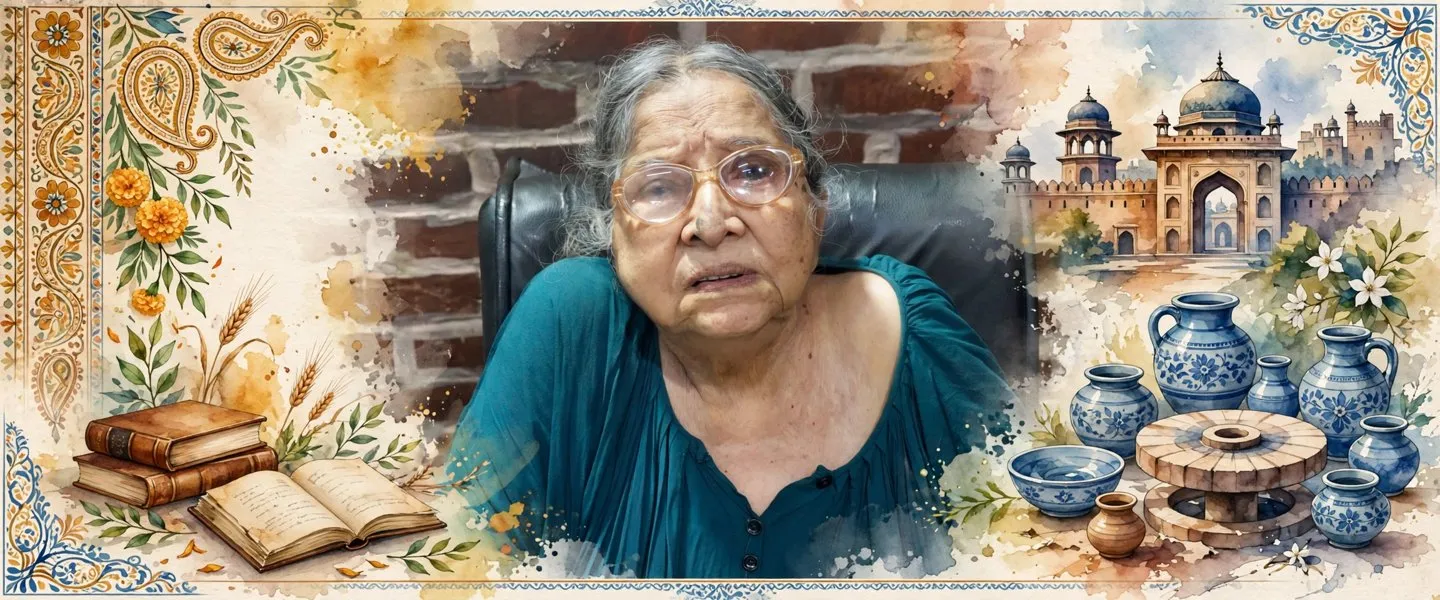
The Blue Potter: The Creative Genius of Punjab is Ajeet Cour's 2025 collection of seventeen portraits of Punjab's creative legends, from Amrita Pritam and Shiv Kumar Batalvi to Khushwant Singh and Jagjit Singh. Written in Punjabi and translated into English by Sushmindar Jeet Kaur, it draws on Cour's own friendships with her subjects to tell stories that were never recorded before. It took her four to five years to complete and was first published in Gurmukhi before appearing in Hindi, Bengali and English.
English- Author
- Ajeet Cour (born 1934, Lahore)
- Translator
- Sushmindar Jeet Kaur (English translation)
- First published
- 10 October 2025, Aleph Book Company
- Language
- English (translated from Punjabi)
- Form
- Character sketches
- Pages
- 416 (ebook edition)
- Portraits
- Seventeen creative legends of Punjab
About the book
The Blue Potter: The Creative Genius of Punjab is a collection of seventeen character sketches by Ajeet Cour, published in English by Aleph Book Company in October 2025. Cour wrote the book in Punjabi, and it first appeared in Gurmukhi before coming out in Hindi, Bengali and English; the English translation is by Sushmindar Jeet Kaur. The title comes from the potter's craft: like a potter shaping blue-glazed clay, Cour argues, every artist shapes beauty out of mud, knowing that one wrong touch can break it. Each of the seventeen people in the book is, in her phrase, a blue potter of their own kind. The book took her four to five years to complete, and she says she did not choose her subjects so much as they chose her: old friends who kept knocking at the door of her heart, many of them gone, and asked to be written about.
Who are the seventeen?
The seventeen are writers, poets, painters, singers, politicians and spiritual masters who shaped Punjab's cultural life: Amrita Pritam, Khushwant Singh, Shiv Kumar Batalvi, Jagjit Singh, Krishna Sobti, Padma Sachdev, Kartar Singh Duggal, Mohinder Singh Randhawa, Balwant Gargi and V. P. Singh, among others. Cour also writes about her daughter Arpana Caur, the painter, who in Cour's words became a mother to her own mother. What the portraits share is proximity: Cour knew these people. She organised a ghazal programme for Jagjit Singh at Delhi's Kamani Auditorium that helped propel him towards stardom, she invited Khushwant Singh to her home only on quieter, less crowded evenings because he disliked crowds, and she watched Shiv Kumar Batalvi's separation from his lover Anu feed the aching beauty of his lyrics. The sketches are not biographies. They are memories: small, unrecorded stories, a pause, a glance, a habit, a silence, set down before they are lost.
The Amrita Pritam chapter
Cour says the hardest chapter to write was the one about Amrita Pritam, called 'The Exalted Empress'. The two women's lives were entwined from childhood: Cour's father, the Lahore doctor Sardar Makhan Singh, treated the young Amrit Kaur for tuberculosis, and Cour, a small girl then, used to peep through the cracks of the door to look at her. She took Gurmukhi lessons from Amrita's father, Kartar Singh Hitkari. As a child she adored Amrita for her beauty, brilliance and boldness; as an adult she writes about her with a candour that has startled readers. She describes Amrita's lifelong love for the poet Sahir Ludhianvi, her companionship with the artist Imroz, and the contradictions Cour saw in her: fiercely independent yet emotionally entangled, bold yet fragile. She also writes about Amrita's politics, including her support for the Emergency of 1975 and what Cour calls her strange silence on Operation Blue Star and the events of 1984, subjects on which Cour herself took a different stand. The chapter is the book in miniature: affectionate, unsparing, and unwilling to turn a living person into a statue.
The author
Ajeet Cour was born on 16 November 1934 in Lahore, where her father was a well-known doctor. After Partition her family came to Delhi, where she earned an M.A. in Economics. She has written 31 collections of short stories, novelettes and novels, including the novel Gauri, the novellas Dhup Wala Shehar and Post Mortem, and the autobiography Khanabadosh, which won the Sahitya Akademi Award. She founded the Academy of Fine Arts and Literature in New Delhi in 1977 and the Foundation of SAARC Writers and Literature in 1987, and she received the Padma Shri in 2006 and the Sahitya Akademi Fellowship in 2024. The Blue Potter is her most personal book in years: a memoir of others, written late in a long life, about the friends who made it.
Reception and legacy
Early readers have praised the book's warmth and honesty. Reviewers note that Cour does not glorify her subjects: she humanises them, showing Khushwant Singh's vulnerability beneath his worldly cynicism and Amrita Pritam's contradictions beneath her legend. The opening chapter, 'The Innocent King', paints an intimate picture of Khushwant Singh, while the chapter 'Daughter of the Chenab' celebrates Krishna Sobti, whom Cour credits with bringing Punjabi regionalism into Hindi literature. The book is also a record of a Delhi that has vanished: the refugee families from Pakistan, the artistic lanes of Hauz Khas shaped by Mohinder Singh Randhawa, and the drawing rooms where Punjab's writers, painters and singers met. Cour says the book is a repository of stories that would otherwise have gone unrecorded, and early readers agree: it reads less like a reference book than like a series of fireside conversations with a woman who knew them all.
ਕਿਤਾਬ ਬਾਰੇ
ਦ ਬਲੂ ਪੌਟਰ: ਦ ਕ੍ਰੀਏਟਿਵ ਜੀਨੀਅਸ ਆਫ਼ ਪੰਜਾਬ ਅਜੀਤ ਕੌਰ ਦੀਆਂ ਸਤਾਰਾਂ ਸ਼ਖ਼ਸੀਅਤਾਂ ਬਾਰੇ ਲਿਖਤਾਂ ਦਾ ਸੰਗ੍ਰਹਿ ਹੈ, ਜੋ ਅਕਤੂਬਰ 2025 ਵਿੱਚ ਐਲਫ਼ ਬੁੱਕ ਕੰਪਨੀ ਵੱਲੋਂ ਅੰਗਰੇਜ਼ੀ ਵਿੱਚ ਛਪਿਆ। ਕੌਰ ਨੇ ਇਹ ਕਿਤਾਬ ਪੰਜਾਬੀ ਵਿੱਚ ਲਿਖੀ ਸੀ, ਅਤੇ ਇਹ ਪਹਿਲਾਂ ਗੁਰਮੁਖੀ ਵਿੱਚ ਛਪੀ, ਫਿਰ ਹਿੰਦੀ, ਬੰਗਾਲੀ ਅਤੇ ਅੰਗਰੇਜ਼ੀ ਵਿੱਚ ਆਈ। ਅੰਗਰੇਜ਼ੀ ਅਨੁਵਾਦ ਸੁਸ਼ਮਿੰਦਰ ਜੀਤ ਕੌਰ ਨੇ ਕੀਤਾ ਹੈ। ਕਿਤਾਬ ਦਾ ਨਾਂ ਘੁਮਿਆਰ ਦੀ ਕਲਾ ਤੋਂ ਆਇਆ ਹੈ: ਜਿਵੇਂ ਘੁਮਿਆਰ ਨੀਲੀ ਚਮਕ ਵਾਲੀ ਮਿੱਟੀ ਤੋਂ ਸੁੰਦਰਤਾ ਘੜਦਾ ਹੈ, ਇਹ ਜਾਣਦਿਆਂ ਕਿ ਇੱਕ ਗਲਤ ਛੋਹ ਇਸ ਨੂੰ ਤੋੜ ਸਕਦੀ ਹੈ, ਉਸੇ ਤਰ੍ਹਾਂ ਹਰ ਕਲਾਕਾਰ ਮਿੱਟੀ ਤੋਂ ਸੁੰਦਰਤਾ ਘੜਦਾ ਹੈ। ਕਿਤਾਬ ਦੇ ਸਤਾਰਾਂ ਲੋਕਾਂ ਵਿੱਚੋਂ ਹਰ ਇੱਕ, ਉਸ ਦੇ ਸ਼ਬਦਾਂ ਵਿੱਚ, ਆਪਣੀ ਕਿਸਮ ਦਾ ਨੀਲਾ ਘੁਮਿਆਰ ਹੈ। ਕਿਤਾਬ ਨੂੰ ਪੂਰਾ ਕਰਨ ਵਿੱਚ ਉਸ ਨੂੰ ਚਾਰ ਤੋਂ ਪੰਜ ਸਾਲ ਲੱਗੇ, ਅਤੇ ਉਹ ਕਹਿੰਦੀ ਹੈ ਕਿ ਉਸ ਨੇ ਆਪਣੇ ਵਿਸ਼ੇ ਨਹੀਂ ਚੁਣੇ, ਸਗੋਂ ਉਨ੍ਹਾਂ ਨੇ ਉਸ ਨੂੰ ਚੁਣਿਆ: ਪੁਰਾਣੇ ਦੋਸਤ ਜੋ ਉਸ ਦੇ ਦਿਲ ਦੇ ਦਰਵਾਜ਼ੇ ਉੱਤੇ ਦਸਤਕ ਦਿੰਦੇ ਰਹੇ, ਜਿਨ੍ਹਾਂ ਵਿੱਚੋਂ ਬਹੁਤ ਸਾਰੇ ਹੁਣ ਨਹੀਂ ਰਹੇ, ਅਤੇ ਲਿਖੇ ਜਾਣ ਦੀ ਮੰਗ ਕਰਦੇ ਰਹੇ।
ਸਤਾਰਾਂ ਸ਼ਖ਼ਸੀਅਤਾਂ ਕੌਣ ਹਨ?
ਸਤਾਰਾਂ ਸ਼ਖ਼ਸੀਅਤਾਂ ਲੇਖਕ, ਕਵੀ, ਚਿੱਤਰਕਾਰ, ਗਾਇਕ, ਸਿਆਸਤਦਾਨ ਅਤੇ ਰੂਹਾਨੀ ਗੁਰੂ ਹਨ ਜਿਨ੍ਹਾਂ ਨੇ ਪੰਜਾਬ ਦੀ ਸੱਭਿਆਚਾਰਕ ਜ਼ਿੰਦਗੀ ਨੂੰ ਰੂਪ ਦਿੱਤਾ: ਅੰਮ੍ਰਿਤਾ ਪ੍ਰੀਤਮ, ਖੁਸ਼ਵੰਤ ਸਿੰਘ, ਸ਼ਿਵ ਕੁਮਾਰ ਬਟਾਲਵੀ, ਜਗਜੀਤ ਸਿੰਘ, ਕ੍ਰਿਸ਼ਨਾ ਸੋਬਤੀ, ਪਦਮਾ ਸਚਦੇਵ, ਕਰਤਾਰ ਸਿੰਘ ਦੁੱਗਲ, ਮੋਹਿੰਦਰ ਸਿੰਘ ਰੰਧਾਵਾ, ਬਲਵੰਤ ਗਾਰਗੀ ਅਤੇ ਵੀ. ਪੀ. ਸਿੰਘ, ਹੋਰਨਾਂ ਸਮੇਤ। ਕੌਰ ਆਪਣੀ ਬੇਟੀ ਅਰਪਣਾ ਕੌਰ, ਚਿੱਤਰਕਾਰ, ਬਾਰੇ ਵੀ ਲਿਖਦੀ ਹੈ, ਜੋ ਉਸ ਦੇ ਸ਼ਬਦਾਂ ਵਿੱਚ ਆਪਣੀ ਹੀ ਮਾਂ ਦੀ ਮਾਂ ਬਣ ਗਈ। ਇਨ੍ਹਾਂ ਲਿਖਤਾਂ ਵਿੱਚ ਜੋ ਗੱਲ ਸਾਂਝੀ ਹੈ, ਉਹ ਹੈ ਨੇੜਤਾ: ਕੌਰ ਇਨ੍ਹਾਂ ਲੋਕਾਂ ਨੂੰ ਜਾਣਦੀ ਸੀ। ਉਸ ਨੇ ਦਿੱਲੀ ਦੇ ਕਾਮਨੀ ਆਡੀਟੋਰੀਅਮ ਵਿੱਚ ਜਗਜੀਤ ਸਿੰਘ ਦਾ ਗ਼ਜ਼ਲ ਪ੍ਰੋਗਰਾਮ ਕਰਵਾਇਆ, ਜਿਸ ਨੇ ਉਸ ਨੂੰ ਸਟਾਰ ਬਣਨ ਵੱਲ ਧੱਕਿਆ, ਉਹ ਖੁਸ਼ਵੰਤ ਸਿੰਘ ਨੂੰ ਆਪਣੇ ਘਰ ਸਿਰਫ਼ ਸ਼ਾਂਤ, ਘੱਟ ਭੀੜ ਵਾਲੀਆਂ ਸ਼ਾਮਾਂ ਨੂੰ ਬੁਲਾਉਂਦੀ ਸੀ ਕਿਉਂਕਿ ਉਹ ਭੀੜ ਪਸੰਦ ਨਹੀਂ ਕਰਦਾ ਸੀ, ਅਤੇ ਉਸ ਨੇ ਸ਼ਿਵ ਕੁਮਾਰ ਬਟਾਲਵੀ ਦੀ ਆਪਣੀ ਪ੍ਰੇਮਿਕਾ ਅਨੂ ਤੋਂ ਵਿਛੋੜੇ ਨੂੰ ਉਸ ਦੇ ਗੀਤਾਂ ਦੀ ਦਰਦ ਭਰੀ ਸੁੰਦਰਤਾ ਵਿੱਚ ਢਲਦਿਆਂ ਦੇਖਿਆ। ਇਹ ਲਿਖਤਾਂ ਜੀਵਨੀਆਂ ਨਹੀਂ ਹਨ। ਇਹ ਯਾਦਾਂ ਹਨ: ਛੋਟੀਆਂ, ਅਣਲਿਖੀਆਂ ਕਹਾਣੀਆਂ, ਇੱਕ ਠਹਿਰਾਅ, ਇੱਕ ਨਜ਼ਰ, ਇੱਕ ਆਦਤ, ਇੱਕ ਚੁੱਪ, ਜੋ ਗੁਆਚ ਜਾਣ ਤੋਂ ਪਹਿਲਾਂ ਲਿਖੀਆਂ ਗਈਆਂ ਹਨ।
ਅੰਮ੍ਰਿਤਾ ਪ੍ਰੀਤਮ ਵਾਲਾ ਹਿੱਸਾ
ਕੌਰ ਕਹਿੰਦੀ ਹੈ ਕਿ ਸਭ ਤੋਂ ਔਖਾ ਹਿੱਸਾ ਅੰਮ੍ਰਿਤਾ ਪ੍ਰੀਤਮ ਬਾਰੇ ਲਿਖਣਾ ਸੀ, ਜਿਸ ਦਾ ਸਿਰਲੇਖ ਦ ਐਗਜ਼ਾਲਟਿਡ ਐਂਪਰੈਸ ਹੈ। ਦੋਵਾਂ ਔਰਤਾਂ ਦੀਆਂ ਜ਼ਿੰਦਗੀਆਂ ਬਚਪਨ ਤੋਂ ਜੁੜੀਆਂ ਹੋਈਆਂ ਸਨ: ਕੌਰ ਦੇ ਪਿਤਾ, ਲਾਹੌਰ ਦੇ ਡਾਕਟਰ ਸਰਦਾਰ ਮੱਖਣ ਸਿੰਘ, ਛੋਟੀ ਅੰਮ੍ਰਿਤ ਕੌਰ ਦਾ ਤਪਦਿਕ ਦਾ ਇਲਾਜ ਕਰਦੇ ਸਨ, ਅਤੇ ਛੋਟੀ ਕੌਰ ਦਰਵਾਜ਼ੇ ਦੀਆਂ ਤਰੇੜਾਂ ਵਿੱਚੋਂ ਉਸ ਨੂੰ ਦੇਖਿਆ ਕਰਦੀ ਸੀ। ਉਸ ਨੇ ਅੰਮ੍ਰਿਤਾ ਦੇ ਪਿਤਾ, ਗਿਆਨੀ ਕਰਤਾਰ ਸਿੰਘ ਹਿਤਕਾਰੀ, ਤੋਂ ਗੁਰਮੁਖੀ ਸਿੱਖੀ। ਬਚਪਨ ਵਿੱਚ ਉਹ ਅੰਮ੍ਰਿਤਾ ਦੀ ਸੁੰਦਰਤਾ, ਚਮਕ ਅਤੇ ਹਿੰਮਤ ਦੀ ਪੂਜਾ ਕਰਦੀ ਸੀ। ਵੱਡੀ ਹੋ ਕੇ ਉਹ ਉਸ ਬਾਰੇ ਇੱਕ ਅਜਿਹੀ ਸਾਫ਼ਗੋਈ ਨਾਲ ਲਿਖਦੀ ਹੈ ਜਿਸ ਨੇ ਪਾਠਕਾਂ ਨੂੰ ਹੈਰਾਨ ਕੀਤਾ ਹੈ। ਉਹ ਕਵੀ ਸਾਹਿਰ ਲੁਧਿਆਣਵੀ ਲਈ ਅੰਮ੍ਰਿਤਾ ਦੇ ਜੀਵਨ ਭਰ ਦੇ ਪਿਆਰ, ਕਲਾਕਾਰ ਇਮਰੋਜ਼ ਨਾਲ ਉਸ ਦੀ ਸੰਗਤ, ਅਤੇ ਉਨ੍ਹਾਂ ਵਿਰੋਧਾਂ ਬਾਰੇ ਦੱਸਦੀ ਹੈ ਜੋ ਉਸ ਨੇ ਉਸ ਵਿੱਚ ਦੇਖੇ: ਬਹੁਤ ਆਜ਼ਾਦ ਪਰ ਭਾਵਨਾਤਮਕ ਤੌਰ ਉੱਤੇ ਉਲਝੀ ਹੋਈ, ਦਲੇਰ ਪਰ ਨਾਜ਼ੁਕ। ਉਹ ਅੰਮ੍ਰਿਤਾ ਦੀ ਸਿਆਸਤ ਬਾਰੇ ਵੀ ਲਿਖਦੀ ਹੈ, ਜਿਸ ਵਿੱਚ 1975 ਦੀ ਐਮਰਜੈਂਸੀ ਦਾ ਸਮਰਥਨ ਅਤੇ ਆਪਰੇਸ਼ਨ ਬਲੂ ਸਟਾਰ ਅਤੇ 1984 ਦੀਆਂ ਘਟਨਾਵਾਂ ਉੱਤੇ ਉਸ ਦੀ ਚੁੱਪ ਸ਼ਾਮਲ ਹੈ, ਜਿਨ੍ਹਾਂ ਬਾਰੇ ਕੌਰ ਦਾ ਸਟੈਂਡ ਵੱਖਰਾ ਸੀ। ਇਹ ਹਿੱਸਾ ਪੂਰੀ ਕਿਤਾਬ ਦਾ ਛੋਟਾ ਰੂਪ ਹੈ: ਪਿਆਰ ਭਰਿਆ, ਬੇਰਹਿਮੀ ਨਾਲ ਸਾਫ਼, ਅਤੇ ਇੱਕ ਜਿਉਂਦੀ ਔਰਤ ਨੂੰ ਮੂਰਤੀ ਬਣਾਉਣ ਤੋਂ ਇਨਕਾਰ ਕਰਨ ਵਾਲਾ।
ਲੇਖਕ
ਅਜੀਤ ਕੌਰ ਦਾ ਜਨਮ 16 ਨਵੰਬਰ 1934 ਨੂੰ ਲਾਹੌਰ ਵਿੱਚ ਹੋਇਆ, ਜਿੱਥੇ ਉਸ ਦੇ ਪਿਤਾ ਇੱਕ ਜਾਣੇ ਪਛਾਣੇ ਡਾਕਟਰ ਸਨ। ਵੰਡ ਤੋਂ ਬਾਅਦ ਉਸ ਦਾ ਪਰਿਵਾਰ ਦਿੱਲੀ ਆ ਗਿਆ, ਜਿੱਥੇ ਉਸ ਨੇ ਅਰਥ ਸ਼ਾਸਤਰ ਵਿੱਚ ਐਮ.ਏ. ਕੀਤੀ। ਉਸ ਨੇ ਛੋਟੀਆਂ ਕਹਾਣੀਆਂ, ਨਾਵਲਟਾਂ ਅਤੇ ਨਾਵਲਾਂ ਦੇ 31 ਸੰਗ੍ਰਹਿ ਲਿਖੇ ਹਨ, ਜਿਨ੍ਹਾਂ ਵਿੱਚ ਨਾਵਲ ਗੌਰੀ, ਨਾਵਲਟਾਂ ਧੁੱਪ ਵਾਲਾ ਸ਼ਹਿਰ ਅਤੇ ਪੋਸਟ ਮਾਰਟਮ, ਅਤੇ ਆਤਮਕਥਾ ਖਾਨਾਬਦੋਸ਼ ਸ਼ਾਮਲ ਹਨ, ਜਿਸ ਨੇ ਸਾਹਿਤ ਅਕਾਦਮੀ ਇਨਾਮ ਜਿੱਤਿਆ। ਉਸ ਨੇ 1977 ਵਿੱਚ ਨਵੀਂ ਦਿੱਲੀ ਵਿੱਚ ਅਕੈਡਮੀ ਆਫ਼ ਫਾਈਨ ਆਰਟਸ ਐਂਡ ਲਿਟਰੇਚਰ ਅਤੇ 1987 ਵਿੱਚ ਫਾਊਂਡੇਸ਼ਨ ਆਫ਼ ਸਾਰਕ ਰਾਈਟਰਜ਼ ਐਂਡ ਲਿਟਰੇਚਰ ਦੀ ਸਥਾਪਨਾ ਕੀਤੀ, ਅਤੇ ਉਸ ਨੂੰ 2006 ਵਿੱਚ ਪਦਮ ਸ਼੍ਰੀ ਅਤੇ 2024 ਵਿੱਚ ਸਾਹਿਤ ਅਕਾਦਮੀ ਫੈਲੋਸ਼ਿਪ ਮਿਲੀ। ਦ ਬਲੂ ਪੌਟਰ ਉਸ ਦੀ ਸਾਲਾਂ ਬਾਅਦ ਦੀ ਸਭ ਤੋਂ ਨਿੱਜੀ ਕਿਤਾਬ ਹੈ: ਦੂਜਿਆਂ ਦੀ ਆਤਮਕਥਾ, ਉਨ੍ਹਾਂ ਦੋਸਤਾਂ ਬਾਰੇ ਜਿਨ੍ਹਾਂ ਨੇ ਉਸ ਦੀ ਜ਼ਿੰਦਗੀ ਬਣਾਈ।
ਸਵਾਗਤ ਅਤੇ ਵਿਰਾਸਤ
ਸ਼ੁਰੂਆਤੀ ਪਾਠਕਾਂ ਨੇ ਕਿਤਾਬ ਦੀ ਗਰਮਜੋਸ਼ੀ ਅਤੇ ਇਮਾਨਦਾਰੀ ਦੀ ਤਾਰੀਫ਼ ਕੀਤੀ ਹੈ। ਸਮੀਖਿਅਕ ਨੋਟ ਕਰਦੇ ਹਨ ਕਿ ਕੌਰ ਆਪਣੇ ਵਿਸ਼ਿਆਂ ਨੂੰ ਮਹਾਨ ਨਹੀਂ ਬਣਾਉਂਦੀ: ਉਹ ਉਨ੍ਹਾਂ ਨੂੰ ਮਨੁੱਖ ਬਣਾਉਂਦੀ ਹੈ, ਖੁਸ਼ਵੰਤ ਸਿੰਘ ਦੀ ਸੰਸਾਰਕ ਚੁਸਤੀ ਦੇ ਪਿੱਛੇ ਲੁਕੀ ਕਮਜ਼ੋਰੀ ਅਤੇ ਅੰਮ੍ਰਿਤਾ ਪ੍ਰੀਤਮ ਦੀ ਕਥਾ ਦੇ ਪਿੱਛੇ ਲੁਕੇ ਵਿਰੋਧ ਦਿਖਾਉਂਦੀ ਹੈ। ਪਹਿਲਾ ਹਿੱਸਾ, ਦ ਇਨੋਸੈਂਟ ਕਿੰਗ, ਖੁਸ਼ਵੰਤ ਸਿੰਘ ਦੀ ਨਿੱਜੀ ਤਸਵੀਰ ਪੇਸ਼ ਕਰਦਾ ਹੈ, ਜਦੋਂ ਕਿ ਡਾਟਰ ਆਫ਼ ਦ ਚਨਾਬ ਹਿੱਸਾ ਕ੍ਰਿਸ਼ਨਾ ਸੋਬਤੀ ਦਾ ਜਸ਼ਨ ਮਨਾਉਂਦਾ ਹੈ, ਜਿਸ ਨੂੰ ਕੌਰ ਪੰਜਾਬੀ ਖੇਤਰੀਵਾਦ ਨੂੰ ਹਿੰਦੀ ਸਾਹਿਤ ਵਿੱਚ ਲਿਆਉਣ ਦਾ ਸਿਹਰਾ ਦਿੰਦੀ ਹੈ। ਇਹ ਕਿਤਾਬ ਇੱਕ ਗੁਆਚੀ ਹੋਈ ਦਿੱਲੀ ਦਾ ਰਿਕਾਰਡ ਵੀ ਹੈ: ਪਾਕਿਸਤਾਨ ਤੋਂ ਆਏ ਸ਼ਰਨਾਰਥੀ ਪਰਿਵਾਰ, ਮੋਹਿੰਦਰ ਸਿੰਘ ਰੰਧਾਵਾ ਵੱਲੋਂ ਰੂਪ ਦਿੱਤੀਆਂ ਹੌਜ਼ ਖਾਸ ਦੀਆਂ ਕਲਾਤਮਕ ਗਲੀਆਂ, ਅਤੇ ਉਹ ਬੈਠਕਾਂ ਜਿੱਥੇ ਪੰਜਾਬ ਦੇ ਲੇਖਕ, ਚਿੱਤਰਕਾਰ ਅਤੇ ਗਾਇਕ ਮਿਲਦੇ ਸਨ। ਕੌਰ ਕਹਿੰਦੀ ਹੈ ਕਿ ਇਹ ਕਿਤਾਬ ਉਨ੍ਹਾਂ ਕਹਾਣੀਆਂ ਦਾ ਭੰਡਾਰ ਹੈ ਜੋ ਨਹੀਂ ਤਾਂ ਗੁਆਚ ਜਾਂਦੀਆਂ, ਅਤੇ ਸ਼ੁਰੂਆਤੀ ਪਾਠਕ ਸਹਿਮਤ ਹਨ: ਇਹ ਸੰਦਰਭ ਕਿਤਾਬ ਵਰਗੀ ਘੱਟ ਅਤੇ ਇੱਕ ਅਜਿਹੀ ਔਰਤ ਨਾਲ ਅੱਗ ਦੇ ਆਲੇ ਦੁਆਲੇ ਦੀਆਂ ਗੱਲਾਂ ਵਰਗੀ ਵੱਧ ਲੱਗਦੀ ਹੈ ਜੋ ਉਨ੍ਹਾਂ ਸਭ ਨੂੰ ਜਾਣਦੀ ਸੀ।
Editions and translations
- The Blue Potter: The Creative Genius of PunjabEnglish · Aleph Book Company, October 2025, translated from Punjabi by Sushmindar Jeet Kaur, 416 pagesTranslation
The author

Connected
More to read
Sources (4)
Jugti is free and independent. Reader support keeps the Kosh growing.
Support