
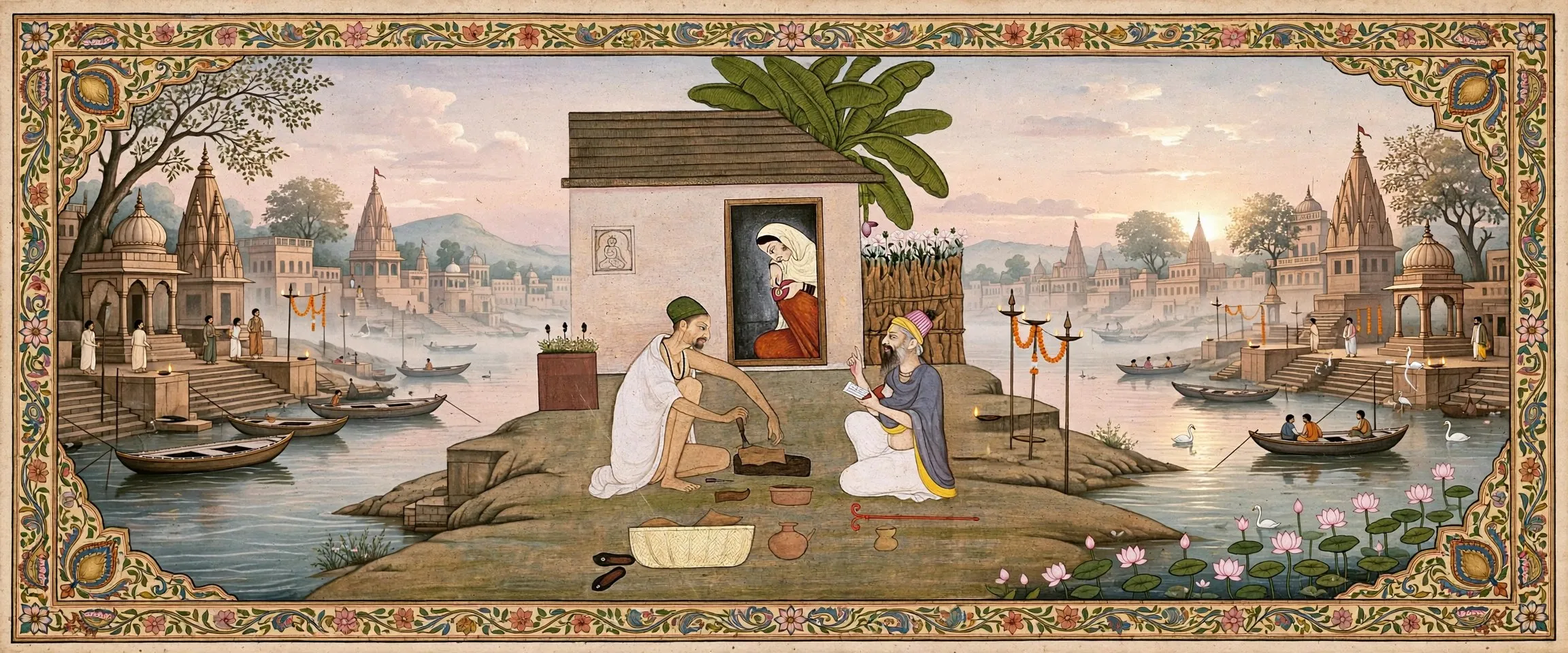
Bhagat Ravidas Ji was a leather worker and devotional poet of Varanasi, placed by most accounts in the 15th to 16th century, whose hymns Guru Arjan Dev Ji placed in the Guru Granth Sahib Ji. Born in a Chamar family at Seer Govardhanpur, he taught that God is one, present in all, and that birth is no measure of a person's worth. His best known hymn pictures Begumpura, a city without sorrow, tax or fear, where no one is second or third class.
- Punjabi name
- ਭਗਤ ਰਵੀਦਾਸ ਜੀ
- Born
- Date contested: tradition gives 1377, SikhiWiki gives 30 January 1399, and scholars differ
- Died
- Date contested: tradition gives 1528 at Varanasi, at the age of 151
- Birthplace
- Seer Govardhanpur, near Varanasi, now marked by the Shri Guru Ravidas Janam Asthan
- Occupation
- Leather worker: tanning hides and making shoes, in a Chamar family
- Bani in Guru Granth Sahib Ji
- 40 hymns in 16 ragas in the Encyclopaedia of Sikhism count; 41 compositions in the SikhiWiki and Wikipedia counts
- Festival
- Ravidas Jayanti, on Magh Purnima, the full moon day of the month of Magh
Bhagat Ravidas Ji was a leather worker of Varanasi who became one of the most honoured voices of the Bhakti movement. His hymns stand in the Guru Granth Sahib Ji beside those of the Sikh Gurus, and his Begumpura hymn imagines a city without sorrow, tax or fear, where every citizen is equal.
Who was Bhagat Ravidas Ji?
Bhagat Ravidas Ji, also written Raidas, was a poet and mystic of Varanasi, the ancient city on the Ganges also called Banaras or Kashi. Sikh tradition counts him among the fifteen Bhagats, the devotees from outside the Guru line whose compositions Guru Arjan Dev Ji placed in the Guru Granth Sahib Ji, where his hymns stand under the heading Bani Bhagatan ki, the bani of the Bhagats. SikhiWiki describes him as a poet, a devotee and a Gurmukh, a person turned wholly towards God.
He lived in the age of Guru Nanak Dev Ji. Wikipedia, summing up the scholarship, says most scholars believe that Ravidas Ji met Guru Nanak Dev Ji, and medieval texts such as the Bhaktamal present him as a disciple of the Bhakti teacher Ramananda. The Encyclopaedia of Sikhism calls him a Vaishnava saint in the tradition of Ramanand who set aside images and idols and turned to the worship of the one Supreme Being. In the Guru Granth Sahib Ji his voice stands with the Gurus and with fellow Bhagats such as Baba Farid Ji.
Where was Bhagat Ravidas Ji born, and when?
He was born at Seer Govardhanpur, a village near Varanasi in what is now Uttar Pradesh, in a family of leather workers. The Encyclopaedia of Sikhism names his parents as Raghu and Ghurbinia and says the family followed the trade of tanning hides and making shoes. SikhiWiki and Wikipedia give the parents' names differently, as Santokh Dass and Mata Kalsa Devi, and SikhiWiki specifies that the family belonged to the Chamar community, whose hereditary work was leather. His birthplace is now marked by the Shri Guru Ravidas Janam Asthan, a major place of pilgrimage for his followers. He followed the family profession, and the Encyclopaedia describes how he spent most of his time in the company of saints and wandering ascetics, until his simplicity made him famous far beyond his own community.
His dates, unlike his birthplace, cannot be stated as settled fact. Wikipedia describes the details of his life as uncertain and contested. One long held tradition gives him the years 1377 to 1528, a lifespan of 151 years, and his followers hold that he died at Banaras at that age. SikhiWiki gives his birth as 30 January 1399. Other scholars have proposed very different spans, and the tradition that Mirabai was his disciple is one reason many place his active life in the late fifteenth and early sixteenth centuries. This entry therefore gives his period as the fifteenth to sixteenth century.
The written lives of Ravidas Ji that survive were composed long after him. Wikipedia notes that the Adi Granth and the Panch Vani are the two oldest attested sources of his works, while the story collections, the Parcais of Anantadas, the Bhaktamal and the Sikh Premambodha of 1693, came later. The miracle stories told of him belong to that later devotional literature. His own hymns are contemporary evidence, and his teaching is clearest there.
His bani in the Guru Granth Sahib Ji
The Encyclopaedia of Sikhism counts forty of his hymns in the Guru Granth Sahib Ji, set in sixteen ragas: Siri, Gauri, Asa, Gujari, Sorath, Dhanasari, Jaitsari, Suhi, Bilaval, Gaund, Ramkali, Maru, Kedara, Bhairau, Basant and Malhar. SikhiWiki and Wikipedia count forty one compositions. The small difference is one of counting, not of substance: a large body of his verse, by either count, entered the Sikh scripture when Guru Arjan Dev Ji compiled it, and more hymns attributed to him have been passed down independently, including in the Panch Vani.
The Gurus themselves honoured him inside the same scripture. Guru Ram Das Ji writes of him on Ang 733, in words SikhiWiki quotes with pride: Ravidas, the leather worker, praised the Lord and sang His kirtan each and every instant; though of low social status, he was exalted, and people of all four castes came and bowed at his feet. For a scripture to carry both a man's hymns and a Guru's praise of the man is the clearest sign of the place Bhagat Ravidas Ji holds in the Sikh tradition.
What is Begumpura?
Begumpura is the city Ravidas Ji pictures in his best known hymn, in Raag Gauri on Ang 345 of the Guru Granth Sahib Ji. The name means the city without sorrow: be, without, gam, sorrow, and pura, a city. In the hymn, as Sikh sources translate it, there is no suffering or anxiety there, no troubles and no taxes on goods, no fear, no blemish and no downfall. God's rule there is steady and eternal, there is no second or third status and all are equal, the people are contented, they walk freely as they please, and no one blocks their way. The hymn ends with his own signature: says Ravidas, the emancipated shoe maker, whoever is a citizen there is a friend of mine.
Read against his life, Begumpura is not an escape from the world but a measure of it. A leather worker, looked down on for the work his family did, imagines a city where worth is not assigned at birth and no tax or fear presses on the poor. The Encyclopaedia reads the same vision in his wider teaching: he rejects distinctions of caste or creed, for in the world beyond, he says, no such differentiations will be acknowledged. Begumpura remains a lasting name for that ideal among his followers.
What did Bhagat Ravidas Ji teach?
His teaching begins with the oneness of God. The Encyclopaedia of Sikhism sums up his hymns: he acknowledged the oneness, omnipresence and power of God, and held that the human soul is a particle of the Divine, the difference between the two being like that between gold and an ornament, or water and a wave, the image of his Siri Raag hymn on Ang 93. Wikipedia notes that he left behind the worship of God in images and centred his devotion on the formless, nirguna, Supreme Being, the same current of Bhakti that runs through the bani of the other Bhagats.
From that oneness follows his social teaching. Birth in a family counted low is no hindrance to spiritual growth, the Encyclopaedia records him teaching; what is required is freedom from duality, and beside that, pilgrimage and ritual bathing, even at the sixty eight holy places, are in vain. To realise God, a person should concentrate on the Name, giving up mere forms and ritualism. That concentration is what Sikh practice calls Naam Japna, and it is open to every person alike, the radical heart of his message in a world ordered by caste. He also wrote in the language of ordinary people rather than in learned Sanskrit, and the Encyclopaedia credits him with leaving his mark on Hindi literature by fusing religious feeling with the vernacular tongue.
Tradition remembers his following as crossing every line his age drew. The Encyclopaedia of Sikhism says he had thousands of followers in his lifetime, including members of the higher castes, among them Mirabai, the Rajput princess and poet. Wikipedia is careful to call the link what the sources make it: hagiographies and oral traditions describe Mirabai as his disciple, and a small pavilion in front of her temple at Chittorgarh in Rajasthan bears his engraved footprint.
How is Bhagat Ravidas Ji remembered today?
His birth anniversary, Ravidas Jayanti, is kept each year on Magh Purnima, the full moon day of the month of Magh, falling in January or February. Wikipedia records that devotees gather at his birthplace and remember the events of his life, and that the Janam Asthan temple draws hundreds of thousands of devotees for prayers, kirtan and community celebration. Congregations such as the Shri Guru Ravidass Sabha in Burnaby, Canada, keep his name at the centre of their worship all year round.
His followers, the Ravidassia community, revere him not only as a Bhagat but as their Guru. Wikipedia records that the Ravidassia religion was officially announced as a separate religion on 29 January 2010 by Dera Sachkhand Ballan, with its own scripture, the Amritbani Guru Ravidass Ji, compiled from his hymns. The announcement followed the attack of May 2009 on a Ravidassia temple in Vienna, in which the visiting sant Ramanand Dass was killed and many others were injured. Wikipedia also notes that some Ravidassias continue mainstream Sikh practices, including reverence for the Guru Granth Sahib Ji. Within the Sikh tradition his position has never changed: he is Bhagat Ravidas Ji, his hymns are sung as Gurbani, and his city with no second class citizens speaks directly to the Sikh prayer for Sarbat da Bhala, the good of all.
ਭਗਤ ਰਵੀਦਾਸ ਜੀ ਵਾਰਾਣਸੀ ਦੇ ਇੱਕ ਚਮੜੇ ਦਾ ਕੰਮ ਕਰਨ ਵਾਲੇ ਸਨ, ਜੋ ਭਗਤੀ ਲਹਿਰ ਦੀਆਂ ਸਭ ਤੋਂ ਸਤਿਕਾਰਤ ਆਵਾਜ਼ਾਂ ਵਿੱਚੋਂ ਇੱਕ ਬਣੇ। ਉਨ੍ਹਾਂ ਦੇ ਸ਼ਬਦ ਸਿੱਖ ਗੁਰੂਆਂ ਦੀ ਬਾਣੀ ਦੇ ਨਾਲ ਗੁਰੂ ਗ੍ਰੰਥ ਸਾਹਿਬ ਜੀ ਵਿੱਚ ਦਰਜ ਹਨ, ਅਤੇ ਉਨ੍ਹਾਂ ਦਾ ਬੇਗਮਪੁਰਾ ਸ਼ਬਦ ਇੱਕ ਅਜਿਹੇ ਸ਼ਹਿਰ ਦੀ ਤਸਵੀਰ ਦਿੰਦਾ ਹੈ ਜਿੱਥੇ ਕੋਈ ਦੁੱਖ ਨਹੀਂ, ਕੋਈ ਟੈਕਸ ਨਹੀਂ, ਕੋਈ ਡਰ ਨਹੀਂ, ਅਤੇ ਹਰ ਨਾਗਰਿਕ ਬਰਾਬਰ ਹੈ।
ਭਗਤ ਰਵੀਦਾਸ ਜੀ ਕੌਣ ਸਨ?
ਭਗਤ ਰਵੀਦਾਸ ਜੀ, ਜਿਨ੍ਹਾਂ ਦਾ ਨਾਂ ਰੈਦਾਸ ਵੀ ਲਿਖਿਆ ਜਾਂਦਾ ਹੈ, ਵਾਰਾਣਸੀ ਦੇ ਕਵੀ ਅਤੇ ਸੰਤ ਸਨ। ਵਾਰਾਣਸੀ ਗੰਗਾ ਕਿਨਾਰੇ ਵਸਿਆ ਉਹ ਪੁਰਾਣਾ ਸ਼ਹਿਰ ਹੈ ਜਿਸ ਨੂੰ ਬਨਾਰਸ ਜਾਂ ਕਾਸ਼ੀ ਵੀ ਕਿਹਾ ਜਾਂਦਾ ਹੈ। ਸਿੱਖ ਪਰੰਪਰਾ ਉਨ੍ਹਾਂ ਨੂੰ ਉਨ੍ਹਾਂ ਪੰਦਰਾਂ ਭਗਤਾਂ ਵਿੱਚ ਗਿਣਦੀ ਹੈ ਜੋ ਗੁਰੂ ਪਰੰਪਰਾ ਤੋਂ ਬਾਹਰ ਸਨ, ਪਰ ਜਿਨ੍ਹਾਂ ਦੀਆਂ ਰਚਨਾਵਾਂ ਗੁਰੂ ਅਰਜਨ ਦੇਵ ਜੀ ਨੇ ਗੁਰੂ ਗ੍ਰੰਥ ਸਾਹਿਬ ਜੀ ਵਿੱਚ ਦਰਜ ਕੀਤੀਆਂ, ਜਿੱਥੇ ਉਨ੍ਹਾਂ ਦੇ ਸ਼ਬਦ ਬਾਣੀ ਭਗਤਾਂ ਕੀ ਸਿਰਲੇਖ ਹੇਠ ਆਉਂਦੇ ਹਨ। ਸਿੱਖੀਵਿਕੀ ਉਨ੍ਹਾਂ ਨੂੰ ਕਵੀ, ਭਗਤ ਅਤੇ ਗੁਰਮੁੱਖ ਦੱਸਦੀ ਹੈ, ਭਾਵ ਉਹ ਮਨੁੱਖ ਜੋ ਪੂਰੀ ਤਰ੍ਹਾਂ ਪਰਮਾਤਮਾ ਵੱਲ ਮੁੜਿਆ ਹੋਵੇ, ਅਤੇ ਦੱਸਦੀ ਹੈ ਕਿ ਉਹ ਭਗਤ ਕਬੀਰ ਜੀ ਅਤੇ ਭਗਤ ਨਾਮਦੇਵ ਜੀ ਦੇ ਪ੍ਰਸ਼ੰਸਕ ਸਨ।
ਉਹ ਗੁਰੂ ਨਾਨਕ ਦੇਵ ਜੀ ਦੇ ਸਮੇਂ ਵਿੱਚ ਹੋਏ। ਵਿਕੀਪੀਡੀਆ ਵਿਦਵਾਨਾਂ ਦੀ ਰਾਏ ਦਾ ਸਾਰ ਦਿੰਦੇ ਹੋਏ ਕਹਿੰਦੀ ਹੈ ਕਿ ਬਹੁਤੇ ਵਿਦਵਾਨ ਮੰਨਦੇ ਹਨ ਕਿ ਰਵੀਦਾਸ ਜੀ ਗੁਰੂ ਨਾਨਕ ਦੇਵ ਜੀ ਨੂੰ ਮਿਲੇ ਸਨ, ਅਤੇ ਭਗਤਮਾਲ ਵਰਗੇ ਮੱਧਕਾਲੀ ਗ੍ਰੰਥ ਉਨ੍ਹਾਂ ਨੂੰ ਭਗਤੀ ਅਧਿਆਪਕ ਰਾਮਾਨੰਦ ਦਾ ਚੇਲਾ ਦੱਸਦੇ ਹਨ। ਸਿੱਖ ਐਨਸਾਈਕਲੋਪੀਡੀਆ ਉਨ੍ਹਾਂ ਨੂੰ ਰਾਮਾਨੰਦ ਦੀ ਪਰੰਪਰਾ ਦਾ ਵੈਸ਼ਨਵ ਸੰਤ ਕਹਿੰਦੀ ਹੈ, ਜਿਸ ਨੇ ਆਪਣੀ ਖੋਜ ਡੂੰਘੀ ਹੋਣ ਤੇ ਤਸਵੀਰਾਂ ਅਤੇ ਮੂਰਤੀਆਂ ਛੱਡ ਕੇ ਇੱਕ ਪਰਮਾਤਮਾ ਦੀ ਭਗਤੀ ਵੱਲ ਮਨ ਲਾਇਆ। ਪੱਕੀ ਗੱਲ ਉਹ ਸੰਗਤ ਹੈ ਜਿਸ ਵਿੱਚ ਉਨ੍ਹਾਂ ਦੀ ਬਾਣੀ ਖੜ੍ਹੀ ਹੈ: ਗੁਰੂ ਗ੍ਰੰਥ ਸਾਹਿਬ ਜੀ ਵਿੱਚ ਉਨ੍ਹਾਂ ਦੀ ਆਵਾਜ਼ ਗੁਰੂਆਂ ਅਤੇ ਬਾਬਾ ਫਰੀਦ ਜੀ ਵਰਗੇ ਭਗਤਾਂ ਦੇ ਨਾਲ ਖੜ੍ਹੀ ਹੈ ਅਤੇ ਪਰਮਾਤਮਾ ਦੀ ਇੱਕਤਾ ਦੀ ਇੱਕੋ ਸਿੱਖਿਆ ਦਿੰਦੀ ਹੈ।
ਭਗਤ ਰਵੀਦਾਸ ਜੀ ਦਾ ਜਨਮ ਕਿੱਥੇ ਅਤੇ ਕਦੋਂ ਹੋਇਆ?
ਉਨ੍ਹਾਂ ਦਾ ਜਨਮ ਸੀਰ ਗੋਵਰਧਨਪੁਰ ਵਿੱਚ ਹੋਇਆ, ਵਾਰਾਣਸੀ ਨੇੜੇ ਇੱਕ ਪਿੰਡ ਜੋ ਹੁਣ ਉੱਤਰ ਪ੍ਰਦੇਸ਼ ਵਿੱਚ ਹੈ, ਚਮੜੇ ਦਾ ਕੰਮ ਕਰਨ ਵਾਲੇ ਪਰਿਵਾਰ ਵਿੱਚ। ਸਿੱਖ ਐਨਸਾਈਕਲੋਪੀਡੀਆ ਉਨ੍ਹਾਂ ਦੇ ਮਾਤਾ ਪਿਤਾ ਦੇ ਨਾਂ ਰਘੂ ਅਤੇ ਘੁਰਬੀਨੀਆ ਦਿੰਦੀ ਹੈ ਅਤੇ ਕਹਿੰਦੀ ਹੈ ਕਿ ਪਰਿਵਾਰ ਖੱਲਾਂ ਰੰਗਣ ਅਤੇ ਜੁੱਤੀਆਂ ਬਣਾਉਣ ਦਾ ਕੰਮ ਕਰਦਾ ਸੀ। ਸਿੱਖੀਵਿਕੀ ਅਤੇ ਵਿਕੀਪੀਡੀਆ ਮਾਤਾ ਪਿਤਾ ਦੇ ਨਾਂ ਵੱਖ ਦਿੰਦੇ ਹਨ, ਸੰਤੋਖ ਦਾਸ ਅਤੇ ਮਾਤਾ ਕਲਸਾ ਦੇਵੀ, ਅਤੇ ਸਿੱਖੀਵਿਕੀ ਸਪੱਸ਼ਟ ਕਰਦੀ ਹੈ ਕਿ ਪਰਿਵਾਰ ਚਮਾਰ ਭਾਈਚਾਰੇ ਨਾਲ ਸੰਬੰਧਿਤ ਸੀ, ਜਿਸ ਦਾ ਪੁਸ਼ਤੀ ਕੰਮ ਚਮੜਾ ਸੀ। ਉਨ੍ਹਾਂ ਦੇ ਜਨਮ ਸਥਾਨ ਤੇ ਹੁਣ ਸ਼੍ਰੀ ਗੁਰੂ ਰਵਿਦਾਸ ਜਨਮ ਅਸਥਾਨ ਹੈ, ਜੋ ਉਨ੍ਹਾਂ ਦੇ ਸ਼ਰਧਾਲੂਆਂ ਲਈ ਤੀਰਥ ਯਾਤਰਾ ਦਾ ਵੱਡਾ ਸਥਾਨ ਹੈ। ਉਨ੍ਹਾਂ ਨੇ ਪਰਿਵਾਰ ਦਾ ਕਿੱਤਾ ਹੀ ਅਪਣਾਇਆ, ਅਤੇ ਐਨਸਾਈਕਲੋਪੀਡੀਆ ਦੱਸਦੀ ਹੈ ਕਿ ਉਹ ਆਪਣਾ ਬਹੁਤਾ ਸਮਾਂ ਸੰਤਾਂ ਅਤੇ ਫਿਰਦੇ ਸਾਧੂਆਂ ਦੀ ਸੰਗਤ ਵਿੱਚ ਬਿਤਾਉਣ ਲੱਗੇ, ਇੱਕ ਕੱਚੀ ਝੌਂਪੜੀ ਵਿੱਚ ਉਨ੍ਹਾਂ ਦੀ ਸੇਵਾ ਕਰਦੇ, ਇੱਥੋਂ ਤੱਕ ਕਿ ਉਨ੍ਹਾਂ ਦੀ ਸਾਦਗੀ ਅਤੇ ਭਗਤੀ ਨੇ ਉਨ੍ਹਾਂ ਨੂੰ ਆਪਣੇ ਭਾਈਚਾਰੇ ਤੋਂ ਬਹੁਤ ਦੂਰ ਤੱਕ ਮਸ਼ਹੂਰ ਕਰ ਦਿੱਤਾ।
ਉਨ੍ਹਾਂ ਦੀਆਂ ਤਾਰੀਖਾਂ, ਜਨਮ ਸਥਾਨ ਤੋਂ ਉਲਟ, ਪੱਕੀ ਗੱਲ ਵਜੋਂ ਨਹੀਂ ਕਹੀਆਂ ਜਾ ਸਕਦੀਆਂ, ਅਤੇ ਸੱਚੀ ਲਿਖਤ ਨੂੰ ਇਹ ਕਹਿਣਾ ਹੀ ਚਾਹੀਦਾ ਹੈ। ਵਿਕੀਪੀਡੀਆ ਉਨ੍ਹਾਂ ਦੇ ਜੀਵਨ ਦੇ ਵੇਰਵਿਆਂ ਨੂੰ ਅਨਿਸ਼ਚਿਤ ਅਤੇ ਵਿਵਾਦਿਤ ਦੱਸਦੀ ਹੈ। ਇੱਕ ਲੰਮੀ ਪਰੰਪਰਾ ਉਨ੍ਹਾਂ ਦੇ ਸਾਲ 1377 ਤੋਂ 1528 ਦਿੰਦੀ ਹੈ, 151 ਸਾਲ ਦੀ ਉਮਰ, ਅਤੇ ਉਨ੍ਹਾਂ ਦੇ ਸ਼ਰਧਾਲੂ ਮੰਨਦੇ ਹਨ ਕਿ ਉਨ੍ਹਾਂ ਦਾ ਦੇਹਾਂਤ ਬਨਾਰਸ ਵਿੱਚ ਉਸੇ ਉਮਰ ਵਿੱਚ ਹੋਇਆ। ਸਿੱਖੀਵਿਕੀ ਉਨ੍ਹਾਂ ਦਾ ਜਨਮ 30 ਜਨਵਰੀ 1399 ਦਿੰਦੀ ਹੈ। ਹੋਰ ਵਿਦਵਾਨਾਂ ਨੇ ਬਿਲਕੁਲ ਵੱਖ ਸਮੇਂ ਦਿੱਤੇ ਹਨ, ਅਤੇ ਇਹ ਪਰੰਪਰਾ ਕਿ ਰਾਜਪੂਤ ਰਾਜਕੁਮਾਰੀ ਮੀਰਾਬਾਈ ਉਨ੍ਹਾਂ ਦੀ ਚੇਲੀ ਸੀ, ਇੱਕ ਕਾਰਨ ਹੈ ਕਿ ਬਹੁਤੇ ਉਨ੍ਹਾਂ ਦੇ ਸਰਗਰਮ ਜੀਵਨ ਨੂੰ ਪੰਦਰਵੀਂ ਸਦੀ ਦੇ ਅਖੀਰ ਅਤੇ ਸੋਲ੍ਹਵੀਂ ਸਦੀ ਦੇ ਸ਼ੁਰੂ ਵਿੱਚ ਰੱਖਦੇ ਹਨ, ਜਦੋਂ ਮੀਰਾਬਾਈ ਹੋਈ। ਇਸ ਲਈ ਇਹ ਲਿਖਤ ਉਨ੍ਹਾਂ ਦਾ ਸਮਾਂ ਪੰਦਰਵੀਂ ਤੋਂ ਸੋਲ੍ਹਵੀਂ ਸਦੀ ਦਿੰਦੀ ਹੈ, ਉਹੀ ਸਮਾਂ ਜੋ ਵਿਕੀਪੀਡੀਆ ਅਤੇ ਸਿੱਖ ਐਨਸਾਈਕਲੋਪੀਡੀਆ ਦੋਵੇਂ ਵਰਤਦੇ ਹਨ, ਅਤੇ ਪੱਕੇ ਸਾਲ ਉਨ੍ਹਾਂ ਪਰੰਪਰਾਵਾਂ ਤੇ ਛੱਡਦੀ ਹੈ ਜੋ ਉਨ੍ਹਾਂ ਨੂੰ ਮੰਨਦੀਆਂ ਹਨ।
ਰਵੀਦਾਸ ਜੀ ਦੇ ਬਚੇ ਹੋਏ ਲਿਖਤੀ ਜੀਵਨ ਉਨ੍ਹਾਂ ਤੋਂ ਬਹੁਤ ਮਗਰੋਂ ਲਿਖੇ ਗਏ। ਵਿਕੀਪੀਡੀਆ ਦੱਸਦੀ ਹੈ ਕਿ ਆਦਿ ਗ੍ਰੰਥ ਅਤੇ ਦਾਦੂਪੰਥੀ ਪਰੰਪਰਾ ਦੀ ਪੰਚ ਵਾਣੀ ਉਨ੍ਹਾਂ ਦੀਆਂ ਰਚਨਾਵਾਂ ਦੇ ਸਭ ਤੋਂ ਪੁਰਾਣੇ ਪ੍ਰਮਾਣਿਤ ਸਰੋਤ ਹਨ, ਜਦੋਂ ਕਿ ਕਥਾ ਸੰਗ੍ਰਹਿ, ਅਨੰਤਦਾਸ ਦੀਆਂ ਪਰਚਈਆਂ, ਨਾਭਾਦਾਸ ਦੀ ਭਗਤਮਾਲ ਅਤੇ 1693 ਦੀ ਸਿੱਖ ਪ੍ਰੇਮੰਬੋਧ, ਮਗਰੋਂ ਆਏ, ਆਖਰੀ ਉਨ੍ਹਾਂ ਦੇ ਦੇਹਾਂਤ ਤੋਂ ਡੇਢ ਸਦੀ ਤੋਂ ਵੱਧ ਮਗਰੋਂ। ਉਨ੍ਹਾਂ ਬਾਰੇ ਦੱਸੀਆਂ ਜਾਂਦੀਆਂ ਕਰਾਮਾਤਾਂ ਦੀਆਂ ਕਥਾਵਾਂ ਉਸੇ ਮਗਰਲੀ ਭਗਤੀ ਸਾਹਿਤ ਨਾਲ ਸੰਬੰਧਿਤ ਹਨ। ਇਸ ਦੇ ਉਲਟ ਉਨ੍ਹਾਂ ਦੇ ਆਪਣੇ ਸ਼ਬਦ ਉਸੇ ਸਮੇਂ ਦੇ ਪ੍ਰਮਾਣ ਹਨ, ਅਤੇ ਉਨ੍ਹਾਂ ਦੀ ਸਿੱਖਿਆ ਉੱਥੇ ਹੀ ਸਭ ਤੋਂ ਸਾਫ਼ ਦਿਸਦੀ ਹੈ।
ਗੁਰੂ ਗ੍ਰੰਥ ਸਾਹਿਬ ਜੀ ਵਿੱਚ ਉਨ੍ਹਾਂ ਦੀ ਬਾਣੀ
ਸਿੱਖ ਐਨਸਾਈਕਲੋਪੀਡੀਆ ਗੁਰੂ ਗ੍ਰੰਥ ਸਾਹਿਬ ਜੀ ਵਿੱਚ ਉਨ੍ਹਾਂ ਦੇ ਚਾਲੀ ਸ਼ਬਦ ਗਿਣਦੀ ਹੈ, ਜੋ ਸੋਲਾਂ ਰਾਗਾਂ ਵਿੱਚ ਹਨ: ਸਿਰੀ, ਗਉੜੀ, ਆਸਾ, ਗੂਜਰੀ, ਸੋਰਠਿ, ਧਨਾਸਰੀ, ਜੈਤਸਰੀ, ਸੂਹੀ, ਬਿਲਾਵਲ, ਗੋਂਡ, ਰਾਮਕਲੀ, ਮਾਰੂ, ਕੇਦਾਰਾ, ਭੈਰਉ, ਬਸੰਤ ਅਤੇ ਮਲਾਰ। ਸਿੱਖੀਵਿਕੀ ਅਤੇ ਵਿਕੀਪੀਡੀਆ ਇਕਤਾਲੀ ਰਚਨਾਵਾਂ ਗਿਣਦੇ ਹਨ। ਇਹ ਛੋਟਾ ਫਰਕ ਗਿਣਤੀ ਦਾ ਹੈ, ਗੱਲ ਦਾ ਨਹੀਂ: ਕਿਸੇ ਵੀ ਗਿਣਤੀ ਨਾਲ ਉਨ੍ਹਾਂ ਦੀ ਬਾਣੀ ਦਾ ਵੱਡਾ ਹਿੱਸਾ ਉਸ ਸਮੇਂ ਸਿੱਖ ਗ੍ਰੰਥ ਦੇ ਯੋਗ ਸਮਝਿਆ ਗਿਆ ਜਦੋਂ ਗੁਰੂ ਅਰਜਨ ਦੇਵ ਜੀ ਨੇ ਇਸ ਨੂੰ ਤਿਆਰ ਕੀਤਾ, ਅਤੇ ਉਨ੍ਹਾਂ ਨਾਲ ਜੋੜੇ ਗਏ ਸ਼ਬਦਾਂ ਦਾ ਇੱਕ ਹੋਰ ਸਮੂਹ ਵੱਖਰੇ ਤੌਰ ਤੇ ਵੀ ਚਲਿਆ ਆਇਆ ਹੈ, ਜਿਸ ਵਿੱਚ ਪੰਚ ਵਾਣੀ ਵੀ ਸ਼ਾਮਲ ਹੈ।
ਗੁਰੂਆਂ ਨੇ ਆਪ ਉਸੇ ਗ੍ਰੰਥ ਵਿੱਚ ਉਨ੍ਹਾਂ ਦਾ ਸਤਿਕਾਰ ਕੀਤਾ ਹੈ। ਗੁਰੂ ਰਾਮ ਦਾਸ ਜੀ ਅੰਗ 733 ਤੇ ਉਨ੍ਹਾਂ ਬਾਰੇ ਲਿਖਦੇ ਹਨ, ਉਹ ਸ਼ਬਦ ਜੋ ਸਿੱਖੀਵਿਕੀ ਅਤੇ ਹੋਰ ਸਿੱਖ ਸਰੋਤ ਮਾਣ ਨਾਲ ਦਿੰਦੇ ਹਨ: ਰਵਿਦਾਸ, ਚਮੜੇ ਦਾ ਕੰਮ ਕਰਨ ਵਾਲਾ, ਪ੍ਰਭੂ ਦੀ ਉਸਤਤਿ ਕਰਦਾ ਸੀ ਅਤੇ ਹਰ ਪਲ ਉਸ ਦਾ ਕੀਰਤਨ ਗਾਉਂਦਾ ਸੀ; ਨੀਵੀਂ ਸਮਾਜਿਕ ਥਾਂ ਦਾ ਹੋਣ ਦੇ ਬਾਵਜੂਦ ਉਹ ਉੱਚਾ ਹੋਇਆ, ਅਤੇ ਚਾਰੇ ਵਰਨਾਂ ਦੇ ਲੋਕ ਆ ਕੇ ਉਸ ਦੇ ਪੈਰਾਂ ਤੇ ਝੁਕੇ। ਕਿਸੇ ਗ੍ਰੰਥ ਵਿੱਚ ਇੱਕ ਮਨੁੱਖ ਦੇ ਸ਼ਬਦ ਵੀ ਹੋਣ ਅਤੇ ਇੱਕ ਗੁਰੂ ਵੱਲੋਂ ਉਸ ਮਨੁੱਖ ਦੀ ਵਡਿਆਈ ਵੀ, ਉਸ ਜ਼ਮਾਨੇ ਦੇ ਸਮਾਜਿਕ ਪ੍ਰਬੰਧ ਦੇ ਉਲਟ, ਇਹੀ ਸਭ ਤੋਂ ਸਾਫ਼ ਨਿਸ਼ਾਨੀ ਹੈ ਕਿ ਸਿੱਖ ਪਰੰਪਰਾ ਵਿੱਚ ਭਗਤ ਰਵੀਦਾਸ ਜੀ ਦਾ ਕੀ ਸਥਾਨ ਹੈ।
ਬੇਗਮਪੁਰਾ ਕੀ ਹੈ?
ਬੇਗਮਪੁਰਾ ਉਹ ਸ਼ਹਿਰ ਹੈ ਜਿਸ ਦੀ ਤਸਵੀਰ ਰਵੀਦਾਸ ਜੀ ਆਪਣੇ ਸਭ ਤੋਂ ਜਾਣੇ ਸ਼ਬਦ ਵਿੱਚ ਦਿੰਦੇ ਹਨ, ਰਾਗ ਗਉੜੀ ਵਿੱਚ, ਗੁਰੂ ਗ੍ਰੰਥ ਸਾਹਿਬ ਜੀ ਦੇ ਅੰਗ 345 ਤੇ। ਨਾਂ ਦਾ ਮਤਲਬ ਹੈ ਬਿਨਾਂ ਦੁੱਖ ਵਾਲਾ ਸ਼ਹਿਰ: ਬੇ, ਬਿਨਾਂ, ਗਮ, ਦੁੱਖ, ਅਤੇ ਪੁਰਾ, ਸ਼ਹਿਰ। ਸ਼ਬਦ ਵਿੱਚ, ਜਿਵੇਂ ਸਿੱਖ ਸਰੋਤਾਂ ਦਾ ਅਨੁਵਾਦ ਦਿੰਦਾ ਹੈ, ਉੱਥੇ ਕੋਈ ਦੁੱਖ ਅਤੇ ਚਿੰਤਾ ਨਹੀਂ, ਕੋਈ ਤਕਲੀਫ਼ ਨਹੀਂ ਅਤੇ ਵਸਤਾਂ ਤੇ ਕੋਈ ਟੈਕਸ ਨਹੀਂ, ਕੋਈ ਡਰ ਨਹੀਂ, ਕੋਈ ਦਾਗ ਨਹੀਂ ਅਤੇ ਕੋਈ ਪਤਨ ਨਹੀਂ। ਉੱਥੇ ਪਰਮਾਤਮਾ ਦਾ ਰਾਜ ਸਦਾ ਕਾਇਮ ਹੈ, ਕੋਈ ਦੂਜਾ ਜਾਂ ਤੀਜਾ ਦਰਜਾ ਨਹੀਂ ਅਤੇ ਸਭ ਬਰਾਬਰ ਹਨ, ਲੋਕ ਸੰਤੁਸ਼ਟ ਹਨ, ਉਹ ਆਪਣੀ ਮਰਜ਼ੀ ਨਾਲ ਖੁੱਲ੍ਹ ਕੇ ਫਿਰਦੇ ਹਨ, ਅਤੇ ਕੋਈ ਉਨ੍ਹਾਂ ਦਾ ਰਾਹ ਨਹੀਂ ਰੋਕਦਾ। ਸ਼ਬਦ ਉਨ੍ਹਾਂ ਦੇ ਆਪਣੇ ਨਾਂ ਨਾਲ ਮੁੱਕਦਾ ਹੈ, ਜੋ ਇਹ ਲੁਕਾਉਣ ਤੋਂ ਇਨਕਾਰ ਕਰਦਾ ਹੈ ਕਿ ਬੋਲਣ ਵਾਲਾ ਕੌਣ ਹੈ: ਕਹਿ ਰਵਿਦਾਸ ਖਲਾਸ ਚਮਾਰਾ, ਜੋ ਉੱਥੋਂ ਦਾ ਨਾਗਰਿਕ ਹੈ, ਉਹ ਮੇਰਾ ਮਿੱਤਰ ਹੈ।
ਉਨ੍ਹਾਂ ਦੇ ਜੀਵਨ ਦੇ ਸਾਹਮਣੇ ਪੜ੍ਹਿਆਂ ਬੇਗਮਪੁਰਾ ਸੰਸਾਰ ਤੋਂ ਭੱਜਣਾ ਨਹੀਂ, ਸੰਸਾਰ ਨੂੰ ਮਾਪਣ ਦਾ ਪੈਮਾਨਾ ਹੈ। ਇੱਕ ਚਮੜੇ ਦਾ ਕੰਮ ਕਰਨ ਵਾਲਾ, ਜਿਸ ਨੂੰ ਉਸ ਦੇ ਪਰਿਵਾਰ ਦੇ ਕੰਮ ਕਰਕੇ ਨੀਵਾਂ ਵੇਖਿਆ ਜਾਂਦਾ ਸੀ, ਇੱਕ ਅਜਿਹੇ ਸ਼ਹਿਰ ਦੀ ਕਲਪਨਾ ਕਰਦਾ ਹੈ ਜਿੱਥੇ ਕਦਰ ਜਨਮ ਨਾਲ ਨਹੀਂ ਤੋਲੀ ਜਾਂਦੀ, ਜਿੱਥੇ ਕੋਈ ਟੈਕਸ ਜਾਂ ਡਰ ਗਰੀਬ ਨੂੰ ਨਹੀਂ ਦਬਾਉਂਦਾ, ਅਤੇ ਜਿੱਥੇ ਸਭ ਤੋਂ ਨੀਵਾਂ ਮਜ਼ਦੂਰ ਉਸ ਨਾਗਰਿਕ ਵਜੋਂ ਬੋਲਦਾ ਹੈ ਜੋ ਹਰ ਦੂਜੇ ਨੂੰ ਮਿੱਤਰ ਕਹਿ ਕੇ ਸਵਾਗਤ ਕਰਦਾ ਹੈ। ਸਿੱਖ ਐਨਸਾਈਕਲੋਪੀਡੀਆ ਇਹੀ ਤਸਵੀਰ ਉਨ੍ਹਾਂ ਦੀ ਵੱਡੀ ਸਿੱਖਿਆ ਵਿੱਚ ਪੜ੍ਹਦੀ ਹੈ: ਉਹ ਜਾਤ ਜਾਂ ਮਜ਼ਹਬ ਦੇ ਆਧਾਰ ਤੇ ਇੱਕ ਮਨੁੱਖ ਅਤੇ ਦੂਜੇ ਮਨੁੱਖ ਵਿੱਚ ਫਰਕ ਨੂੰ ਰੱਦ ਕਰਦੇ ਹਨ, ਕਿਉਂਕਿ, ਉਹ ਕਹਿੰਦੇ ਹਨ, ਅਗਲੇ ਸੰਸਾਰ ਵਿੱਚ ਅਜਿਹੇ ਫਰਕ ਮੰਨੇ ਹੀ ਨਹੀਂ ਜਾਣਗੇ। ਬੇਗਮਪੁਰਾ ਉਦੋਂ ਤੋਂ ਉਨ੍ਹਾਂ ਦੇ ਸ਼ਰਧਾਲੂਆਂ ਲਈ ਉਸ ਆਦਰਸ਼ ਦਾ ਸਥਾਈ ਨਾਂ ਬਣ ਗਿਆ ਹੈ, ਅਤੇ ਸੀਰ ਗੋਵਰਧਨਪੁਰ ਦੇ ਜਨਮ ਅਸਥਾਨ ਮੰਦਰ ਨੂੰ ਵੀ ਬੇਗਮਪੁਰਾ ਕਿਹਾ ਜਾਂਦਾ ਹੈ।
ਭਗਤ ਰਵੀਦਾਸ ਜੀ ਨੇ ਕੀ ਸਿੱਖਿਆ ਦਿੱਤੀ?
ਉਨ੍ਹਾਂ ਦੀ ਸਿੱਖਿਆ ਪਰਮਾਤਮਾ ਦੀ ਇੱਕਤਾ ਤੋਂ ਸ਼ੁਰੂ ਹੁੰਦੀ ਹੈ। ਸਿੱਖ ਐਨਸਾਈਕਲੋਪੀਡੀਆ ਉਨ੍ਹਾਂ ਦੇ ਸ਼ਬਦਾਂ ਦਾ ਸਾਰ ਦਿੰਦੀ ਹੈ: ਉਨ੍ਹਾਂ ਨੇ ਪਰਮਾਤਮਾ ਦੀ ਇੱਕਤਾ, ਹਰ ਥਾਂ ਮੌਜੂਦਗੀ ਅਤੇ ਸ਼ਕਤੀ ਨੂੰ ਮੰਨਿਆ, ਅਤੇ ਕਿਹਾ ਕਿ ਮਨੁੱਖ ਦੀ ਆਤਮਾ ਪਰਮਾਤਮਾ ਦਾ ਇੱਕ ਅੰਸ਼ ਹੈ, ਦੋਵਾਂ ਵਿੱਚ ਫਰਕ ਉਹੀ ਹੈ ਜੋ ਸੋਨੇ ਅਤੇ ਗਹਿਣੇ ਵਿੱਚ, ਜਾਂ ਪਾਣੀ ਅਤੇ ਲਹਿਰ ਵਿੱਚ ਹੁੰਦਾ ਹੈ, ਅੰਗ 93 ਤੇ ਉਨ੍ਹਾਂ ਦੇ ਸਿਰੀ ਰਾਗ ਸ਼ਬਦ ਦੀ ਉਪਮਾ। ਵਿਕੀਪੀਡੀਆ ਦੱਸਦੀ ਹੈ ਕਿ ਉਨ੍ਹਾਂ ਨੇ ਪਰਮਾਤਮਾ ਨੂੰ ਤਸਵੀਰਾਂ ਅਤੇ ਰੂਪਾਂ ਵਿੱਚ ਪੂਜਣਾ ਛੱਡ ਕੇ ਆਪਣੀ ਭਗਤੀ ਨਿਰਗੁਣ, ਅਰੂਪ ਪਰਮਾਤਮਾ ਤੇ ਕੇਂਦਰਿਤ ਕੀਤੀ, ਭਗਤੀ ਦੀ ਉਹੀ ਧਾਰਾ ਜੋ ਦੂਜੇ ਭਗਤਾਂ ਅਤੇ ਗੁਰੂ ਨਾਨਕ ਦੇਵ ਜੀ ਦੀ ਬਾਣੀ ਵਿੱਚ ਵਗਦੀ ਹੈ।
ਉਸ ਇੱਕਤਾ ਤੋਂ ਉਨ੍ਹਾਂ ਦੀ ਸਮਾਜਿਕ ਸਿੱਖਿਆ ਨਿਕਲਦੀ ਹੈ। ਨੀਵੀਂ ਗਿਣੇ ਜਾਂਦੇ ਪਰਿਵਾਰ ਵਿੱਚ ਜਨਮ ਰੂਹਾਨੀ ਵਿਕਾਸ ਦੇ ਰਾਹ ਵਿੱਚ ਕੋਈ ਰੁਕਾਵਟ ਨਹੀਂ, ਐਨਸਾਈਕਲੋਪੀਡੀਆ ਉਨ੍ਹਾਂ ਦੀ ਸਿੱਖਿਆ ਦੱਸਦੀ ਹੈ; ਜੋ ਚਾਹੀਦਾ ਹੈ ਉਹ ਦਵੈਤ ਤੋਂ ਛੁਟਕਾਰਾ ਹੈ, ਅਤੇ ਉਸ ਦੇ ਸਾਹਮਣੇ ਤੀਰਥ ਯਾਤਰਾ ਅਤੇ ਰਸਮੀ ਇਸ਼ਨਾਨ, ਅਠਾਹਟ ਤੀਰਥਾਂ ਤੇ ਵੀ, ਵਿਅਰਥ ਹਨ। ਪਰਮਾਤਮਾ ਨੂੰ ਪਾਉਣ ਲਈ ਮਨੁੱਖ ਨੂੰ ਖਾਲੀ ਰੂਪਾਂ ਅਤੇ ਰਸਮਾਂ ਨੂੰ ਛੱਡ ਕੇ ਨਾਮ ਤੇ ਮਨ ਲਾਉਣਾ ਚਾਹੀਦਾ ਹੈ। ਨਾਮ ਤੇ ਉਹੀ ਧਿਆਨ ਹੈ ਜਿਸ ਨੂੰ ਸਿੱਖ ਅਭਿਆਸ ਨਾਮ ਜਪਣਾ ਕਹਿੰਦਾ ਹੈ, ਅਤੇ ਇਹ ਹਰ ਮਨੁੱਖ ਲਈ ਬਰਾਬਰ ਖੁੱਲ੍ਹਾ ਹੈ, ਜੋ ਜਾਤ ਨਾਲ ਬੱਝੇ ਸੰਸਾਰ ਵਿੱਚ ਉਨ੍ਹਾਂ ਦੇ ਸੁਨੇਹੇ ਦਾ ਇਨਕਲਾਬੀ ਕੇਂਦਰ ਸੀ। ਉਨ੍ਹਾਂ ਨੇ ਸਿੱਖਿਅਤ ਸੰਸਕ੍ਰਿਤ ਦੀ ਥਾਂ ਆਮ ਲੋਕਾਂ ਦੀ ਭਾਸ਼ਾ ਵਿੱਚ ਵੀ ਲਿਖਿਆ, ਅਤੇ ਐਨਸਾਈਕਲੋਪੀਡੀਆ ਉਨ੍ਹਾਂ ਨੂੰ ਧਾਰਮਿਕ ਭਾਵਨਾ ਨੂੰ ਲੋਕ ਭਾਸ਼ਾ ਨਾਲ ਜੋੜ ਕੇ ਹਿੰਦੀ ਸਾਹਿਤ ਤੇ ਆਪਣੀ ਛਾਪ ਛੱਡਣ ਦਾ ਸਿਹਰਾ ਦਿੰਦੀ ਹੈ।
ਪਰੰਪਰਾ ਉਨ੍ਹਾਂ ਦੇ ਸ਼ਰਧਾਲੂਆਂ ਨੂੰ ਹਰ ਉਸ ਲਕੀਰ ਤੋਂ ਪਾਰ ਯਾਦ ਕਰਦੀ ਹੈ ਜੋ ਉਨ੍ਹਾਂ ਦੇ ਜ਼ਮਾਨੇ ਨੇ ਖਿੱਚੀ ਸੀ। ਸਿੱਖ ਐਨਸਾਈਕਲੋਪੀਡੀਆ ਕਹਿੰਦੀ ਹੈ ਕਿ ਉਨ੍ਹਾਂ ਦੇ ਜੀਵਨ ਵਿੱਚ ਹੀ ਉਨ੍ਹਾਂ ਦੇ ਹਜ਼ਾਰਾਂ ਸ਼ਰਧਾਲੂ ਸਨ, ਜਿਨ੍ਹਾਂ ਵਿੱਚ ਉੱਚੀਆਂ ਜਾਤਾਂ ਦੇ ਲੋਕ ਵੀ ਸਨ, ਉਨ੍ਹਾਂ ਵਿੱਚ ਮੀਰਾਬਾਈ, ਰਾਜਪੂਤ ਰਾਜਕੁਮਾਰੀ ਅਤੇ ਕਵਿਤਰੀ। ਵਿਕੀਪੀਡੀਆ ਸਾਵਧਾਨੀ ਨਾਲ ਇਸ ਸੰਬੰਧ ਨੂੰ ਉਹੀ ਕਹਿੰਦੀ ਹੈ ਜੋ ਸਰੋਤ ਬਣਾਉਂਦੇ ਹਨ: ਜੀਵਨ ਕਥਾਵਾਂ ਅਤੇ ਮੌਖਿਕ ਪਰੰਪਰਾਵਾਂ ਮੀਰਾਬਾਈ ਨੂੰ ਉਨ੍ਹਾਂ ਦੀ ਚੇਲੀ ਦੱਸਦੀਆਂ ਹਨ, ਅਤੇ ਰਾਜਸਥਾਨ ਵਿੱਚ ਚਿਤੌੜਗੜ੍ਹ ਵਿਖੇ ਉਸ ਦੇ ਮੰਦਰ ਦੇ ਸਾਹਮਣੇ ਇੱਕ ਛੋਟੀ ਛਤਰੀ ਉੱਤੇ ਉਨ੍ਹਾਂ ਦੇ ਪੈਰ ਦਾ ਨਿਸ਼ਾਨ ਉੱਕਰਿਆ ਹੈ। ਪਰੰਪਰਾ ਵਜੋਂ ਦੱਸੀ ਗਈ ਇਹ ਕਥਾ ਫਿਰ ਵੀ ਆਪਣੀ ਗੱਲ ਰੱਖਦੀ ਹੈ: ਮੇਵਾੜ ਦੀ ਇੱਕ ਰਾਜਕੁਮਾਰੀ ਵਾਰਾਣਸੀ ਦੇ ਇੱਕ ਜੁੱਤੀਆਂ ਬਣਾਉਣ ਵਾਲੇ ਦੇ ਪੈਰਾਂ ਵਿੱਚ ਬੈਠ ਕੇ ਪਰਮਾਤਮਾ ਬਾਰੇ ਸਿੱਖਦੀ ਯਾਦ ਕੀਤੀ ਜਾਂਦੀ ਹੈ।
ਅੱਜ ਭਗਤ ਰਵੀਦਾਸ ਜੀ ਨੂੰ ਕਿਵੇਂ ਯਾਦ ਕੀਤਾ ਜਾਂਦਾ ਹੈ?
ਉਨ੍ਹਾਂ ਦਾ ਜਨਮ ਦਿਨ, ਰਵਿਦਾਸ ਜਯੰਤੀ, ਹਰ ਸਾਲ ਮਾਘ ਪੂਰਨਿਮਾ ਨੂੰ ਮਨਾਇਆ ਜਾਂਦਾ ਹੈ, ਮਾਘ ਮਹੀਨੇ ਦੀ ਪੂਰਨਮਾਸ਼ੀ ਵਾਲੇ ਦਿਨ, ਜੋ ਜਨਵਰੀ ਜਾਂ ਫਰਵਰੀ ਵਿੱਚ ਆਉਂਦਾ ਹੈ। ਵਿਕੀਪੀਡੀਆ ਦੱਸਦੀ ਹੈ ਕਿ ਸ਼ਰਧਾਲੂ ਉਨ੍ਹਾਂ ਦੇ ਜਨਮ ਸਥਾਨ ਤੇ ਇਕੱਠੇ ਹੁੰਦੇ ਹਨ, ਪਵਿੱਤਰ ਨਦੀਆਂ ਵਿੱਚ ਇਸ਼ਨਾਨ ਕਰਦੇ ਹਨ, ਅਤੇ ਉਨ੍ਹਾਂ ਦੇ ਜੀਵਨ ਦੀਆਂ ਘਟਨਾਵਾਂ ਨੂੰ ਯਾਦ ਕਰਦੇ ਹਨ, ਅਤੇ ਸੀਰ ਗੋਵਰਧਨਪੁਰ ਦਾ ਜਨਮ ਅਸਥਾਨ ਮੰਦਰ ਭਾਰਤ ਅਤੇ ਪਰਦੇਸਾਂ ਤੋਂ ਲੱਖਾਂ ਸ਼ਰਧਾਲੂਆਂ ਨੂੰ ਅਰਦਾਸ, ਕੀਰਤਨ ਅਤੇ ਸਾਂਝੇ ਜਸ਼ਨ ਲਈ ਖਿੱਚਦਾ ਹੈ। ਪੰਜਾਬ ਅਤੇ ਸਾਰੇ ਪਰਦੇਸਾਂ ਵਿੱਚ ਉਨ੍ਹਾਂ ਦੀ ਜਯੰਤੀ ਗੁਰਦੁਆਰਿਆਂ ਅਤੇ ਰਵਿਦਾਸ ਸਭਾਵਾਂ ਨੂੰ ਭਰ ਦਿੰਦੀ ਹੈ, ਅਤੇ ਕੈਨੇਡਾ ਵਿੱਚ ਬਰਨਬੀ ਦੀ ਸ਼੍ਰੀ ਗੁਰੂ ਰਵਿਦਾਸ ਸਭਾ ਵਰਗੀਆਂ ਸੰਗਤਾਂ ਸਾਲ ਭਰ ਉਨ੍ਹਾਂ ਦੇ ਨਾਂ ਨੂੰ ਆਪਣੀ ਪੂਜਾ ਦੇ ਕੇਂਦਰ ਵਿੱਚ ਰੱਖਦੀਆਂ ਹਨ।
ਉਨ੍ਹਾਂ ਦੇ ਸ਼ਰਧਾਲੂ, ਰਵਿਦਾਸੀਆ ਭਾਈਚਾਰਾ, ਉਨ੍ਹਾਂ ਨੂੰ ਸਿਰਫ਼ ਭਗਤ ਨਹੀਂ, ਆਪਣਾ ਗੁਰੂ ਮੰਨਦੇ ਹਨ, ਅਤੇ ਉਨ੍ਹਾਂ ਦਾ ਇਤਿਹਾਸ ਸਾਦੇ ਸ਼ਬਦਾਂ ਵਿੱਚ ਦੱਸਣਾ ਚਾਹੀਦਾ ਹੈ। ਵਿਕੀਪੀਡੀਆ ਦੱਸਦੀ ਹੈ ਕਿ ਰਵਿਦਾਸੀਆ ਧਰਮ ਨੂੰ 29 ਜਨਵਰੀ 2010 ਨੂੰ ਡੇਰਾ ਸੱਚਖੰਡ ਬੱਲਾਂ ਵੱਲੋਂ ਵੱਖਰੇ ਧਰਮ ਵਜੋਂ ਰਸਮੀ ਤੌਰ ਤੇ ਐਲਾਨਿਆ ਗਿਆ, ਆਪਣੇ ਗ੍ਰੰਥ, ਅੰਮ੍ਰਿਤਬਾਣੀ ਗੁਰੂ ਰਵਿਦਾਸ ਜੀ, ਨਾਲ, ਜੋ ਉਨ੍ਹਾਂ ਦੇ ਸ਼ਬਦਾਂ ਤੋਂ ਤਿਆਰ ਕੀਤਾ ਗਿਆ। ਇਹ ਐਲਾਨ ਮਈ 2009 ਵਿੱਚ ਵਿਆਨਾ ਵਿਖੇ ਇੱਕ ਰਵਿਦਾਸੀਆ ਮੰਦਰ ਤੇ ਹੋਏ ਹਮਲੇ ਮਗਰੋਂ ਆਇਆ, ਜਿਸ ਵਿੱਚ ਮਹਿਮਾਨ ਸੰਤ ਰਾਮਾਨੰਦ ਦਾਸ ਮਾਰੇ ਗਏ ਅਤੇ ਸੰਤ ਨਿਰੰਜਨ ਦਾਸ ਅਤੇ ਕਈ ਹੋਰ ਜ਼ਖਮੀ ਹੋਏ। ਵਿਕੀਪੀਡੀਆ ਇਹ ਵੀ ਦੱਸਦੀ ਹੈ ਕਿ ਕੁਝ ਰਵਿਦਾਸੀਏ ਮੁੱਖ ਧਾਰਾ ਦੀਆਂ ਸਿੱਖ ਰਵਾਇਤਾਂ ਨੂੰ ਅਜੇ ਵੀ ਨਿਭਾਉਂਦੇ ਹਨ, ਜਿਸ ਵਿੱਚ ਗੁਰੂ ਗ੍ਰੰਥ ਸਾਹਿਬ ਜੀ ਦਾ ਸਤਿਕਾਰ ਵੀ ਸ਼ਾਮਲ ਹੈ, ਜਿਸ ਵਿੱਚ ਉਨ੍ਹਾਂ ਦੀ ਬਾਣੀ ਹੈ। ਸਿੱਖ ਪਰੰਪਰਾ ਦੇ ਅੰਦਰ ਆਪ ਉਨ੍ਹਾਂ ਦਾ ਸਥਾਨ ਕਦੇ ਨਹੀਂ ਬਦਲਿਆ: ਉਹ ਭਗਤ ਰਵੀਦਾਸ ਜੀ ਹਨ, ਉਨ੍ਹਾਂ ਦੇ ਸ਼ਬਦ ਗੁਰਬਾਣੀ ਵਜੋਂ ਗਾਏ ਜਾਂਦੇ ਹਨ, ਅਤੇ ਦੂਜੇ ਦਰਜੇ ਦੇ ਨਾਗਰਿਕਾਂ ਤੋਂ ਬਿਨਾਂ ਸ਼ਹਿਰ ਦੀ ਉਨ੍ਹਾਂ ਦੀ ਤਸਵੀਰ ਸਿੱਖਾਂ ਦੀ ਸਰਬੱਤ ਦੇ ਭਲੇ ਦੀ ਅਰਦਾਸ ਨਾਲ ਸਿੱਧੀ ਬੋਲਦੀ ਹੈ।
More religion entries to explore
Sources (6)
Jugti is free and independent. Reader support keeps the Kosh growing.
Support