
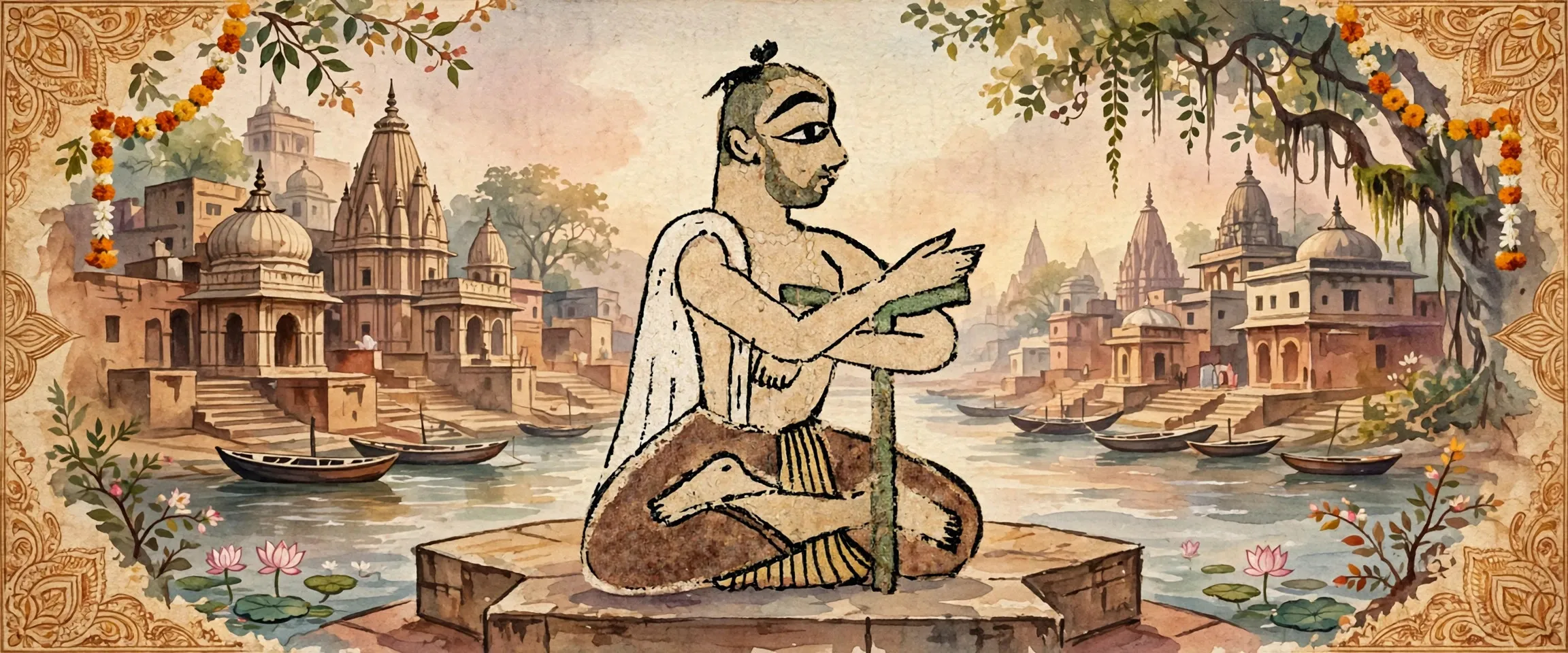
Bhagat Ramanand Ji was a Vaishnava Bhakti teacher of Banaras and one of the fifteen Bhagats whose bani Guru Arjan Dev Ji included in the Guru Granth Sahib Ji. Tradition counts Bhagat Kabir Ji, Bhagat Ravidas Ji, Bhagat Dhanna Ji and Bhagat Sain Ji among his disciples, though scholars note chronological difficulties and his exact dates are disputed. His one hymn, in Raag Basant on Ang 1195, teaches that God is all pervading and found within, so there is no need to seek Him in temples of stone.
- Punjabi name
- ਭਗਤ ਰਾਮਾਨੰਦ ਜੀ
- Tradition
- Bhakti movement; one of the fifteen Bhagats whose bani is included in the Guru Granth Sahib Ji
- Flourished
- Late 14th to mid 15th century; exact birth and death years are disputed and no year is treated as settled
- Born
- Disputed: proposed birth years run from 1296 to about 1400; the Encyclopaedia of Indian Literature gives 1366, as reported by Wikipedia; the Encyclopaedia of Sikhism heads its entry 1300 to 1410 with a question mark
- Birthplace
- Prayaga (Allahabad), present day Uttar Pradesh, in the account shared by the Encyclopaedia of Sikhism, Wikipedia and SikhiWiki; Macauliffe instead gives Mailkot (Melkote)
- Family background
- Kanyakubja Brahmin family (Encyclopaedia of Sikhism, Wikipedia, SikhiWiki); Macauliffe calls him a Gaur Brahman
All 14 facts
- Parents (as recorded by SikhiWiki)
- Mother Sushila; father's name given by SikhiWiki in two forms, Bhoor Karam and Punyasadan Sharma
- Home
- Banaras (Varanasi, Kashi), at the Panch Ganga Ghat (Encyclopaedia of Sikhism and Macauliffe)
- Teacher
- Raghavananda, fourth acharya in the line of Ramanuja (Encyclopaedia of Sikhism; also Wikipedia and Macauliffe)
- Community founded
- Ramavat or Ramanandi Sampradaya; founder of the Bairagi sect (Encyclopaedia of Sikhism)
- Disciples (tradition)
- Twelve are named in the Bhaktamal tradition, including Bhagat Kabir Ji, Bhagat Ravidas Ji, Bhagat Dhanna Ji, Bhagat Sain Ji and Bhagat Pipa Ji; the Encyclopaedia of Sikhism notes chronological impossibilities in the tradition
- Hymns in Guru Granth Sahib Ji
- One: in Raag Basant on Ang 1195
- Works accepted as authentic
- Two Sanskrit works, the Vaishnava Matabja Bhaskara and the Ramarchana Paddhati; many other works are ascribed to him by followers (Encyclopaedia of Sikhism)
- Died
- At Banaras at an advanced age (Macauliffe); the year is not known
Bhagat Ramanand Ji was a Vaishnava Bhakti teacher of Banaras and one of the fifteen Bhagats whose bani is preserved in the Guru Granth Sahib Ji. Tradition remembers him as the teacher of Bhagat Kabir Ji. His single hymn, in Raag Basant on Ang 1195, teaches that God is found within, not in temples of stone.
Who was Bhagat Ramanand Ji?
He was one of the fifteen saints and Sufis whose compositions Guru Arjan Dev Ji placed in the Sikh scripture, and in one way its most senior figure: the teacher, in tradition, of several other Bhagats. The Encyclopaedia of Sikhism calls him the promoter of Vaishnav Bhakti in North India and the founder of the Bairagi sect. SikhiWiki calls him a pioneer of the Bhakti movement and the bridge between its South and North. Wikipedia records the same standing: founder of the Ramanandi Sampradaya, honoured as founder of the Sant parampara in North India, and a teacher who used vernacular Hindi to reach ordinary people.
Little about him is certain. Wikipedia states that little is known with certainty about his life, including his birth and death years, and Macauliffe said the same in 1909. This page states firmly only what the opened sources share.
What is known about his birth and family, and what is disputed?
On family and birthplace there is a broad account. The Encyclopaedia of Sikhism says he was born at Prayaga, modern Allahabad, in a Kanyakubja Brahman family. Wikipedia agrees, and reports that all genuinely Indian sources agree he was born at Prayaga. SikhiWiki gives his birth as late 14th century at Allahabad, names his mother as Sushila, and gives his father's name in two forms, Bhoor Karam and Punyasadan Sharma, a sign of how unsettled the detail is. He lived most of his life at Kasi, Banaras.
One older source disagrees. Macauliffe states that Ramanand, a Gaur Brahman, was born at Mailkot, modern Melkote. No other source opened supports that birth, and Wikipedia notes the southern origin claim has no evidence. Jugti records it and takes no side.
The dates are disputed more widely, and none is stated here as fact. The Encyclopaedia of Sikhism heads its entry 1300 to 1410, with a question mark. The Encyclopaedia of Indian Literature, as reported by Wikipedia, gives 1366 to 1467. Macauliffe fixed his epoch by reckoning instead: about a third of a century for each teacher in the line from Ramanuja, and Kabir's birth in 1398 by his followers' reckoning, which puts Ramanand in the late 14th and first half of the 15th century, the safest span the sources allow.
Who was his teacher, and what community did he found?
His teacher was Raghavananda, described by the Encyclopaedia as the fourth acharya in the line of Ramanuja, founder of Vishishtadvaita. Wikipedia, citing the Bhaktamala, says he studied under Raghavananda in the Vatakalai school. Macauliffe tells their meeting as a story: Ramanand, gathering flowers, was warned by Swami Raghwanand that he had reached the end of his life, and the Swami held back the moment of death and granted him a long life instead. Ramanand then served him, travelled, and settled at the Panch Ganga Ghat at Banaras.
His break with his own sect made his name. Macauliffe relates that Ramanand laid aside several heavy caste observances of the Sri sect and relaxed its severe food rules, holding that such rules had no concern with the worship of God. His sect expelled him, but Raghavananda authorised him to found a sect of his own. It kept much of Ramanuja's teaching, but Sita and Ram became its objects of worship and its rules were relaxed. The Encyclopaedia names it the Ramavat or Ramanandi Sampradaya and calls Ramananda the founder of the Bairagi sect. Macauliffe calls him the first Bairagi.
Why did he open devotion to every caste?
The Encyclopaedia says it in one sentence: Ramananda was more liberal than his guru on the caste system in general and untouchability in particular. SikhiWiki states it directly: he preached that Hari, God, was available to all castes, and Wikipedia records that he accepted disciples without discriminating by gender, class or caste.
Macauliffe gives the fullest account: Ramanand set out to prove from the Shastras that caste rules were unnecessary for anyone who sought God. All who accepted his teaching might eat and drink together irrespective of birth, all who serve God are brothers of the same position, and knowledge of God frees a person from social bondage. His remembered saying fits the same teaching: do not ask a holy person for a caste, ask instead about knowledge. It is the same openness that runs through the bani of the Bhagats he is said to have taught.
Which Bhagats does tradition count among his disciples?
Tradition counts twelve principal disciples. Macauliffe, following Nabhaji's Bhaktamala, names Anantanand, Sureshwaranand, Sukhanand, Bhawanand, Pipa, Sain, Dhanna, Ravdas and Kabir. Wikipedia's list of twelve adds Narahari the goldsmith, Sadhana the butcher and two women poet saints, Sursuri and Padmavati. Five of the twelve have bani in the scripture: Bhagat Kabir Ji, the weaver, the most renowned of them all, Bhagat Ravidas Ji, the leather worker, Bhagat Dhanna Ji, the Jat farmer, Bhagat Sain Ji, the barber, and Bhagat Pipa Ji, the Rajput king who gave up his throne.
That lineage is an established tradition, not a documented register. The Encyclopaedia itself warns that it grew up, in its careful phrase, chronological impossibilities notwithstanding. SikhiWiki says of Ravidas, Sain, Dhanna and Pipa that they are believed to be his followers even though all were not his contemporaries, and Wikipedia notes that some modern scholars have questioned parts of the lineage while others have supported it. The famous story of the young Kabir lying on the Panchganga Ghat steps so that the teacher's foot would touch him is told, and labelled here, as legend.
How many hymns of Bhagat Ramanand Ji are in Guru Granth Sahib Ji?
One hymn of Bhagat Ramanand Ji is in the Guru Granth Sahib Ji. It stands in Raag Basant on Ang 1195, under the heading Ramanand Ji, Ghar 1, and holds the line every reader knows: Satgur main balihari tor, I am a sacrifice to You, O my True Guru. The Encyclopaedia cites it as GG 1195, SikhiWiki prints its full text with the same reference, and Macauliffe translates it in full. Two Hindi padas attributed to him also survive in the Sarbangi compiled by Rajjab, one duplicating this hymn.
What does his one hymn teach?
The hymn answers an invitation. Macauliffe introduces it as Ramanand's reply when invited to a religious service of Vishnu, and Wikipedia describes it as a response to an invitation to go to a temple. It opens with a refusal: where should I go? My home is filled with bliss. My mind has become crippled, unable, in the image both translations keep, to limp away after outward things. He remembers the day he ground sandalwood and oils and set out for the temple, where the Guru showed him Brahman, God, within his own mind.
The middle widens the discovery into a doctrine. Wherever I go, I find only water and stones, but You are totally pervading and permeating in all. He has searched the Vedas and the Puranas, and concludes: I would go there only if the Lord were not here. The Encyclopaedia summarises it in the same terms: idol worship is clearly rejected, Brahman is all pervading and is revealed only through the shabad of the True Guru, whereas the Vedas and Puranas avail nothing. The hymn thus shows his nearness to the Sant tradition of nirguna bhakti, devotion to the formless One.
The hymn closes by naming the agent of the change, and it is not Ramanand himself. I am a sacrifice to You, O my True Guru: You have cut through all my confusion and doubt. Ramanand's Lord is the all pervading Brahman, and the Word of the Guru's Shabad eradicates the karma of millions of past actions. The one hymn explains why Guru Arjan Dev Ji could place a Vaishnava teacher's verse in the Sikh scripture without strain: the temple is refused not from contempt but from fullness, because the God sought in stone and water had been found, through the Guru's word, dwelling in the heart.
He is remembered on three levels. His community remembers him as its founder: the Ramanandi Sampradaya that carries his name is described by Wikipedia as the largest monastic renunciant community of its kind in modern times. The Bhakti world remembers the door opener, whose refusal to ask a seeker's caste made room for a weaver, a leather worker, a barber and a farmer to become saints in that same scripture. Sikh readers remember him on Ang 1195, in one hymn asking everyone invited to go somewhere to find God whether they have first looked within. Its banner is built around a manuscript illustration of about 1715 showing him in discussion with Kabir.
ਭਗਤ ਰਾਮਾਨੰਦ ਜੀ ਬਨਾਰਸ ਦੇ ਇੱਕ ਵੈਸ਼ਨਵ ਭਗਤੀ ਅਧਿਆਪਕ ਸਨ ਅਤੇ ਉਨ੍ਹਾਂ ਪੰਦਰਾਂ ਭਗਤਾਂ ਵਿੱਚੋਂ ਇੱਕ ਸਨ, ਜਿਨ੍ਹਾਂ ਦੀ ਬਾਣੀ ਸ੍ਰੀ ਗੁਰੂ ਗ੍ਰੰਥ ਸਾਹਿਬ ਜੀ ਵਿੱਚ ਸਾਂਭੀ ਗਈ ਹੈ। ਪਰੰਪਰਾ ਉਨ੍ਹਾਂ ਨੂੰ ਭਗਤ ਕਬੀਰ ਜੀ ਦੇ ਗੁਰੂ ਵਜੋਂ ਯਾਦ ਕਰਦੀ ਹੈ। ਰਾਗ ਬਸੰਤ ਵਿੱਚ ਅੰਗ 1195 ਉੱਤੇ ਉਨ੍ਹਾਂ ਦਾ ਇੱਕੋ ਸ਼ਬਦ ਸਿਖਾਉਂਦਾ ਹੈ ਕਿ ਪ੍ਰਭੂ ਅੰਦਰ ਮਿਲਦਾ ਹੈ, ਪੱਥਰ ਦੇ ਮੰਦਰਾਂ ਵਿੱਚ ਨਹੀਂ।
ਭਗਤ ਰਾਮਾਨੰਦ ਜੀ ਕੌਣ ਸਨ?
ਉਹ ਉਨ੍ਹਾਂ ਪੰਦਰਾਂ ਸੰਤਾਂ ਅਤੇ ਸੂਫ਼ੀਆਂ ਵਿੱਚੋਂ ਇੱਕ ਸਨ, ਜਿਨ੍ਹਾਂ ਦੀਆਂ ਰਚਨਾਵਾਂ ਗੁਰੂ ਅਰਜਨ ਦੇਵ ਜੀ ਨੇ ਸਿੱਖ ਗ੍ਰੰਥ ਵਿੱਚ ਰੱਖੀਆਂ, ਅਤੇ ਇੱਕ ਤਰ੍ਹਾਂ ਨਾਲ ਉਸ ਸੰਗਤ ਵਿੱਚ ਸਭ ਤੋਂ ਸੀਨੀਅਰ ਸ਼ਖਸੀਅਤ ਹਨ: ਪਰੰਪਰਾ ਵਿੱਚ, ਕਈ ਹੋਰ ਭਗਤਾਂ ਦੇ ਆਪਣੇ ਗੁਰੂ। ਸਿੱਖ ਧਰਮ ਦਾ ਵਿਸ਼ਵਕੋਸ਼ (Encyclopaedia of Sikhism) ਉਨ੍ਹਾਂ ਨੂੰ ਉੱਤਰੀ ਭਾਰਤ ਵਿੱਚ ਵੈਸ਼ਨਵ ਭਗਤੀ ਦੇ ਪ੍ਰਚਾਰਕ ਅਤੇ ਬੈਰਾਗੀ ਪੰਥ ਦੇ ਸੰਸਥਾਪਕ ਕਹਿੰਦਾ ਹੈ। ਸਿੱਖੀਵਿਕੀ ਉਨ੍ਹਾਂ ਨੂੰ ਭਗਤੀ ਲਹਿਰ ਦੇ ਮੋਢੀ ਅਤੇ ਦੱਖਣ ਅਤੇ ਉੱਤਰ ਦੀ ਭਗਤੀ ਲਹਿਰ ਵਿਚਕਾਰ ਪੁਲ ਕਹਿੰਦਾ ਹੈ। ਵਿਕੀਪੀਡੀਆ ਉਹੀ ਰੁਤਬਾ ਦਰਜ ਕਰਦਾ ਹੈ: ਰਾਮਾਨੰਦੀ ਸੰਪਰਦਾ ਦੇ ਸੰਸਥਾਪਕ, ਉੱਤਰੀ ਭਾਰਤ ਵਿੱਚ ਸੰਤ ਪਰੰਪਰਾ ਦੇ ਸੰਸਥਾਪਕ ਵਜੋਂ ਸਨਮਾਨਿਤ, ਅਤੇ ਇੱਕ ਅਜਿਹੇ ਅਧਿਆਪਕ, ਜੋ ਆਮ ਲੋਕਾਂ ਦੀ ਭਾਸ਼ਾ ਹਿੰਦੀ ਵਰਤਦੇ ਸਨ, ਤਾਂ ਜੋ ਅਧਿਆਤਮਿਕ ਗਿਆਨ ਆਮ ਲੋਕਾਂ ਤੱਕ ਪਹੁੰਚੇ।
ਉਨ੍ਹਾਂ ਬਾਰੇ ਬਹੁਤ ਘੱਟ ਗੱਲ ਪੱਕੀ ਹੈ। ਵਿਕੀਪੀਡੀਆ ਸਾਫ਼ ਕਹਿੰਦਾ ਹੈ ਕਿ ਉਨ੍ਹਾਂ ਦੇ ਜੀਵਨ ਬਾਰੇ ਬਹੁਤ ਘੱਟ ਗੱਲ ਪੱਕੇ ਤੌਰ ਉੱਤੇ ਪਤਾ ਹੈ, ਜਨਮ ਅਤੇ ਮੌਤ ਦੇ ਸਾਲਾਂ ਸਮੇਤ, ਅਤੇ ਉਨ੍ਹਾਂ ਦੀ ਜੀਵਨੀ ਸੈਕੰਡਰੀ ਸਾਹਿਤ ਅਤੇ ਅਸੰਗਤ ਜਨਮਸਾਖੀਆਂ ਵਿੱਚੋਂ ਆਉਂਦੀ ਹੈ। 1909 ਵਿੱਚ ਮੈਕਾਲਿਫ਼ ਨੇ ਵੀ ਉਹੀ ਕਿਹਾ ਸੀ: ਰਾਮਾਨੰਦ ਦੇ ਜੀਵਨ ਬਾਰੇ ਬਹੁਤ ਘੱਟ ਪਤਾ ਹੈ। ਇਹ ਪੰਨਾ ਪੱਕੇ ਤੌਰ ਉੱਤੇ ਸਿਰਫ਼ ਉਹੀ ਕਹਿੰਦਾ ਹੈ, ਜੋ ਖੋਲ੍ਹੇ ਗਏ ਸਰੋਤ ਸਾਂਝਾ ਕਰਦੇ ਹਨ, ਅਤੇ ਬਾਕੀ ਹਰ ਗੱਲ ਵਿਵਾਦ ਦੇ ਨਾਂ ਨਾਲ ਦੱਸਦਾ ਹੈ।
ਉਨ੍ਹਾਂ ਦੇ ਜਨਮ ਅਤੇ ਪਰਿਵਾਰ ਬਾਰੇ ਕੀ ਪਤਾ ਹੈ, ਅਤੇ ਕਿਸ ਗੱਲ ਉੱਤੇ ਵਿਵਾਦ ਹੈ?
ਪਰਿਵਾਰ ਅਤੇ ਜਨਮ ਸਥਾਨ ਬਾਰੇ ਇੱਕ ਵਿਆਪਕ ਬਿਆਨ ਹੈ। ਸਿੱਖ ਧਰਮ ਦਾ ਵਿਸ਼ਵਕੋਸ਼ ਕਹਿੰਦਾ ਹੈ ਕਿ ਉਹ ਪ੍ਰਯਾਗ, ਅੱਜ ਦੇ ਅਲਾਹਾਬਾਦ, ਵਿੱਚ ਇੱਕ ਕਾਨਯਕੁਬਜ ਬ੍ਰਾਹਮਣ ਪਰਿਵਾਰ ਵਿੱਚ ਜੰਮੇ। ਵਿਕੀਪੀਡੀਆ ਪਰਿਵਾਰ ਉੱਤੇ ਸਹਿਮਤ ਹੈ ਅਤੇ ਦੱਸਦਾ ਹੈ ਕਿ ਸਾਰੇ ਅਸਲੀ ਭਾਰਤੀ ਸਰੋਤ ਇਸ ਗੱਲ ਉੱਤੇ ਸਹਿਮਤ ਹਨ ਕਿ ਉਹ ਪ੍ਰਯਾਗ ਵਿੱਚ ਜੰਮੇ। ਸਿੱਖੀਵਿਕੀ ਵੀ ਉਨ੍ਹਾਂ ਦਾ ਜਨਮ 14ਵੀਂ ਸਦੀ ਦੇ ਅੰਤ ਵਿੱਚ ਅਲਾਹਾਬਾਦ ਵਿੱਚ ਦਿੰਦਾ ਹੈ, ਉਨ੍ਹਾਂ ਦੀ ਮਾਤਾ ਦਾ ਨਾਂ ਸੁਸ਼ੀਲਾ ਦਿੰਦਾ ਹੈ, ਅਤੇ ਉਨ੍ਹਾਂ ਦੇ ਪਿਤਾ ਦਾ ਨਾਂ ਆਪਣੇ ਹੀ ਪਾਠ ਵਿੱਚ ਦੋ ਰੂਪਾਂ, ਭੂਰ ਕਰਮ ਅਤੇ ਪੁਨਿਆਸਦਨ ਸ਼ਰਮਾ, ਵਿੱਚ ਦਿੰਦਾ ਹੈ, ਜੋ ਇਸ ਗੱਲ ਦੀ ਛੋਟੀ ਨਿਸ਼ਾਨੀ ਹੈ ਕਿ ਵੇਰਵਾ ਕਿੰਨਾ ਅਣਨਿਬੇੜਿਆ ਹੈ। ਉਨ੍ਹਾਂ ਨੇ ਕਾਸ਼ੀ, ਬਨਾਰਸ, ਵਿੱਚ ਪੜ੍ਹਿਆ ਅਤੇ ਪੜ੍ਹਾਇਆ, ਅਤੇ ਆਪਣੀ ਜ਼ਿਆਦਾਤਰ ਜ਼ਿੰਦਗੀ ਉੱਥੇ ਹੀ ਰਹੇ।
ਇੱਕ ਪੁਰਾਣਾ ਸਰੋਤ ਇਸ ਨਾਲ ਸਹਿਮਤ ਨਹੀਂ। ਮੈਕਾਲਿਫ਼ ਕਹਿੰਦਾ ਹੈ ਕਿ ਰਾਮਾਨੰਦ, ਇੱਕ ਗੌੜ ਬ੍ਰਾਹਮਣ, ਮੈਲਕੋਟ ਵਿੱਚ ਜੰਮੇ, ਅੱਜ ਦਾ ਮੇਲਕੋਟੇ, ਜਿੱਥੇ ਰਾਮਾਨੁਜ ਨੇ ਵਿਸ਼ਨੂੰ ਦੀ ਇੱਕ ਮੂਰਤੀ ਸਥਾਪੀ ਸੀ। ਇਸ ਪੰਨੇ ਲਈ ਖੋਲ੍ਹਿਆ ਕੋਈ ਹੋਰ ਸਰੋਤ ਉਸ ਜਨਮ ਦੀ ਹਮਾਇਤ ਨਹੀਂ ਕਰਦਾ, ਅਤੇ ਵਿਕੀਪੀਡੀਆ ਨੋਟ ਕਰਦਾ ਹੈ ਕਿ ਦੱਖਣੀ ਮੂਲ ਦੇ ਦਾਅਵੇ ਪਿੱਛੇ ਕੋਈ ਸਬੂਤ ਨਹੀਂ। ਜੁਗਤੀ ਉਹ ਵਿਰੋਧੀ ਦਾਅਵਾ ਇਸ ਲਈ ਦਰਜ ਕਰਦੀ ਹੈ ਕਿ ਮੈਕਾਲਿਫ਼ ਇੱਕ ਵੱਡਾ ਮੁੱਢਲਾ ਸਰੋਤ ਹੈ, ਅਤੇ ਕੋਈ ਪੱਖ ਨਹੀਂ ਲੈਂਦੀ।
ਤਰੀਕਾਂ ਉੱਤੇ ਵਿਵਾਦ ਹੋਰ ਵੱਡਾ ਹੈ, ਅਤੇ ਇੱਥੇ ਕੋਈ ਵੀ ਤੱਥ ਵਜੋਂ ਨਹੀਂ ਦਿੱਤੀ ਗਈ। ਸਿੱਖ ਧਰਮ ਦਾ ਵਿਸ਼ਵਕੋਸ਼ ਆਪਣੇ ਲੇਖ ਦਾ ਸਿਰਲੇਖ ਪ੍ਰਸ਼ਨ ਚਿੰਨ੍ਹ ਨਾਲ 1300 ਤੋਂ 1410 ਰੱਖਦਾ ਹੈ। ਭਾਰਤੀ ਸਾਹਿਤ ਦਾ ਵਿਸ਼ਵਕੋਸ਼, ਜਿਵੇਂ ਵਿਕੀਪੀਡੀਆ ਦੱਸਦਾ ਹੈ, 1366 ਤੋਂ 1467 ਦਿੰਦਾ ਹੈ। ਸਿੱਖੀਵਿਕੀ ਸੁਝਾਏ ਗਏ ਜਨਮ ਸਾਲ 1296 ਤੋਂ 1400 ਤੱਕ ਦੱਸਦਾ ਹੈ, ਅਤੇ ਵਿਕੀਪੀਡੀਆ ਦਾ ਸਾਰ ਉਨ੍ਹਾਂ ਦੀ ਮੌਤ ਬਨਾਰਸ ਵਿੱਚ ਲਗਭਗ 1400 ਤੋਂ 1475 ਦੇ ਸਮੇਂ ਵਿੱਚ ਇੱਕ ਅਨਿਸ਼ਚਿਤ ਤਰੀਕ ਉੱਤੇ ਰੱਖਦਾ ਹੈ। ਮੈਕਾਲਿਫ਼ ਨੇ ਇਸ ਦੀ ਥਾਂ ਹਿਸਾਬ ਨਾਲ ਉਨ੍ਹਾਂ ਦਾ ਸਮਾਂ ਨਿਸ਼ਚਿਤ ਕੀਤਾ: ਰਾਮਾਨੁਜ ਦੀ ਲੜੀ ਦੇ ਹਰ ਅਧਿਆਪਕ ਲਈ ਲਗਭਗ ਇੱਕ ਤਿਹਾਈ ਸਦੀ, ਅਤੇ ਕਬੀਰ ਦਾ ਜਨਮ ਉਨ੍ਹਾਂ ਦੇ ਪੈਰੋਕਾਰਾਂ ਦੇ ਹਿਸਾਬ ਨਾਲ 1398, ਜਿਸ ਨਾਲ ਗੁਰੂ 14ਵੀਂ ਸਦੀ ਦੇ ਅੰਤ ਅਤੇ 15ਵੀਂ ਸਦੀ ਦੇ ਪਹਿਲੇ ਅੱਧ ਵਿੱਚ ਆਉਂਦੇ ਹਨ। ਉਹੀ ਸਮਾਂ ਸਭ ਤੋਂ ਸੁਰੱਖਿਅਤ ਬਿਆਨ ਹੈ, ਜੋ ਸਰੋਤ ਦਿੰਦੇ ਹਨ। ਮੈਕਾਲਿਫ਼ ਸਿਰਫ਼ ਇਹ ਜੋੜਦਾ ਹੈ ਕਿ ਉਨ੍ਹਾਂ ਦੀ ਮੌਤ ਬਨਾਰਸ ਵਿੱਚ ਵੱਡੀ ਉਮਰ ਵਿੱਚ ਹੋਈ।
ਉਨ੍ਹਾਂ ਦੇ ਗੁਰੂ ਕੌਣ ਸਨ, ਅਤੇ ਉਨ੍ਹਾਂ ਨੇ ਕਿਹੜਾ ਪੰਥ ਸਥਾਪਿਆ?
ਉਨ੍ਹਾਂ ਦੇ ਗੁਰੂ ਰਾਘਵਾਨੰਦ ਸਨ, ਜਿਨ੍ਹਾਂ ਨੂੰ ਸਿੱਖ ਧਰਮ ਦਾ ਵਿਸ਼ਵਕੋਸ਼ ਰਾਮਾਨੁਜ, ਵਿਸ਼ਿਸ਼ਟਾਦਵੈਤ ਦੇ ਸੰਸਥਾਪਕ, ਦੀ ਲੜੀ ਵਿੱਚ ਚੌਥਾ ਆਚਾਰੀਆ ਦੱਸਦਾ ਹੈ। ਵਿਕੀਪੀਡੀਆ, ਨਾਭਾਦਾਸ ਦੇ ਮੱਧਕਾਲੀ ਭਗਤਮਾਲ ਦਾ ਹਵਾਲਾ ਦੇ ਕੇ, ਕਹਿੰਦਾ ਹੈ ਕਿ ਰਾਮਾਨੰਦ ਨੇ ਵੈਸ਼ਨਵ ਧਰਮ ਦੇ ਵਟਕਲਾਈ ਸਕੂਲ ਵਿੱਚ ਰਾਘਵਾਨੰਦ ਕੋਲੋਂ ਪੜ੍ਹਿਆ। ਮੈਕਾਲਿਫ਼ ਉਨ੍ਹਾਂ ਦੀ ਮੁਲਾਕਾਤ ਇੱਕ ਕਥਾ ਵਜੋਂ ਦੱਸਦਾ ਹੈ, ਜੋ ਇੱਥੇ ਉਸੇ ਦੇ ਬਿਆਨ ਵਜੋਂ ਦਿੱਤੀ ਗਈ ਹੈ: ਰਾਮਾਨੰਦ, ਜੋ ਇੱਕ ਬਾਗ ਵਿੱਚ ਫੁੱਲ ਚੁਗ ਰਹੇ ਸਨ, ਨੂੰ ਸਵਾਮੀ ਰਾਘਵਾਨੰਦ ਨੇ ਚੇਤਾਵਨੀ ਦਿੱਤੀ ਕਿ ਉਹ ਆਪਣੀ ਜ਼ਿੰਦਗੀ ਦੇ ਅੰਤ ਤੱਕ ਪਹੁੰਚ ਗਏ ਹਨ, ਅਤੇ ਸਵਾਮੀ ਨੇ, ਯੋਗ ਵਿੱਚ ਆਪਣੀ ਕੁਸ਼ਲਤਾ ਨਾਲ, ਮੌਤ ਦਾ ਪਲ ਰੋਕ ਕੇ ਉਨ੍ਹਾਂ ਨੂੰ ਇਸ ਦੀ ਥਾਂ ਲੰਬੀ ਉਮਰ ਬਖਸ਼ੀ। ਫਿਰ ਰਾਮਾਨੰਦ ਨੇ ਉਨ੍ਹਾਂ ਦੀ ਸੇਵਾ ਕੀਤੀ, ਤੀਰਥ ਯਾਤਰਾ ਉੱਤੇ ਗਏ, ਅਤੇ ਬਨਾਰਸ ਵਿੱਚ ਪੰਚ ਗੰਗਾ ਘਾਟ ਉੱਤੇ ਟਿਕ ਗਏ, ਜਿੱਥੇ ਜਦੋਂ ਨਾਭਾਦਾਸ ਨੇ ਲਿਖਿਆ, ਉਦੋਂ ਵੀ ਉਨ੍ਹਾਂ ਦੀਆਂ ਖੜਾਵਾਂ ਸਾਂਭੀਆਂ ਹੋਈਆਂ ਸਨ।
ਆਪਣੇ ਹੀ ਪੰਥ ਨਾਲ ਤੋੜ ਨੇ ਉਨ੍ਹਾਂ ਦਾ ਨਾਂ ਬਣਾਇਆ। ਮੈਕਾਲਿਫ਼ ਦੱਸਦਾ ਹੈ ਕਿ ਰਾਮਾਨੰਦ ਨੇ ਸ੍ਰੀ ਪੰਥ ਦੇ ਕਈ ਭਾਰੀ ਜਾਤੀ ਅਨੁਸ਼ਾਸਨ ਛੱਡ ਦਿੱਤੇ ਅਤੇ ਉਸ ਦੇ ਸਖਤ ਭੋਜਨ ਨਿਯਮ ਨਰਮ ਕਰ ਦਿੱਤੇ, ਇਹ ਮੰਨਦਿਆਂ ਕਿ ਅਜਿਹੇ ਨਿਯਮਾਂ ਦਾ ਪ੍ਰਭੂ ਦੀ ਪੂਜਾ ਨਾਲ ਕੋਈ ਸਬੰਧ ਨਹੀਂ। ਉਨ੍ਹਾਂ ਦੇ ਪੰਥ ਨੇ ਉਨ੍ਹਾਂ ਨੂੰ ਕੱਢ ਦਿੱਤਾ, ਪਰ ਰਾਘਵਾਨੰਦ ਨੇ ਹਮਦਰਦੀ ਵਿਖਾਈ ਅਤੇ ਉਨ੍ਹਾਂ ਨੂੰ ਆਪਣਾ ਪੰਥ ਸਥਾਪਣ ਦਾ ਅਧਿਕਾਰ ਦਿੱਤਾ। ਨਵਾਂ ਭਾਈਚਾਰਾ ਰਾਮਾਨੁਜ ਦੀ ਸਿੱਖਿਆ ਦਾ ਬਹੁਤਾ ਹਿੱਸਾ ਰੱਖਦਾ ਸੀ, ਬੱਸ ਇਹ ਕਿ ਸੀਤਾ ਅਤੇ ਰਾਮ ਉਸ ਦੀ ਪੂਜਾ ਦੇ ਖਾਸ ਕੇਂਦਰ ਬਣ ਗਏ ਅਤੇ ਉਸ ਦੇ ਨਿਯਮ ਉਦਾਰਤਾ ਨਾਲ ਨਰਮ ਕਰ ਦਿੱਤੇ ਗਏ। ਵਿਸ਼ਵਕੋਸ਼ ਉਸ ਨੂੰ ਰਾਮਾਵਤ ਜਾਂ ਰਾਮਾਨੰਦੀ ਸੰਪਰਦਾ ਕਹਿੰਦਾ ਹੈ ਅਤੇ ਰਾਮਾਨੰਦ ਨੂੰ ਬੈਰਾਗੀ ਪੰਥ ਦਾ ਸੰਸਥਾਪਕ ਕਹਿੰਦਾ ਹੈ। ਮੈਕਾਲਿਫ਼ ਉਨ੍ਹਾਂ ਨੂੰ ਪਹਿਲਾ ਬੈਰਾਗੀ ਕਹਿੰਦਾ ਹੈ।
ਉਨ੍ਹਾਂ ਨੇ ਭਗਤੀ ਹਰ ਜਾਤ ਲਈ ਕਿਉਂ ਖੋਲ੍ਹੀ?
ਸਿੱਖ ਧਰਮ ਦਾ ਵਿਸ਼ਵਕੋਸ਼ ਗੱਲ ਦਾ ਸਾਰ ਇੱਕ ਵਾਕ ਵਿੱਚ ਦਿੰਦਾ ਹੈ: ਰਾਮਾਨੰਦ ਆਮ ਤੌਰ ਉੱਤੇ ਜਾਤ ਪ੍ਰਣਾਲੀ ਅਤੇ ਖਾਸ ਤੌਰ ਉੱਤੇ ਛੂਤਛਾਤ ਬਾਰੇ ਆਪਣੇ ਗੁਰੂ ਨਾਲੋਂ ਵੱਧ ਉਦਾਰ ਸਨ। ਸਿੱਖੀਵਿਕੀ ਸਿੱਖਿਆ ਸਿੱਧੀ ਕਹਿੰਦਾ ਹੈ: ਉਨ੍ਹਾਂ ਨੇ ਪ੍ਰਚਾਰ ਕੀਤਾ ਕਿ ਹਰੀ, ਪ੍ਰਭੂ, ਹਰ ਜਾਤ ਦੇ ਲੋਕਾਂ ਲਈ ਉਪਲਬਧ ਹੈ। ਵਿਕੀਪੀਡੀਆ ਦਰਜ ਕਰਦਾ ਹੈ ਕਿ ਉਨ੍ਹਾਂ ਨੇ ਲਿੰਗ, ਵਰਗ ਜਾਂ ਜਾਤ ਦੇ ਆਧਾਰ ਉੱਤੇ ਵਿਤਕਰਾ ਕੀਤੇ ਬਿਨਾਂ ਚੇਲੇ ਸਵੀਕਾਰ ਕੀਤੇ।
ਮੈਕਾਲਿਫ਼ ਉਸ ਸਿਧਾਂਤ ਦਾ ਸਭ ਤੋਂ ਪੂਰਾ ਬਿਆਨ ਦਿੰਦਾ ਹੈ। ਰਾਮਾਨੰਦ ਨੇ, ਉਹ ਕਹਿੰਦਾ ਹੈ, ਸ਼ਾਸਤਰਾਂ ਵਿੱਚੋਂ ਸਾਬਤ ਕਰਨ ਦਾ ਯਤਨ ਕੀਤਾ ਕਿ ਜੋ ਕੋਈ ਪ੍ਰਭੂ ਨੂੰ ਲੱਭਦਾ ਹੈ, ਉਸ ਲਈ ਜਾਤ ਦੇ ਨਿਯਮ ਜ਼ਰੂਰੀ ਨਹੀਂ। ਜੋ ਸਾਰੇ ਉਨ੍ਹਾਂ ਦੀ ਸਿੱਖਿਆ ਸਵੀਕਾਰ ਕਰਦੇ ਸਨ, ਉਹ ਜਨਮ ਦੀ ਪਰਵਾਹ ਕੀਤੇ ਬਿਨਾਂ ਇਕੱਠੇ ਖਾ ਪੀ ਸਕਦੇ ਸਨ। ਜੋ ਸਾਰੇ ਇੱਕੋ ਤਰ੍ਹਾਂ ਪ੍ਰਭੂ ਦੀ ਸੇਵਾ ਕਰਦੇ ਹਨ, ਉਹ ਭਰਾ ਹਨ ਅਤੇ ਇੱਕੋ ਸਮਾਜਿਕ ਰੁਤਬੇ ਦੇ ਹਨ, ਅਤੇ ਪ੍ਰਭੂ ਦਾ ਗਿਆਨ ਮਨੁੱਖ ਨੂੰ ਸਾਰੇ ਸਮਾਜਿਕ ਬੰਧਨਾਂ ਤੋਂ ਮੁਕਤ ਕਰਦਾ ਹੈ। ਉਨ੍ਹਾਂ ਨੇ ਆਪਣਾ ਅਧਿਆਤਮਿਕ ਦਰਵਾਜ਼ਾ ਖੁੱਲ੍ਹਾ ਸੁੱਟ ਦਿੱਤਾ ਅਤੇ ਹਰ ਜਾਤ ਦੇ ਚੇਲੇ ਸਵੀਕਾਰ ਕੀਤੇ। ਉਨ੍ਹਾਂ ਲਈ ਸਾਂਭੀ ਗਈ ਕਹਾਵਤ, ਜੋ ਉਨ੍ਹਾਂ ਦੇ ਸ਼ਬਦ ਦੀਆਂ ਆਧੁਨਿਕ ਵਿਆਖਿਆਵਾਂ ਵਿੱਚ ਦੱਸੀ ਜਾਂਦੀ ਹੈ, ਉਸੇ ਸਿੱਖਿਆ ਨਾਲ ਮੇਲ ਖਾਂਦੀ ਹੈ: ਕਿਸੇ ਪਵਿੱਤਰ ਮਨੁੱਖ ਨੂੰ ਉਸ ਦੀ ਜਾਤ ਨਾ ਪੁੱਛੋ, ਇਸ ਦੀ ਥਾਂ ਗਿਆਨ ਬਾਰੇ ਪੁੱਛੋ। ਇਹ ਉਹੀ ਖੁੱਲ੍ਹ ਹੈ, ਜੋ ਉਨ੍ਹਾਂ ਭਗਤਾਂ ਦੀ ਬਾਣੀ ਵਿੱਚ ਵਗਦੀ ਹੈ, ਜਿਨ੍ਹਾਂ ਨੂੰ ਉਨ੍ਹਾਂ ਦੇ ਚੇਲੇ ਕਿਹਾ ਜਾਂਦਾ ਹੈ।
ਪਰੰਪਰਾ ਕਿਹੜੇ ਭਗਤਾਂ ਨੂੰ ਉਨ੍ਹਾਂ ਦੇ ਚੇਲੇ ਗਿਣਦੀ ਹੈ?
ਪਰੰਪਰਾ ਬਾਰਾਂ ਮੁੱਖ ਚੇਲੇ ਗਿਣਦੀ ਹੈ। ਮੈਕਾਲਿਫ਼, ਨਾਭਾਜੀ ਦੇ ਭਗਤਮਾਲ ਦੇ ਆਧਾਰ ਉੱਤੇ, ਅਨੰਤਾਨੰਦ, ਸੁਰੇਸ਼ਵਰਾਨੰਦ, ਸੁਖਾਨੰਦ, ਭਵਾਨੰਦ, ਪੀਪਾ, ਸੈਣ, ਧੰਨਾ, ਰਵਦਾਸ ਅਤੇ ਕਬੀਰ ਦੇ ਨਾਂ ਦਿੰਦਾ ਹੈ, ਹੋਰਨਾਂ ਸਮੇਤ। ਵਿਕੀਪੀਡੀਆ ਦੀ ਬਾਰਾਂ ਦੀ ਪਰੰਪਰਾਗਤ ਸੂਚੀ ਨਰਹਰੀ ਸੁਨਿਆਰੇ ਅਤੇ ਸਾਧਨਾ ਕਸਾਈ ਨੂੰ ਜੋੜਦੀ ਹੈ, ਅਤੇ ਦਸ ਮਰਦਾਂ ਦੇ ਨਾਲ ਦੋ ਔਰਤ ਸੰਤ ਕਵੀਆਂ, ਸੁਰਸੁਰੀ ਅਤੇ ਪਦਮਾਵਤੀ, ਦੇ ਨਾਂ ਦਿੰਦੀ ਹੈ। ਉਨ੍ਹਾਂ ਬਾਰਾਂ ਵਿੱਚੋਂ ਪੰਜਾਂ ਦੀ ਆਪਣੀ ਬਾਣੀ ਗ੍ਰੰਥ ਵਿੱਚ ਹੈ: ਭਗਤ ਕਬੀਰ ਜੀ, ਬਨਾਰਸ ਦੇ ਜੁਲਾਹੇ ਅਤੇ ਉਨ੍ਹਾਂ ਸਾਰਿਆਂ ਵਿੱਚੋਂ ਸਭ ਤੋਂ ਮਸ਼ਹੂਰ, ਭਗਤ ਰਵੀਦਾਸ ਜੀ, ਚਮਾਰ, ਭਗਤ ਧੰਨਾ ਜੀ, ਜੱਟ ਕਿਸਾਨ, ਭਗਤ ਸੈਣ ਜੀ, ਨਾਈ, ਅਤੇ ਭਗਤ ਪੀਪਾ ਜੀ, ਰਾਜਪੂਤ ਰਾਜਾ, ਜਿਨ੍ਹਾਂ ਨੇ ਆਪਣਾ ਤਖਤ ਛੱਡ ਦਿੱਤਾ।
ਉਹ ਵੰਸ਼ਾਵਲੀ ਇੱਥੇ ਉਸੇ ਤਰ੍ਹਾਂ ਦੱਸੀ ਗਈ ਹੈ, ਜਿਵੇਂ ਉਹ ਹੈ: ਇੱਕ ਸਥਾਪਿਤ ਪਰੰਪਰਾ, ਦਸਤਾਵੇਜ਼ੀ ਰਜਿਸਟਰ ਨਹੀਂ। ਸਿੱਖ ਧਰਮ ਦਾ ਵਿਸ਼ਵਕੋਸ਼ ਖੁਦ ਚੇਤਾਵਨੀ ਦਿੰਦਾ ਹੈ ਕਿ ਪਰੰਪਰਾ, ਉਸ ਦੇ ਸਾਵਧਾਨ ਸ਼ਬਦਾਂ ਵਿੱਚ, ਕਾਲਕ੍ਰਮ ਦੀਆਂ ਅਸੰਭਵਤਾਵਾਂ ਦੇ ਬਾਵਜੂਦ ਵਧੀ। ਸਿੱਖੀਵਿਕੀ ਰਵੀਦਾਸ, ਸੈਣ, ਧੰਨਾ ਅਤੇ ਪੀਪਾ ਬਾਰੇ ਕਹਿੰਦਾ ਹੈ ਕਿ ਉਹ ਉਨ੍ਹਾਂ ਦੇ ਪੈਰੋਕਾਰ ਮੰਨੇ ਜਾਂਦੇ ਹਨ, ਭਾਵੇਂ ਉਹ ਸਾਰੇ ਉਨ੍ਹਾਂ ਦੇ ਸਮਕਾਲੀ ਨਹੀਂ ਸਨ। ਵਿਕੀਪੀਡੀਆ ਨੋਟ ਕਰਦਾ ਹੈ ਕਿ ਕੁਝ ਆਧੁਨਿਕ ਵਿਦਵਾਨਾਂ ਨੇ ਵੰਸ਼ਾਵਲੀ ਦੇ ਕੁਝ ਹਿੱਸਿਆਂ ਉੱਤੇ ਸਵਾਲ ਚੁੱਕੇ ਹਨ, ਜਦੋਂ ਕਿ ਹੋਰਨਾਂ ਨੇ ਉਸ ਦੀ ਹਮਾਇਤ ਕੀਤੀ ਹੈ, ਅਤੇ ਨੌਜਵਾਨ ਕਬੀਰ ਦੀ ਮਸ਼ਹੂਰ ਕਥਾ, ਜੋ ਪੰਚਗੰਗਾ ਘਾਟ ਦੀਆਂ ਪੌੜੀਆਂ ਉੱਤੇ ਲੇਟ ਗਏ ਤਾਂ ਜੋ ਗੁਰੂ ਦਾ ਪੈਰ ਉਨ੍ਹਾਂ ਨੂੰ ਛੂਹੇ, ਸਿੱਖੀਵਿਕੀ ਅਤੇ ਹੋਰ ਬਿਆਨਾਂ ਵੱਲੋਂ ਦੰਤਕਥਾ ਵਜੋਂ ਦੱਸੀ ਜਾਂਦੀ ਹੈ। ਇੱਥੇ ਵੀ ਉਹ ਦੰਤਕਥਾ ਵਜੋਂ ਹੀ ਦੱਸੀ ਗਈ ਹੈ।
ਸ੍ਰੀ ਗੁਰੂ ਗ੍ਰੰਥ ਸਾਹਿਬ ਜੀ ਵਿੱਚ ਭਗਤ ਰਾਮਾਨੰਦ ਜੀ ਦੇ ਕਿੰਨੇ ਸ਼ਬਦ ਹਨ?
ਸ੍ਰੀ ਗੁਰੂ ਗ੍ਰੰਥ ਸਾਹਿਬ ਜੀ ਵਿੱਚ ਭਗਤ ਰਾਮਾਨੰਦ ਜੀ ਦਾ ਇੱਕ ਸ਼ਬਦ ਹੈ, ਅਤੇ ਇਸ ਗੱਲ ਉੱਤੇ ਖੋਲ੍ਹਿਆ ਹਰ ਸਰੋਤ ਸਹਿਮਤ ਹੈ। ਉਹ ਰਾਗ ਬਸੰਤ ਵਿੱਚ ਅੰਗ 1195 ਉੱਤੇ ਹੈ, ਰਾਮਾਨੰਦ ਜੀ, ਘਰੁ 1 ਦੇ ਸਿਰਲੇਖ ਹੇਠ, ਅਤੇ ਉਸ ਵਿੱਚ ਉਹ ਪੰਕਤੀ ਹੈ, ਜੋ ਹਰ ਪਾਠਕ ਉਸ ਵਿੱਚੋਂ ਜਾਣਦਾ ਹੈ: ਸਤਿਗੁਰ ਮੈ ਬਲਿਹਾਰੀ ਤੋਰ। ਸਿੱਖ ਧਰਮ ਦਾ ਵਿਸ਼ਵਕੋਸ਼ ਉਸ ਨੂੰ GG 1195 ਵਜੋਂ ਦਿੰਦਾ ਹੈ, ਸਿੱਖੀਵਿਕੀ ਉਸ ਦਾ ਪੂਰਾ ਪਾਠ ਉਸੇ ਹਵਾਲੇ ਨਾਲ ਛਾਪਦਾ ਹੈ, ਅਤੇ ਮੈਕਾਲਿਫ਼ ਉਸ ਦਾ ਪੂਰਾ ਅਨੁਵਾਦ ਦਿੰਦਾ ਹੈ। ਗ੍ਰੰਥ ਤੋਂ ਬਾਹਰ, ਵਿਸ਼ਵਕੋਸ਼ ਨੋਟ ਕਰਦਾ ਹੈ ਕਿ ਉਨ੍ਹਾਂ ਨਾਲ ਜੋੜੇ ਗਏ ਦੋ ਹਿੰਦੀ ਪਦੇ ਰੱਜਬ ਵੱਲੋਂ ਸੰਪਾਦਿਤ ਸਰਬੰਗੀ ਵਿੱਚ ਬਚੇ ਹਨ, ਜਿਨ੍ਹਾਂ ਵਿੱਚੋਂ ਇੱਕ ਇਹੀ ਸ਼ਬਦ ਦੁਹਰਾਉਂਦਾ ਹੈ, ਅਤੇ ਪੈਰੋਕਾਰਾਂ ਵੱਲੋਂ ਉਨ੍ਹਾਂ ਨਾਲ ਜੋੜੀਆਂ ਕਈ ਰਚਨਾਵਾਂ ਵਿੱਚੋਂ ਆਧੁਨਿਕ ਵਿਦਵਾਨ ਕੇਵਲ ਦੋ ਨੂੰ ਪ੍ਰਮਾਣਿਕ ਮੰਨਦੇ ਹਨ: ਵੈਸ਼ਨਵ ਮਤਬਜ ਭਾਸਕਰ ਅਤੇ ਰਾਮਾਰਚਨ ਪੱਧਤੀ।
ਉਨ੍ਹਾਂ ਦਾ ਇੱਕੋ ਸ਼ਬਦ ਕੀ ਸਿਖਾਉਂਦਾ ਹੈ?
ਸ਼ਬਦ ਇੱਕ ਸੱਦੇ ਦਾ ਜਵਾਬ ਦਿੰਦਾ ਹੈ। ਮੈਕਾਲਿਫ਼ ਉਸ ਨੂੰ ਰਾਮਾਨੰਦ ਦੇ ਜਵਾਬ ਵਜੋਂ ਪੇਸ਼ ਕਰਦਾ ਹੈ, ਜਦੋਂ ਉਨ੍ਹਾਂ ਨੂੰ ਵਿਸ਼ਨੂੰ ਦੀ ਇੱਕ ਧਾਰਮਿਕ ਸੇਵਾ ਵਿੱਚ ਸ਼ਾਮਲ ਹੋਣ ਦਾ ਸੱਦਾ ਦਿੱਤਾ ਗਿਆ, ਅਤੇ ਵਿਕੀਪੀਡੀਆ ਉਸ ਨੂੰ ਮੰਦਰ ਜਾਣ ਦੇ ਸੱਦੇ ਦਾ ਜਵਾਬ ਦੱਸਦਾ ਹੈ। ਉਹ ਇੱਕ ਇਨਕਾਰ ਨਾਲ ਖੁੱਲ੍ਹਦਾ ਹੈ, ਜੋ ਇੱਕ ਖੋਜ ਵੀ ਹੈ: ਮੈਂ ਕਿੱਥੇ ਜਾਵਾਂ? ਮੇਰਾ ਘਰ ਅਨੰਦ ਨਾਲ ਭਰਿਆ ਹੈ। ਮੇਰੀ ਚੇਤਨਾ ਬਾਹਰ ਨਹੀਂ ਭਟਕਦੀ, ਅਤੇ ਮੇਰਾ ਮਨ ਪੰਗੁ ਹੋ ਗਿਆ ਹੈ, ਜਿਵੇਂ ਦੋਵੇਂ ਅਨੁਵਾਦ ਉਹ ਬਿੰਬ ਰੱਖਦੇ ਹਨ, ਬਾਹਰੀ ਚੀਜ਼ਾਂ ਦੇ ਮਗਰ ਲੰਗੜਾ ਕੇ ਜਾਣ ਦੇ ਅਸਮਰੱਥ। ਉਹ ਉਸ ਦਿਨ ਨੂੰ ਯਾਦ ਕਰਦੇ ਹਨ, ਜਦੋਂ ਉਨ੍ਹਾਂ ਨੇ ਚੰਦਨ ਅਤੇ ਸੁਗੰਧਿਤ ਤੇਲ ਘਸੇ ਅਤੇ ਮੰਦਰ ਵੱਲ ਚੱਲ ਪਏ, ਅਤੇ ਉੱਥੇ ਗੁਰੂ ਨੇ ਉਨ੍ਹਾਂ ਨੂੰ ਬ੍ਰਹਮ, ਪ੍ਰਭੂ, ਉਨ੍ਹਾਂ ਦੇ ਆਪਣੇ ਮਨ ਵਿੱਚ ਵਿਖਾਇਆ।
ਵਿਚਕਾਰਲਾ ਹਿੱਸਾ ਉਸ ਖੋਜ ਨੂੰ ਇੱਕ ਸਿਧਾਂਤ ਵਿੱਚ ਵਧਾਉਂਦਾ ਹੈ। ਮੈਂ ਜਿੱਥੇ ਵੀ ਜਾਂਦਾ ਹਾਂ, ਮੈਨੂੰ ਕੇਵਲ ਪਾਣੀ ਅਤੇ ਪੱਥਰ ਮਿਲਦੇ ਹਨ, ਪਰ ਤੂੰ ਸਭ ਵਿੱਚ ਪੂਰੀ ਤਰ੍ਹਾਂ ਵਿਆਪਕ ਹੈਂ। ਉਨ੍ਹਾਂ ਨੇ ਸਾਰੇ ਵੇਦ ਅਤੇ ਪੁਰਾਣ ਖੋਜੇ ਹਨ, ਅਤੇ ਉਨ੍ਹਾਂ ਦਾ ਸਿੱਟਾ ਇੱਕ ਸ਼ਾਂਤ ਸ਼ਰਤ ਹੈ: ਮੈਂ ਉੱਥੇ ਤਾਂ ਹੀ ਜਾਂਦਾ, ਜੇ ਪ੍ਰਭੂ ਇੱਥੇ ਨਾ ਹੁੰਦਾ। ਸਿੱਖ ਧਰਮ ਦਾ ਵਿਸ਼ਵਕੋਸ਼ ਸ਼ਬਦ ਦਾ ਸਾਰ ਉਸੇ ਸ਼ਬਦਾਂ ਵਿੱਚ ਦਿੰਦਾ ਹੈ: ਮੂਰਤੀ ਪੂਜਾ ਸਾਫ਼ ਤੌਰ ਉੱਤੇ ਰੱਦ ਕੀਤੀ ਗਈ ਹੈ, ਬ੍ਰਹਮ ਨੂੰ ਸਭ ਵਿੱਚ ਵਿਆਪਕ ਮੰਨਿਆ ਗਿਆ ਹੈ ਅਤੇ ਉਹ ਮਨ ਨੂੰ ਕੇਵਲ ਸੱਚੇ ਗੁਰੂ ਦੇ ਸ਼ਬਦ ਰਾਹੀਂ ਪ੍ਰਗਟ ਹੁੰਦਾ ਹੈ, ਜਦੋਂ ਕਿ ਵੇਦ ਅਤੇ ਪੁਰਾਣ ਕੁਝ ਕੰਮ ਨਹੀਂ ਆਉਂਦੇ। ਉਸ ਸਿੱਖਿਆ ਵਿੱਚ ਸ਼ਬਦ ਨਿਰਗੁਣ ਭਗਤੀ ਦੀ ਸੰਤ ਪਰੰਪਰਾ ਨਾਲ ਉਨ੍ਹਾਂ ਦੀ ਨੇੜਤਾ ਵਿਖਾਉਂਦਾ ਹੈ, ਉਸ ਜੀਵਨ ਦੇ ਅੰਦਰ, ਜੋ ਮੰਦਰ ਵੈਸ਼ਨਵ ਧਰਮ ਵਿੱਚ ਸ਼ੁਰੂ ਹੋਇਆ ਸੀ।
ਸ਼ਬਦ ਉਸ ਬਦਲਾਅ ਦੇ ਕਾਰਕ ਦਾ ਨਾਂ ਲੈ ਕੇ ਬੰਦ ਹੁੰਦਾ ਹੈ, ਅਤੇ ਉਹ ਰਾਮਾਨੰਦ ਖੁਦ ਨਹੀਂ ਹਨ। ਸਤਿਗੁਰ, ਮੈਂ ਤੁਹਾਡੇ ਤੋਂ ਬਲਿਹਾਰੀ ਜਾਂਦਾ ਹਾਂ: ਤੁਸੀਂ ਮੇਰੀ ਸਾਰੀ ਉਲਝਣ ਅਤੇ ਸ਼ੱਕ ਕੱਟ ਦਿੱਤਾ ਹੈ। ਰਾਮਾਨੰਦ ਦਾ ਸੁਆਮੀ ਸਭ ਵਿੱਚ ਵਿਆਪਕ ਬ੍ਰਹਮ ਹੈ, ਅਤੇ ਗੁਰੂ ਦਾ ਸ਼ਬਦ ਲੱਖਾਂ ਪਿਛਲੇ ਕਰਮਾਂ ਨੂੰ ਖਤਮ ਕਰਦਾ ਹੈ। ਪੂਰਾ ਪੜ੍ਹਿਆਂ, ਇੱਕੋ ਸ਼ਬਦ ਇਸ ਗੱਲ ਦੀ ਵਿਆਖਿਆ ਕਰਦਾ ਹੈ ਕਿ ਗੁਰੂ ਅਰਜਨ ਦੇਵ ਜੀ ਇੱਕ ਵੈਸ਼ਨਵ ਅਧਿਆਪਕ ਦੀ ਰਚਨਾ ਨੂੰ ਬਿਨਾਂ ਕਿਸੇ ਖਿੱਚ ਦੇ ਸਿੱਖ ਗ੍ਰੰਥ ਵਿੱਚ ਕਿਉਂ ਰੱਖ ਸਕੇ: ਮੰਦਰ ਨੂੰ ਤਿਰਸਕਾਰ ਵਿੱਚੋਂ ਨਹੀਂ, ਸਗੋਂ ਪੂਰਨਤਾ ਵਿੱਚੋਂ ਇਨਕਾਰ ਕੀਤਾ ਗਿਆ ਹੈ, ਕਿਉਂਕਿ ਜਿਸ ਪ੍ਰਭੂ ਨੂੰ ਪੱਥਰ ਅਤੇ ਪਾਣੀ ਵਿੱਚ ਲੱਭਿਆ ਗਿਆ ਸੀ, ਉਹ ਗੁਰੂ ਦੇ ਸ਼ਬਦ ਰਾਹੀਂ, ਸਭ ਵਿੱਚ ਵਿਆਪਕ ਅਤੇ ਹਿਰਦੇ ਵਿੱਚ ਵਸਦਾ ਮਿਲ ਗਿਆ ਸੀ।
ਉਨ੍ਹਾਂ ਨੂੰ ਅੱਜ ਤਿੰਨ ਪੱਧਰਾਂ ਉੱਤੇ ਯਾਦ ਕੀਤਾ ਜਾਂਦਾ ਹੈ। ਉਨ੍ਹਾਂ ਦਾ ਭਾਈਚਾਰਾ ਉਨ੍ਹਾਂ ਨੂੰ ਆਪਣੇ ਸੰਸਥਾਪਕ ਵਜੋਂ ਯਾਦ ਕਰਦਾ ਹੈ, ਅਤੇ ਉਨ੍ਹਾਂ ਦੇ ਨਾਂ ਵਾਲੀ ਰਾਮਾਨੰਦੀ ਸੰਪਰਦਾ ਨੂੰ ਵਿਕੀਪੀਡੀਆ ਆਧੁਨਿਕ ਸਮੇਂ ਵਿੱਚ ਆਪਣੀ ਕਿਸਮ ਦਾ ਸਭ ਤੋਂ ਵੱਡਾ ਸੰਨਿਆਸੀ ਭਾਈਚਾਰਾ ਦੱਸਦਾ ਹੈ, ਭਾਵੇਂ ਉਸ ਦੇ ਸਭ ਤੋਂ ਮੁੱਢਲੇ ਇਤਿਹਾਸ ਦੇ ਸਬੂਤ ਪਤਲੇ ਹਨ। ਵਿਆਪਕ ਭਗਤੀ ਜਗਤ ਉਨ੍ਹਾਂ ਨੂੰ ਪੁਲ ਅਤੇ ਦਰਵਾਜ਼ਾ ਖੋਲ੍ਹਣ ਵਾਲੇ ਵਜੋਂ ਯਾਦ ਕਰਦਾ ਹੈ, ਉਹ ਅਧਿਆਪਕ, ਜਿਨ੍ਹਾਂ ਦੇ ਸਾਧਕ ਦੀ ਜਾਤ ਪੁੱਛਣ ਤੋਂ ਇਨਕਾਰ ਨੇ ਇੱਕ ਜੁਲਾਹੇ, ਇੱਕ ਚਮਾਰ, ਇੱਕ ਨਾਈ ਅਤੇ ਇੱਕ ਕਿਸਾਨ ਲਈ ਸੰਤ ਬਣਨ ਦੀ ਥਾਂ ਬਣਾਈ, ਜਿਨ੍ਹਾਂ ਦੇ ਸ਼ਬਦ ਇੱਕ ਗ੍ਰੰਥ ਚੁੱਕੇਗਾ। ਸਿੱਖ ਪਾਠਕ ਉਨ੍ਹਾਂ ਨੂੰ ਅੰਗ 1195 ਉੱਤੇ, ਰਾਗ ਬਸੰਤ ਵਿੱਚ ਯਾਦ ਕਰਦੇ ਹਨ, ਇੱਕੋ ਸ਼ਬਦ ਵਿੱਚ, ਜੋ ਪ੍ਰਭੂ ਨੂੰ ਲੱਭਣ ਲਈ ਕਿਤੇ ਜਾਣ ਦਾ ਸੱਦਾ ਪਾਉਣ ਵਾਲੇ ਹਰ ਮਨੁੱਖ ਨੂੰ ਪੁੱਛਦਾ ਹੈ ਕਿ ਕੀ ਉਸ ਨੇ ਪਹਿਲਾਂ ਅੰਦਰ ਵੇਖਿਆ ਹੈ। ਪਰੰਪਰਾਗਤ ਕਲਾ ਨੇ ਉਨ੍ਹਾਂ ਦੀ ਸ਼ਖਸੀਅਤ ਵੀ ਉਸੇ ਭਾਵਨਾ ਵਿੱਚ ਭਾਈਚਾਰੇ ਸਾਹਮਣੇ ਰੱਖੀ: ਇਸ ਪੰਨੇ ਦਾ ਬੈਨਰ ਲਗਭਗ 1715 ਦੀ ਇੱਕ ਹੱਥ ਲਿਖਤ ਤਸਵੀਰ, ਹਿੰਦੀ ਹੱਥ ਲਿਖਤ 884 ਵਿੱਚੋਂ, ਦੇ ਆਲੇ ਦੁਆਲੇ ਬਣਿਆ ਹੈ, ਜੋ ਰਾਮਾਨੰਦ ਨੂੰ ਕਬੀਰ ਨਾਲ ਵਿਚਾਰਾਂ ਕਰਦਿਆਂ ਬੈਠੇ ਵਿਖਾਉਂਦੀ ਹੈ, ਉਹ ਗੁਰੂ ਅਤੇ ਉਹ ਚੇਲਾ, ਜਿਨ੍ਹਾਂ ਨੂੰ ਪਰੰਪਰਾ ਨੇ ਸਦਾ ਲਈ ਜੋੜ ਦਿੱਤਾ।
More religion entries to explore
Sources (4)
Jugti is free and independent. Reader support keeps the Kosh growing.
Support