
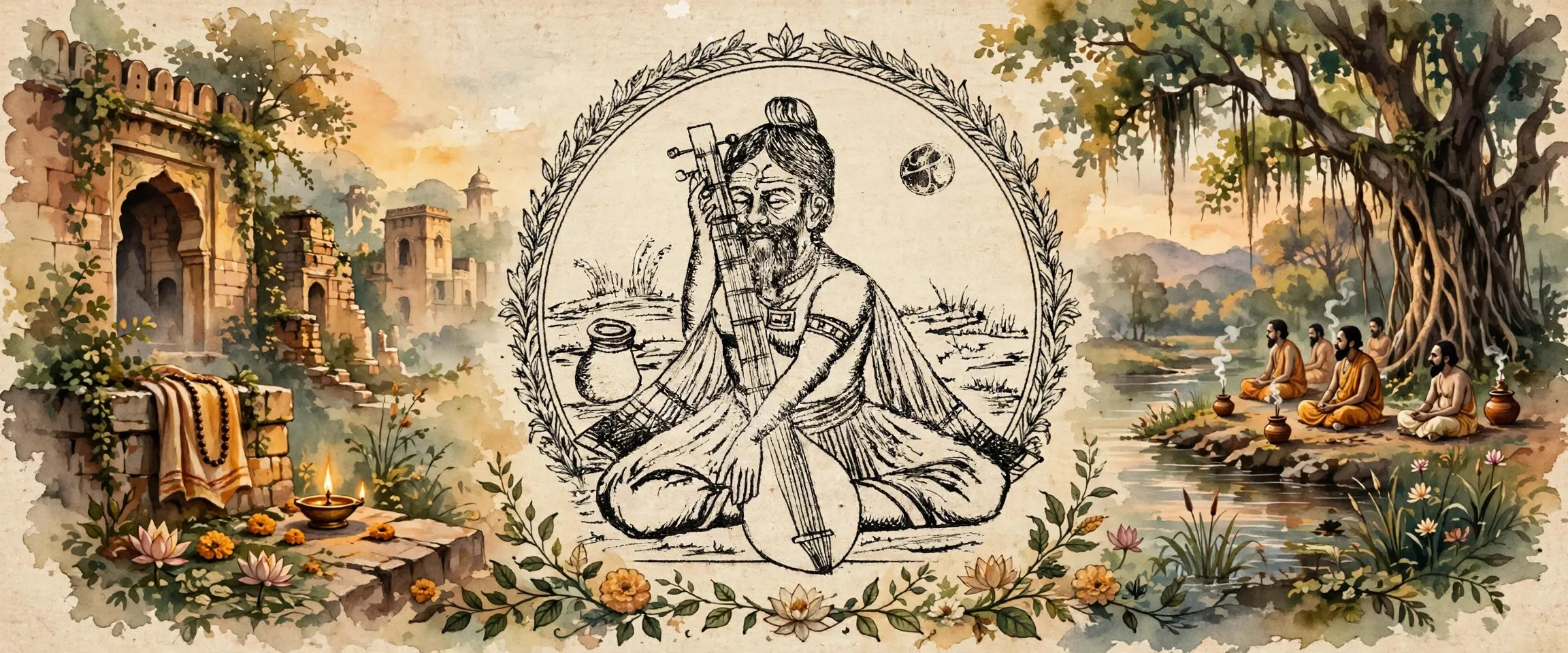
Bhagat Surdas Ji was one of the fifteen Bhagats whose bani Guru Arjan Dev Ji included in the Guru Granth Sahib Ji, and his is the smallest share of all: a single line in Raag Sarang on Ang 1253, telling the mind to abandon the company of those who turn away from God. The Encyclopaedia of Sikhism and Macauliffe identify him as Madan Mohan, a Brahman poet and musician born in 1529, or 1528 in Macauliffe, who was made governor of Sandila by Akbar before renouncing the world, and they insist he is not the blind Braj Bhasha poet of the Sur Sagar, a different Surdas whose biography is often mixed with his.
- Punjabi name
- ਭਗਤ ਸੂਰਦਾਸ ਜੀ
- Tradition
- Bhakti movement; one of the fifteen Bhagats whose bani is included in the Guru Granth Sahib Ji
- Original name
- Madan Mohan, in the accounts of the Encyclopaedia of Sikhism and Macauliffe
- Born
- 1529, in the Encyclopaedia of Sikhism account; Macauliffe gives 1528. Neither account names a birthplace, and the year is not treated as settled
- Family
- A high ranking Brahman family, per the Encyclopaedia of Sikhism
- Known for in the traditional account
- Proficiency in music and poetry; appointed governor of Sandila by Emperor Akbar, he spent its revenue feeding holy men, then renounced the world for the company of holy men, per Macauliffe and the Encyclopaedia of Sikhism
All 10 facts
- Bani in Guru Granth Sahib Ji
- A single line in Raag Sarang on Ang 1253: O mind, abandon the company of those who turn away from God
- Answered by
- Guru Arjan Dev Ji, whose hymn under the heading Sarang Mahala 5 Surdas explains and supplements the line, with the refrain that the people of the Lord dwell with the Lord
- Died
- At Banaras, per the Encyclopaedia of Sikhism, where a shrine near the city honours his memory; no year of death is given in that account or in Macauliffe
- Not to be confused with
- Surdas, the blind Braj Bhasha poet of the Sur Sagar, a different figure of the same name, as the Encyclopaedia of Sikhism and Macauliffe both state
Bhagat Surdas Ji is one of the fifteen Bhagats whose bani Guru Arjan Dev Ji included in the Guru Granth Sahib Ji, and his share is the smallest of all: a single line in Raag Sarang on Ang 1253, urging the mind to leave the company of those who turn away from God.
Who was Bhagat Surdas Ji?
He was one of the fifteen saints and Sufis, from different regions, castes and faiths, whose compositions Guru Arjan Dev Ji placed in the Sikh scripture. His name is also written Soordas. Where most Bhagats are present in hymns, Surdas Ji is present in one line only, yet the line was kept, and the fifth Guru built a hymn around it. The fullest Sikh account comes from the Encyclopaedia of Sikhism, following Max Arthur Macauliffe in The Sikh Religion (1909). In that account his original name was Madan Mohan, his birth is given as 1529 in a high ranking Brahman family, and Macauliffe gives 1528, one year earlier. Neither account names a birthplace. His record is thin, and easily mixed with another man's.
The account describes a gifted courtier poet: the Encyclopaedia says he gained proficiency in music and poetry and became a celebrated poet, singing lyrics of divine love. Macauliffe adds that his beauty earned him the surname Madan Mohan.
Why must Bhagat Surdas Ji not be confused with the blind poet Surdas?
Because there are two figures called Surdas, and the sources say so plainly. Macauliffe warns that the Sur Das of the Granth Sahib must not be confounded with the blind poet famous as the author of the Sur Sagar, and the Encyclopaedia gives the same instruction.
The blind poet is the Surdas of Wikipedia's article: a sixteenth century blind Hindu devotional poet and singer, known for works in praise of Krishna, most of them in the Braj language, among them the Sur Sagar, the Sur Saravali and the Sahitya Lahari. Wikipedia gives his birth as about 1483 at Gram Sihi and his death as about 1563 at Braj, then notes that scholars place his birth between 1478 and 1483 and his death between 1561 and 1584. None of those dates or works belongs to the Bhagat in the Encyclopaedia and Macauliffe account, which knows a Madan Mohan born a generation later. SikhiWiki attaches the blind poet's life to the Bhagat, giving him the dates 1483 to 1573, blindness from birth and a home at Vrindavan near Mathura. That is the conflation itself. This page uses SikhiWiki for the single line and for the text of the answering hymn, and follows the Encyclopaedia and Macauliffe on identity.
What did Bhagat Surdas Ji do at the court of Akbar?
The court story comes from Macauliffe, summarised by the Encyclopaedia, and is told here as that traditional account, not as a court record. Akbar, who admired poetical talents, appointed Sur Das governor of Sandila, in the present district of Hardoi in Oudh. His administration, Macauliffe says, was by no means successful, for a generous reason: the land revenue of Sandila was thirteen lakhs of rupees a year, and it was all spent feeding holy men. When an inspection was coming, he fled. Officials opened the treasure chests, found stones instead of money, and on each chest a verse: Sandila yields its thirteen lakhs, they are eaten up by men who pray, so Sur Das Madan Mohan now at dead of night has run away.
Akbar pardoned him and asked him to appear. Sur Das refused, saying it was a thousand times better to wipe the shoes of holy men than to be governor of a province. Todar Mal objected that such conduct unpunished would end government itself, and the poet was imprisoned. From prison he sent a couplet punning on his jailor's name, Timir Das: one night brings darkness which a small lamp lights, so may the sun king Akbar save me from Ten Nights. He was released at once, and passed his remaining life in the society of holy men. The Encyclopaedia agrees on the ending: he renounced the world, died at Banaras, and a shrine near the city honours his memory. Neither account gives a year of death, and none is stated here.
How much bani of Bhagat Surdas Ji is in the Guru Granth Sahib Ji?
A single line. The sources agree: the Encyclopaedia calls it one hymn that is in fact not a complete hymn but a single line, SikhiWiki states that Bhagat Surdas has only one line in the Guru Granth Sahib, Macauliffe notes that the ordinary Granth Sahib only contains the first line, and Nishaan Nagaara magazine runs the range of non Guru compositions from his single line to 541 hymns of Bhagat Kabir Ji. The line stands in Raag Sarang, and SikhiWiki places the bani on Ang 1253. In Gurmukhi it reads: ਛਾਡਿ ਮਨ ਹਰਿ ਬਿਮੁਖਨ ਕੋ ਸੰਗੁ ॥ The Encyclopaedia translates it: O mind, abandon the company of those who turn away from God.
Why only one line? The Encyclopaedia answers with a belief, stated as one: it is believed to be the refrain of a complete hymn in which Surdas described one who had turned away from God as an incorrigible sinner with no hope of redemption. Macauliffe prints such a fuller hymn from the Granth Sahib of Bhai Banno, built of homely images: milk for a serpent, an elephant bathed in the river, camphor for a crow, sinners like stones that arrows of knowledge cannot pierce, a black blanket that cannot be dyed another colour. He also records that the hymn was copied into the Granth Sahib of Kartarpur, then struck through and erased, for an unexplained reason. The Encyclopaedia explains, with the word probably, that Guru Arjan omitted the rest probably because it ran counter to the Sikh belief in God's grace even for the worst of sinners.
How did Guru Arjan Dev Ji answer the single line?
He did not leave the warning to stand alone. The Encyclopaedia says Guru Arjan Dev Ji composed a hymn to explain and supplement the line, and gives its refrain: Men of God abide with the Lord. SikhiWiki prints the hymn under its Granth heading, Sarang Mahala 5 Surdas, a hymn of the fifth Guru carrying Surdas's name. The people of the Lord dwell with the Lord, it begins. They dedicate mind, body and everything to Him, cleansed of corruption by His darshan. Then it turns back to the warning, in a sharper image: one who forsakes the beautiful Lord and desires anything else is like a leech on the body of a leper. It closes in the Bhagat's own name: Says Sur Daas, God has taken my mind in His hands, He has blessed me with this world and the world beyond.
Read together, the line commands leaving the company that turns away from God, and the hymn sets beside it a God who takes the mind in His hands rather than abandoning the sinner. A hymn calling the turned away sinner hopeless could not stand unqualified in a scripture whose teaching is grace, so the compiler kept the true refrain and answered its missing half himself.
What does the single line teach?
It teaches that company is a spiritual force. The line is spoken to the mind, as SikhiWiki's explanation stresses: Surdas tells his mind not to follow people or ways that have turned their back on the Lord, and to leave such company, because it will spoil a life. SikhiWiki calls this single line the philosophy of Gurmat: leave the company of darkness, keep company with the light. In the language of gurbani, this is sangat, holy company, stated from its negative side. Surdas Ji compresses the teaching into the company to refuse. The brevity is the point: this is the one portion of Bhagat bani a person can carry whole in memory.
Why is Bhagat Surdas Ji remembered today?
He is remembered, first, because the compiler of the Granth chose to keep him. One line could have been lost, or left in the Bhai Banno copy where Macauliffe found its fuller hymn. Instead it stands on Ang 1253, answered by Guru Arjan Dev Ji himself, so the least prolific of the fifteen Bhagats most clearly shows the Granth's editorial care: a true line was honoured, and its hard edge balanced by grace. He is remembered, second, as a caution in reading, since his name is shared with the blind poet of the Sur Sagar and the two lives are often folded into one. Beside Bhagat Kabir Ji and Bhagat Namdev Ji, Surdas Ji holds one line and an identity that must be handled with care. An illustration printed at Amritsar in 1887, used in the banner of this page, shows him as a seated poet and musician with his stringed instrument. He stands for the power of one true line, and for the duty to ask which bearer of a famous name is meant.
ਭਗਤ ਸੂਰਦਾਸ ਜੀ ਉਨ੍ਹਾਂ ਪੰਦਰਾਂ ਭਗਤਾਂ ਵਿੱਚੋਂ ਇੱਕ ਹਨ, ਜਿਨ੍ਹਾਂ ਦੀ ਬਾਣੀ ਗੁਰੂ ਅਰਜਨ ਦੇਵ ਜੀ ਨੇ ਸ੍ਰੀ ਗੁਰੂ ਗ੍ਰੰਥ ਸਾਹਿਬ ਜੀ ਵਿੱਚ ਦਰਜ ਕੀਤੀ, ਅਤੇ ਸਾਰਿਆਂ ਵਿੱਚੋਂ ਉਨ੍ਹਾਂ ਦਾ ਹਿੱਸਾ ਸਭ ਤੋਂ ਛੋਟਾ ਹੈ: ਰਾਗ ਸਾਰੰਗ ਵਿੱਚ ਅੰਗ 1253 ਉੱਤੇ ਇੱਕੋ ਪੰਕਤੀ, ਜੋ ਮਨ ਨੂੰ ਕਹਿੰਦੀ ਹੈ ਕਿ ਜਿਹੜੇ ਪ੍ਰਭੂ ਤੋਂ ਮੂੰਹ ਮੋੜ ਗਏ ਹਨ, ਉਨ੍ਹਾਂ ਦੀ ਸੰਗਤ ਛੱਡ ਦਿਓ।
ਭਗਤ ਸੂਰਦਾਸ ਜੀ ਕੌਣ ਸਨ?
ਉਹ ਉਨ੍ਹਾਂ ਪੰਦਰਾਂ ਸੰਤਾਂ ਅਤੇ ਸੂਫ਼ੀਆਂ ਵਿੱਚੋਂ ਇੱਕ ਸਨ, ਜੋ ਵੱਖ ਵੱਖ ਇਲਾਕਿਆਂ, ਜਾਤਾਂ ਅਤੇ ਧਰਮਾਂ ਤੋਂ ਆਏ, ਜਿਨ੍ਹਾਂ ਦੀਆਂ ਰਚਨਾਵਾਂ ਗੁਰੂ ਅਰਜਨ ਦੇਵ ਜੀ ਨੇ ਸਿੱਖ ਗ੍ਰੰਥ ਦੀ ਸੰਪਾਦਨਾ ਕਰਦਿਆਂ ਉਸ ਵਿੱਚ ਰੱਖੀਆਂ। ਉਨ੍ਹਾਂ ਦਾ ਨਾਂ ਸੂਰਦਾਸ ਅਤੇ Soordas ਦੋਵੇਂ ਤਰ੍ਹਾਂ ਲਿਖਿਆ ਮਿਲਦਾ ਹੈ। ਜਿੱਥੇ ਬਹੁਤੇ ਭਗਤ ਸ਼ਬਦਾਂ ਨਾਲ ਹਾਜ਼ਰ ਹਨ, ਸੂਰਦਾਸ ਜੀ ਸਿਰਫ਼ ਇੱਕ ਪੰਕਤੀ ਨਾਲ ਹਾਜ਼ਰ ਹਨ, ਫਿਰ ਵੀ ਉਹ ਪੰਕਤੀ ਰੱਖੀ ਗਈ, ਅਤੇ ਪੰਜਵੇਂ ਗੁਰੂ ਨੇ ਉਸ ਦੇ ਆਲੇ ਦੁਆਲੇ ਆਪਣਾ ਸ਼ਬਦ ਰਚਿਆ। ਉਨ੍ਹਾਂ ਬਾਰੇ ਸਭ ਤੋਂ ਭਰਪੂਰ ਸਿੱਖ ਬਿਆਨ ਸਿੱਖ ਧਰਮ ਦੇ ਵਿਸ਼ਵਕੋਸ਼ (Encyclopaedia of Sikhism) ਵਿੱਚ ਮਿਲਦਾ ਹੈ, ਜੋ ਮੈਕਸ ਆਰਥਰ ਮੈਕਾਲਿਫ਼ ਦੀ ਕਿਤਾਬ The Sikh Religion, ਜੋ ਪਹਿਲੀ ਵਾਰ 1909 ਵਿੱਚ ਛਪੀ, ਦੀ ਕਹਾਣੀ ਉੱਤੇ ਟਿਕਿਆ ਹੈ। ਉਸ ਬਿਆਨ ਵਿੱਚ ਉਨ੍ਹਾਂ ਦਾ ਅਸਲੀ ਨਾਂ ਮਦਨ ਮੋਹਨ ਸੀ, ਜਨਮ 1529 ਵਿੱਚ ਇੱਕ ਉੱਚੇ ਦਰਜੇ ਦੇ ਬ੍ਰਾਹਮਣ ਪਰਿਵਾਰ ਵਿੱਚ ਦੱਸਿਆ ਜਾਂਦਾ ਹੈ, ਅਤੇ ਮੈਕਾਲਿਫ਼ ਸਾਲ 1528 ਲਿਖਦਾ ਹੈ, ਇੱਕ ਸਾਲ ਪਹਿਲਾਂ। ਕੋਈ ਵੀ ਬਿਆਨ ਜਨਮ ਥਾਂ ਦਾ ਨਾਂ ਨਹੀਂ ਲੈਂਦਾ। ਇੱਕ ਸਾਲ ਦਾ ਇਹ ਫ਼ਰਕ ਇੱਕ ਵੱਡੀ ਸੱਚਾਈ ਦੀ ਛੋਟੀ ਨਿਸ਼ਾਨੀ ਹੈ: ਉਨ੍ਹਾਂ ਦਾ ਰਿਕਾਰਡ ਪਤਲਾ ਹੈ, ਅਤੇ ਇਹ ਆਸਾਨੀ ਨਾਲ ਕਿਸੇ ਹੋਰ ਮਨੁੱਖ ਨਾਲ ਰਲ ਜਾਂਦਾ ਹੈ।
ਉਹ ਬਿਆਨ ਇੱਕ ਪ੍ਰਤਿਭਾਸ਼ਾਲੀ ਦਰਬਾਰੀ ਕਵੀ ਦੀ ਤਸਵੀਰ ਦਿੰਦਾ ਹੈ। ਵਿਸ਼ਵਕੋਸ਼ ਕਹਿੰਦਾ ਹੈ ਕਿ ਵੱਡੇ ਹੁੰਦਿਆਂ ਉਨ੍ਹਾਂ ਨੇ ਸੰਗੀਤ ਅਤੇ ਕਵਿਤਾ ਵਿੱਚ ਮੁਹਾਰਤ ਹਾਸਲ ਕੀਤੀ, ਜਿਨ੍ਹਾਂ ਲਈ ਉਨ੍ਹਾਂ ਕੋਲ ਕੁਦਰਤੀ ਪ੍ਰਤਿਭਾ ਸੀ, ਅਤੇ ਉਹ ਪ੍ਰਸਿੱਧ ਕਵੀ ਬਣ ਗਏ, ਜੋ ਡੂੰਘੇ ਜਜ਼ਬੇ ਨਾਲ ਪ੍ਰਭੂ ਪ੍ਰੇਮ ਦੇ ਗੀਤ ਗਾਉਂਦੇ ਸਨ। ਮੈਕਾਲਿਫ਼ ਲਿਖਦਾ ਹੈ ਕਿ ਉਨ੍ਹਾਂ ਦੀ ਸੁੰਦਰਤਾ ਕਰਕੇ ਉਨ੍ਹਾਂ ਨੂੰ ਮਦਨ ਮੋਹਨ ਕਿਹਾ ਜਾਣ ਲੱਗਾ, ਜਿਸ ਨੇ ਕਾਮਦੇਵ ਨੂੰ ਵੀ ਮੋਹ ਲਿਆ। ਸਿੱਖ ਸਰੋਤਾਂ ਦਾ ਸੂਰਦਾਸ ਇਹੀ ਹੈ: ਅਕਬਰ ਦੇ ਭਾਰਤ ਦਾ ਇੱਕ ਅੱਖਾਂ ਵਾਲਾ ਬ੍ਰਾਹਮਣ ਕਵੀ ਅਤੇ ਸੰਗੀਤਕਾਰ, ਜਿਸ ਦੀ ਪ੍ਰਸਿੱਧੀ ਬਾਦਸ਼ਾਹ ਦੇ ਦਰਬਾਰ ਤੱਕ ਪਹੁੰਚੀ।
ਭਗਤ ਸੂਰਦਾਸ ਜੀ ਨੂੰ ਅੰਨ੍ਹੇ ਕਵੀ ਸੂਰਦਾਸ ਨਾਲ ਕਿਉਂ ਨਹੀਂ ਰਲਾਉਣਾ ਚਾਹੀਦਾ?
ਕਿਉਂਕਿ ਸੂਰਦਾਸ ਨਾਂ ਦੇ ਦੋ ਵਿਅਕਤੀ ਹਨ, ਅਤੇ ਸਰੋਤ ਇਹ ਗੱਲ ਸਾਫ਼ ਸ਼ਬਦਾਂ ਵਿੱਚ ਕਹਿੰਦੇ ਹਨ। ਮੈਕਾਲਿਫ਼ ਇੱਕ ਚਿਤਾਵਨੀ ਨਾਲ ਸ਼ੁਰੂ ਕਰਦਾ ਹੈ: ਜਿਸ ਸੂਰ ਦਾਸ ਦਾ ਇੱਕ ਸ਼ਬਦ ਗ੍ਰੰਥ ਸਾਹਿਬ ਵਿੱਚ ਮਿਲਦਾ ਹੈ, ਉਸ ਨੂੰ ਉਸ ਸੂਰ ਦਾਸ ਨਾਲ ਨਹੀਂ ਰਲਾਉਣਾ ਚਾਹੀਦਾ, ਜੋ ਉੱਤਰੀ ਭਾਰਤ ਦਾ ਅੰਨ੍ਹਾ ਕਵੀ ਸੀ ਅਤੇ ਸੂਰ ਸਾਗਰ ਦਾ ਲੇਖਕ ਵਜੋਂ ਪ੍ਰਸਿੱਧ ਹੈ। ਵਿਸ਼ਵਕੋਸ਼ ਉਸੇ ਹਦਾਇਤ ਨਾਲ ਬੰਦ ਕਰਦਾ ਹੈ: ਜਿਸ ਸੂਰਦਾਸ ਦੀ ਰਚਨਾ ਸ੍ਰੀ ਗੁਰੂ ਗ੍ਰੰਥ ਸਾਹਿਬ ਜੀ ਵਿੱਚ ਹੈ, ਉਸ ਨੂੰ ਸੂਰ ਸਾਗਰ ਵਾਲੇ ਉਸੇ ਨਾਂ ਦੇ ਅੰਨ੍ਹੇ ਕਵੀ ਤੋਂ ਵੱਖ ਰੱਖਣਾ ਹੈ। ਇਹ ਪੰਨਾ ਦੋਵਾਂ ਦੀ ਪਾਲਣਾ ਕਰਦਾ ਹੈ।
ਅੰਨ੍ਹਾ ਕਵੀ ਵਿਕੀਪੀਡੀਆ ਦੇ ਲੇਖ ਵਾਲਾ ਸੂਰਦਾਸ ਹੈ: ਸੋਲ੍ਹਵੀਂ ਸਦੀ ਦਾ ਅੰਨ੍ਹਾ ਹਿੰਦੂ ਭਗਤੀ ਕਵੀ ਅਤੇ ਗਾਇਕ, ਜੋ ਕ੍ਰਿਸ਼ਨ ਦੀ ਸਿਫ਼ਤ ਵਿੱਚ ਲਿਖੀਆਂ ਰਚਨਾਵਾਂ ਲਈ ਜਾਣਿਆ ਜਾਂਦਾ ਹੈ, ਜਿਨ੍ਹਾਂ ਵਿੱਚੋਂ ਬਹੁਤੀਆਂ ਬ੍ਰਜ ਭਾਸ਼ਾ ਵਿੱਚ ਹਨ, ਉਨ੍ਹਾਂ ਵਿੱਚ ਸੂਰ ਸਾਗਰ, ਸੂਰ ਸਰਾਵਲੀ ਅਤੇ ਸਾਹਿਤਯ ਲਹਿਰੀ ਹਨ। ਉਸ ਦੀ ਜੀਵਨੀ ਵੀ ਅਣਸੁਲਝੀ ਹੈ। ਵਿਕੀਪੀਡੀਆ ਉਸ ਦਾ ਜਨਮ ਲਗਭਗ 1483 ਵਿੱਚ ਗ੍ਰਾਮ ਸੀਹੀ ਵਿੱਚ ਅਤੇ ਮੌਤ ਲਗਭਗ 1563 ਵਿੱਚ ਬ੍ਰਜ ਵਿੱਚ ਦਿੰਦਾ ਹੈ, ਫਿਰ ਨੋਟ ਕਰਦਾ ਹੈ ਕਿ ਵਿਦਵਾਨ ਉਸ ਦਾ ਜਨਮ 1478 ਤੋਂ 1483 ਵਿਚਕਾਰ ਅਤੇ ਮੌਤ 1561 ਤੋਂ 1584 ਵਿਚਕਾਰ ਰੱਖਦੇ ਹਨ, ਕਿ ਉਸ ਦੀ ਜਾਤ ਬਾਰੇ ਬਿਆਨ ਵੱਖ ਵੱਖ ਹਨ, ਕਿ ਸੂਰ ਸਾਗਰ ਦੀਆਂ ਬਹੁਤੀਆਂ ਕਵਿਤਾਵਾਂ ਬਾਅਦ ਦੇ ਕਵੀਆਂ ਵੱਲੋਂ ਉਸ ਦੇ ਨਾਂ ਉੱਤੇ ਲਿਖੀਆਂ ਲੱਗਦੀਆਂ ਹਨ, ਅਤੇ ਕਿ ਆਧੁਨਿਕ ਵਿਦਵਾਨ ਉਸ ਦਾ ਵੱਲਭ ਨਾਲ ਸੰਬੰਧ ਇਤਿਹਾਸਕ ਨਹੀਂ ਮੰਨਦੇ। ਉਨ੍ਹਾਂ ਤਰੀਕਾਂ ਜਾਂ ਰਚਨਾਵਾਂ ਵਿੱਚੋਂ ਕੋਈ ਵੀ ਗ੍ਰੰਥ ਦੇ ਭਗਤ ਦੀ ਨਹੀਂ ਹੈ, ਵਿਸ਼ਵਕੋਸ਼ ਅਤੇ ਮੈਕਾਲਿਫ਼ ਦੇ ਬਿਆਨ ਵਿੱਚ, ਜੋ ਇੱਕ ਪੀੜ੍ਹੀ ਬਾਅਦ ਜਨਮੇ ਮਦਨ ਮੋਹਨ ਨੂੰ ਜਾਣਦਾ ਹੈ। ਸਿੱਖੀਵਿਕੀ ਅੰਨ੍ਹੇ ਕਵੀ ਦਾ ਜੀਵਨ ਭਗਤ ਨਾਲ ਜੋੜਦਾ ਹੈ, ਉਸ ਨੂੰ 1483 ਤੋਂ 1573 ਤਰੀਕਾਂ, ਜਨਮ ਤੋਂ ਅੰਨ੍ਹਾਪਣ ਅਤੇ ਮਥੁਰਾ ਨੇੜੇ ਵ੍ਰਿੰਦਾਵਨ ਦਾ ਘਰ ਦਿੰਦਾ ਹੈ। ਇਹ ਖੁਦ ਰਲਾਵਟ ਹੈ। ਸਿੱਖੀਵਿਕੀ ਦਾ ਪਾਠ ਫਿਰ ਵੀ ਸਭ ਤੋਂ ਮਹੱਤਵਪੂਰਨ ਤੱਥ ਸਾਂਭਦਾ ਹੈ, ਉਸ ਦੀ ਇੱਕੋ ਪੰਕਤੀ, ਅਤੇ ਇਹ ਪੰਨਾ ਉਸ ਨੂੰ ਉਸ ਪੰਕਤੀ ਲਈ ਅਤੇ ਗੁਰੂ ਅਰਜਨ ਦੇਵ ਜੀ ਦੇ ਜਵਾਬੀ ਸ਼ਬਦ ਦੇ ਪਾਠ ਲਈ ਵਰਤਦਾ ਹੈ, ਜਦੋਂ ਕਿ ਪਛਾਣ ਬਾਰੇ ਵਿਸ਼ਵਕੋਸ਼ ਅਤੇ ਮੈਕਾਲਿਫ਼ ਦੀ ਪਾਲਣਾ ਕਰਦਾ ਹੈ। ਜਿੱਥੇ ਸਰੋਤ ਵੰਡੇ ਹੋਏ ਹਨ, ਇਹ ਪੰਨਾ ਉਹ ਗੱਲ ਕਹਿੰਦਾ ਹੈ, ਅਤੇ ਕੁਝ ਵੀ ਤੈਅ ਨਹੀਂ ਕਰਦਾ।
ਭਗਤ ਸੂਰਦਾਸ ਜੀ ਨੇ ਅਕਬਰ ਦੇ ਦਰਬਾਰ ਵਿੱਚ ਕੀ ਕੀਤਾ?
ਦਰਬਾਰੀ ਕਹਾਣੀ ਮੈਕਾਲਿਫ਼ ਤੋਂ ਆਉਂਦੀ ਹੈ, ਜਿਸ ਦਾ ਸਾਰ ਵਿਸ਼ਵਕੋਸ਼ ਦਿੰਦਾ ਹੈ, ਅਤੇ ਇਹ ਇੱਥੇ ਉਸੇ ਪਰੰਪਰਾਗਤ ਬਿਆਨ ਵਜੋਂ ਦੱਸੀ ਜਾ ਰਹੀ ਹੈ, ਦਰਬਾਰੀ ਰਿਕਾਰਡ ਵਜੋਂ ਨਹੀਂ। ਅਕਬਰ ਨੇ, ਜੋ ਕਾਵਿ ਪ੍ਰਤਿਭਾ ਦੀ ਕਦਰ ਕਰਦਾ ਸੀ, ਸੂਰ ਦਾਸ ਨੂੰ ਸਾਂਡੀਲਾ ਦਾ ਗਵਰਨਰ ਨਿਯੁਕਤ ਕੀਤਾ, ਜਿਸ ਦੀ ਰਾਜਧਾਨੀ ਅਉਧ ਵਿੱਚ ਮੌਜੂਦਾ ਹਰਦੋਈ ਜ਼ਿਲ੍ਹੇ ਵਿੱਚ ਸੀ। ਵਿਸ਼ਵਕੋਸ਼ ਇਸ ਨੂੰ ਸਾਂਡੀਲਾ ਦਾ ਪਰਗਨਾ ਕਹਿੰਦਾ ਹੈ। ਮੈਕਾਲਿਫ਼ ਕਹਿੰਦਾ ਹੈ ਕਿ ਉਨ੍ਹਾਂ ਦਾ ਪ੍ਰਬੰਧ ਸਫਲ ਨਹੀਂ ਸੀ, ਇੱਕ ਉਦਾਰ ਕਾਰਨ ਕਰਕੇ: ਸਾਂਡੀਲਾ ਦੀ ਸਾਲਾਨਾ ਲਗਾਨ ਆਮਦਨ ਤੇਰਾਂ ਲੱਖ ਰੁਪਏ ਸੀ, ਅਤੇ ਉਹ ਸਾਰੀ ਸੰਤਾਂ ਨੂੰ ਭੋਜਨ ਕਰਾਉਣ ਉੱਤੇ ਖਰਚ ਦਿੱਤੀ ਗਈ। ਜਦੋਂ ਨਿਰੀਖਣ ਆਉਣ ਵਾਲਾ ਸੀ, ਉਹ ਭੱਜ ਗਏ। ਅਧਿਕਾਰੀਆਂ ਨੇ ਮੋਹਰ ਬੰਦ ਖ਼ਜ਼ਾਨਾ ਸੰਦੂਕ ਖੋਲ੍ਹੇ, ਪੈਸਿਆਂ ਦੀ ਥਾਂ ਪੱਥਰ ਮਿਲੇ, ਅਤੇ ਹਰ ਸੰਦੂਕ ਉੱਤੇ ਕਵਿਤਾ ਵਾਲੀ ਪਰਚੀ ਸੀ: ਸਾਂਡੀਲਾ ਤੇਰਾਂ ਲੱਖ ਦਿੰਦਾ ਹੈ, ਉਹ ਪ੍ਰਾਰਥਨਾ ਕਰਨ ਵਾਲਿਆਂ ਨੇ ਖਾ ਲਏ ਹਨ, ਇਸ ਲਈ ਸੂਰ ਦਾਸ ਮਦਨ ਮੋਹਨ ਹੁਣ ਅੱਧੀ ਰਾਤ ਨੂੰ ਭੱਜ ਗਿਆ ਹੈ।
ਅਕਬਰ ਨੇ ਉਨ੍ਹਾਂ ਨੂੰ ਮਾਫ਼ ਕਰ ਦਿੱਤਾ, ਉਨ੍ਹਾਂ ਦੀ ਉਦਾਰਤਾ ਅਤੇ ਸੰਤਾਂ ਦੀ ਸੇਵਾ ਤੋਂ ਖੁਸ਼ ਹੋ ਕੇ, ਅਤੇ ਹਾਜ਼ਰ ਹੋਣ ਲਈ ਕਿਹਾ। ਸੂਰ ਦਾਸ ਨੇ ਇਨਕਾਰ ਕਰ ਦਿੱਤਾ, ਇਹ ਕਹਿ ਕੇ ਕਿ ਸੰਤਾਂ ਦੀਆਂ ਜੁੱਤੀਆਂ ਪੂੰਝਣਾ ਇੱਕ ਸੂਬੇ ਦਾ ਗਵਰਨਰ ਅਤੇ ਲਗਾਨ ਵਸੂਲਕ ਬਣਨ ਨਾਲੋਂ ਹਜ਼ਾਰ ਗੁਣਾ ਚੰਗਾ ਹੈ। ਟੋਡਰ ਮੱਲ ਨੇ ਇਤਰਾਜ਼ ਕੀਤਾ ਕਿ ਅਜਿਹਾ ਵਿਹਾਰ ਸਜ਼ਾ ਤੋਂ ਬਿਨਾਂ ਰਿਹਾ, ਤਾਂ ਸਰਕਾਰ ਹੀ ਖ਼ਤਮ ਹੋ ਜਾਵੇਗੀ, ਅਤੇ ਕਵੀ ਨੂੰ ਕੈਦ ਕਰ ਦਿੱਤਾ ਗਿਆ। ਕੈਦ ਵਿੱਚੋਂ ਉਨ੍ਹਾਂ ਨੇ ਜੇਲ੍ਹਰ ਟਿਮਿਰ ਦਾਸ ਦੇ ਨਾਂ ਉੱਤੇ ਸ਼ਬਦ ਖੇਡ ਵਾਲਾ ਦੋਹਾ ਭੇਜਿਆ: ਇੱਕ ਰਾਤ ਹਨੇਰਾ ਲਿਆਉਂਦੀ ਹੈ, ਜਿਸ ਨੂੰ ਇੱਕ ਛੋਟਾ ਦੀਵਾ ਰੌਸ਼ਨ ਕਰਦਾ ਹੈ, ਇਸ ਲਈ ਸੂਰਜ ਰਾਜਾ ਅਕਬਰ ਮੈਨੂੰ ਦਸ ਰਾਤਾਂ ਤੋਂ ਬਚਾਵੇ। ਉਨ੍ਹਾਂ ਨੂੰ ਇੱਕਦਮ ਰਿਹਾ ਕਰ ਦਿੱਤਾ ਗਿਆ, ਉਨ੍ਹਾਂ ਨੇ ਪ੍ਰਭੂ ਦੇ ਸੰਤਾਂ ਦਾ ਜੁੱਤੀ ਚੁੱਕਣ ਵਾਲਾ ਬਣਨ ਦੀ ਅਰਦਾਸ ਕੀਤੀ, ਅਤੇ ਬਾਕੀ ਜ਼ਿੰਦਗੀ ਜੰਗਲੀ ਇਲਾਕਿਆਂ ਵਿੱਚ ਸੰਤਾਂ ਦੀ ਸੰਗਤ ਵਿੱਚ ਭਗਤੀ ਅਤੇ ਸਿਮਰਨ ਵਿੱਚ ਬਿਤਾਈ। ਵਿਸ਼ਵਕੋਸ਼ ਅੰਤ ਉੱਤੇ ਸਹਿਮਤ ਹੈ: ਉਨ੍ਹਾਂ ਨੇ ਸੰਤਾਂ ਦੀ ਸੰਗਤ ਲਈ ਸੰਸਾਰ ਤਿਆਗ ਦਿੱਤਾ, ਦੇਹਾਂਤ ਬਨਾਰਸ ਵਿੱਚ ਹੋਇਆ, ਅਤੇ ਨਗਰ ਦੇ ਨੇੜੇ ਇੱਕ ਸਮਾਧ ਉਨ੍ਹਾਂ ਦੀ ਯਾਦ ਨੂੰ ਸਤਿਕਾਰਦੀ ਹੈ। ਕੋਈ ਵੀ ਬਿਆਨ ਮੌਤ ਦਾ ਸਾਲ ਨਹੀਂ ਦਿੰਦਾ, ਅਤੇ ਇੱਥੇ ਵੀ ਕੋਈ ਨਹੀਂ ਦਿੱਤਾ ਗਿਆ।
ਸ੍ਰੀ ਗੁਰੂ ਗ੍ਰੰਥ ਸਾਹਿਬ ਜੀ ਵਿੱਚ ਭਗਤ ਸੂਰਦਾਸ ਜੀ ਦੀ ਕਿੰਨੀ ਬਾਣੀ ਹੈ?
ਸਿਰਫ਼ ਇੱਕ ਪੰਕਤੀ। ਸਰੋਤ ਪੂਰੀ ਤਰ੍ਹਾਂ ਸਹਿਮਤ ਹਨ: ਵਿਸ਼ਵਕੋਸ਼ ਇਸ ਨੂੰ ਇੱਕ ਸ਼ਬਦ ਕਹਿੰਦਾ ਹੈ, ਜੋ ਅਸਲ ਵਿੱਚ ਪੂਰਾ ਸ਼ਬਦ ਨਹੀਂ, ਸਿਰਫ਼ ਇੱਕ ਪੰਕਤੀ ਹੈ, ਸਿੱਖੀਵਿਕੀ ਕਹਿੰਦਾ ਹੈ ਕਿ ਭਗਤ ਸੂਰਦਾਸ ਦੀ ਸ੍ਰੀ ਗੁਰੂ ਗ੍ਰੰਥ ਸਾਹਿਬ ਜੀ ਵਿੱਚ ਸਿਰਫ਼ ਇੱਕ ਪੰਕਤੀ ਹੈ, ਮੈਕਾਲਿਫ਼ ਨੋਟ ਕਰਦਾ ਹੈ ਕਿ ਆਮ ਗ੍ਰੰਥ ਸਾਹਿਬ ਵਿੱਚ ਸਿਰਫ਼ ਪਹਿਲੀ ਪੰਕਤੀ ਹੈ, ਅਤੇ ਨਿਸ਼ਾਨ ਨਾਗਾਰਾ ਪਤ੍ਰਿਕਾ ਵਿੱਚ ਯੋਗਦਾਨੀਆਂ ਦਾ ਸਰਵੇ ਗੁਰੂ ਸਾਹਿਬਾਨ ਤੋਂ ਬਿਨਾਂ ਦੀਆਂ ਰਚਨਾਵਾਂ ਦੀ ਸੀਮਾ ਭਗਤ ਕਬੀਰ ਜੀ ਦੇ 541 ਸ਼ਬਦਾਂ ਤੋਂ ਲੈ ਕੇ ਭਗਤ ਸੂਰਦਾਸ ਦੀ ਇੱਕੋ ਪੰਕਤੀ ਤੱਕ ਰੱਖਦਾ ਹੈ। ਇਹ ਪੰਕਤੀ ਰਾਗ ਸਾਰੰਗ ਵਿੱਚ ਹੈ, ਅਤੇ ਸਿੱਖੀਵਿਕੀ ਬਾਣੀ ਨੂੰ ਅੰਗ 1253 ਉੱਤੇ ਰੱਖਦਾ ਹੈ। ਗੁਰਮੁਖੀ ਵਿੱਚ ਇਹ ਇਸ ਤਰ੍ਹਾਂ ਹੈ: ਛਾਡਿ ਮਨ ਹਰਿ ਬਿਮੁਖਨ ਕੋ ਸੰਗੁ ॥ ਵਿਸ਼ਵਕੋਸ਼ ਇਸ ਦਾ ਅਨੁਵਾਦ ਕਰਦਾ ਹੈ: ਹੇ ਮਨ, ਉਨ੍ਹਾਂ ਦੀ ਸੰਗਤ ਛੱਡ ਦੇ, ਜੋ ਪ੍ਰਭੂ ਤੋਂ ਮੂੰਹ ਮੋੜ ਗਏ ਹਨ। ਸਿੱਖੀਵਿਕੀ ਇਸ ਦਾ ਅਨੁਵਾਦ ਕਰਦਾ ਹੈ: ਹੇ ਮਨ, ਉਨ੍ਹਾਂ ਨਾਲ ਸੰਗ ਵੀ ਨਾ ਕਰ, ਜਿਨ੍ਹਾਂ ਨੇ ਪ੍ਰਭੂ ਹਰਿ ਵੱਲ ਪਿੱਠ ਕਰ ਲਈ ਹੈ।
ਸਿਰਫ਼ ਇੱਕ ਪੰਕਤੀ ਕਿਉਂ ਹੈ? ਵਿਸ਼ਵਕੋਸ਼ ਇੱਕ ਮੰਨਤ ਨਾਲ ਜਵਾਬ ਦਿੰਦਾ ਹੈ, ਅਤੇ ਉਸ ਨੂੰ ਮੰਨਤ ਵਜੋਂ ਹੀ ਕਹਿੰਦਾ ਹੈ: ਮੰਨਿਆ ਜਾਂਦਾ ਹੈ ਕਿ ਇਹ ਇੱਕ ਪੂਰੇ ਸ਼ਬਦ ਦੀ ਟੇਕ ਸੀ, ਜਿਸ ਵਿੱਚ ਸੂਰਦਾਸ ਨੇ ਪ੍ਰਭੂ ਤੋਂ ਮੂੰਹ ਮੋੜਨ ਵਾਲੇ ਨੂੰ ਇੱਕ ਅਜਿਹਾ ਪਾਪੀ ਦੱਸਿਆ ਸੀ, ਜਿਸ ਲਈ ਮੁਕਤੀ ਦੀ ਕੋਈ ਆਸ ਨਹੀਂ। ਮੈਕਾਲਿਫ਼ ਭਾਈ ਬੰਨੋ ਵਾਲੇ ਗ੍ਰੰਥ ਸਾਹਿਬ ਵਿੱਚੋਂ ਅਜਿਹਾ ਇੱਕ ਭਰਪੂਰ ਸ਼ਬਦ ਛਾਪਦਾ ਹੈ, ਉਸੇ ਰਾਗ ਵਿੱਚ, ਘਰੇਲੂ ਮਿਸਾਲਾਂ ਨਾਲ ਬਣਿਆ: ਸੱਪ ਨੂੰ ਦੁੱਧ ਪਿਲਾਉਣਾ, ਹਾਥੀ ਨੂੰ ਨਦੀ ਵਿੱਚ ਨਹਾਉਣਾ, ਕਾਂ ਨੂੰ ਕਪੂਰ ਚੁਗਾਉਣਾ, ਕੁੱਤੇ ਨੂੰ ਗੰਗਾ ਵਿੱਚ ਨਹਾਉਣਾ, ਪਾਪੀ ਪੱਥਰਾਂ ਵਾਂਗ, ਜਿਨ੍ਹਾਂ ਨੂੰ ਗਿਆਨ ਦੇ ਤੀਰ ਨਹੀਂ ਵਿੰਨ੍ਹ ਸਕਦੇ, ਕਾਲਾ ਕੰਬਲ, ਜੋ ਹੋਰ ਰੰਗ ਵਿੱਚ ਨਹੀਂ ਰੰਗਿਆ ਜਾ ਸਕਦਾ। ਮੈਕਾਲਿਫ਼ ਇਹ ਵੀ ਦਰਜ ਕਰਦਾ ਹੈ ਕਿ ਇਹ ਸ਼ਬਦ ਕਰਤਾਰਪੁਰ ਵਾਲੇ ਗ੍ਰੰਥ ਸਾਹਿਬ ਵਿੱਚ ਲਿਖਿਆ ਗਿਆ, ਫਿਰ ਕੱਟ ਕੇ ਮਿਟਾ ਦਿੱਤਾ ਗਿਆ, ਜਿਸ ਦਾ ਕਾਰਨ ਸਪੱਸ਼ਟ ਨਹੀਂ ਕੀਤਾ ਗਿਆ। ਵਿਸ਼ਵਕੋਸ਼ ਆਪਣੀ ਵਿਆਖਿਆ ਦਿੰਦਾ ਹੈ, ਸ਼ਾਇਦ ਸ਼ਬਦ ਨਾਲ ਚਿੰਨ੍ਹਿਤ: ਗੁਰੂ ਅਰਜਨ ਜੀ ਨੇ ਬਾਕੀ ਸ਼ਬਦ ਸ਼ਾਇਦ ਇਸ ਲਈ ਛੱਡ ਦਿੱਤਾ, ਕਿਉਂਕਿ ਉਹ ਸਭ ਤੋਂ ਵੱਡੇ ਪਾਪੀਆਂ ਲਈ ਵੀ ਪ੍ਰਭੂ ਦੀ ਕਿਰਪਾ ਵਿੱਚ ਸਿੱਖ ਵਿਸ਼ਵਾਸ ਦੇ ਉਲਟ ਜਾਂਦਾ ਸੀ। ਦੋਵੇਂ ਬਿਆਨ ਉਸੇ ਤਰ੍ਹਾਂ ਦੱਸੇ ਗਏ ਹਨ, ਜਿਵੇਂ ਉਨ੍ਹਾਂ ਦੇ ਲੇਖਕ ਦਿੰਦੇ ਹਨ। ਜੋ ਗੱਲ ਪੱਕੀ ਹੈ, ਉਹ ਛਪਿਆ ਗ੍ਰੰਥ ਖੁਦ ਹੈ: ਸੂਰਦਾਸ ਦੀ ਇੱਕ ਪੰਕਤੀ, ਫਿਰ ਪੰਜਵੇਂ ਗੁਰੂ ਦੀ ਆਪਣੀ ਆਵਾਜ਼।
ਗੁਰੂ ਅਰਜਨ ਦੇਵ ਜੀ ਨੇ ਉਸ ਇੱਕ ਪੰਕਤੀ ਦਾ ਜਵਾਬ ਕਿਵੇਂ ਦਿੱਤਾ?
ਉਨ੍ਹਾਂ ਨੇ ਚਿਤਾਵਨੀ ਨੂੰ ਇਕੱਲੀ ਖੜ੍ਹੀ ਨਹੀਂ ਰਹਿਣ ਦਿੱਤਾ। ਵਿਸ਼ਵਕੋਸ਼ ਕਹਿੰਦਾ ਹੈ ਕਿ ਗੁਰੂ ਅਰਜਨ ਦੇਵ ਜੀ ਨੇ ਇੱਕੋ ਪੰਕਤੀ ਦੀ ਵਿਆਖਿਆ ਅਤੇ ਪੂਰਤੀ ਲਈ ਇੱਕ ਸ਼ਬਦ ਰਚਿਆ, ਅਤੇ ਉਸ ਦੀ ਟੇਕ ਦਿੰਦਾ ਹੈ: ਪ੍ਰਭੂ ਦੇ ਮਨੁੱਖ ਪ੍ਰਭੂ ਨਾਲ ਵੱਸਦੇ ਹਨ। ਸਿੱਖੀਵਿਕੀ ਉਹ ਸ਼ਬਦ ਗ੍ਰੰਥ ਵਿੱਚ ਉਸ ਦੇ ਸਿਰਲੇਖ ਹੇਠ ਛਾਪਦਾ ਹੈ, ਸਾਰੰਗ ਮਹਲਾ 5 ਸੂਰਦਾਸ, ਪੰਜਵੇਂ ਗੁਰੂ ਦਾ ਸ਼ਬਦ, ਜੋ ਸੂਰਦਾਸ ਦਾ ਨਾਂ ਧਾਰਦਾ ਹੈ। ਇਹ ਇਸ ਤਰ੍ਹਾਂ ਸ਼ੁਰੂ ਹੁੰਦਾ ਹੈ: ਪ੍ਰਭੂ ਦੇ ਲੋਕ ਪ੍ਰਭੂ ਨਾਲ ਵੱਸਦੇ ਹਨ। ਉਹ ਮਨ, ਤਨ ਅਤੇ ਸਭ ਕੁਝ ਉਸ ਨੂੰ ਅਰਪਣ ਕਰਦੇ ਹਨ, ਸਹਿਜ ਅਨੰਦ ਦੀ ਸਵਰਗੀ ਧੁਨ ਵਿੱਚ ਮਸਤ। ਪ੍ਰਭੂ ਦੇ ਦਰਸ਼ਨ ਵੇਖ ਕੇ ਉਹ ਭ੍ਰਿਸ਼ਟਤਾ ਤੋਂ ਸਾਫ਼ ਹੋ ਜਾਂਦੇ ਹਨ ਅਤੇ ਸਭ ਕੁਝ ਪਾ ਲੈਂਦੇ ਹਨ। ਫਿਰ ਇਹ ਚਿਤਾਵਨੀ ਵੱਲ ਮੁੜਦਾ ਹੈ, ਇੱਕ ਤਿੱਖੀ ਮਿਸਾਲ ਵਿੱਚ: ਜੋ ਸੋਹਣੇ ਪ੍ਰਭੂ ਨੂੰ ਛੱਡ ਕੇ ਹੋਰ ਕਿਸੇ ਚੀਜ਼ ਦੀ ਇੱਛਾ ਰੱਖਦਾ ਹੈ, ਉਹ ਕੋੜ੍ਹੀ ਦੇ ਤਨ ਉੱਤੇ ਜੋਕ ਵਾਂਗ ਹੈ। ਅਤੇ ਇਹ ਭਗਤ ਦੇ ਆਪਣੇ ਨਾਂ ਨਾਲ ਬੰਦ ਹੁੰਦਾ ਹੈ: ਸੂਰ ਦਾਸ ਕਹਿੰਦਾ ਹੈ, ਪ੍ਰਭੂ ਨੇ ਮੇਰਾ ਮਨ ਆਪਣੇ ਹੱਥਾਂ ਵਿੱਚ ਲੈ ਲਿਆ ਹੈ, ਉਸ ਨੇ ਮੈਨੂੰ ਇਹ ਲੋਕ ਅਤੇ ਪਰਲੋਕ ਬਖਸ਼ਿਆ ਹੈ।
ਇਕੱਠੇ ਪੜ੍ਹਿਆਂ, ਪੰਕਤੀ ਅਤੇ ਸ਼ਬਦ ਦੋ ਤਰ੍ਹਾਂ ਦਾ ਕੰਮ ਕਰਦੇ ਹਨ। ਪੰਕਤੀ ਨਕਾਰਾਤਮਕ ਹੁਕਮ ਹੈ: ਉਹ ਸੰਗਤ ਛੱਡ ਦਿਓ, ਜੋ ਪ੍ਰਭੂ ਤੋਂ ਮੂੰਹ ਮੋੜਦੀ ਹੈ। ਸ਼ਬਦ ਉਹ ਸਕਾਰਾਤਮਕ ਤਸਵੀਰ ਹੈ, ਜੋ ਉਸ ਦੇ ਨਾਲ ਰੱਖੀ ਗਈ: ਪ੍ਰਭੂ ਦੇ ਲੋਕ ਪ੍ਰਭੂ ਨਾਲ ਵੱਸਦੇ ਹਨ, ਅਤੇ ਇੱਕ ਪ੍ਰਭੂ, ਜੋ ਪਾਪੀ ਨੂੰ ਛੱਡਣ ਦੀ ਥਾਂ ਮਨ ਨੂੰ ਆਪਣੇ ਹੱਥਾਂ ਵਿੱਚ ਲੈ ਲੈਂਦਾ ਹੈ। ਇਸੇ ਲਈ ਵਿਸ਼ਵਕੋਸ਼ ਦੀ ਵਿਆਖਿਆ ਮਹੱਤਵਪੂਰਨ ਹੈ। ਜੋ ਸ਼ਬਦ ਮੂੰਹ ਮੋੜੇ ਪਾਪੀ ਨੂੰ ਨਿਰਾਸ ਕਹਿੰਦਾ ਸੀ, ਉਹ ਇੱਕ ਅਜਿਹੇ ਗ੍ਰੰਥ ਵਿੱਚ ਬਿਨਾਂ ਸੋਧ ਦੇ ਨਹੀਂ ਖੜ੍ਹ ਸਕਦਾ ਸੀ, ਜਿਸ ਦੀ ਸਿੱਖਿਆ ਸਭ ਤੋਂ ਵੱਡੇ ਪਾਪੀਆਂ ਲਈ ਕਿਰਪਾ ਹੈ, ਇਸ ਲਈ ਸੰਪਾਦਕ ਨੇ ਸੱਚੀ ਟੇਕ ਰੱਖੀ ਅਤੇ ਉਸ ਦੇ ਗੁੰਮ ਅੱਧ ਦਾ ਜਵਾਬ ਖੁਦ ਦਿੱਤਾ। ਹੁਣ ਕੋਈ ਪਾਠਕ ਚਿਤਾਵਨੀ ਨੂੰ ਸਵਾਗਤ ਨਾਲ ਮਿਲੇ ਬਿਨਾਂ ਨਹੀਂ ਪੜ੍ਹਦਾ।
ਉਹ ਇੱਕ ਪੰਕਤੀ ਕੀ ਸਿਖਾਉਂਦੀ ਹੈ?
ਇਹ ਸਿਖਾਉਂਦੀ ਹੈ ਕਿ ਸੰਗਤ ਇੱਕ ਆਤਮਿਕ ਸ਼ਕਤੀ ਹੈ। ਪੰਕਤੀ ਮਨ ਨੂੰ ਕਹੀ ਗਈ ਹੈ, ਜਿਵੇਂ ਸਿੱਖੀਵਿਕੀ ਦੀ ਵਿਆਖਿਆ ਜ਼ੋਰ ਦਿੰਦੀ ਹੈ: ਸੂਰਦਾਸ ਆਪਣੇ ਮਨ ਨਾਲ ਗੱਲ ਕਰ ਰਿਹਾ ਹੈ, ਉਸ ਨੂੰ ਕਹਿ ਰਿਹਾ ਹੈ ਕਿ ਉਨ੍ਹਾਂ ਲੋਕਾਂ ਜਾਂ ਰਾਹਾਂ ਦਾ ਪਿੱਛਾ ਨਾ ਕਰ, ਜਿਨ੍ਹਾਂ ਨੇ ਪ੍ਰਭੂ ਵੱਲ ਪਿੱਠ ਕਰ ਲਈ ਹੈ, ਅਤੇ ਅਜਿਹੀ ਸੰਗਤ ਛੱਡ ਦੇ, ਕਿਉਂਕਿ ਅਜਿਹੀ ਸੰਗਤ ਜ਼ਿੰਦਗੀ ਖ਼ਰਾਬ ਕਰ ਦੇਵੇਗੀ। ਸਿੱਖੀਵਿਕੀ ਇਸ ਇੱਕ ਪੰਕਤੀ ਨੂੰ ਗੁਰਮਤ ਦਾ ਫ਼ਲਸਫ਼ਾ ਕਹਿੰਦਾ ਹੈ: ਹਨੇਰੇ ਦੀ ਸੰਗਤ ਛੱਡ ਦਿਓ, ਰੌਸ਼ਨੀ ਦੀ ਸੰਗਤ ਰੱਖੋ, ਉਨ੍ਹਾਂ ਨਾਲ, ਜੋ ਰਾਹ ਸਿਖਾ ਸਕਦੇ ਹਨ। ਗੁਰਬਾਣੀ ਦੀ ਭਾਸ਼ਾ ਵਿੱਚ, ਇਹ ਸੰਗਤ ਦਾ ਸਿਧਾਂਤ ਹੈ, ਜੋ ਉਸ ਦੇ ਨਕਾਰਾਤਮਕ ਪਾਸਿਓਂ ਕਿਹਾ ਗਿਆ ਹੈ। ਜਿੱਥੇ ਹੋਰ ਭਗਤ ਸੰਤਾਂ ਦੀ ਸੰਗਤ ਦੀ ਲੰਮੀ ਸਿਫ਼ਤ ਕਰਦੇ ਹਨ, ਸੂਰਦਾਸ ਜੀ ਉਸੇ ਸਿੱਖਿਆ ਨੂੰ ਉਸ ਸੰਗਤ ਵਿੱਚ ਸੰਕੁਚਿਤ ਕਰ ਦਿੰਦੇ ਹਨ, ਜਿਸ ਨੂੰ ਇਨਕਾਰ ਕਰਨਾ ਹੈ। ਸੰਖੇਪਤਾ ਹੀ ਨੁਕਤਾ ਹੈ: ਸਾਰੀ ਭਗਤ ਬਾਣੀ ਵਿੱਚੋਂ, ਇਹ ਉਹ ਹਿੱਸਾ ਹੈ, ਜੋ ਮਨੁੱਖ ਪੂਰਾ ਯਾਦ ਰੱਖ ਸਕਦਾ ਹੈ, ਇੱਕ ਪੰਕਤੀ ਲੰਮਾ।
ਭਗਤ ਸੂਰਦਾਸ ਜੀ ਨੂੰ ਅੱਜ ਕਿਉਂ ਯਾਦ ਕੀਤਾ ਜਾਂਦਾ ਹੈ?
ਉਨ੍ਹਾਂ ਨੂੰ ਸਭ ਤੋਂ ਪਹਿਲਾਂ ਇਸ ਲਈ ਯਾਦ ਕੀਤਾ ਜਾਂਦਾ ਹੈ, ਕਿਉਂਕਿ ਗ੍ਰੰਥ ਦੇ ਸੰਪਾਦਕ ਨੇ ਉਨ੍ਹਾਂ ਨੂੰ ਰੱਖਣਾ ਚੁਣਿਆ। ਇੱਕ ਪੰਕਤੀ ਆਸਾਨੀ ਨਾਲ ਗੁਆਚ ਸਕਦੀ ਸੀ, ਜਾਂ ਭਾਈ ਬੰਨੋ ਵਾਲੀ ਕਾਪੀ ਵਿੱਚ ਰਹਿ ਸਕਦੀ ਸੀ, ਜਿੱਥੇ ਮੈਕਾਲਿਫ਼ ਨੂੰ ਉਸ ਦਾ ਭਰਪੂਰ ਸ਼ਬਦ ਮਿਲਿਆ। ਇਸ ਦੀ ਥਾਂ ਇਹ ਛਪੇ ਸ੍ਰੀ ਗੁਰੂ ਗ੍ਰੰਥ ਸਾਹਿਬ ਜੀ ਵਿੱਚ ਅੰਗ 1253 ਉੱਤੇ ਖੜ੍ਹੀ ਹੈ, ਗੁਰੂ ਅਰਜਨ ਦੇਵ ਜੀ ਵੱਲੋਂ ਖੁਦ ਜਵਾਬ ਦਿੱਤੀ ਹੋਈ, ਇਸ ਲਈ ਪੰਦਰਾਂ ਭਗਤਾਂ ਵਿੱਚੋਂ ਸਭ ਤੋਂ ਘੱਟ ਲਿਖਣ ਵਾਲਾ ਗ੍ਰੰਥ ਦੀ ਸੰਪਾਦਕੀ ਸਾਵਧਾਨੀ ਨੂੰ ਸਭ ਤੋਂ ਸਾਫ਼ ਵਿਖਾਉਂਦਾ ਹੈ: ਇੱਕ ਸੱਚੀ ਪੰਕਤੀ ਦਾ ਸਤਿਕਾਰ ਕੀਤਾ ਗਿਆ, ਅਤੇ ਉਸ ਦੇ ਸਖਤ ਕਿਨਾਰੇ ਨੂੰ ਕਿਰਪਾ ਨਾਲ ਸੰਤੁਲਿਤ ਕੀਤਾ ਗਿਆ। ਉਨ੍ਹਾਂ ਨੂੰ ਦੂਜਾ, ਪੜ੍ਹਨ ਵਿੱਚ ਇੱਕ ਸਾਵਧਾਨੀ ਵਜੋਂ ਯਾਦ ਕੀਤਾ ਜਾਂਦਾ ਹੈ। ਉਨ੍ਹਾਂ ਦਾ ਨਾਂ ਸੂਰ ਸਾਗਰ ਦੇ ਅੰਨ੍ਹੇ ਕਵੀ ਨਾਲ ਸਾਂਝਾ ਹੈ, ਅਤੇ ਦੋਵੇਂ ਜ਼ਿੰਦਗੀਆਂ ਲੋਕ ਪ੍ਰਿਯ ਕਥਾਵਾਂ ਵਿੱਚ ਇੱਕ ਵਿੱਚ ਰਲ ਗਈਆਂ ਹਨ। ਉਨ੍ਹਾਂ ਦੇ ਸਾਥੀ ਭਗਤਾਂ ਵਿੱਚੋਂ, ਭਗਤ ਕਬੀਰ ਜੀ ਸੈਂਕੜੇ ਸ਼ਬਦ ਭਰਦੇ ਹਨ ਅਤੇ ਭਗਤ ਨਾਮਦੇਵ ਜੀ ਕਈ ਰਾਗਾਂ ਵਿੱਚ ਹਾਜ਼ਰ ਹਨ, ਜਦੋਂ ਕਿ ਸੂਰਦਾਸ ਜੀ ਕੋਲ ਇੱਕ ਪੰਕਤੀ ਹੈ ਅਤੇ ਇੱਕ ਪਛਾਣ, ਜਿਸ ਨੂੰ ਸਾਵਧਾਨੀ ਨਾਲ ਸੰਭਾਲਣਾ ਪੈਂਦਾ ਹੈ। ਪਰੰਪਰਾਗਤ ਛਾਪੇ ਨੇ ਉਨ੍ਹਾਂ ਦੀ ਮੂਰਤ ਪੰਜਾਬੀ ਪਾਠਕਾਂ ਸਾਹਮਣੇ ਰੱਖੀ: 1887 ਵਿੱਚ ਅੰਮ੍ਰਿਤਸਰ ਵਿੱਚ ਛਪੀ ਇੱਕ ਤਸਵੀਰ ਉਨ੍ਹਾਂ ਨੂੰ ਆਪਣੇ ਤਾਰ ਵਾਲੇ ਸਾਜ਼ ਨਾਲ ਬੈਠੇ ਕਵੀ ਅਤੇ ਸੰਗੀਤਕਾਰ ਵਜੋਂ ਵਿਖਾਉਂਦੀ ਹੈ, ਅਤੇ ਉਹ ਛਾਪਾ ਇਸ ਪੰਨੇ ਦੇ ਬੈਨਰ ਵਿੱਚ ਵਰਤਿਆ ਗਿਆ ਹੈ। ਉਹ ਇੱਕੋ ਵੇਲੇ ਦੋ ਚੀਜ਼ਾਂ ਦਾ ਪ੍ਰਤੀਕ ਹਨ: ਇੱਕ ਸੱਚੀ ਪੰਕਤੀ ਦੀ ਸ਼ਕਤੀ, ਜੋ ਇੱਕ ਗੁਰੂ ਵੱਲੋਂ ਰੱਖੀ ਅਤੇ ਜਵਾਬ ਦਿੱਤੀ ਗਈ, ਅਤੇ ਇਹ ਫ਼ਰਜ਼ ਕਿ ਜਦੋਂ ਵੀ ਕੋਈ ਪ੍ਰਸਿੱਧ ਨਾਂ ਸਾਹਮਣੇ ਆਵੇ, ਤਾਂ ਪੁੱਛਿਆ ਜਾਵੇ ਕਿ ਉਸ ਨਾਂ ਦਾ ਕਿਹੜਾ ਧਾਰਕ ਮੁਰਾਦ ਹੈ।
More religion entries to explore
Sources (5)
Jugti is free and independent. Reader support keeps the Kosh growing.
Support