
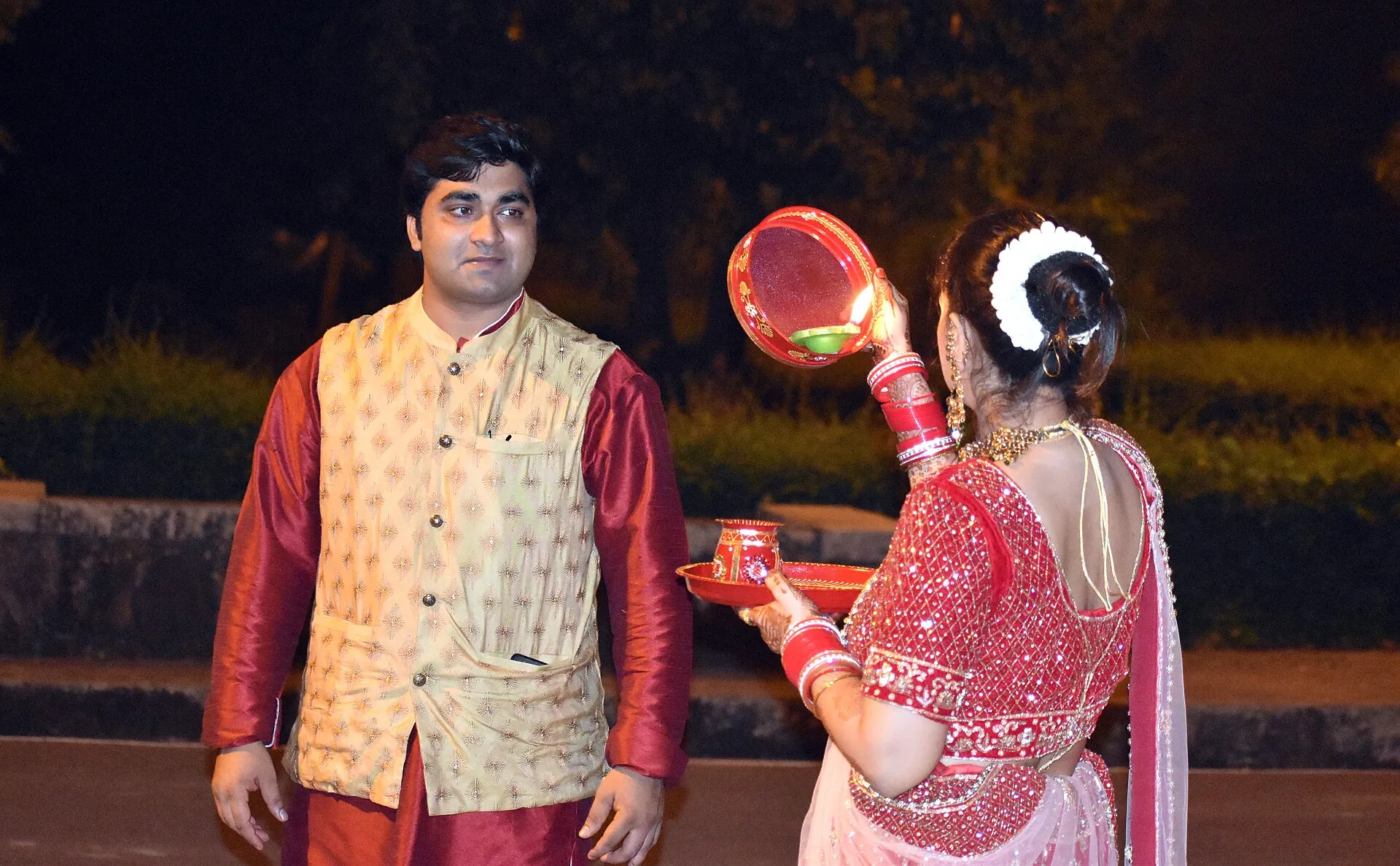
Karva Chauth is the Hindu festival on which married women fast from sunrise to moonrise for the safety and long life of their husbands. It falls on the fourth day of the waning moon in the month of Kartika by the northern calendar, in October or November. In Punjab the day begins with sargi, a pre-dawn meal given by the mother-in-law, and ends when the wife views the risen moon through a sieve, then her husband's face, and takes her first water from his hands.
- Punjabi name
- ਕਰਵਾ ਚੌਥ
- When
- The fourth day of the waning moon: Kartika in the northern (purnimanta) reckoning, Ashvin in the amanta reckoning
- Season
- October to November
- The fast
- Nirjala, without food or water, from sunrise until the moon is seen
- Name
- Karva, an earthen pot, and chauth, the fourth day
- Kept for
- The husband's safety, wellbeing and long life; unmarried women also keep it in some regions
All 8 facts
- In Punjab
- The pre-dawn sargi meal, traditionally fenia (vermicelli), given by the mother-in-law; the evening feri circle of thalis
- Closing rite
- The moon is viewed through a sieve (chalni), then the husband's face; he gives the first water
Karva Chauth is the most demanding of the year's household fasts: a married woman eats before dawn, then takes neither food nor water until she has seen the moon, often ten or more hours later. The fast is kept for her husband's safety and long life, and the day around it, with its pre-dawn meal, its new clothes and its circle of women at dusk, has become one of the most distinctive festivals of the north Indian autumn, and of Punjab in particular.
What is Karva Chauth?
The festival is also called Karaka Chaturthi. It falls on the fourth day (chaturthi) of the waning half of the lunar month, Kartika in the purnimanta calendar used in the north, which corresponds to Ashvin in the amanta calendar, placing it in October or November. Its name joins karva, the small earthen pot that stands at the centre of the evening worship, and chauth, fourth. Traditionally the fast is a married woman's vow for her husband; in some places unmarried women keep it too, for a future husband or a chosen one. The karva at the centre of the worship is not decoration: filled with water, it is the vessel of the evening puja, carried in the thali circle and used when water is offered to the risen moon. The festival's strongest ground is the northwest, Punjab, Haryana, Delhi, Rajasthan and western Uttar Pradesh, with kindred observances further south, such as Atla Tadde in Andhra Pradesh, kept on a nearby date on the same principle of a fast for a husband's welfare.
Sargi: the meal before dawn
In Punjab the day begins in the dark, with sargi, the pre-dawn meal eaten before sunrise. The sargi thali is traditionally prepared or given by the mother-in-law and carries fenia, fine vermicelli served with milk, along with fruit, sweets, parathas and dry fruits, food chosen to carry a woman through a long day without water. The gift of sargi is itself a bond: a blessing passed from the older woman of the house to the younger, along with new clothes, bangles and henna for the evening.
The day and the evening story circle
Through the day the fasting women rest from heavy work and gather in the afternoon or evening for the puja. Dressed in bridal reds and maroons, many in their wedding finery, they sit in a circle with their thalis, each holding the karva of water, a lamp and sweets, and as the Karva Chauth story is told the thalis are passed around the circle from woman to woman, the feri ritual that Punjab keeps with particular care. The best-known of the stories told is of Queen Veeravati, whose first fast was broken by a trick before moonrise, whose husband fell gravely ill in consequence, and who kept the fast with full rigour the next year and won his life back: a warning, the tale says, to keep the fast exactly.
Moonrise: the sieve and the first water
The fast ends at moonrise. The women go up to rooftops and courtyards with their thalis and a sieve, the chalni. Each looks first at the moon through the sieve, offers water to it, and then looks through the same sieve at her husband's face. Her husband then gives her the first sip of water, and often the first morsel of food, of the day. Families then eat together, and in recent decades husbands, in Punjab and elsewhere, have increasingly begun keeping the fast alongside their wives.
Karva Chauth in Punjab
Few regions keep Karva Chauth as fully as Punjab, where it stands alongside Teej and Rakhi in the year of married women. The state's markets sell out of karvas, sieves, fenia and red dupattas in the days before; mehndi artists work in rows in every bazaar; and the sargi and feri customs described above are specifically the Punjabi form of the festival. The day is also an assertion of the mother-in-law and daughter-in-law bond, since the whole fast is framed in Punjab by the elder woman's gift at dawn. It falls in the same bright season as Navratri, Dussehra and Diwali, within weeks of them.
When is Karva Chauth?
Karva Chauth falls on Krishna Paksha Chaturthi, the fourth day of the dark half of the month, Kartika by northern reckoning, roughly a fortnight after Dussehra and about eleven days before Diwali. Because it follows the moon, its Gregorian date shifts each year within October and November.
ਕਰਵਾ ਚੌਥ ਸਾਲ ਦੇ ਘਰੇਲੂ ਵਰਤਾਂ ਵਿੱਚੋਂ ਸਭ ਤੋਂ ਕਠਿਨ ਹੈ: ਇੱਕ ਵਿਆਹੀ ਔਰਤ ਤੜਕੇ ਖਾਂਦੀ ਹੈ, ਫਿਰ ਜਦੋਂ ਤੱਕ ਉਹ ਚੰਦ ਨਹੀਂ ਵੇਖ ਲੈਂਦੀ, ਅਕਸਰ ਦਸ ਜਾਂ ਵੱਧ ਘੰਟੇ ਬਾਅਦ, ਨਾ ਖਾਣਾ ਖਾਂਦੀ ਹੈ ਨਾ ਪਾਣੀ ਪੀਂਦੀ ਹੈ ਇਹ ਵਰਤ ਉਸ ਦੇ ਪਤੀ ਦੀ ਸੁਰੱਖਿਆ ਅਤੇ ਲੰਮੀ ਉਮਰ ਲਈ ਰੱਖਿਆ ਜਾਂਦਾ ਹੈ, ਅਤੇ ਇਸ ਦੇ ਆਲੇ ਦੁਆਲੇ ਦਾ ਦਿਨ, ਇਸ ਦੇ ਤੜਕੇ ਦੇ ਖਾਣੇ, ਨਵੇਂ ਕੱਪੜਿਆਂ ਅਤੇ ਸ਼ਾਮ ਨੂੰ ਔਰਤਾਂ ਦੇ ਘੇਰੇ ਸਮੇਤ, ਉੱਤਰੀ ਭਾਰਤ ਦੀ ਪਤਝੜ ਦੇ ਅਤੇ ਖਾਸ ਕਰਕੇ ਪੰਜਾਬ ਦੇ ਸਭ ਤੋਂ ਵਿਸ਼ੇਸ਼ ਤਿਉਹਾਰਾਂ ਵਿੱਚੋਂ ਇੱਕ ਬਣ ਗਿਆ ਹੈ
ਕਰਵਾ ਚੌਥ ਕੀ ਹੈ?
ਇਸ ਤਿਉਹਾਰ ਨੂੰ ਕਰਕ ਚਤੁਰਥੀ ਵੀ ਕਿਹਾ ਜਾਂਦਾ ਹੈ ਇਹ ਚੰਦਰਮਾ ਮਹੀਨੇ ਦੇ ਹਨੇਰੇ ਪੱਖ ਦੇ ਚੌਥੇ ਦਿਨ, ਚਤੁਰਥੀ ਨੂੰ ਆਉਂਦਾ ਹੈ, ਉੱਤਰ ਵਿੱਚ ਵਰਤੇ ਜਾਣ ਵਾਲੇ ਪੂਰਨਿਮਾਂਤ ਕੈਲੰਡਰ ਅਨੁਸਾਰ ਕੱਤਕ ਵਿੱਚ, ਜੋ ਅਮਾਂਤ ਕੈਲੰਡਰ ਵਿੱਚ ਅੱਸੂ ਬਣਦਾ ਹੈ, ਜਿਸ ਕਰਕੇ ਇਹ ਅਕਤੂਬਰ ਜਾਂ ਨਵੰਬਰ ਵਿੱਚ ਪੈਂਦਾ ਹੈ ਇਸ ਦੇ ਨਾਮ ਵਿੱਚ ਕਰਵਾ, ਛੋਟਾ ਮਿੱਟੀ ਦਾ ਘੜਾ ਜੋ ਸ਼ਾਮ ਦੀ ਪੂਜਾ ਦੇ ਕੇਂਦਰ ਵਿੱਚ ਖੜ੍ਹਾ ਹੁੰਦਾ ਹੈ, ਅਤੇ ਚੌਥ, ਚੌਥਾ ਦਿਨ, ਜੁੜੇ ਹਨ ਰਵਾਇਤੀ ਤੌਰ ਉੱਤੇ ਇਹ ਵਰਤ ਇੱਕ ਵਿਆਹੀ ਔਰਤ ਦਾ ਆਪਣੇ ਪਤੀ ਲਈ ਪ੍ਰਣ ਹੈ; ਕੁਝ ਥਾਵਾਂ ਉੱਤੇ ਕੁਆਰੀਆਂ ਕੁੜੀਆਂ ਵੀ ਇਹ ਵਰਤ ਰੱਖਦੀਆਂ ਹਨ, ਭਵਿੱਖ ਦੇ ਪਤੀ ਲਈ ਜਾਂ ਆਪਣੀ ਪਸੰਦ ਦੇ ਲਈ ਪੂਜਾ ਦੇ ਕੇਂਦਰ ਵਿੱਚ ਕਰਵਾ ਕੋਈ ਸਜਾਵਟ ਨਹੀਂ ਹੈ: ਪਾਣੀ ਨਾਲ ਭਰਿਆ, ਇਹ ਸ਼ਾਮ ਦੀ ਪੂਜਾ ਦਾ ਬਰਤਨ ਹੈ, ਥਾਲੀ ਵਾਲੇ ਘੇਰੇ ਵਿੱਚ ਲਿਜਾਇਆ ਗਿਆ ਅਤੇ ਚੜ੍ਹੇ ਚੰਦ ਨੂੰ ਪਾਣੀ ਅਰਪਣ ਕੀਤੇ ਜਾਣ ਵੇਲੇ ਵਰਤਿਆ ਗਿਆ ਇਸ ਤਿਉਹਾਰ ਦੀ ਸਭ ਤੋਂ ਮਜ਼ਬੂਤ ਧਰਤੀ ਉੱਤਰ ਪੱਛਮ ਹੈ, ਪੰਜਾਬ, ਹਰਿਆਣਾ, ਦਿੱਲੀ, ਰਾਜਸਥਾਨ ਅਤੇ ਪੱਛਮੀ ਉੱਤਰ ਪ੍ਰਦੇਸ਼, ਦੱਖਣ ਵੱਲ ਇਸ ਵਰਗੀਆਂ ਰੀਤਾਂ ਸਮੇਤ, ਜਿਵੇਂ ਆਂਧਰਾ ਪ੍ਰਦੇਸ਼ ਵਿੱਚ ਅਟਲਾ ਤੱਡੇ, ਜੋ ਪਤੀ ਦੀ ਭਲਾਈ ਲਈ ਵਰਤ ਦੇ ਉਸੇ ਸਿਧਾਂਤ ਉੱਤੇ ਨੇੜਲੀ ਤਰੀਕ ਨੂੰ ਰੱਖਿਆ ਜਾਂਦਾ ਹੈ
ਸਰਘੀ: ਤੜਕੇ ਦਾ ਖਾਣਾ
ਪੰਜਾਬ ਵਿੱਚ ਦਿਨ ਹਨੇਰੇ ਵਿੱਚ ਸ਼ੁਰੂ ਹੁੰਦਾ ਹੈ, ਸਰਘੀ ਨਾਲ, ਸੂਰਜ ਚੜ੍ਹਨ ਤੋਂ ਪਹਿਲਾਂ ਖਾਧਾ ਜਾਣ ਵਾਲਾ ਖਾਣਾ ਸਰਘੀ ਦੀ ਥਾਲੀ ਰਵਾਇਤੀ ਤੌਰ ਉੱਤੇ ਸੱਸ ਵੱਲੋਂ ਤਿਆਰ ਕੀਤੀ ਜਾਂ ਦਿੱਤੀ ਜਾਂਦੀ ਹੈ ਅਤੇ ਇਸ ਵਿੱਚ ਫੇਣੀਆਂ, ਦੁੱਧ ਨਾਲ ਪਰੋਸੀ ਜਾਣ ਵਾਲੀ ਬਰੀਕ ਸੇਵੀਆਂ, ਸਮੇਤ ਫਲ, ਮਠਿਆਈਆਂ, ਪਰਾਂਠੇ ਅਤੇ ਸੁੱਕੇ ਮੇਵੇ ਹੁੰਦੇ ਹਨ, ਉਹ ਖਾਣਾ ਜੋ ਬਿਨਾਂ ਪਾਣੀ ਲੰਮਾ ਦਿਨ ਕੱਟਣ ਲਈ ਚੁਣਿਆ ਜਾਂਦਾ ਹੈ ਸਰਘੀ ਦਾ ਤੋਹਫਾ ਆਪਣੇ ਆਪ ਵਿੱਚ ਇੱਕ ਬੰਧਨ ਹੈ: ਘਰ ਦੀ ਵੱਡੀ ਔਰਤ ਤੋਂ ਛੋਟੀ ਨੂੰ ਦਿੱਤੀ ਗਈ ਅਸੀਸ, ਸ਼ਾਮ ਲਈ ਨਵੇਂ ਕੱਪੜਿਆਂ, ਚੂੜੀਆਂ ਅਤੇ ਮਹਿੰਦੀ ਸਮੇਤ
ਦਿਨ ਅਤੇ ਸ਼ਾਮ ਦੀ ਕਥਾ ਵਾਲਾ ਘੇਰਾ
ਦਿਨ ਭਰ ਵਰਤ ਰੱਖਣ ਵਾਲੀਆਂ ਔਰਤਾਂ ਭਾਰੀ ਕੰਮ ਤੋਂ ਆਰਾਮ ਕਰਦੀਆਂ ਹਨ ਅਤੇ ਦੁਪਹਿਰ ਜਾਂ ਸ਼ਾਮ ਨੂੰ ਪੂਜਾ ਲਈ ਇਕੱਠੀਆਂ ਹੁੰਦੀਆਂ ਹਨ ਲਾਲ ਅਤੇ ਗੂੜ੍ਹੇ ਲਾਲ ਰੰਗਾਂ ਵਿੱਚ ਸਜੀਆਂ, ਕਈ ਆਪਣੇ ਵਿਆਹ ਦੇ ਪਹਿਰਾਵੇ ਵਿੱਚ, ਉਹ ਆਪਣੀਆਂ ਥਾਲੀਆਂ ਨਾਲ ਘੇਰੇ ਵਿੱਚ ਬੈਠਦੀਆਂ ਹਨ, ਹਰ ਥਾਲੀ ਵਿੱਚ ਪਾਣੀ ਦਾ ਕਰਵਾ, ਇੱਕ ਦੀਵਾ ਅਤੇ ਮਠਿਆਈ ਹੁੰਦੀ ਹੈ, ਅਤੇ ਜਿਵੇਂ ਜਿਵੇਂ ਕਰਵਾ ਚੌਥ ਦੀ ਕਥਾ ਸੁਣਾਈ ਜਾਂਦੀ ਹੈ ਥਾਲੀਆਂ ਘੇਰੇ ਵਿੱਚ ਇੱਕ ਔਰਤ ਤੋਂ ਦੂਜੀ ਤੱਕ ਘੁਮਾਈਆਂ ਜਾਂਦੀਆਂ ਹਨ, ਫੇਰੀ ਵਾਲੀ ਰਸਮ ਜਿਸ ਨੂੰ ਪੰਜਾਬ ਖਾਸ ਧਿਆਨ ਨਾਲ ਰੱਖਦਾ ਹੈ ਸੁਣਾਈਆਂ ਜਾਣ ਵਾਲੀਆਂ ਕਥਾਵਾਂ ਵਿੱਚੋਂ ਸਭ ਤੋਂ ਮਸ਼ਹੂਰ ਰਾਣੀ ਵੀਰਾਵਤੀ ਦੀ ਹੈ, ਜਿਸ ਦਾ ਪਹਿਲਾ ਵਰਤ ਚੰਦ ਚੜ੍ਹਨ ਤੋਂ ਪਹਿਲਾਂ ਇੱਕ ਚਾਲ ਨਾਲ ਟੁੱਟ ਗਿਆ, ਜਿਸ ਦੇ ਸਿੱਟੇ ਵਜੋਂ ਉਸ ਦਾ ਪਤੀ ਗੰਭੀਰ ਬਿਮਾਰ ਪੈ ਗਿਆ, ਅਤੇ ਜਿਸ ਨੇ ਅਗਲੇ ਸਾਲ ਪੂਰੀ ਸਖਤੀ ਨਾਲ ਵਰਤ ਰੱਖਿਆ ਅਤੇ ਉਸ ਦੀ ਜਾਨ ਵਾਪਸ ਜਿੱਤੀ: ਕਥਾ ਕਹਿੰਦੀ ਹੈ, ਇੱਕ ਚਿਤਾਵਨੀ ਕਿ ਵਰਤ ਠੀਕ ਠੀਕ ਰੱਖਿਆ ਜਾਵੇ
ਚੰਦ ਚੜ੍ਹਨਾ: ਛਾਨਣੀ ਅਤੇ ਪਹਿਲਾ ਪਾਣੀ
ਵਰਤ ਚੰਦ ਚੜ੍ਹਨ ਉੱਤੇ ਮੁੱਕਦਾ ਹੈ ਔਰਤਾਂ ਆਪਣੀਆਂ ਥਾਲੀਆਂ ਅਤੇ ਇੱਕ ਛਾਨਣੀ, ਚਲਨੀ, ਲੈ ਕੇ ਛੱਤਾਂ ਅਤੇ ਵਿਹੜਿਆਂ ਵਿੱਚ ਜਾਂਦੀਆਂ ਹਨ ਹਰ ਇੱਕ ਪਹਿਲਾਂ ਛਾਨਣੀ ਵਿੱਚੋਂ ਚੰਦ ਨੂੰ ਵੇਖਦੀ ਹੈ, ਉਸ ਨੂੰ ਪਾਣੀ ਅਰਪਣ ਕਰਦੀ ਹੈ, ਅਤੇ ਫਿਰ ਉਸੇ ਛਾਨਣੀ ਵਿੱਚੋਂ ਆਪਣੇ ਪਤੀ ਦਾ ਮੂੰਹ ਵੇਖਦੀ ਹੈ ਫਿਰ ਉਸ ਦਾ ਪਤੀ ਉਸ ਨੂੰ ਦਿਨ ਦਾ ਪਹਿਲਾ ਪਾਣੀ ਦਾ ਘੁੱਟ, ਅਤੇ ਅਕਸਰ ਪਹਿਲਾ ਖਾਣੇ ਦਾ ਬੁੱਕ, ਦਿੰਦਾ ਹੈ ਫਿਰ ਪਰਿਵਾਰ ਇਕੱਠੇ ਖਾਂਦੇ ਹਨ, ਅਤੇ ਹਾਲੀਆ ਦਹਾਕਿਆਂ ਵਿੱਚ ਪਤੀ, ਪੰਜਾਬ ਵਿੱਚ ਅਤੇ ਹੋਰ ਥਾਵਾਂ ਉੱਤੇ ਵੀ, ਆਪਣੀਆਂ ਪਤਨੀਆਂ ਦੇ ਨਾਲ ਵਰਤ ਰੱਖਣ ਲੱਗ ਪਏ ਹਨ
ਪੰਜਾਬ ਵਿੱਚ ਕਰਵਾ ਚੌਥ
ਥੋੜ੍ਹੇ ਖੇਤਰ ਕਰਵਾ ਚੌਥ ਨੂੰ ਪੰਜਾਬ ਜਿੰਨਾ ਪੂਰਾ ਰੱਖਦੇ ਹਨ, ਜਿੱਥੇ ਇਹ ਵਿਆਹੀਆਂ ਔਰਤਾਂ ਦੇ ਸਾਲ ਵਿੱਚ ਤੀਜ ਅਤੇ ਰਾਖੀ ਦੇ ਨਾਲ ਖੜ੍ਹਾ ਹੈ ਸੂਬੇ ਦੇ ਬਾਜ਼ਾਰ ਪਹਿਲਾਂ ਵਾਲੇ ਦਿਨਾਂ ਵਿੱਚ ਕਰਵਿਆਂ, ਛਾਨਣੀਆਂ, ਫੇਣੀਆਂ ਅਤੇ ਲਾਲ ਦੁਪੱਟਿਆਂ ਤੋਂ ਖਾਲੀ ਹੋ ਜਾਂਦੇ ਹਨ; ਮਹਿੰਦੀ ਲਾਉਣ ਵਾਲੇ ਹਰ ਬਾਜ਼ਾਰ ਵਿੱਚ ਕਤਾਰਾਂ ਵਿੱਚ ਕੰਮ ਕਰਦੇ ਹਨ; ਅਤੇ ਉੱਪਰ ਦੱਸੀਆਂ ਸਰਘੀ ਅਤੇ ਫੇਰੀ ਦੀਆਂ ਰਸਮਾਂ ਖਾਸ ਕਰਕੇ ਇਸ ਤਿਉਹਾਰ ਦਾ ਪੰਜਾਬੀ ਰੂਪ ਹਨ ਇਹ ਦਿਨ ਸੱਸ ਅਤੇ ਨੂੰਹ ਦੇ ਬੰਧਨ ਦਾ ਵੀ ਐਲਾਨ ਹੈ, ਕਿਉਂਕਿ ਸਾਰਾ ਵਰਤ ਪੰਜਾਬ ਵਿੱਚ ਤੜਕੇ ਵੱਡੀ ਔਰਤ ਦੇ ਤੋਹਫੇ ਨਾਲ ਘਿਰਿਆ ਹੁੰਦਾ ਹੈ ਇਹ ਉਸੇ ਚਾਨਣੇ ਮੌਸਮ ਵਿੱਚ ਆਉਂਦਾ ਹੈ ਜਿਸ ਵਿੱਚ ਨਵਰਾਤਰੀ, ਦੁਸਹਿਰਾ ਅਤੇ ਦੀਵਾਲੀ ਹਨ, ਉਨ੍ਹਾਂ ਤੋਂ ਕੁਝ ਹਫਤਿਆਂ ਦੇ ਅੰਦਰ
ਕਰਵਾ ਚੌਥ ਕਦੋਂ ਹੁੰਦਾ ਹੈ?
ਕਰਵਾ ਚੌਥ ਕ੍ਰਿਸ਼ਨ ਪੱਖ ਚਤੁਰਥੀ ਨੂੰ ਆਉਂਦਾ ਹੈ, ਉੱਤਰੀ ਗਿਣਤੀ ਅਨੁਸਾਰ ਕੱਤਕ ਦੇ ਹਨੇਰੇ ਪੱਖ ਦੇ ਚੌਥੇ ਦਿਨ, ਦੁਸਹਿਰੇ ਤੋਂ ਲਗਭਗ ਪੰਦਰਾਂ ਦਿਨ ਬਾਅਦ ਅਤੇ ਦੀਵਾਲੀ ਤੋਂ ਲਗਭਗ ਗਿਆਰਾਂ ਦਿਨ ਪਹਿਲਾਂ ਕਿਉਂਕਿ ਇਹ ਚੰਦਰਮਾ ਦੇ ਪਿੱਛੇ ਚਲਦਾ ਹੈ, ਇਸ ਦੀ ਅੰਗਰੇਜ਼ੀ ਤਰੀਕ ਹਰ ਸਾਲ ਅਕਤੂਬਰ ਅਤੇ ਨਵੰਬਰ ਵਿੱਚ ਬਦਲਦੀ ਰਹਿੰਦੀ ਹੈ