
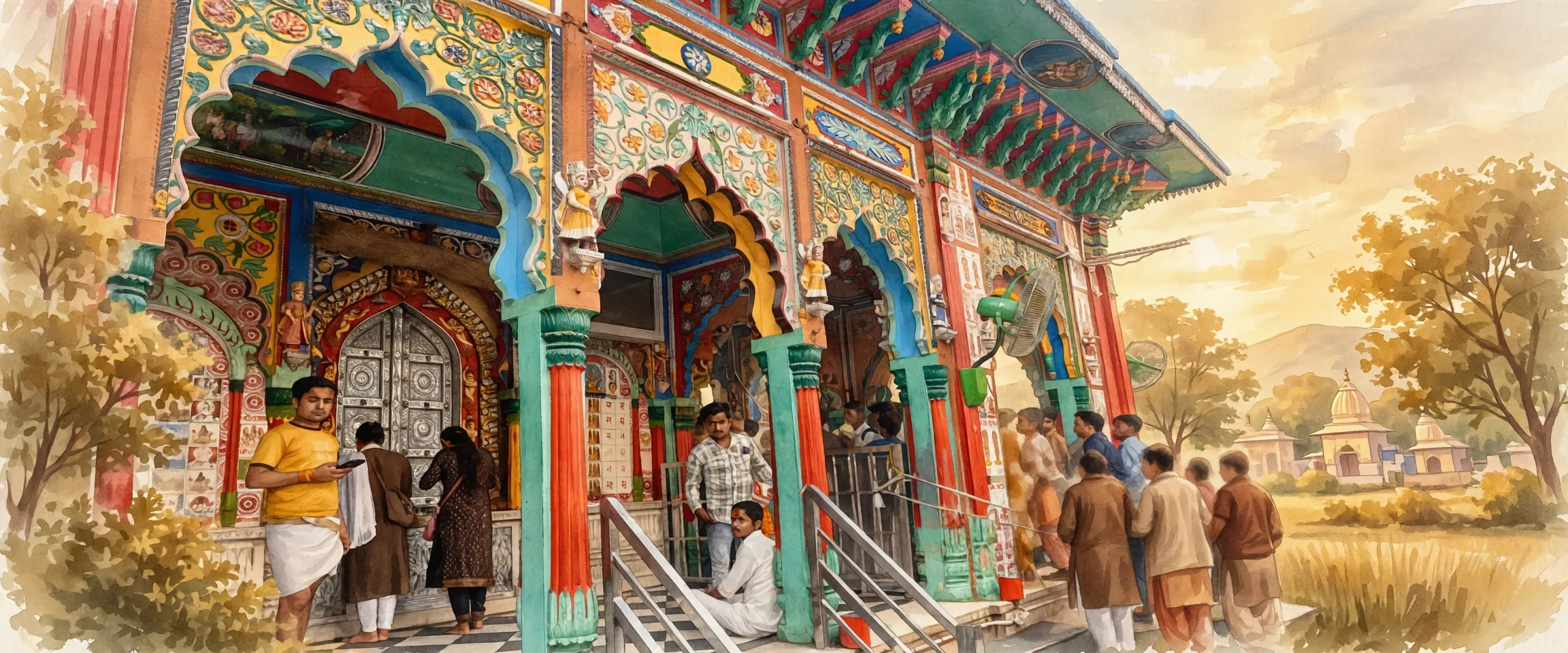
The mandirs of Ayodhya centre on three shrines near Ram Janmabhoomi. The Ram Mandir, consecrated on 22 January 2024, is a Nagara-style temple of 392 pillars housing Ram Lalla. Custom takes pilgrims first to Hanuman Garhi, the fort-shaped Hanuman temple climbed by 76 stairs, and then to Kanak Bhawan, the Golden Palace temple of Rama and Sita built in its present form in 1891.
- Punjabi name
- ਅਯੁੱਧਿਆ ਦੇ ਮੰਦਰ
- Country
- India
- State
- Uttar Pradesh
- City
- Ayodhya
- Guide covers
- Ram Mandir, Hanuman Garhi, Kanak Bhawan
- Main shrine
- Ram Mandir at Ram Janmabhoomi, consecrated 22 January 2024
- River
- Saryu
Ayodhya, on the Saryu river in Uttar Pradesh, is the city Hindu tradition honours as the birthplace of Rama, and its temples form a single walking story: a new temple at the birthplace site, a fort-like Hanuman shrine that pilgrims visit first, and a golden palace temple for Rama and Sita. This guide covers the three mandirs at the heart of a pilgrim's Ayodhya: the Ram Mandir, Hanuman Garhi and Kanak Bhawan. Jugti's full entry for the Ram Mandir is linked below; the other two are introduced here and will receive their own full entries in time.
Ram Mandir: the new temple at the birthplace
At Ram Janmabhoomi stands the Ram Mandir, consecrated on 22 January 2024, with the childhood form of Rama, Ram Lalla, in the ground-floor sanctum. It is built in the traditional Nagara style of North India: about 380 feet long, 250 feet wide and 161 feet high, carried on 392 pillars with 44 doors, its pillars and walls carved with images of deities. The builders used traditional methods and no iron or steel anywhere in the structure; a 14-metre layer of roller-compacted concrete forms the foundation, and a 21-foot granite plinth guards against ground moisture. The main entrance, the Sinh Dwar, is reached by 32 stairs on the eastern side, and inside are five halls: Nritya, Rang, Sabha, Prarthana and Kirtan Mandap. A designed play of mirrors and lenses brings sunlight onto Ram Lalla's forehead at noon on Ram Navami each year, the Surya Tilak.
Hanuman Garhi: visit the guardian first
Custom in Ayodhya says a pilgrim should visit Hanuman before Rama, and the place for that is Hanuman Garhi, near Ram Janmabhoomi. Tradition tells that after the return from Lanka, Hanuman lived here in a cave and guarded Ramkot, the citadel of Rama; the temple is regarded as a 10th-century foundation, and tradition credits King Vikramaditya with building it along with hundreds of other temples. The shrine is run by the Bairagi Mahants of the Ramanandi Sampradaya and the Nirvani Akhara. Its history has hard chapters too: in 1855, after repeated attempts to attack it, the Nawab of Awadh granted land revenue for the temple, and historian Sarvepalli Gopal has noted that the famous 1855 dispute in Ayodhya concerned Hanuman Garhi itself.
The temple is shaped like a four-sided fort with circular bastions at each corner, and 76 stairs climb to the main shrine. Inside, the sanctum holds a small image, about 6 inches, of the child Hanuman seated on the lap of his mother Anjani, wearing a silver tulsi garland inscribed with Rama's name. The verses of the Hanuman Chalisa are inscribed on the walls, and the complex has a Vijay Stambh, a victory pillar. Its big days are Hanuman Jayanti, Bada Mangal, Ram Navami, Dussehra and Deepawali.
Kanak Bhawan: the golden palace of Rama and Sita
North-east of Ramkot stands Kanak Bhawan, the Golden Palace. Devotees believe Kaikeyi gave this palace to Sita as a gift immediately after her marriage to Rama, making it their personal palace; tradition adds rebuildings across the ages, by Rama's son Kush and, devotees say, by Krishna himself, with a medieval renovation credited to Vikramaditya. The present temple was built in 1891 by Maharaj Mahendra Pratap Singh of Orchha and Tikamgarh and his wife Maharani Vrishabhan Kunwari, and it is designed as a great palace in the manner of Rajasthan and Bundelkhand. The sanctum holds three pairs of images of Rama and Sita: the largest installed by the Maharani, a medium pair linked to Vikramaditya, and the smallest, which tradition says Krishna gave to a woman devotee worshipping Rama at this spot. Its festivals are Ram Navami and Janaki Navami.
How do the three temples fit together on a visit?
The three shrines sit close together in the old city and are usually done in one round, in the order custom suggests: Hanuman Garhi first, to take the guardian's leave, then the Ram Mandir at the birthplace, then Kanak Bhawan, the couple's palace, quieter and more domestic in mood. Ayodhya's great festival days, Ram Navami and Deepawali, draw the largest crowds to all three. This guide is part of Jugti's mandirs in India collection.
All Mandirs in Ayodhya
- Ram Mandir : the temple at Ram Janmabhoomi, consecrated on 22 January 2024, a Nagara-style temple of 392 pillars housing Ram Lalla
- Hanuman Garhi: the fort-shaped Hanuman temple near Ram Janmabhoomi, climbed by 76 stairs, where pilgrims customarily begin (full entry coming)
- Kanak Bhawan: the Golden Palace temple of Rama and Sita, built in its present form in 1891, holding three pairs of their images (full entry coming)
ਅਯੁੱਧਿਆ, ਉੱਤਰ ਪ੍ਰਦੇਸ਼ ਵਿੱਚ ਸਰਯੂ ਨਦੀ ਉੱਤੇ, ਉਹ ਸ਼ਹਿਰ ਹੈ ਜਿਸਨੂੰ ਹਿੰਦੂ ਪਰੰਪਰਾ ਰਾਮ ਦੀ ਜਨਮ ਭੂਮੀ ਵਜੋਂ ਸਨਮਾਨਦੀ ਹੈ, ਅਤੇ ਇਸਦੇ ਮੰਦਰ ਇੱਕੋ ਪੈਦਲ ਕਹਾਣੀ ਬਣਾਉਂਦੇ ਹਨ: ਜਨਮ ਸਥਾਨ ਉੱਤੇ ਇੱਕ ਨਵਾਂ ਮੰਦਰ, ਕਿਲ੍ਹੇ ਵਰਗਾ ਹਨੂੰਮਾਨ ਧਾਮ ਜਿੱਥੇ ਸ਼ਰਧਾਲੂ ਸਭ ਤੋਂ ਪਹਿਲਾਂ ਜਾਂਦੇ ਹਨ, ਅਤੇ ਰਾਮ ਤੇ ਸੀਤਾ ਦਾ ਸੁਨਹਿਰੀ ਮਹਲ ਮੰਦਰ ਇਹ ਗਾਈਡ ਸ਼ਰਧਾਲੂ ਦੇ ਅਯੁੱਧਿਆ ਦੇ ਹਿਰਦੇ ਵਿੱਚ ਵਸਦੇ ਤਿੰਨ ਮੰਦਰਾਂ ਨੂੰ ਕਵਰ ਕਰਦੀ ਹੈ: ਰਾਮ ਮੰਦਰ, ਹਨੂੰਮਾਨ ਗੜ੍ਹੀ ਅਤੇ ਕਨਕ ਭਵਨ ਜੁਗਤੀ ਦੀ ਰਾਮ ਮੰਦਰ ਬਾਰੇ ਪੂਰੀ ਐਂਟਰੀ ਹੇਠਾਂ ਲਿੰਕ ਹੈ; ਬਾਕੀ ਦੋ ਇੱਥੇ ਪੇਸ਼ ਕੀਤੇ ਗਏ ਹਨ ਅਤੇ ਸਮੇਂ ਨਾਲ ਆਪਣੀਆਂ ਪੂਰੀਆਂ ਐਂਟਰੀਆਂ ਪ੍ਰਾਪਤ ਕਰਨਗੇ
ਰਾਮ ਮੰਦਰ: ਜਨਮ ਭੂਮੀ ਉੱਤੇ ਨਵਾਂ ਮੰਦਰ
ਰਾਮ ਜਨਮ ਭੂਮੀ ਉੱਤੇ ਰਾਮ ਮੰਦਰ ਖੜ੍ਹਾ ਹੈ, ਜਿਸਦੀ ਪ੍ਰਾਣ ਪ੍ਰਤਿਸ਼ਠਾ 22 ਜਨਵਰੀ 2024 ਨੂੰ ਹੋਈ, ਅਤੇ ਹੇਠਲੀ ਮੰਜ਼ਲ ਦੇ ਗਰਭਗ੍ਰਹਿ ਵਿੱਚ ਰਾਮ ਦਾ ਬਾਲ ਰੂਪ, ਰਾਮ ਲੱਲਾ, ਵਿਰਾਜਮਾਨ ਹੈ ਇਹ ਉੱਤਰੀ ਭਾਰਤ ਦੀ ਪਰੰਪਰਾਗਤ ਨਾਗਰ ਸ਼ੈਲੀ ਵਿੱਚ ਬਣਿਆ ਹੈ: ਲਗਭਗ 380 ਫੁੱਟ ਲੰਬਾ, 250 ਫੁੱਟ ਚੌੜਾ ਅਤੇ 161 ਫੁੱਟ ਉੱਚਾ, 392 ਥੰਮ੍ਹਾਂ ਅਤੇ 44 ਦਰਵਾਜ਼ਿਆਂ ਨਾਲ, ਜਿਨ੍ਹਾਂ ਉੱਤੇ ਦੇਵੀ ਦੇਵਤਿਆਂ ਦੀਆਂ ਮੂਰਤੀਆਂ ਉੱਕਰੀਆਂ ਹਨ ਬਣਾਉਣ ਵਾਲਿਆਂ ਨੇ ਪਰੰਪਰਾਗਤ ਤਰੀਕੇ ਵਰਤੇ ਅਤੇ ਢਾਂਚੇ ਵਿੱਚ ਕਿਤੇ ਵੀ ਲੋਹਾ ਜਾਂ ਸਟੀਲ ਨਹੀਂ ਵਰਤਿਆ; ਨੀਂਹ ਵਿੱਚ ਰੋਲਰ ਕੰਪੈਕਟਡ ਕੰਕਰੀਟ ਦੀ 14 ਮੀਟਰ ਦੀ ਪਰਤ ਹੈ, ਅਤੇ 21 ਫੁੱਟ ਉੱਚਾ ਗ੍ਰੇਨਾਈਟ ਥੜ੍ਹਾ ਜ਼ਮੀਨੀ ਨਮੀ ਤੋਂ ਰਾਖੀ ਕਰਦਾ ਹੈ ਮੁੱਖ ਦਰਵਾਜ਼ਾ, ਸਿੰਘ ਦੁਆਰ, ਪੂਰਬੀ ਪਾਸੇ 32 ਪੌੜੀਆਂ ਚੜ੍ਹ ਕੇ ਆਉਂਦਾ ਹੈ, ਅਤੇ ਅੰਦਰ ਪੰਜ ਹਾਲ ਹਨ: ਨ੍ਰਿਤਿਆ, ਰੰਗ, ਸਭਾ, ਪ੍ਰਾਰਥਨਾ ਅਤੇ ਕੀਰਤਨ ਮੰਡਪ ਸ਼ੀਸ਼ਿਆਂ ਅਤੇ ਲੈਂਸਾਂ ਦੇ ਖੇਡ ਨਾਲ ਹਰ ਸਾਲ ਰਾਮ ਨਵਮੀ ਨੂੰ ਦੁਪਹਿਰ ਵੇਲੇ ਸੂਰਜ ਦੀ ਰੋਸ਼ਨੀ ਰਾਮ ਲੱਲਾ ਦੇ ਮੱਥੇ ਉੱਤੇ ਪੈਂਦੀ ਹੈ, ਸੂਰਿਆ ਤਿਲਕ
ਹਨੂੰਮਾਨ ਗੜ੍ਹੀ: ਪਹਿਲਾਂ ਰਾਖੇ ਦੇ ਦਰਸ਼ਨ
ਅਯੁੱਧਿਆ ਦੀ ਰੀਤ ਕਹਿੰਦੀ ਹੈ ਕਿ ਸ਼ਰਧਾਲੂ ਰਾਮ ਤੋਂ ਪਹਿਲਾਂ ਹਨੂੰਮਾਨ ਦੇ ਦਰਸ਼ਨ ਕਰੇ, ਅਤੇ ਉਸ ਲਈ ਥਾਂ ਹੈ ਹਨੂੰਮਾਨ ਗੜ੍ਹੀ, ਰਾਮ ਜਨਮ ਭੂਮੀ ਦੇ ਨੇੜੇ ਪਰੰਪਰਾ ਦੱਸਦੀ ਹੈ ਕਿ ਲੰਕਾ ਤੋਂ ਵਾਪਸੀ ਤੋਂ ਬਾਅਦ ਹਨੂੰਮਾਨ ਇੱਥੇ ਇੱਕ ਗੁਫਾ ਵਿੱਚ ਰਹੇ ਅਤੇ ਰਾਮਕੋਟ ਦੀ ਰਾਖੀ ਕੀਤੀ; ਮੰਦਰ ਨੂੰ ਦਸਵੀਂ ਸਦੀ ਦੀ ਸਥਾਪਨਾ ਮੰਨਿਆ ਜਾਂਦਾ ਹੈ, ਅਤੇ ਪਰੰਪਰਾ ਇਸਦਾ ਨਿਰਮਾਣ ਰਾਜਾ ਵਿਕਰਮਾਦਿਤਿਆ ਨਾਲ ਸੈਂਕੜੇ ਹੋਰ ਮੰਦਰਾਂ ਸਮੇਤ ਜੋੜਦੀ ਹੈ ਧਾਮ ਦਾ ਪ੍ਰਬੰਧ ਰਾਮਾਨੰਦੀ ਸੰਪ੍ਰਦਾਇ ਦੇ ਬੈਰਾਗੀ ਮਹੰਤਾਂ ਅਤੇ ਨਿਰਵਾਣੀ ਅਖਾੜੇ ਕੋਲ ਹੈ ਇਸਦੇ ਇਤਿਹਾਸ ਵਿੱਚ ਔਖੇ ਅਧਿਆਇ ਵੀ ਹਨ: 1855 ਵਿੱਚ, ਇਸ ਉੱਤੇ ਵਾਰ ਵਾਰ ਹਮਲੇ ਦੀਆਂ ਕੋਸ਼ਿਸ਼ਾਂ ਤੋਂ ਬਾਅਦ, ਅਵਧ ਦੇ ਨਵਾਬ ਨੇ ਮੰਦਰ ਲਈ ਮਾਲੀਆ ਜ਼ਮੀਨ ਦਿੱਤੀ, ਅਤੇ ਇਤਿਹਾਸਕਾਰ ਸਰਵਪੱਲੀ ਗੋਪਾਲ ਨੇ ਨੋਟ ਕੀਤਾ ਹੈ ਕਿ ਅਯੁੱਧਿਆ ਦਾ ਮਸ਼ਹੂਰ 1855 ਦਾ ਝਗੜਾ ਖ਼ੁਦ ਹਨੂੰਮਾਨ ਗੜ੍ਹੀ ਬਾਰੇ ਸੀ
ਮੰਦਰ ਚਾਰ ਪਾਸਿਆਂ ਵਾਲੇ ਕਿਲ੍ਹੇ ਵਰਗਾ ਬਣਿਆ ਹੈ, ਹਰ ਕੋਨੇ ਵਿੱਚ ਗੋਲ ਬੁਰਜ, ਅਤੇ 76 ਪੌੜੀਆਂ ਮੁੱਖ ਧਾਮ ਤੱਕ ਚੜ੍ਹਦੀਆਂ ਹਨ ਅੰਦਰ ਗਰਭਗ੍ਰਹਿ ਵਿੱਚ ਬਾਲ ਹਨੂੰਮਾਨ ਦੀ ਛੋਟੀ ਜਿਹੀ ਮੂਰਤੀ, ਲਗਭਗ 6 ਇੰਚ, ਆਪਣੀ ਮਾਂ ਅੰਜਨੀ ਦੀ ਗੋਦ ਵਿੱਚ ਬੈਠੀ ਹੈ, ਰਾਮ ਦੇ ਨਾਂ ਵਾਲੀ ਚਾਂਦੀ ਦੀ ਤੁਲਸੀ ਮਾਲਾ ਪਹਿਨੇ ਕੰਧਾਂ ਉੱਤੇ ਹਨੂੰਮਾਨ ਚਾਲੀਸਾ ਦੇ ਛੰਦ ਲਿਖੇ ਹਨ, ਅਤੇ ਪਰਿਸਰ ਵਿੱਚ ਵਿਜਯ ਸਤੰਭ ਹੈ ਇਸਦੇ ਵੱਡੇ ਦਿਨ ਹਨੂੰਮਾਨ ਜਯੰਤੀ, ਬੜਾ ਮੰਗਲ, ਰਾਮ ਨਵਮੀ, ਦੁਸਹਿਰਾ ਅਤੇ ਦੀਵਾਲੀ ਹਨ
ਕਨਕ ਭਵਨ: ਰਾਮ ਅਤੇ ਸੀਤਾ ਦਾ ਸੁਨਹਿਰੀ ਮਹਲ
ਰਾਮਕੋਟ ਦੇ ਉੱਤਰ ਪੂਰਬ ਵਿੱਚ ਕਨਕ ਭਵਨ ਖੜ੍ਹਾ ਹੈ, ਸੁਨਹਿਰੀ ਮਹਲ ਸ਼ਰਧਾਲੂ ਮੰਨਦੇ ਹਨ ਕਿ ਕੈਕੇਈ ਨੇ ਇਹ ਮਹਲ ਸੀਤਾ ਨੂੰ ਰਾਮ ਨਾਲ ਵਿਆਹ ਤੋਂ ਤੁਰੰਤ ਬਾਅਦ ਤੋਹਫ਼ੇ ਵਜੋਂ ਦਿੱਤਾ, ਜਿਸ ਨਾਲ ਇਹ ਉਹਨਾਂ ਦਾ ਨਿੱਜੀ ਮਹਲ ਬਣਿਆ; ਪਰੰਪਰਾ ਯੁਗਾਂ ਵਿੱਚ ਇਸਦੇ ਪੁਨਰ ਨਿਰਮਾਣ ਜੋੜਦੀ ਹੈ, ਰਾਮ ਦੇ ਪੁੱਤਰ ਕੁਸ਼ ਵੱਲੋਂ ਅਤੇ, ਸ਼ਰਧਾਲੂਆਂ ਅਨੁਸਾਰ, ਖ਼ੁਦ ਕ੍ਰਿਸ਼ਨ ਵੱਲੋਂ, ਅਤੇ ਮੱਧ ਯੁਗ ਵਿੱਚ ਵਿਕਰਮਾਦਿਤਿਆ ਵੱਲੋਂ ਮੁਰੰਮਤ ਮੌਜੂਦਾ ਮੰਦਰ 1891 ਵਿੱਚ ਓਰਛਾ ਅਤੇ ਟੀਕਮਗੜ੍ਹ ਦੇ ਮਹਾਰਾਜ ਮਹਿੰਦਰ ਪ੍ਰਤਾਪ ਸਿੰਘ ਅਤੇ ਉਹਨਾਂ ਦੀ ਪਤਨੀ ਮਹਾਰਾਣੀ ਵ੍ਰਿਸ਼ਭਾਨ ਕੁੰਵਰੀ ਨੇ ਬਣਾਇਆ, ਅਤੇ ਇਹ ਰਾਜਸਥਾਨ ਅਤੇ ਬੁੰਦੇਲਖੰਡ ਦੇ ਢੰਗ ਦਾ ਇੱਕ ਵੱਡਾ ਮਹਲ ਬਣਿਆ ਹੈ ਗਰਭਗ੍ਰਹਿ ਵਿੱਚ ਰਾਮ ਅਤੇ ਸੀਤਾ ਦੀਆਂ ਮੂਰਤੀਆਂ ਦੇ ਤਿੰਨ ਜੋੜੇ ਹਨ: ਸਭ ਤੋਂ ਵੱਡਾ ਮਹਾਰਾਣੀ ਵੱਲੋਂ ਸਥਾਪਿਤ, ਦਰਮਿਆਨਾ ਵਿਕਰਮਾਦਿਤਿਆ ਨਾਲ ਜੁੜਿਆ, ਅਤੇ ਸਭ ਤੋਂ ਛੋਟਾ, ਜਿਸ ਬਾਰੇ ਪਰੰਪਰਾ ਕਹਿੰਦੀ ਹੈ ਕਿ ਕ੍ਰਿਸ਼ਨ ਨੇ ਇਸ ਥਾਂ ਰਾਮ ਦੀ ਭਗਤੀ ਕਰਦੀ ਇੱਕ ਔਰਤ ਸ਼ਰਧਾਲੂ ਨੂੰ ਦਿੱਤਾ ਇਸਦੇ ਤਿਉਹਾਰ ਰਾਮ ਨਵਮੀ ਅਤੇ ਜਾਨਕੀ ਨਵਮੀ ਹਨ
ਇੱਕ ਯਾਤਰਾ ਵਿੱਚ ਇਹ ਤਿੰਨ ਮੰਦਰ ਕਿਵੇਂ ਜੁੜਦੇ ਹਨ?
ਇਹ ਤਿੰਨ ਧਾਮ ਪੁਰਾਣੇ ਸ਼ਹਿਰ ਵਿੱਚ ਇੱਕ ਦੂਜੇ ਦੇ ਨੇੜੇ ਹਨ ਅਤੇ ਆਮ ਤੌਰ ਉੱਤੇ ਇੱਕੋ ਗੇੜੇ ਵਿੱਚ, ਰੀਤ ਵਾਲੇ ਕ੍ਰਮ ਵਿੱਚ, ਦੇਖੇ ਜਾਂਦੇ ਹਨ: ਪਹਿਲਾਂ ਹਨੂੰਮਾਨ ਗੜ੍ਹੀ, ਰਾਖੇ ਦੀ ਆਗਿਆ ਲੈਣ ਲਈ, ਫਿਰ ਜਨਮ ਭੂਮੀ ਉੱਤੇ ਰਾਮ ਮੰਦਰ, ਫਿਰ ਕਨਕ ਭਵਨ, ਜੋੜੇ ਦਾ ਮਹਲ, ਜੋ ਮਾਹੌਲ ਵਿੱਚ ਸ਼ਾਂਤ ਅਤੇ ਘਰੇਲੂ ਹੈ ਅਯੁੱਧਿਆ ਦੇ ਮਹਾਨ ਤਿਉਹਾਰ ਦਿਨ, ਰਾਮ ਨਵਮੀ ਅਤੇ ਦੀਵਾਲੀ, ਤਿੰਨਾਂ ਥਾਵਾਂ ਉੱਤੇ ਸਭ ਤੋਂ ਵੱਧ ਭੀੜ ਖਿੱਚਦੇ ਹਨ ਇਹ ਗਾਈਡ ਜੁਗਤੀ ਦੇ ਭਾਰਤ ਦੇ ਮੰਦਰਾਂ ਸੰਗ੍ਰਹਿ ਦਾ ਹਿੱਸਾ ਹੈ
ਅਯੁੱਧਿਆ ਦੇ ਸਾਰੇ ਮੰਦਰ
- ਰਾਮ ਮੰਦਰ : ਰਾਮ ਜਨਮ ਭੂਮੀ ਦਾ ਮੰਦਰ, ਪ੍ਰਾਣ ਪ੍ਰਤਿਸ਼ਠਾ 22 ਜਨਵਰੀ 2024, 392 ਥੰਮ੍ਹਾਂ ਵਾਲਾ ਨਾਗਰ ਸ਼ੈਲੀ ਦਾ ਮੰਦਰ ਜਿੱਥੇ ਰਾਮ ਲੱਲਾ ਵਿਰਾਜਮਾਨ ਹਨ
- ਹਨੂੰਮਾਨ ਗੜ੍ਹੀ: ਰਾਮ ਜਨਮ ਭੂਮੀ ਦੇ ਨੇੜੇ ਕਿਲ੍ਹੇ ਆਕਾਰ ਦਾ ਹਨੂੰਮਾਨ ਮੰਦਰ, 76 ਪੌੜੀਆਂ ਚੜ੍ਹ ਕੇ, ਜਿੱਥੋਂ ਸ਼ਰਧਾਲੂ ਆਮ ਤੌਰ ਉੱਤੇ ਸ਼ੁਰੂਆਤ ਕਰਦੇ ਹਨ (ਪੂਰੀ ਐਂਟਰੀ ਜਲਦੀ)
- ਕਨਕ ਭਵਨ: ਰਾਮ ਅਤੇ ਸੀਤਾ ਦਾ ਸੁਨਹਿਰੀ ਮਹਲ ਮੰਦਰ, ਮੌਜੂਦਾ ਰੂਪ ਵਿੱਚ 1891 ਵਿੱਚ ਬਣਿਆ, ਉਹਨਾਂ ਦੀਆਂ ਮੂਰਤੀਆਂ ਦੇ ਤਿੰਨ ਜੋੜਿਆਂ ਵਾਲਾ (ਪੂਰੀ ਐਂਟਰੀ ਜਲਦੀ)