
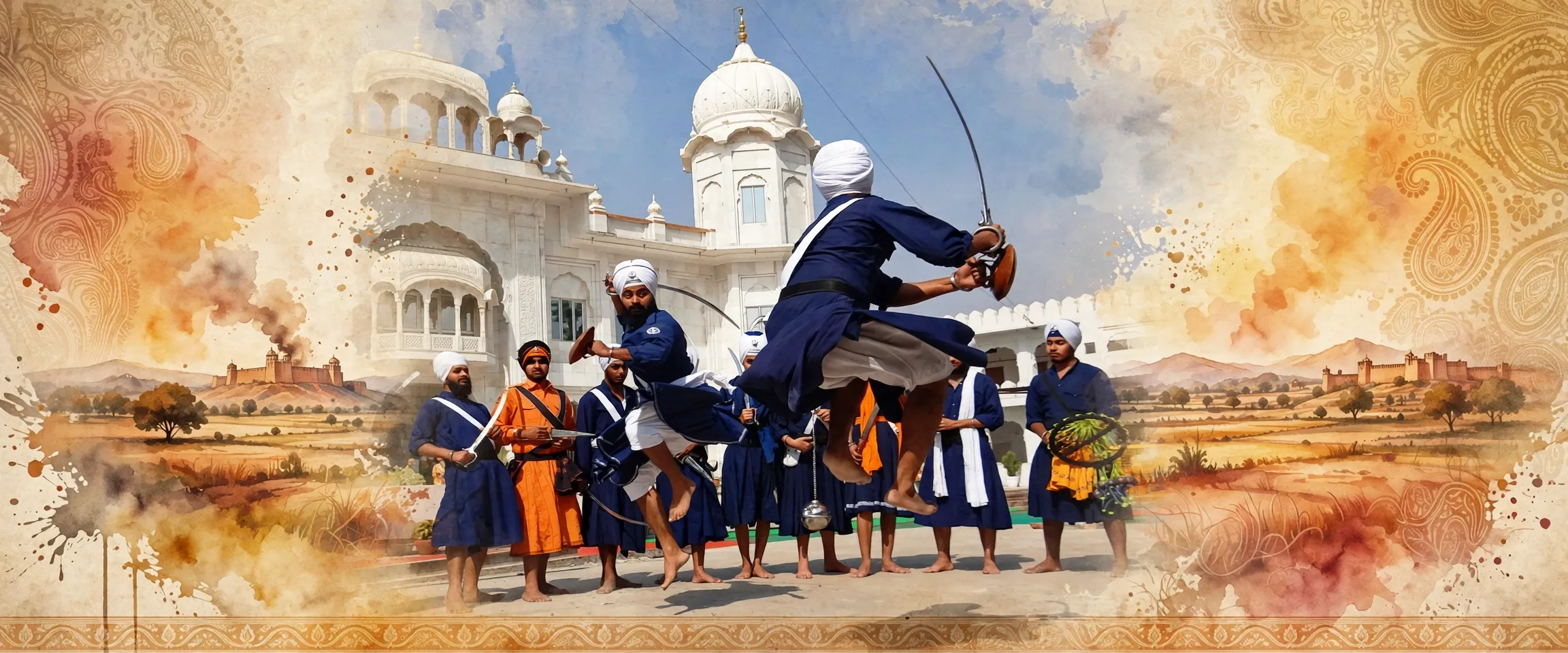
Shastar Vidya (ਸ਼ਸਤਰ ਵਿੱਦਿਆ) is the traditional battlefield martial system of the Sikhs of Punjab, the complete art of weapons from which the modern sport of Gatka derives. Shaped under Guru Hargobind Ji and Guru Gobind Singh Ji and kept by the Nihang orders, it joins edged weapons, the pentra footwork and battlefield tactics to spiritual discipline.
- Punjabi name
- ਸ਼ਸਤਰ ਵਿੱਦਿਆ
- Gurmukhi
- ਸ਼ਸਤਰ ਵਿੱਦਿਆ
- Meaning
- Shastar, weapon, plus vidya, knowledge: the science of weapons
- Also called
- Sanatan Shastar Vidya; its battlefield form is named Jhatka-Gatka
- Relation to Gatka
- Gatka is one branch of it, the stick fighting of the gada yudh branch, now a modern sport
- Custodians
- The Nihang orders, above all the Budha Dal
All 10 facts
- Training base
- The pentra footwork, whose basic mul pentra is a four step pattern
- First weapon taught
- The marahati, a bamboo stick, before real edged weapons
- Decline
- Banned and disarmed after the annexation of Punjab in 1849
- Modern revival
- Taught in the United Kingdom by Nidar Singh Nihang, of the lineage of Gian Singh Rab and Mohinder Singh
Shastar Vidya, the science of weapons, is the traditional battlefield martial system of Punjab: a complete art of edged weapons, footwork, formations and tactics that Sikh warriors carried into battle for two centuries. The modern sport of Gatka grew out of it, but Shastar Vidya itself was made for war, not for points.
What is Shastar Vidya?
Shastar Vidya means the science of weapons: shastar is a weapon, and vidya is knowledge. It is also called Sanatan Shastar Vidya, and its battlefield form is named Jhatka-Gatka in the sources. The system is organised in branches, called ang, which include unarmed fighting (bahu yudh), wrestling (mal yudh), stick and club fighting (gada yudh), fighting with hand weapons (shastar yudh) and missile fighting (astra yudh). How old it is, nobody can say for certain. Wikipedia, following the UNESCO affiliated International Centre of Martial Arts database, describes it as an ancient North Indian art once associated with the Kshatriya warrior class, and its modern teachers say it long predates Sikhism and was preserved by many cultures and faiths. Its ultimate origin is unknown and disputed, and this page treats the antiquity claims as claims, not as settled fact.
What is not disputed is the reverence at its centre. Weapons, the shastars, are venerated as the power of Akal Purakh, God: before training or display the practitioner performs ardas, salutes the weapons in the rite called shastar namaskar or salami, and recites hymns such as the Shastar Nam Mala of the Dasam Granth, where Guru Gobind Singh Ji names weapon after weapon and calls them his teachers. The art binds itself to the Sikh ideas of tyar bar tyar, being ready upon ready, of seva, selfless service, and of Degh Tegh Fateh, the victory of the cooking pot and the sword together.
How is Shastar Vidya different from Gatka?
Gatka is one branch of Shastar Vidya, not the whole of it. Inside the wider system, Gatka began as the stick and club fighting of the gada yudh branch, named after the wooden training stick, and under British rule it was reshaped into the ceremonial and sporting form that Jugti's Gatka page describes: standardised rules, points, festivals and championships. Shastar Vidya is the older and larger whole behind it. It teaches real edged weapons rather than wooden stand-ins, trains for the battlefield rather than the bout, and includes the tactics of war itself: chakkar-bazi, mobile warfare, saf-jang, fighting in close quarters, and the Dhai Phat, the hit and run tactic of Sikh horsemen. Teachers draw the line sharply. Gurbachan Singh Bhindranwale, a former Jathedar of the Damdami Taksal quoted in the scholarship, divided the vidya into a performative kind meant for exhibition and an authentic, lethal kind meant for the warrior, and called that second kind jhatka-gatka. The sport is the branch the world sees; Shastar Vidya is the tree.
How did the Sikh Gurus take up Shastar Vidya?
Martial training runs through the Guru period from early on. Guru Angad Dev Ji is remembered for promoting wrestling and for the akhara, the training arena, at Khadur Sahib, and Guru Ram Das Ji founded the Mal Akhara in Amritsar. The turn to arms came with the sixth Guru. After Guru Arjan Dev Ji's execution, Guru Hargobind Ji militarised the Sikh community, wearing the two swords of Miri Piri, temporal and spiritual power held together, and raising the Akal Sena, the first Sikh army. Tradition, preserved in Nihang oral history, holds that Baba Buddha Ji, who is believed to have learned the art in Guru Nanak Dev Ji's time, taught the young Guru Hargobind Ji and then passed the knowledge to the army's new recruits, and that Guru Hargobind Ji made Shastar Vidya the standard battle technique of his warriors, to be used in defence and only as a last resort.
Guru Gobind Singh Ji was the system's great patron. A master of arms from his youth, he envisioned the divine in the form of a sword, filled the Dasam Granth with martial hymns, and made weapons training part of Khalsa discipline: the early rahitnamas of Bhai Chaupa Singh, Bhai Daya Singh and Bhai Nand Lal all press Sikhs to learn and practise Shastar Vidya. The Sant Sipahi, the saint soldier, is the human form of this teaching, and the Nihang orders, above all the Budha Dal, became its living custodians. After the tenth Guru, the master lineage is remembered as passing to Baba Binod Singh and then to Akali Phula Singh.
What weapons and methods does Shastar Vidya teach?
Training starts with the body, not the blade: fitness built through suraj namaskar sun salutations, Indian press ups and squats, then open handed fighting, and only then weapons. The first weapon is the marahati, a bamboo stick that teaches the basic movements; the student moves to the gatka stick and phari shield, and after mastering those, to the kirpan sword and dhal shield, with advanced students sparring with real weapons under strict discipline. The full armoury includes the tabar axe, the guraj mace, the barchha spear, the khanda double edged sword, the bow and arrow, and the chakkar quoit.
Everything stands on the pentra, spelled paintara in some sources: the footwork patterns that move feet, body, arms and weapon as one. The mul pentra is the basic four step pattern from which the others grow, and named forms follow animals: tiger, monkey, bull, snake and eagle. On that base sit the movements, the paita, practised to the beat of nagara and dhol drums until they settle into muscle memory, and the manoeuvres called bandish: hujh, the direct strike, rokhana, blocking, lapetana, twisting, phenkana, throwing, chhini, snatching, and chungi, leaping. The tradition also maps the body itself, counting thirty three striking points, marams, eight of them major, with nine kinds of strike and a counter to each. A master who has fused movement and weapon performs the flowing whole as kal nach, the dance of death.
Why did Shastar Vidya nearly disappear?
The end began on the battlefield. In the Anglo-Sikh wars, Sikh swordsmen cut down British cavalry at Ramnagar with curved blades their opponents' straighter swords could not match. After annexation in 1849, the new rulers moved fast: Governor General Dalhousie ordered the Sikhs demilitarised and their weapons confiscated, the old Sikh army was disbanded, some 120,000 weapons were seized within six weeks, and 50,000 former soldiers were paid off at a muster in Lahore. The art itself was banned in the mid nineteenth century, its masters killed, exiled or driven underground, and teachers were executed under the disarmament measures, while the toned down Gatka was allowed and even promoted in its place. Kamalroop Singh adds that firearms were also changing warfare everywhere, so practical arts were turning ceremonial. Even so, the loss was real. Writing in 1891, Giani Gian Singh remembered that before 1857 every house held weapons and taught shastarvidya, and feared that within fifty years people would say it had all been lies. What saved the art was secrecy: a few ustads taught quietly, and the Nihang orders kept it inside their own discipline.
Who is reviving Shastar Vidya today?
The surviving line runs through named teachers. Many of today's teachers trace their descent from Baba Gian Singh Rab, whose student Mohinder Singh taught the best known modern master, Nidar Singh Nihang. Born in Wolverhampton, England, in 1967, Nidar Singh met Baba Mohinder Singh Ji by chance on a family trip to India at seventeen, gave up his higher education, and studied the art full time for eleven years. He is described by his own akhara tradition as its ninth teacher, of a school said to have been founded in 1661 by Baba Darbara Singh, and BBC reporting in 2011 presented him as possibly the last living master of the art, searching India and Pakistan for a successor. Those descriptions are claims this page attributes rather than settles: what is documented is over thirty years of full time teaching, classes across the United Kingdom with centres reported in Italy and India, and his book with Parmjit Singh, In the Master's Presence, on the Sikhs of Hazoor Sahib.
Reporters who watched him teach in Hounslow, London, for The Independent in 2009 described the method plainly: students begin with wooden sticks, the dedicated graduate to the real swords that once armed Sikh armies, and the key skill taught is deception, the blow the opponent never sees. Around that core, a wider revival has grown: gurdwaras and Sikh organisations now teach the art again alongside Gatka, a revival scholars trace to the British Sikh diaspora before it spread, and its displays fill Hola Mohalla, where the Nihang orders still ride and fight in the old style. The battlefield system that annexation tried to erase now survives as heritage, taught openly again in akharas far from the Punjab fields where it was banned.
ਸ਼ਸਤਰ ਵਿੱਦਿਆ, ਹਥਿਆਰਾਂ ਦਾ ਵਿਗਿਆਨ, ਪੰਜਾਬ ਦੀ ਪਰੰਪਰਾਗਤ ਜੰਗੀ ਮਾਰਸ਼ਲ ਪ੍ਰਣਾਲੀ ਹੈ। ਇਹ ਤਿੱਖੇ ਹਥਿਆਰਾਂ, ਪੈਂਤੜੇ, ਜੰਗੀ ਬਣਤਰਾਂ ਅਤੇ ਚਾਲਾਂ ਦੀ ਪੂਰੀ ਕਲਾ ਹੈ, ਜੋ ਸਿੱਖ ਯੋਧੇ ਦੋ ਸਦੀਆਂ ਤੱਕ ਜੰਗ ਵਿੱਚ ਨਾਲ ਲੈ ਕੇ ਗਏ। ਆਧੁਨਿਕ ਖੇਡ ਗੱਤਕਾ ਇਸੇ ਵਿੱਚੋਂ ਨਿਕਲਿਆ ਹੈ, ਪਰ ਸ਼ਸਤਰ ਵਿੱਦਿਆ ਆਪ ਅੰਕਾਂ ਲਈ ਨਹੀਂ, ਜੰਗ ਲਈ ਬਣੀ ਸੀ।
ਸ਼ਸਤਰ ਵਿੱਦਿਆ ਕੀ ਹੈ?
ਸ਼ਸਤਰ ਵਿੱਦਿਆ ਦਾ ਅਰਥ ਹੈ ਹਥਿਆਰਾਂ ਦਾ ਵਿਗਿਆਨ: ਸ਼ਸਤਰ ਹਥਿਆਰ ਹੈ, ਅਤੇ ਵਿੱਦਿਆ ਗਿਆਨ ਹੈ। ਇਸ ਨੂੰ ਸਨਾਤਨ ਸ਼ਸਤਰ ਵਿੱਦਿਆ ਵੀ ਕਿਹਾ ਜਾਂਦਾ ਹੈ, ਅਤੇ ਇਸ ਦੇ ਜੰਗੀ ਰੂਪ ਨੂੰ ਸਰੋਤਾਂ ਵਿੱਚ ਝਟਕਾ ਗੱਤਕਾ ਕਿਹਾ ਗਿਆ ਹੈ। ਇਹ ਪ੍ਰਣਾਲੀ ਸ਼ਾਖਾਵਾਂ, ਅੰਗਾਂ, ਵਿੱਚ ਵੰਡੀ ਹੈ, ਜਿਨ੍ਹਾਂ ਵਿੱਚ ਨਿਹੱਥੀ ਲੜਾਈ (ਬਾਹੁ ਯੁੱਧ), ਕੁਸ਼ਤੀ (ਮਲ ਯੁੱਧ), ਸੋਟੇ ਅਤੇ ਡੰਡੇ ਦੀ ਲੜਾਈ (ਗਦਾ ਯੁੱਧ), ਹੱਥ ਦੇ ਹਥਿਆਰਾਂ ਨਾਲ ਲੜਾਈ (ਸ਼ਸਤਰ ਯੁੱਧ) ਅਤੇ ਸੁੱਟੇ ਜਾਣ ਵਾਲੇ ਹਥਿਆਰਾਂ ਦੀ ਲੜਾਈ (ਅਸਤਰ ਯੁੱਧ) ਸ਼ਾਮਲ ਹਨ। ਇਹ ਕਿੰਨੀ ਪੁਰਾਣੀ ਹੈ, ਕੋਈ ਪੱਕੇ ਤੌਰ ਉੱਤੇ ਨਹੀਂ ਕਹਿ ਸਕਦਾ। ਵਿਕੀਪੀਡੀਆ, ਯੂਨੈਸਕੋ ਨਾਲ ਜੁੜੇ ਅੰਤਰਰਾਸ਼ਟਰੀ ਮਾਰਸ਼ਲ ਆਰਟਸ ਕੇਂਦਰ ਦੇ ਹਵਾਲੇ ਨਾਲ, ਇਸ ਨੂੰ ਇੱਕ ਪੁਰਾਣੀ ਉੱਤਰੀ ਭਾਰਤੀ ਕਲਾ ਦੱਸਦਾ ਹੈ, ਜੋ ਕਦੇ ਖੱਤਰੀ ਯੋਧਾ ਵਰਗ ਨਾਲ ਜੁੜੀ ਸੀ, ਅਤੇ ਇਸ ਦੇ ਆਧੁਨਿਕ ਉਸਤਾਦ ਕਹਿੰਦੇ ਹਨ ਕਿ ਇਹ ਸਿੱਖ ਧਰਮ ਤੋਂ ਬਹੁਤ ਪਹਿਲਾਂ ਉਪਮਹਾਂਦੀਪ ਵਿੱਚ ਮੌਜੂਦ ਸੀ ਅਤੇ ਕਈ ਸਭਿਆਚਾਰਾਂ ਅਤੇ ਧਰਮਾਂ ਦੇ ਲੋਕਾਂ ਨੇ ਇਸ ਨੂੰ ਸਾਂਭਿਆ। ਇਸ ਦੀ ਅੰਤਿਮ ਉਤਪਤੀ ਅਣਜਾਣ ਅਤੇ ਵਿਵਾਦਿਤ ਹੈ, ਅਤੇ ਇਹ ਪੰਨਾ ਪੁਰਾਤਨਤਾ ਦੇ ਦਾਅਵਿਆਂ ਨੂੰ ਦਾਅਵੇ ਹੀ ਮੰਨਦਾ ਹੈ, ਪੱਕੇ ਤੱਥ ਨਹੀਂ।
ਜਿਸ ਗੱਲ ਉੱਤੇ ਕੋਈ ਵਿਵਾਦ ਨਹੀਂ, ਉਹ ਹੈ ਇਸ ਦੇ ਕੇਂਦਰ ਵਿੱਚ ਖੜ੍ਹਾ ਸਤਕਾਰ। ਹਥਿਆਰਾਂ, ਸ਼ਸਤਰਾਂ, ਨੂੰ ਅਕਾਲ ਪੁਰਖ, ਪਰਮਾਤਮਾ, ਦੀ ਸ਼ਕਤੀ ਮੰਨ ਕੇ ਪੂਜਿਆ ਜਾਂਦਾ ਹੈ: ਅਭਿਆਸ ਜਾਂ ਪ੍ਰਦਰਸ਼ਨ ਤੋਂ ਪਹਿਲਾਂ ਸਿੱਖ ਅਰਦਾਸ ਕਰਦਾ ਹੈ, ਸ਼ਸਤਰ ਨਮਸਕਾਰ ਜਾਂ ਸਲਾਮੀ ਦੀ ਰਸਮ ਵਿੱਚ ਹਥਿਆਰਾਂ ਨੂੰ ਨਮਸਕਾਰ ਕਰਦਾ ਹੈ, ਅਤੇ ਦਸਮ ਗ੍ਰੰਥ ਦੀ ਸ਼ਸਤਰ ਨਾਮ ਮਾਲਾ ਵਰਗੀਆਂ ਬਾਣੀਆਂ ਪੜ੍ਹਦਾ ਹੈ, ਜਿੱਥੇ ਗੁਰੂ ਗੋਬਿੰਦ ਸਿੰਘ ਜੀ ਹਥਿਆਰ ਮਗਰੋਂ ਹਥਿਆਰ ਦਾ ਨਾਂ ਲੈ ਕੇ ਉਨ੍ਹਾਂ ਨੂੰ ਆਪਣੇ ਉਸਤਾਦ ਕਹਿੰਦੇ ਹਨ। ਇਹ ਕਲਾ ਆਪਣੇ ਆਪ ਨੂੰ ਸਿੱਖ ਵਿਚਾਰਾਂ ਨਾਲ ਬੰਨ੍ਹਦੀ ਹੈ: ਤਿਆਰ ਬਰ ਤਿਆਰ, ਹਰ ਵੇਲੇ ਤਿਆਰ ਰਹਿਣਾ, ਸੇਵਾ, ਨਿਸ਼ਕਾਮ ਸੇਵਾ, ਅਤੇ ਦੇਗ ਤੇਗ ਫਤਹਿ, ਦੇਗ ਅਤੇ ਤੇਗ ਦੋਵਾਂ ਦੀ ਜਿੱਤ।
ਸ਼ਸਤਰ ਵਿੱਦਿਆ ਗੱਤਕੇ ਤੋਂ ਕਿਵੇਂ ਵੱਖਰੀ ਹੈ?
ਗੱਤਕਾ ਸ਼ਸਤਰ ਵਿੱਦਿਆ ਦੀ ਇੱਕ ਸ਼ਾਖਾ ਹੈ, ਸਾਰੀ ਪ੍ਰਣਾਲੀ ਨਹੀਂ। ਵੱਡੀ ਪ੍ਰਣਾਲੀ ਦੇ ਅੰਦਰ ਗੱਤਕਾ ਗਦਾ ਯੁੱਧ ਸ਼ਾਖਾ ਦੀ ਸੋਟੇ ਅਤੇ ਡੰਡੇ ਦੀ ਲੜਾਈ ਵਜੋਂ ਸ਼ੁਰੂ ਹੋਇਆ, ਜਿਸ ਦਾ ਨਾਂ ਲੱਕੜ ਦੇ ਅਭਿਆਸੀ ਸੋਟੇ ਤੋਂ ਪਿਆ, ਅਤੇ ਅੰਗਰੇਜ਼ੀ ਰਾਜ ਹੇਠ ਇਹ ਉਸ ਰਸਮੀ ਅਤੇ ਖੇਡ ਰੂਪ ਵਿੱਚ ਢਲ ਗਿਆ ਜਿਸ ਦਾ ਵਰਣਨ ਜੁਗਤੀ ਦਾ ਗੱਤਕਾ ਪੰਨਾ ਕਰਦਾ ਹੈ: ਪੱਕੇ ਨਿਯਮ, ਅੰਕ, ਤਿਉਹਾਰ ਅਤੇ ਮੁਕਾਬਲੇ। ਸ਼ਸਤਰ ਵਿੱਦਿਆ ਇਸ ਦੇ ਪਿੱਛੇ ਖੜ੍ਹੀ ਪੁਰਾਣੀ ਅਤੇ ਵੱਡੀ ਸਾਰੀ ਪ੍ਰਣਾਲੀ ਹੈ। ਇਹ ਲੱਕੜ ਦੇ ਬਦਲਾਂ ਦੀ ਥਾਂ ਅਸਲ ਤਿੱਖੇ ਹਥਿਆਰ ਸਿਖਾਉਂਦੀ ਹੈ, ਮੁਕਾਬਲੇ ਦੀ ਥਾਂ ਜੰਗ ਦੇ ਮੈਦਾਨ ਲਈ ਸਿਖਲਾਈ ਦਿੰਦੀ ਹੈ, ਅਤੇ ਇਸ ਵਿੱਚ ਜੰਗ ਦੀਆਂ ਚਾਲਾਂ ਆਪ ਸ਼ਾਮਲ ਹਨ: ਚੱਕਰਬਾਜ਼ੀ, ਚਲਦੀ ਫਿਰਦੀ ਲੜਾਈ, ਸਫ ਜੰਗ, ਨੇੜੇ ਦੀ ਲੜਾਈ, ਅਤੇ ਢਾਈ ਫੱਟ, ਘੋੜਸਵਾਰ ਦੀ ਉਹ ਮਾਰ ਕੇ ਭੱਜਣ ਵਾਲੀ ਚਾਲ, ਜੋ ਸਮਕਾਲੀ ਲੇਖਕਾਂ ਨੇ ਸਿੱਖ ਸਵਾਰਾਂ ਨੂੰ ਵਰਤਦਿਆਂ ਵੇਖੀ। ਉਸਤਾਦ ਇਹ ਫਰਕ ਸਾਫ਼ ਖਿੱਚਦੇ ਹਨ। ਦਮਦਮੀ ਟਕਸਾਲ ਦੇ ਸਾਬਕਾ ਜਥੇਦਾਰ ਗੁਰਬਚਨ ਸਿੰਘ ਭਿੰਡਰਾਂਵਾਲੇ, ਜਿਨ੍ਹਾਂ ਦਾ ਹਵਾਲਾ ਵਿਦਵਾਨ ਦਿੰਦੇ ਹਨ, ਵਿੱਦਿਆ ਨੂੰ ਦੋ ਕਿਸਮਾਂ ਵਿੱਚ ਵੰਡਦੇ ਹਨ: ਇੱਕ ਪ੍ਰਦਰਸ਼ਨ ਲਈ, ਅਤੇ ਦੂਜੀ ਅਸਲ ਅਤੇ ਘਾਤਕ, ਯੋਧੇ ਲਈ, ਅਤੇ ਉਸ ਦੂਜੀ ਕਿਸਮ ਨੂੰ ਉਹ ਝਟਕਾ ਗੱਤਕਾ ਕਹਿੰਦੇ ਹਨ। ਖੇਡ ਉਹ ਸ਼ਾਖਾ ਹੈ ਜੋ ਦੁਨੀਆ ਵੇਖਦੀ ਹੈ; ਸ਼ਸਤਰ ਵਿੱਦਿਆ ਉਹ ਰੁੱਖ ਹੈ।
ਸਿੱਖ ਗੁਰੂਆਂ ਨੇ ਸ਼ਸਤਰ ਵਿੱਦਿਆ ਕਿਵੇਂ ਅਪਣਾਈ?
ਮਾਰਸ਼ਲ ਸਿਖਲਾਈ ਗੁਰੂ ਕਾਲ ਵਿੱਚ ਸ਼ੁਰੂ ਤੋਂ ਚਲਦੀ ਹੈ। ਗੁਰੂ ਅੰਗਦ ਦੇਵ ਜੀ ਕੁਸ਼ਤੀ ਨੂੰ ਉਤਸ਼ਾਹਿਤ ਕਰਨ ਅਤੇ ਖਡੂਰ ਸਾਹਿਬ ਵਿਖੇ ਅਖਾੜੇ, ਸਿਖਲਾਈ ਦੇ ਮੈਦਾਨ, ਲਈ ਯਾਦ ਕੀਤੇ ਜਾਂਦੇ ਹਨ, ਅਤੇ ਗੁਰੂ ਰਾਮ ਦਾਸ ਜੀ ਨੇ ਅੰਮ੍ਰਿਤਸਰ ਵਿੱਚ ਮਲ ਅਖਾੜਾ ਸਥਾਪਿਤ ਕੀਤਾ। ਹਥਿਆਰਾਂ ਵੱਲ ਮੋੜ ਛੇਵੇਂ ਗੁਰੂ ਨਾਲ ਆਇਆ। ਗੁਰੂ ਅਰਜਨ ਦੇਵ ਜੀ ਦੀ ਸ਼ਹੀਦੀ ਤੋਂ ਬਾਅਦ ਗੁਰੂ ਹਰਿਗੋਬਿੰਦ ਜੀ ਨੇ ਸਿੱਖ ਕੌਮ ਨੂੰ ਫੌਜੀ ਰੂਪ ਦਿੱਤਾ, ਮੀਰੀ ਅਤੇ ਪੀਰੀ ਦੀਆਂ ਦੋ ਤਲਵਾਰਾਂ ਪਹਿਨੀਆਂ, ਦੁਨਿਆਵੀ ਅਤੇ ਰੂਹਾਨੀ ਸ਼ਕਤੀ ਇਕੱਠੀਆਂ, ਅਤੇ ਅਕਾਲ ਸੈਨਾ, ਪਹਿਲੀ ਸਿੱਖ ਫੌਜ, ਖੜ੍ਹੀ ਕੀਤੀ। ਪਰੰਪਰਾ, ਜੋ ਨਿਹੰਗ ਮੌਖਿਕ ਇਤਿਹਾਸ ਵਿੱਚ ਸਾਂਭੀ ਹੈ, ਕਹਿੰਦੀ ਹੈ ਕਿ ਬਾਬਾ ਬੁੱਢਾ ਜੀ, ਜਿਨ੍ਹਾਂ ਬਾਰੇ ਮੰਨਿਆ ਜਾਂਦਾ ਹੈ ਕਿ ਉਨ੍ਹਾਂ ਨੇ ਇਹ ਕਲਾ ਗੁਰੂ ਨਾਨਕ ਦੇਵ ਜੀ ਦੇ ਸਮੇਂ ਵਿੱਚ ਸਿੱਖੀ, ਨੌਜਵਾਨ ਗੁਰੂ ਹਰਿਗੋਬਿੰਦ ਜੀ ਨੂੰ ਸਿਖਾਈ ਅਤੇ ਫਿਰ ਇਹ ਗਿਆਨ ਫੌਜ ਦੇ ਨਵੇਂ ਭਰਤੀ ਸਿੱਖਾਂ ਨੂੰ ਦਿੱਤਾ, ਅਤੇ ਗੁਰੂ ਹਰਿਗੋਬਿੰਦ ਜੀ ਨੇ ਸ਼ਸਤਰ ਵਿੱਦਿਆ ਨੂੰ ਆਪਣੇ ਯੋਧਿਆਂ ਦੀ ਮਿਆਰੀ ਜੰਗੀ ਵਿਧੀ ਬਣਾਇਆ, ਜੋ ਸਿਰਫ਼ ਬਚਾਅ ਲਈ ਅਤੇ ਆਖਰੀ ਉਪਾਅ ਵਜੋਂ ਵਰਤੀ ਜਾਣੀ ਸੀ।
ਗੁਰੂ ਗੋਬਿੰਦ ਸਿੰਘ ਜੀ ਇਸ ਪ੍ਰਣਾਲੀ ਦੇ ਸਭ ਤੋਂ ਵੱਡੇ ਸਰਪ੍ਰਸਤ ਸਨ। ਜਵਾਨੀ ਤੋਂ ਹੀ ਹਥਿਆਰਾਂ ਦੇ ਮਾਹਿਰ, ਉਨ੍ਹਾਂ ਨੇ ਪਰਮਾਤਮਾ ਨੂੰ ਤਲਵਾਰ ਦੇ ਰੂਪ ਵਿੱਚ ਵੇਖਿਆ, ਦਸਮ ਗ੍ਰੰਥ ਨੂੰ ਜੰਗੀ ਬਾਣੀਆਂ ਨਾਲ ਭਰਿਆ, ਅਤੇ ਹਥਿਆਰਾਂ ਦੀ ਸਿਖਲਾਈ ਨੂੰ ਖਾਲਸਾ ਮਰਯਾਦਾ ਦਾ ਹਿੱਸਾ ਬਣਾਇਆ: ਮੁੱਢਲੇ ਰਹਿਤਨਾਮੇ, ਭਾਈ ਚਉਪਾ ਸਿੰਘ, ਭਾਈ ਦਇਆ ਸਿੰਘ ਅਤੇ ਭਾਈ ਨੰਦ ਲਾਲ ਦੀਆਂ ਆਚਾਰ ਸੰਹਿਤਾਵਾਂ, ਸਾਰੇ ਸਿੱਖਾਂ ਨੂੰ ਸ਼ਸਤਰ ਵਿੱਦਿਆ ਸਿੱਖਣ ਅਤੇ ਅਭਿਆਸ ਕਰਨ ਲਈ ਜ਼ੋਰ ਦਿੰਦੇ ਹਨ। ਸੰਤ ਸਿਪਾਹੀ ਇਸ ਸਿੱਖਿਆ ਦਾ ਮਨੁੱਖੀ ਰੂਪ ਹੈ, ਅਤੇ ਨਿਹੰਗ ਜਥੇ, ਸਭ ਤੋਂ ਵੱਧ ਬੁੱਢਾ ਦਲ, ਇਸ ਦੇ ਜੀਉਂਦੇ ਰਾਖੇ ਬਣੇ। ਦਸਵੇਂ ਗੁਰੂ ਤੋਂ ਬਾਅਦ ਉਸਤਾਦਾਂ ਦੀ ਲੜੀ ਬਾਬਾ ਬਿਨੋਦ ਸਿੰਘ ਅਤੇ ਫਿਰ ਅਕਾਲੀ ਫੂਲਾ ਸਿੰਘ ਤੱਕ ਗਈ ਯਾਦ ਕੀਤੀ ਜਾਂਦੀ ਹੈ।
ਸ਼ਸਤਰ ਵਿੱਦਿਆ ਕਿਹੜੇ ਹਥਿਆਰ ਅਤੇ ਵਿਧੀਆਂ ਸਿਖਾਉਂਦੀ ਹੈ?
ਸਿਖਲਾਈ ਸਰੀਰ ਤੋਂ ਸ਼ੁਰੂ ਹੁੰਦੀ ਹੈ, ਬਲੇਡ ਤੋਂ ਨਹੀਂ: ਸੂਰਜ ਨਮਸਕਾਰ, ਭਾਰਤੀ ਡੰਡ ਅਤੇ ਬੈਠਕਾਂ ਨਾਲ ਬਣੀ ਤੰਦਰੁਸਤੀ, ਫਿਰ ਨਿਹੱਥੀ ਲੜਾਈ, ਅਤੇ ਉਸ ਤੋਂ ਬਾਅਦ ਹੀ ਹਥਿਆਰ। ਪਹਿਲਾ ਹਥਿਆਰ ਮਰਹੱਟੀ ਹੈ, ਬਾਂਸ ਦਾ ਸੋਟਾ, ਜੋ ਮੁੱਢਲੀਆਂ ਹਰਕਤਾਂ ਸਿਖਾਉਂਦਾ ਹੈ; ਵਿਦਿਆਰਥੀ ਗੱਤਕੇ ਦੇ ਸੋਟੇ ਅਤੇ ਫੜੀ ਢਾਲ ਵੱਲ ਵਧਦਾ ਹੈ, ਅਤੇ ਉਨ੍ਹਾਂ ਵਿੱਚ ਪੱਕਾ ਹੋ ਕੇ ਕਿਰਪਾਨ ਤਲਵਾਰ ਅਤੇ ਢਾਲ ਵੱਲ, ਅਤੇ ਉੱਚ ਪੱਧਰ ਦੇ ਵਿਦਿਆਰਥੀ ਸਖ਼ਤ ਅਨੁਸ਼ਾਸਨ ਹੇਠ ਅਸਲ ਹਥਿਆਰਾਂ ਨਾਲ ਅਭਿਆਸ ਕਰਦੇ ਹਨ। ਪੂਰੇ ਸ਼ਸਤਰ ਭੰਡਾਰ ਵਿੱਚ ਤਬਰ ਕੁਹਾੜਾ, ਗੁਰਜ ਗਦਾ, ਬਰਛਾ ਨੇਜ਼ਾ, ਖੰਡਾ ਦੋਧਾਰੀ ਤਲਵਾਰ, ਤੀਰ ਕਮਾਨ ਅਤੇ ਚੱਕਰ ਸ਼ਾਮਲ ਹਨ।
ਹਰ ਚੀਜ਼ ਪੈਂਤੜੇ ਉੱਤੇ ਖੜ੍ਹੀ ਹੈ, ਜਿਸ ਨੂੰ ਕੁਝ ਸਰੋਤਾਂ ਵਿੱਚ ਪੈਂਤਾਰਾ ਵੀ ਲਿਖਿਆ ਜਾਂਦਾ ਹੈ: ਪੈਰਾਂ ਦੀਆਂ ਉਹ ਬਣਤਰਾਂ, ਜੋ ਪੈਰ, ਸਰੀਰ, ਬਾਹਾਂ ਅਤੇ ਹਥਿਆਰ ਨੂੰ ਇੱਕੋ ਕਰਕੇ ਚਲਾਉਂਦੀਆਂ ਹਨ। ਮੂਲ ਪੈਂਤੜਾ ਚਾਰ ਕਦਮਾਂ ਦੀ ਮੁੱਢਲੀ ਬਣਤਰ ਹੈ, ਜਿਸ ਤੋਂ ਬਾਕੀ ਸਾਰੀਆਂ ਨਿਕਲਦੀਆਂ ਹਨ, ਅਤੇ ਨਾਂ ਵਾਲੇ ਰੂਪ ਜਾਨਵਰਾਂ ਦੇ ਨਾਂ ਉੱਤੇ ਹਨ: ਸ਼ੇਰ, ਬਾਂਦਰ, ਬੈਲ, ਸੱਪ ਅਤੇ ਬਾਜ਼। ਉਸ ਅਧਾਰ ਉੱਤੇ ਹਰਕਤਾਂ, ਪੈਤਾ, ਬੈਠਦੀਆਂ ਹਨ, ਜੋ ਨਗਾਰੇ ਅਤੇ ਢੋਲ ਦੀ ਥਾਪ ਉੱਤੇ ਅਭਿਆਸ ਕਰਕੇ ਮਾਸਪੇਸ਼ੀਆਂ ਦੀ ਯਾਦ ਵਿੱਚ ਬੈਠ ਜਾਂਦੀਆਂ ਹਨ, ਅਤੇ ਉਹ ਚਾਲਾਂ ਜਿਨ੍ਹਾਂ ਨੂੰ ਬੰਦਿਸ਼ ਕਹਿੰਦੇ ਹਨ: ਹੁਝ, ਸਿੱਧਾ ਵਾਰ, ਰੋਖਣਾ, ਰੋਕਣਾ, ਲਪੇਟਣਾ, ਮਰੋੜਨਾ, ਫੇਂਕਣਾ, ਸੁੱਟਣਾ, ਛੀਨੀ, ਖੋਹਣਾ, ਅਤੇ ਛੁੰਗੀ, ਛਾਲ ਮਾਰਨਾ। ਪਰੰਪਰਾ ਸਰੀਰ ਦਾ ਨਕਸ਼ਾ ਵੀ ਬਣਾਉਂਦੀ ਹੈ, ਤੇਤੀ ਮਾਰਮ, ਵਾਰ ਦੇ ਨੁਕਤੇ, ਗਿਣ ਕੇ, ਜਿਨ੍ਹਾਂ ਵਿੱਚੋਂ ਅੱਠ ਵੱਡੇ ਹਨ, ਨੌਂ ਕਿਸਮਾਂ ਦੇ ਵਾਰ ਅਤੇ ਹਰ ਇੱਕ ਦਾ ਜਵਾਬ। ਜਿਹੜਾ ਉਸਤਾਦ ਹਰਕਤ ਅਤੇ ਹਥਿਆਰ ਨੂੰ ਇੱਕ ਕਰ ਲੈਂਦਾ ਹੈ, ਉਹ ਵਗਦੀ ਸਾਰੀ ਕਲਾ ਨੂੰ ਕਾਲ ਨਾਚ, ਮੌਤ ਦਾ ਨਾਚ, ਵਜੋਂ ਕਰਦਾ ਹੈ।
ਸ਼ਸਤਰ ਵਿੱਦਿਆ ਲੱਗਭਗ ਖਤਮ ਕਿਉਂ ਹੋ ਗਈ?
ਅੰਤ ਜੰਗ ਦੇ ਮੈਦਾਨ ਤੋਂ ਸ਼ੁਰੂ ਹੋਇਆ। ਅੰਗਰੇਜ਼ੀ ਸਿੱਖ ਜੰਗਾਂ ਵਿੱਚ ਸਿੱਖ ਤਲਵਾਰਬਾਜ਼ਾਂ ਨੇ ਰਾਮਨਗਰ ਵਿਖੇ ਅੰਗਰੇਜ਼ ਘੋੜਸਵਾਰਾਂ ਨੂੰ ਵਕਰੀਆਂ ਤਲਵਾਰਾਂ ਨਾਲ ਕੱਟਿਆ, ਜਿਨ੍ਹਾਂ ਦਾ ਮੁਕਾਬਲਾ ਉਨ੍ਹਾਂ ਦੀਆਂ ਸਿੱਧੀਆਂ ਤਲਵਾਰਾਂ ਨਹੀਂ ਕਰ ਸਕੀਆਂ। 1849 ਵਿੱਚ ਕਬਜ਼ੇ ਤੋਂ ਬਾਅਦ ਨਵੇਂ ਹਾਕਮਾਂ ਨੇ ਤੇਜ਼ੀ ਵਿਖਾਈ: ਗਵਰਨਰ ਜਨਰਲ ਡਲਹੌਜ਼ੀ ਨੇ ਸਿੱਖਾਂ ਨੂੰ ਨਿਹੱਥੇ ਕਰਨ ਅਤੇ ਉਨ੍ਹਾਂ ਦੇ ਹਥਿਆਰ ਜ਼ਬਤ ਕਰਨ ਦਾ ਹੁਕਮ ਦਿੱਤਾ, ਪੁਰਾਣੀ ਸਿੱਖ ਫੌਜ ਭੰਗ ਕਰ ਦਿੱਤੀ ਗਈ, ਛੇ ਹਫ਼ਤਿਆਂ ਵਿੱਚ ਲੱਗਭਗ 120000 ਹਥਿਆਰ ਜ਼ਬਤ ਕੀਤੇ ਗਏ, ਅਤੇ ਲਾਹੌਰ ਵਿੱਚ ਇੱਕ ਇਕੱਠ ਵਿੱਚ 50000 ਸਾਬਕਾ ਸਿਪਾਹੀਆਂ ਨੂੰ ਤਨਖਾਹ ਦੇ ਕੇ ਘਰ ਭੇਜਿਆ ਗਿਆ। ਉੱਨੀਵੀਂ ਸਦੀ ਦੇ ਮੱਧ ਵਿੱਚ ਇਸ ਕਲਾ ਉੱਤੇ ਆਪ ਪਾਬੰਦੀ ਲਾ ਦਿੱਤੀ ਗਈ, ਇਸ ਦੇ ਉਸਤਾਦ ਮਾਰੇ ਗਏ, ਦੇਸ਼ ਨਿਕਾਲਾ ਦਿੱਤੇ ਗਏ ਜਾਂ ਭੂਮੀਗਤ ਹੋ ਗਏ, ਅਤੇ ਨਿਹੱਥਾ ਕਰਨ ਦੇ ਕਦਮਾਂ ਹੇਠ ਅਧਿਆਪਕਾਂ ਨੂੰ ਫਾਂਸੀ ਦਿੱਤੀ ਗਈ, ਜਦਕਿ ਨਰਮ ਕੀਤਾ ਗੱਤਕਾ ਇਸ ਦੀ ਥਾਂ ਲੈਣ ਲਈ ਛੱਡਿਆ ਅਤੇ ਉਤਸ਼ਾਹਿਤ ਵੀ ਕੀਤਾ ਗਿਆ। ਵਿਦਵਾਨ ਕਮਲਰੂਪ ਸਿੰਘ ਸਿਰਫ਼ ਅੰਗਰੇਜ਼ਾਂ ਨੂੰ ਦੋਸ਼ ਦੇਣ ਤੋਂ ਵਰਜਦੇ ਹਨ: ਬੰਦੂਕਾਂ ਹਰ ਥਾਂ ਜੰਗ ਬਦਲ ਰਹੀਆਂ ਸਨ, ਅਤੇ ਅਮਲੀ ਕਲਾਵਾਂ ਰਸਮੀ ਬਣ ਰਹੀਆਂ ਸਨ। ਫਿਰ ਵੀ ਨੁਕਸਾਨ ਅਸਲ ਸੀ। 1891 ਵਿੱਚ ਲਿਖਦਿਆਂ ਗਿਆਨੀ ਗਿਆਨ ਸਿੰਘ ਯਾਦ ਕਰਦੇ ਹਨ ਕਿ 1857 ਤੋਂ ਪਹਿਲਾਂ ਹਰ ਘਰ ਵਿੱਚ ਹਥਿਆਰ ਸਨ ਅਤੇ ਸ਼ਸਤਰ ਵਿੱਦਿਆ ਸਿਖਾਈ ਜਾਂਦੀ ਸੀ, ਅਤੇ ਉਨ੍ਹਾਂ ਨੂੰ ਡਰ ਸੀ ਕਿ ਪੰਜਾਹ ਸਾਲਾਂ ਵਿੱਚ ਲੋਕ ਕਹਿਣਗੇ ਕਿ ਇਹ ਸਭ ਝੂਠ ਸੀ। ਜਿਸ ਚੀਜ਼ ਨੇ ਕਲਾ ਨੂੰ ਬਚਾਇਆ, ਉਹ ਗੁਪਤਤਾ ਸੀ: ਕੁਝ ਉਸਤਾਦ ਚੁੱਪ ਕਰਕੇ ਸਿਖਾਉਂਦੇ ਰਹੇ, ਅਤੇ ਨਿਹੰਗ ਜਥਿਆਂ ਨੇ ਇਸ ਨੂੰ ਆਪਣੇ ਅਨੁਸ਼ਾਸਨ ਦੇ ਅੰਦਰ ਸਾਂਭਿਆ।
ਅੱਜ ਸ਼ਸਤਰ ਵਿੱਦਿਆ ਨੂੰ ਕੌਣ ਮੁੜ ਸੁਰਜੀਤ ਕਰ ਰਿਹਾ ਹੈ?
ਬਚੀ ਹੋਈ ਲੜੀ ਨਾਂ ਵਾਲੇ ਉਸਤਾਦਾਂ ਰਾਹੀਂ ਚਲਦੀ ਹੈ। ਅੱਜ ਦੇ ਬਹੁਤੇ ਉਸਤਾਦ ਆਪਣੀ ਲੜੀ ਬਾਬਾ ਗਿਆਨ ਸਿੰਘ ਰੱਬ ਤੋਂ ਦੱਸਦੇ ਹਨ, ਜਿਨ੍ਹਾਂ ਦੇ ਵਿਦਿਆਰਥੀ ਮਹਿੰਦਰ ਸਿੰਘ ਨੇ ਸਭ ਤੋਂ ਜਾਣੇ ਪਛਾਣੇ ਆਧੁਨਿਕ ਉਸਤਾਦ, ਨਿਡਰ ਸਿੰਘ ਨਿਹੰਗ, ਨੂੰ ਸਿਖਾਇਆ। 1967 ਵਿੱਚ ਇੰਗਲੈਂਡ ਦੇ ਵੁਲਵਰਹੈਂਪਟਨ ਵਿੱਚ ਜੰਮੇ, ਨਿਡਰ ਸਿੰਘ ਸਤਾਰਾਂ ਸਾਲ ਦੀ ਉਮਰ ਵਿੱਚ ਭਾਰਤ ਦੇ ਪਰਿਵਾਰਕ ਸਫ਼ਰ ਦੌਰਾਨ ਅਚਾਨਕ ਬਾਬਾ ਮਹਿੰਦਰ ਸਿੰਘ ਜੀ ਨੂੰ ਮਿਲੇ, ਆਪਣੀ ਉੱਚ ਪੜ੍ਹਾਈ ਛੱਡ ਦਿੱਤੀ, ਅਤੇ ਗਿਆਰਾਂ ਸਾਲ ਪੂਰਾ ਸਮਾਂ ਇਹ ਕਲਾ ਸਿੱਖੀ। ਉਨ੍ਹਾਂ ਨੂੰ ਉਨ੍ਹਾਂ ਦੀ ਆਪਣੀ ਅਖਾੜਾ ਪਰੰਪਰਾ ਇਸ ਦਾ ਨੌਵਾਂ ਉਸਤਾਦ ਦੱਸਦੀ ਹੈ, ਉਸ ਸਕੂਲ ਦਾ ਜੋ ਕਿਹਾ ਜਾਂਦਾ ਹੈ ਕਿ 1661 ਵਿੱਚ ਬਾਬਾ ਦਰਬਾਰਾ ਸਿੰਘ ਨੇ ਸਥਾਪਿਤ ਕੀਤਾ ਸੀ, ਅਤੇ 2011 ਵਿੱਚ ਬੀਬੀਸੀ ਦੀ ਰਿਪੋਰਟ ਨੇ ਉਨ੍ਹਾਂ ਨੂੰ ਇਸ ਕਲਾ ਦਾ ਸੰਭਵ ਤੌਰ ਉੱਤੇ ਆਖਰੀ ਜੀਉਂਦਾ ਉਸਤਾਦ ਦੱਸਿਆ, ਜੋ ਵਾਰਸ ਦੀ ਭਾਲ ਵਿੱਚ ਭਾਰਤ ਅਤੇ ਪਾਕਿਸਤਾਨ ਘੁੰਮ ਰਹੇ ਸਨ। ਇਹ ਵਰਣਨ ਉਹ ਦਾਅਵੇ ਹਨ ਜੋ ਇਹ ਪੰਨਾ ਹਵਾਲੇ ਵਜੋਂ ਦਿੰਦਾ ਹੈ, ਪੱਕੇ ਨਹੀਂ ਕਰਦਾ: ਜੋ ਦਸਤਾਵੇਜ਼ੀ ਹੈ, ਉਹ ਹੈ ਤੀਹ ਸਾਲ ਤੋਂ ਵੱਧ ਦੀ ਪੂਰੇ ਸਮੇਂ ਦੀ ਸਿਖਲਾਈ, ਯੂਨਾਈਟਿਡ ਕਿੰਗਡਮ ਵਿੱਚ ਕਲਾਸਾਂ, ਇਟਲੀ ਅਤੇ ਭਾਰਤ ਵਿੱਚ ਕੇਂਦਰਾਂ ਦੀਆਂ ਰਿਪੋਰਟਾਂ, ਅਤੇ ਪਰਮਜੀਤ ਸਿੰਘ ਨਾਲ ਉਨ੍ਹਾਂ ਦੀ ਕਿਤਾਬ, ਇਨ ਦੀ ਮਾਸਟਰਜ਼ ਪ੍ਰੈਜ਼ੈਂਸ, ਹਜ਼ੂਰ ਸਾਹਿਬ ਦੇ ਸਿੱਖਾਂ ਬਾਰੇ।
2009 ਵਿੱਚ ਦੀ ਇੰਡੀਪੈਂਡੈਂਟ ਲਈ ਲੰਡਨ ਦੇ ਹਾਉਂਸਲੋ ਵਿੱਚ ਉਨ੍ਹਾਂ ਨੂੰ ਸਿਖਾਉਂਦਿਆਂ ਵੇਖਣ ਵਾਲੇ ਪੱਤਰਕਾਰਾਂ ਨੇ ਵਿਧੀ ਸਾਦੇ ਸ਼ਬਦਾਂ ਵਿੱਚ ਦੱਸੀ: ਵਿਦਿਆਰਥੀ ਲੱਕੜ ਦੇ ਸੋਟਿਆਂ ਤੋਂ ਸ਼ੁਰੂ ਕਰਦੇ ਹਨ, ਸਮਰਪਿਤ ਵਿਦਿਆਰਥੀ ਉਨ੍ਹਾਂ ਅਸਲ ਤਲਵਾਰਾਂ ਤੱਕ ਪਹੁੰਚਦੇ ਹਨ ਜੋ ਕਦੇ ਸਿੱਖ ਫੌਜਾਂ ਦੇ ਹਥਿਆਰ ਸਨ, ਅਤੇ ਸਿਖਾਈ ਜਾਣ ਵਾਲੀ ਮੁੱਖ ਕੁਸ਼ਲਤਾ ਧੋਖਾ ਹੈ, ਉਹ ਵਾਰ ਜੋ ਵਿਰੋਧੀ ਕਦੇ ਆਉਂਦਾ ਨਹੀਂ ਵੇਖਦਾ। ਉਸ ਕੇਂਦਰ ਦੇ ਆਲੇ ਦੁਆਲੇ ਇੱਕ ਵੱਡੀ ਸੁਰਜੀਤੀ ਵਧੀ ਹੈ: ਗੁਰਦੁਆਰੇ ਅਤੇ ਸਿੱਖ ਸੰਸਥਾਵਾਂ ਹੁਣ ਗੱਤਕੇ ਦੇ ਨਾਲ ਨਾਲ ਇਹ ਕਲਾ ਫਿਰ ਸਿਖਾਉਂਦੀਆਂ ਹਨ, ਉਹ ਸੁਰਜੀਤੀ ਜਿਸ ਨੂੰ ਵਿਦਵਾਨ ਬਰਤਾਨਵੀ ਸਿੱਖ ਡਾਇਸਪੋਰਾ ਤੋਂ ਸ਼ੁਰੂ ਹੋਈ ਦੱਸਦੇ ਹਨ, ਇਸ ਤੋਂ ਪਹਿਲਾਂ ਕਿ ਉਹ ਅੱਗੇ ਫੈਲਦੀ, ਅਤੇ ਇਸ ਦੇ ਪ੍ਰਦਰਸ਼ਨ ਹੋਲਾ ਮਹੱਲਾ ਨੂੰ ਭਰਦੇ ਹਨ, ਜਿੱਥੇ ਨਿਹੰਗ ਜਥੇ ਅਜੇ ਵੀ ਪੁਰਾਣੇ ਢੰਗ ਨਾਲ ਸਵਾਰੀ ਕਰਦੇ ਅਤੇ ਲੜਦੇ ਹਨ। ਜਿਸ ਜੰਗੀ ਪ੍ਰਣਾਲੀ ਨੂੰ ਕਬਜ਼ੇ ਨੇ ਮਿਟਾਉਣ ਦੀ ਕੋਸ਼ਿਸ਼ ਕੀਤੀ ਸੀ, ਉਹ ਹੁਣ ਵਿਰਾਸਤ ਵਜੋਂ ਜੀਉਂਦੀ ਹੈ, ਪੰਜਾਬ ਦੇ ਉਨ੍ਹਾਂ ਮੈਦਾਨਾਂ ਤੋਂ ਦੂਰ ਅਖਾੜਿਆਂ ਵਿੱਚ ਫਿਰ ਖੁੱਲ੍ਹ ਕੇ ਸਿਖਾਈ ਜਾਂਦੀ ਹੈ, ਜਿੱਥੇ ਇਸ ਉੱਤੇ ਪਾਬੰਦੀ ਲਾਈ ਗਈ ਸੀ।
More religion entries to explore
Sources (4)
Jugti is free and independent. Reader support keeps the Kosh growing.
Support