
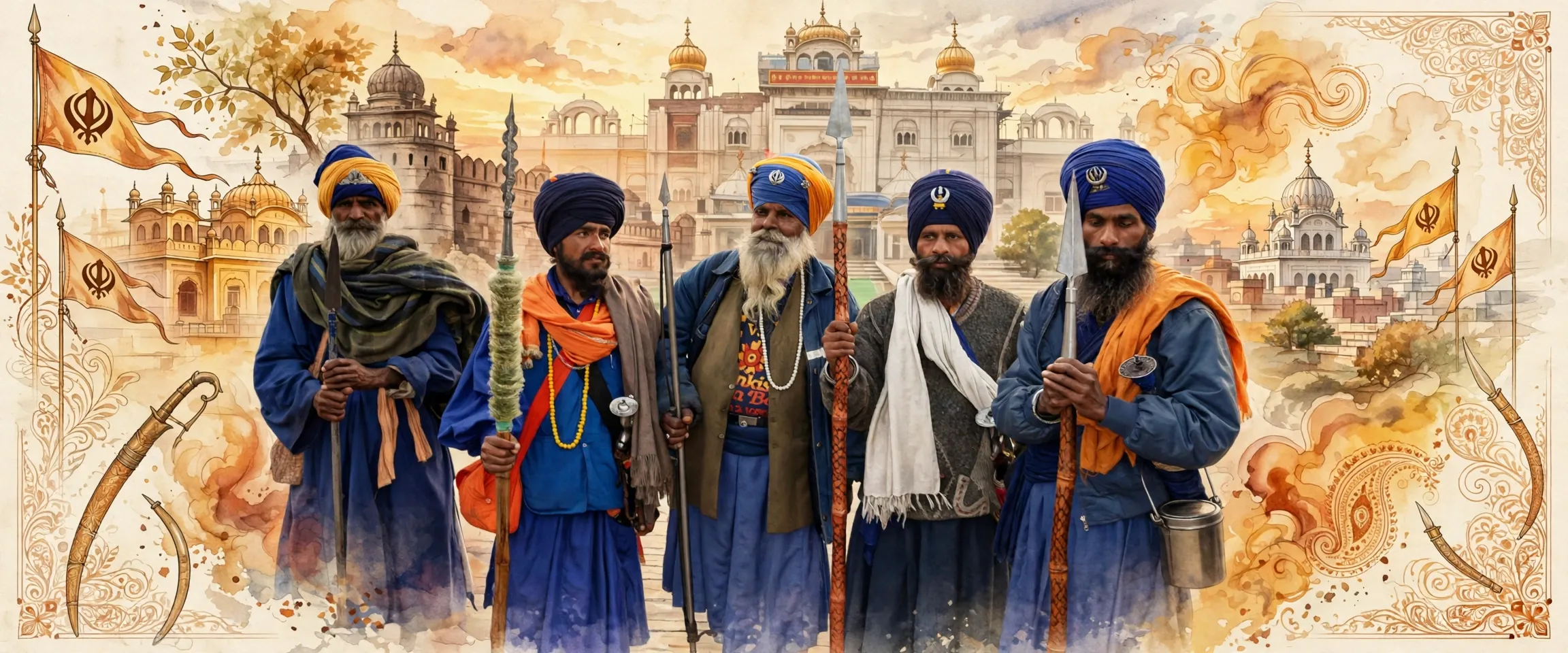
The Budha Dal was the elders division of the Dal Khalsa, the confederated Sikh army of the eighteenth century, created at Amritsar in 1734 when Nawab Kapur Singh split the camp by the age of its jathedars. Its sister division was the Taruna Dal of the young. Today the name is carried by the Shiromani Panth Akali Budha Dal, the senior order of the Nihang Sikhs.
- Punjabi name
- ਬੁੱਢਾ ਦਲ
- Faith
- Sikhism
- Founded
- 1734, by the division of the Dal Khalsa at Amritsar
- Organiser
- Nawab Kapur Singh
- Headquarters (historical)
- Amritsar
- Headquarters (today)
- Raqba, for the modern Budha Dal
All 11 facts
- Tradition
- Nihang
- Parent body
- Dal Khalsa, the confederated Sikh army
- Sister division
- Taruna Dal, the army of the young, in five jathas
- Agreed role
- To remain at Amritsar and manage the shrines, while the Taruna Dal operated in the countryside
- Leadership
- A Jathedar; the Dal tradition lists Binod Singh, Darbara Singh and Kapur Singh first
The Budha Dal, the army of the elders, was one of the two divisions of the Dal Khalsa, the confederated Sikh army of the eighteenth century. Nawab Kapur Singh created it at Amritsar in 1734, placing the older leaders in the Budha Dal and the younger men in the Taruna Dal. Kapur Singh commanded both.
What is the Budha Dal?
The Budha Dal is, first, a piece of Sikh military history, and second, a living institution. Historically it was the senior half of the Dal Khalsa, the joint army that carried the Khalsa Panth through the hardest decades of the eighteenth century, from persecution under the Mughal governors of Lahore to the rise of the Sikh misls. In the present day the name belongs to the Shiromani Panth Akali Budha Dal, described on SikhiWiki as the head section of the Nihang Sikhs, the blue clad martial order of the Khalsa. Budha means elder, and the Dal is led, as a military body, by a jathedar. Its modern headquarters are at Raqba, and its camps, called deras or chhaunis, keep horses, run gurdwaras and train in martial arts. The Dal's own tradition traces its leadership back in an unbroken line to the first jathedars of the Dal Khalsa, a claim this page reports as the Dal's tradition.
Why was the Dal Khalsa divided?
The division was an answer to a crisis. With the execution of Banda Singh Bahadur in 1716, the Encyclopaedia of Sikhism records, the Sikhs were deprived of a unified command, and the persecution that followed under Abd us Samad Khan, governor of Lahore, scattered them in small jathas into hills, forests and deserts. His son Zakariya Khan proved no more able to subdue them, and in 1733 he came to terms: a jagir worth 100,000 rupees a year, the title of Nawab for one of their leaders, and peaceful settlement at Amritsar. The Sikhs accepted. The bulk of the warriors, a few thousand men, concentrated at Amritsar under Sardar Kapur Singh, with Darbara Singh assisting him as diwan. Kapur Singh found it difficult to cater for so large a force centrally, particularly after Darbara Singh died in 1734, so he divided the camp into two parts on the basis of the age of the jathedars, the group leaders. The elders camp, comprising the jathas of older leaders such as Sham Singh, Gurbakhsh Singh, Bagh Singh, Gurdial Singh, Sukkha Singh and Kapur Singh himself, came to be called Buddha Dal, the elderly Dal. The youths camp was the Taruna Dal. Nawab Kapur Singh remained in overall command of the two Dals, jointly called the Dal Khalsa, and men were free to join the jatha of their choice.
Taruna Dal: the army of the young
The Taruna Dal, taruna meaning youthful, gathered the jathas of the younger leaders. It was subdivided into five jathas, each with its own drum and banner, and the Budha Dal was similarly subdivided after some time. The Encyclopaedia, citing Ratan Singh Bhangu and his Prachin Panth Prakash, notes the one surviving strength figure for a jatha: the fifth jatha of the Taruna Dal, commanded by Bir Singh Ranghreta, is put at 1,300 horse, from which the jathas are reckoned at 1,300 to 2,000 men each. The two Dals worked to an agreed division of labour. It was generally agreed that the Budha Dal would remain at Amritsar and manage the shrines, leaving the Taruna Dal free for operations in the country. The settlement with the Mughals soon broke down and persecution resumed. In the fighting that followed, while the Taruna Dal crossed the Sutlej into the territory of Sirhind, the Budha Dal spread through the countryside of Majha, and both returned to Amritsar for the Baisakhi and Diwali gatherings. In later years the Taruna Dal was spread over Majha and the Budha Dal operated in the Doaba and Malwa regions, but they continued to combine against common enemies, above all the Afghan invader Ahmad Shah Durrani.
From two Dals to the eleven misls
Success brought its own problem: the army outgrew two camps. Meeting at Amritsar on Diwali, 14 November 1745, the Dal Khalsa divided itself into 25 jathas, which still owed allegiance to the Budha Dal or the Taruna Dal and often undertook joint operations. Jathas of both Dals suffered together in the Chhota Ghallughara of April and May 1746. Then, at a Sarbatt Khalsa assembly at Amritsar on Baisakhi, 29 March 1748, the entire force of 65 jathas was reorganised into eleven misls, each under its own sardar. The first six misls, Ahluwalia, Singhpuria, Karorsinghia, Nishanwalia, Shahid and Dallewalia, stood under the Budha Dal, and the latter five, Sukerchakia, Bhangi, Kanhaiya, Nakai and Ramgarhia, under the Taruna Dal. Jassa Singh Ahluwalia was chosen for the joint command of the entire Dal Khalsa, while Nawab Kapur Singh continued to be acknowledged as supreme commander. Before his death at Amritsar on 7 October 1753, Kapur Singh nominated Jassa Singh Ahluwalia as his successor, and the Sarbatt Khalsa ratified the appointment on Baisakhi, 10 April 1754. Through the years 1753 to 1764 the Dals replaced raiding with the rakhi system, protection offered to villages and minor chiefs for a regular cess, endured the Vadda Ghallughara of 5 February 1762, and joined in the conquest of Sirhind in January 1764. As the misls occupied defined territories and their sardars ruled independently, the terms Budha Dal and Taruna Dal became redundant and went out of use. The name Baba Deep Singh Ji, head of the Shahid misl, belongs to this Budha Dal half of the old army.
Who has led the Budha Dal?
SikhiWiki records the Dal's own list of jathedars in this order: Baba Binod Singh, Baba Darbara Singh, Nawab Kapur Singh, Jassa Singh Ahluwalia, Baba Naina Singh, Akali Phula Singh, then Baba Hanuman Singh, Jathedar Prahlad Singh, Jathedar Gian Singh, Jathedar Baba Teja Singh, Baba Sahib Ji Kaladhari, Jathedar Baba Chet Singh, Jathedar Baba Santa Singh, Jathedar Baba Surjeet Singh and Jathedar Baba Prem Singh, with Jathedar Baba Maan Singh named as the current jathedar in that list. The early names anchor the story told on this page: Binod Singh and Darbara Singh led the Khalsa before the division, Kapur Singh made the division and commanded the whole, and Jassa Singh Ahluwalia succeeded him. Akali Phula Singh, overseer of the Akal Takht in Amritsar in the time of the Sikh Empire, shows the line running into the nineteenth century, when the Nihang deras stayed independent, helped maintain many Sikh places of worship, and kept the martial tradition alive through the British period and the revival after independence.
The Budha Dal today
The modern Shiromani Panth Akali Budha Dal is the senior Nihang order, and its work is the keeping of the Khalsa and its oldest martial customs. Its Singhs wear the blue bana, keep horses, and travel a full festival circuit: to Amritsar for Vaisakhi, to Muktsar for Maghi, to Baba Bakala for Rakharh Punnian, and above all to Anandpur Sahib for Hola Mohalla, the festival of martial display founded by Guru Gobind Singh Ji, where the dals ride and perform Gatka before vast crowds. At gurpurabs the Dal is present in force, its deep blue Nishan Sahib marking its camps out from the orange flags of SGPC managed gurdwaras. Its deras run gurdwaras of their own, continuing the custodianship of shrines recorded for the Budha Dal from the beginning, when its agreed task was to remain at Amritsar and manage the shrines while its sister Dal took the field.
Is the Budha Dal the fifth Takht?
This is a disputed claim, and it is stated here as a claim. The Budha Dal regards itself as the Panjva Takht, the fifth Takht, a moving throne rather than a fixed seat, and SikhiWiki presents the Dal in those terms. The other position is the settled institutional one: Takht Sri Damdama Sahib at Talwandi Sabo was officially recognised as the fifth Takht by the Shiromani Gurdwara Prabandhak Committee on 18 November 1966, and the Government of India declared it the fifth Takht in April 1999. The Damdama Sahib record notes that before Damdama Sahib became a Takht, the Budha Dal held that place, and its reference note states plainly that the position is disputed by the Budha Dal, who claim that their group is the fifth Takht. Jugti records both positions and takes neither side.
ਬੁੱਢਾ ਦਲ, ਬਜ਼ੁਰਗਾਂ ਦੀ ਫੌਜ, ਅਠਾਰਵੀਂ ਸਦੀ ਦੀ ਸਿੱਖਾਂ ਦੀ ਸਾਂਝੀ ਫੌਜ, ਦਲ ਖਾਲਸੇ, ਦੀਆਂ ਦੋ ਵੰਡਾਂ ਵਿੱਚੋਂ ਇੱਕ ਸੀ। ਨਵਾਬ ਕਪੂਰ ਸਿੰਘ ਨੇ ਇਸ ਨੂੰ 1734 ਵਿੱਚ ਅੰਮ੍ਰਿਤਸਰ ਵਿੱਚ ਬਣਾਇਆ, ਵੱਡੀ ਉਮਰ ਦੇ ਆਗੂਆਂ ਨੂੰ ਬੁੱਢਾ ਦਲ ਵਿੱਚ ਅਤੇ ਨੌਜਵਾਨਾਂ ਨੂੰ ਤਰੁਣਾ ਦਲ ਵਿੱਚ ਰੱਖ ਕੇ। ਕਪੂਰ ਸਿੰਘ ਦੋਹਾਂ ਦੀ ਸਾਂਝੀ ਕਮਾਨ ਕਰਦਾ ਰਿਹਾ।
ਬੁੱਢਾ ਦਲ ਕੀ ਹੈ?
ਬੁੱਢਾ ਦਲ ਪਹਿਲਾਂ ਸਿੱਖ ਜੰਗੀ ਇਤਿਹਾਸ ਦਾ ਇੱਕ ਹਿੱਸਾ ਹੈ, ਅਤੇ ਦੂਜਾ ਇੱਕ ਜਿਉਂਦੀ ਸੰਸਥਾ ਹੈ। ਇਤਿਹਾਸਕ ਤੌਰ ਉੱਤੇ ਇਹ ਦਲ ਖਾਲਸੇ ਦਾ ਸੀਨੀਅਰ ਅੱਧ ਸੀ, ਉਹ ਸਾਂਝੀ ਫੌਜ ਜਿਸ ਨੇ ਖਾਲਸਾ ਪੰਥ ਨੂੰ ਅਠਾਰਵੀਂ ਸਦੀ ਦੇ ਸਭ ਤੋਂ ਔਖੇ ਦਹਾਕਿਆਂ ਵਿੱਚੋਂ ਲੰਘਾਇਆ, ਲਾਹੌਰ ਦੇ ਮੁਗਲ ਹਾਕਮਾਂ ਦੇ ਜ਼ੁਲਮ ਤੋਂ ਲੈ ਕੇ ਸਿੱਖ ਮਿਸਲਾਂ ਦੇ ਉਭਾਰ ਤੱਕ। ਅੱਜ ਇਹ ਨਾਂ ਸ਼੍ਰੋਮਣੀ ਪੰਥ ਅਕਾਲੀ ਬੁੱਢਾ ਦਲ ਦਾ ਹੈ, ਜਿਸ ਨੂੰ ਸਿੱਖੀਵਿਕੀ ਨਿਹੰਗ ਸਿੱਖਾਂ ਦਾ ਮੁੱਖ ਹਿੱਸਾ ਦੱਸਦਾ ਹੈ, ਖਾਲਸੇ ਦਾ ਨੀਲੇ ਬਾਣੇ ਵਾਲਾ ਜੰਗੀ ਸੰਪਰਦਾਇ। ਬੁੱਢਾ ਦਾ ਭਾਵ ਹੈ ਬਜ਼ੁਰਗ, ਅਤੇ ਇੱਕ ਜੰਗੀ ਸੰਸਥਾ ਵਜੋਂ ਦਲ ਦੀ ਅਗਵਾਈ ਜਥੇਦਾਰ ਕਰਦਾ ਹੈ। ਇਸ ਦਾ ਆਧੁਨਿਕ ਮੁੱਖ ਅਸਥਾਨ ਰਕਬਾ ਵਿੱਚ ਹੈ, ਅਤੇ ਇਸ ਦੇ ਪੜਾਅ, ਜਿਨ੍ਹਾਂ ਨੂੰ ਡੇਰੇ ਜਾਂ ਛਾਉਣੀਆਂ ਕਿਹਾ ਜਾਂਦਾ ਹੈ, ਘੋੜੇ ਰੱਖਦੇ ਹਨ, ਹਥਿਆਰਾਂ ਨੂੰ ਜ਼ਿੰਦਗੀ ਦਾ ਆਮ ਹਿੱਸਾ ਰੱਖਦੇ ਹਨ, ਆਪਣੇ ਗੁਰਦੁਆਰੇ ਚਲਾਉਂਦੇ ਹਨ ਅਤੇ ਜੰਗੀ ਕਲਾਵਾਂ ਵਿੱਚ ਸਿਖਲਾਈ ਦਿੰਦੇ ਹਨ। ਦਲ ਦੀ ਆਪਣੀ ਰਵਾਇਤ ਆਪਣੀ ਅਗਵਾਈ ਨੂੰ ਦਲ ਖਾਲਸੇ ਦੇ ਪਹਿਲੇ ਜਥੇਦਾਰਾਂ ਤੱਕ ਅਟੁੱਟ ਲੜੀ ਵਿੱਚ ਜੋੜਦੀ ਹੈ, ਅਤੇ ਇਹ ਸਫਾ ਉਸ ਦਾਅਵੇ ਨੂੰ ਦਲ ਦੀ ਰਵਾਇਤ ਵਜੋਂ ਹੀ ਦੱਸਦਾ ਹੈ।
ਦਲ ਖਾਲਸਾ ਕਿਉਂ ਵੰਡਿਆ ਗਿਆ?
ਵੰਡ ਇੱਕ ਸੰਕਟ ਦਾ ਜਵਾਬ ਸੀ। ਸਿੱਖ ਐਨਸਾਈਕਲੋਪੀਡੀਆ ਦਰਜ ਕਰਦਾ ਹੈ ਕਿ 1716 ਵਿੱਚ ਬੰਦਾ ਸਿੰਘ ਬਹਾਦਰ ਦੀ ਸ਼ਹਾਦਤ ਨਾਲ ਸਿੱਖ ਇੱਕੋ ਕਮਾਨ ਤੋਂ ਵਾਂਝੇ ਹੋ ਗਏ, ਅਤੇ ਲਾਹੌਰ ਦੇ ਹਾਕਮ ਅਬਦੁਸ ਸਮਦ ਖਾਨ ਦੇ ਜ਼ੁਲਮ ਨੇ ਉਨ੍ਹਾਂ ਨੂੰ ਛੋਟੇ ਜਥਿਆਂ ਵਿੱਚ ਪਹਾੜਾਂ, ਜੰਗਲਾਂ ਅਤੇ ਮਾਰੂਥਲਾਂ ਵੱਲ ਖਿੰਡਾ ਦਿੱਤਾ। ਉਸ ਦਾ ਪੁੱਤਰ ਜ਼ਕਰੀਆ ਖਾਨ ਵੀ ਉਨ੍ਹਾਂ ਨੂੰ ਅਧੀਨ ਨਾ ਕਰ ਸਕਿਆ, ਅਤੇ 1733 ਵਿੱਚ ਉਹ ਸਮਝੌਤੇ ਉੱਤੇ ਆਇਆ। ਇੱਕ ਲੱਖ ਰੁਪਏ ਸਾਲਾਨਾ ਦੀ ਜਾਗੀਰ, ਉਨ੍ਹਾਂ ਦੇ ਇੱਕ ਆਗੂ ਲਈ ਨਵਾਬ ਦਾ ਖਿਤਾਬ, ਅਤੇ ਅੰਮ੍ਰਿਤਸਰ ਅਤੇ ਪੰਜਾਬ ਵਿੱਚ ਹੋਰ ਥਾਵਾਂ ਉੱਤੇ ਸ਼ਾਂਤੀ ਨਾਲ ਵੱਸਣ ਦੀ ਖੁੱਲ੍ਹ। ਸਿੱਖਾਂ ਨੇ ਪੇਸ਼ਕਸ਼ ਮੰਨ ਲਈ। ਯੋਧਿਆਂ ਦਾ ਵੱਡਾ ਹਿੱਸਾ, ਕੁਝ ਹਜ਼ਾਰ ਸਿੰਘ ਜੋ ਆਪਣੇ ਪੁਰਾਣੇ ਆਗੂਆਂ ਦੇ ਆਲੇ ਦੁਆਲੇ ਸਨ, ਸਰਦਾਰ ਕਪੂਰ ਸਿੰਘ ਹੇਠ ਅੰਮ੍ਰਿਤਸਰ ਇਕੱਠਾ ਹੋਇਆ, ਦਰਬਾਰਾ ਸਿੰਘ ਉਸ ਦੇ ਦੀਵਾਨ ਵਜੋਂ ਸਹਾਇਕ ਸੀ। ਕਪੂਰ ਸਿੰਘ ਨੂੰ ਇੰਨੀ ਵੱਡੀ ਫੌਜ ਦੀ ਕੇਂਦਰੀ ਸੰਭਾਲ ਔਖੀ ਲੱਗੀ, ਖਾਸ ਕਰ ਕੇ 1734 ਵਿੱਚ ਦਰਬਾਰਾ ਸਿੰਘ ਦੀ ਮੌਤ ਤੋਂ ਬਾਅਦ, ਸੋ ਉਸ ਨੇ ਪੜਾਅ ਨੂੰ ਜਥੇਦਾਰਾਂ, ਭਾਵ ਜਥਿਆਂ ਦੇ ਆਗੂਆਂ, ਦੀ ਉਮਰ ਦੇ ਆਧਾਰ ਉੱਤੇ ਦੋ ਹਿੱਸਿਆਂ ਵਿੱਚ ਵੰਡ ਦਿੱਤਾ। ਬਜ਼ੁਰਗਾਂ ਦਾ ਪੜਾਅ, ਜਿਸ ਵਿੱਚ ਸ਼ਾਮ ਸਿੰਘ, ਗੁਰਬਖਸ਼ ਸਿੰਘ, ਬਾਗ ਸਿੰਘ, ਗੁਰਦਿਆਲ ਸਿੰਘ, ਸੁੱਖਾ ਸਿੰਘ ਅਤੇ ਖੁਦ ਕਪੂਰ ਸਿੰਘ ਵਰਗੇ ਵੱਡੇ ਆਗੂਆਂ ਦੇ ਜਥੇ ਸਨ, ਬੁੱਢਾ ਦਲ, ਬਜ਼ੁਰਗਾਂ ਦਾ ਦਲ, ਕਹਾਉਣ ਲੱਗਾ। ਨੌਜਵਾਨਾਂ ਦਾ ਪੜਾਅ ਤਰੁਣਾ ਦਲ ਸੀ। ਨਵਾਬ ਕਪੂਰ ਸਿੰਘ ਦੋਹਾਂ ਦਲਾਂ ਦੀ, ਜਿਨ੍ਹਾਂ ਨੂੰ ਸਾਂਝਿਆਂ ਦਲ ਖਾਲਸਾ ਕਿਹਾ ਜਾਂਦਾ ਸੀ, ਸਰਵਉੱਚ ਕਮਾਨ ਵਿੱਚ ਰਿਹਾ, ਅਤੇ ਹਰ ਕੋਈ ਆਪਣੀ ਪਸੰਦ ਦੇ ਜਥੇ ਵਿੱਚ ਸ਼ਾਮਲ ਹੋਣ ਲਈ ਸੁਤੰਤਰ ਸੀ।
ਤਰੁਣਾ ਦਲ। ਨੌਜਵਾਨਾਂ ਦੀ ਫੌਜ
ਤਰੁਣਾ ਦਲ, ਤਰੁਣ ਦਾ ਭਾਵ ਹੈ ਨੌਜਵਾਨ, ਨੇ ਛੋਟੀ ਉਮਰ ਦੇ ਆਗੂਆਂ ਦੇ ਜਥੇ ਇਕੱਠੇ ਕੀਤੇ। ਇਸ ਨੂੰ ਪੰਜ ਜਥਿਆਂ ਵਿੱਚ ਵੰਡਿਆ ਗਿਆ, ਹਰ ਇੱਕ ਦਾ ਆਪਣਾ ਨਗਾਰਾ ਅਤੇ ਝੰਡਾ ਸੀ, ਅਤੇ ਕੁਝ ਸਮੇਂ ਬਾਅਦ ਬੁੱਢਾ ਦਲ ਨੂੰ ਵੀ ਇਸੇ ਤਰ੍ਹਾਂ ਵੰਡਿਆ ਗਿਆ। ਰਤਨ ਸਿੰਘ ਭੰਗੂ ਅਤੇ ਉਸ ਦੀ ਪ੍ਰਾਚੀਨ ਪੰਥ ਪ੍ਰਕਾਸ਼ ਦੇ ਹਵਾਲੇ ਨਾਲ ਐਨਸਾਈਕਲੋਪੀਡੀਆ ਕਿਸੇ ਜਥੇ ਦੀ ਤਾਕਤ ਦਾ ਇੱਕੋ ਇੱਕ ਬਚਿਆ ਅੰਕੜਾ ਦੱਸਦਾ ਹੈ। ਤਰੁਣਾ ਦਲ ਦਾ ਪੰਜਵਾਂ ਜਥਾ, ਜਿਸ ਦੀ ਕਮਾਨ ਬੀਰ ਸਿੰਘ ਰੰਗਰੇਟਾ ਕੋਲ ਸੀ, 1300 ਘੋੜੇ ਦੱਸਿਆ ਗਿਆ ਹੈ, ਜਿਸ ਤੋਂ ਜਥੇ ਆਮ ਤੌਰ ਉੱਤੇ 1300 ਤੋਂ 2000 ਸਿੰਘਾਂ ਦੇ ਗਿਣੇ ਜਾਂਦੇ ਹਨ। ਦੋਵੇਂ ਦਲ ਕੰਮ ਦੀ ਇੱਕ ਸਹਿਮਤ ਵੰਡ ਨਾਲ ਚੱਲਦੇ ਸਨ। ਆਮ ਸਹਿਮਤੀ ਸੀ ਕਿ ਬੁੱਢਾ ਦਲ ਅੰਮ੍ਰਿਤਸਰ ਰਹਿ ਕੇ ਧਰਮ ਅਸਥਾਨਾਂ ਦੀ ਸੰਭਾਲ ਕਰੇਗਾ, ਤਰੁਣਾ ਦਲ ਨੂੰ ਇਲਾਕੇ ਵਿੱਚ ਕਾਰਵਾਈਆਂ ਲਈ ਸੁਤੰਤਰ ਛੱਡ ਕੇ। ਮੁਗਲਾਂ ਨਾਲ ਸਮਝੌਤਾ ਜਲਦੀ ਟੁੱਟ ਗਿਆ ਅਤੇ ਜ਼ੁਲਮ ਫਿਰ ਸ਼ੁਰੂ ਹੋ ਗਿਆ, ਅਤੇ ਅਗਲੀ ਲੜਾਈ ਵਿੱਚ ਭੂਮਿਕਾਵਾਂ ਧੁੰਦਲੀਆਂ ਵੀ ਹੋ ਸਕਦੀਆਂ ਸਨ। ਤਰੁਣਾ ਦਲ ਸਤਲੁਜ ਪਾਰ ਕਰ ਕੇ ਸਰਹਿੰਦ ਦੇ ਇਲਾਕੇ ਵਿੱਚ ਗਿਆ, ਬੁੱਢਾ ਦਲ ਮਾਝੇ ਦੇ ਪਿੰਡਾਂ ਅਤੇ ਇਲਾਕਿਆਂ ਵਿੱਚ ਫੈਲਿਆ, ਅਤੇ ਦੋਵੇਂ ਵਿਸਾਖੀ ਅਤੇ ਦੀਵਾਲੀ ਦੇ ਜੋੜ ਮੇਲਿਆਂ ਲਈ ਅੰਮ੍ਰਿਤਸਰ ਪਰਤਦੇ ਰਹੇ। ਬਾਅਦ ਦੇ ਸਾਲਾਂ ਵਿੱਚ ਇਨ੍ਹਾਂ ਦੇ ਖੇਤਰ ਕੁਝ ਹੱਦ ਤੱਕ ਉਲਟ ਵੀ ਬੈਠੇ, ਤਰੁਣਾ ਦਲ ਮਾਝੇ ਵਿੱਚ ਫੈਲਿਆ ਅਤੇ ਬੁੱਢਾ ਦਲ ਦੋਆਬੇ ਅਤੇ ਮਾਲਵੇ ਦੇ ਇਲਾਕਿਆਂ ਵਿੱਚ ਕਾਰਵਾਈਆਂ ਕਰਦਾ ਰਿਹਾ, ਪਰ ਉਹ ਸਾਂਝੇ ਦੁਸ਼ਮਣਾਂ, ਸਭ ਤੋਂ ਵੱਧ ਅਫਗਾਨ ਹਮਲਾਵਰ ਅਹਿਮਦ ਸ਼ਾਹ ਦੁਰਾਨੀ, ਵਿਰੁੱਧ ਇਕੱਠੇ ਹੁੰਦੇ ਰਹੇ।
ਦੋ ਦਲਾਂ ਤੋਂ ਗਿਆਰਾਂ ਮਿਸਲਾਂ ਤੱਕ
ਕਾਮਯਾਬੀ ਆਪਣੀ ਔਕੜ ਲੈ ਕੇ ਆਈ। ਫੌਜ ਦੋ ਪੜਾਵਾਂ ਤੋਂ ਵੱਡੀ ਹੋ ਗਈ। 14 ਨਵੰਬਰ 1745 ਨੂੰ ਦੀਵਾਲੀ ਉੱਤੇ ਅੰਮ੍ਰਿਤਸਰ ਇਕੱਠੇ ਹੋ ਕੇ ਦਲ ਖਾਲਸੇ ਨੇ ਆਪਣੇ ਆਪ ਨੂੰ 25 ਜਥਿਆਂ ਵਿੱਚ ਵੰਡ ਲਿਆ, ਜੋ ਆਪਣੇ ਆਗੂਆਂ ਦੀ ਸਾਂਝ ਅਨੁਸਾਰ ਬੁੱਢਾ ਦਲ ਜਾਂ ਤਰੁਣਾ ਦਲ ਪ੍ਰਤੀ ਵਫਾਦਾਰ ਰਹੇ ਅਤੇ ਅਕਸਰ ਸਾਂਝੀਆਂ ਕਾਰਵਾਈਆਂ ਕਰਦੇ ਰਹੇ। ਦੋਹਾਂ ਦਲਾਂ ਦੇ ਜਥਿਆਂ ਨੇ ਅਪ੍ਰੈਲ ਅਤੇ ਮਈ 1746 ਦੇ ਛੋਟੇ ਘੱਲੂਘਾਰੇ ਵਿੱਚ ਇਕੱਠਿਆਂ ਦੁੱਖ ਝੱਲਿਆ। ਫਿਰ 29 ਮਾਰਚ 1748 ਨੂੰ ਵਿਸਾਖੀ ਉੱਤੇ ਅੰਮ੍ਰਿਤਸਰ ਵਿੱਚ ਸਰਬੱਤ ਖਾਲਸੇ ਦੇ ਇਕੱਠ ਨੇ 65 ਜਥਿਆਂ ਦੀ ਸਾਰੀ ਫੌਜ ਨੂੰ ਗਿਆਰਾਂ ਮਿਸਲਾਂ ਵਿੱਚ ਮੁੜ ਸੰਗਠਿਤ ਕੀਤਾ, ਹਰ ਇੱਕ ਆਪਣੇ ਸਰਦਾਰ ਹੇਠ। ਪਹਿਲੀਆਂ ਛੇ ਮਿਸਲਾਂ, ਆਹਲੂਵਾਲੀਆ, ਸਿੰਘਪੁਰੀਆ, ਕਰੋੜਸਿੰਘੀਆ, ਨਿਸ਼ਾਨਵਾਲੀਆ, ਸ਼ਹੀਦ ਅਤੇ ਡੱਲੇਵਾਲੀਆ, ਬੁੱਢਾ ਦਲ ਹੇਠ ਸਨ, ਅਤੇ ਪਿਛਲੀਆਂ ਪੰਜ, ਸ਼ੁਕਰਚੱਕੀਆ, ਭੰਗੀ, ਕਨ੍ਹਈਆ, ਨਕਈ ਅਤੇ ਰਾਮਗੜ੍ਹੀਆ, ਤਰੁਣਾ ਦਲ ਹੇਠ। ਜੱਸਾ ਸਿੰਘ ਆਹਲੂਵਾਲੀਆ ਨੂੰ ਸਾਰੇ ਦਲ ਖਾਲਸੇ ਦੀ ਸਾਂਝੀ ਕਮਾਨ ਲਈ ਚੁਣਿਆ ਗਿਆ, ਜਦੋਂ ਕਿ ਨਵਾਬ ਕਪੂਰ ਸਿੰਘ ਸਰਵਉੱਚ ਕਮਾਂਡਰ ਵਜੋਂ ਸਵੀਕਾਰਿਆ ਜਾਂਦਾ ਰਿਹਾ। 7 ਅਕਤੂਬਰ 1753 ਨੂੰ ਅੰਮ੍ਰਿਤਸਰ ਵਿੱਚ ਆਪਣੀ ਮੌਤ ਤੋਂ ਪਹਿਲਾਂ ਕਪੂਰ ਸਿੰਘ ਨੇ ਜੱਸਾ ਸਿੰਘ ਆਹਲੂਵਾਲੀਆ ਨੂੰ ਆਪਣਾ ਵਾਰਸ ਨਿਯੁਕਤ ਕੀਤਾ, ਅਤੇ 10 ਅਪ੍ਰੈਲ 1754 ਨੂੰ ਵਿਸਾਖੀ ਉੱਤੇ ਸਰਬੱਤ ਖਾਲਸੇ ਨੇ ਨਿਯੁਕਤੀ ਦੀ ਪੁਸ਼ਟੀ ਕੀਤੀ। 1753 ਤੋਂ 1764 ਦੇ ਸਾਲਾਂ ਵਿੱਚ ਦਲਾਂ ਨੇ ਛਾਪਿਆਂ ਦੀ ਥਾਂ ਰਾਖੀ ਪ੍ਰਣਾਲੀ ਅਪਣਾਈ, ਪਿੰਡਾਂ ਅਤੇ ਛੋਟੇ ਸਰਦਾਰਾਂ ਨੂੰ ਨਿਯਮਤ ਹਿੱਸੇ ਬਦਲੇ ਸੁਰੱਖਿਆ ਦਿੱਤੀ, 5 ਫਰਵਰੀ 1762 ਦਾ ਵੱਡਾ ਘੱਲੂਘਾਰਾ ਝੱਲਿਆ, ਅਤੇ ਜਨਵਰੀ 1764 ਵਿੱਚ ਸਰਹਿੰਦ ਦੀ ਜਿੱਤ ਵਿੱਚ ਹਿੱਸਾ ਲਿਆ। ਜਿਵੇਂ ਮਿਸਲਾਂ ਨੇ ਪੱਕੇ ਇਲਾਕੇ ਰੱਖ ਲਏ ਅਤੇ ਉਨ੍ਹਾਂ ਦੇ ਸਰਦਾਰ ਸੁਤੰਤਰ ਰਾਜ ਕਰਨ ਲੱਗੇ, ਸੰਘ ਲਈ ਬੁੱਢਾ ਦਲ ਅਤੇ ਤਰੁਣਾ ਦਲ ਨਾਂ ਬੇਲੋੜੇ ਹੋ ਗਏ ਅਤੇ ਵਰਤੋਂ ਤੋਂ ਬਾਹਰ ਹੋ ਗਏ। ਬਾਬਾ ਦੀਪ ਸਿੰਘ ਜੀ ਦਾ ਨਾਂ, ਸ਼ਹੀਦ ਮਿਸਲ ਦੇ ਮੁਖੀ, ਪੁਰਾਣੀ ਫੌਜ ਦੇ ਇਸੇ ਬੁੱਢਾ ਦਲ ਵਾਲੇ ਅੱਧ ਨਾਲ ਜੁੜਦਾ ਹੈ।
ਬੁੱਢਾ ਦਲ ਦੀ ਅਗਵਾਈ ਕਿਸ ਨੇ ਕੀਤੀ?
ਦਲ ਆਪਣੇ ਜਥੇਦਾਰਾਂ ਦੀ ਆਪਣੀ ਸੂਚੀ ਰੱਖਦਾ ਹੈ, ਅਤੇ ਸਿੱਖੀਵਿਕੀ ਇਸ ਨੂੰ ਇਸ ਕ੍ਰਮ ਵਿੱਚ ਦਰਜ ਕਰਦਾ ਹੈ। ਬਾਬਾ ਬਿਨੋਦ ਸਿੰਘ, ਬਾਬਾ ਦਰਬਾਰਾ ਸਿੰਘ, ਨਵਾਬ ਕਪੂਰ ਸਿੰਘ, ਜੱਸਾ ਸਿੰਘ ਆਹਲੂਵਾਲੀਆ, ਬਾਬਾ ਨੈਨਾ ਸਿੰਘ, ਅਕਾਲੀ ਫੂਲਾ ਸਿੰਘ, ਫਿਰ ਬਾਬਾ ਹਨੂਮਾਨ ਸਿੰਘ, ਜਥੇਦਾਰ ਪ੍ਰਹਿਲਾਦ ਸਿੰਘ, ਜਥੇਦਾਰ ਗਿਆਨ ਸਿੰਘ, ਜਥੇਦਾਰ ਬਾਬਾ ਤੇਜਾ ਸਿੰਘ, ਬਾਬਾ ਸਾਹਿਬ ਜੀ ਕਲਾਧਾਰੀ, ਜਥੇਦਾਰ ਬਾਬਾ ਚੇਤ ਸਿੰਘ, ਜਥੇਦਾਰ ਬਾਬਾ ਸੰਤਾ ਸਿੰਘ, ਜਥੇਦਾਰ ਬਾਬਾ ਸੁਰਜੀਤ ਸਿੰਘ ਅਤੇ ਜਥੇਦਾਰ ਬਾਬਾ ਪ੍ਰੇਮ ਸਿੰਘ, ਅਤੇ ਉਸ ਸੂਚੀ ਵਿੱਚ ਮੌਜੂਦਾ ਜਥੇਦਾਰ ਵਜੋਂ ਜਥੇਦਾਰ ਬਾਬਾ ਮਾਨ ਸਿੰਘ ਦਾ ਨਾਂ ਹੈ। ਸ਼ੁਰੂ ਦੇ ਨਾਂ ਇਸ ਸਫੇ ਦੀ ਕਹਾਣੀ ਨੂੰ ਬੰਨ੍ਹਦੇ ਹਨ। ਬਿਨੋਦ ਸਿੰਘ ਅਤੇ ਦਰਬਾਰਾ ਸਿੰਘ ਨੇ ਵੰਡ ਤੋਂ ਪਹਿਲਾਂ ਖਾਲਸੇ ਦੀ ਅਗਵਾਈ ਕੀਤੀ, ਕਪੂਰ ਸਿੰਘ ਨੇ ਵੰਡ ਕੀਤੀ ਅਤੇ ਸਭ ਦੀ ਕਮਾਨ ਕੀਤੀ, ਅਤੇ ਜੱਸਾ ਸਿੰਘ ਆਹਲੂਵਾਲੀਆ ਉਸ ਦਾ ਵਾਰਸ ਬਣਿਆ। ਅਕਾਲੀ ਫੂਲਾ ਸਿੰਘ, ਸਿੱਖ ਸਾਮਰਾਜ ਦੇ ਸਮੇਂ ਅੰਮ੍ਰਿਤਸਰ ਵਿੱਚ ਅਕਾਲ ਤਖਤ ਦਾ ਰਾਖਾ, ਦਿਖਾਉਂਦਾ ਹੈ ਕਿ ਇਹ ਲੜੀ ਉੱਨੀਵੀਂ ਸਦੀ ਵਿੱਚ ਵੀ ਚੱਲੀ, ਜਦੋਂ ਨਿਹੰਗ ਡੇਰੇ ਸੁਤੰਤਰ ਰਹੇ, ਕਈ ਸਿੱਖ ਧਰਮ ਅਸਥਾਨਾਂ ਦੀ ਸੰਭਾਲ ਵਿੱਚ ਮਦਦ ਕਰਦੇ ਰਹੇ, ਅਤੇ ਅੰਗਰੇਜ਼ ਦੌਰ ਦੇ ਪਤਨ ਅਤੇ ਆਜ਼ਾਦੀ ਤੋਂ ਬਾਅਦ ਦੇ ਪੁਨਰ ਉਭਾਰ ਵਿੱਚੋਂ ਜੰਗੀ ਰਵਾਇਤ ਨੂੰ ਜਿਉਂਦਾ ਰੱਖਿਆ।
ਅੱਜ ਦਾ ਬੁੱਢਾ ਦਲ
ਆਧੁਨਿਕ ਸ਼੍ਰੋਮਣੀ ਪੰਥ ਅਕਾਲੀ ਬੁੱਢਾ ਦਲ ਸੀਨੀਅਰ ਨਿਹੰਗ ਸੰਪਰਦਾਇ ਹੈ, ਅਤੇ ਇਹ ਆਪਣਾ ਕੰਮ ਖਾਲਸੇ ਅਤੇ ਇਸ ਦੇ ਸਭ ਤੋਂ ਪੁਰਾਣੇ ਜੰਗੀ ਰਿਵਾਜਾਂ ਦੀ ਸੰਭਾਲ ਸਮਝਦਾ ਹੈ। ਇਸ ਦੇ ਸਿੰਘ ਨੀਲਾ ਬਾਣਾ ਪਹਿਨਦੇ ਹਨ, ਘੋੜੇ ਰੱਖਦੇ ਹਨ, ਅਤੇ ਤਿਉਹਾਰਾਂ ਦਾ ਪੂਰਾ ਚੱਕਰ ਲਾਉਂਦੇ ਹਨ। ਵਿਸਾਖੀ ਲਈ ਅੰਮ੍ਰਿਤਸਰ, ਮਾਘੀ ਲਈ ਮੁਕਤਸਰ, ਰੱਖੜ ਪੁੰਨਿਆ ਲਈ ਬਾਬਾ ਬਕਾਲਾ, ਅਤੇ ਸਭ ਤੋਂ ਵੱਧ ਹੋਲਾ ਮਹੱਲੇ ਲਈ ਅਨੰਦਪੁਰ ਸਾਹਿਬ, ਉਹ ਤਿਉਹਾਰ ਜੋ ਗੁਰੂ ਗੋਬਿੰਦ ਸਿੰਘ ਜੀ ਨੇ ਜੰਗੀ ਪ੍ਰਦਰਸ਼ਨ ਲਈ ਸ਼ੁਰੂ ਕੀਤਾ, ਜਿੱਥੇ ਦਲ ਵੱਡੀਆਂ ਭੀੜਾਂ ਅੱਗੇ ਸਵਾਰੀ ਅਤੇ ਗੱਤਕਾ ਕਰਦੇ ਹਨ। ਗੁਰਪੁਰਬਾਂ ਅਤੇ ਵੱਡੇ ਇਕੱਠਾਂ ਵਿੱਚ ਦਲ ਪੂਰੀ ਤਾਕਤ ਨਾਲ ਹਾਜ਼ਰ ਹੁੰਦਾ ਹੈ, ਇਸ ਦਾ ਗੂੜ੍ਹਾ ਨੀਲਾ ਨਿਸ਼ਾਨ ਸਾਹਿਬ ਇਸ ਦੇ ਪੜਾਵਾਂ ਨੂੰ ਸ਼੍ਰੋਮਣੀ ਕਮੇਟੀ ਦੇ ਚਲਾਏ ਗੁਰਦੁਆਰਿਆਂ ਦੇ ਕੇਸਰੀ ਝੰਡਿਆਂ ਤੋਂ ਵੱਖ ਦਿਖਾਉਂਦਾ ਹੈ। ਇਸ ਦੇ ਡੇਰੇ ਆਪਣੇ ਗੁਰਦੁਆਰੇ ਚਲਾਉਂਦੇ ਹਨ, ਧਰਮ ਅਸਥਾਨਾਂ ਦੀ ਉਸ ਸੰਭਾਲ ਨੂੰ ਜਾਰੀ ਰੱਖ ਕੇ ਜੋ ਐਨਸਾਈਕਲੋਪੀਡੀਆ ਬੁੱਢਾ ਦਲ ਲਈ ਸ਼ੁਰੂ ਤੋਂ ਦਰਜ ਕਰਦਾ ਹੈ, ਜਦੋਂ ਇਸ ਦਾ ਸਹਿਮਤ ਕੰਮ ਅੰਮ੍ਰਿਤਸਰ ਰਹਿ ਕੇ ਧਰਮ ਅਸਥਾਨਾਂ ਦੀ ਸੰਭਾਲ ਕਰਨਾ ਸੀ, ਜਦੋਂ ਕਿ ਇਸ ਦਾ ਭੈਣ ਦਲ ਮੈਦਾਨ ਵਿੱਚ ਜਾਂਦਾ ਸੀ।
ਕੀ ਬੁੱਢਾ ਦਲ ਪੰਜਵਾਂ ਤਖਤ ਹੈ?
ਇਹ ਇੱਕ ਵਿਵਾਦਤ ਦਾਅਵਾ ਹੈ, ਅਤੇ ਇੱਥੇ ਇਸ ਨੂੰ ਦਾਅਵੇ ਵਜੋਂ ਹੀ ਦੱਸਿਆ ਗਿਆ ਹੈ। ਬੁੱਢਾ ਦਲ ਆਪਣੇ ਆਪ ਨੂੰ ਪੰਜਵਾਂ ਤਖਤ ਮੰਨਦਾ ਹੈ, ਸਿੱਖ ਅਧਿਕਾਰ ਦਾ ਇੱਕ ਚੱਲਦਾ ਤਖਤ, ਕਿਸੇ ਪੱਕੀ ਥਾਂ ਦੀ ਥਾਂ, ਅਤੇ ਸਿੱਖੀਵਿਕੀ ਦਲ ਨੂੰ ਉਨ੍ਹਾਂ ਸ਼ਬਦਾਂ ਵਿੱਚ ਪੇਸ਼ ਕਰਦਾ ਹੈ। ਦੂਜਾ ਪੱਖ ਸਥਾਪਿਤ ਸੰਸਥਾਗਤ ਸਥਿਤੀ ਹੈ। ਤਲਵੰਡੀ ਸਾਬੋ ਵਿੱਚ ਤਖਤ ਸ੍ਰੀ ਦਮਦਮਾ ਸਾਹਿਬ ਨੂੰ ਸ਼੍ਰੋਮਣੀ ਗੁਰਦੁਆਰਾ ਪ੍ਰਬੰਧਕ ਕਮੇਟੀ ਨੇ 18 ਨਵੰਬਰ 1966 ਨੂੰ ਸਿੱਖ ਧਰਮ ਦੇ ਪੰਜਵੇਂ ਤਖਤ ਵਜੋਂ ਅਧਿਕਾਰਤ ਤੌਰ ਉੱਤੇ ਮਾਨਤਾ ਦਿੱਤੀ, ਅਤੇ ਭਾਰਤ ਸਰਕਾਰ ਨੇ ਅਪ੍ਰੈਲ 1999 ਵਿੱਚ ਇਸ ਨੂੰ ਪੰਜਵਾਂ ਤਖਤ ਐਲਾਨਿਆ। ਦਮਦਮਾ ਸਾਹਿਬ ਦਾ ਆਪਣਾ ਰਿਕਾਰਡ ਦੱਸਦਾ ਹੈ ਕਿ ਦਮਦਮਾ ਸਾਹਿਬ ਦੇ ਤਖਤ ਬਣਨ ਤੋਂ ਪਹਿਲਾਂ ਬੁੱਢਾ ਦਲ ਉਸ ਥਾਂ ਉੱਤੇ ਸੀ, ਅਤੇ ਇਸ ਵਿਸ਼ੇ ਉੱਤੇ ਹਵਾਲਾ ਟਿੱਪਣੀ ਸਾਫ ਕਹਿੰਦੀ ਹੈ ਕਿ ਦਮਦਮਾ ਸਾਹਿਬ ਅਤੇ ਪੰਜਵੇਂ ਤਖਤ ਵਜੋਂ ਇਸ ਦੀ ਥਾਂ ਉੱਤੇ ਬੁੱਢਾ ਦਲ ਵਿਵਾਦ ਕਰਦਾ ਹੈ, ਜੋ ਦਾਅਵਾ ਕਰਦਾ ਹੈ ਕਿ ਉਨ੍ਹਾਂ ਦਾ ਸਮੂਹ ਪੰਜਵਾਂ ਤਖਤ ਹੈ। ਜੁਗਤੀ ਦੋਵੇਂ ਪੱਖ ਦਰਜ ਕਰਦਾ ਹੈ ਅਤੇ ਕਿਸੇ ਪਾਸੇ ਨਹੀਂ ਖੜ੍ਹਦਾ। ਸ਼੍ਰੋਮਣੀ ਕਮੇਟੀ ਦਮਦਮਾ ਸਾਹਿਬ ਨੂੰ ਮਾਨਤਾ ਦਿੰਦੀ ਹੈ, ਅਤੇ ਬੁੱਢਾ ਦਲ ਆਪਣਾ ਦਾਅਵਾ ਕਾਇਮ ਰੱਖਦਾ ਹੈ।
More religion entries to explore
Sources (4)
Jugti is free and independent. Reader support keeps the Kosh growing.
Support