
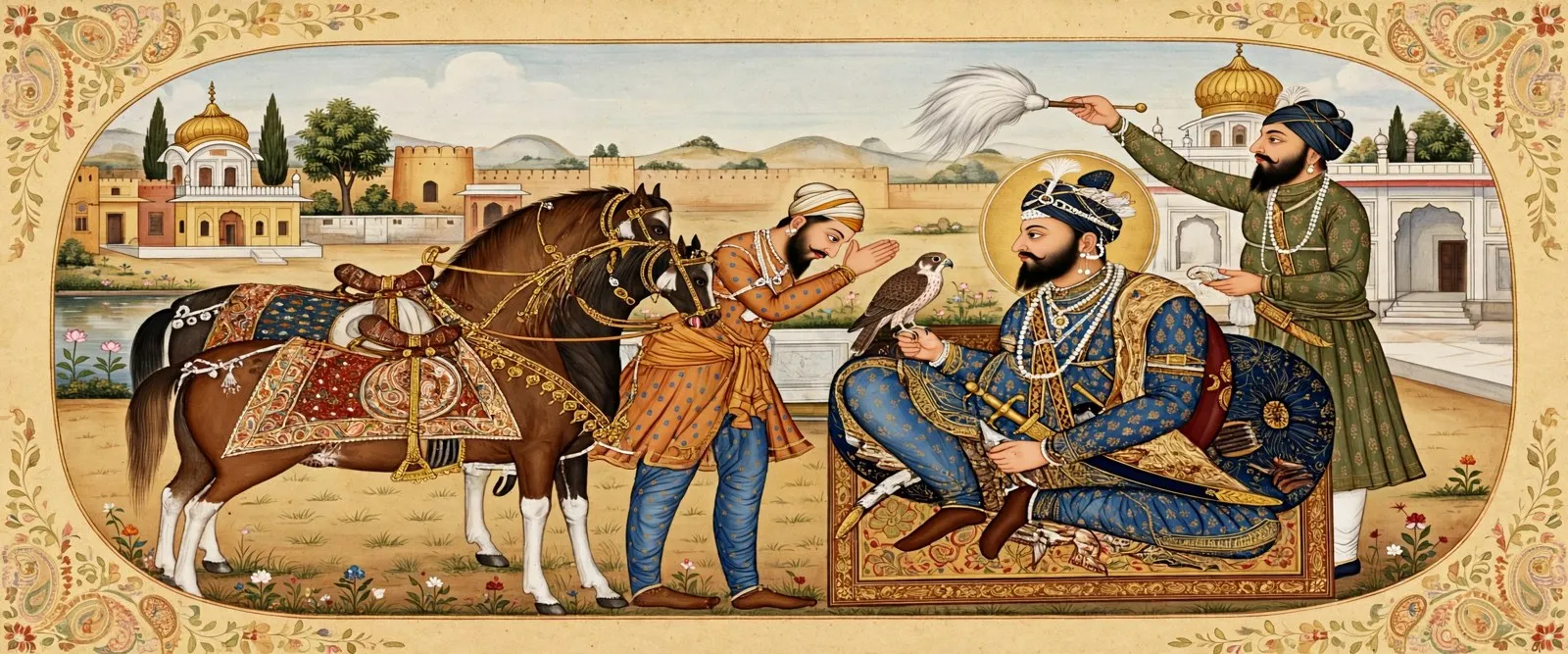
Bhai Bidhi Chand Ji was a Sikh preacher and cavalry commander of Guru Hargobind Ji's time, a Chhina Jatt of Sursingh near Amritsar who, the Encyclopaedia of Sikhism records, turned from banditry to the Guru's service after Bhai Adali brought him before Guru Arjan Dev Ji. He accompanied Guru Arjan Dev Ji to Lahore in 1606, commanded cavalry in Guru Hargobind Ji's Akal Sena, and is remembered above all for recovering the seized horses Dilbagh and Gulbagh from Lahore Fort, once disguised as a hay seller and once as an astrologer.
- Punjabi name
- ਭਾਈ ਬਿਧੀ ਚੰਦ ਜੀ
- Full name
- Bidhi Chand Chhina; Chhina is his clan name in the Encyclopaedia of Sikhism, though SikhiWiki notes a belief that Guru Hargobind Ji gave him the title
- Born
- Given by Wikipedia as 26 April 1579; not documented. The Encyclopaedia of Sikhism names his family village as Sursingh, while Wikipedia's infobox gives Sarhali as his birthplace
- Family and village
- A Chhina Jatt of Sursingh, 34 km south of Amritsar; father Vassan, grandfather Bhikkhi, mother from Sirhali, as the Encyclopaedia of Sikhism gives it
- Early life
- The Encyclopaedia of Sikhism records that as a young man he had fallen into bad company and taken to banditry, until Bhai Adali of Chohia brought him before Guru Arjan Dev Ji and he gave his life to the Guru's service
- Service
- One of the five Sikhs who accompanied Guru Arjan Dev Ji to Lahore in 1606; then a preacher and commander under Guru Hargobind Ji at Amritsar and Kiratpur
All 13 facts
- Command
- A commander of Guru Hargobind Ji's Risaldari cavalry, and, as Wikipedia describes him, one of the first four commanders of the Akal Sena
- Battles (as tradition lists them)
- Amritsar (1634), Lahira or Gurusar, Rohilla or Hargobindpur, and Kartarpur, as Wikipedia's summary of the tradition lists them
- The horses
- Dilbagh and Gulbagh, brought from Kabul as an offering for Guru Hargobind Ji and seized at Lahore; recovered by Bidhi Chand Ji from Lahore Fort, the first while disguised as a hay seller and the second as an astrologer, as the Encyclopaedia of Sikhism summarises the sakhi
- The horses renamed
- Dilbagh renamed Jan Bhai, as dear as life, and Gulbagh renamed Suhela, a dear companion
- Saying
- Bidhi Chand Chhina, Guru ka Seena: Bidhi Chand Chhina is close to the Guru's heart, the words the tradition records Guru Hargobind Ji speaking after the horses were restored
- Died
- Disputed: the Gurbilas Chhevin Patshahi, as the Encyclopaedia of Sikhism and SikhiWiki give it, dates his death at Devnagar to 14 August 1640, alongside his friend Sundar Shah; Wikipedia's infobox gives 30 August 1638 at Deonagar near Ayodhya instead
- Legacy
- His swords and paintings are displayed in the Golden Temple museum, as Wikipedia records, and the Bidhi Chand Dal of the Akali Nihangs is named for him and centred on his village of Sur Singh
Bhai Bidhi Chand Ji, called Bidhi Chand Chhina, was a Sikh preacher and cavalry commander of Guru Hargobind Ji's time, a Chhina Jatt of Sursingh village near Amritsar who had turned from banditry to the Guru's service. He is remembered above all for recovering the horses Dilbagh and Gulbagh from Lahore Fort.
Who was Bhai Bidhi Chand Ji?
The Encyclopaedia of Sikhism describes him as a warrior as well as a religious preacher of the time of Guru Hargobind Ji, a Chhina Jatt of Sursingh village, 34 kilometres south of Amritsar. His father's name was Vassan and his grandfather's Bhikkhi, and his mother came from Sirhali, another village in the same district. Wikipedia gives his birth as 26 April 1579, though its own infobox names Sarhali as the birthplace while the Encyclopaedia names Sursingh as his family's village, so his exact birth date and birthplace rest on tradition rather than record. What no source disputes is the shape of his life: a young man who went astray, a devotee remade in Guru Arjan Dev Ji's presence, and then a trusted commander and preacher in Guru Hargobind Ji's service at Amritsar and Kiratpur.
The sources handle him with care, and this page follows them: the horse rescue is told as a sakhi, a traditional anecdote, and his death is given two different years by the sources opened here. What follows states firmly what the Encyclopaedia of Sikhism, SikhiWiki and Wikipedia share, and labels the rest as tradition.
How did a young man in bad company become the Guru's devotee?
The Encyclopaedia's account of his youth is short and unsparing: as a young man Bidhi Chand had fallen into bad company and taken to banditry. One day a pious Sikh, Bhai Adali of Chohia led him into Guru Arjan Dev Ji's presence, and the tradition says he underwent a remarkable transformation. His life of banditry ended, and he wanted nothing more than a life of dedication to the Guru's service. In the Encyclopaedia's words, he wished no longer to return home and decided to dedicate the rest of his life to the Guru's service.
That decision placed him at the centre of the Sikh world at its hardest hour. He was one of the five Sikhs chosen to accompany Guru Arjan Dev Ji to Lahore, where the Guru was martyred in 1606. A Sikh who had come to the Guru from the wrong side of the law thus walked with the fifth Guru to his martyrdom, and when Guru Hargobind Ji succeeded his father, Bidhi Chand Ji was already a proven and trusted member of the household.
What was his place in Guru Hargobind Ji's army?
After Guru Arjan Dev Ji's martyrdom, Guru Hargobind Ji turned to raising an armed force against the dangers threatening the Sikhs, taking his seat at the Akal Takht Sahib facing the Harmandir Sahib at Amritsar. He chose Bidhi Chand Ji as one of the commanders of the Risaldari, the cavalry he was raising, and Wikipedia describes him as one of the first four commanders of the Akal Sena, the first standing Sikh army begun by Guru Hargobind Ji. The Encyclopaedia records that he displayed great feats of valour in battles with the imperial troops.
Wikipedia's summary of the tradition names his battles in that early Mughal and Sikh conflict: Amritsar in 1634, Lahira, also called Gurusar, Rohilla, also called Hargobindpur, and Kartarpur, where, Wikipedia relates, Bidhi Chand Ji and Baba Gurditta Ji held the lead responsibility for the defence. This page does not repeat the large troop numbers the older chronicles attach to those battles, which cannot be verified; what the record supports is a cavalry commander trusted with independent responsibility in the Guru's hardest campaigns, and with a mission no army could perform.
How did Bidhi Chand Ji recover Guru Hargobind Ji's horses?
A Sikh sakhi, retold by Macauliffe and summarised by Wikipedia, tells how the horses came to Lahore. A Sikh who had raised and trained them was bringing them from Kabul as an offering for Guru Hargobind Ji, travelling with two masands, Tara Chand and Bakht Mal. At Lahore they were seized for the Mughal royal stable: Wikipedia's Dilbagh and Gulbagh page names the order as coming from Qasim Beg, the Mughal chief of Lahore, while another account it cites names Khalil Beg instead. The owner refused every offer of purchase, and the animals were kept in the stables of Lahore Fort.
Bidhi Chand Ji was chosen as the best man for the recovery. For the first horse, the Encyclopaedia and SikhiWiki agree, he went disguised as a hay seller. The fuller telling says he took work at the fort stables bringing the horses fresh grass, under the false name Kasera, lodging with a local Sikh named Jiwan and refusing the officials' pay. Night after night he threw large rocks into the River Ravi, which then flowed near the fort, telling the guards the splashes were only a large animal, until they stopped stirring at the sound. On his payday he fed the guards a feast, and while they slept he rode Dilbagh down to the river and away to the Guru's camp.
One horse was still in the fort, and the second recovery is the bolder story. Helped by a local Sikh, Bhai Bohru, Bidhi Chand Ji returned disguised as an astrologer called in to investigate the disappearance of the first horse, and so won the trust of Sondha Khan, the caretaker of the horses. SikhiWiki's telling has him re-enact the first escape as court entertainment, then leap the battlements and slide down the sloped wall into the Ravi with Gulbagh. The restored horses were renamed: Dilbagh became Jan Bhai, as dear as life, and Gulbagh became Suhela, a dear companion. Dilbagh, Macauliffe relates, later died on the banks of the Sutlej from wounds received in battle, as the Guru's retinue travelled toward Kiratpur.
Why is he called Guru ka Seena?
After the rescue, the tradition records, Guru Hargobind Ji proclaimed words that became Bidhi Chand Ji's lasting title: Bidhi Chand Chhina, Guru ka Seena, meaning Bidhi Chand Chhina is close to the Guru's heart, or, in the fuller rendering Wikipedia quotes, he is a lovable devotee who will never suffer from want. Seena is the chest, so the saying places the once wayward Sikh literally against the Guru's heart. Chhina is his clan name in the Encyclopaedia's account, though SikhiWiki notes a belief that Guru Hargobind Ji gave him the title; either way the names have travelled together ever since, in the Nihang order that bears his name.
What did he do as a preacher in the eastern provinces?
Bidhi Chand Ji was, the Encyclopaedia insists, well versed in Sikh lore and tenets, and his service was never only military. From Kiratpur, Guru Hargobind Ji sent him on a preaching mission to the eastern provinces. At Devnagar he bonded closely with the Muslim saint Sundar Shah, a disciple of Pir Budhan Shah in Wikipedia's description, and before he left for the Punjab, Sundar Shah secured his word that he would return and spend his last days with him. A quieter witness survives: Wikipedia illustrates his story with a page of a Guru Granth Sahib Ji pothi manuscript from the Sur Singh Wala Collection, described as prepared by Bhai Bidhi Chand Ji under Guru Hargobind Ji's guidance. The cavalry commander also copied scripture by hand, a fitting double portrait for a man remembered by the Dal Khalsa tradition as both warrior and preacher.
How did Bhai Bidhi Chand Ji die, and how is he remembered?
According to the Gurbilas Chhevin Patshahi, repeated by the Encyclopaedia and SikhiWiki, Bidhi Chand Ji remembered his promise as his end drew near: he took leave of Guru Hargobind Ji, travelled to Devnagar, and spent three days with Sundar Shah reflecting on the teaching of Guru Nanak Dev Ji, after which both friends died at the same time, on 14 August 1640. Sundar Shah's disciples buried their master with Muslim rites, cremated Bidhi Chand Ji with Sikh rites, and raised shrines to both. Wikipedia's infobox gives his death instead as 30 August 1638 at Deonagar, near Ayodhya. Lal Chand, who brought earth from the Devnagar shrine to raise a samadh at Sursingh, is his nephew in the Encyclopaedia and his son in Wikipedia's text; both points are labelled disputed in the facts below.
His memory, at least, is not in dispute. Wikipedia records that his swords and paintings are displayed in the Golden Temple museum at the Harmandir Sahib, and that a faction of the Akali Nihangs, the Bidhi Chand Dal, is named for him and remains centred on his village of Sur Singh. In that lineage, alongside the Budha Dal within the wider Dal Khalsa tradition, the hay seller of Lahore Fort is still a living name: the Sikh who came from the wrong side of the law, and whom the Guru set nearest his heart.
ਭਾਈ ਬਿਧੀ ਚੰਦ ਜੀ, ਜਿਨ੍ਹਾਂ ਨੂੰ ਬਿਧੀ ਚੰਦ ਛੀਨਾ ਕਿਹਾ ਜਾਂਦਾ ਹੈ, ਗੁਰੂ ਹਰਗੋਬਿੰਦ ਜੀ ਦੇ ਸਮੇਂ ਦੇ ਸਿੱਖ ਪ੍ਰਚਾਰਕ ਅਤੇ ਘੋੜ ਸਵਾਰ ਫ਼ੌਜ ਦੇ ਸਰਦਾਰ ਸਨ, ਅੰਮ੍ਰਿਤਸਰ ਦੇ ਨੇੜੇ ਸੁਰਸਿੰਘ ਪਿੰਡ ਦੇ ਛੀਨਾ ਜੱਟ, ਜੋ ਡਾਕੂਗਿਰੀ ਛੱਡ ਕੇ ਗੁਰੂ ਦੀ ਸੇਵਾ ਵਿੱਚ ਆਏ ਸਨ। ਉਨ੍ਹਾਂ ਨੂੰ ਸਭ ਤੋਂ ਵੱਧ ਲਾਹੌਰ ਦੇ ਕਿਲ੍ਹੇ ਵਿੱਚੋਂ ਦਿਲਬਾਗ ਅਤੇ ਗੁਲਬਾਗ ਘੋੜੇ ਵਾਪਸ ਲਿਆਉਣ ਲਈ ਯਾਦ ਕੀਤਾ ਜਾਂਦਾ ਹੈ।
ਭਾਈ ਬਿਧੀ ਚੰਦ ਜੀ ਕੌਣ ਸਨ?
ਸਿੱਖ ਧਰਮ ਦਾ ਵਿਸ਼ਵਕੋਸ਼ (Encyclopaedia of Sikhism) ਉਨ੍ਹਾਂ ਨੂੰ ਗੁਰੂ ਹਰਗੋਬਿੰਦ ਜੀ ਦੇ ਸਮੇਂ ਦਾ ਯੋਧਾ ਅਤੇ ਨਾਲ ਹੀ ਧਰਮ ਪ੍ਰਚਾਰਕ ਦੱਸਦਾ ਹੈ, ਸੁਰਸਿੰਘ ਪਿੰਡ ਦਾ ਛੀਨਾ ਜੱਟ, ਜੋ ਅੰਮ੍ਰਿਤਸਰ ਤੋਂ 34 ਕਿਲੋਮੀਟਰ ਦੱਖਣ ਵੱਲ ਹੈ। ਉਨ੍ਹਾਂ ਦੇ ਪਿਤਾ ਦਾ ਨਾਂ ਵੱਸਣ ਅਤੇ ਦਾਦੇ ਦਾ ਨਾਂ ਭਿੱਖੀ ਸੀ, ਅਤੇ ਉਨ੍ਹਾਂ ਦੀ ਮਾਤਾ ਸਿਰਹਾਲੀ ਤੋਂ ਸੀ, ਉਸੇ ਜ਼ਿਲ੍ਹੇ ਦਾ ਇੱਕ ਹੋਰ ਪਿੰਡ। ਵਿਕੀਪੀਡੀਆ ਉਨ੍ਹਾਂ ਦਾ ਜਨਮ 26 ਅਪ੍ਰੈਲ 1579 ਦਿੰਦਾ ਹੈ, ਪਰ ਉਸ ਦੀ ਆਪਣੀ ਜਾਣਕਾਰੀ ਸੂਚੀ ਜਨਮ ਸਥਾਨ ਸਰਹਾਲੀ ਦੱਸਦੀ ਹੈ, ਜਦਕਿ ਵਿਸ਼ਵਕੋਸ਼ ਸੁਰਸਿੰਘ ਨੂੰ ਉਨ੍ਹਾਂ ਦੇ ਪਰਿਵਾਰ ਦਾ ਪਿੰਡ ਦੱਸਦਾ ਹੈ, ਇਸ ਲਈ ਉਨ੍ਹਾਂ ਦੀ ਪੱਕੀ ਜਨਮ ਮਿਤੀ ਅਤੇ ਜਨਮ ਸਥਾਨ ਰਿਕਾਰਡ ਦੀ ਥਾਂ ਪਰੰਪਰਾ ਉੱਤੇ ਟਿਕੇ ਹਨ। ਜਿਸ ਗੱਲ ਉੱਤੇ ਕੋਈ ਸਰੋਤ ਵੰਡਿਆ ਨਹੀਂ, ਉਹ ਉਨ੍ਹਾਂ ਦੇ ਜੀਵਨ ਦੀ ਸ਼ਕਲ ਹੈ: ਇੱਕ ਨੌਜਵਾਨ, ਜੋ ਰਸਤੇ ਤੋਂ ਭਟਕ ਗਿਆ, ਗੁਰੂ ਅਰਜਨ ਦੇਵ ਜੀ ਦੀ ਹਜ਼ੂਰੀ ਵਿੱਚ ਨਵਾਂ ਬਣਿਆ ਭਗਤ, ਅਤੇ ਫਿਰ ਆਪਣੇ ਜੀਵਨ ਦਾ ਵੱਡਾ ਹਿੱਸਾ ਅੰਮ੍ਰਿਤਸਰ ਅਤੇ ਕੀਰਤਪੁਰ ਵਿੱਚ ਗੁਰੂ ਹਰਗੋਬਿੰਦ ਜੀ ਦੀ ਸੇਵਾ ਵਿੱਚ ਭਰੋਸੇਮੰਦ ਸਰਦਾਰ ਅਤੇ ਪ੍ਰਚਾਰਕ।
ਉਹ ਇੱਕ ਅਜਿਹੀ ਸ਼ਖਸੀਅਤ ਵੀ ਹਨ, ਜਿਨ੍ਹਾਂ ਬਾਰੇ ਸਰੋਤ ਅਸਧਾਰਨ ਸਾਵਧਾਨੀ ਨਾਲ ਗੱਲ ਕਰਦੇ ਹਨ, ਅਤੇ ਇਹ ਪੰਨਾ ਉਨ੍ਹਾਂ ਦੇ ਪਿੱਛੇ ਚੱਲਦਾ ਹੈ। ਉਨ੍ਹਾਂ ਦੀ ਸ਼ੋਹਰਤ ਦੇ ਕੇਂਦਰ ਵਿੱਚ ਘੋੜਿਆਂ ਦੀ ਵਾਪਸੀ ਇੱਕ ਸਾਖੀ, ਇੱਕ ਪਰੰਪਰਾਗਤ ਕਥਾ, ਵਜੋਂ ਦੱਸੀ ਜਾਂਦੀ ਹੈ, ਅਤੇ ਉਨ੍ਹਾਂ ਦੀ ਮੌਤ ਦੇ ਸਾਲ ਇਸ ਪੰਨੇ ਲਈ ਖੋਲ੍ਹੇ ਗਏ ਸਰੋਤ ਦੋ ਵੱਖ ਵੱਖ ਦਿੰਦੇ ਹਨ। ਅੱਗੇ ਜੋ ਕੁਝ ਪੱਕੇ ਤੌਰ ਉੱਤੇ ਕਿਹਾ ਗਿਆ ਹੈ, ਉਹ ਉਹੀ ਹੈ, ਜੋ ਸਿੱਖ ਧਰਮ ਦਾ ਵਿਸ਼ਵਕੋਸ਼, ਸਿੱਖੀਵਿਕੀ ਅਤੇ ਵਿਕੀਪੀਡੀਆ ਸਾਂਝਾ ਕਰਦੇ ਹਨ, ਅਤੇ ਬਾਕੀ ਹਰ ਗੱਲ ਉਸ ਪਰੰਪਰਾ ਜਾਂ ਲੇਖਕ ਦੇ ਨਾਂ ਨਾਲ ਦੱਸੀ ਗਈ ਹੈ, ਜੋ ਉਸ ਨੂੰ ਲੈ ਕੇ ਚੱਲਦਾ ਹੈ।
ਮਾੜੀ ਸੰਗਤ ਵਾਲਾ ਨੌਜਵਾਨ ਗੁਰੂ ਦਾ ਭਗਤ ਕਿਵੇਂ ਬਣਿਆ?
ਉਨ੍ਹਾਂ ਦੇ ਜਵਾਨੀ ਦੇ ਦਿਨਾਂ ਬਾਰੇ ਵਿਸ਼ਵਕੋਸ਼ ਦਾ ਬਿਆਨ ਛੋਟਾ ਅਤੇ ਬਿਨਾਂ ਢਕੇ ਹੈ: ਨੌਜਵਾਨ ਵਜੋਂ ਬਿਧੀ ਚੰਦ ਮਾੜੀ ਸੰਗਤ ਵਿੱਚ ਪੈ ਗਏ ਸਨ ਅਤੇ ਡਾਕੂਗਿਰੀ ਕਰਨ ਲੱਗ ਪਏ ਸਨ। ਇੱਕ ਦਿਨ ਚੂਹਿਆ ਪਿੰਡ ਦੇ ਇੱਕ ਨੇਕ ਸਿੱਖ, ਭਾਈ ਅਡਾਲੀ, ਉਨ੍ਹਾਂ ਨੂੰ ਗੁਰੂ ਅਰਜਨ ਦੇਵ ਜੀ ਦੀ ਹਜ਼ੂਰੀ ਵਿੱਚ ਲੈ ਆਏ, ਅਤੇ ਉੱਥੇ, ਪਰੰਪਰਾ ਕਹਿੰਦੀ ਹੈ, ਉਨ੍ਹਾਂ ਵਿੱਚ ਹੈਰਾਨੀਜਨਕ ਤਬਦੀਲੀ ਆਈ। ਉਨ੍ਹਾਂ ਦੀ ਡਾਕੂਗਿਰੀ ਅਤੇ ਬੁਰੇ ਕਰਮਾਂ ਵਾਲੀ ਜ਼ਿੰਦਗੀ ਖਤਮ ਹੋ ਗਈ, ਅਤੇ ਉਹ ਗੁਰੂ ਦੀ ਸੇਵਾ ਲਈ ਸਮਰਪਿਤ ਜੀਵਨ ਤੋਂ ਬਿਨਾਂ ਹੋਰ ਕੁਝ ਨਹੀਂ ਚਾਹੁੰਦੇ ਸਨ। ਵਿਸ਼ਵਕੋਸ਼ ਦੇ ਸ਼ਬਦਾਂ ਵਿੱਚ, ਉਹ ਘਰ ਵਾਪਸ ਜਾਣਾ ਨਹੀਂ ਚਾਹੁੰਦੇ ਸਨ ਅਤੇ ਉਨ੍ਹਾਂ ਨੇ ਆਪਣੀ ਬਾਕੀ ਜ਼ਿੰਦਗੀ ਗੁਰੂ ਦੀ ਸੇਵਾ ਲਈ ਸਮਰਪਿਤ ਕਰਨ ਦਾ ਫੈਸਲਾ ਕਰ ਲਿਆ।
ਉਸ ਫੈਸਲੇ ਨੇ ਉਨ੍ਹਾਂ ਨੂੰ ਸਿੱਖ ਸੰਸਾਰ ਦੇ ਕੇਂਦਰ ਵਿੱਚ ਉਸ ਦੇ ਸਭ ਤੋਂ ਔਖੇ ਸਮੇਂ ਵਿੱਚ ਰੱਖ ਦਿੱਤਾ। ਉਹ ਉਨ੍ਹਾਂ ਪੰਜ ਸਿੱਖਾਂ ਵਿੱਚੋਂ ਇੱਕ ਸਨ, ਜਿਨ੍ਹਾਂ ਨੂੰ ਗੁਰੂ ਅਰਜਨ ਦੇਵ ਜੀ ਦੇ ਨਾਲ ਲਾਹੌਰ ਜਾਣ ਲਈ ਚੁਣਿਆ ਗਿਆ, ਜਿੱਥੇ ਗੁਰੂ ਜੀ 1606 ਵਿੱਚ ਸ਼ਹੀਦ ਹੋਏ। ਇੱਕ ਸਿੱਖ, ਜੋ ਕਾਨੂੰਨ ਦੇ ਗਲਤ ਪਾਸਿਓਂ ਗੁਰੂ ਕੋਲ ਆਇਆ ਸੀ, ਇਸ ਤਰ੍ਹਾਂ ਉਨ੍ਹਾਂ ਗਿਣਤੀ ਦੇ ਸਿੱਖਾਂ ਵਿੱਚ ਖੜ੍ਹਾ ਸੀ, ਜੋ ਪੰਜਵੇਂ ਗੁਰੂ ਦੇ ਨਾਲ ਉਨ੍ਹਾਂ ਦੀ ਸ਼ਹਾਦਤ ਤੱਕ ਤੁਰੇ, ਅਤੇ ਉਨ੍ਹਾਂ ਸਾਲਾਂ ਵਿੱਚ ਬਣਿਆ ਬੰਧਨ ਅਗਲੇ ਰਾਜ ਵਿੱਚ ਵੀ ਚੱਲਿਆ: ਜਦੋਂ ਗੁਰੂ ਹਰਗੋਬਿੰਦ ਜੀ ਆਪਣੇ ਪਿਤਾ ਦੇ ਬਾਅਦ ਗੱਦੀ ਉੱਤੇ ਬੈਠੇ, ਤਾਂ ਬਿਧੀ ਚੰਦ ਜੀ ਪਹਿਲਾਂ ਹੀ ਘਰ ਦੇ ਸਾਬਤ ਅਤੇ ਭਰੋਸੇਮੰਦ ਮੈਂਬਰ ਸਨ।
ਗੁਰੂ ਹਰਗੋਬਿੰਦ ਜੀ ਦੀ ਫ਼ੌਜ ਵਿੱਚ ਉਨ੍ਹਾਂ ਦਾ ਕੀ ਸਥਾਨ ਸੀ?
ਗੁਰੂ ਅਰਜਨ ਦੇਵ ਜੀ ਦੀ ਸ਼ਹਾਦਤ ਤੋਂ ਬਾਅਦ, ਗੁਰੂ ਹਰਗੋਬਿੰਦ ਜੀ ਨੇ ਸਿੱਖਾਂ ਨੂੰ ਧਮਕਾਉਣ ਵਾਲੇ ਖਤਰਿਆਂ ਦਾ ਸਾਹਮਣਾ ਕਰਨ ਲਈ ਹਥਿਆਰਬੰਦ ਫ਼ੌਜ ਖੜ੍ਹੀ ਕਰਨ ਅਤੇ ਉਸ ਨੂੰ ਸਿਖਲਾਈ ਦੇਣ ਵੱਲ ਧਿਆਨ ਦਿੱਤਾ, ਅੰਮ੍ਰਿਤਸਰ ਵਿੱਚ ਹਰਿਮੰਦਰ ਸਾਹਿਬ ਦੇ ਸਾਹਮਣੇ ਅਕਾਲ ਤਖਤ ਸਾਹਿਬ ਉੱਤੇ ਆਪਣਾ ਆਸਣ ਲੈ ਕੇ। ਉਨ੍ਹਾਂ ਨੇ ਬਿਧੀ ਚੰਦ ਜੀ ਨੂੰ ਰਿਸਾਲਦਾਰੀ, ਜੋ ਘੋੜ ਸਵਾਰ ਫ਼ੌਜ ਉਹ ਖੜ੍ਹੀ ਕਰ ਰਹੇ ਸਨ, ਦੇ ਸਰਦਾਰਾਂ ਵਿੱਚੋਂ ਇੱਕ ਚੁਣਿਆ, ਅਤੇ ਵਿਕੀਪੀਡੀਆ ਉਨ੍ਹਾਂ ਨੂੰ ਅਕਾਲ ਸੈਨਾ, ਗੁਰੂ ਹਰਗੋਬਿੰਦ ਜੀ ਵੱਲੋਂ ਸ਼ੁਰੂ ਕੀਤੀ ਪਹਿਲੀ ਸਥਾਈ ਸਿੱਖ ਫ਼ੌਜ, ਦੇ ਪਹਿਲੇ ਚਾਰ ਸਰਦਾਰਾਂ ਵਿੱਚੋਂ ਇੱਕ ਦੱਸਦਾ ਹੈ। ਵਿਸ਼ਵਕੋਸ਼ ਸਿੱਧੇ ਸ਼ਬਦਾਂ ਵਿੱਚ ਦਰਜ ਕਰਦਾ ਹੈ ਕਿ ਉਨ੍ਹਾਂ ਨੇ ਸ਼ਾਹੀ ਫ਼ੌਜਾਂ ਨਾਲ ਲੜਾਈਆਂ ਵਿੱਚ ਸੈਨਿਕ ਵਜੋਂ ਬਹਾਦਰੀ ਦੇ ਵੱਡੇ ਕਾਰਨਾਮੇ ਵਿਖਾਏ।
ਵਿਕੀਪੀਡੀਆ ਦਾ ਪਰੰਪਰਾ ਦਾ ਸਾਰ ਉਸ ਮੁੱਢਲੇ ਮੁਗਲ ਅਤੇ ਸਿੱਖ ਟਕਰਾਅ ਦੀਆਂ ਉਨ੍ਹਾਂ ਲੜਾਈਆਂ ਦੇ ਨਾਂ ਦਿੰਦਾ ਹੈ, ਜਿਨ੍ਹਾਂ ਵਿੱਚ ਉਹ ਲੜੇ: 1634 ਵਿੱਚ ਅੰਮ੍ਰਿਤਸਰ ਦੀ ਲੜਾਈ, ਲਹਿੜਾ ਦੀ ਲੜਾਈ, ਜਿਸ ਨੂੰ ਗੁਰੂਸਰ ਵੀ ਕਿਹਾ ਜਾਂਦਾ ਹੈ, ਰੋਹਿੱਲਾ ਦੀ ਲੜਾਈ, ਜਿਸ ਨੂੰ ਹਰਗੋਬਿੰਦਪੁਰ ਵੀ ਕਿਹਾ ਜਾਂਦਾ ਹੈ, ਅਤੇ ਕਰਤਾਰਪੁਰ ਦੀ ਲੜਾਈ। ਕਰਤਾਰਪੁਰ ਵਿੱਚ, ਵਿਕੀਪੀਡੀਆ ਦੱਸਦਾ ਹੈ, ਬਿਧੀ ਚੰਦ ਜੀ ਅਤੇ ਬਾਬਾ ਗੁਰਦਿੱਤਾ ਜੀ ਨੂੰ ਕਸਬੇ ਦੀ ਰਾਖੀ ਦੀ ਮੁੱਖ ਜ਼ਿੰਮੇਵਾਰੀ ਦਿੱਤੀ ਗਈ ਸੀ। ਇਹ ਪੰਨਾ ਉਹ ਵੱਡੀਆਂ ਫ਼ੌਜੀ ਗਿਣਤੀਆਂ ਨਹੀਂ ਦੁਹਰਾਉਂਦਾ, ਜੋ ਪੁਰਾਣੀਆਂ ਤਵਾਰੀਖਾਂ ਉਨ੍ਹਾਂ ਲੜਾਈਆਂ ਨਾਲ ਜੋੜਦੀਆਂ ਹਨ, ਕਿਉਂਕਿ ਉਨ੍ਹਾਂ ਦੀ ਪੁਸ਼ਟੀ ਨਹੀਂ ਹੋ ਸਕਦੀ। ਜੋ ਰਿਕਾਰਡ ਸਾਬਤ ਕਰਦਾ ਹੈ, ਉਹ ਇੱਕ ਘੋੜ ਸਵਾਰ ਸਰਦਾਰ ਹੈ, ਜਿਸ ਉੱਤੇ ਗੁਰੂ ਦੀਆਂ ਸਭ ਤੋਂ ਔਖੀਆਂ ਮੁਹਿੰਮਾਂ ਵਿੱਚ ਸੁਤੰਤਰ ਜ਼ਿੰਮੇਵਾਰੀ ਦਾ ਭਰੋਸਾ ਕੀਤਾ ਗਿਆ, ਅਤੇ ਜਿਸ ਉੱਤੇ, ਜਿਵੇਂ ਅਗਲਾ ਹਿੱਸਾ ਵਿਖਾਉਂਦਾ ਹੈ, ਇੱਕ ਅਜਿਹੇ ਕੰਮ ਦਾ ਭਰੋਸਾ ਕੀਤਾ ਗਿਆ, ਜੋ ਕੋਈ ਫ਼ੌਜ ਨਹੀਂ ਕਰ ਸਕਦੀ ਸੀ।
ਭਾਈ ਬਿਧੀ ਚੰਦ ਜੀ ਨੇ ਗੁਰੂ ਹਰਗੋਬਿੰਦ ਜੀ ਦੇ ਘੋੜੇ ਕਿਵੇਂ ਵਾਪਸ ਲਿਆਂਦੇ?
ਇੱਕ ਸਿੱਖ ਸਾਖੀ, ਜੋ ਮੈਕਾਲਿਫ਼ ਅਤੇ ਬਾਅਦ ਦੀਆਂ ਤਵਾਰੀਖਾਂ ਨੇ ਦੱਸੀ ਅਤੇ ਵਿਕੀਪੀਡੀਆ ਨੇ ਜਿਸ ਦਾ ਸਾਰ ਦਿੱਤਾ, ਦੱਸਦੀ ਹੈ ਕਿ ਦੋਵੇਂ ਘੋੜੇ ਲਾਹੌਰ ਕਿਵੇਂ ਪਹੁੰਚੇ। ਇੱਕ ਸਿੱਖ, ਜਿਸ ਨੇ ਉਨ੍ਹਾਂ ਨੂੰ ਪਾਲਿਆ ਅਤੇ ਸਿਖਾਇਆ ਸੀ, ਉਨ੍ਹਾਂ ਨੂੰ ਗੁਰੂ ਹਰਗੋਬਿੰਦ ਜੀ ਲਈ ਭੇਟ ਵਜੋਂ ਕਾਬੁਲ ਤੋਂ ਲਿਆ ਰਿਹਾ ਸੀ, ਦੋ ਮਸੰਦਾਂ, ਤਾਰਾ ਚੰਦ ਅਤੇ ਬਖਤ ਮੱਲ, ਦੇ ਨਾਲ ਤੁਰਦਾ, ਜੋ ਕਾਬੁਲ ਦੀ ਸਿੱਖ ਸੰਗਤ ਕੋਲ ਭੇਜੇ ਗਏ ਸਨ। ਘੋੜਿਆਂ ਦੀ ਸੁੰਦਰਤਾ ਦੀ ਖਬਰ ਉਨ੍ਹਾਂ ਤੋਂ ਅੱਗੇ ਪਹੁੰਚ ਗਈ। ਲਾਹੌਰ ਵਿੱਚ ਉਨ੍ਹਾਂ ਨੂੰ ਮੁਗਲ ਸ਼ਾਹੀ ਅਸਤਬਲ ਲਈ ਖੋਹ ਲਿਆ ਗਿਆ: ਵਿਕੀਪੀਡੀਆ ਦਾ ਦਿਲਬਾਗ ਅਤੇ ਗੁਲਬਾਗ ਵਾਲਾ ਪੰਨਾ ਹੁਕਮ ਲਾਹੌਰ ਦੇ ਮੁਗਲ ਮੁਖੀ ਕਾਸਿਮ ਬੇਗ ਦਾ ਦੱਸਦਾ ਹੈ, ਜਦਕਿ ਉਸ ਦਾ ਹਵਾਲਾ ਦਿੱਤਾ ਇੱਕ ਹੋਰ ਬਿਆਨ ਇਸ ਦੀ ਥਾਂ ਖਲੀਲ ਬੇਗ ਦਾ ਨਾਂ ਲੈਂਦਾ ਹੈ। ਮਾਲਕ ਨੇ ਖਰੀਦ ਦੀ ਹਰ ਪੇਸ਼ਕਸ਼ ਠੁਕਰਾ ਦਿੱਤੀ, ਅਤੇ ਜਾਨਵਰ ਜ਼ਬਰਦਸਤੀ ਲੈ ਕੇ ਲਾਹੌਰ ਦੇ ਕਿਲ੍ਹੇ ਦੇ ਅਸਤਬਲਾਂ ਵਿੱਚ ਰੱਖ ਦਿੱਤੇ ਗਏ।
ਵਾਪਸੀ ਲਈ ਬਿਧੀ ਚੰਦ ਜੀ ਨੂੰ ਸਭ ਤੋਂ ਵਧੀਆ ਮਨੁੱਖ ਚੁਣਿਆ ਗਿਆ। ਪਹਿਲੇ ਘੋੜੇ ਲਈ, ਵਿਸ਼ਵਕੋਸ਼ ਅਤੇ ਸਿੱਖੀਵਿਕੀ ਸਹਿਮਤ ਹਨ, ਉਹ ਘਾਹ ਵੇਚਣ ਵਾਲੇ ਦੇ ਭੇਸ ਵਿੱਚ ਗਏ। ਪੂਰੀ ਕਥਾ ਕਹਿੰਦੀ ਹੈ ਕਿ ਉਨ੍ਹਾਂ ਨੇ ਕਿਲ੍ਹੇ ਦੇ ਅਸਤਬਲਾਂ ਵਿੱਚ ਉਸ ਮਨੁੱਖ ਵਜੋਂ ਕੰਮ ਲਿਆ, ਜੋ ਘੋੜਿਆਂ ਨੂੰ ਤਾਜ਼ਾ ਘਾਹ ਲਿਆਉਂਦਾ ਅਤੇ ਉਨ੍ਹਾਂ ਦੀ ਸੇਵਾ ਕਰਦਾ ਸੀ, ਕਸੇਰਾ ਨਾਂ ਦੇ ਝੂਠੇ ਨਾਂ ਹੇਠ, ਇੱਕ ਸਥਾਨਕ ਸਿੱਖ ਜੀਵਨ ਕੋਲ ਰਹਿੰਦਿਆਂ ਅਤੇ ਅਧਿਕਾਰੀਆਂ ਵੱਲੋਂ ਦਿੱਤੀ ਤਨਖਾਹ ਲੈਣ ਤੋਂ ਇਨਕਾਰ ਕਰਦਿਆਂ। ਰਾਤ ਪਿੱਛੋਂ ਰਾਤ ਉਹ ਰਾਵੀ ਦਰਿਆ ਵਿੱਚ ਵੱਡੇ ਪੱਥਰ ਸੁੱਟਦੇ, ਜੋ ਉਸ ਸਮੇਂ ਕਿਲ੍ਹੇ ਦੇ ਨੇੜਿਓਂ ਵਗਦਾ ਸੀ, ਅਤੇ ਪਹਿਰੇਦਾਰਾਂ ਨੂੰ ਦੱਸਦੇ ਕਿ ਛੱਪੜ ਕਿਸੇ ਵੱਡੇ ਜਾਨਵਰ ਦੇ ਹਨ, ਇੱਥੋਂ ਤੱਕ ਕਿ ਉਹ ਆਵਾਜ਼ ਸੁਣ ਕੇ ਹਿੱਲਣਾ ਬੰਦ ਕਰ ਗਏ। ਆਪਣੀ ਤਨਖਾਹ ਵਾਲੇ ਦਿਨ ਉਨ੍ਹਾਂ ਨੇ ਪਹਿਰੇਦਾਰਾਂ ਨੂੰ ਵੱਡੀ ਦਾਅਵਤ ਖਵਾਈ, ਅਤੇ ਜਦੋਂ ਉਹ ਸੌਂ ਗਏ, ਤਾਂ ਉਹ ਦਿਲਬਾਗ ਉੱਤੇ ਸਵਾਰ ਹੋ ਕੇ ਦਰਿਆ ਵੱਲ ਉੱਤਰੇ ਅਤੇ ਗੁਰੂ ਦੇ ਡੇਰੇ ਵੱਲ ਚਲੇ ਗਏ।
ਇੱਕ ਘੋੜਾ ਅਜੇ ਕਿਲ੍ਹੇ ਵਿੱਚ ਸੀ, ਅਤੇ ਦੂਜੀ ਵਾਪਸੀ ਹੋਰ ਵੀ ਦਲੇਰ ਕਥਾ ਹੈ। ਇੱਕ ਸਥਾਨਕ ਸਿੱਖ, ਭਾਈ ਬੋਹੜੂ, ਦੀ ਮਦਦ ਨਾਲ ਬਿਧੀ ਚੰਦ ਜੀ ਇੱਕ ਜੋਤਸ਼ੀ, ਇੱਕ ਭਵਿੱਖ ਦੱਸਣ ਵਾਲੇ, ਦੇ ਭੇਸ ਵਿੱਚ ਲਾਹੌਰ ਵਾਪਸ ਆਏ, ਜਿਸ ਨੂੰ ਪਹਿਲੇ ਘੋੜੇ ਦੇ ਗਾਇਬ ਹੋਣ ਦੀ ਜਾਂਚ ਲਈ ਬੁਲਾਇਆ ਗਿਆ ਸੀ, ਅਤੇ ਇਸ ਤਰ੍ਹਾਂ ਉਨ੍ਹਾਂ ਨੇ ਘੋੜਿਆਂ ਦੇ ਅਧਿਕਾਰੀ ਰਖਵਾਲੇ ਸੋਂਧਾ ਖਾਨ ਦਾ ਭਰੋਸਾ ਜਿੱਤ ਲਿਆ। ਸਿੱਖੀਵਿਕੀ ਦੀ ਕਥਾ ਕਹਿੰਦੀ ਹੈ ਕਿ ਉਨ੍ਹਾਂ ਨੇ ਦਰਬਾਰੀ ਮਨੋਰੰਜਨ ਵਜੋਂ ਪਹਿਲੀ ਭੱਜਣ ਦੀ ਘਟਨਾ ਦੁਬਾਰਾ ਕਰਕੇ ਵਿਖਾਈ, ਫਿਰ ਅਚਾਨਕ ਕੰਧ ਉੱਤੋਂ ਛਾਲ ਮਾਰੀ ਅਤੇ ਗੁਲਬਾਗ ਸਮੇਤ ਢਲਾਣ ਵਾਲੀ ਕੰਧ ਤੋਂ ਹੇਠਾਂ ਰਾਵੀ ਵਿੱਚ ਉੱਤਰ ਗਏ, ਬਿਲਕੁਲ ਜਿਵੇਂ ਉਹ ਪਹਿਲਾਂ ਗਏ ਸਨ। ਇਸ ਤਰ੍ਹਾਂ ਦੋਵੇਂ ਘੋੜੇ ਗੁਰੂ ਕੋਲ ਵਾਪਸ ਆ ਗਏ, ਅਤੇ ਸਿੱਖਾਂ ਨੇ ਉਨ੍ਹਾਂ ਦੇ ਨਵੇਂ ਨਾਂ ਰੱਖੇ: ਦਿਲਬਾਗ ਜਾਨ ਭਾਈ ਬਣਿਆ, ਜਾਨ ਜਿੰਨਾ ਪਿਆਰਾ, ਅਤੇ ਗੁਲਬਾਗ ਸੁਹੇਲਾ ਬਣਿਆ, ਇੱਕ ਪਿਆਰਾ ਸਾਥੀ। ਮੈਕਾਲਿਫ਼ ਦੱਸਦਾ ਹੈ ਕਿ ਦਿਲਬਾਗ ਬਾਅਦ ਵਿੱਚ ਸਤਲੁਜ ਦੇ ਕੰਢੇ ਲੜਾਈ ਵਿੱਚ ਲੱਗੇ ਜ਼ਖਮਾਂ ਕਾਰਨ ਮਰ ਗਿਆ, ਜਦੋਂ ਗੁਰੂ ਹਰਗੋਬਿੰਦ ਜੀ ਦਾ ਕਾਫ਼ਲਾ ਕੀਰਤਪੁਰ ਵੱਲ ਜਾ ਰਿਹਾ ਸੀ।
ਉਨ੍ਹਾਂ ਨੂੰ ਗੁਰੂ ਕਾ ਸੀਨਾ ਕਿਉਂ ਕਿਹਾ ਜਾਂਦਾ ਹੈ?
ਘੋੜਿਆਂ ਦੀ ਵਾਪਸੀ ਤੋਂ ਬਾਅਦ, ਪਰੰਪਰਾ ਦਰਜ ਕਰਦੀ ਹੈ, ਗੁਰੂ ਹਰਗੋਬਿੰਦ ਜੀ ਨੇ ਉਹ ਸ਼ਬਦ ਕਹੇ, ਜੋ ਬਿਧੀ ਚੰਦ ਜੀ ਦਾ ਸਦਾਬਹਾਰ ਖਿਤਾਬ ਬਣ ਗਏ: ਬਿਧੀ ਚੰਦ ਛੀਨਾ, ਗੁਰੂ ਕਾ ਸੀਨਾ, ਭਾਵ ਬਿਧੀ ਚੰਦ ਛੀਨਾ ਗੁਰੂ ਦੇ ਦਿਲ ਦੇ ਨੇੜੇ ਹੈ, ਜਾਂ, ਵਿਕੀਪੀਡੀਆ ਦੇ ਹਵਾਲੇ ਵਾਲੇ ਪੂਰੇ ਰੂਪ ਵਿੱਚ, ਬਿਧੀ ਚੰਦ ਛੀਨਾ ਗੁਰੂ ਦੇ ਦਿਲ ਦੇ ਬਹੁਤ ਨੇੜੇ ਹੈ। ਉਹ ਇੱਕ ਪਿਆਰਾ ਭਗਤ ਹੈ। ਉਸ ਨੂੰ ਕਦੇ ਕਿਸੇ ਚੀਜ਼ ਦੀ ਕਮੀ ਨਹੀਂ ਹੋਵੇਗੀ। ਸੀਨਾ ਛਾਤੀ ਹੈ, ਇਸ ਲਈ ਇਹ ਕਹਾਵਤ ਇੱਕ ਸਮੇਂ ਦੇ ਭਟਕੇ ਸਿੱਖ ਨੂੰ ਸੱਚਮੁੱਚ ਗੁਰੂ ਦੇ ਦਿਲ ਨਾਲ ਲਾ ਕੇ ਰੱਖਦੀ ਹੈ। ਛੀਨਾ ਖੁਦ ਵਿਸ਼ਵਕੋਸ਼ ਦੇ ਬਿਆਨ ਵਿੱਚ ਉਨ੍ਹਾਂ ਦਾ ਗੋਤ ਹੈ, ਪਰ ਸਿੱਖੀਵਿਕੀ ਇੱਕ ਮੱਤ ਦੱਸਦਾ ਹੈ ਕਿ ਛੀਨਾ ਖਿਤਾਬ ਉਨ੍ਹਾਂ ਨੂੰ ਗੁਰੂ ਹਰਗੋਬਿੰਦ ਜੀ ਨੇ ਦਿੱਤਾ ਸੀ। ਜੋ ਵੀ ਹੋਵੇ, ਦੋਵੇਂ ਨਾਂ ਉਦੋਂ ਤੋਂ ਇਕੱਠੇ ਚੱਲੇ ਹਨ, ਅਤੇ ਜੋ ਨਿਹੰਗ ਜਥਾ ਉਨ੍ਹਾਂ ਦਾ ਨਾਂ ਲੈਂਦਾ ਹੈ, ਉਹ ਅੱਜ ਵੀ ਉਨ੍ਹਾਂ ਨੂੰ ਉਨ੍ਹਾਂ ਨਾਲ ਹੀ ਸੱਦਦਾ ਹੈ।
ਪੂਰਬੀ ਇਲਾਕਿਆਂ ਵਿੱਚ ਪ੍ਰਚਾਰਕ ਵਜੋਂ ਉਨ੍ਹਾਂ ਨੇ ਕੀ ਕੀਤਾ?
ਬਿਧੀ ਚੰਦ ਜੀ, ਵਿਸ਼ਵਕੋਸ਼ ਜ਼ੋਰ ਦੇ ਕੇ ਕਹਿੰਦਾ ਹੈ, ਸਿੱਖ ਸਿਧਾਂਤ ਅਤੇ ਗਿਆਨ ਵਿੱਚ ਪੂਰੀ ਤਰ੍ਹਾਂ ਨਿਪੁੰਨ ਸਨ, ਅਤੇ ਉਨ੍ਹਾਂ ਦੀ ਸੇਵਾ ਕਦੇ ਸਿਰਫ਼ ਫ਼ੌਜੀ ਨਹੀਂ ਸੀ। ਕੀਰਤਪੁਰ ਤੋਂ ਗੁਰੂ ਹਰਗੋਬਿੰਦ ਜੀ ਨੇ ਉਨ੍ਹਾਂ ਨੂੰ ਪੂਰਬੀ ਇਲਾਕਿਆਂ ਵਿੱਚ ਪ੍ਰਚਾਰ ਮਿਸ਼ਨ ਉੱਤੇ ਭੇਜਿਆ। ਦੇਵਨਗਰ ਵਿੱਚ ਉਨ੍ਹਾਂ ਦਾ ਮੁਸਲਮਾਨ ਸੰਤ ਸੁੰਦਰ ਸ਼ਾਹ ਨਾਲ ਡੂੰਘਾ ਬੰਧਨ ਬਣ ਗਿਆ, ਜਿਸ ਨੂੰ ਵਿਕੀਪੀਡੀਆ ਪੀਰ ਬੁੱਧਣ ਸ਼ਾਹ ਦਾ ਚੇਲਾ ਦੱਸਦਾ ਹੈ। ਉਹ ਦੋਸਤੀ ਇੰਨੀ ਮਜ਼ਬੂਤ ਸੀ ਕਿ ਬਿਧੀ ਚੰਦ ਜੀ ਦੇ ਪੰਜਾਬ ਵੱਲ ਰਵਾਨਾ ਹੋਣ ਤੋਂ ਪਹਿਲਾਂ ਸੁੰਦਰ ਸ਼ਾਹ ਨੇ ਉਨ੍ਹਾਂ ਤੋਂ ਵਚਨ ਲੈ ਲਿਆ ਕਿ ਉਹ ਵਾਪਸ ਆਉਣਗੇ ਅਤੇ ਆਪਣੇ ਆਖਰੀ ਦਿਨ ਉਨ੍ਹਾਂ ਕੋਲ ਬਿਤਾਉਣਗੇ। ਉਨ੍ਹਾਂ ਦੇ ਜੀਵਨ ਦੇ ਉਸੇ ਪਾਸੇ ਦੀ ਇੱਕ ਸ਼ਾਂਤ ਗਵਾਹੀ ਹੱਥ ਲਿਖਤ ਪਰੰਪਰਾ ਵਿੱਚ ਬਚੀ ਹੈ: ਵਿਕੀਪੀਡੀਆ ਉਨ੍ਹਾਂ ਦੀ ਕਥਾ ਸੁਰ ਸਿੰਘ ਵਾਲਾ ਸੰਗ੍ਰਹਿ ਦੀ ਇੱਕ ਗੁਰੂ ਗ੍ਰੰਥ ਸਾਹਿਬ ਜੀ ਪੋਥੀ ਦੇ ਪੰਨੇ ਨਾਲ ਸਮਝਾਉਂਦਾ ਹੈ, ਜਿਸ ਨੂੰ ਭਾਈ ਬਿਧੀ ਚੰਦ ਜੀ ਵੱਲੋਂ ਗੁਰੂ ਹਰਗੋਬਿੰਦ ਜੀ ਦੀ ਅਗਵਾਈ ਹੇਠ ਤਿਆਰ ਕੀਤਾ ਦੱਸਿਆ ਜਾਂਦਾ ਹੈ। ਘੋੜ ਸਵਾਰ ਸਰਦਾਰ, ਭਾਵ, ਉਹ ਗ੍ਰੰਥ ਹੱਥੀਂ ਲਿਖਦਾ ਵੀ ਬੈਠਦਾ ਸੀ, ਜਿਸ ਦੀ ਸੰਪਾਦਨਾ ਉਸ ਦੇ ਗੁਰੂ ਦੇ ਪਿਤਾ ਨੇ ਕੀਤੀ ਸੀ, ਦਲ ਖਾਲਸਾ ਪਰੰਪਰਾ ਵੱਲੋਂ ਯੋਧੇ ਅਤੇ ਪ੍ਰਚਾਰਕ ਦੋਹਾਂ ਵਜੋਂ ਯਾਦ ਕੀਤੇ ਜਾਣ ਵਾਲੇ ਮਨੁੱਖ ਲਈ ਇੱਕ ਢੁਕਵੀਂ ਦੋਹਰੀ ਤਸਵੀਰ।
ਭਾਈ ਬਿਧੀ ਚੰਦ ਜੀ ਦੀ ਮੌਤ ਕਿਵੇਂ ਹੋਈ, ਅਤੇ ਉਨ੍ਹਾਂ ਨੂੰ ਕਿਵੇਂ ਯਾਦ ਕੀਤਾ ਜਾਂਦਾ ਹੈ?
ਉਨ੍ਹਾਂ ਦੇ ਜੀਵਨ ਦਾ ਅੰਤ ਉਹ ਥਾਂ ਹੈ, ਜਿੱਥੇ ਸਰੋਤ ਵੰਡੇ ਜਾਂਦੇ ਹਨ, ਅਤੇ ਇਹ ਪੰਨਾ ਦੋਵੇਂ ਹਿਸਾਬ ਦੱਸਦਾ ਹੈ। ਗੁਰਬਿਲਾਸ ਛੇਵੀਂ ਪਾਤਸ਼ਾਹੀ ਅਨੁਸਾਰ, ਜਿਵੇਂ ਵਿਸ਼ਵਕੋਸ਼ ਅਤੇ ਸਿੱਖੀਵਿਕੀ ਉਸ ਨੂੰ ਦੁਹਰਾਉਂਦੇ ਹਨ, ਬਿਧੀ ਚੰਦ ਜੀ ਨੂੰ ਆਪਣਾ ਅੰਤ ਨੇੜੇ ਆਉਂਦਾ ਮਹਿਸੂਸ ਹੋਇਆ, ਤਾਂ ਉਨ੍ਹਾਂ ਨੂੰ ਆਪਣਾ ਵਚਨ ਯਾਦ ਆਇਆ: ਉਹ ਗੁਰੂ ਹਰਗੋਬਿੰਦ ਜੀ ਤੋਂ ਵਿਦਾ ਲੈ ਕੇ ਦੇਵਨਗਰ ਗਏ, ਅਤੇ ਸੁੰਦਰ ਸ਼ਾਹ ਨਾਲ ਤਿੰਨ ਦਿਨ ਗੁਰੂ ਨਾਨਕ ਦੇਵ ਜੀ ਦੀ ਸਿੱਖਿਆ ਉੱਤੇ ਇਕੱਠੇ ਵਿਚਾਰ ਕਰਦੇ ਰਹੇ, ਜਿਸ ਤੋਂ ਬਾਅਦ ਦੋਵੇਂ ਮਿੱਤਰ ਇੱਕੋ ਸਮੇਂ, 14 ਅਗਸਤ 1640 ਨੂੰ, ਚਲਾਣਾ ਕਰ ਗਏ। ਸੁੰਦਰ ਸ਼ਾਹ ਦੇ ਚੇਲਿਆਂ ਨੇ ਆਪਣੇ ਗੁਰੂ ਨੂੰ ਮੁਸਲਮਾਨ ਰੀਤ ਨਾਲ ਦਫ਼ਨਾਇਆ ਅਤੇ ਬਿਧੀ ਚੰਦ ਜੀ ਦਾ ਸਸਕਾਰ ਸਿੱਖ ਰੀਤ ਨਾਲ ਕੀਤਾ, ਅਤੇ ਦੋਹਾਂ ਦੇ ਅਸਥਾਨ ਬਣਾਏ। ਵਿਕੀਪੀਡੀਆ ਦੀ ਜਾਣਕਾਰੀ ਸੂਚੀ, ਸਰੋਤਾਂ ਦੀ ਇੱਕ ਹੋਰ ਲੜੀ ਤੋਂ, ਉਨ੍ਹਾਂ ਦੀ ਮੌਤ ਇਸ ਦੀ ਥਾਂ 30 ਅਗਸਤ 1638 ਨੂੰ ਦੇਵਨਗਰ, ਅਯੋਧਿਆ ਦੇ ਨੇੜੇ, ਦਿੰਦੀ ਹੈ, ਅਤੇ ਉਸ ਦਾ ਪਾਠ ਕਹਿੰਦਾ ਹੈ ਕਿ ਉਨ੍ਹਾਂ ਨੇ ਆਪਣਾ ਪੁੱਤਰ ਕੀਰਤਪੁਰ ਵਿੱਚ ਗੁਰੂ ਦੀ ਸੇਵਾ ਵਿੱਚ ਛੱਡਿਆ। ਵਿਸ਼ਵਕੋਸ਼ ਲਾਲ ਚੰਦ ਨੂੰ, ਜਿਸ ਨੇ ਬਾਅਦ ਵਿੱਚ ਦੇਵਨਗਰ ਦੇ ਅਸਥਾਨ ਤੋਂ ਮਿੱਟੀ ਲਿਆ ਕੇ ਸੁਰਸਿੰਘ ਵਿੱਚ ਸਮਾਧ ਬਣਾਈ, ਉਨ੍ਹਾਂ ਦਾ ਭਤੀਜਾ ਕਹਿੰਦਾ ਹੈ। ਸਾਲ, 1638 ਜਾਂ 1640, ਅਤੇ ਲਾਲ ਚੰਦ ਦਾ ਪੱਕਾ ਰਿਸ਼ਤਾ ਇੱਥੇ ਖੋਲ੍ਹੇ ਗਏ ਸਰੋਤਾਂ ਤੋਂ ਤੈਅ ਨਹੀਂ ਹੋ ਸਕਦਾ, ਅਤੇ ਦੋਵੇਂ ਇਸ ਪੰਨੇ ਦੇ ਤੱਥਾਂ ਵਿੱਚ ਵਿਵਾਦਿਤ ਵਜੋਂ ਦਰਜ ਹਨ।
ਉਨ੍ਹਾਂ ਦੀ ਯਾਦ, ਘੱਟੋ ਘੱਟ, ਵਿਵਾਦ ਵਿੱਚ ਨਹੀਂ ਹੈ। ਵਿਕੀਪੀਡੀਆ ਦਰਜ ਕਰਦਾ ਹੈ ਕਿ ਉਨ੍ਹਾਂ ਦੀਆਂ ਕਈ ਤਲਵਾਰਾਂ ਅਤੇ ਤਸਵੀਰਾਂ ਹਰਿਮੰਦਰ ਸਾਹਿਬ ਦੇ ਸੋਨੇ ਦੇ ਮੰਦਰ ਅਜਾਇਬ ਘਰ ਵਿੱਚ ਵਿਖਾਈਆਂ ਜਾਂਦੀਆਂ ਹਨ, ਅਤੇ ਅਕਾਲੀ ਨਿਹੰਗਾਂ ਦਾ ਇੱਕ ਜਥਾ, ਬਿਧੀ ਚੰਦ ਦਲ, ਉਨ੍ਹਾਂ ਦੇ ਨਾਂ ਉੱਤੇ ਹੈ ਅਤੇ ਉਨ੍ਹਾਂ ਦੇ ਜੱਦੀ ਪਿੰਡ ਸੁਰ ਸਿੰਘ ਵਿੱਚ ਕੇਂਦਰਿਤ ਹੈ। ਉਸ ਲੜੀ ਵਿੱਚ, ਜੋ ਅੱਜ ਵੱਡੀ ਦਲ ਖਾਲਸਾ ਪਰੰਪਰਾ ਦੇ ਅੰਦਰ ਬੁੱਢਾ ਦਲ ਦੇ ਨਾਲ ਚੱਲਦੀ ਹੈ, ਲਾਹੌਰ ਦੇ ਕਿਲ੍ਹੇ ਦਾ ਘਾਹ ਵੇਚਣ ਵਾਲਾ ਅਜੇ ਵੀ ਇੱਕ ਜੀਉਂਦਾ ਨਾਂ ਹੈ: ਉਹ ਸਿੱਖ, ਜੋ ਕਾਨੂੰਨ ਦੇ ਗਲਤ ਪਾਸਿਓਂ ਗੁਰੂ ਕੋਲ ਆਇਆ, ਅਤੇ ਜਿਸ ਨੂੰ ਗੁਰੂ ਨੇ ਆਪਣੇ ਦਿਲ ਦੇ ਸਭ ਤੋਂ ਨੇੜੇ ਰੱਖਿਆ।
More religion entries to explore
Sources (4)
Jugti is free and independent. Reader support keeps the Kosh growing.
Support