
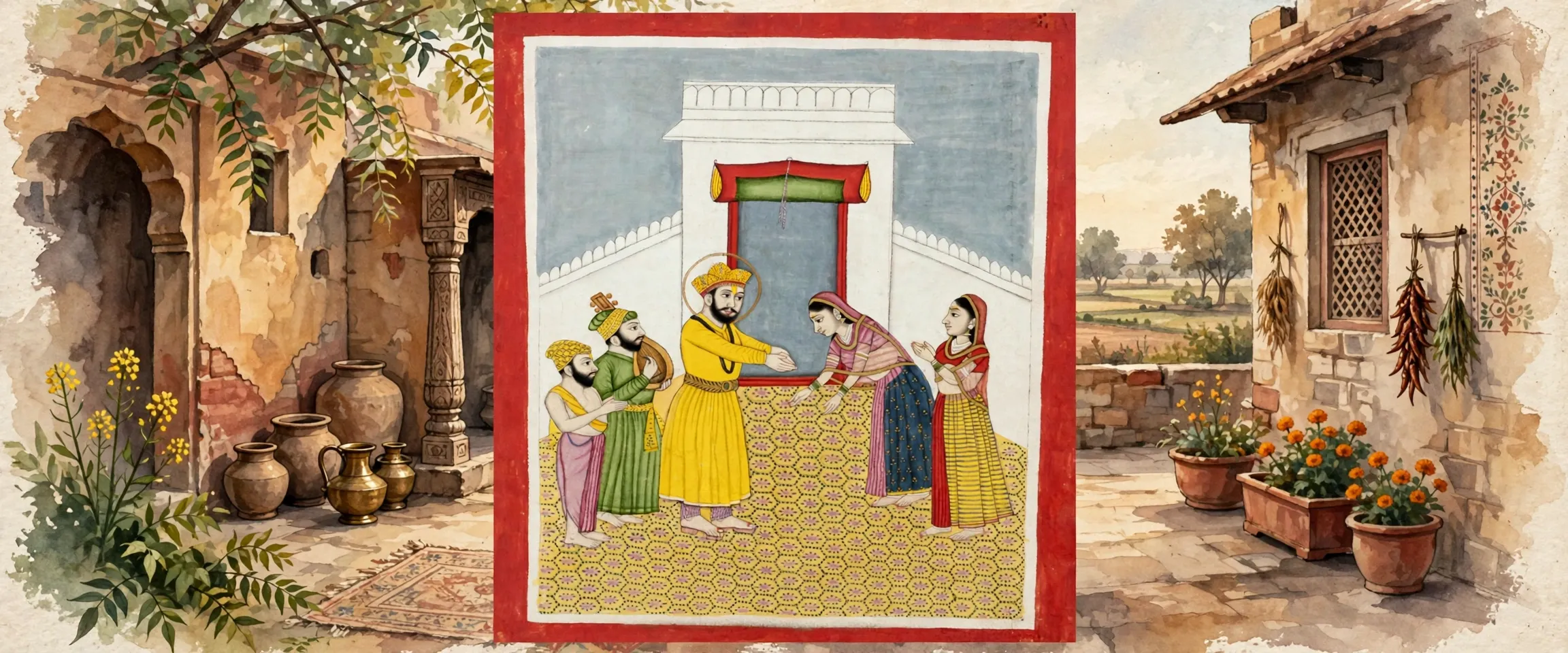
Bebe Nanaki Ji (about 1464 to 1518) was the elder sister of Guru Nanak Dev Ji and the first person to recognise his spiritual eminence, becoming his first devotee and the first Gursikh. Married at Sultanpur, she welcomed her brother into her home there, arranged his marriage, loved his sons as her own, and died in his presence in 1518.
- Punjabi name
- ਬੇਬੇ ਨਾਨਕੀ ਜੀ
- Faith
- Sikhism
- Gurmukhi
- ਬੇਬੇ ਨਾਨਕੀ ਜੀ
- Born
- About 1464, at Chahal, in her maternal grandparents' village
- Birthplace district today
- Given as Lahore district (Encyclopaedia of Sikhism and SikhiWiki) or Kasur District (Wikipedia), both in Pakistan's Punjab: sources differ
- Died
- 1518, at Sultanpur, in the presence of Guru Nanak Dev Ji
All 11 facts
- Parents
- Mehta Kalu (Kalian Chand) and Mata Tripta Ji
- Brother
- Guru Nanak Dev Ji (born 1469, five years younger)
- Spouse
- Jai Ram, a Khatri revenue official at Sultanpur in the service of Nawab Daulat Khan Lodi (married 1475)
- Children
- None: she was childless, and loved Guru Nanak Dev Ji's sons Sri Chand and Lakhmi Das as her own
- Known for
- First to recognise Guru Nanak Dev Ji's spiritual eminence: his first devotee and the first Gursikh
Bebe Nanaki Ji (about 1464 to 1518) was the elder sister of Guru Nanak Dev Ji, the founder of Sikhism, and the first person to recognise his spiritual eminence. Remembered as his first devotee and the first Gursikh, she protected him in childhood, welcomed him to Sultanpur, and shaped his early life.
Who was Bebe Nanaki Ji?
Bebe Nanaki Ji was the daughter of Mehta Kalu, whose formal name was Kalian Chand, and Mata Tripta Ji, and the elder sister of Guru Nanak Dev Ji. Wikipedia explains the respect built into her name: Bebe is a term of regard for an elder sister or an older woman, and Ji is added as a mark of respect for anyone. In the Sikh tradition she is also spelled Bibi Nanaki. The Encyclopaedia of Sikhism, SikhiWiki and Wikipedia agree on the place she holds: she was five years older than her brother, she was the first to recognise his spiritual eminence, and she became his devotee before anyone else did. Kaur Life, in Sukhmandir Khalsa's account, calls her by the title that sums this up: the first Sikh.
Her brother returned that devotion all his life. The sakhis, the traditional life stories, refer to the Guru's love for his sister in the most touching terms, as SikhiWiki notes, and a sister's love for her brother is a lasting theme of Punjabi folklore. Nanaki Ji is remembered not as a figure at the edge of her brother's story but as the first person inside it who understood what he was.
Where was Bebe Nanaki Ji born, and how did she get her name?
She was born in about 1464 at Chahal, the village of her maternal grandparents, where her mother had gone to her parents' home. All four sources opened for this page agree on Chahal and on 1464 as the birth year, although Kaur Life's heading once prints 1474 against its own dates list, which gives 1464, and that stray figure is not followed here. Her present day district is given two ways and this page does not settle it: the Encyclopaedia of Sikhism and SikhiWiki place Chahal in what is now Lahore district in Pakistan's Punjab, while Wikipedia's infobox places it in present day Kasur District, Pakistan. The village itself, and her birth in her grandparents' home there, are not in dispute.
Her name carries that home inside it. Wikipedia says her grandparents named her Nanaki after the word Nanakian, roughly the home of your maternal grandparents, and Kaur Life gives the same word in the form Nanakian, meaning the residence of the maternal family. Tradition then reverses the naming: Kaur Life says her younger brother, born in 1469, was named Nanak after her, and SikhiWiki's wider tradition remembers people calling him Nanak of Nanaki. So the founder of Sikhism carried, in his own name, the name of the sister who first recognised him.
Why is Bebe Nanaki Ji called the first Gursikh?
The title rests on recognition. Wikipedia says she was the first to realise her brother's philosophical inclination, and the Encyclopaedia says she was the first to recognise his spiritual eminence and to become his devotee. Kaur Life describes how that recognition grew in childhood: she played with him, helped her mother care for him, and perceived that his character was exceptionally spiritual in nature. She acknowledged Nanak as her Guru and became his first disciple, which is why the tradition also calls her the first Gursikh, a Sikh of the Guru.
Recognition turned into protection. SikhiWiki says she protected Nanak from their father's wrath when he repeatedly disappointed and angered him, because the boy showed little interest in worldly work and gave money away to the poor and the hungry. Kaur Life says the same in fuller detail: she acted as his protector, placated her parents' misgivings, and intervened on many occasions when her brother's detachment from the world drew their father's anger. When she left home after her marriage, Kaur Life adds, the strain between father and son grew worse without her there to stand between them.
What happened when Bebe Nanaki Ji married and moved to Sultanpur?
In 1475, at about eleven years of age, she married Jai Ram. The Encyclopaedia describes him as an official at the court of Nawab Daulat Khan Lodi at Sultanpur, and SikhiWiki calls him a revenue official of very good reputation there. Wikipedia gives him more closely as a Palta Khatri employed at a modikhana, a storehouse for revenues collected in kind, in the service of Daulat Khan, although its own note records that other sources give his background as Uppal Khatri. Kaur Life adds the household detail that she stayed on with her father's family until she was of age, joining her husband at Sultanpur at about sixteen.
Sultanpur then became her brother's doorway to work and family life. When Nanak was fifteen, his father despaired of settling him at home, and he was sent to live with his sister and to work for her husband, as SikhiWiki tells it, while Kaur Life says the village chief Rai Bular, who revered Nanak, proposed the move. Jai Ram found him work in the Nawab's service, in the same revenue storehouse world in which Jai Ram himself served. The Encyclopaedia puts the blessing plainly: herself childless, Bebe Nanaki Ji adored her brother and felt herself blessed when he came to join the Nawab's service and put up with her at Sultanpur.
How did Bebe Nanaki Ji support Guru Nanak Dev Ji and his family?
She helped shape his household as well as his work. The Encyclopaedia and SikhiWiki both say she arranged his marriage, and Kaur Life says Nanaki Ji and her husband arranged his marriage to Mata Sulakhni Ji and helped the couple establish a home of their own. Childless herself, she loved his sons, Sri Chand and Lakhmi Das, as her own, helped raise them, and, in Kaur Life's dates, took over the care of the eldest, Sri Chand, when Guru Nanak Dev Ji departed on his travels. Her home at Sultanpur was the family's base in the years before the journeys began, and Nankana Sahib, his birthplace, remained the other pole of the family's life.
Tradition also credits her with a gift that changed how the Guru's message sounded. Wikipedia credits her with inspiring his use of music as an instrument of devotion to God, and says that, knowing his musical talent, she bought him a rebab to help him further his music. Kaur Life tells it with Bhai Mardana Ji, the minstrel who became the Guru's lifelong companion, at the centre: she fostered Mardana Ji and gifted Mardana Ji and Nanak with the rebab, a stringed instrument, and encouraged them to express their devotion through music. This page presents the rebab as the sources present it, as a credited tradition, not as a documented purchase. The same Kaur Life account says that when Nanak disappeared into the River Beas for three days, Nanaki Ji remained steadfast in her faith and was instrumental in proclaiming him Guru when he resurfaced.
How did Bebe Nanaki Ji die, and how is she remembered today?
After Guru Nanak Dev Ji left the Nawab's service to preach, he did not fail to visit Sultanpur and meet his sister between his journeys, as the Encyclopaedia records. On one such visit in 1518, seeing her end near, she detained him a short while, and, as she had wished, she died at Sultanpur in his presence. Wikipedia and Kaur Life both add, as tradition, that Japji Sahib was recited to her, so that her last breaths were spent hearing the Guru's own morning prayer. Three days later her husband Jai Ram also died, and Guru Nanak Dev Ji himself performed their obsequies.
Her birthplace is still marked and visited. Gurdwara Janamasthan Bebe Nanaki at Dera Chahal marks the village where she was born, and pilgrims travel to it as a shrine of her memory. Within the tradition, her standing needs no building: the first person to see what Guru Nanak Dev Ji was, the sister who protected him, housed him, found him work and a wife, loved his sons as her own, and is credited with putting music into his devotion through the rebab. Later women of the Guru's house, among them Mata Khivi Ji, followed a path of devoted service that Bebe Nanaki Ji had opened as the first Gursikh.
ਬੇਬੇ ਨਾਨਕੀ ਜੀ, ਲਗਭਗ 1464 ਤੋਂ 1518, ਸਿੱਖ ਧਰਮ ਦੇ ਬਾਨੀ ਗੁਰੂ ਨਾਨਕ ਦੇਵ ਜੀ ਦੀ ਵੱਡੀ ਭੈਣ ਸਨ, ਅਤੇ ਉਨ੍ਹਾਂ ਦੀ ਰੂਹਾਨੀ ਮਹਾਨਤਾ ਨੂੰ ਪਛਾਣਨ ਵਾਲੀ ਪਹਿਲੀ ਇਨਸਾਨ ਸਨ। ਉਨ੍ਹਾਂ ਨੂੰ ਗੁਰੂ ਜੀ ਦੀ ਪਹਿਲੀ ਸ਼ਰਧਾਲੂ ਅਤੇ ਪਹਿਲੀ ਗੁਰਸਿੱਖ ਵਜੋਂ ਯਾਦ ਕੀਤਾ ਜਾਂਦਾ ਹੈ। ਉਨ੍ਹਾਂ ਨੇ ਬਚਪਨ ਵਿੱਚ ਗੁਰੂ ਜੀ ਦੀ ਰੱਖਿਆ ਕੀਤੀ, ਸੁਲਤਾਨਪੁਰ ਵਿੱਚ ਉਨ੍ਹਾਂ ਦਾ ਸਵਾਗਤ ਕੀਤਾ, ਅਤੇ ਉਨ੍ਹਾਂ ਦੇ ਮੁੱਢਲੇ ਜੀਵਨ ਨੂੰ ਘੜਿਆ।
ਬੇਬੇ ਨਾਨਕੀ ਜੀ ਕੌਣ ਸਨ?
ਬੇਬੇ ਨਾਨਕੀ ਜੀ ਮਹਿਤਾ ਕਾਲੂ, ਜਿਨ੍ਹਾਂ ਦਾ ਰਸਮੀ ਨਾਂ ਕਲਿਆਣ ਚੰਦ ਸੀ, ਅਤੇ ਮਾਤਾ ਤ੍ਰਿਪਤਾ ਜੀ ਦੀ ਧੀ ਸਨ, ਅਤੇ ਗੁਰੂ ਨਾਨਕ ਦੇਵ ਜੀ ਦੀ ਵੱਡੀ ਭੈਣ ਸਨ। ਵਿਕੀਪੀਡੀਆ ਉਨ੍ਹਾਂ ਦੇ ਨਾਂ ਵਿੱਚ ਬਣਿਆ ਸਤਕਾਰ ਸਮਝਾਉਂਦਾ ਹੈ: ਬੇਬੇ ਵੱਡੀ ਭੈਣ ਜਾਂ ਵੱਡੀ ਉਮਰ ਦੀ ਔਰਤ ਲਈ ਸਤਕਾਰ ਦਾ ਸ਼ਬਦ ਹੈ, ਅਤੇ ਜੀ ਕਿਸੇ ਲਈ ਵੀ ਸਤਕਾਰ ਵਜੋਂ ਜੋੜਿਆ ਜਾਂਦਾ ਹੈ। ਸਿੱਖ ਪਰੰਪਰਾ ਵਿੱਚ ਉਨ੍ਹਾਂ ਦਾ ਨਾਂ ਬੀਬੀ ਨਾਨਕੀ ਵੀ ਲਿਖਿਆ ਜਾਂਦਾ ਹੈ। ਸਿੱਖ ਵਿਸ਼ਵਕੋਸ਼, ਸਿੱਖੀਵਿਕੀ ਅਤੇ ਵਿਕੀਪੀਡੀਆ ਸਾਰੇ ਉਨ੍ਹਾਂ ਦੇ ਸਥਾਨ ਉੱਤੇ ਸਹਿਮਤ ਹਨ: ਉਹ ਆਪਣੇ ਭਰਾ ਤੋਂ ਪੰਜ ਸਾਲ ਵੱਡੀਆਂ ਸਨ, ਉਨ੍ਹਾਂ ਨੇ ਸਭ ਤੋਂ ਪਹਿਲਾਂ ਉਨ੍ਹਾਂ ਦੀ ਰੂਹਾਨੀ ਮਹਾਨਤਾ ਪਛਾਣੀ, ਅਤੇ ਉਹ ਕਿਸੇ ਵੀ ਹੋਰ ਤੋਂ ਪਹਿਲਾਂ ਉਨ੍ਹਾਂ ਦੀ ਸ਼ਰਧਾਲੂ ਬਣੀਆਂ। ਕੌਰ ਲਾਈਫ ਵਿੱਚ ਸੁਖਮੰਦਿਰ ਖਾਲਸਾ ਦਾ ਲੇਖ ਉਨ੍ਹਾਂ ਨੂੰ ਉਹ ਖਿਤਾਬ ਦਿੰਦਾ ਹੈ, ਜੋ ਇਸ ਸਾਰ ਦਾ ਸਾਰ ਹੈ: ਪਹਿਲੀ ਸਿੱਖ।
ਉਨ੍ਹਾਂ ਦੇ ਭਰਾ ਨੇ ਉਹ ਸ਼ਰਧਾ ਸਾਰੀ ਉਮਰ ਪਰਤਾਈ। ਸਾਖੀਆਂ, ਪਰੰਪਰਾਗਤ ਜੀਵਨ ਕਹਾਣੀਆਂ, ਗੁਰੂ ਜੀ ਦੇ ਆਪਣੀ ਭੈਣ ਲਈ ਪਿਆਰ ਨੂੰ ਸਭ ਤੋਂ ਭਾਵੁਕ ਸ਼ਬਦਾਂ ਵਿੱਚ ਦਿੰਦੀਆਂ ਹਨ, ਜਿਵੇਂ ਸਿੱਖੀਵਿਕੀ ਦੱਸਦੀ ਹੈ, ਅਤੇ ਭੈਣ ਦਾ ਭਰਾ ਲਈ ਪਿਆਰ ਪੰਜਾਬੀ ਲੋਕਧਾਰਾ ਦਾ ਸਦੀਵੀ ਵਿਸ਼ਾ ਹੈ। ਨਾਨਕੀ ਜੀ ਨੂੰ ਉਨ੍ਹਾਂ ਦੇ ਭਰਾ ਦੀ ਕਹਾਣੀ ਦੇ ਕੰਢੇ ਉੱਤੇ ਖੜੀ ਸ਼ਖਸੀਅਤ ਵਜੋਂ ਨਹੀਂ ਯਾਦ ਕੀਤਾ ਜਾਂਦਾ, ਸਗੋਂ ਉਸ ਕਹਾਣੀ ਦੇ ਅੰਦਰ ਉਹ ਪਹਿਲੀ ਇਨਸਾਨ ਵਜੋਂ ਯਾਦ ਕੀਤਾ ਜਾਂਦਾ ਹੈ, ਜਿਸ ਨੇ ਸਮਝਿਆ ਕਿ ਉਹ ਕੀ ਸਨ।
ਬੇਬੇ ਨਾਨਕੀ ਜੀ ਦਾ ਜਨਮ ਕਿੱਥੇ ਹੋਇਆ, ਅਤੇ ਉਨ੍ਹਾਂ ਨੂੰ ਇਹ ਨਾਂ ਕਿਵੇਂ ਮਿਲਿਆ?
ਉਨ੍ਹਾਂ ਦਾ ਜਨਮ ਲਗਭਗ 1464 ਵਿੱਚ ਚਾਹਲ ਵਿਖੇ ਹੋਇਆ, ਉਨ੍ਹਾਂ ਦੇ ਨਾਨਕਿਆਂ ਦੇ ਪਿੰਡ ਵਿੱਚ, ਜਿੱਥੇ ਉਨ੍ਹਾਂ ਦੀ ਮਾਤਾ ਆਪਣੇ ਮਾਪਿਆਂ ਦੇ ਘਰ ਗਈ ਹੋਈ ਸੀ। ਇਸ ਪੰਨੇ ਲਈ ਖੋਲ੍ਹੇ ਚਾਰੇ ਸਰੋਤ ਚਾਹਲ ਅਤੇ ਜਨਮ ਸਾਲ 1464 ਉੱਤੇ ਸਹਿਮਤ ਹਨ, ਹਾਲਾਂਕਿ ਕੌਰ ਲਾਈਫ ਦਾ ਸਿਰਲੇਖ ਇੱਕ ਵਾਰ 1474 ਛਾਪਦਾ ਹੈ, ਜੋ ਉਸ ਦੀ ਆਪਣੀ ਤਾਰੀਖਾਂ ਵਾਲੀ ਸੂਚੀ ਦੇ ਵਿਰੁੱਧ ਹੈ, ਜੋ 1464 ਦਿੰਦੀ ਹੈ, ਅਤੇ ਉਹ ਗਲਤ ਅੰਕੜਾ ਇੱਥੇ ਨਹੀਂ ਲਿਆ ਗਿਆ। ਉਨ੍ਹਾਂ ਦਾ ਅੱਜ ਦਾ ਜ਼ਿਲ੍ਹਾ ਦੋ ਤਰ੍ਹਾਂ ਦਿੱਤਾ ਜਾਂਦਾ ਹੈ, ਅਤੇ ਇਹ ਪੰਨਾ ਇਸ ਨੂੰ ਪੱਕਾ ਨਹੀਂ ਕਰਦਾ: ਸਿੱਖ ਵਿਸ਼ਵਕੋਸ਼ ਅਤੇ ਸਿੱਖੀਵਿਕੀ ਚਾਹਲ ਨੂੰ ਹੁਣ ਪਾਕਿਸਤਾਨੀ ਪੰਜਾਬ ਦੇ ਲਾਹੌਰ ਜ਼ਿਲ੍ਹੇ ਵਿੱਚ ਦਿੰਦੇ ਹਨ, ਜਦ ਕਿ ਵਿਕੀਪੀਡੀਆ ਦਾ ਜਾਣਕਾਰੀ ਬਕਸਾ ਇਸ ਨੂੰ ਅੱਜ ਦੇ ਕਸੂਰ ਜ਼ਿਲ੍ਹੇ, ਪਾਕਿਸਤਾਨ, ਵਿੱਚ ਦਿੰਦਾ ਹੈ। ਪਿੰਡ ਆਪ, ਅਤੇ ਉੱਥੇ ਉਨ੍ਹਾਂ ਦੇ ਨਾਨਕਿਆਂ ਦੇ ਘਰ ਉਨ੍ਹਾਂ ਦਾ ਜਨਮ, ਕਿਸੇ ਵਿਵਾਦ ਵਿੱਚ ਨਹੀਂ ਹੈ।
ਉਨ੍ਹਾਂ ਦਾ ਨਾਂ ਉਸ ਘਰ ਨੂੰ ਆਪਣੇ ਅੰਦਰ ਰੱਖਦਾ ਹੈ। ਵਿਕੀਪੀਡੀਆ ਕਹਿੰਦਾ ਹੈ ਕਿ ਉਨ੍ਹਾਂ ਦੇ ਨਾਨਾ ਨਾਨੀ ਨੇ ਉਨ੍ਹਾਂ ਦਾ ਨਾਂ ਨਾਨਕੀਆਂ ਸ਼ਬਦ ਤੋਂ ਨਾਨਕੀ ਰੱਖਿਆ, ਜਿਸ ਦਾ ਮੋਟਾ ਅਰਥ ਹੈ ਤੁਹਾਡੇ ਨਾਨਕਿਆਂ ਦਾ ਘਰ, ਅਤੇ ਕੌਰ ਲਾਈਫ ਇਹੀ ਸ਼ਬਦ ਨਾਨਕੀਆਂ ਰੂਪ ਵਿੱਚ ਦਿੰਦੀ ਹੈ, ਜਿਸ ਦਾ ਅਰਥ ਹੈ ਨਾਨਕੇ ਪਰਿਵਾਰ ਦਾ ਘਰ। ਪਰੰਪਰਾ ਫਿਰ ਇਹ ਨਾਂ ਉਲਟਾ ਮੋੜਦੀ ਹੈ: ਕੌਰ ਲਾਈਫ ਕਹਿੰਦੀ ਹੈ ਕਿ 1469 ਵਿੱਚ ਜਨਮੇ ਉਨ੍ਹਾਂ ਦੇ ਛੋਟੇ ਭਰਾ ਦਾ ਨਾਂ ਉਨ੍ਹਾਂ ਦੇ ਨਾਂ ਉੱਤੇ ਨਾਨਕ ਰੱਖਿਆ ਗਿਆ, ਅਤੇ ਸਿੱਖੀਵਿਕੀ ਦੀ ਵਿਆਪਕ ਪਰੰਪਰਾ ਯਾਦ ਕਰਦੀ ਹੈ ਕਿ ਲੋਕ ਉਨ੍ਹਾਂ ਨੂੰ ਨਾਨਕੀ ਦਾ ਨਾਨਕ ਕਹਿੰਦੇ ਸਨ। ਇਸ ਤਰ੍ਹਾਂ ਸਿੱਖ ਧਰਮ ਦੇ ਬਾਨੀ ਨੇ ਆਪਣੇ ਨਾਂ ਵਿੱਚ ਉਸ ਭੈਣ ਦਾ ਨਾਂ ਧਾਰਨ ਕੀਤਾ, ਜਿਸ ਨੇ ਉਨ੍ਹਾਂ ਨੂੰ ਸਭ ਤੋਂ ਪਹਿਲਾਂ ਪਛਾਣਿਆ ਸੀ।
ਬੇਬੇ ਨਾਨਕੀ ਜੀ ਨੂੰ ਪਹਿਲੀ ਗੁਰਸਿੱਖ ਕਿਉਂ ਕਿਹਾ ਜਾਂਦਾ ਹੈ?
ਇਹ ਖਿਤਾਬ ਪਛਾਣ ਉੱਤੇ ਟਿਕਿਆ ਹੈ। ਵਿਕੀਪੀਡੀਆ ਕਹਿੰਦਾ ਹੈ ਕਿ ਉਹ ਆਪਣੇ ਭਰਾ ਦੇ ਦਾਰਸ਼ਨਿਕ ਝੁਕਾਅ ਨੂੰ ਸਮਝਣ ਵਾਲੀ ਪਹਿਲੀ ਸਨ, ਅਤੇ ਸਿੱਖ ਵਿਸ਼ਵਕੋਸ਼ ਕਹਿੰਦਾ ਹੈ ਕਿ ਉਹ ਉਨ੍ਹਾਂ ਦੀ ਰੂਹਾਨੀ ਮਹਾਨਤਾ ਨੂੰ ਪਛਾਣਨ ਅਤੇ ਉਨ੍ਹਾਂ ਦੀ ਸ਼ਰਧਾਲੂ ਬਣਨ ਵਾਲੀ ਪਹਿਲੀ ਸਨ। ਕੌਰ ਲਾਈਫ ਦੱਸਦੀ ਹੈ ਕਿ ਇਹ ਪਛਾਣ ਬਚਪਨ ਵਿੱਚ ਕਿਵੇਂ ਵਧੀ: ਉਹ ਉਨ੍ਹਾਂ ਨਾਲ ਖੇਡਦੀ ਸੀ, ਆਪਣੀ ਮਾਤਾ ਨੂੰ ਉਨ੍ਹਾਂ ਦੀ ਸੰਭਾਲ ਵਿੱਚ ਮਦਦ ਕਰਦੀ ਸੀ, ਅਤੇ ਸਮਝ ਗਈ ਸੀ ਕਿ ਉਨ੍ਹਾਂ ਦਾ ਸੁਭਾਅ ਅਸਾਧਾਰਨ ਰੂਪ ਵਿੱਚ ਰੂਹਾਨੀ ਹੈ। ਉਸ ਨੇ ਨਾਨਕ ਨੂੰ ਆਪਣਾ ਗੁਰੂ ਮੰਨਿਆ ਅਤੇ ਉਨ੍ਹਾਂ ਦੀ ਪਹਿਲੀ ਚੇਲੀ ਬਣੀ, ਇਸੇ ਲਈ ਪਰੰਪਰਾ ਉਨ੍ਹਾਂ ਨੂੰ ਪਹਿਲੀ ਗੁਰਸਿੱਖ, ਗੁਰੂ ਦੀ ਸਿੱਖ, ਵੀ ਕਹਿੰਦੀ ਹੈ।
ਪਛਾਣ ਰੱਖਿਆ ਵਿੱਚ ਬਦਲ ਗਈ। ਸਿੱਖੀਵਿਕੀ ਕਹਿੰਦੀ ਹੈ ਕਿ ਉਨ੍ਹਾਂ ਨੇ ਨਾਨਕ ਨੂੰ ਉਨ੍ਹਾਂ ਦੇ ਪਿਤਾ ਦੇ ਗੁੱਸੇ ਤੋਂ ਬਚਾਇਆ, ਜਦ ਉਹ ਵਾਰ ਵਾਰ ਉਨ੍ਹਾਂ ਨੂੰ ਨਿਰਾਸ਼ ਅਤੇ ਨਾਰਾਜ਼ ਕਰਦੇ ਸਨ, ਕਿਉਂਕਿ ਉਹ ਮੁੰਡਾ ਦੁਨਿਆਵੀ ਕੰਮ ਵਿੱਚ ਬਹੁਤ ਘੱਟ ਰੁਚੀ ਰੱਖਦਾ ਸੀ ਅਤੇ ਗਰੀਬਾਂ ਅਤੇ ਭੁੱਖਿਆਂ ਨੂੰ ਪੈਸੇ ਦੇ ਦਿੰਦਾ ਸੀ। ਕੌਰ ਲਾਈਫ ਇਹੀ ਗੱਲ ਹੋਰ ਵਿਸਥਾਰ ਨਾਲ ਕਹਿੰਦੀ ਹੈ: ਉਹ ਉਨ੍ਹਾਂ ਦੀ ਰੱਖਿਅਕ ਵਜੋਂ ਕੰਮ ਕਰਦੀ ਸੀ, ਆਪਣੇ ਮਾਪਿਆਂ ਦੀਆਂ ਚਿੰਤਾਵਾਂ ਸ਼ਾਂਤ ਕਰਦੀ ਸੀ, ਅਤੇ ਕਈ ਮੌਕਿਆਂ ਉੱਤੇ ਵਿਚਕਾਰ ਪੈਂਦੀ ਸੀ, ਜਦ ਉਨ੍ਹਾਂ ਦੇ ਭਰਾ ਦੀ ਸੰਸਾਰ ਤੋਂ ਬੇਲਾਗਤਾ ਉਨ੍ਹਾਂ ਦੇ ਪਿਤਾ ਦਾ ਗੁੱਸਾ ਖਿੱਚਦੀ ਸੀ। ਕੌਰ ਲਾਈਫ ਇਹ ਵੀ ਜੋੜਦੀ ਹੈ ਕਿ ਵਿਆਹ ਤੋਂ ਬਾਅਦ ਜਦ ਉਹ ਘਰੋਂ ਚਲੀ ਗਈ, ਤਾਂ ਪਿਤਾ ਅਤੇ ਪੁੱਤਰ ਵਿਚਕਾਰ ਤਣਾਅ ਹੋਰ ਵਧ ਗਿਆ, ਕਿਉਂਕਿ ਉਨ੍ਹਾਂ ਵਿਚਕਾਰ ਖੜਨ ਵਾਲੀ ਉਹ ਨਹੀਂ ਰਹੀ ਸੀ।
ਬੇਬੇ ਨਾਨਕੀ ਜੀ ਦਾ ਵਿਆਹ ਹੋਣ ਅਤੇ ਸੁਲਤਾਨਪੁਰ ਜਾਣ ਤੋਂ ਬਾਅਦ ਕੀ ਹੋਇਆ?
1475 ਵਿੱਚ, ਲਗਭਗ ਗਿਆਰਾਂ ਸਾਲ ਦੀ ਉਮਰ ਵਿੱਚ, ਉਨ੍ਹਾਂ ਦਾ ਵਿਆਹ ਜੈ ਰਾਮ ਨਾਲ ਹੋਇਆ। ਸਿੱਖ ਵਿਸ਼ਵਕੋਸ਼ ਉਨ੍ਹਾਂ ਨੂੰ ਸੁਲਤਾਨਪੁਰ ਵਿਖੇ ਨਵਾਬ ਦੌਲਤ ਖਾਨ ਲੋਧੀ ਦੇ ਦਰਬਾਰ ਵਿੱਚ ਅਧਿਕਾਰੀ ਦੱਸਦਾ ਹੈ, ਅਤੇ ਸਿੱਖੀਵਿਕੀ ਉਨ੍ਹਾਂ ਨੂੰ ਉੱਥੇ ਬਹੁਤ ਚੰਗੀ ਸਾਖ ਵਾਲਾ ਮਾਲੀਆ ਅਧਿਕਾਰੀ ਕਹਿੰਦੀ ਹੈ। ਵਿਕੀਪੀਡੀਆ ਉਨ੍ਹਾਂ ਨੂੰ ਹੋਰ ਨੇੜਿਓਂ ਦਿੰਦਾ ਹੈ: ਇੱਕ ਪਾਲਟਾ ਖੱਤਰੀ, ਜੋ ਦੌਲਤ ਖਾਨ ਦੀ ਸੇਵਾ ਵਿੱਚ ਇੱਕ ਮੋਦੀ ਖਾਨਾ, ਵਸਤਾਂ ਦੇ ਰੂਪ ਵਿੱਚ ਇਕੱਠੇ ਕੀਤੇ ਮਾਲੀਏ ਦਾ ਭੰਡਾਰ, ਵਿੱਚ ਨੌਕਰ ਸੀ, ਹਾਲਾਂਕਿ ਉਸ ਦੀ ਆਪਣੀ ਟਿੱਪਣੀ ਦਰਜ ਕਰਦੀ ਹੈ ਕਿ ਹੋਰ ਸਰੋਤ ਉਨ੍ਹਾਂ ਦਾ ਪਿਛੋਕੜ ਉੱਪਲ ਖੱਤਰੀ ਦਿੰਦੇ ਹਨ। ਕੌਰ ਲਾਈਫ ਘਰੇਲੂ ਵੇਰਵਾ ਜੋੜਦੀ ਹੈ ਕਿ ਉਹ ਉਮਰ ਦੇ ਯੋਗ ਹੋਣ ਤੱਕ ਆਪਣੇ ਪਿਤਾ ਦੇ ਪਰਿਵਾਰ ਨਾਲ ਰਹੀ, ਅਤੇ ਲਗਭਗ ਸੋਲਾਂ ਸਾਲ ਦੀ ਉਮਰ ਵਿੱਚ ਸੁਲਤਾਨਪੁਰ ਵਿਖੇ ਆਪਣੇ ਪਤੀ ਨਾਲ ਜਾ ਵੱਸੀ।
ਸੁਲਤਾਨਪੁਰ ਫਿਰ ਉਨ੍ਹਾਂ ਦੇ ਭਰਾ ਲਈ ਕੰਮ ਅਤੇ ਪਰਿਵਾਰਕ ਜੀਵਨ ਦਾ ਦਰਵਾਜ਼ਾ ਬਣਿਆ। ਜਦ ਨਾਨਕ ਪੰਦਰਾਂ ਸਾਲ ਦੇ ਸਨ, ਤਾਂ ਉਨ੍ਹਾਂ ਦੇ ਪਿਤਾ ਉਨ੍ਹਾਂ ਨੂੰ ਘਰ ਵਸਾਉਣ ਤੋਂ ਨਿਰਾਸ਼ ਹੋ ਗਏ, ਅਤੇ ਉਨ੍ਹਾਂ ਨੂੰ ਆਪਣੀ ਭੈਣ ਕੋਲ ਰਹਿਣ ਅਤੇ ਉਨ੍ਹਾਂ ਦੇ ਪਤੀ ਲਈ ਕੰਮ ਕਰਨ ਲਈ ਭੇਜ ਦਿੱਤਾ ਗਿਆ, ਜਿਵੇਂ ਸਿੱਖੀਵਿਕੀ ਦੱਸਦੀ ਹੈ, ਜਦ ਕਿ ਕੌਰ ਲਾਈਫ ਕਹਿੰਦੀ ਹੈ ਕਿ ਪਿੰਡ ਦੇ ਮੁਖੀ ਰਾਏ ਬੁਲਾਰ ਨੇ, ਜੋ ਨਾਨਕ ਦਾ ਸਤਕਾਰ ਕਰਦੇ ਸਨ, ਇਹ ਤਬਦੀਲੀ ਸੁਝਾਈ ਸੀ। ਜੈ ਰਾਮ ਨੇ ਉਨ੍ਹਾਂ ਨੂੰ ਨਵਾਬ ਦੀ ਸੇਵਾ ਵਿੱਚ ਕੰਮ ਲੱਭ ਦਿੱਤਾ, ਉਸੇ ਮਾਲੀਆ ਭੰਡਾਰ ਵਾਲੀ ਦੁਨੀਆ ਵਿੱਚ, ਜਿਸ ਵਿੱਚ ਜੈ ਰਾਮ ਆਪ ਸੇਵਾ ਕਰਦੇ ਸਨ। ਸਿੱਖ ਵਿਸ਼ਵਕੋਸ਼ ਇਸ ਬਖਸ਼ਿਸ਼ ਨੂੰ ਸਪੱਸ਼ਟ ਕਹਿੰਦਾ ਹੈ: ਆਪ ਬੇਔਲਾਦ ਹੁੰਦਿਆਂ ਬੇਬੇ ਨਾਨਕੀ ਜੀ ਆਪਣੇ ਭਰਾ ਨੂੰ ਬਹੁਤ ਪਿਆਰ ਕਰਦੀਆਂ ਸਨ, ਅਤੇ ਆਪਣੇ ਆਪ ਨੂੰ ਧੰਨ ਮੰਨਦੀਆਂ ਸਨ, ਜਦ ਉਹ ਨਵਾਬ ਦੀ ਸੇਵਾ ਵਿੱਚ ਸ਼ਾਮਲ ਹੋ ਕੇ ਸੁਲਤਾਨਪੁਰ ਵਿਖੇ ਉਨ੍ਹਾਂ ਕੋਲ ਆ ਕੇ ਰਹੇ।
ਬੇਬੇ ਨਾਨਕੀ ਜੀ ਨੇ ਗੁਰੂ ਨਾਨਕ ਦੇਵ ਜੀ ਅਤੇ ਉਨ੍ਹਾਂ ਦੇ ਪਰਿਵਾਰ ਦੀ ਕਿਵੇਂ ਸਹਾਇਤਾ ਕੀਤੀ?
ਉਨ੍ਹਾਂ ਨੇ ਉਨ੍ਹਾਂ ਦੇ ਕੰਮ ਦੇ ਨਾਲ ਨਾਲ ਉਨ੍ਹਾਂ ਦੇ ਘਰ ਨੂੰ ਘੜਨ ਵਿੱਚ ਵੀ ਮਦਦ ਕੀਤੀ। ਸਿੱਖ ਵਿਸ਼ਵਕੋਸ਼ ਅਤੇ ਸਿੱਖੀਵਿਕੀ ਦੋਵੇਂ ਕਹਿੰਦੇ ਹਨ ਕਿ ਉਨ੍ਹਾਂ ਨੇ ਗੁਰੂ ਜੀ ਦਾ ਵਿਆਹ ਕਰਵਾਇਆ, ਅਤੇ ਕੌਰ ਲਾਈਫ ਕਹਿੰਦੀ ਹੈ ਕਿ ਨਾਨਕੀ ਜੀ ਅਤੇ ਉਨ੍ਹਾਂ ਦੇ ਪਤੀ ਨੇ ਉਨ੍ਹਾਂ ਦਾ ਵਿਆਹ ਮਾਤਾ ਸੁਲੱਖਣੀ ਜੀ ਨਾਲ ਕਰਵਾਇਆ ਅਤੇ ਜੋੜੇ ਨੂੰ ਆਪਣਾ ਘਰ ਵਸਾਉਣ ਵਿੱਚ ਮਦਦ ਕੀਤੀ। ਆਪ ਬੇਔਲਾਦ ਹੁੰਦਿਆਂ ਉਨ੍ਹਾਂ ਨੇ ਉਨ੍ਹਾਂ ਦੇ ਪੁੱਤਰਾਂ, ਸ੍ਰੀ ਚੰਦ ਅਤੇ ਲਖਮੀ ਦਾਸ, ਨੂੰ ਆਪਣਿਆਂ ਵਾਂਗ ਪਿਆਰ ਕੀਤਾ, ਉਨ੍ਹਾਂ ਨੂੰ ਪਾਲਣ ਵਿੱਚ ਮਦਦ ਕੀਤੀ, ਅਤੇ ਕੌਰ ਲਾਈਫ ਦੀਆਂ ਤਾਰੀਖਾਂ ਅਨੁਸਾਰ, ਜਦ ਗੁਰੂ ਨਾਨਕ ਦੇਵ ਜੀ ਆਪਣੀਆਂ ਯਾਤਰਾਵਾਂ ਉੱਤੇ ਚਲੇ ਗਏ, ਤਾਂ ਵੱਡੇ ਪੁੱਤਰ ਸ੍ਰੀ ਚੰਦ ਦੀ ਦੇਖਭਾਲ ਆਪਣੇ ਉੱਤੇ ਲੈ ਲਈ। ਸੁਲਤਾਨਪੁਰ ਵਿਖੇ ਉਨ੍ਹਾਂ ਦਾ ਘਰ ਯਾਤਰਾਵਾਂ ਸ਼ੁਰੂ ਹੋਣ ਤੋਂ ਪਹਿਲਾਂ ਵਾਲੇ ਸਾਲਾਂ ਵਿੱਚ ਪਰਿਵਾਰ ਦਾ ਅਧਾਰ ਸੀ, ਅਤੇ ਨਨਕਾਣਾ ਸਾਹਿਬ, ਗੁਰੂ ਜੀ ਦਾ ਜਨਮ ਸਥਾਨ, ਪਰਿਵਾਰ ਦੇ ਜੀਵਨ ਦਾ ਦੂਜਾ ਧੁਰਾ ਬਣਿਆ ਰਿਹਾ।
ਪਰੰਪਰਾ ਉਨ੍ਹਾਂ ਨੂੰ ਇੱਕ ਅਜਿਹੀ ਭੇਟ ਦਾ ਸਿਹਰਾ ਵੀ ਦਿੰਦੀ ਹੈ, ਜਿਸ ਨੇ ਗੁਰੂ ਜੀ ਦੇ ਸੰਦੇਸ਼ ਦੀ ਆਵਾਜ਼ ਬਦਲ ਦਿੱਤੀ। ਵਿਕੀਪੀਡੀਆ ਉਨ੍ਹਾਂ ਨੂੰ ਇਸ ਗੱਲ ਦਾ ਸਿਹਰਾ ਦਿੰਦਾ ਹੈ ਕਿ ਉਨ੍ਹਾਂ ਨੇ ਗੁਰੂ ਜੀ ਨੂੰ ਰੱਬ ਦੀ ਭਗਤੀ ਦੇ ਸਾਧਨ ਵਜੋਂ ਸੰਗੀਤ ਦੀ ਵਰਤੋਂ ਲਈ ਪ੍ਰੇਰਿਆ, ਅਤੇ ਕਹਿੰਦਾ ਹੈ ਕਿ ਉਨ੍ਹਾਂ ਦੀ ਸੰਗੀਤ ਪ੍ਰਤਿਭਾ ਨੂੰ ਜਾਣਦਿਆਂ ਉਨ੍ਹਾਂ ਨੇ ਉਨ੍ਹਾਂ ਲਈ ਇੱਕ ਰਬਾਬ ਖਰੀਦੀ, ਤਾਂ ਜੋ ਉਹ ਆਪਣੇ ਸੰਗੀਤ ਨੂੰ ਹੋਰ ਅੱਗੇ ਲੈ ਜਾ ਸਕਣ। ਕੌਰ ਲਾਈਫ ਇਹ ਕਹਾਣੀ ਭਾਈ ਮਰਦਾਨਾ ਜੀ ਨੂੰ ਕੇਂਦਰ ਵਿੱਚ ਰੱਖ ਕੇ ਦੱਸਦੀ ਹੈ, ਉਹ ਸਾਜ਼ਿੰਦਾ, ਜੋ ਗੁਰੂ ਜੀ ਦਾ ਜੀਵਨ ਭਰ ਦਾ ਸਾਥੀ ਬਣਿਆ: ਉਨ੍ਹਾਂ ਨੇ ਮਰਦਾਨਾ ਜੀ ਨੂੰ ਪਾਲਿਆ ਪੋਸਿਆ, ਅਤੇ ਮਰਦਾਨਾ ਜੀ ਅਤੇ ਨਾਨਕ ਨੂੰ ਰਬਾਬ, ਇੱਕ ਤਾਰਾਂ ਵਾਲਾ ਸਾਜ਼, ਭੇਟ ਕੀਤੀ, ਅਤੇ ਉਨ੍ਹਾਂ ਨੂੰ ਸੰਗੀਤ ਰਾਹੀਂ ਆਪਣੀ ਭਗਤੀ ਪ੍ਰਗਟ ਕਰਨ ਲਈ ਪ੍ਰੇਰਿਆ। ਇਹ ਪੰਨਾ ਰਬਾਬ ਨੂੰ ਉਵੇਂ ਹੀ ਦਿੰਦਾ ਹੈ, ਜਿਵੇਂ ਸਰੋਤ ਦਿੰਦੇ ਹਨ, ਇੱਕ ਸਿਹਰੇ ਵਾਲੀ ਪਰੰਪਰਾ ਵਜੋਂ, ਕਿਸੇ ਦਸਤਾਵੇਜ਼ੀ ਖਰੀਦ ਵਜੋਂ ਨਹੀਂ। ਕੌਰ ਲਾਈਫ ਦਾ ਇਹੀ ਲੇਖ ਕਹਿੰਦਾ ਹੈ ਕਿ ਜਦ ਨਾਨਕ ਤਿੰਨ ਦਿਨਾਂ ਲਈ ਬਿਆਸ ਦਰਿਆ ਵਿੱਚ ਅਲੋਪ ਹੋ ਗਏ, ਤਾਂ ਨਾਨਕੀ ਜੀ ਆਪਣੇ ਵਿਸ਼ਵਾਸ ਵਿੱਚ ਪੱਕੀਆਂ ਰਹੀਆਂ, ਅਤੇ ਜਦ ਉਹ ਮੁੜ ਪ੍ਰਗਟ ਹੋਏ, ਤਾਂ ਉਨ੍ਹਾਂ ਨੂੰ ਗੁਰੂ ਘੋਸ਼ਿਤ ਕਰਨ ਵਿੱਚ ਉਨ੍ਹਾਂ ਦੀ ਮਹੱਤਵਪੂਰਨ ਭੂਮਿਕਾ ਸੀ।
ਬੇਬੇ ਨਾਨਕੀ ਜੀ ਦਾ ਦੇਹਾਂਤ ਕਿਵੇਂ ਹੋਇਆ, ਅਤੇ ਉਨ੍ਹਾਂ ਨੂੰ ਅੱਜ ਕਿਵੇਂ ਯਾਦ ਕੀਤਾ ਜਾਂਦਾ ਹੈ?
ਗੁਰੂ ਨਾਨਕ ਦੇਵ ਜੀ ਦੇ ਨਵਾਬ ਦੀ ਸੇਵਾ ਛੱਡ ਕੇ ਪ੍ਰਚਾਰ ਲਈ ਚਲੇ ਜਾਣ ਤੋਂ ਬਾਅਦ ਉਹ ਆਪਣੀਆਂ ਯਾਤਰਾਵਾਂ ਵਿਚਕਾਰ ਸੁਲਤਾਨਪੁਰ ਆ ਕੇ ਆਪਣੀ ਭੈਣ ਨੂੰ ਮਿਲਣਾ ਨਹੀਂ ਭੁੱਲਦੇ ਸਨ, ਜਿਵੇਂ ਸਿੱਖ ਵਿਸ਼ਵਕੋਸ਼ ਦਰਜ ਕਰਦਾ ਹੈ। 1518 ਵਿੱਚ ਅਜਿਹੀ ਹੀ ਇੱਕ ਮੁਲਾਕਾਤ ਉੱਤੇ, ਆਪਣਾ ਅੰਤ ਨੇੜੇ ਵੇਖ ਕੇ, ਉਨ੍ਹਾਂ ਨੇ ਗੁਰੂ ਜੀ ਨੂੰ ਥੋੜ੍ਹਾ ਸਮਾਂ ਹੋਰ ਰੋਕ ਲਿਆ, ਅਤੇ ਜਿਵੇਂ ਉਨ੍ਹਾਂ ਨੇ ਚਾਹਿਆ ਸੀ, ਉਨ੍ਹਾਂ ਦਾ ਦੇਹਾਂਤ ਸੁਲਤਾਨਪੁਰ ਵਿਖੇ ਗੁਰੂ ਜੀ ਦੀ ਹਾਜ਼ਰੀ ਵਿੱਚ ਹੋਇਆ। ਵਿਕੀਪੀਡੀਆ ਅਤੇ ਕੌਰ ਲਾਈਫ ਦੋਵੇਂ ਪਰੰਪਰਾ ਵਜੋਂ ਇਹ ਜੋੜਦੇ ਹਨ ਕਿ ਉਨ੍ਹਾਂ ਨੂੰ ਜਪੁਜੀ ਸਾਹਿਬ ਸੁਣਾਈ ਗਈ, ਤਾਂ ਜੋ ਉਨ੍ਹਾਂ ਦੇ ਆਖਰੀ ਸਾਹ ਗੁਰੂ ਜੀ ਦੀ ਆਪਣੀ ਸਵੇਰ ਦੀ ਬਾਣੀ ਸੁਣਦਿਆਂ ਬੀਤੇ। ਤਿੰਨ ਦਿਨਾਂ ਬਾਅਦ ਉਨ੍ਹਾਂ ਦੇ ਪਤੀ ਜੈ ਰਾਮ ਦਾ ਵੀ ਦੇਹਾਂਤ ਹੋ ਗਿਆ, ਅਤੇ ਗੁਰੂ ਨਾਨਕ ਦੇਵ ਜੀ ਨੇ ਆਪ ਉਨ੍ਹਾਂ ਦੇ ਅੰਤਿਮ ਸੰਸਕਾਰ ਕੀਤੇ।
ਉਨ੍ਹਾਂ ਦਾ ਜਨਮ ਸਥਾਨ ਅੱਜ ਵੀ ਦਰਜ ਹੈ ਅਤੇ ਲੋਕ ਉੱਥੇ ਜਾਂਦੇ ਹਨ। ਡੇਰਾ ਚਾਹਲ ਵਿਖੇ ਗੁਰਦੁਆਰਾ ਜਨਮ ਅਸਥਾਨ ਬੇਬੇ ਨਾਨਕੀ ਉਸ ਪਿੰਡ ਨੂੰ ਦਰਜ ਕਰਦਾ ਹੈ, ਜਿੱਥੇ ਉਨ੍ਹਾਂ ਦਾ ਜਨਮ ਹੋਇਆ ਸੀ, ਅਤੇ ਸ਼ਰਧਾਲੂ ਉਨ੍ਹਾਂ ਦੀ ਯਾਦ ਦੇ ਅਸਥਾਨ ਵਜੋਂ ਉੱਥੇ ਯਾਤਰਾ ਕਰਦੇ ਹਨ। ਪਰੰਪਰਾ ਦੇ ਅੰਦਰ ਉਨ੍ਹਾਂ ਦੇ ਸਥਾਨ ਨੂੰ ਕਿਸੇ ਇਮਾਰਤ ਦੀ ਲੋੜ ਨਹੀਂ ਹੈ: ਉਹ ਪਹਿਲੀ ਇਨਸਾਨ, ਜਿਸ ਨੇ ਵੇਖਿਆ ਕਿ ਗੁਰੂ ਨਾਨਕ ਦੇਵ ਜੀ ਕੀ ਸਨ, ਉਹ ਭੈਣ, ਜਿਸ ਨੇ ਉਨ੍ਹਾਂ ਦੀ ਰੱਖਿਆ ਕੀਤੀ, ਉਨ੍ਹਾਂ ਨੂੰ ਘਰ ਦਿੱਤਾ, ਉਨ੍ਹਾਂ ਨੂੰ ਕੰਮ ਅਤੇ ਪਤਨੀ ਲੱਭਣ ਵਿੱਚ ਮਦਦ ਕੀਤੀ, ਉਨ੍ਹਾਂ ਦੇ ਪੁੱਤਰਾਂ ਨੂੰ ਆਪਣਿਆਂ ਵਾਂਗ ਪਿਆਰ ਕੀਤਾ, ਅਤੇ ਜਿਸ ਨੂੰ ਰਬਾਬ ਰਾਹੀਂ ਉਨ੍ਹਾਂ ਦੀ ਭਗਤੀ ਵਿੱਚ ਸੰਗੀਤ ਪਾਉਣ ਦਾ ਸਿਹਰਾ ਦਿੱਤਾ ਜਾਂਦਾ ਹੈ। ਗੁਰੂ ਘਰ ਦੀਆਂ ਬਾਅਦ ਵਾਲੀਆਂ ਔਰਤਾਂ, ਜਿਨ੍ਹਾਂ ਵਿੱਚ ਮਾਤਾ ਖੀਵੀ ਜੀ ਵੀ ਹਨ, ਨੇ ਸ਼ਰਧਾ ਭਰੀ ਸੇਵਾ ਦੇ ਉਸ ਰਾਹ ਨੂੰ ਅਪਣਾਇਆ, ਜੋ ਬੇਬੇ ਨਾਨਕੀ ਜੀ ਨੇ ਪਹਿਲੀ ਗੁਰਸਿੱਖ ਵਜੋਂ ਖੋਲ੍ਹਿਆ ਸੀ।
More religion entries to explore
Sources (4)
Jugti is free and independent. Reader support keeps the Kosh growing.
Support