
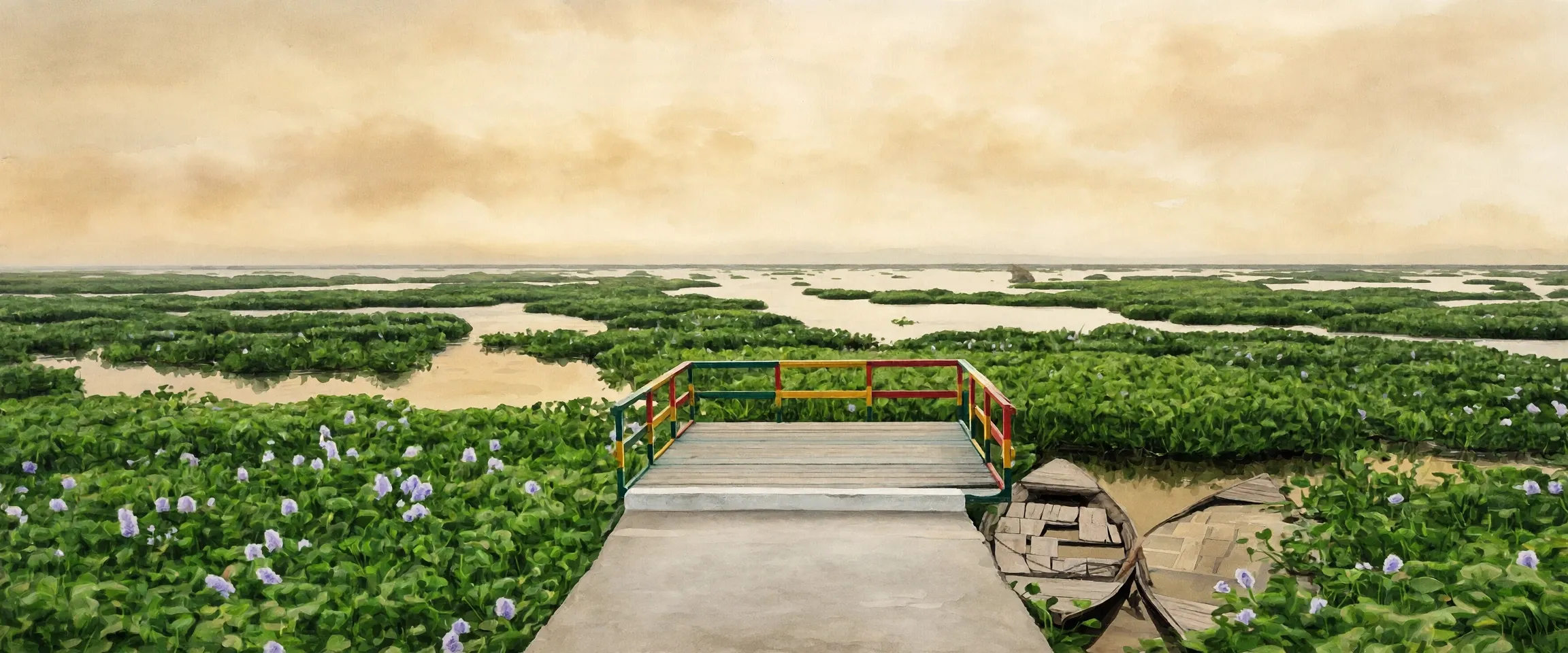
Harike Wetland is northern India's largest wetland, a 4,100 hectare Ramsar site at the confluence of the Beas and the Sutlej on the Tarn Taran, Ferozepur and Kapurthala border. Created by the Harike Barrage of 1952-53, it hosts around 200 bird species in winter and feeds the Ferozepur canals and the Indira Gandhi Canal.
- Punjabi name
- ਹਰੀਕੇ ਝੀਲ
- Type
- Wetland
- Where
- Tarn Taran, Ferozepur and Kapurthala districts
- Region
- Majha
- Area
- About 4,100 ha, the largest wetland in northern India
- Created by
- The Harike Barrage (1952-53), just below the Beas-Sutlej confluence
All 12 facts
- Ramsar site
- Designated 23 March 1990 (site no. 462, as Harike Lake)
- Sanctuary
- Harike Pattan Bird Sanctuary, declared 1982, about 8,600 ha
- Birds
- Around 200 species recorded in winter
- Other wildlife
- 26 fish species, smooth-coated otters and endangered turtles; an Indus dolphin was sighted in the Beas here in 2007
- Canals
- Ferozepur feeders, Makhu feeder and the Indira Gandhi Canal (about 29,000 cusecs in total)
- District
- Tarn Taran
Harike is where Punjab's river system gathers itself. Just below the point where the Beas flows into the Sutlej, a barrage built in the early 1950s ponds the combined rivers back into a vast, shallow wetland of open water, reed beds and some 33 low islands. At about 4,100 hectares it is the largest wetland in northern India, a Ramsar site since 1990, and in winter one of the great bird spectacles of the subcontinent, when tens of thousands of geese, ducks and waders pour in from Central Asia and Siberia.
How Harike was made
The village of Harike, remembered in the name Harike Pattan, was a ferry crossing on the Sutlej long before it was a wetland. In 1952 and 1953, soon after Partition, engineers built the Harike Barrage just below the Beas and Sutlej confluence to control the combined flow and feed the canal system of the new Indian Punjab. The ponded water spread back over the low floodplain where the two rivers meet, across what are now Tarn Taran, Ferozepur and Kapurthala districts, and created a permanent wetland where seasonal flooding had always made a temporary one.
From the Harike headworks, canals carrying about 29,000 cusecs in total take off towards the southwest: the Ferozepur feeder system, the Makhu feeder and, most famously, the Indira Gandhi Canal, which carries Punjab river water from Harike deep into the Rajasthan desert. Harike is therefore not a leftover of nature but a working piece of engineering that wildlife colonised on a grand scale.
A bird sanctuary of the first rank
The wetland was declared a bird sanctuary in 1982, as the Harike Pattan Bird Sanctuary, covering about 8,600 hectares including the surrounding land. Around 200 bird species are recorded in the winter season alone. Bar-headed geese and greylag geese arrive in thousands, with ruddy shelducks, pintails, shovelers, pochards and great rafts of coots, while the reed beds and islands hold rarer and threatened birds including the yellow-eyed pigeon, Pallas's gull, the Indian skimmer and the white-rumped vulture. Smooth-coated otters hunt the channels, several endangered turtle species live in the shallows, and the wetland supports 26 recorded species of fish.
Harike also produced one of Punjab's most remarkable wildlife records: in December 2007 an Indus river dolphin was sighted in the Beas at Harike, the first confirmed evidence that the endangered dolphin survived in Indian waters, in the population now known to hold on in the Beas between the Pong Dam and this wetland.
What is Harike famous for?
Harike is famous three times over. It is the largest wetland in northern India and a Ramsar site, designated on 23 March 1990 as site number 462 under the name Harike Lake. It is the head of the Indira Gandhi Canal, the longest canal in India, which begins at the Harike Barrage. And it stands at the sangam, the meeting of two of the five rivers of Punjab, the Beas arriving from the northeast and the Sutlej from the hills, a confluence that Punjabis had crossed by ferry for centuries before the barrage made it a lake. The nearest town is Makhu in Ferozepur district, and the wetland is watched over from the barrage road, where in winter the sky over the water is rarely empty.
A wetland fighting weed and silt
Harike's beauty hides a hard struggle. Water hyacinth, the fast spreading weed that chokes still water across India, covers roughly half the wetland's surface, and clearing it is a permanent campaign; in 2000 the Indian Army ran a celebrated weed removal drive here under its Sahyog programme. Untreated effluent from towns and industry upstream, encroachment on the margins, and silt carried down by both rivers steadily shrink and foul the lake; one study estimated the wetland had lost about 30 percent of its area in thirteen years. The Harike Wetland Conservation Mission, set up in 1998, coordinates the fightback, but the wetland's health will always depend on the quality of the water the Beas and the Sutlej deliver to it.
Stand at Harike in January, with the barrage gates below you, the canal heads opening to the desert, and geese settling on the water in their thousands, and you are standing at the hinge of Punjab: two of its five rivers becoming one, a Mughal era ferry crossing turned Ramsar sanctuary, and the starting point of the canal that watered a desert.
ਹਰੀਕੇ ਉਹ ਥਾਂ ਹੈ ਜਿੱਥੇ ਪੰਜਾਬ ਦੀ ਦਰਿਆ ਪ੍ਰਣਾਲੀ ਆਪਣੇ ਆਪ ਨੂੰ ਇਕੱਠਾ ਕਰਦੀ ਹੈ ਜਿੱਥੇ ਬਿਆਸ ਸਤਲੁਜ ਵਿੱਚ ਵਗਦਾ ਹੈ, ਉਸ ਬਿੰਦੂ ਦੇ ਐਨ ਹੇਠਾਂ, 1950 ਦੇ ਦਹਾਕੇ ਦੇ ਸ਼ੁਰੂ ਵਿੱਚ ਬਣੇ ਇੱਕ ਬੈਰਾਜ ਨੇ ਦੋਹਾਂ ਦਰਿਆਵਾਂ ਨੂੰ ਰੋਕ ਕੇ ਖੁੱਲ੍ਹੇ ਪਾਣੀ, ਕਾਨਿਆਂ ਅਤੇ ਲਗਭਗ 33 ਨੀਵੇਂ ਟਾਪੂਆਂ ਦਾ ਇੱਕ ਵਿਸ਼ਾਲ, ਹਲਕਾ ਵੈਟਲੈਂਡ ਬਣਾ ਦਿੱਤਾ ਲਗਭਗ 4,100 ਹੈਕਟੇਅਰ ਵਿੱਚ ਇਹ ਉੱਤਰੀ ਭਾਰਤ ਦਾ ਸਭ ਤੋਂ ਵੱਡਾ ਵੈਟਲੈਂਡ ਹੈ, 1990 ਤੋਂ ਰਾਮਸਰ ਸਥਾਨ ਹੈ, ਅਤੇ ਸਰਦੀਆਂ ਵਿੱਚ ਉਪਮਹਾਦੀਪ ਦੇ ਮਹਾਨ ਪੰਛੀ ਨਜ਼ਾਰਿਆਂ ਵਿੱਚੋਂ ਇੱਕ, ਜਦੋਂ ਮੱਧ ਏਸ਼ੀਆ ਅਤੇ ਸਾਇਬੇਰੀਆ ਤੋਂ ਹਜ਼ਾਰਾਂ ਹੰਸ, ਬਤਖਾਂ ਅਤੇ ਤੈਰਾਕ ਪੰਛੀ ਇੱਥੇ ਆਉਂਦੇ ਹਨ
ਹਰੀਕੇ ਕਿਵੇਂ ਬਣਿਆ
ਹਰੀਕੇ ਪਿੰਡ, ਜਿਸ ਨੂੰ ਹਰੀਕੇ ਪੱਤਣ ਨਾਮ ਵਿੱਚ ਯਾਦ ਰੱਖਿਆ ਜਾਂਦਾ ਹੈ, ਵੈਟਲੈਂਡ ਬਣਨ ਤੋਂ ਬਹੁਤ ਪਹਿਲਾਂ ਸਤਲੁਜ ਉੱਤੇ ਇੱਕ ਬੇੜੀ ਪਾਰਗਾਮ ਸੀ 1952 ਅਤੇ 1953 ਵਿੱਚ, ਵੰਡ ਤੋਂ ਥੋੜ੍ਹੀ ਦੇਰ ਬਾਅਦ, ਇੰਜੀਨੀਅਰਾਂ ਨੇ ਬਿਆਸ ਅਤੇ ਸਤਲੁਜ ਸੰਗਮ ਦੇ ਐਨ ਹੇਠਾਂ ਹਰੀਕੇ ਬੈਰਾਜ ਬਣਾਇਆ ਤਾਂ ਜੋ ਸਾਂਝੇ ਵਹਾਅ ਨੂੰ ਕਾਬੂ ਕਰਕੇ ਨਵੇਂ ਭਾਰਤੀ ਪੰਜਾਬ ਦੀ ਨਹਿਰੀ ਪ੍ਰਣਾਲੀ ਨੂੰ ਪਾਣੀ ਦਿੱਤਾ ਜਾ ਸਕੇ ਰੋਕਿਆ ਪਾਣੀ ਨੀਵੀਂ ਹੜ੍ਹ ਵਾਲੀ ਧਰਤੀ ਉੱਤੇ ਪਿੱਛੇ ਫੈਲ ਗਿਆ ਜਿੱਥੇ ਦੋਵੇਂ ਦਰਿਆ ਮਿਲਦੇ ਹਨ, ਜੋ ਅੱਜ ਤਰਨ ਤਾਰਨ, ਫਿਰੋਜ਼ਪੁਰ ਅਤੇ ਕਪੂਰਥਲਾ ਜ਼ਿਲ੍ਹਿਆਂ ਵਿੱਚ ਹੈ, ਅਤੇ ਉੱਥੇ ਇੱਕ ਸਥਾਈ ਵੈਟਲੈਂਡ ਬਣ ਗਿਆ ਜਿੱਥੇ ਮੌਸਮੀ ਹੜ੍ਹ ਹਮੇਸ਼ਾ ਇੱਕ ਅਸਥਾਈ ਵੈਟਲੈਂਡ ਬਣਾਉਂਦੇ ਸਨ
ਹਰੀਕੇ ਹੈੱਡਵਰਕਸ ਤੋਂ ਕੁੱਲ ਲਗਭਗ 29,000 ਕਿਊਸਿਕ ਪਾਣੀ ਲੈ ਕੇ ਨਹਿਰਾਂ ਦੱਖਣ ਪੱਛਮ ਵੱਲ ਨਿਕਲਦੀਆਂ ਹਨ ਫਿਰੋਜ਼ਪੁਰ ਫੀਡਰ ਪ੍ਰਣਾਲੀ, ਮੱਖੂ ਫੀਡਰ ਅਤੇ, ਸਭ ਤੋਂ ਪ੍ਰਸਿੱਧ, ਇੰਦਰਾ ਗਾਂਧੀ ਨਹਿਰ, ਜੋ ਹਰੀਕੇ ਤੋਂ ਪੰਜਾਬ ਦੇ ਦਰਿਆਵਾਂ ਦਾ ਪਾਣੀ ਰਾਜਸਥਾਨ ਦੇ ਰੇਗਿਸਤਾਨ ਦੇ ਡੂੰਘੇ ਅੰਦਰ ਲੈ ਜਾਂਦੀ ਹੈ ਇਸ ਲਈ ਹਰੀਕੇ ਕੁਦਰਤ ਦਾ ਬਚਿਆ ਹਿੱਸਾ ਨਹੀਂ ਹੈ, ਸਗੋਂ ਇੰਜੀਨੀਅਰਿੰਗ ਦਾ ਇੱਕ ਕੰਮਕਾਜੀ ਟੁਕੜਾ ਹੈ ਜਿਸ ਨੂੰ ਜੰਗਲੀ ਜੀਵਨ ਨੇ ਵੱਡੇ ਪੱਧਰ ਉੱਤੇ ਆਪਣਾ ਬਣਾ ਲਿਆ
ਪਹਿਲੇ ਦਰਜੇ ਦਾ ਪੰਛੀ ਸੈਂਕਚੁਰੀ
ਇਸ ਵੈਟਲੈਂਡ ਨੂੰ 1982 ਵਿੱਚ ਹਰੀਕੇ ਪੱਤਣ ਪੰਛੀ ਸੈਂਕਚੁਰੀ ਵਜੋਂ ਘੋਸ਼ਿਤ ਕੀਤਾ ਗਿਆ, ਜੋ ਆਲੇ ਦੁਆਲੇ ਦੀ ਧਰਤੀ ਸਮੇਤ ਲਗਭਗ 8,600 ਹੈਕਟੇਅਰ ਵਿੱਚ ਫੈਲੀ ਹੈ ਇਕੱਲੇ ਸਰਦੀ ਦੇ ਮੌਸਮ ਵਿੱਚ ਲਗਭਗ 200 ਪੰਛੀ ਪ੍ਰਜਾਤੀਆਂ ਦਰਜ ਹੁੰਦੀਆਂ ਹਨ ਧੌਲੇ ਹੰਸ ਅਤੇ ਸਲੇਟੀ ਹੰਸ ਹਜ਼ਾਰਾਂ ਵਿੱਚ ਆਉਂਦੇ ਹਨ, ਸੁਰਖਾਬਾਂ, ਪਿੰਟੇਲਾਂ, ਸ਼ੋਵਲਰਾਂ, ਪੋਚਾਰਡਾਂ ਅਤੇ ਕੂਟਾਂ ਦੇ ਵੱਡੇ ਝੁੰਡਾਂ ਨਾਲ, ਜਦੋਂ ਕਿ ਕਾਨਿਆਂ ਅਤੇ ਟਾਪੂਆਂ ਵਿੱਚ ਦੁਰਲਭ ਅਤੇ ਖਤਰੇ ਅਧੀਨ ਪੰਛੀ ਰਹਿੰਦੇ ਹਨ, ਜਿਨ੍ਹਾਂ ਵਿੱਚ ਪੀਲੀ ਅੱਖ ਵਾਲਾ ਕਬੂਤਰ, ਪੈਲਸ ਗਲ, ਇੰਡੀਅਨ ਸਕਿਮਰ ਅਤੇ ਚਿੱਟੀ ਪਿੱਠ ਵਾਲਾ ਗਿੱਧ ਸ਼ਾਮਲ ਹਨ ਨਿਰਵਿਘਨ ਖੋਲ ਵਾਲੇ ਊਦਬਿਲਾਵ ਨਾਲਿਆਂ ਵਿੱਚ ਸ਼ਿਕਾਰ ਕਰਦੇ ਹਨ, ਕਈ ਖਤਰੇ ਅਧੀਨ ਕੱਛੂ ਪ੍ਰਜਾਤੀਆਂ ਹਲਕੇ ਪਾਣੀ ਵਿੱਚ ਰਹਿੰਦੀਆਂ ਹਨ, ਅਤੇ ਵੈਟਲੈਂਡ ਵਿੱਚ ਮੱਛੀਆਂ ਦੀਆਂ 26 ਦਰਜ ਪ੍ਰਜਾਤੀਆਂ ਹਨ
ਹਰੀਕੇ ਨੇ ਪੰਜਾਬ ਦੇ ਸਭ ਤੋਂ ਅਸਾਧਾਰਨ ਜੰਗਲੀ ਜੀਵਨ ਰਿਕਾਰਡਾਂ ਵਿੱਚੋਂ ਇੱਕ ਵੀ ਦਿੱਤਾ ਦਸੰਬਰ 2007 ਵਿੱਚ ਬਿਆਸ ਵਿੱਚ ਹਰੀਕੇ ਵਿਖੇ ਇੱਕ ਸਿੰਧ ਦਰਿਆਈ ਡੌਲਫਿਨ ਦੇਖੀ ਗਈ, ਇਹ ਪਹਿਲਾ ਪੁਸ਼ਟ ਸਬੂਤ ਸੀ ਕਿ ਖਤਰੇ ਅਧੀਨ ਡੌਲਫਿਨ ਭਾਰਤੀ ਪਾਣੀਆਂ ਵਿੱਚ ਬਚੀ ਹੋਈ ਹੈ, ਉਸ ਆਬਾਦੀ ਵਿੱਚ ਜੋ ਹੁਣ ਪੋਂਗ ਡੈਮ ਅਤੇ ਇਸ ਵੈਟਲੈਂਡ ਵਿਚਕਾਰ ਬਿਆਸ ਵਿੱਚ ਟਿਕੀ ਹੋਈ ਮੰਨੀ ਜਾਂਦੀ ਹੈ
ਹਰੀਕੇ ਕਿਸ ਲਈ ਪ੍ਰਸਿੱਧ ਹੈ?
ਹਰੀਕੇ ਤਿੰਨ ਤਰ੍ਹਾਂ ਨਾਲ ਪ੍ਰਸਿੱਧ ਹੈ ਇਹ ਉੱਤਰੀ ਭਾਰਤ ਦਾ ਸਭ ਤੋਂ ਵੱਡਾ ਵੈਟਲੈਂਡ ਅਤੇ ਰਾਮਸਰ ਸਥਾਨ ਹੈ, ਜੋ 23 ਮਾਰਚ 1990 ਨੂੰ ਹਰੀਕੇ ਝੀਲ ਨਾਮ ਹੇਠ ਨੰਬਰ 462 ਵਜੋਂ ਘੋਸ਼ਿਤ ਹੋਇਆ ਇਹ ਇੰਦਰਾ ਗਾਂਧੀ ਨਹਿਰ ਦਾ ਸਿਰਾ ਹੈ, ਜੋ ਭਾਰਤ ਦੀ ਸਭ ਤੋਂ ਲੰਬੀ ਨਹਿਰ ਹੈ ਅਤੇ ਹਰੀਕੇ ਬੈਰਾਜ ਤੋਂ ਸ਼ੁਰੂ ਹੁੰਦੀ ਹੈ ਅਤੇ ਇਹ ਸੰਗਮ ਉੱਤੇ ਖੜਾ ਹੈ, ਪੰਜਾਬ ਦੇ ਪੰਜ ਦਰਿਆਵਾਂ ਵਿੱਚੋਂ ਦੋ ਦਾ ਮੇਲ, ਬਿਆਸ ਉੱਤਰ ਪੂਰਬ ਤੋਂ ਆਉਂਦਾ ਹੋਇਆ ਅਤੇ ਸਤਲੁਜ ਪਹਾੜੀਆਂ ਤੋਂ, ਇੱਕ ਸੰਗਮ ਜਿਸ ਨੂੰ ਪੰਜਾਬੀ ਬੈਰਾਜ ਦੇ ਇਸ ਨੂੰ ਝੀਲ ਬਣਾਉਣ ਤੋਂ ਸਦੀਆਂ ਪਹਿਲਾਂ ਬੇੜੀ ਨਾਲ ਪਾਰ ਕਰਦੇ ਸਨ ਸਭ ਤੋਂ ਨੇੜਲਾ ਕਸਬਾ ਫਿਰੋਜ਼ਪੁਰ ਜ਼ਿਲ੍ਹੇ ਦਾ ਮੱਖੂ ਹੈ, ਅਤੇ ਵੈਟਲੈਂਡ ਨੂੰ ਬੈਰਾਜ ਵਾਲੀ ਸੜਕ ਤੋਂ ਦੇਖਿਆ ਜਾਂਦਾ ਹੈ, ਜਿੱਥੇ ਸਰਦੀਆਂ ਵਿੱਚ ਪਾਣੀ ਉੱਤੇ ਅਸਮਾਨ ਕਦੇ ਹੀ ਖਾਲੀ ਹੁੰਦਾ ਹੈ
ਬੂਟੀ ਅਤੇ ਗਾਦ ਨਾਲ ਲੜਦਾ ਵੈਟਲੈਂਡ
ਹਰੀਕੇ ਦੀ ਸੁੰਦਰਤਾ ਇੱਕ ਔਖੀ ਲੜਾਈ ਨੂੰ ਲੁਕਾਉਂਦੀ ਹੈ ਜਲ ਕੁੰਭੀ, ਤੇਜ਼ੀ ਨਾਲ ਫੈਲਣ ਵਾਲੀ ਬੂਟੀ ਜੋ ਸਾਰੇ ਭਾਰਤ ਵਿੱਚ ਸ਼ਾਂਤ ਪਾਣੀ ਨੂੰ ਰੋਕਦੀ ਹੈ, ਵੈਟਲੈਂਡ ਦੀ ਸਤ੍ਹਾ ਦੇ ਲਗਭਗ ਅੱਧੇ ਹਿੱਸੇ ਨੂੰ ਢੱਕਦੀ ਹੈ, ਅਤੇ ਇਸ ਨੂੰ ਸਾਫ਼ ਕਰਨਾ ਇੱਕ ਸਥਾਈ ਮੁਹਿੰਮ ਹੈ 2000 ਵਿੱਚ ਭਾਰਤੀ ਫੌਜ ਨੇ ਇੱਥੇ ਆਪਣੇ ਸਹਿਯੋਗ ਪ੍ਰੋਗਰਾਮ ਅਧੀਨ ਬੂਟੀ ਹਟਾਉਣ ਦੀ ਇੱਕ ਪ੍ਰਸਿੱਧ ਮੁਹਿੰਮ ਚਲਾਈ ਸੀ ਉੱਪਰਲੇ ਕਸਬਿਆਂ ਅਤੇ ਉਦਯੋਗ ਦਾ ਬਿਨਾਂ ਸੋਧਿਆ ਗੰਦਾ ਪਾਣੀ, ਕਿਨਾਰਿਆਂ ਉੱਤੇ ਕਬਜ਼ਾ, ਅਤੇ ਦੋਹਾਂ ਦਰਿਆਵਾਂ ਦੁਆਰਾ ਲਿਆਂਦੀ ਗਾਦ ਝੀਲ ਨੂੰ ਲਗਾਤਾਰ ਸੁੰਗਾੜਦੀ ਅਤੇ ਗੰਦਾ ਕਰਦੀ ਹੈ ਇੱਕ ਅਧਿਐਨ ਦਾ ਅਨੁਮਾਨ ਸੀ ਕਿ ਵੈਟਲੈਂਡ ਨੇ ਤੇਰਾਂ ਸਾਲਾਂ ਵਿੱਚ ਆਪਣੇ ਖੇਤਰ ਦਾ ਲਗਭਗ 30 ਪ੍ਰਤੀਸ਼ਤ ਗੁਆ ਦਿੱਤਾ ਸੀ 1998 ਵਿੱਚ ਬਣਾਇਆ ਹਰੀਕੇ ਵੈਟਲੈਂਡ ਸੰਭਾਲ ਮਿਸ਼ਨ ਜਵਾਬੀ ਲੜਾਈ ਦਾ ਤਾਲਮੇਲ ਕਰਦਾ ਹੈ, ਪਰ ਵੈਟਲੈਂਡ ਦੀ ਸਿਹਤ ਹਮੇਸ਼ਾ ਉਸ ਪਾਣੀ ਦੀ ਗੁਣਵੱਤਾ ਉੱਤੇ ਨਿਰਭਰ ਕਰੇਗੀ ਜੋ ਬਿਆਸ ਅਤੇ ਸਤਲੁਜ ਇਸ ਨੂੰ ਦਿੰਦੇ ਹਨ
ਜਨਵਰੀ ਵਿੱਚ ਹਰੀਕੇ ਖੜ੍ਹੇ ਹੋਵੋ, ਹੇਠਾਂ ਬੈਰਾਜ ਦੇ ਦਰਵਾਜ਼ੇ, ਰੇਗਿਸਤਾਨ ਵੱਲ ਖੁੱਲ੍ਹਦੇ ਨਹਿਰੀ ਸਿਰੇ, ਅਤੇ ਹਜ਼ਾਰਾਂ ਦੀ ਗਿਣਤੀ ਵਿੱਚ ਪਾਣੀ ਉੱਤੇ ਉੱਤਰਦੇ ਹੰਸ, ਤਾਂ ਤੁਸੀਂ ਪੰਜਾਬ ਦੇ ਕਬਜ਼ਾ ਬਿੰਦੂ ਉੱਤੇ ਖੜ੍ਹੇ ਹੁੰਦੇ ਹੋ ਇਸ ਦੇ ਪੰਜ ਦਰਿਆਵਾਂ ਵਿੱਚੋਂ ਦੋ ਇੱਕ ਹੁੰਦੇ ਹੋਏ, ਇੱਕ ਮੁਗਲ ਯੁੱਗ ਦਾ ਬੇੜੀ ਪਾਰਗਾਮ ਜੋ ਰਾਮਸਰ ਸੈਂਕਚੁਰੀ ਬਣ ਗਿਆ, ਅਤੇ ਉਸ ਨਹਿਰ ਦਾ ਸ਼ੁਰੂਆਤੀ ਬਿੰਦੂ ਜਿਸ ਨੇ ਇੱਕ ਰੇਗਿਸਤਾਨ ਨੂੰ ਪਾਣੀ ਦਿੱਤਾ