
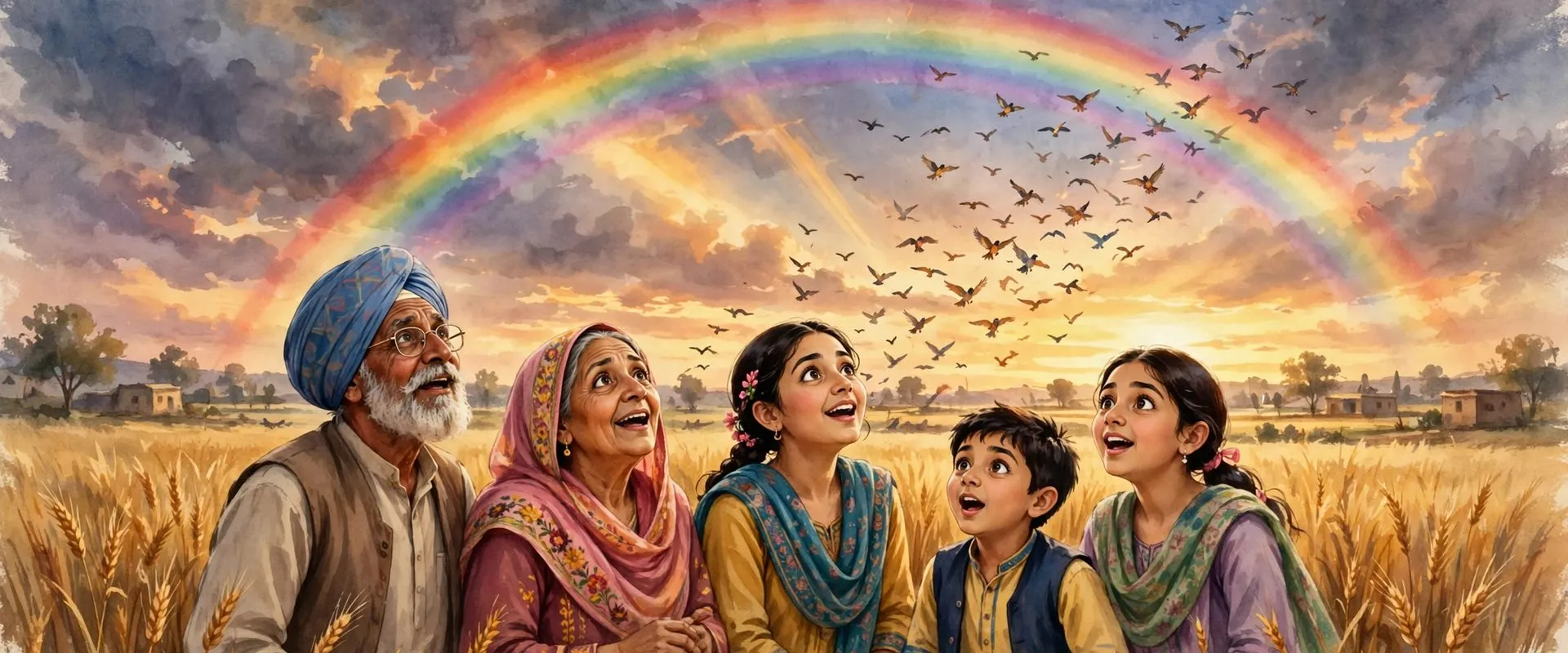
Hairani (ਹੈਰਾਨੀ) is the Punjabi word for surprise, amazement and wonder: the wide eyed feeling when something happens that you did not expect. A person who feels it is hairan, and hairani can be happy wonder or puzzled confusion.
How it's used
- 1ਨਤੀਜਾ ਸੁਣ ਕੇ ਸਾਰੇ ਵਿਦਿਆਰਥੀ ਹੈਰਾਨ ਹੋ ਗਏ।Hearing the result, all the students were astonished. hairan hona, to be surprised
- 2ਉਸ ਦੀ ਅਚਾਨਕ ਆਮਦ ਨੇ ਸਭ ਨੂੰ ਹੈਰਾਨ ਕਰ ਦਿੱਤਾ।His sudden arrival surprised everyone. hairan karna, to surprise someone
- 3ਮੈਨੂੰ ਹੈਰਾਨੀ ਹੋਈ ਕਿ ਉਹ ਪੰਜਾਬੀ ਏਨੀ ਸਾਫ਼ ਬੋਲਦਾ ਹੈ।I was amazed that he speaks Punjabi so clearly.
Show 1 more example
- 4ਬੱਚੇ ਦੇ ਸਵਾਲ ਨੇ ਅਧਿਆਪਕ ਨੂੰ ਹੈਰਾਨੀ ਵਿੱਚ ਪਾ ਦਿੱਤਾ।The child's question left the teacher in amazement. hairani vich pauna, to amaze
ਹੈਰਾਨੀ ਉਸ ਪਲ ਦਾ ਨਾਂ ਹੈ ਜਦੋਂ ਕੋਈ ਗੱਲ ਸਾਡੀ ਉਮੀਦ ਤੋਂ ਬਿਲਕੁਲ ਵੱਖਰੀ ਨਿਕਲਦੀ ਹੈ। ਅੱਖਾਂ ਖੁੱਲ੍ਹ ਜਾਂਦੀਆਂ ਹਨ, ਮੂੰਹੋਂ ਸ਼ਬਦ ਨਹੀਂ ਨਿਕਲਦੇ, ਅਤੇ ਮਨ ਪੁੱਛਦਾ ਹੈ ਕਿ ਇਹ ਹੋਇਆ ਕਿਵੇਂ। ਕਈ ਵਾਰ ਹੈਰਾਨੀ ਖੁਸ਼ੀ ਲਿਆਉਂਦੀ ਹੈ, ਜਿਵੇਂ ਕੋਈ ਪੁਰਾਣਾ ਯਾਰ ਅਚਾਨਕ ਆ ਜਾਵੇ। ਕਈ ਵਾਰ ਇਹ ਉਲਝਣ ਵੀ ਬਣ ਜਾਂਦੀ ਹੈ, ਜਦੋਂ ਗੱਲ ਸਮਝ ਹੀ ਨਾ ਆਵੇ।
Hairani (ਹੈਰਾਨੀ) is the Punjabi word for surprise: the astonishment that stops you mid sentence when something happens that you never expected. It covers happy wonder, open mouthed amazement and puzzled confusion alike. The person caught in that moment is hairan, ਹੈਰਾਨ, and together the two words handle almost every surprise of daily life.
What does hairani mean in Punjabi?
Hairani means surprise, amazement and wonder: the feeling itself, as a noun. The Rekhta dictionary gives hairaanii as astonishment, wonder, surprise, perplexity and amazement, with confusion and distress at its heavier end. So hairani is not always pleasant. Good news brings a bright hairani, while strange or worrying news brings the puzzled kind, when the mind cannot settle on what it has just heard.
Everyday speech builds the pair around verbs. Hairan hona is to be surprised: oh hairan ho gaya, he was astonished. Hairan karna is to surprise someone else: tusin mainu hairan kar ditta, you surprised me. Hairani hona names the feeling arriving: mainu badi hairani hoyi, I was really surprised. Faces show it before words do: eyes wide, mouth open, a pause, then the questions begin.
Where does hairani come from?
Hairani comes from Arabic: Rekhta traces hairaanii to an Arabic origin, in the same word family as hairaan, the surprised or bewildered person. Words for strong feelings often travelled this road into Punjabi, arriving through poetry, prayer and everyday trade, and settling so deeply that no one hears them as foreign now. Hairani has been at home in Punjabi speech for centuries, used by grandparents and film songs alike.
What is the difference between hairani and hairan?
Hairani is the feeling and hairan is the person feeling it. Hairani is a noun: the surprise itself, as in mainu hairani hoyi, surprise happened to me. Hairan works as an adjective: oh hairan hai, he is surprised, or main hairan reh gaya, I was left astonished. Keep that split and the pair is easy: one names the wave, the other names the person it has just washed over.
How do you say I was surprised in Punjabi?
Say main hairan ho gaya if you are a man, or main hairan ho gayi if you are a woman: I became surprised. Naming the feeling instead, say mainu badi hairani hoyi, I felt great surprise. For a happy surprise people often add a smile and a kyaa baat hai, what a thing, while a puzzled hairani is usually followed by the real question: par hoya ki, but what happened.
Related words
Jugti is free and independent. Reader support keeps the Kosh growing.
Support