
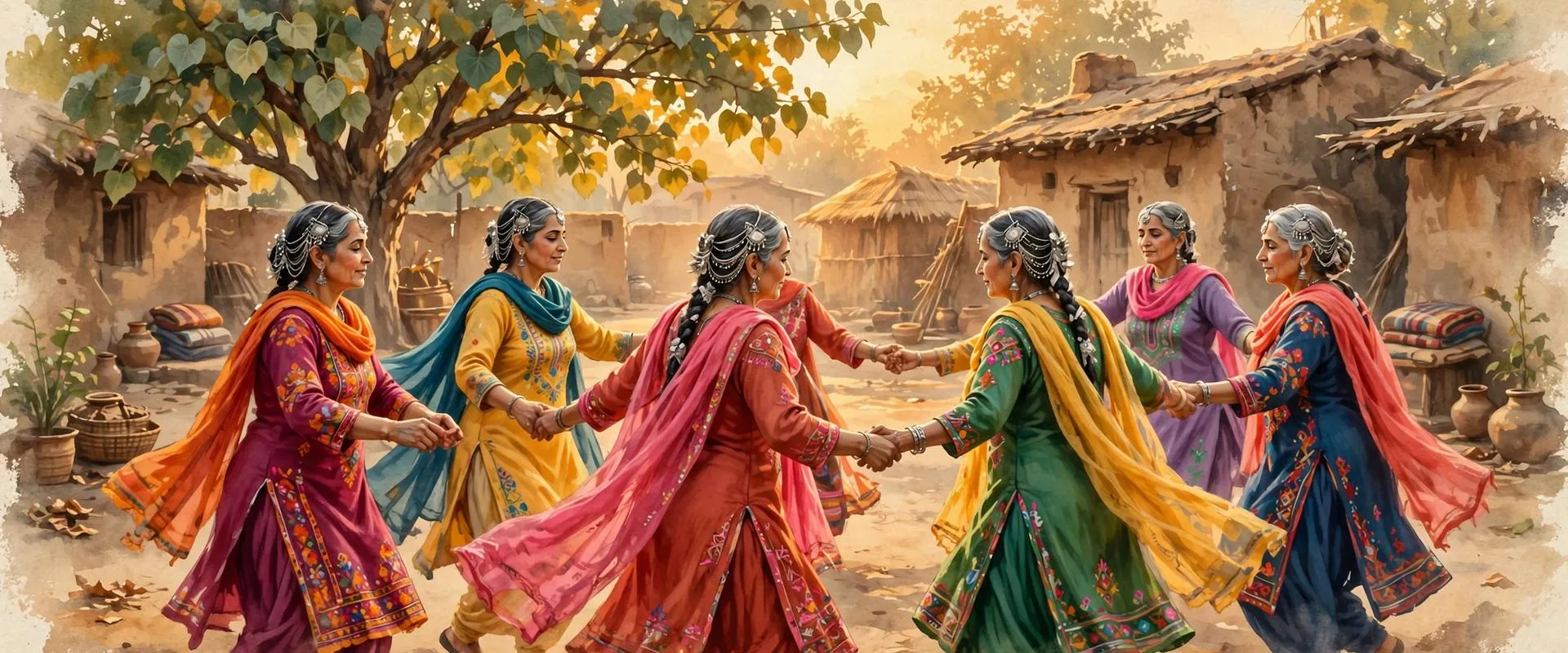
Sammi (ਸੰਮੀ) is a traditional folk dance of Punjab, danced slowly in a circle with swinging hands, small steps and soft clapping. It comes from the Sandalbar and Pothohar belt and is best known as a women's dance in colourful kurtas, sung to folk songs of love and village life.
How it's used
- 1ਕੁੜੀਆਂ ਘੇਰਾ ਪਾ ਕੇ ਸੰਮੀ ਪਾਉਂਦੀਆਂ ਹਨ।The girls dance sammi in a circle. the ring formation
- 2ਸੰਮੀ ਹੌਲੀ ਹੌਲੀ ਨੱਚੀ ਜਾਂਦੀ ਹੈ।Sammi is danced slowly, step by step. the slow flow
- 3ਮੇਲੇ ਵਿੱਚ ਸੰਮੀ ਦਾ ਨਾਚ ਹੋਇਆ।A sammi dance was performed at the fair. festivals and gatherings
Show 1 more example
- 4ਉਸ ਨੇ ਸੰਮੀ ਲਈ ਰੰਗ ਬਰੰਗਾ ਕੁੜਤਾ ਪਾਇਆ।She wore a colourful kurta for the sammi. the dancer's dress
ਸੰਮੀ ਪੰਜਾਬ ਦਾ ਇੱਕ ਪੁਰਾਣਾ ਲੋਕ ਨਾਚ ਹੈ। ਇਹ ਹੌਲੀ ਹੌਲੀ ਘੇਰੇ ਵਿੱਚ ਨੱਚਿਆ ਜਾਂਦਾ ਹੈ। ਕੁੜੀਆਂ ਰੰਗ ਬਰੰਗੇ ਕੁੜਤੇ ਪਾ ਕੇ ਹੱਥ ਹਿਲਾਉਂਦੀਆਂ ਹੋਈਆਂ ਸੰਮੀ ਪਾਉਂਦੀਆਂ ਹਨ। ਇਹ ਨਾਚ ਸੰਦਲਬਾਰ ਅਤੇ ਪੋਠੋਹਾਰ ਦੇ ਇਲਾਕੇ ਤੋਂ ਆਇਆ ਮੰਨਿਆ ਜਾਂਦਾ ਹੈ। ਸੰਮੀ ਦੇ ਗੀਤਾਂ ਵਿੱਚ ਪਿਆਰ ਅਤੇ ਪਿੰਡ ਦੇ ਜੀਵਨ ਦੀਆਂ ਗੱਲਾਂ ਹੁੰਦੀਆਂ ਹਨ।
Sammi (ਸੰਮੀ) is a traditional folk dance of Punjab, danced in a slow circle with swinging hands and gentle steps. It comes from the tribal belt of western Punjab, the Sandalbar and Pothohar country, and is best known as a women's dance in colourful kurtas, though men dance it at gatherings too.
What does sammi mean in Punjabi?
Sammi names the dance itself: a ring dance performed to folk songs, slow and swaying where bhangra is fast and leaping. Women who dance it wear colourful kurtas and lehengas, often with a silver hair accessory, and the songs carry tales of love, village life and women's feelings.
How is sammi danced?
The dancers form a ring and move with a slow flow, swinging their hands from the side and bringing them to the front, with small claps and a light hopping step worked into the turn. Some performances use sticks held in the hands. There is no drum led rush here: the singing of the dancers themselves, soft and melodious, sets the pace of the circle.
Where does sammi come from?
Sammi originates in the tribal belt of Punjab, particularly the Sandalbar area and the Pothohar region of Pakistani Punjab. In rural Indian Punjab it is kept alive as a women's dance in communities including the Sandhu, Jat and Dogar, performed at festivals and cultural gatherings. The Coke Studio song Sammi Meri Waar, sung by Umair Jaswal and Quratulain Baloch, carried the name of the dance to a worldwide audience.
How is sammi different from giddha?
Both are circle dances of Punjabi women, but their temper is different. Giddha is built around the boli, the sung couplets that tease and joke, with sharp clapping and quick turns. Sammi is slower and softer: the hands swing, the steps stay small, and the mood is one of swaying grace rather than wit. Where giddha performs for the wedding crowd, sammi belongs to the quieter gatherings of the village.
Related words
Jugti is free and independent. Reader support keeps the Kosh growing.
Support