
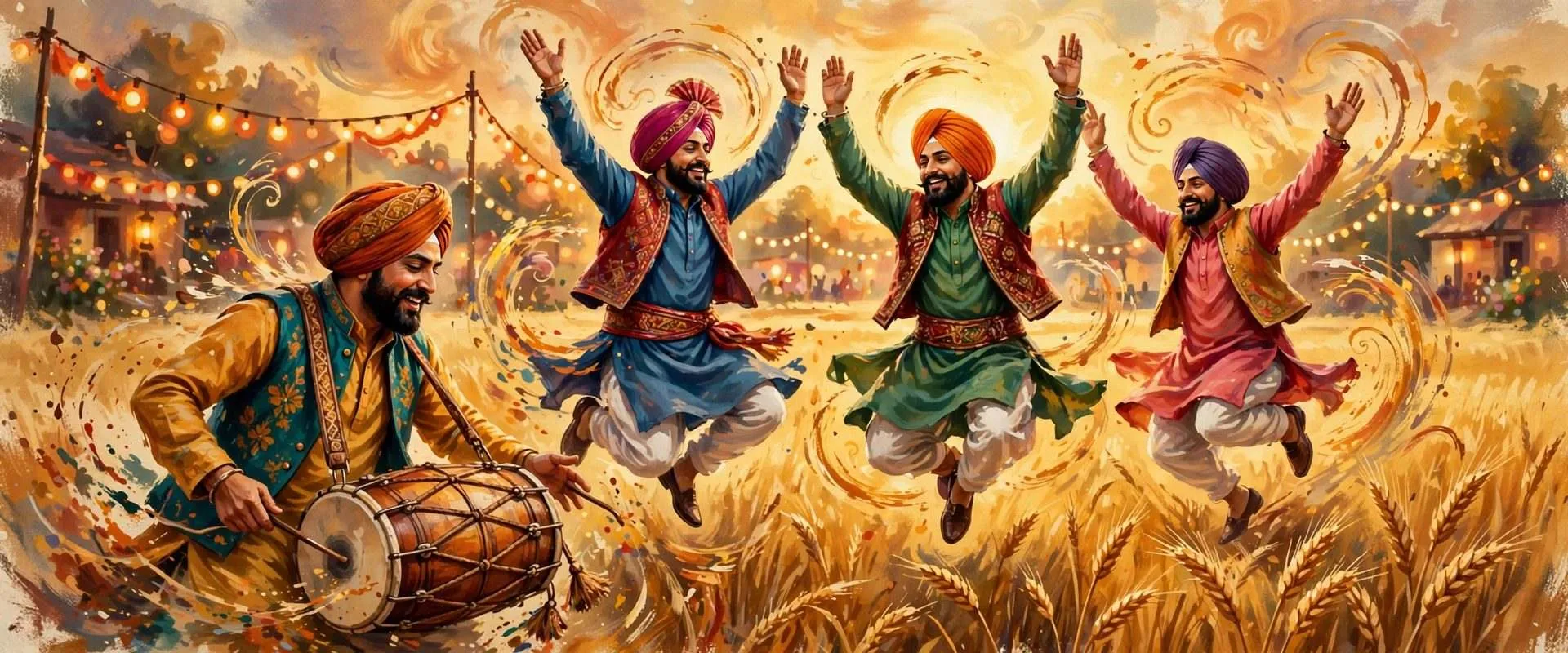
ਭੰਗੜਾ (bhangra) means Punjab's traditional folk dance — the high-energy dance of leaps, kicks and raised arms performed to the beat of the dhol. It began as a harvest celebration among Punjabi farmers and is now danced at weddings, Vaisakhi fairs and stages around the world, and stands as the most recognisable symbol of Punjabi culture.
Meaning
ਭੰਗੜਾ (bhangra) means Punjab's traditional folk dance — the high-energy dance of leaps, kicks and raised arms performed to the beat of the dhol, born as a harvest celebration by Punjabi farmers and now danced at weddings, festivals and stages worldwide. It is the most recognisable face of Punjabi culture.
A harvest dance
Bhangra began in the villages of Punjab as a farmers' celebration. After the wheat harvest, especially around Vaisakhi in April and May, farmers danced in circles in the fields to show their joy at a good crop and to welcome the new season. The dance traces its strongest roots to the Majha region, around the historic Sialkot district, where farmers performed it to mark their accomplishment at harvest time.
The music is built around the dhol — a double-headed barrel drum struck with a heavy beater on one end and a lighter stick on the other — whose swinging, syncopated rhythm has remained the hallmark of bhangra. Dancers move with vigorous kicks, leaps and bends of the body, often with upraised arms or thrusting shoulder movements, while short call-and-response folk songs called boliyan are sung alongside.
In 1953 the Maharaja of Patiala asked for bhangra to be staged as a performance, and a troupe led by the Deepak brothers of Sunam, with dhol player Bhana Ram Sunami, shaped the free-form stage version that mixed in steps from other Punjabi folk dances. From there bhangra moved from the fields to cultural shows and college campuses, and after Partition it spread through East Punjab and, with the diaspora, across the world.
In everyday speech
Today "bhangra pauna" — to do bhangra — is heard at every Punjabi celebration. No wedding is complete without guests dancing bhangra as the baraat arrives to the dhol, and Vaisakhi melas and Lohri nights all carry its beat. Bhangra teams compete in inter-college and international competitions, and the word also names the popular music style that blends dhol rhythms with hip hop, house and reggae.
Giddha is the women's folk dance of Punjab — softer, with acting, graceful movements and storytelling through folk songs — while bhangra was traditionally the men's dance. In today's cities and the diaspora that line has blurred, and boys and girls dance bhangra together at weddings and parties, though bhangra remains the bolder and more vigorous of the two.
ਪੰਜਾਬੀ ਵਿੱਚ ਅਰਥ
ਭੰਗੜਾ ਪੰਜਾਬ ਦਾ ਪਰੰਪਰਿਕ ਲੋਕ-ਨਾਚ ਹੈ — ਢੋਲ ਦੀ ਥਾਪ ’ਤੇ ਛਾਲਾਂ, ਲੱਤਾਂ ਦੇ ਝਟਕੇ ਅਤੇ ਉੱਚੀਆਂ ਬਾਹਾਂ ਨਾਲ ਕੀਤਾ ਜਾਣ ਵਾਲਾ ਜੋਸ਼-ਭਰਿਆ ਨਾਚ ਇਹ ਪੰਜਾਬੀ ਕਿਸਾਨਾਂ ਦੀ ਫ਼ਸਲ ਦੀ ਖੁਸ਼ੀ ਦਾ ਜਸ਼ਨ ਬਣ ਕੇ ਉੱਭਰਿਆ ਅਤੇ ਅੱਜ ਵਿਆਹਾਂ, ਵਿਸਾਖੀ ਦੇ ਮੇਲਿਆਂ ਅਤੇ ਦੁਨੀਆ ਭਰ ਦੇ ਮੰਚਾਂ ’ਤੇ ਨੱਚਿਆ ਜਾਂਦਾ ਹੈ ਭੰਗੜਾ ਪੰਜਾਬੀ ਸੱਭਿਆਚਾਰ ਦਾ ਸਭ ਤੋਂ ਪਛਾਣਿਆ ਜਾਣ ਵਾਲਾ ਚਿਹਰਾ ਹੈ
ਭੰਗੜੇ ਦਾ ਸੰਗੀਤ ਢੋਲ ਦੁਆਲੇ ਘੁੰਮਦਾ ਹੈ — ਦੋ-ਮੂੰਹਾ ਢੋਲ ਜਿਸ ਦੇ ਇੱਕ ਪਾਸੇ ਭਾਰੀ ਡੰਡਾ ਅਤੇ ਦੂਜੇ ਪਾਸੇ ਹਲਕੀ ਟਿੱਲੀ ਵੱਜਦੀ ਹੈ ਨਚਾਰ ਉੱਚੀਆਂ ਛਾਲਾਂ ਮਾਰਦੇ ਹਨ, ਮੋਢੇ ਹਿਲਾਉਂਦੇ ਹਨ ਅਤੇ ਨਾਲ-ਨਾਲ ਬੋਲੀਆਂ ਗਾਈਆਂ ਜਾਂਦੀਆਂ ਹਨ ਗਿੱਧਾ ਪੰਜਾਬ ਦਾ ਔਰਤਾਂ ਦਾ ਲੋਕ-ਨਾਚ ਹੈ, ਜਦੋਂ ਕਿ ਭੰਗੜਾ ਪਰੰਪਰਿਕ ਤੌਰ ’ਤੇ ਮਰਦਾਂ ਦਾ ਨਾਚ ਰਿਹਾ — ਅੱਜ ਦੋਵੇਂ ਵਿਆਹਾਂ-ਪਾਰਟੀਆਂ ਵਿੱਚ ਇਕੱਠੇ ਨੱਚੇ ਜਾਂਦੇ ਹਨ
What does bhangra mean in Punjabi?
ਭੰਗੜਾ (bhangra) means Punjab's traditional folk dance — leaps, kicks and raised arms to the dhol's beat. Born as a farmers' harvest celebration, it is now danced at weddings, Vaisakhi fairs and stages worldwide, and stands as the most recognisable symbol of Punjabi culture.
Where did bhangra come from?
Bhangra traces its strongest roots to the Majha region of Punjab, around the historic Sialkot district, where farmers performed it in the fields after the harvest, especially around Vaisakhi. It was shaped into a stage performance in the 1950s and spread through cultural shows, college campuses and the diaspora.
What is the difference between bhangra and giddha?
Bhangra is the vigorous, high-energy dance — kicks, leaps, raised arms, driven by the dhol — traditionally performed by men. Giddha is Punjab's women's folk dance, softer, with an emphasis on acting, graceful movements and storytelling through folk songs. Both are danced together at weddings and celebrations today.
ਭੰਗੜਾ ਦਾ ਪੰਜਾਬੀ ਵਿੱਚ ਕੀ ਅਰਥ ਹੈ?
ਭੰਗੜਾ ਪੰਜਾਬ ਦਾ ਪਰੰਪਰਿਕ ਲੋਕ-ਨਾਚ ਹੈ — ਢੋਲ ਦੀ ਥਾਪ ’ਤੇ ਛਾਲਾਂ, ਲੱਤਾਂ ਦੇ ਝਟਕੇ ਅਤੇ ਉੱਚੀਆਂ ਬਾਹਾਂ ਇਹ ਕਿਸਾਨਾਂ ਦੀ ਫ਼ਸਲ ਦੀ ਖੁਸ਼ੀ ਦਾ ਜਸ਼ਨ ਸੀ ਅਤੇ ਅੱਜ ਦੁਨੀਆ ਭਰ ਵਿੱਚ ਪੰਜਾਬੀ ਸੱਭਿਆਚਾਰ ਦੀ ਪਛਾਣ ਹੈ
ਭੰਗੜਾ ਅਤੇ ਗਿੱਧਾ ਵਿੱਚ ਕੀ ਫ਼ਰਕ ਹੈ?
ਭੰਗੜਾ ਜੋਸ਼-ਭਰਿਆ, ਤੇਜ਼ ਨਾਚ ਹੈ — ਛਾਲਾਂ, ਉੱਚੀਆਂ ਬਾਹਾਂ, ਢੋਲ ਦੀ ਥਾਪ — ਪਰੰਪਰਿਕ ਤੌਰ ’ਤੇ ਮਰਦਾਂ ਦਾ ਗਿੱਧਾ ਔਰਤਾਂ ਦਾ ਲੋਕ-ਨਾਚ ਹੈ, ਜਿਸ ਵਿੱਚ ਨਰਮ ਅਦਾਵਾਂ, ਅਦਾਕਾਰੀ ਅਤੇ ਲੋਕ-ਗੀਤਾਂ ਰਾਹੀਂ ਕਹਾਣੀ ਕਹੀ ਜਾਂਦੀ ਹੈ
How it's used
- 1ਬਰਾਤ ਵਿਆਹ ਵਾਲੇ ਹਾਲ ਤੱਕ ਭੰਗੜਾ ਪਾਉਂਦੀ ਗਈThe baraat danced bhangra all the way to the wedding hall.
- 2ਵਿਸਾਖੀ ’ਤੇ ਸਾਰਾ ਪਿੰਡ ਭੰਗੜੇ ਦੀਆਂ ਟੀਮਾਂ ਦੇਖਣ ਇਕੱਠਾ ਹੁੰਦਾ ਹੈAt Vaisakhi, the whole village gathers to watch the bhangra teams.
- 3ਜਿਉਂ ਹੀ ਢੋਲ ਵੱਜਣਾ ਸ਼ੁਰੂ ਹੋਇਆ, ਬੱਚੇ ਭੰਗੜਾ ਪਾਉਣ ਲੱਗ ਪਏAs soon as the dhol started, the children began doing bhangra.
- 4ਉਨ੍ਹਾਂ ਦੇ ਕਾਲਜ ਦੀ ਭੰਗੜਾ ਟੀਮ ਨੇ ਰਾਸ਼ਟਰੀ ਮੁਕਾਬਲਾ ਜਿੱਤਿਆTheir college bhangra team won the national competition.
- 5ਭੰਗੜਾ ਹੁਣ ਦੁਨੀਆ ਭਰ ਦੇ ਡਾਂਸ ਸਕੂਲਾਂ ਵਿੱਚ ਸਿਖਾਇਆ ਜਾਂਦਾ ਹੈBhangra is now taught in dance schools around the world.