
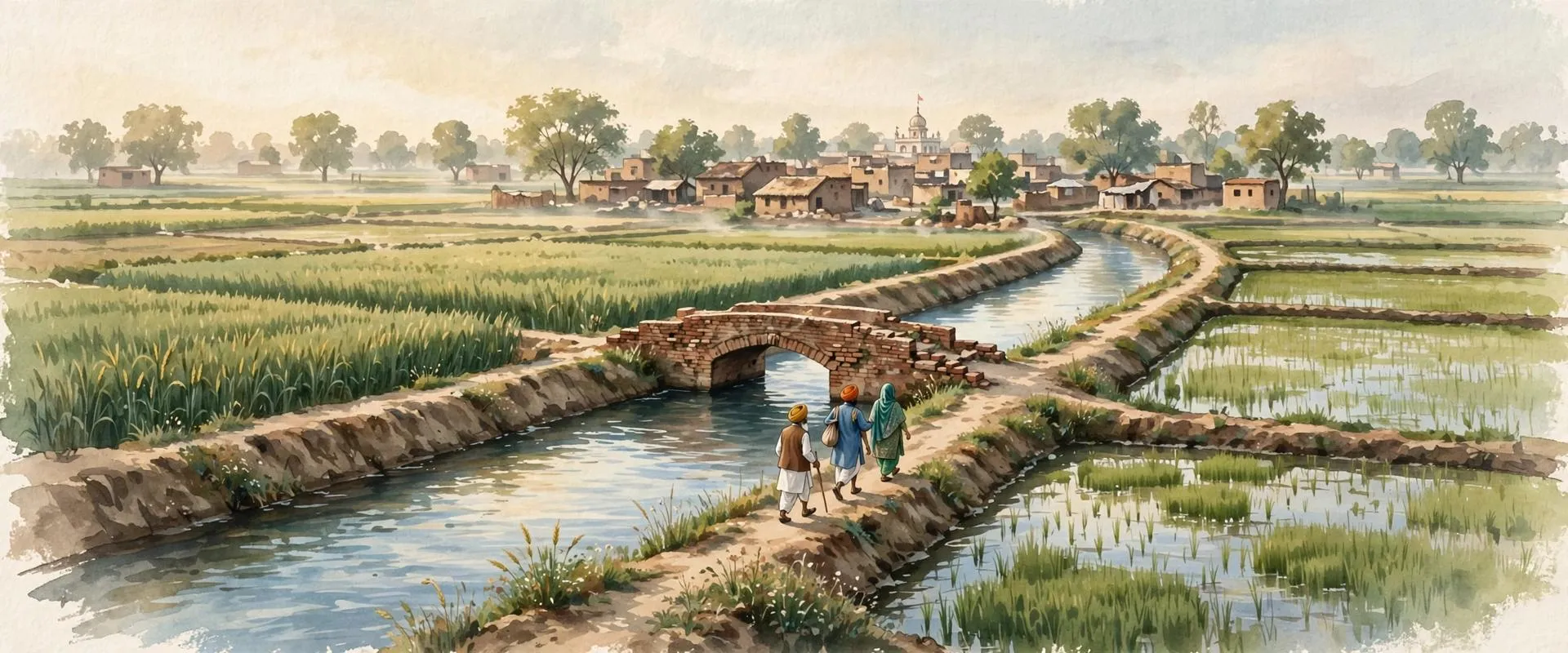
Nehar (ਨਹਿਰ) is the Punjabi word for a canal, a man-made waterway that carries river water to fields and villages. Punjab's canals, such as the Sirhind Canal from the Sutlej, turned large dry areas into fertile farmland.
How it's used
- 1ਨਹਿਰ ਦਾ ਪਾਣੀ ਅੱਜ ਸਾਡੇ ਖੇਤਾਂ ਵਿੱਚ ਆਇਆ।The canal water came to our fields today. irrigation arriving
- 2ਕਿਸਾਨ ਨਹਿਰ ਕਿਨਾਰੇ ਖੜ੍ਹਾ ਆਪਣੀ ਵਾਰੀ ਦੀ ਉਡੀਕ ਕਰ ਰਿਹਾ ਸੀ।The farmer stood by the canal waiting for his turn. waiting for a water turn
- 3ਸਰਹਿੰਦ ਨਹਿਰ ਰੋਪੜ ਤੋਂ ਸ਼ੁਰੂ ਹੁੰਦੀ ਹੈ।The Sirhind Canal begins at Ropar. Punjab's famous canal
Show 1 more example
- 4ਨਹਿਰ ਦੇ ਦੋਵੇਂ ਕਿਨਾਰਿਆਂ ਤੇ ਹਰੇ ਖੇਤ ਹਨ।There are green fields on both banks of the canal. canal landscape
ਨਹਿਰ ਮਨੁੱਖ ਵੱਲੋਂ ਬਣਾਇਆ ਪਾਣੀ ਦਾ ਰਸਤਾ ਹੈ ਜੋ ਦਰਿਆ ਦਾ ਪਾਣੀ ਖੇਤਾਂ ਤੱਕ ਲੈ ਜਾਂਦਾ ਹੈ। ਪੰਜਾਬ ਵਿੱਚ ਨਹਿਰ ਖੇਤੀ ਦੀ ਜਾਨ ਹੈ, ਕਿਉਂਕਿ ਨਹਿਰ ਦੇ ਪਾਣੀ ਨਾਲ ਹੀ ਕਣਕ, ਝੋਨਾ ਅਤੇ ਹੋਰ ਫਸਲਾਂ ਸਿੰਜੀਆਂ ਜਾਂਦੀਆਂ ਹਨ। ਸਰਹਿੰਦ ਨਹਿਰ ਸਤਲੁਜ ਦਰਿਆ ਤੋਂ ਰੋਪੜ ਕੋਲੋਂ ਸ਼ੁਰੂ ਹੁੰਦੀ ਹੈ ਅਤੇ ਮਾਲਵੇ ਦੇ ਵੱਡੇ ਹਿੱਸੇ ਨੂੰ ਪਾਣੀ ਦਿੰਦੀ ਹੈ।
Nehar (ਨਹਿਰ) is the Punjabi word for a canal: a man-made waterway that carries water from a river to fields, villages and towns across Punjab. A nehar is not scenery. It is working water, the channel that turns dry land into crops and sets the rhythm of sowing and irrigation.
What does nehar mean in Punjabi?
It means a canal, a long and narrow man-made stretch of water built to convey water for irrigation. Dictionaries give the Punjabi form as nahir and define a canal in exactly those terms: dug by people, not born like a river, and made above all to carry water where farming needs it. A river flows where nature put it. A nehar flows where engineers and farmers need it to go.
Punjab shows what that means at full scale in the Sirhind Canal. It is a large irrigation canal carrying water from the Sutlej River, one of the oldest and biggest irrigation works in the Indus River system, inaugurated in 1882 and beginning at the Ropar headworks. At Doraha it splits into three branches, the Abohar branch, the Bathinda branch and the Patiala branch, which subdivide further to irrigate a large swathe of the Malwa region, an area once partially arid and now extremely fertile because of that water.
How is a nehar different from a river and a well?
A river is natural and a nehar is built: its banks, its levels and its release of water are managed so fields receive water in turn. A well, a khuh in Punjabi, lifts water up from under one farm. A nehar brings river water across a whole region, village after village, which is why canal water arriving is spoken of in the pind as an event, not a detail.
Why does the nehar matter in village life?
Because so much else waits on it. Sowing plans, the health of a standing fasal, and the fodder that feeds the animals all lean on whether the nehar is running and when a farmer's turn for its water comes. In everyday speech the word carries that weight: to say the nehar water has come is to say the season can move forward.
Related words
Sources (3)
Jugti is free and independent. Reader support keeps the Kosh growing.
Support