
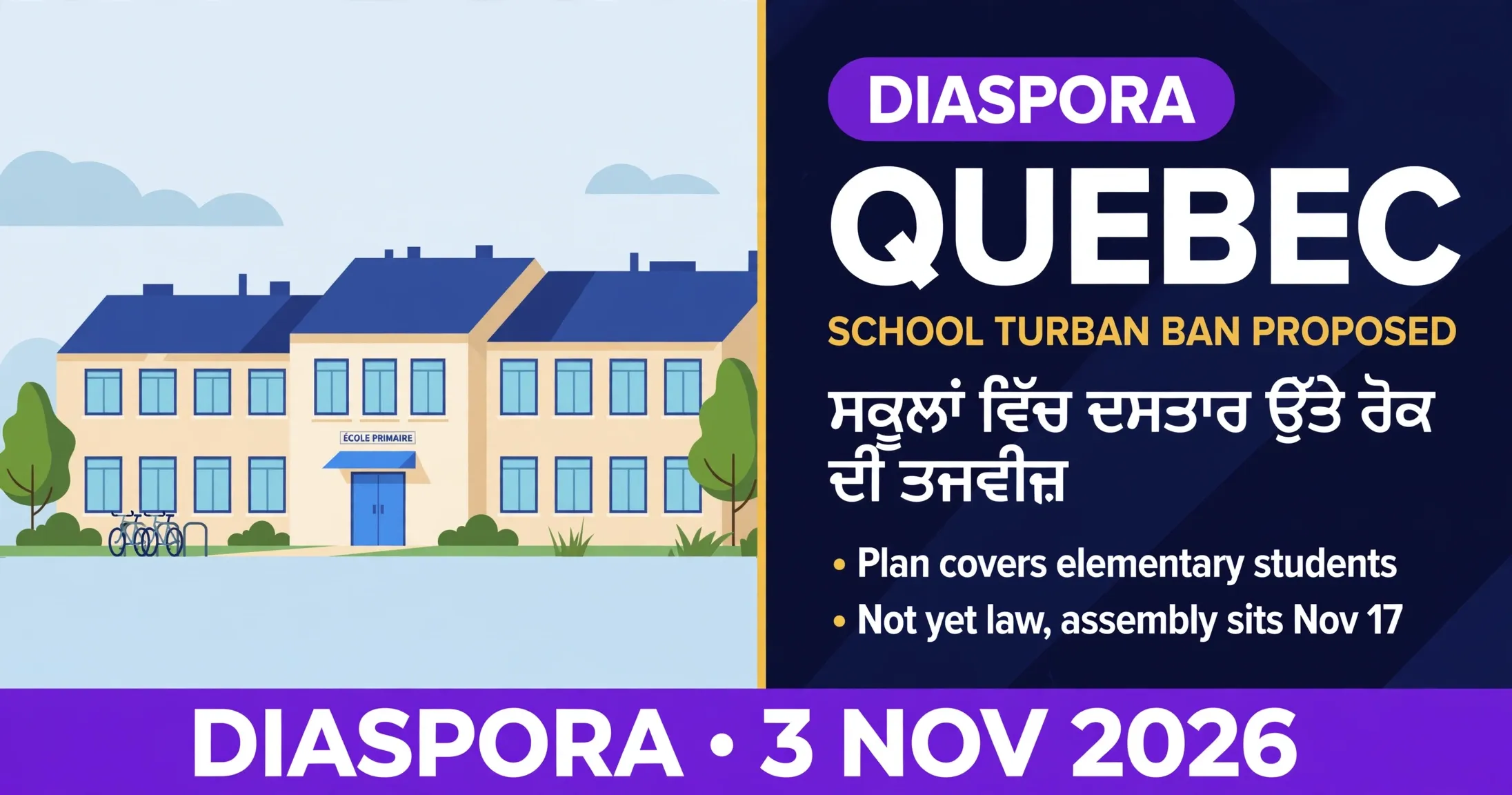
Quebec Plans to Ban Turbans and Other Religious Symbols in Elementary Schoolsਕਿਊਬੈਕ ਐਲੀਮੈਂਟਰੀ ਸਕੂਲਾਂ ਵਿੱਚ ਦਸਤਾਰਾਂ ਉੱਤੇ ਰੋਕ ਦੀ ਯੋਜਨਾ ਬਣਾ ਰਿਹਾ ਹੈ
Key facts
- Quebec's Parti Québécois government plans to bar elementary students from wearing visible religious symbols, including turbans
- Education Minister Joël Arseneau called the plan non-negotiable; it was a PQ election promise
- The plan is not yet law and the National Assembly resumes on 17 November 2026
- Bill 21 from 2019 already bars teachers, police and judges from wearing religious symbols at work and is before Canada's Supreme Court
Sikh children in Quebec may soon have to leave their turbans at the school gate. The province's newly elected Parti Québécois government plans to stop elementary school students from wearing visible religious symbols, including the Sikh turban, the Muslim hijab and niqab and the Jewish kippah. Education Minister Joël Arseneau has described the plan as non-negotiable, saying the government was elected on that platform and intends to work on that basis.
What exactly is being proposed?
The proposal would extend Quebec's religious symbols rules from adults in authority to children in primary school. The government has not yet introduced it as a law. Quebec's National Assembly is scheduled to resume its session on 17 November, and the final scope of the restrictions will depend on the legislation it brings. Premier Paul St-Pierre Plamondon defended the idea during the election campaign in September, saying schools already set rules for children and that most people would understand a religious symbol being removed.
The Parti Québécois won Quebec's provincial election in October. A ban on schoolchildren wearing overt religious symbols was part of its election platform, so the announcement is the new government stating it will deliver a campaign promise, not a rule already in force.
How did Quebec get here?
Quebec's restrictions began in 2019, when the Coalition Avenir Québec government passed Bill 21, the Act respecting the laicity of the State. It barred public servants in positions of authority, including school teachers, principals and vice-principals, police officers and judges, from wearing visible religious symbols at work. Later measures extended the rules to staff at public schools, publicly funded private schools and daycare centres, and restricted religious practices in some public institutions. Bill 21 has been challenged in court and is before Canada's Supreme Court, which heard arguments in March 2026.
Until now, every step has applied to adults: employees, officials and staff. The new plan is the first that would reach children themselves, which is why it has drawn a sharper response.
What are critics saying?
The Canadian Civil Liberties Association said Quebec had progressively expanded restrictions on religious expression and was now targeting children, sending a message of exclusion to every elementary school student. Its Quebec spokesperson, Anaïs Bussières McNicoll, called the approach a solution in search of a problem. The National Council of Canadian Muslims argued that stopping children from wearing religious symbols could violate their freedom of religion and their right to education, and that children should not have to choose between their beliefs and attending school.
For Punjabi families, in Quebec and across Canada, the turban is a central article of the Sikh faith, not a fashion choice, and Canada has a long record of accommodation that includes turbaned officers in the Royal Canadian Mounted Police since 1990. What happens in the National Assembly from 17 November will decide whether this proposal becomes the next chapter in that long argument.
Has Quebec banned turbans in elementary schools?
Not yet. The newly elected Parti Québécois government says it plans to ban visible religious symbols, including turbans, for elementary students. No law has been introduced, and the National Assembly resumes on 17 November 2026.
Who would the proposed ban affect most?
Reports say Sikh, Muslim and Jewish children would be affected most, because the plan covers turbans, hijabs, niqabs and kippahs worn by elementary school students.
What law already restricts religious symbols in Quebec?
Bill 21, passed in 2019, bars public servants in authority, such as teachers, principals, police officers and judges, from wearing visible religious symbols at work. It is being challenged before Canada's Supreme Court.
ਕਿਊਬੈਕ ਵਿੱਚ ਸਿੱਖ ਬੱਚਿਆਂ ਨੂੰ ਜਲਦੀ ਹੀ ਸਕੂਲ ਦੇ ਗੇਟ ਉੱਤੇ ਆਪਣੀਆਂ ਦਸਤਾਰਾਂ ਛੱਡਣੀਆਂ ਪੈ ਸਕਦੀਆਂ ਹਨ। ਸੂਬੇ ਦੀ ਨਵੀਂ ਚੁਣੀ ਪਾਰਟੀ ਕਿਊਬੈਕਵਾ ਸਰਕਾਰ ਐਲੀਮੈਂਟਰੀ ਸਕੂਲ ਦੇ ਵਿਦਿਆਰਥੀਆਂ ਨੂੰ ਦਿਖਾਈ ਦੇਣ ਵਾਲੇ ਧਾਰਮਿਕ ਚਿੰਨ੍ਹ ਪਹਿਨਣ ਤੋਂ ਰੋਕਣ ਦੀ ਯੋਜਨਾ ਬਣਾ ਰਹੀ ਹੈ। ਇਨ੍ਹਾਂ ਵਿੱਚ ਸਿੱਖ ਦਸਤਾਰ, ਮੁਸਲਿਮ ਹਿਜਾਬ ਅਤੇ ਨਕਾਬ ਅਤੇ ਯਹੂਦੀ ਕਿੱਪਾ ਸ਼ਾਮਲ ਹਨ। ਸਿੱਖਿਆ ਮੰਤਰੀ ਜੋਏਲ ਆਰਸਨੋ ਨੇ ਇਸ ਯੋਜਨਾ ਨੂੰ ਗੈਰ ਸਮਝੌਤਾਯੋਗ ਕਿਹਾ ਹੈ। ਉਨ੍ਹਾਂ ਕਿਹਾ ਕਿ ਸਰਕਾਰ ਇਸੇ ਮੰਚ ਉੱਤੇ ਚੁਣੀ ਗਈ ਸੀ ਅਤੇ ਉਸੇ ਆਧਾਰ ਉੱਤੇ ਕੰਮ ਕਰਨ ਦਾ ਇਰਾਦਾ ਰੱਖਦੀ ਹੈ।
ਅਸਲ ਵਿੱਚ ਕੀ ਤਜਵੀਜ਼ ਹੈ?
ਇਹ ਤਜਵੀਜ਼ ਕਿਊਬੈਕ ਦੇ ਧਾਰਮਿਕ ਚਿੰਨ੍ਹਾਂ ਵਾਲੇ ਨਿਯਮ ਅਧਿਕਾਰ ਵਾਲੇ ਬਾਲਗਾਂ ਤੋਂ ਅੱਗੇ ਵਧਾ ਕੇ ਪ੍ਰਾਇਮਰੀ ਸਕੂਲ ਦੇ ਬੱਚਿਆਂ ਤੱਕ ਲੈ ਜਾਵੇਗੀ। ਸਰਕਾਰ ਨੇ ਅਜੇ ਇਸ ਨੂੰ ਕਾਨੂੰਨ ਵਜੋਂ ਪੇਸ਼ ਨਹੀਂ ਕੀਤਾ। ਕਿਊਬੈਕ ਦੀ ਨੈਸ਼ਨਲ ਅਸੈਂਬਲੀ ਦਾ ਸੈਸ਼ਨ 17 ਨਵੰਬਰ ਨੂੰ ਮੁੜ ਸ਼ੁਰੂ ਹੋਣਾ ਹੈ, ਅਤੇ ਰੋਕਾਂ ਦਾ ਅੰਤਿਮ ਘੇਰਾ ਉਸ ਵੱਲੋਂ ਲਿਆਂਦੇ ਕਾਨੂੰਨ ਉੱਤੇ ਨਿਰਭਰ ਕਰੇਗਾ। ਪ੍ਰੀਮੀਅਰ ਪਾਲ ਸੇਂਟ ਪੀਅਰ ਪਲਾਮੋਂਦੋਂ ਨੇ ਸਤੰਬਰ ਵਿੱਚ ਚੋਣ ਮੁਹਿੰਮ ਦੌਰਾਨ ਇਸ ਵਿਚਾਰ ਦਾ ਬਚਾਅ ਕੀਤਾ ਸੀ। ਉਨ੍ਹਾਂ ਕਿਹਾ ਸੀ ਕਿ ਸਕੂਲ ਪਹਿਲਾਂ ਹੀ ਬੱਚਿਆਂ ਲਈ ਨਿਯਮ ਬਣਾਉਂਦੇ ਹਨ ਅਤੇ ਬਹੁਤੇ ਲੋਕ ਧਾਰਮਿਕ ਚਿੰਨ੍ਹ ਉਤਾਰਨ ਨੂੰ ਸਮਝਣਗੇ।
ਪਾਰਟੀ ਕਿਊਬੈਕਵਾ ਨੇ ਅਕਤੂਬਰ ਵਿੱਚ ਕਿਊਬੈਕ ਦੀਆਂ ਸੂਬਾਈ ਚੋਣਾਂ ਜਿੱਤੀਆਂ। ਸਕੂਲੀ ਬੱਚਿਆਂ ਦੇ ਦਿਖਾਈ ਦੇਣ ਵਾਲੇ ਧਾਰਮਿਕ ਚਿੰਨ੍ਹ ਪਹਿਨਣ ਉੱਤੇ ਰੋਕ ਉਸ ਦੇ ਚੋਣ ਮੰਚ ਦਾ ਹਿੱਸਾ ਸੀ। ਇਸ ਲਈ ਇਹ ਐਲਾਨ ਨਵੀਂ ਸਰਕਾਰ ਵੱਲੋਂ ਚੋਣ ਵਾਅਦਾ ਪੂਰਾ ਕਰਨ ਦਾ ਕਥਨ ਹੈ, ਪਹਿਲਾਂ ਤੋਂ ਲਾਗੂ ਨਿਯਮ ਨਹੀਂ।
ਕਿਊਬੈਕ ਇੱਥੇ ਕਿਵੇਂ ਪਹੁੰਚਿਆ?
ਕਿਊਬੈਕ ਦੀਆਂ ਰੋਕਾਂ 2019 ਵਿੱਚ ਸ਼ੁਰੂ ਹੋਈਆਂ, ਜਦੋਂ ਕੋਆਲੀਸ਼ਨ ਆਵਨੀਰ ਕਿਊਬੈਕ ਸਰਕਾਰ ਨੇ ਬਿੱਲ 21 ਪਾਸ ਕੀਤਾ, ਜਿਸ ਨੂੰ ਰਾਜ ਦੀ ਧਰਮ ਨਿਰਪੱਖਤਾ ਬਾਰੇ ਕਾਨੂੰਨ ਕਿਹਾ ਜਾਂਦਾ ਹੈ। ਇਸ ਨੇ ਸਕੂਲ ਅਧਿਆਪਕਾਂ, ਪ੍ਰਿੰਸੀਪਲਾਂ ਅਤੇ ਵਾਈਸ ਪ੍ਰਿੰਸੀਪਲਾਂ, ਪੁਲਿਸ ਅਧਿਕਾਰੀਆਂ ਅਤੇ ਜੱਜਾਂ ਸਮੇਤ ਅਧਿਕਾਰ ਵਾਲੇ ਅਹੁਦਿਆਂ ਉੱਤੇ ਸਰਕਾਰੀ ਕਰਮਚਾਰੀਆਂ ਨੂੰ ਕੰਮ ਉੱਤੇ ਦਿਖਾਈ ਦੇਣ ਵਾਲੇ ਧਾਰਮਿਕ ਚਿੰਨ੍ਹ ਪਹਿਨਣ ਤੋਂ ਰੋਕਿਆ। ਬਾਅਦ ਦੇ ਕਦਮਾਂ ਨੇ ਨਿਯਮ ਸਰਕਾਰੀ ਸਕੂਲਾਂ, ਸਰਕਾਰੀ ਮਦਦ ਵਾਲੇ ਨਿੱਜੀ ਸਕੂਲਾਂ ਅਤੇ ਡੇਅਕੇਅਰ ਕੇਂਦਰਾਂ ਦੇ ਅਮਲੇ ਤੱਕ ਵਧਾਏ, ਅਤੇ ਕੁਝ ਸਰਕਾਰੀ ਸੰਸਥਾਵਾਂ ਵਿੱਚ ਧਾਰਮਿਕ ਅਮਲਾਂ ਉੱਤੇ ਰੋਕ ਲਾਈ। ਬਿੱਲ 21 ਨੂੰ ਅਦਾਲਤ ਵਿੱਚ ਚੁਣੌਤੀ ਦਿੱਤੀ ਗਈ ਹੈ ਅਤੇ ਇਹ ਕੈਨੇਡਾ ਦੀ ਸੁਪਰੀਮ ਕੋਰਟ ਸਾਹਮਣੇ ਹੈ, ਜਿਸ ਨੇ ਮਾਰਚ 2026 ਵਿੱਚ ਦਲੀਲਾਂ ਸੁਣੀਆਂ ਸਨ।
ਹੁਣ ਤੱਕ ਹਰ ਕਦਮ ਬਾਲਗਾਂ ਉੱਤੇ ਲਾਗੂ ਹੋਇਆ ਹੈ: ਕਰਮਚਾਰੀ, ਅਧਿਕਾਰੀ ਅਤੇ ਅਮਲਾ। ਨਵੀਂ ਯੋਜਨਾ ਪਹਿਲੀ ਹੈ ਜੋ ਬੱਚਿਆਂ ਤੱਕ ਆਪ ਪਹੁੰਚੇਗੀ, ਅਤੇ ਇਸੇ ਲਈ ਇਸ ਉੱਤੇ ਤਿੱਖਾ ਪ੍ਰਤੀਕਰਮ ਆਇਆ ਹੈ।
ਆਲੋਚਕ ਕੀ ਕਹਿ ਰਹੇ ਹਨ?
ਕੈਨੇਡੀਅਨ ਸਿਵਲ ਲਿਬਰਟੀਜ਼ ਐਸੋਸੀਏਸ਼ਨ ਨੇ ਕਿਹਾ ਕਿ ਕਿਊਬੈਕ ਨੇ ਧਾਰਮਿਕ ਪ੍ਰਗਟਾਵੇ ਉੱਤੇ ਰੋਕਾਂ ਹੌਲੀ ਹੌਲੀ ਵਧਾਈਆਂ ਹਨ ਅਤੇ ਹੁਣ ਬੱਚਿਆਂ ਨੂੰ ਨਿਸ਼ਾਨਾ ਬਣਾ ਰਿਹਾ ਹੈ, ਜਿਸ ਨਾਲ ਹਰ ਐਲੀਮੈਂਟਰੀ ਸਕੂਲ ਵਿਦਿਆਰਥੀ ਨੂੰ ਬਾਹਰ ਕਰਨ ਦਾ ਸੁਨੇਹਾ ਜਾਂਦਾ ਹੈ। ਇਸ ਦੀ ਕਿਊਬੈਕ ਬੁਲਾਰਾ ਅਨਾਈਸ ਬੁਸੀਏਰ ਮੈਕਨਿਕੋਲ ਨੇ ਇਸ ਨੂੰ ਬਿਨਾਂ ਸਮੱਸਿਆ ਦੇ ਹੱਲ ਦੀ ਭਾਲ ਕਿਹਾ। ਨੈਸ਼ਨਲ ਕੌਂਸਲ ਆਫ ਕੈਨੇਡੀਅਨ ਮੁਸਲਿਮਜ਼ ਨੇ ਦਲੀਲ ਦਿੱਤੀ ਕਿ ਬੱਚਿਆਂ ਨੂੰ ਧਾਰਮਿਕ ਚਿੰਨ੍ਹ ਪਹਿਨਣ ਤੋਂ ਰੋਕਣਾ ਉਨ੍ਹਾਂ ਦੀ ਧਰਮ ਦੀ ਆਜ਼ਾਦੀ ਅਤੇ ਸਿੱਖਿਆ ਦੇ ਹੱਕ ਦੀ ਉਲੰਘਣਾ ਹੋ ਸਕਦੀ ਹੈ, ਅਤੇ ਬੱਚਿਆਂ ਨੂੰ ਆਪਣੇ ਵਿਸ਼ਵਾਸਾਂ ਅਤੇ ਸਕੂਲ ਜਾਣ ਵਿਚਕਾਰ ਚੋਣ ਨਹੀਂ ਕਰਨੀ ਚਾਹੀਦੀ।
ਕਿਊਬੈਕ ਅਤੇ ਪੂਰੇ ਕੈਨੇਡਾ ਵਿੱਚ ਪੰਜਾਬੀ ਪਰਿਵਾਰਾਂ ਲਈ ਦਸਤਾਰ ਸਿੱਖ ਧਰਮ ਦਾ ਕੇਂਦਰੀ ਅੰਗ ਹੈ, ਕੋਈ ਫੈਸ਼ਨ ਚੋਣ ਨਹੀਂ, ਅਤੇ ਕੈਨੇਡਾ ਕੋਲ ਸਮਾਯੋਜਨ ਦਾ ਲੰਮਾ ਰਿਕਾਰਡ ਹੈ, ਜਿਸ ਵਿੱਚ 1990 ਤੋਂ ਰਾਇਲ ਕੈਨੇਡੀਅਨ ਮਾਊਂਟਡ ਪੁਲਿਸ ਵਿੱਚ ਦਸਤਾਰਧਾਰੀ ਅਧਿਕਾਰੀ ਸ਼ਾਮਲ ਹਨ। 17 ਨਵੰਬਰ ਤੋਂ ਨੈਸ਼ਨਲ ਅਸੈਂਬਲੀ ਵਿੱਚ ਕੀ ਹੁੰਦਾ ਹੈ, ਇਹੀ ਫੈਸਲਾ ਕਰੇਗਾ ਕਿ ਇਹ ਤਜਵੀਜ਼ ਉਸ ਲੰਮੀ ਬਹਿਸ ਦਾ ਅਗਲਾ ਅਧਿਆਇ ਬਣਦੀ ਹੈ ਜਾਂ ਨਹੀਂ।
ਕੀ ਕਿਊਬੈਕ ਨੇ ਐਲੀਮੈਂਟਰੀ ਸਕੂਲਾਂ ਵਿੱਚ ਦਸਤਾਰਾਂ ਉੱਤੇ ਰੋਕ ਲਾ ਦਿੱਤੀ ਹੈ?
ਅਜੇ ਨਹੀਂ। ਨਵੀਂ ਚੁਣੀ ਪਾਰਟੀ ਕਿਊਬੈਕਵਾ ਸਰਕਾਰ ਕਹਿੰਦੀ ਹੈ ਕਿ ਉਹ ਐਲੀਮੈਂਟਰੀ ਵਿਦਿਆਰਥੀਆਂ ਲਈ ਦਸਤਾਰਾਂ ਸਮੇਤ ਦਿਖਾਈ ਦੇਣ ਵਾਲੇ ਧਾਰਮਿਕ ਚਿੰਨ੍ਹਾਂ ਉੱਤੇ ਰੋਕ ਲਾਉਣ ਦੀ ਯੋਜਨਾ ਬਣਾ ਰਹੀ ਹੈ। ਕੋਈ ਕਾਨੂੰਨ ਪੇਸ਼ ਨਹੀਂ ਹੋਇਆ, ਅਤੇ ਨੈਸ਼ਨਲ ਅਸੈਂਬਲੀ 17 ਨਵੰਬਰ 2026 ਨੂੰ ਮੁੜ ਬੈਠੇਗੀ।
ਤਜਵੀਜ਼ ਵਾਲੀ ਰੋਕ ਦਾ ਸਭ ਤੋਂ ਵੱਧ ਅਸਰ ਕਿਸ ਉੱਤੇ ਪਵੇਗਾ?
ਰਿਪੋਰਟਾਂ ਅਨੁਸਾਰ ਸਿੱਖ, ਮੁਸਲਿਮ ਅਤੇ ਯਹੂਦੀ ਬੱਚਿਆਂ ਉੱਤੇ ਸਭ ਤੋਂ ਵੱਧ ਅਸਰ ਪਵੇਗਾ, ਕਿਉਂਕਿ ਯੋਜਨਾ ਵਿੱਚ ਐਲੀਮੈਂਟਰੀ ਸਕੂਲ ਦੇ ਵਿਦਿਆਰਥੀਆਂ ਵੱਲੋਂ ਪਹਿਨੀਆਂ ਦਸਤਾਰਾਂ, ਹਿਜਾਬ, ਨਕਾਬ ਅਤੇ ਕਿੱਪਾ ਸ਼ਾਮਲ ਹਨ।
ਕਿਊਬੈਕ ਵਿੱਚ ਧਾਰਮਿਕ ਚਿੰਨ੍ਹਾਂ ਉੱਤੇ ਪਹਿਲਾਂ ਤੋਂ ਕਿਹੜਾ ਕਾਨੂੰਨ ਰੋਕ ਲਾਉਂਦਾ ਹੈ?
2019 ਵਿੱਚ ਪਾਸ ਬਿੱਲ 21 ਅਧਿਆਪਕਾਂ, ਪ੍ਰਿੰਸੀਪਲਾਂ, ਪੁਲਿਸ ਅਧਿਕਾਰੀਆਂ ਅਤੇ ਜੱਜਾਂ ਵਰਗੇ ਅਧਿਕਾਰ ਵਾਲੇ ਸਰਕਾਰੀ ਕਰਮਚਾਰੀਆਂ ਨੂੰ ਕੰਮ ਉੱਤੇ ਦਿਖਾਈ ਦੇਣ ਵਾਲੇ ਧਾਰਮਿਕ ਚਿੰਨ੍ਹ ਪਹਿਨਣ ਤੋਂ ਰੋਕਦਾ ਹੈ। ਇਸ ਨੂੰ ਕੈਨੇਡਾ ਦੀ ਸੁਪਰੀਮ ਕੋਰਟ ਸਾਹਮਣੇ ਚੁਣੌਤੀ ਦਿੱਤੀ ਜਾ ਰਹੀ ਹੈ।
Sources (4)
- The Times of India (Education Times), Canada's Quebec plans to ban Turbans, Niqabs and other religious symbols in Elementary Schools, 2 November 2026
- EuropeSays (Montreal Gazette reporting), From teachers to students: Turbans, niqabs to be banned in Canada's Quebec schools, 2 November 2026
- The Punjab Standard, Quebec turban ban: Sikh children may lose right to wear turban in school, 3 November 2026
- National Times Media, Canada: Quebec Plans To Extend Religious Symbols Ban To Elementary School Students, 2 November 2026
Jugti is free and independent. Reader support keeps Jugti going.
SupportMore Diaspora news All Diaspora news →
 Brampton Rideshare Driver Charged Over Alleged Toronto Sexual Assaultਬਰੈਂਪਟਨ ਦੇ ਰਾਈਡਸ਼ੇਅਰ ਡਰਾਈਵਰ ਉੱਤੇ ਟੋਰਾਂਟੋ ਵਿੱਚ ਜਿਨਸੀ ਹਮਲੇ ਦੇ ਦੋਸ਼9 hrs ago
 Suhana Gill, 20, Sworn In as Surrey's Youngest-Ever Councillorਸੁਹਾਨਾ ਗਿੱਲ, 20, ਸਰੀ ਦੀ ਸਭ ਤੋਂ ਘੱਟ ਉਮਰ ਦੀ ਕੌਂਸਲਰ ਵਜੋਂ ਸਹੁੰ ਚੁੱਕੀ9 hrs ago
 Express Entry Job Offer Points Are Now Live: Check Your Recalculated CRS Scoreਐਕਸਪ੍ਰੈਸ ਐਂਟਰੀ ਵਿੱਚ ਨੌਕਰੀ ਆਫ਼ਰ ਦੇ ਅੰਕ ਹੁਣ ਲਾਗੂ: ਆਪਣਾ ਮੁੜ ਗਿਣਿਆ ਸੀਆਰਐਸ ਅੰਕ ਵੇਖੋ2 days ago
 Surrey Police Probe Apparent Arson Outside Sikh Activist Narinder Singh Randhawa's Homeਸਰੀ ਪੁਲਿਸ ਸਿੱਖ ਕਾਰਕੁਨ ਨਰਿੰਦਰ ਸਿੰਘ ਰੰਧਾਵਾ ਦੇ ਘਰ ਬਾਹਰ ਕਥਿਤ ਅੱਗਜ਼ਨੀ ਦੀ ਜਾਂਚ ਕਰ ਰਹੀ ਹੈ3 days ago