
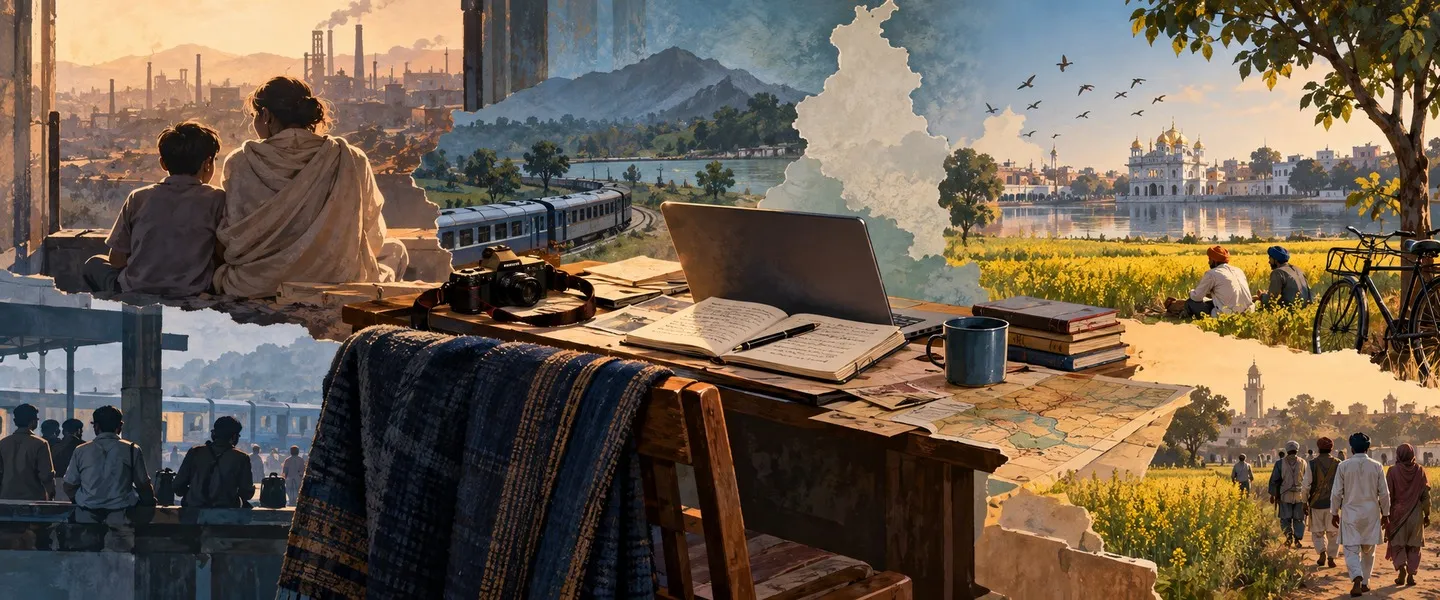
Amandeep Sandhu (b. 1973) is an Indian novelist and journalist who writes in English. His semi-autobiographical novels Sepia Leaves (2008) and Roll of Honour (2012), and his non-fiction book Panjab: Journeys Through Fault Lines (2019), probe mental illness and the fault lines of modern Punjab.
ਜੀਵਨ ਇੱਕ ਨਜ਼ਰ ਵਿੱਚ
- 1973ਜਨਮ
- 2008ਪ੍ਰਸਿੱਧੀ Sepia Leaves
- 2012ਪ੍ਰਸਿੱਧੀ Roll of Honour
- 2019ਪ੍ਰਸਿੱਧੀ Panjab: Journeys Through Fault Lines
- ਪੰਜਾਬੀ ਨਾਂ
- ਅਮਨਦੀਪ ਸੰਧੂ
- ਜਨਮ
- born 1973
- Birthplace
- Rourkela, Odisha
- ਸਿੱਖਿਆ
- MA (English Literature), University of Hyderabad; Diploma in Journalism, Asian School of Journalism
- Writes in
- English
- ਪ੍ਰਸਿੱਧੀ
- Sepia Leaves (2008), Roll of Honour (2012), Panjab: Journeys Through Fault Lines (2019)
All 10 facts
- Based in
- Bengaluru, Karnataka
- Journalism
- The Caravan, The Hindustan Times, The Hindu, Scroll, Tehelka
- Fellowships
- Akademie Schloss Solitude (2013–15), Homi Bhabha Fellow (2022–24), New India Foundation Book Fellow (2025–26)
- ਮੁੱਖ ਪੰਨਾ
- Born in Rourkela, Odisha; based in Bengaluru, Karnataka
Amandeep Sandhu (born 1973) is an Indian novelist and journalist who writes in English, born in Rourkela, Odisha, into a Punjabi Sikh family and now based in Bengaluru. His semi-autobiographical novels Sepia Leaves (2008) and Roll of Honour (2012), and his non-fiction book Panjab: Journeys Through Fault Lines (2019), examine mental illness in a family, the divided loyalties of 1984, and the agrarian, ecological and social strains of modern Punjab, in writing that mixes memoir, history and reportage.
Early life in Rourkela
Sandhu was born in 1973 in Rourkela, the steel city in Odisha, where his father worked at the steel plant. His mother lived with schizophrenia, and he has said she was already unwell when he was born, so from boyhood he was both her son and, in practical ways, her caregiver. The home was unsettled: he was sent to a hostel at the age of six, brought back at seven, sent to live with relatives at nine, and then to boarding school, at a time when Punjab was entering its years of militancy. In a 2024 interview with Tint Journal he described growing up at the crossing of four languages, Punjabi at home, a carer's Sambalpuri Odia, Hindi in the streets and playgrounds of a town built for workers from across India, and English at school, and said he has no single first language.
The family moved across India through his growing years, through Odisha, Chhattisgarh, Punjab, Uttarakhand and Andhra Pradesh, before he eventually settled in Bengaluru, Karnataka. He took a master's degree in English literature from the University of Hyderabad and then trained as a journalist, earning a diploma in journalism from the Asian School of Journalism. Before books, he worked in varied jobs he has listed himself, from farm hand and shop assistant to teacher, journalist with The Economic Times, and technical writer with technology companies.
Work as a journalist and writer
Sandhu worked first as a journalist and then as a technical writer, but it is as a writer of fiction and reportage that he found his register. His reviews, political commentary and reportage on Punjab have appeared in The Caravan, The Hindustan Times, The Hindu, The Indian Express, Asian Age, Businessworld, Tehelka and Scroll.in. He has spoken at Sahitya Akademi conferences and at colleges, universities and literature festivals, and reviewers describe his method as a triangulation of memoir, history and reportage: the personal story is told plainly, then set against the record and the reporting around it.
During the farmers' protests of 2020 to 2021 he wrote widely to translate, articulate and disseminate the movement's language in the English language press, a role he told Tint Journal grew organically after magazines such as The Caravan asked him to cover the protests. He is also one of the few Indian writers to speak openly and repeatedly about mental health, writing frankly about his mother's schizophrenia, his years as her caregiver, and his own two clinical diagnoses of depression.
Major works
His first novel, Sepia Leaves (2008), published by Rupa, is semi-autobiographical. Set in 1970s Rourkela during the Emergency, it follows the young Appu growing up with a mother who has schizophrenia. Sandhu has said the first draft ran to 600 pages, that he found the book's structure on the night his father died, with the body still in the house, and that editing pruned it to about 185 pages. Akademie Schloss Solitude notes that the novel is now considered a cult classic among students of psychology, mental health partners and caregivers in India, that it has been mentioned at the WHO, and that it has been used as a reference text for the national mental health policy. The Indian Journal of Psychiatry reviewed it for its account of childhood lived under the shadow of mental illness.
Roll of Honour (2012), his second novel and also semi-autobiographical, sends Appu to a military boarding school in the fictional town of Jassabad in Punjab in 1984, tracing a Sikh boy's divided loyalties during the Khalistan movement, Operation Blue Star and its aftermath, including the bullying and violence inside the school. Sandhu told an interviewer it was the harder book to write, because it dealt with a school, a community and a nation at odds, over one of the bloodiest decades in Punjab. It was shortlisted for The Hindu Prize for Best Fiction in 2013 and was translated into Punjabi by Daljit Ami as Gwah De Fanah Hon Ton Pahilan.
In 2019 came his first work of non-fiction, Panjab: Journeys Through Fault Lines, the product of more than three years of travel across the state that began, he told The Hindu BusinessLine, not as a book at all but as an attempt to understand a region his family came from and he did not. Its 16 chapters each carry a Punjabi word as a title, from Satt, meaning wound, through Berukhi, apathy, Rosh, anger, Rog, illness, Paani, water, Zameen, land, Karza, loan, and Jaat, caste, to Janamdin, birthday, and together they work through agrarian distress, water and land, faith, caste, education, drugs and the border. The book opens with verses by the Sufi poet Baba Farid and with a photograph, taken after Operation Blue Star, of people on the Ramgarhia Bunga in Amritsar looking down at the damaged Akal Takht. It was longlisted for the NIF Kamaladevi Chattopadhyay Award 2020 and shortlisted for the Atta Galatta Bangalore Literature Festival Non-Fiction Prize 2020, has been republished by Penguin Random House, and its Punjabi translation appeared in 2022. A revised edition added a chapter on the 2020 to 2021 farmers' struggle. His e-book Bravado to Fear to Abandonment (2020) examines mental health during the COVID-19 lockdown.
Honours, fellowships and later work
In 2013 Sandhu joined Akademie Schloss Solitude in Stuttgart, Germany, for a fellowship that ran to 2015, working there on a planned novel about memorials and migrations. He was later awarded the Homi Bhabha Fellowship for 2022 to 2024, and in 2025 a New India Foundation Book Fellowship for 2025 to 2026 for his next book, Keeping the Faith: Sikhs Who Live Outside Panjab, In India, about Sikh communities in India outside Punjab, a subject that follows naturally from a childhood spent as a Sikh growing up in Odisha.
What is Amandeep Sandhu best known for?
Amandeep Sandhu is best known for Panjab: Journeys Through Fault Lines (2019), his three year journey through modern Punjab, and for Sepia Leaves (2008), one of the few Indian novels to write about schizophrenia from inside the family living with it. Together with Roll of Honour (2012), the books form a single arc: a son trying to understand his mother, a schoolboy trying to understand 1984, and a traveller trying to understand the Punjab his family left behind.
Legacy
Sandhu's place in Indian writing rests on candour as much as craft. He writes about subjects that are often kept private or partisan, mental illness in the family, the wounds of 1984, caste, water and farm debt in Punjab, and treats them first as lived experience and only then as argument. For Punjabi readers raised outside Punjab, in Rourkela, Bengaluru or abroad, his books offer a way back that does not pretend the homecoming is simple: in his own words to Tint Journal, home is in our stories, the stories in which we survive.
ਅਮਨਦੀਪ ਸੰਧੂ (ਜਨਮ 1973) ਭਾਰਤੀ ਨਾਵਲਕਾਰ ਅਤੇ ਪੱਤਰਕਾਰ ਹੈ ਜੋ ਅੰਗਰੇਜ਼ੀ ਵਿੱਚ ਲਿਖਦਾ ਹੈ, ਜਿਸ ਦਾ ਜਨਮ ਓਡੀਸ਼ਾ ਦੇ ਰਾਊਰਕੇਲਾ ਵਿੱਚ ਪੰਜਾਬੀ ਸਿੱਖ ਪਰਿਵਾਰ ਵਿੱਚ ਹੋਇਆ ਅਤੇ ਜੋ ਹੁਣ ਬੈਂਗਲੁਰੂ ਵਿੱਚ ਰਹਿੰਦਾ ਹੈ। ਉਸ ਦੇ ਅਰਧ ਸਵੈ ਜੀਵਨੀਕ ਨਾਵਲ ਸੇਪੀਆ ਲੀਵਜ਼ (2008) ਅਤੇ ਰੋਲ ਆਫ਼ ਆਨਰ (2012), ਅਤੇ ਉਸ ਦੀ ਗੈਰ ਗਲਪ ਪੁਸਤਕ ਪੰਜਾਬ: ਜਰਨੀਜ਼ ਥਰੂ ਫਾਲਟ ਲਾਈਨਜ਼ (2019), ਪਰਿਵਾਰ ਵਿੱਚ ਮਾਨਸਿਕ ਰੋਗ, 1984 ਦੀਆਂ ਵੰਡੀਆਂ ਵਫ਼ਾਦਾਰੀਆਂ, ਅਤੇ ਅੱਜ ਦੇ ਪੰਜਾਬ ਦੇ ਖੇਤੀ, ਵਾਤਾਵਰਣ ਅਤੇ ਸਮਾਜਕ ਤਣਾਅ ਨੂੰ ਜਾਂਚਦੇ ਹਨ, ਅਜਿਹੀ ਲਿਖਤ ਵਿੱਚ ਜੋ ਯਾਦਾਂ, ਇਤਿਹਾਸ ਅਤੇ ਰਿਪੋਰਤਾਜ ਨੂੰ ਮਿਲਾਉਂਦੀ ਹੈ।
ਰਾਊਰਕੇਲਾ ਵਿੱਚ ਮੁੱਢਲਾ ਜੀਵਨ
ਸੰਧੂ ਦਾ ਜਨਮ 1973 ਵਿੱਚ ਓਡੀਸ਼ਾ ਦੇ ਸਟੀਲ ਸ਼ਹਿਰ ਰਾਊਰਕੇਲਾ ਵਿੱਚ ਹੋਇਆ, ਜਿੱਥੇ ਉਸ ਦੇ ਪਿਤਾ ਸਟੀਲ ਪਲਾਂਟ ਵਿੱਚ ਕੰਮ ਕਰਦੇ ਸਨ। ਉਸ ਦੀ ਮਾਂ ਸ਼ਿਜ਼ੋਫ਼ਰੇਨੀਆ ਨਾਲ ਜੀਉਂਦੀ ਸੀ, ਅਤੇ ਉਸ ਨੇ ਕਿਹਾ ਹੈ ਕਿ ਉਹ ਉਸ ਦੇ ਜਨਮ ਸਮੇਂ ਹੀ ਬਿਮਾਰ ਸੀ, ਇਸ ਲਈ ਬਚਪਨ ਤੋਂ ਉਹ ਉਸ ਦਾ ਪੁੱਤਰ ਵੀ ਸੀ ਅਤੇ ਅਮਲੀ ਤੌਰ ਤੇ ਉਸ ਦਾ ਸੰਭਾਲਕ ਵੀ। ਘਰ ਅਸਥਿਰ ਸੀ: ਉਸ ਨੂੰ ਛੇ ਸਾਲ ਦੀ ਉਮਰ ਵਿੱਚ ਹੋਸਟਲ ਭੇਜਿਆ ਗਿਆ, ਸੱਤ ਸਾਲ ਵਿੱਚ ਵਾਪਸ ਲਿਆਂਦਾ ਗਿਆ, ਨੌਂ ਸਾਲ ਵਿੱਚ ਰਿਸ਼ਤੇਦਾਰਾਂ ਕੋਲ ਭੇਜਿਆ ਗਿਆ, ਅਤੇ ਫਿਰ ਬੋਰਡਿੰਗ ਸਕੂਲ, ਉਸ ਸਮੇਂ ਜਦੋਂ ਪੰਜਾਬ ਆਪਣੇ ਹਥਿਆਰਬੰਦ ਸੰਘਰਸ਼ ਦੇ ਸਾਲਾਂ ਵਿੱਚ ਦਾਖ਼ਲ ਹੋ ਰਿਹਾ ਸੀ। ਟਿੰਟ ਜਰਨਲ ਨੂੰ 2024 ਦੀ ਇੰਟਰਵਿਊ ਵਿੱਚ ਉਸ ਨੇ ਦੱਸਿਆ ਕਿ ਉਹ ਚਾਰ ਭਾਸ਼ਾਵਾਂ ਦੇ ਚੌਰਾਹੇ ਉੱਤੇ ਵੱਡਾ ਹੋਇਆ, ਘਰ ਵਿੱਚ ਪੰਜਾਬੀ, ਸੰਭਾਲ ਕਰਨ ਵਾਲੀ ਦੀ ਸੰਬਲਪੁਰੀ ਉੜੀਆ, ਪੂਰੇ ਭਾਰਤ ਤੋਂ ਆਏ ਮਜ਼ਦੂਰਾਂ ਲਈ ਬਣੇ ਸ਼ਹਿਰ ਦੀਆਂ ਗਲੀਆਂ ਅਤੇ ਖੇਡ ਮੈਦਾਨਾਂ ਵਿੱਚ ਹਿੰਦੀ, ਅਤੇ ਸਕੂਲ ਵਿੱਚ ਅੰਗਰੇਜ਼ੀ, ਅਤੇ ਉਸ ਦੀ ਕੋਈ ਇੱਕ ਪਹਿਲੀ ਭਾਸ਼ਾ ਨਹੀਂ ਹੈ।
ਪਰਿਵਾਰ ਉਸ ਦੇ ਵੱਡੇ ਹੁੰਦਿਆਂ ਭਾਰਤ ਵਿੱਚ ਘੁੰਮਦਾ ਰਿਹਾ, ਓਡੀਸ਼ਾ, ਛੱਤੀਸਗੜ੍ਹ, ਪੰਜਾਬ, ਉਤਰਾਖੰਡ ਅਤੇ ਆਂਧਰਾ ਪ੍ਰਦੇਸ਼ ਵਿੱਚੋਂ ਲੰਘ ਕੇ, ਜਿਸ ਤੋਂ ਬਾਅਦ ਉਹ ਬੈਂਗਲੁਰੂ, ਕਰਨਾਟਕ ਵਿੱਚ ਵੱਸ ਗਿਆ। ਉਸ ਨੇ ਹੈਦਰਾਬਾਦ ਯੂਨੀਵਰਸਿਟੀ ਤੋਂ ਅੰਗਰੇਜ਼ੀ ਸਾਹਿਤ ਵਿੱਚ ਐੱਮ. ਏ. ਕੀਤੀ ਅਤੇ ਫਿਰ ਪੱਤਰਕਾਰੀ ਦੀ ਸਿਖਲਾਈ ਲੈ ਕੇ ਏਸ਼ੀਅਨ ਸਕੂਲ ਆਫ਼ ਜਰਨਲਿਜ਼ਮ ਤੋਂ ਡਿਪਲੋਮਾ ਹਾਸਲ ਕੀਤਾ। ਪੁਸਤਕਾਂ ਤੋਂ ਪਹਿਲਾਂ ਉਸ ਨੇ ਆਪਣੇ ਦੱਸੇ ਮੁਤਾਬਕ ਕਈ ਕੰਮ ਕੀਤੇ, ਖੇਤ ਮਜ਼ਦੂਰ ਅਤੇ ਦੁਕਾਨ ਸਹਾਇਕ ਤੋਂ ਅਧਿਆਪਕ, ਦ ਇਕਨੌਮਿਕ ਟਾਈਮਜ਼ ਨਾਲ ਪੱਤਰਕਾਰ, ਅਤੇ ਤਕਨਾਲੋਜੀ ਕੰਪਨੀਆਂ ਨਾਲ ਤਕਨੀਕੀ ਲੇਖਕ ਤੱਕ।
ਪੱਤਰਕਾਰ ਅਤੇ ਲੇਖਕ ਵਜੋਂ ਕੰਮ
ਸੰਧੂ ਨੇ ਪਹਿਲਾਂ ਪੱਤਰਕਾਰ ਵਜੋਂ ਅਤੇ ਫਿਰ ਤਕਨੀਕੀ ਲੇਖਕ ਵਜੋਂ ਕੰਮ ਕੀਤਾ, ਪਰ ਗਲਪ ਅਤੇ ਰਿਪੋਰਤਾਜ ਦੇ ਲੇਖਕ ਵਜੋਂ ਹੀ ਉਸ ਨੂੰ ਆਪਣੀ ਆਵਾਜ਼ ਮਿਲੀ। ਪੰਜਾਬ ਉੱਤੇ ਉਸ ਦੀਆਂ ਸਮੀਖਿਆਵਾਂ, ਸਿਆਸੀ ਟਿੱਪਣੀਆਂ ਅਤੇ ਰਿਪੋਰਤਾਜ ਦ ਕਾਰਵਾਂ, ਹਿੰਦੁਸਤਾਨ ਟਾਈਮਜ਼, ਦ ਹਿੰਦੂ, ਦ ਇੰਡੀਅਨ ਐਕਸਪ੍ਰੈੱਸ, ਏਸ਼ੀਅਨ ਏਜ, ਬਿਜ਼ਨਸਵਰਲਡ, ਤਹਿਲਕਾ ਅਤੇ ਸਕਰੌਲ ਵਿੱਚ ਛਪੀਆਂ ਹਨ। ਉਸ ਨੇ ਸਾਹਿਤ ਅਕਾਦਮੀ ਦੀਆਂ ਕਾਨਫ਼ਰੰਸਾਂ ਅਤੇ ਕਾਲਜਾਂ, ਯੂਨੀਵਰਸਿਟੀਆਂ ਅਤੇ ਸਾਹਿਤ ਮੇਲਿਆਂ ਵਿੱਚ ਭਾਸ਼ਣ ਦਿੱਤੇ ਹਨ, ਅਤੇ ਸਮੀਖਿਅਕ ਉਸ ਦੇ ਤਰੀਕੇ ਨੂੰ ਯਾਦਾਂ, ਇਤਿਹਾਸ ਅਤੇ ਰਿਪੋਰਤਾਜ ਦਾ ਤਿਕੋਣਾ ਮੇਲ ਦੱਸਦੇ ਹਨ: ਨਿੱਜੀ ਕਹਾਣੀ ਸਾਫ਼ ਕਹੀ ਜਾਂਦੀ ਹੈ, ਫਿਰ ਰਿਕਾਰਡ ਅਤੇ ਆਲੇ ਦੁਆਲੇ ਦੀ ਰਿਪੋਰਟਿੰਗ ਨਾਲ ਰੱਖੀ ਜਾਂਦੀ ਹੈ।
2020 ਤੋਂ 2021 ਦੇ ਕਿਸਾਨ ਅੰਦੋਲਨ ਦੌਰਾਨ ਉਸ ਨੇ ਅੰਦੋਲਨ ਦੀ ਭਾਸ਼ਾ ਨੂੰ ਅੰਗਰੇਜ਼ੀ ਅਖ਼ਬਾਰਾਂ ਵਿੱਚ ਅਨੁਵਾਦ ਕਰਕੇ, ਸਪੱਸ਼ਟ ਕਰਕੇ ਅਤੇ ਪਹੁੰਚਾ ਕੇ ਵਿਆਪਕ ਲਿਖਿਆ, ਅਤੇ ਟਿੰਟ ਜਰਨਲ ਨੂੰ ਉਸ ਨੇ ਦੱਸਿਆ ਕਿ ਇਹ ਭੂਮਿਕਾ ਆਪਣੇ ਆਪ ਵਧੀ ਜਦੋਂ ਦ ਕਾਰਵਾਂ ਵਰਗੀਆਂ ਪੱਤ੍ਰਿਕਾਵਾਂ ਨੇ ਉਸ ਨੂੰ ਅੰਦੋਲਨ ਦੀ ਰਿਪੋਰਟਿੰਗ ਲਈ ਕਿਹਾ। ਉਹ ਉਨ੍ਹਾਂ ਗਿਣੇ ਚੁਣੇ ਭਾਰਤੀ ਲੇਖਕਾਂ ਵਿੱਚੋਂ ਹੈ ਜੋ ਮਾਨਸਿਕ ਸਿਹਤ ਬਾਰੇ ਖੁੱਲ੍ਹ ਕੇ ਅਤੇ ਵਾਰ ਵਾਰ ਬੋਲਦੇ ਹਨ, ਆਪਣੀ ਮਾਂ ਦੀ ਸ਼ਿਜ਼ੋਫ਼ਰੇਨੀਆ, ਉਸ ਦੇ ਸੰਭਾਲਕ ਵਜੋਂ ਆਪਣੇ ਸਾਲਾਂ, ਅਤੇ ਆਪਣੇ ਦੋ ਕਲੀਨਿਕੀ ਡਿਪਰੈਸ਼ਨ ਨਿਦਾਨਾਂ ਬਾਰੇ ਸਾਫ਼ ਲਿਖਦੇ ਹਨ।
ਮੁੱਖ ਰਚਨਾਵਾਂ
ਉਸ ਦਾ ਪਹਿਲਾ ਨਾਵਲ ਸੇਪੀਆ ਲੀਵਜ਼ (2008), ਜੋ ਰੂਪਾ ਨੇ ਛਾਪਿਆ, ਅਰਧ ਸਵੈ ਜੀਵਨੀਕ ਹੈ। 1970 ਦੇ ਦਹਾਕੇ ਦੇ ਰਾਊਰਕੇਲਾ ਵਿੱਚ ਐਮਰਜੈਂਸੀ ਦੌਰਾਨ ਸੈੱਟ ਇਹ ਨਾਵਲ ਨੌਜਵਾਨ ਅੱਪੂ ਦੀ ਕਹਾਣੀ ਹੈ ਜੋ ਸ਼ਿਜ਼ੋਫ਼ਰੇਨੀਆ ਵਾਲੀ ਮਾਂ ਨਾਲ ਵੱਡਾ ਹੁੰਦਾ ਹੈ। ਸੰਧੂ ਨੇ ਕਿਹਾ ਹੈ ਕਿ ਪਹਿਲਾ ਖਰੜਾ 600 ਸਫ਼ਿਆਂ ਦਾ ਸੀ, ਕਿ ਉਸ ਨੂੰ ਪੁਸਤਕ ਦੀ ਬਣਤਰ ਉਸ ਰਾਤ ਮਿਲੀ ਜਿਸ ਰਾਤ ਉਸ ਦੇ ਪਿਤਾ ਦਾ ਦੇਹਾਂਤ ਹੋਇਆ, ਜਦੋਂ ਦੇਹ ਅਜੇ ਘਰ ਵਿੱਚ ਹੀ ਸੀ, ਅਤੇ ਸੰਪਾਦਨ ਨੇ ਇਸ ਨੂੰ ਤਕਰੀਬਨ 185 ਸਫ਼ਿਆਂ ਤੱਕ ਘਟਾਇਆ। ਅਕਾਦਮੀ ਸ਼ਲੌਸ ਸੌਲੀਟਿਊਡ ਲਿਖਦੀ ਹੈ ਕਿ ਇਹ ਨਾਵਲ ਹੁਣ ਭਾਰਤ ਵਿੱਚ ਮਨੋਵਿਗਿਆਨ ਦੇ ਵਿਦਿਆਰਥੀਆਂ, ਮਾਨਸਿਕ ਸਿਹਤ ਸਾਥੀਆਂ ਅਤੇ ਸੰਭਾਲਕਾਂ ਵਿੱਚ ਕਲਟ ਕਲਾਸਿਕ ਮੰਨਿਆ ਜਾਂਦਾ ਹੈ, ਕਿ ਇਸ ਦਾ ਜ਼ਿਕਰ ਵਿਸ਼ਵ ਸਿਹਤ ਸੰਗਠਨ ਵਿੱਚ ਹੋਇਆ ਹੈ, ਅਤੇ ਇਹ ਕੌਮੀ ਮਾਨਸਿਕ ਸਿਹਤ ਨੀਤੀ ਲਈ ਹਵਾਲਾ ਪਾਠ ਵਜੋਂ ਵਰਤਿਆ ਗਿਆ ਹੈ। ਇੰਡੀਅਨ ਜਰਨਲ ਆਫ਼ ਸਾਈਕਿਆਟਰੀ ਨੇ ਮਾਨਸਿਕ ਰੋਗ ਦੀ ਛਾਂ ਹੇਠ ਬੀਤੇ ਬਚਪਨ ਦੇ ਇਸ ਬਿਰਤਾਂਤ ਲਈ ਇਸ ਦੀ ਸਮੀਖਿਆ ਕੀਤੀ।
ਰੋਲ ਆਫ਼ ਆਨਰ (2012), ਉਸ ਦਾ ਦੂਜਾ ਨਾਵਲ ਅਤੇ ਇਹ ਵੀ ਅਰਧ ਸਵੈ ਜੀਵਨੀਕ, ਅੱਪੂ ਨੂੰ 1984 ਵਿੱਚ ਪੰਜਾਬ ਦੇ ਕਾਲਪਨਿਕ ਕਸਬੇ ਜੱਸਾਬਾਦ ਦੇ ਫੌਜੀ ਬੋਰਡਿੰਗ ਸਕੂਲ ਵਿੱਚ ਭੇਜਦਾ ਹੈ, ਖਾਲਿਸਤਾਨ ਲਹਿਰ, ਓਪਰੇਸ਼ਨ ਬਲੂ ਸਟਾਰ ਅਤੇ ਉਸ ਦੇ ਨਤੀਜਿਆਂ ਦੌਰਾਨ ਇੱਕ ਸਿੱਖ ਮੁੰਡੇ ਦੀਆਂ ਵੰਡੀਆਂ ਵਫ਼ਾਦਾਰੀਆਂ ਨੂੰ, ਸਕੂਲ ਦੇ ਅੰਦਰ ਦੀ ਧੱਕੇਸ਼ਾਹੀ ਅਤੇ ਹਿੰਸਾ ਸਮੇਤ, ਬਿਆਨ ਕਰਦਾ ਹੈ। ਸੰਧੂ ਨੇ ਇੱਕ ਇੰਟਰਵਿਊਕਾਰ ਨੂੰ ਦੱਸਿਆ ਕਿ ਇਹ ਲਿਖਣੀ ਔਖੀ ਪੁਸਤਕ ਸੀ, ਕਿਉਂਕਿ ਇਹ ਸਕੂਲ, ਭਾਈਚਾਰੇ ਅਤੇ ਕੌਮ ਦੇ ਟਕਰਾਅ ਬਾਰੇ ਸੀ, ਪੰਜਾਬ ਦੇ ਸਭ ਤੋਂ ਖ਼ੂਨੀ ਦਹਾਕਿਆਂ ਵਿੱਚੋਂ ਇੱਕ ਵਿੱਚ। ਇਹ 2013 ਵਿੱਚ ਦ ਹਿੰਦੂ ਪ੍ਰਾਈਜ਼ ਫਾਰ ਬੈਸਟ ਫਿਕਸ਼ਨ ਲਈ ਸ਼ਾਰਟਲਿਸਟ ਹੋਈ ਅਤੇ ਦਲਜੀਤ ਅਮੀ ਨੇ ਇਸ ਦਾ ਪੰਜਾਬੀ ਅਨੁਵਾਦ ਗਵਾਹ ਦੇ ਫ਼ਨਾਹ ਹੋਣ ਤੋਂ ਪਹਿਲਾਂ ਵਜੋਂ ਕੀਤਾ।
2019 ਵਿੱਚ ਉਸ ਦੀ ਪਹਿਲੀ ਗੈਰ ਗਲਪ ਰਚਨਾ ਆਈ, ਪੰਜਾਬ: ਜਰਨੀਜ਼ ਥਰੂ ਫਾਲਟ ਲਾਈਨਜ਼, ਜੋ ਸੂਬੇ ਵਿੱਚ ਤਿੰਨ ਸਾਲ ਤੋਂ ਵੱਧ ਯਾਤਰਾ ਦਾ ਫਲ ਸੀ ਅਤੇ ਜੋ, ਜਿਵੇਂ ਉਸ ਨੇ ਦ ਹਿੰਦੂ ਬਿਜ਼ਨਸਲਾਈਨ ਨੂੰ ਦੱਸਿਆ, ਪੁਸਤਕ ਵਜੋਂ ਸ਼ੁਰੂ ਹੀ ਨਹੀਂ ਹੋਈ ਸੀ, ਸਗੋਂ ਉਸ ਖੇਤਰ ਨੂੰ ਸਮਝਣ ਦੀ ਕੋਸ਼ਿਸ਼ ਸੀ ਜਿੱਥੋਂ ਉਸ ਦਾ ਪਰਿਵਾਰ ਆਇਆ ਸੀ ਅਤੇ ਜਿਸ ਨੂੰ ਉਹ ਨਹੀਂ ਜਾਣਦਾ ਸੀ। ਇਸ ਦੇ 16 ਅਧਿਆਇਆਂ ਵਿੱਚੋਂ ਹਰ ਇੱਕ ਦਾ ਸਿਰਲੇਖ ਪੰਜਾਬੀ ਸ਼ਬਦ ਹੈ, ਸੱਟ ਤੋਂ, ਜਿਸ ਦਾ ਅਰਥ ਹੈ ਜ਼ਖ਼ਮ, ਬੇਰੁਖੀ, ਉਦਾਸੀਨਤਾ, ਰੋਸ਼, ਗੁੱਸਾ, ਰੋਗ, ਬਿਮਾਰੀ, ਪਾਣੀ, ਜ਼ਮੀਨ, ਕਰਜ਼ਾ, ਅਤੇ ਜਾਤ ਤੋਂ ਜਨਮਦਿਨ ਤੱਕ, ਅਤੇ ਇਹ ਸਾਰੇ ਮਿਲ ਕੇ ਖੇਤੀ ਸੰਕਟ, ਪਾਣੀ ਅਤੇ ਜ਼ਮੀਨ, ਧਰਮ, ਜਾਤ, ਸਿੱਖਿਆ, ਨਸ਼ਿਆਂ ਅਤੇ ਸਰਹੱਦ ਨੂੰ ਜਾਂਚਦੇ ਹਨ। ਪੁਸਤਕ ਸੂਫ਼ੀ ਕਵੀ ਬਾਬਾ ਫ਼ਰੀਦ ਦੇ ਬੋਲਾਂ ਨਾਲ ਖੁੱਲ੍ਹਦੀ ਹੈ ਅਤੇ ਓਪਰੇਸ਼ਨ ਬਲੂ ਸਟਾਰ ਤੋਂ ਬਾਅਦ ਲਈ ਉਸ ਤਸਵੀਰ ਨਾਲ ਜਿਸ ਵਿੱਚ ਅੰਮ੍ਰਿਤਸਰ ਦੇ ਰਾਮਗੜ੍ਹੀਆ ਬੁੰਗੇ ਉੱਤੋਂ ਲੋਕ ਨੁਕਸਾਨੇ ਅਕਾਲ ਤਖ਼ਤ ਵੱਲ ਦੇਖ ਰਹੇ ਹਨ। ਇਹ 2020 ਵਿੱਚ ਐੱਨਆਈਐੱਫ ਕਮਲਾਦੇਵੀ ਚੱਟੋਪਾਧਿਆਏ ਪੁਰਸਕਾਰ ਲਈ ਲੌਂਗਲਿਸਟ ਹੋਈ ਅਤੇ ਅੱਟਾ ਗਲੱਟਾ ਬੈਂਗਲੁਰੂ ਸਾਹਿਤ ਮੇਲਾ ਗੈਰ ਗਲਪ ਪੁਰਸਕਾਰ 2020 ਲਈ ਸ਼ਾਰਟਲਿਸਟ ਹੋਈ, ਪੈਂਗੁਇਨ ਰੈਂਡਮ ਹਾਊਸ ਨੇ ਇਸ ਨੂੰ ਮੁੜ ਛਾਪਿਆ ਹੈ, ਅਤੇ ਇਸ ਦਾ ਪੰਜਾਬੀ ਅਨੁਵਾਦ 2022 ਵਿੱਚ ਆਇਆ। ਸੋਧੇ ਐਡੀਸ਼ਨ ਵਿੱਚ 2020 ਤੋਂ 2021 ਦੇ ਕਿਸਾਨ ਸੰਘਰਸ਼ ਉੱਤੇ ਇੱਕ ਅਧਿਆਇ ਜੁੜਿਆ। ਉਸ ਦੀ ਈ ਪੁਸਤਕ ਬ੍ਰਾਵਾਡੋ ਟੂ ਫੀਅਰ ਟੂ ਅਬੈਂਡਨਮੈਂਟ (2020) ਕੋਵਿਡ 19 ਤਾਲਾਬੰਦੀ ਦੌਰਾਨ ਮਾਨਸਿਕ ਸਿਹਤ ਨੂੰ ਜਾਂਚਦੀ ਹੈ।
ਸਨਮਾਨ, ਫੈਲੋਸ਼ਿਪਾਂ ਅਤੇ ਬਾਅਦ ਦਾ ਕੰਮ
2013 ਵਿੱਚ ਸੰਧੂ ਜਰਮਨੀ ਦੇ ਸਟੁਟਗਾਰਟ ਵਿੱਚ ਅਕਾਦਮੀ ਸ਼ਲੌਸ ਸੌਲੀਟਿਊਡ ਵਿੱਚ ਫੈਲੋਸ਼ਿਪ ਲਈ ਗਿਆ ਜੋ 2015 ਤੱਕ ਚੱਲੀ, ਜਿੱਥੇ ਉਹ ਯਾਦਗਾਰਾਂ ਅਤੇ ਪਰਵਾਸਾਂ ਬਾਰੇ ਯੋਜਨਾਬੱਧ ਨਾਵਲ ਉੱਤੇ ਕੰਮ ਕਰ ਰਿਹਾ ਸੀ। ਬਾਅਦ ਵਿੱਚ ਉਸ ਨੂੰ 2022 ਤੋਂ 2024 ਲਈ ਹੋਮੀ ਭਾਭਾ ਫੈਲੋਸ਼ਿਪ ਮਿਲੀ, ਅਤੇ 2025 ਵਿੱਚ 2025 ਤੋਂ 2026 ਲਈ ਨਿਊ ਇੰਡੀਆ ਫਾਊਂਡੇਸ਼ਨ ਪੁਸਤਕ ਫੈਲੋਸ਼ਿਪ ਉਸ ਦੀ ਅਗਲੀ ਪੁਸਤਕ ਕੀਪਿੰਗ ਦ ਫੇਥ: ਸਿੱਖਸ ਹੂ ਲਿਵ ਆਊਟਸਾਈਡ ਪੰਜਾਬ, ਇਨ ਇੰਡੀਆ ਲਈ ਮਿਲੀ, ਜੋ ਭਾਰਤ ਵਿੱਚ ਪੰਜਾਬ ਤੋਂ ਬਾਹਰ ਰਹਿੰਦੇ ਸਿੱਖ ਭਾਈਚਾਰਿਆਂ ਬਾਰੇ ਹੈ, ਅਜਿਹਾ ਵਿਸ਼ਾ ਜੋ ਓਡੀਸ਼ਾ ਵਿੱਚ ਵੱਡੇ ਹੋਏ ਸਿੱਖ ਬਚਪਨ ਤੋਂ ਕੁਦਰਤੀ ਤੌਰ ਤੇ ਨਿਕਲਦਾ ਹੈ।
ਅਮਨਦੀਪ ਸੰਧੂ ਸਭ ਤੋਂ ਵੱਧ ਕਿਸ ਲਈ ਜਾਣਿਆ ਜਾਂਦਾ ਹੈ?
ਅਮਨਦੀਪ ਸੰਧੂ ਸਭ ਤੋਂ ਵੱਧ ਪੰਜਾਬ: ਜਰਨੀਜ਼ ਥਰੂ ਫਾਲਟ ਲਾਈਨਜ਼ (2019) ਲਈ ਜਾਣਿਆ ਜਾਂਦਾ ਹੈ, ਜੋ ਅੱਜ ਦੇ ਪੰਜਾਬ ਵਿੱਚ ਉਸ ਦੀ ਤਿੰਨ ਸਾਲ ਦੀ ਯਾਤਰਾ ਹੈ, ਅਤੇ ਸੇਪੀਆ ਲੀਵਜ਼ (2008) ਲਈ, ਜੋ ਉਨ੍ਹਾਂ ਗਿਣੇ ਚੁਣੇ ਭਾਰਤੀ ਨਾਵਲਾਂ ਵਿੱਚੋਂ ਹੈ ਜੋ ਸ਼ਿਜ਼ੋਫ਼ਰੇਨੀਆ ਬਾਰੇ ਉਸ ਪਰਿਵਾਰ ਦੇ ਅੰਦਰੋਂ ਲਿਖਦੇ ਹਨ ਜੋ ਇਸ ਨਾਲ ਜੀਉਂਦਾ ਹੈ। ਰੋਲ ਆਫ਼ ਆਨਰ (2012) ਨਾਲ ਮਿਲ ਕੇ ਇਹ ਪੁਸਤਕਾਂ ਇੱਕੋ ਲੜੀ ਬਣਾਉਂਦੀਆਂ ਹਨ: ਇੱਕ ਪੁੱਤਰ ਜੋ ਆਪਣੀ ਮਾਂ ਨੂੰ ਸਮਝਣ ਦੀ ਕੋਸ਼ਿਸ਼ ਕਰ ਰਿਹਾ ਹੈ, ਇੱਕ ਸਕੂਲੀ ਮੁੰਡਾ ਜੋ 1984 ਨੂੰ ਸਮਝਣ ਦੀ ਕੋਸ਼ਿਸ਼ ਕਰ ਰਿਹਾ ਹੈ, ਅਤੇ ਇੱਕ ਯਾਤਰੀ ਜੋ ਉਸ ਪੰਜਾਬ ਨੂੰ ਸਮਝਣ ਦੀ ਕੋਸ਼ਿਸ਼ ਕਰ ਰਿਹਾ ਹੈ ਜਿਸ ਨੂੰ ਉਸ ਦਾ ਪਰਿਵਾਰ ਪਿੱਛੇ ਛੱਡ ਆਇਆ ਸੀ।
ਵਿਰਾਸਤ
ਭਾਰਤੀ ਲਿਖਤ ਵਿੱਚ ਸੰਧੂ ਦੀ ਥਾਂ ਸੱਚਾਈ ਜਿੰਨੀ ਹੀ ਕਲਾ ਉੱਤੇ ਟਿਕੀ ਹੈ। ਉਹ ਉਨ੍ਹਾਂ ਵਿਸ਼ਿਆਂ ਬਾਰੇ ਲਿਖਦਾ ਹੈ ਜੋ ਅਕਸਰ ਨਿੱਜੀ ਜਾਂ ਧੜੇਬੰਦੀ ਵਿੱਚ ਰੱਖੇ ਜਾਂਦੇ ਹਨ, ਪਰਿਵਾਰ ਵਿੱਚ ਮਾਨਸਿਕ ਰੋਗ, 1984 ਦੇ ਜ਼ਖ਼ਮ, ਪੰਜਾਬ ਵਿੱਚ ਜਾਤ, ਪਾਣੀ ਅਤੇ ਖੇਤੀ ਕਰਜ਼ਾ, ਅਤੇ ਉਨ੍ਹਾਂ ਨੂੰ ਪਹਿਲਾਂ ਜੀਵਿਆ ਅਨੁਭਵ ਅਤੇ ਫਿਰ ਦਲੀਲ ਵਜੋਂ ਲੈਂਦਾ ਹੈ। ਪੰਜਾਬ ਤੋਂ ਬਾਹਰ, ਰਾਊਰਕੇਲਾ, ਬੈਂਗਲੁਰੂ ਜਾਂ ਵਿਦੇਸ਼ ਵਿੱਚ ਵੱਡੇ ਹੋਏ ਪੰਜਾਬੀ ਪਾਠਕਾਂ ਲਈ, ਉਸ ਦੀਆਂ ਪੁਸਤਕਾਂ ਵਾਪਸੀ ਦਾ ਅਜਿਹਾ ਰਾਹ ਦਿੰਦੀਆਂ ਹਨ ਜੋ ਘਰ ਵਾਪਸੀ ਨੂੰ ਸੌਖਾ ਹੋਣ ਦਾ ਦਿਖਾਵਾ ਨਹੀਂ ਕਰਦਾ: ਟਿੰਟ ਜਰਨਲ ਨੂੰ ਉਸ ਦੇ ਆਪਣੇ ਸ਼ਬਦਾਂ ਵਿੱਚ, ਘਰ ਸਾਡੀਆਂ ਕਹਾਣੀਆਂ ਵਿੱਚ ਹੈ, ਉਹ ਕਹਾਣੀਆਂ ਜਿਨ੍ਹਾਂ ਵਿੱਚ ਅਸੀਂ ਜੀਉਂਦੇ ਹਾਂ।
ਰਚਨਾਵਾਂ
ਥਾਵਾਂ

ਹੋਰ ਲੇਖਕ ਅਤੇ ਕਵੀ
ਸਾਰੇ ਵੇਖੋ




ਸਰੋਤ (7)
- ਅਮਨਦੀਪ ਸੰਧੂWikipedia
- Tint Journal: In Conversation with Author Amandeep Sandhu
- Indian Journal of Psychiatry: review of Sepia Leaves
- Akademie Schloss Solitude: Reading and talk with Amandeep Sandhu
- Akademie Schloss Solitude: Amandeep Singh Sandhu
- Tint Journal: In Conversation with Author Amandeep Sandhu (2024)
- The Hindu BusinessLine: To Punjab, homebound journeys (2019)
ਜੁਗਤੀ ਮੁਫ਼ਤ ਅਤੇ ਸੁਤੰਤਰ ਹੈ। ਪਾਠਕਾਂ ਦਾ ਸਹਿਯੋਗ ਕੋਸ਼ ਨੂੰ ਵਧਾਉਂਦਾ ਹੈ।
ਸਹਿਯੋਗ