
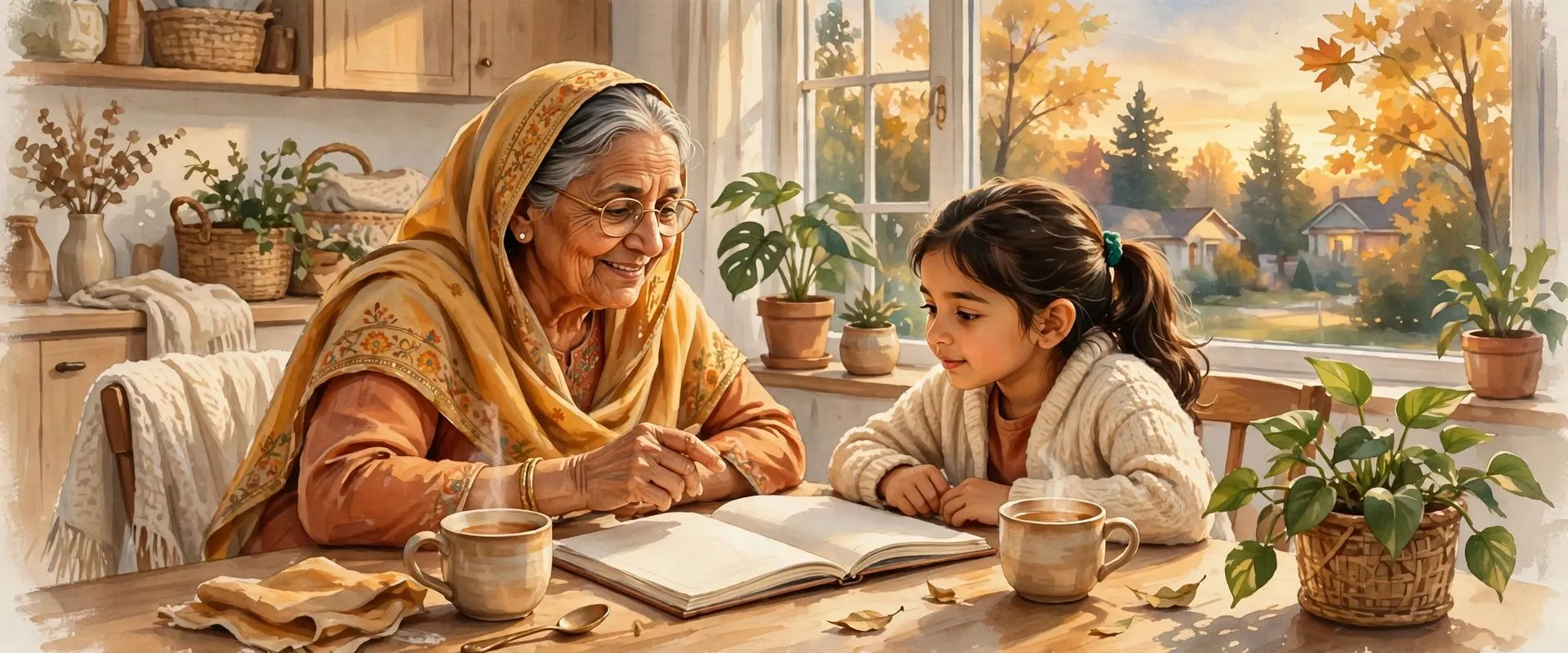
Learn Punjabi step by step with the Jugti Kosh: first read the Gurmukhi alphabet, then count with Punjabi numbers, name every family relation, and build everyday vocabulary category by category. The path is made for diaspora learners reconnecting with the language of home.
ਇਹ ਕਿਵੇਂ ਵਰਤਿਆ ਜਾਂਦਾ ਹੈ
- 1ਸਤਿ ਸ੍ਰੀ ਅਕਾਲ ਜੀ।Sat Sri Akal ji: the Sikh greeting, the first phrase most learners say. Greeting
- 2ਤੁਸੀਂ ਕਿਵੇਂ ਹੋ?How are you? (respectful form) Family talk
- 3ਧੰਨਵਾਦ ਜੀ।Thank you. (with ji, the respectful form) Everyday phrase
ਪੰਜਾਬੀ ਸਿੱਖਣ ਦਾ ਸਭ ਤੋਂ ਸੌਖਾ ਤਰੀਕਾ ਸਹੀ ਕ੍ਰਮ ਹੈ। ਪਹਿਲਾਂ ਗੁਰਮੁਖੀ ਵਰਣਮਾਲਾ ਸਿੱਖੋ, ਤਾਂ ਜੋ ਤੁਸੀਂ ਹਰ ਸ਼ਬਦ ਆਪ ਪੜ੍ਹ ਸਕੋ। ਫਿਰ ਗਿਣਤੀ, ਹਫ਼ਤੇ ਦੇ ਦਿਨ ਅਤੇ ਪੰਜਾਬੀ ਮਹੀਨੇ ਸਿੱਖੋ। ਇਸ ਤੋਂ ਬਾਅਦ ਪਰਿਵਾਰ ਦੇ ਰਿਸ਼ਤਿਆਂ ਦੇ ਨਾਂ ਸਿੱਖੋ, ਕਿਉਂਕਿ ਘਰ ਵਿੱਚ ਹਰ ਗੱਲ ਰਿਸ਼ਤਿਆਂ ਨਾਲ ਹੀ ਹੁੰਦੀ ਹੈ। ਫਿਰ ਰੋਜ਼ਾਨਾ ਜੀਵਨ ਦੇ ਸ਼ਬਦ ਵਿਸ਼ੇ ਮੁਤਾਬਕ ਸਿੱਖੋ: ਖਾਣਾ, ਭਾਵਨਾਵਾਂ, ਸਰੀਰ, ਮੌਸਮ, ਕੰਮ ਅਤੇ ਵਿਆਹ। ਅੰਤ ਵਿੱਚ ਵਾਕ ਅਤੇ ਕਹਾਵਤਾਂ ਸਿੱਖੋ, ਜੋ ਬੋਲੀ ਨੂੰ ਜੀਵੰਤ ਬਣਾਉਂਦੀਆਂ ਹਨ। ਇਹ ਰਾਹ ਖ਼ਾਸ ਕਰਕੇ ਪਰਦੇਸ ਵਿੱਚ ਰਹਿੰਦੇ ਪੰਜਾਬੀਆਂ ਲਈ ਹੈ, ਜੋ ਆਪਣੇ ਬਜ਼ੁਰਗਾਂ ਨਾਲ ਉਨ੍ਹਾਂ ਦੀ ਆਪਣੀ ਬੋਲੀ ਵਿੱਚ ਗੱਲ ਕਰਨਾ ਚਾਹੁੰਦੇ ਹਨ। ਹਰ ਰੋਜ਼ ਥੋੜ੍ਹਾ ਥੋੜ੍ਹਾ ਅਭਿਆਸ ਸਭ ਤੋਂ ਵੱਧ ਕੰਮ ਕਰਦਾ ਹੈ।
To learn Punjabi, you do not need a classroom: you need the right order. This guide is the path the Jugti Kosh is built around, made for diaspora learners who grew up hearing Punjabi at home and want to finally read it, speak it with grandparents and pass it to their children. Punjabi (ਪੰਜਾਬੀ) is spoken by more than 120 million people, it is the language of Punjab in India and Pakistan, and it is one of the most spoken languages in Canada and Britain. The path has five steps: the script, the numbers, the family words, everyday vocabulary, and phrases. Work through them in order and each step makes the next one easy, because the Kosh gives you the Gurmukhi, the pronunciation and real example sentences at every stage.
Step 1: Read the Gurmukhi alphabet
Everything starts with the script. Punjabi in India is written in Gurmukhi, and its 35 letters are arranged so logically, by where each sound is made in the mouth, that most learners can sound out simple words within two to three weeks of short daily practice. Start with the full guide to the ਗੁਰਮੁਖੀ ਵਰਨਮਾਲਾ: the 35 letters row by row, the nine vowel signs, and the small marks. Time needed: about a week to recognise the letters, two to three weeks to read slowly with confidence.
Step 2: Numbers, days and months
Numbers unlock daily life: prices, phone numbers, dates and the gurpurab calendar. Punjabi has its own digits (੧, ੨, ੩) and its own word for every number to 100. Learn them with the Punjabi numbers guide, which also covers the days of the week and the twelve Punjabi months, from ਚੇਤ (Chet) to ਫੱਗਣ (Phaggan). Time needed: a few days for 1 to 20, then the rest follow in families.
Step 3: Name the family
The words a diaspora learner needs first are the family words, because home runs on them. Punjabi names every relation exactly: your father's younger brother is ਚਾਚਾ (chacha), your mother's brother is ਮਾਮਾ (mama), and they are never the same word. The Punjabi family terms page maps the whole tree on both sides, with links to the full entry for each relation. Time needed: one sitting to read, and a lifetime of family gatherings to enjoy using them.
Step 4: Build everyday words, category by category
The dictionary is organised into word lists that each teach a whole corner of life: everyday words, food words, words for feelings, time words, farming words, body words, weather words, words for work, wedding words, music words and Punjabi slang. Open one list, learn its words, and every word's full entry is one tap away.
Step 5: Phrases for real conversations
Words become conversation in the Punjabi phrasebook: greetings and introductions, the gurdwara, the phone, and shopping and eating. The phrases people ask for most each have their own page: thank you, hello, how are you, I love you, happy birthday, good morning, good night, please, sorry and yes and no.
For parents: passing Punjabi to your children
If you are teaching your children, this same path works, just slower and with more play: letters as a game on the fridge, counting in the car, family words at the dinner table. Children who can read Gurmukhi can also read the shabads at the gurdwara and the stories their grandparents grew up with, and that is the real prize. Keep sessions short, praise every attempt, and let grandparents be the teachers whenever you can: nobody corrects pronunciation with more love. The diaspora families who keep Punjabi alive are not the ones with textbooks; they are the ones where Punjabi is simply what home sounds like.
How long does it take to learn Punjabi?
Most beginners can read basic Gurmukhi within two to three weeks of daily practice, hold simple conversations within a few months, and read comfortably within a year. Diaspora learners who already understand spoken Punjabi at home usually move much faster, because for them this path is about reading and confidence, not starting from zero.
Should I learn Gurmukhi or Shahmukhi?
Start with Gurmukhi if your roots are in Indian Punjab or the Sikh tradition: it is the script of the Guru Granth Sahib Ji, of Punjab's schools and signs, and of this Kosh. Shahmukhi, the Perso-Arabic script, is used in Pakistani Punjab; the spoken language is the same, and many learners add it later.
Can I learn Punjabi without a teacher?
Yes, if you follow an order and practise a little every day. This path replaces the teacher's sequence: script first, then numbers and family words, then vocabulary by theme, then phrases. Speak out loud from the first day, and use the words with family the same day you learn them.
ਪੰਜਾਬੀ ਸਿੱਖਣ ਲਈ ਪਹਿਲਾ ਕਦਮ ਕੀ ਹੈ?
ਪਹਿਲਾ ਕਦਮ ਗੁਰਮੁਖੀ ਵਰਣਮਾਲਾ ਹੈ। ਜਦੋਂ ਤੁਸੀਂ ਅੱਖਰ ਪੜ੍ਹਨੇ ਸਿੱਖ ਲੈਂਦੇ ਹੋ, ਤਾਂ ਹਰ ਸ਼ਬਦ, ਹਰ ਬੋਰਡ ਅਤੇ ਗੁਰਬਾਣੀ ਤੁਹਾਡੇ ਲਈ ਖੁੱਲ੍ਹ ਜਾਂਦੀ ਹੈ।
ਸੰਬੰਧਿਤ ਸ਼ਬਦ
ਸਰੋਤ (4)
ਜੁਗਤੀ ਮੁਫ਼ਤ ਅਤੇ ਸੁਤੰਤਰ ਹੈ। ਪਾਠਕਾਂ ਦਾ ਸਹਿਯੋਗ ਕੋਸ਼ ਨੂੰ ਵਧਾਉਂਦਾ ਹੈ।
ਸਹਿਯੋਗ