
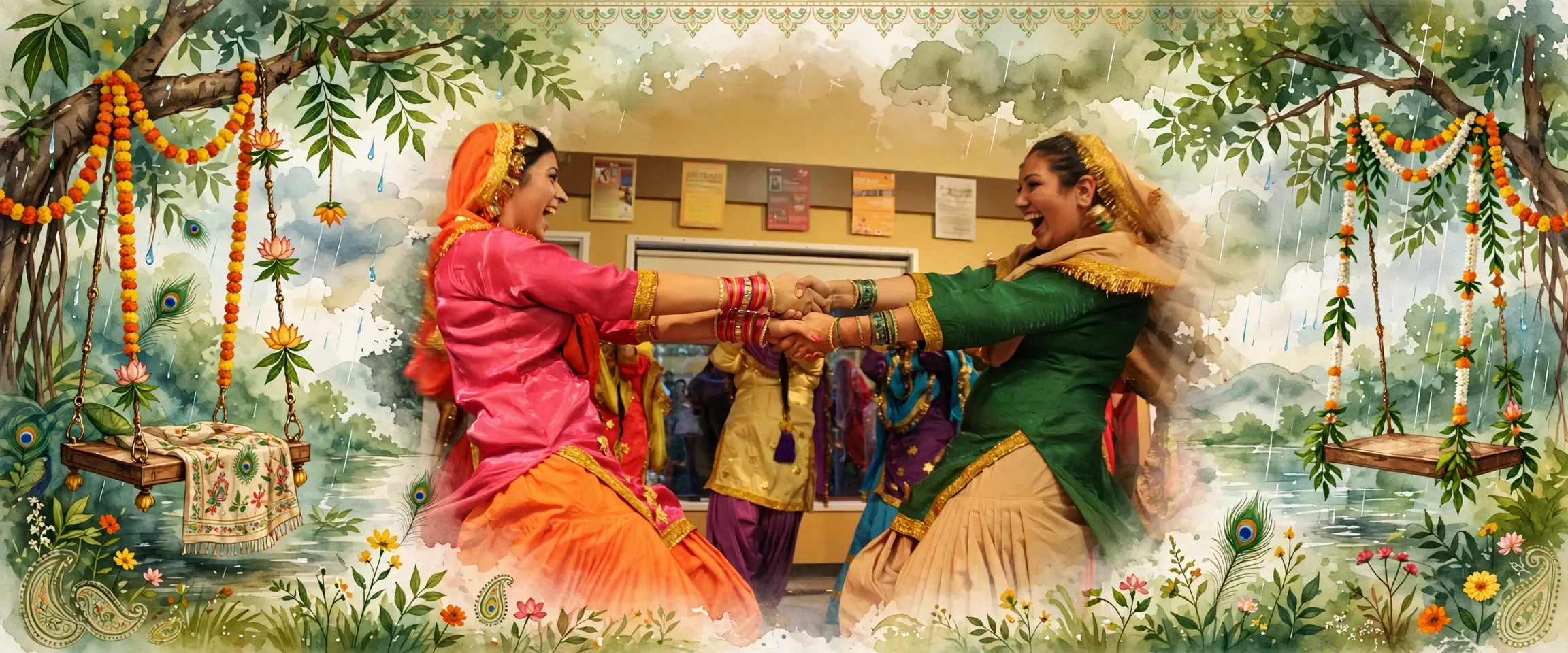
Teeyan, also called Teeyan Da Teohar and Teej, is Punjab's women's festival of the monsoon, kept in the month of Sawan, usually in July and August. For about thirteen days, from the third day of Sawan to its full moon, women and girls gather for swings hung from trees, Giddha dancing and Boliyan singing, mehndi, gifts called sandhara, and the sweet foods of the rainy season.
- Punjabi name
- ਤੀਆਂ
- Also called
- Teeyan Da Teohar, Teej
- Observed by
- Punjabi women and girls
- Season
- Monsoon, month of Sawan
- Dates
- Third day of Sawan to the full moon of Sawan, about 13 days, in July and August
- Centre of the festival
- Swings (peengh) tied to trees, Giddha and Boliyan
All 8 facts
- Gift
- Sandhara, sent by brothers to sisters: suit, laddoo, bangles, mehndi and a swing
- Traditional foods
- Kheer and poorhi, gulgule, malpura, halwa and mandey
Teeyan is the festival Punjab's women keep for themselves. When the monsoon breaks the summer heat and the month of Sawan turns the fields green, daughters come home to their parents, sisters gather, and swings go up on the big branches at the edge of the village. Around those swings a whole season is sung: old Boliyan about rain, husbands, mothers in law and longing, danced out in Giddha circles by women who, for these days, set the work down and take the village green over.
What is Teeyan?
Teeyan, whose full name is Teeyan Da Teohar, the festival of women, is the Punjabi form of the festival called Teej in much of northern India. It is a seasonal, monsoon festival, and its focus is on daughters, sisters and mothers. In Punjab it is kept less as a temple observance and more as a women's gathering: married women return to their maternal home to take part, and in the past it was traditional for a woman to spend the whole month of Sawan with her parents. Girls, newly married women and their mothers and grandmothers all belong to it, which is why Teeyan is often described as the festival that brings Punjab's daughters home.
When is Teeyan celebrated?
Teeyan is celebrated in the monsoon season, from the third day of the bright half of the lunar month of Sawan up to the full moon of Sawan, a span of about thirteen days, falling in July and August. Sawan is the fifth month in the traditional count and the heart of the rains in Punjab: the paddy is standing in flooded fields, the heat has broken, and the countryside is at its greenest. In the older village calendar the festival could stretch as long as the girls wished, from a few days to four weeks of daily gathering, and it closed on the full moon. That timing, at the peak of the rains, is the whole point of the festival: Teeyan welcomes the monsoon itself.
Swings, Giddha and Boliyan
The centre of Teeyan is the peengh, the swing. Swings are tied to the branches of large trees on the village green or by the pond, and women take turns swinging high while the others sing. The songs are Boliyan, the short, sharp verses of Giddha, Punjab's women's dance, performed in a circle with clapping and teasing call and response. The folk songs of Sawan sung at Teeyan were collected by Devendra Satyarthi and first published in his book Giddha in 1936; one Boliyan asks for the swing to be hung from a high branch, where it will swing by itself. Pairs of girls also dance Kikli, spinning hand in hand in crossed arms, and the festival traditionally closed with Bhallho, a closing dance performed by women standing in two rows.
The sandhara: gifts for daughters and sisters
Teeyan has its own gift, the sandhara. Whether or not a married woman is able to travel to her parents' home, her brothers take or send her a sandhara set for the festival. A sandhara traditionally includes a Punjabi suit or sari to wear for the celebrations, boondi laddoo, bangles, mehndi, the henna with which hands and feet are decorated at Teeyan, and even a swing. Parents and in laws also give to the newly married woman in her first Sawan. The gift is the family's way of saying that a married daughter is still claimed and celebrated by her own home, and its arrival, carried by a brother, is one of the small ceremonies of the Punjabi summer.
What foods belong to Teeyan?
The foods of Teeyan are the sweet, fried foods of the rainy season, made at home and shared at the gathering. Kheer, the rice pudding, is served with poorhi, fried bread, in the combination Punjabis call kheer poorhe, eaten sitting together as the rain falls. Gulgule, balls of wheat flour in jaggery syrup, fried until dark and sweet, are the festival's signature snack, alongside malpura, halwa, and mandey, the thin breads stretched by hand rather than rolled. At Teej fairs, called Teelan in some accounts, stalls sell bangles, juttis and clothes, and the mehndi stalls are the main attraction. The menu is part of the meaning: Sawan is a month of relative rest in the fields, and its foods are celebration foods, not harvest foods.
How is Teeyan kept today?
The old daily village gathering has faded in many places, as Devendra Satyarthi's Punjab of a century ago has changed, but Teeyan has not disappeared: it has moved. Schools and colleges in Punjab hold Teeyan programmes with mehndi, rangoli, singing and Giddha competitions, and titles such as Miss Teej. Villages and cities hold Teeyan melas in halls and on open ground, with singers and DJs where the Boliyan once stood alone. In the diaspora, in Canada, Britain, Australia and the United States, women organise Teeyan gatherings each Sawan, and for many families they have become a deliberate way of handing Punjabi culture to daughters born abroad. The swing is now sometimes a photograph backdrop rather than a branch over the pond, but the gathering itself, women and girls together, singing the rains in, is recognisably the same festival that Punjab has kept for centuries, and it sits in the year between Lohri in the cold and the harvest at Vaisakhi as Sawan's own celebration.
ਤੀਆਂ ਉਹ ਤਿਉਹਾਰ ਹੈ ਜੋ ਪੰਜਾਬ ਦੀਆਂ ਔਰਤਾਂ ਆਪਣੇ ਲਈ ਰੱਖਦੀਆਂ ਹਨ। ਜਦੋਂ ਮਾਨਸੂਨ ਗਰਮੀ ਤੋੜਦਾ ਹੈ ਅਤੇ ਸਾਵਣ ਦਾ ਮਹੀਨਾ ਖੇਤਾਂ ਨੂੰ ਹਰਾ ਕਰਦਾ ਹੈ, ਧੀਆਂ ਆਪਣੇ ਪੇਕੇ ਘਰ ਆਉਂਦੀਆਂ ਹਨ, ਭੈਣਾਂ ਇਕੱਠੀਆਂ ਹੁੰਦੀਆਂ ਹਨ, ਅਤੇ ਪਿੰਡ ਦੇ ਕਿਨਾਰੇ ਵੱਡੀਆਂ ਟਾਹਣੀਆਂ ਤੇ ਪੀਂਘਾਂ ਪੈਂਦੀਆਂ ਹਨ। ਉਨ੍ਹਾਂ ਪੀਂਘਾਂ ਦੁਆਲੇ ਇੱਕ ਪੂਰਾ ਮੌਸਮ ਗਾਇਆ ਜਾਂਦਾ ਹੈ: ਮੀਂਹ, ਪਤੀਆਂ, ਸੱਸਾਂ ਅਤੇ ਵਿਛੋੜੇ ਬਾਰੇ ਪੁਰਾਣੀਆਂ ਬੋਲੀਆਂ, ਜੋ ਗਿੱਧੇ ਦੇ ਘੇਰਿਆਂ ਵਿੱਚ ਉਨ੍ਹਾਂ ਔਰਤਾਂ ਵੱਲੋਂ ਨੱਚੀਆਂ ਜਾਂਦੀਆਂ ਹਨ ਜੋ ਇਨ੍ਹਾਂ ਦਿਨਾਂ ਲਈ ਕੰਮ ਛੱਡ ਕੇ ਪਿੰਡ ਦੀ ਸਾਂਝੀ ਥਾਂ ਆਪਣੇ ਨਾਂ ਕਰ ਲੈਂਦੀਆਂ ਹਨ।
ਤੀਆਂ ਕੀ ਹਨ?
ਤੀਆਂ, ਜਿਨ੍ਹਾਂ ਦਾ ਪੂਰਾ ਨਾਂ ਤੀਆਂ ਦਾ ਤਿਉਹਾਰ ਹੈ, ਔਰਤਾਂ ਦਾ ਤਿਉਹਾਰ, ਉਸ ਤਿਉਹਾਰ ਦਾ ਪੰਜਾਬੀ ਰੂਪ ਹੈ ਜਿਸ ਨੂੰ ਉੱਤਰੀ ਭਾਰਤ ਦੇ ਬਹੁਤੇ ਹਿੱਸੇ ਵਿੱਚ ਤੀਜ ਕਿਹਾ ਜਾਂਦਾ ਹੈ। ਇਹ ਮੌਸਮੀ, ਮਾਨਸੂਨ ਦਾ ਤਿਉਹਾਰ ਹੈ, ਅਤੇ ਇਸ ਦਾ ਕੇਂਦਰ ਧੀਆਂ, ਭੈਣਾਂ ਅਤੇ ਮਾਵਾਂ ਹਨ। ਪੰਜਾਬ ਵਿੱਚ ਇਹ ਮੰਦਰ ਦੀ ਰਸਮ ਨਾਲੋਂ ਔਰਤਾਂ ਦੇ ਇਕੱਠ ਵਜੋਂ ਵੱਧ ਮਨਾਇਆ ਜਾਂਦਾ ਹੈ: ਵਿਆਹੀਆਂ ਔਰਤਾਂ ਹਿੱਸਾ ਲੈਣ ਲਈ ਆਪਣੇ ਪੇਕੇ ਘਰ ਮੁੜਦੀਆਂ ਹਨ, ਅਤੇ ਪਹਿਲਾਂ ਇਹ ਰਵਾਇਤ ਸੀ ਕਿ ਔਰਤ ਪੂਰਾ ਸਾਵਣ ਆਪਣੇ ਮਾਪਿਆਂ ਕੋਲ ਬਿਤਾਉਂਦੀ ਸੀ। ਕੁੜੀਆਂ, ਨਵਵਿਆਹੀਆਂ ਅਤੇ ਉਨ੍ਹਾਂ ਦੀਆਂ ਮਾਵਾਂ ਅਤੇ ਦਾਦੀਆਂ ਨਾਨੀਆਂ ਸਭ ਇਸ ਨਾਲ ਜੁੜੀਆਂ ਹਨ, ਇਸੇ ਲਈ ਤੀਆਂ ਨੂੰ ਅਕਸਰ ਉਹ ਤਿਉਹਾਰ ਕਿਹਾ ਜਾਂਦਾ ਹੈ ਜੋ ਪੰਜਾਬ ਦੀਆਂ ਧੀਆਂ ਨੂੰ ਘਰ ਲਿਆਉਂਦਾ ਹੈ।
ਤੀਆਂ ਕਦੋਂ ਮਨਾਈਆਂ ਜਾਂਦੀਆਂ ਹਨ?
ਤੀਆਂ ਮਾਨਸੂਨ ਦੇ ਮੌਸਮ ਵਿੱਚ ਮਨਾਈਆਂ ਜਾਂਦੀਆਂ ਹਨ, ਚੰਦਰ ਸਾਵਣ ਦੇ ਚਾਨਣੇ ਪੱਖ ਦੇ ਤੀਜੇ ਦਿਨ ਤੋਂ ਸਾਵਣ ਦੀ ਪੂਰਨਮਾਸ਼ੀ ਤੱਕ, ਲਗਭਗ ਤੇਰਾਂ ਦਿਨਾਂ ਦਾ ਸਮਾਂ, ਜੋ ਜੁਲਾਈ ਅਤੇ ਅਗਸਤ ਵਿੱਚ ਪੈਂਦਾ ਹੈ। ਸਾਵਣ ਰਵਾਇਤੀ ਗਿਣਤੀ ਵਿੱਚ ਪੰਜਵਾਂ ਮਹੀਨਾ ਹੈ ਅਤੇ ਪੰਜਾਬ ਵਿੱਚ ਮੀਂਹਾਂ ਦਾ ਦਿਲ: ਝੋਨਾ ਪਾਣੀ ਭਰੇ ਖੇਤਾਂ ਵਿੱਚ ਖੜ੍ਹਾ ਹੁੰਦਾ ਹੈ, ਗਰਮੀ ਟੁੱਟ ਚੁੱਕੀ ਹੁੰਦੀ ਹੈ, ਅਤੇ ਪਿੰਡਾਂ ਦੀ ਧਰਤੀ ਆਪਣੇ ਸਭ ਤੋਂ ਹਰੇ ਰੂਪ ਵਿੱਚ ਹੁੰਦੀ ਹੈ। ਪੁਰਾਣੇ ਪਿੰਡ ਦੇ ਕਲੰਡਰ ਵਿੱਚ ਤਿਉਹਾਰ ਜਿੰਨਾ ਲੰਮਾ ਕੁੜੀਆਂ ਚਾਹੁੰਦੀਆਂ ਸਨ ਓਨਾ ਚੱਲ ਸਕਦਾ ਸੀ, ਕੁਝ ਦਿਨਾਂ ਤੋਂ ਚਾਰ ਹਫ਼ਤਿਆਂ ਤੱਕ ਰੋਜ਼ ਦੇ ਇਕੱਠ, ਅਤੇ ਇਹ ਪੂਰਨਮਾਸ਼ੀ ਤੇ ਮੁੱਕਦਾ ਸੀ। ਇਹ ਵੇਲਾ, ਮੀਂਹਾਂ ਦੇ ਸਿਖਰ ਤੇ, ਤਿਉਹਾਰ ਦਾ ਸਾਰਾ ਭਾਵ ਹੈ: ਤੀਆਂ ਮਾਨਸੂਨ ਦਾ ਆਪ ਸਵਾਗਤ ਕਰਦੀਆਂ ਹਨ।
ਪੀਂਘਾਂ, ਗਿੱਧਾ ਅਤੇ ਬੋਲੀਆਂ
ਤੀਆਂ ਦਾ ਕੇਂਦਰ ਪੀਂਘ ਹੈ। ਪਿੰਡ ਦੀ ਸਾਂਝੀ ਥਾਂ ਤੇ ਜਾਂ ਢਾਬ ਕਿਨਾਰੇ ਵੱਡੇ ਰੁੱਖਾਂ ਦੀਆਂ ਟਾਹਣੀਆਂ ਨਾਲ ਪੀਂਘਾਂ ਬੰਨ੍ਹੀਆਂ ਜਾਂਦੀਆਂ ਹਨ, ਅਤੇ ਔਰਤਾਂ ਵਾਰੀ ਵਾਰੀ ਉੱਚਾ ਝੂਟਾ ਲੈਂਦੀਆਂ ਹਨ ਜਦੋਂ ਕਿ ਬਾਕੀ ਗਾਉਂਦੀਆਂ ਹਨ। ਗੀਤ ਬੋਲੀਆਂ ਹਨ, ਗਿੱਧੇ, ਪੰਜਾਬ ਦੀਆਂ ਔਰਤਾਂ ਦੇ ਨਾਚ, ਦੀਆਂ ਛੋਟੀਆਂ ਤਿੱਖੀਆਂ ਤੁਕਾਂ, ਜੋ ਘੇਰੇ ਵਿੱਚ ਤਾੜੀਆਂ ਅਤੇ ਛੇੜ ਛਾੜ ਵਾਲੇ ਸਵਾਲ ਜਵਾਬ ਨਾਲ ਪਾਈਆਂ ਜਾਂਦੀਆਂ ਹਨ। ਤੀਆਂ ਤੇ ਗਾਏ ਜਾਂਦੇ ਸਾਵਣ ਦੇ ਲੋਕ ਗੀਤ ਦੇਵੇਂਦਰ ਸਤਿਆਰਥੀ ਨੇ ਇਕੱਠੇ ਕੀਤੇ ਸਨ ਅਤੇ ਪਹਿਲਾਂ 1936 ਵਿੱਚ ਉਸ ਦੀ ਕਿਤਾਬ ਗਿੱਧਾ ਵਿੱਚ ਛਪੇ ਸਨ; ਇੱਕ ਬੋਲੀ ਕਹਿੰਦੀ ਹੈ ਕਿ ਪੀਂਘ ਉੱਚੀ ਟਾਹਣੀ ਤੇ ਪਾ ਦਿਓ, ਜਿੱਥੇ ਉਹ ਆਪੇ ਹੁਲਾਰਾ ਖਾਵੇ। ਕੁੜੀਆਂ ਜੋੜਿਆਂ ਵਿੱਚ ਕਿੱਕਲੀ ਵੀ ਪਾਉਂਦੀਆਂ ਹਨ, ਬਾਹਾਂ ਵਲ ਕੇ ਹੱਥਾਂ ਵਿੱਚ ਹੱਥ ਪਾ ਕੇ ਘੁੰਮਦੀਆਂ ਹੋਈਆਂ, ਅਤੇ ਤਿਉਹਾਰ ਰਵਾਇਤੀ ਤੌਰ ਤੇ ਭੱਲ੍ਹੋ ਨਾਲ ਮੁੱਕਦਾ ਸੀ, ਦੋ ਕਤਾਰਾਂ ਵਿੱਚ ਖੜ੍ਹੀਆਂ ਔਰਤਾਂ ਦਾ ਮੁਕਾਊ ਨਾਚ।
ਸੰਧਾਰਾ: ਧੀਆਂ ਅਤੇ ਭੈਣਾਂ ਲਈ ਤੋਹਫ਼ਾ
ਤੀਆਂ ਦਾ ਆਪਣਾ ਤੋਹਫ਼ਾ ਹੈ, ਸੰਧਾਰਾ। ਵਿਆਹੀ ਔਰਤ ਪੇਕੇ ਘਰ ਜਾ ਸਕੇ ਜਾਂ ਨਾ, ਉਸ ਦੇ ਭਰਾ ਤਿਉਹਾਰ ਲਈ ਉਸ ਨੂੰ ਸੰਧਾਰਾ ਲੈ ਕੇ ਜਾਂਦੇ ਜਾਂ ਭੇਜਦੇ ਹਨ। ਸੰਧਾਰੇ ਵਿੱਚ ਰਵਾਇਤੀ ਤੌਰ ਤੇ ਜਸ਼ਨਾਂ ਲਈ ਪਾਉਣ ਵਾਲਾ ਪੰਜਾਬੀ ਸੂਟ ਜਾਂ ਸਾੜ੍ਹੀ, ਬੂੰਦੀ ਦੇ ਲੱਡੂ, ਚੂੜੀਆਂ, ਮਹਿੰਦੀ, ਜਿਸ ਨਾਲ ਤੀਆਂ ਤੇ ਹੱਥ ਪੈਰ ਸਜਾਏ ਜਾਂਦੇ ਹਨ, ਅਤੇ ਇੱਕ ਪੀਂਘ ਤੱਕ ਹੁੰਦੀ ਹੈ। ਮਾਪੇ ਅਤੇ ਸਹੁਰੇ ਵੀ ਨਵਵਿਆਹੀ ਨੂੰ ਉਸ ਦੇ ਪਹਿਲੇ ਸਾਵਣ ਵਿੱਚ ਦਿੰਦੇ ਹਨ। ਇਹ ਤੋਹਫ਼ਾ ਪਰਿਵਾਰ ਦਾ ਢੰਗ ਹੈ ਇਹ ਕਹਿਣ ਦਾ ਕਿ ਵਿਆਹੀ ਧੀ ਨੂੰ ਉਸ ਦਾ ਆਪਣਾ ਘਰ ਅਜੇ ਵੀ ਆਪਣਾ ਮੰਨਦਾ ਅਤੇ ਮਨਾਉਂਦਾ ਹੈ, ਅਤੇ ਭਰਾ ਦੇ ਹੱਥੀਂ ਇਸ ਦਾ ਆਉਣਾ ਪੰਜਾਬੀ ਗਰਮੀਆਂ ਦੀਆਂ ਛੋਟੀਆਂ ਰਸਮਾਂ ਵਿੱਚੋਂ ਇੱਕ ਹੈ।
ਤੀਆਂ ਦੇ ਖਾਣੇ ਕਿਹੜੇ ਹਨ?
ਤੀਆਂ ਦੇ ਖਾਣੇ ਮੀਂਹ ਦੇ ਮੌਸਮ ਦੇ ਮਿੱਠੇ, ਤਲੇ ਹੋਏ ਖਾਣੇ ਹਨ, ਘਰ ਬਣਾਏ ਅਤੇ ਇਕੱਠ ਵਿੱਚ ਸਾਂਝੇ ਕੀਤੇ। ਖੀਰ, ਚਾਵਲਾਂ ਦੀ ਖੀਰ, ਪੂਰ੍ਹੀ, ਤਲੀ ਹੋਈ ਰੋਟੀ, ਨਾਲ ਦਿੱਤੀ ਜਾਂਦੀ ਹੈ, ਉਸ ਜੋੜ ਵਿੱਚ ਜਿਸ ਨੂੰ ਪੰਜਾਬੀ ਖੀਰ ਪੂਰ੍ਹੇ ਕਹਿੰਦੇ ਹਨ, ਮੀਂਹ ਪੈਂਦੇ ਵਿੱਚ ਇਕੱਠੇ ਬੈਠ ਕੇ ਖਾਧੀ ਜਾਂਦੀ ਹੈ। ਗੁਲਗੁਲੇ, ਗੁੜ ਦੇ ਸ਼ਰਬਤ ਵਿੱਚ ਕਣਕ ਦੇ ਆਟੇ ਦੀਆਂ ਗੋਲੀਆਂ, ਗੂੜ੍ਹੀਆਂ ਅਤੇ ਮਿੱਠੀਆਂ ਹੋਣ ਤੱਕ ਤਲੀਆਂ, ਤਿਉਹਾਰ ਦੀ ਖ਼ਾਸ ਚੀਜ਼ ਹਨ, ਮਾਲਪੂੜੇ, ਹਲਵੇ, ਅਤੇ ਮੰਡਿਆਂ ਦੇ ਨਾਲ, ਉਹ ਪਤਲੀਆਂ ਰੋਟੀਆਂ ਜੋ ਵੇਲਣੇ ਨਾਲ ਨਹੀਂ ਹੱਥਾਂ ਨਾਲ ਖਿੱਚੀਆਂ ਜਾਂਦੀਆਂ ਹਨ। ਤੀਜ ਦੇ ਮੇਲਿਆਂ ਵਿੱਚ, ਜਿਨ੍ਹਾਂ ਨੂੰ ਕੁਝ ਥਾਵਾਂ ਤੇ ਤੀਲਾਂ ਕਿਹਾ ਜਾਂਦਾ ਹੈ, ਚੂੜੀਆਂ, ਜੁੱਤੀਆਂ ਅਤੇ ਕੱਪੜਿਆਂ ਦੇ ਸਟਾਲ ਲੱਗਦੇ ਹਨ, ਅਤੇ ਮਹਿੰਦੀ ਵਾਲੇ ਸਟਾਲ ਸਭ ਤੋਂ ਵੱਡਾ ਖਿੱਚ ਹੁੰਦੇ ਹਨ। ਖਾਣੇ ਇਸ ਅਰਥ ਦਾ ਹਿੱਸਾ ਹਨ: ਸਾਵਣ ਖੇਤਾਂ ਵਿੱਚ ਸਾਪੇਖ ਆਰਾਮ ਦਾ ਮਹੀਨਾ ਹੈ, ਅਤੇ ਇਸ ਦੇ ਖਾਣੇ ਜਸ਼ਨ ਦੇ ਖਾਣੇ ਹਨ, ਵਾਢੀ ਦੇ ਨਹੀਂ।
ਅੱਜ ਤੀਆਂ ਕਿਵੇਂ ਮਨਾਈਆਂ ਜਾਂਦੀਆਂ ਹਨ?
ਪੁਰਾਣਾ ਰੋਜ਼ ਦਾ ਪਿੰਡ ਵਾਲਾ ਇਕੱਠ ਕਈ ਥਾਵਾਂ ਤੇ ਘਟ ਗਿਆ ਹੈ, ਜਿਵੇਂ ਦੇਵੇਂਦਰ ਸਤਿਆਰਥੀ ਦਾ ਇੱਕ ਸਦੀ ਪਹਿਲਾਂ ਵਾਲਾ ਪੰਜਾਬ ਬਦਲ ਗਿਆ ਹੈ, ਪਰ ਤੀਆਂ ਮੁੱਕੀਆਂ ਨਹੀਂ: ਇਹ ਥਾਂ ਬਦਲ ਗਈਆਂ ਹਨ। ਪੰਜਾਬ ਦੇ ਸਕੂਲ ਅਤੇ ਕਾਲਜ ਤੀਆਂ ਦੇ ਪ੍ਰੋਗਰਾਮ ਕਰਦੇ ਹਨ, ਮਹਿੰਦੀ, ਰੰਗੋਲੀ, ਗਾਇਨ ਅਤੇ ਗਿੱਧੇ ਦੇ ਮੁਕਾਬਲਿਆਂ ਨਾਲ, ਅਤੇ ਮਿਸ ਤੀਜ ਵਰਗੇ ਖ਼ਿਤਾਬਾਂ ਨਾਲ। ਪਿੰਡ ਅਤੇ ਸ਼ਹਿਰ ਹਾਲਾਂ ਅਤੇ ਖੁੱਲ੍ਹੀਆਂ ਥਾਵਾਂ ਤੇ ਤੀਆਂ ਦੇ ਮੇਲੇ ਕਰਦੇ ਹਨ, ਜਿੱਥੇ ਕਦੇ ਇਕੱਲੀਆਂ ਬੋਲੀਆਂ ਹੁੰਦੀਆਂ ਸਨ ਉੱਥੇ ਹੁਣ ਗਾਇਕ ਅਤੇ ਡੀਜੇ ਵੀ ਹੁੰਦੇ ਹਨ। ਪਰਦੇਸਾਂ ਵਿੱਚ, ਕੈਨੇਡਾ, ਬਰਤਾਨੀਆ, ਆਸਟਰੇਲੀਆ ਅਤੇ ਅਮਰੀਕਾ ਵਿੱਚ, ਔਰਤਾਂ ਹਰ ਸਾਵਣ ਤੀਆਂ ਦੇ ਇਕੱਠ ਕਰਦੀਆਂ ਹਨ, ਅਤੇ ਕਈ ਪਰਿਵਾਰਾਂ ਲਈ ਇਹ ਬਾਹਰ ਜੰਮੀਆਂ ਧੀਆਂ ਨੂੰ ਪੰਜਾਬੀ ਸੱਭਿਆਚਾਰ ਸੌਂਪਣ ਦਾ ਜਾਣ ਬੁੱਝ ਕੇ ਚੁਣਿਆ ਢੰਗ ਬਣ ਗਏ ਹਨ। ਪੀਂਘ ਹੁਣ ਕਦੇ ਢਾਬ ਉੱਤੇ ਟਾਹਣੀ ਦੀ ਥਾਂ ਫੋਟੋ ਵਾਲੀ ਪਿੱਠਭੂਮੀ ਹੁੰਦੀ ਹੈ, ਪਰ ਇਕੱਠ ਆਪ, ਔਰਤਾਂ ਅਤੇ ਕੁੜੀਆਂ ਇਕੱਠੀਆਂ, ਮੀਂਹਾਂ ਨੂੰ ਗਾ ਕੇ ਬੁਲਾਉਂਦੀਆਂ ਹੋਈਆਂ, ਪਛਾਣਨਯੋਗ ਤੌਰ ਤੇ ਉਹੀ ਤਿਉਹਾਰ ਹੈ ਜੋ ਪੰਜਾਬ ਸਦੀਆਂ ਤੋਂ ਰੱਖਦਾ ਆਇਆ ਹੈ, ਅਤੇ ਇਹ ਸਾਲ ਵਿੱਚ ਠੰਢ ਦੀ ਲੋਹੜੀ ਅਤੇ ਵੈਸਾਖੀ ਦੀ ਵਾਢੀ ਦੇ ਵਿਚਕਾਰ ਸਾਵਣ ਦੇ ਆਪਣੇ ਜਸ਼ਨ ਵਜੋਂ ਬੈਠਦਾ ਹੈ।
More religion entries to explore
Jugti is free and independent. Reader support keeps the Kosh growing.
Support