
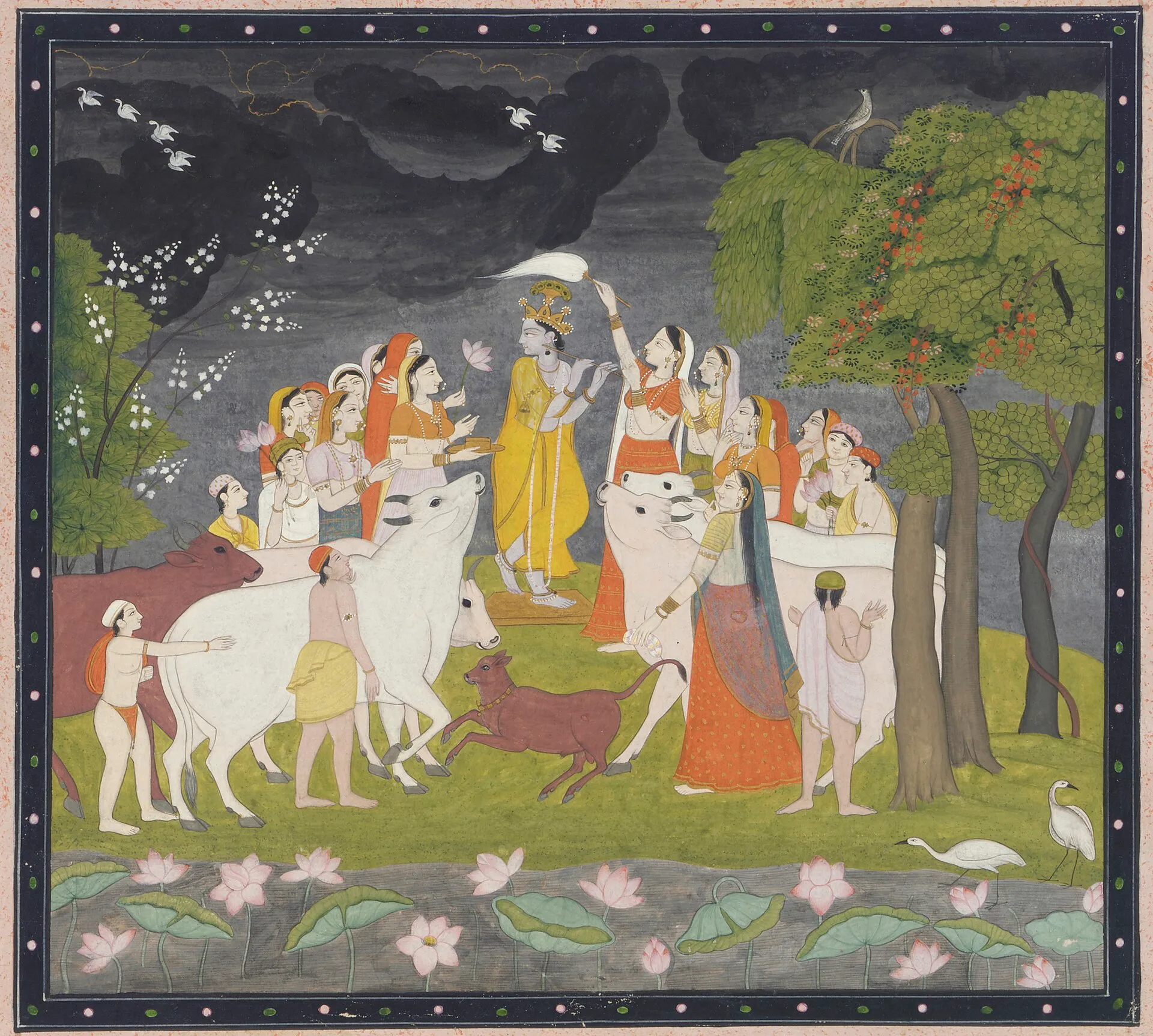
Krishna is one of the most loved gods in Hinduism, worshipped as the eighth avatar of Vishnu and, in many traditions, as the supreme God himself. Hindus cherish him as the mischievous butter-stealing child of Gokul, the flute-playing cowherd loved by Radha, the king of Dwarka, and the charioteer who taught the Bhagavad Gita to Arjuna on the battlefield of Kurukshetra.
- Punjabi name
- ਕ੍ਰਿਸ਼ਨ
- Place among the gods
- Eighth avatar of Vishnu; supreme God in Krishna traditions
- Parents
- Vasudeva and Devaki; raised by Nanda and Yashoda at Gokul
- Brother
- Balarama
- Consort
- Rukmini; beloved Radha in the Braj tradition
- Sacred places
- Mathura, Vrindavan, Gokul, Dwarka, Puri
All 9 facts
- Main festival
- Janmashtami, his birthday
- Symbols
- Flute, peacock feather, yellow garments
- Great texts
- Mahabharata, Bhagavad Gita, Bhagavata Purana, Harivamsha
Krishna, whose name means the dark one, is among the most widely revered of all Hindu gods. Devotees meet him at every age of life: as a crawling baby with a ball of butter, as a boy dancing on the serpent Kaliya, as a young cowherd whose flute calls the gopis out into the moonlight, as a king and statesman, and as the wise friend who steadies Arjuna before the great war. Few deities in any religion gather so many moods into one figure: playfulness, romance, heroism and philosophy.
Who is Krishna?
Hindu tradition honours Krishna as the eighth avatar of Vishnu, descended to destroy evil, and many traditions go further and worship him as the original, supreme God from whom even Vishnu proceeds. His story is told in the Mahabharata, in its appendix the Harivamsha, and most fully in the Bhagavata Purana. Around him grew the bhakti movement's richest heritage of poetry, music and painting, and his worship spread from India across the world, carried in modern times by movements such as ISKCON, the Hare Krishna movement.
The story of Krishna
Krishna was born at Mathura into the Yadava clan, the son of Vasudeva and Devaki. Devaki's brother, King Kamsa, had heard a prophecy that her child would kill him, so the newborn was carried secretly across the Yamuna river to Gokul, where the cowherd chief Nanda and his wife Yashoda raised him. The child Krishna was adored for his pranks, stealing butter, teasing the cowherd girls, and for miracles and the slaying of demons sent by Kamsa. As a youth he became the divine lover: his flute drew the gopis, the wives and daughters of the cowherds, to dance with him, and first among them was Radha, whose love for Krishna is sung as the soul's longing for God. In time Krishna and his brother Balarama returned to Mathura and killed Kamsa. Finding the kingdom unsafe, Krishna led the Yadavas west to the coast and founded the shining city of Dwarka, where he ruled and married the princess Rukmini.
Krishna and the Bhagavad Gita
In the Mahabharata war between the Pandava and Kaurava cousins, Krishna refused to fight himself but served as charioteer to the Pandava prince Arjuna. On the battlefield, Arjuna faltered at the thought of killing his own kin, and Krishna's answer to him, the Bhagavad Gita, became the most famous scripture of Hinduism: a teaching on duty, action without attachment to results, and devotion. At the war's end Krishna returned to Dwarka, where, the texts say, he died after a huntsman mistook him for a deer and shot him in the heel, his one vulnerable spot.
How is Krishna shown?
Painters show Krishna with blue-black skin, a yellow dhoti and a crown of peacock feathers. As a child he crawls or dances with butter in his hands; as the divine lover he plays the flute among adoring gopis; as the teacher he drives Arjuna's chariot. Rajasthani and Pahari painting of the 17th and 18th centuries made his image famous across the world.
Festivals and temples
Krishna's birthday, Janmashtami, is kept with fasting, midnight celebrations and, in Maharashtra, the human pyramids of Dahi Handi that recall the butter thief. Holi in the Braj country of Mathura and Vrindavan is played in his honour, and devotees celebrate the month of Kartik at his temples. His birthplace is marked by the Krishna Janmasthan Temple at Mathura, his royal city by the Dwarkadhish Temple at Dwarka, and at Puri he is worshipped as Jagannath, the lord of the universe, whose wooden image is carried through the streets in the great Ratha Yatra festival.
Krishna in Punjab
Krishna's friendship with Sudama shows the god from another side. Sudama was a poor Brahmin who had shared Krishna's student days; driven by poverty, he walked to Dwarka carrying nothing but a small bundle of beaten rice, ashamed of so humble a gift. Krishna ran to meet him, washed his dusty feet, seated him on the royal seat and ate the beaten rice from his hands grain by grain with delight, while Sudama could not bring himself to ask for anything. Returning home, the poor man found his hut replaced by a palace. Hindu families still tell the story to teach that God weighs the love in an offering, not its price.
In worship Krishna is rarely alone. Beside him stands Radha, the cowherd girl of Braj whose love for him the poet Jayadeva made immortal in the Gita Govinda in the 12th century. From those poems onward, Radha and Krishna together became the supreme image of divine love in bhakti: Radha's longing for the god is read as the soul's longing for God itself. Their temples show them side by side, swung together in the monsoon swings of Jhulan Leela, and in Braj the everyday greeting is not a word for God but for her: Radhe Radhe.
Krishna is deeply woven into Punjabi Hindu life: Janmashtami crowds fill the temples, kirtan of his names runs through the night, and the Gita is read in homes across the region. Punjabi devotees travel to Mathura, Vrindavan and Dwarka, and in the diaspora, ISKCON and Sanatan temples from Toronto to Melbourne celebrate his festivals, where Punjabi families are among the most devoted congregations.
ਕ੍ਰਿਸ਼ਨ, ਜਿਨ੍ਹਾਂ ਦੇ ਨਾਮ ਦਾ ਅਰਥ ਹੈ ਕਾਲਾ ਜਾਂ ਬੱਦਲ ਵਰਗਾ ਗੂੜ੍ਹਾ, ਹਿੰਦੂ ਦੇਵਤਿਆਂ ਵਿੱਚੋਂ ਸਭ ਤੋਂ ਵੱਧ ਸਤਿਕਾਰੇ ਜਾਣ ਵਾਲਿਆਂ ਵਿੱਚੋਂ ਇੱਕ ਹਨ ਸ਼ਰਧਾਲੂ ਉਨ੍ਹਾਂ ਨੂੰ ਜੀਵਨ ਦੇ ਹਰ ਪੜਾਅ ਵਿੱਚ ਮਿਲਦੇ ਹਨ: ਮੱਖਣ ਦੀ ਗੋਲੀ ਫੜ ਕੇ ਰੀਂਗਦੇ ਬਾਲਕ ਵਜੋਂ, ਸੱਪ ਕਾਲੀਏ ਉੱਤੇ ਨੱਚਦੇ ਮੁੰਡੇ ਵਜੋਂ, ਨੌਜਵਾਨ ਚਰਵਾਹੇ ਵਜੋਂ ਜਿਨ੍ਹਾਂ ਦੀ ਬੰਸਰੀ ਗੋਪੀਆਂ ਨੂੰ ਚਾਨਣੀ ਵਿੱਚ ਬੁਲਾਉਂਦੀ ਹੈ, ਰਾਜੇ ਅਤੇ ਰਾਜਨੀਤਕ ਵਜੋਂ, ਅਤੇ ਉਸ ਸੂਝਵਾਨ ਮਿੱਤਰ ਵਜੋਂ ਜੋ ਮਹਾਨ ਯੁੱਧ ਤੋਂ ਪਹਿਲਾਂ ਅਰਜੁਨ ਨੂੰ ਸਥਿਰ ਕਰਦੇ ਹਨ ਕਿਸੇ ਵੀ ਧਰਮ ਦੇ ਬਹੁਤ ਘੱਟ ਦੇਵਤੇ ਇੱਕੋ ਹਸਤੀ ਵਿੱਚ ਇੰਨੇ ਰੰਗ ਇਕੱਠੇ ਕਰਦੇ ਹਨ: ਖੇਡ, ਪ੍ਰੇਮ, ਬਹਾਦਰੀ ਅਤੇ ਦਰਸ਼ਨ
ਕ੍ਰਿਸ਼ਨ ਕੌਣ ਹਨ?
ਹਿੰਦੂ ਪਰੰਪਰਾ ਕ੍ਰਿਸ਼ਨ ਨੂੰ ਵਿਸ਼ਨੂੰ ਦੇ ਅੱਠਵੇਂ ਅਵਤਾਰ ਵਜੋਂ ਸਤਿਕਾਰਦੀ ਹੈ, ਜੋ ਬੁਰਾਈ ਨੂੰ ਨਸ਼ਟ ਕਰਨ ਲਈ ਉਤਰੇ, ਅਤੇ ਕਈ ਪਰੰਪਰਾਵਾਂ ਇਸ ਤੋਂ ਅੱਗੇ ਜਾ ਕੇ ਉਨ੍ਹਾਂ ਨੂੰ ਮੂਲ, ਪਰਮ ਪਰਮਾਤਮਾ ਵਜੋਂ ਪੂਜਦੀਆਂ ਹਨ ਜਿਨ੍ਹਾਂ ਤੋਂ ਵਿਸ਼ਨੂੰ ਵੀ ਪੈਦਾ ਹੁੰਦੇ ਹਨ ਉਨ੍ਹਾਂ ਦੀ ਕਥਾ ਮਹਾਭਾਰਤ ਵਿੱਚ, ਇਸ ਦੇ ਪੂਰਕ ਹਰਿਵੰਸ਼ ਵਿੱਚ, ਅਤੇ ਸਭ ਤੋਂ ਵਿਸਥਾਰ ਨਾਲ ਭਾਗਵਤ ਪੁਰਾਣ ਵਿੱਚ ਦੱਸੀ ਗਈ ਹੈ ਉਨ੍ਹਾਂ ਦੇ ਆਲੇ ਦੁਆਲੇ ਭਗਤੀ ਲਹਿਰ ਦੀ ਕਵਿਤਾ, ਸੰਗੀਤ ਅਤੇ ਚਿੱਤਰਕਾਰੀ ਦੀ ਸਭ ਤੋਂ ਅਮੀਰ ਵਿਰਾਸਤ ਵਧੀ, ਅਤੇ ਉਨ੍ਹਾਂ ਦੀ ਪੂਜਾ ਭਾਰਤ ਤੋਂ ਸਾਰੇ ਸੰਸਾਰ ਵਿੱਚ ਫੈਲ ਗਈ, ਆਧੁਨਿਕ ਸਮੇਂ ਵਿੱਚ ਇਸਕਾਨ, ਹਰੇ ਕ੍ਰਿਸ਼ਨ ਲਹਿਰ ਵਰਗੀਆਂ ਲਹਿਰਾਂ ਰਾਹੀਂ
ਕ੍ਰਿਸ਼ਨ ਦੀ ਕਥਾ
ਕ੍ਰਿਸ਼ਨ ਮਥੁਰਾ ਵਿੱਚ ਯਾਦਵ ਕੁਲ ਵਿੱਚ ਪੈਦਾ ਹੋਏ, ਵਾਸੁਦੇਵ ਅਤੇ ਦੇਵਕੀ ਦੇ ਪੁੱਤਰ ਦੇਵਕੀ ਦੇ ਭਰਾ, ਰਾਜੇ ਕੰਸ ਨੇ ਇੱਕ ਭਵਿੱਖਬਾਣੀ ਸੁਣੀ ਸੀ ਕਿ ਉਸ ਦਾ ਬੱਚਾ ਉਸ ਨੂੰ ਮਾਰੇਗਾ, ਇਸ ਲਈ ਨਵਜੰਮੇ ਬੱਚੇ ਨੂੰ ਚੋਰੀ ਛੁਪੇ ਜਮੁਨਾ ਨਦੀ ਪਾਰ ਗੋਕੁਲ ਲਿਜਾਇਆ ਗਿਆ, ਜਿੱਥੇ ਚਰਵਾਹਿਆਂ ਦੇ ਸਰਦਾਰ ਨੰਦ ਅਤੇ ਉਨ੍ਹਾਂ ਦੀ ਪਤਨੀ ਯਸ਼ੋਦਾ ਨੇ ਉਨ੍ਹਾਂ ਨੂੰ ਪਾਲਿਆ ਬਾਲਕ ਕ੍ਰਿਸ਼ਨ ਆਪਣੀਆਂ ਸ਼ਰਾਰਤਾਂ ਲਈ ਪਿਆਰੇ ਸਨ, ਮੱਖਣ ਚੋਰੀ ਕਰਨਾ, ਚਰਵਾਹਿਆਂ ਦੀਆਂ ਕੁੜੀਆਂ ਨੂੰ ਛੇੜਨਾ, ਅਤੇ ਕੰਸ ਵੱਲੋਂ ਭੇਜੇ ਦੈਂਤਾਂ ਨੂੰ ਮਾਰਨਾ ਅਤੇ ਚਮਤਕਾਰ ਵਿਖਾਉਣਾ ਨੌਜਵਾਨੀ ਵਿੱਚ ਉਹ ਪ੍ਰੇਮੀ ਬਣ ਗਏ: ਉਨ੍ਹਾਂ ਦੀ ਬੰਸਰੀ ਗੋਪੀਆਂ ਨੂੰ, ਚਰਵਾਹਿਆਂ ਦੀਆਂ ਪਤਨੀਆਂ ਅਤੇ ਧੀਆਂ ਨੂੰ, ਉਨ੍ਹਾਂ ਨਾਲ ਨੱਚਣ ਲਈ ਖਿੱਚਦੀ, ਅਤੇ ਉਨ੍ਹਾਂ ਵਿੱਚੋਂ ਪਹਿਲੀ ਰਾਧਾ ਸੀ, ਜਿਨ੍ਹਾਂ ਦਾ ਕ੍ਰਿਸ਼ਨ ਲਈ ਪ੍ਰੇਮ ਆਤਮਾ ਦੀ ਪਰਮਾਤਮਾ ਲਈ ਤੜਫ ਵਜੋਂ ਗਾਇਆ ਜਾਂਦਾ ਹੈ ਸਮਾਂ ਆਉਣ ਉੱਤੇ ਕ੍ਰਿਸ਼ਨ ਅਤੇ ਉਨ੍ਹਾਂ ਦੇ ਭਰਾ ਬਲਰਾਮ ਮਥੁਰਾ ਮੁੜੇ ਅਤੇ ਕੰਸ ਨੂੰ ਮਾਰ ਦਿੱਤਾ ਰਾਜ ਨੂੰ ਅਸੁਰੱਖਿਅਤ ਵੇਖ ਕੇ ਕ੍ਰਿਸ਼ਨ ਯਾਦਵਾਂ ਨੂੰ ਪੱਛਮ ਵੱਲ ਕੰਢੇ ਉੱਤੇ ਲੈ ਗਏ ਅਤੇ ਚਮਕਦਾ ਸ਼ਹਿਰ ਦਵਾਰਕਾ ਵਸਾਇਆ, ਜਿੱਥੇ ਉਨ੍ਹਾਂ ਨੇ ਰਾਜ ਕੀਤਾ ਅਤੇ ਰਾਜਕੁਮਾਰੀ ਰੁਕਮਿਣੀ ਨਾਲ ਵਿਆਹ ਕੀਤਾ
ਕ੍ਰਿਸ਼ਨ ਅਤੇ ਭਗਵਦ ਗੀਤਾ
ਪਾਂਡਵ ਅਤੇ ਕੌਰਵ ਚਚੇਰੇ ਭਰਾਵਾਂ ਵਿਚਕਾਰ ਮਹਾਭਾਰਤ ਦੇ ਯੁੱਧ ਵਿੱਚ ਕ੍ਰਿਸ਼ਨ ਨੇ ਆਪ ਲੜਨ ਤੋਂ ਇਨਕਾਰ ਕਰ ਦਿੱਤਾ ਪਰ ਪਾਂਡਵ ਰਾਜਕੁਮਾਰ ਅਰਜੁਨ ਦੇ ਸਾਰਥੀ ਵਜੋਂ ਸੇਵਾ ਕੀਤੀ ਰਣਭੂਮੀ ਉੱਤੇ ਅਰਜੁਨ ਆਪਣੇ ਹੀ ਸਕਿਆਂ ਨੂੰ ਮਾਰਨ ਦੇ ਸੋਚ ਨਾਲ ਡੋਲ ਗਿਆ, ਅਤੇ ਕ੍ਰਿਸ਼ਨ ਦਾ ਉਸ ਨੂੰ ਜਵਾਬ, ਭਗਵਦ ਗੀਤਾ, ਹਿੰਦੂ ਧਰਮ ਦਾ ਸਭ ਤੋਂ ਮਸ਼ਹੂਰ ਗ੍ਰੰਥ ਬਣ ਗਿਆ: ਫਰਜ਼, ਨਤੀਜਿਆਂ ਨਾਲ ਲਗਾਅ ਤੋਂ ਬਿਨਾਂ ਕਰਮ, ਅਤੇ ਭਗਤੀ ਬਾਰੇ ਸਿੱਖਿਆ ਯੁੱਧ ਦੇ ਅੰਤ ਵਿੱਚ ਕ੍ਰਿਸ਼ਨ ਦਵਾਰਕਾ ਮੁੜ ਗਏ, ਜਿੱਥੇ, ਗ੍ਰੰਥ ਕਹਿੰਦੇ ਹਨ, ਇੱਕ ਸ਼ਿਕਾਰੀ ਨੇ ਉਨ੍ਹਾਂ ਨੂੰ ਹਿਰਨ ਸਮਝ ਕੇ ਅੱਡੀ ਵਿੱਚ ਤੀਰ ਮਾਰਿਆ, ਜੋ ਉਨ੍ਹਾਂ ਦੀ ਇੱਕੋ ਇੱਕ ਕਮਜ਼ੋਰ ਥਾਂ ਸੀ, ਅਤੇ ਉਨ੍ਹਾਂ ਦੀ ਮੌਤ ਹੋ ਗਈ
ਕ੍ਰਿਸ਼ਨ ਨੂੰ ਕਿਵੇਂ ਵਿਖਾਇਆ ਜਾਂਦਾ ਹੈ?
ਚਿੱਤਰਕਾਰ ਕ੍ਰਿਸ਼ਨ ਨੂੰ ਨੀਲੀ-ਕਾਲੀ ਚਮੜੀ, ਪੀਲੀ ਧੋਤੀ ਅਤੇ ਮੋਰ ਪੰਖਾਂ ਦੇ ਤਾਜ ਨਾਲ ਵਿਖਾਉਂਦੇ ਹਨ ਬੱਚੇ ਵਜੋਂ ਉਹ ਹੱਥਾਂ ਵਿੱਚ ਮੱਖਣ ਲੈ ਕੇ ਰੀਂਗਦੇ ਜਾਂ ਨੱਚਦੇ ਹਨ; ਪ੍ਰੇਮੀ ਵਜੋਂ ਉਹ ਪ੍ਰਸ਼ੰਸਕ ਗੋਪੀਆਂ ਵਿੱਚ ਬੰਸਰੀ ਵਜਾਉਂਦੇ ਹਨ; ਅਧਿਆਪਕ ਵਜੋਂ ਉਹ ਅਰਜੁਨ ਦਾ ਰਥ ਚਲਾਉਂਦੇ ਹਨ ਸਤਾਰਵੀਂ ਅਤੇ ਅਠਾਰਵੀਂ ਸਦੀ ਦੀ ਰਾਜਸਥਾਨੀ ਅਤੇ ਪਹਾੜੀ ਚਿੱਤਰਕਾਰੀ ਨੇ ਉਨ੍ਹਾਂ ਦੀ ਤਸਵੀਰ ਸਾਰੇ ਸੰਸਾਰ ਵਿੱਚ ਮਸ਼ਹੂਰ ਕਰ ਦਿੱਤੀ
ਤਿਉਹਾਰ ਅਤੇ ਮੰਦਰ
ਕ੍ਰਿਸ਼ਨ ਦਾ ਜਨਮ ਦਿਨ, ਜਨਮ ਅਸ਼ਟਮੀ, ਵਰਤਾਂ, ਅੱਧੀ ਰਾਤ ਦੇ ਜਸ਼ਨਾਂ ਅਤੇ ਮਹਾਰਾਸ਼ਟਰ ਵਿੱਚ ਦਹੀ ਹਾਂਡੀ ਦੇ ਮਨੁੱਖੀ ਪਿਰਾਮਿਡਾਂ ਨਾਲ ਮਨਾਇਆ ਜਾਂਦਾ ਹੈ, ਜੋ ਮੱਖਣ ਚੋਰ ਦੀ ਯਾਦ ਦਿਵਾਉਂਦੇ ਹਨ ਮਥੁਰਾ ਅਤੇ ਵ੍ਰਿੰਦਾਵਨ ਦੇ ਬ੍ਰਜ ਇਲਾਕੇ ਵਿੱਚ ਹੋਲੀ ਉਨ੍ਹਾਂ ਦੇ ਸਨਮਾਨ ਵਿੱਚ ਖੇਡੀ ਜਾਂਦੀ ਹੈ, ਅਤੇ ਸ਼ਰਧਾਲੂ ਕਾਰਤਿਕ ਮਹੀਨਾ ਉਨ੍ਹਾਂ ਦੇ ਮੰਦਰਾਂ ਵਿੱਚ ਮਨਾਉਂਦੇ ਹਨ ਉਨ੍ਹਾਂ ਦੇ ਜਨਮ ਸਥਾਨ ਉੱਤੇ ਮਥੁਰਾ ਦਾ ਕ੍ਰਿਸ਼ਨ ਜਨਮਸਥਾਨ ਮੰਦਰ ਹੈ, ਉਨ੍ਹਾਂ ਦੇ ਸ਼ਾਹੀ ਸ਼ਹਿਰ ਉੱਤੇ ਦਵਾਰਕਾ ਦਾ ਦਵਾਰਕਾਧੀਸ਼ ਮੰਦਰ ਹੈ, ਅਤੇ ਪੁਰੀ ਵਿੱਚ ਉਨ੍ਹਾਂ ਨੂੰ ਜਗਨਨਾਥ, ਬ੍ਰਹਿਮੰਡ ਦੇ ਪ੍ਰਭੂ ਵਜੋਂ ਪੂਜਿਆ ਜਾਂਦਾ ਹੈ, ਜਿਨ੍ਹਾਂ ਦੀ ਲੱਕੜ ਦੀ ਮੂਰਤੀ ਮਹਾਨ ਰੱਥ ਯਾਤਰਾ ਤਿਉਹਾਰ ਵਿੱਚ ਗਲੀਆਂ ਵਿੱਚ ਲਿਜਾਈ ਜਾਂਦੀ ਹੈ
ਪੰਜਾਬ ਵਿੱਚ ਕ੍ਰਿਸ਼ਨ
ਕ੍ਰਿਸ਼ਨ ਦੀ ਸੁਦਾਮਾ ਨਾਲ ਦੋਸਤੀ ਦੇਵਤੇ ਨੂੰ ਇੱਕ ਹੋਰ ਪਾਸਿਓਂ ਵਿਖਾਉਂਦੀ ਹੈ ਸੁਦਾਮਾ ਇੱਕ ਗਰੀਬ ਬ੍ਰਾਹਮਣ ਸੀ ਜਿਸ ਨੇ ਕ੍ਰਿਸ਼ਨ ਦੇ ਵਿਦਿਆਰਥੀ ਦਿਨ ਸਾਂਝੇ ਕੀਤੇ ਸਨ; ਗਰੀਬੀ ਤੋਂ ਮਜਬੂਰ, ਉਹ ਦਵਾਰਕਾ ਤੁਰਿਆ ਸਿਰਫ ਕੁੱਟੇ ਚੌਲਾਂ ਦੀ ਇੱਕ ਛੋਟੀ ਗੰਢ ਲੈ ਕੇ, ਐਨੇ ਨਿਮਾਣੇ ਤੋਹਫੇ ਤੋਂ ਸ਼ਰਮਿੰਦਾ ਹੁੰਦਿਆਂ ਕ੍ਰਿਸ਼ਨ ਉਸ ਨੂੰ ਮਿਲਣ ਲਈ ਦੌੜੇ, ਉਸ ਦੇ ਧੂੜ ਭਰੇ ਪੈਰ ਧੋਤੇ, ਉਸ ਨੂੰ ਸ਼ਾਹੀ ਆਸਣ ਉੱਤੇ ਬਿਠਾਇਆ ਅਤੇ ਉਸ ਦੇ ਹੱਥਾਂ ਵਿੱਚੋਂ ਕੁੱਟੇ ਚੌਲ ਦਾਣਾ ਦਾਣਾ ਖੁਸ਼ੀ ਨਾਲ ਖਾਧੇ, ਜਦਕਿ ਸੁਦਾਮਾ ਆਪ ਕੁਝ ਮੰਗਣ ਦੀ ਹਿੰਮਤ ਨਾ ਕਰ ਸਕਿਆ ਘਰ ਵਾਪਸ ਆ ਕੇ, ਗਰੀਬ ਆਦਮੀ ਨੇ ਆਪਣੀ ਝੌਂਪੜੀ ਦੀ ਥਾਂ ਇੱਕ ਮਹਿਲ ਪਾਇਆ ਹਿੰਦੂ ਪਰਿਵਾਰ ਅੱਜ ਵੀ ਇਹ ਕਹਾਣੀ ਇਹ ਸਿਖਾਉਣ ਲਈ ਦੱਸਦੇ ਹਨ ਕਿ ਪਰਮਾਤਮਾ ਭੇਟ ਵਿੱਚ ਪਿਆਰ ਨੂੰ ਤੋਲਦਾ ਹੈ, ਨਾ ਕਿ ਇਸ ਦੀ ਕੀਮਤ ਨੂੰ
ਪੂਜਾ ਵਿੱਚ ਕ੍ਰਿਸ਼ਨ ਸ਼ਾਇਦ ਹੀ ਕੱਲੇ ਹੁੰਦੇ ਹਨ ਉਨ੍ਹਾਂ ਦੇ ਕੋਲ ਰਾਧਾ ਖੜ੍ਹੀ ਹੁੰਦੀ ਹੈ, ਬ੍ਰਜ ਦੀ ਗੋਆਲਣ ਕੁੜੀ ਜਿਸ ਦੇ ਉਨ੍ਹਾਂ ਲਈ ਪਿਆਰ ਨੂੰ ਕਵੀ ਜੈਦੇਵ ਨੇ 12ਵੀਂ ਸਦੀ ਵਿੱਚ ਗੀਤ ਗੋਵਿੰਦ ਵਿੱਚ ਅਮਰ ਕਰ ਦਿੱਤਾ ਉਨ੍ਹਾਂ ਕਵਿਤਾਵਾਂ ਤੋਂ ਅੱਗੇ, ਰਾਧਾ ਅਤੇ ਕ੍ਰਿਸ਼ਨ ਮਿਲ ਕੇ ਭਗਤੀ ਵਿੱਚ ਬ੍ਰਹਮ ਪਿਆਰ ਦੀ ਪਰਮ ਤਸਵੀਰ ਬਣ ਗਏ: ਰਾਧਾ ਦੀ ਦੇਵਤੇ ਲਈ ਤੜਫ ਨੂੰ ਆਤਮਾ ਦੀ ਖੁਦ ਪਰਮਾਤਮਾ ਲਈ ਤੜਫ ਵਜੋਂ ਪੜ੍ਹਿਆ ਜਾਂਦਾ ਹੈ ਉਨ੍ਹਾਂ ਦੇ ਮੰਦਰ ਉਨ੍ਹਾਂ ਨੂੰ ਨਾਲ ਨਾਲ ਵਿਖਾਉਂਦੇ ਹਨ, ਝੂਲਨ ਲੀਲਾ ਦੇ ਸਾਵਣ ਝੂਲਿਆਂ ਵਿੱਚ ਮਿਲ ਕੇ ਝੂਲਦਿਆਂ, ਅਤੇ ਬ੍ਰਜ ਵਿੱਚ ਰੋਜ਼ ਦਾ ਸਤਿਕਾਰ ਸ਼ਬਦ ਪਰਮਾਤਮਾ ਲਈ ਨਹੀਂ, ਸਗੋਂ ਉਸ ਲਈ ਹੈ: ਰਾਧੇ ਰਾਧੇ
ਕ੍ਰਿਸ਼ਨ ਪੰਜਾਬੀ ਹਿੰਦੂ ਜੀਵਨ ਵਿੱਚ ਡੂੰਘੇ ਬੁਣੇ ਹੋਏ ਹਨ: ਜਨਮ ਅਸ਼ਟਮੀ ਉੱਤੇ ਮੰਦਰ ਭਰ ਜਾਂਦੇ ਹਨ, ਰਾਤ ਭਰ ਉਨ੍ਹਾਂ ਦੇ ਨਾਵਾਂ ਦਾ ਕੀਰਤਨ ਚੱਲਦਾ ਹੈ, ਅਤੇ ਸਾਰੇ ਖੇਤਰ ਦੇ ਘਰਾਂ ਵਿੱਚ ਗੀਤਾ ਪੜ੍ਹੀ ਜਾਂਦੀ ਹੈ ਪੰਜਾਬੀ ਸ਼ਰਧਾਲੂ ਮਥੁਰਾ, ਵ੍ਰਿੰਦਾਵਨ ਅਤੇ ਦਵਾਰਕਾ ਦੀ ਯਾਤਰਾ ਕਰਦੇ ਹਨ, ਅਤੇ ਪਰਦੇਸ ਵਿੱਚ ਟੋਰਾਂਟੋ ਤੋਂ ਮੈਲਬਰਨ ਤੱਕ ਇਸਕਾਨ ਅਤੇ ਸਨਾਤਨ ਮੰਦਰ ਉਨ੍ਹਾਂ ਦੇ ਤਿਉਹਾਰ ਮਨਾਉਂਦੇ ਹਨ, ਜਿੱਥੇ ਪੰਜਾਬੀ ਪਰਿਵਾਰ ਸਭ ਤੋਂ ਸ਼ਰਧਾਵਾਨ ਸੰਗਤਾਂ ਵਿੱਚੋਂ ਹਨ