
Rai Bular Bhatti (died about 1515) was the Muslim Rajput chief of Talwandi Rai Bhoi, the village where Guru Nanak Dev Ji was born in 1469. He employed Nanak's father, Mehta Kalu, as his estate manager, recognised the young Nanak's spiritual stature, and gave the land on which Gurdwara Janam Asthan stands. Sikhs remember him as the first person outside Nanak's own family to see the Divine in the child, and his descendants, the Bhatti family of Nankana Sahib, still honour that bond more than five centuries later.
- Punjabi name
- ਰਾਏ ਬੁਲਾਰ
- Full name
- Rai Bular Bhatti
- Clan
- Bhatti Rajput
- Faith
- Muslim
- Chief of
- Talwandi Rai Bhoi, now Nankana Sahib, Pakistan
- Father
- Rai Bhoi
All 10 facts
- Born
- About 1425 or 1430, according to bard records
- Died
- About 1515 or 1518
- Known for
- Recognising Guru Nanak; giving the land for Gurdwara Janam Asthan
- Land given
- 757 marabbas, about 18,750 acres
Rai Bular Bhatti, who died about 1515, was the Muslim Rajput chief of Talwandi Rai Bhoi, the village where Guru Nanak Dev Ji was born in 1469. He employed Nanak's father, Mehta Kalu, as the manager of his estate, recognised the young Nanak's spiritual stature, and gave the land on which Gurdwara Janam Asthan stands today. Sikhs remember him as the first person outside Nanak's own family to see the Divine in the child, and his descendants, the Bhatti family of Nankana Sahib, still honour that bond more than five centuries later.
Talwandi in Rai Bular's time
Talwandi stood about forty-two miles west of Lahore and eighteen miles south of the river Ravi, in the Punjab of the Delhi Sultanate. The settlement had earlier been called Raipur. Rai Bular's father, Rai Bhoi, a Rajput of the Bhatti clan whose ancestors had embraced Islam, selected the site and rebuilt the town, which took his name: Rai Bhoi di Talwandi, the Talwandi of Rai Bhoi. Rai Bular inherited the position of zamindar, or chief landholder, from his father, and he held his estate under Daulat Khan Lodi, the governor of Punjab. The bards who kept the family's records give his birth as about 1425, though some accounts say 1430, and his death as about 1515 or 1518.
The Talwandi of his day was a small place: a fort on a mound, some cultivated fields, and a wide stretch of scrub and forest around it. Its later fame came entirely from the child born there in 1469. In his lifetime it was an ordinary market town of the Punjab plains. That ordinariness is part of the story: the holiest place in Sikhism began as the home village of a local chief's estate manager.
Mehta Kalu's family and the young Nanak
Mehta Kalu, whose full name was Kalyan Das, was a well-read resident of Talwandi and Rai Bular's revenue accountant, the patwari who kept the estate's accounts. His family had come to Talwandi from the Amritsar region in search of service. In 1469 his wife, Mata Tripta, gave birth to a son, Nanak, in their home in the town. The child had an elder sister, Bibi Nanaki, five years his senior. Rai Bular came to see the newborn, and he took a liking to the boy that grew into something more.
Nanak grew up in the open spaces around Talwandi, grazing the family's cattle with the other village boys. Rai Bular watched the boy closely, and what he saw convinced him that Nanak was no ordinary child. The Janamsakhis, the early accounts of Nanak's life, say that after his sister Bibi Nanaki, Rai Bular was the second person to recognise that the boy carried something divine. The claim belongs to that tradition, and it is as tradition that it is told here.
ਰਾਏ ਬੁਲਾਰ ਭੱਟੀ, ਜਿਨ੍ਹਾਂ ਦਾ ਦਿਹਾਂਤ ਲਗਭਗ 1515 ਵਿੱਚ ਹੋਇਆ, ਤਲਵੰਡੀ ਰਾਏ ਭੋਇ ਦੇ ਮੁਸਲਮਾਨ ਰਾਜਪੂਤ ਸਰਦਾਰ ਸਨ, ਜਿੱਥੇ ਗੁਰੂ ਨਾਨਕ ਦੇਵ ਜੀ ਦਾ ਜਨਮ 1469 ਵਿੱਚ ਹੋਇਆ। ਉਹ ਨਾਨਕ ਦੇ ਪਿਤਾ ਮਹਿਤਾ ਕਾਲੂ ਨੂੰ ਆਪਣੀ ਜਾਇਦਾਦ ਦੇ ਮੁਨਸ਼ੀ ਵਜੋਂ ਰੱਖਦੇ ਸਨ, ਉਨ੍ਹਾਂ ਨੇ ਬਾਲ ਨਾਨਕ ਦੀ ਰੂਹਾਨੀ ਮਹਾਨਤਾ ਨੂੰ ਪਛਾਣਿਆ ਅਤੇ ਉਹ ਜ਼ਮੀਨ ਦਿੱਤੀ ਜਿਸ ਉੱਤੇ ਅੱਜ ਗੁਰਦੁਆਰਾ ਜਨਮ ਅਸਥਾਨ ਖੜ੍ਹਾ ਹੈ। ਸਿੱਖ ਉਨ੍ਹਾਂ ਨੂੰ ਨਾਨਕ ਦੇ ਪਰਿਵਾਰ ਤੋਂ ਬਾਹਰ ਪਹਿਲੇ ਵਿਅਕਤੀ ਵਜੋਂ ਯਾਦ ਕਰਦੇ ਹਨ ਜਿਨ੍ਹਾਂ ਨੇ ਬੱਚੇ ਵਿੱਚ ਰੱਬ ਨੂੰ ਦੇਖਿਆ, ਅਤੇ ਉਨ੍ਹਾਂ ਦੇ ਵਾਰਸ, ਨਨਕਾਣਾ ਸਾਹਿਬ ਦੇ ਭੱਟੀ ਪਰਿਵਾਰ, ਪੰਜ ਸਦੀਆਂ ਤੋਂ ਵੱਧ ਸਮੇਂ ਬਾਅਦ ਵੀ ਉਸ ਰਿਸ਼ਤੇ ਦਾ ਸਤਿਕਾਰ ਕਰਦੇ ਹਨ।
ਰਾਏ ਬੁਲਾਰ ਦੇ ਸਮੇਂ ਦੀ ਤਲਵੰਡੀ
ਤਲਵੰਡੀ ਲਾਹੌਰ ਤੋਂ ਲਗਭਗ ਬਿਆਲੀ ਮੀਲ ਪੱਛਮ ਅਤੇ ਰਾਵੀ ਦਰਿਆ ਤੋਂ ਅਠਾਰਾਂ ਮੀਲ ਦੱਖਣ ਵਿੱਚ ਸੀ, ਦਿੱਲੀ ਸਲਤਨਤ ਦੇ ਪੰਜਾਬ ਵਿੱਚ। ਇਸ ਬਸਤੀ ਦਾ ਪਹਿਲਾ ਨਾਂ ਰਾਏਪੁਰ ਸੀ। ਰਾਏ ਬੁਲਾਰ ਦੇ ਪਿਤਾ ਰਾਏ ਭੋਇ, ਭੱਟੀ ਗੋਤ ਦੇ ਰਾਜਪੂਤ, ਜਿਨ੍ਹਾਂ ਦੇ ਪੁਰਖਿਆਂ ਨੇ ਇਸਲਾਮ ਕਬੂਲ ਕੀਤਾ ਸੀ, ਨੇ ਇਸ ਥਾਂ ਨੂੰ ਚੁਣਿਆ ਅਤੇ ਸ਼ਹਿਰ ਨੂੰ ਮੁੜ ਵਸਾਇਆ, ਜਿਸ ਦਾ ਨਾਂ ਉਨ੍ਹਾਂ ਦੇ ਨਾਂ ਉੱਤੇ ਰਾਏ ਭੋਇ ਦੀ ਤਲਵੰਡੀ ਪਿਆ। ਰਾਏ ਬੁਲਾਰ ਨੂੰ ਆਪਣੇ ਪਿਤਾ ਤੋਂ ਜ਼ਿਮੀਂਦਾਰੀ, ਯਾਨੀ ਮੁੱਖ ਜ਼ਮੀਨਦਾਰ ਦਾ ਅਹੁਦਾ, ਮਿਲਿਆ, ਅਤੇ ਉਨ੍ਹਾਂ ਦੀ ਜਾਇਦਾਦ ਪੰਜਾਬ ਦੇ ਸੂਬੇਦਾਰ ਦੌਲਤ ਖ਼ਾਨ ਲੋਧੀ ਦੇ ਅਧੀਨ ਸੀ। ਪਰਿਵਾਰ ਦੇ ਰਿਕਾਰਡ ਰੱਖਣ ਵਾਲੇ ਭਾਟ ਉਨ੍ਹਾਂ ਦਾ ਜਨਮ ਲਗਭਗ 1425 ਦੱਸਦੇ ਹਨ, ਹਾਲਾਂਕਿ ਕੁਝ ਸਰੋਤ 1430 ਕਹਿੰਦੇ ਹਨ, ਅਤੇ ਉਨ੍ਹਾਂ ਦਾ ਦਿਹਾਂਤ ਲਗਭਗ 1515 ਜਾਂ 1518 ਵਿੱਚ ਹੋਇਆ।
ਉਸ ਸਮੇਂ ਦੀ ਤਲਵੰਡੀ ਇੱਕ ਛੋਟਾ ਜਿਹਾ ਸ਼ਹਿਰ ਸੀ: ਇੱਕ ਟਿੱਬੇ ਉੱਤੇ ਕਿਲ੍ਹਾ, ਕੁਝ ਖੇਤ, ਅਤੇ ਆਲੇ-ਦੁਆਲੇ ਝਾੜੀਆਂ ਤੇ ਜੰਗਲ ਦਾ ਵੱਡਾ ਇਲਾਕਾ। ਇਸ ਦੀ ਬਾਅਦ ਵਾਲੀ ਪ੍ਰਸਿੱਧੀ ਪੂਰੀ ਤਰ੍ਹਾਂ ਉਸ ਬੱਚੇ ਕਰਕੇ ਹੋਈ ਜਿਸ ਦਾ ਜਨਮ ਉੱਥੇ 1469 ਵਿੱਚ ਹੋਇਆ। ਉਨ੍ਹਾਂ ਦੇ ਜੀਵਨ ਕਾਲ ਵਿੱਚ ਇਹ ਪੰਜਾਬ ਦੇ ਮੈਦਾਨਾਂ ਦਾ ਇੱਕ ਆਮ ਕਸਬਾ ਸੀ। ਇਹ ਆਮ ਹੋਣਾ ਹੀ ਕਹਾਣੀ ਦਾ ਹਿੱਸਾ ਹੈ: ਸਿੱਖ ਧਰਮ ਦਾ ਸਭ ਤੋਂ ਪਵਿੱਤਰ ਅਸਥਾਨ ਇੱਕ ਸਥਾਨਕ ਸਰਦਾਰ ਦੇ ਮੁਨਸ਼ੀ ਦੇ ਪਿੰਡ ਤੋਂ ਸ਼ੁਰੂ ਹੋਇਆ।
ਮਹਿਤਾ ਕਾਲੂ ਦਾ ਪਰਿਵਾਰ ਅਤੇ ਬਾਲ ਨਾਨਕ
ਮਹਿਤਾ ਕਾਲੂ, ਜਿਨ੍ਹਾਂ ਦਾ ਪੂਰਾ ਨਾਂ ਕਲਿਆਣ ਦਾਸ ਸੀ, ਤਲਵੰਡੀ ਦੇ ਇੱਕ ਪੜ੍ਹੇ-ਲਿਖੇ ਵਸਨੀਕ ਅਤੇ ਰਾਏ ਬੁਲਾਰ ਦੇ ਮਾਲ ਮੁਨਸ਼ੀ ਸਨ, ਜੋ ਜਾਇਦਾਦ ਦੇ ਹਿਸਾਬ-ਕਿਤਾਬ ਰੱਖਦੇ ਸਨ। ਉਨ੍ਹਾਂ ਦਾ ਪਰਿਵਾਰ ਨੌਕਰੀ ਦੀ ਭਾਲ ਵਿੱਚ ਅੰਮ੍ਰਿਤਸਰ ਇਲਾਕੇ ਤੋਂ ਤਲਵੰਡੀ ਆਇਆ ਸੀ। 1469 ਵਿੱਚ ਉਨ੍ਹਾਂ ਦੀ ਪਤਨੀ ਮਾਤਾ ਤ੍ਰਿਪਤਾ ਨੇ ਸ਼ਹਿਰ ਵਿੱਚ ਆਪਣੇ ਘਰ ਵਿੱਚ ਇੱਕ ਪੁੱਤਰ, ਨਾਨਕ, ਨੂੰ ਜਨਮ ਦਿੱਤਾ। ਬੱਚੇ ਦੀ ਇੱਕ ਵੱਡੀ ਭੈਣ ਸੀ, ਬੀਬੀ ਨਾਨਕੀ, ਜੋ ਉਸ ਤੋਂ ਪੰਜ ਸਾਲ ਵੱਡੀ ਸੀ। ਰਾਏ ਬੁਲਾਰ ਨਵਜੰਮੇ ਬੱਚੇ ਨੂੰ ਦੇਖਣ ਆਏ, ਅਤੇ ਉਨ੍ਹਾਂ ਨੂੰ ਬੱਚੇ ਨਾਲ ਲਗਾਅ ਹੋ ਗਿਆ ਜੋ ਹੋਰ ਡੂੰਘਾ ਹੁੰਦਾ ਗਿਆ।
ਨਾਨਕ ਤਲਵੰਡੀ ਦੇ ਆਲੇ-ਦੁਆਲੇ ਖੁੱਲ੍ਹੀਆਂ ਥਾਵਾਂ ਵਿੱਚ ਦੂਜੇ ਪਿੰਡ ਦੇ ਮੁੰਡਿਆਂ ਨਾਲ ਪਰਿਵਾਰ ਦੇ ਪਸ਼ੂ ਚਰਾਉਂਦਾ ਵੱਡਾ ਹੋਇਆ। ਰਾਏ ਬੁਲਾਰ ਨੇ ਬੱਚੇ ਨੂੰ ਧਿਆਨ ਨਾਲ ਦੇਖਿਆ, ਅਤੇ ਜੋ ਉਨ੍ਹਾਂ ਨੇ ਦੇਖਿਆ ਉਸ ਨੇ ਉਨ੍ਹਾਂ ਨੂੰ ਯਕੀਨ ਦਿਵਾ ਦਿੱਤਾ ਕਿ ਨਾਨਕ ਕੋਈ ਆਮ ਬੱਚਾ ਨਹੀਂ ਸੀ। ਨਾਨਕ ਦੇ ਜੀਵਨ ਦੇ ਮੁੱਢਲੇ ਬਿਰਤਾਂਤ, ਜਨਮਸਾਖੀਆਂ, ਕਹਿੰਦੀਆਂ ਹਨ ਕਿ ਆਪਣੀ ਭੈਣ ਬੀਬੀ ਨਾਨਕੀ ਤੋਂ ਬਾਅਦ ਰਾਏ ਬੁਲਾਰ ਦੂਜੇ ਵਿਅਕਤੀ ਸਨ ਜਿਨ੍ਹਾਂ ਨੇ ਪਛਾਣਿਆ ਕਿ ਬੱਚੇ ਵਿੱਚ ਕੁਝ ਰੱਬੀ ਹੈ। ਇਹ ਦਾਅਵਾ ਉਸ ਪਰੰਪਰਾ ਦਾ ਹੈ, ਅਤੇ ਇੱਥੇ ਇਹ ਪਰੰਪਰਾ ਵਜੋਂ ਹੀ ਦੱਸਿਆ ਜਾ ਰਿਹਾ ਹੈ।
The stories the Janamsakhis tell
The best known of the stories concerns the cattle. One day the villagers complained to Rai Bular that Nanak, who was supposed to be watching the herd, had let the animals wander into a farmer's standing crop and ruin it. The chief sent for Mehta Kalu and told him to pay for the damage. But the men sent to measure the loss reported that they could find no damage at all. Rai Bular was as surprised as the farmer, and the story passed into the Janamsakhi tradition as the first sign that the boy was under a protection beyond the ordinary.
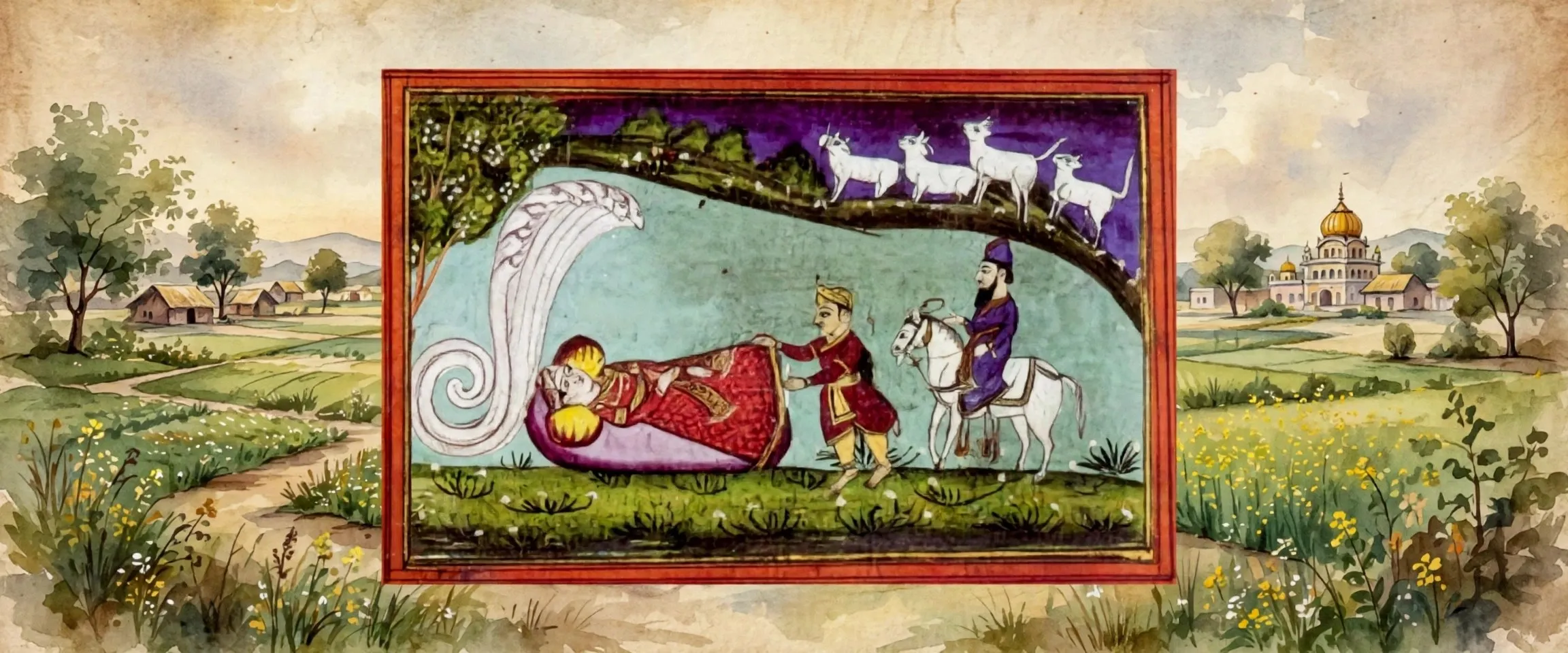
Another story tells of a summer afternoon when Nanak lay down to sleep under a tree in the fields. Rai Bular, passing by with his servants, noticed something strange: the shadows of the other trees had moved with the sun, but the shade of the tree under which Nanak slept had stayed where it was, still covering him. In a third, a hooded cobra is said to have spread its hood over the sleeping boy to shade him, and Rai Bular, riding by, saw it with his own eyes. The Janamsakhi paintings of this scene are among the most copied images of Nanak's childhood.
Whatever these stories are read as, they agree on what they meant to Rai Bular. Returning to the town after the tree episode, he is said to have called for Mehta Kalu and told him: your son is a great man, he is the honour of my town, and you have become exalted, and so have I, in whose town such a one has been born. From then on he treated Nanak with reverence. The Sikh Encyclopedia records that Nanak never failed to visit Rai Bular between his long travels, and that when the old chief lay dying, about 1515, the Guru was by his bedside.
The land gift and Gurdwara Janam Asthan
Rai Bular's most lasting act was the gift of land. According to the family's old revenue records, he gave 247 marabbas, a marabba being about twenty-five acres, for the gurdwara marking Nanak's birthplace, Janam Asthan, with an annual grant of 9,996 rupees. He gave a further 220 marabbas for Gurdwara Bal Lila, which marks the field where Nanak played as a child, and 290 marabbas for Gurdwara Mal Sahib. In all, the gift came to 757 marabbas, about 18,750 acres, though some accounts round the figure to 18,500 acres. It was, by any measure, an extraordinary gift from a Muslim chief to the memory of a boy from his own town.
On the land he gave stands Gurdwara Janam Asthan, built on the spot where Mehta Kalu's home stood and Nanak was born. A shrine was first raised there by Baba Dharam Chand, the Guru's grandson, before the end of the sixteenth century. The present building, a square domed sanctum with a pavilion in front, was built on the orders of Maharaja Ranjit Singh, who renovated the shrine in 1819 and 1820. The town itself took a new name from the child: Nankana, from Nanak da ana, the coming of Nanak, and it is as Nankana Sahib that the world knows it today.
The estate is still there. Today the Nankana Sahib Estate covers about 16,962 acres, managed by the Evacuee Trust Property Board of Pakistan and leased to the farmers and residents of the town. Almost every house in Nankana Sahib stands on land that was once Rai Bular's gift. The gurdwaras of the town, Janam Asthan, Bal Lila, Patti Sahib, Mal Ji and the rest, draw pilgrims from around the world, and the land beneath them is the chief's legacy.
His descendants and the Bhatti family
Rai Bular's descendants, the Bhatti family, have kept the bond with Nanak's memory for nineteen generations. They remained in the Talwandi region through the centuries, Muslim in faith and devoted to Guru Nanak, whom they still call Babaji. The family counts among its members Rai Issa Khan, of the fifteenth generation, whom Maharaja Ranjit Singh honoured with the title of Rai Bahadar, and Rai Hadayat Khan, of the seventeenth, who led the Sikh procession at Nankana Sahib for the five hundredth anniversary of Guru Nanak's birth.
Rai Hadayat Khan's sons, Rai Aslam and Rai Akram, received Sikh pilgrims at their home and conducted them to the gurdwaras, and the family is given the honour of leading the religious processions at Nankana Sahib each year for Guru Nanak's birth anniversary. They took part in the tercentenary celebrations of the Khalsa at Anandpur Sahib in 1999. During Partition, Rai Hussain, the father of Rai Bashir, is believed to have escorted more than a thousand Sikhs to safety, and to have died in 1948. In 1994 Rai Bashir laid the foundation stone of the Nankana Sahib Foundation on ten acres donated by his nephews, Rai Sarwar Khan and Rai Ahmed Khan, though the trust was never permitted to function.
The family's present public face is Rai Mohammad Saleem Akram Bhatti, the nineteenth generation descendant of Rai Bular and a lawyer at the Lahore High Court. He has said that the family owes its place in the world to the grace of Baba Nanak, and that for them Nanak is a father figure.
Why is Rai Bular remembered today?
In October 2022 the Shiromani Gurdwara Parbandhak Committee installed a portrait of Rai Bular in the Central Sikh Museum in the Golden Temple complex at Amritsar. His descendants in Pakistan were invited to attend the ceremony on 15 October, but they were not granted visas, and they asked the SGPC to go ahead without them.
He is remembered because his story crosses the line that usually divides communities. A Muslim Rajput chief recognised a Hindu boy as a divine soul, gave his best land so that the boy's birthplace would be honoured for all time, and his Muslim descendants still serve the pilgrims who come to that place. For Sikhs, Rai Bular is proof that Nanak's message was seen and honoured from the very beginning. For the Bhatti family, he is the ancestor whose blessing has carried them for five hundred years.
ਜਨਮਸਾਖੀਆਂ ਦੀਆਂ ਕਹਾਣੀਆਂ
ਸਭ ਤੋਂ ਮਸ਼ਹੂਰ ਕਹਾਣੀ ਪਸ਼ੂਆਂ ਬਾਰੇ ਹੈ। ਇੱਕ ਦਿਨ ਪਿੰਡ ਵਾਲਿਆਂ ਨੇ ਰਾਏ ਬੁਲਾਰ ਕੋਲ ਸ਼ਿਕਾਇਤ ਕੀਤੀ ਕਿ ਨਾਨਕ, ਜਿਸ ਨੂੰ ਝੁੰਡ ਦੀ ਰਾਖੀ ਕਰਨੀ ਸੀ, ਨੇ ਪਸ਼ੂਆਂ ਨੂੰ ਇੱਕ ਕਿਸਾਨ ਦੀ ਖੜ੍ਹੀ ਫ਼ਸਲ ਵਿੱਚ ਜਾਣ ਦਿੱਤਾ ਅਤੇ ਉਸ ਨੂੰ ਤਬਾਹ ਕਰ ਦਿੱਤਾ। ਸਰਦਾਰ ਨੇ ਮਹਿਤਾ ਕਾਲੂ ਨੂੰ ਬੁਲਾ ਕੇ ਨੁਕਸਾਨ ਦੀ ਭਰਪਾਈ ਕਰਨ ਲਈ ਕਿਹਾ। ਪਰ ਨੁਕਸਾਨ ਨਾਪਣ ਗਏ ਆਦਮੀਆਂ ਨੇ ਦੱਸਿਆ ਕਿ ਉਨ੍ਹਾਂ ਨੂੰ ਕੋਈ ਨੁਕਸਾਨ ਹੀ ਨਹੀਂ ਦਿਖਿਆ। ਰਾਏ ਬੁਲਾਰ ਕਿਸਾਨ ਜਿੰਨੇ ਹੀ ਹੈਰਾਨ ਸਨ, ਅਤੇ ਇਹ ਕਹਾਣੀ ਜਨਮਸਾਖੀ ਪਰੰਪਰਾ ਵਿੱਚ ਇਸ ਗੱਲ ਦੀ ਪਹਿਲੀ ਨਿਸ਼ਾਨੀ ਬਣ ਗਈ ਕਿ ਬੱਚੇ ਉੱਤੇ ਕੋਈ ਆਮ ਤੋਂ ਪਰ੍ਹਾਂ ਦੀ ਰੱਖਿਆ ਸੀ।
ਇੱਕ ਹੋਰ ਕਹਾਣੀ ਗਰਮੀਆਂ ਦੀ ਦੁਪਹਿਰ ਦੀ ਹੈ ਜਦੋਂ ਨਾਨਕ ਖੇਤਾਂ ਵਿੱਚ ਇੱਕ ਦਰੱਖ਼ਤ ਹੇਠਾਂ ਸੌਂ ਗਿਆ। ਰਾਏ ਬੁਲਾਰ ਆਪਣੇ ਨੌਕਰਾਂ ਨਾਲ ਉੱਥੋਂ ਲੰਘੇ ਤਾਂ ਉਨ੍ਹਾਂ ਨੇ ਕੁਝ ਅਜੀਬ ਦੇਖਿਆ: ਦੂਜੇ ਦਰੱਖ਼ਤਾਂ ਦੀਆਂ ਪਰਛਾਈਆਂ ਸੂਰਜ ਨਾਲ ਹਿੱਲ ਗਈਆਂ ਸਨ, ਪਰ ਜਿਸ ਦਰੱਖ਼ਤ ਹੇਠਾਂ ਨਾਨਕ ਸੁੱਤਾ ਸੀ ਉਸ ਦੀ ਛਾਂ ਉੱਥੇ ਹੀ ਖੜ੍ਹੀ ਸੀ ਅਤੇ ਉਸ ਨੂੰ ਢਕੀ ਹੋਈ ਸੀ। ਤੀਜੀ ਵਿੱਚ ਕਿਹਾ ਜਾਂਦਾ ਹੈ ਕਿ ਇੱਕ ਫਨੀਅਰ ਸੱਪ ਨੇ ਸੁੱਤੇ ਬੱਚੇ ਨੂੰ ਛਾਂ ਦੇਣ ਲਈ ਆਪਣਾ ਫਨ ਫੈਲਾ ਦਿੱਤਾ, ਅਤੇ ਰਾਏ ਬੁਲਾਰ ਨੇ ਜਾਂਦਿਆਂ ਇਹ ਆਪਣੀਆਂ ਅੱਖਾਂ ਨਾਲ ਦੇਖਿਆ। ਇਸ ਦ੍ਰਿਸ਼ ਦੀਆਂ ਜਨਮਸਾਖੀ ਤਸਵੀਰਾਂ ਨਾਨਕ ਦੇ ਬਚਪਨ ਦੀਆਂ ਸਭ ਤੋਂ ਵੱਧ ਨਕਲ ਕੀਤੀਆਂ ਤਸਵੀਰਾਂ ਵਿੱਚੋਂ ਹਨ।
ਭਾਵੇਂ ਇਨ੍ਹਾਂ ਕਹਾਣੀਆਂ ਨੂੰ ਕਿਵੇਂ ਵੀ ਪੜ੍ਹਿਆ ਜਾਵੇ, ਇਹ ਸਭ ਇਸ ਗੱਲ ਉੱਤੇ ਸਹਿਮਤ ਹਨ ਕਿ ਇਨ੍ਹਾਂ ਦਾ ਰਾਏ ਬੁਲਾਰ ਲਈ ਕੀ ਅਰਥ ਸੀ। ਦਰੱਖ਼ਤ ਵਾਲੀ ਘਟਨਾ ਤੋਂ ਬਾਅਦ ਸ਼ਹਿਰ ਪਰਤ ਕੇ ਉਨ੍ਹਾਂ ਨੇ ਮਹਿਤਾ ਕਾਲੂ ਨੂੰ ਬੁਲਾਇਆ ਅਤੇ ਕਿਹਾ: ਤੇਰਾ ਪੁੱਤਰ ਇੱਕ ਮਹਾਨ ਆਦਮੀ ਹੈ, ਉਹ ਮੇਰੇ ਸ਼ਹਿਰ ਦਾ ਮਾਣ ਹੈ, ਤੂੰ ਮਹਾਨ ਹੋ ਗਿਆ ਹੈਂ, ਅਤੇ ਮੈਂ ਵੀ ਮਹਾਨ ਹੋ ਗਿਆ ਹਾਂ ਜਿਸ ਦੇ ਸ਼ਹਿਰ ਵਿੱਚ ਅਜਿਹਾ ਵਿਅਕਤੀ ਜਨਮਿਆ ਹੈ। ਉਸ ਤੋਂ ਬਾਅਦ ਉਹ ਨਾਨਕ ਦਾ ਸਤਿਕਾਰ ਕਰਨ ਲੱਗੇ। ਸਿੱਖ ਐਨਸਾਈਕਲੋਪੀਡੀਆ ਲਿਖਦਾ ਹੈ ਕਿ ਨਾਨਕ ਆਪਣੀਆਂ ਯਾਤਰਾਵਾਂ ਦੌਰਾਨ ਰਾਏ ਬੁਲਾਰ ਨੂੰ ਮਿਲਣਾ ਕਦੇ ਨਹੀਂ ਭੁੱਲਦੇ ਸਨ, ਅਤੇ ਜਦੋਂ ਬਜ਼ੁਰਗ ਸਰਦਾਰ ਮਰਨ ਕੰਢੇ ਸਨ, ਲਗਭਗ 1515 ਵਿੱਚ, ਗੁਰੂ ਉਨ੍ਹਾਂ ਦੇ ਸਿਰਹਾਣੇ ਮੌਜੂਦ ਸਨ।
ਜ਼ਮੀਨ ਦਾ ਦਾਨ ਅਤੇ ਗੁਰਦੁਆਰਾ ਜਨਮ ਅਸਥਾਨ
ਰਾਏ ਬੁਲਾਰ ਦਾ ਸਭ ਤੋਂ ਸਥਾਈ ਕੰਮ ਜ਼ਮੀਨ ਦਾ ਦਾਨ ਸੀ। ਪਰਿਵਾਰ ਦੇ ਪੁਰਾਣੇ ਮਾਲ ਰਿਕਾਰਡਾਂ ਅਨੁਸਾਰ ਉਨ੍ਹਾਂ ਨੇ ਗੁਰਦੁਆਰਾ ਜਨਮ ਅਸਥਾਨ ਲਈ 247 ਮੁਰੱਬੇ ਜ਼ਮੀਨ ਦਿੱਤੀ, ਇੱਕ ਮੁਰੱਬਾ ਲਗਭਗ ਪੱਚੀ ਏਕੜ ਹੁੰਦਾ ਹੈ, ਅਤੇ ਸਾਲਾਨਾ 9,996 ਰੁਪਏ ਦੀ ਜਾਗੀਰ ਵੀ ਦਿੱਤੀ। ਉਨ੍ਹਾਂ ਨੇ ਗੁਰਦੁਆਰਾ ਬਾਲ ਲੀਲਾ ਲਈ ਹੋਰ 220 ਮੁਰੱਬੇ ਦਿੱਤੇ, ਜੋ ਉਸ ਖੇਤ ਨੂੰ ਦਰਸਾਉਂਦਾ ਹੈ ਜਿੱਥੇ ਨਾਨਕ ਬੱਚਿਆਂ ਨਾਲ ਖੇਡਦਾ ਸੀ, ਅਤੇ ਗੁਰਦੁਆਰਾ ਮਾਲ ਸਾਹਿਬ ਲਈ 290 ਮੁਰੱਬੇ ਦਿੱਤੇ। ਕੁੱਲ ਮਿਲਾ ਕੇ ਇਹ ਦਾਨ 757 ਮੁਰੱਬੇ, ਲਗਭਗ 18,750 ਏਕੜ, ਬਣਿਆ, ਹਾਲਾਂਕਿ ਕੁਝ ਸਰੋਤ ਇਸ ਨੂੰ 18,500 ਏਕੜ ਦੱਸਦੇ ਹਨ। ਇਹ ਇੱਕ ਮੁਸਲਮਾਨ ਸਰਦਾਰ ਵੱਲੋਂ ਆਪਣੇ ਹੀ ਸ਼ਹਿਰ ਦੇ ਇੱਕ ਬੱਚੇ ਦੀ ਯਾਦ ਲਈ ਅਸਾਧਾਰਨ ਦਾਨ ਸੀ।
ਉਨ੍ਹਾਂ ਦੀ ਦਿੱਤੀ ਜ਼ਮੀਨ ਉੱਤੇ ਗੁਰਦੁਆਰਾ ਜਨਮ ਅਸਥਾਨ ਖੜ੍ਹਾ ਹੈ, ਜੋ ਉਸ ਥਾਂ ਉੱਤੇ ਬਣਿਆ ਹੈ ਜਿੱਥੇ ਮਹਿਤਾ ਕਾਲੂ ਦਾ ਘਰ ਸੀ ਅਤੇ ਨਾਨਕ ਦਾ ਜਨਮ ਹੋਇਆ ਸੀ। ਉੱਥੇ ਪਹਿਲਾ ਅਸਥਾਨ ਗੁਰੂ ਦੇ ਪੋਤੇ ਬਾਬਾ ਧਰਮ ਚੰਦ ਨੇ ਸੋਲ੍ਹਵੀਂ ਸਦੀ ਦੇ ਅੰਤ ਤੋਂ ਪਹਿਲਾਂ ਬਣਾਇਆ ਸੀ। ਮੌਜੂਦਾ ਇਮਾਰਤ, ਸਾਹਮਣੇ ਇੱਕ ਮੰਡਪ ਵਾਲਾ ਚੌਕੋਰ ਗੁੰਬਦਦਾਰ ਗਰਭ-ਗ੍ਰਹਿ, ਮਹਾਰਾਜਾ ਰਣਜੀਤ ਸਿੰਘ ਦੇ ਹੁਕਮ ਉੱਤੇ ਬਣੀ, ਜਿਨ੍ਹਾਂ ਨੇ 1819 ਅਤੇ 1820 ਵਿੱਚ ਅਸਥਾਨ ਦੀ ਮੁਰੰਮਤ ਕਰਵਾਈ। ਸ਼ਹਿਰ ਨੇ ਬੱਚੇ ਤੋਂ ਨਵਾਂ ਨਾਂ ਲਿਆ: ਨਨਕਾਣਾ, ਨਾਨਕ ਦਾ ਆਉਣਾ, ਅਤੇ ਅੱਜ ਦੁਨੀਆ ਇਸ ਨੂੰ ਨਨਕਾਣਾ ਸਾਹਿਬ ਵਜੋਂ ਜਾਣਦੀ ਹੈ।
ਇਹ ਜਾਇਦਾਦ ਅੱਜ ਵੀ ਮੌਜੂਦ ਹੈ। ਅੱਜ ਨਨਕਾਣਾ ਸਾਹਿਬ ਜਾਇਦਾਦ ਲਗਭਗ 16,962 ਏਕੜ ਹੈ, ਜਿਸ ਦਾ ਪ੍ਰਬੰਧ ਪਾਕਿਸਤਾਨ ਦੇ ਈਵੈਕੂਈ ਟਰੱਸਟ ਪ੍ਰਾਪਰਟੀ ਬੋਰਡ ਕੋਲ ਹੈ ਅਤੇ ਜੋ ਸ਼ਹਿਰ ਦੇ ਕਿਸਾਨਾਂ ਅਤੇ ਵਸਨੀਕਾਂ ਨੂੰ ਠੇਕੇ ਉੱਤੇ ਦਿੱਤੀ ਜਾਂਦੀ ਹੈ। ਨਨਕਾਣਾ ਸਾਹਿਬ ਦੇ ਲਗਭਗ ਹਰ ਘਰ ਹੇਠਾਂ ਉਹੀ ਜ਼ਮੀਨ ਹੈ ਜੋ ਕਦੇ ਰਾਏ ਬੁਲਾਰ ਦਾ ਦਾਨ ਸੀ। ਸ਼ਹਿਰ ਦੇ ਗੁਰਦੁਆਰੇ, ਜਨਮ ਅਸਥਾਨ, ਬਾਲ ਲੀਲਾ, ਪੱਟੀ ਸਾਹਿਬ, ਮਾਲ ਜੀ ਅਤੇ ਹੋਰ, ਦੁਨੀਆ ਭਰ ਤੋਂ ਯਾਤਰੀਆਂ ਨੂੰ ਖਿੱਚਦੇ ਹਨ, ਅਤੇ ਉਨ੍ਹਾਂ ਹੇਠਾਂ ਦੀ ਜ਼ਮੀਨ ਸਰਦਾਰ ਦੀ ਵਿਰਾਸਤ ਹੈ।
ਉਨ੍ਹਾਂ ਦੇ ਵਾਰਸ ਅਤੇ ਭੱਟੀ ਪਰਿਵਾਰ
ਰਾਏ ਬੁਲਾਰ ਦੇ ਵਾਰਸ, ਭੱਟੀ ਪਰਿਵਾਰ, ਨੇ ਨਾਨਕ ਦੀ ਯਾਦ ਨਾਲ ਆਪਣਾ ਰਿਸ਼ਤਾ ਉੱਨੀ ਪੀੜ੍ਹੀਆਂ ਤੱਕ ਨਿਭਾਇਆ ਹੈ। ਉਹ ਸਦੀਆਂ ਤੋਂ ਤਲਵੰਡੀ ਇਲਾਕੇ ਵਿੱਚ ਰਹੇ, ਧਰਮ ਪੱਖੋਂ ਮੁਸਲਮਾਨ ਅਤੇ ਗੁਰੂ ਨਾਨਕ ਪ੍ਰਤੀ ਸ਼ਰਧਾਲੂ, ਜਿਨ੍ਹਾਂ ਨੂੰ ਉਹ ਅੱਜ ਵੀ ਬਾਬਾ ਜੀ ਕਹਿੰਦੇ ਹਨ। ਪਰਿਵਾਰ ਵਿੱਚ ਪੰਦਰ੍ਹਵੀਂ ਪੀੜ੍ਹੀ ਦੇ ਰਾਏ ਈਸਾ ਖ਼ਾਨ ਸ਼ਾਮਲ ਹਨ, ਜਿਨ੍ਹਾਂ ਨੂੰ ਮਹਾਰਾਜਾ ਰਣਜੀਤ ਸਿੰਘ ਨੇ ਰਾਏ ਬਹਾਦਰ ਦਾ ਖ਼ਿਤਾਬ ਦਿੱਤਾ, ਅਤੇ ਸਤਾਰ੍ਹਵੀਂ ਪੀੜ੍ਹੀ ਦੇ ਰਾਏ ਹਦਾਇਤ ਖ਼ਾਨ, ਜਿਨ੍ਹਾਂ ਨੇ ਗੁਰੂ ਨਾਨਕ ਦੇ ਜਨਮ ਦੀ ਪੰਜ ਸੌਵੀਂ ਵਰ੍ਹੇਗੰਢ ਉੱਤੇ ਨਨਕਾਣਾ ਸਾਹਿਬ ਵਿੱਚ ਸਿੱਖ ਜਲੂਸ ਦੀ ਅਗਵਾਈ ਕੀਤੀ।
ਰਾਏ ਹਦਾਇਤ ਖ਼ਾਨ ਦੇ ਪੁੱਤਰ, ਰਾਏ ਅਸਲਮ ਅਤੇ ਰਾਏ ਅਕਰਮ, ਸਿੱਖ ਯਾਤਰੀਆਂ ਦਾ ਆਪਣੇ ਘਰ ਵਿੱਚ ਸਵਾਗਤ ਕਰਦੇ ਸਨ ਅਤੇ ਉਨ੍ਹਾਂ ਨੂੰ ਗੁਰਦੁਆਰਿਆਂ ਤੱਕ ਲੈ ਜਾਂਦੇ ਸਨ, ਅਤੇ ਪਰਿਵਾਰ ਨੂੰ ਹਰ ਸਾਲ ਗੁਰੂ ਨਾਨਕ ਦੇ ਜਨਮ ਦਿਨ ਉੱਤੇ ਨਨਕਾਣਾ ਸਾਹਿਬ ਵਿੱਚ ਧਾਰਮਿਕ ਜਲੂਸਾਂ ਦੀ ਅਗਵਾਈ ਕਰਨ ਦਾ ਮਾਣ ਮਿਲਦਾ ਹੈ। ਉਨ੍ਹਾਂ ਨੇ 1999 ਵਿੱਚ ਅਨੰਦਪੁਰ ਸਾਹਿਬ ਵਿਖੇ ਖ਼ਾਲਸੇ ਦੀ ਤਿੰਨ ਸੌ ਸਾਲਾ ਵਰ੍ਹੇਗੰਢ ਵਿੱਚ ਹਿੱਸਾ ਲਿਆ। ਵੰਡ ਦੌਰਾਨ ਰਾਏ ਹੁਸੈਨ, ਰਾਏ ਬਸ਼ੀਰ ਦੇ ਪਿਤਾ, ਨੇ ਇੱਕ ਹਜ਼ਾਰ ਤੋਂ ਵੱਧ ਸਿੱਖਾਂ ਨੂੰ ਸੁਰੱਖਿਅਤ ਥਾਂ ਉੱਤੇ ਪਹੁੰਚਾਇਆ ਮੰਨਿਆ ਜਾਂਦਾ ਹੈ, ਅਤੇ 1948 ਵਿੱਚ ਉਨ੍ਹਾਂ ਦਾ ਦਿਹਾਂਤ ਹੋ ਗਿਆ। 1994 ਵਿੱਚ ਰਾਏ ਬਸ਼ੀਰ ਨੇ ਆਪਣੇ ਭਤੀਜਿਆਂ, ਰਾਏ ਸਰਵਰ ਖ਼ਾਨ ਅਤੇ ਰਾਏ ਅਹਿਮਦ ਖ਼ਾਨ, ਵੱਲੋਂ ਦਾਨ ਕੀਤੇ ਦਸ ਏਕੜ ਉੱਤੇ ਨਨਕਾਣਾ ਸਾਹਿਬ ਫਾਊਂਡੇਸ਼ਨ ਦਾ ਨੀਂਹ ਪੱਥਰ ਰੱਖਿਆ, ਹਾਲਾਂਕਿ ਟਰੱਸਟ ਨੂੰ ਕੰਮ ਕਰਨ ਦੀ ਇਜਾਜ਼ਤ ਕਦੇ ਨਹੀਂ ਮਿਲੀ।
ਪਰਿਵਾਰ ਦੇ ਮੌਜੂਦਾ ਮੁਖੀ ਰਾਏ ਮੁਹੰਮਦ ਸਲੀਮ ਅਕਰਮ ਭੱਟੀ ਹਨ, ਰਾਏ ਬੁਲਾਰ ਦੀ ਉੱਨੀਵੀਂ ਪੀੜ੍ਹੀ ਦੇ ਵਾਰਸ ਅਤੇ ਲਾਹੌਰ ਹਾਈ ਕੋਰਟ ਦੇ ਵਕੀਲ। ਉਨ੍ਹਾਂ ਨੇ ਕਿਹਾ ਹੈ ਕਿ ਪਰਿਵਾਰ ਨੂੰ ਦੁਨੀਆ ਵਿੱਚ ਆਪਣੀ ਥਾਂ ਬਾਬਾ ਨਾਨਕ ਦੀ ਕਿਰਪਾ ਕਰਕੇ ਮਿਲੀ ਹੈ, ਅਤੇ ਉਨ੍ਹਾਂ ਲਈ ਨਾਨਕ ਇੱਕ ਪਿਤਾ ਵਰਗੇ ਹਨ।
ਰਾਏ ਬੁਲਾਰ ਨੂੰ ਅੱਜ ਕਿਉਂ ਯਾਦ ਕੀਤਾ ਜਾਂਦਾ ਹੈ?
ਅਕਤੂਬਰ 2022 ਵਿੱਚ ਸ਼੍ਰੋਮਣੀ ਗੁਰਦੁਆਰਾ ਪ੍ਰਬੰਧਕ ਕਮੇਟੀ ਨੇ ਅੰਮ੍ਰਿਤਸਰ ਦੇ ਸ੍ਰੀ ਹਰਿਮੰਦਰ ਸਾਹਿਬ ਕੰਪਲੈਕਸ ਵਿੱਚ ਕੇਂਦਰੀ ਸਿੱਖ ਅਜਾਇਬ ਘਰ ਵਿੱਚ ਰਾਏ ਬੁਲਾਰ ਦੀ ਤਸਵੀਰ ਲਗਾਈ, ਤਾਂ ਜੋ ਸਿੱਖ ਇਤਿਹਾਸ ਵਿੱਚ ਉਨ੍ਹਾਂ ਦੀ ਥਾਂ ਦਰਜ ਹੋ ਸਕੇ। ਪਾਕਿਸਤਾਨ ਵਿੱਚ ਉਨ੍ਹਾਂ ਦੇ ਵਾਰਸਾਂ ਨੂੰ 15 ਅਕਤੂਬਰ ਦੇ ਸਮਾਰੋਹ ਵਿੱਚ ਆਉਣ ਦਾ ਸੱਦਾ ਦਿੱਤਾ ਗਿਆ ਸੀ, ਪਰ ਉਨ੍ਹਾਂ ਨੂੰ ਵੀਜ਼ੇ ਨਹੀਂ ਮਿਲੇ, ਅਤੇ ਉਨ੍ਹਾਂ ਨੇ ਐਸ.ਜੀ.ਪੀ.ਸੀ. ਨੂੰ ਬਿਨਾਂ ਉਨ੍ਹਾਂ ਦੇ ਸਮਾਰੋਹ ਕਰ ਲੈਣ ਲਈ ਕਿਹਾ।
ਉਹ ਇਸ ਲਈ ਯਾਦ ਕੀਤੇ ਜਾਂਦੇ ਹਨ ਕਿਉਂਕਿ ਉਨ੍ਹਾਂ ਦੀ ਕਹਾਣੀ ਉਸ ਲਕੀਰ ਨੂੰ ਪਾਰ ਕਰਦੀ ਹੈ ਜੋ ਆਮ ਤੌਰ ਉੱਤੇ ਭਾਈਚਾਰਿਆਂ ਨੂੰ ਵੰਡਦੀ ਹੈ। ਇੱਕ ਮੁਸਲਮਾਨ ਰਾਜਪੂਤ ਸਰਦਾਰ ਨੇ ਇੱਕ ਹਿੰਦੂ ਬੱਚੇ ਨੂੰ ਰੱਬੀ ਰੂਹ ਵਜੋਂ ਪਛਾਣਿਆ, ਆਪਣੀ ਸਭ ਤੋਂ ਵਧੀਆ ਜ਼ਮੀਨ ਦਿੱਤੀ ਤਾਂ ਜੋ ਉਸ ਬੱਚੇ ਦਾ ਜਨਮ ਅਸਥਾਨ ਸਦਾ ਲਈ ਸਤਿਕਾਰਿਆ ਜਾਵੇ, ਅਤੇ ਉਨ੍ਹਾਂ ਦੇ ਮੁਸਲਮਾਨ ਵਾਰਸ ਅੱਜ ਵੀ ਉੱਥੇ ਆਉਣ ਵਾਲੇ ਯਾਤਰੀਆਂ ਦੀ ਸੇਵਾ ਕਰਦੇ ਹਨ। ਸਿੱਖਾਂ ਲਈ ਰਾਏ ਬੁਲਾਰ ਇਸ ਗੱਲ ਦਾ ਸਬੂਤ ਹਨ ਕਿ ਨਾਨਕ ਦਾ ਸੁਨੇਹਾ ਸ਼ੁਰੂ ਤੋਂ ਹੀ ਦੇਖਿਆ ਅਤੇ ਸਤਿਕਾਰਿਆ ਗਿਆ ਸੀ। ਭੱਟੀ ਪਰਿਵਾਰ ਲਈ ਉਹ ਉਹ ਪੁਰਖਾ ਹਨ ਜਿਨ੍ਹਾਂ ਦੀ ਬਰਕਤ ਨੇ ਉਨ੍ਹਾਂ ਨੂੰ ਪੰਜ ਸੌ ਸਾਲਾਂ ਤੱਕ ਸੰਭਾਲਿਆ ਹੈ।
More religion entries to explore
Sources (7)
Jugti is free and independent. Reader support keeps the Kosh growing.
Support