
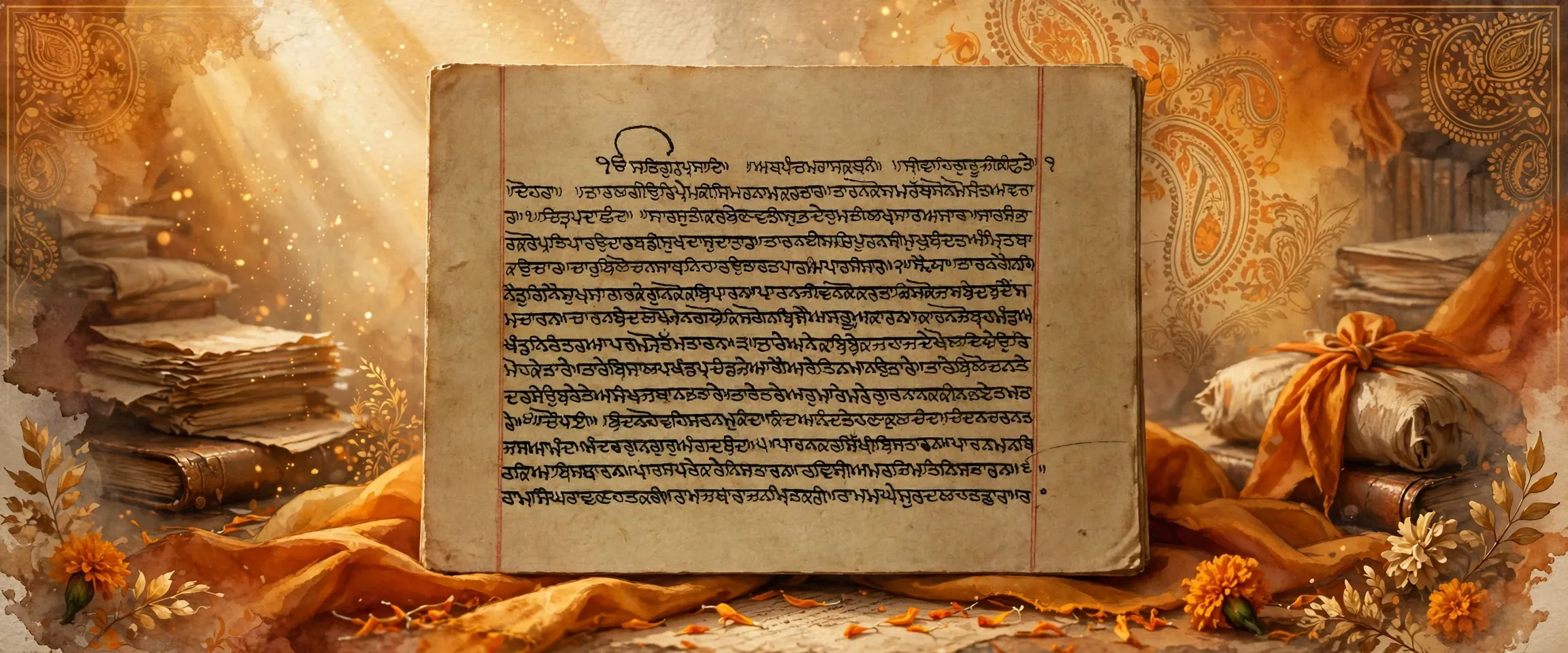
Suraj Parkash, full title Sri Gur Pratap Suraj Granth, is the great 19th-century verse history of the ten Sikh Gurus, written by Kavi Santokh Singh Ji and completed in 1843. In more than 51,000 verses of Braj poetry it tells the lives of Guru Nanak Dev Ji to Guru Gobind Singh Ji, with Baba Banda Singh Bahadur, and it remains the most influential source for later Sikh histories. It is still read and recited as katha in gurdwaras today, though scholars warn that its miracle stories and dates should not be read as modern critical history.
- Punjabi name
- ਸੂਰਜ ਪ੍ਰਕਾਸ਼
- Author
- Kavi Santokh Singh Ji (1787 to 1843)
- Full title
- Sri Gur Pratap Suraj Granth
- Completed
- 1843 (rainy season, Samvat 1900)
- Language
- Braj Bhasha in Gurmukhi script
- Form
- Verse (metre), lives of the Gurus
All 11 facts
- Subject
- Lives of the ten Sikh Gurus and Baba Banda Singh Bahadur
- Verses
- About 51,820 (counts vary slightly by edition)
- Chapters
- 1,281 chapters in 22 sections
- Structure
- Nanak Prakash, twelve raas, six rut, two ayan
- First printed edition
- Bhai Vir Singh, 14 volumes, 1926 to 1935
Suraj Parkash, full title Sri Gur Pratap Suraj Granth, is the 19th-century verse history of the ten Sikh Gurus, written by Kavi Santokh Singh and completed in 1843. In more than 51,000 Braj verses it tells the lives of Guru Nanak Dev Ji to Guru Gobind Singh Ji, and it remains the main source for later Sikh histories.
What is Suraj Parkash?
The full title, Sri Gur Pratap Suraj Granth, means the Sun-like Illumination of the Guru's Glory, and the shorter name Suraj Parkash means the light of the sun. The title is a promise: the book presents the ten Gurus as one light shining through ten lives, from Guru Nanak Dev Ji to Guru Gobind Singh Ji, with the story of Baba Banda Singh Bahadur closing the account.
It is a hagiographic text, a reverent telling of holy lives rather than a modern critical history. Its stories include births, travels, miracles, battles and martyrdoms, told in rich, ornamented verse meant to be heard as much as read. For nearly two centuries it has been the book Sikh preachers turn to first when they tell the Gurus' lives.
Its scale is part of its fame. At about 51,820 verses it is one of the largest poetic works in Punjabi and Hindi literature, and some counts put it slightly higher, at 51,829. With the author's earlier Nanak Prakash counted in, the total passes 60,000 verses. Readers do not read it cover to cover; they dip into the life they need, or hear it in daily katha.
The poet behind the Granth: Kavi Santokh Singh Ji
Kavi Santokh Singh Ji was born on 8 October 1787 at Sarai Nurdin, a village near Tarn Taran, the son of Deva Singh and Mai Rajadi. His father taught him first, then his uncle Ram Singh at Amritsar, and then, for nearly a decade, Giani Sant Singh of Amritsar, the leading scholar of his day. Under him Santokh Singh studied Braj, Sanskrit, Sikh scripture and history, and the Vedantic and Puranic literature that shapes so much of the Granth's imagery.
He earned his living as a katha performer and court poet, first at the court of Bhagwant Singh of Buria, and from 1829 under the patronage of Raja Udai Singh of Kaithal, who rewarded him in 1834 with the village of Morthali as a jagir. It was in Kaithal that he wrote the Suraj Parkash, the work of about a decade, finishing it in the rainy month of Sawan in 1843.
After completion he carried the Granth to Amritsar and presented it to the Sikh clergy at the Akal Bunga. He died on 19 October 1843, the same year, though some sources give 1844. He was 56. His admirers call him Kavi Churamani, the crown jewel of poets, and Mahakavi, the great poet; some have called him the Ferdowsi of Punjabi literature, after the Persian poet whose epic runs to a similar scale.
A sun-shaped structure: raas, rut and ayan
The book's structure follows its title. The life of Guru Nanak Dev Ji, told in the author's earlier Nanak Prakash, is divided into sunrise and sunset. The lives of the second to the ninth Gurus, from Guru Angad Dev Ji to Guru Tegh Bahadur Ji, are told in twelve raas, sections named for the twelve signs of the zodiac. The life of Guru Gobind Singh Ji fills six rut, the six Indian seasons, and two ayan, the ascending and descending solstices. Each chapter inside these sections is called an anshu, a sunray.
The design carries a meaning. As the scholar Jvala Singh has written, the sun's daily and yearly round lets the Granth show the Gurus as one light taking changing forms: sunrise, midday, seasons and solstices, all the same sun. In all, the text runs to 1,281 chapters across twenty-two sections.
The form is demanding. The verse is Braj Bhasha written in Gurmukhi script, thick with Sanskrit words, and even fluent Punjabi readers often need a commentary. That is why Bhai Vir Singh's printed edition, published in fourteen volumes between 1926 and 1935, carries Punjabi footnotes throughout, and why the Granth is usually heard in katha, with a preacher explaining the verse line by line.
Sources and stories inside the Granth
Santokh Singh Ji built his poem from the Sikh literature that came before him: the Guru Granth Sahib, the Dasam Granth, the vars of Bhai Gurdas, the janamsakhis, the Gurbilas accounts of the sixth and tenth Gurus, the Mahima Prakash, the Sau Sakhi and the Sikhan Di Bhagatmala. He states in the text that he wrote his stories according to the Granth, meaning the Guru Granth Sahib, and the scripture's own words anchor many of his episodes.
The stories range widely: Guru Nanak's travels, the founding of Amritsar, the martyrdoms of Guru Arjan Dev Ji and Guru Tegh Bahadur Ji, the battles of Guru Gobind Singh Ji, and the career of Baba Banda Singh Bahadur. The Granth was also the first to elaborate the tale of Guru Gobind Singh Ji's earlier life as Dusht Daman, connected with Hemkunt, a story the Guru himself sketches in the Bachittar Natak.
Because it gathers so much, the Granth became the storehouse other writers drew on. Giani Gian Singh simplified it into the prose Twarikh Guru Khalsa and abridged it as the Suraj Prakash Vartak, and later historians from Macauliffe onwards mined it for the lives of the Gurus.
Can Suraj Parkash be trusted as history?
This is the honest question every reader should ask, and scholars have answered it in different ways. Max Arthur Macauliffe used the Granth extensively for his six-volume The Sikh Religion (1909), which introduced Sikh scripture and history to the West, yet he warned that it was of doubtful trustworthiness, saying its author's education was largely tinctured with Hinduism. The historian W. H. McLeod went further, calling it mostly ahistorical mythology and an untrustworthy source for Sikh history.
Other scholars point to how Santokh Singh worked. Ganda Singh criticised him for accepting every source he used, including the Mahima Prakash and the Sau Sakhi, as authentic without questioning their reliability. Karam Singh made the same complaint about his reliance on the Bhai Bala janamsakhi tradition. On this reading, the Granth preserves what the Sikh community believed and retold, not what a modern historian can verify.
Its defenders answer that the Granth was never meant to be that kind of book. Bhai Vir Singh, who gave his life to publishing it, argued that its Puranic stories and miracles are metaphors, meant to open the heart of the listener in a way plain history cannot. The Patna Sahib scholar Sumer Singh praised it as a treasure trove of the Guru's praise, and the scholar Anne Murphy has noted that it has been understudied, perhaps unfairly, for its reputation as a Hinduised text.
The fair way to read it is as the Sikh tradition's own telling of its past: rich, beloved and deeply influential, but not a critical history. Its dates and miracle stories should be checked against other sources, while its poetry, its devotion and its place in Sikh life need no apology.
Suraj Parkash and Panth Parkash: not the same book
The two titles sound alike and are often confused, but they are different books by different authors. The Panth Parkash of Rattan Singh Bhangu, written in the early 1810s, is a history of the Khalsa in the 1700s, from the death of Guru Gobind Singh Ji to the rise of Sikh rule in Punjab. The Naveen Panth Prakash of Giani Gian Singh, published at Delhi in 1880, reworked Bhangu's book and carried the story from Guru Nanak to Maharaja Duleep Singh.
Suraj Parkash is the earlier work, finished in 1843, and it keeps its focus on the lives of the ten Gurus themselves. Where the Panth Parkash books are histories of the community, the Suraj Parkash is a life of the Gurus in verse. Gian Singh himself drew on Santokh Singh's Granth when writing his own history, listing it among his sources.
Reading Suraj Parkash today
The Granth is still very much alive. In gurdwaras across Punjab and the diaspora, its katha is a daily fixture, often in the late afternoon, when listeners gather to hear a preacher expound a chapter. Bhai Vir Singh's fourteen-volume edition remains the standard printed text, and the Granth is now also available in full online, in print and as digital editions.
English readers have partial routes in: the Sri Guru Granth Sahib Ji Academy has published novelised English lives of Guru Angad Dev Ji, Guru Arjan Dev Ji and Guru Harkrishan Sahib Ji drawn from the Granth, and Jvala Singh's Suraj Podcast translates it chapter by chapter. A complete English translation by Jaswinder Singh Sehmbi is available online. For most readers, though, the Granth still rewards the patient route: a chapter at a time, with a good commentary at hand.
ਸੂਰਜ ਪ੍ਰਕਾਸ਼, ਜਿਸਦਾ ਪੂਰਾ ਨਾਂ ਸ੍ਰੀ ਗੁਰ ਪ੍ਰਤਾਪ ਸੂਰਜ ਗ੍ਰੰਥ ਹੈ, ਦਸਾਂ ਸਿੱਖ ਗੁਰੂਆਂ ਦੀ 19ਵੀਂ ਸਦੀ ਦੀ ਬ੍ਰਜ ਕਵਿਤਾ ਵਿੱਚ ਜੀਵਨ ਕਥਾ ਹੈ, ਜੋ ਕਵੀ ਸੰਤੋਖ ਸਿੰਘ ਜੀ ਨੇ ਲਿਖੀ ਅਤੇ 1843 ਵਿੱਚ ਮੁਕੰਮਲ ਕੀਤੀ। 51,000 ਤੋਂ ਵੱਧ ਛੰਦਾਂ ਵਿੱਚ ਇਹ ਗੁਰੂ ਨਾਨਕ ਦੇਵ ਜੀ ਤੋਂ ਗੁਰੂ ਗੋਬਿੰਦ ਸਿੰਘ ਜੀ ਤੱਕ ਦੇ ਜੀਵਨ ਨੂੰ ਦੱਸਦੀ ਹੈ, ਅਤੇ ਇਹ ਮਗਰਲੇ ਸਿੱਖ ਇਤਿਹਾਸ ਦਾ ਮੁੱਖ ਸਰੋਤ ਹੈ।
ਸੂਰਜ ਪ੍ਰਕਾਸ਼ ਕੀ ਹੈ?
ਪੂਰਾ ਨਾਂ, ਸ੍ਰੀ ਗੁਰ ਪ੍ਰਤਾਪ ਸੂਰਜ ਗ੍ਰੰਥ, ਦਾ ਅਰਥ ਹੈ ਗੁਰੂ ਦੀ ਮਹਿਮਾ ਦਾ ਸੂਰਜ ਵਰਗਾ ਪ੍ਰਕਾਸ਼, ਅਤੇ ਛੋਟਾ ਨਾਂ ਸੂਰਜ ਪ੍ਰਕਾਸ਼ ਦਾ ਅਰਥ ਹੈ ਸੂਰਜ ਦੀ ਰੌਸ਼ਨੀ। ਇਹ ਨਾਂ ਇੱਕ ਵਾਅਦਾ ਹੈ: ਇਹ ਕਿਤਾਬ ਦਸਾਂ ਗੁਰੂਆਂ ਨੂੰ ਇੱਕੋ ਰੌਸ਼ਨੀ ਵਜੋਂ ਪੇਸ਼ ਕਰਦੀ ਹੈ ਜੋ ਦਸ ਜੀਵਨਾਂ ਵਿੱਚ ਚਮਕਦੀ ਹੈ, ਗੁਰੂ ਨਾਨਕ ਦੇਵ ਜੀ ਤੋਂ ਗੁਰੂ ਗੋਬਿੰਦ ਸਿੰਘ ਜੀ ਤੱਕ, ਅਤੇ ਅੰਤ ਵਿੱਚ ਬਾਬਾ ਬੰਦਾ ਸਿੰਘ ਬਹਾਦਰ ਦੀ ਕਹਾਣੀ ਨਾਲ ਸਮਾਪਤ ਹੁੰਦੀ ਹੈ।
ਇਹ ਇੱਕ ਜੀਵਨੀ ਪਰੰਪਰਾ ਦੀ ਕਿਤਾਬ ਹੈ, ਪਵਿੱਤਰ ਜੀਵਨਾਂ ਦੀ ਸ਼ਰਧਾ ਭਰੀ ਕਥਾ, ਨਾ ਕਿ ਆਧੁਨਿਕ ਆਲੋਚਨਾਤਮਕ ਇਤਿਹਾਸ। ਇਸ ਦੀਆਂ ਕਥਾਵਾਂ ਵਿੱਚ ਜਨਮ, ਯਾਤਰਾਵਾਂ, ਚਮਤਕਾਰ, ਲੜਾਈਆਂ ਅਤੇ ਸ਼ਹੀਦੀਆਂ ਸ਼ਾਮਲ ਹਨ, ਜੋ ਸੋਹਣੀ ਅਤੇ ਅਲੰਕਾਰ ਭਰੀ ਕਵਿਤਾ ਵਿੱਚ ਲਿਖੀਆਂ ਗਈਆਂ ਹਨ ਅਤੇ ਸੁਣਨ ਲਈ ਵੀ ਹਨ, ਪੜ੍ਹਨ ਲਈ ਵੀ। ਲਗਭਗ ਦੋ ਸਦੀਆਂ ਤੋਂ ਇਹ ਉਹ ਕਿਤਾਬ ਹੈ ਜਿਸ ਵੱਲ ਸਿੱਖ ਪ੍ਰਚਾਰਕ ਸਭ ਤੋਂ ਪਹਿਲਾਂ ਮੁੜਦੇ ਹਨ ਜਦੋਂ ਉਹ ਗੁਰੂਆਂ ਦਾ ਜੀਵਨ ਸੁਣਾਉਂਦੇ ਹਨ।
ਇਸ ਦਾ ਆਕਾਰ ਵੀ ਇਸ ਦੀ ਪ੍ਰਸਿੱਧੀ ਦਾ ਹਿੱਸਾ ਹੈ। ਲਗਭਗ 51,820 ਛੰਦਾਂ ਨਾਲ ਇਹ ਪੰਜਾਬੀ ਅਤੇ ਹਿੰਦੀ ਸਾਹਿਤ ਦੀਆਂ ਸਭ ਤੋਂ ਵੱਡੀਆਂ ਕਾਵਿ ਰਚਨਾਵਾਂ ਵਿੱਚੋਂ ਇੱਕ ਹੈ, ਅਤੇ ਕੁਝ ਗਿਣਤੀਆਂ ਵਿੱਚ ਇਹ ਗਿਣਤੀ ਥੋੜ੍ਹੀ ਵੱਧ, 51,829, ਦੱਸੀ ਗਈ ਹੈ। ਲੇਖਕ ਦੇ ਪਹਿਲੇ ਗ੍ਰੰਥ ਨਾਨਕ ਪ੍ਰਕਾਸ਼ ਨੂੰ ਨਾਲ ਗਿਣਿਆ ਜਾਵੇ ਤਾਂ ਕੁੱਲ ਗਿਣਤੀ 60,000 ਛੰਦਾਂ ਤੋਂ ਪਾਰ ਚਲੀ ਜਾਂਦੀ ਹੈ। ਪਾਠਕ ਇਸ ਨੂੰ ਸ਼ੁਰੂ ਤੋਂ ਅੰਤ ਤੱਕ ਨਹੀਂ ਪੜ੍ਹਦੇ; ਉਹ ਲੋੜੀਂਦਾ ਜੀਵਨ ਚੁਣਦੇ ਹਨ, ਜਾਂ ਰੋਜ਼ਾਨਾ ਕਥਾ ਵਿੱਚ ਸੁਣਦੇ ਹਨ।
ਗ੍ਰੰਥ ਦੇ ਕਵੀ: ਕਵੀ ਸੰਤੋਖ ਸਿੰਘ ਜੀ
ਕਵੀ ਸੰਤੋਖ ਸਿੰਘ ਜੀ ਦਾ ਜਨਮ 8 ਅਕਤੂਬਰ 1787 ਨੂੰ ਤਰਨ ਤਾਰਨ ਨੇੜੇ ਸਰਾਏ ਨੂਰਦੀਨ ਪਿੰਡ ਵਿੱਚ ਹੋਇਆ ਸੀ। ਉਨ੍ਹਾਂ ਦੇ ਪਿਤਾ ਦੇਵਾ ਸਿੰਘ ਅਤੇ ਮਾਤਾ ਮਾਈ ਰਾਜਾਦੀ ਸਨ। ਪਹਿਲਾਂ ਉਨ੍ਹਾਂ ਦੇ ਪਿਤਾ ਨੇ ਉਨ੍ਹਾਂ ਨੂੰ ਪੜ੍ਹਾਇਆ, ਫਿਰ ਅੰਮ੍ਰਿਤਸਰ ਵਿੱਚ ਉਨ੍ਹਾਂ ਦੇ ਚਾਚਾ ਰਾਮ ਸਿੰਘ ਨੇ, ਅਤੇ ਫਿਰ ਲਗਭਗ ਦਸ ਸਾਲ ਤੱਕ ਅੰਮ੍ਰਿਤਸਰ ਦੇ ਗਿਆਨੀ ਸੰਤ ਸਿੰਘ ਨੇ, ਜੋ ਉਸ ਸਮੇਂ ਦੇ ਸਭ ਤੋਂ ਵੱਡੇ ਵਿਦਵਾਨ ਸਨ। ਉਨ੍ਹਾਂ ਕੋਲ ਸੰਤੋਖ ਸਿੰਘ ਨੇ ਬ੍ਰਜ, ਸੰਸਕ੍ਰਿਤ, ਸਿੱਖ ਗ੍ਰੰਥ ਅਤੇ ਇਤਿਹਾਸ, ਅਤੇ ਵੇਦਾਂਤ ਤੇ ਪੁਰਾਣ ਸਾਹਿਤ ਦੀ ਸਿੱਖਿਆ ਲਈ, ਜਿਸ ਨੇ ਗ੍ਰੰਥ ਦੀਆਂ ਤਸਵੀਰਾਂ ਨੂੰ ਆਕਾਰ ਦਿੱਤਾ।
ਉਹ ਕਥਾ ਵਾਚਕ ਅਤੇ ਦਰਬਾਰੀ ਕਵੀ ਵਜੋਂ ਰੋਜ਼ੀ ਕਮਾਉਂਦੇ ਸਨ, ਪਹਿਲਾਂ ਬੁਰੀਆ ਦੇ ਭਗਵੰਤ ਸਿੰਘ ਦੇ ਦਰਬਾਰ ਵਿੱਚ, ਅਤੇ 1829 ਤੋਂ ਕੈਥਲ ਦੇ ਰਾਜਾ ਉਦੈ ਸਿੰਘ ਦੀ ਸਰਪ੍ਰਸਤੀ ਹੇਠ, ਜਿਨ੍ਹਾਂ ਨੇ 1834 ਵਿੱਚ ਉਨ੍ਹਾਂ ਨੂੰ ਮੋਰਥਲੀ ਪਿੰਡ ਜਾਗੀਰ ਵਜੋਂ ਦਿੱਤਾ। ਕੈਥਲ ਵਿੱਚ ਹੀ ਉਨ੍ਹਾਂ ਨੇ ਸੂਰਜ ਪ੍ਰਕਾਸ਼ ਲਿਖਿਆ, ਜੋ ਲਗਭਗ ਦਸ ਸਾਲਾਂ ਦੀ ਮਿਹਨਤ ਸੀ, ਅਤੇ ਇਸ ਨੂੰ 1843 ਵਿੱਚ ਸਾਉਣ ਦੇ ਮਹੀਨੇ ਮੁਕੰਮਲ ਕੀਤਾ।
ਮੁਕੰਮਲ ਹੋਣ ਮਗਰੋਂ ਉਹ ਗ੍ਰੰਥ ਲੈ ਕੇ ਅੰਮ੍ਰਿਤਸਰ ਗਏ ਅਤੇ ਅਕਾਲ ਬੁੰਗੇ ਵਿਖੇ ਸਿੱਖ ਵਿਦਵਾਨਾਂ ਨੂੰ ਭੇਂਟ ਕੀਤਾ। ਉਸੇ ਸਾਲ 19 ਅਕਤੂਬਰ 1843 ਨੂੰ ਉਨ੍ਹਾਂ ਦਾ ਦੇਹਾਂਤ ਹੋ ਗਿਆ, ਹਾਲਾਂਕਿ ਕੁਝ ਸਰੋਤ 1844 ਦੱਸਦੇ ਹਨ। ਉਹ 56 ਸਾਲ ਦੇ ਸਨ। ਉਨ੍ਹਾਂ ਦੇ ਪ੍ਰਸ਼ੰਸਕ ਉਨ੍ਹਾਂ ਨੂੰ ਕਵੀ ਚੂੜਾਮਣੀ, ਕਵੀਆਂ ਦਾ ਤਾਜ, ਅਤੇ ਮਹਾਕਵੀ ਕਹਿੰਦੇ ਹਨ; ਕੁਝ ਨੇ ਉਨ੍ਹਾਂ ਨੂੰ ਪੰਜਾਬੀ ਸਾਹਿਤ ਦਾ ਫਿਰਦੌਸੀ ਕਿਹਾ ਹੈ, ਉਸ ਫਾਰਸੀ ਕਵੀ ਦੇ ਨਾਂ ਉੱਤੇ ਜਿਸ ਦੀ ਮਹਾਂਕਾਵਿ ਰਚਨਾ ਵੀ ਇਸੇ ਪੈਮਾਨੇ ਦੀ ਹੈ।
ਸੂਰਜ ਵਰਗੀ ਬਣਤਰ: ਰਾਸ਼ੀ, ਰੁੱਤ ਅਤੇ ਅਇਨ
ਕਿਤਾਬ ਦੀ ਬਣਤਰ ਇਸ ਦੇ ਨਾਂ ਮਗਰ ਚਲਦੀ ਹੈ। ਗੁਰੂ ਨਾਨਕ ਦੇਵ ਜੀ ਦਾ ਜੀਵਨ, ਜੋ ਲੇਖਕ ਦੇ ਪਹਿਲੇ ਗ੍ਰੰਥ ਨਾਨਕ ਪ੍ਰਕਾਸ਼ ਵਿੱਚ ਦੱਸਿਆ ਗਿਆ ਹੈ, ਸੂਰਜ ਚੜ੍ਹਨ ਅਤੇ ਸੂਰਜ ਛਿਪਣ ਵਿੱਚ ਵੰਡਿਆ ਗਿਆ ਹੈ। ਦੂਜੇ ਤੋਂ ਨੌਵੇਂ ਗੁਰੂ ਤੱਕ, ਗੁਰੂ ਅੰਗਦ ਦੇਵ ਜੀ ਤੋਂ ਗੁਰੂ ਤੇਗ ਬਹਾਦਰ ਜੀ ਤੱਕ, ਦਾ ਜੀਵਨ ਬਾਰਾਂ ਰਾਸ਼ੀਆਂ ਵਿੱਚ ਦੱਸਿਆ ਗਿਆ ਹੈ, ਜੋ ਬਾਰਾਂ ਰਾਸ਼ੀ ਚਿੰਨ੍ਹਾਂ ਦੇ ਨਾਂ ਉੱਤੇ ਹਨ। ਗੁਰੂ ਗੋਬਿੰਦ ਸਿੰਘ ਜੀ ਦਾ ਜੀਵਨ ਛੇ ਰੁੱਤਾਂ, ਭਾਰਤ ਦੀਆਂ ਛੇ ਮੌਸਮਾਂ, ਅਤੇ ਦੋ ਅਇਨਾਂ, ਚੜ੍ਹਦੇ ਅਤੇ ਲਹਿੰਦੇ ਸੂਰਜ ਦੇ ਮੌਸਮਾਂ, ਵਿੱਚ ਦੱਸਿਆ ਗਿਆ ਹੈ। ਇਨ੍ਹਾਂ ਭਾਗਾਂ ਦੇ ਅੰਦਰ ਹਰ ਅਧਿਆਇ ਨੂੰ ਅੰਸ਼ੂ ਕਿਹਾ ਗਿਆ ਹੈ, ਜਿਸ ਦਾ ਅਰਥ ਹੈ ਸੂਰਜ ਦੀ ਕਿਰਨ।
ਇਸ ਬਣਤਰ ਵਿੱਚ ਇੱਕ ਅਰਥ ਛੁਪਿਆ ਹੈ। ਵਿਦਵਾਨ ਜਵਾਲਾ ਸਿੰਘ ਨੇ ਲਿਖਿਆ ਹੈ ਕਿ ਸੂਰਜ ਦਾ ਰੋਜ਼ਾਨਾ ਅਤੇ ਸਾਲਾਨਾ ਚੱਕਰ ਗ੍ਰੰਥ ਨੂੰ ਇਹ ਦਿਖਾਉਣ ਦਿੰਦਾ ਹੈ ਕਿ ਗੁਰੂ ਇੱਕੋ ਰੌਸ਼ਨੀ ਹਨ ਜੋ ਬਦਲਦੇ ਰੂਪਾਂ ਵਿੱਚ ਪ੍ਰਗਟ ਹੁੰਦੀ ਹੈ: ਸੂਰਜ ਚੜ੍ਹਨਾ, ਦੁਪਹਿਰ, ਮੌਸਮ ਅਤੇ ਅਇਨ, ਸਭ ਇੱਕੋ ਸੂਰਜ। ਕੁੱਲ ਮਿਲਾ ਕੇ ਇਹ ਗ੍ਰੰਥ ਬਾਈ ਭਾਗਾਂ ਵਿੱਚ 1,281 ਅਧਿਆਇਆਂ ਤੱਕ ਫੈਲਿਆ ਹੋਇਆ ਹੈ।
ਇਸ ਦਾ ਰੂਪ ਮੰਗਵਾਂ ਹੈ। ਕਵਿਤਾ ਗੁਰਮੁਖੀ ਲਿਪੀ ਵਿੱਚ ਬ੍ਰਜ ਭਾਸ਼ਾ ਵਿੱਚ ਹੈ, ਸੰਸਕ੍ਰਿਤ ਸ਼ਬਦਾਂ ਨਾਲ ਭਰੀ ਹੋਈ, ਅਤੇ ਚੰਗੇ ਪੰਜਾਬੀ ਪਾਠਕਾਂ ਨੂੰ ਵੀ ਅਕਸਰ ਟਿੱਪਣੀ ਦੀ ਲੋੜ ਪੈਂਦੀ ਹੈ। ਇਸੇ ਕਰਕੇ ਭਾਈ ਵੀਰ ਸਿੰਘ ਜੀ ਦਾ ਛਪਿਆ ਸੰਸਕਰਣ, ਜੋ 1926 ਤੋਂ 1935 ਵਿੱਚ ਚੌਦਾਂ ਜਿਲਦਾਂ ਵਿੱਚ ਛਪਿਆ, ਪੰਜਾਬੀ ਟਿੱਪਣੀਆਂ ਨਾਲ ਭਰਿਆ ਹੋਇਆ ਹੈ, ਅਤੇ ਇਸੇ ਕਰਕੇ ਗ੍ਰੰਥ ਆਮ ਤੌਰ ਉੱਤੇ ਕਥਾ ਵਿੱਚ ਸੁਣਿਆ ਜਾਂਦਾ ਹੈ, ਜਿੱਥੇ ਪ੍ਰਚਾਰਕ ਹਰ ਸਤਰ ਦੀ ਵਿਆਖਿਆ ਕਰਦਾ ਹੈ।
ਗ੍ਰੰਥ ਦੇ ਸਰੋਤ ਅਤੇ ਕਥਾਵਾਂ
ਸੰਤੋਖ ਸਿੰਘ ਜੀ ਨੇ ਆਪਣੀ ਕਵਿਤਾ ਉਸ ਸਿੱਖ ਸਾਹਿਤ ਤੋਂ ਬਣਾਈ ਜੋ ਉਨ੍ਹਾਂ ਤੋਂ ਪਹਿਲਾਂ ਆਇਆ ਸੀ: ਗੁਰੂ ਗ੍ਰੰਥ ਸਾਹਿਬ, ਦਸਮ ਗ੍ਰੰਥ, ਭਾਈ ਗੁਰਦਾਸ ਦੀਆਂ ਵਾਰਾਂ, ਜਨਮਸਾਖੀਆਂ, ਛੇਵੇਂ ਅਤੇ ਦਸਵੇਂ ਗੁਰੂ ਬਾਰੇ ਗੁਰਬਿਲਾਸ, ਮਹਿਮਾ ਪ੍ਰਕਾਸ਼, ਸੌ ਸਾਖੀ ਅਤੇ ਸਿੱਖਾਂ ਦੀ ਭਗਤਮਾਲਾ। ਉਹ ਗ੍ਰੰਥ ਵਿੱਚ ਲਿਖਦੇ ਹਨ ਕਿ ਉਨ੍ਹਾਂ ਨੇ ਆਪਣੀਆਂ ਕਥਾਵਾਂ ਗ੍ਰੰਥ ਅਨੁਸਾਰ ਲਿਖੀਆਂ ਹਨ, ਜਿਸ ਦਾ ਅਰਥ ਹੈ ਗੁਰੂ ਗ੍ਰੰਥ ਸਾਹਿਬ, ਅਤੇ ਗ੍ਰੰਥ ਦੇ ਆਪਣੇ ਸ਼ਬਦ ਉਨ੍ਹਾਂ ਦੀਆਂ ਕਈ ਕਹਾਣੀਆਂ ਦੀ ਨੀਂਹ ਹਨ।
ਕਥਾਵਾਂ ਦੀ ਰੇਂਜ ਵਿਸ਼ਾਲ ਹੈ: ਗੁਰੂ ਨਾਨਕ ਦੀਆਂ ਯਾਤਰਾਵਾਂ, ਅੰਮ੍ਰਿਤਸਰ ਦੀ ਸਥਾਪਨਾ, ਗੁਰੂ ਅਰਜਨ ਦੇਵ ਜੀ ਅਤੇ ਗੁਰੂ ਤੇਗ ਬਹਾਦਰ ਜੀ ਦੀਆਂ ਸ਼ਹੀਦੀਆਂ, ਗੁਰੂ ਗੋਬਿੰਦ ਸਿੰਘ ਜੀ ਦੀਆਂ ਲੜਾਈਆਂ, ਅਤੇ ਬਾਬਾ ਬੰਦਾ ਸਿੰਘ ਬਹਾਦਰ ਦਾ ਜੀਵਨ। ਗ੍ਰੰਥ ਨੇ ਸਭ ਤੋਂ ਪਹਿਲਾਂ ਗੁਰੂ ਗੋਬਿੰਦ ਸਿੰਘ ਜੀ ਦੇ ਪਿਛਲੇ ਜਨਮ ਦੁਸ਼ਟ ਦਮਨ ਦੀ ਕਥਾ ਨੂੰ ਵਿਸਥਾਰ ਨਾਲ ਦੱਸਿਆ, ਜੋ ਹੇਮਕੁੰਟ ਨਾਲ ਜੁੜੀ ਹੋਈ ਹੈ, ਇੱਕ ਕਹਾਣੀ ਜਿਸ ਦਾ ਜ਼ਿਕਰ ਗੁਰੂ ਜੀ ਨੇ ਖ਼ੁਦ ਬਚਿੱਤਰ ਨਾਟਕ ਵਿੱਚ ਕੀਤਾ ਹੈ।
ਇਸ ਵਿੱਚ ਇੰਨਾ ਕੁਝ ਇਕੱਠਾ ਹੋਣ ਕਰਕੇ ਗ੍ਰੰਥ ਉਹ ਭੰਡਾਰ ਬਣ ਗਿਆ ਜਿਸ ਤੋਂ ਮਗਰਲੇ ਲੇਖਕਾਂ ਨੇ ਲਿਆ। ਗਿਆਨੀ ਗਿਆਨ ਸਿੰਘ ਨੇ ਇਸ ਨੂੰ ਸਰਲ ਕਰਕੇ ਤਵਾਰੀਖ਼ ਗੁਰੂ ਖ਼ਾਲਸਾ ਗਦ ਵਿੱਚ ਲਿਖਿਆ ਅਤੇ ਸੂਰਜ ਪ੍ਰਕਾਸ਼ ਵਾਰਤਕ ਵਜੋਂ ਸੰਖੇਪ ਕੀਤਾ, ਅਤੇ ਮੈਕਾਲਿਫ਼ ਤੋਂ ਲੈ ਕੇ ਮਗਰਲੇ ਇਤਿਹਾਸਕਾਰਾਂ ਨੇ ਗੁਰੂਆਂ ਦੇ ਜੀਵਨ ਲਈ ਇਸੇ ਤੋਂ ਲਿਆ।
ਕੀ ਸੂਰਜ ਪ੍ਰਕਾਸ਼ ਨੂੰ ਇਤਿਹਾਸ ਮੰਨਿਆ ਜਾ ਸਕਦਾ ਹੈ?
ਇਹ ਉਹ ਇਮਾਨਦਾਰ ਸਵਾਲ ਹੈ ਜੋ ਹਰ ਪਾਠਕ ਨੂੰ ਪੁੱਛਣਾ ਚਾਹੀਦਾ ਹੈ, ਅਤੇ ਵਿਦਵਾਨਾਂ ਨੇ ਇਸ ਦਾ ਜਵਾਬ ਵੱਖ ਵੱਖ ਤਰੀਕਿਆਂ ਨਾਲ ਦਿੱਤਾ ਹੈ। ਮੈਕਸ ਆਰਥਰ ਮੈਕਾਲਿਫ਼ ਨੇ ਆਪਣੀ ਛੇ ਜਿਲਦਾਂ ਵਾਲੀ ਕਿਤਾਬ ਦ ਸਿੱਖ ਰਿਲੀਜਨ (1909) ਲਈ ਗ੍ਰੰਥ ਦੀ ਬਹੁਤ ਵਰਤੋਂ ਕੀਤੀ, ਜਿਸ ਨੇ ਪੱਛਮ ਨੂੰ ਸਿੱਖ ਗ੍ਰੰਥ ਅਤੇ ਇਤਿਹਾਸ ਨਾਲ ਜਾਣੂ ਕਰਵਾਇਆ, ਪਰ ਉਨ੍ਹਾਂ ਨੇ ਚੇਤਾਵਨੀ ਦਿੱਤੀ ਕਿ ਇਹ ਭਰੋਸੇਯੋਗ ਨਹੀਂ ਹੈ, ਇਹ ਕਹਿ ਕੇ ਕਿ ਇਸ ਦੇ ਲੇਖਕ ਦੀ ਸਿੱਖਿਆ ਹਿੰਦੂ ਧਰਮ ਨਾਲ ਬਹੁਤ ਰੰਗੀ ਹੋਈ ਸੀ। ਇਤਿਹਾਸਕਾਰ ਡਬਲਿਊ ਐੱਚ ਮੈਕਲੌਡ ਨੇ ਇਸ ਤੋਂ ਅੱਗੇ ਜਾ ਕੇ ਇਸ ਨੂੰ ਜ਼ਿਆਦਾਤਰ ਅਇਤਿਹਾਸਿਕ ਮਿਥਕ ਕਥਾ ਅਤੇ ਸਿੱਖ ਇਤਿਹਾਸ ਲਈ ਭਰੋਸੇਯੋਗ ਨਾ ਹੋਣ ਵਾਲਾ ਸਰੋਤ ਕਿਹਾ।
ਹੋਰ ਵਿਦਵਾਨ ਸੰਤੋਖ ਸਿੰਘ ਦੇ ਕੰਮ ਕਰਨ ਦੇ ਤਰੀਕੇ ਵੱਲ ਇਸ਼ਾਰਾ ਕਰਦੇ ਹਨ। ਗੰਡਾ ਸਿੰਘ ਨੇ ਉਨ੍ਹਾਂ ਦੀ ਆਲੋਚਨਾ ਕੀਤੀ ਕਿ ਉਨ੍ਹਾਂ ਨੇ ਆਪਣੇ ਹਰ ਸਰੋਤ ਨੂੰ, ਮਹਿਮਾ ਪ੍ਰਕਾਸ਼ ਅਤੇ ਸੌ ਸਾਖੀ ਸਮੇਤ, ਬਿਨਾਂ ਉਨ੍ਹਾਂ ਦੀ ਭਰੋਸੇਯੋਗਤਾ ਉੱਤੇ ਸਵਾਲ ਚੁੱਕੇ ਸੱਚਾ ਮੰਨ ਲਿਆ। ਕਰਮ ਸਿੰਘ ਨੇ ਭਾਈ ਬਾਲਾ ਜਨਮਸਾਖੀ ਪਰੰਪਰਾ ਉੱਤੇ ਉਨ੍ਹਾਂ ਦੀ ਨਿਰਭਰਤਾ ਬਾਰੇ ਇਹੀ ਸ਼ਿਕਾਇਤ ਕੀਤੀ। ਇਸ ਨਜ਼ਰੀਏ ਨਾਲ ਗ੍ਰੰਥ ਉਹ ਸਾਂਭਦਾ ਹੈ ਜੋ ਸਿੱਖ ਸੰਗਤ ਮੰਨਦੀ ਅਤੇ ਦੁਹਰਾਉਂਦੀ ਸੀ, ਨਾ ਕਿ ਉਹ ਜੋ ਇੱਕ ਆਧੁਨਿਕ ਇਤਿਹਾਸਕਾਰ ਸਾਬਤ ਕਰ ਸਕਦਾ ਹੈ।
ਇਸ ਦੇ ਹਮਾਇਤੀ ਜਵਾਬ ਦਿੰਦੇ ਹਨ ਕਿ ਗ੍ਰੰਥ ਕਦੇ ਵੀ ਉਸ ਤਰ੍ਹਾਂ ਦੀ ਕਿਤਾਬ ਬਣਨ ਲਈ ਨਹੀਂ ਸੀ। ਭਾਈ ਵੀਰ ਸਿੰਘ ਜੀ, ਜਿਨ੍ਹਾਂ ਨੇ ਇਸ ਨੂੰ ਛਾਪਣ ਵਿੱਚ ਆਪਣਾ ਜੀਵਨ ਲਾ ਦਿੱਤਾ, ਨੇ ਦਲੀਲ ਦਿੱਤੀ ਕਿ ਇਸ ਦੀਆਂ ਪੁਰਾਣਿਕ ਕਥਾਵਾਂ ਅਤੇ ਚਮਤਕਾਰ ਰੂਪਕ ਹਨ, ਜੋ ਸੁਣਨ ਵਾਲੇ ਦਾ ਦਿਲ ਖੋਲ੍ਹਣ ਲਈ ਹਨ, ਜਿਵੇਂ ਸਾਦਾ ਇਤਿਹਾਸ ਨਹੀਂ ਕਰ ਸਕਦਾ। ਪਟਨਾ ਸਾਹਿਬ ਦੇ ਵਿਦਵਾਨ ਸੁਮੇਰ ਸਿੰਘ ਨੇ ਇਸ ਨੂੰ ਗੁਰੂ ਦੀ ਮਹਿਮਾ ਦਾ ਖ਼ਜ਼ਾਨਾ ਕਿਹਾ, ਅਤੇ ਵਿਦਵਾਨ ਐਨ ਮਰਫ਼ੀ ਨੇ ਨੋਟ ਕੀਤਾ ਹੈ ਕਿ ਇਸ ਦਾ ਅਧਿਐਨ ਘੱਟ ਹੋਇਆ ਹੈ, ਸ਼ਾਇਦ ਬੇਇਨਸਾਫ਼ੀ ਨਾਲ।
ਇਸ ਨੂੰ ਪੜ੍ਹਨ ਦਾ ਸਹੀ ਤਰੀਕਾ ਇਹ ਹੈ ਕਿ ਇਹ ਸਿੱਖ ਪਰੰਪਰਾ ਦੀ ਆਪਣੇ ਅਤੀਤ ਬਾਰੇ ਆਪਣੀ ਕਹਾਣੀ ਹੈ: ਅਮੀਰ, ਪਿਆਰੀ ਅਤੇ ਡੂੰਘੀ ਪ੍ਰਭਾਵ ਵਾਲੀ, ਪਰ ਆਲੋਚਨਾਤਮਕ ਇਤਿਹਾਸ ਨਹੀਂ। ਇਸ ਦੀਆਂ ਤਾਰੀਖਾਂ ਅਤੇ ਚਮਤਕਾਰੀ ਕਥਾਵਾਂ ਨੂੰ ਹੋਰ ਸਰੋਤਾਂ ਨਾਲ ਮਿਲਾ ਕੇ ਦੇਖਣਾ ਚਾਹੀਦਾ ਹੈ, ਜਦੋਂ ਕਿ ਇਸ ਦੀ ਕਵਿਤਾ, ਇਸ ਦੀ ਸ਼ਰਧਾ ਅਤੇ ਸਿੱਖ ਜੀਵਨ ਵਿੱਚ ਇਸ ਦੀ ਥਾਂ ਨੂੰ ਕਿਸੇ ਸਫ਼ਾਈ ਦੀ ਲੋੜ ਨਹੀਂ।
ਸੂਰਜ ਪ੍ਰਕਾਸ਼ ਅਤੇ ਪੰਥ ਪ੍ਰਕਾਸ਼: ਇੱਕੋ ਕਿਤਾਬ ਨਹੀਂ
ਦੋਵਾਂ ਨਾਵਾਂ ਦੀ ਆਵਾਜ਼ ਇੱਕੋ ਜਿਹੀ ਹੈ ਅਤੇ ਇਨ੍ਹਾਂ ਨੂੰ ਅਕਸਰ ਇੱਕ ਦੂਜੇ ਨਾਲ ਮਿਲਾ ਦਿੱਤਾ ਜਾਂਦਾ ਹੈ, ਪਰ ਇਹ ਵੱਖ ਵੱਖ ਲੇਖਕਾਂ ਦੀਆਂ ਵੱਖ ਵੱਖ ਕਿਤਾਬਾਂ ਹਨ। ਰਤਨ ਸਿੰਘ ਭੰਗੂ ਦਾ ਪੰਥ ਪ੍ਰਕਾਸ਼, ਜੋ 1810 ਦੇ ਦਹਾਕੇ ਦੇ ਸ਼ੁਰੂ ਵਿੱਚ ਲਿਖਿਆ ਗਿਆ, 1700 ਦੇ ਦਹਾਕੇ ਵਿੱਚ ਖ਼ਾਲਸੇ ਦਾ ਇਤਿਹਾਸ ਹੈ, ਗੁਰੂ ਗੋਬਿੰਦ ਸਿੰਘ ਜੀ ਦੇ ਦੇਹਾਂਤ ਤੋਂ ਪੰਜਾਬ ਵਿੱਚ ਸਿੱਖ ਰਾਜ ਦੇ ਉਭਾਰ ਤੱਕ। ਗਿਆਨੀ ਗਿਆਨ ਸਿੰਘ ਦਾ ਨਵੀਨ ਪੰਥ ਪ੍ਰਕਾਸ਼, ਜੋ 1880 ਵਿੱਚ ਦਿੱਲੀ ਵਿੱਚ ਛਪਿਆ, ਭੰਗੂ ਦੀ ਕਿਤਾਬ ਨੂੰ ਮੁੜ ਲਿਖਦਾ ਹੈ ਅਤੇ ਕਹਾਣੀ ਨੂੰ ਗੁਰੂ ਨਾਨਕ ਤੋਂ ਮਹਾਰਾਜਾ ਦਲੀਪ ਸਿੰਘ ਤੱਕ ਲੈ ਜਾਂਦਾ ਹੈ।
ਸੂਰਜ ਪ੍ਰਕਾਸ਼ ਇਸ ਤੋਂ ਪਹਿਲਾਂ ਦੀ ਰਚਨਾ ਹੈ, ਜੋ 1843 ਵਿੱਚ ਮੁਕੰਮਲ ਹੋਈ, ਅਤੇ ਇਹ ਦਸਾਂ ਗੁਰੂਆਂ ਦੇ ਜੀਵਨ ਉੱਤੇ ਹੀ ਕੇਂਦਰਿਤ ਰਹਿੰਦੀ ਹੈ। ਜਿੱਥੇ ਪੰਥ ਪ੍ਰਕਾਸ਼ ਦੀਆਂ ਕਿਤਾਬਾਂ ਸੰਗਤ ਦਾ ਇਤਿਹਾਸ ਹਨ, ਉੱਥੇ ਸੂਰਜ ਪ੍ਰਕਾਸ਼ ਕਵਿਤਾ ਵਿੱਚ ਗੁਰੂਆਂ ਦਾ ਜੀਵਨ ਹੈ। ਗਿਆਨ ਸਿੰਘ ਨੇ ਖ਼ੁਦ ਆਪਣਾ ਇਤਿਹਾਸ ਲਿਖਦੇ ਸਮੇਂ ਸੰਤੋਖ ਸਿੰਘ ਦੇ ਗ੍ਰੰਥ ਤੋਂ ਲਿਆ ਸੀ, ਅਤੇ ਇਸ ਨੂੰ ਆਪਣੇ ਸਰੋਤਾਂ ਵਿੱਚ ਗਿਣਿਆ ਸੀ।
ਅੱਜ ਸੂਰਜ ਪ੍ਰਕਾਸ਼ ਨੂੰ ਪੜ੍ਹਨਾ
ਗ੍ਰੰਥ ਅੱਜ ਵੀ ਬਹੁਤ ਜਿਉਂਦਾ ਹੈ। ਪੰਜਾਬ ਅਤੇ ਦੁਨੀਆ ਭਰ ਦੇ ਗੁਰਦੁਆਰਿਆਂ ਵਿੱਚ ਇਸ ਦੀ ਕਥਾ ਰੋਜ਼ਾਨਾ ਦਾ ਹਿੱਸਾ ਹੈ, ਅਕਸਰ ਦੁਪਹਿਰ ਮਗਰੋਂ, ਜਦੋਂ ਸੁਣਨ ਵਾਲੇ ਇਕੱਠੇ ਹੋ ਕੇ ਪ੍ਰਚਾਰਕ ਤੋਂ ਇੱਕ ਅਧਿਆਇ ਦੀ ਵਿਆਖਿਆ ਸੁਣਦੇ ਹਨ। ਭਾਈ ਵੀਰ ਸਿੰਘ ਜੀ ਦਾ ਚੌਦਾਂ ਜਿਲਦਾਂ ਵਾਲਾ ਸੰਸਕਰਣ ਅੱਜ ਵੀ ਮਿਆਰੀ ਛਪਿਆ ਗ੍ਰੰਥ ਹੈ, ਅਤੇ ਗ੍ਰੰਥ ਹੁਣ ਪੂਰਾ ਔਨਲਾਈਨ ਵੀ ਮਿਲਦਾ ਹੈ, ਛਪੇ ਰੂਪ ਵਿੱਚ ਅਤੇ ਡਿਜ਼ੀਟਲ ਸੰਸਕਰਣਾਂ ਵਿੱਚ।
ਅੰਗਰੇਜ਼ੀ ਪਾਠਕਾਂ ਲਈ ਅੰਸ਼ਕ ਰਸਤੇ ਹਨ: ਸ੍ਰੀ ਗੁਰੂ ਗ੍ਰੰਥ ਸਾਹਿਬ ਜੀ ਅਕੈਡਮੀ ਨੇ ਗ੍ਰੰਥ ਤੋਂ ਲੈ ਕੇ ਗੁਰੂ ਅੰਗਦ ਦੇਵ ਜੀ, ਗੁਰੂ ਅਰਜਨ ਦੇਵ ਜੀ ਅਤੇ ਗੁਰੂ ਹਰਕ੍ਰਿਸ਼ਨ ਸਾਹਿਬ ਜੀ ਦੇ ਨਾਵਲ ਵਰਗੇ ਅੰਗਰੇਜ਼ੀ ਜੀਵਨ ਛਾਪੇ ਹਨ, ਅਤੇ ਜਵਾਲਾ ਸਿੰਘ ਦਾ ਸੂਰਜ ਪੌਡਕਾਸਟ ਇਸ ਦਾ ਅਧਿਆਇ ਦਰ ਅਧਿਆਇ ਅਨੁਵਾਦ ਕਰਦਾ ਹੈ। ਜਸਵਿੰਦਰ ਸਿੰਘ ਸਹਿਮਬੀ ਦਾ ਪੂਰਾ ਅੰਗਰੇਜ਼ੀ ਅਨੁਵਾਦ ਔਨਲਾਈਨ ਮਿਲਦਾ ਹੈ। ਪਰ ਜ਼ਿਆਦਾਤਰ ਪਾਠਕਾਂ ਲਈ ਗ੍ਰੰਥ ਅਜੇ ਵੀ ਸਬਰ ਵਾਲਾ ਰਸਤਾ ਮੰਗਦਾ ਹੈ: ਇੱਕ ਸਮੇਂ ਇੱਕ ਅਧਿਆਇ, ਅਤੇ ਨਾਲ ਇੱਕ ਚੰਗੀ ਟਿੱਪਣੀ।
More religion entries to explore
Sources (5)
Jugti is free and independent. Reader support keeps the Kosh growing.
Support