
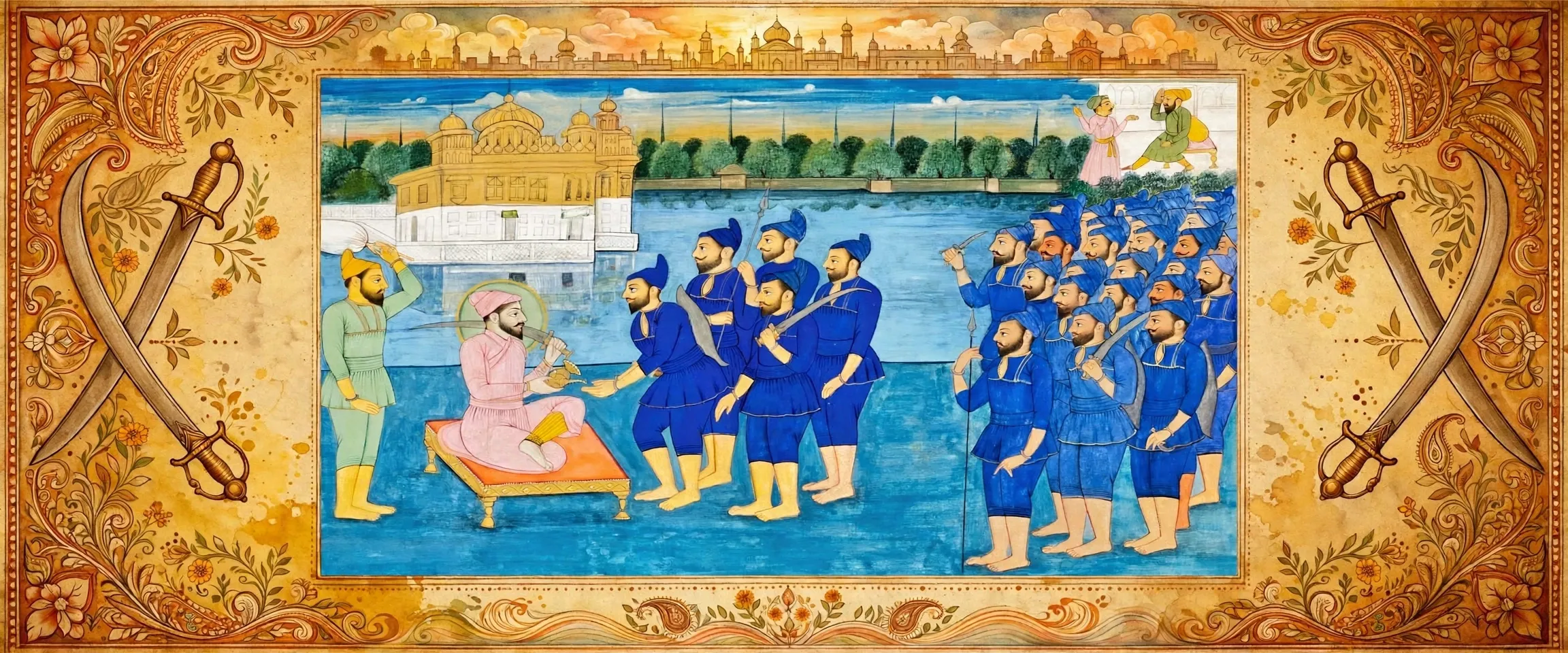
ਮੀਰੀ ਪੀਰੀ ਸਿੱਖ ਸਿਧਾਂਤ ਹੈ ਕਿ ਸੰਸਾਰਕ ਜ਼ਿੰਮੇਵਾਰੀ (ਮੀਰੀ) ਅਤੇ ਰੂਹਾਨੀ ਭਗਤੀ (ਪੀਰੀ) ਇੱਕੋ ਜੀਵਨ ਵਿੱਚ ਇਕੱਠੀਆਂ ਰਹਿਣੀਆਂ ਚਾਹੀਦੀਆਂ ਹਨ। ਗੁਰੂ ਹਰਿਗੋਬਿੰਦ ਜੀ ਨੇ 1606 ਵਿੱਚ ਛੇਵੇਂ ਗੁਰੂ ਵਜੋਂ ਗੁਰਗੱਦੀ ਸੰਭਾਲਦਿਆਂ ਦੋ ਤਲਵਾਰਾਂ ਪਹਿਨ ਕੇ ਅਤੇ ਅੰਮ੍ਰਿਤਸਰ ਵਿੱਚ ਸ੍ਰੀ ਹਰਿਮੰਦਰ ਸਾਹਿਬ ਦੇ ਸਾਹਮਣੇ ਅਕਾਲ ਤਖ਼ਤ ਸਾਹਿਬ ਉਸਾਰ ਕੇ ਇਸ ਨੂੰ ਰੂਪ ਦਿੱਤਾ, ਜਿੱਥੇ ਸੰਸਾਰਕ ਫ਼ਰਜ਼ ਦਾ ਤਖ਼ਤ ਪੂਜਾ ਦੇ ਘਰ ਵੱਲ ਮੂੰਹ ਕਰ ਕੇ ਖੜ੍ਹਾ ਹੈ।
- ਪੰਜਾਬੀ ਨਾਂ
- ਮੀਰੀ ਪੀਰੀ
- ਅਰਥ
- ਸੰਸਾਰਕ ਫ਼ਰਜ਼ (ਮੀਰੀ) ਅਤੇ ਰੂਹਾਨੀ ਭਗਤੀ (ਪੀਰੀ) ਦੀ ਏਕਤਾ।
- ਮੀਰੀ
- ਸੰਸਾਰਕ ਅਧਿਕਾਰ ਅਤੇ ਸੰਸਾਰਕ ਜ਼ਿੰਮੇਵਾਰੀ, ਮੀਰ (ਅਮੀਰ) ਤੋਂ, ਜਿਸ ਦਾ ਅਰਥ ਹੈ ਸਰਦਾਰ ਜਾਂ ਹਾਕਮ।
- ਪੀਰੀ
- ਰੂਹਾਨੀ ਅਧਿਕਾਰ, ਪੀਰ ਤੋਂ, ਜਿਸ ਦਾ ਅਰਥ ਹੈ ਸੰਤ ਜਾਂ ਰੂਹਾਨੀ ਰਹਿਨੁਮਾ।
- ਰੂਪ ਦੇਣ ਵਾਲੇ
- ਗੁਰੂ ਹਰਿਗੋਬਿੰਦ ਜੀ, ਛੇਵੇਂ ਗੁਰੂ।
- ਸਾਲ
- 1606
All 10 facts
- ਥਾਂ
- ਅੰਮ੍ਰਿਤਸਰ, ਪੰਜਾਬ।
- ਨਿਸ਼ਾਨ
- ਗੁਰਗੱਦੀ ਵੇਲੇ ਪਹਿਨੀਆਂ ਦੋ ਤਲਵਾਰਾਂ।
- ਤਖ਼ਤ
- ਸ੍ਰੀ ਅਕਾਲ ਤਖ਼ਤ ਸਾਹਿਬ, ਸ੍ਰੀ ਹਰਿਮੰਦਰ ਸਾਹਿਬ ਦੇ ਸਾਹਮਣੇ।
- ਆਦਰਸ਼
- ਸੰਤ ਸਿਪਾਹੀ।
Miri Piri is the Sikh principle that spiritual life and worldly duty belong together and must never be split apart: Miri is temporal authority and responsibility in society, and Piri is spiritual authority and devotion to God. Guru Hargobind Ji gave the principle its lasting form in 1606, when he became the sixth Guru wearing two swords, one for each, and raised the Akal Takht at Amritsar facing the Harmandir Sahib.
What is Miri Piri?
Miri Piri holds that a Sikh does not withdraw from the world to be spiritual, and does not wield power without a spiritual conscience. The two words are both of Perso-Arabic origin, as the Sikh Encyclopedia explains: Miri comes from mir, a contraction of the Arabic amir, meaning a commander, governor or lord, and stands for temporal power, while Piri comes from pir, a saint or spiritual guide, and stands for spiritual authority. Joined together, they describe one life with two duties: devotion that stays engaged with society, and action in society that stays answerable to devotion. Guru Hargobind Ji is remembered for this pairing as Miri Piri da Malik, master of both realms.
How did Miri Piri begin in 1606?
The principle took form at a moment of crisis. In 1606 ਗੁਰੂ ਅਰਜਨ ਦੇਵ ਜੀ, the fifth Guru, was executed under the orders of the Mughal emperor Jahangir. His successor was his young son, ਗੁਰੂ ਹਰਗੋਬਿੰਦ ਜੀ, who at his installation that year put on two swords as part of the investiture, one representing his political command of the community and the other its spiritual headship. He also raised an armed force for the community's defence and asked his followers to bring him presents of horses and weapons. The Sikh Encyclopedia reads this as a practical measure: the defence of a young community's right to freedom of faith and worship against the discriminatory religious policy of the state.
The roots, though, run back to the founder. The same encyclopedia notes that the joining of the spiritual and the worldly was already present in the teaching of Guru Nanak Dev Ji, for whom fulfilment was never found in renunciation or withdrawal: participation in family, work and society was made the rule, and he spoke openly against oppressive rulers and the injustices of the system around him. What Guru Hargobind Ji did in 1606 was to give that older conviction emblems, a seat and an institution.
The Akal Takht: Miri built facing Piri
In front of the Harmandir Sahib, Guru Hargobind Ji raised the Akal Takht, the Throne of the Timeless One. The first structure was a simple platform, about nine feet high, built with Baba Buddha Ji and Bhai Gurdas Ji, on which the Guru sat in court to hear petitions and administer justice, and it was at its revealing in June 1606 that he wore the two swords. The geography is the teaching: the ਹਰਿਮੰਦਰ ਸਾਹਿਬ across the courtyard stands for spirituality, and the Akal Takht for temporal affairs, close enough that people at each can see the other. Scholars Teja Singh and Ganda Singh, quoted in accounts of the Takht, described the two as co-dependent, like limbs of one body, neither able to exist in balance without the other. The Akal Takht still marks the pairing physically: it is the one takht that flies two Nishan Sahibs, the Sikh flags, said to represent the two swords of Miri and Piri.
The saint-soldier ideal
Out of Miri Piri comes the Sikh ideal of the sant-sipahi, the saint-soldier: a person whose inner life is disciplined by prayer and humility, and whose outer life is ready to protect the weak and resist injustice. The sword in this ideal is not a licence for aggression. In the Sikh Encyclopedia's reading, faith acts as the keeper of conscience and the moral arbiter over political power, and power in turn must defend freedom of thought, expression and worship for everyone, not only for Sikhs. The encyclopedia also stresses what Miri Piri is not: it does not envisage a theocratic state. The Sikhs have no priestly hierarchy, and it points to Sikh rule in practice, under the misls and Maharaja Ranjit Singh, as religiously neutral, protecting followers of different faiths alike.
From Guru Hargobind Ji to the Khalsa
Guru Hargobind Ji's successors continued to act as both spiritual and temporal heads of the community. The encyclopedia recalls Guru Tegh Bahadur Ji travelling widely to urge people to stand fearlessly against oppression, and giving his own life to uphold human freedom and dignity. The blending of Miri and Piri was completed, in its account, by Guru Gobind Singh Ji in the creation of the ਖਾਲਸਾ ਪੰਥ in 1699: a community sovereign in both its religious and its worldly life, which at the Guru's passing received the stewardship of the Panth under the guidance of Guru Granth Sahib Ji. The same Guru Hargobind Ji who wore the two swords is also the Guru of ਬੰਦੀ ਛੋੜ ਦਿਵਸ, freed from Gwalior Fort with 52 princes: in the Sikh memory, his temporal power was consistently used to free others, not to dominate them.
What does Miri Piri mean for Sikhs today?
Miri Piri still shapes how Sikhs read their duties. The Akal Takht remains the seat from which Panthic decisions on temporal and community matters are issued, always in the shadow of the Harmandir Sahib across the courtyard. In daily life the principle appears wherever devotion is expected to become service and courage: in seva and langar, in standing with people facing injustice whatever their faith, and in the belief that honest work, family life and public duty are themselves part of the spiritual path rather than distractions from it. A Sikh shaped by Miri Piri prays like a saint and takes responsibility like a soldier, and is taught to let the first govern the second.
ਮੀਰੀ ਪੀਰੀ ਸਿੱਖ ਸਿਧਾਂਤ ਹੈ ਕਿ ਰੂਹਾਨੀ ਜੀਵਨ ਅਤੇ ਸੰਸਾਰਕ ਫ਼ਰਜ਼ ਇਕੱਠੇ ਹਨ ਅਤੇ ਕਦੇ ਵੱਖ ਨਹੀਂ ਕੀਤੇ ਜਾ ਸਕਦੇ। ਮੀਰੀ ਤੋਂ ਭਾਵ ਹੈ ਸਮਾਜ ਵਿੱਚ ਸੰਸਾਰਕ ਅਧਿਕਾਰ ਅਤੇ ਜ਼ਿੰਮੇਵਾਰੀ, ਅਤੇ ਪੀਰੀ ਤੋਂ ਭਾਵ ਹੈ ਰੂਹਾਨੀ ਅਧਿਕਾਰ ਅਤੇ ਪਰਮਾਤਮਾ ਨਾਲ ਭਗਤੀ। ਗੁਰੂ ਹਰਿਗੋਬਿੰਦ ਜੀ ਨੇ 1606 ਵਿੱਚ ਇਸ ਸਿਧਾਂਤ ਨੂੰ ਇਸ ਦਾ ਸਥਾਈ ਰੂਪ ਦਿੱਤਾ, ਜਦੋਂ ਉਹ ਛੇਵੇਂ ਗੁਰੂ ਬਣੇ ਅਤੇ ਦੋ ਤਲਵਾਰਾਂ ਪਹਿਨੀਆਂ, ਇੱਕ ਹਰੇਕ ਲਈ, ਅਤੇ ਅੰਮ੍ਰਿਤਸਰ ਵਿੱਚ ਸ੍ਰੀ ਹਰਿਮੰਦਰ ਸਾਹਿਬ ਦੇ ਸਾਹਮਣੇ ਅਕਾਲ ਤਖ਼ਤ ਸਾਹਿਬ ਦੀ ਸਥਾਪਨਾ ਕੀਤੀ।
ਮੀਰੀ ਪੀਰੀ ਕੀ ਹੈ?
ਮੀਰੀ ਪੀਰੀ ਦਾ ਭਾਵ ਹੈ ਕਿ ਸਿੱਖ ਰੂਹਾਨੀ ਬਣਨ ਲਈ ਸੰਸਾਰ ਤੋਂ ਪਾਸਾ ਨਹੀਂ ਵੱਟਦਾ, ਅਤੇ ਰੂਹਾਨੀ ਜ਼ਮੀਰ ਤੋਂ ਬਿਨਾਂ ਸੱਤਾ ਵੀ ਨਹੀਂ ਵਰਤਦਾ। ਸਿੱਖ ਐਨਸਾਈਕਲੋਪੀਡੀਆ ਦੱਸਦਾ ਹੈ ਕਿ ਦੋਵੇਂ ਸ਼ਬਦ ਫ਼ਾਰਸੀ ਅਤੇ ਅਰਬੀ ਮੂਲ ਦੇ ਹਨ। ਮੀਰੀ ਮੀਰ ਤੋਂ ਬਣਿਆ ਹੈ, ਜੋ ਅਰਬੀ ਅਮੀਰ ਦਾ ਸੰਖੇਪ ਹੈ, ਜਿਸ ਦਾ ਅਰਥ ਹੈ ਸਰਦਾਰ, ਹਾਕਮ ਜਾਂ ਸੁਆਮੀ, ਅਤੇ ਇਹ ਸੰਸਾਰਕ ਸ਼ਕਤੀ ਨੂੰ ਦਰਸਾਉਂਦਾ ਹੈ। ਪੀਰੀ ਪੀਰ ਤੋਂ ਬਣਿਆ ਹੈ, ਜਿਸ ਦਾ ਅਰਥ ਹੈ ਸੰਤ ਜਾਂ ਰੂਹਾਨੀ ਰਹਿਨੁਮਾ, ਅਤੇ ਇਹ ਰੂਹਾਨੀ ਅਧਿਕਾਰ ਨੂੰ ਦਰਸਾਉਂਦਾ ਹੈ। ਦੋਵੇਂ ਮਿਲ ਕੇ ਇੱਕ ਜੀਵਨ ਦੇ ਦੋ ਫ਼ਰਜ਼ ਦੱਸਦੇ ਹਨ। ਅਜਿਹੀ ਭਗਤੀ ਜੋ ਸਮਾਜ ਨਾਲ ਜੁੜੀ ਰਹੇ, ਅਤੇ ਸਮਾਜ ਵਿੱਚ ਅਜਿਹਾ ਕੰਮ ਜੋ ਭਗਤੀ ਅੱਗੇ ਜਵਾਬਦੇਹ ਰਹੇ। ਗੁਰੂ ਹਰਿਗੋਬਿੰਦ ਜੀ ਨੂੰ ਇਸੇ ਜੋੜ ਕਾਰਨ ਮੀਰੀ ਪੀਰੀ ਦਾ ਮਾਲਕ ਕਿਹਾ ਜਾਂਦਾ ਹੈ।
ਮੀਰੀ ਪੀਰੀ 1606 ਵਿੱਚ ਕਿਵੇਂ ਸ਼ੁਰੂ ਹੋਈ?
ਇਸ ਸਿਧਾਂਤ ਨੇ ਸੰਕਟ ਦੇ ਸਮੇਂ ਵਿੱਚ ਰੂਪ ਧਾਰਿਆ। 1606 ਵਿੱਚ ਪੰਜਵੇਂ ਗੁਰੂ, ਗੁਰੂ ਅਰਜਨ ਦੇਵ ਜੀ, ਨੂੰ ਮੁਗਲ ਬਾਦਸ਼ਾਹ ਜਹਾਂਗੀਰ ਦੇ ਹੁਕਮਾਂ ਨਾਲ ਸ਼ਹੀਦ ਕੀਤਾ ਗਿਆ। ਉਨ੍ਹਾਂ ਦੇ ਉੱਤਰਾਧਿਕਾਰੀ ਉਨ੍ਹਾਂ ਦੇ ਨੌਜਵਾਨ ਸਪੁੱਤਰ ਗੁਰੂ ਹਰਿਗੋਬਿੰਦ ਜੀ ਬਣੇ, ਜਿਨ੍ਹਾਂ ਨੇ ਉਸੇ ਸਾਲ ਗੁਰਗੱਦੀ ਸੰਭਾਲਦਿਆਂ ਦੋ ਤਲਵਾਰਾਂ ਪਹਿਨੀਆਂ। ਇੱਕ ਸਮੁਦਾਇ ਉੱਤੇ ਉਨ੍ਹਾਂ ਦੇ ਸਿਆਸੀ ਅਧਿਕਾਰ ਨੂੰ ਦਰਸਾਉਂਦੀ ਸੀ ਅਤੇ ਦੂਜੀ ਉਸ ਦੀ ਰੂਹਾਨੀ ਅਗਵਾਈ ਨੂੰ। ਉਨ੍ਹਾਂ ਨੇ ਸਮੁਦਾਇ ਦੀ ਰੱਖਿਆ ਲਈ ਇੱਕ ਹਥਿਆਰਬੰਦ ਫ਼ੌਜ ਵੀ ਖੜੀ ਕੀਤੀ ਅਤੇ ਆਪਣੇ ਸਿੱਖਾਂ ਨੂੰ ਕਿਹਾ ਕਿ ਉਹ ਉਨ੍ਹਾਂ ਲਈ ਘੋੜੇ ਅਤੇ ਹਥਿਆਰ ਲਿਆਇਆ ਕਰਨ। ਸਿੱਖ ਐਨਸਾਈਕਲੋਪੀਡੀਆ ਇਸ ਨੂੰ ਇੱਕ ਅਮਲੀ ਕਦਮ ਕਹਿੰਦਾ ਹੈ। ਇਹ ਰਾਜ ਦੀ ਪੱਖਪਾਤੀ ਧਾਰਮਿਕ ਨੀਤੀ ਦੇ ਸਾਹਮਣੇ ਇੱਕ ਨੌਜਵਾਨ ਸਮੁਦਾਇ ਦੇ ਆਪਣੇ ਧਰਮ ਅਤੇ ਪੂਜਾ ਦੀ ਆਜ਼ਾਦੀ ਦੇ ਹੱਕ ਦੀ ਰੱਖਿਆ ਸੀ।
ਪਰ ਇਸ ਦੀਆਂ ਜੜ੍ਹਾਂ ਸੰਸਥਾਪਕ ਤੱਕ ਜਾਂਦੀਆਂ ਹਨ। ਉਹੀ ਐਨਸਾਈਕਲੋਪੀਡੀਆ ਦੱਸਦਾ ਹੈ ਕਿ ਰੂਹਾਨੀ ਅਤੇ ਸੰਸਾਰਕ ਦਾ ਇਹ ਜੋੜ ਗੁਰੂ ਨਾਨਕ ਦੇਵ ਜੀ ਦੀ ਸਿੱਖਿਆ ਵਿੱਚ ਪਹਿਲਾਂ ਤੋਂ ਮੌਜੂਦ ਸੀ, ਜਿਨ੍ਹਾਂ ਲਈ ਸਿੱਧੀ ਤਿਆਗ ਜਾਂ ਸੰਸਾਰ ਛੱਡਣ ਵਿੱਚ ਨਹੀਂ ਸੀ। ਪਰਿਵਾਰ, ਕਿਰਤ ਅਤੇ ਸਮਾਜ ਵਿੱਚ ਹਿੱਸਾ ਲੈਣਾ ਹੀ ਨਿਯਮ ਬਣਾਇਆ ਗਿਆ, ਅਤੇ ਉਨ੍ਹਾਂ ਨੇ ਜ਼ਾਲਮ ਹਾਕਮਾਂ ਅਤੇ ਆਪਣੇ ਦੁਆਲੇ ਦੇ ਸਿਸਟਮ ਦੀਆਂ ਬੇਇਨਸਾਫ਼ੀਆਂ ਵਿਰੁੱਧ ਖੁੱਲ੍ਹ ਕੇ ਬੋਲਿਆ। 1606 ਵਿੱਚ ਗੁਰੂ ਹਰਿਗੋਬਿੰਦ ਜੀ ਨੇ ਉਸ ਪੁਰਾਣੇ ਯਕੀਨ ਨੂੰ ਨਿਸ਼ਾਨ, ਤਖ਼ਤ ਅਤੇ ਇੱਕ ਸੰਸਥਾ ਦਿੱਤੀ।
ਅਕਾਲ ਤਖ਼ਤ: ਪੀਰੀ ਦੇ ਸਾਹਮਣੇ ਬਣੀ ਮੀਰੀ
ਸ੍ਰੀ ਹਰਿਮੰਦਰ ਸਾਹਿਬ ਦੇ ਸਾਹਮਣੇ ਗੁਰੂ ਹਰਿਗੋਬਿੰਦ ਜੀ ਨੇ ਅਕਾਲ ਤਖ਼ਤ, ਅਕਾਲ ਪੁਰਖ ਦਾ ਤਖ਼ਤ, ਉਸਾਰਿਆ। ਪਹਿਲੀ ਇਮਾਰਤ ਇੱਕ ਸਾਦਾ ਥੜਾ ਸੀ, ਲਗਭਗ ਨੌਂ ਫੁੱਟ ਉੱਚਾ, ਜੋ ਬਾਬਾ ਬੁੱਢਾ ਜੀ ਅਤੇ ਭਾਈ ਗੁਰਦਾਸ ਜੀ ਨਾਲ ਬਣਾਇਆ ਗਿਆ। ਇਸ ਉੱਤੇ ਗੁਰੂ ਜੀ ਦਰਬਾਰ ਲਗਾ ਕੇ ਅਰਜ਼ੀਆਂ ਸੁਣਦੇ ਅਤੇ ਇਨਸਾਫ਼ ਕਰਦੇ ਸਨ, ਅਤੇ ਜੂਨ 1606 ਵਿੱਚ ਇਸ ਦੇ ਪ੍ਰਗਟ ਹੋਣ ਵੇਲੇ ਹੀ ਉਨ੍ਹਾਂ ਨੇ ਦੋ ਤਲਵਾਰਾਂ ਪਹਿਨੀਆਂ ਸਨ। ਇਹ ਥਾਂ ਹੀ ਸਿੱਖਿਆ ਹੈ। ਵਿਹੜੇ ਦੇ ਪਾਰ ਸ੍ਰੀ ਹਰਿਮੰਦਰ ਸਾਹਿਬ ਰੂਹਾਨੀਅਤ ਦਾ ਪ੍ਰਤੀਕ ਹੈ ਅਤੇ ਅਕਾਲ ਤਖ਼ਤ ਸੰਸਾਰਕ ਮਾਮਲਿਆਂ ਦਾ, ਇੰਨੇ ਨੇੜੇ ਕਿ ਹਰੇਕ ਥਾਂ ਤੋਂ ਦੂਜੀ ਦਿਖਦੀ ਹੈ। ਵਿਦਵਾਨ ਤੇਜਾ ਸਿੰਘ ਅਤੇ ਗੰਡਾ ਸਿੰਘ ਨੇ, ਜਿਨ੍ਹਾਂ ਦੇ ਹਵਾਲੇ ਤਖ਼ਤ ਦੇ ਵੇਰਵਿਆਂ ਵਿੱਚ ਆਉਂਦੇ ਹਨ, ਦੋਵਾਂ ਨੂੰ ਇੱਕ ਸਰੀਰ ਦੇ ਅੰਗਾਂ ਵਾਂਗ ਇੱਕ ਦੂਜੇ ਤੇ ਨਿਰਭਰ ਦੱਸਿਆ ਹੈ, ਜਿਨ੍ਹਾਂ ਵਿੱਚੋਂ ਕੋਈ ਵੀ ਦੂਜੇ ਤੋਂ ਬਿਨਾਂ ਸੰਤੁਲਨ ਵਿੱਚ ਨਹੀਂ ਰਹਿ ਸਕਦਾ। ਅਕਾਲ ਤਖ਼ਤ ਅੱਜ ਵੀ ਇਸ ਜੋੜ ਨੂੰ ਭੌਤਿਕ ਰੂਪ ਵਿੱਚ ਦਰਸਾਉਂਦਾ ਹੈ। ਇਹ ਇੱਕੋ ਇੱਕ ਤਖ਼ਤ ਹੈ ਜਿੱਥੇ ਦੋ ਨਿਸ਼ਾਨ ਸਾਹਿਬ ਝੂਲਦੇ ਹਨ, ਜਿਨ੍ਹਾਂ ਬਾਰੇ ਕਿਹਾ ਜਾਂਦਾ ਹੈ ਕਿ ਉਹ ਮੀਰੀ ਅਤੇ ਪੀਰੀ ਦੀਆਂ ਦੋ ਤਲਵਾਰਾਂ ਨੂੰ ਦਰਸਾਉਂਦੇ ਹਨ।
ਸੰਤ ਸਿਪਾਹੀ ਦਾ ਆਦਰਸ਼
ਮੀਰੀ ਪੀਰੀ ਵਿੱਚੋਂ ਸਿੱਖਾਂ ਦਾ ਸੰਤ ਸਿਪਾਹੀ ਆਦਰਸ਼ ਨਿਕਲਦਾ ਹੈ। ਅਜਿਹਾ ਮਨੁੱਖ ਜਿਸ ਦਾ ਅੰਦਰਲਾ ਜੀਵਨ ਸਿਮਰਨ ਅਤੇ ਨਿਮਰਤਾ ਨਾਲ ਬੱਝਾ ਹੋਵੇ, ਅਤੇ ਬਾਹਰਲਾ ਜੀਵਨ ਕਮਜ਼ੋਰਾਂ ਦੀ ਰੱਖਿਆ ਅਤੇ ਬੇਇਨਸਾਫ਼ੀ ਦੇ ਵਿਰੋਧ ਲਈ ਤਿਆਰ ਹੋਵੇ। ਇਸ ਆਦਰਸ਼ ਵਿੱਚ ਤਲਵਾਰ ਹਮਲੇ ਦੀ ਖੁੱਲ੍ਹ ਨਹੀਂ ਹੈ। ਸਿੱਖ ਐਨਸਾਈਕਲੋਪੀਡੀਆ ਦੀ ਪੜ੍ਹਤ ਵਿੱਚ, ਧਰਮ ਜ਼ਮੀਰ ਦਾ ਰਖਵਾਲਾ ਅਤੇ ਸਿਆਸੀ ਸ਼ਕਤੀ ਦਾ ਨੈਤਿਕ ਮਾਰਗਦਰਸ਼ਕ ਹੈ, ਅਤੇ ਸ਼ਕਤੀ ਨੂੰ ਹਰੇਕ ਲਈ, ਸਿਰਫ਼ ਸਿੱਖਾਂ ਲਈ ਨਹੀਂ, ਸੋਚ, ਬੋਲ ਅਤੇ ਪੂਜਾ ਦੀ ਆਜ਼ਾਦੀ ਦੀ ਰੱਖਿਆ ਕਰਨੀ ਚਾਹੀਦੀ ਹੈ। ਐਨਸਾਈਕਲੋਪੀਡੀਆ ਇਹ ਵੀ ਸਪਸ਼ਟ ਕਰਦਾ ਹੈ ਕਿ ਮੀਰੀ ਪੀਰੀ ਕੀ ਨਹੀਂ ਹੈ। ਇਸ ਵਿੱਚ ਧਰਮ ਅਧਾਰਿਤ ਰਾਜ ਦੀ ਕਲਪਨਾ ਨਹੀਂ ਹੈ। ਸਿੱਖਾਂ ਵਿੱਚ ਕੋਈ ਪੁਜਾਰੀ ਵਰਗ ਨਹੀਂ ਹੈ, ਅਤੇ ਇਹ ਮਿਸਲਾਂ ਅਤੇ ਮਹਾਰਾਜਾ ਰਣਜੀਤ ਸਿੰਘ ਦੇ ਸਮੇਂ ਦੇ ਸਿੱਖ ਰਾਜ ਨੂੰ ਅਮਲ ਵਿੱਚ ਧਾਰਮਿਕ ਤੌਰ ਤੇ ਨਿਰਪੱਖ ਦੱਸਦਾ ਹੈ, ਜੋ ਵੱਖ ਵੱਖ ਧਰਮਾਂ ਦੇ ਮੰਨਣ ਵਾਲਿਆਂ ਦੀ ਇੱਕੋ ਜਿਹੀ ਰੱਖਿਆ ਕਰਦਾ ਸੀ।
ਗੁਰੂ ਹਰਿਗੋਬਿੰਦ ਜੀ ਤੋਂ ਖਾਲਸੇ ਤੱਕ
ਗੁਰੂ ਹਰਿਗੋਬਿੰਦ ਜੀ ਦੇ ਉੱਤਰਾਧਿਕਾਰੀ ਸਮੁਦਾਇ ਦੇ ਰੂਹਾਨੀ ਅਤੇ ਸੰਸਾਰਕ, ਦੋਵਾਂ ਮੁਖੀਆਂ ਵਜੋਂ ਕੰਮ ਕਰਦੇ ਰਹੇ। ਐਨਸਾਈਕਲੋਪੀਡੀਆ ਯਾਦ ਕਰਦਾ ਹੈ ਕਿ ਗੁਰੂ ਤੇਗ ਬਹਾਦਰ ਜੀ ਲੋਕਾਂ ਨੂੰ ਜ਼ੁਲਮ ਅੱਗੇ ਨਿਡਰ ਖੜ੍ਹਨ ਦਾ ਹੋਕਾ ਦਿੰਦੇ ਹੋਏ ਦੂਰ ਦੂਰ ਤੱਕ ਗਏ, ਅਤੇ ਮਨੁੱਖੀ ਆਜ਼ਾਦੀ ਅਤੇ ਮਾਣ ਦੀ ਰੱਖਿਆ ਲਈ ਆਪਣੀ ਜਾਨ ਵੀ ਦਿੱਤੀ। ਉਸ ਦੀ ਪੜ੍ਹਤ ਵਿੱਚ, ਮੀਰੀ ਅਤੇ ਪੀਰੀ ਦਾ ਸੁਮੇਲ 1699 ਵਿੱਚ ਗੁਰੂ ਗੋਬਿੰਦ ਸਿੰਘ ਜੀ ਵੱਲੋਂ ਖਾਲਸਾ ਪੰਥ ਦੀ ਸਾਜਨਾ ਨਾਲ ਸੰਪੂਰਨ ਹੋਇਆ। ਇੱਕ ਅਜਿਹਾ ਸਮੁਦਾਇ ਜੋ ਆਪਣੇ ਧਾਰਮਿਕ ਅਤੇ ਸੰਸਾਰਕ, ਦੋਵਾਂ ਜੀਵਨਾਂ ਵਿੱਚ ਖੁਦਮੁਖਤਾਰ ਸੀ, ਅਤੇ ਜਿਸ ਨੂੰ ਗੁਰੂ ਜੀ ਦੇ ਜੋਤੀ ਜੋਤ ਸਮਾਉਣ ਵੇਲੇ ਸ੍ਰੀ ਗੁਰੂ ਗ੍ਰੰਥ ਸਾਹਿਬ ਜੀ ਦੀ ਅਗਵਾਈ ਹੇਠ ਪੰਥ ਦੀ ਸੇਵਾ ਸੰਭਾਲ ਮਿਲੀ। ਦੋ ਤਲਵਾਰਾਂ ਪਹਿਨਣ ਵਾਲੇ ਉਹੀ ਗੁਰੂ ਹਰਿਗੋਬਿੰਦ ਜੀ ਬੰਦੀ ਛੋੜ ਦਿਵਸ ਦੇ ਗੁਰੂ ਵੀ ਹਨ, ਜੋ ਗਵਾਲੀਅਰ ਦੇ ਕਿਲ੍ਹੇ ਵਿੱਚੋਂ 52 ਰਾਜਿਆਂ ਸਮੇਤ ਛੁੱਟ ਕੇ ਆਏ। ਸਿੱਖ ਯਾਦ ਵਿੱਚ, ਉਨ੍ਹਾਂ ਦੀ ਸੰਸਾਰਕ ਸ਼ਕਤੀ ਹਮੇਸ਼ਾ ਦੂਜਿਆਂ ਨੂੰ ਛੁਡਾਉਣ ਲਈ ਵਰਤੀ ਗਈ, ਕਿਸੇ ਤੇ ਹਾਵੀ ਹੋਣ ਲਈ ਨਹੀਂ।
ਅੱਜ ਸਿੱਖਾਂ ਲਈ ਮੀਰੀ ਪੀਰੀ ਦਾ ਕੀ ਅਰਥ ਹੈ?
ਮੀਰੀ ਪੀਰੀ ਅੱਜ ਵੀ ਸਿੱਖਾਂ ਦੇ ਫ਼ਰਜ਼ਾਂ ਦੀ ਸਮਝ ਨੂੰ ਘੜਦੀ ਹੈ। ਅਕਾਲ ਤਖ਼ਤ ਉਹ ਥਾਂ ਬਣਿਆ ਹੋਇਆ ਹੈ ਜਿੱਥੋਂ ਸੰਸਾਰਕ ਅਤੇ ਸਮੁਦਾਇਕ ਮਾਮਲਿਆਂ ਤੇ ਪੰਥਕ ਫ਼ੈਸਲੇ ਜਾਰੀ ਹੁੰਦੇ ਹਨ, ਹਮੇਸ਼ਾ ਵਿਹੜੇ ਦੇ ਪਾਰ ਖੜ੍ਹੇ ਸ੍ਰੀ ਹਰਿਮੰਦਰ ਸਾਹਿਬ ਦੇ ਸਾਏ ਹੇਠ। ਰੋਜ਼ਾਨਾ ਜੀਵਨ ਵਿੱਚ ਇਹ ਸਿਧਾਂਤ ਉੱਥੇ ਦਿਖਦਾ ਹੈ ਜਿੱਥੇ ਭਗਤੀ ਤੋਂ ਸੇਵਾ ਅਤੇ ਹੌਸਲੇ ਦੀ ਆਸ ਰੱਖੀ ਜਾਂਦੀ ਹੈ। ਸੇਵਾ ਅਤੇ ਲੰਗਰ ਵਿੱਚ, ਬੇਇਨਸਾਫ਼ੀ ਦਾ ਸਾਹਮਣਾ ਕਰ ਰਹੇ ਲੋਕਾਂ ਨਾਲ ਖੜ੍ਹਨ ਵਿੱਚ, ਭਾਵੇਂ ਉਨ੍ਹਾਂ ਦਾ ਧਰਮ ਕੋਈ ਵੀ ਹੋਵੇ, ਅਤੇ ਇਸ ਯਕੀਨ ਵਿੱਚ ਕਿ ਸੱਚੀ ਕਿਰਤ, ਪਰਿਵਾਰਕ ਜੀਵਨ ਅਤੇ ਜਨਤਕ ਫ਼ਰਜ਼ ਖੁਦ ਰੂਹਾਨੀ ਰਾਹ ਦਾ ਹਿੱਸਾ ਹਨ, ਉਸ ਤੋਂ ਧਿਆਨ ਭਟਕਾਉਣ ਵਾਲੀਆਂ ਚੀਜ਼ਾਂ ਨਹੀਂ। ਮੀਰੀ ਪੀਰੀ ਨਾਲ ਘੜਿਆ ਸਿੱਖ ਸੰਤ ਵਾਂਗ ਸਿਮਰਨ ਕਰਦਾ ਹੈ ਅਤੇ ਸਿਪਾਹੀ ਵਾਂਗ ਜ਼ਿੰਮੇਵਾਰੀ ਚੁੱਕਦਾ ਹੈ, ਅਤੇ ਉਸ ਨੂੰ ਸਿਖਾਇਆ ਜਾਂਦਾ ਹੈ ਕਿ ਪਹਿਲਾ ਹਮੇਸ਼ਾ ਦੂਜੇ ਨੂੰ ਚਲਾਵੇ।
More religion entries to explore
ਜੁਗਤੀ ਮੁਫ਼ਤ ਅਤੇ ਸੁਤੰਤਰ ਹੈ। ਪਾਠਕਾਂ ਦਾ ਸਹਿਯੋਗ ਕੋਸ਼ ਨੂੰ ਵਧਾਉਂਦਾ ਹੈ।
ਸਹਿਯੋਗ