
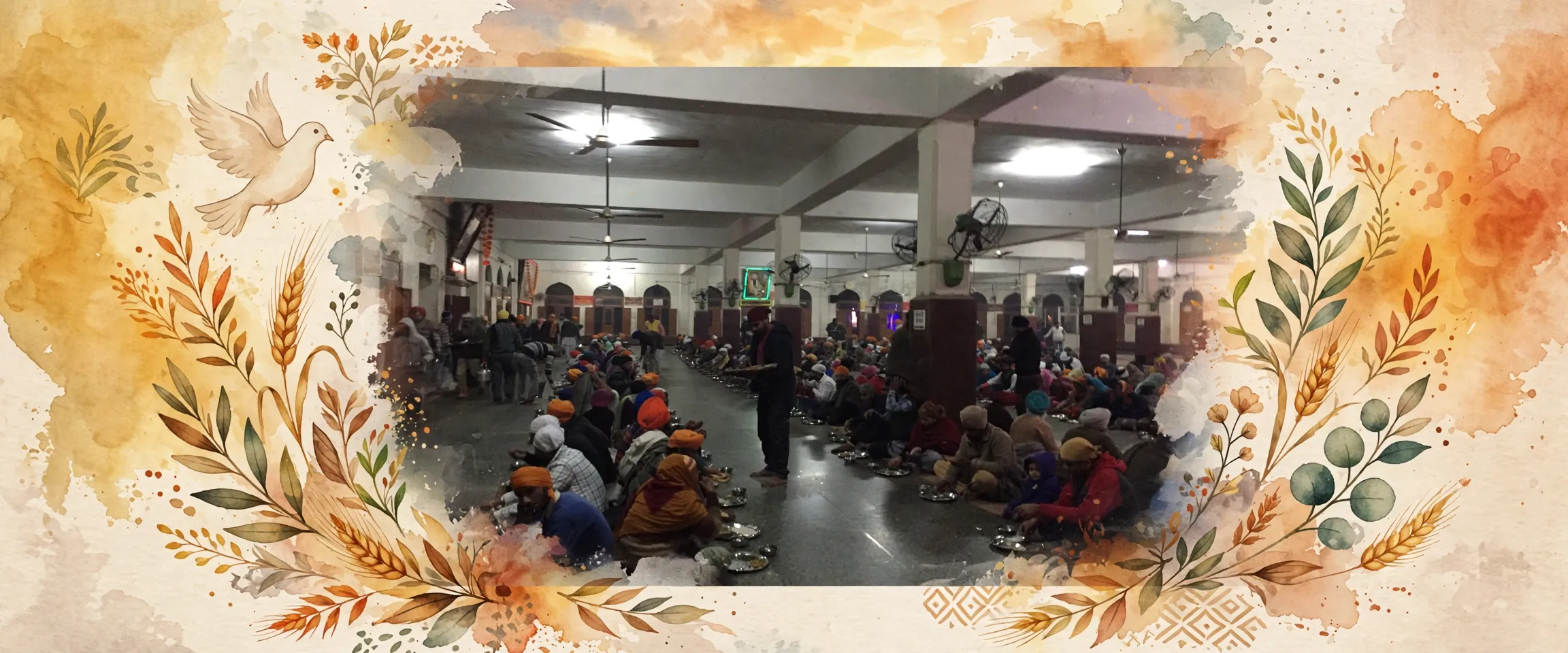
ਸਰਬੱਤ ਦਾ ਭਲਾ ਦਾ ਅਰਥ ਹੈ ਹਰ ਕੋਈ ਖ਼ੁਸ਼ਹਾਲ ਹੋਵੇ, ਜਾਂ ਸਭ ਦੀ ਭਲਾਈ। ਇਹ ਅਰਦਾਸ ਦੀ ਅੰਤਲੀ ਖ਼ਾਹਿਸ਼ ਹੈ, ਉਸ ਸਤਰ ਵਿੱਚ ਜੋ ਕਹਿੰਦੀ ਹੈ ਨਾਨਕ ਨਾਮ ਚੜ੍ਹਦੀ ਕਲਾ, ਤੇਰੇ ਭਾਣੇ ਸਰਬੱਤ ਦਾ ਭਲਾ। ਸਿੱਖ ਕੇਵਲ ਆਪਣੇ ਪਰਿਵਾਰ ਜਾਂ ਭਾਈਚਾਰੇ ਲਈ ਨਹੀਂ ਮੰਗਦਾ, ਸਗੋਂ ਸਾਰੀ ਮਨੁੱਖਤਾ ਦੀ ਭਲਾਈ ਮੰਗਦਾ ਹੈ, ਮਨੁੱਖ ਦਾ ਧਰਮ ਕੋਈ ਵੀ ਹੋਵੇ, ਅਤੇ ਉਸ ਅਰਦਾਸ ਨੂੰ ਲੰਗਰ, ਸੇਵਾ ਅਤੇ ਵੰਡ ਰਾਹੀਂ ਅਮਲ ਵਿੱਚ ਲਿਆਉਂਦਾ ਹੈ।
- ਪੰਜਾਬੀ ਨਾਂ
- ਸਰਬੱਤ ਦਾ ਭਲਾ
- ਅਰਥ
- ਹਰ ਕੋਈ ਖ਼ੁਸ਼ਹਾਲ ਹੋਵੇ, ਸਭ ਦੀ ਭਲਾਈ
- ਅਰਦਾਸ ਵਿੱਚ ਥਾਂ
- ਅਰਦਾਸ ਦੇ ਅੰਤਲੇ ਸ਼ਬਦ
- ਪੂਰੀ ਅੰਤਲੀ ਸਤਰ
- ਨਾਨਕ ਨਾਮ ਚੜ੍ਹਦੀ ਕਲਾ, ਤੇਰੇ ਭਾਣੇ ਸਰਬੱਤ ਦਾ ਭਲਾ
- ਘੇਰਾ
- ਸਾਰੀ ਮਨੁੱਖਤਾ, ਕੋਈ ਇੱਕ ਫ਼ਿਰਕਾ, ਭਾਈਚਾਰਾ ਜਾਂ ਕੌਮ ਨਹੀਂ
- ਪੜ੍ਹੇ ਜਾਂਦੇ ਹਨ
- ਰੋਜ਼ ਘੱਟੋ ਘੱਟ ਦੋ ਵਾਰ, ਸਵੇਰੇ ਅਤੇ ਸ਼ਾਮ, ਅਰਦਾਸ ਦੇ ਅੰਤ ਵਿੱਚ
All 9 facts
- ਮੂਲ ਸਿੱਖਿਆ
- ਇੱਕ ਪ੍ਰਭੂ ਸਭ ਵਿੱਚ, ਸਭ ਇੱਕ ਦੇ ਬੱਚੇ
- ਅਮਲ ਦੇ ਰਾਹ
- ਲੰਗਰ, ਸੇਵਾ ਅਤੇ ਵੰਡ ਛਕਣਾ, ਸਭ ਲਈ ਖੁੱਲ੍ਹੀ ਸੇਵਾ ਅਤੇ ਵੰਡ
- ਮਿਸਾਲ
- ਭਾਈ ਕਨ੍ਹਈਆ ਜੀ ਦਾ ਦੋਵਾਂ ਪਾਸਿਆਂ ਦੇ ਜ਼ਖ਼ਮੀਆਂ ਨੂੰ ਪਾਣੀ ਪਿਲਾਉਣਾ
Sarbat da Bhala, Punjabi for the welfare of all, is the Sikh wish that everyone should prosper and be at peace. It is spoken at the end of the Ardas, so that the last request a Sikh makes is never for one person, one family or one community, but for all humanity, of every faith and of none.
What does Sarbat da Bhala mean?
Sarbat da Bhala means the welfare of all. SikhiWiki gives the same phrase as may everyone be blessed and may good come to all, and Wikipedia renders it as blessings for everyone, literally may everyone prosper. Sarbat means all or everyone, and bhala means welfare, good or prosperity. The Encyclopaedia of Sikhism, in the article carried by The Sikh Encyclopedia, puts it in older English as weal to all, weal to everyone, and stresses the scope of the word: sarbat here does not stand for members of a particular sect, community or nation, but for the whole of humankind. That scope is the point. The prayer deliberately leaves nobody out.
The wish belongs to a family of linked teachings. It stands beside ਚੜ੍ਹਦੀ ਕਲਾ, the ever rising spirit, in the same closing line of the Ardas. It grows out of the oneness taught by ਗੁਰੂ ਨਾਨਕ ਦੇਵ ਜੀ, the founder of the Sikh faith, and it is practised through sharing food, serving others and giving from honest earnings. It is the key to why Sikh institutions, from the free kitchen to disaster relief volunteering, are open to everyone without a test of belief.
The closing line of the Ardas
Every Sikh service and ceremony closes with the ਅਰਦਾਸ, and the Ardas itself closes with one couplet: Nanak Naam Chardi Kala, Tere Bhane Sarbat Da Bhala. SikhiWiki translates it as Nanak, with Naam comes Chardi Kala and with your blessings, may there be peace for all, and Wikipedia gives the sense as Nanak, with Naam comes Chardi Kala and with your blessings, peace for everyone. The Encyclopaedia of Sikhism reads the same line as a prayer that in God's will peace and prosperity may come to one and all. Sikhs say the Ardas at least twice a day, morning and evening, as part of the daily prayers, and the same words end personal prayer and congregational worship alike, in homes and in gurdwaras. The Encyclopaedia notes that this prayer for the welfare of all has in this way been institutionalised in Sikhism: it is not left to mood or occasion, but built into every day.
Placement matters. A prayer could end by asking for the worshipper's own safety or family. The Ardas does ask, through its long remembrance of the Gurus and the community, for strength and faithfulness, but its final turn is outward, to everyone, including people of other faiths the worshipper will never meet. Tradition reads the line not as decoration but as a discipline: twice daily, a Sikh rehearses wanting good for all.
One humanity: the teaching behind the prayer
Sarbat da Bhala rests on the Sikh teaching that one God is present in all. Wikipedia summarises the Gurbani teaching this way: there are no others, there is only One, the same One God resides within all, and all are children of that One God. The article quotes two lines of the Guru Granth Sahib Ji that carry this vision. Page 706 says, sing the praise of the One, the Immaculate Lord; He is contained within all. Page 6 says, see the brotherhood of all mankind as the highest order of Yogis; conquer your own mind, and conquer the world. If the same light is in everyone, then praying for everyone follows naturally, and so does refusing to rank people by birth.
The Encyclopaedia of Sikhism gathers the same foundation. It quotes page 611, one God is the father of all of us, of the One Lord are we the children, and page 83, false is caste and false are worldly titles, one Supreme Lord sustains all, words it attributes to Guru Nanak Dev Ji. It also quotes Guru Gobind Singh Ji: recognise all of the human race as one. On this basis the Encyclopaedia calls Sarbat da Bhala a living concept at the centre of the Gurus' spiritual vision, not a mere profession of goodwill. Out of the feeling of common fellowship, it says, arises the Sikh's wish to be of use to others, and faith is not fully realised unless everyday life is filled with deeds that secure the welfare of people as a whole.
Two short verses press the point further. Page 4 teaches that without doing good to others, devotion remains imperfect. Page 356 teaches that learning, truly reflected upon, makes a person a benefactor of others. Welfare of all is therefore not an extra added to Sikh spirituality: in the Encyclopaedia's reading, habitual pursuit of the common good marks the peak of spiritual ascent. The obstacle named is Haumai, the self centred ego, and the remedy is to expand affection until it embraces the whole of creation.
From prayer to practice: langar, seva and sharing
The clearest daily proof of Sarbat da Bhala is the langar, the community kitchen of the gurdwara. Wikipedia notes that scholars read Sarbat da Bhala as a social and ethical imperative as well as a spiritual aspiration, closely tied to seva, selfless service, and reflected in langar, where food is served to all regardless of background. The Encyclopaedia says the same in its own words: the value was exemplified in deeds of seva, humble service in the common cause, and in the Guru ka Langar, where all sat together to share the meal, overruling distinctions of caste, creed or place. Anyone who walks in is fed, seated in the same rows as everyone else, and charged nothing. The prayer for all becomes a meal for all.
Sharing is the second practice. ਵੰਡ ਛਕਣਾ, sharing what one has with others, a household habit in which food, time, skill and income are not held only for the self. Seva is the third: unpaid service without expectation of reward, from cooking and washing dishes in the langar hall to helping strangers in a flood. Each practice attacks the same inner obstacle from a different side. Langar breaks the ranking of people, sharing breaks the grip of possession, and seva breaks the pride of the server.
Bhai Kanhaiya Ji and welfare even in conflict
The Encyclopaedia of Sikhism gives the tradition's sharpest example of the principle under pressure. Guru Gobind Singh Ji, it records, especially applauded Bhai Kanhaiya Ji, one of his Sikhs, who served water to the wounded on the battlefield regardless of whether they were Sikhs or Muslims. The story is told in Sikh tradition as the measure of what Sarbat da Bhala demands: welfare is not withdrawn when the person in need stands on the other side. The same article notes that even chroniclers who wrote against the Sikhs paid tribute to their conduct, recording that they did not chase a fleeing enemy, did not harm a soldier who had surrendered and did not loot. The Encyclopaedia's conclusion is that in the Sikh system group ethics and individual morality harmonise, so Sarbat da Bhala is as much a common human objective as a personal ideal.
Wikipedia adds two wider notes, framed there as remembrance and interpretation. Guru Tegh Bahadur Ji is remembered for giving his life in defence of religious freedom, and the founding of the Khalsa by Guru Gobind Singh Ji is seen as giving lasting form to the duty to defend others. A prayer for the welfare of all, on this reading, carries obligations toward people outside one's own community.
How is Sarbat da Bhala lived today?
Today the phrase is still heard at least twice a day wherever Sikhs pray, and it still ends every gurdwara service and ceremony. Wikipedia records that its spirit continues to inspire Sikh humanitarian efforts worldwide, from disaster relief and food distribution to interfaith outreach, and points to reporting from April 2020 in which Sikh volunteers fed thousands during the coronavirus lockdowns. The sources present that pattern, local volunteers feeding anyone hungry in a crisis, as the old teaching at work rather than a new invention. The langar hall, the shared plate and the volunteer with a water vessel are how the asking becomes doing.
ਸਰਬੱਤ ਦਾ ਭਲਾ ਸਿੱਖ ਧਰਮ ਦੀ ਉਹ ਅਰਦਾਸ ਹੈ ਜਿਸ ਵਿੱਚ ਸਾਰੀ ਮਨੁੱਖਤਾ ਦੀ ਭਲਾਈ ਮੰਗੀ ਜਾਂਦੀ ਹੈ। ਇਸ ਦਾ ਭਾਵ ਹੈ ਕਿ ਹਰ ਕੋਈ ਸੁਖੀ ਵੱਸੇ ਅਤੇ ਹਰ ਕਿਸੇ ਨੂੰ ਸ਼ਾਂਤੀ ਮਿਲੇ। ਇਹ ਸ਼ਬਦ ਅਰਦਾਸ ਦੇ ਬਿਲਕੁਲ ਅੰਤ ਵਿੱਚ ਆਉਂਦੇ ਹਨ, ਇਸ ਲਈ ਸਿੱਖ ਦੀ ਆਖ਼ਰੀ ਮੰਗ ਕਦੇ ਕੇਵਲ ਆਪਣੇ ਲਈ, ਆਪਣੇ ਪਰਿਵਾਰ ਲਈ ਜਾਂ ਆਪਣੇ ਭਾਈਚਾਰੇ ਲਈ ਨਹੀਂ ਹੁੰਦੀ। ਇਹ ਸਾਰੀ ਮਨੁੱਖਤਾ ਲਈ ਹੁੰਦੀ ਹੈ, ਹਰ ਧਰਮ ਵਾਲੇ ਲਈ ਅਤੇ ਹਰ ਉਸ ਮਨੁੱਖ ਲਈ ਵੀ ਜੋ ਕਿਸੇ ਧਰਮ ਨਾਲ ਜੁੜਿਆ ਨਹੀਂ।
ਸਰਬੱਤ ਦਾ ਭਲਾ ਦਾ ਕੀ ਅਰਥ ਹੈ?
ਸਰਬੱਤ ਦਾ ਭਲਾ ਦਾ ਅਰਥ ਹੈ ਸਭ ਦੀ ਭਲਾਈ। ਸਿੱਖੀਵਿਕੀ ਇਸੇ ਵਾਕ ਨੂੰ ਇਸ ਤਰ੍ਹਾਂ ਸਮਝਾਉਂਦਾ ਹੈ ਕਿ ਹਰ ਕਿਸੇ ਉੱਤੇ ਮਿਹਰ ਹੋਵੇ ਅਤੇ ਸਭ ਦਾ ਭਲਾ ਹੋਵੇ, ਅਤੇ ਵਿਕੀਪੀਡੀਆ ਇਸ ਦਾ ਭਾਵ ਸਭ ਲਈ ਅਸੀਸਾਂ ਦੱਸਦਾ ਹੈ, ਜਿਸ ਦਾ ਸ਼ਬਦੀ ਅਰਥ ਹੈ ਕਿ ਹਰ ਕੋਈ ਖ਼ੁਸ਼ਹਾਲ ਹੋਵੇ। ਸਰਬੱਤ ਦਾ ਅਰਥ ਹੈ ਸਭ ਜਾਂ ਹਰ ਕੋਈ, ਅਤੇ ਭਲਾ ਦਾ ਅਰਥ ਹੈ ਭਲਾਈ, ਚੰਗਿਆਈ ਜਾਂ ਖ਼ੁਸ਼ਹਾਲੀ। ਸਿੱਖ ਧਰਮ ਦੇ ਵਿਸ਼ਵਕੋਸ਼ ਵਿੱਚ, ਜਿਸ ਦਾ ਲੇਖ ਦ ਸਿੱਖ ਐਨਸਾਈਕਲੋਪੀਡੀਆ ਉੱਤੇ ਉਪਲਬਧ ਹੈ, ਇਸ ਨੂੰ ਸਭ ਦੀ ਭਲਾਈ ਕਿਹਾ ਗਿਆ ਹੈ ਅਤੇ ਸ਼ਬਦ ਦੇ ਘੇਰੇ ਉੱਤੇ ਜ਼ੋਰ ਦਿੱਤਾ ਗਿਆ ਹੈ। ਇੱਥੇ ਸਰਬੱਤ ਦਾ ਭਾਵ ਕਿਸੇ ਇੱਕ ਫ਼ਿਰਕੇ, ਭਾਈਚਾਰੇ ਜਾਂ ਕੌਮ ਦੇ ਲੋਕ ਨਹੀਂ, ਸਗੋਂ ਸਾਰੀ ਮਨੁੱਖਤਾ ਹੈ। ਇਹੀ ਘੇਰਾ ਇਸ ਅਰਦਾਸ ਦੀ ਜਾਨ ਹੈ। ਅਰਦਾਸ ਜਾਣ ਬੁੱਝ ਕੇ ਕਿਸੇ ਨੂੰ ਬਾਹਰ ਨਹੀਂ ਰੱਖਦੀ।
ਇਹ ਖ਼ਾਹਿਸ਼ ਆਪਸ ਵਿੱਚ ਜੁੜੀਆਂ ਸਿੱਖਿਆਵਾਂ ਦੇ ਪਰਿਵਾਰ ਨਾਲ ਸਬੰਧ ਰੱਖਦੀ ਹੈ। ਇਹ ਅਰਦਾਸ ਦੀ ਉਸੇ ਅੰਤਲੀ ਸਤਰ ਵਿੱਚ ਚੜ੍ਹਦੀ ਕਲਾ, ਸਦਾ ਉੱਠਦੀ ਭਾਵਨਾ, ਦੇ ਨਾਲ ਖੜ੍ਹਦੀ ਹੈ। ਇਹ ਸਿੱਖ ਧਰਮ ਦੇ ਬਾਨੀ ਗੁਰੂ ਨਾਨਕ ਦੇਵ ਜੀ ਵੱਲੋਂ ਸਿਖਾਈ ਏਕਤਾ ਵਿੱਚੋਂ ਉੱਗਦੀ ਹੈ, ਅਤੇ ਇਸ ਦਾ ਅਭਿਆਸ ਖਾਣਾ ਵੰਡਣ, ਦੂਜਿਆਂ ਦੀ ਸੇਵਾ ਕਰਨ ਅਤੇ ਇਮਾਨਦਾਰੀ ਦੀ ਕਮਾਈ ਵਿੱਚੋਂ ਦੇਣ ਰਾਹੀਂ ਹੁੰਦਾ ਹੈ। ਜੋ ਪਾਠਕ ਸਰਬੱਤ ਦਾ ਭਲਾ ਸਮਝ ਲਵੇ, ਉਸ ਕੋਲ ਇਹ ਸਮਝਣ ਦੀ ਕੁੰਜੀ ਆ ਜਾਂਦੀ ਹੈ ਕਿ ਸਿੱਖ ਅਦਾਰੇ, ਮੁਫ਼ਤ ਲੰਗਰ ਤੋਂ ਲੈ ਕੇ ਆਫ਼ਤ ਵੇਲੇ ਦੀ ਸੇਵਾ ਤੱਕ, ਧਰਮ ਦੀ ਪਰਖ ਕੀਤੇ ਬਿਨਾਂ ਹਰ ਕਿਸੇ ਲਈ ਖੁੱਲ੍ਹੇ ਕਿਉਂ ਹਨ।
ਅਰਦਾਸ ਦੀ ਅੰਤਲੀ ਸਤਰ
ਹਰ ਸਿੱਖ ਸਮਾਗਮ ਅਤੇ ਹਰ ਰਸਮ ਅਰਦਾਸ ਨਾਲ ਸਮਾਪਤ ਹੁੰਦੀ ਹੈ, ਅਤੇ ਅਰਦਾਸ ਆਪ ਇੱਕ ਸਤਰ ਨਾਲ ਸਮਾਪਤ ਹੁੰਦੀ ਹੈ। ਨਾਨਕ ਨਾਮ ਚੜ੍ਹਦੀ ਕਲਾ, ਤੇਰੇ ਭਾਣੇ ਸਰਬੱਤ ਦਾ ਭਲਾ। ਸਿੱਖੀਵਿਕੀ ਇਸ ਦਾ ਅਨੁਵਾਦ ਇਸ ਤਰ੍ਹਾਂ ਕਰਦਾ ਹੈ ਕਿ ਨਾਨਕ, ਨਾਮ ਨਾਲ ਚੜ੍ਹਦੀ ਕਲਾ ਆਉਂਦੀ ਹੈ ਅਤੇ ਤੇਰੀ ਮਿਹਰ ਨਾਲ ਸਭ ਨੂੰ ਸ਼ਾਂਤੀ ਮਿਲੇ, ਅਤੇ ਵਿਕੀਪੀਡੀਆ ਵੀ ਇਹੀ ਭਾਵ ਦਿੰਦਾ ਹੈ। ਸਿੱਖ ਧਰਮ ਦਾ ਵਿਸ਼ਵਕੋਸ਼ ਇਸੇ ਸਤਰ ਨੂੰ ਇਸ ਅਰਦਾਸ ਵਜੋਂ ਪੜ੍ਹਦਾ ਹੈ ਕਿ ਪ੍ਰਭੂ ਦੀ ਰਜ਼ਾ ਵਿੱਚ ਹਰ ਕਿਸੇ ਨੂੰ ਸ਼ਾਂਤੀ ਅਤੇ ਖ਼ੁਸ਼ਹਾਲੀ ਮਿਲੇ। ਸਿੱਖ ਰੋਜ਼ਾਨਾ ਘੱਟੋ ਘੱਟ ਦੋ ਵਾਰ, ਸਵੇਰੇ ਅਤੇ ਸ਼ਾਮ, ਰੋਜ਼ ਦੇ ਪਾਠ ਦੇ ਹਿੱਸੇ ਵਜੋਂ ਅਰਦਾਸ ਕਰਦੇ ਹਨ, ਅਤੇ ਇਹੀ ਸ਼ਬਦ ਘਰਾਂ ਵਿੱਚ ਵੀ ਅਤੇ ਗੁਰਦੁਆਰਿਆਂ ਵਿੱਚ ਵੀ, ਨਿੱਜੀ ਅਰਦਾਸ ਅਤੇ ਸੰਗਤੀ ਸਮਾਗਮ ਦੋਵਾਂ ਨੂੰ ਸਮਾਪਤ ਕਰਦੇ ਹਨ। ਵਿਸ਼ਵਕੋਸ਼ ਨੋਟ ਕਰਦਾ ਹੈ ਕਿ ਸਭ ਦੀ ਭਲਾਈ ਦੀ ਇਹ ਅਰਦਾਸ ਇਸ ਤਰ੍ਹਾਂ ਸਿੱਖ ਧਰਮ ਵਿੱਚ ਸੰਸਥਾਗਤ ਰੂਪ ਲੈ ਚੁੱਕੀ ਹੈ। ਇਹ ਮਨ ਦੇ ਮੂਡ ਜਾਂ ਕਿਸੇ ਖ਼ਾਸ ਮੌਕੇ ਉੱਤੇ ਨਹੀਂ ਛੱਡੀ ਗਈ, ਸਗੋਂ ਹਰ ਦਿਨ ਵਿੱਚ ਬੁਣੀ ਗਈ ਹੈ।
ਥਾਂ ਦੀ ਵੀ ਮਹੱਤਤਾ ਹੈ। ਕੋਈ ਅਰਦਾਸ ਆਪਣੀ ਸੁਰੱਖਿਆ, ਆਪਣੀ ਕਾਮਯਾਬੀ ਜਾਂ ਆਪਣੇ ਪਰਿਵਾਰ ਦੀ ਮੰਗ ਨਾਲ ਵੀ ਮੁੱਕ ਸਕਦੀ ਸੀ। ਅਰਦਾਸ ਆਪਣੀ ਲੰਮੀ ਯਾਦ ਵਿੱਚ ਗੁਰੂਆਂ ਅਤੇ ਪੰਥ ਨੂੰ ਯਾਦ ਕਰਦੀ ਹੋਈ ਤਾਕਤ ਅਤੇ ਸਿਦਕ ਦੀ ਮੰਗ ਜ਼ਰੂਰ ਕਰਦੀ ਹੈ, ਪਰ ਇਸ ਦਾ ਆਖ਼ਰੀ ਮੋੜ ਬਾਹਰ ਵੱਲ ਹੈ। ਅੰਤਲੇ ਸ਼ਬਦ ਘੇਰੇ ਨੂੰ ਹਰ ਕਿਸੇ ਤੱਕ ਫੈਲਾ ਦਿੰਦੇ ਹਨ, ਉਨ੍ਹਾਂ ਲੋਕਾਂ ਤੱਕ ਵੀ ਜਿਨ੍ਹਾਂ ਨੂੰ ਅਰਦਾਸ ਕਰਨ ਵਾਲਾ ਕਦੇ ਮਿਲੇਗਾ ਨਹੀਂ, ਅਤੇ ਦੂਜੇ ਧਰਮਾਂ ਦੇ ਲੋਕਾਂ ਤੱਕ ਵੀ। ਇਸ ਲਈ ਪਰੰਪਰਾ ਇਸ ਸਤਰ ਨੂੰ ਸਜਾਵਟ ਨਹੀਂ, ਅਭਿਆਸ ਵਜੋਂ ਪੜ੍ਹਦੀ ਹੈ। ਦਿਨ ਵਿੱਚ ਦੋ ਵਾਰ ਸਿੱਖ ਸਭ ਦਾ ਭਲਾ ਚਾਹੁਣ ਦੀ ਆਦਤ ਦਾ ਅਭਿਆਸ ਕਰਦਾ ਹੈ, ਦਿਨ ਵਿੱਚ ਨਿਕਲਣ ਤੋਂ ਪਹਿਲਾਂ ਜਾਂ ਦਿਨ ਤੋਂ ਵਿਹਲਾ ਹੋਣ ਵੇਲੇ।
ਇੱਕ ਮਨੁੱਖਤਾ: ਅਰਦਾਸ ਪਿੱਛਲੀ ਸਿੱਖਿਆ
ਸਰਬੱਤ ਦਾ ਭਲਾ ਸਿੱਖ ਸਿੱਖਿਆ ਉੱਤੇ ਟਿਕਿਆ ਹੈ ਕਿ ਇੱਕ ਪ੍ਰਭੂ ਸਭ ਵਿੱਚ ਵੱਸਦਾ ਹੈ। ਵਿਕੀਪੀਡੀਆ ਗੁਰਬਾਣੀ ਦੀ ਸਿੱਖਿਆ ਦਾ ਸਾਰ ਇਸ ਤਰ੍ਹਾਂ ਦਿੰਦਾ ਹੈ ਕਿ ਕੋਈ ਦੂਜਾ ਨਹੀਂ, ਕੇਵਲ ਇੱਕ ਹੈ, ਉਹੀ ਇੱਕ ਪ੍ਰਭੂ ਸਭ ਵਿੱਚ ਵੱਸਦਾ ਹੈ, ਅਤੇ ਸਭ ਉਸੇ ਇੱਕ ਪ੍ਰਭੂ ਦੇ ਬੱਚੇ ਹਨ। ਲੇਖ ਗੁਰੂ ਗ੍ਰੰਥ ਸਾਹਿਬ ਜੀ ਦੀਆਂ ਦੋ ਸਤਰਾਂ ਦਿੰਦਾ ਹੈ ਜੋ ਇਹ ਦ੍ਰਿਸ਼ਟੀ ਰੱਖਦੀਆਂ ਹਨ। ਅੰਗ 706 ਕਹਿੰਦਾ ਹੈ ਕਿ ਉਸ ਇੱਕ ਪਵਿੱਤਰ ਪ੍ਰਭੂ ਦੀ ਉਸਤਤ ਗਾਓ, ਉਹ ਸਭ ਵਿੱਚ ਸਮਾਇਆ ਹੈ। ਅੰਗ 6 ਕਹਿੰਦਾ ਹੈ ਕਿ ਸਾਰੀ ਮਨੁੱਖਤਾ ਦੇ ਭਾਈਚਾਰੇ ਨੂੰ ਸਭ ਤੋਂ ਉੱਚਾ ਦਰਜਾ ਸਮਝੋ, ਆਪਣੇ ਮਨ ਨੂੰ ਜਿੱਤੋ ਅਤੇ ਜਗਤ ਨੂੰ ਜਿੱਤੋ। ਜੇ ਇੱਕੋ ਜੋਤ ਸਭ ਵਿੱਚ ਹੈ, ਤਾਂ ਸਭ ਲਈ ਅਰਦਾਸ ਕਰਨਾ ਕੁਦਰਤੀ ਹੈ, ਅਤੇ ਜਨਮ ਦੇ ਆਧਾਰ ਉੱਤੇ ਲੋਕਾਂ ਨੂੰ ਦਰਜਿਆਂ ਵਿੱਚ ਵੰਡਣ ਤੋਂ ਇਨਕਾਰ ਵੀ।
ਸਿੱਖ ਧਰਮ ਦਾ ਵਿਸ਼ਵਕੋਸ਼ ਵੀ ਇਹੀ ਬੁਨਿਆਦ ਆਪਣੀਆਂ ਚੁਣੀਆਂ ਸਤਰਾਂ ਨਾਲ ਜੋੜਦਾ ਹੈ। ਇਹ ਅੰਗ 611 ਦਾ ਹਵਾਲਾ ਦਿੰਦਾ ਹੈ ਕਿ ਇੱਕ ਪ੍ਰਭੂ ਸਾਡਾ ਪਿਤਾ ਹੈ, ਅਸੀਂ ਉਸੇ ਇੱਕ ਦੇ ਬੱਚੇ ਹਾਂ, ਅਤੇ ਅੰਗ 83 ਦਾ ਹਵਾਲਾ ਦਿੰਦਾ ਹੈ ਕਿ ਜਾਤ ਝੂਠੀ ਹੈ ਅਤੇ ਦੁਨਿਆਵੀ ਪਦਵੀਆਂ ਝੂਠੀਆਂ ਹਨ, ਇੱਕ ਪਰਮ ਪ੍ਰਭੂ ਸਭ ਨੂੰ ਸੰਭਾਲਦਾ ਹੈ, ਜਿਨ੍ਹਾਂ ਸ਼ਬਦਾਂ ਨੂੰ ਇਹ ਗੁਰੂ ਨਾਨਕ ਦੇਵ ਜੀ ਨਾਲ ਜੋੜਦਾ ਹੈ। ਇਹ ਗੁਰੂ ਗੋਬਿੰਦ ਸਿੰਘ ਜੀ ਦਾ ਵੀ ਹਵਾਲਾ ਦਿੰਦਾ ਹੈ ਕਿ ਸਾਰੀ ਮਨੁੱਖ ਜਾਤੀ ਨੂੰ ਇੱਕ ਪਛਾਣੋ। ਇਸ ਆਧਾਰ ਉੱਤੇ ਵਿਸ਼ਵਕੋਸ਼ ਸਰਬੱਤ ਦਾ ਭਲਾ ਨੂੰ ਗੁਰੂਆਂ ਦੀ ਰੂਹਾਨੀ ਦ੍ਰਿਸ਼ਟੀ ਦੇ ਕੇਂਦਰ ਵਿੱਚ ਇੱਕ ਜਿਉਂਦਾ ਸੰਕਲਪ ਕਹਿੰਦਾ ਹੈ, ਨਾ ਕਿ ਸਿਰਫ਼ ਸਭ ਲਈ ਚੰਗੀ ਭਾਵਨਾ ਦਾ ਐਲਾਨ। ਇਸ ਦੇ ਅਨੁਸਾਰ ਸਾਂਝੇ ਭਾਈਚਾਰੇ ਦੀ ਇਸੇ ਭਾਵਨਾ ਵਿੱਚੋਂ ਸਿੱਖ ਦੀ ਦੂਜਿਆਂ ਦੇ ਕੰਮ ਆਉਣ ਦੀ ਖ਼ਾਹਿਸ਼ ਜਨਮ ਲੈਂਦੀ ਹੈ, ਅਤੇ ਧਰਮ ਤਦ ਹੀ ਪੂਰਾ ਹੁੰਦਾ ਹੈ ਜਦੋਂ ਰੋਜ਼ਾਨਾ ਜੀਵਨ ਉਨ੍ਹਾਂ ਕੰਮਾਂ ਨਾਲ ਭਰਿਆ ਹੋਵੇ ਜੋ ਸਾਰੇ ਲੋਕਾਂ ਦੀ ਭਲਾਈ ਕਰਨ।
ਉਹੀ ਲੇਖ ਦੋ ਛੋਟੀਆਂ ਸਤਰਾਂ ਨਾਲ ਗੱਲ ਹੋਰ ਅੱਗੇ ਲੈ ਜਾਂਦਾ ਹੈ। ਅੰਗ 4 ਸਿਖਾਉਂਦਾ ਹੈ ਕਿ ਦੂਜਿਆਂ ਦਾ ਭਲਾ ਕੀਤੇ ਬਿਨਾਂ ਭਗਤੀ ਅਧੂਰੀ ਰਹਿੰਦੀ ਹੈ। ਅੰਗ 356 ਸਿਖਾਉਂਦਾ ਹੈ ਕਿ ਵਿੱਦਿਆ, ਜਦੋਂ ਸੱਚਮੁੱਚ ਵਿਚਾਰੀ ਜਾਵੇ, ਮਨੁੱਖ ਨੂੰ ਦੂਜਿਆਂ ਦਾ ਉਪਕਾਰੀ ਬਣਾਉਂਦੀ ਹੈ। ਦੂਜੇ ਸ਼ਬਦਾਂ ਵਿੱਚ ਸਭ ਦੀ ਭਲਾਈ ਸਿੱਖ ਰੂਹਾਨੀਅਤ ਉੱਤੇ ਬਾਹਰੋਂ ਜੋੜੀ ਗਈ ਚੀਜ਼ ਨਹੀਂ। ਵਿਸ਼ਵਕੋਸ਼ ਦੀ ਪੜ੍ਹਤ ਅਨੁਸਾਰ ਸਾਂਝੀ ਭਲਾਈ ਦਾ ਲਗਾਤਾਰ ਯਤਨ ਰੂਹਾਨੀ ਚੜ੍ਹਤ ਦੀ ਸਿਖਰ ਹੈ, ਅਤੇ ਦੂਜਿਆਂ ਦੀ ਭਲਾਈ ਲਈ ਲਗਾਤਾਰ ਯਤਨ ਭਗਤੀ ਨੂੰ ਆਪ ਪੂਰਨਤਾ ਤੱਕ ਲੈ ਜਾਂਦਾ ਹੈ। ਰੁਕਾਵਟ ਦਾ ਨਾਂ ਹਉਮੈ ਹੈ, ਆਪੇ ਵਿੱਚ ਮਗਨ ਹੰਕਾਰ, ਅਤੇ ਇਲਾਜ ਇਹ ਹੈ ਕਿ ਪਿਆਰ ਨੂੰ ਫੈਲਾ ਕੇ ਸਾਰੀ ਸ੍ਰਿਸ਼ਟੀ ਨੂੰ ਆਪਣੇ ਘੇਰੇ ਵਿੱਚ ਲਿਆ ਜਾਵੇ।
ਅਰਦਾਸ ਤੋਂ ਅਭਿਆਸ ਤੱਕ: ਲੰਗਰ, ਸੇਵਾ ਅਤੇ ਵੰਡ
ਸਰਬੱਤ ਦਾ ਭਲਾ ਦਾ ਸਭ ਤੋਂ ਸਾਫ਼ ਰੋਜ਼ਾਨਾ ਸਬੂਤ ਲੰਗਰ ਹੈ, ਗੁਰਦੁਆਰੇ ਦੀ ਸਾਂਝੀ ਰਸੋਈ। ਵਿਕੀਪੀਡੀਆ ਨੋਟ ਕਰਦਾ ਹੈ ਕਿ ਵਿਦਵਾਨ ਸਰਬੱਤ ਦਾ ਭਲਾ ਨੂੰ ਰੂਹਾਨੀ ਖ਼ਾਹਿਸ਼ ਦੇ ਨਾਲ ਨਾਲ ਸਮਾਜਕ ਅਤੇ ਨੈਤਿਕ ਫ਼ਰਜ਼ ਵਜੋਂ ਵੀ ਪੜ੍ਹਦੇ ਹਨ, ਜੋ ਸੇਵਾ, ਨਿਰਸਵਾਰਥ ਸੇਵਾ, ਨਾਲ ਨੇੜਿਓਂ ਜੁੜਿਆ ਹੈ ਅਤੇ ਲੰਗਰ ਵਿੱਚ ਦਿਸਦਾ ਹੈ, ਜਿੱਥੇ ਪਿਛੋਕੜ ਦੀ ਪਰਵਾਹ ਕੀਤੇ ਬਿਨਾਂ ਸਭ ਨੂੰ ਖਾਣਾ ਵਰਤਾਇਆ ਜਾਂਦਾ ਹੈ। ਵਿਸ਼ਵਕੋਸ਼ ਵੀ ਆਪਣੇ ਸ਼ਬਦਾਂ ਵਿੱਚ ਇਹੀ ਕਹਿੰਦਾ ਹੈ ਕਿ ਇਹ ਕਦਰ ਸੇਵਾ ਦੇ ਕੰਮਾਂ ਵਿੱਚ ਦਿਸੀ, ਸਾਂਝੇ ਕਾਜ ਵਿੱਚ ਨਿਮਰ ਸੇਵਾ ਵਿੱਚ, ਅਤੇ ਗੁਰੂ ਕਾ ਲੰਗਰ ਵਿੱਚ, ਜਿੱਥੇ ਸਭ ਇਕੱਠੇ ਬੈਠ ਕੇ ਖਾਣਾ ਛਕਦੇ ਸਨ ਅਤੇ ਜਾਤ, ਧਰਮ ਜਾਂ ਥਾਂ ਦੇ ਭੇਦ ਮਿਟ ਜਾਂਦੇ ਸਨ। ਜੋ ਵੀ ਅੰਦਰ ਆਵੇ, ਉਸ ਨੂੰ ਖਾਣਾ ਮਿਲਦਾ ਹੈ, ਉਹ ਸਭ ਵਾਂਗ ਇੱਕੋ ਕਤਾਰਾਂ ਵਿੱਚ ਬੈਠਦਾ ਹੈ, ਅਤੇ ਉਸ ਤੋਂ ਕੁਝ ਨਹੀਂ ਲਿਆ ਜਾਂਦਾ। ਸਭ ਲਈ ਅਰਦਾਸ ਸਭ ਲਈ ਲੰਗਰ ਬਣ ਜਾਂਦੀ ਹੈ।
ਵੰਡ ਛਕਣਾ ਦੂਜਾ ਅਭਿਆਸ ਹੈ। ਆਪਣੇ ਕੋਲ ਜੋ ਹੈ ਉਹ ਦੂਜਿਆਂ ਨਾਲ ਵੰਡਣਾ ਸਭ ਦੀ ਭਲਾਈ ਨੂੰ ਘਰੇਲੂ ਆਦਤ ਬਣਾ ਦਿੰਦਾ ਹੈ। ਖਾਣਾ, ਸਮਾਂ, ਹੁਨਰ ਅਤੇ ਆਮਦਨ ਕੇਵਲ ਆਪਣੇ ਲਈ ਨਹੀਂ ਰੱਖੇ ਜਾਂਦੇ। ਸੇਵਾ ਤੀਜਾ ਅਭਿਆਸ ਹੈ। ਬਿਨਾਂ ਮਿਹਨਤਾਨੇ ਅਤੇ ਬਿਨਾਂ ਬਦਲੇ ਦੀ ਆਸ ਦੇ ਕੀਤੀ ਸੇਵਾ, ਲੰਗਰ ਹਾਲ ਵਿੱਚ ਖਾਣਾ ਬਣਾਉਣ ਅਤੇ ਭਾਂਡੇ ਧੋਣ ਤੋਂ ਲੈ ਕੇ ਹੜ੍ਹ ਜਾਂ ਠੰਢ ਵਿੱਚ ਅਜਨਬੀਆਂ ਦੀ ਮਦਦ ਤੱਕ। ਹਰ ਅਭਿਆਸ ਇੱਕੋ ਅੰਦਰੂਨੀ ਰੁਕਾਵਟ ਉੱਤੇ ਵੱਖਰੇ ਪਾਸਿਓਂ ਵਾਰ ਕਰਦਾ ਹੈ। ਲੰਗਰ ਲੋਕਾਂ ਦੇ ਦਰਜੇ ਤੋੜਦਾ ਹੈ, ਵੰਡ ਚੀਜ਼ਾਂ ਦੀ ਪਕੜ ਤੋੜਦੀ ਹੈ, ਅਤੇ ਸੇਵਾ ਸੇਵਕ ਦਾ ਹੰਕਾਰ ਤੋੜਦੀ ਹੈ, ਜੋ ਕੰਮ ਸਭ ਤੋਂ ਉੱਪਰ ਖੜ੍ਹੇ ਦਾਨੀ ਵਜੋਂ ਨਹੀਂ, ਸਗੋਂ ਸਭ ਦੇ ਸੇਵਕ ਵਜੋਂ ਕਰਦਾ ਹੈ।
ਭਾਈ ਕਨ੍ਹਈਆ ਜੀ ਅਤੇ ਟੱਕਰ ਵਿੱਚ ਵੀ ਭਲਾਈ
ਸਿੱਖ ਧਰਮ ਦਾ ਵਿਸ਼ਵਕੋਸ਼ ਦਬਾਅ ਹੇਠ ਇਸ ਅਸੂਲ ਦੀ ਸਭ ਤੋਂ ਤਿੱਖੀ ਮਿਸਾਲ ਦਿੰਦਾ ਹੈ। ਇਸ ਦੇ ਅਨੁਸਾਰ ਗੁਰੂ ਗੋਬਿੰਦ ਸਿੰਘ ਜੀ ਨੇ ਖ਼ਾਸ ਤੌਰ ਤੇ ਭਾਈ ਕਨ੍ਹਈਆ ਜੀ ਦੀ ਸਲਾਹੁਤਾ ਕੀਤੀ, ਆਪਣੇ ਇੱਕ ਸਿੱਖ ਦੀ, ਜੋ ਜੰਗ ਦੇ ਮੈਦਾਨ ਵਿੱਚ ਜ਼ਖ਼ਮੀਆਂ ਨੂੰ ਪਾਣੀ ਪਿਲਾਉਂਦਾ ਸੀ, ਇਸ ਗੱਲ ਦੀ ਪਰਵਾਹ ਕੀਤੇ ਬਿਨਾਂ ਕਿ ਉਹ ਸਿੱਖ ਸਨ ਜਾਂ ਮੁਸਲਮਾਨ। ਸਿੱਖ ਪਰੰਪਰਾ ਵਿੱਚ ਇਹ ਕਥਾ ਇਸ ਮਾਪ ਵਜੋਂ ਸੁਣਾਈ ਜਾਂਦੀ ਹੈ ਕਿ ਸਰਬੱਤ ਦਾ ਭਲਾ ਕੀ ਮੰਗਦਾ ਹੈ। ਲੋੜਵੰਦ ਦੂਜੇ ਪਾਸੇ ਖੜ੍ਹਾ ਹੋਵੇ ਤਾਂ ਵੀ ਭਲਾਈ ਵਾਪਸ ਨਹੀਂ ਲਈ ਜਾਂਦੀ। ਉਹੀ ਲੇਖ ਨੋਟ ਕਰਦਾ ਹੈ ਕਿ ਜਿਨ੍ਹਾਂ ਇਤਿਹਾਸਕਾਰਾਂ ਨੇ ਸਿੱਖਾਂ ਦੇ ਵਿਰੁੱਧ ਲਿਖਿਆ, ਉਨ੍ਹਾਂ ਨੇ ਵੀ ਉਨ੍ਹਾਂ ਦੇ ਵਰਤਾਓ ਦੀ ਤਾਰੀਫ਼ ਕੀਤੀ ਅਤੇ ਦਰਜ ਕੀਤਾ ਕਿ ਉਹ ਭੱਜਦੇ ਦੁਸ਼ਮਣ ਦਾ ਪਿੱਛਾ ਨਹੀਂ ਕਰਦੇ ਸਨ, ਹਥਿਆਰ ਸੁੱਟ ਚੁੱਕੇ ਸਿਪਾਹੀ ਨੂੰ ਨੁਕਸਾਨ ਨਹੀਂ ਪਹੁੰਚਾਉਂਦੇ ਸਨ ਅਤੇ ਲੁੱਟ ਨਹੀਂ ਕਰਦੇ ਸਨ। ਵਿਸ਼ਵਕੋਸ਼ ਦਾ ਸਿੱਟਾ ਹੈ ਕਿ ਸਿੱਖ ਪ੍ਰਣਾਲੀ ਵਿੱਚ ਸਮੂਹਕ ਨੈਤਿਕਤਾ ਅਤੇ ਨਿੱਜੀ ਨੈਤਿਕਤਾ ਆਪਸ ਵਿੱਚ ਮਿਲਦੀਆਂ ਹਨ, ਇਸ ਲਈ ਸਰਬੱਤ ਦਾ ਭਲਾ ਨਿੱਜੀ ਆਦਰਸ਼ ਜਿੰਨਾ ਹੀ ਸਾਂਝਾ ਮਨੁੱਖੀ ਮਕਸਦ ਵੀ ਹੈ।
ਵਿਕੀਪੀਡੀਆ ਦੋ ਹੋਰ ਵੱਡੇ ਇਤਿਹਾਸਕ ਨੋਟ ਜੋੜਦਾ ਹੈ, ਜੋ ਉੱਥੇ ਯਾਦ ਅਤੇ ਵਿਆਖਿਆ ਵਜੋਂ ਦਿੱਤੇ ਗਏ ਹਨ। ਗੁਰੂ ਤੇਗ ਬਹਾਦਰ ਜੀ ਨੂੰ ਧਾਰਮਿਕ ਆਜ਼ਾਦੀ ਦੀ ਰੱਖਿਆ ਵਿੱਚ ਜਾਨ ਦੇਣ ਲਈ ਯਾਦ ਕੀਤਾ ਜਾਂਦਾ ਹੈ, ਅਤੇ ਗੁਰੂ ਗੋਬਿੰਦ ਸਿੰਘ ਜੀ ਵੱਲੋਂ ਖ਼ਾਲਸੇ ਦੀ ਸਾਜਨਾ ਨੂੰ ਸਹੀ ਦਾ ਪੱਖ ਲੈਣ ਅਤੇ ਦੂਜਿਆਂ ਦੀ ਰੱਖਿਆ ਕਰਨ ਦੇ ਫ਼ਰਜ਼ ਨੂੰ ਸਥਾਈ ਰੂਪ ਦੇਣ ਵਜੋਂ ਵੇਖਿਆ ਜਾਂਦਾ ਹੈ। ਦੋਵੇਂ ਇੱਕੋ ਸਿਰਲੇਖ ਹੇਠ ਆਉਂਦੇ ਹਨ। ਸਭ ਦੀ ਭਲਾਈ ਦੀ ਅਰਦਾਸ ਆਪਣੇ ਭਾਈਚਾਰੇ ਤੋਂ ਬਾਹਰਲੇ ਲੋਕਾਂ ਪ੍ਰਤੀ ਵੀ ਜ਼ਿੰਮੇਵਾਰੀਆਂ ਰੱਖਦੀ ਹੈ, ਜਿਸ ਵਿੱਚ ਉਨ੍ਹਾਂ ਦੀ ਆਪਣੇ ਢੰਗ ਨਾਲ ਇਬਾਦਤ ਕਰਨ ਦੀ ਆਜ਼ਾਦੀ ਦੀ ਰੱਖਿਆ ਵੀ ਸ਼ਾਮਲ ਹੈ।
ਸਰਬੱਤ ਦਾ ਭਲਾ ਅੱਜ ਕਿਵੇਂ ਜਿਉਂਦਾ ਹੈ?
ਅੱਜ ਇਹ ਵਾਕ ਅਜੇ ਵੀ ਦਿਨ ਵਿੱਚ ਘੱਟੋ ਘੱਟ ਦੋ ਵਾਰ ਸੁਣਿਆ ਜਾਂਦਾ ਹੈ, ਜਿੱਥੇ ਵੀ ਸਿੱਖ ਅਰਦਾਸ ਕਰਦੇ ਹਨ, ਸਵੇਰ ਅਤੇ ਸ਼ਾਮ ਦੀ ਅਰਦਾਸ ਦੇ ਅੰਤ ਵਿੱਚ, ਅਤੇ ਇਹ ਅਜੇ ਵੀ ਹਰ ਗੁਰਦੁਆਰਾ ਸਮਾਗਮ ਅਤੇ ਹਰ ਰਸਮ ਨੂੰ ਸਮਾਪਤ ਕਰਦਾ ਹੈ। ਵਿਕੀਪੀਡੀਆ ਦਰਜ ਕਰਦਾ ਹੈ ਕਿ ਆਧੁਨਿਕ ਸਮੇਂ ਵਿੱਚ ਸਰਬੱਤ ਦਾ ਭਲਾ ਦੀ ਭਾਵਨਾ ਦੁਨੀਆ ਭਰ ਵਿੱਚ ਸਿੱਖ ਮਾਨਵਤਾਵਾਦੀ ਯਤਨਾਂ ਨੂੰ ਪ੍ਰੇਰਦੀ ਰਹਿੰਦੀ ਹੈ, ਆਫ਼ਤ ਰਾਹਤ ਅਤੇ ਖਾਣਾ ਵੰਡਣ ਤੋਂ ਲੈ ਕੇ ਅੰਤਰ ਧਰਮੀ ਸੰਪਰਕ ਤੱਕ, ਅਤੇ ਇਹ ਅਪ੍ਰੈਲ 2020 ਦੀ ਉਸ ਰਿਪੋਰਟ ਵੱਲ ਇਸ਼ਾਰਾ ਕਰਦਾ ਹੈ ਜਿਸ ਵਿੱਚ ਕੋਰੋਨਾਵਾਇਰਸ ਲੌਕਡਾਊਨ ਦੌਰਾਨ ਸਿੱਖ ਵਲੰਟੀਅਰਾਂ ਨੇ ਹਜ਼ਾਰਾਂ ਲੋਕਾਂ ਨੂੰ ਖਾਣਾ ਖੁਆਇਆ ਸੀ। ਸਰੋਤਾਂ ਵਿੱਚ ਇਹ ਨਮੂਨਾ, ਸੰਕਟ ਵਿੱਚ ਭੁੱਖੇ ਹਰ ਕਿਸੇ ਨੂੰ ਖਾਣਾ ਖੁਆਉਣ ਵਾਲੇ ਸਥਾਨਕ ਵਲੰਟੀਅਰ, ਪੁਰਾਣੀ ਸਿੱਖਿਆ ਦੇ ਕੰਮ ਵਜੋਂ ਦੱਸਿਆ ਗਿਆ ਹੈ, ਨਾ ਕਿ ਕੋਈ ਨਵੀਂ ਕਾਢ ਵਜੋਂ। ਸ਼ਬਦ ਸਭ ਦੀ ਭਲਾਈ ਮੰਗਦੇ ਹਨ। ਲੰਗਰ ਹਾਲ, ਸਾਂਝੀ ਥਾਲੀ ਅਤੇ ਪਾਣੀ ਦਾ ਬਰਤਨ ਫੜੀ ਖੜ੍ਹਾ ਵਲੰਟੀਅਰ ਉਹ ਰਾਹ ਹਨ ਜਿਨ੍ਹਾਂ ਨਾਲ ਮੰਗ ਅਮਲ ਬਣਦੀ ਹੈ।
More religion entries to explore
ਸਰੋਤ (3)
ਜੁਗਤੀ ਮੁਫ਼ਤ ਅਤੇ ਸੁਤੰਤਰ ਹੈ। ਪਾਠਕਾਂ ਦਾ ਸਹਿਯੋਗ ਕੋਸ਼ ਨੂੰ ਵਧਾਉਂਦਾ ਹੈ।
ਸਹਿਯੋਗ