
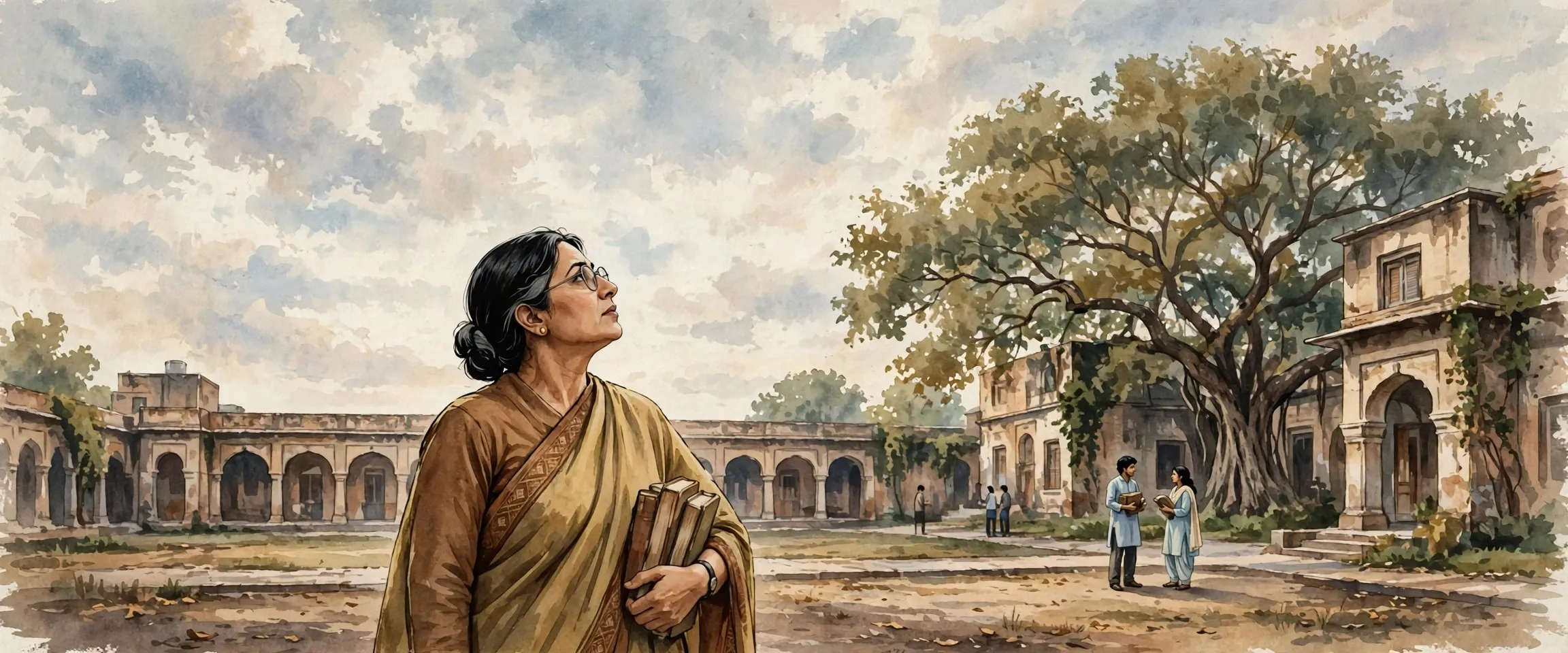
Jimi Puchhai Asman (The Earth Asks the Sky) is a Punjabi novel by Dalip Kaur Tiwana (1935 to 2020), published in 1986. Written close to the events of 1984, it is a fictionalised witness account of Punjab in those years, informed by Tiwana's own experience as a university teacher whose students were drawn into the vortex of the times. Scholars read it among the Punjabi novels that tried to make sense of that traumatic period.
Punjabi, Gurmukhi- Punjabi name
- ਜਿੰਮੀ ਪੁੱਛੈ ਅਸਮਾਨ
- Author
- Dalip Kaur Tiwana (1935 to 2020)
- Published
- 1986 (first edition)
- Language
- Punjabi (Gurmukhi)
- Form
- Novel
- Setting
- Punjab in the mid 1980s, after the events of 1984
- English title
- The Earth Asks the Sky (title gloss used in scholarship)
Jimi Puchhai Asman, in English The Earth Asks the Sky, is a Punjabi novel by Dalip Kaur Tiwana (1935 to 2020), published in 1986, only two years after the events that shook Punjab in 1984. Where most of Tiwana's fiction turns on the inner lives of women, this novel turns outward to a wounded province. It is a fictionalised witness account of Punjab in the mid 1980s, shaped by her own experience as a university teacher whose students were being drawn into the vortex of the times. It is one of the earliest Punjabi novels to face that period directly, and scholars still study it for exactly that reason.
What is Jimi Puchhai Asman about?
The fullest account of the novel in current scholarship describes it plainly: a fictionalised witness account of Punjab after 1984, informed by Tiwana's experience as a university teacher whose students find themselves drawn into the vortex of political exigencies. The scholar Maria Puri, whose 2025 journal study is devoted to this one novel, reads it as Tiwana's reflections on dissent and violence: how a teacher watches the young people she taught being pulled towards positions from which there may be no way back, and what that watching does to her.
Two honest cautions belong on this page. The novel has no published English translation recorded in the sources used here, and detailed scene by scene plot summaries are scarce in English writing about it. What the record does establish firmly is its year, its stance and its standing: a major Punjabi novelist, writing from inside a university in Patiala while the events were still unfolding around her, chose the novel as the form in which to bear witness. The title itself, the earth asking the sky, is a question sent upwards from the ground: from ordinary people to the powers above them.
Punjab in 1984 and after: the world the novel answers
The background, as Puri's study sets it out, is a decades long attempt by the central government to control dissent in Punjab, which culminated in the military operation codenamed Bluestar in June 1984, aimed at flushing militants from the Golden Temple complex in Amritsar. It was followed within months by the assassination of Prime Minister Indira Gandhi on 31 October 1984, by violence against Sikhs in Delhi and elsewhere, by an unprecedented growth of militancy in Punjab, and by a division of Punjabi society along religious lines. Punjabi literature, Puri notes, addressed the matter directly, trying to make sense of the traumatic events and their aftermath. Jimi Puchhai Asman, published in 1986 while that aftermath was still raw, is Tiwana's contribution to that reckoning.
Themes: dissent, violence and a hurt conscience
The keywords under which scholarship files this novel are violence, dissent, Punjab and Sikhism, and its first reviewers heard the same note. The survey of the Punjabi novels of 1986 in Indian Literature, the Sahitya Akademi journal, carried the title Imaging the Hurt Conscience, and Tiwana's novel of that year belongs to that company of books. Set beside her other fiction, the themes are recognisably hers: the Encyclopaedia of Indian Literature tradition describes her characters as the downtrodden and the innocent, with suppressed desires and passions, and tragedy and irony as the main elements of her fiction. Here the suppressed and the innocent are a generation of students, and the tragedy is a province's.
The author
Dalip Kaur Tiwana was born on 4 May 1935 at Rabbon in Ludhiana district, in a well-to-do land-owning family, and was educated at Patiala. She took her M.A. and Ph.D. in Punjabi literature, joined Punjabi University, Patiala, and rose to professor of Punjabi, head of the department and dean of the Faculty of Languages: the campus world of Jimi Puchhai Asman was her own working world. Her second novel, Eho Hamara Jeevna, won the Sahitya Akademi Award in 1971, Katha Kaho Urvashi won the Saraswati Samman in 2001, and she received the Padma Shri in 2004, which she returned in 2015 in protest against rising intolerance. She died on 31 January 2020. Her novels Eho Hamara Jeevna, Teeli Da Nishaan, Langh Gaye Dariya and Katha Kaho Urvashi, and her autobiography Nange Pairan Da Safar, are also in this Kosh.
Reception and legacy
The novel was noticed as soon as it appeared: the Sahitya Akademi's journal Indian Literature surveyed the Punjabi novels of 1986 in its 1987 pages, and the book stayed in Punjabi print, with a Chandigarh edition from Lokgeet Prakashan in 2001 listed in the scholarly record. Its longest afterlife, though, is in the universities. In 2025 the Cracow Indological Studies journal carried a full length study of this single novel, Reading Between the Lines, examining how Tiwana wrote about dissent and violence without turning her book into a pamphlet. For readers coming to the Punjab of the 1980s through literature, Jimi Puchhai Asman is the novel written closest to the events by a writer who was standing in a classroom while they happened.
ਜਿੰਮੀ ਪੁੱਛੈ ਅਸਮਾਨ ਦਲੀਪ ਕੌਰ ਟਿਵਾਣਾ (1935 ਤੋਂ 2020) ਦਾ ਪੰਜਾਬੀ ਨਾਵਲ ਹੈ, ਜੋ 1986 ਵਿੱਚ ਪ੍ਰਕਾਸ਼ਿਤ ਹੋਇਆ। ਇਹ 1984 ਵਿੱਚ ਪੰਜਾਬ ਨੂੰ ਹਿਲਾ ਦੇਣ ਵਾਲੀਆਂ ਘਟਨਾਵਾਂ ਤੋਂ ਸਿਰਫ ਦੋ ਸਾਲ ਬਾਅਦ ਛਪਿਆ। ਟਿਵਾਣਾ ਦੇ ਬਹੁਤੇ ਨਾਵਲ ਔਰਤਾਂ ਦੇ ਅੰਦਰਲੇ ਜੀਵਨ ਬਾਰੇ ਹਨ, ਪਰ ਇਹ ਨਾਵਲ ਸੱਟ ਖਾਧੇ ਸੂਬੇ ਵੱਲ ਮੁੜਦਾ ਹੈ। ਇਹ 1980ਵਿਆਂ ਦੇ ਮੱਧ ਦੇ ਪੰਜਾਬ ਦਾ ਗਵਾਹੀ ਭਰਿਆ ਗਲਪ ਬਿਆਨ ਹੈ, ਜੋ ਉਸ ਦੇ ਆਪਣੇ ਤਜਰਬੇ ਤੋਂ ਬਣਿਆ ਹੈ। ਉਹ ਯੂਨੀਵਰਸਿਟੀ ਦੀ ਅਧਿਆਪਕ ਸੀ ਅਤੇ ਉਸ ਦੇ ਵਿਦਿਆਰਥੀ ਉਸ ਸਮੇਂ ਦੇ ਭੰਵਰ ਵਿੱਚ ਖਿੱਚੇ ਜਾ ਰਹੇ ਸਨ। ਇਹ ਉਸ ਦੌਰ ਦਾ ਸਾਹਮਣਾ ਕਰਨ ਵਾਲੇ ਪਹਿਲੇ ਪੰਜਾਬੀ ਨਾਵਲਾਂ ਵਿੱਚੋਂ ਇਕ ਹੈ ਅਤੇ ਵਿਦਵਾਨ ਅੱਜ ਵੀ ਇਸੇ ਕਰਕੇ ਇਸ ਦਾ ਅਧਿਐਨ ਕਰਦੇ ਹਨ।
ਜਿੰਮੀ ਪੁੱਛੈ ਅਸਮਾਨ ਕਿਸ ਬਾਰੇ ਹੈ?
ਮੌਜੂਦਾ ਖੋਜ ਵਿੱਚ ਇਸ ਨਾਵਲ ਦਾ ਸਭ ਤੋਂ ਪੂਰਾ ਬਿਆਨ ਸਾਫ ਸ਼ਬਦਾਂ ਵਿੱਚ ਹੈ: ਇਹ 1984 ਤੋਂ ਬਾਅਦ ਦੇ ਪੰਜਾਬ ਦਾ ਗਵਾਹੀ ਭਰਿਆ ਗਲਪ ਬਿਆਨ ਹੈ, ਜੋ ਟਿਵਾਣਾ ਦੇ ਉਸ ਤਜਰਬੇ ਤੋਂ ਬਣਿਆ ਜਦੋਂ ਉਹ ਯੂਨੀਵਰਸਿਟੀ ਅਧਿਆਪਕ ਸੀ ਅਤੇ ਉਸ ਦੇ ਵਿਦਿਆਰਥੀ ਸਿਆਸੀ ਹਾਲਾਤ ਦੇ ਭੰਵਰ ਵਿੱਚ ਖਿੱਚੇ ਜਾ ਰਹੇ ਸਨ। ਵਿਦਵਾਨ ਮਾਰੀਆ ਪੂਰੀ ਨੇ 2025 ਵਿੱਚ ਇਸ ਇਕੋ ਨਾਵਲ ਉੱਤੇ ਪੂਰਾ ਖੋਜ ਪੱਤਰ ਲਿਖਿਆ ਹੈ। ਉਹ ਇਸ ਨੂੰ ਅਸਹਿਮਤੀ ਅਤੇ ਹਿੰਸਾ ਉੱਤੇ ਟਿਵਾਣਾ ਦੀ ਸੋਚ ਵਜੋਂ ਪੜ੍ਹਦੀ ਹੈ: ਇਕ ਅਧਿਆਪਕਾ ਦੇਖਦੀ ਹੈ ਕਿ ਉਸ ਦੇ ਪੜ੍ਹਾਏ ਨੌਜਵਾਨ ਅਜਿਹੀਆਂ ਥਾਵਾਂ ਵੱਲ ਖਿੱਚੇ ਜਾ ਰਹੇ ਹਨ ਜਿੱਥੋਂ ਸ਼ਾਇਦ ਵਾਪਸੀ ਨਾ ਹੋਵੇ, ਅਤੇ ਇਹ ਦੇਖਣਾ ਉਸ ਨਾਲ ਕੀ ਕਰਦਾ ਹੈ।
ਇਸ ਸਫ਼ੇ ਉੱਤੇ ਦੋ ਗੱਲਾਂ ਸਾਫ ਕਹਿਣੀਆਂ ਜ਼ਰੂਰੀ ਹਨ। ਇੱਥੇ ਵਰਤੇ ਸਰੋਤਾਂ ਅਨੁਸਾਰ ਇਸ ਨਾਵਲ ਦਾ ਕੋਈ ਪ੍ਰਕਾਸ਼ਿਤ ਅੰਗਰੇਜ਼ੀ ਅਨੁਵਾਦ ਦਰਜ ਨਹੀਂ ਹੈ, ਅਤੇ ਅੰਗਰੇਜ਼ੀ ਲਿਖਤਾਂ ਵਿੱਚ ਇਸ ਦੀ ਕਹਾਣੀ ਦਾ ਵਿਸਥਾਰ ਵੀ ਘੱਟ ਮਿਲਦਾ ਹੈ। ਜੋ ਰਿਕਾਰਡ ਪੱਕੇ ਤੌਰ ਉੱਤੇ ਦੱਸਦਾ ਹੈ, ਉਹ ਹੈ ਇਸ ਦਾ ਸਾਲ, ਇਸ ਦਾ ਰੁਖ ਅਤੇ ਇਸ ਦੀ ਥਾਂ। ਪਟਿਆਲੇ ਦੀ ਯੂਨੀਵਰਸਿਟੀ ਵਿੱਚ ਬੈਠੀ ਇਕ ਵੱਡੀ ਪੰਜਾਬੀ ਨਾਵਲਕਾਰ ਨੇ, ਜਦੋਂ ਘਟਨਾਵਾਂ ਉਸ ਦੇ ਆਲੇ ਦੁਆਲੇ ਵਾਪਰ ਰਹੀਆਂ ਸਨ, ਗਵਾਹੀ ਦੇਣ ਲਈ ਨਾਵਲ ਦਾ ਰੂਪ ਚੁਣਿਆ। ਸਿਰਲੇਖ ਆਪ, ਧਰਤੀ ਦਾ ਅਸਮਾਨ ਨੂੰ ਪੁੱਛਣਾ, ਥੱਲਿਓਂ ਉੱਪਰ ਵੱਲ ਭੇਜਿਆ ਸਵਾਲ ਹੈ: ਆਮ ਲੋਕਾਂ ਵੱਲੋਂ ਉੱਪਰ ਬੈਠੀਆਂ ਤਾਕਤਾਂ ਨੂੰ।
1984 ਅਤੇ ਉਸ ਤੋਂ ਬਾਅਦ ਦਾ ਪੰਜਾਬ: ਜਿਸ ਦੁਨੀਆ ਨੂੰ ਨਾਵਲ ਜਵਾਬ ਦਿੰਦਾ ਹੈ
ਪੂਰੀ ਦੇ ਅਧਿਐਨ ਅਨੁਸਾਰ ਪਿਛੋਕੜ ਇਹ ਹੈ ਕਿ ਕੇਂਦਰ ਸਰਕਾਰ ਵੱਲੋਂ ਪੰਜਾਬ ਵਿੱਚ ਅਸਹਿਮਤੀ ਨੂੰ ਦਬਾਉਣ ਦੀ ਦਹਾਕਿਆਂ ਲੰਮੀ ਕੋਸ਼ਿਸ਼ ਜੂਨ 1984 ਵਿੱਚ ਬਲਿਊ ਸਟਾਰ ਨਾਂ ਦੇ ਫੌਜੀ ਅਪਰੇਸ਼ਨ ਤੱਕ ਪਹੁੰਚੀ, ਜਿਸ ਦਾ ਮਕਸਦ ਅੰਮ੍ਰਿਤਸਰ ਦੇ ਸ੍ਰੀ ਹਰਿਮੰਦਰ ਸਾਹਿਬ ਕੰਪਲੈਕਸ ਵਿੱਚੋਂ ਹਥਿਆਰਬੰਦਾਂ ਨੂੰ ਕੱਢਣਾ ਸੀ। ਕੁਝ ਮਹੀਨਿਆਂ ਵਿੱਚ ਹੀ 31 ਅਕਤੂਬਰ 1984 ਨੂੰ ਪ੍ਰਧਾਨ ਮੰਤਰੀ ਇੰਦਰਾ ਗਾਂਧੀ ਦਾ ਕਤਲ ਹੋਇਆ, ਫਿਰ ਦਿੱਲੀ ਅਤੇ ਹੋਰ ਥਾਵਾਂ ਉੱਤੇ ਸਿੱਖਾਂ ਖਿਲਾਫ ਹਿੰਸਾ ਹੋਈ, ਪੰਜਾਬ ਵਿੱਚ ਹਥਿਆਰਬੰਦ ਸੰਘਰਸ਼ ਬਹੁਤ ਵਧਿਆ ਅਤੇ ਪੰਜਾਬੀ ਸਮਾਜ ਧਾਰਮਿਕ ਲੀਹਾਂ ਉੱਤੇ ਵੰਡਿਆ ਗਿਆ। ਪੂਰੀ ਲਿਖਦੀ ਹੈ ਕਿ ਪੰਜਾਬੀ ਸਾਹਿਤ ਨੇ ਇਸ ਮਾਮਲੇ ਨੂੰ ਸਿੱਧਾ ਛੋਹਿਆ ਅਤੇ ਉਨ੍ਹਾਂ ਦੁਖਦਾਈ ਘਟਨਾਵਾਂ ਨੂੰ ਸਮਝਣ ਦੀ ਕੋਸ਼ਿਸ਼ ਕੀਤੀ। ਜਿੰਮੀ ਪੁੱਛੈ ਅਸਮਾਨ 1986 ਵਿੱਚ ਛਪਿਆ, ਜਦੋਂ ਉਹ ਅਸਰ ਅਜੇ ਕੱਚਾ ਸੀ। ਇਹ ਉਸ ਹਿਸਾਬ ਵਿੱਚ ਟਿਵਾਣਾ ਦਾ ਹਿੱਸਾ ਹੈ।
ਵਿਸ਼ੇ: ਅਸਹਿਮਤੀ, ਹਿੰਸਾ ਅਤੇ ਦੁਖੀ ਜ਼ਮੀਰ
ਖੋਜ ਇਸ ਨਾਵਲ ਨੂੰ ਹਿੰਸਾ, ਅਸਹਿਮਤੀ, ਪੰਜਾਬ ਅਤੇ ਸਿੱਖ ਧਰਮ ਵਰਗੇ ਮੁੱਖ ਸ਼ਬਦਾਂ ਹੇਠ ਰੱਖਦੀ ਹੈ ਅਤੇ ਇਸ ਦੇ ਪਹਿਲੇ ਸਮੀਖਿਅਕਾਂ ਨੇ ਵੀ ਇਹੋ ਸੁਰ ਸੁਣੀ। ਸਾਹਿਤ ਅਕਾਦਮੀ ਦੇ ਰਸਾਲੇ ਇੰਡੀਅਨ ਲਿਟਰੇਚਰ ਵਿੱਚ 1986 ਦੇ ਪੰਜਾਬੀ ਨਾਵਲਾਂ ਦਾ ਜਾਇਜ਼ਾ Imaging the Hurt Conscience ਸਿਰਲੇਖ ਹੇਠ ਛਪਿਆ, ਭਾਵ ਦੁਖੀ ਜ਼ਮੀਰ ਦੀ ਤਸਵੀਰ, ਅਤੇ ਉਸ ਸਾਲ ਦਾ ਟਿਵਾਣਾ ਦਾ ਇਹ ਨਾਵਲ ਉਨ੍ਹਾਂ ਕਿਤਾਬਾਂ ਦੀ ਸੰਗਤ ਵਿੱਚ ਖੜ੍ਹਾ ਹੈ। ਉਸ ਦੇ ਬਾਕੀ ਗਲਪ ਨਾਲ ਰੱਖ ਕੇ ਦੇਖੀਏ ਤਾਂ ਵਿਸ਼ੇ ਉਸ ਦੇ ਆਪਣੇ ਹਨ। ਭਾਰਤੀ ਸਾਹਿਤ ਦੀ ਇਨਸਾਈਕਲੋਪੀਡੀਆ ਪਰੰਪਰਾ ਉਸ ਦੇ ਪਾਤਰਾਂ ਨੂੰ ਦੱਬੇ ਕੁਚਲੇ ਅਤੇ ਮਾਸੂਮ ਲੋਕ ਦੱਸਦੀ ਹੈ, ਜਿਨ੍ਹਾਂ ਦੀਆਂ ਇੱਛਾਵਾਂ ਦਬੀਆਂ ਹੁੰਦੀਆਂ ਹਨ, ਅਤੇ ਉਸ ਦੇ ਗਲਪ ਦੇ ਮੁੱਖ ਤੱਤ ਦੁਖਾਂਤ ਅਤੇ ਵਿਅੰਗ ਹਨ। ਇੱਥੇ ਦੱਬੇ ਅਤੇ ਮਾਸੂਮ ਵਿਦਿਆਰਥੀਆਂ ਦੀ ਇਕ ਪੀੜ੍ਹੀ ਹੈ ਅਤੇ ਦੁਖਾਂਤ ਸਾਰੇ ਸੂਬੇ ਦਾ ਹੈ।
ਲੇਖਿਕਾ
ਦਲੀਪ ਕੌਰ ਟਿਵਾਣਾ ਦਾ ਜਨਮ 4 ਮਈ 1935 ਨੂੰ ਲੁਧਿਆਣਾ ਜ਼ਿਲ੍ਹੇ ਦੇ ਪਿੰਡ ਰੱਬੋਂ ਵਿੱਚ ਇਕ ਚੰਗੇ ਖਾਂਦੇ ਪੀਂਦੇ ਜ਼ਿਮੀਂਦਾਰ ਪਰਿਵਾਰ ਵਿੱਚ ਹੋਇਆ। ਉਸ ਨੇ ਪਟਿਆਲੇ ਤੋਂ ਪੜ੍ਹਾਈ ਕੀਤੀ। ਉਸ ਨੇ ਪੰਜਾਬੀ ਸਾਹਿਤ ਵਿੱਚ ਐਮ.ਏ. ਅਤੇ ਪੀ.ਐਚ.ਡੀ. ਕੀਤੀ, ਪੰਜਾਬੀ ਯੂਨੀਵਰਸਿਟੀ ਪਟਿਆਲਾ ਵਿੱਚ ਪੜ੍ਹਾਉਣ ਲੱਗੀ ਅਤੇ ਪੰਜਾਬੀ ਦੀ ਪ੍ਰੋਫੈਸਰ, ਵਿਭਾਗ ਦੀ ਮੁਖੀ ਅਤੇ ਭਾਸ਼ਾਵਾਂ ਦੀ ਫੈਕਲਟੀ ਦੀ ਡੀਨ ਬਣੀ। ਜਿੰਮੀ ਪੁੱਛੈ ਅਸਮਾਨ ਦੀ ਯੂਨੀਵਰਸਿਟੀ ਵਾਲੀ ਦੁਨੀਆ ਉਸ ਦੀ ਆਪਣੀ ਕੰਮ ਵਾਲੀ ਦੁਨੀਆ ਸੀ। ਉਸ ਦੇ ਦੂਜੇ ਨਾਵਲ ਇਹੋ ਹਮਾਰਾ ਜੀਵਨਾ ਨੂੰ 1971 ਵਿੱਚ ਸਾਹਿਤ ਅਕਾਦਮੀ ਪੁਰਸਕਾਰ ਮਿਲਿਆ। ਕਥਾ ਕਹੋ ਉਰਵਸ਼ੀ ਨੂੰ 2001 ਵਿੱਚ ਸਰਸਵਤੀ ਸਨਮਾਨ ਮਿਲਿਆ। ਉਸ ਨੂੰ 2004 ਵਿੱਚ ਪਦਮ ਸ਼੍ਰੀ ਮਿਲਿਆ, ਜੋ ਉਸ ਨੇ 2015 ਵਿੱਚ ਵਧ ਰਹੀ ਅਸਹਿਣਸ਼ੀਲਤਾ ਦੇ ਵਿਰੋਧ ਵਿੱਚ ਵਾਪਸ ਕਰ ਦਿੱਤਾ। ਉਸ ਦੀ ਮੌਤ 31 ਜਨਵਰੀ 2020 ਨੂੰ ਹੋਈ। ਉਸ ਦੇ ਨਾਵਲ ਇਹੋ ਹਮਾਰਾ ਜੀਵਨਾ, ਤੀਲੀ ਦਾ ਨਿਸ਼ਾਨ, ਲੰਘ ਗਏ ਦਰਿਆ ਅਤੇ ਕਥਾ ਕਹੋ ਉਰਵਸ਼ੀ, ਅਤੇ ਉਸ ਦੀ ਸਵੈਜੀਵਨੀ ਨੰਗੇ ਪੈਰਾਂ ਦਾ ਸਫਰ ਵੀ ਇਸੇ ਕੋਸ਼ ਵਿੱਚ ਹਨ।
ਸਵਾਗਤ ਅਤੇ ਵਿਰਾਸਤ
ਨਾਵਲ ਛਪਦੇ ਹੀ ਧਿਆਨ ਵਿੱਚ ਆਇਆ। ਸਾਹਿਤ ਅਕਾਦਮੀ ਦੇ ਰਸਾਲੇ ਇੰਡੀਅਨ ਲਿਟਰੇਚਰ ਨੇ 1987 ਵਿੱਚ 1986 ਦੇ ਪੰਜਾਬੀ ਨਾਵਲਾਂ ਦਾ ਜਾਇਜ਼ਾ ਲਿਆ। ਕਿਤਾਬ ਪੰਜਾਬੀ ਵਿੱਚ ਛਪਦੀ ਰਹੀ। ਖੋਜ ਰਿਕਾਰਡ ਵਿੱਚ ਲੋਕਗੀਤ ਪ੍ਰਕਾਸ਼ਨ ਚੰਡੀਗੜ੍ਹ ਦਾ 2001 ਵਾਲਾ ਐਡੀਸ਼ਨ ਦਰਜ ਹੈ। ਇਸ ਦੀ ਸਭ ਤੋਂ ਲੰਮੀ ਉਮਰ ਯੂਨੀਵਰਸਿਟੀਆਂ ਵਿੱਚ ਹੈ। 2025 ਵਿੱਚ ਕਰੈਕੋ ਇੰਡੋਲੌਜੀਕਲ ਸਟੱਡੀਜ਼ ਰਸਾਲੇ ਵਿੱਚ ਇਸ ਇਕੋ ਨਾਵਲ ਉੱਤੇ ਪੂਰਾ ਅਧਿਐਨ ਛਪਿਆ, Reading Between the Lines, ਜਿਸ ਵਿੱਚ ਦੇਖਿਆ ਗਿਆ ਕਿ ਟਿਵਾਣਾ ਨੇ ਆਪਣੀ ਕਿਤਾਬ ਨੂੰ ਪਰਚਾ ਬਣਾਏ ਬਿਨਾਂ ਅਸਹਿਮਤੀ ਅਤੇ ਹਿੰਸਾ ਬਾਰੇ ਕਿਵੇਂ ਲਿਖਿਆ। 1980ਵਿਆਂ ਦੇ ਪੰਜਾਬ ਨੂੰ ਸਾਹਿਤ ਰਾਹੀਂ ਸਮਝਣ ਵਾਲੇ ਪਾਠਕਾਂ ਲਈ ਜਿੰਮੀ ਪੁੱਛੈ ਅਸਮਾਨ ਉਹ ਨਾਵਲ ਹੈ ਜੋ ਘਟਨਾਵਾਂ ਦੇ ਸਭ ਤੋਂ ਨੇੜੇ, ਕਲਾਸਰੂਮ ਵਿੱਚ ਖੜ੍ਹੀ ਲੇਖਿਕਾ ਨੇ ਲਿਖਿਆ।
Editions and translations
- Jimi Puchhai AsmanPunjabi · Gurmukhi · original, 1986 · Chandigarh: Lokgeet Prakashan, 2001 reprint listed in scholarship · Gurmukhi title: ਜਿੰਮੀ ਪੁੱਛੈ ਅਸਮਾਨOriginal
The author
Connected
More to read
Sources (2)
Jugti is free and independent. Reader support keeps the Kosh growing.
Support